


A garden can feel exposed or unfinished when its boundaries have no clear shape, even if the plants are growing well.
I like how natural branch fencing adds structure while keeping a relaxed, handmade look that sits comfortably among flowers, shrubs, and trees.
The varied lines and textures can create privacy, guide the eye along a path, or give a planting bed a more settled edge.
Small changes to the height, spacing, or placement can make a fence feel suited to the yard rather than added as an afterthought.
Some of these approaches are worth saving and adapting to fit your garden’s layout and the branches you can find.
Add Structure With A Woven Branch Fence

Replacing the overgrown chain-link fence with a woven branch fence gives this yard a clear boundary and makes the garden feel planned. The dark, natural fence also works as a simple backdrop for flowers, so the planting stands out without needing a complicated layout.
This idea suits a backyard where you want more privacy and a softer, less industrial look. Keep the flower bed narrow and leave the gate easy to reach, so the fence adds structure without getting in the way.
Add Privacy With A Natural Garden Fence

A woven branch fence gives a bare garden border more structure and privacy. Here, it replaces a low picket fence and makes the planting bed feel more contained without hiding the garden behind a solid wall.
This idea works well along a path or beside a neighboring house. Keep plants low near the walkway, and leave enough room to tend the bed so the fence stays practical as well as attractive.
Add Raised Beds To Give A Small Yard Structure

The bare, patchy yard becomes easier to use once the planting is contained in raised beds. Here, the tiered beds make a narrow space feel more organized, while the natural branch fence gives the garden a simple backdrop.
This approach works well in small yards where lawn is difficult to maintain or there is little room for separate garden areas. Keep the beds sized so you can reach the plants without stepping into them, and leave a clear path alongside.
Create Privacy With A Natural Branch Fence

A bare patio can feel exposed and hard to use. A woven branch fence gives this narrow seating area a clear boundary, so it works more like an outdoor room without taking up much floor space.
This idea suits small patios where a tall, solid wall might feel too heavy. Use sturdy branches woven through a simple frame, and leave enough space for people to move between the seating and the door.
Define The Front Garden With A Low Branch Fence

A low natural branch fence gives this front yard a clear edge without closing it off. Replacing the worn, uneven fence with a simple branch barrier makes the planting beds feel intentional and guides visitors toward the front steps.
This works well in a small yard where a tall fence might feel too heavy. Keep the fence low, and leave a clear opening for the path so the garden stays easy to walk through.
Give A Vegetable Garden A Clear Entrance

A simple branch trellis can make a crowded vegetable garden feel more organized. Here, sturdy upright posts and crosspieces create a clear entry through the beds, replacing the loose, uneven wire fencing.
This idea works well in a productive backyard where plants tend to spill into paths. Use branches thick enough to stay steady, and leave a wide opening so you can carry tools or harvest baskets through easily.
Add Privacy To A Poolside Patio

A natural branch fence can make a poolside patio feel more private without leaving a tall, blank wall as the main backdrop. Here, a woven branch screen above the existing wall gives the seating area a more sheltered feel, while planting along the base helps connect the fence to the garden.
This idea works well in a backyard where neighboring views or a plain boundary wall make the patio feel exposed. Keep the screen sturdy and suited to outdoor conditions, and leave enough room for plants to grow without crowding the seating area.
Add A Paved Path Through A Narrow Side Yard

Replacing patchy grass with a paver walkway gives this narrow side yard a clear route and a cleaner, more usable surface. The path makes the space feel planned without needing a major landscape redesign.
This idea works well where people need easy access around the house. Keep the walkway wide enough to pass comfortably, and use a simple border planting or mulch beside it rather than filling every inch.
Turn An Empty Yard Into A Nature-Inspired Play Space

Replacing the plain rail fence with a low branch fence gives this backyard a more defined play area. The natural wood makes the space feel like a garden feature rather than a fenced-off patch of lawn.
This idea works well in family yards where you want to mark out a play zone without making it feel closed in. Keep the fence low enough to maintain sightlines, and check that the branches are sturdy and smooth where children might touch them.
Turn An Empty Terrace Into A Usable Outdoor Room

A bare terrace can feel exposed and unfinished, even when there is plenty of floor space. Here, raised planters and a woven branch screen turn the edge of the patio into a defined garden border, while a large outdoor rug marks out a comfortable area to use.
This idea works well on balconies and terraces where you want some privacy without giving up the open feel. Choose planters that fit the available space, and leave a clear route to the door so the garden features do not crowd the walkway.
Replace A Dense Hedge With A Natural Branch Fence
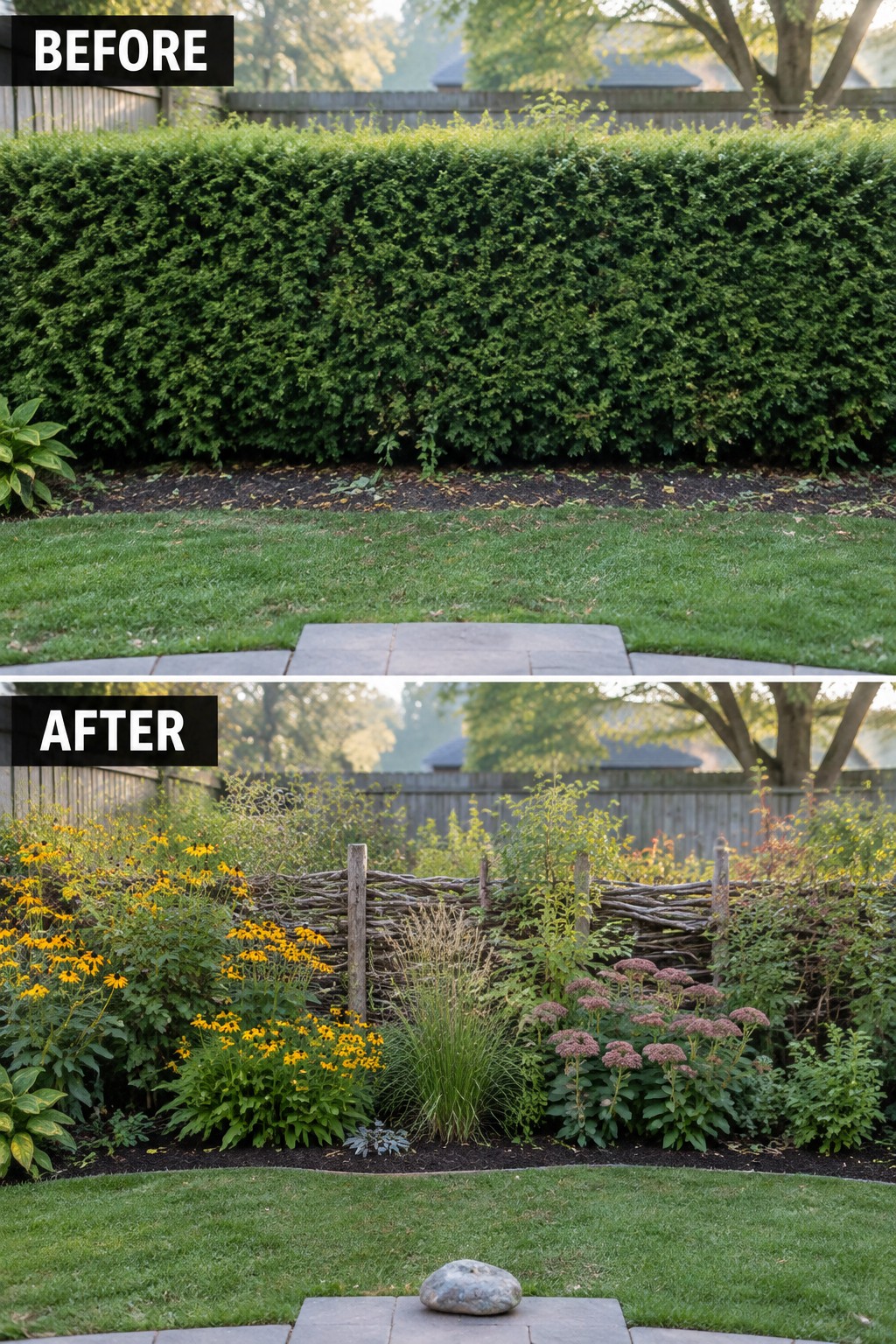
A thick hedge can make a garden feel like a solid green wall. Replacing it with a woven branch fence opens up the planting bed while still giving the yard a clear boundary. Flowers and grasses can grow in front of it, so the fence becomes part of the garden rather than a barrier to it.
This works well along a backyard edge where you want a defined border without another tall hedge. Keep the fence low enough to let light reach the plants, and leave room for them to spread as they grow.
Turn A Bare Backyard Into A Comfortable Fire Pit Area
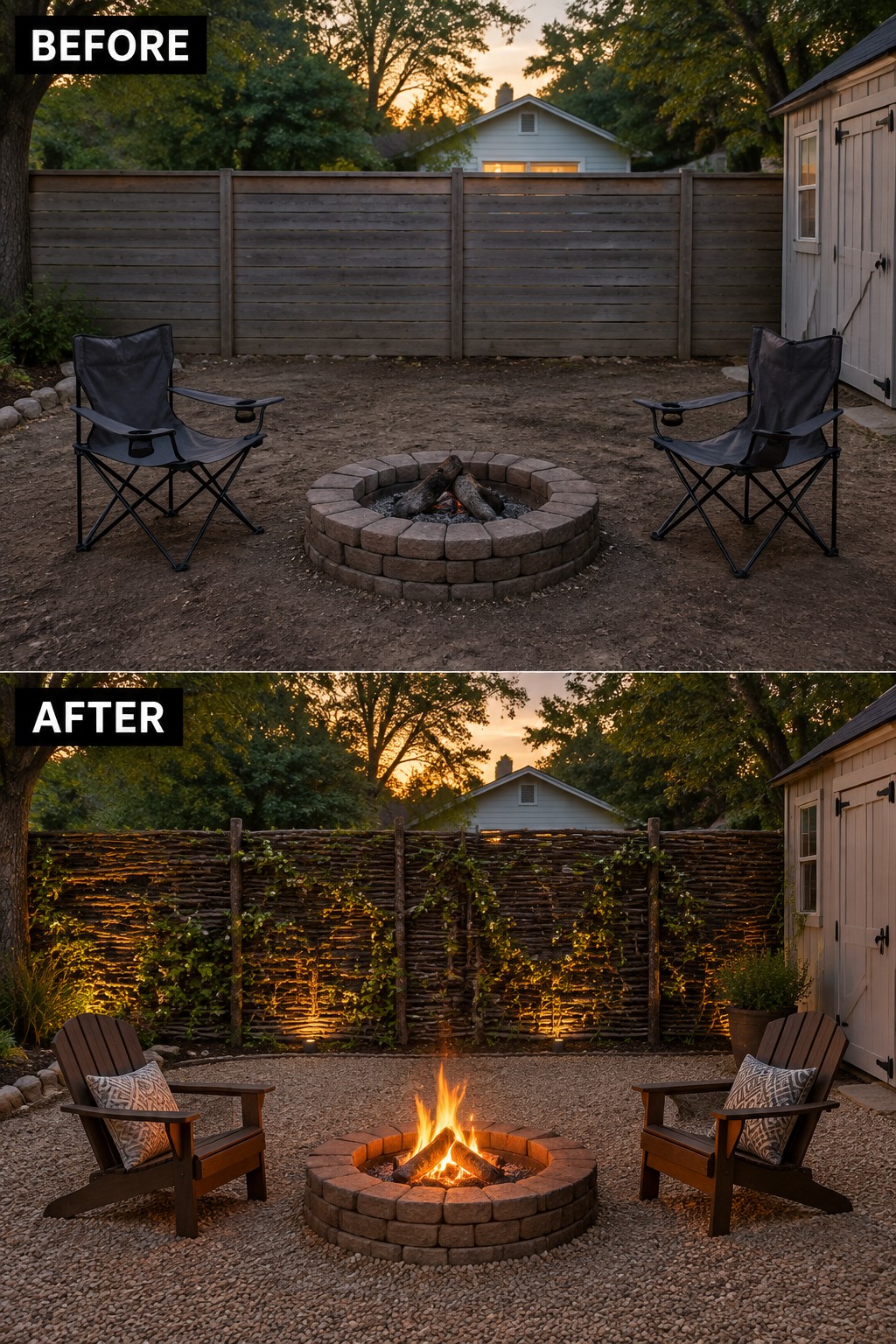
A fire pit can give an unused patch of yard a clear purpose. Here, a gravel surface and sturdy chairs replace the bare dirt and folding seats, making the space more comfortable for gathering.
This idea works well in small backyards where there is room for a few chairs around a fire. Choose weather-resistant seating and leave enough space to move around the pit. A natural branch fence can add privacy while keeping the seating area connected to the garden.
Use Branch Fencing To Hold A Sloped Garden

Replacing failing boards with woven branch sections gives this steep side garden a more natural way to retain the soil. The low fence follows the slope, while short timber steps help make the planted area easier to reach.
This approach can suit a narrow hillside where a tall, solid wall would feel out of place. Check that the posts and retaining sections are sturdy enough for the soil pressure, and keep steps wide and stable for safe access.
Make A Patio Feel More Private
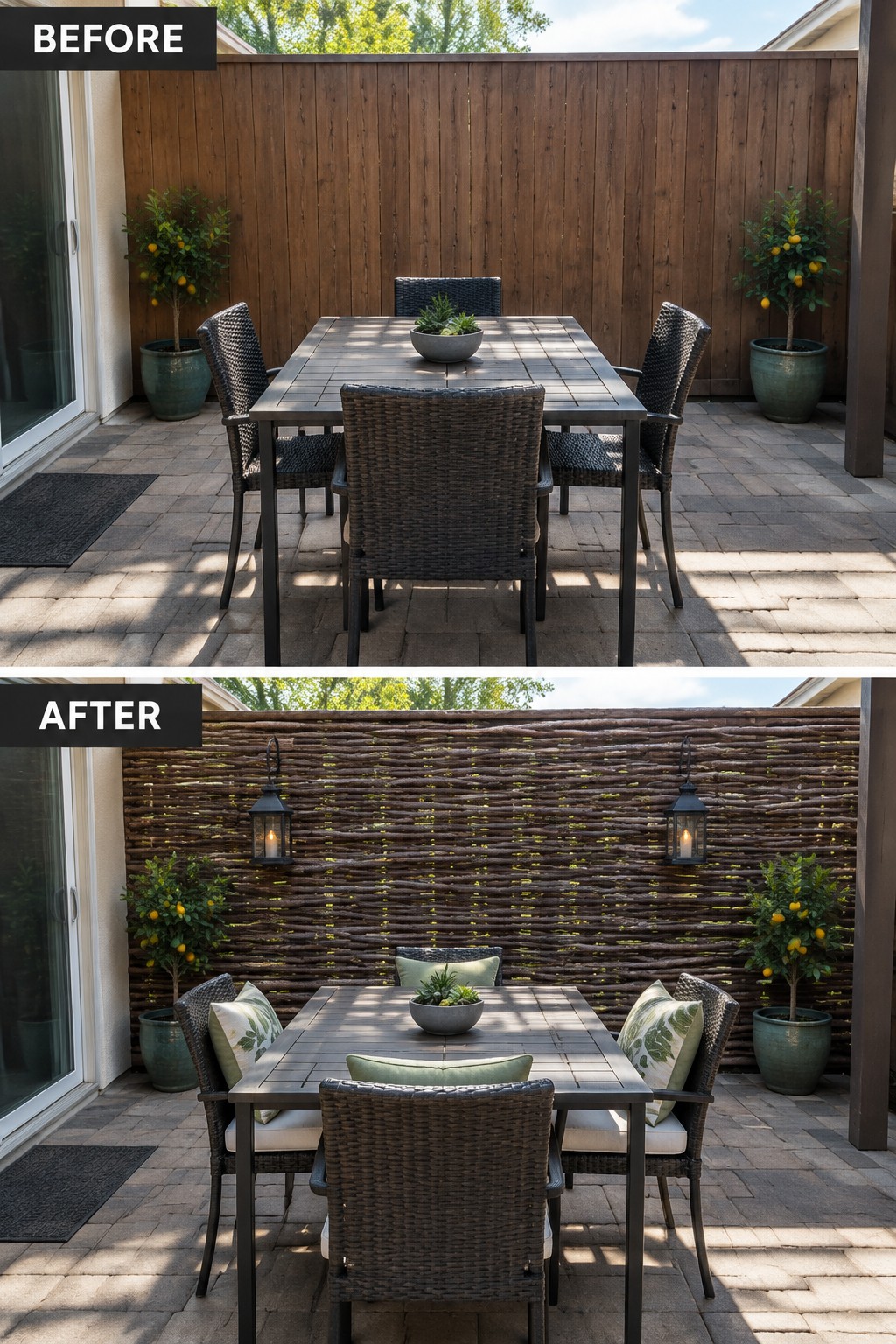
A natural branch fence can make a dining patio feel more like an outdoor room. Here, the solid wood fence is covered with woven branches, giving the seating area a more sheltered backdrop without changing its basic layout.
This idea works well in a small patio where nearby fences or homes feel too exposed. Use a sturdy support, and keep the branches secure and spaced so the fence remains practical to maintain.
Replace Broken Garden Fencing With A Sturdy Branch Border

A damaged fence can make a vegetable garden feel untidy, even when the plants are thriving. Replacing the broken panels with a woven branch fence gives the plot a clear edge and a more cohesive look without hiding the garden behind a solid barrier.
This approach suits community gardens and informal backyard beds, especially where branches are easy to source. Set sturdy posts first, then weave in branches at a consistent height, checking that the fence still leaves a clear path for tending and harvesting.
Hide A Plain Garden Wall With A Branch Screen
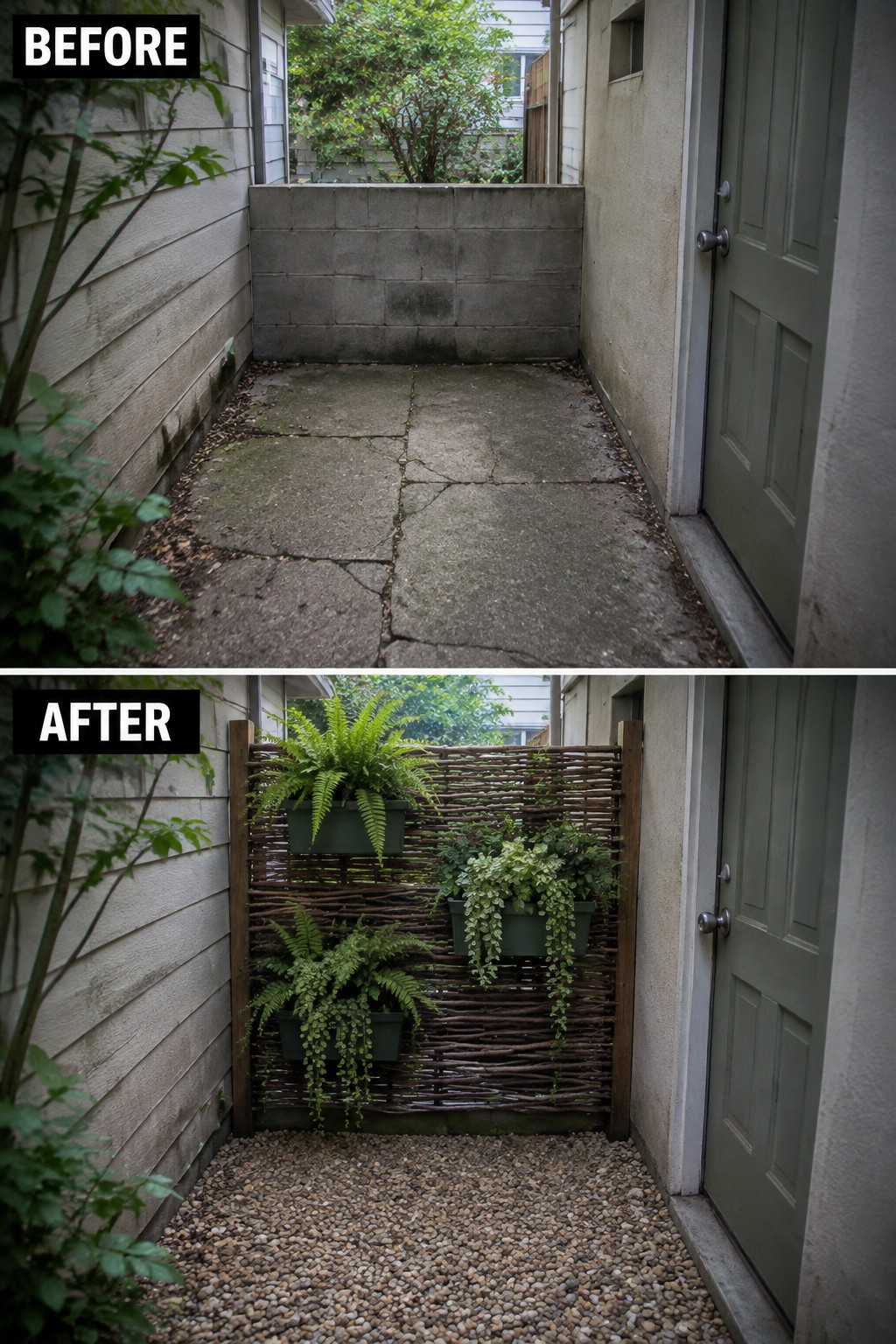
A woven branch screen can turn an awkward, bare corner into a simple garden feature. Here, it covers the block wall, while gravel replaces the cracked paving for a cleaner, easier-to-maintain surface.
This idea suits narrow side yards where there is little room for a full fence or large planting beds. Secure the screen firmly, choose plants that fit the available light, and leave enough clear space to walk through.
Enclose A Pool With Natural Branch Fencing

The open metal fence around this pool offered little privacy. Replacing it with woven branch fencing makes the pool area feel more enclosed while giving the yard a softer, more natural boundary.
This approach works well when you want a pool fence to blend into a leafy backyard. Keep the gate easy to use and make sure the finished fence meets local pool-safety rules before choosing the materials or layout.
Screen A Small Yard With Natural Branch Fencing

A natural branch fence can give a narrow, neglected yard a clearer edge and more privacy. Here, it replaces a low chain-link fence, making the planting area feel more contained without a solid wall.
This idea works well in small side yards where a tall, heavy fence might feel cramped. Use sturdy posts and keep the screen at a height that suits your privacy needs, then leave enough space for plants and a simple path.
Turn A Covered Patio Into A Private Garden Seating Area
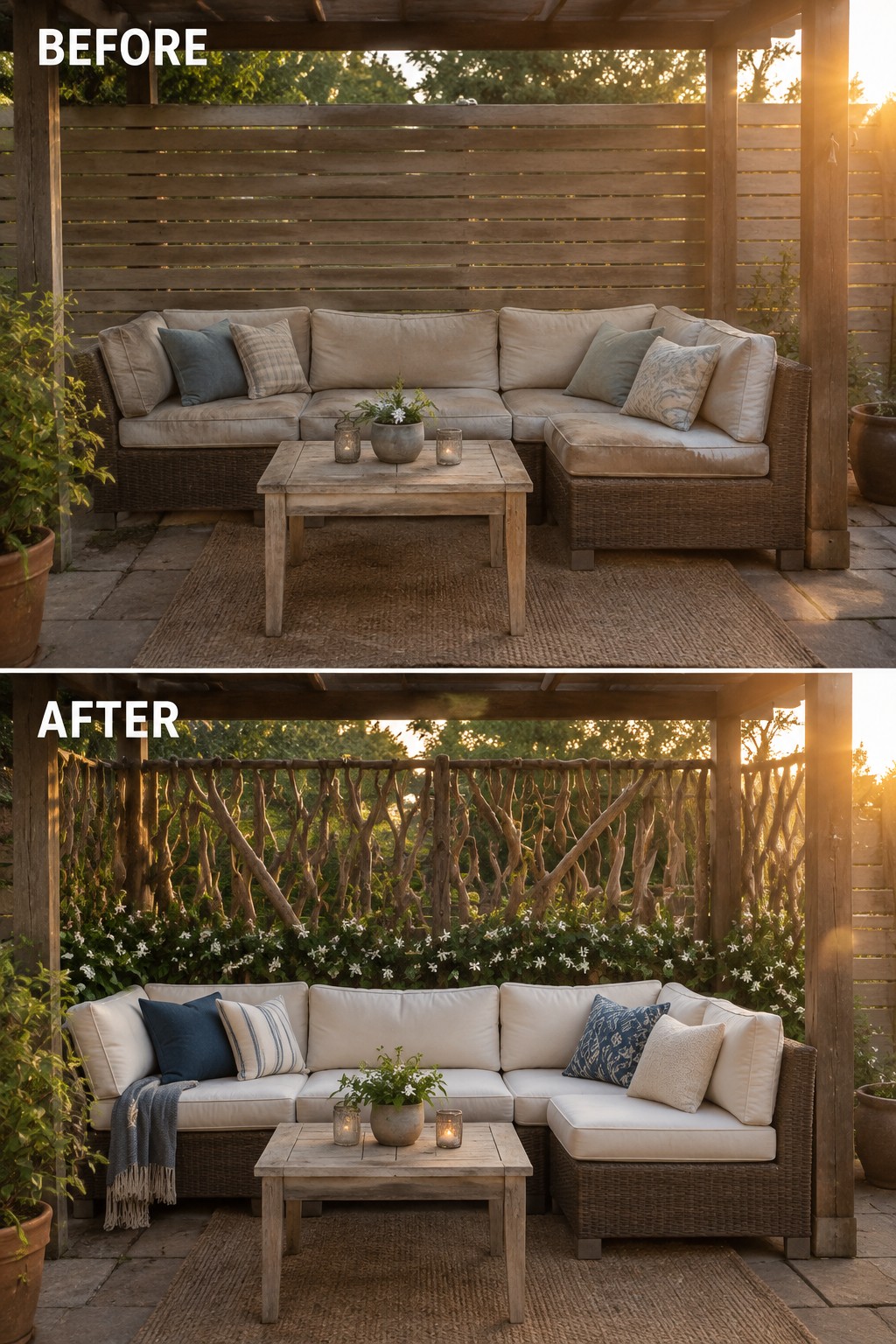
The solid fence made this covered patio feel closed off. Replacing the section behind the sofa with a natural branch screen opens the view to greenery while still giving the seating area some privacy.
This idea works well where a patio needs a clearer boundary but a solid fence feels too heavy. Add flowering plants along the base, and leave enough open space in the branches for light and air to pass through.
Give A Small Herb Bed A Clear Border

A low woven branch fence gives this herb bed a defined edge and makes the planting feel more intentional. The plants were already there, but the simple border helps separate the soil from the patio and gives the small garden a neater shape.
This idea works well around herbs or other compact beds beside a house. Keep the fence low enough to reach the plants easily, and leave a little space for growth so the border does not crowd them.
Replace Wire Fencing With A Rustic Branch Fence

The plain wire fence left this narrow side yard feeling unfinished. A woven branch fence gives the boundary a more natural look and makes it a clear feature of the garden.
This idea works well along a driveway or in a slim side yard where a tall fence could feel too heavy. Set sturdy posts securely, weave in branches, and keep the base tidy with gravel or simple planting. Check local rules before changing a boundary fence.
Turn A Bare Garden Corner Into A Natural Seating Nook

A woven branch fence can give an unused corner a clear purpose. Here, it forms a backdrop for a small gravel sitting area, making the yard feel more planned without adding a large patio or building.
This idea suits a compact backyard where privacy and a simple place to pause are both useful. Set the fence between sturdy posts, then keep the seating area modest so there’s still room to move around it.
Frequently Asked Questions
Q: How long will a natural branch fence last outdoors?
A: It can last several years, though the lifespan depends on the wood and how damp your garden stays. Keep branches off the soil where you can, and replace any that turn soft or start to rot.
Q: Can I build a branch fence without cutting down a tree?
A: Yes. Gather fallen branches or ask a local tree service if you can take trimmings. Choose sturdy pieces with similar thickness so the fence feels balanced.
Q: How do I keep the branches from shifting?
A: Set firm posts first, then weave the branches between them or tie them in place with garden wire or natural twine. Check the ties now and then, especially after strong wind.
Q: Will a branch fence give me privacy?
A: It can, but a loosely woven fence will still leave gaps. Pack the branches more tightly where you want a little more cover.
