

I have noticed that downspout runoff often turns low spots in the yard into muddy zones that are difficult to plant around without a clear plan for water direction.
When I trace the flow from my roofline after a storm, it shows me exactly where a rain garden needs to sit so it catches the water before it reaches the foundation or the lawn.
A simple basin shape changes everything.
Over time I have learned that mixing deep-rooted perennials with the right soil mix helps the area drain faster and keeps the whole bed from washing out during bigger rains.
Testing a few of these placements along my own property lines has shown which ones blend into the existing layout without needing constant fixes.
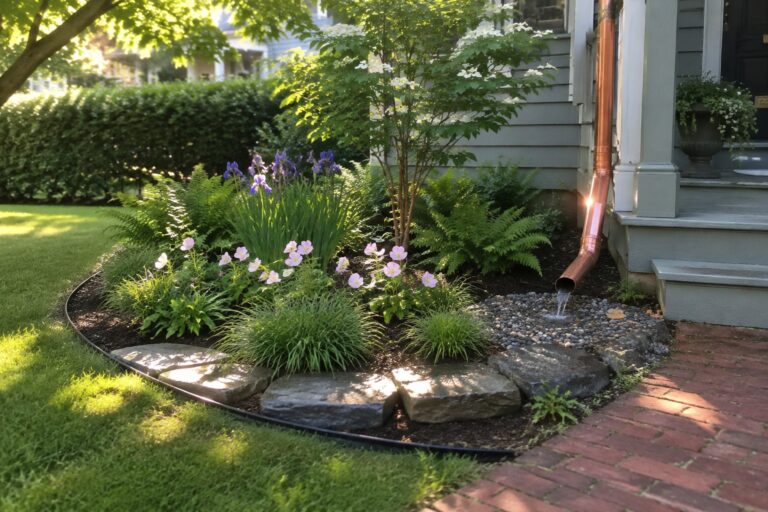
Build A Rain Garden For Your Downspout

A rain garden gives downspout water a place to settle instead of running across the lawn or toward the foundation. The gravel basin spreads the flow and lets it drain slowly while the surrounding plants handle the rest.
This approach works best along the side or back of a house where the ground slopes slightly away from the building. Keep the bed defined with a low stone edge and add a mix of moisture-loving plants so the area stays green even after heavy rain.
Build a Linear Gravel Rain Garden Along the House
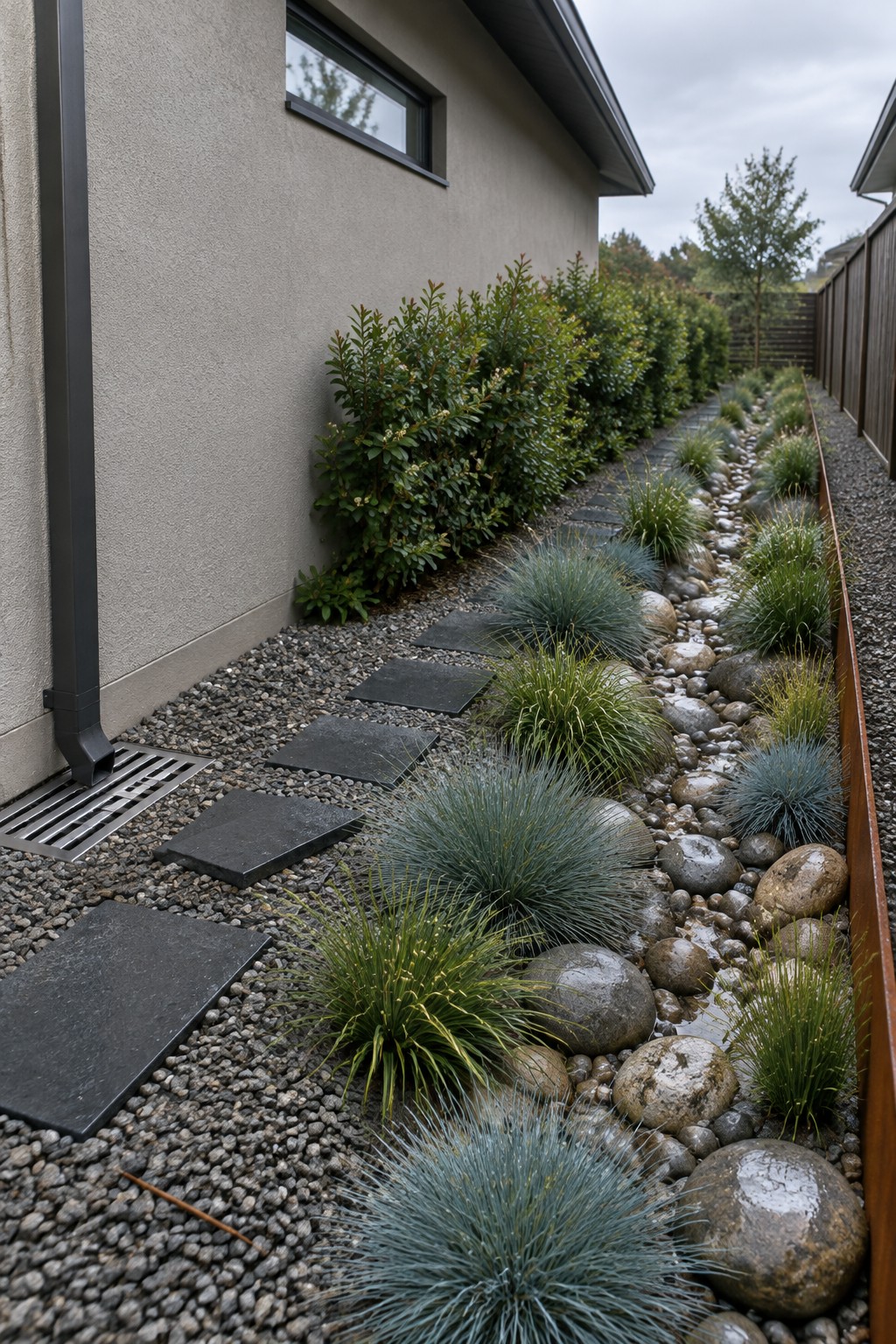
A gravel rain garden handles downspout runoff in a narrow space without turning the area muddy. The stones slow the water, the plants take up some of it, and the rest soaks into the ground over time.
This works best on homes with a long side yard that needs both drainage and a simple path. Set a grated drain right under the downspout, then layer gravel and low grasses through the bed. Keep the plants spaced so water can still move freely toward the end of the strip.
Use a Gravel Basin for Downspout Runoff
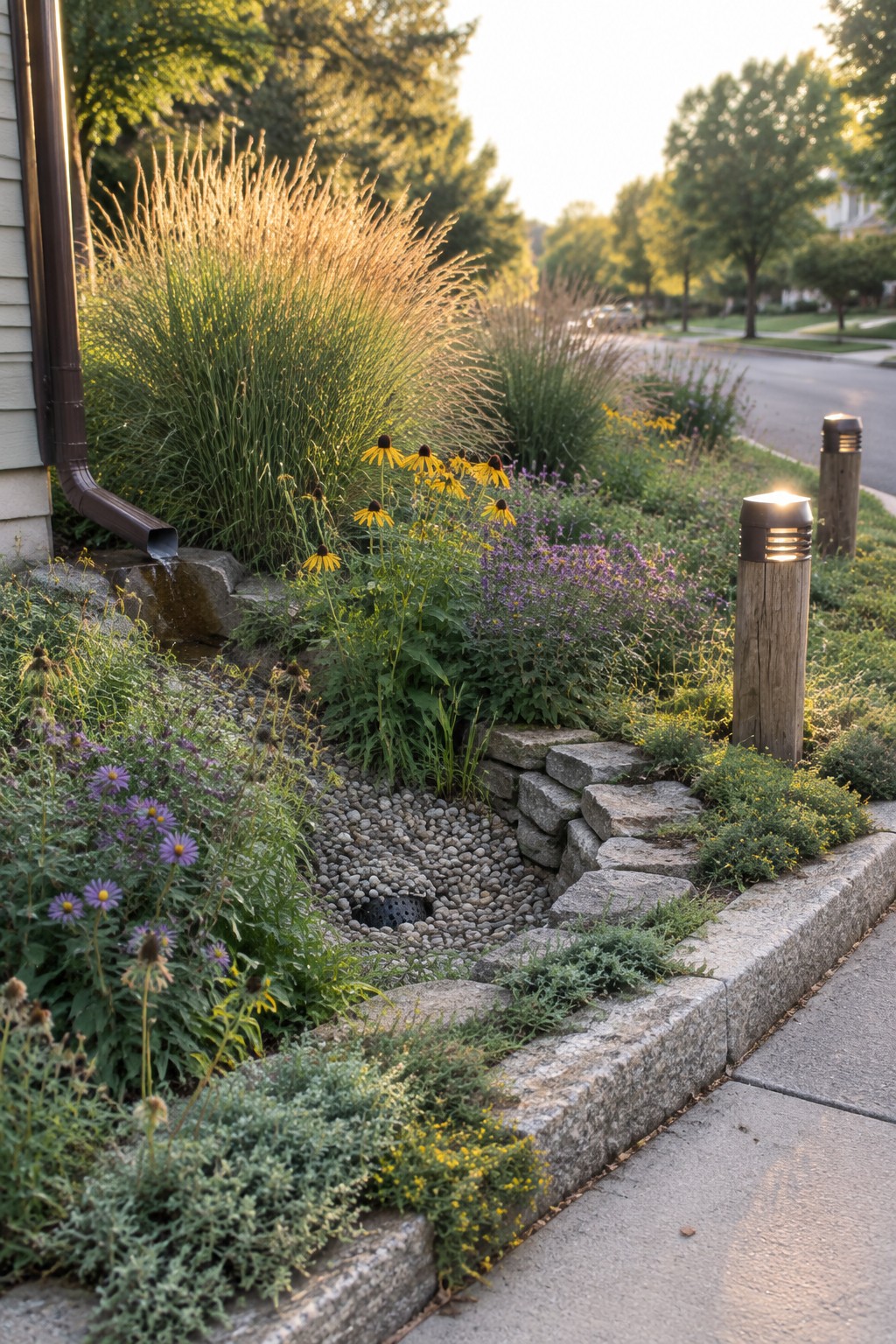
A gravel basin right under the downspout gives the water a place to slow down and soak in instead of rushing across the yard. The rocks help spread the flow while the surrounding plants take up the rest, which keeps the soil from washing away or getting too soggy near the house.
This setup works best along a foundation where there is a little room to shape a shallow bed. Use native plants that tolerate both wet and dry spells, and keep the gravel area a bit lower than the surrounding ground so water stays put until it drains.
Build a Basic Rain Garden at the Downspout
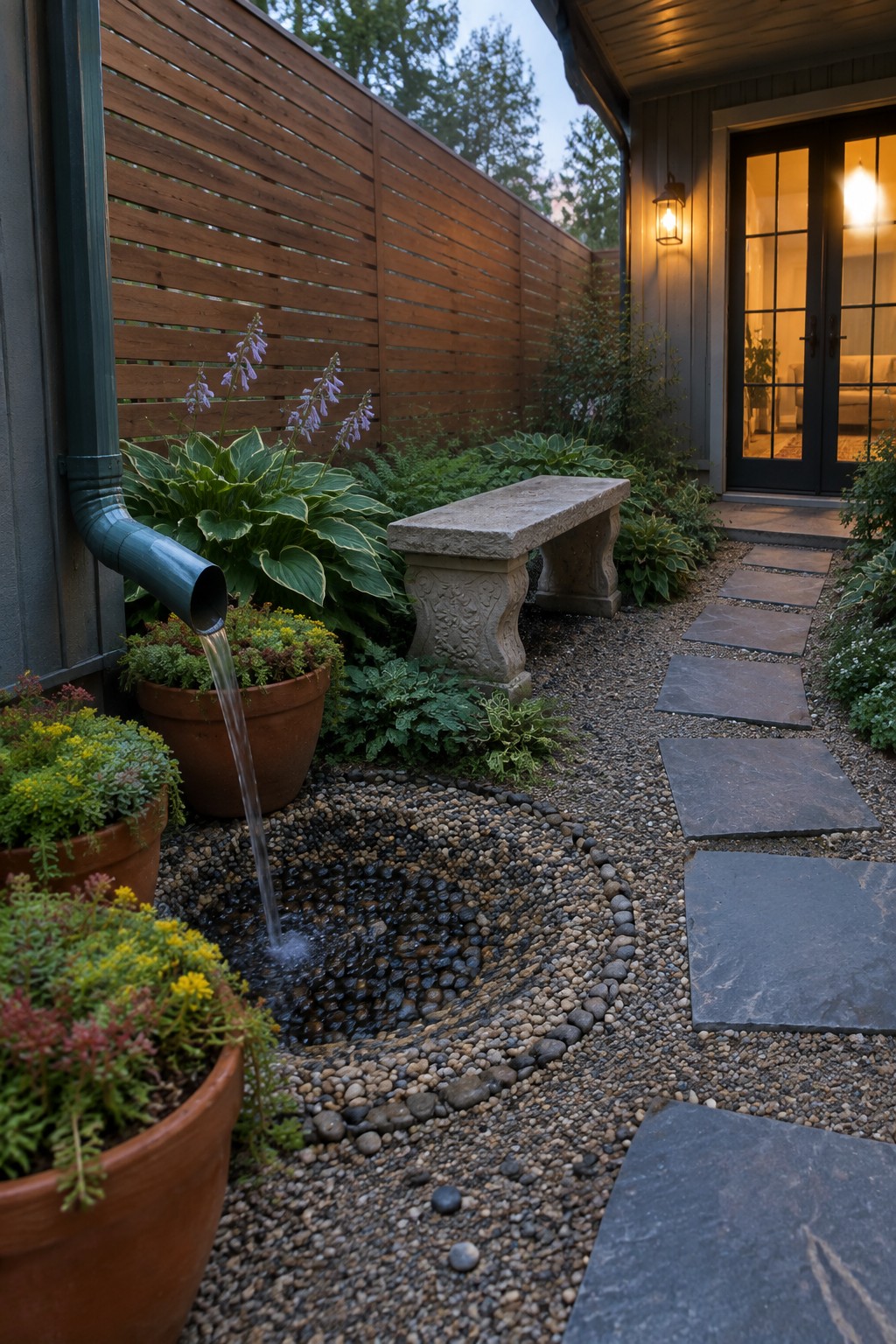
A small pebble basin right under the downspout gives runoff a place to settle without splashing across the yard. The circle of stones slows the water and lets it soak in gradually while the surrounding pots keep the spot looking tended.
This setup works well along a side path or near a back entrance where space is tight. Keep the basin a few feet across and use larger stones at the edge so mulch does not wash away during heavy rain.
Catch Downspout Runoff With A Gravel Bed

Many houses send water straight from the downspout onto the soil right next to the foundation. A gravel bed gives that water a place to spread and drain without creating mud or erosion along the wall.
This setup works best on homes where the foundation planting already runs close to the house. Keep the bed fairly narrow, add a simple brick edge to hold the gravel, and choose plants that can handle occasional wet conditions.
Rusted Metal Weirs Guide Runoff Through The Garden

A rusted metal weir adds a simple way to slow water and keep it from washing out the bed too fast. The flat plates create a small drop that spreads the flow and protects the soil underneath while still moving runoff toward the lower end of the garden.
This setup works best on a gentle slope where you need a bit more control than rocks alone can give. Keep the metal low so it blends with the stones and plants, and choose tough ground covers that can handle both dry spells and occasional heavy flow.
Gabion Baskets Catch Downspout Runoff
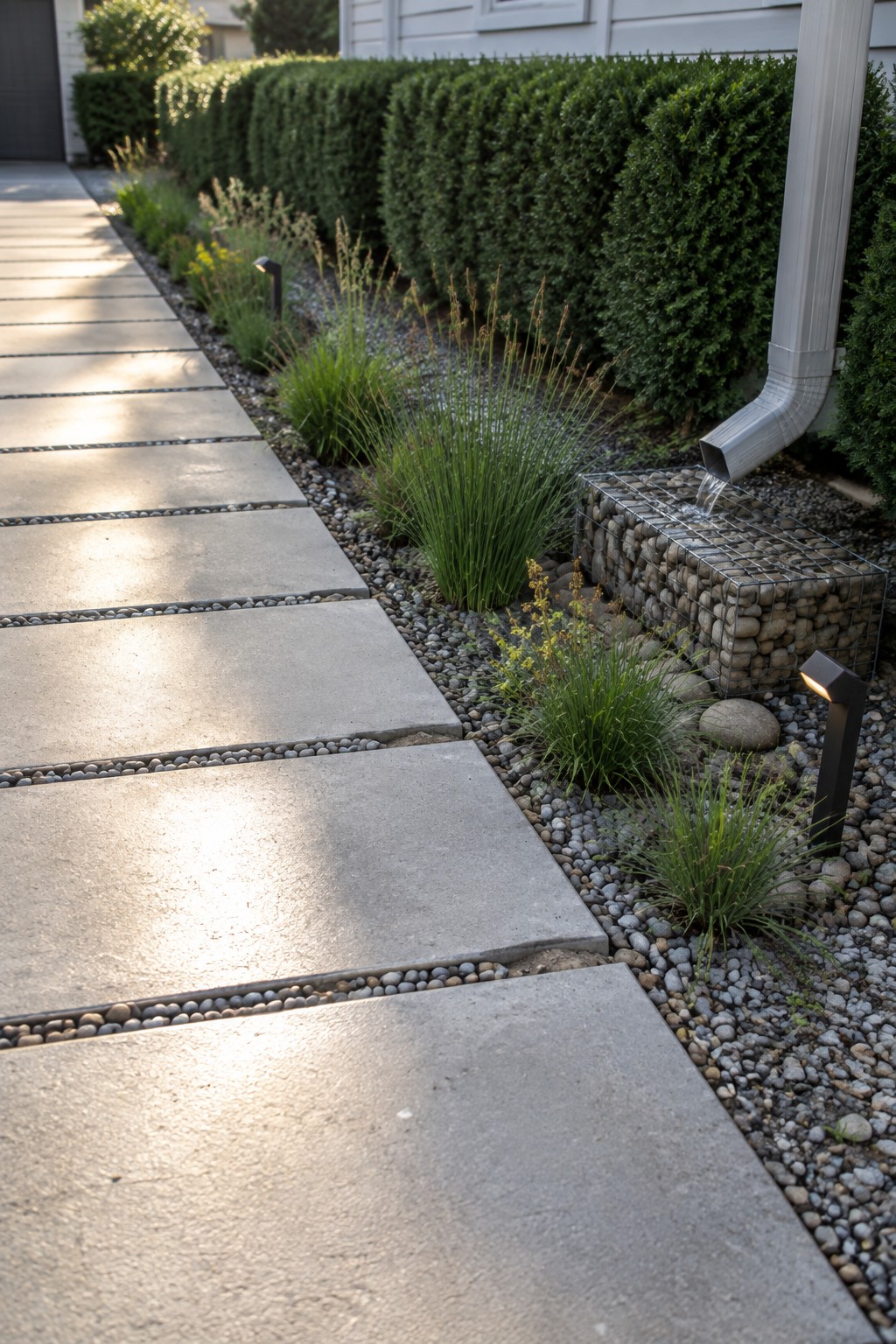
A gabion basket filled with stones gives downspout water a solid place to land and spread out. It slows the flow right away and keeps the area from turning into a muddy mess after heavy rain.
This works best on a narrow strip between a walkway and the house foundation. Add a few clumps of grass and low plants around the edges to help the water soak in over time.
Create a Rain Garden With Natural Log Edging
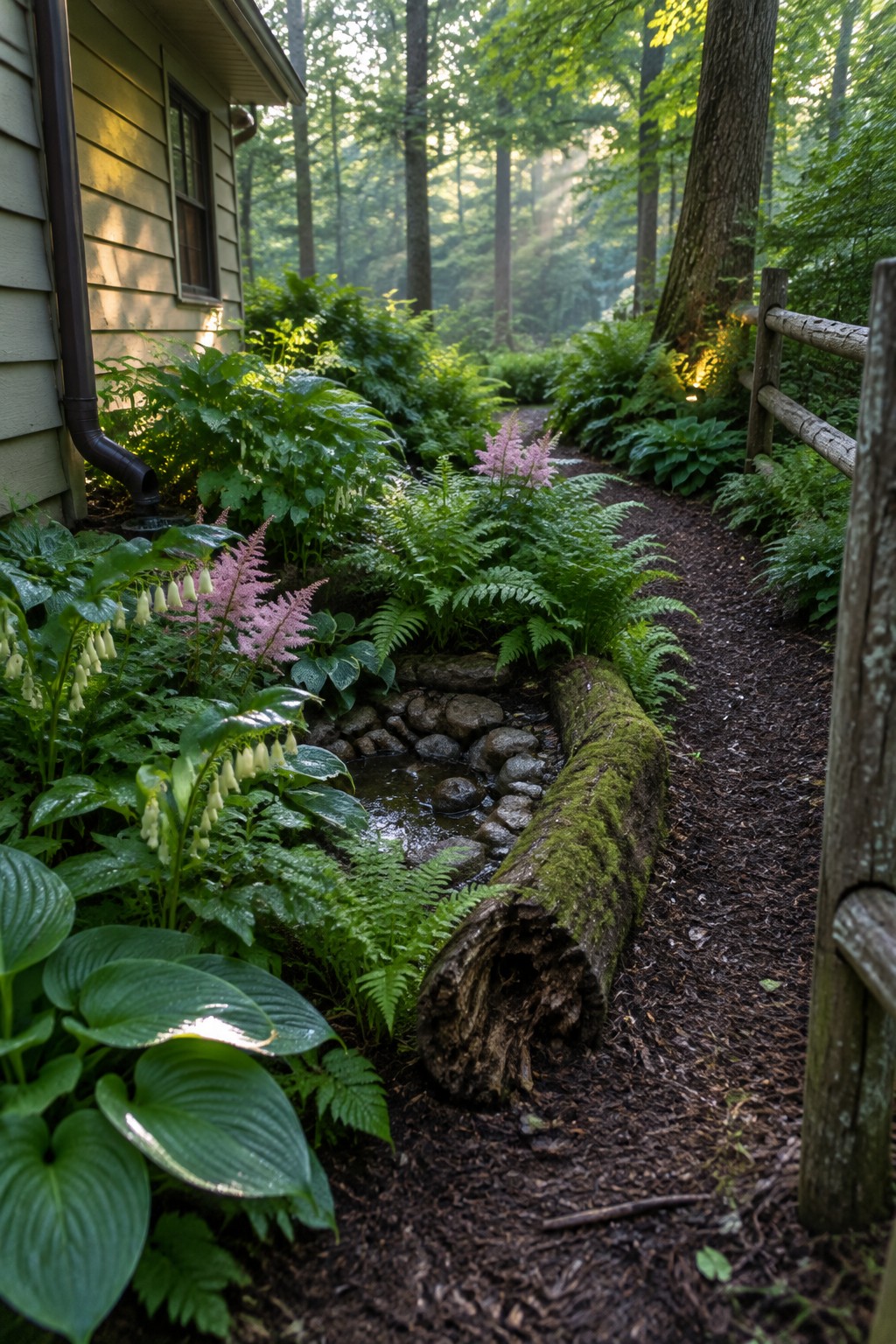
A rain garden right at the base of a downspout can catch roof water before it turns into mud or runs off across the yard. The log acts as a simple border that holds soil and plants in place while letting water seep in slowly.
This setup works best on shady lots where ferns and hostas already thrive. Keep the bed a few inches lower than the surrounding ground and add rocks near the spout to slow the flow.
Create A Rain Garden For Downspout Runoff

A rain garden handles roof water by letting it spread out slowly through plants and soil instead of rushing toward the house. The downspout here feeds into a shallow rocky channel that curves through the bed, keeping water moving while the plants absorb it.
This setup suits homes with limited side yard space and moderate slopes. Shape the bed a bit lower than the lawn so water flows in on its own, then mix in tough perennials and shrubs that tolerate both wet spells and dry periods.
Let Downspout Water Flow Into A Rock Bed
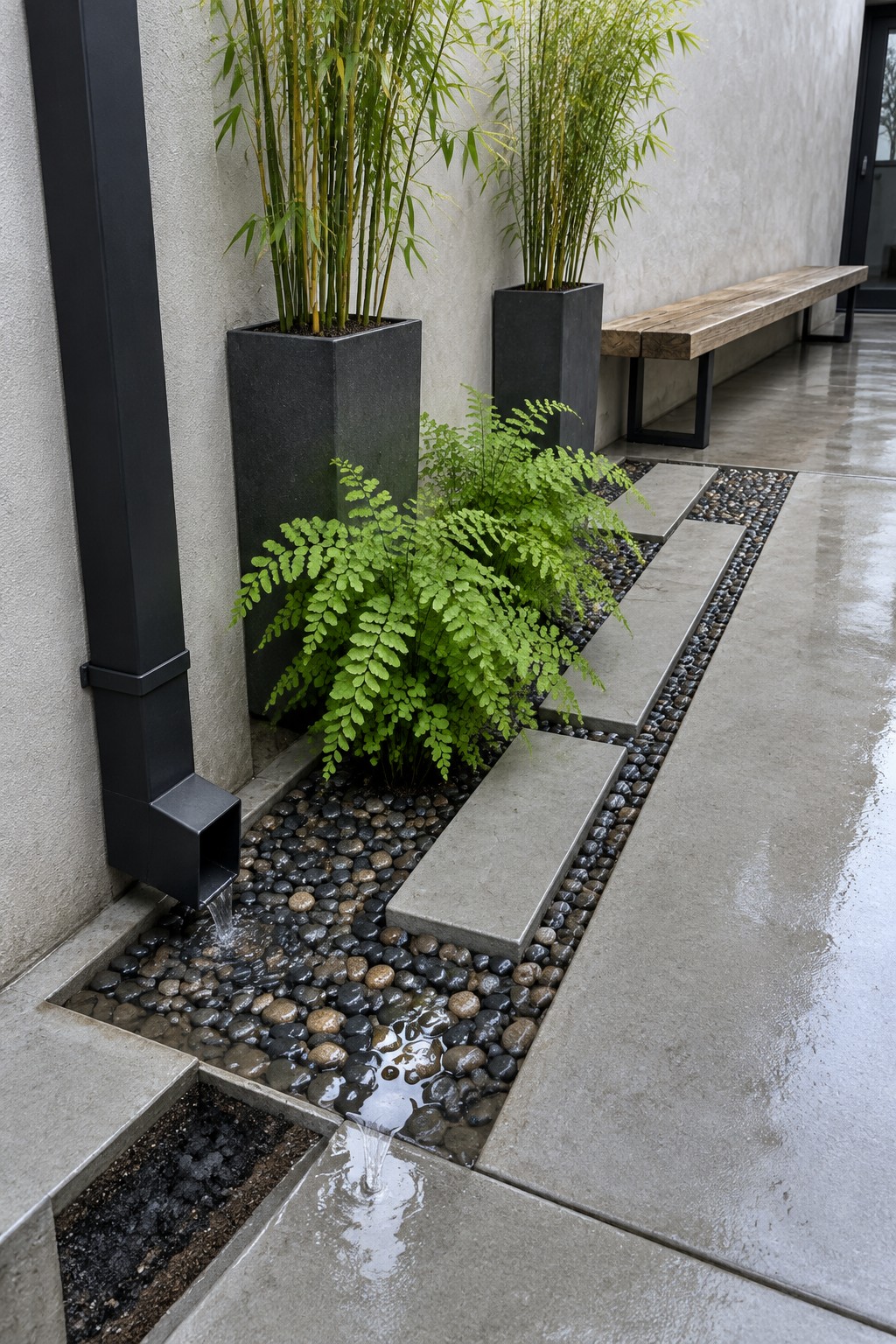
One simple way to manage runoff is to direct the downspout straight into a shallow bed of river rock. The rocks slow the water and give it time to soak into the ground instead of pooling or washing away soil.
This approach works best along narrow side yards or foundation edges where you still want some planting. Choose ferns or other moisture-tolerant plants to fill in around the rocks, and keep the bed slightly lower than the surrounding hardscape so water stays contained.
Stepping Stones For Rain Garden Drainage
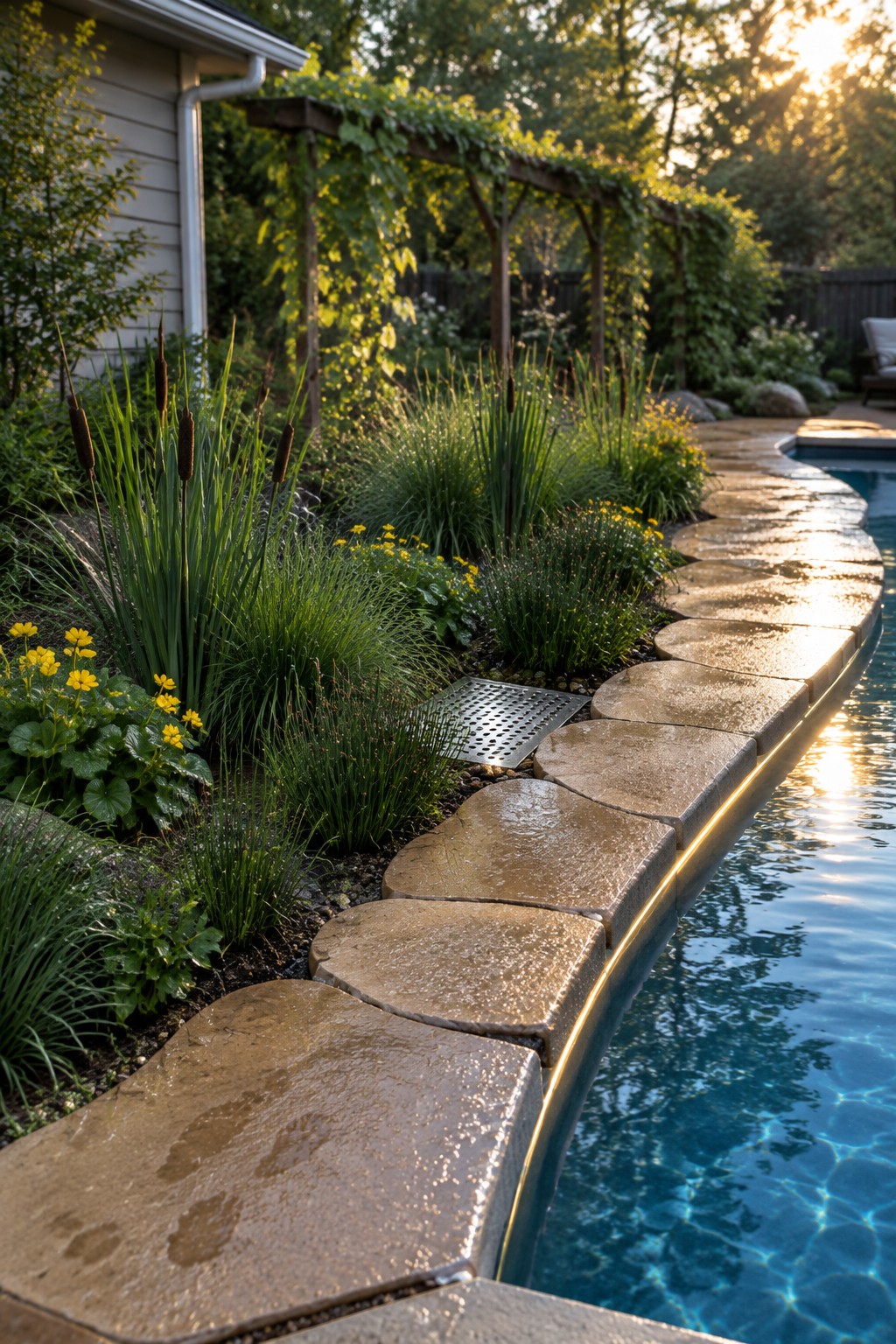
Large flat stones work well as a path that also moves water away from the house. They let rain from the downspout spread out instead of pooling in one spot, and the gaps between them keep the soil from getting too soggy. Plants on the inner side can handle the extra moisture without trouble.
This setup works best along the side of a house or near a pool where you need both access and drainage. Keep the stones level with the ground so water flows across them, and add a grate or small channel if the flow gets heavy after storms. It suits homes with moderate runoff and gives you a simple way to keep the garden looking neat.
Frequently Asked Questions
Q: Where should I place the rain garden so the downspout water reaches it easily?
A: Set it at least ten feet from the house foundation in a low spot. Extend a short pipe or swale to guide the flow right into the plants.
Q: Do I need to test my soil before planting anything?
A: Grab a handful and squeeze it to see how fast water drains through. If it stays soggy for days, mix in some sand to loosen things up.
Q: What happens if too much water comes at once?
A: Build a small overflow channel on the far side. Excess water then moves to another garden area or the street without flooding your yard.
Q: How do I keep mulch from washing away in big storms?
A: Use heavier wood chips or pin them down with a few rocks at first. And let the first rain show you where it needs a tweak.
