


I have always found that a courtyard garden starts to feel complete once you decide where the main tree will sit.
That choice seems to guide the rest of the layout in ways that surprise me every time I try it in a small space.
Planting around a single focal point keeps the design from feeling scattered and helps the eye settle on something solid instead of jumping between too many elements.
It also makes maintenance simpler over the seasons.
Watching how the tree changes the light and shade in the courtyard has taught me to plan paths and seating with that in mind from the start.
Build Seating Around A Focal Tree

A single mature tree works best when you treat it as the actual center of the space rather than an afterthought. Wrapping a bench around the base turns the tree into both the visual anchor and a practical spot to sit, which keeps the whole courtyard feeling simple and balanced.
This layout suits smaller yards or enclosed gardens where you want shade without adding extra furniture. Keep the bench low and built into the planter edge so it feels like part of the hardscape instead of something added later.
One Tree Can Define a Courtyard Garden

A single tree often works better than a mix of plants when the goal is a calm, uncluttered courtyard. The red maple here sits in a small mound of moss and becomes the clear center, with everything else kept low and simple around it.
This layout suits small enclosed spaces where you want the tree to carry the design through the seasons. Rake the gravel into soft patterns and use a few stepping stones to lead the eye inward without adding too many other elements.
Use a Raised Planter for the Focal Tree

A single tree gains real presence when it sits in its own raised concrete planter. The solid base keeps the roots contained, lifts the canopy for better light, and turns the tree into the obvious center of the courtyard instead of letting it blend into the background.
This approach suits compact modern yards where you want structure without crowding the space with extra beds. Place the planter next to a narrow water channel or simple paving and keep surrounding plantings low so the tree stays the main feature.
Center the Courtyard on One Tree

A single mature tree can pull an entire courtyard together without much else needed. The branches create shade and height, while the roots stay contained in one defined spot. This keeps the space feeling open rather than crowded with separate garden beds.
The approach works best in smaller paved yards where you want a clear focal point. Set the tree in a low brick ring to protect the roots and give the patio a finished edge, then place seating nearby so the tree becomes part of daily use rather than something off to the side.
Create a Raised Central Tree Bed for an Enclosed Courtyard

A single tree can pull an entire courtyard together when it sits in its own raised bed right in the middle. The tree gives height, shade, and a natural focal point without needing a lot of extra planting. In this kind of space the tree feels like the main feature instead of just one more plant along the wall.
This works best in smaller or enclosed courtyards where the tree can be seen from every angle. Choose a slow-growing variety that stays in scale with the house, and build the bed from durable materials that match the paving. Keep the surrounding floor simple so the tree stays the clear center.
Connect Paving and Seating Around a Central Tree

A single tree can pull an entire courtyard together when it is given its own clear spot. Here the tree sits in a low stone planter that rises just above the paving, so it feels like part of the hardscape rather than something added later. The surrounding decking, pool edge, and seating all read as extensions of that one central point.
This works best in smaller or fully enclosed spaces where too many plants start to compete. Keep the bed simple, use a tree with a strong shape, and let the paving and a few large pots do the rest. The result stays open and easy to move through while still feeling like a real garden.
Anchor the Courtyard Around One Central Tree

A single tree set in a large metal planter gives a courtyard a clear center point. It organizes the seating and keeps the space from feeling scattered even when you add a fire pit or extra chairs.
This approach suits small urban yards or paved areas where a full garden bed is not possible. Choose a tree that fits the scale of the space and let the rest of the furniture stay simple so the tree remains the main feature.
Centering a Deck Around a Single Tree

A single tree set into the deck creates a natural center that ties the whole courtyard together. It gives the space a calm structure without needing walls or extra dividers, and the open gravel ring around the base keeps the tree healthy while letting the deck flow around it.
This approach works best in smaller yards or side courtyards where you want one strong focal point instead of scattered plantings. Keep the surrounding seating and fire pit simple so the tree stays the main feature, and make sure the deck boards run cleanly around the gravel circle for a neat finish.
Wrap Courtyard Seating Around a Lemon Tree

A single large tree can pull an entire courtyard together without much else needed. It gives shade, height, and a clear focal point that smaller plants and built-ins can work around. In this case the lemon tree sits in its own raised bed, with seating wrapped along two sides so people naturally gather under the branches.
This approach works best in smaller or enclosed outdoor spaces where you want one strong element instead of lots of scattered features. Choose a tree that stays in scale with the yard and plan the seating and paths around its eventual size. Keep the surrounding planting simple so the tree stays the main event.
Design a Low Maintenance Courtyard Around One Tree

A single tree can pull an entire courtyard together when everything else stays simple. The tree becomes the clear center, and the rest of the space can stay open and easy to walk through without competing plants or clutter.
This approach works best in smaller paved courtyards where you already have room for one good-sized tree to mature. Keep the planting low and contained around the base so the tree stays the main feature, and use the surrounding space for seating or paths. It suits both new builds and older homes that want a low-maintenance garden that still feels intentional.
Let One Tree Anchor the Courtyard
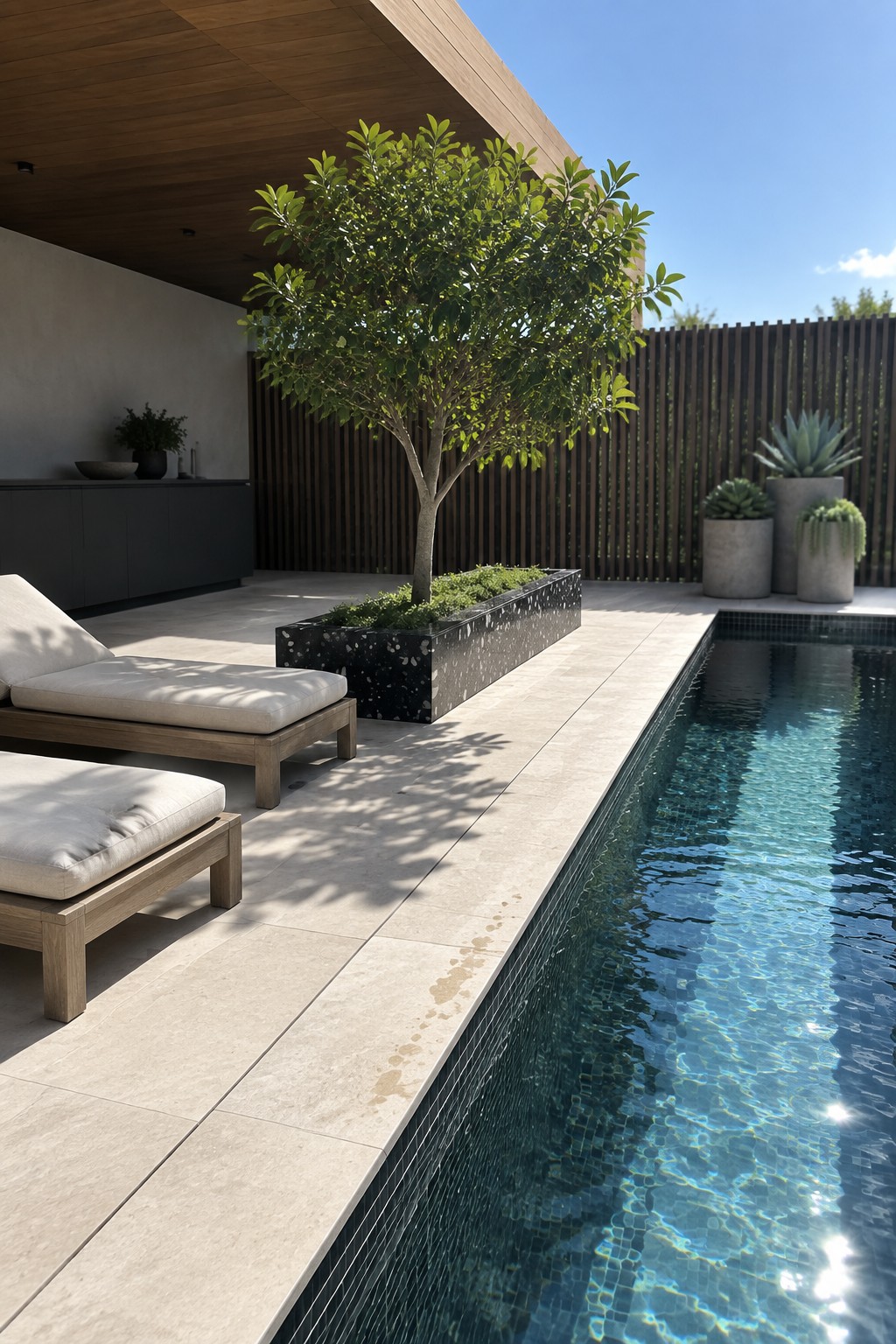
A single mature tree often does more for a courtyard than a mix of smaller plants. It creates a clear center point and gives the whole space a calmer, more settled feel without adding clutter.
This works best in smaller outdoor areas or beside a pool where you want shade and greenery but still need open floor space. Keep the planter simple and solid so the tree stays the main feature and the roots stay contained.
Make One Tree the Focal Point of Your Courtyard
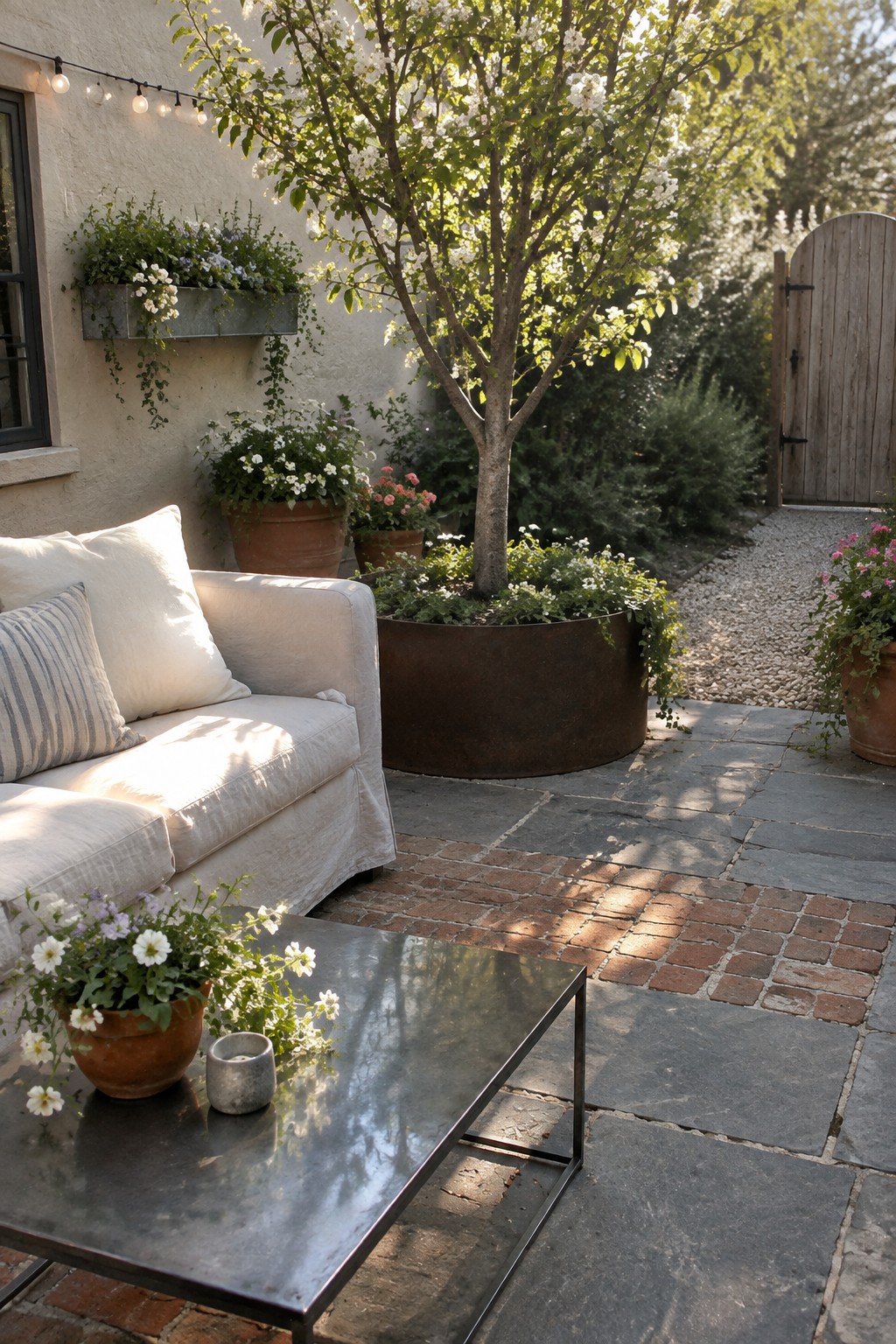
A single tree in a big container can pull a small paved space together without needing lots of planting beds. It adds height, shade, and a natural center that feels settled even when the rest of the area stays simple.
This approach suits compact courtyards or patios where you want greenery but do not have room for in-ground trees. Choose a sturdy metal or stone planter that can handle the weight and root growth, then keep surrounding furniture low so the tree stays the main feature.
Use a Stone Ring and Moss Ground Cover Around One Tree

A single tree works best when the rest of the space stays simple. The low stone ring and moss ground cover let the tree stand out without competing elements nearby.
This layout suits small courtyards or narrow side gardens where you want one strong focal point. Keep surrounding plants low and paths minimal so the tree remains the clear center.
Keep Courtyard Paving and Seating Simple Around One Tree

A single tree can pull an entire courtyard together when everything else stays simple. The paved surface and basic seating let the tree stand out as the main feature instead of competing with other plants or furniture.
This approach suits small spaces where you want shade and seasonal interest without overcrowding. Choose a tree that fits the scale of the area and give its roots room to grow under the paving or in a generous planting bed.
Raise the Focal Tree Above Simple Courtyard Plantings

A single tree planted in a raised bed gives the whole courtyard a clear center point. Everything else can sit around it without feeling scattered or overdone.
This layout works well in dry climates where you want shade and height without filling the space with too many plants. Keep the surrounding beds simple so the tree remains the main feature.
Soften Stone and Gravel Courtyards With a Mature Tree

A single mature tree gives a courtyard an immediate sense of order. Everything else can stay fairly simple because the tree already defines the center and provides shade and height without extra structures.
This layout works best in gravel or stone courtyards where you can run a low ring of paving around the trunk and keep the rest open. It suits smaller spaces or older homes that already have some age to the walls and paving, since the tree softens the hard surfaces without needing a lot of extra planting.
Frequently Asked Questions
Q: How do I pick a tree that fits a small courtyard without taking over? A: Measure the space first and note how much sun reaches the ground each day. Pick a compact variety with an interesting shape or seasonal color that stays in scale. Plant it slightly off center so the rest of the area still feels open.
Q: What is the easiest way to handle fallen leaves or petals around the tree? A: Rake them into the beds once a week during peak season instead of fighting them every day. Use a simple ground cover that hides most of the mess. This keeps the courtyard looking cared for without constant work.
Q: Can I still fit a bench or a few pots if the tree is the main draw? A: Set a small bench facing the trunk so the view stays focused. Tuck pots at the edges where roots will not get disturbed. Keep everything low so nothing pulls attention away from the tree itself.
Q: What if the courtyard has heavy shade from surrounding walls? A: Choose a shade-tolerant tree that still offers good structure and foliage interest. Add a light-colored gravel base to bounce what little light you have. The tree will stand out even more against the softer background.
