


When I plan garden beds around native plants the first thing I consider is how the heights will stack over the years rather than just the first season’s look.
Grasses add movement that perennials alone rarely provide and they help hold the soil in place through winter.
Paths change everything.
In my own yard the spots where I let pathways wind between plant masses always end up feeling more inviting than straight lines ever did.
A few of these approaches seem worth trying out on the edges first to see how they adapt to local soil and light before committing to larger areas.
Keep Planting Beds Tidy With Low Concrete Edging

A low concrete edge gives a garden bed a clear shape without making the whole space feel stiff. It keeps soil and mulch from spilling onto the path while still letting plants grow right up to the line.
This works especially well in narrow side yards or along walkways where you need some order. Brick paths pair with it easily, and the edge lets you layer taller flowers behind lower grasses without the bed looking overgrown.
Stepping Stone Paths Through Native Plantings

A stepping stone path keeps the focus on the plants while still giving you a clear way to move through the garden. The stones sit low in gravel so the path feels like part of the landscape instead of something laid over it.
This layout works best in side yards or smaller native gardens where you want light foot traffic without a wide walkway. Space the stones unevenly and let the surrounding grasses and perennials grow close to the edges.
Layer Perennials and Grasses for Natural Depth

One simple way to get a full, relaxed garden is to stack plants by height and bloom time. Tall grasses sit behind shorter perennials so the bed looks soft and changes through the seasons without much work.
This approach fits along paths or lawn edges on most home lots. Pick natives suited to your soil and sun, keep the front layer low, and let the plants fill in over a year or two.
Layer Native Grasses Along Entry Paths
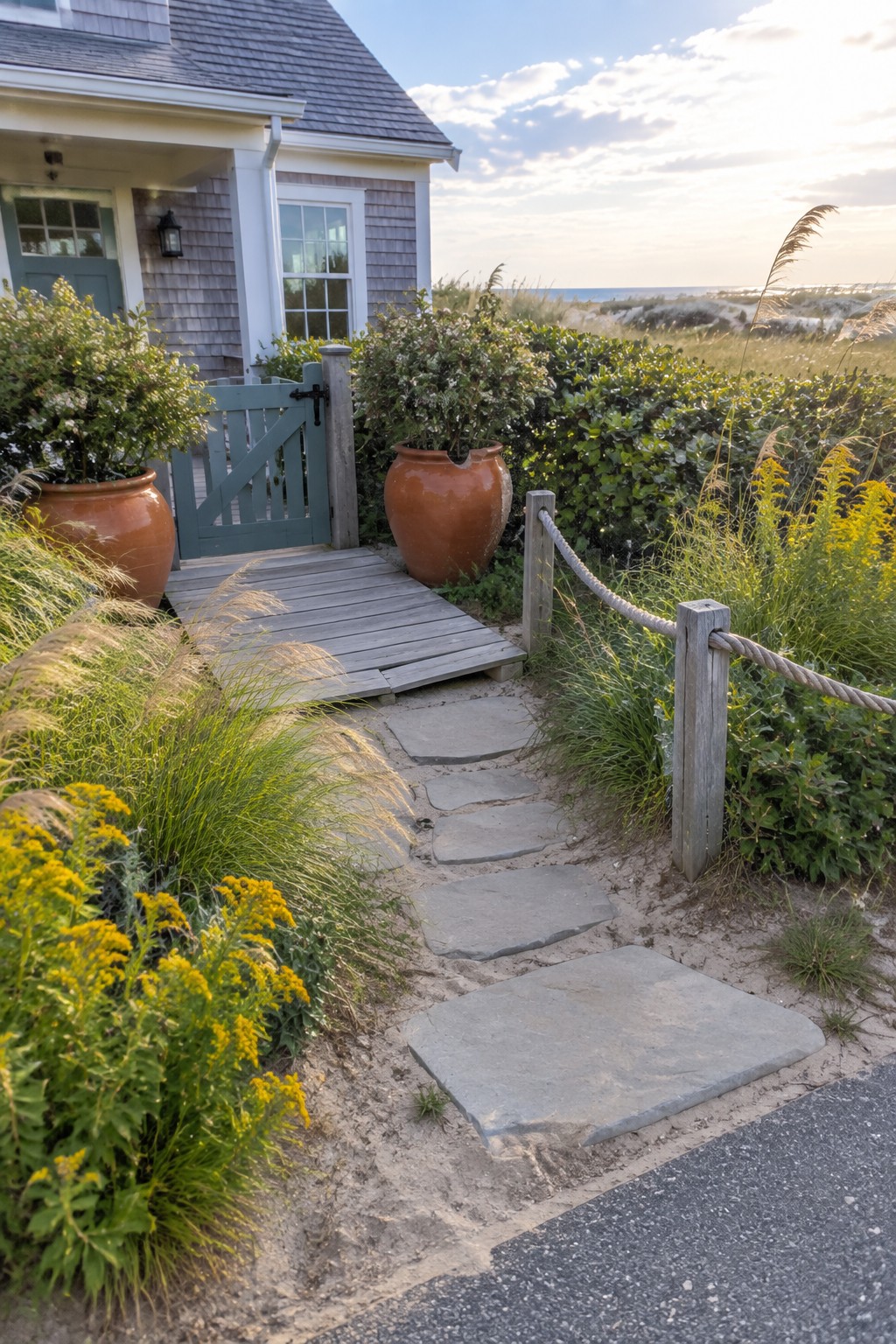
A simple stone path gains a lot more character when you plant native grasses and perennials right up against it. The soft texture of the grasses contrasts with the hard surface and makes the whole approach feel more relaxed and tied to the surrounding landscape. This kind of edging also helps the path blend into the garden instead of standing out as a separate feature.
It works especially well on homes near dunes or open lots where the soil is sandy. Stick with plants that handle wind and salt, and keep the layers low near the walkway so the path stays easy to follow. Avoid crowding the stones too tightly or the grasses can start to flop over and make walking less comfortable.
Layer Perennials Along Entry Steps
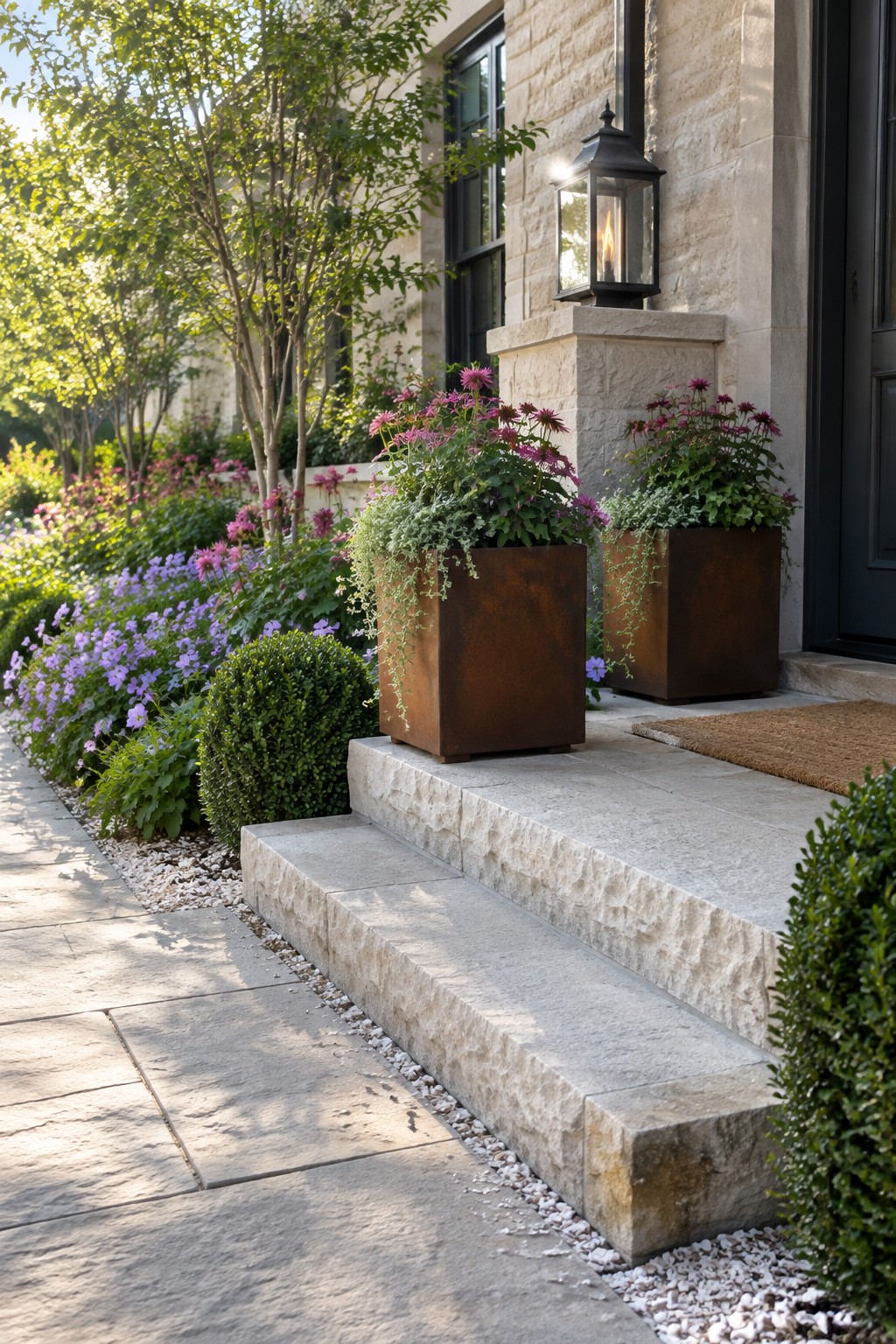
One simple way to bring a naturalistic feel to the front of a house is to layer perennials in both ground beds and large containers right next to the steps. The mix of taller blooms with trailing and lower plants creates depth without needing a big garden space. It softens the hard edges of stone and makes the entrance feel connected to the surrounding landscape.
This approach works best on homes where the walkway or steps already have some structure. Keep the beds narrow and let the plants spill slightly over the edges so the layers look relaxed rather than planted in strict rows. Metal or stone containers help anchor the taller plants while still letting the flowers do most of the work.
Sit Your Table Amid Layered Perennials and Grasses
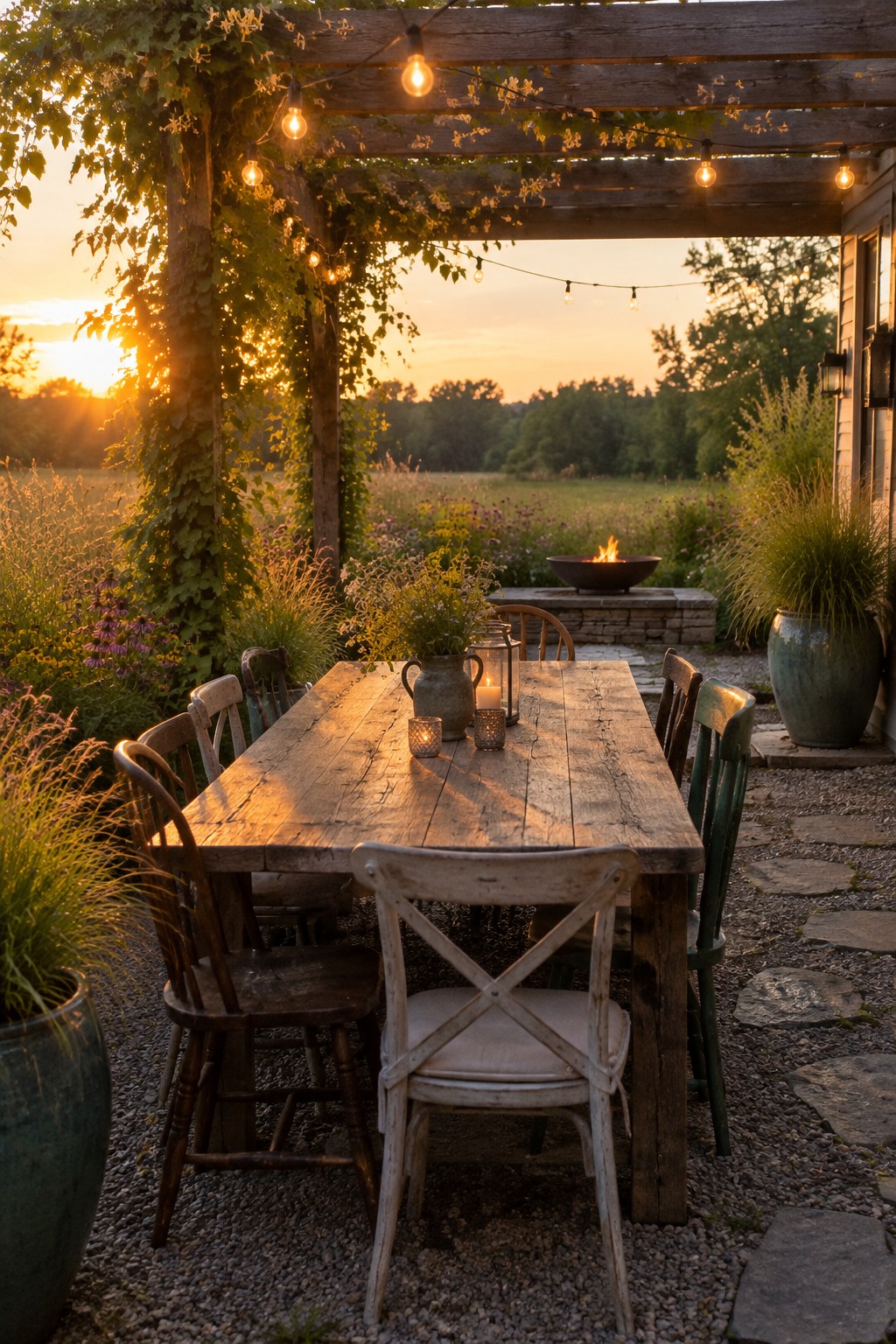
One simple way to make an outdoor dining area feel part of the garden is to place the table in a small cleared spot and let the plants come right up around it. The mix of tall grasses and flowering perennials creates a soft edge that changes with the seasons instead of a hard border.
This works best on homes with a bit of open ground where you can keep the surface gravel or packed earth. Use plain wood furniture and avoid adding too many extra structures so the planting stays the main feature.
Layer Grasses And Perennials Along Narrow Paths

Mixing ornamental grasses with flowering perennials creates a soft, full look that changes through the seasons. The grasses add movement and texture while the flowers bring color, and together they make a narrow space feel more planted and less like a simple walkway.
This works especially well in side yards or along fences where space is tight. Choose native plants that thrive in your area, plant in loose groups rather than straight rows, and let a few spill over the path edges so the whole thing feels settled rather than trimmed.
Layering Native Grasses Around A Pool Deck

Tall grasses and flowering perennials planted right up against a pool deck can turn a hard surface into something that feels much more settled in its setting. The height and movement of the plants help break up the flat lines of the water and paving without needing a lot of extra structure.
This works best on sunny sites where the plants get good drainage. Choose varieties that stay upright and do not drop too much debris into the water. A simple fire pit nearby can then sit comfortably within the same planting rather than standing out on its own.
Layer Perennials And Grasses Around Outdoor Seating
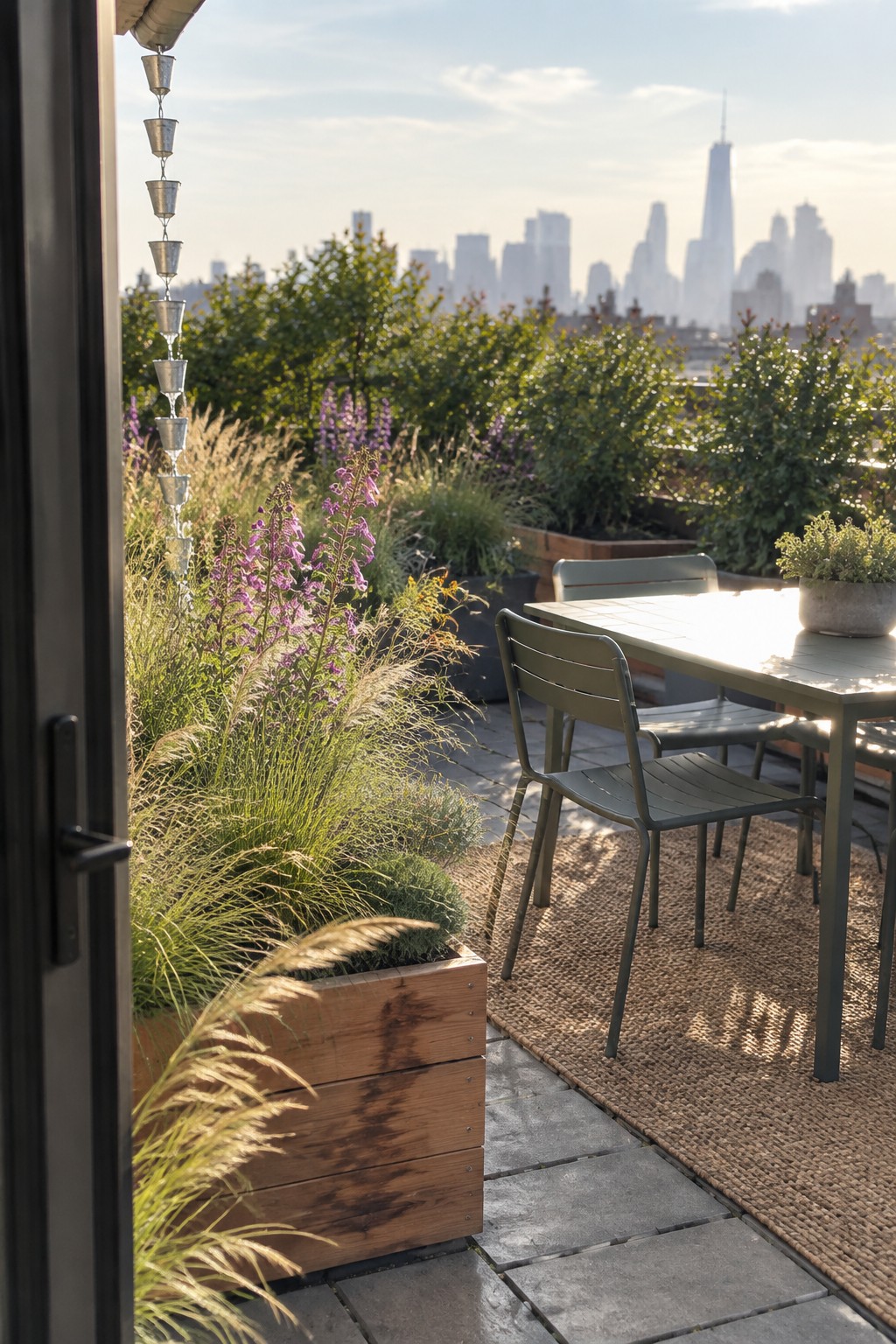
One simple way to make a rooftop terrace feel more like a garden is to layer perennials and grasses in sturdy planters near the seating area. The mix of soft grasses with taller flowering plants adds texture and movement right where people sit, without taking up much floor space.
This approach works best on urban rooftops or balconies that get good sun. Group plants in clusters of different heights so the bed looks full from the start, and pick varieties that handle wind and dry spells. The wooden planters and woven rug in the photo show how the planting can sit comfortably beside everyday furniture.
Stepping Stone Paths Through Layered Beds

Stepping stone paths fit well in naturalistic gardens because they keep the focus on the plants rather than on a hard surface. The stones let you move through the space while the beds on either side feel connected and full.
This layout works best in yards where the garden flows into open areas or along the edge of a field. Use irregular stones set right into the grass or low ground cover so the path feels like part of the planting rather than something laid on top of it.
Layer Perennials and Grasses Beside Gravel Paths
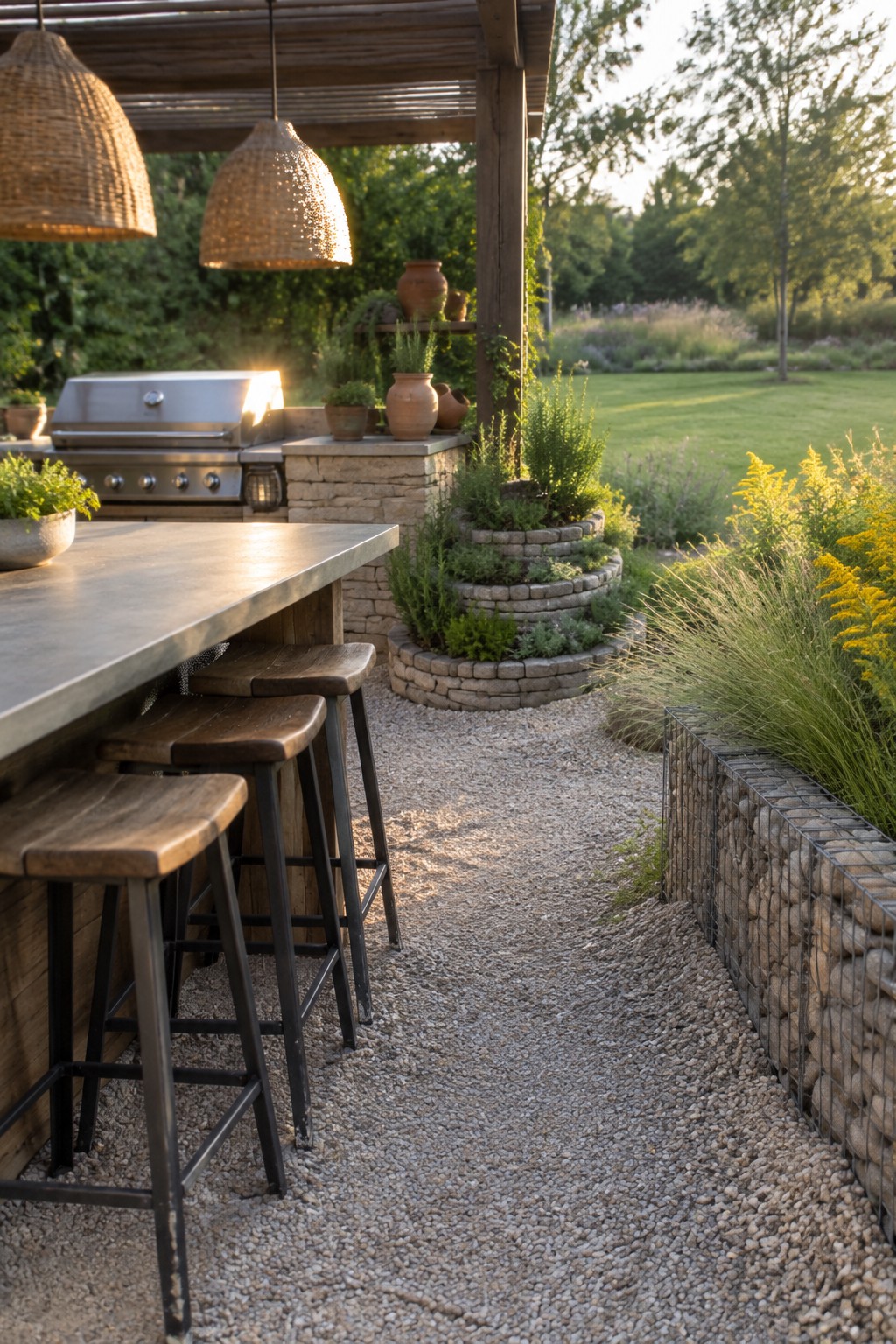
Layering perennials and grasses along a gravel path gives the garden a soft, natural edge that still feels intentional. The plants spill over the hard surface in different heights, which adds movement and keeps the whole area from looking too flat or built up. Stone features like tiered beds help hold the layers in place without making everything feel too formal.
This approach works well in larger yards where you want the garden to connect smoothly to an outdoor seating area. Keep the plant mix simple with a few repeating grasses and flowering perennials so it stays low maintenance. Avoid crowding the path edge if you need room to walk or mow nearby.
Layer Grasses and Perennials for Depth
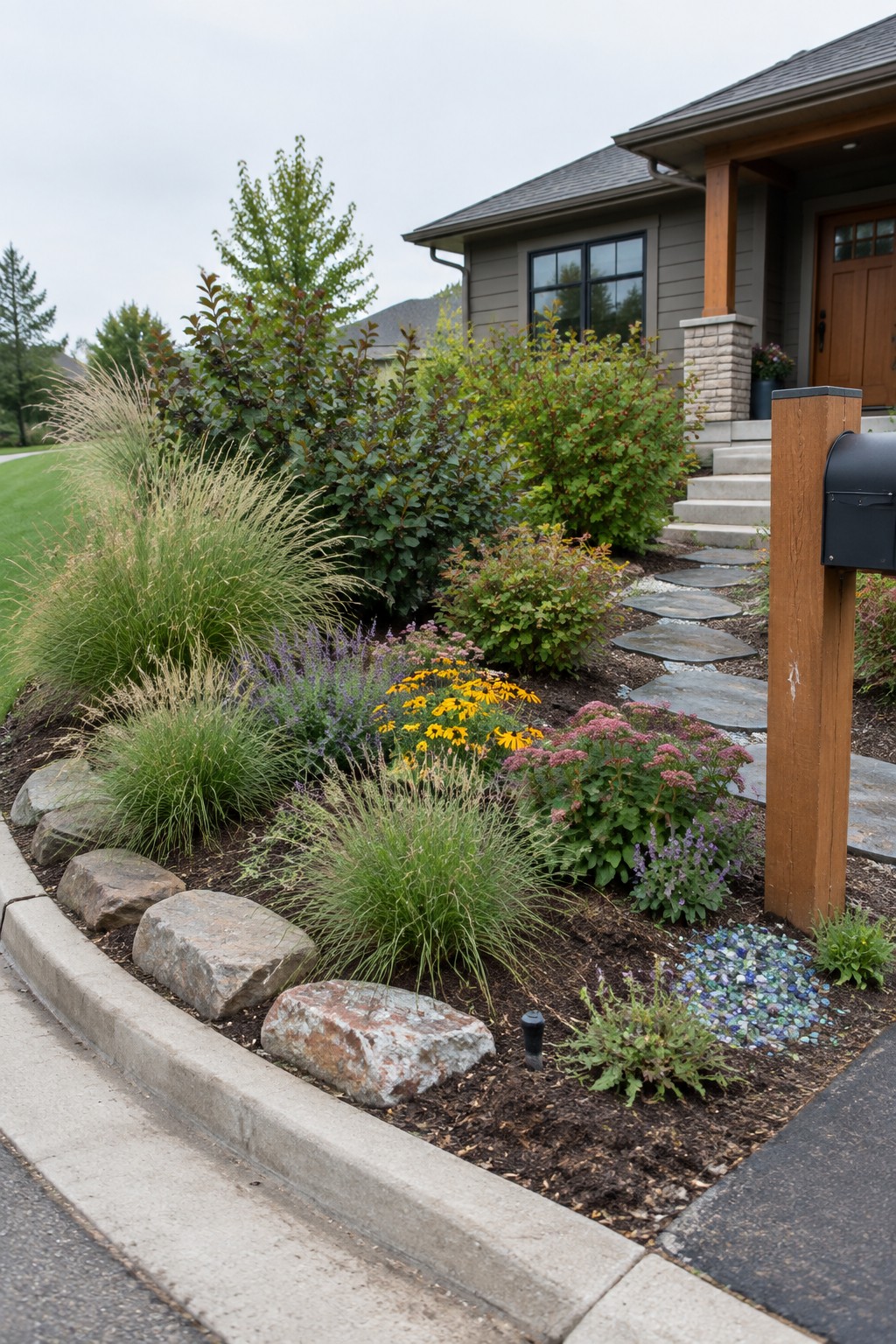
Layering grasses with perennials gives a garden bed more structure while still looking relaxed. The different heights let each plant show up clearly instead of everything blending into one flat mass. It also helps the planting feel fuller with fewer plants overall.
This approach works best along a house front or beside a walk where you want coverage without a formal look. Place shorter grasses toward the edge and let taller perennials and shrubs rise behind them. Keep the bed shape simple so the layers stay easy to maintain.
Tuck Seating Into Layered Garden Beds
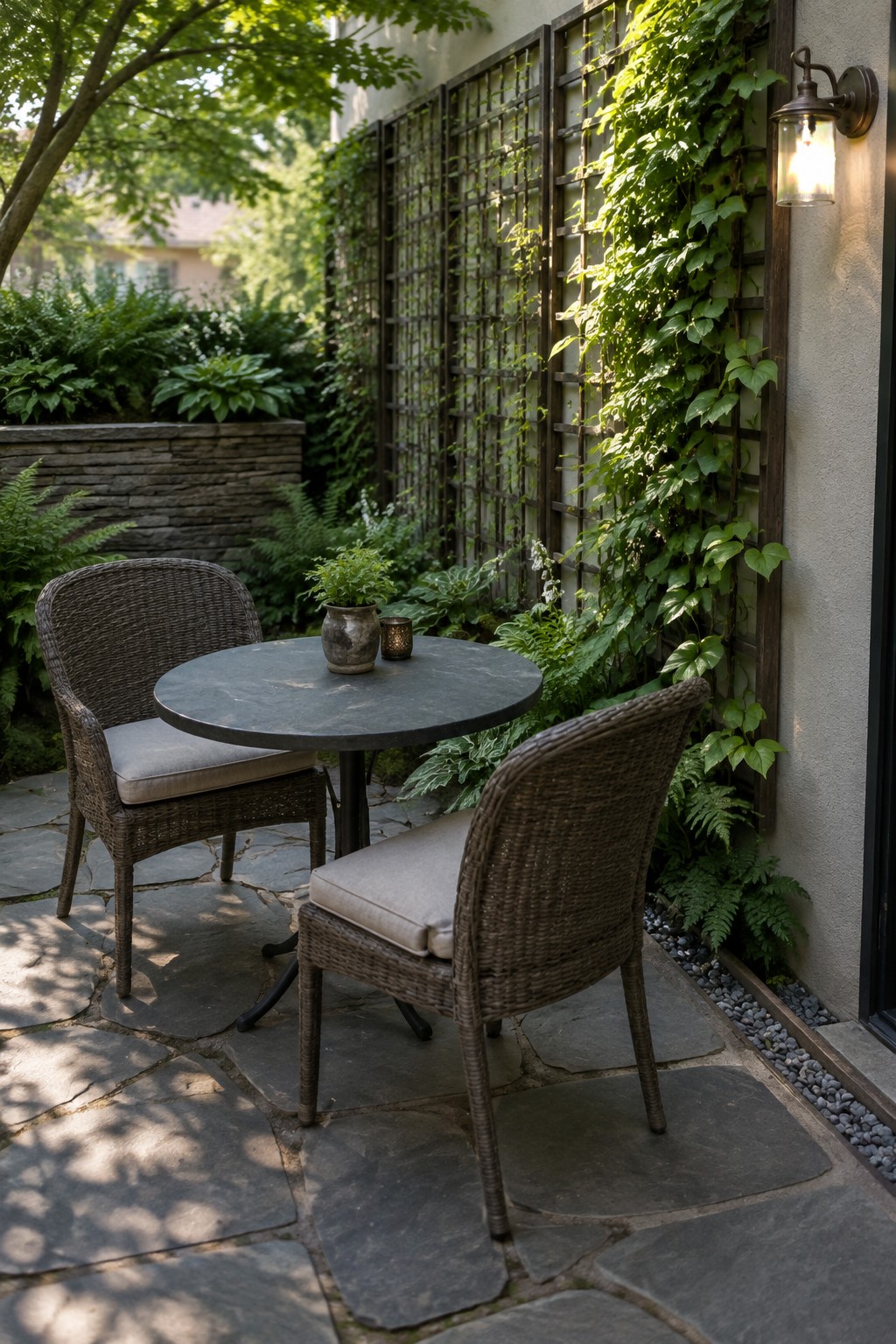
A small patio like this works because it sits right at the edge of the planting rather than floating in open space. The stone pavers keep the surface practical while the surrounding ferns, vines, and taller perennials give it a sheltered feel without any extra walls or screens.
This setup suits homes with modest backyards where you want an outdoor spot that feels part of the garden instead of separate from it. Use the same stone or gravel underfoot as the paths, and let the plants grow close so the seating disappears into the layers over time.
Stone Paths Through Layered Plantings
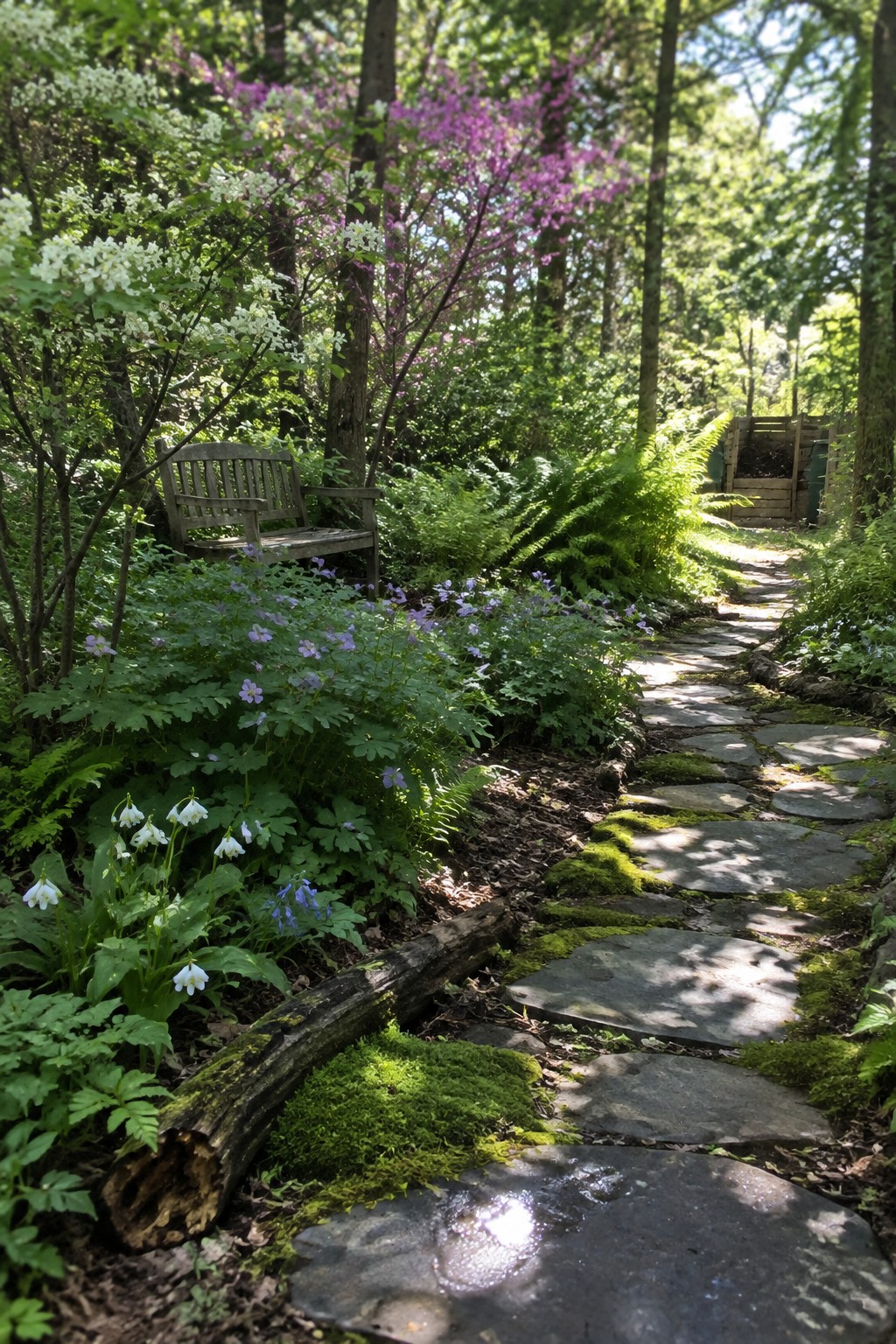
A simple stone path works well when you want to move through a garden without disturbing the layers of perennials and ferns growing on either side. It gives structure while still letting the plants feel like they belong together in one loose, natural space.
This approach suits shady yards or wooded lots where native species already grow thick. Set the stones low so moss can fill the gaps and allow the foliage to spill over the edges over time.
Raised Beds in Weathering Steel
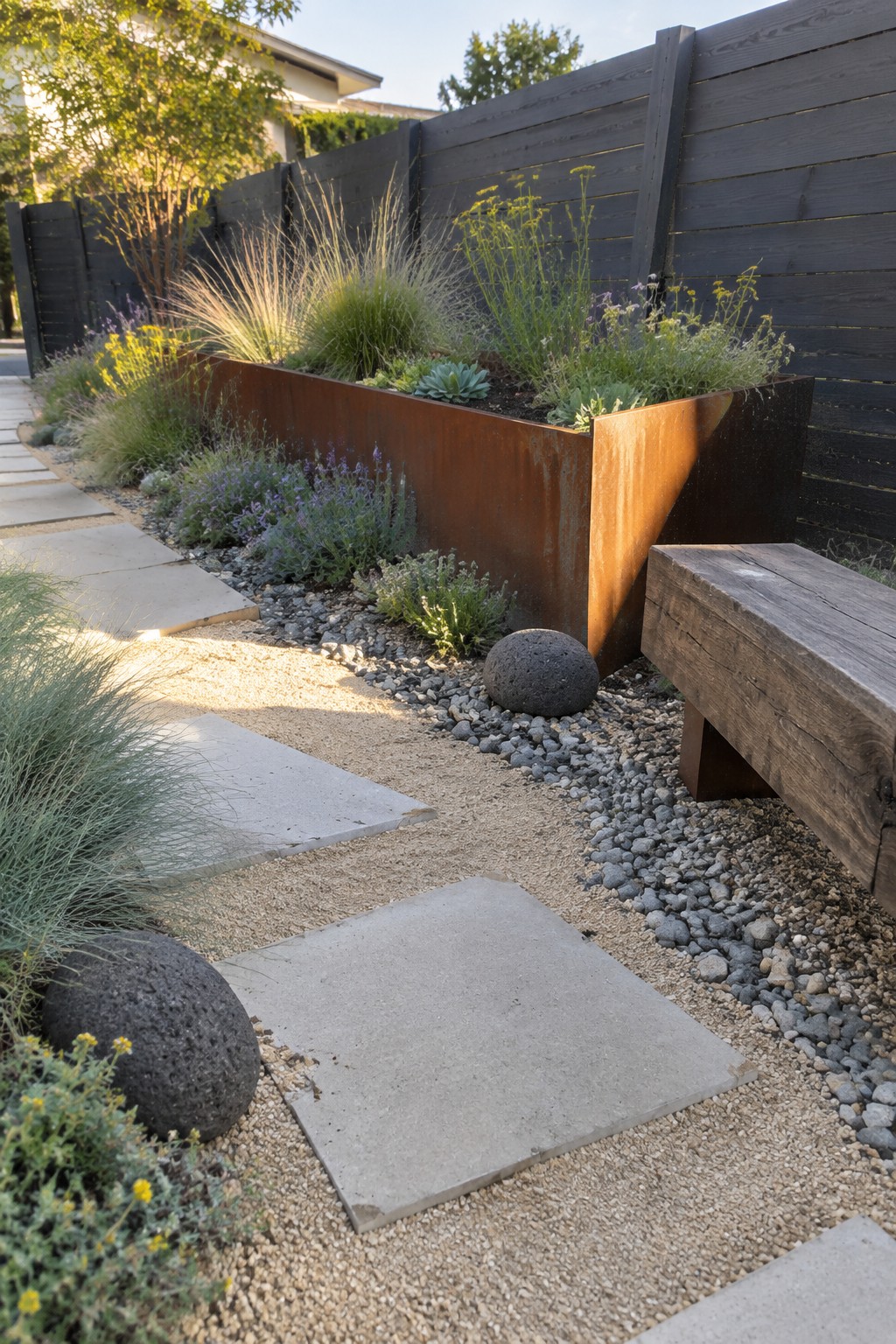
Weathering steel raised beds give a garden a clean edge without looking too formal. They hold the soil and roots in place while letting the plants spill over naturally, which works well with grasses and perennials that like to spread a bit.
These beds suit homes where you want low maintenance and a modern touch mixed with native planting. Just make sure the steel has room to rust evenly and that the bed height matches the scale of your path materials.
Layer Perennials And Grasses Around Outdoor Tables
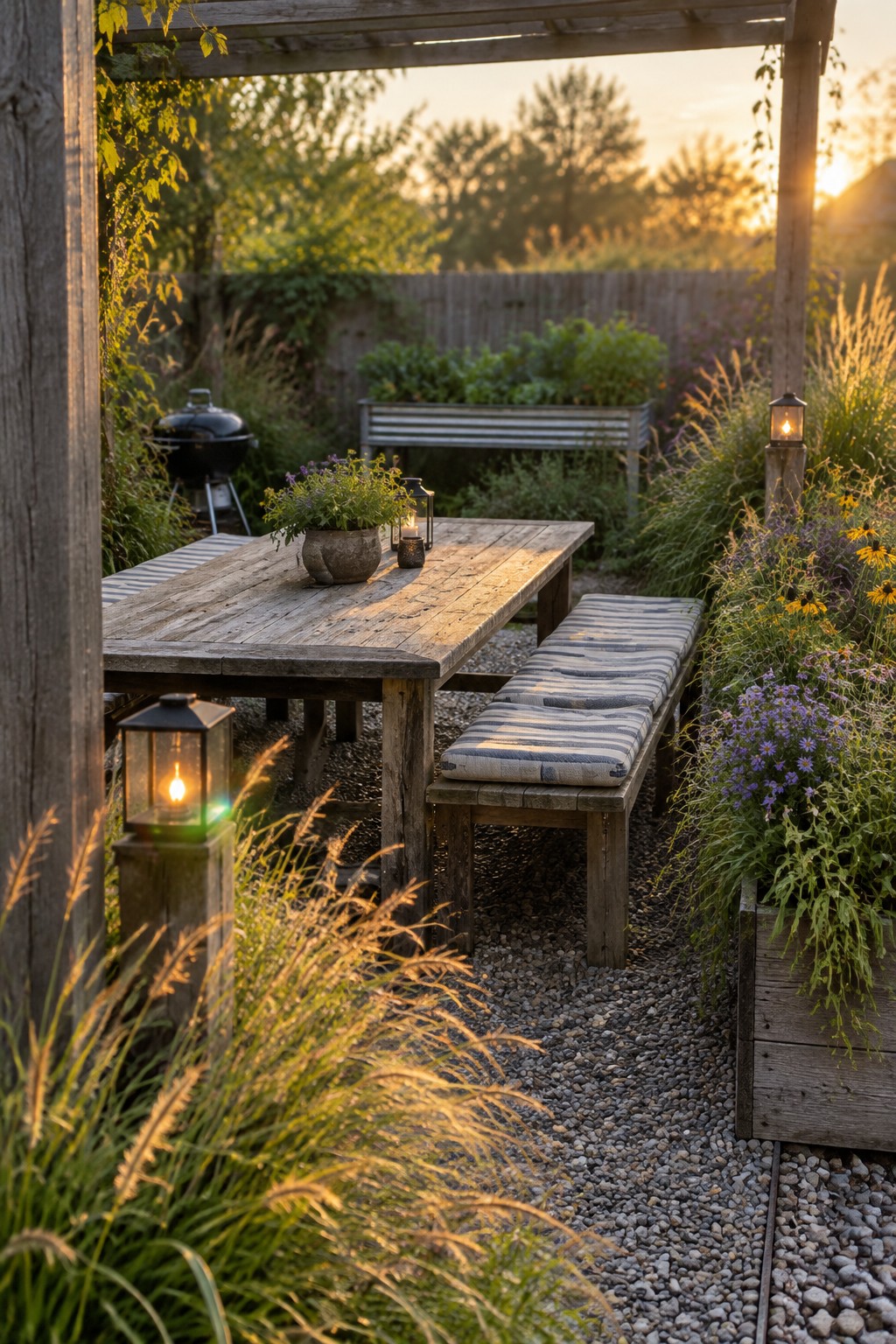
One simple way to make an outdoor dining spot feel like part of the garden is to bring the planting right up to the edges of the table and benches. Tall grasses and clumps of perennials can soften the hard lines of the furniture and make the whole area feel less separate from the rest of the yard.
This works best on gravel or mulch surfaces where you can run the beds straight up to the seating without needing a hard border. Keep the tallest grasses toward the back and lower flowering plants closer in so the table stays usable. It suits smaller yards where you want the seating to blend in rather than stand out as its own zone.
Plant a Pollinator Corridor Along Garden Paths

A narrow strip planted with native flowers and grasses can turn an ordinary walkway into a steady source of blooms for bees and butterflies. The mix here stays low once it settles in and needs little beyond occasional weeding.
This approach suits homes with existing paths or narrow side beds where you want color without high maintenance. Choose plants suited to your region and let them spread naturally so the edge stays soft and full.
Layer Perennials and Grasses Around Fire Pits

Many gardens feel more settled when the plants around a fire pit are built in layers instead of planted in a single ring. Taller grasses give some height and movement while lower perennials fill the front and spill onto the gravel.
This approach works best in open yards where the fire pit sits a little apart from the house. Choose natives that match your soil and let the plants grow together over a season or two so the whole area reads as one garden bed rather than separate zones.
Stepping Stone Paths Through Layered Beds
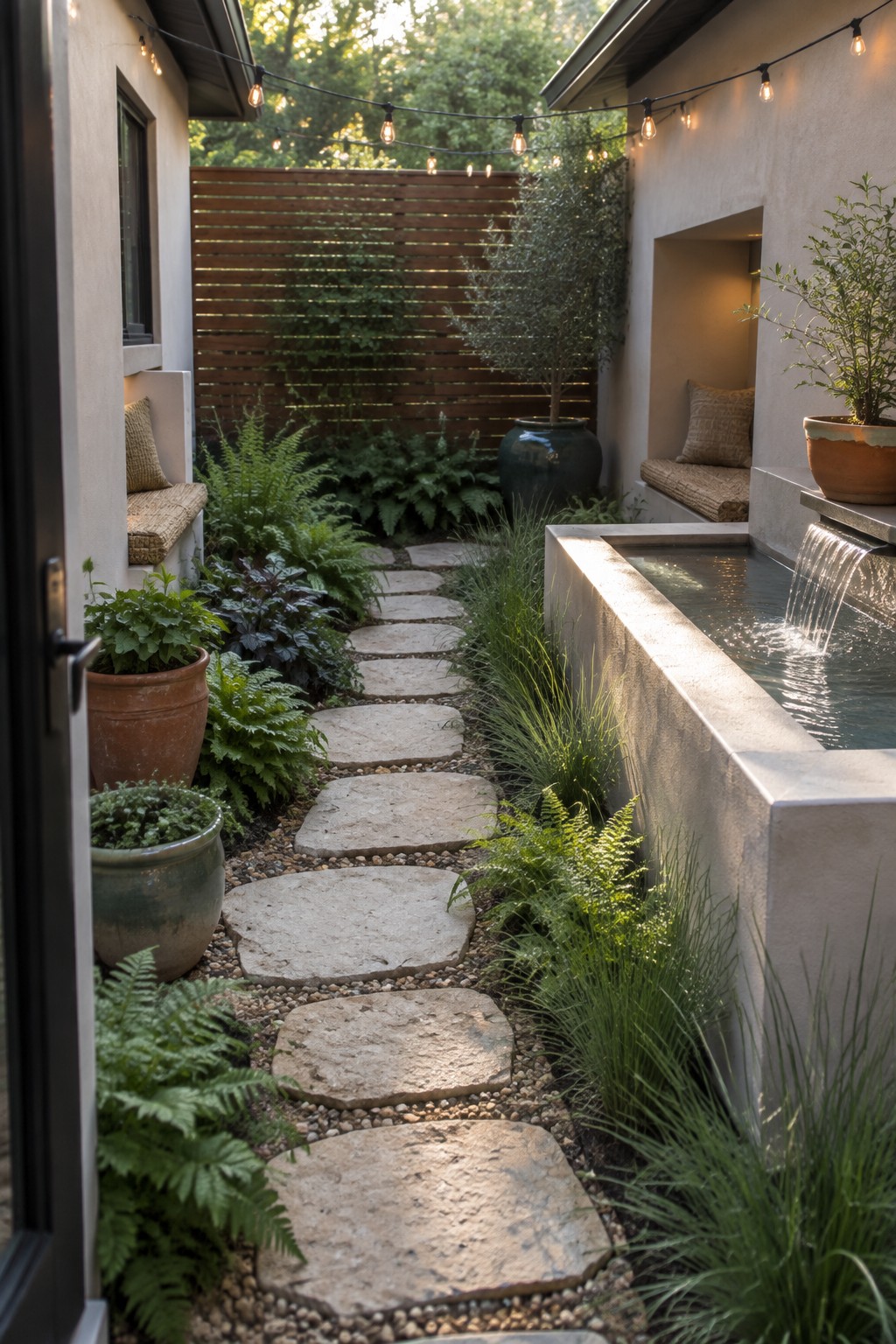
A stepping stone path set in gravel gives the garden a relaxed flow and lets the plants feel more connected. The stones create clear footing while the surrounding beds of ferns and grasses can spill over without looking messy or overgrown.
This layout works best in narrow side yards or tight spaces between the house and fence. Keep the stones large and slightly irregular, then add gravel between them so the path stays practical and the layered perennials can soften the edges over time.
Layer Perennials and Grasses Along Paths
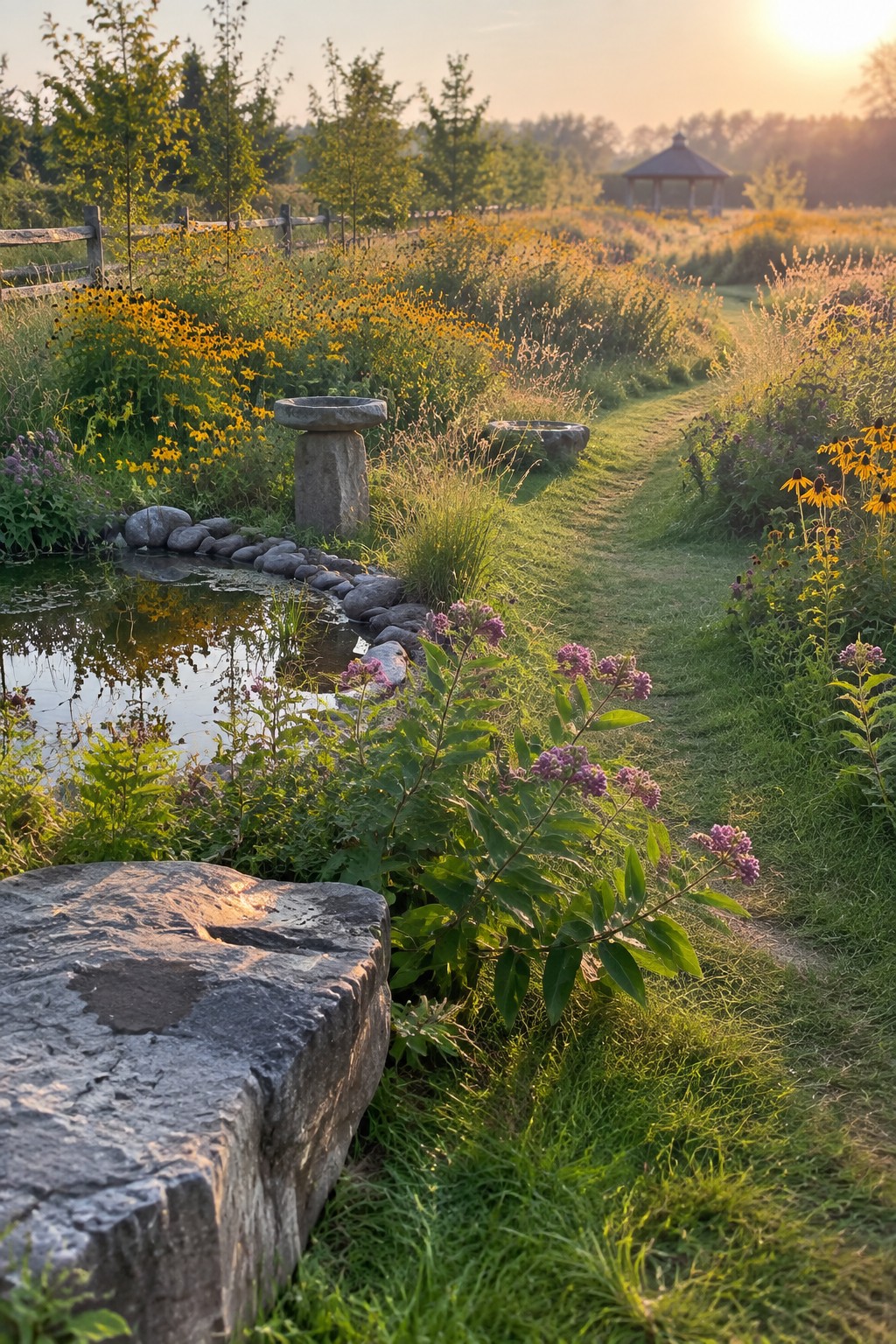
This setup uses varying heights of flowers and grasses to blur the edges of a stone path and pond. The plants spill over the hard surfaces just enough to make everything feel connected instead of separate.
It suits larger yards where you want movement and seasonal interest without constant trimming. Stick with natives that spread on their own and group them in loose drifts rather than neat rows.
Frequently Asked Questions
Q: Where should I start when picking plants for my native garden?
A: Look at what already grows well nearby in similar spots. Choose a mix of grasses for structure and perennials for flowers that support local insects. Stick to species native to your region so they thrive without extra fuss.
Q: How do I keep weeds from taking over while the garden fills in?
A: Lay down a thick layer of mulch around new plants. Pull weeds by hand when they are small and before they spread seeds. Over time the natives will crowd them out naturally.
Q: What about adding paths or seating in this kind of garden?
A: Keep paths narrow and use wood chips or stepping stones. Place a bench nearby so you can enjoy the wildlife that shows up.
