

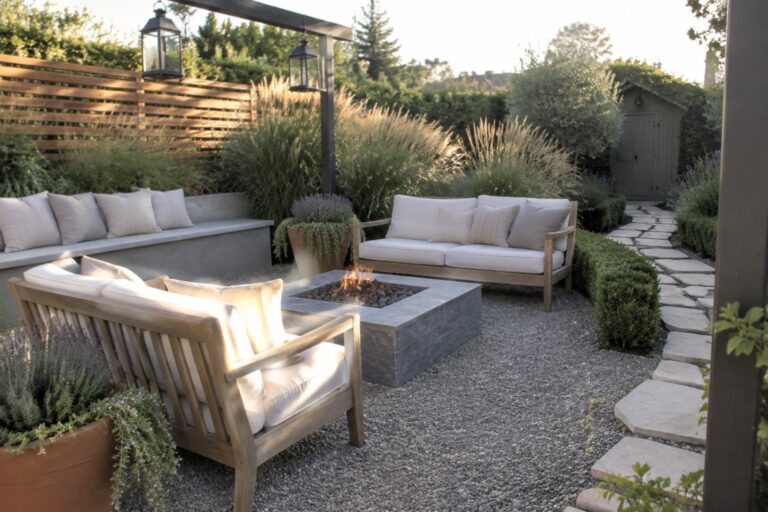
Over the years I have noticed that the way privacy plantings are arranged can completely change how usable a backyard feels during different times of day.
Thinking about pathways and how they connect different areas helps avoid the scattered look that many yards end up with after a few seasons.
I usually sketch out the mature sizes first.
Plant structure matters more than people realize when trying to create a sense of enclosure without blocking everything.
Adapting these approaches to local soil and light conditions tends to produce results that hold up better than following a plan exactly as shown.
Layer Tall Grasses for Quick Privacy
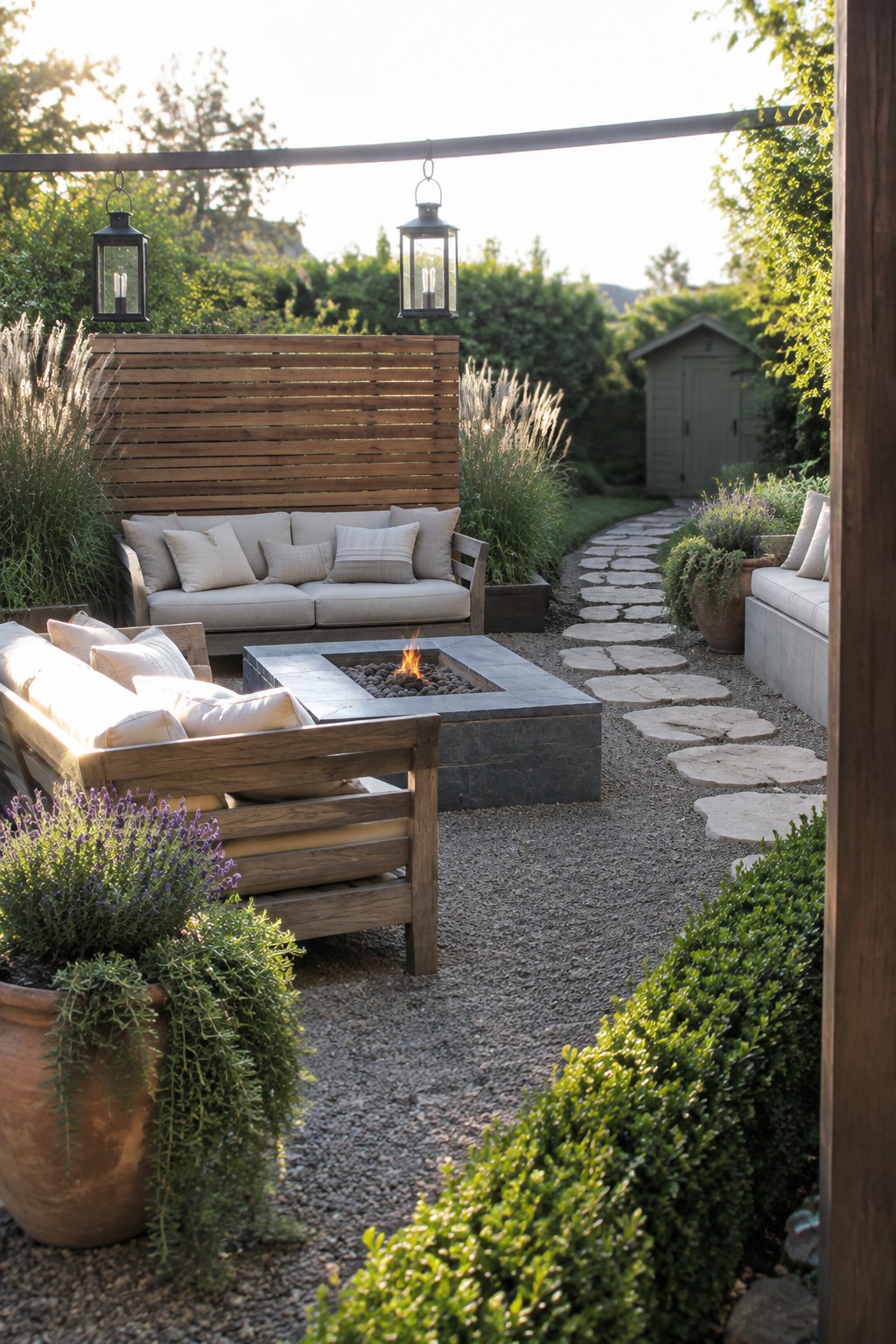
Tall grasses give you privacy without making the space feel closed in. They grow fast, move in the wind, and soften the edges of a patio or seating area while still letting light through. In this setup the grasses sit right behind the sofa and help block the view from the rest of the yard.
Use them along the back or sides of a fire pit lounge where you want screening but not a solid fence. They work best in gravel or mulched beds so water drains well and maintenance stays low. Just keep the front edge of the planting low so the seating stays open and welcoming.
Use Layered Trees And Shrubs For Privacy

Layered plantings work well when you want to screen a pool area without putting up a solid fence. Tall trees give height while dense shrubs below fill in the gaps and soften the edges. The mix keeps the space feeling open but still private from neighbors.
This setup suits homes with narrow side yards or small backyards where a fence would feel too closed in. Plant evergreens for steady cover and add a few flowering varieties for color. Keep the beds a consistent depth so the layers stay balanced as the plants grow.
Layer Tall Perennials Along Fences For Privacy
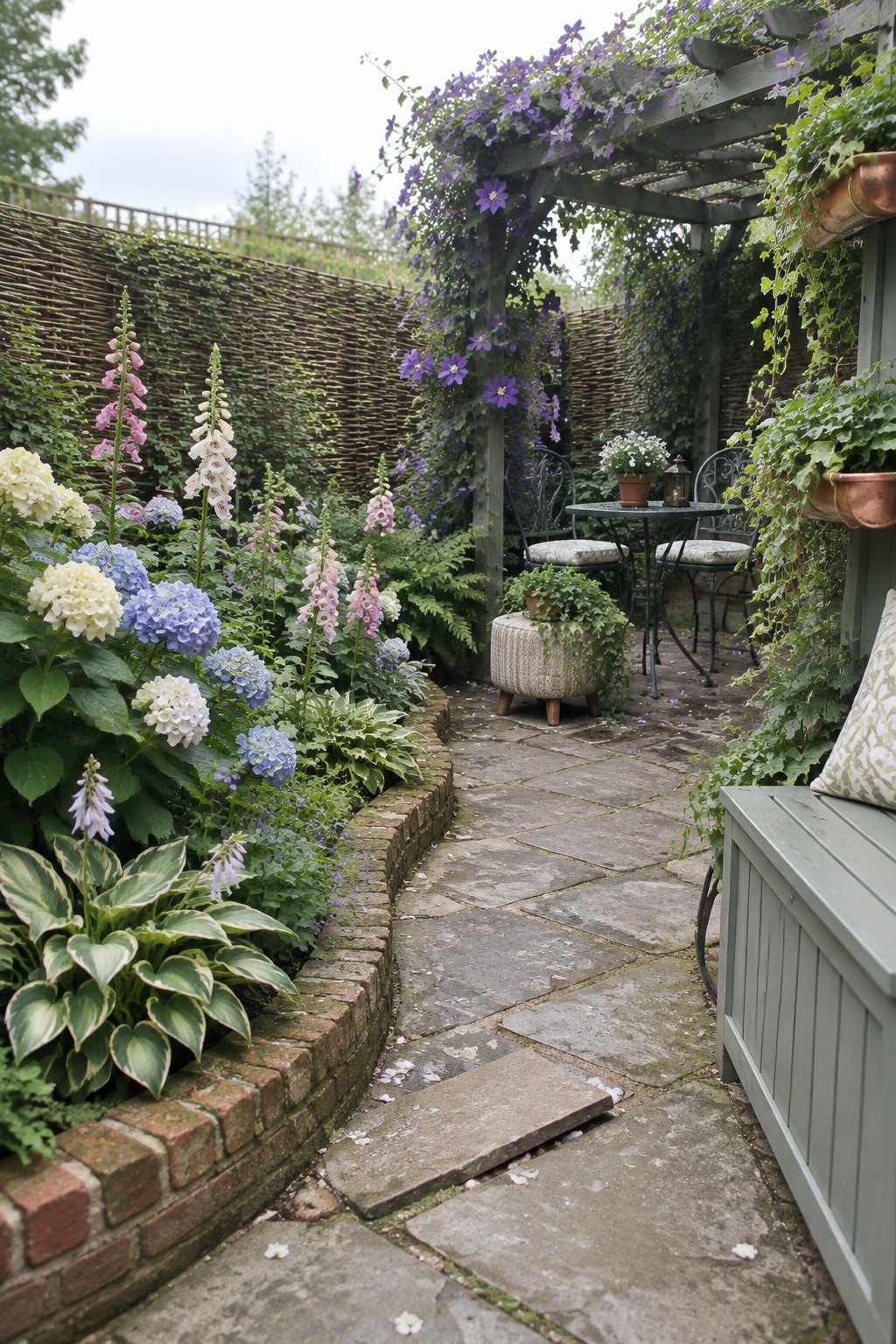
Tall flowers and vines work well when you want to block views without putting up a solid wall. In this garden the woven fence gets softened by foxgloves and climbing clematis that reach eye level, turning the boundary into part of the planting rather than something that stands out.
This approach suits smaller yards or side gardens where you still want light and air to move through. Start with a mix of mid-height shrubs and a few taller spikes so the screen feels full but not heavy, and keep the path clear so the space stays usable.
Layer Tall Plants Along the Sides for Privacy

Tall plantings along the edges can turn an open backyard into a more private space without needing solid fencing everywhere. Bamboo and larger trees work especially well because they grow quickly and create a green wall that feels softer than wood or metal.
This approach works best on narrower lots or homes where neighbors sit close on either side. Keep the center open for grass or seating so the space still feels usable, and mix heights so the planting does not look like one flat line.
Layered Plantings For Natural Privacy
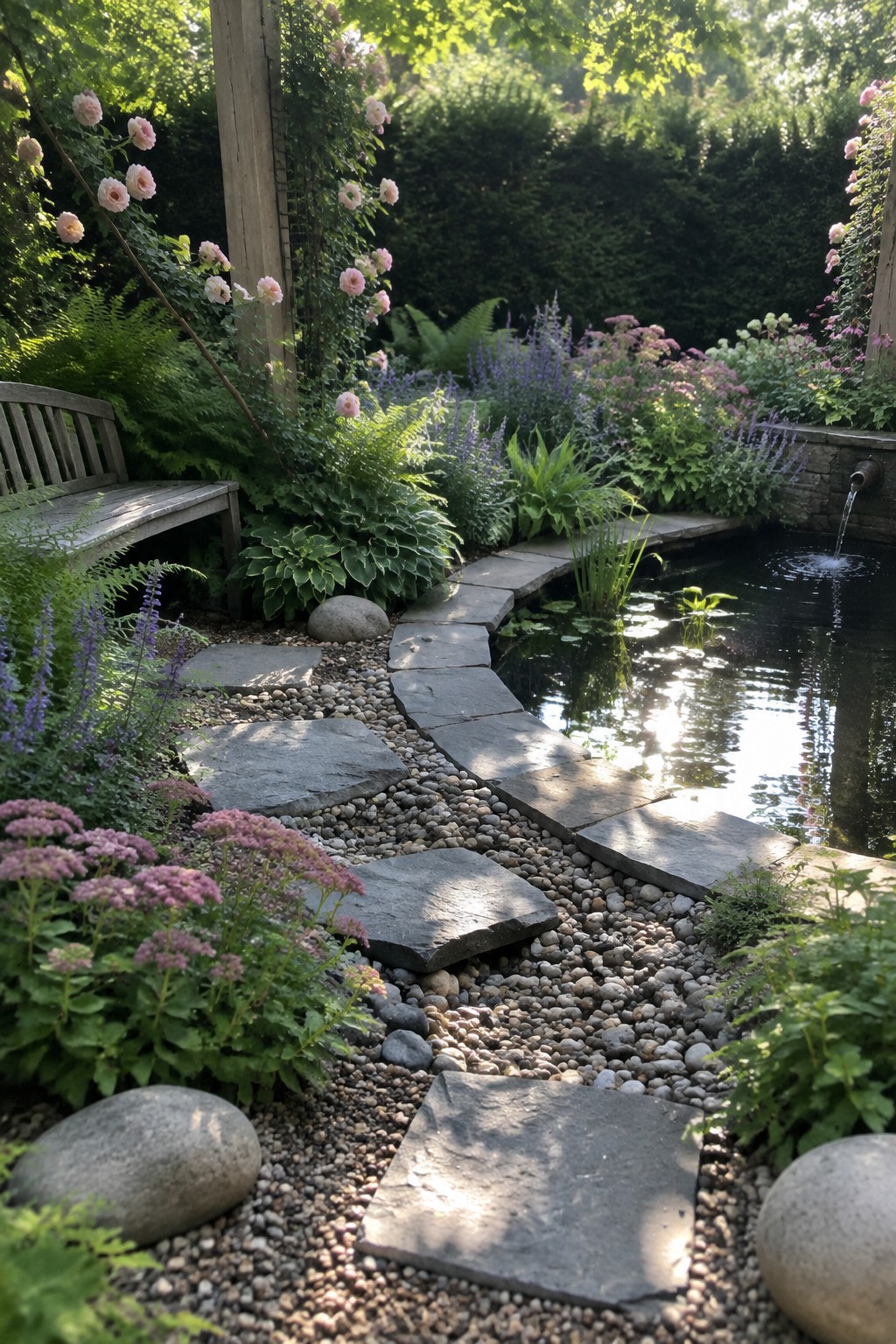
A good way to add privacy in a backyard is to use plants at different heights instead of a solid fence. Tall hedges in the background combined with climbing roses on posts and lower shrubs in front create a soft screen that still feels open.
This approach works well around a small pond or water feature because the plants block views from outside while keeping the space usable. Try mixing evergreens for year-round coverage with some flowering vines and perennials in front so the border stays interesting without looking too heavy.
Layer Tall Plants Behind a Simple Screen
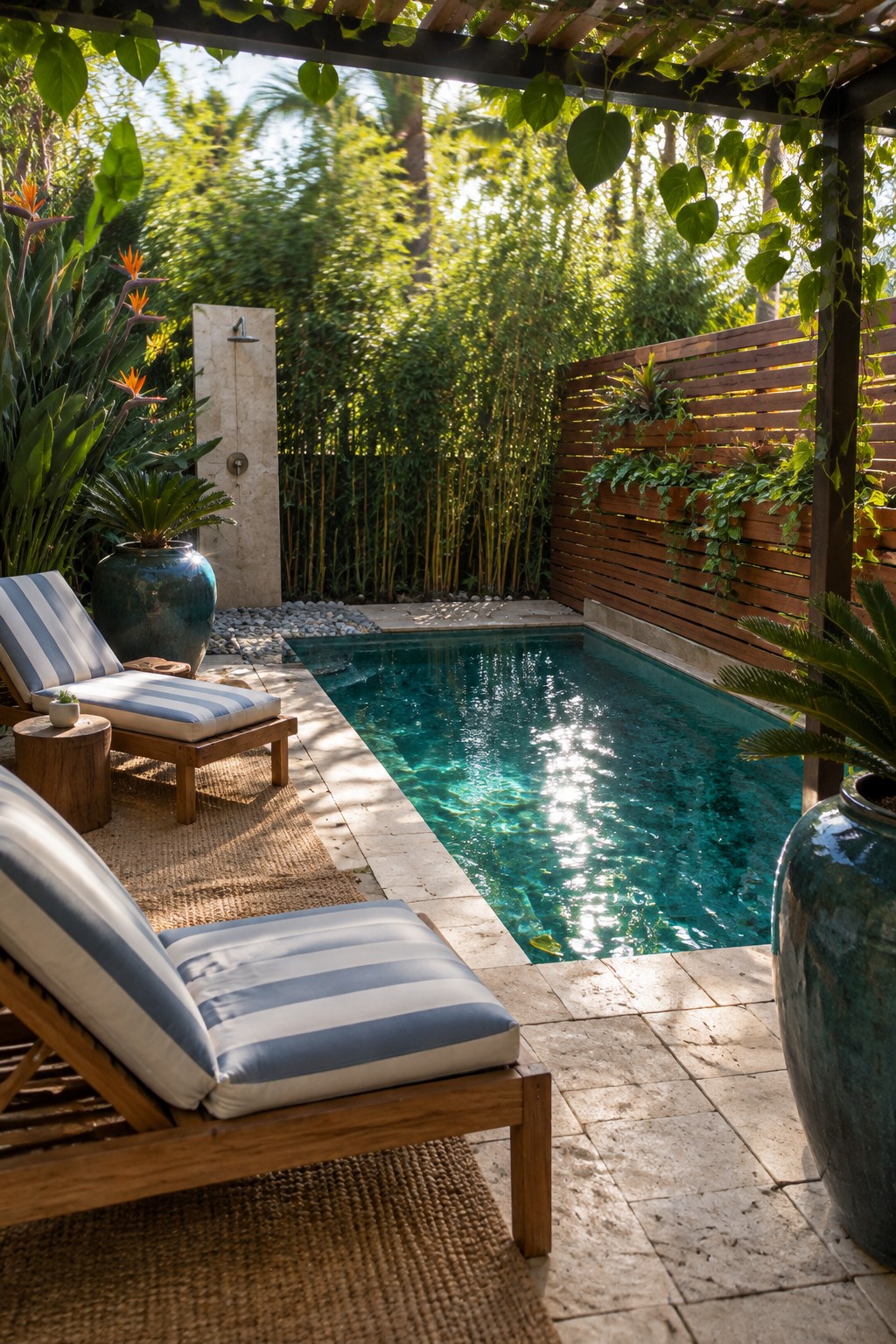
One easy way to get privacy around a pool is to put a tall screen in front of dense plantings. The bamboo here grows high enough to block views from outside while the wood slats add a solid base that feels finished. This mix keeps the space open but still sheltered without needing a full wall.
The same idea works well on a side yard or along a property line where you want to soften a fence. Keep the screen height around six feet and choose fast-growing plants that fill in behind it. Just make sure the plants get enough sun so they stay full and green year after year.
Layer Plantings Around a Fire Pit for Privacy
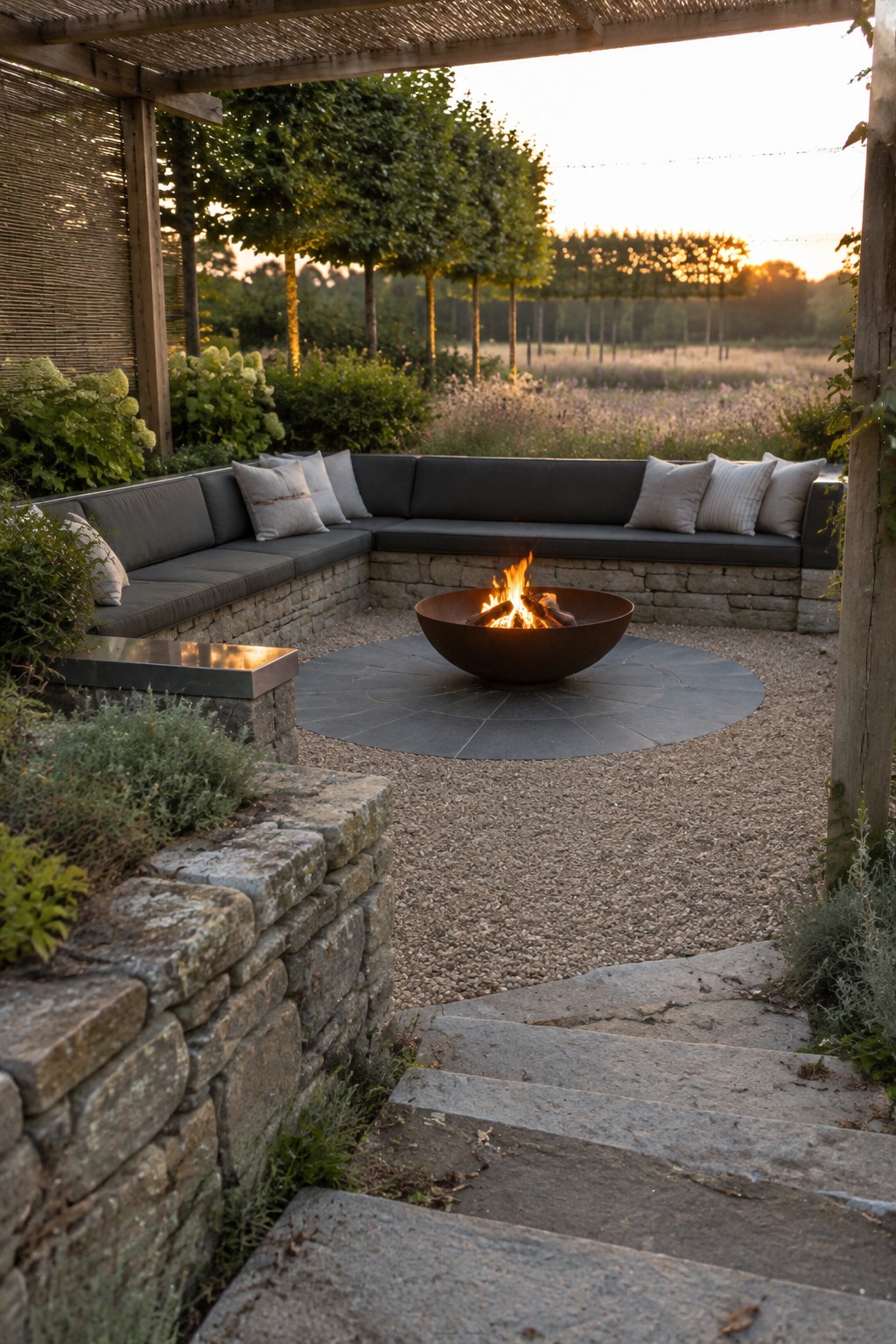
Many backyards feel too open when you add a fire pit, so surrounding the seating with layered shrubs and trees makes the space feel more enclosed. The plants act as a soft wall that blocks views while still letting in light and air.
This approach works best on level ground where you can build a simple gravel base and low stone seating. Mix taller evergreens with lower flowering bushes so the screen stays full through the seasons without looking too heavy.
Layer Plants Along Paths For Privacy
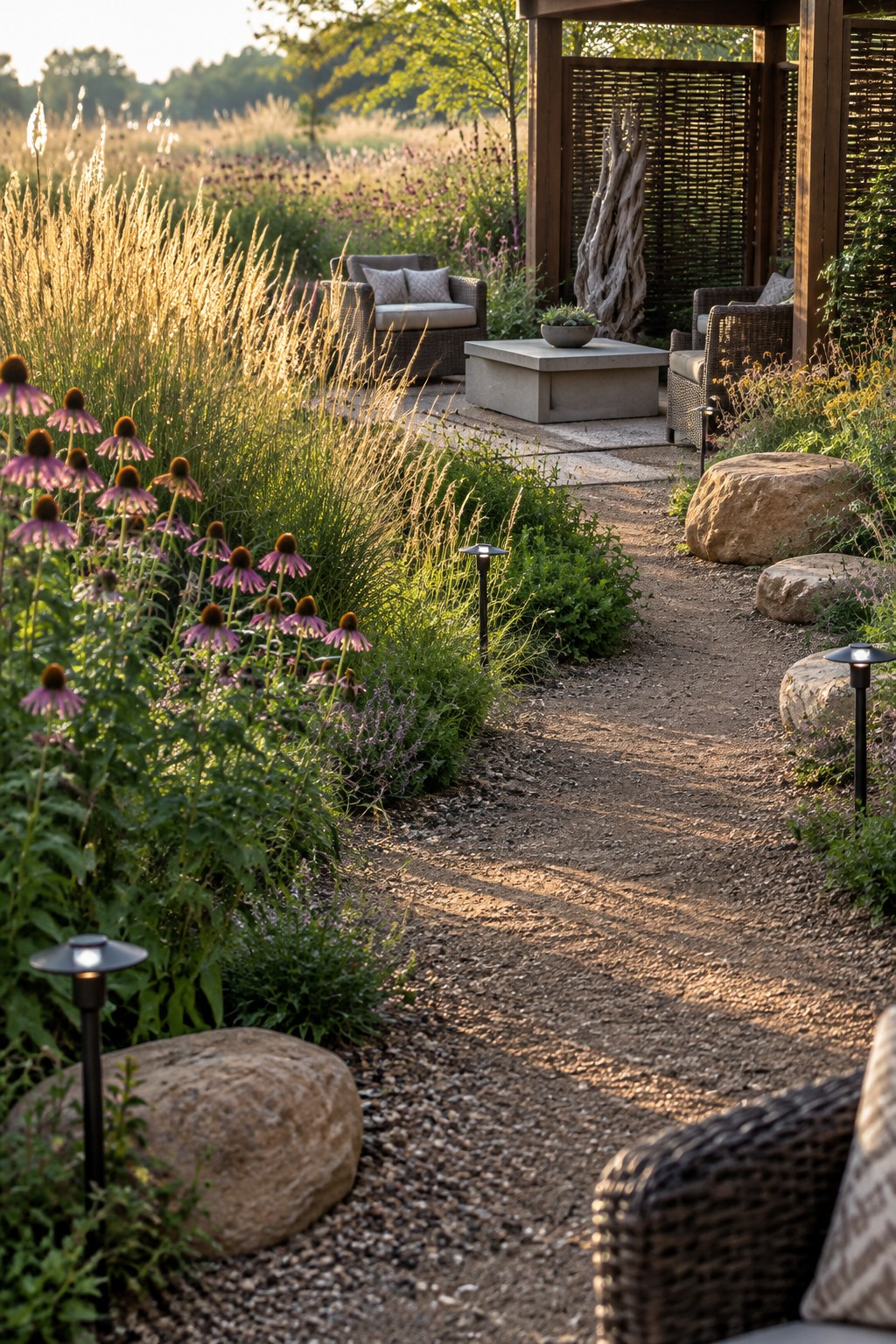
Layering different heights of plants along a garden path gives the space structure while blocking views from outside. Tall grasses mixed with lower flowering perennials create a soft screen that feels natural rather than forced. This approach works especially well when the path leads to a seating area you want to keep somewhat tucked away.
Choose plants that reach different levels so the border stays full from ground to eye height. Grasses give height and movement while flowers add color closer to the walkway. It suits larger backyards where you have room for beds on both sides of the path.
Raised Planters That Add Structure And Privacy
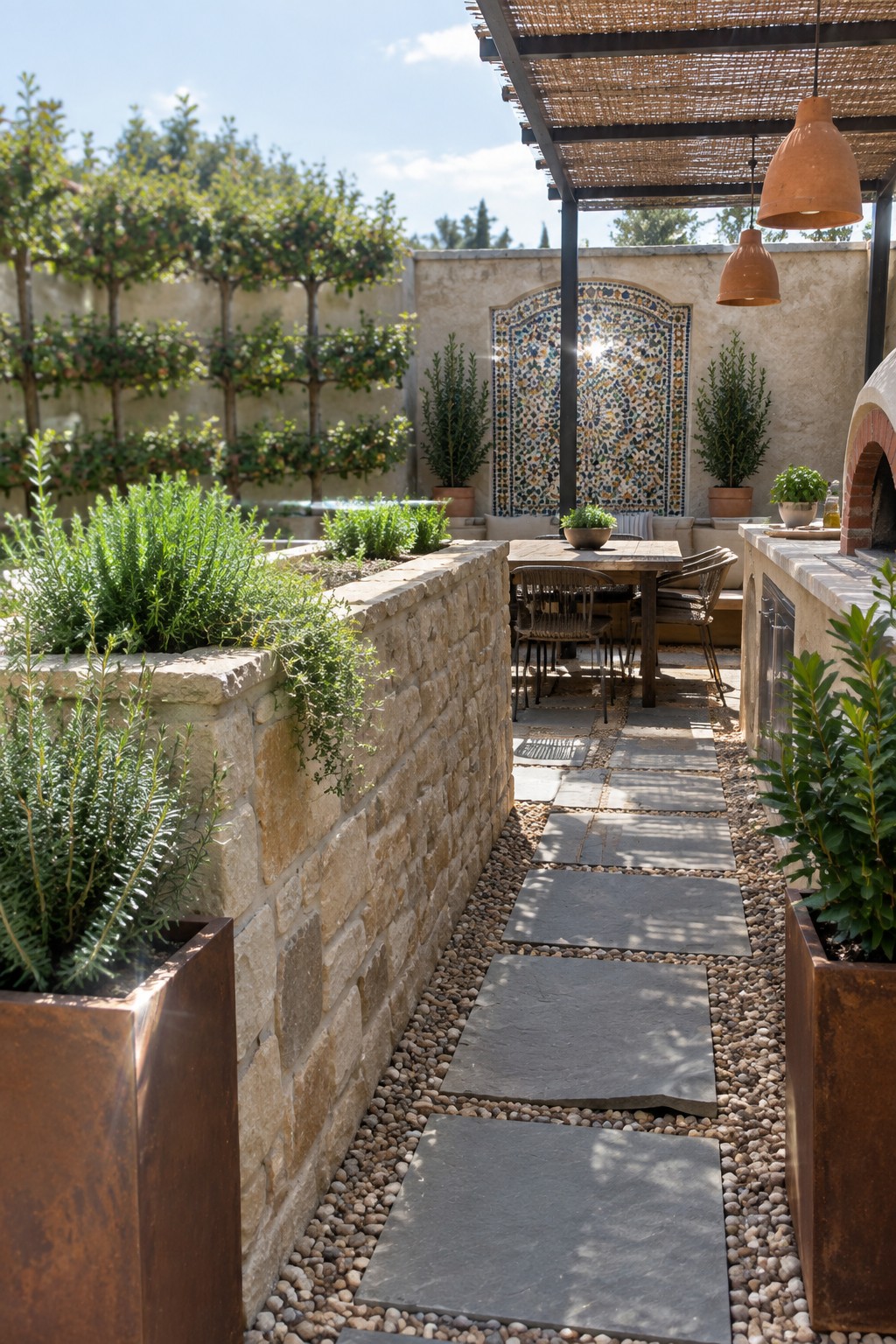
Raised planters made from stone give a backyard clear lines while letting you grow taller plants that block views from outside. They keep the garden from feeling flat and open, and they work especially well along the edges of a seating area or path.
Place them where you need a bit of separation without putting up a fence. They suit smaller yards or townhomes because the stone holds the soil in place and the plants can grow upward to create the privacy you want.
Layer Tall Plants Along the Borders
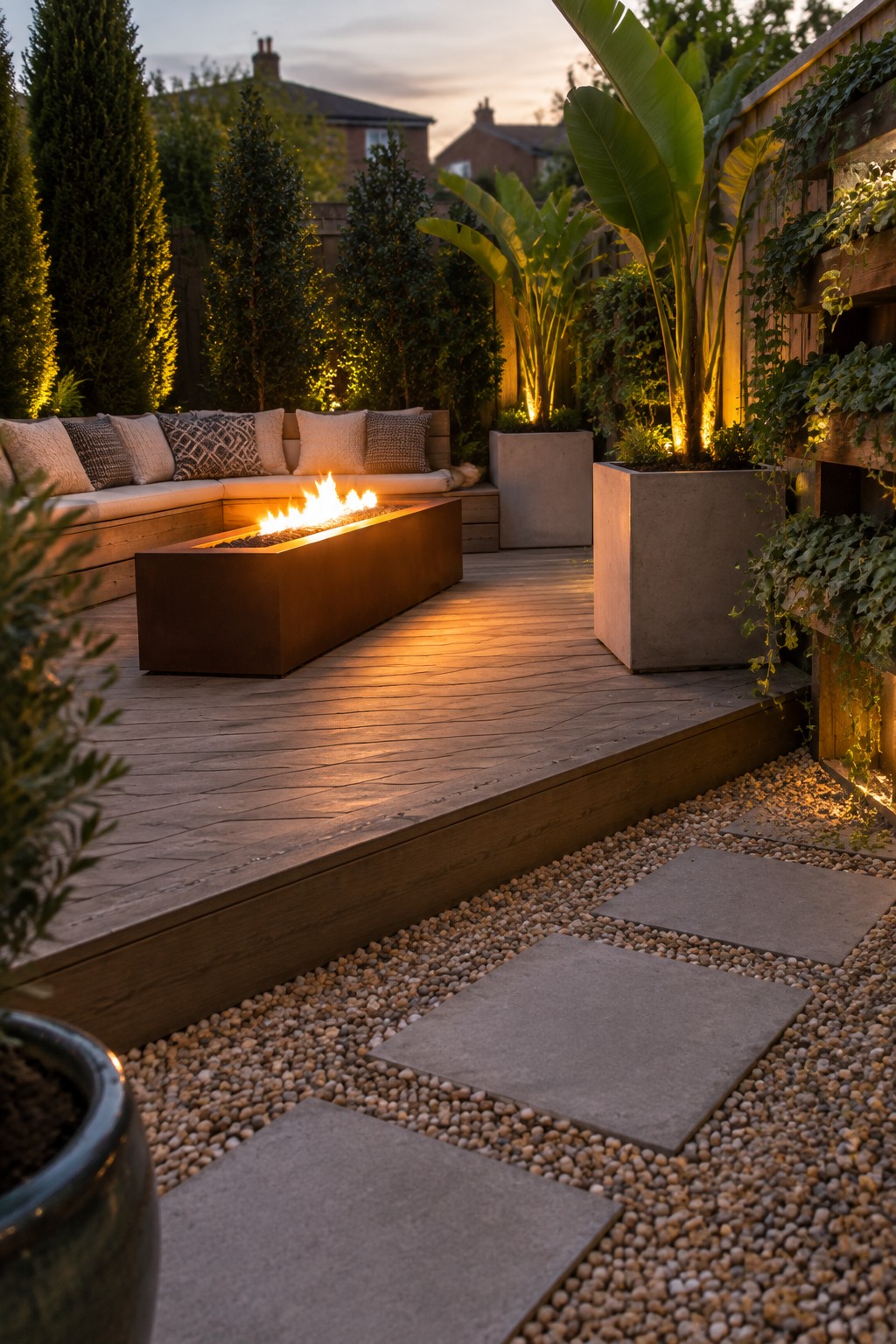
Tall evergreens and leafy shrubs placed around the edges of a deck or patio can turn an open backyard into a more private space. They block sight lines from nearby homes while still letting in light and air. The mix of different heights and textures keeps the planting from feeling like a wall.
This approach works best on smaller lots where you want separation without building a high fence. Evergreens give year round cover, while a few larger specimens add shape. Leave gaps for access paths so the space stays easy to use.
Use Hedges To Shape Private Garden Areas
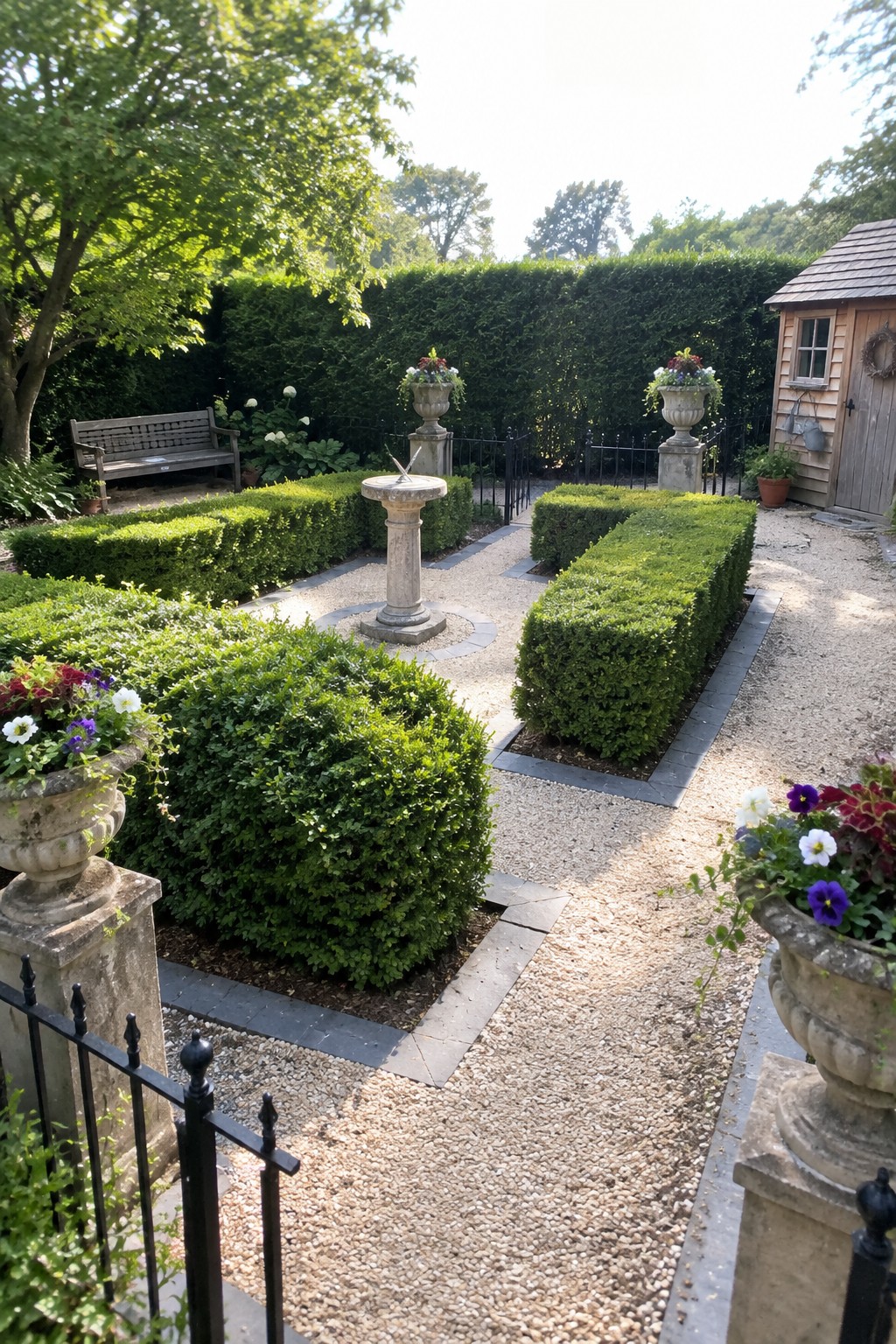
Hedges give a yard clear shape and real privacy at the same time. A tall row along the back edge blocks views from outside while lower hedges inside the space create paths and separate planting zones without needing extra fencing.
This works best on flat lots where you want a tidy, enclosed feel. Choose evergreens that hold their form and keep the inner hedges lower so the space still feels open and easy to walk through.
Surround Seating With Layered Trees And Shrubs

Layered plantings around an outdoor seating area can turn an open patio into something that feels more private without adding walls or fences. The mix of taller trees and lower shrubs creates a natural screen that softens the edges and blocks views from outside while still letting in light and air.
This approach works well in backyards where you want the seating zone to feel set apart but still connected to the garden. It suits homes with enough space for root growth and regular watering, though it helps to choose slower growing varieties if you want to keep maintenance low.
Surround Seating Areas With Tall Trees For Privacy
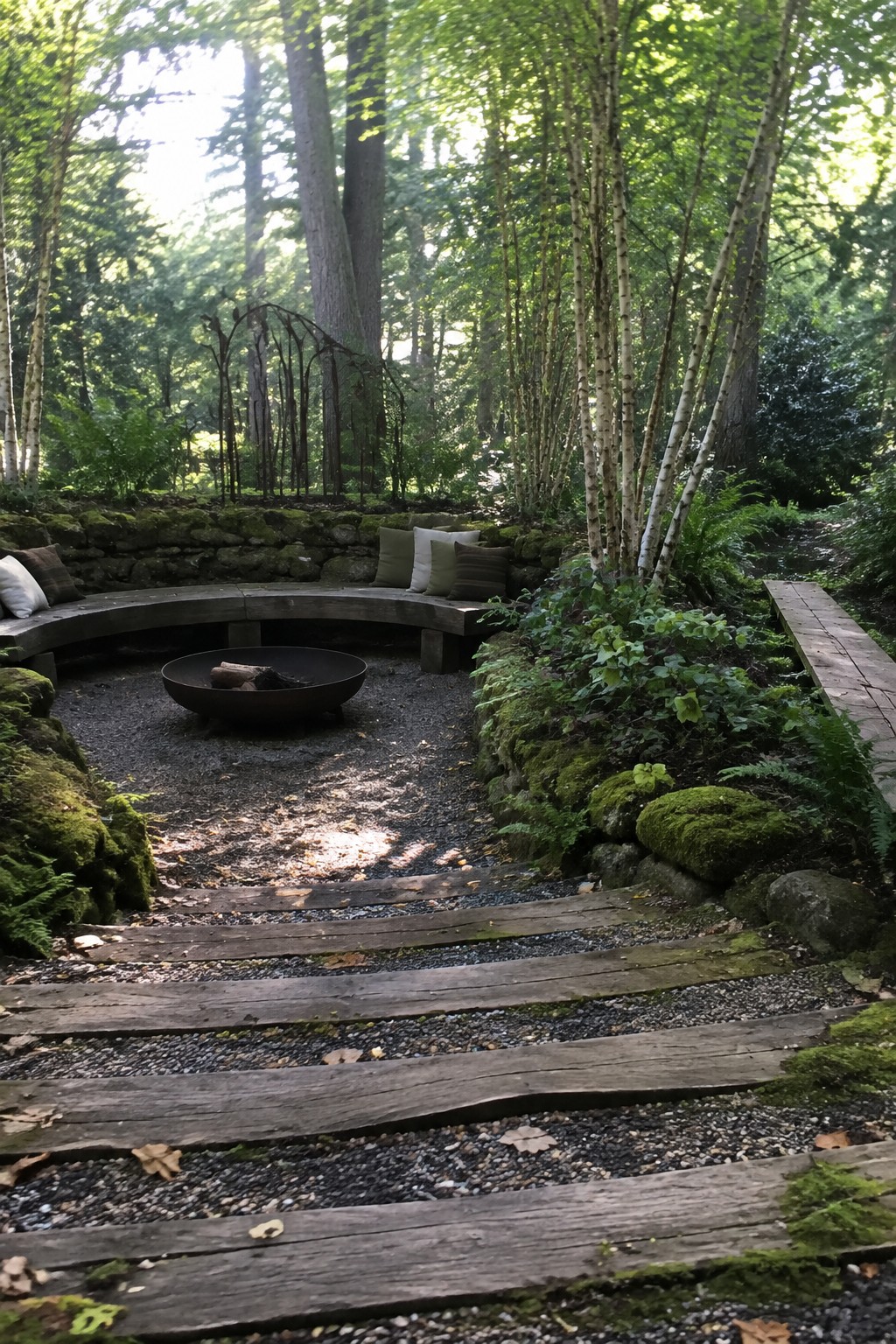
One simple way to add privacy in a backyard is to work with the trees that are already there instead of adding walls or fences. Placing a seating area inside a loose ring of taller trees lets the foliage do the screening while still keeping the space open to the sky and the surrounding woods.
This approach suits wooded lots best because you can use the natural growth to block views from paths or other parts of the yard. Fill any thin spots with lower ferns or shrubs so the enclosure feels complete without looking planted in a straight line.
Tall Evergreens for Natural Patio Privacy
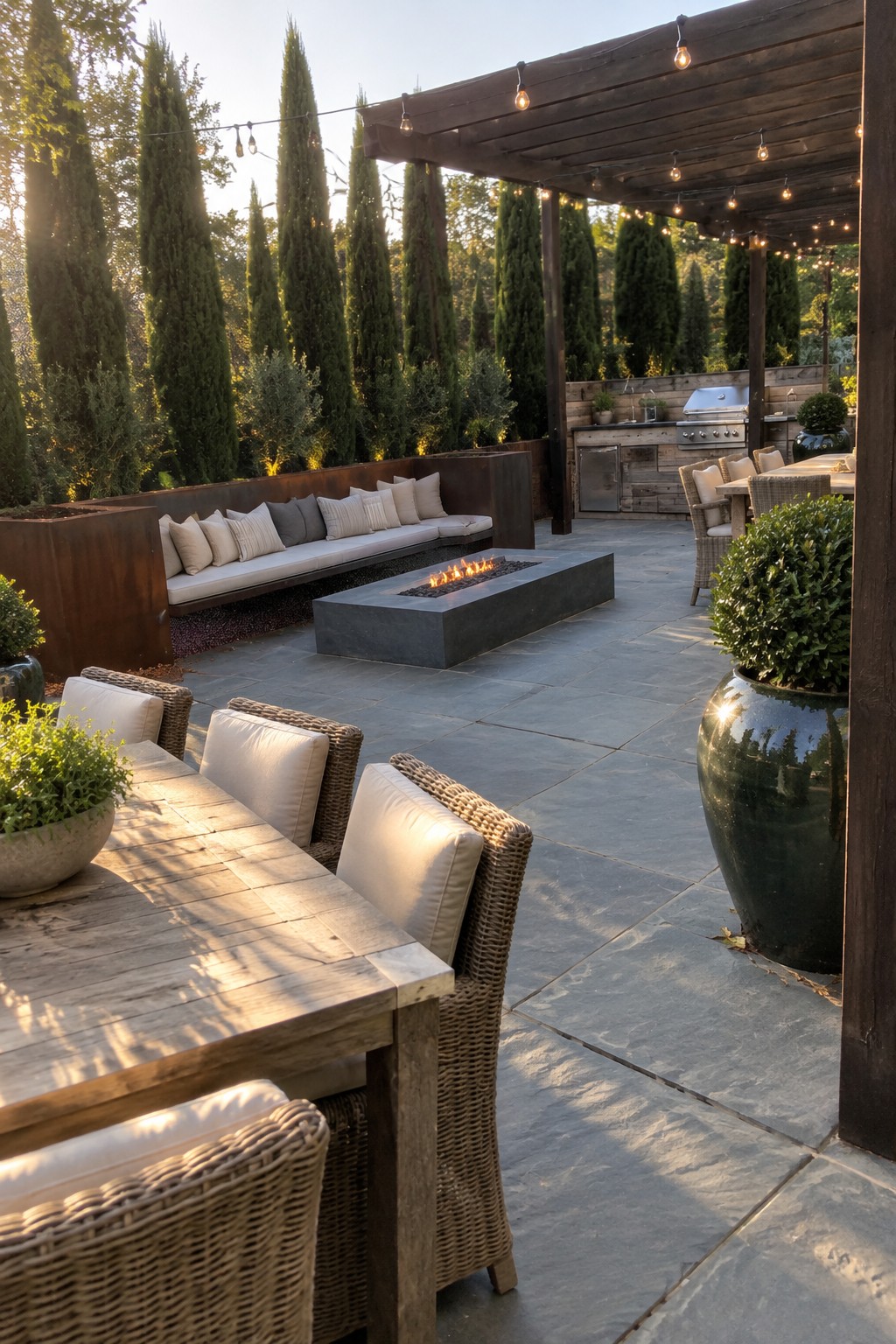
A row of tall evergreens planted right behind a patio seating area gives you a solid screen without needing fences or walls. The trees block views from neighboring yards while still letting sunlight reach the space, and they keep the whole area feeling open rather than closed in.
This approach works best on larger backyards where the trees have room to grow tall and narrow. Plant them in a straight line along the back edge, choose varieties that hold their shape, and give them time to fill in. They pair especially well with built-in benches or low walls that keep the planting bed neat.
Raised Beds With Layered Privacy Plantings
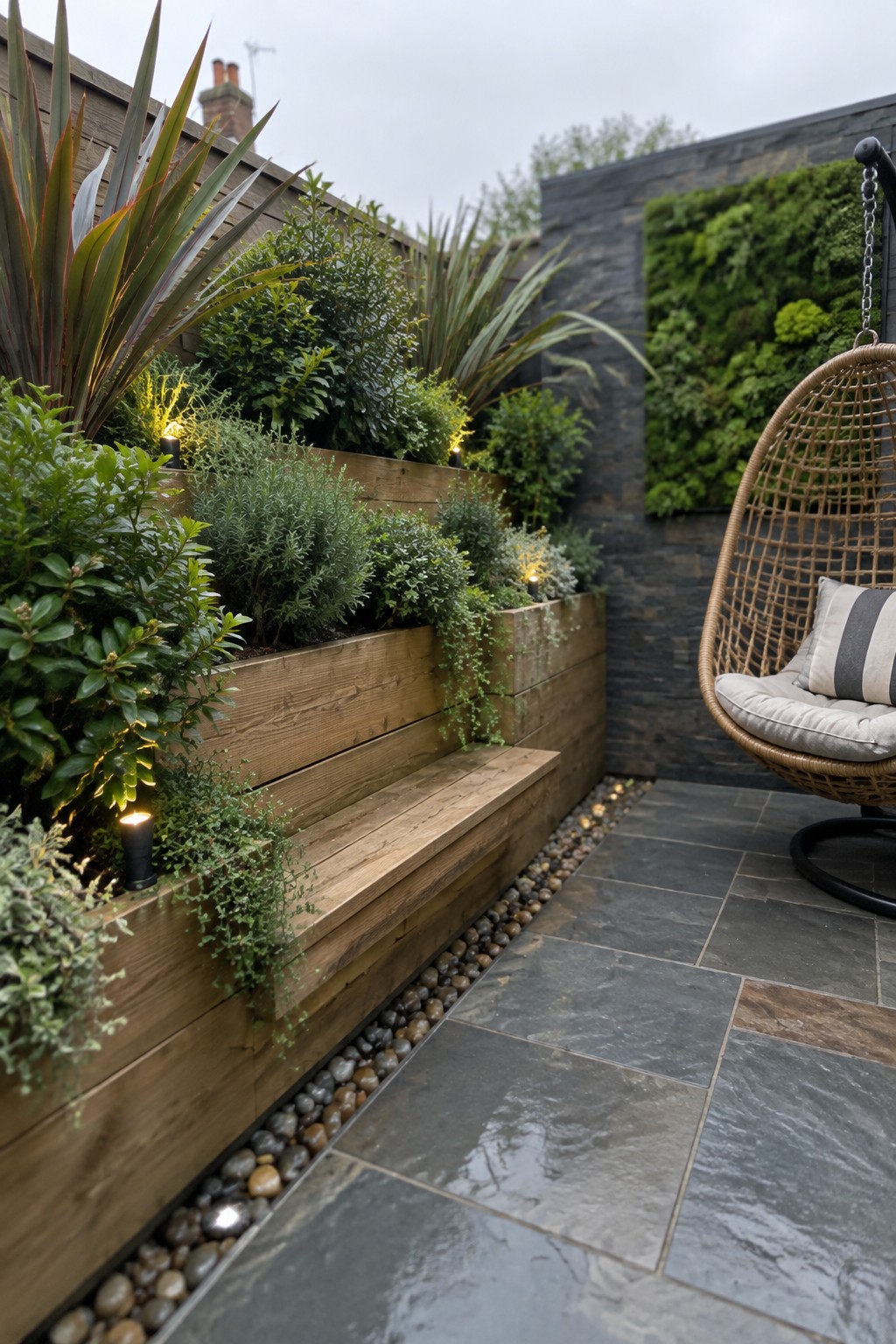
Raised beds give you a simple way to build privacy without crowding the yard. By stacking plants of different heights in one long planter, you get a screen that feels full and natural rather than like a solid wall.
This setup works well along the edge of a patio or deck on smaller lots. Keep the tallest plants toward the back and let shorter ones spill forward so the view stays blocked at eye level while still leaving room for seating right in front.
Tall Hedges For Natural Privacy

Tall hedges work well when you want privacy without putting up a fence. They block sightlines from outside while still letting light and air through the garden.
This approach suits longer backyards where you can plant the hedges in straight rows on each side of a central path. Keep them trimmed evenly so the space feels enclosed but not closed in.
Layer Shrubs and Vines for Pool Privacy
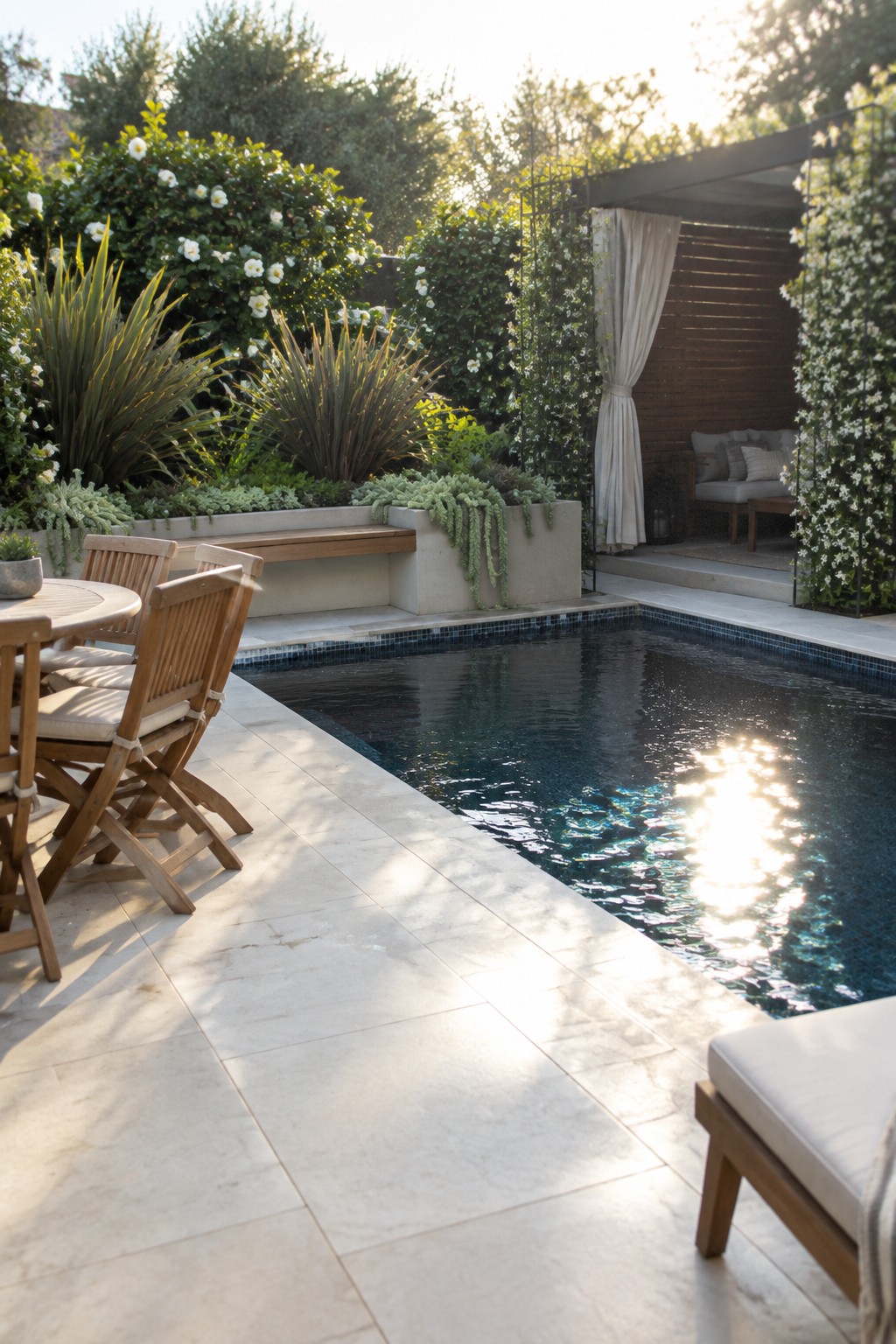
Tall shrubs and climbing vines work well together when you want to enclose a pool area without putting up solid walls. The plants soften the edges, block views from outside, and still let light and air move through the space. In this setup the greenery wraps around the seating and water, turning an open backyard into something that feels more contained and quiet.
This approach works best on lots that already have some existing trees or fencing to build on. Start with a mix of heights, placing the tallest shrubs at the back and letting vines cover simple metal frames closer to the pool. Keep the plantings a foot or two away from the water so roots stay clear of the structure, and choose varieties that stay full year round in your climate.
Bamboo Borders For Private Backyard Spaces
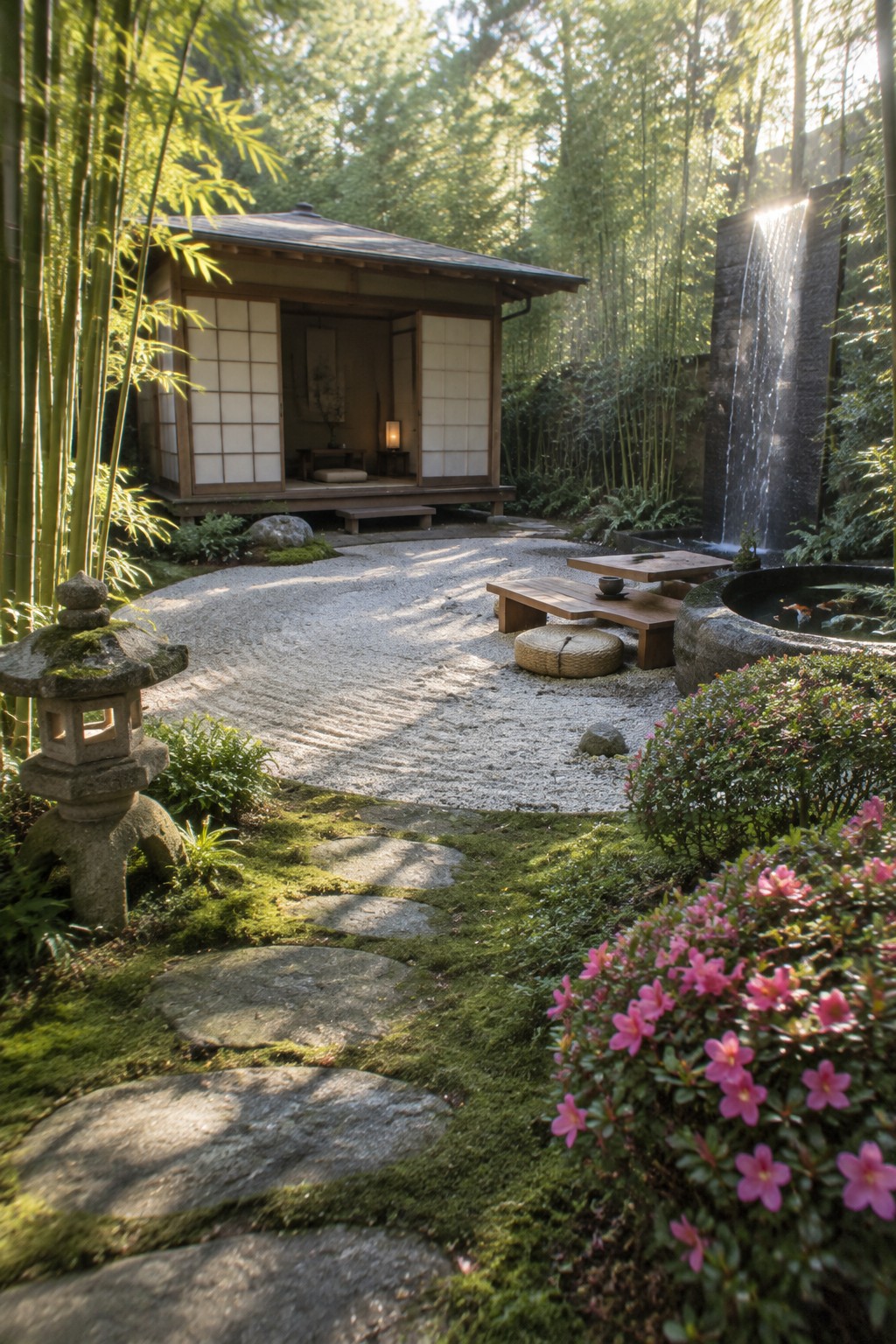
Bamboo makes a strong choice when you want privacy without building a solid fence. It grows fast, fills in densely, and gives the whole yard a softer, more natural edge than most other screening options.
It suits homes with larger lots or side yards where you can let the canes reach a good height. Choose a clumping type rather than running bamboo, and give it room along the property line so it stays contained while still doing the job.
Frequently Asked Questions
Q: How tall should my privacy plants be to block the neighbors view?
A: Aim for plants that reach at least six feet once mature. This height usually creates a solid screen without making your yard feel closed in. Plant them in a staggered row to fill gaps faster.
Q: What works best if I have a small backyard?
A: Choose compact varieties like certain hollies or boxwoods that stay narrow. Space them closer together so they knit into a hedge quicker. Water them regularly the first year to help roots settle.
Q: Do these plantings need much upkeep after the first season?
A: Most privacy plants settle in with little fuss once established. Give them a light trim each spring to keep the shape neat.
