


A fire pit can give a backyard a natural gathering spot, but bare ground, scattered stones, or awkward planting can keep the area from feeling settled.
I find that the landscaping works best when paths, seating, and greenery feel connected rather than added one piece at a time.
Boulders can define the space while adding texture and a sense of permanence.
Thoughtful planting and clear edges also help make the fire pit area easier to use and care for, whether the yard is compact or spread out.
I’d save ideas that fit the scale of the space and adapt their materials or layout to suit a real backyard.
Turn A Bare Backyard Into A Fire Pit Seating Area
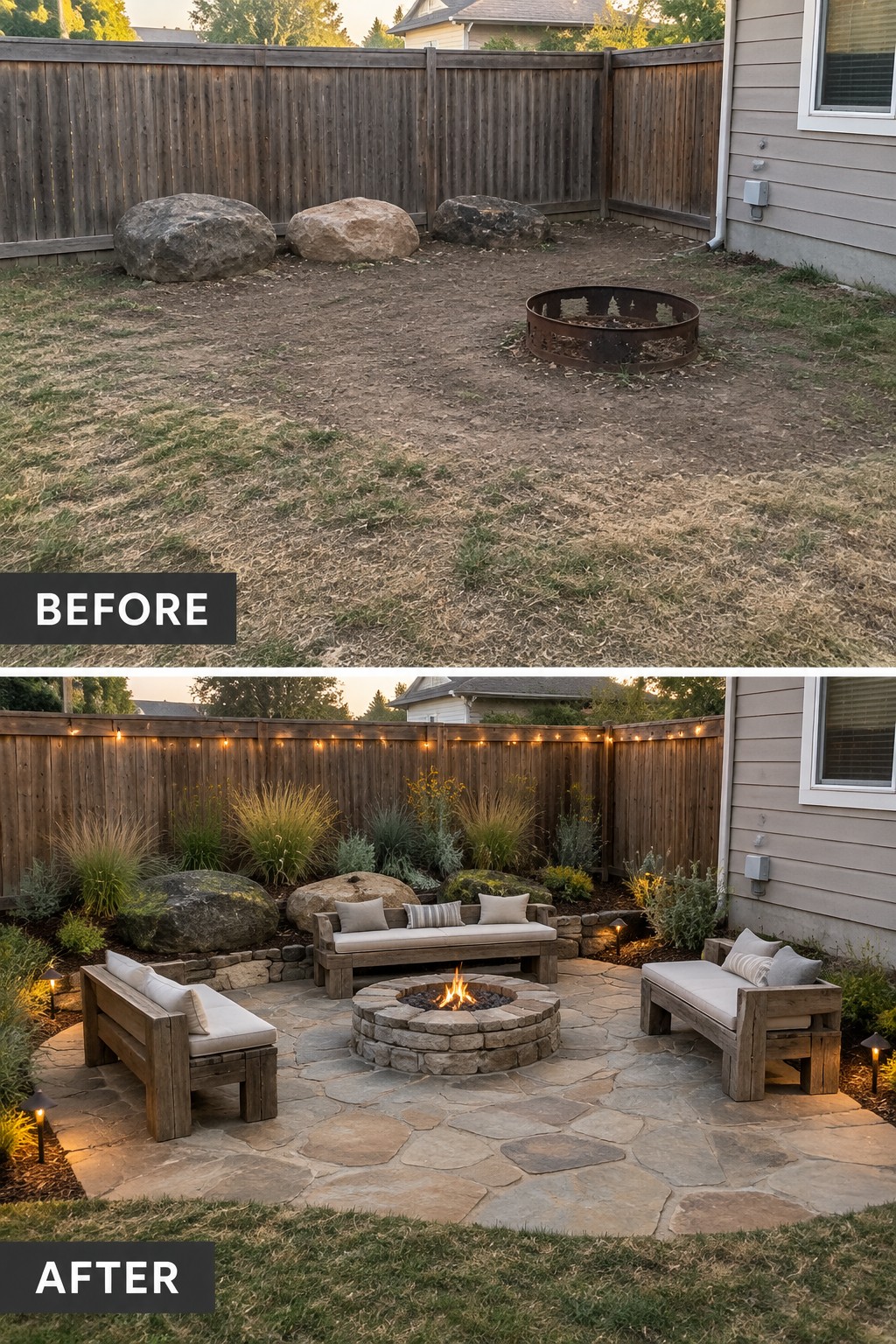
An unused patch of yard can become a comfortable place to gather when the fire pit has a clear seating area around it. Here, stone paving replaces much of the bare ground, making the space feel more settled and easier to use.
For a similar setup, leave enough room to walk between the chairs and choose outdoor furniture that fits the yard without crowding it. A small paved area can work well in a compact backyard, too.
Turn An Overgrown Slope Into A Fire Pit Area
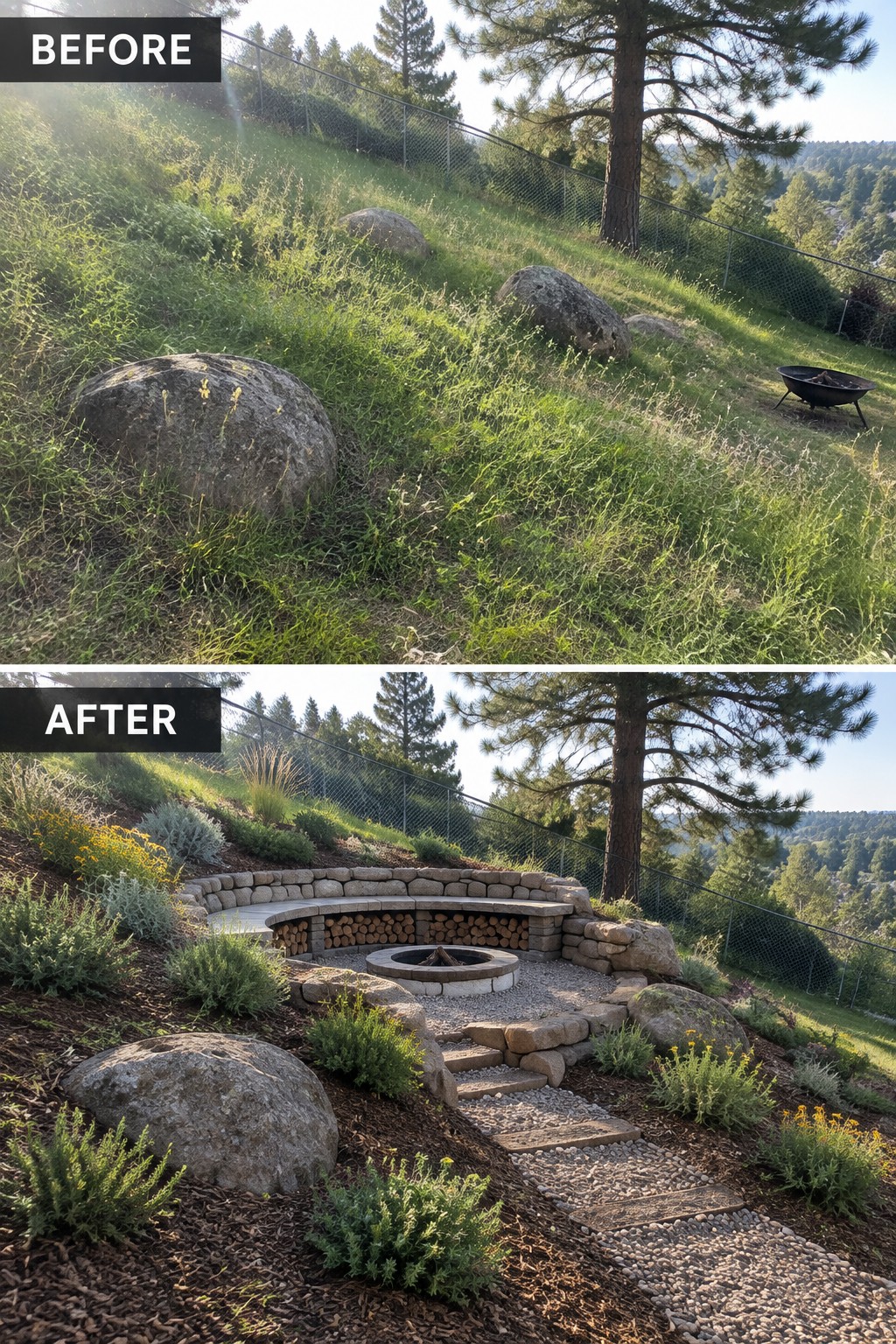
Clearing the tall grass and adding a gravel path turns a hard-to-use hillside into a defined spot for gathering. The built-in stone seating and fire pit give the area a clear purpose without needing a large, flat yard.
For a sloped yard, use short steps or a gradual path to make the seating area easy to reach. Keep the fire pit on a stable, level surface, and leave enough room around it for safe movement.
Turn An Empty Patio Into A Seating Area

A bare concrete patio can be hard to use, but a gravel surface and a simple seating area make this one feel like an outdoor room. The sofa gives people a place to gather, while the fire pit provides a clear focal point.
This idea works well in a small backyard where there is room for a compact seating group. Choose weather-ready furniture and leave enough space to walk around it comfortably.
Turn A Bare Patio Into A Fire Pit Seating Area
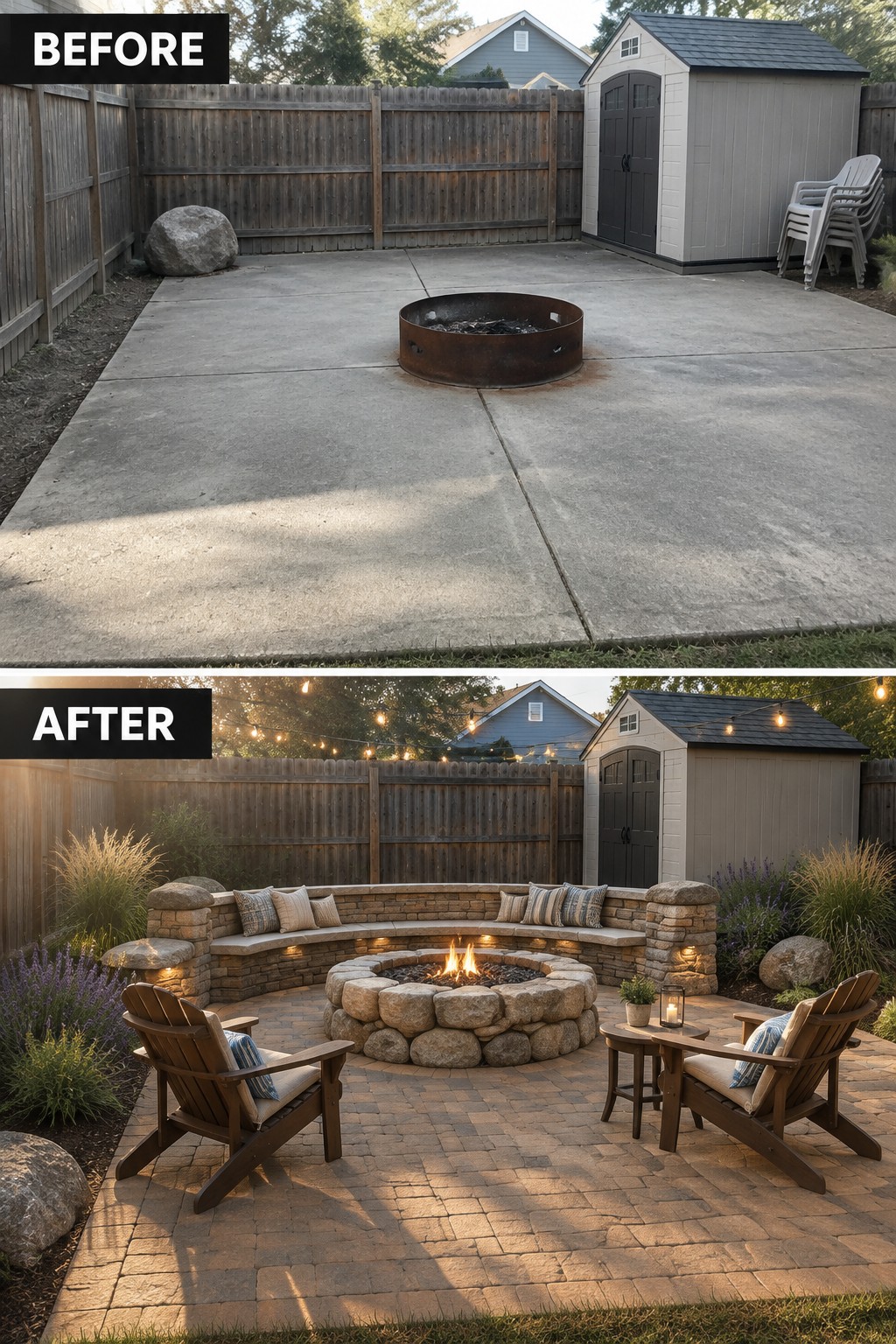
A fire pit can give an unused concrete patio a clear purpose. Here, the plain slab becomes a place to sit and gather, with a built-in bench helping make the fire pit the center of the seating area.
This idea works well in a small backyard where there is room to gather but not much space for separate zones. Keep the path to the seating clear, and choose outdoor chairs and cushions that can handle the weather.
Add A Clear Path Through A Narrow Side Yard
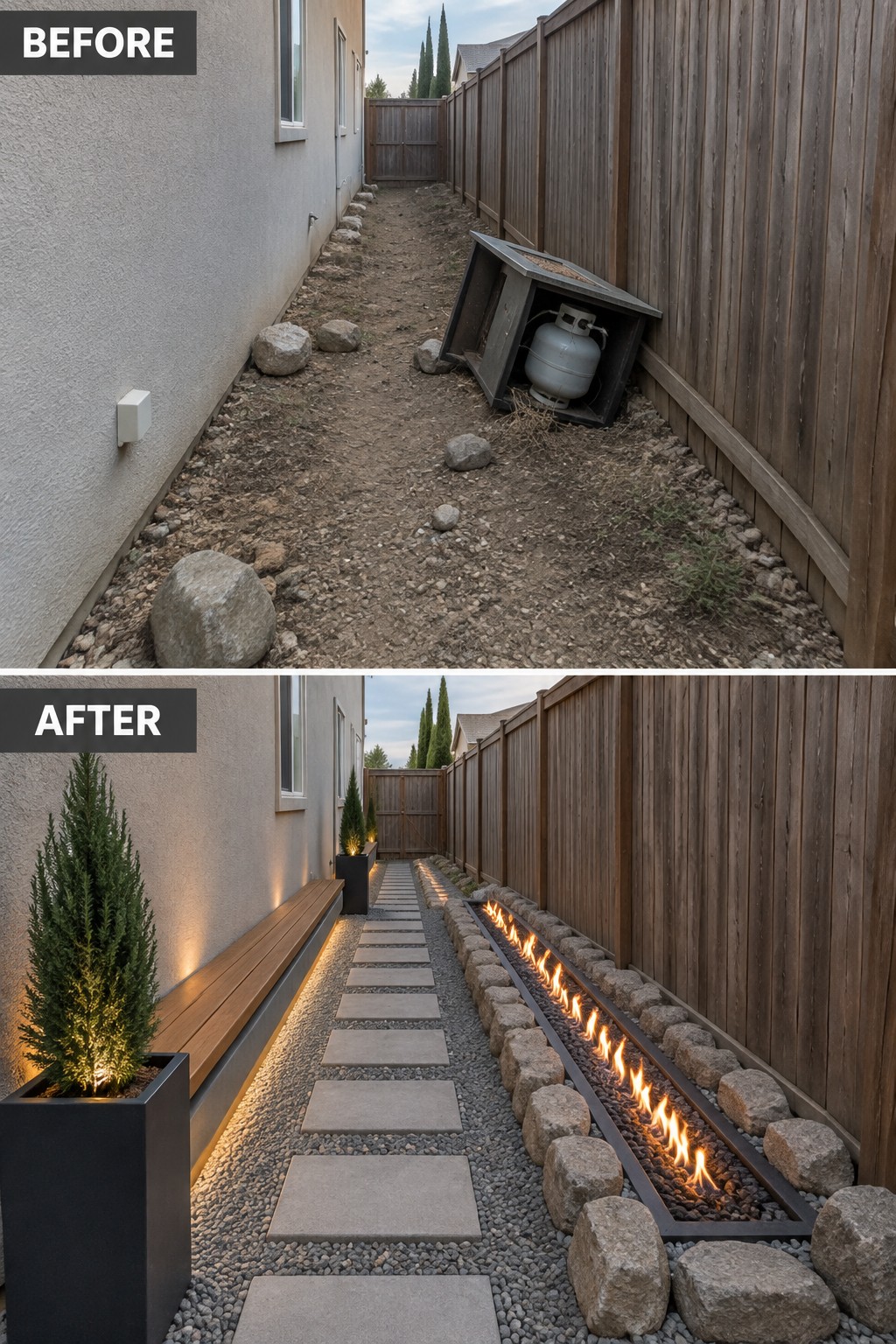
A narrow side yard can become a useful walkway instead of a strip of bare ground. Here, gravel and spaced pavers create a clear route, while a slim linear fire feature makes the path feel like a destination.
This idea works well where there isn’t room for a full patio. Keep the path wide enough to walk comfortably, and check local rules and safety clearances before adding a gas fire feature near a fence or home.
Build A Deck Around The Fire Pit
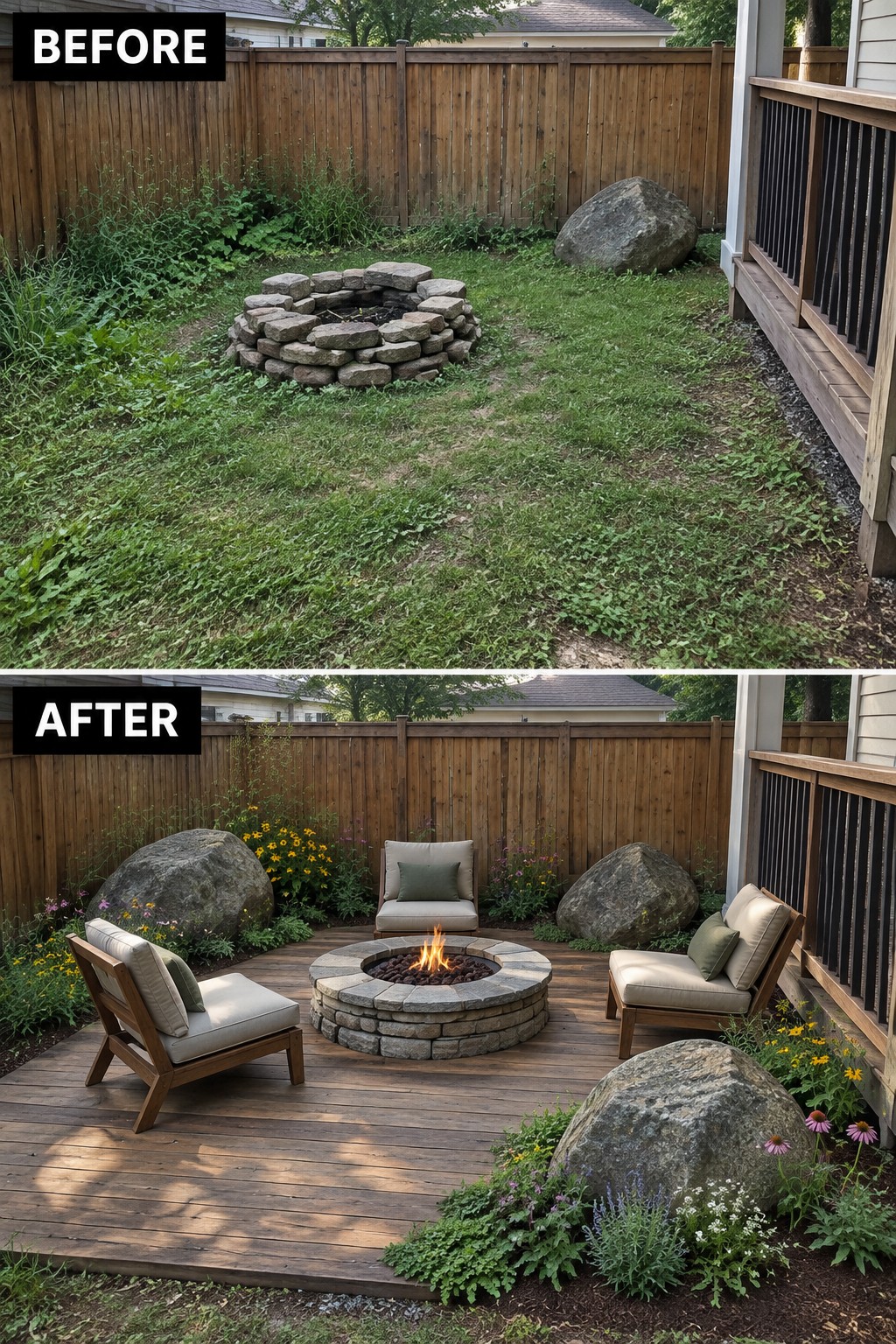
Replacing the patchy lawn with a small deck gives the fire pit area a clear, usable surface. The seating feels more settled, and people have room to gather without sitting on uneven ground.
This idea works well in a compact backyard where a full patio would take up too much space. Keep the deck large enough for chairs and a safe path around the fire pit, and check local fire-safety guidance before building.
Build A Fire Pit Area Into A Sloped Yard

A sloped, patchy yard can be hard to use, but a built-in fire pit seating area gives it a clear purpose. Here, stone retaining walls create level places to sit, while the fire pit becomes the center of the yard.
This idea works well on a hillside where a flat patio would take a lot of space. Use sturdy stone to hold the slope, and keep the seating area wide enough for people to move around the fire safely.
Add A Seating Area Beside The Pool
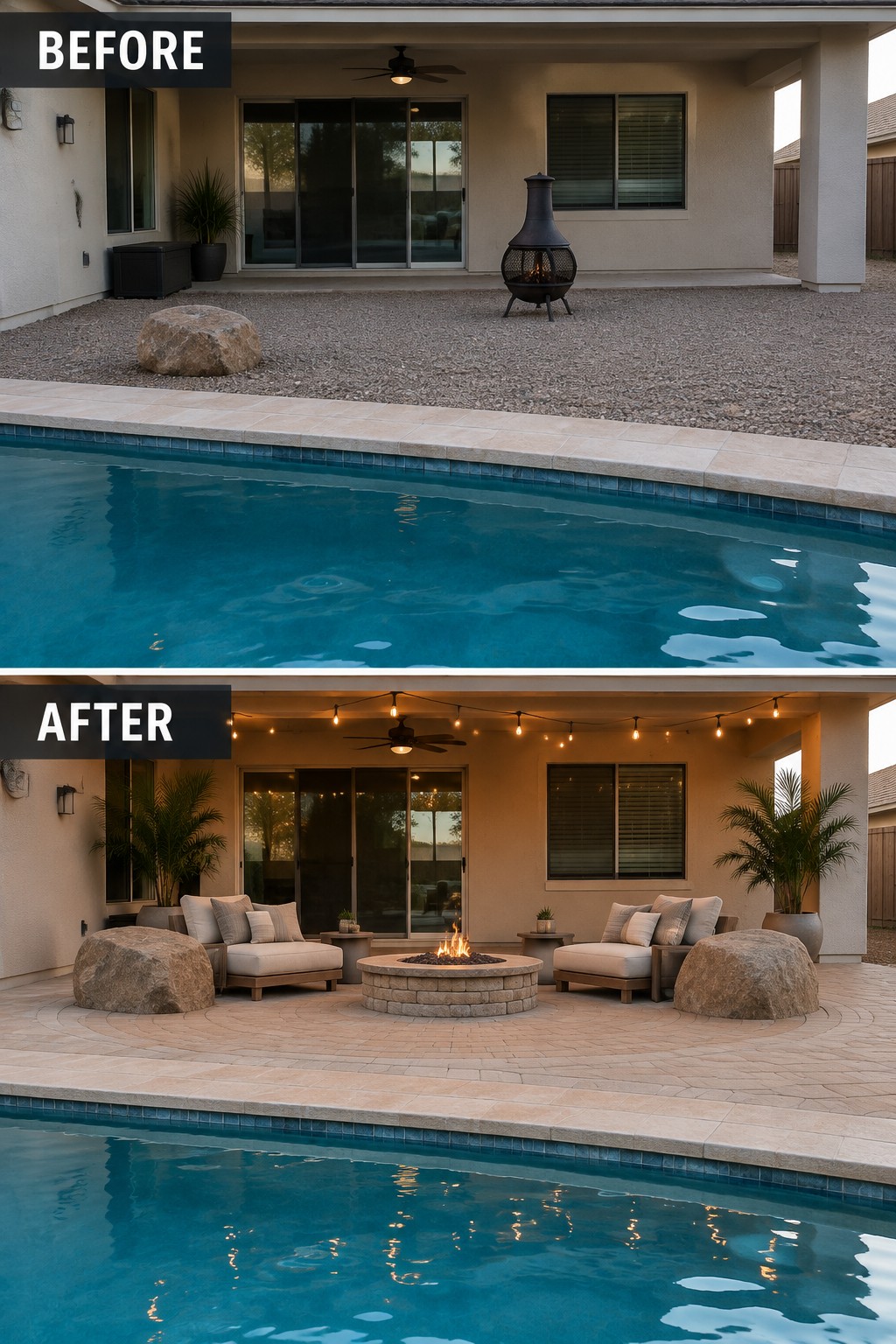
The gravel patio was hard to use, so replacing it with a paved seating area gives the space a clear purpose. A central fire pit makes the seating feel arranged for gathering, rather than scattered across an open yard.
For a similar covered patio, choose weather-resistant chairs and leave enough room to walk between the seating and the pool. Keep the fire pit a safe distance from furniture and the house, and check local fire rules before installing one.
Create A Defined Fire Pit Area In A Woodland Yard

The fire pit feels more usable once the scattered rocks and leaf-covered ground give way to a clear seating area. Large boulders set around the pit mark out the space without making it feel separate from the wooded yard.
For a similar setup, arrange stones to define the sitting area, then keep the ground inside it simple with mulch or gravel. Leave enough room to walk between seats and the fire, and avoid adding so many plants or decorations that the space feels crowded.
Build A Stone Fire Pit Area Into The Yard

The empty lawn had little purpose, but a built-in stone fire pit seating area gives the backyard a clear place to gather. A broad stone path links it to the house, so the seating feels like part of the yard rather than an isolated feature.
For a similar setup, plan the fire pit and seating first, then shape the path and planting around them. Leave enough room to move between seats, and keep the stone area in scale with the yard so lawn space remains useful.
Create A Cozy Fire Pit Nook In A Small Yard
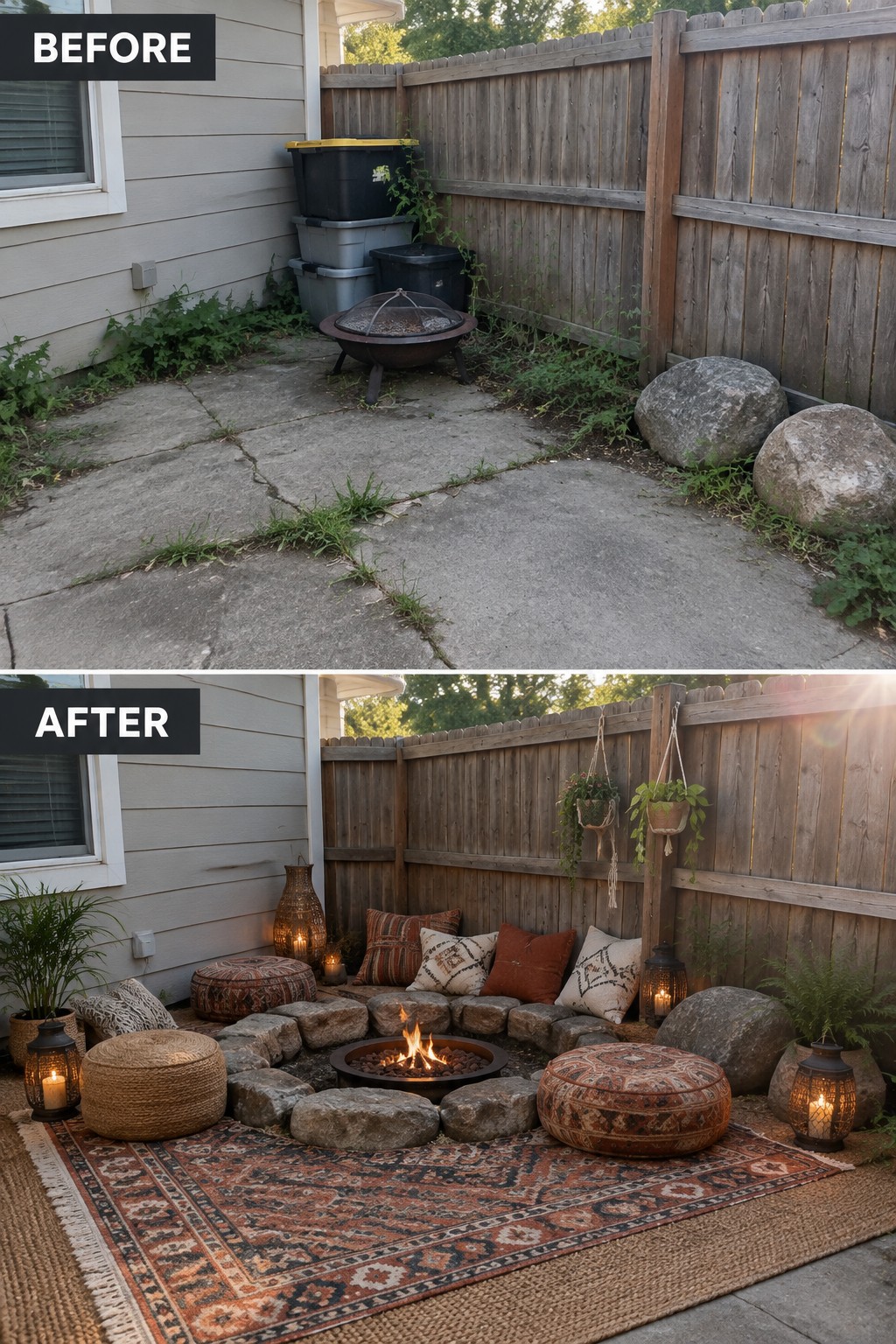
A small, unused patio can become a comfortable place to gather when the fire pit gets a clear seating area. Here, the scattered items and weeds are replaced by a stone-ringed fire pit and low seating, making the corner feel more purposeful.
For a compact yard, keep the seating close enough for conversation but leave a clear route across the patio. Weather-resistant cushions and a few lanterns can make the area comfortable without filling every inch.
Replace A Brick Fire Pit With Natural Boulder Edging
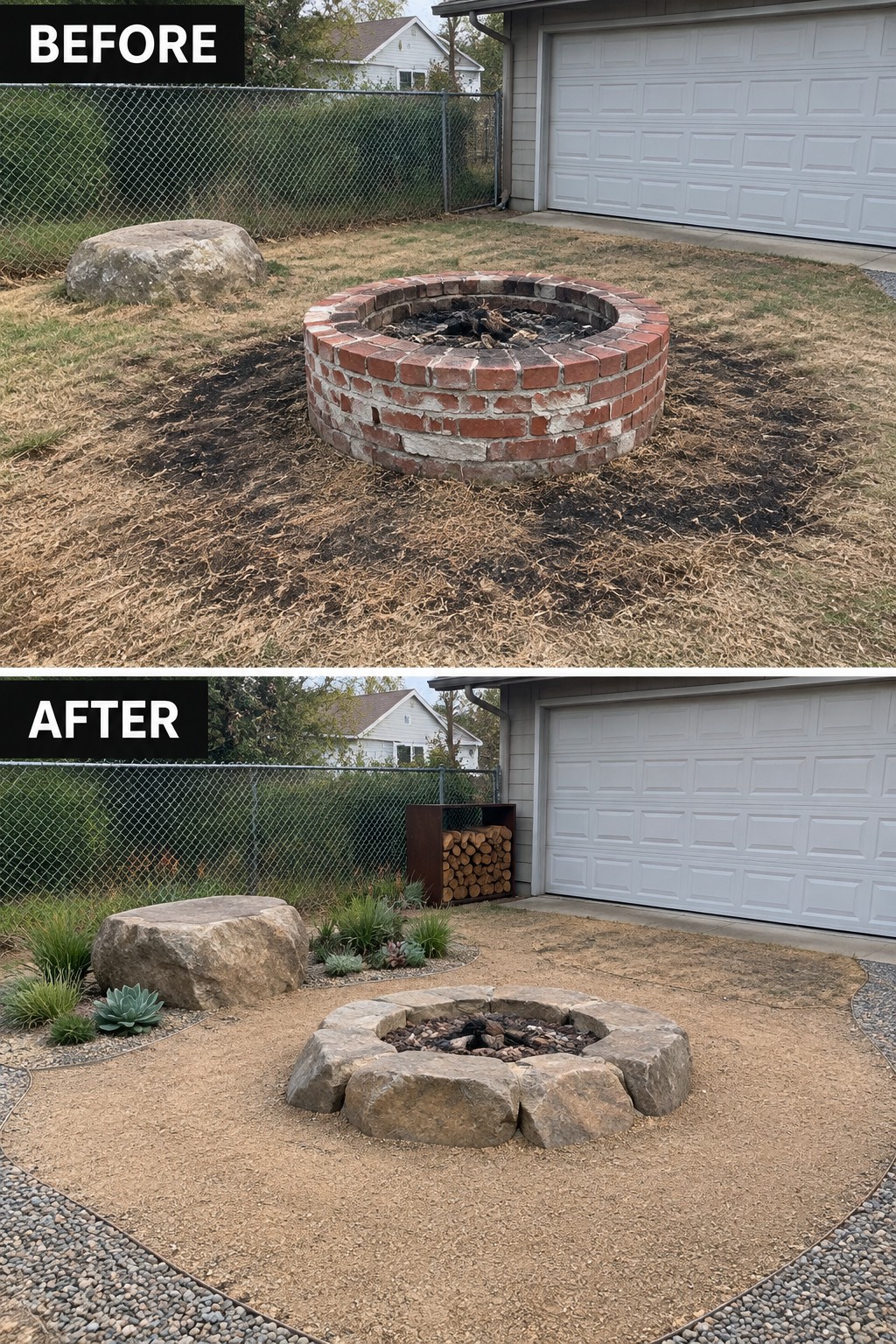
The old brick ring gave the fire pit a rough, unfinished look. Replacing it with large natural stones and laying gravel around the area makes the fire pit feel more settled into the yard.
This idea suits a simple backyard where the fire pit is already the main gathering spot. Use stones that are similar in scale, and keep the gravel area wide enough for chairs and a clear path around the fire.
Use New Paving To Make A Patio More Usable

Replacing worn patio slabs with a cleaner, more even surface can make a small outdoor space feel ready for everyday use. Here, the new paving helps define a fire pit seating area without adding more features than the space can hold.
For a compact brick courtyard, choose paving that leaves clear room to walk between the door, chairs, and fire pit. Keep the seating modest and check that the pit has safe clearance from walls and furniture.
Add Structure To A Narrow Fire Pit Yard
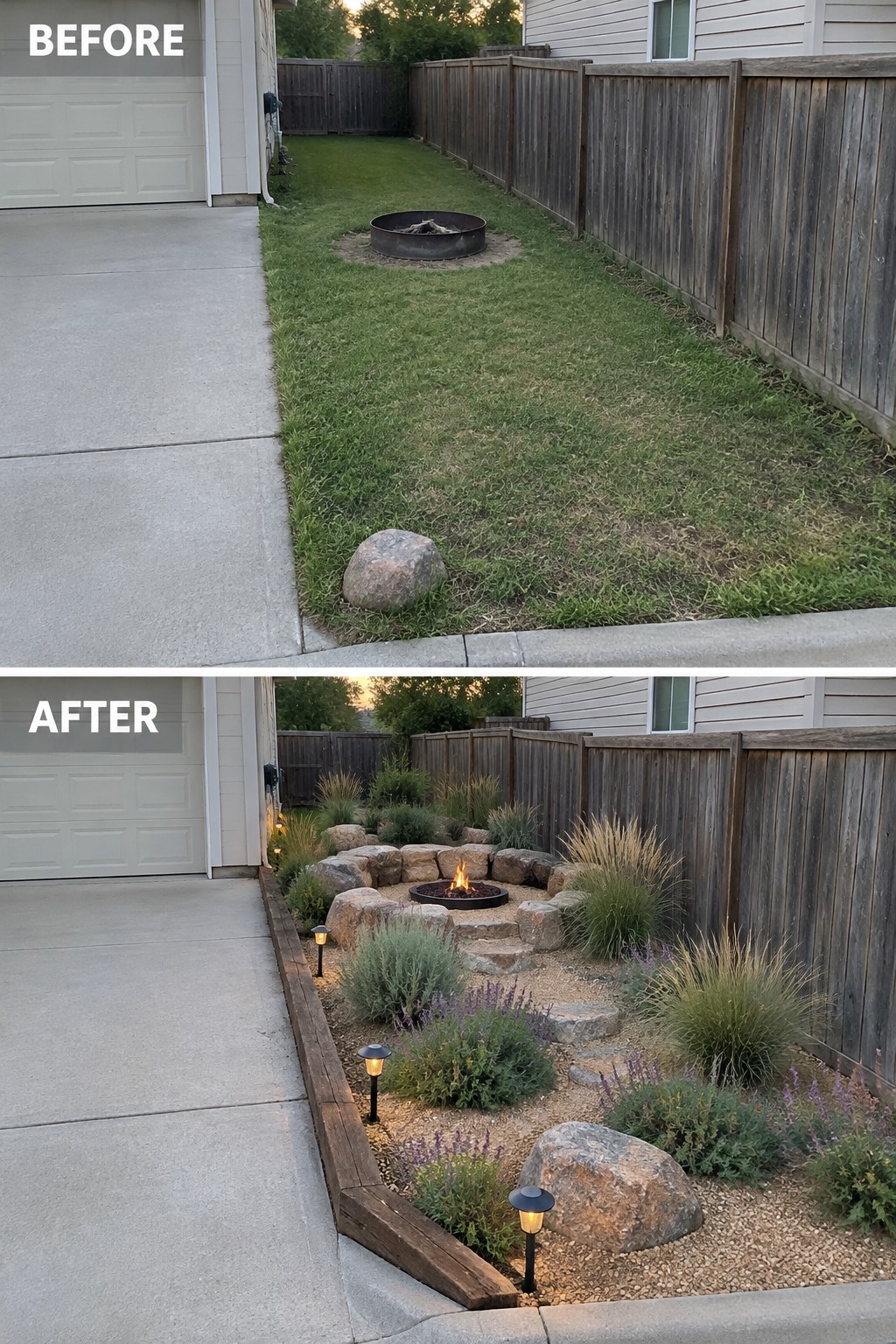
A patchy strip of lawn can be hard to use, but a gravel surface and simple stone edging give this yard a clear fire pit area. The defined space feels more intentional without needing a large patio.
For a similar side yard, mark out the seating area first and leave enough room to walk between the house and fence. Gravel works well in a narrow space, but use a firm border to keep it in place and choose plants that won’t crowd the path.
Turn A Rough Slope Into A Fire Pit Gathering Spot

A rough, unused patch beside the cabin becomes more useful when the fire pit area is built into the slope. Stone steps make the change in level easier to manage, while a low boulder wall gives the fire pit a clear edge and places to sit.
This idea suits a wooded yard where a flat patio would take a lot of excavation. Work with the natural grade, and keep the steps and seating area wide enough to use comfortably. Check local fire rules and leave safe clearance from the house and nearby plants.
Replace An Overgrown Corner With A Fire Pit Seating Area
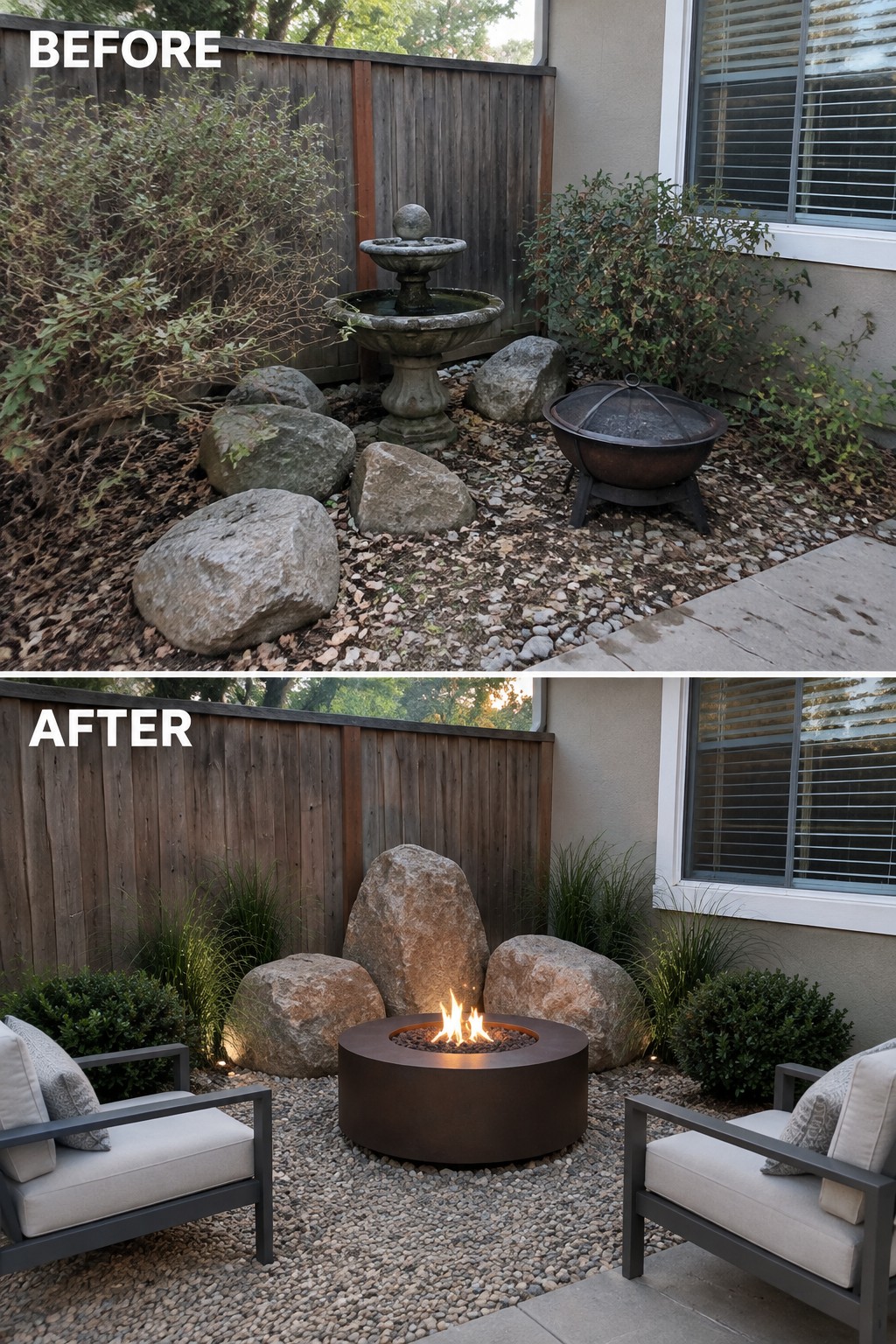
A crowded corner of the yard can feel like leftover space. Clearing the overgrown shrubs and making the fire pit the main feature turns it into a spot people can actually use. Here, a simple gravel surface and a pair of chairs give the area a clear purpose.
This works especially well in a small side yard or tucked-away backyard corner. Start by clearing what you do not need, then leave enough room around the fire pit for comfortable seating and safe movement. Keep the planting simple so it does not take over again.
Make A Concrete Patio More Comfortable
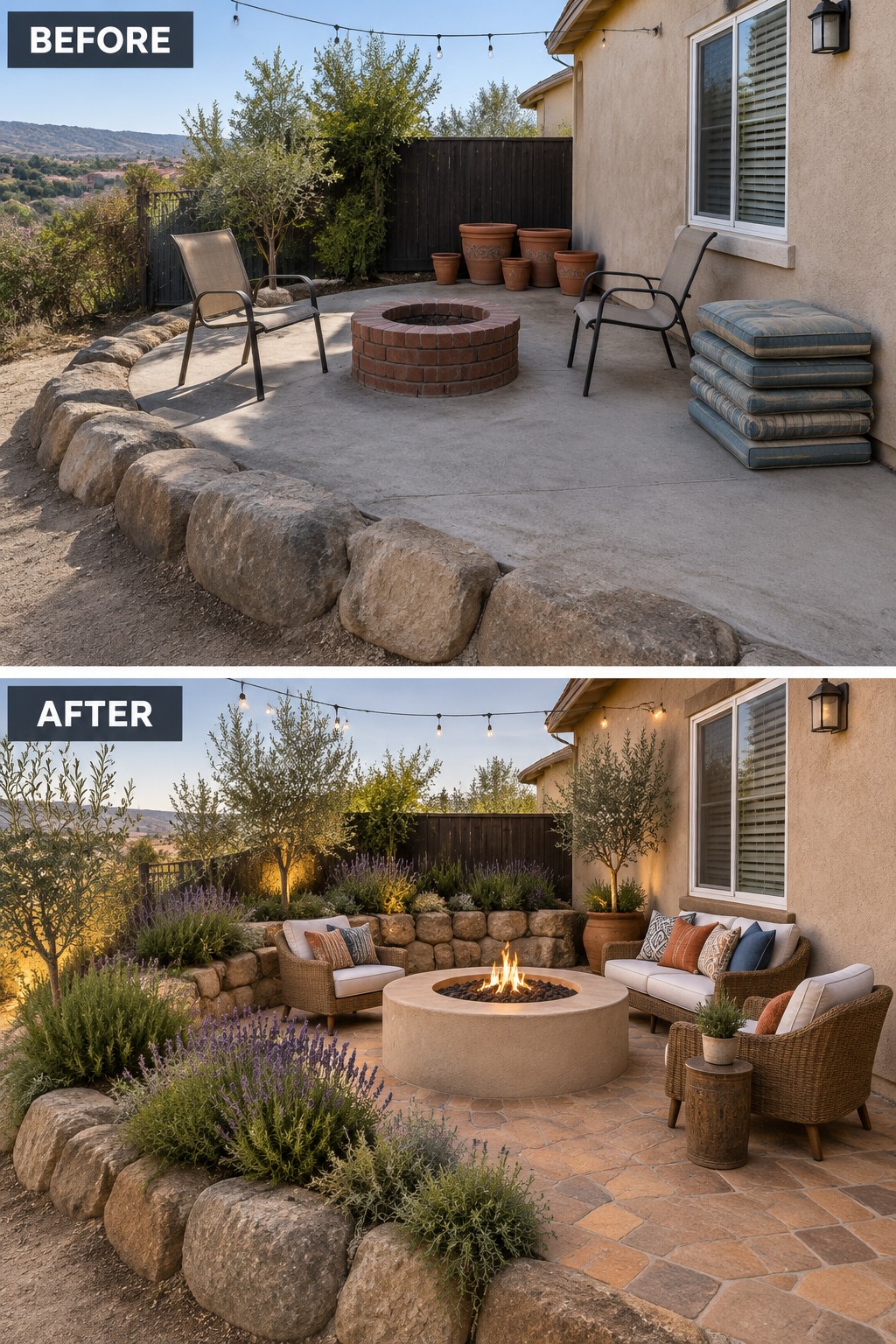
A plain concrete patio can be hard to use when the seating feels scattered and the fire pit is small. Here, a larger round fire feature and a close seating arrangement turn the bare surface into a clear place to gather.
Keep the seating close enough for conversation, but leave a comfortable path around the fire. In a small yard, a few weather-ready chairs and a well-sized fire pit can make the patio more useful without crowding it.
Give An Unused Backyard A Clear Fire Pit Area

A bare patch of lawn can feel like wasted space until it has a clear purpose. Here, the old masonry ring becomes part of a defined fire pit seating area, with large boulders marking the edge and providing places to sit.
For a similar yard, start by choosing a level spot with enough room to walk around the fire pit. Use a simple border to separate the area from the lawn, then add only the seating you need. Check local fire rules and keep the pit a safe distance from sheds, fences, and overhanging branches.
Replace A Worn Patio With A Defined Fire Pit Area
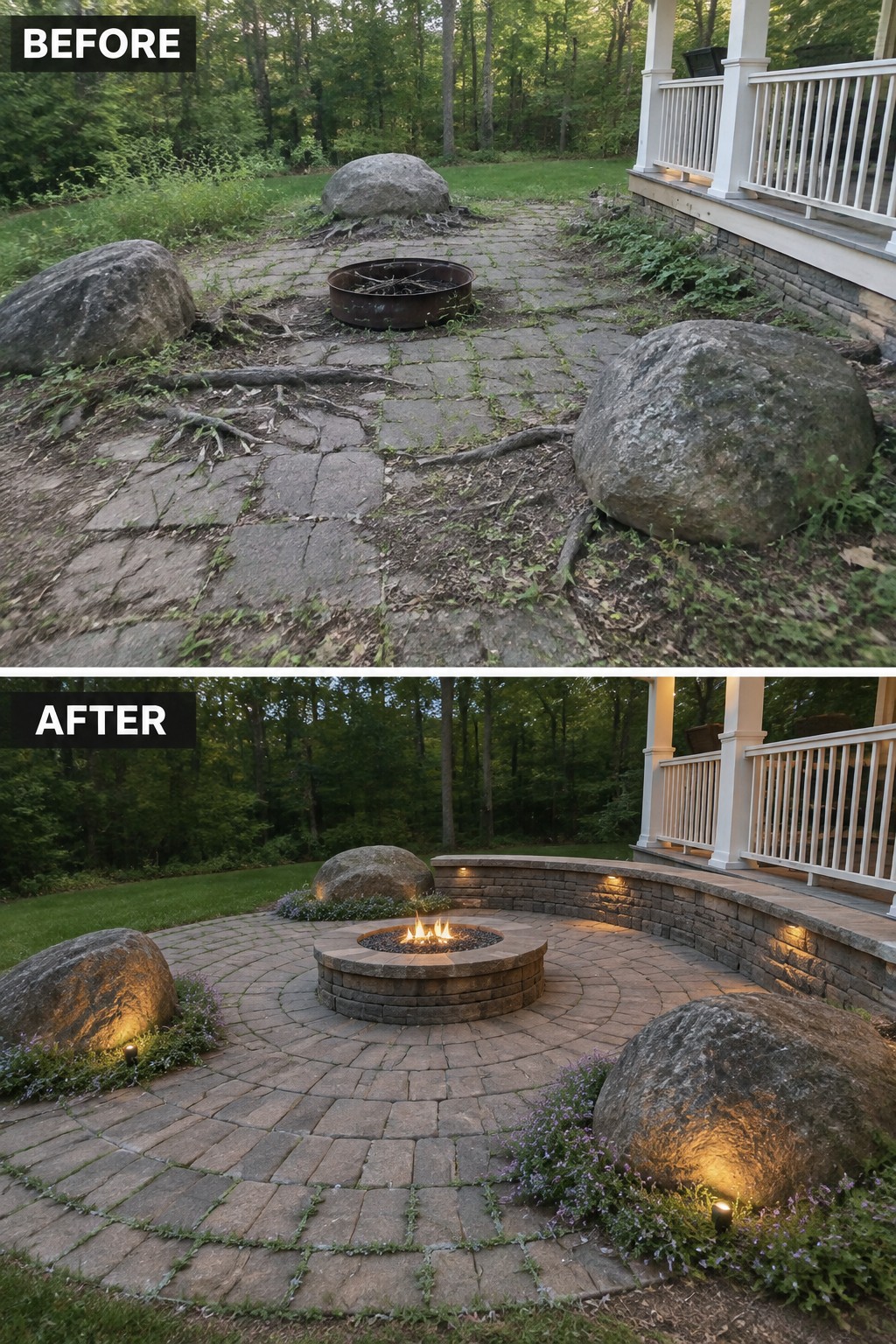
A cracked, overgrown patio can be hard to use, but a clear layout gives it a purpose. Here, fresh paving and a built-in stone fire pit turn the neglected space into a comfortable place to gather.
For a similar yard, start by repairing or replacing the paving, then choose a fire pit size that leaves room to walk around it. A low retaining wall can help define the patio where it meets a slope, but keep the seating area open enough for people to move safely.
Make A Rooftop Patio Work As An Outdoor Room

The bare rooftop becomes much more useful when the fire pit sits within a proper seating area. A built-in-style sectional gives people a place to gather, instead of leaving the fire pit on its own in the middle of open concrete.
For a similar terrace, start by arranging weather-resistant seating around one main focal point, then leave clear space to walk through. Deck tiles can help define the sitting zone, but check that they suit the roof and do not block drainage.
Frequently Asked Questions
Q: How much space should I leave between a fire pit and boulders?
A: Leave enough room to walk around the pit without squeezing past rocks, and keep seating a comfortable distance from the flames. Check your fire pit’s instructions and local fire rules for required clearances, especially if nearby plants or structures could catch fire.
Q: Can I use boulders as seating around the fire pit?
A: Yes, if they have broad, fairly level tops and sit far enough from the heat. A few loose cushions can make them more comfortable, but bring them inside when the fire is going.
Q: How do I stop boulders from shifting on a sloped yard?
A: Set each boulder on a firm, level base rather than placing it directly on loose soil. For a steep slope or especially large rocks, get help with placement so they stay secure over time.
Q: What plants work well around a boulder fire pit?
A: Choose low-growing, drought-tolerant plants that won’t spread into the fire area or block the path. Keep dry leaves and branches trimmed back, and leave a clear, nonflammable zone around the pit.
