

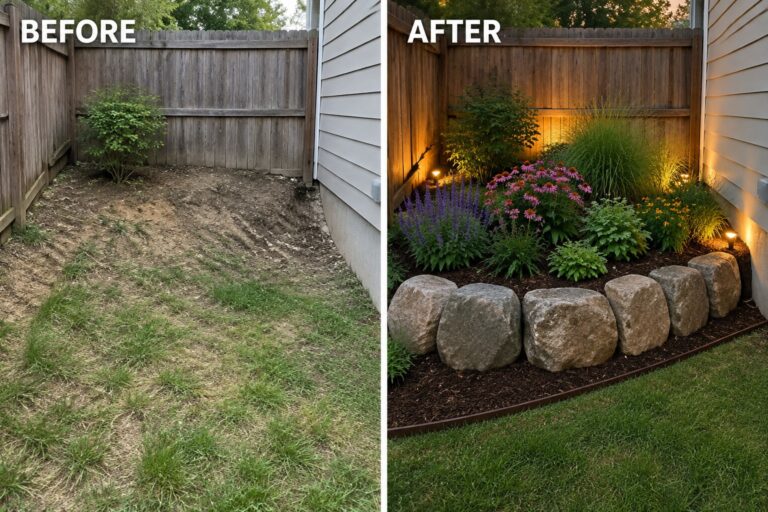
Corner garden beds can look a little scattered when the soil, plants, and edges have no clear structure, especially where two sides of the yard meet.
I like how boulders can give these spots a natural anchor while helping define planting areas and soften awkward corners.
Their shape and placement can also add useful contrast, making a small bed feel more settled without crowding it with extra decor.
Even a modest change in layout can make the whole corner feel cared for.
I’d save the ideas that suit your yard’s scale and use them as a starting point for a garden bed that feels more grounded.
Create A Defined Corner Garden Bed

A bare, patchy corner can look more settled once the planting area has a clear shape. Here, a low boulder border separates the garden bed from the lawn, giving the corner structure without needing a large retaining wall.
For a similar bed, lay out a gentle curve and keep the stones low enough that the planting remains easy to see. Mulch helps cover thin soil, while a few groups of perennials and ornamental grasses keep the space from feeling crowded.
Add Structure To A Shady Garden Bed

A bare, patchy bed can look more intentional when you give it a simple planting structure. Here, large boulders and groups of ferns turn the empty ground beside the fence into a clear garden feature.
This idea works well in a shady corner where grass struggles to grow. Start by clearing the area, then arrange a few stones as the focal point and plant around them, leaving enough room for paths and for the plants to spread.
Direct Downspouts Into A Boulder Bed
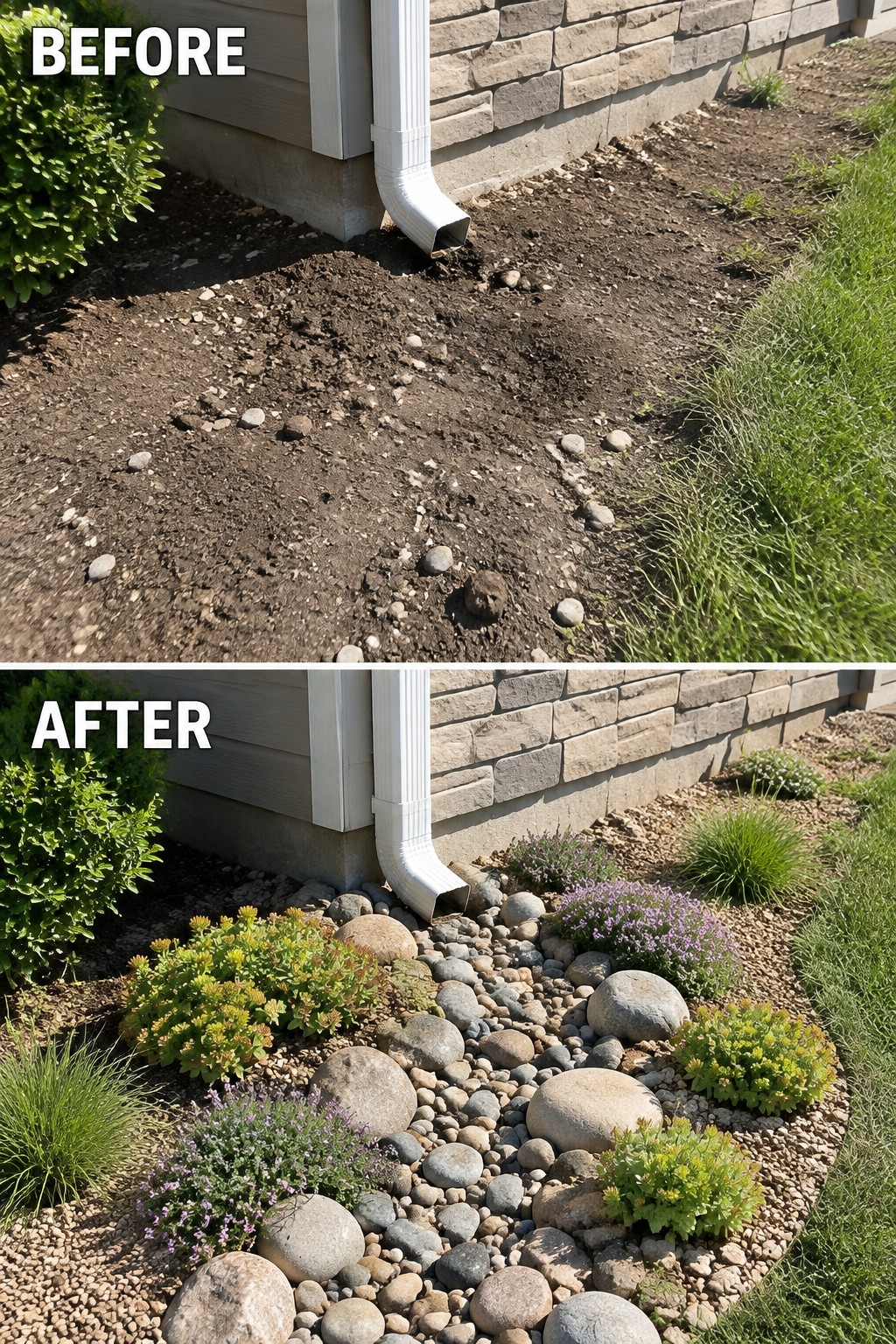
A bare patch beneath a downspout can turn into a simple dry creek bed that helps guide runoff away from the house. Here, a channel of rounded boulders replaces exposed soil, giving water a clear route and the corner garden bed a more finished shape.
Use stones in a few sizes, with smaller gravel between them, and keep the channel sloped toward a safe drainage area. Low, water-tolerant plants can soften the edges, but leave the outlet clear so runoff can move freely.
Replace Patchy Grass With A Defined Garden Bed
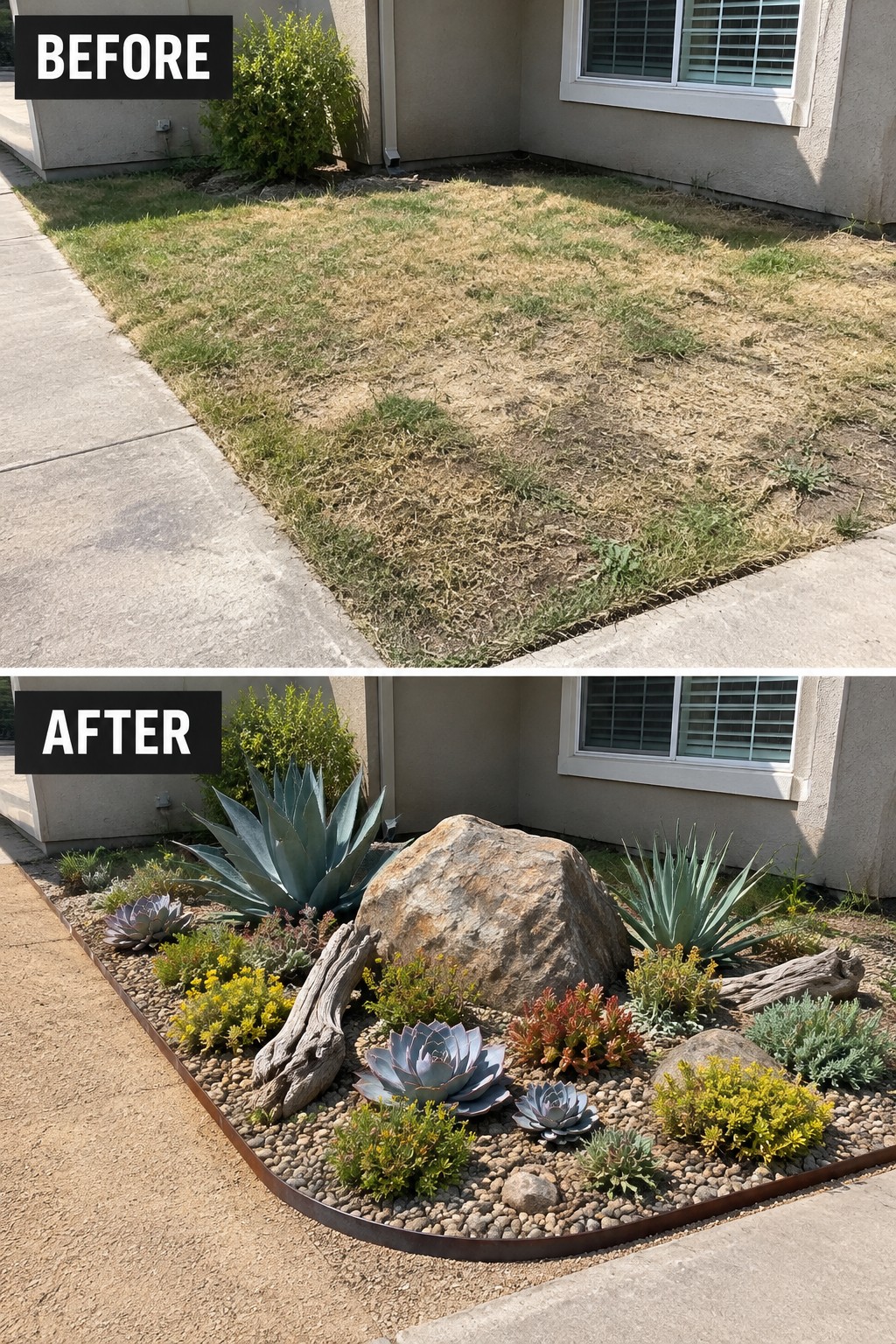
A dry, patchy lawn can be hard to keep looking tidy, especially in a small corner beside the house. Replacing it with a clearly edged bed gives the area a more intentional shape and makes room for plants and boulders to stand out.
For a similar bed, remove the struggling grass, mark a simple outline, and use gravel or small stones as a neat ground cover. Leave enough space between plants as they grow, and keep the bed edge clear of the sidewalk so it stays easy to maintain.
Build A Garden Stairway Into A Sloped Bed

A bare slope can be hard to maintain and awkward to walk across. Large boulders set into the hillside create sturdy steps, while low plants fill the spaces around them and help the bed look settled.
This approach works well in a narrow side yard where a fence or house wall leaves little room for a winding path. Keep the steps wide enough to use comfortably, and leave open space around them so plants don’t crowd the way.
Turn A Bare Corner Into A Gravel Garden Bed

Replacing patchy grass with a gravel bed gives this small corner a clearer shape and a more useful purpose. A few large boulders define the edge, while the planting behind them adds height without taking over the patio.
This idea works well in a compact yard where lawn is hard to maintain. Clear the area first, then leave enough space between the boulders for plants to grow and for the bed to stay easy to care for.
Plant Around Boulders To Fill A Shady Corner

The corner looks more finished once the bare soil and sparse plants are replaced with leafy ground-level planting around the existing boulders. Hostas and ferns suit this kind of shady bed, and the rocks give the plants a clear structure without needing added edging.
Use a few larger plants as the main group, then leave enough space for them to spread. This approach works well beneath trees or along a fence, where shade can make other planting choices harder.
Replace Overgrown Shrubs With A Simple Gravel Bed

The crowded shrubs leave the foundation bed looking untidy. Replacing them with a strip of white gravel and a few ornamental grasses gives the area a clearer shape, while a single boulder provides a focal point without filling the whole bed.
This approach works well in a narrow planting area along a house. Remove unwanted plants first, then use edging to keep the gravel in place and leave enough room for each grass to mature. Choose plants suited to the site’s sun and water conditions.
Create A Clear Path Through A Corner Garden
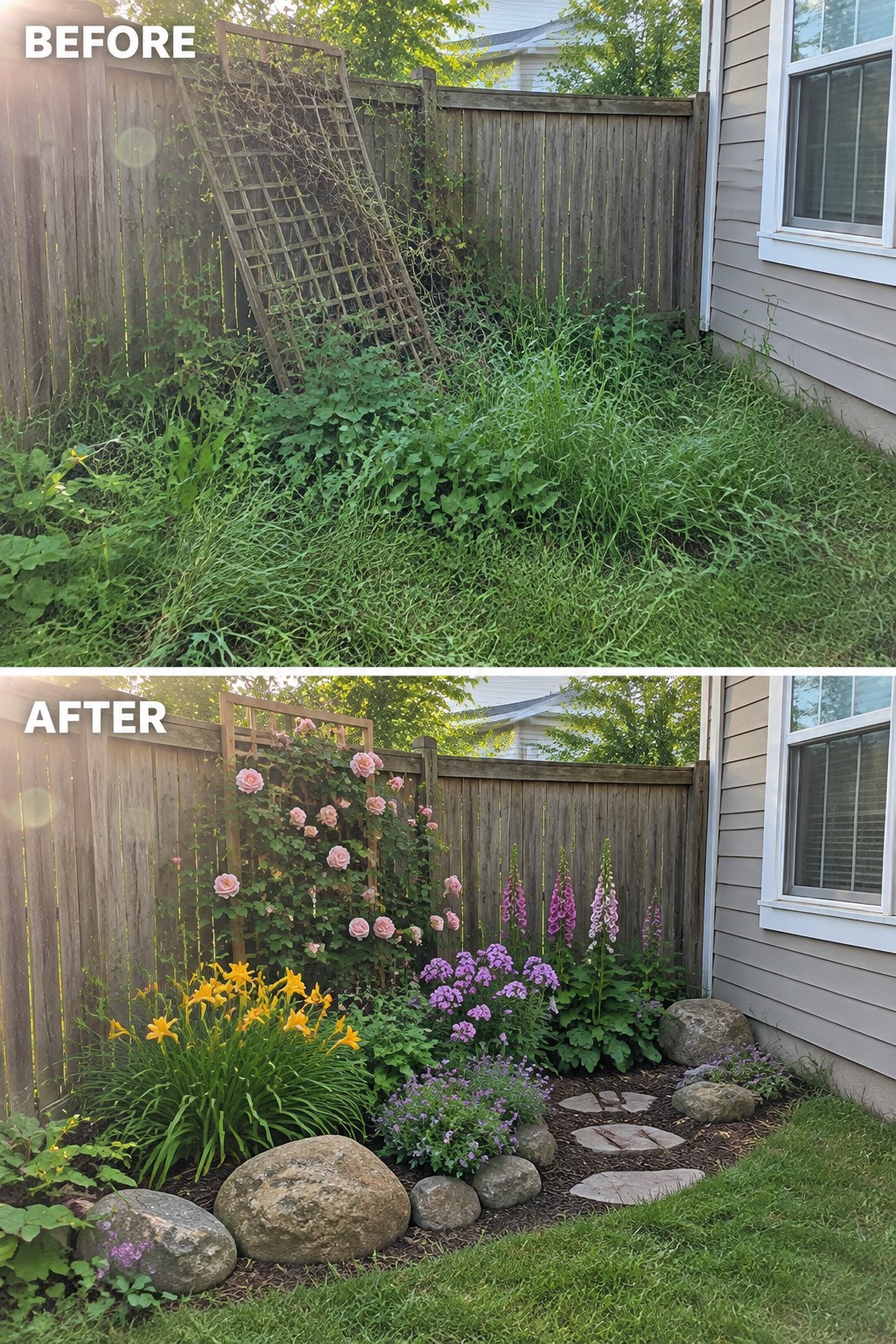
An overgrown corner can be hard to use, even when there is room to plant. Here, a few stepping stones give the bed a clear route, while boulders and flowers define the edges and keep the area from looking tangled.
For a similar corner, clear the weeds first and decide where you want the path to lead before adding plants. Set stones far enough apart for comfortable steps, then leave room around them so the bed stays easy to maintain.
Replace Patchy Grass With A Boulder Garden
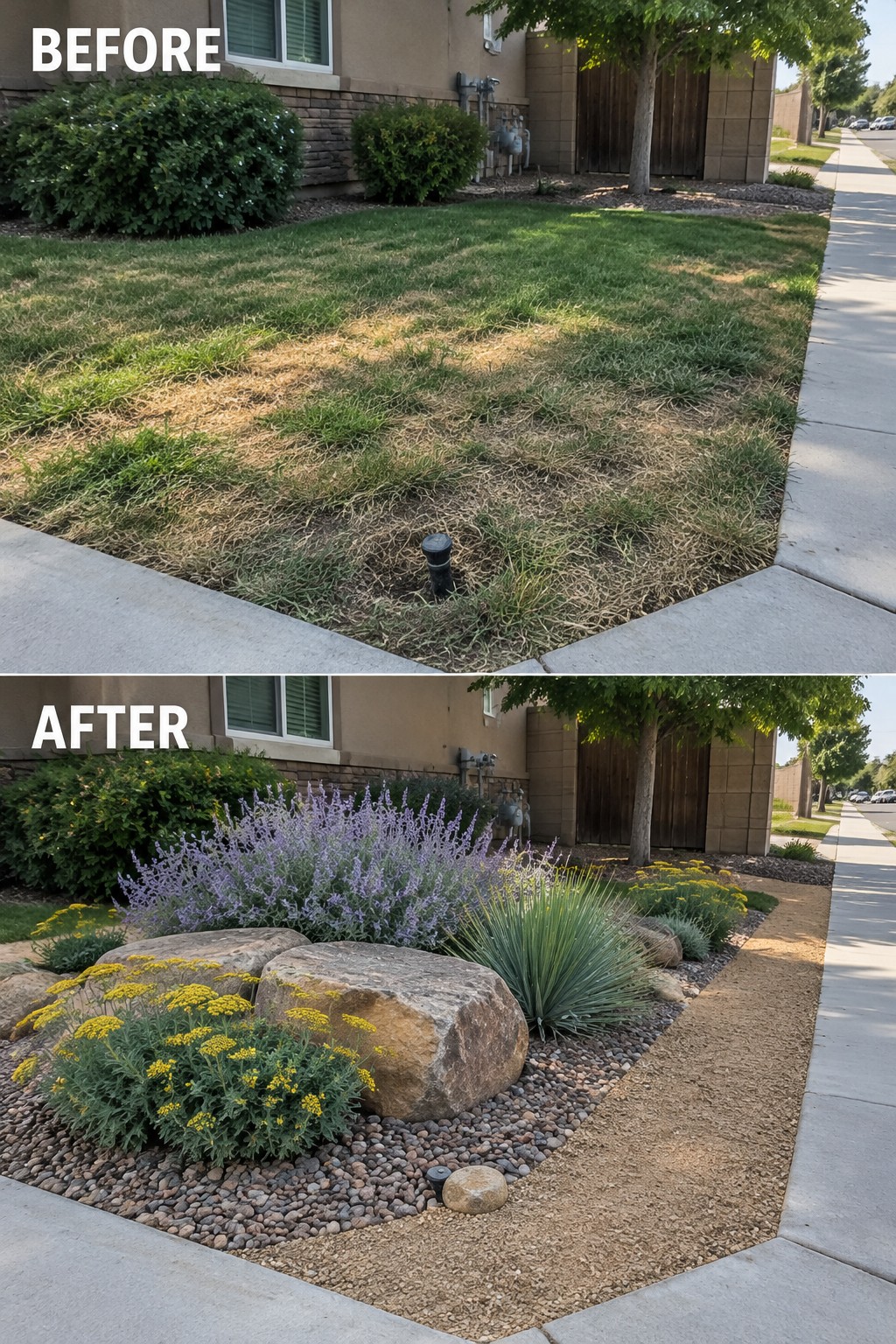
A struggling corner lawn can be hard to keep looking tidy. Replacing it with a defined gravel bed gives the area a clear shape, while a few large boulders and sturdy plants provide structure without relying on grass to fill the space.
Use this approach where lawn is thin or difficult to maintain, especially beside a sidewalk or house. Set the bed edge first, then leave enough room between rocks and plants for access and upkeep.
Manage Yard Drainage With A Boulder Garden Bed

A shallow, stone-lined channel can guide runoff away from a downspout while turning a soggy corner into a more defined garden bed. Here, the standing water is replaced by a dry creek-style bed with boulders and plantings, giving the water a clearer route through the yard.
Use this idea where rainwater collects near a house or fence, but check that the channel carries water to a suitable spot rather than toward a foundation or neighboring yard. Choose stones sized to stay in place during heavy rain, and leave enough open space for water to flow.
Build A Boulder Retaining Bed With Steps

A sloped corner can be hard to use when it is covered in loose mulch or wood chips. Stacking boulders into a low retaining bed gives the planting area a clear edge, while broad stone steps make it easier to reach and care for.
Use this approach where a small grade change needs structure, especially beside a fence or house. Set the stones securely and leave enough room on the steps for steady footing; then choose compact plants that will not hide the rockwork.
Add A Clear Border To A Corner Garden Bed

A bare bed can look untidy even when it has a healthy shrub. A low border of large boulders gives the planting area a clear shape, while fresh mulch makes the soil look more finished.
This works well beside a walkway, where a defined edge helps keep mulch and plants from spilling onto the path. Choose stones that suit the scale of the bed, and leave enough room around the main shrub for flowers to grow.
Replace Patchy Lawn With A Boulder Garden Bed

A struggling patch of lawn can be hard to keep looking tidy, especially in a corner. Here, the grass gives way to a defined bed with gravel, boulders, and ornamental grasses, creating a more intentional landscape that needs less lawn to maintain.
For a similar look, mark out the bed’s shape first, then place a few large boulders before adding gravel and plants. Keep the edging clear and leave enough room around each plant for it to grow.
Turn A Neglected Corner Into A Zen Garden Bed

A bare, messy corner can feel much more planned when you clear it and give it a simple gravel bed with one main focal point. Here, a tall boulder makes the center of the garden, while a small evergreen and moss add a little greenery.
This idea works well in a fenced corner where lawn or planting space is limited. Rake the gravel into a clear pattern, and leave enough room around the boulder so the bed does not feel crowded.
Create A Gravel Fire Pit Area In A Corner Bed

A gravel base and a simple ring of boulders can turn a rough corner of the yard into a defined fire pit area. Here, replacing patchy grass with gravel gives the space a cleaner shape and a stable surface for sitting around the fire.
For a similar setup, mark out a small area that leaves room to walk between the fire pit and the house. Use landscape fabric beneath the gravel to help limit weeds, and check local rules for fire pit placement and clearance.
Replace Overgrown Shrubs With A Layered Boulder Bed

The crowded shrubs in this corner made the garden bed look untidy. Replacing them with a few compact evergreens and low flowering plants gives the bed a clearer shape, while the large boulders define its edge.
For a similar corner, clear out plants that have spread too far, then choose a few shrubs for structure and smaller flowers to fill the open spaces. Leave room for each plant to grow so the bed stays neat without constant trimming.
Replace Overgrowth With A Planted Boulder Bed

Removing the heavy groundcover and shaping the corner into a defined bed gives the plants room to stand out. A large boulder adds a clear focal point, while the curved edge of river rock makes the garden feel planned rather than left to spread.
For a similar corner, clear unwanted growth first, then place one boulder and build a simple planting arrangement around it. Choose plants suited to the amount of shade, and leave enough open space for them to grow without crowding the fence or house.
Frequently Asked Questions
Q: How do I keep boulders from shifting in a corner bed?
A: Set each boulder on firm, level ground rather than on loose mulch. For a larger stone on a slope, partially bury its base so it feels anchored and looks like it belongs there.
Q: What plants work well around boulders in a shady corner?
A: Choose plants that suit your soil and the amount of shade, such as hostas, ferns, or hardy groundcovers. Leave a little space around each boulder so plants don’t hide the stone or crowd its edges.
Q: Should I put landscape fabric under the rocks?
A: Usually, no. Fabric can make it harder to add plants later, and weeds can still sprout in debris that collects on top. A layer of cardboard under mulch is a simpler way to start a new bed.
Q: How can I keep a boulder bed from looking too crowded?
A: Use a few stones of different sizes and leave open space between them. That breathing room gives each boulder more presence and makes the corner easier to maintain.
