


A yard can feel unfinished when the planting is scattered and there is nowhere comfortable to pause.
I like how natural boulders can add structure while doubling as sturdy, low-key seating that fits the landscape.
With a little attention to paths, planting, and where each rock sits, even an awkward corner can feel more purposeful.
The changes don’t need to be dramatic to make a yard easier to use and more cared for.
Some of these layouts are worth saving and adapting to the shape and needs of your own space.
Turn A Bare Front Yard Into A Planned Garden

Replacing patchy lawn with defined planting beds and natural boulders gives this small front yard a clear layout. The rocks provide simple seating and a focal point, while the curved path leads visitors to the entry.
For a similar yard, start by shaping the beds and choosing a few hardy plants, then place seating rocks where they won’t block the walkway. Leave enough open space around them so the garden stays easy to move through and maintain.
Turn Bare Concrete Into A Seating Area

An unused concrete patio can become a comfortable place to gather when you give it a clear seating zone. Here, irregular stone pavers replace much of the plain surface, and large boulders provide natural seats around a fire pit.
This idea suits a small fenced patio where bulky furniture would leave little room to move. Keep the seating simple and leave a clear path to the house; a few well-placed rocks can do the job without crowding the space.
Add Rock Terraces To A Sloped Yard

The steep, patchy slope becomes a more orderly garden with low stone retaining walls that create planting terraces. The rocks help define the beds and make the hillside easier to manage, while small plants fill the spaces between them.
This approach works well on a sloped yard where soil tends to wash downhill. Use sturdy stones and plan the steps or paths before planting, so it is easy to reach each level for maintenance.
Create A Simple Backyard Fire Pit Area
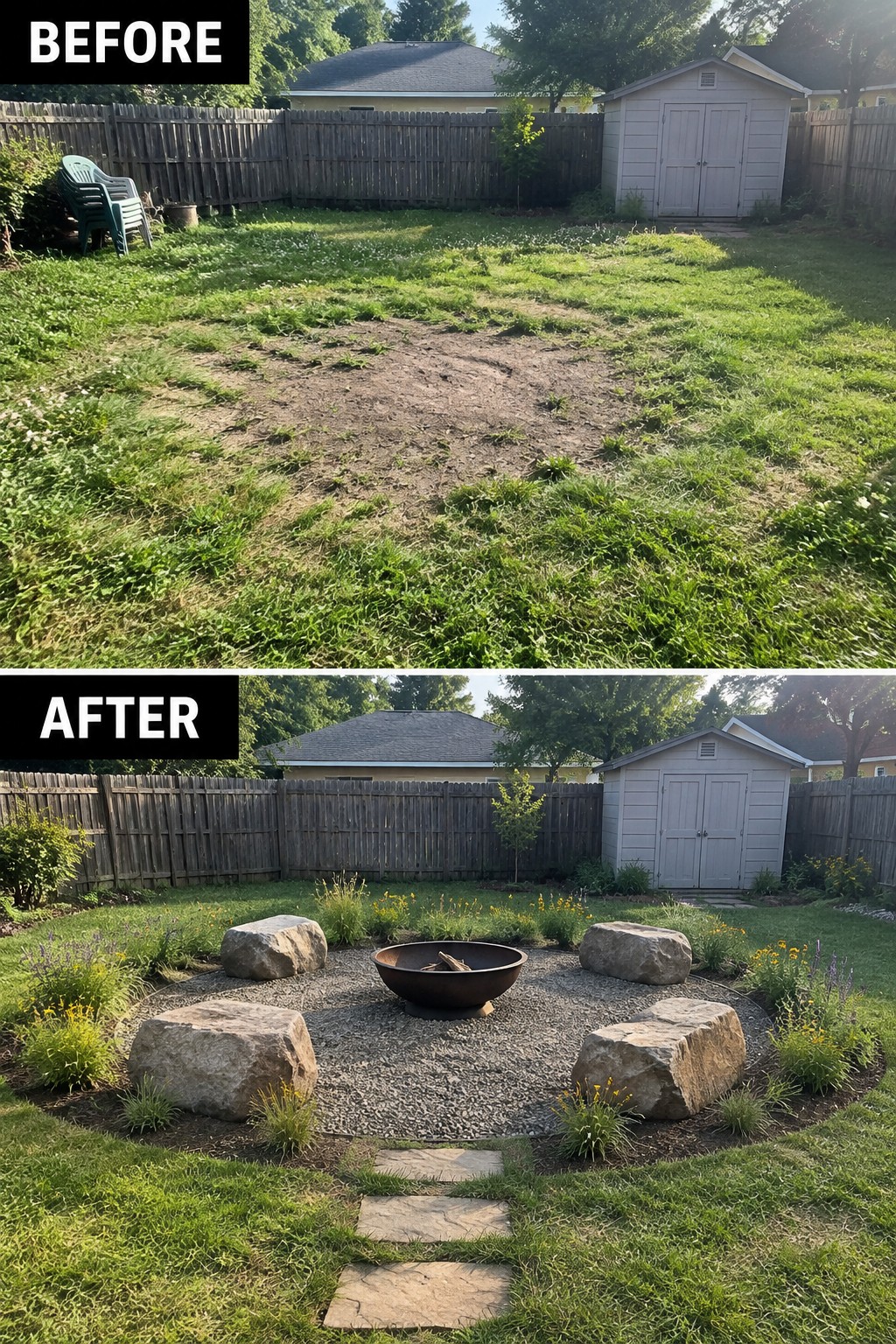
A neglected patch of lawn can become a useful gathering spot when you give it a clear shape and purpose. Here, a gravel circle and a few large natural rocks turn the bare center of the yard into a fire pit area with informal seating.
This idea works well in a backyard with enough open space to keep the fire pit safely away from fences and plants. Start by clearing the area, then choose rocks that are comfortable to sit on and leave room to walk around them.
Add Natural Seating Rocks To A Poolside Patio

The plain pool deck works better as an outdoor sitting area once it has a clear place to gather. In the after photo, rounded rocks form a low, casual seat near the pool, making the open concrete feel more purposeful without crowding the chairs.
This idea suits a wide patio where there’s room to move between the seating and the pool. Choose smooth, stable rocks sized for comfortable sitting, and leave a clear path around them. A few can be enough.
Make A Front Entry Feel Finished With Natural Stone Seating

The wide concrete step made this entry feel bare. Replacing it with a paver landing and adding two large natural rocks as informal seats gives the front yard more structure without making the space feel overly formal.
This idea works well beside a front path where there is room to sit without blocking the way to the door. Choose stones that are comfortable to perch on and keep them in scale with the entry. Planting around them helps the seating feel like part of the garden.
Replace An Overgrown Side Path With Gravel

A gravel path gives a narrow, overgrown side yard a clear route through the space. Here, it replaces uneven stepping stones, making the walk to the gate easier to follow while leaving room for planting and natural seating rocks.
This idea works well along a house where there isn’t space for a wide walkway. Clear the weeds first, then lay landscape fabric and compacted gravel; set larger rocks beside the path where they won’t narrow it.
Build A Garden Bed Around Natural Stone Seating

A bare, scattered flower bed can feel more useful when it has a clear place to sit. Here, large natural stones form a low seating spot, turning the garden edge into a small rest area instead of leaving it as open soil.
This idea suits a narrow bed beside a house, where a full patio may take up too much room. Choose stable, comfortable stones and leave a clear path in front; keep the planting low near the seat so it stays easy to use.
Turn A Muddy Yard Into A Dry Creek Garden

A dry creek bed gives a muddy, worn-out yard a clear shape and a practical place for water to flow. Here, a channel of rounded stones replaces the bare, rutted ground, while large boulders give the garden a few natural places to sit.
This idea works well in a low spot where runoff collects, especially in a small backyard. Shape the channel to follow the natural slope, and use rocks and hardy grasses along the edges. Keep the stones stable and leave enough room to walk around them.
Replace A Failing Wall With A Natural Stone Garden Edge

The crumbling block wall left the sloped yard looking worn and uneven. Replacing it with large natural stones gives the garden a sturdier edge and makes the slope feel like part of the landscape rather than a problem to hide.
This approach works well beside a driveway or along a hillside where a retaining edge is needed. Set the stones securely and leave enough room for plants to grow without blocking access or putting pressure on the wall.
Create A Natural Seating Area With Boulder Steps

A patchy, unused yard can become a place to sit and wander by using large natural stones as both seating and stepping points. Here, the boulders form a low curved edge around a mulched area, while separate flat rocks lead into the yard.
This idea works well beneath a mature tree or in a backyard where a full patio would feel too formal. Leave enough space between the stones for comfortable movement, and use mulch to keep the area tidy while new plants fill in.
Define Garden Beds With Natural Stone

The loose, covered beds become easier to use once they have clear edges. In the finished yard, rounded stones outline the planting areas and make the paths between them feel intentional. The stone edging gives a vegetable garden structure without making it look too formal.
For a similar setup, mark out bed shapes and walking routes before choosing stones. Keep paths wide enough for a wheelbarrow, and use stones of a fairly consistent size so the edges sit securely.
Add A Boulder Seat To Make A Deck More Usable
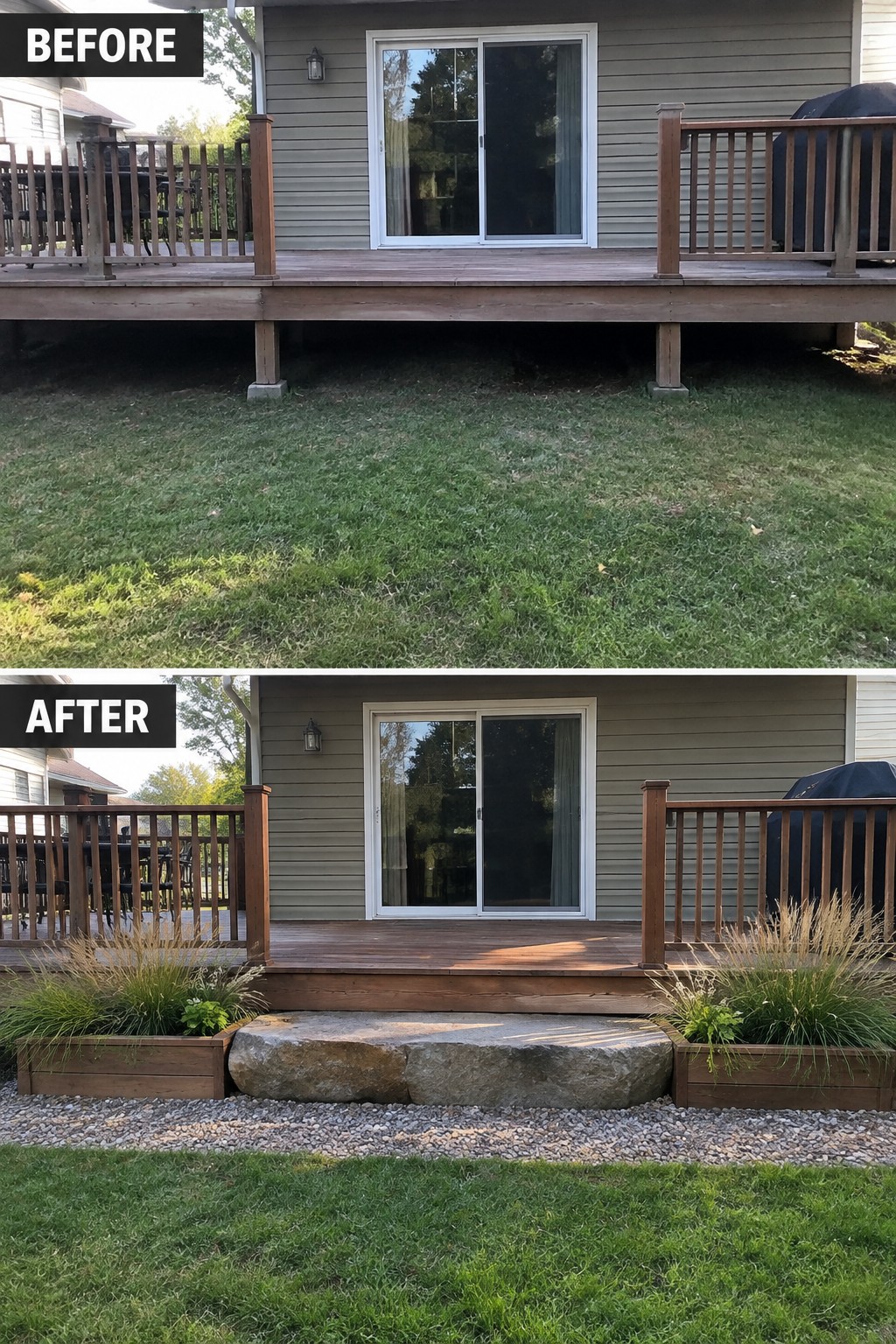
The deck felt disconnected from the yard, with open grass beneath it and no easy place to pause at ground level. A broad natural stone seat, set between planted beds, gives the space a useful stopping point and helps the deck feel connected to the landscaping.
This idea works well where a raised deck meets a lawn. Choose a stable, comfortably sized rock, and keep the surrounding planting low enough to leave a clear route past it. Built-in planters can help define the spot without making the yard feel crowded.
Create A Woodland Seating Area With Boulder Rocks

Replacing the leaning fence panel and leaf-covered ground with a clear garden path and large natural rocks gives this shady corner a purpose. The boulders provide informal seating while helping the area feel planned rather than neglected.
This idea suits a wooded yard where a full patio might feel out of place. Clear the ground first, then arrange a few stable rocks around an open path, leaving enough room to walk and tend the plants.
Define A Gravel Driveway With A Boulder Garden Edge

A gravel driveway can feel unfinished when it spreads into the lawn without a clear border. A planted bed edged with large natural rocks gives the drive a cleaner shape, while the flowers make the yard feel more planned.
This idea works well beside a long driveway where there is room for a narrow garden bed. Keep the boulders spaced along the edge rather than crowding the path, and leave enough width for cars to pass comfortably.
Turn An Unused Patio Into An Outdoor Dining Area

The wide concrete patio had plenty of room, but the small table and chairs left much of it unused. Replacing them with a larger dining setup and a built-in stone bench gives the space a clear purpose and makes it easier to seat a group.
This idea works well in a backyard where there’s room to eat outside but no need for separate lounge and dining zones. Keep enough open space around the table for chairs and foot traffic, and choose outdoor cushions and furniture that can handle the weather.
Turn A Sloped Yard Into A Tiered Rock Garden

A bare slope can be hard to maintain and may let soil wash downhill. Large boulders set in loose tiers give the hillside a clearer shape, while pockets of low-growing plants fill in around the rocks.
This approach works well where a steep yard is too awkward for a lawn. Keep the planting simple and leave room for water to drain between the tiers. If you want a place to sit, a few broad, stable rocks can serve as informal seats without crowding the garden.
Replace A Struggling Lawn With A Planted Front Garden
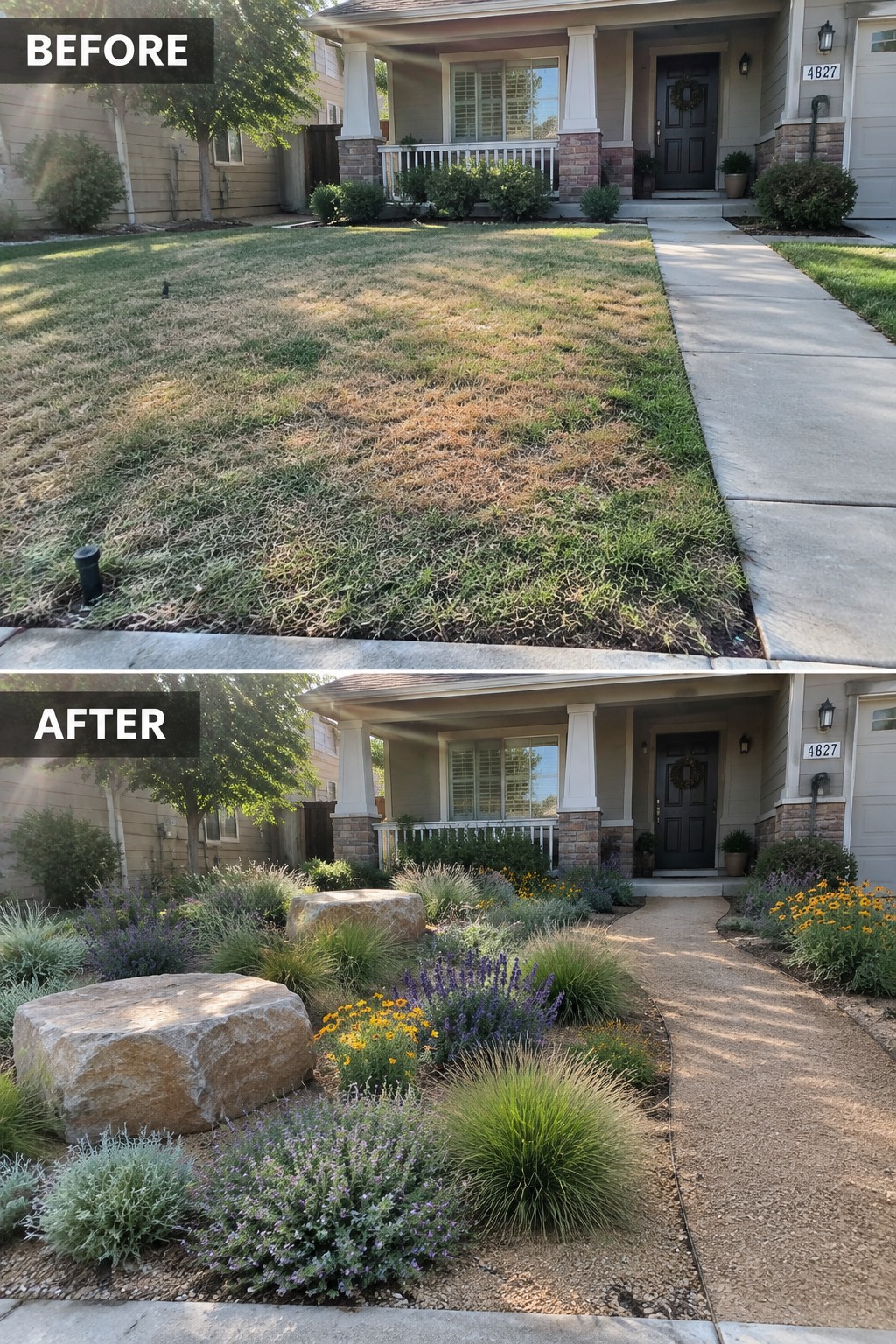
A dry, patchy lawn can make a front yard look neglected, even when the house itself is in good shape. Replacing much of the grass with curved gravel paths and planted beds gives the yard a clearer layout, while large natural rocks can double as informal seats.
This approach works well in a front yard where a full lawn is hard to maintain. Keep the path wide enough for easy walking, and leave room around each boulder so it is comfortable and practical to sit on.
Turn An Empty Lawn Into A Boulder Seating Area
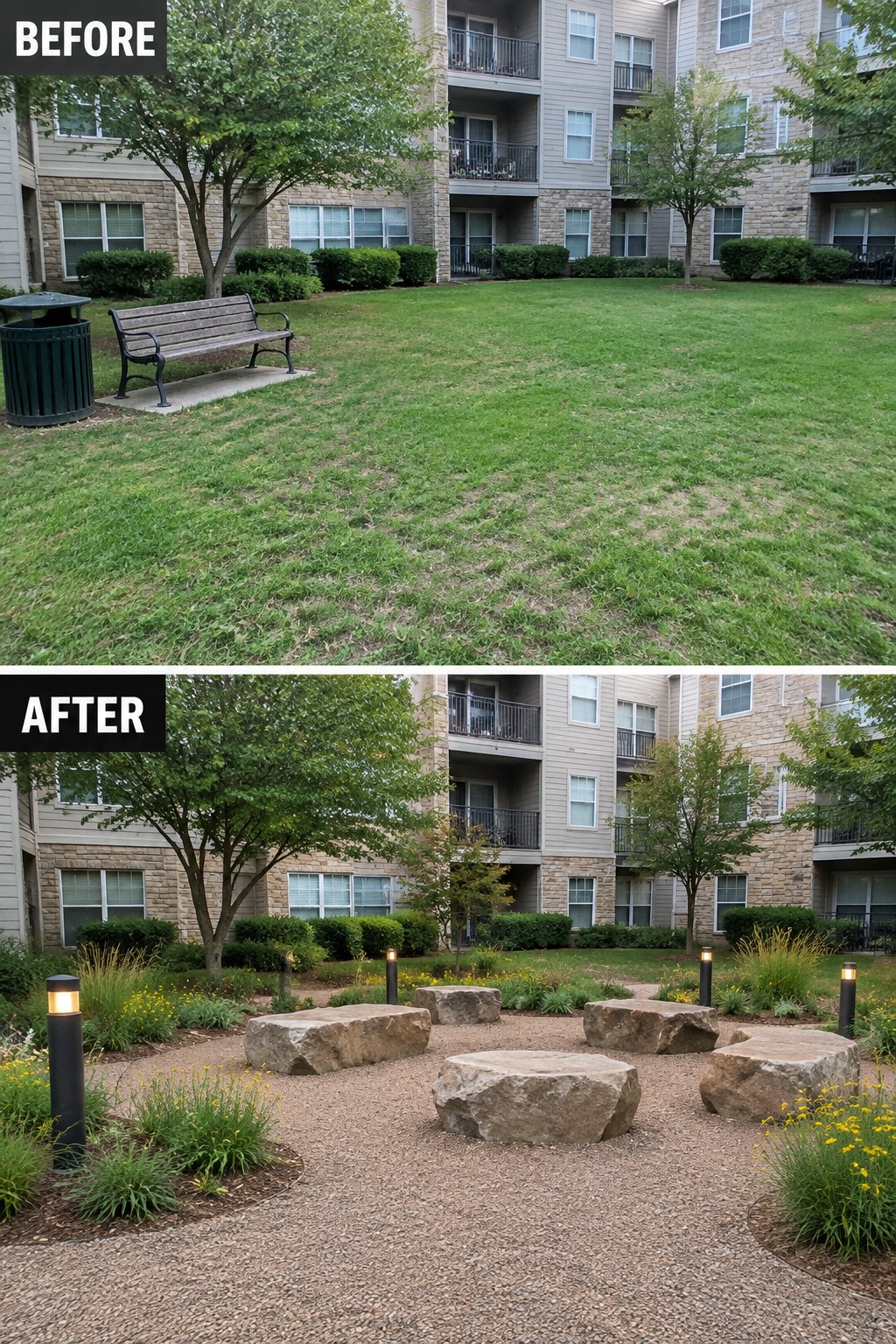
A broad patch of lawn can be hard to use, especially in a shared courtyard. Replacing part of it with a gravel gathering spot and large natural rocks gives the area a clear purpose without adding bulky furniture.
This idea works well in apartment courtyards and other open yards where people need places to pause or chat. Keep the rocks spaced for comfortable seating, and leave a clear route through the space so it stays easy to walk around.
Add Boulder Terraces To Stabilize A Sloped Yard

The bare slope has been shaped into broad rock terraces, turning loose, eroding ground into a more orderly landscape. Large boulders give the hillside structure, while pockets of planting help the stonework feel at home in the yard.
This idea suits a steep bank where soil and rocks tend to wash downhill. Set the boulders securely and plan for drainage before planting; a professional can help with the placement if the slope is high or unstable.
Add A Gravel Seating Nook Beside The Pool

An unused corner beside a pool can become a small place to sit without taking over the patio. Here, a gravel area and two rounded chairs give the once-empty concrete a clear purpose, while tall plants make the spot feel more private.
Use a defined gravel patch to separate seating from the pool path, and leave enough room to walk around safely. Choose chairs and cushions made for outdoor use, and keep the planting contained so it doesn’t crowd the seating.
Create A Garden Seating Area With Boulder Rocks
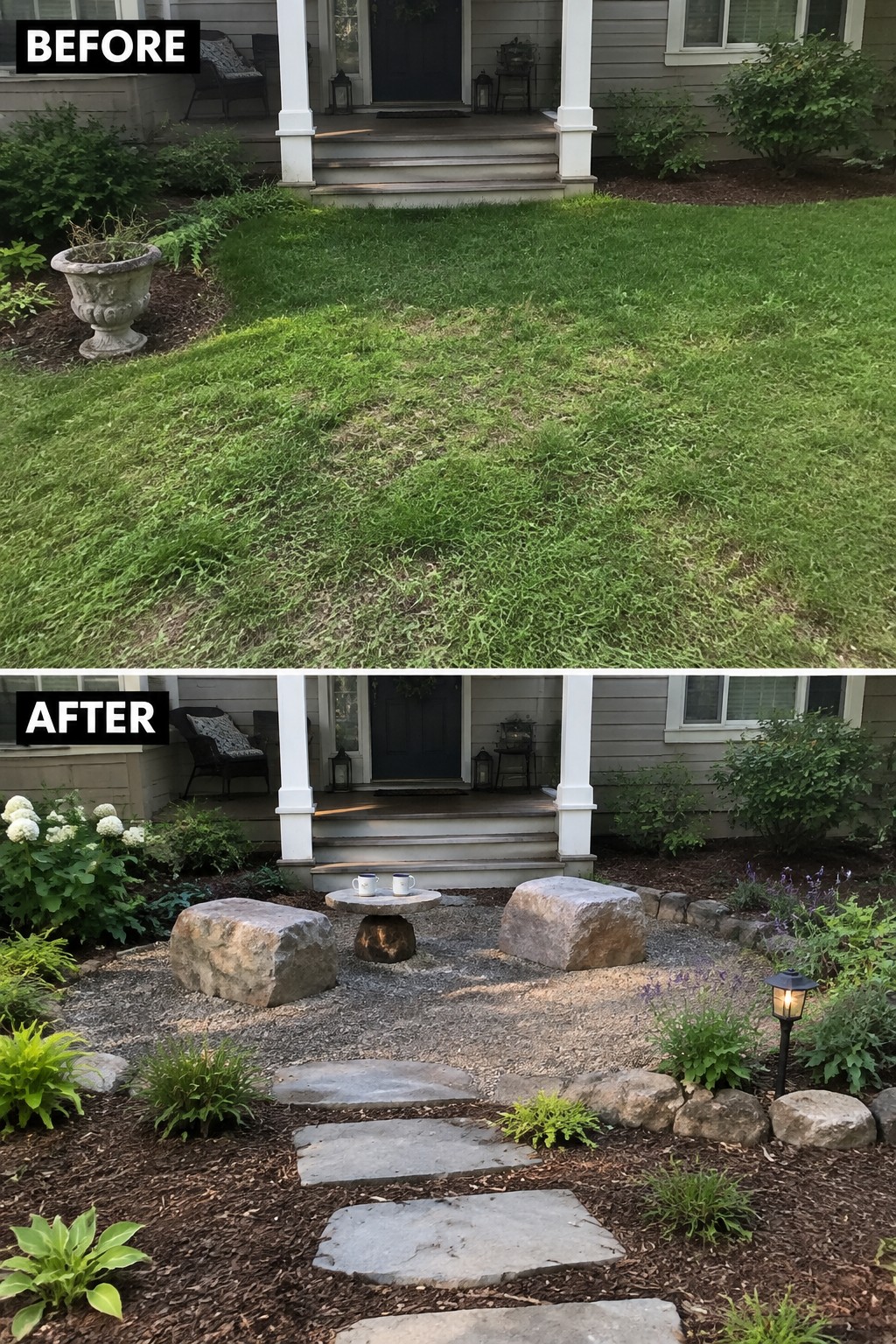
The bare, patchy lawn becomes a defined gravel seating area, with large boulders serving as natural seats. This gives the yard a clear purpose without needing a built patio or a full lawn renovation.
For a similar setup, place the rocks around a small table and leave enough room to walk between the seating area and the house. A gravel base helps mark the space, while a few stepping stones make the route through the garden easier to use.
Clear Overgrowth To Open Up The Pond’s Edge

Clearing back overgrown plants gives this pond a more usable, defined edge. In the updated yard, natural rocks mark the shoreline and provide informal places to sit without hiding the water behind a wall of growth.
Start by removing excess growth, then place a few sturdy, flat boulders where people can sit or step near the water. Leave room between them for plants and for easy movement, and choose rocks that sit securely at the pond’s edge.
Frequently Asked Questions
Q: How do I make sure a seating boulder is comfortable to sit on?
A: Look for a broad, fairly level surface and a height that feels natural when you sit down. A slight slope is fine, but avoid sharp edges or a spot that gets scorching hot in full sun.
Q: Do seating rocks need to be anchored?
A: Large, heavy boulders on firm, level ground often stay put on their own. If a rock could shift, sits on a slope, or will be used by kids, have it set securely on a stable base.
Q: What should I plant around boulder seating?
A: Choose low plants that won’t crowd the seat or hide the rock’s shape. Grasses and hardy ground covers can soften the edges while keeping the area easy to use.
Q: Can I add boulder seating to a small yard?
A: Yes. One well-placed rock can make a useful seat without taking up much room. Tuck it beside a path or garden bed, and leave enough clear space to sit comfortably.
