


A boulder yard can feel untidy when the stones have no clear edges or the planting looks scattered.
Ornamental grasses bring movement and shape, helping define beds, soften hard lines, and add interest through the seasons.
I like how grasses can make a rocky landscape feel more considered without hiding the boulders that give it character.
Changes to spacing, pathways, and a few sturdy plant groupings can also make the yard easier to care for.
Some of these approaches are worth adapting to a real garden, one small section at a time.
Add Structure To A Bare Front Yard

A thin, patchy lawn can make the front of a home feel unfinished. A defined planting bed along the house gives the yard a clear shape, while ornamental grasses add height and texture around the existing boulders.
Keep the bed simple and leave enough space for the grasses to grow without crowding the path or windows. A clean lawn edge and a layer of mulch help the planting look intentional without requiring a complicated layout.
Create A Clear Path Through An Overgrown Side Yard

Replacing the weedy gravel with a defined path makes this narrow side yard easier to use and gives the planting a clear edge. Ornamental grasses add height beside the house without taking over the walking space.
For a similar area, clear the existing growth first, then choose a path material that suits the space and is easy to maintain. Keep grasses and other plants contained along one side so there is still room to walk.
Add Structure To A Sloped Yard

A bare slope can be hard to manage and may let soil wash downhill. In this yard, low boulder walls divide the incline into planted levels, giving the ornamental grasses and other plants clearer places to grow.
Use sturdy stones to create low, gently stepped beds, and leave the existing stairs clear for access. Grasses work well along the edges because their shape helps define each level without making the planting feel crowded.
Add Defined Planting Beds Around A Patio

The plain concrete patio feels more connected to the yard once ornamental grasses and gravel define its edges. This simple planting structure makes the space look planned without changing the patio itself.
For a similar look, keep the bed edges clear and choose grasses that suit your climate and the available space. Leave enough room around the path and door so the planting stays tidy rather than crowding the entrance.
Create A Clean Border Along The Driveway

Replacing the overgrown strip with a defined rock border and ornamental grasses makes the driveway edge look planned and easier to maintain. The grasses add height and shape without spreading across the concrete.
Use this idea where lawn meets a driveway or walkway, and leave enough room for plants to grow without blocking the path. A simple edging line helps keep the stones in place and makes trimming easier.
Turn A Bare Courtyard Into A Planted Garden

A courtyard can feel unfinished when most of the ground is bare concrete. Replacing it with gravel and simple planting beds gives the space a clear garden layout, while ornamental grasses add height and texture around the existing tree.
This idea suits a small enclosed yard where a lawn would be impractical. Start by choosing a ground cover and a few plants suited to your climate, then leave a clear route through the space so it stays easy to use.
Replace Overgrown Planting With A Simple Garden Bed

Removing the tangle of tall plants makes this side-yard bed look planned and much easier to care for. The ornamental grasses give it a steady shape, while the smaller flowering plants add color without taking over.
For a similar result, clear the bed first and choose a few grasses that suit the light and mature size of the space. Repeat them along the house, leaving enough room between plants so they can grow without crowding the windows or lawn.
Add Planting Structure Along The Pool

The bare strip beside a pool can feel unfinished, even when the hardscape is in good shape. Here, ornamental grasses and a row of boulders turn that open edge into a defined planting bed, making the pool area feel more planned.
For a similar look, group grasses in loose clusters and use a few larger rocks to mark the bed’s edge. Choose plants that suit your climate and won’t shed heavily into the pool, and leave enough space for access around the water.
Turn A Bare Front Yard Into A Planted Garden

Replacing a patchy lawn with defined planting beds gives this small front yard a clearer shape. Ornamental grasses and flowering plants fill the space around a simple gravel path, while the large stones add a natural focal point.
For a similar yard, keep the path wide enough to walk comfortably and group plants in generous drifts rather than scattering them. Choose grasses and flowers suited to your climate, and leave room for them to grow so the beds stay easy to care for.
Turn An Overgrown Yard Into A Fire Pit Seating Area

Clearing out an overgrown corner can make room for an outdoor spot people will actually use. Here, a gravel area and a ring of boulder seating create a simple place to gather around a fire.
This idea works well in a small fenced yard where a full patio would feel crowded. Keep the seating close enough for conversation, and leave a clear path through the gravel so people can move around safely.
Add Ornamental Grasses To A Bare Garden Bed

The empty bed beside the walkway feels unfinished, but a few well-placed ornamental grasses give it a clear shape and some height. Grouping the grasses among shrubs and boulders makes the planting feel planned without filling every bit of soil.
This idea works well along a porch or path where you want greenery without blocking the way. Leave enough space between plants for them to grow, and keep the bed edge clear so the walkway stays easy to use.
Control Erosion With A Planted Dry Creek Bed
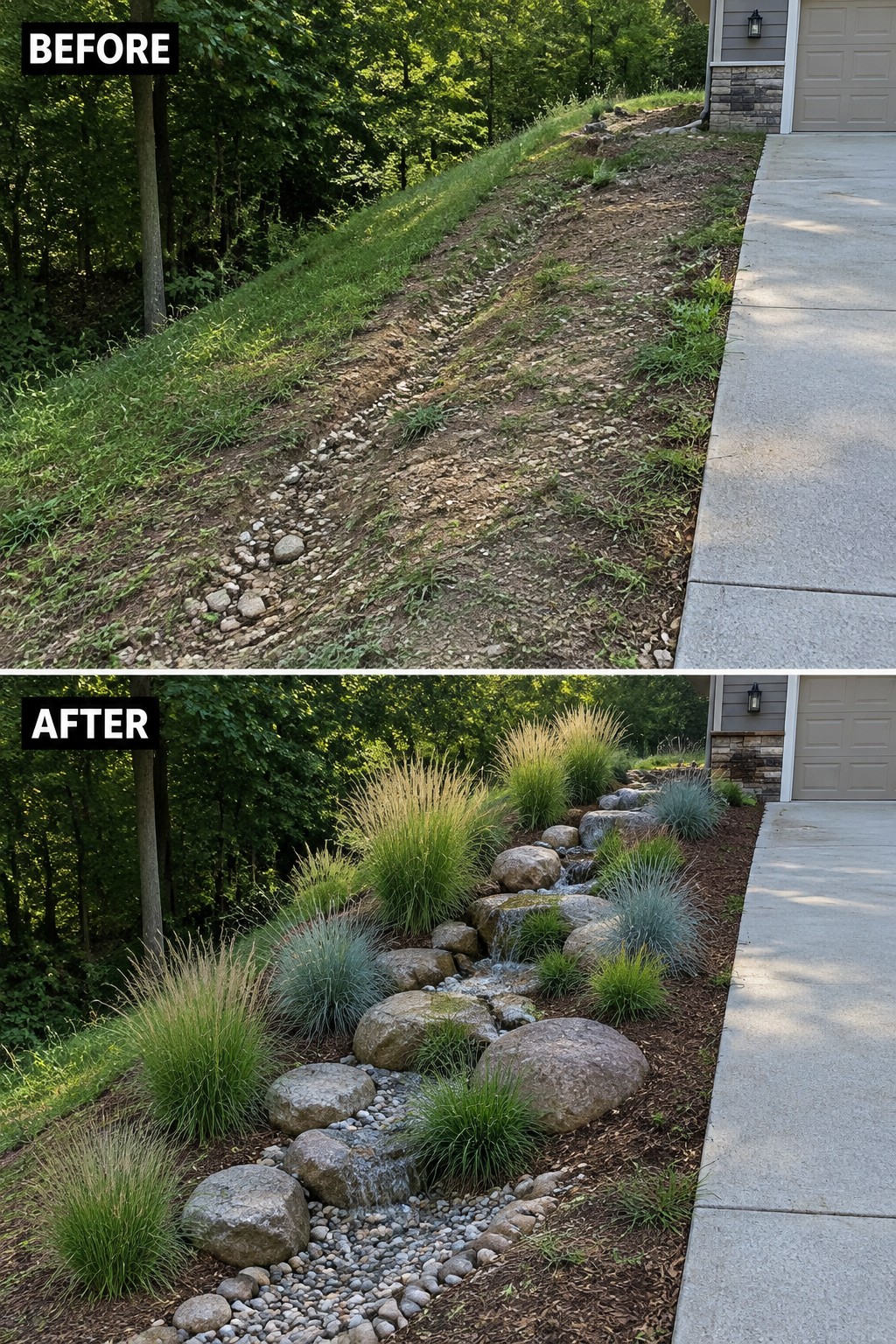
A dry creek bed gives a sloped yard a clear route for runoff while making a bare, uneven bank look planned. Here, a channel of small stones and larger boulders replaces exposed soil, with ornamental grasses adding planting structure along the slope.
This idea works well beside a driveway or foundation where water tends to run downhill. Shape the channel to follow the natural grade, secure the stones, and choose grasses suited to the site’s sun and moisture. For serious drainage problems, check the grading before planting.
Add Ornamental Grasses To A Rocky Garden Bed

A bare, rocky bed can look untidy when the stones and soil have no clear arrangement. Clustering boulders with ornamental grasses and low plants gives the space a simple planting structure, while light-colored gravel makes the ground look more finished.
This idea works well in a small bed beside a house, especially where a lawn or larger garden would be hard to maintain. Set the larger rocks first, then leave enough room for grasses to grow without crowding the path or wall.
Replace A Bare Lawn With A Planted Path

A simple path can give an open lawn a clear shape and make the walk to a shed feel more like part of the garden. Here, a worn stepping-stone route becomes a gravel path bordered by ornamental grasses, which bring structure without making the yard feel crowded.
This idea works well in a narrow side yard or any lawn with a destination at the far end. Lay out the path first, then plant grasses along the edges, leaving enough room for them to spread without spilling into the walking space.
Replace Bare Soil With A Layered Grass Border

The planting bed looks more planned once the sparse, tired plants are replaced with ornamental grasses and a few large boulders. The grasses give the long strip along the house a fuller shape, while the rocks break up the planting without making the bed fussy.
This approach works well along a foundation where a narrow bed needs more presence. Group grasses in loose clusters, leave room for their mature width, and use mulch to keep the soil tidy while they fill in.
Plant A Bare Retaining Wall

The empty slope above this retaining wall feels unfinished, while the planted version gives the stonework a clear role in the garden. Ornamental grasses and low evergreen plants fill the bank and spill over the edge, making the wall feel like part of the planting rather than a bare boundary.
This idea works well on sloped yards where a wall already provides structure. Start with a few groups of grasses and low-growing plants, leaving room for them to spread without blocking the path beside the wall.
Add Ornamental Grasses To A Balcony Planter

The empty balcony planters look more finished once they hold ornamental grasses. Their upright shape brings height and movement to a small space without taking up the floor area.
For a similar look, combine a few grasses with compact plants in sturdy railing planters. Check the planter’s weight limits and choose varieties suited to your sun exposure and local climate.
Replace A Muddy Side Yard With A Gravel Path

A muddy side yard can be hard to use and difficult to keep tidy. Replacing the worn ground with a gravel path and stepping stones gives the route a clear shape, while ornamental grasses along the edges help define it without making the narrow space feel crowded.
For a similar yard, start by grading the path so water can drain, then use a stable base beneath the gravel and stones. Plant grasses where they have room to spread, and keep the walking surface clear enough for easy passage.
Add Ornamental Grasses To Define The Front Walk

Replacing the loose shrubs with tall ornamental grasses gives this entry planting a clearer shape. The grasses line the steps and make the walk feel like part of the garden, while the boulders add a few sturdy focal points.
This idea works well beside a front path where you want planting to look full without blocking the way. Leave enough room for the grasses to spread, and keep the edge of the walk clear so it stays easy to use.
Add Ornamental Grasses Around Boulder Accents

A bare, rocky patch can feel unfinished, but a few well-placed boulders and ornamental grasses give it a clear garden structure. Here, the grasses fill the open ground around the stones, while mulch helps the planting area look neat.
Use this idea in a sunny spot where you want a simple, low-fuss landscape feature. Choose grasses suited to your climate and leave enough room for them to spread, so they don’t crowd the boulders or nearby play areas.
Add Ornamental Grasses To A Driveway Median

A narrow strip between driveways can look patchy and neglected when it is mostly bare soil. Replacing that uneven lawn with gravel, ornamental grasses, flowers, and a few boulders gives the median a clear planting structure without taking up more driveway space.
For a similar spot, keep plants low enough to preserve sightlines and leave room to get in and out of cars. Repeat a few hardy varieties along the strip rather than crowding it with too many different plants.
Add Ornamental Grasses To Define A Courtyard Bed

The bare soil beside the patio felt unfinished, while the old shrub did little to give the space shape. Grouping ornamental grasses around boulder accents turns the bed into a clear focal area without adding a lot of hardscape.
This idea works well in a small courtyard or along a patio edge. Use a few grass varieties with different heights, leave room for them to spread, and cover the open soil with gravel for a tidier finish.
Frequently Asked Questions
Q: Which ornamental grasses hold up best in a sunny, dry Boulder yard?
A: Look for grasses that handle drought and lean soil, such as blue grama or little bluestem. Once established, they need less watering than many lush, thirsty plants.
Q: How close should I plant grasses to boulders?
A: Leave enough room for each grass to reach its mature width without covering the stone. A little space also makes it easier to trim and clear leaves around the boulders.
Q: When should I cut ornamental grasses back?
A: Cut warm-season grasses back in late winter or early spring, before new growth appears. Leaving the dry blades through winter adds texture and gives wildlife shelter.
Q: Can ornamental grasses grow in the shade of a large boulder?
A: Some can, but deep shade usually means slower growth and fewer plumes. Choose a grass suited to the amount of sun that spot gets, and avoid planting it where rainwater runs off the boulder too quickly.
