


A sloped yard can be hard to manage when rain washes soil downhill and the planting feels scattered.
I find that boulders can bring useful structure to these areas, helping hold the ground while giving plants and pathways a clearer place to settle.
The best layouts work with the slope rather than fighting it, using stone placement, groundcover, and simple edging to make the yard feel more cared for.
Small changes in spacing and planting can make a noticeable difference.
I’d save the ideas that suit your site and adapt them to the grade, drainage, and plants you already have.
Build Retaining Walls To Control Slope Erosion

Bare, sloped soil can wash away and leave a yard difficult to maintain. Staggered boulder retaining walls break up the incline into smaller sections, helping hold soil in place while creating space for planting.
This approach works well on a steep bank where water runoff is a concern. Use sturdy, properly placed stones and choose plants suited to the slope; for a large or steep area, get advice on drainage and wall construction before starting.
Control Slope Erosion With A Rock-Lined Drainage Path

A bare slope can wash out during heavy rain, leaving ruts and loose soil behind. A rock-lined channel gives runoff a clear route downhill, while larger stones and planting help hold the sides in place.
For a similar yard, follow the slope’s natural drainage line and use a mix of rounded rock and larger stones to slow the water. Add plants suited to the site, but keep the channel open so water can flow through without carrying soil with it.
Add Stone Edging To Stabilize A Slope
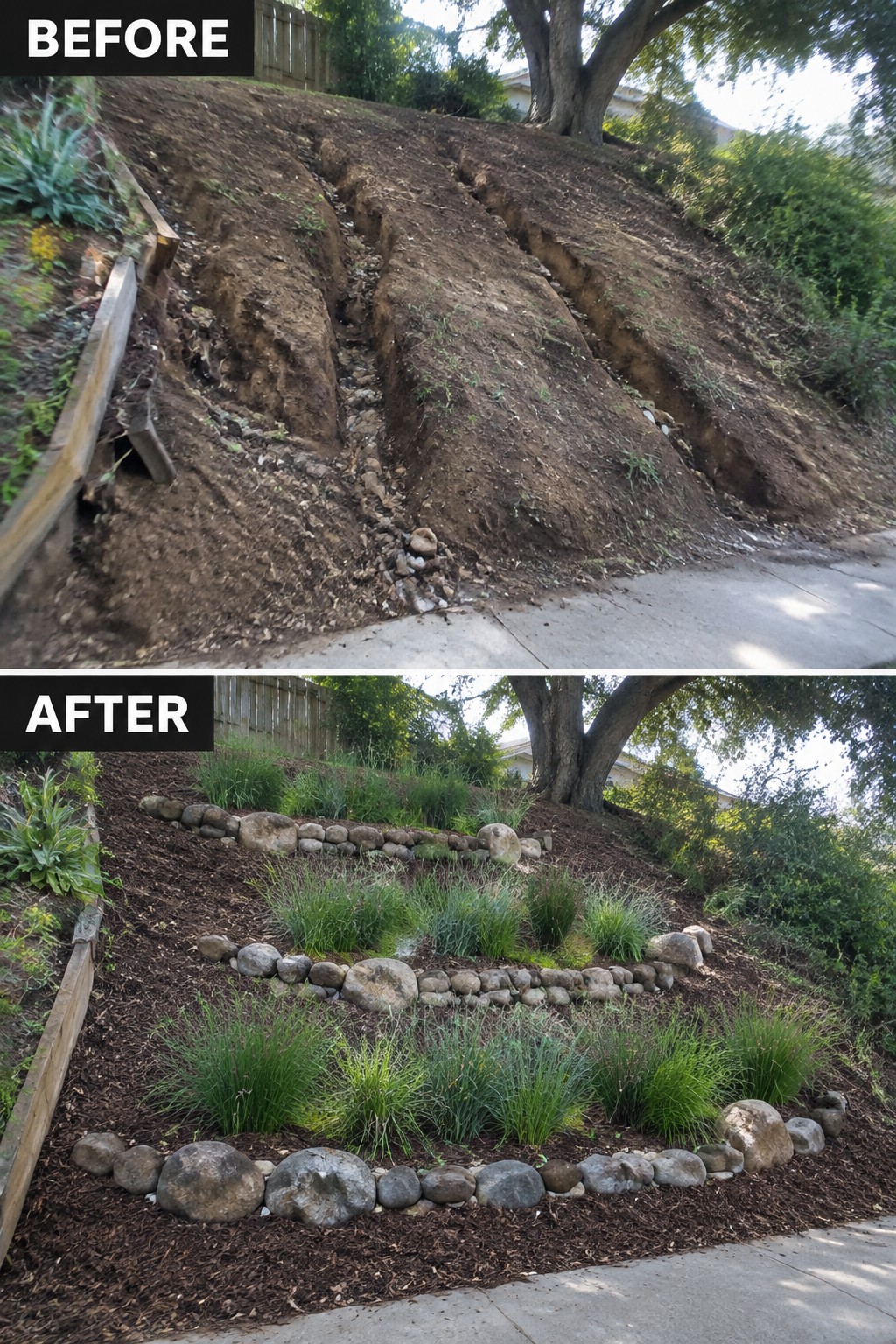
The steep, bare slope was reshaped into planted terraces, with rows of stones helping hold the soil in place. This gives water less room to rush straight downhill and makes the hillside easier to plant and maintain.
For a similar yard, use sturdy stones to define level planting areas, and choose plants suited to the slope and local conditions. Keep drainage in mind, especially near the bottom, so runoff has a safe path instead of pooling behind the edging.
Build Terraced Beds To Help Control Erosion

The bare slope becomes a series of planted terraces, with stone-filled retaining walls holding each level in place. This gives the hillside more structure and helps slow runoff instead of letting water carry soil straight downhill.
For a similar yard, keep the terraces sized to the slope and leave room for plants to establish between the walls. A gravel path can make the area easier to reach, but good drainage and sturdy wall construction matter most.
Line A Drainage Swale With Stone To Reduce Erosion

A bare, eroded channel can be turned into a more stable drainage path by lining it with stone and adding grasses along the edges. In the after photo, the rocks help slow and guide runoff toward the culvert, while the plants cover some of the exposed soil.
This approach works well on slopes where water already follows a natural route. Use a mix of stone sizes that can stay in place during heavy flow, and choose sturdy plants suited to wet and dry conditions. Make sure water can still drain freely into the culvert.
Turn Eroding Slopes Into Planted Drainage Beds
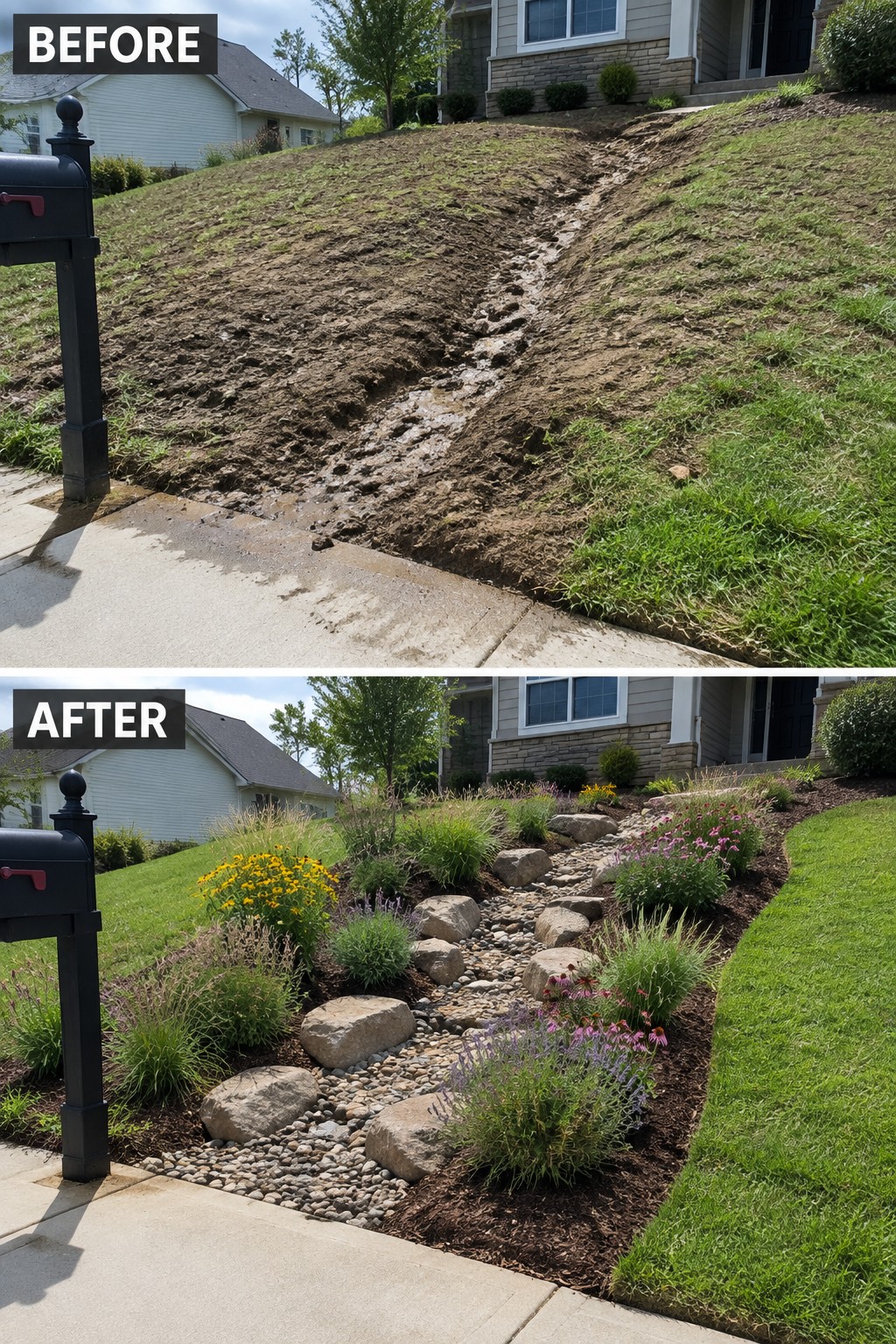
A bare, muddy slope can lose soil quickly when rain runs straight downhill. This yard uses a rock-lined channel to guide runoff, while large stones and plants help hold the surrounding soil in place.
For a similar slope, plan the drainage route before planting, and make sure water is directed to a safe outlet. Then add plants suited to the site and leave enough room for the channel to carry water without washing mulch or soil back into it.
Use Large Boulders To Hold A Sloped Garden

The bare slope becomes easier to manage once large boulders form a low retaining edge. They help break up the incline and hold soil in place, while the planted gaps make the border feel like part of the garden rather than a separate wall.
For a similar slope, set the stones firmly into the ground and keep them low enough to suit the grade. Add mulch and hardy plants around them, but make sure water can drain through the area instead of collecting behind the rocks.
Turn A Steep Slope Into Terraced Garden Beds

A bare hillside can lose soil in heavy rain and be difficult to plant. In this yard, large stones create several short terraces, turning the slope into more manageable planting areas and helping hold the soil in place.
For a similar slope, build sturdy retaining sections that follow the natural grade, then plant each level with suitable ground cover or grasses. Make sure water can drain through or behind the stonework, since a wall that traps water may become unstable.
Create A Terraced Seating Area On A Slope

A steep, bare slope can be hard to use and prone to washing out. In this yard, stacked stone walls break the grade into levels, while a small gravel seating area gives the bottom of the slope a clear purpose.
Use low retaining walls to form broad terraces, then plant each level to help cover the soil and slow runoff. Keep the seating area on stable, well-drained ground, and plan for proper drainage behind the walls so water does not build up.
Add A Curved Paver Path To A Sloped Yard

A bare slope can wash out and be difficult to walk on. Here, a curved paver path gives the yard a clear route, while the planted beds and stone borders help break up the exposed soil.
This approach works well in a narrow side yard or anywhere a slope needs a practical way through. Keep the path gently curved and make sure the pavers are set securely on a stable base, especially where water tends to run.
Plant A Sloped Bed To Hold Soil In Place

The bare, weedy slope becomes a defined planting bed, with groundcovering grasses and flowers filling the soil around the existing boulders. Plant roots help hold soil, while mulch covers exposed ground and slows runoff.
On a slope beside a house or fence, clear weeds first and arrange plants in broad groups rather than leaving large bare patches. Choose plants suited to your climate and soil, and keep a clear gravel strip along the house for drainage access.
Replace A Failing Timber Wall With A Stone Retaining Wall
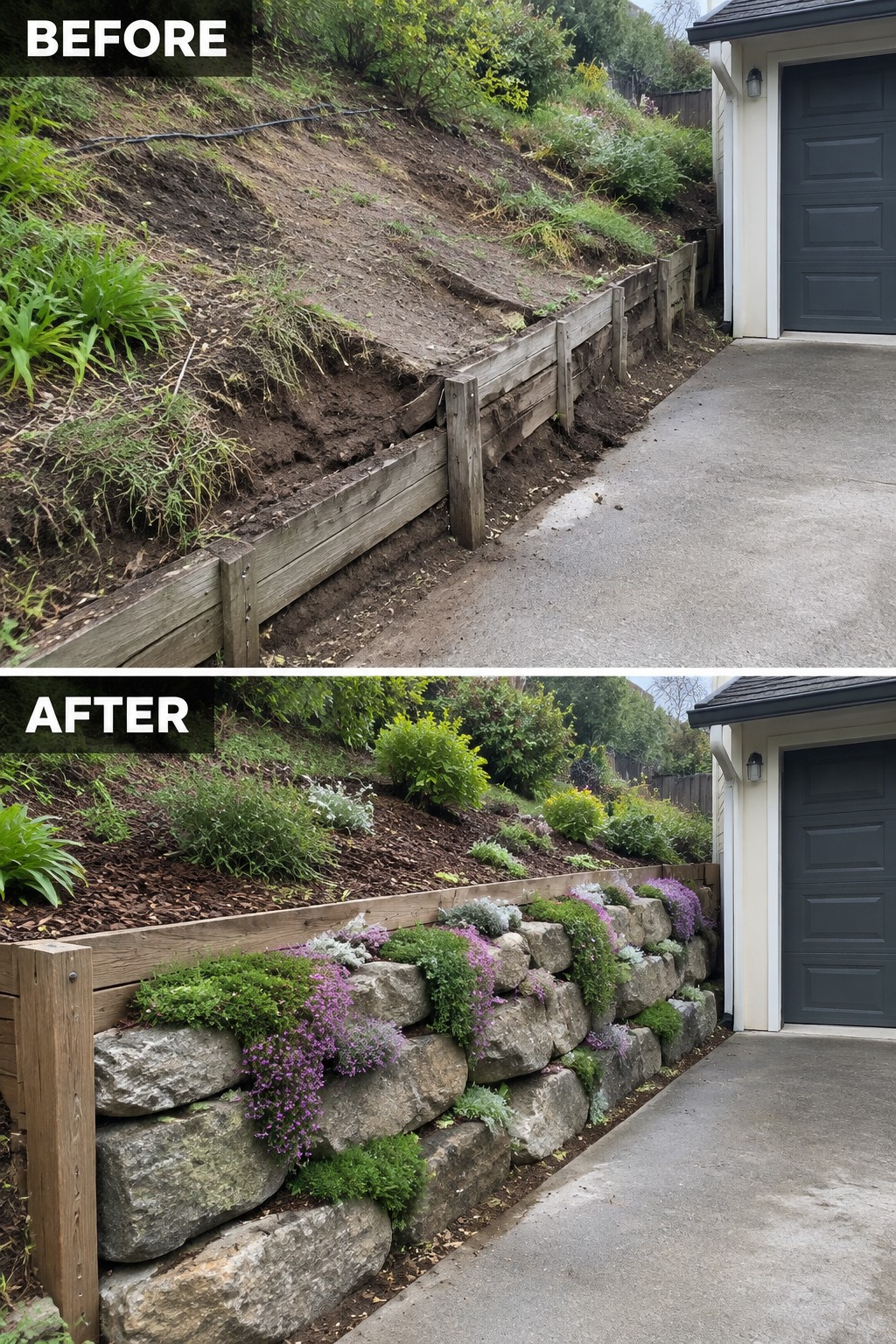
The old timber wall was struggling to hold the slope, leaving exposed soil that could wash toward the driveway. A stacked boulder wall gives the hillside firmer support, while its rough, irregular surface fits naturally into a planted garden.
For an erosion-prone slope, use properly sized boulders and make sure the wall has suitable drainage behind it. Low-growing plants can fill the gaps, but the wall’s stability should come first, especially beside a driveway or other area people use.
Build Stone Steps Into A Steep Slope
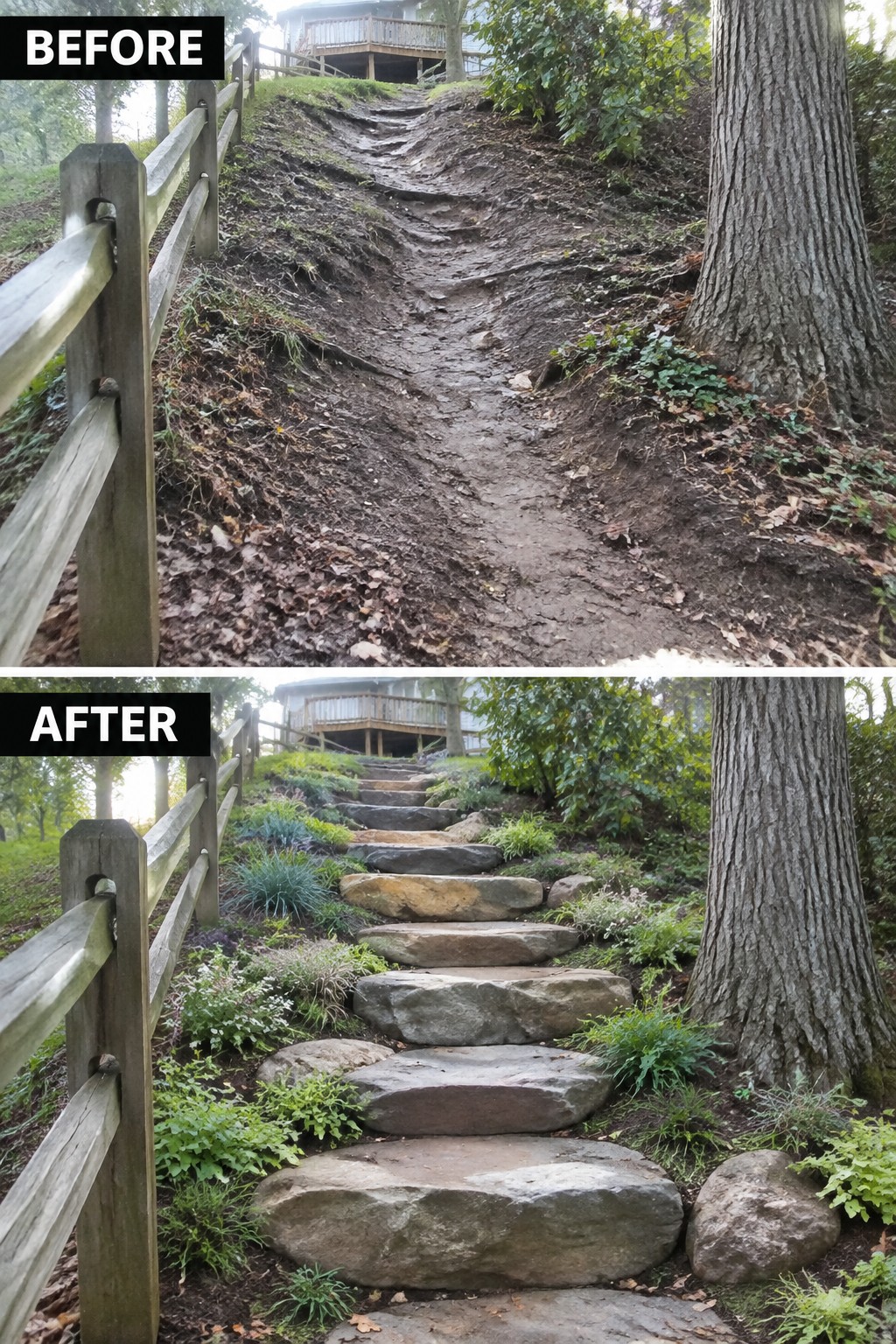
A worn dirt path can wash out and become hard to walk on. Here, broad stone steps replace the eroded track, giving the slope a firmer surface and helping break up the downhill flow of water.
For a similar yard, set the steps securely into the grade and make each tread wide enough for a comfortable stride. Planting around the stones can help hold exposed soil, but keep the route clear so water can drain without washing soil onto the steps.
Create A Planted Rain Garden At The Bottom Of A Slope

A shallow, planted basin can catch runoff where it collects and turn a muddy low spot into a defined garden bed. In this yard, a curved border of large stones contains the basin, while grasses and flowers cover the exposed soil.
Use this approach where water naturally pools, but make sure the basin has a safe overflow route and does not send water toward the house or shed. Choose plants suited to both wet periods and drier spells, and keep the stone edge low enough that it does not block drainage.
Stabilize An Eroding Slope With A Stone Retaining Wall
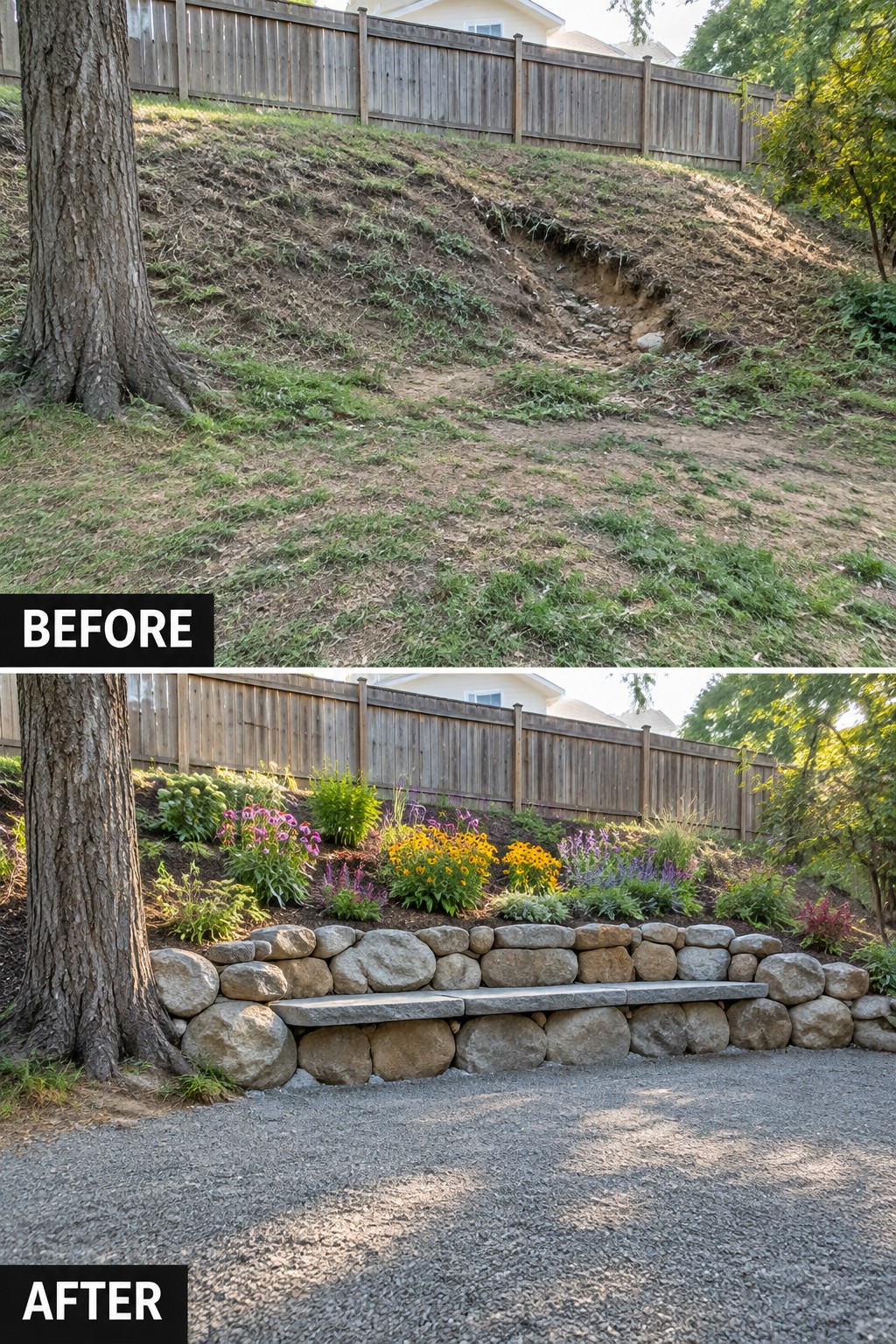
A bare slope can lose soil quickly, especially where water has already cut a channel through it. A low retaining wall made from large stones holds the base of the bank in place, while a planted bed above helps cover exposed soil and slow runoff.
For a similar yard, set the wall across the slope and choose plants suited to the site’s sun and moisture. A retaining wall needs a stable base and a way for water to drain behind it, so get professional advice if the slope is steep or erosion is severe.
Use Rocks To Break Up Runoff On A Slope

The bare slope has been replanted and a line of large rocks now crosses it. That simple change gives rainwater a rougher path, helping slow runoff and reduce the soil it can carry downhill.
For a similar yard, place sturdy rocks along the contour of the slope, not pointing straight downhill, and keep them secure so water cannot wash around them. Sparse, low-water plants can help hold the soil too, but steep or actively eroding slopes may need a drainage plan from a landscape professional.
Create Stone-Tiered Planting Beds On A Slope

The bare hillside becomes a series of low stone-edged beds, giving the planting areas clearer shape and helping slow soil from washing downhill. Succulents and other low-growing plants fill the spaces between the rocks without hiding the structure.
For a similar slope, start by planning stable stone borders and a way for water to drain, then add plants suited to your climate and soil. Keep each tier low enough to maintain safely, and avoid blocking natural runoff.
Plant A Sloped Bed To Help Hold Soil In Place

An overgrown slope can be hard to manage and may leave soil exposed to runoff. Clearing the weeds and organizing the planting into distinct beds, as shown here, gives the hillside a more stable, maintained layout.
For a similar yard, keep the plants in staggered groups and use mulch to cover bare soil while new roots establish. Place larger stones along the slope where they can help slow water, and leave a clear route for drainage so runoff does not collect behind them.
Use Curved Stone Edging To Break Up A Sloped Garden

A bare, eroding slope can be easier to manage when it is divided into planted sections. Here, low curved stone borders shape the hillside into smaller beds, and the plants cover much of the exposed soil.
Use this approach on a slope where rainwater runs downhill and carries soil with it. Set the stone securely and choose plants suited to the site, including spreading ground covers or deep-rooted perennials. For steep slopes or persistent drainage problems, get advice on proper grading and drainage before building.
Add Gabion Steps To Slow Slope Erosion

A steep, bare slope can lose soil quickly when rainwater runs straight downhill. Here, wire baskets filled with stone form a series of broad steps, breaking up the slope and giving runoff less chance to gather speed.
This approach can work on a hillside where a simple path would wash out, but the steps need a stable base and careful drainage behind them. Use a qualified installer for a steep or large slope, since gabion structures must be sized and placed to handle the soil and water conditions.
Use Log Edging To Help Hold Soil On A Slope
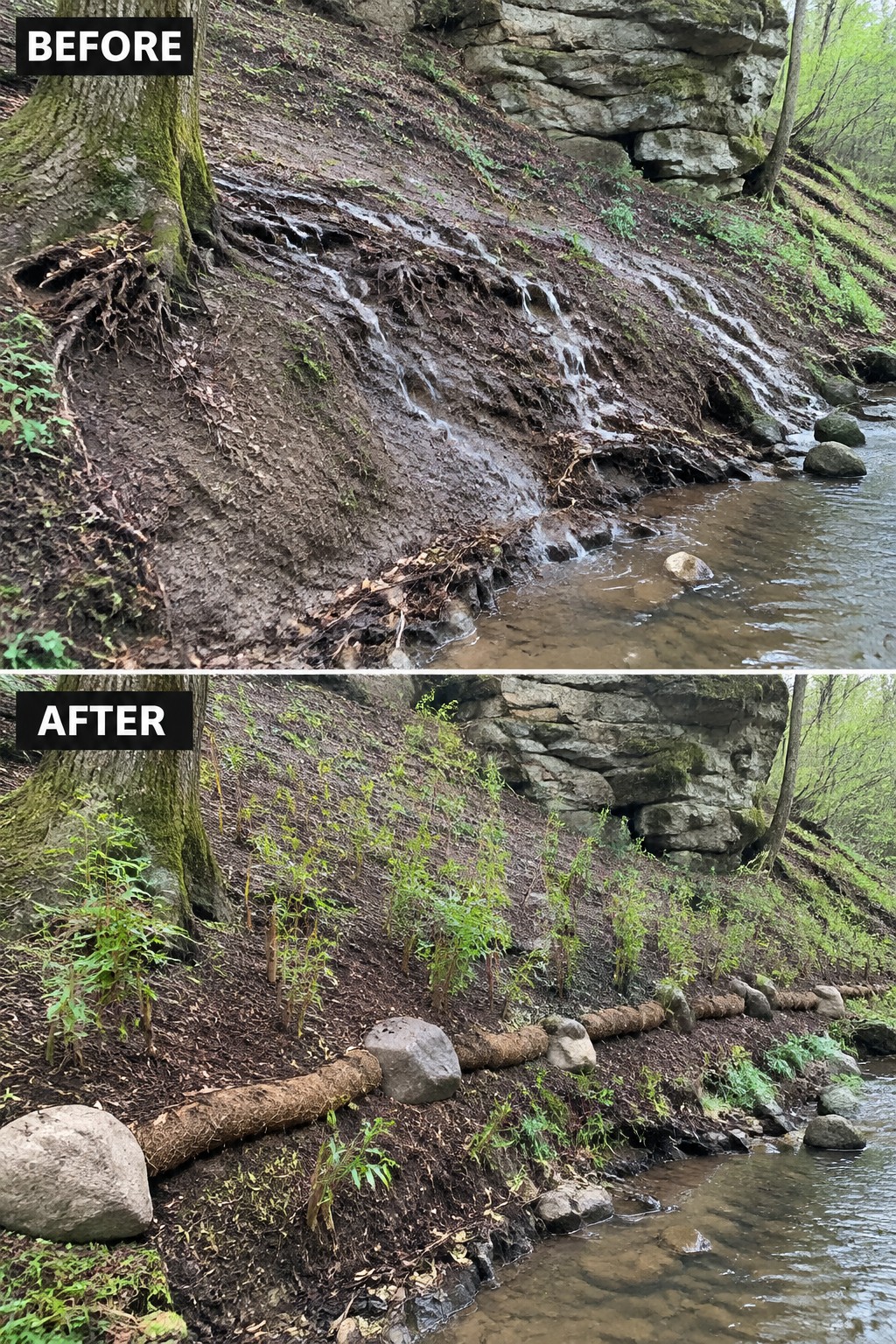
The bare, washing slope gains a simple line of logs and boulders in the finished landscape. Set along the contour, this edging can slow runoff and help keep soil from sliding toward the creek, while making the bank easier to plant.
For a similar slope, place sturdy logs across the hill rather than pointing downhill, and secure them well so water cannot push them out of place. Add suitable plants above and below the edging to help hold the soil, and make sure the layout does not block a natural drainage path.
Build A Rock Garden To Slow Slope Erosion

The bare, patchy slope becomes a planted garden held in place by large boulders. The rocks break up the incline into smaller planting areas, which can help slow runoff and keep soil from washing downhill.
Use this approach on a sloped front yard where grass struggles to grow. Set the stones securely, leave room for water to drain, and choose hardy plants suited to the site. For a steep or unstable slope, get advice on proper grading and stone placement before starting.
Frequently Asked Questions
Q: How big should boulders be on a sloped yard?
A: Choose boulders that look grounded, not like loose rocks scattered across the hill. Larger stones usually work better on steep slopes because they’re less likely to shift, and burying about a third of each boulder helps it stay put.
Q: Do I need to put gravel or fabric under the boulders?
A: Start with firm, compacted soil and set each boulder into a shallow pocket. A layer of crushed stone can help with drainage, but landscape fabric isn’t a substitute for stabilizing the slope.
Q: What should I plant around the boulders to help prevent erosion?
A: Use low-growing plants with spreading roots to hold the soil between stones. Groundcovers, ornamental grasses, and small shrubs can all work, as long as they suit your climate and won’t need constant watering.
Q: Can I build a boulder retaining wall myself?
A: A low, simple wall may be manageable if you can move the stones safely and prepare a solid base. For a tall wall, a steep slope, or a spot where runoff collects, get advice from a qualified landscaper before digging.
