


A property line can look forgotten when weeds creep in, the ground slopes awkwardly, or there’s no clear edge between the yard and a neighbor’s space.
I like how boulders can give these areas structure while helping with erosion, defining planting beds, and adding a little privacy without building a full fence.
The best results usually come from planning the stones around the land rather than placing them as decoration.
With thoughtful cleanup, sturdy plants, and a path or border where it’s needed, even a narrow strip can feel more cared for.
Some of these approaches are simple enough to adapt to a real yard, and I’d save the ones that suit your slope, soil, and boundary.
Add Structure To An Overgrown Fence Line

A simple planting bed can make a messy strip along a fence feel planned. Here, clearing the weeds and adding mulch around the existing boulders gives the border a cleaner edge, while clumps of ornamental grass fill in the space.
This works well along property lines where the yard meets a fence. Start by removing unwanted growth, then arrange plants with enough room to mature and keep the bed narrow enough to mow beside. Low-voltage path lights can be added if you want the border to be visible after dark.
Add Structure To An Overgrown Yard

A simple fence and a defined planting bed can make an untidy property edge feel planned. Here, clearing the overgrowth and adding a timber fence gives the garden a clear boundary, while the stone edging keeps the bed in place.
For a similar yard, start by removing unwanted growth, then shape a bed along the fence and choose a few plants suited to the amount of sun. Leave enough room to tend the plants and mow the lawn without a struggle.
Replace A Cracked Walkway With A Stepping-Stone Path

An uneven concrete path can make a narrow side yard feel neglected. Replacing it with spaced stone slabs and gravel gives the route a clearer shape, while low plants along the edge help the path feel like part of the garden.
This approach works well in tight spaces between a house and fence, where a wide paved walkway would feel cramped. Choose stones that sit firmly and leave enough room between them for comfortable steps; keep plants low so they do not crowd the walking route.
Add Structure To A Sloped Yard

A steep, bare slope can be hard to maintain and may leave soil exposed. A low boulder retaining wall breaks the grade into more manageable sections, while a few planted areas make the hillside feel planned rather than simply cleared.
This approach suits sloped property boundaries where a level lawn is impractical. Keep the wall in scale with the yard, and plan stable steps or a clear route through it if you need to cross the slope.
Create A Clean, Defined Boulder Border

The rocky strip beside the driveway looked scattered and overgrown, but a clear border and fresh gravel give it a more planned look. A few well-placed boulders and low plants make the edge feel intentional without taking over the yard.
For a similar space, clear weeds first, then group a few larger stones and choose hardy plants that suit the sun and soil. Leave enough room beside the driveway for access, and use low landscape lights if you want the border to stay visible at night.
Turn A Neglected Fence Line Into A Planted Border

A messy strip along a fence can become a useful garden feature instead of a place where weeds and leftover materials collect. Here, stone-filled gabion beds replace the clutter, giving the boundary a clear shape and room for plants.
For a similar yard, clear the area first, then use low retaining beds to define the edge and add sturdy grasses or other plants suited to the site. Leave enough space beside the beds for a simple path, so the border stays easy to reach and maintain.
Create A Flower Bed Along The Property Line

A bare strip beside the street can become a clear garden border with a low stone edge and layered flowers. In this yard, the planting gives the boundary a defined shape and makes the patchy lawn less noticeable.
For a similar spot, lay out the bed before planting and leave enough room to reach the mailbox and move along the edge. Choose flowers suited to your sun and soil, and keep taller plants toward the back so the border stays tidy.
Define A Border With Rocks And Low Planting

A loose, bare strip along the property line can look unfinished. Grouping large rocks with rounded shrubs gives the bed a clearer edge and makes the space feel planned, without changing the lawn or house.
Use this idea along a fence or between a yard and sidewalk, where a simple border can help separate planting from grass. Leave enough room for each shrub to grow, and place landscape lights only where they can highlight the bed without getting in the way.
Add A Stepping-Stone Path Through The Boulder Border

A rough fence-line area can feel much more planned when a clear path leads through it. Here, stepping stones replace the uneven, leaf-covered ground, while the existing boulders become part of the garden instead of obstacles.
For a similar yard, place stones where people naturally need to walk and leave enough room to pass comfortably. Mulch and a few sturdy ferns can help define the route without crowding the boulders.
Create A Boulder Path Along A Sloped Boundary
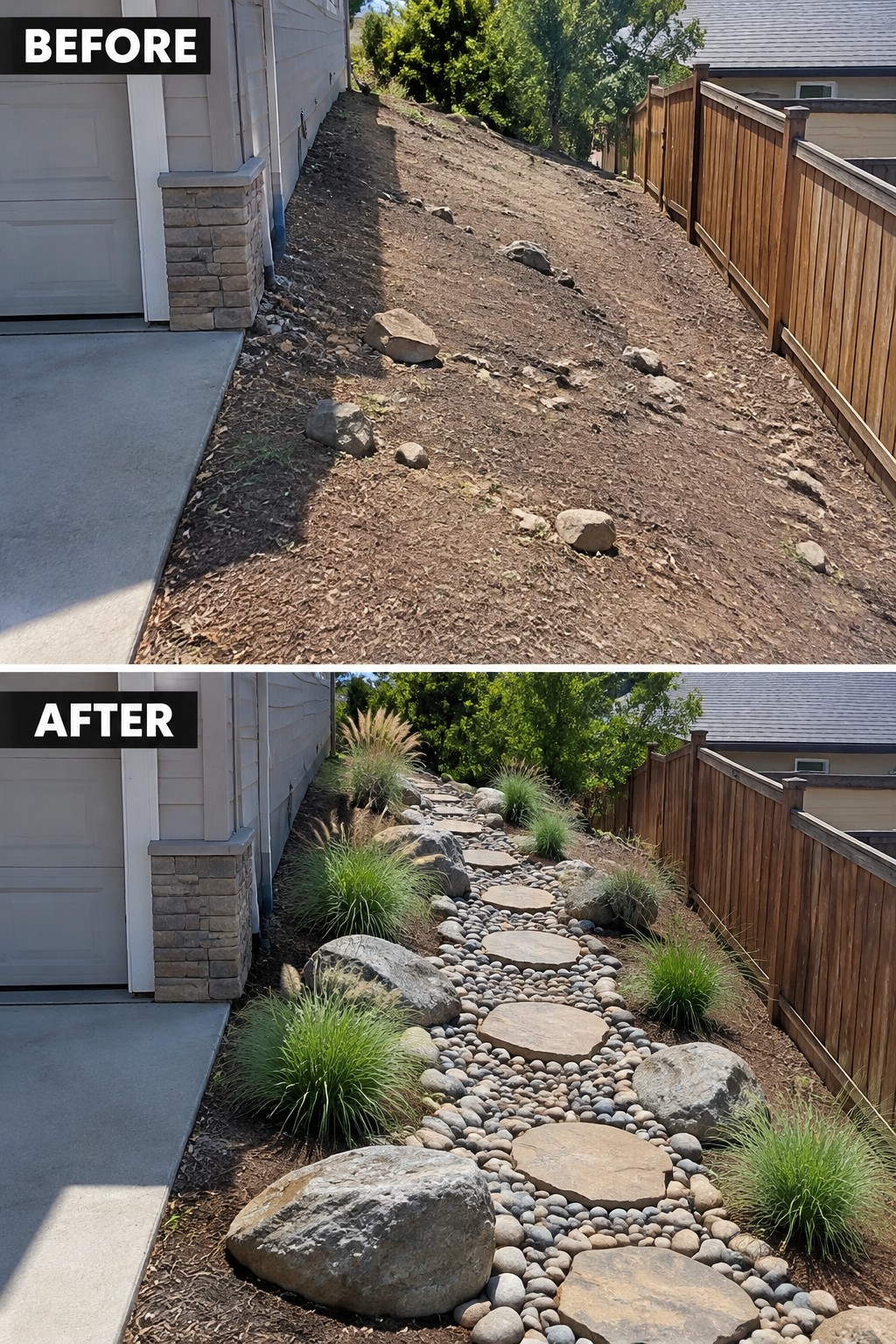
A bare, rocky slope can be hard to walk across and difficult to keep tidy. A winding path of flat stepping stones, edged with rounded river rock and larger boulders, gives the ground a clear route and makes the side yard feel planned.
This idea works well in narrow spaces between a house and fence, especially where the ground slopes. Set the stones securely and keep enough room to step comfortably; grasses along the edges can fill in the planting without crowding the path.
Create A Meadow Border Along The Fence

The bare strip beside the fence becomes a planted border, with flowers and groundcover filling the space around the existing boulders. This gives the property line a clear shape and makes the yard feel cared for without needing a new fence or major construction.
For a similar look, clear weeds first, then group hardy perennials in loose clusters and leave enough room for them to spread. Keep a narrow path open if you need access along the fence, and use plants suited to your sun and soil.
Build A Garden Bench Into A Boulder Border

A neglected fence corner can become a useful garden feature when large boulders form a low bench and raised planting bed. Here, the loose rocks and bare ground gave way to a stone seat backed by flowers, making the boundary feel planned instead of leftover.
For a similar spot, choose stones that are stable and comfortable enough to sit on, then keep the planting behind the bench low enough to leave room. A gravel surface helps define the area and is easier to maintain than patchy ground cover.
Create A Clean, Planted Border Along The Fence
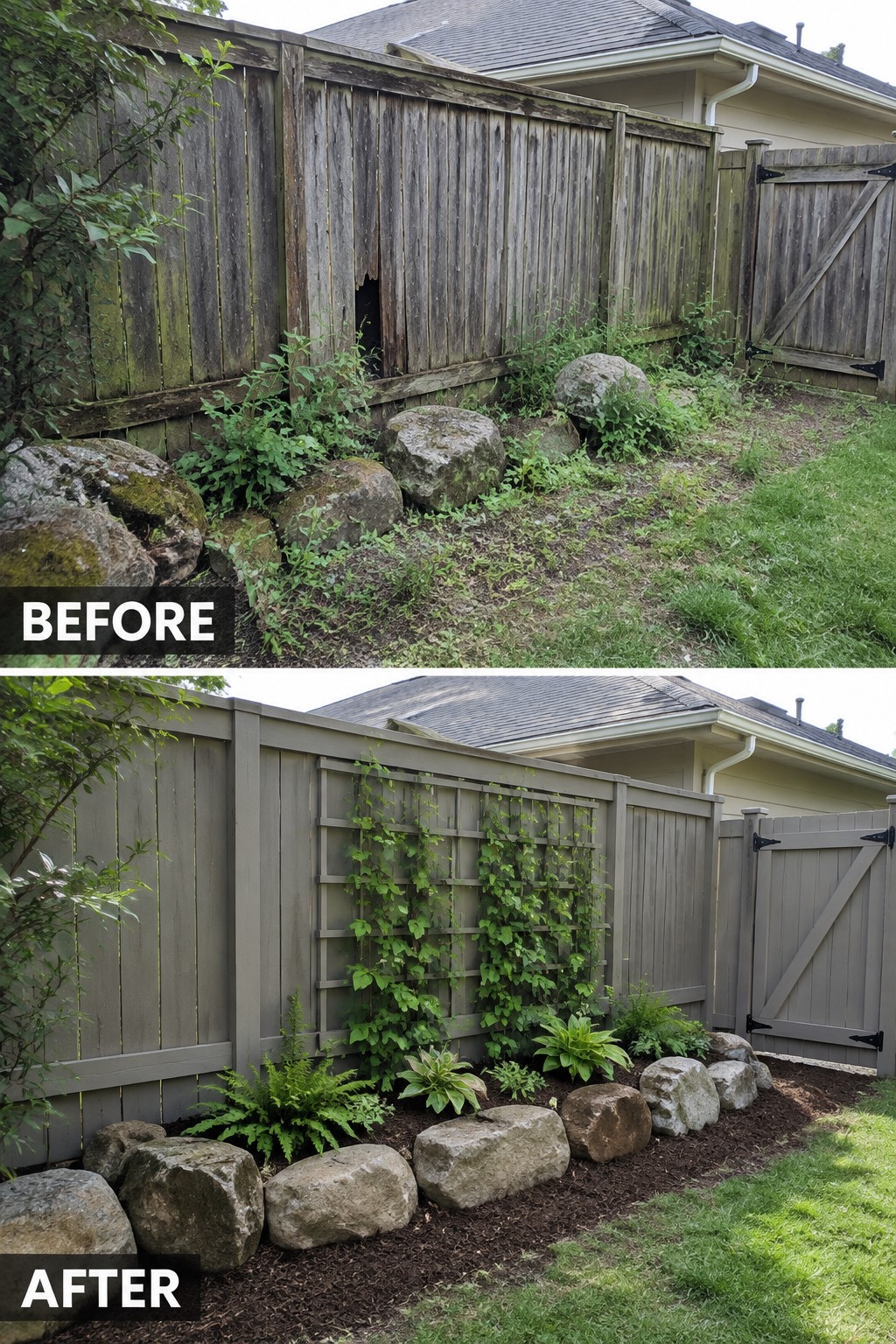
A neglected fence line can look much tidier when the rocks become part of a defined garden bed. Here, clearing the weeds and spreading mulch gives the boulders a clear place in the landscape, while a few plants keep the border from feeling bare.
This idea works well along a property boundary where there is little room for a larger garden. Arrange the stones with enough space for plants to grow, and keep the bed edge simple so it is easy to maintain.
Turn A Bare Yard Into A Fire Pit Seating Area

A scattered, muddy yard can feel more useful when gravel defines a clear place to sit. Here, a round fire pit and large boulders give the open space a simple purpose without adding a bulky patio.
This idea works well in a small backyard along a fence line. Clear the ground first, then use a compact gravel area and leave enough room around the fire pit for safe movement and comfortable seating.
Build A Tiered Boulder Bed Along The Fence

Replacing a sparse rock strip with a raised boulder bed gives this fence line a clearer shape and room for layered planting. The large stones hold the soil in place, while grouped flowers and shrubs make the long boundary feel like a planned garden rather than leftover space.
For a similar yard, follow the fence’s slope and keep the bed narrow enough that the lawn stays easy to mow. Use sturdy local stone and choose plants suited to the light and available space; avoid packing the bed so tightly that it becomes difficult to maintain.
Stabilize A Sloped Boulder Border With Low Planting

The exposed soil and tangled roots along this fence line made the boulders look scattered and left the slope feeling unfinished. Grouping the rocks into a more orderly border and filling the gaps with low-growing plants gives the area a cleaner look while helping hold the soil in place.
For a similar slope, start by clearing loose debris and checking that the larger stones are stable before planting. Choose groundcovers and compact grasses suited to the light and soil, and leave enough room to reach the fence for upkeep.
Create A Flower Border Along The House

An open lawn can feel unfinished when it runs right up to the house. A curved bed along the property edge gives the yard a clear shape, and the flowers make the front garden feel more planned without taking over the lawn.
Use a mix of taller blooms at the back and lower plants near the edge, then add mulch to keep the bed tidy. This works well in a small front yard, but leave enough room around paths and steps for easy access.
Turn A Muddy Fence Line Into A Dry Creek Bed

A dry creek bed gives runoff a clear path instead of letting water collect in a muddy strip beside the house. Here, the standing water and bare ground have been replaced with a stone channel and planted edges, making the boundary look more cared for while keeping the drainage area visible.
Use rounded river rock in a shallow, gently sloped channel, and keep larger boulders and plants along the sides. This idea suits a narrow space between a house and fence, but check where the water needs to go before adding stone so the bed directs runoff away from the foundation.
Plant The Gaps Along A Boulder Border

The loose, bare strip beside the pool feels messy in the before image. Adding low grasses between the boulders gives the boundary a planned look while keeping the large stones as part of the landscape.
This idea works well along a fence where you want a natural border without hiding the boundary. Clear debris first, then group hardy plants in the open spaces and leave enough room for them to spread.
Turn A Messy Fence Line Into A Kitchen Garden

The boulder edge gives this overgrown strip a clear shape, and the fresh soil and mulch make room for useful planting. A defined bed can turn an untidy boundary into a small kitchen garden without taking over the lawn.
For a similar yard, clear weeds first, then set a manageable bed width and use stones to mark its edge. Plant herbs and greens where they’ll be easy to reach, and leave enough room beside the bed to walk and tend them.
Replace A Bare Yard With A Defined Boulder Border
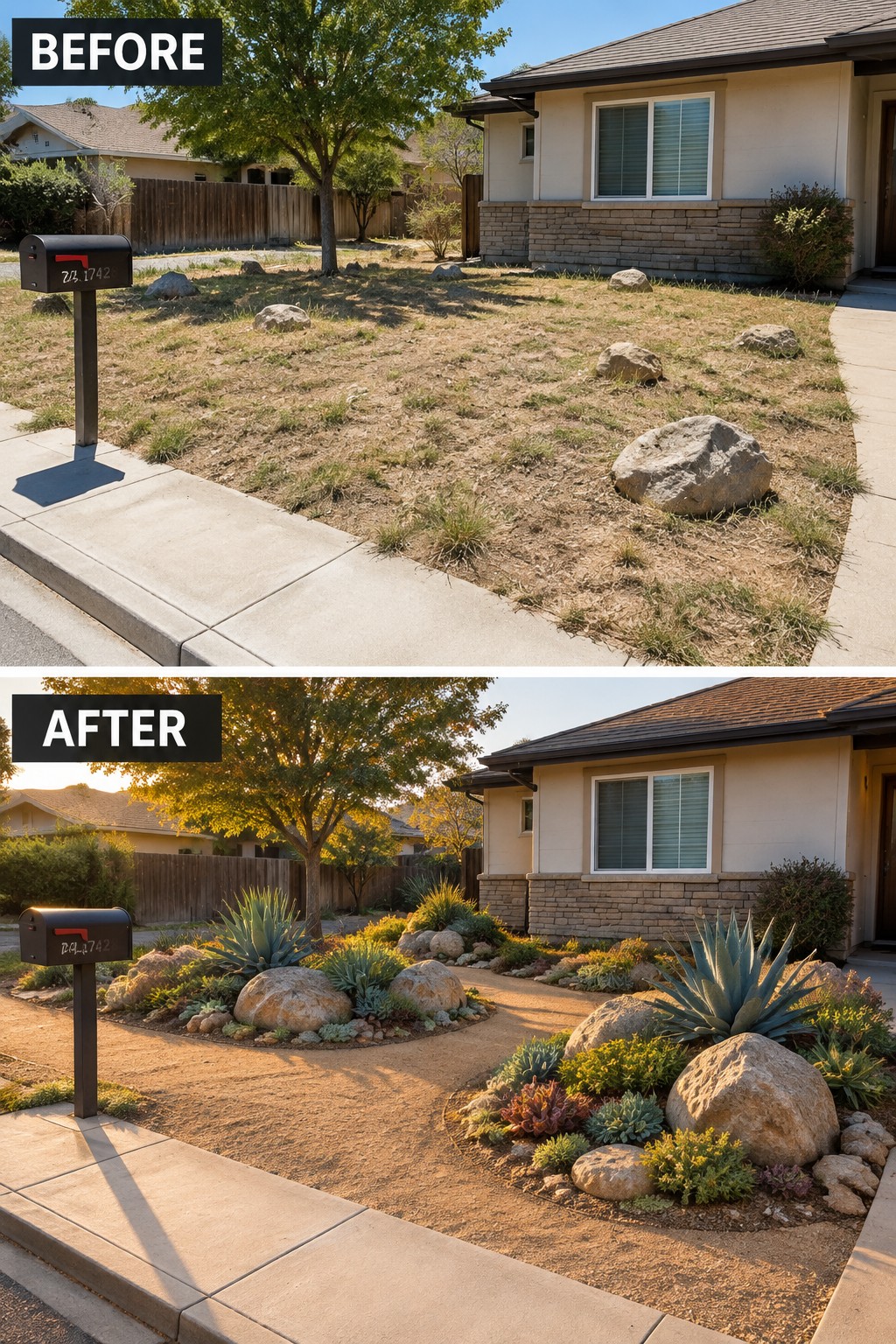
The dry, patchy yard feels more intentional once the scattered rocks are grouped into planted borders. This gives the front yard a clear shape without needing a large lawn or elaborate features.
For a similar look, keep the rocks in a few deliberate clusters and fill around them with drought-tolerant plants suited to your climate. Leave a clear route from the sidewalk to the house, and avoid packing the border so tightly that the plants have no room to grow.
Replace Ivy With A Defined Fence-Line Garden

The overgrown ivy has been cleared to show the fence and the boulders, making room for a planted border. Ferns and hostas give the boundary a clear shape while leaving the rocks as part of the garden.
For a similar yard, remove unwanted groundcover first, then group shade-tolerant plants around existing boulders. Leave enough open soil between plants for them to spread, and keep the lawn edge easy to trim.
Create A Planted Boulder Bed Along The House

Replacing a mostly bare, rocky strip with a defined bed makes the boundary beside the house look planned. A few larger boulders give the planting a clear focal point, while low shrubs and mulch fill the space around them.
Use this approach where a narrow side yard or foundation bed needs structure without blocking the windows or walkway. Choose plants suited to the light and leave enough room for them to grow; too many rocks can make a small bed feel crowded.
Build Natural Stone Steps Into A Sloped Yard

A muddy slope is difficult to walk on, especially when loose rocks and uneven ground interrupt the route. Broad stone steps turn it into a clear path, while fitting naturally into the landscape rather than looking like a separate walkway.
For a similar hillside beside a fence, set the steps securely and keep their height comfortable for walking. Gravel between the stones can help with drainage, and low plants along the edges can fill bare patches without blocking the path.
Create A Clear Path Along A Narrow Boundary

A simple stepping-stone path can make a narrow side yard easier to use and keep the ground from feeling like an unfinished strip. Here, large concrete pavers replace the uneven dirt, while gravel gives the walkway a neat edge.
For a similar space, set the pavers far enough apart for a comfortable stride and leave room for drainage along the house. A few well-spaced boulders can add structure without narrowing the route.
Frequently Asked Questions
Q: How do I keep border boulders from shifting on a slope?
A: Set each boulder into a shallow, level pocket rather than resting it on top of the soil. On steeper ground, use smaller stones between larger ones to help hold the soil in place.
Q: Can I put boulders right on the property line?
A: Check where the boundary actually sits before you dig or place anything. Leaving a little room on your side makes it easier to maintain the edge and avoids disputes with a neighbor.
Q: What plants work well around boulders along a fence?
A: Choose plants that fit the amount of sun and water the strip gets, and leave enough space for them to grow without crowding the stones. Low grasses and compact perennials are easy choices when you want a tidy border.
Q: How can I make a row of boulders look natural?
A: Vary their sizes and leave small gaps instead of lining them up at even intervals. A few smaller rocks or plants between the larger stones can soften the edge.
