


A boulder landscape can feel unfinished when rocks sit without a clear path, planting plan, or sense of direction.
A dry creek bed gives those stones a purpose, guiding rainwater while adding shape and texture to the yard.
I like how the best designs make practical drainage look like a natural part of the landscape.
With careful edging, well-placed plants, and a little cleanup, even an awkward patch can feel more connected to the rest of the garden.
Some of these details are worth adapting to a real yard, especially if you want a change that looks good and works hard.
Add Structure To A Bare Yard
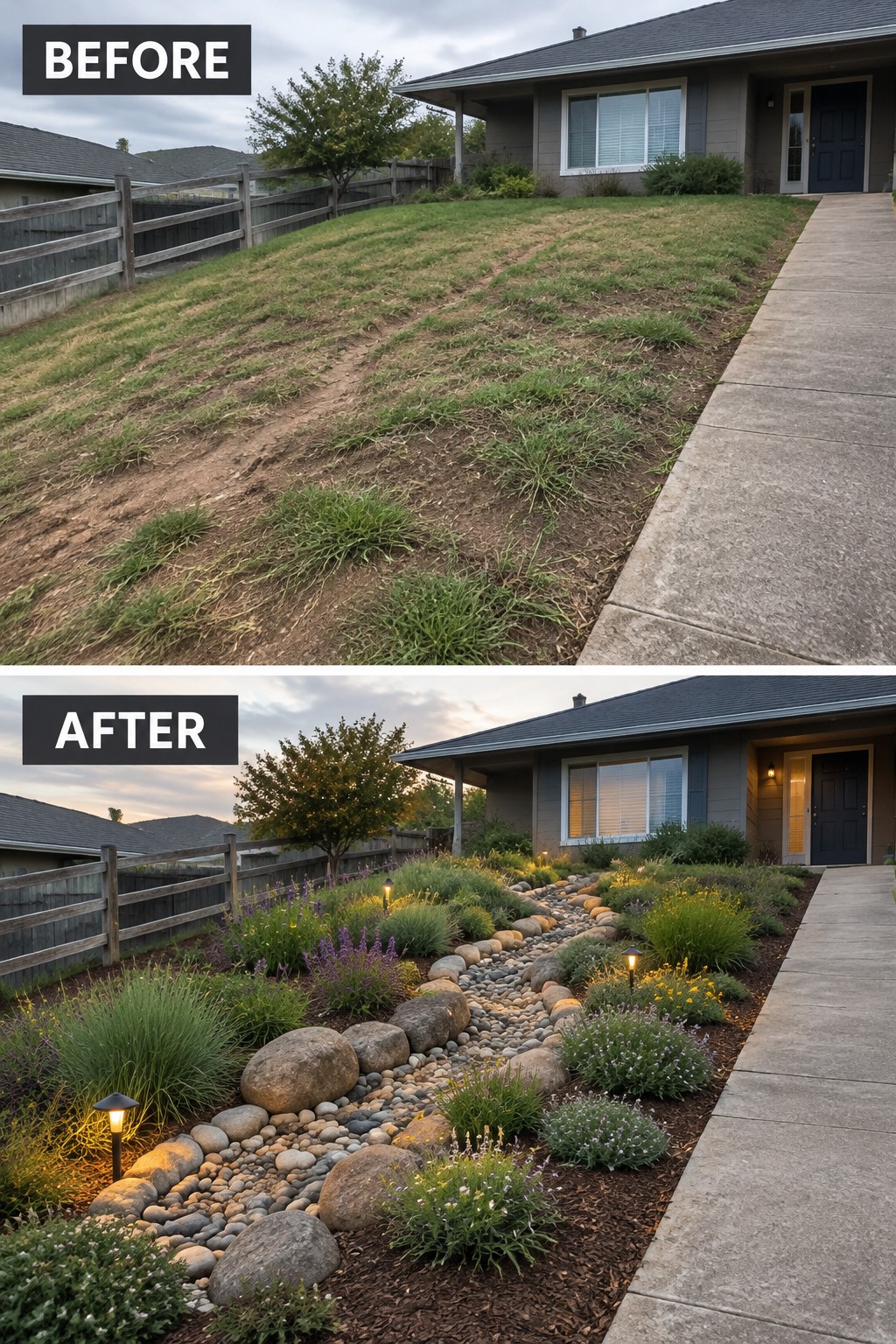
A dry creek bed gives a patchy, sloped yard a clear layout without relying on a large lawn. Here, a winding strip of stone and boulders replaces much of the bare ground, while planted areas make the yard look more intentional.
For a similar slope, shape the creek bed to follow the natural grade and use larger stones to help hold the edges in place. Keep the planting simple and leave room for water to flow, especially during heavy rain.
Create A Clear Path Through A Narrow Side Yard
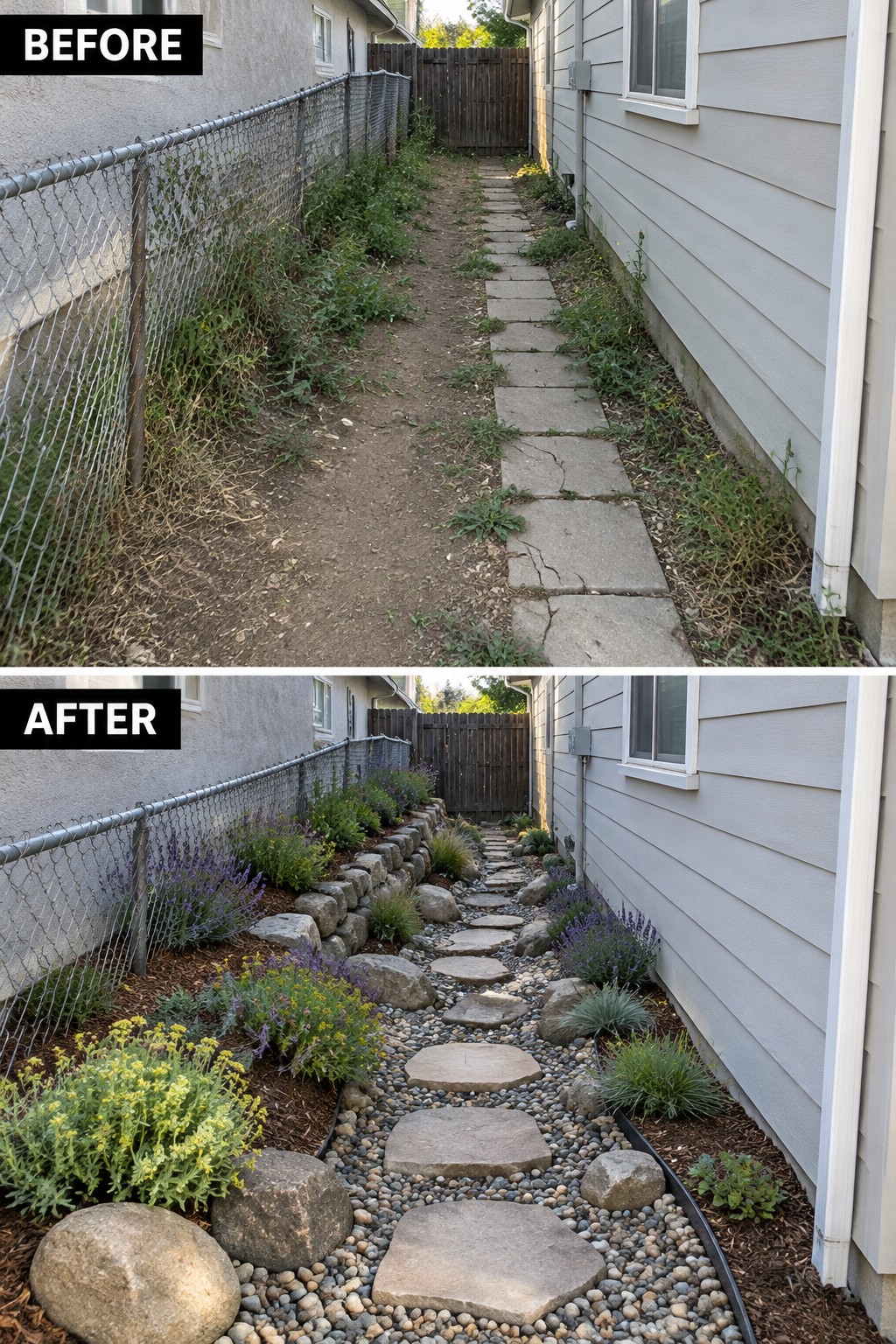
A defined path can make a neglected side yard feel planned and easier to use. Here, uneven concrete gives way to stepping stones set in gravel, with the planting kept to the edges.
This approach works well in narrow spaces where a solid walkway might feel bulky. Clear away weeds first, then choose stones that are comfortable to step on and leave enough room between them to walk naturally.
Turn An Overgrown Slope Into A Dry Creek Bed

A rocky dry creek bed gives this steep, overgrown yard a clearer layout, while stone steps make the slope easier to walk. The rocks also help guide runoff downhill instead of letting water cut an uneven path through the soil.
For a similar yard, clear the weeds first, then plan the creek bed and steps around the natural slope. Use larger stones to define the edges and smaller gravel through the center, leaving enough space for stable, comfortable steps.
Add Structure Along The Front Walk
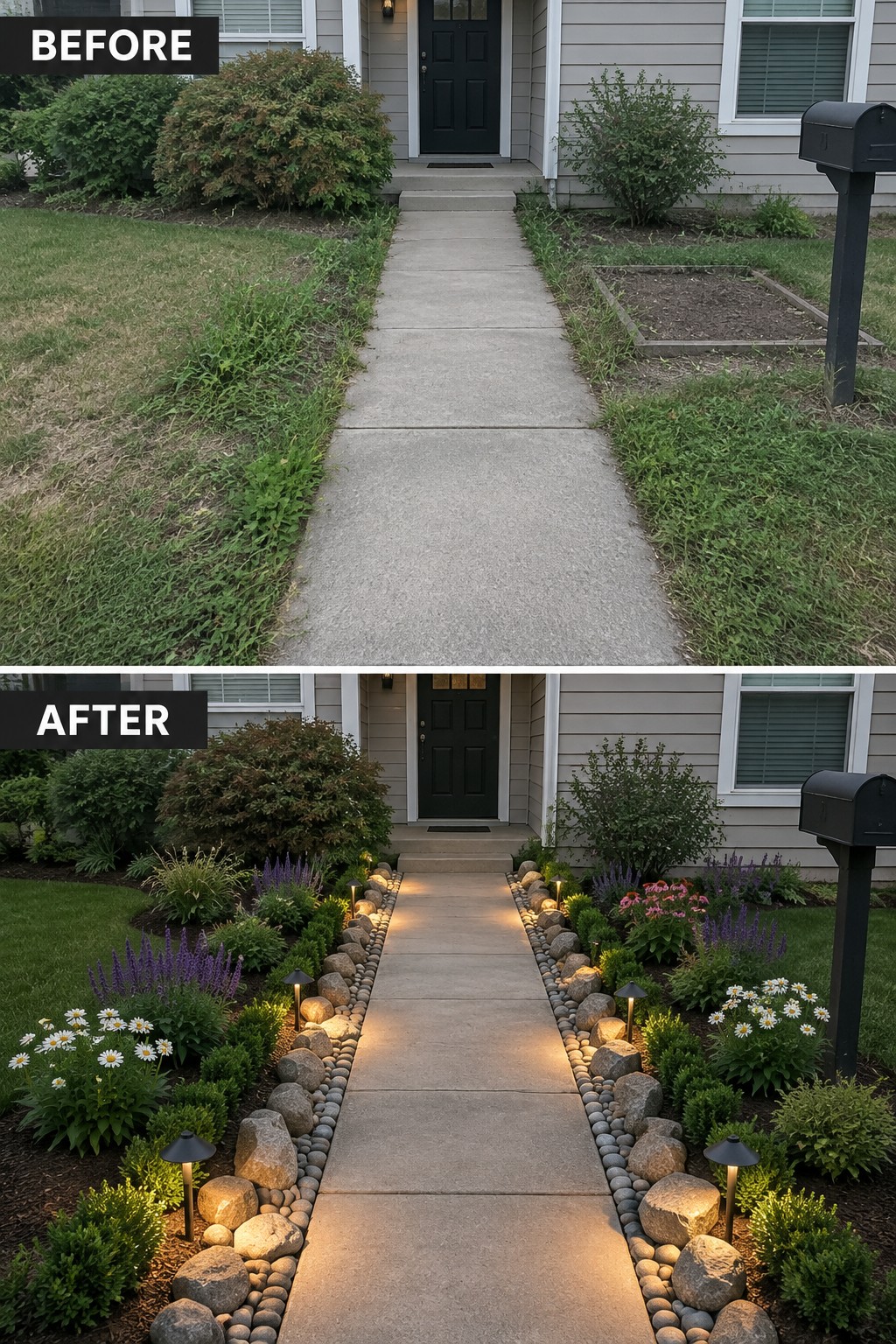
A clear planting border can make a neglected front yard feel planned without changing the path itself. Here, the overgrown edges give way to defined beds bordered with stone, so the walkway reads as part of the landscape rather than a strip of concrete through the lawn.
For a similar look, start by clearing weeds and shaping the bed edges, then use a consistent border material to keep the lines tidy. Plant in small groups and leave enough room beside the path for easy walking and upkeep.
Turn A Patchy Backyard Into A Dry Creek Bed

A dry creek bed gives a worn-out lawn a clear shape and makes the yard feel planned. Here, rounded stones and stepping rounds replace the bare, patchy middle, while planting along the edges helps the creek bed fit into the garden.
For a similar yard, keep the stone channel wide enough to read as a path, and place stepping rounds where people are likely to walk. A dry creek bed can suit a small backyard, but leave enough open space to move around it and make sure the stones are set securely.
Replace A Patchy Lawn With A Dry Creek Bed

A patchy front lawn can be hard to make look tidy, even with regular care. Here, a curved dry creek bed gives the yard a clear shape and turns the bare grass into a planned landscape feature.
For a similar look, use rounded stones to mark a gentle path through a small front yard, then keep the surrounding planting simple. Leave enough room around the bed for plants to grow without blocking the walkway.
Replace A Weedy Driveway Edge With A Dry Creek Bed

A strip of weeds and bare soil along the driveway can make the whole yard look untended. Replacing it with a rock bed gives the edge a clear shape, and a few boulders and low plants keep it from looking like plain gravel.
This works well beside a driveway where grass is hard to maintain or water tends to collect. Mark the bed’s curve first, then choose stones that suit the scale of the space and leave room for the plants to grow.
Replace Bare Concrete With A Gravel Garden

An unused concrete patio can become a more useful garden space when part of the hard surface is replaced with a simple gravel path and planted edges. Here, the gravel gives the small courtyard a clear route to the door, while rounded stones and plants make the layout feel planned.
This idea works well in enclosed side yards or patios where a full lawn would be hard to maintain. Keep the path wide enough to walk comfortably, and use a firm edging between gravel and stone so the materials stay in place.
Add A Dry Creek Bed To A Sloped Front Yard
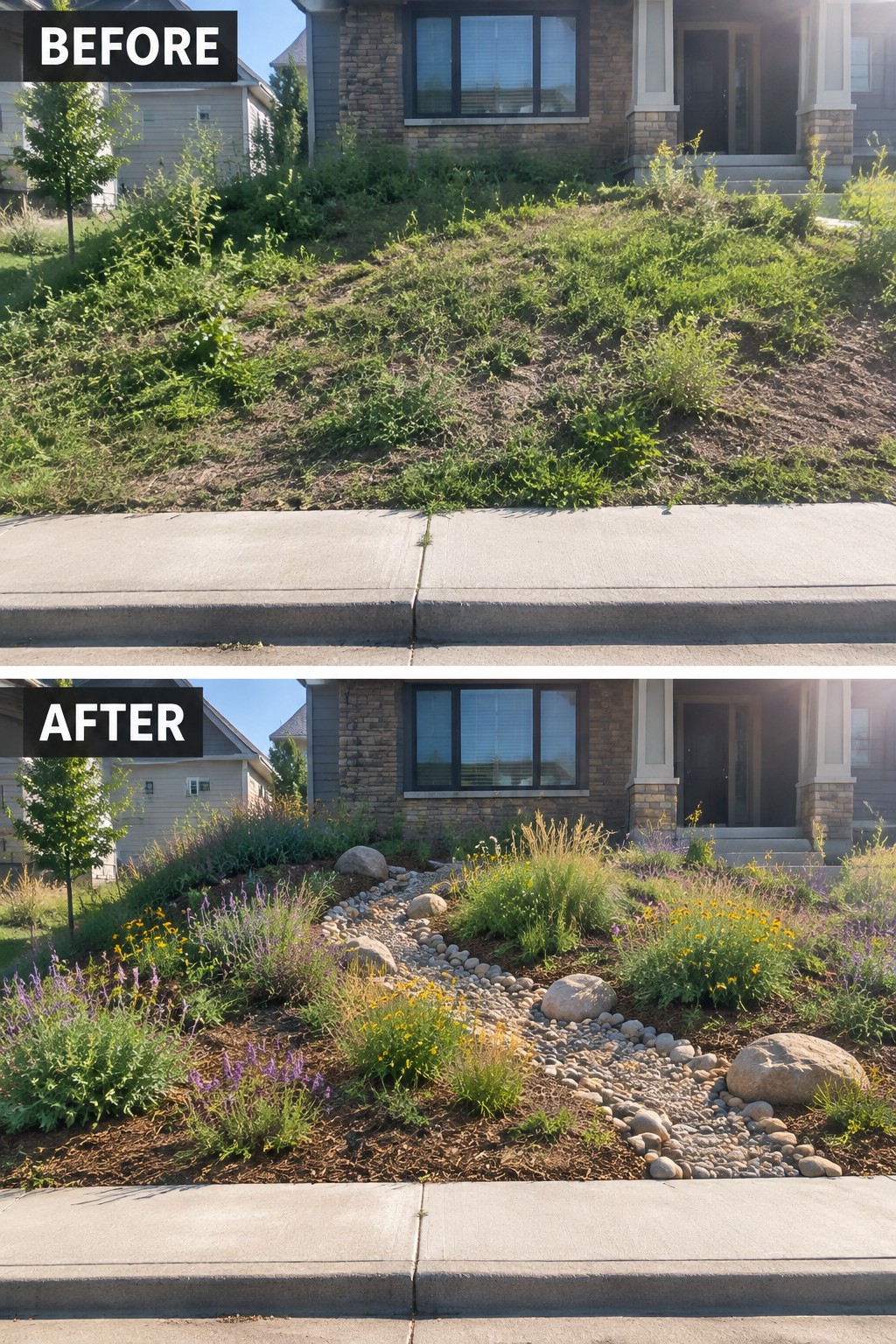
A dry creek bed gives a bare, uneven yard a clear shape and a way to direct rainwater. Here, a winding channel of stones replaces part of the weedy slope, while planted areas make the rest feel more organized.
Use a gentle curve to guide water downhill, and keep the channel wide enough to handle runoff without spilling onto the sidewalk. Native plants along the edges can fill in over time, but leave room for the stones to remain visible.
Create A Planted Border Along The Pool Path

A bare strip beside a pool can look unfinished and leave soil washing toward the path. Replacing it with a rock bed and drought-tolerant plants gives the edge a clearer shape while keeping the pool walkway open.
This approach suits narrow side yards where there is little room for lawn or large beds. Clear the soil first, then group a few hardy plants among rounded stones, leaving enough space for the plants to grow without spilling onto the path.
Use A Dry Creek Bed To Refresh The Front Garden

The front bed looks more settled after the overgrown shrubs were removed and a dry creek bed was added. The rounded stones give the area a clear shape and make the planting feel more intentional, while keeping the steps and entry easy to reach.
This approach works well beside a front walk or on a sloped bed where rainwater needs a route. Start by clearing unwanted growth, then shape the channel and use stones in a few sizes. Leave enough room for low plants along the edges so the bed stays tidy without becoming crowded.
Create A Dry Creek Bed To Organize The Yard
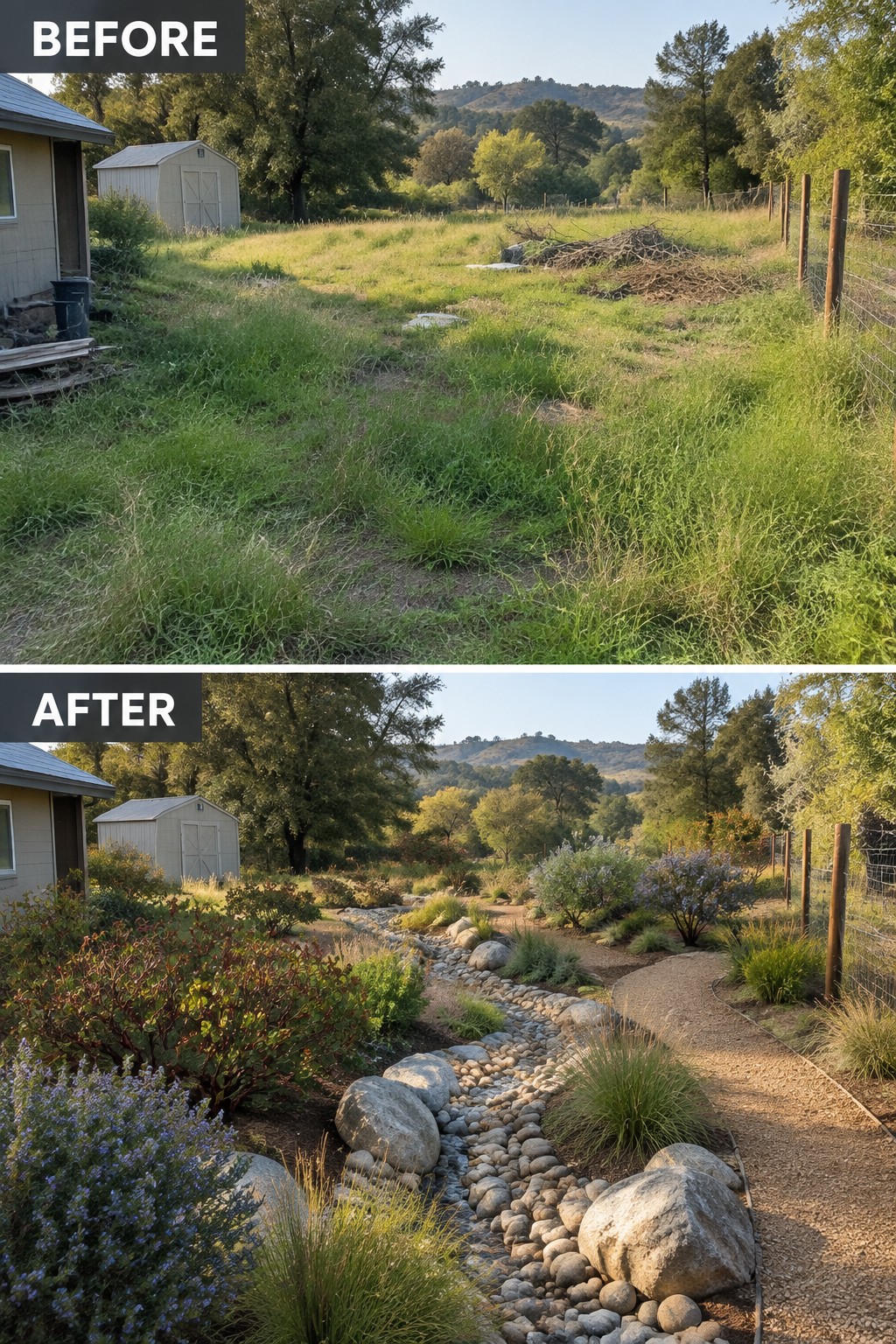
A dry creek bed gives an untidy yard a clear shape. Here, the loose grass and brush give way to a stone channel bordered by a winding gravel path, making the space feel planned without needing a large lawn renovation.
For a similar yard, use stones to define a shallow channel and guide water away from the house, then keep the path wide enough for comfortable walking. Choose plants suited to your climate and leave room for them to fill out over time.
Turn Bare Ground Into A Dry Creek Bed

A dry creek bed gives a messy, bare patch of yard a clear shape. Here, a winding channel of rounded stones replaces the exposed soil and scattered leaves, while planting along its edges helps it sit naturally in the garden.
This idea works well beneath a large tree or in a low spot where water tends to collect. Before adding stones, clear the area and decide where the channel should begin and end. Use a mix of stone sizes, and leave enough room around the bed so it does not become crowded with plants.
Replace A Weedy Patio Edge With A Gravel Garden

The neglected bed along this patio became a small gravel garden, with a dry creek bed adding a clear line through the planting. That gives the corner more structure than the old overgrown planter and makes the stones feel like part of the landscape rather than leftover paving.
This idea suits a small yard where there is not much room for a lawn or large garden beds. Clear the area first, then use gravel and a few larger boulders to define the creek’s route; keep plants grouped at the edges so the path stays open.
Replace A Patchy Lawn With A Dry Creek Bed

A narrow strip of patchy grass can be hard to keep tidy. Replacing it with a dry creek bed gives the side yard a clear shape, while shrubs along the house add a simple planting border.
This idea works well beside a walkway, where a defined edge keeps gravel and plants separate from the path. Use rounded stone and a few hardy plants, and leave enough room for water to drain rather than letting the bed become only a decorative strip.
Add A Dry Creek Bed To Improve Garden Drainage

Replacing the muddy path with a dry creek bed gives rainwater a clearer route through the garden. The rounded stones also make the space look more orderly, while the raised beds remain easy to reach.
This idea works well in a narrow side yard where water tends to collect. Use a mix of stone sizes and keep the channel shaped to guide runoff, but make sure it leads somewhere safe rather than toward the house.
Add A Dry Creek Bed To Control Runoff

The bare slope above the pool looks prone to washing out, while the finished yard uses a dry creek bed to give water a clear route downhill. The stones also help break up the open stretch of soil and give the planting a more organized shape.
This approach works well on a sloped yard where rainwater needs a path away from a pool or wall. Set the channel’s direction before placing the rocks, and make sure it leads to a safe drainage area rather than collecting water at the bottom.
Replace An Overgrown Curb Strip With A Dry Creek Bed
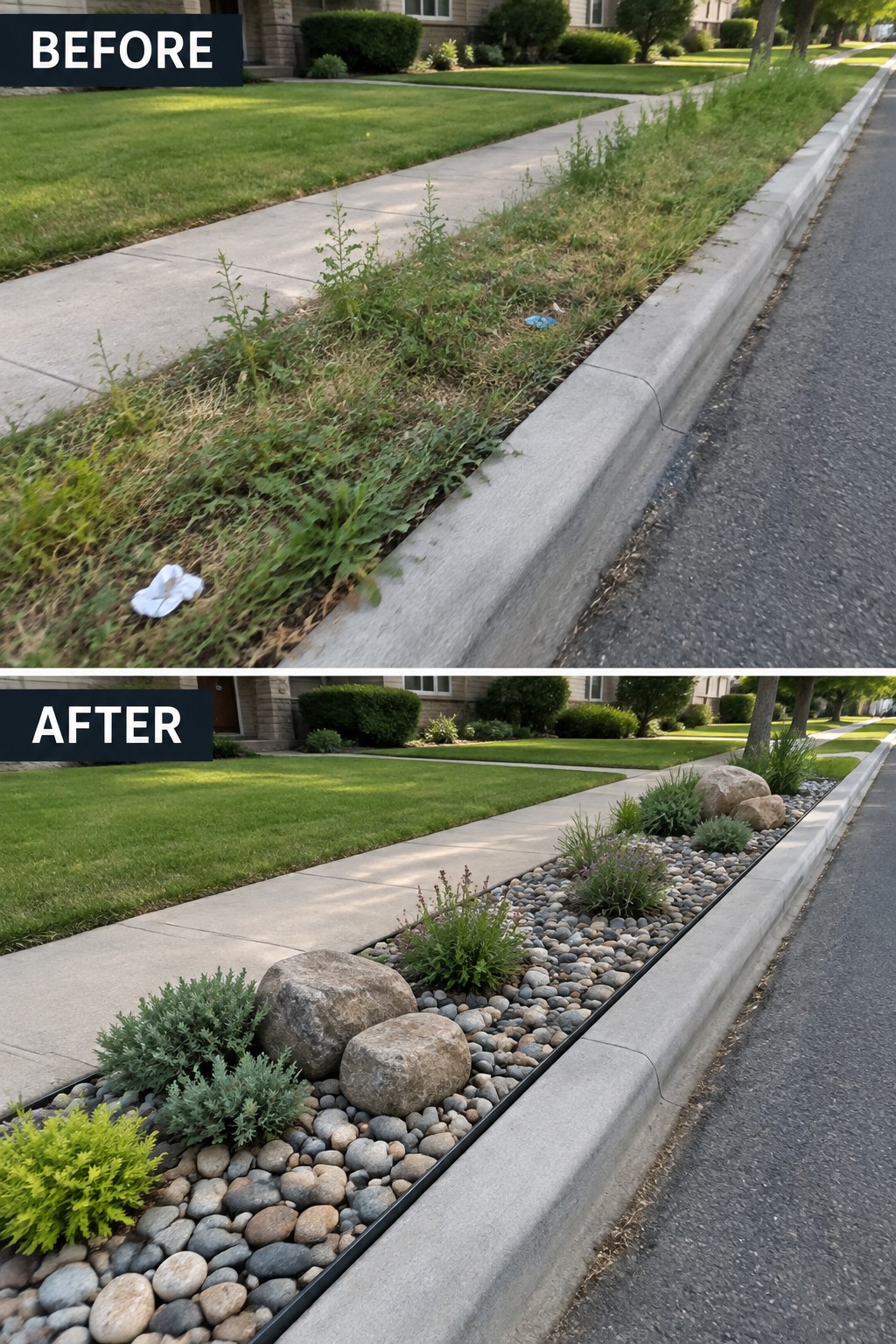
A weedy strip between the sidewalk and curb can make the whole front yard look untended. Clearing the growth and covering the area with river stones gives it a defined edge and a cleaner, more deliberate look.
This idea works well in narrow roadside beds where lawn is difficult to maintain. Remove weeds first, then use a suitable weed barrier and a mix of stone sizes, with a few drought-tolerant plants for color. Keep the bed clear of the curb and sidewalk so it stays easy to maintain.
Add A Dry Creek Bed To Define The Yard
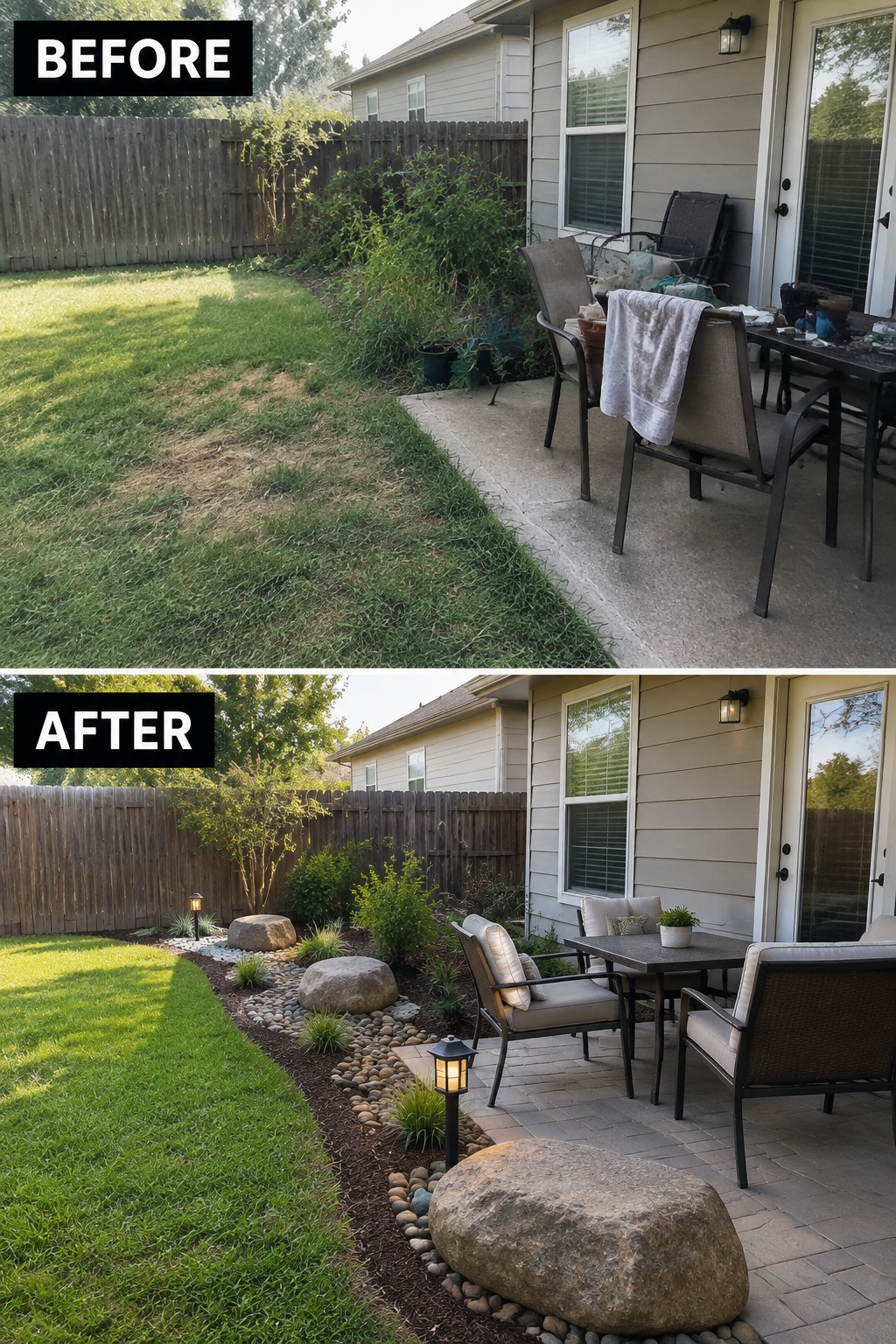
A simple dry creek bed can give a tired backyard a clear edge and make the lawn feel more intentional. Here, a winding band of river rock and low plantings replaces the overgrown border beside the patio, while keeping the yard open.
Use this idea where grass meets a patio or where water needs a clearer route through the yard. Mark out a gentle curve, remove weeds, and set the stones in a shallow bed; leave enough room for the lawn and patio to remain easy to use.
Build A Stable Stone Path Into A Slope

The worn dirt track has been replaced with broad stepping stones set in a dry creek bed. This gives the steep yard a clear route and helps keep foot traffic from cutting deeper ruts into the soil.
For a similar slope, set stones securely and use small rounded rock to fill the gaps and guide runoff. Keep the path wide enough for comfortable steps, and avoid placing loose stones where they could shift underfoot.
Turn A Bare Slope Into A Dry Creek Bed

A steep, mostly bare slope can look unfinished and send runoff toward the walkway. A dry creek bed gives the slope a clearer shape, using a gravel channel and larger stones to guide water while planted areas help hold the garden together.
This approach suits front yards where a path cuts through a grade. Keep the channel open and easy to follow, and choose plants that can handle the site’s sun and soil. Check where water naturally flows before placing the stones.
Frequently Asked Questions
Q: Will a dry creek bed actually help with runoff on a sloped Boulder yard?
A: It can, especially when you place it where water already flows and give it a clear outlet. Use rounded river rock over a firm, gently graded base so water moves through instead of cutting a channel into the soil.
Q: What should I plant along a dry creek bed?
A: Choose plants that can handle both dry spells and occasional wet soil, such as native grasses and hardy perennials. Leave some open space around the stones so the bed stays visible and easy to maintain.
Q: Do I need landscape fabric under the rocks?
A: Not always. A compacted gravel base can help keep stones in place, while fabric may slow weeds but can become exposed over time. Either way, remove weeds before they set seed.
Q: How do I keep the creek bed from looking like a pile of rocks?
A: Vary the stone sizes and let the bed curve naturally rather than running it in a straight line. A few plants at the edges help soften the transition into the rest of the yard.
