


A sloped backyard can feel awkward when bare earth, patchy planting, or a crumbling edge leaves the space without much structure.
Boulder retaining walls can steady the ground while adding a natural-looking feature that works with the landscape.
I like how a thoughtful layout can make large stones feel integrated rather than simply placed along a slope.
Pairing them with layered plants, clear pathways, and tidy edges often makes the whole yard feel more considered.
The change can be satisfying without requiring a complete yard renovation.
Some of these approaches are easy to adapt to a real backyard, whether you want to soften a steep bank or give a tired corner more definition.
Add Planting Structure To A Sloped Yard

The bare slope feels more intentional once plants fill the spaces around the boulder walls. The rocks already create useful terraces, so adding low plants and grasses gives each level a clear garden bed without needing a new layout.
Start by clearing weeds and choosing plants that suit the sun and soil on your slope. Keep mature plant sizes in mind so the beds do not become crowded, and leave room to reach the walls for upkeep.
Add Structure To An Overgrown Backyard

A low stone retaining wall turns a messy slope into a clear garden bed. Here, removing the overgrowth and adding a simple line of large boulders gives the planting a defined edge and makes the small yard feel more cared for.
This idea works well where a slope is hard to mow or keeps creeping into a sitting area. Clear the plants first, then build a wall suited to the slope and soil, leaving enough room behind it for drainage and manageable plantings.
Add Boulder Steps To A Sloped Yard

A steep, scruffy slope can be hard to use and awkward to maintain. Here, large boulders form a retaining wall and broad stone steps, giving the hillside a clear route down to the gravel path.
This approach works well where a narrow side yard needs better access without taking up much walking space. Choose stones sized for the slope and have the retaining work planned properly, since a wall also needs to manage soil and drainage.
Add Structure To A Bare Backyard
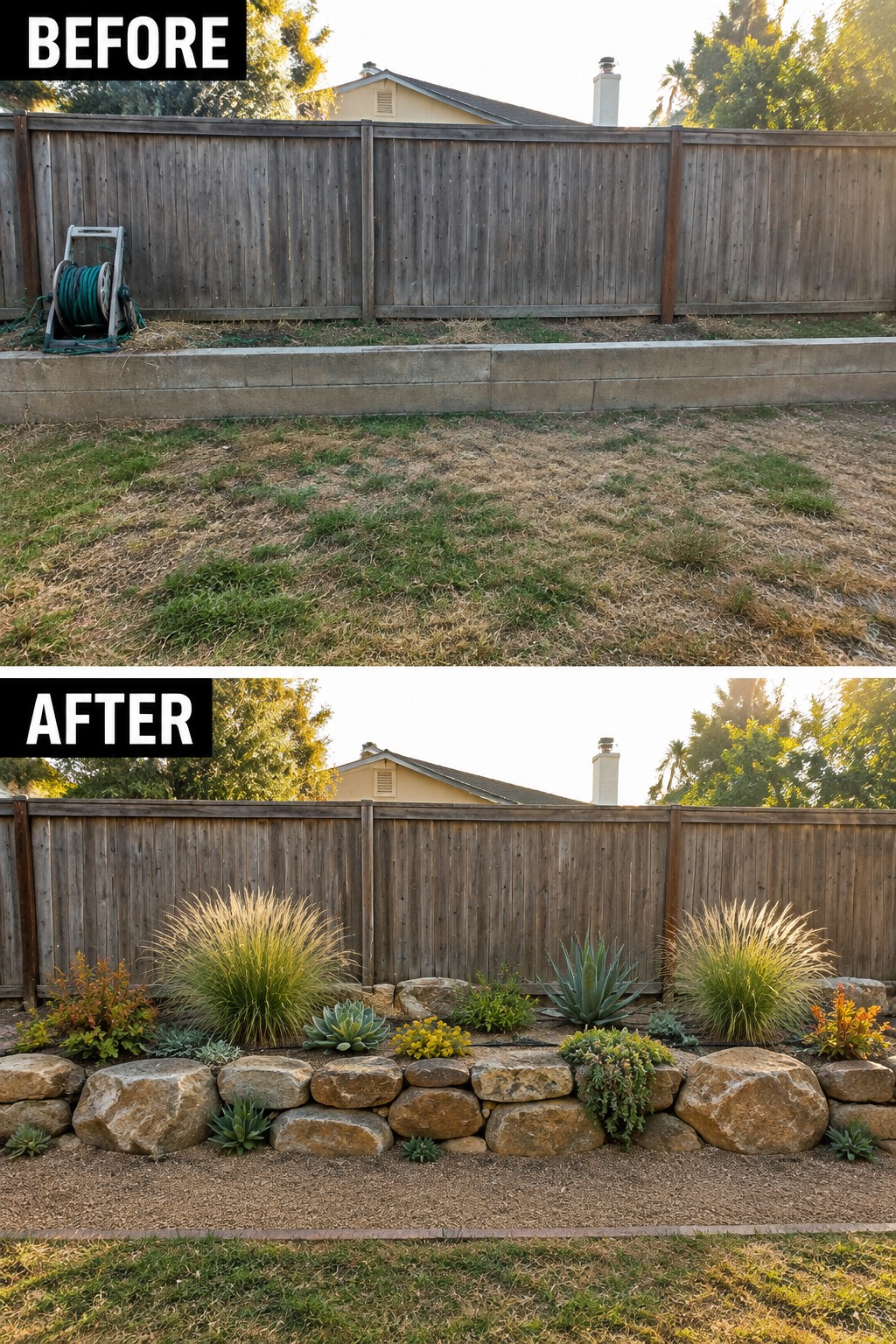
A simple rock retaining wall can turn a neglected strip of yard into a defined planting bed. Here, the new stone border and a few well-spaced plants give the fence line a clear purpose without needing a large garden.
This idea works well on sloped or uneven ground where a retaining wall can help shape the space. Keep the planting simple at first, and leave enough room between plants for them to grow.
Replace A Failing Timber Wall With Boulder Terracing

The muddy slope and worn timber retaining wall have been replaced with large boulders, giving the hillside a sturdier edge and a more natural look. Planting along the rocks helps the retaining structure feel like part of the garden.
This approach can work well on a sloped yard where an old wall is failing, but the boulders need to be sized and placed for the slope and soil conditions. Keep plants suited to the site, and leave enough room for water to drain rather than letting it collect behind the wall.
Add Lighting To A Boulder Retaining Wall

A plain boulder wall can feel unfinished after dark. A slim light tucked along the wall cap makes the rocks easier to see and gives the backyard a clear focal point.
For a similar look, use outdoor-rated low-voltage lighting and aim it along the wall rather than into nearby windows. This works well when a retaining wall also borders a seating or gathering area.
Add Flowers Along A Boulder Retaining Wall

An exposed strip of soil can make a boulder wall look unfinished. Planting flowers along the slope turns the wall into part of the garden, while mulch gives the bed a tidy edge beside the patio.
Use plants suited to the slope’s sun and drainage, and leave enough room for them to spread without covering the path. A few repeating groups of flowers can make a long retaining wall feel planned without crowding it.
Clean Up A Boulder Wall With Simple Planting

Replacing the overgrown plants above the retaining wall with a few ornamental grasses and rounded shrubs makes the stonework easier to see and the garden feel more planned. A neat strip of mulch helps keep the planting area defined.
Use this approach when a boulder wall is a strong feature but the plants around it have become tangled. Clear the bed first, then choose a small number of plants suited to the light and space available. Leave room for them to grow so they do not quickly cover the stones again.
Use A Trellis To Dress Up A Boulder Wall

A simple trellis can make a rough retaining wall feel like part of the garden. Here, the wall is paired with a wooden grid and flowering vines, giving plants a place to grow without hiding all the stone.
This idea works well where a wall sits below a fence and there’s room for climbers to spread. Secure the trellis independently and choose plants suited to the light and local climate; leave enough space to check the wall and keep growth from becoming too dense.
Add A Paved Path Beside The Boulder Wall

Replacing the rough dirt walkway with pavers makes this narrow side yard easier to use and gives the boulder retaining wall a clear edge. The path brings order to the space without taking attention away from the stones.
For a similar yard, choose pavers that leave enough room to walk comfortably, then keep planting along the wall rather than spilling into the route. This works especially well in a tight side passage where a defined path can make everyday access simpler.
Turn A Boulder Wall Into A Planted Garden

The bare slope feels more useful once planting is worked into the boulder wall. In the finished yard, vegetables and leafy plants fill the spaces above and between the stones, giving the retaining wall a clear purpose beyond holding back soil.
For a similar setup, choose plants suited to the amount of sun and the slope’s drainage, then leave enough room to tend the beds. A sturdy wall matters here, especially on a steep grade, so check that the boulders are stable before adding soil or planting.
Turn A Boulder Retaining Wall Into A Seating Area

A bare stretch beside the pool can do more than hold back soil. Here, the boulder wall becomes part of the seating area, with a built-in bench and a few plants around it. That makes the space more useful without needing a separate patio structure.
This idea works well where a retaining wall sits close to a pool or patio. Keep the bench at a comfortable height and leave enough clear space in front for people to move around. A few well-placed plants help finish the edge without crowding the seating.
Light A Boulder Retaining Wall With Low-Voltage Lights

Replacing overgrown growth with a clear boulder wall makes the yard feel more orderly, and small lights tucked near the rocks help the wall stay visible after dark. The lighting also makes the path easier to follow without needing a bright floodlight.
For a similar yard, place low-voltage fixtures at intervals along the wall and aim them toward the stone, keeping glare out of the path. Start with trimming back plants and clearing debris so the lights can be positioned safely and the boulders remain the main feature.
Build A Boulder Retaining Wall Around A Garden Bed

Replacing the weedy strip beside the house with a raised bed makes this narrow part of the yard feel planned. The large boulders hold the soil in place and give the planting area a clear edge.
This idea works well along a foundation where grass or weeds keep creeping into the bed. Set the stones securely, leave enough room to walk beside the wall, and choose plants that suit the light and won’t quickly crowd the space.
Replace A Rough Boulder Slope With A Terraced Retaining Wall

The loose, uneven slope becomes easier to use once the boulders are set into a more defined retaining wall and the ground below is paved. The terracing gives the yard a clearer edge and makes room for a small patio.
This approach suits a sloped backyard where soil and rocks make the ground awkward to walk on. Keep the wall sized for the slope and use paving that leaves a comfortable, level area to move around.
Make A Sloped Yard Easier To Use

A bare slope can be hard to walk on and difficult to keep tidy. Here, timber steps set into the hillside turn it into a clear route through the yard, while the boulders help hold the soil in place.
For a similar slope, keep the steps wide enough for comfortable footing and use sturdy materials that suit the grade. A few low plants around the rocks can fill in bare patches without blocking the path.
Turn A Narrow Side Yard Into A Fire Pit Seating Area

The bare side yard becomes a usable outdoor room with a built-in stone bench and a fire pit. That gives the narrow space a clear purpose instead of leaving it as a strip of unused ground.
This idea works well where there is enough room to sit without blocking the path through the yard. Keep the seating and fire pit sized to the space, and check local fire rules before building.
Turn An Overgrown Boulder Slope Into A Pollinator Garden

Clearing back the overgrowth lets the boulders shape the slope instead of disappearing behind vines. Mulch and clusters of flowering plants make the retaining wall look like a planned garden, while giving pollinators places to feed.
This idea works well on a sloped backyard where large stones are already in place. Start by removing unwanted growth, then group flowers between the rocks and leave enough space for them to fill out without hiding the wall again.
Frequently Asked Questions
Q: How do I keep a boulder retaining wall from looking too heavy?
A: Mix in smaller stones, low-growing plants, and pockets of greenery around the larger boulders. Leaving a little space between some stones can also make the wall feel more natural.
Q: What plants work well beside a boulder wall?
A: Choose plants that suit your yard’s sun and soil, then tuck them into the edges and gaps where they have room to grow. Ground covers, ornamental grasses, and compact perennials can soften the stone without hiding it.
Q: Can I build a boulder retaining wall myself?
A: A short wall on fairly level ground may be a manageable DIY project. For a tall wall, a steep slope, or a spot where water collects, get a professional’s advice before you start.
Q: How do I stop water from washing soil out from behind the wall?
A: Plan for drainage before you place the boulders. A layer of clean gravel behind the wall and a clear path for water to escape can help protect the soil and keep pressure from building up.
