

A boulder garden can feel messy or unfinished when the rocks sit without a clear shape, path, or planting plan.
I like how moss softens their hard edges and helps them feel settled into the landscape rather than simply placed there.
With a little cleanup, thoughtful spacing, and plants that suit the shade, the whole yard can look more cared for without losing its natural character.
The change can be subtle, but it is satisfying to see a neglected corner gain purpose and texture.
Some of these approaches are easy to adapt to a real garden, even if you start with just one rocky patch.
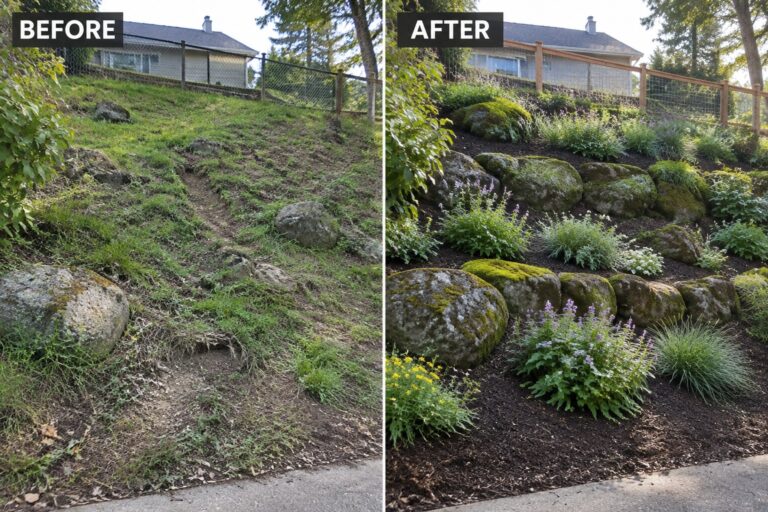
Add Structure To A Sloped Garden

A bare, uneven slope can look difficult to plant and easy to neglect. Here, rows of large rocks create clear tiers, turning the hillside into smaller garden beds that are easier to manage.
Use rocks already on the property when possible, and place them securely before adding soil and plants. Choose low-growing ground cover and a few hardy flowers suited to the slope, leaving enough room to maintain the beds.
Turn A Bare Drainage Channel Into A Stone Path
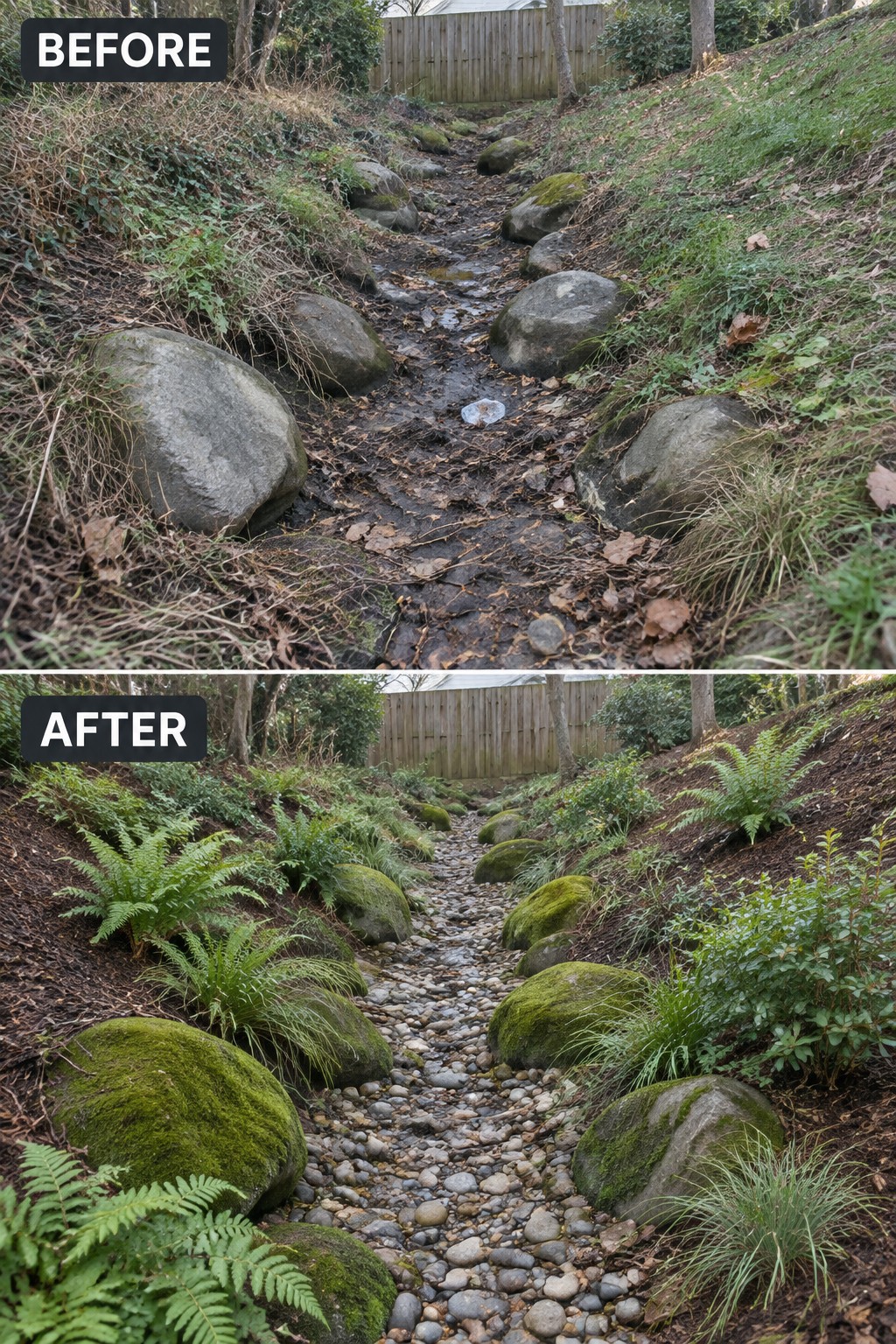
Replacing the muddy, leaf-covered channel with a neat bed of rounded stones gives this sloped yard a clearer route for runoff and a more finished look. The large boulders stay in place, while the smaller stones define the path through the center.
For a similar spot, clear out debris first and check how water moves during heavy rain. Use stones suited to the slope, and keep the channel open so water can flow through rather than wash soil into the yard.
Replace A Worn Walkway With A Stone Path

A neglected concrete path can make a narrow side yard feel messy. Replacing it with spaced stepping stones and gravel gives the route a clearer shape, while moss-covered rocks help the path sit naturally among the plants.
This idea works well in a tight side yard where a full-width walkway would take up too much room. Keep the stones steady and leave enough space to walk comfortably; gravel between them helps define the path without making it feel crowded.
Create A Clear Path Through An Overgrown Side Yard

The side yard goes from a patchy, overgrown strip to a garden with a simple stepping-stone path and defined planting. That path gives the narrow space a purpose and makes it easier to move through without trying to cover the whole area with lawn.
For a similar side yard, clear unwanted growth first, then lay stones where people naturally walk. Moss-covered boulders and shade-loving plants can fill the edges, but leave enough room around the path to keep it easy to use.
Give A Stone Wall A Finished Garden Bed

The wall already gives the yard a strong structure, but the bare strip of soil at its base makes the area feel unfinished. Adding moss-covered boulders and low plantings turns that narrow border into a garden bed that feels connected to the stonework.
This idea works well along retaining walls where a full garden would take up too much space. Keep the plants low enough to leave the wall visible, and leave room for the boulders to stand out rather than crowding the bed with too many varieties.
Make A Small Garden Bed Beside The Patio

The wide, bare concrete patio felt a little unfinished, and one large boulder sat by itself. Grouping moss-covered rocks into a defined planting bed gives the yard more structure while keeping most of the patio open.
This idea works well beside a small patio or entry where there’s room for a narrow garden edge but not a full garden. Set the rocks together rather than scattering them, then add low plants around them and use gravel to mark the bed’s boundary.
Build A Mossy Retaining Wall Into A Sloped Yard

A rocky slope can be hard to maintain, especially when rain leaves bare soil and loose stones. Here, the rocks have been arranged into retaining tiers and planted with moss and low-growing greenery, giving the hillside a more settled shape.
This idea suits a sloped side yard where a flat lawn is impractical. Use sturdy stones to hold the soil, and leave enough space between them for plants that can handle the shade. Keep the gravel path clear so there is still an easy route beside the house.
Add A Defined Rock Garden Beside The Pool

Replacing a loose strip of stones with a planned rock garden gives the pool edge a cleaner, more finished look. A few large moss-covered boulders and clumps of ornamental grass create a clear border without taking over the lawn.
This idea works well where a pool or path meets open grass. Keep the boulders spaced so the planting has room to grow, and use smaller stones to fill gaps and help hold the border together.
Add Planting Structure Along A Walkway

The narrow bed beside this walkway looked sparse and untended. Grouping shrubs around the existing rocks and adding fresh mulch gives the edge a clearer shape, so the path feels like part of a planned garden rather than a strip beside bare soil.
For a similar area, start by clearing leaves and weeds, then arrange a few plants in groups instead of scattering them along the bed. Keep enough space for plants to grow and for the walkway to stay clear. Low path lights can help mark the edge without making a small front garden feel crowded.
Rebuild The Steps To Make The Entry Easier To Reach

The worn concrete steps made the front entrance feel neglected and harder to approach. Replacing them with broad stone steps gives the entry a clearer route from the walk, while moss-covered boulders help the new hardscaping sit naturally in the yard.
This approach works well when an entry path is sound but the steps need attention. Choose stones with a stable, even surface, and leave enough room for a comfortable step. Keep nearby planting low enough that it does not crowd the stairs.
Create A Defined Fire Pit Area
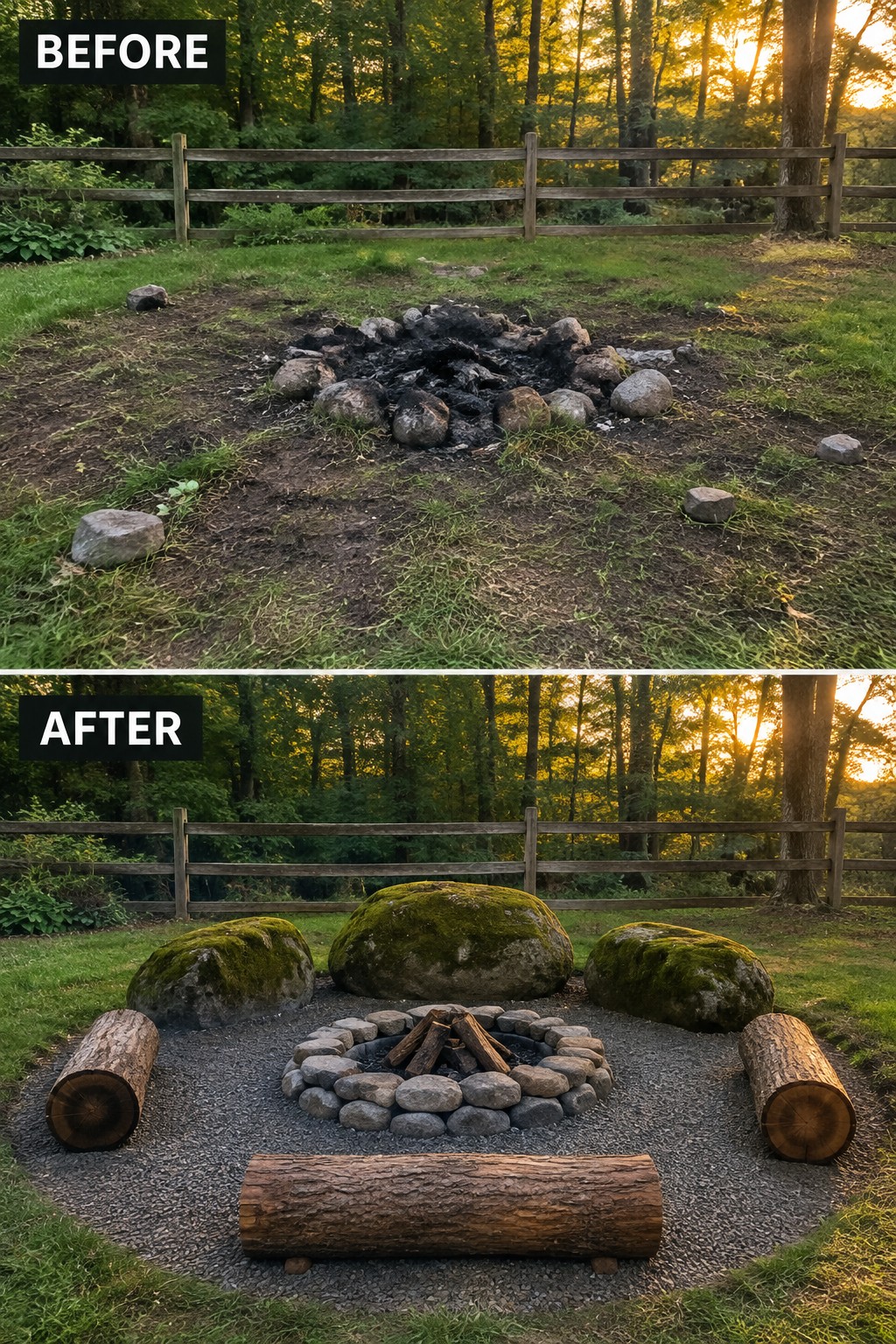
A neglected fire pit can feel like an afterthought when the ground around it is bare and uneven. Clearing the area and laying down gravel gives it a clear footprint, while moss-covered boulders help the fire pit feel like part of the landscape.
This idea works well in a woodland yard or any spot where you want a simple place to gather. Keep the gravel area wide enough for seating and walking, and check that the fire pit has a safe, level base before adding rocks or logs.
Make Stone Steps Safer With Low-Profile Lighting

The uneven stone steps look easier to use after small lights were added to the risers. They make each step edge easier to see after dark without changing the rustic feel of the moss-covered stone.
This idea suits a steep garden path or side entrance where people use the steps in the evening. Choose outdoor-rated fixtures and place them so they light the walking surface without shining into anyone’s eyes.
Turn A Sparse Front Garden Into A Layered Flower Bed

The small bed looked scattered before, with a few plants spaced across bare soil. Grouping fuller shrubs and flowers together gives the front of the house a more planned look, while moss-covered rocks add a natural focal point.
For a similar bed, keep the tallest plants toward the house and use lower flowers along the sidewalk edge. Leave enough room for plants to spread, and avoid packing in more varieties than the space can support.
Turn A Bare Patio Into A Mossy Garden Seating Area
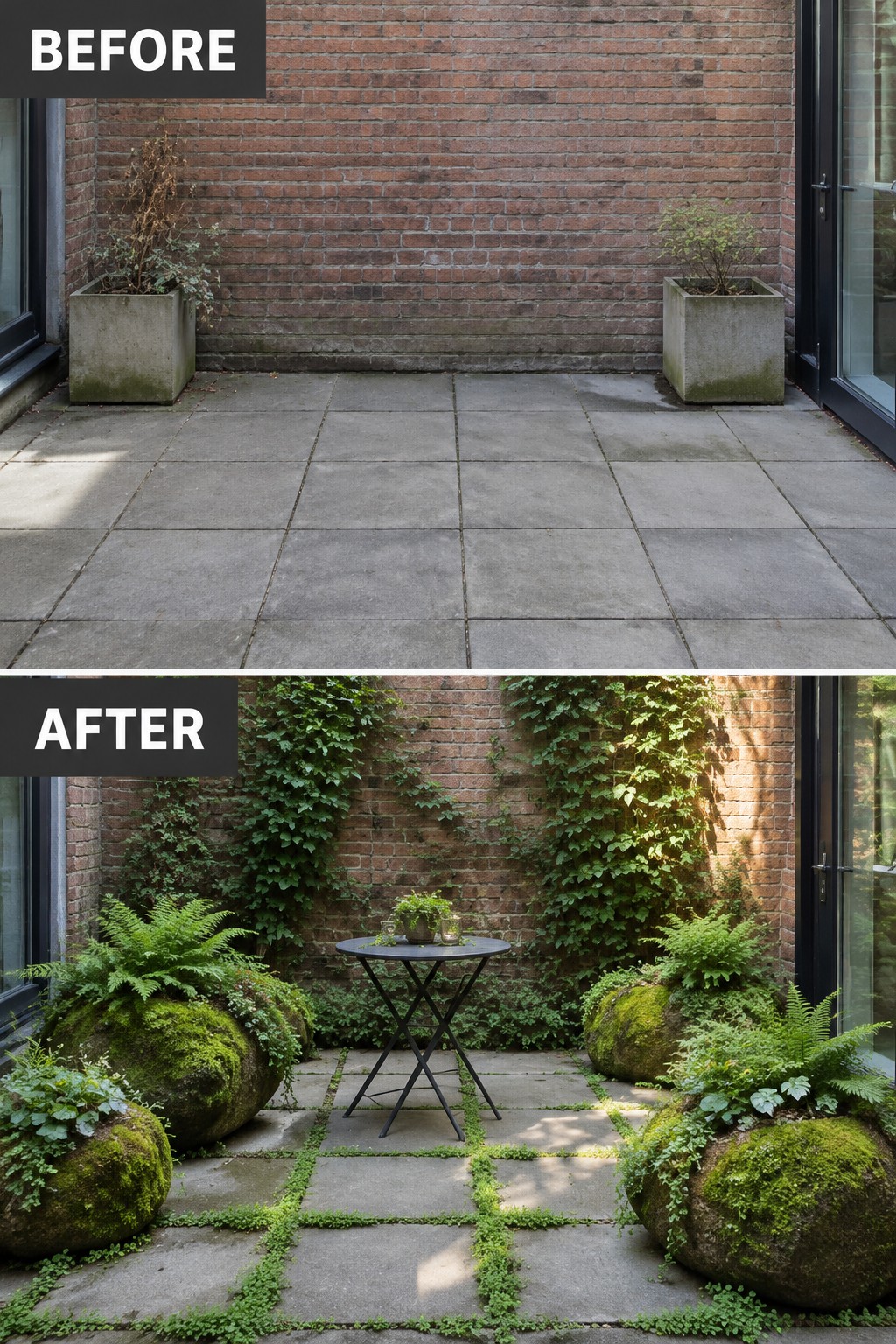
The patio works better once it feels like part of the garden, rather than a bare patch of paving. Moss-covered boulders and creeping ground cover break up the concrete and give the small space a clear place to sit.
For a similar courtyard, keep a few pavers open for walking and place plants along the edges first. Choose mossy rocks that suit the scale of the patio, so there’s room to move around the table.
Turn A Downspout Problem Into A Rock Garden

A downspout that empties onto bare soil can leave a muddy patch that is hard to maintain. A shallow gravel channel edged with large rocks gives the runoff a clearer route, while mossy boulders and a few water-tolerant plants make the area look like part of the garden.
This idea works well in a narrow side yard where water collects near the house. Start by directing the water away from the foundation, then use gravel and stones to shape the drainage area. Choose plants suited to the amount of sun and moisture, and leave enough open space for water to flow.
Create A Gravel Path Through A Neglected Yard

The bare dirt track becomes a defined gravel path, with planting and moss-covered boulders along its edges. That simple layout gives the yard a clearer shape and keeps the route to the shed from getting lost in patchy grass.
For a similar side yard, clear the path first, then choose gravel that suits the space and stays easy to walk on. Place rocks and low plants along the borders, but leave enough room for people to pass comfortably.
Turn A Pebble Bed Into A Rock Garden

The plain pebble bed in this front garden becomes a planted rock garden, with a large mossy boulder as its focal point. Keeping the existing low hedge gives the planting a clear shape while making the space feel less bare.
This idea suits a small front garden where a full lawn or wide flower bed would be hard to maintain. Keep the largest rock as the main feature, then leave enough space between smaller plants and stones so the bed does not feel crowded.
Stabilize A Sloped Garden With Large Rocks

The bare slope beside the driveway looks exposed and uneven. Large rocks set into the hillside, with low grasses and shrubs around them, give the soil more structure and make the planting feel planned.
This approach suits a sloped strip where water runoff or erosion is a concern. Set substantial rocks securely into the slope, then use hardy plants to fill the spaces between them. Leave enough room for plants to grow without blocking nearby paths.
Add Planting And Pebbles Along A Pond Edge
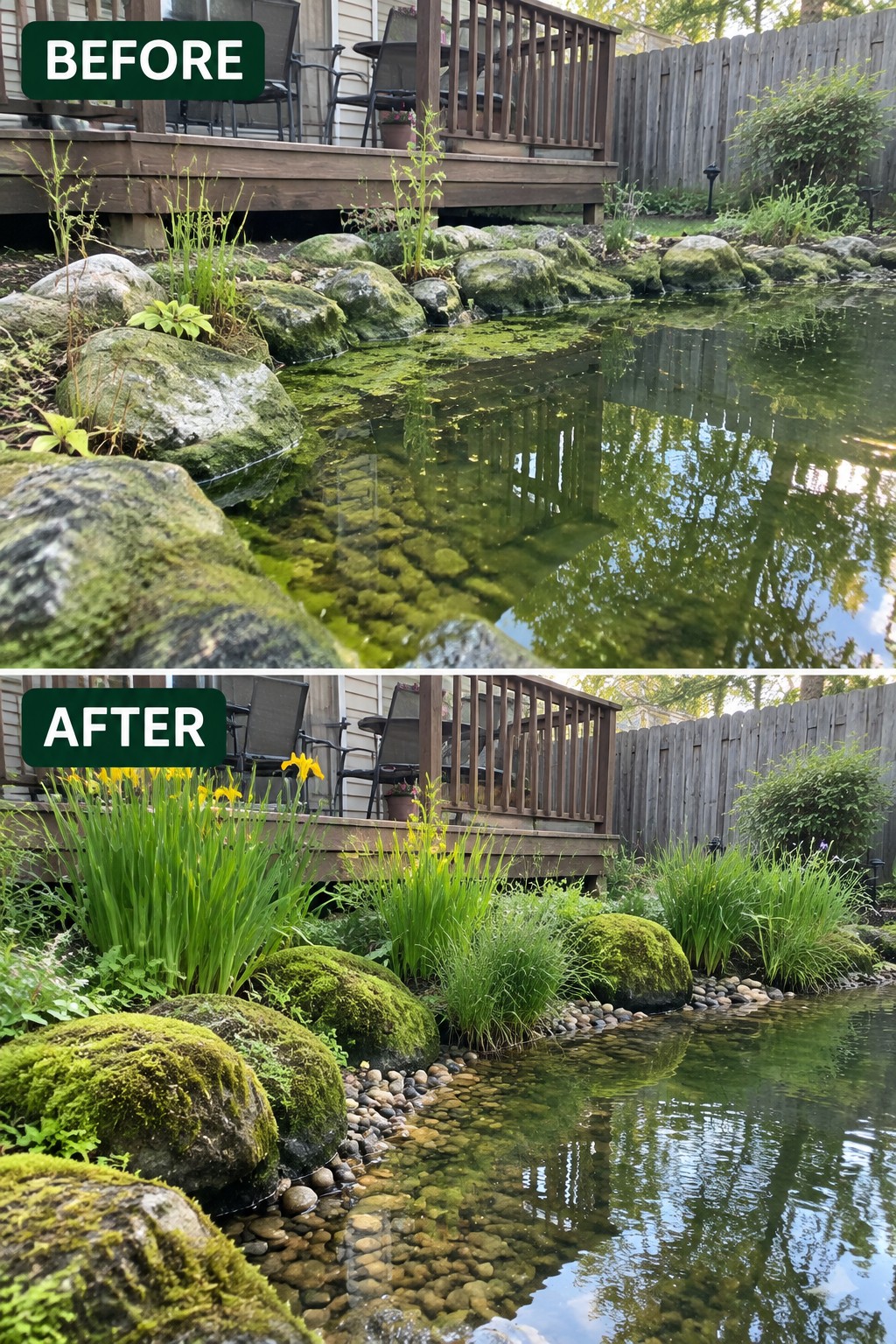
The pond edge feels more settled after the loose, sparse planting is replaced with fuller clumps of greenery and a band of small stones. The plants soften the line of the water, while the pebbles give the rocks a cleaner, more finished border.
This idea works well around a backyard pond where exposed edges look untidy. Clear away dead growth first, then group a few suitable plants rather than filling every gap. Leave enough open stone for water access and maintenance.
Frequently Asked Questions
Q: Will moss grow on any boulder in my yard?
A: Moss is most likely to settle on rocks in a shady, damp spot. A sunny, dry boulder may stay bare, so place it near trees or a north-facing wall if you want a softer, mossy look.
Q: How do I help moss grow on landscaping rocks?
A: Keep the rocks moist while the moss gets established, and avoid washing them with a strong spray. Moss prefers steady moisture and shade, so a spot that dries out every afternoon can be a tough place to start.
Q: Will moss-covered rocks make my yard slippery?
A: Moss can feel slick when it’s wet, especially on stones people walk on. Keep mossy boulders beside paths rather than in the walking surface, and choose firm, non-slip footing for steps.
Q: Can I use moss-covered boulders in a small garden?
A: Yes. A few smaller rocks can bring the same woodland feel without crowding the space. Leave room around them for plants to grow and for the moss to show.
