

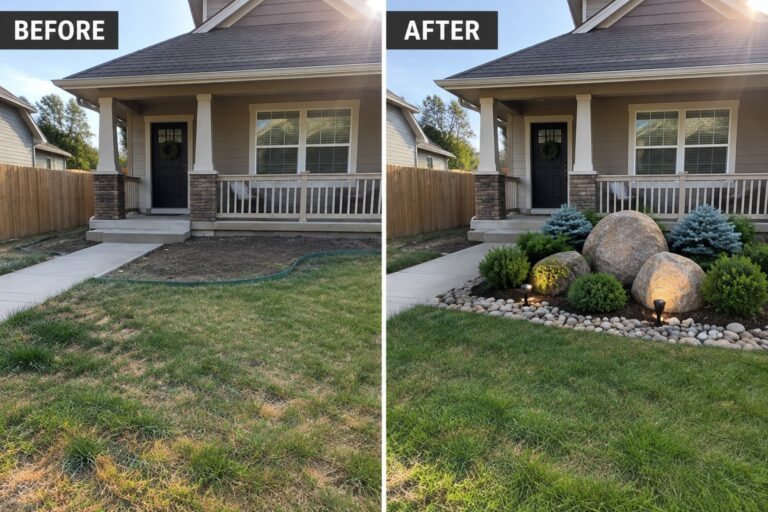
A rocky yard can feel scattered or unfinished when the stones have no clear place and the planting lacks structure.
I like how large boulders can give a garden a natural focal point, while evergreen shrubs soften their edges and add shape through every season.
With a little cleanup and a thoughtful layout, paths, planting beds, and open lawn can feel more connected without changing the whole yard.
The difference is often in the balance between stone and greenery.
I’d save ideas that suit the slope, sunlight, and scale of your own space, then adapt them one section at a time.
Create A Defined Rock Garden
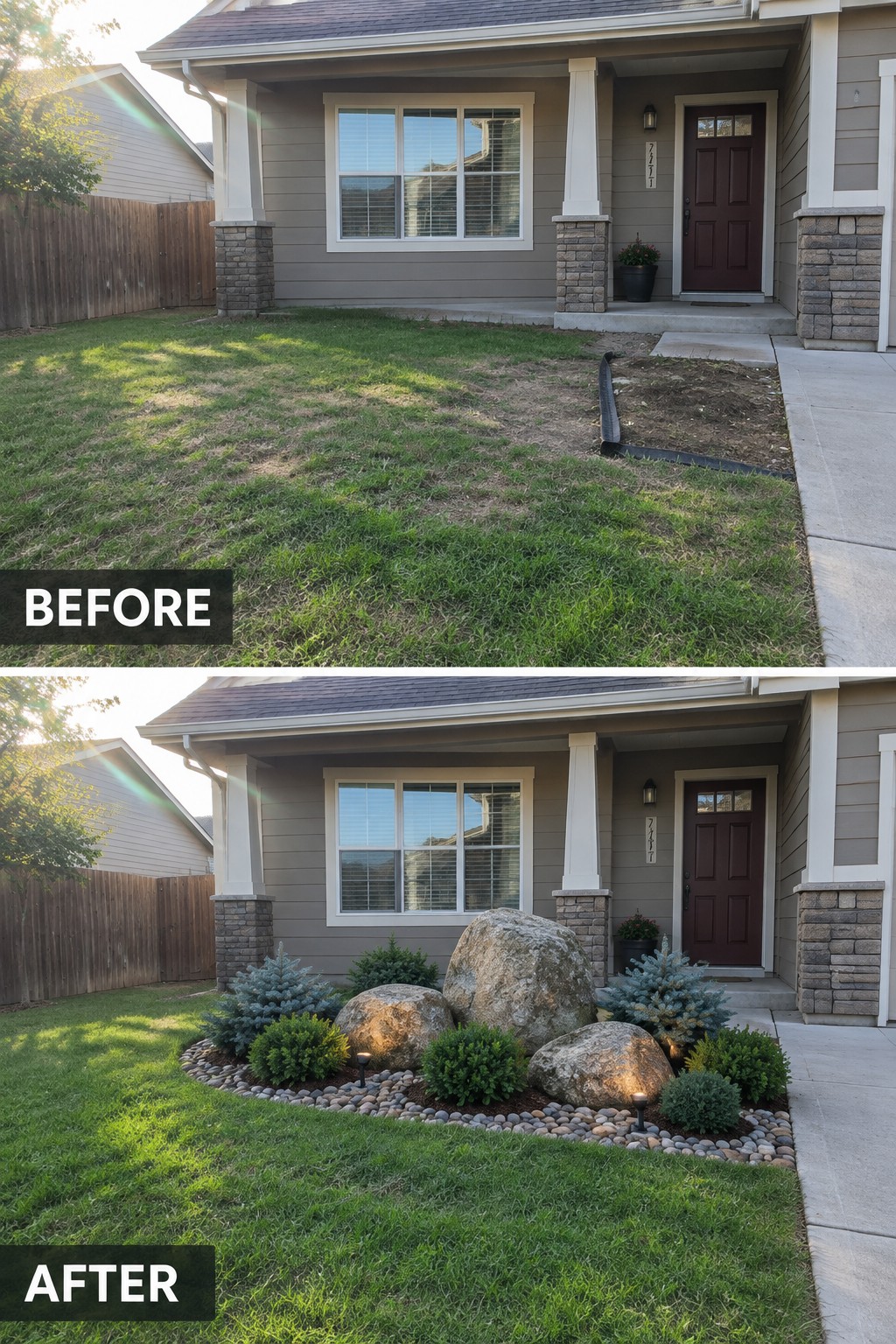
The bare front yard feels more planned once a curved garden bed gives it a clear shape. Large boulders and evergreen shrubs make a simple focal point, while the stone border helps separate the planting area from the lawn.
This idea works well beside a front walk or porch where a small bed can tidy up the entry without taking over the yard. Start with a few well-sized rocks, then leave enough space for shrubs to grow and for the edging to stay easy to maintain.
Add Structure To A Sloped Garden
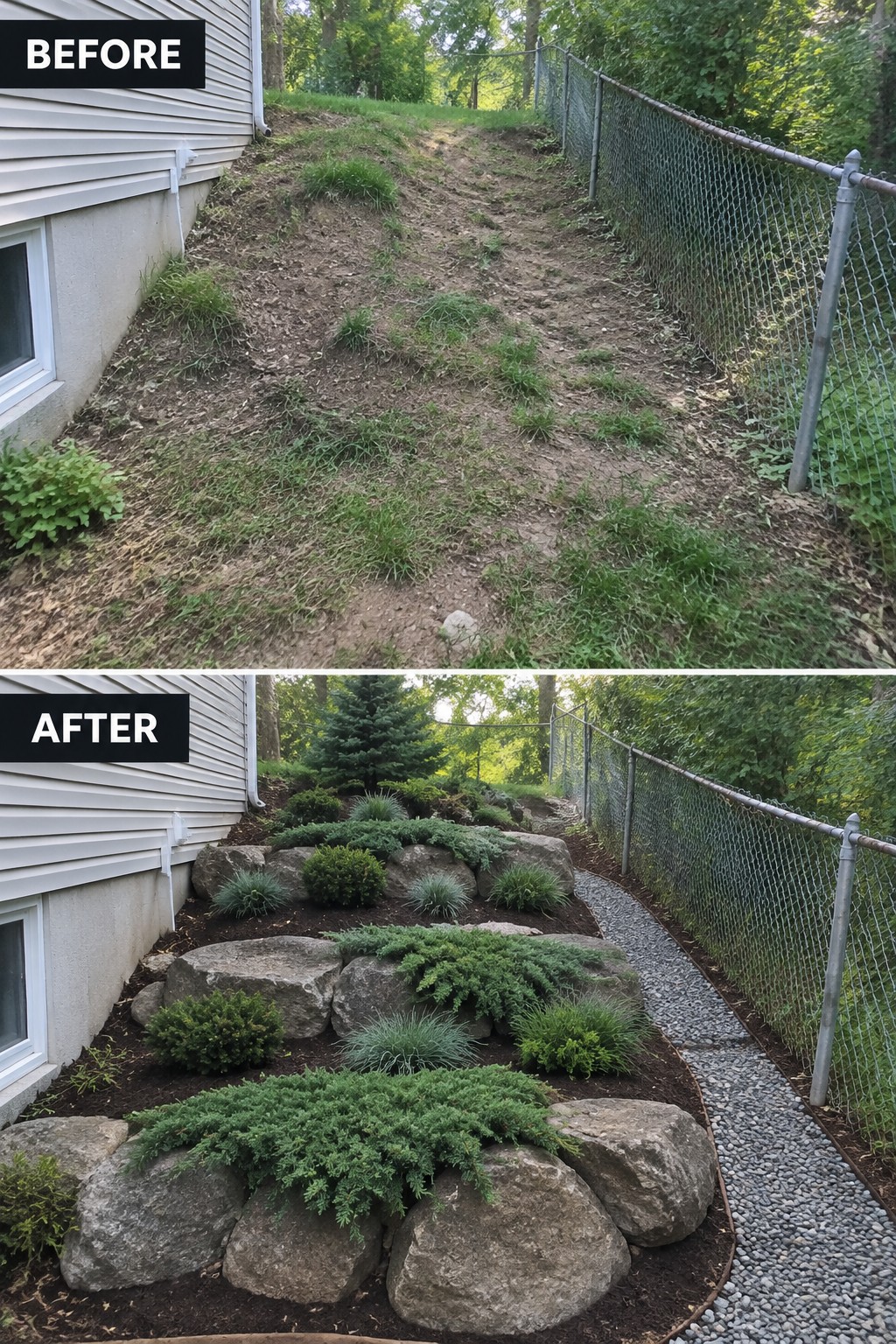
On a steep, bare slope, large rocks can create planting levels that feel more settled and easier to maintain. Here, the rocks shape small beds for evergreen shrubs, while a gravel path gives the narrow yard a clear route through it.
This idea works well beside a house or fence where runoff and uneven ground make planting tricky. Set the rocks securely, keep the path wide enough to walk comfortably, and use a few hardy shrubs rather than crowding each level.
Turn An Overgrown Yard Into A Rock Garden

Replacing the weedy, worn path with a dry creek bed gives this neglected yard a clear shape. Rounded stones and a few large boulders make the route feel intentional, while evergreen shrubs keep the planting structure in place year-round.
This idea works well in a side yard or other spot where grass struggles to grow. Clear the area first, then keep the rock bed narrow enough to leave room for plants and easy movement. Choose shrubs suited to your climate, and avoid placing stones where they could block drainage.
Replace Bare Concrete With A Pebble Garden
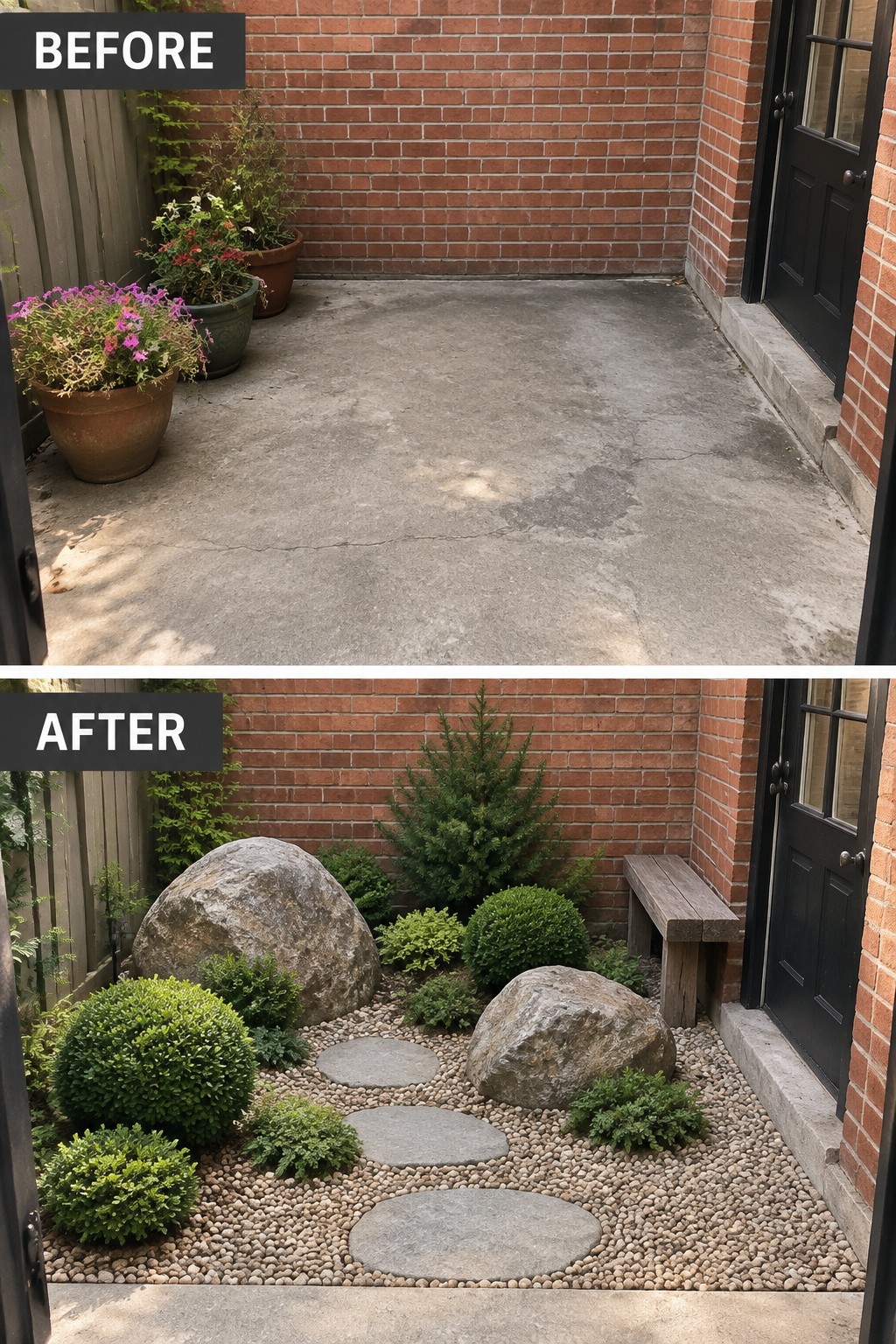
A plain concrete courtyard can feel unfinished, but a gravel garden gives it a clear shape and room for planting. Here, the hard surface becomes a bed of small stones, with large boulders and evergreen shrubs adding structure.
This idea works well in a small enclosed yard where a lawn would be awkward to maintain. Use stepping stones to keep a comfortable route to the door, and leave enough space around the shrubs so they can grow without crowding the path.
Add Privacy To A Poolside Garden

A sparse planting strip can feel unfinished and offer little screening. Adding evergreen shrubs gives the poolside garden a clear structure and more privacy, while large rocks help define the bed along the pool edge.
For a similar yard, use a few larger shrubs as the main anchors and leave enough space for them to grow. Place rocks where they help mark the bed, but keep the pool edge clear and easy to walk along.
Add Structure To An Untidy Driveway Border
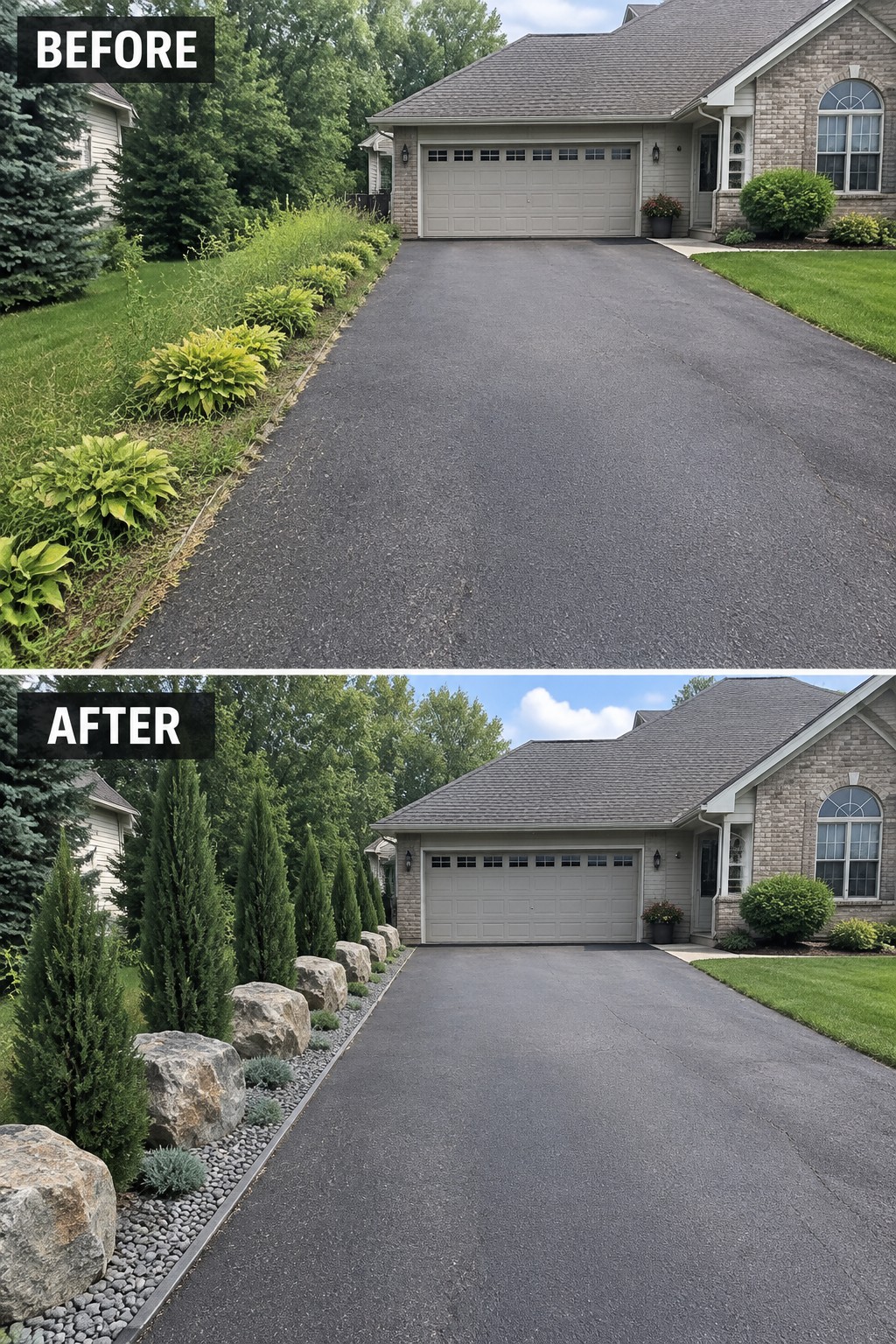
Replacing an overgrown strip beside the driveway with large rocks and upright evergreen shrubs gives the yard a cleaner, more planned edge. The rocks define the bed, while the shrubs add a steady line of greenery without needing a lot of seasonal planting.
This idea works well along driveways or other long borders where a clear edge helps keep the space looking neat. Leave enough room between shrubs for their mature size, and use gravel around the rocks to help limit weeds.
Add Structure To An Overgrown Foundation Bed
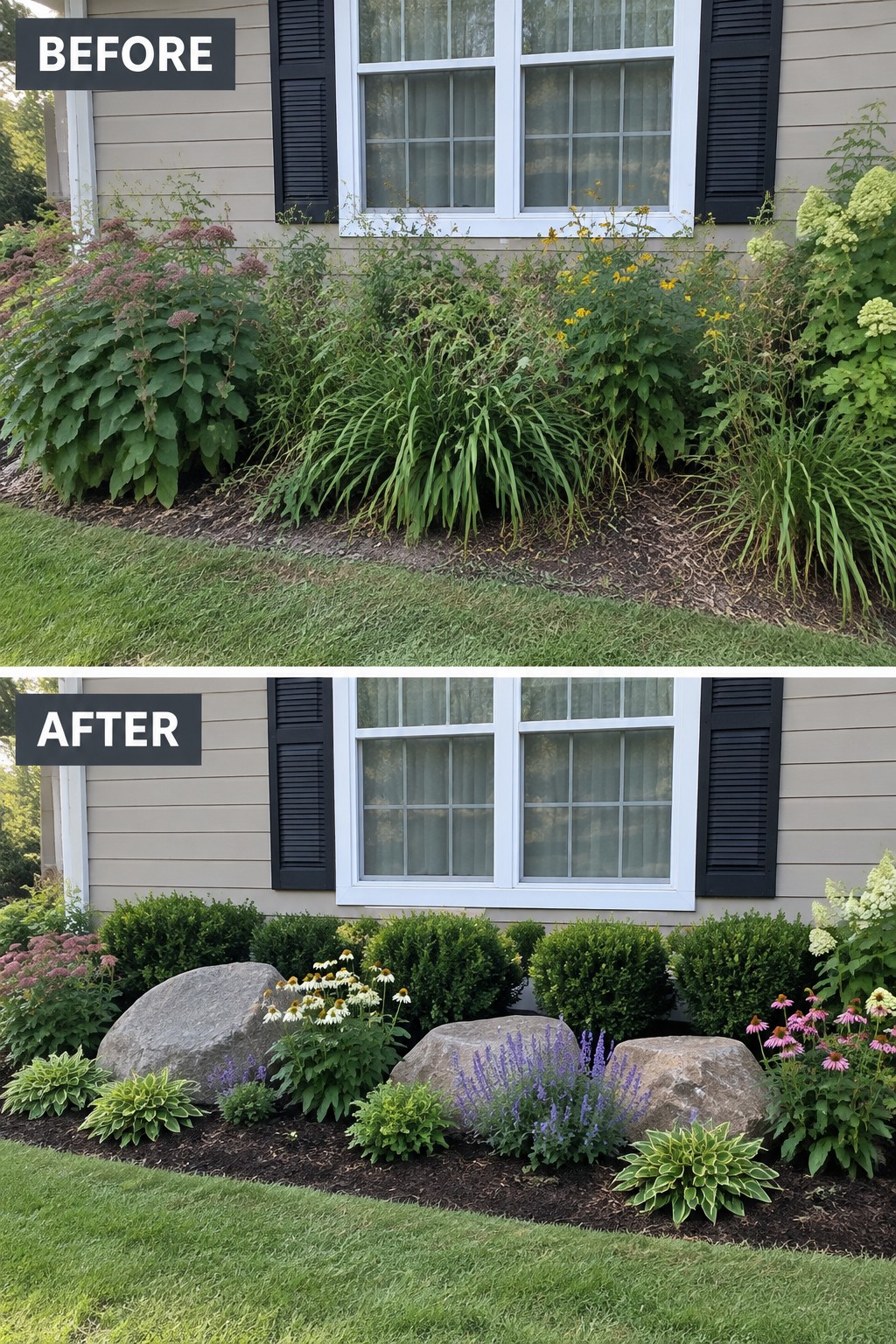
The crowded planting bed looks more orderly after the tall, mixed growth is replaced by low evergreen shrubs and a few large rocks. The simpler layout gives the garden a clear shape without hiding the house.
For a similar bed, clear out excess growth first, then place rocks among shrubs and a few smaller flowers. Leave enough room between plants for them to mature, and keep the bed’s edge tidy so it stays easy to maintain.
Create A Backyard Fire Pit Seating Area
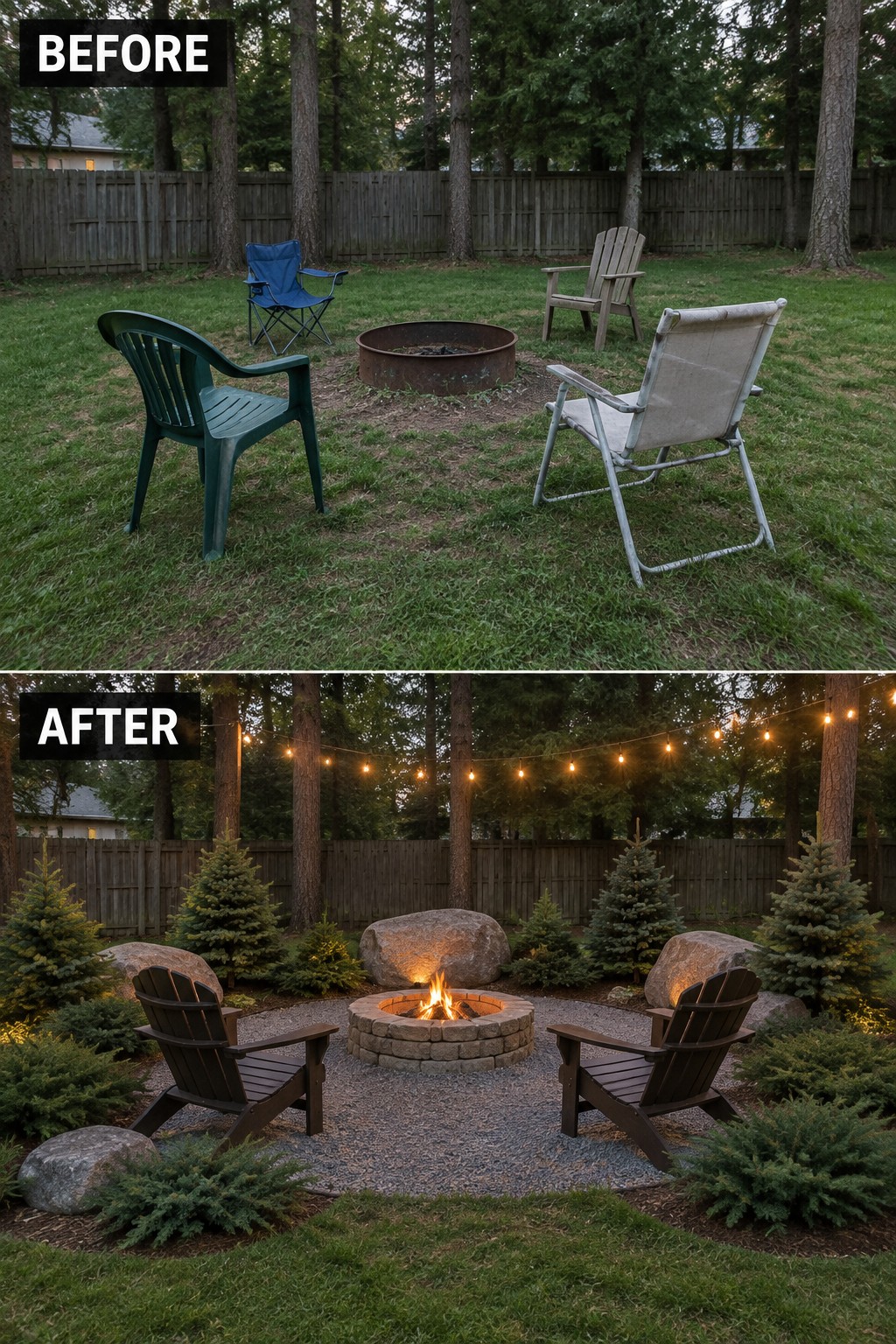
The unused fire ring becomes a clear gathering spot once the chairs face a built-in stone fire pit and the ground around it is covered with gravel. That simple layout gives the backyard a purpose instead of leaving seating scattered across the lawn.
For a similar setup, choose a level area with enough room to walk around the chairs, and use large rocks and evergreen shrubs to define the edge without crowding the seating. Check local fire rules and keep plants and other flammable materials a safe distance from the flames.
Give A Front Entry A Clear Path
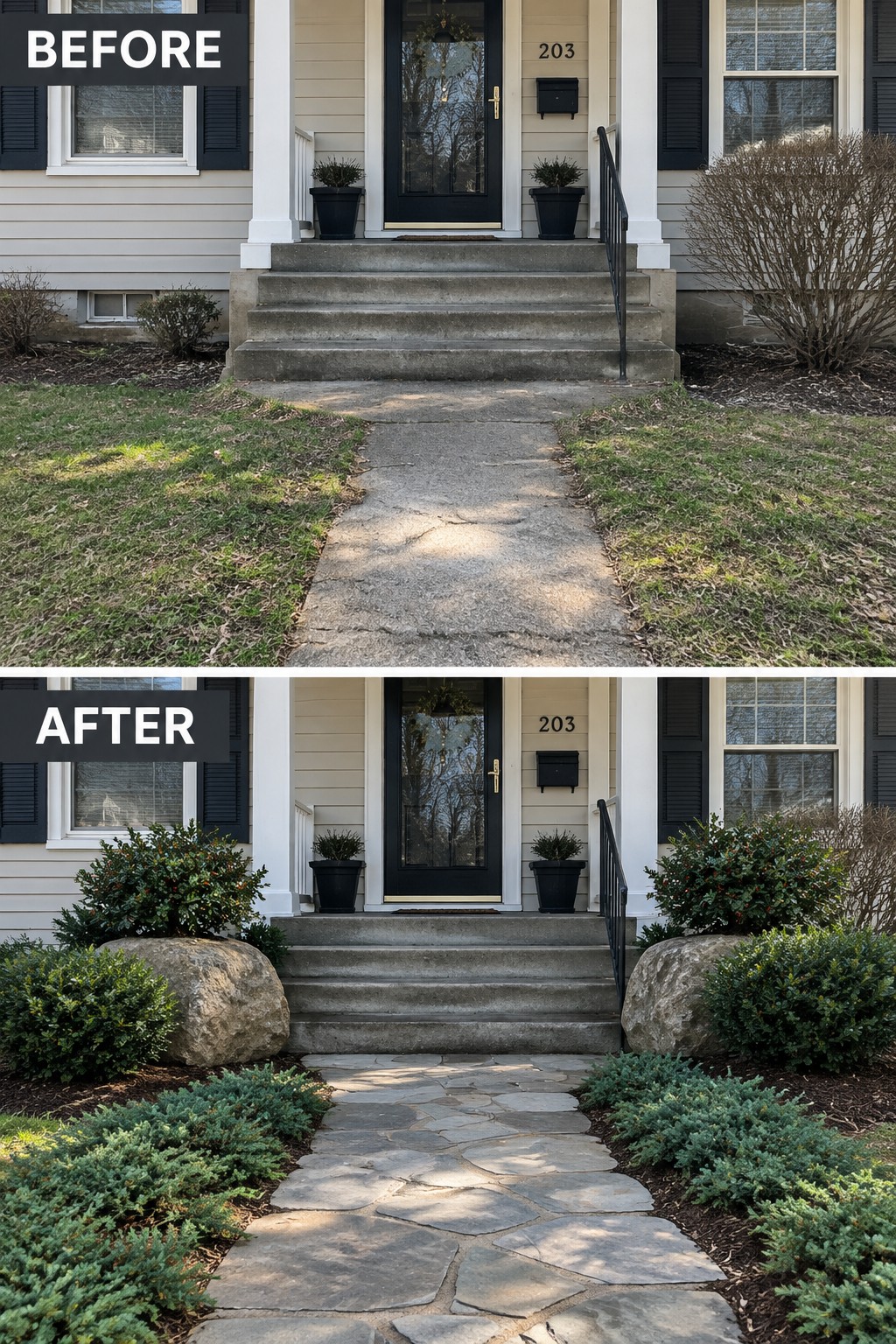
Replacing the cracked concrete walk with irregular stone pavers makes the approach to the house feel more intentional. Low evergreen shrubs and large rocks define the planting beds along the path, giving the entry a tidier look without changing the house itself.
This idea works well when a front yard feels bare or disconnected from the door. Keep the path wide enough to walk comfortably, and leave room around larger stones so plants can fill in without crowding the walkway.
Make A Clear Garden Path Through An Overgrown Yard
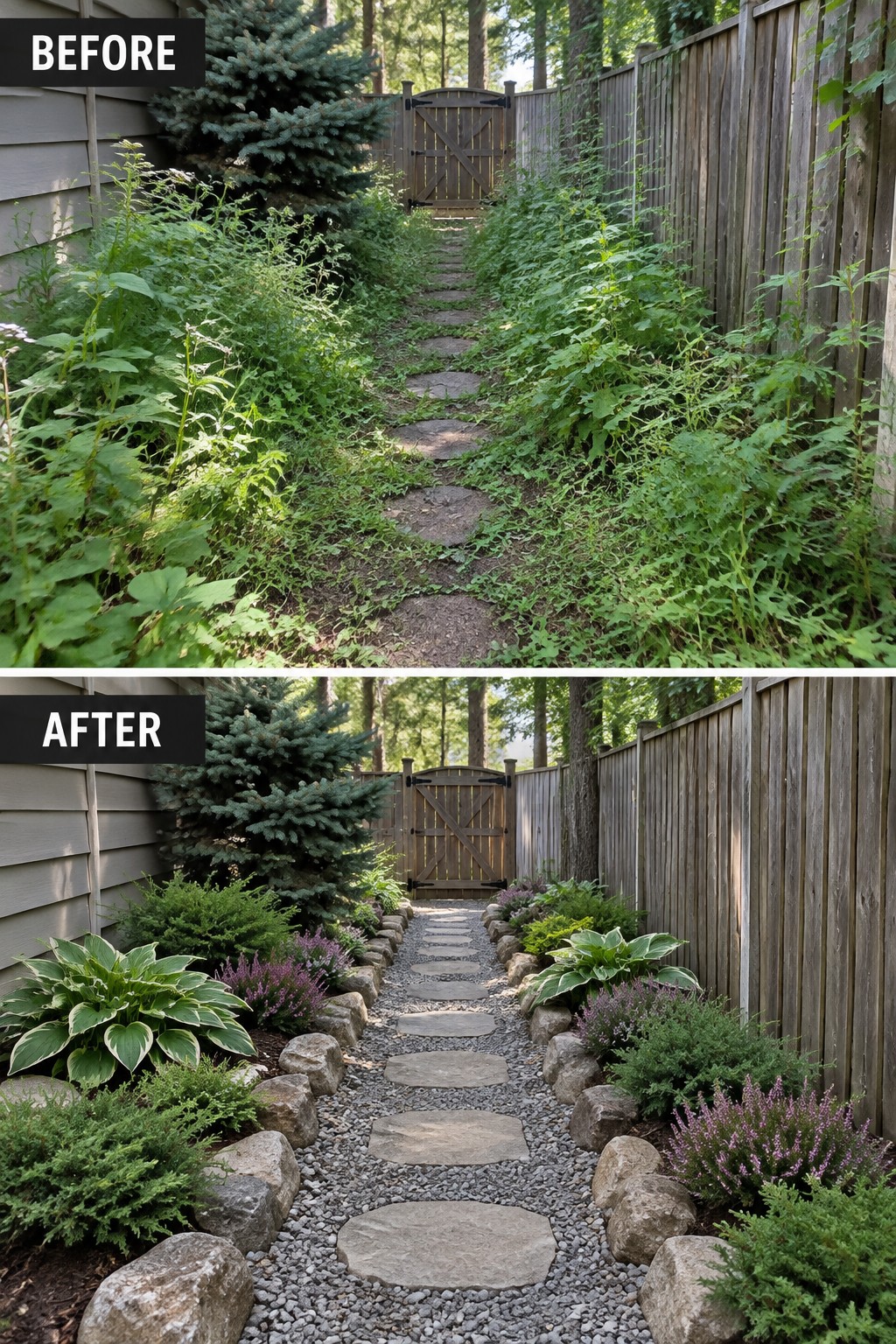
An overgrown path can make a narrow side yard hard to use. Replacing the weeds with gravel and stepping stones gives the route a clear shape, while large rocks help keep the planting beds in place.
This approach works well between a house and fence, where there may not be room for a wide walkway. Clear the growth first, then choose stones that leave comfortable space to walk; keep evergreen shrubs and other plants low enough that they do not spill back onto the path.
Build A Tiered Rock Garden On A Slope

A bare, uneven slope can be hard to maintain and prone to washing out. Large rocks set in low tiers give the hillside more structure, while evergreen shrubs and groundcover fill the spaces between them.
Start by clearing loose debris and planning where the rock rows will sit. Choose sturdy stones and plants suited to the slope and local conditions, and leave enough room for plants to spread without blocking access or drainage.
Add A Rock Garden Border To A Bare Lawn

A narrow rock garden border gives an open lawn a clearer edge and makes the yard feel more planned. Here, large boulders and evergreen shrubs replace a patch of bare soil, while purple flowers add a little color.
This idea works well along a patio or lawn where you want a defined planting area without taking up much space. Use a few large rocks as focal points, then leave room between plants so the border stays easy to maintain.
Create A Neat Rock Garden Around The Mailbox
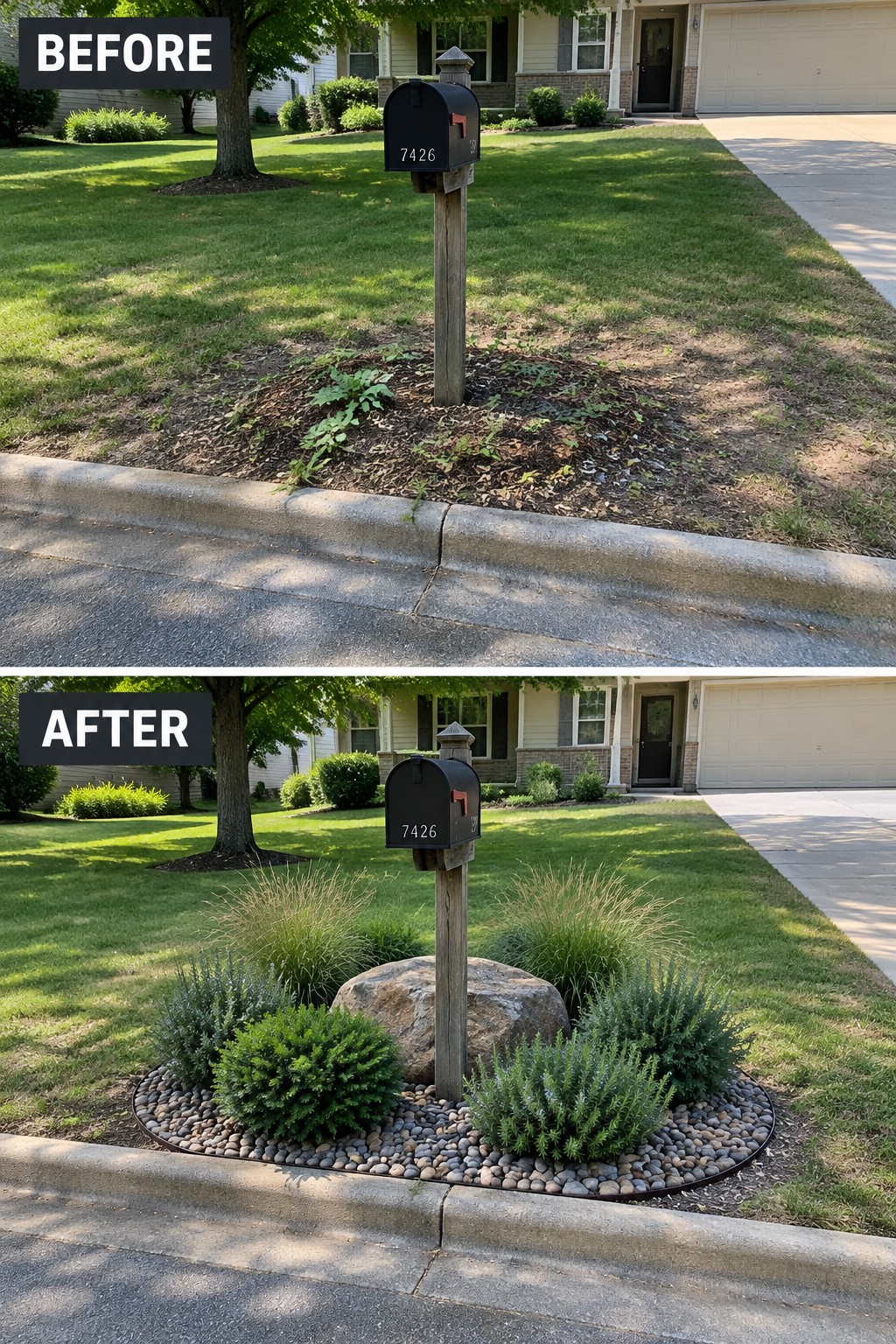
A bare, weedy patch around a mailbox can make the front yard look unfinished. A small oval bed filled with river rocks and a few shrubs gives the area a clear shape and makes the mailbox feel like part of the landscaping.
Keep the planting simple so the bed stays easy to maintain. A large rock can serve as a focal point, while low evergreen shrubs and grasses add structure without blocking access to the mailbox.
Turn A Woodland Trail Into A Stone Path

Replacing tangled brush with stepping stones gives this narrow garden route a clear shape while keeping it natural. The large boulders and evergreen shrubs help the path feel settled into the landscape rather than laid across it.
For a similar spot, clear the route first, then place flat stones with comfortable gaps for walking. Keep the path wide enough to use easily, and leave room around the rocks so shrubs can grow without crowding the way.
Replace A Patchy Lawn With A Rock Garden
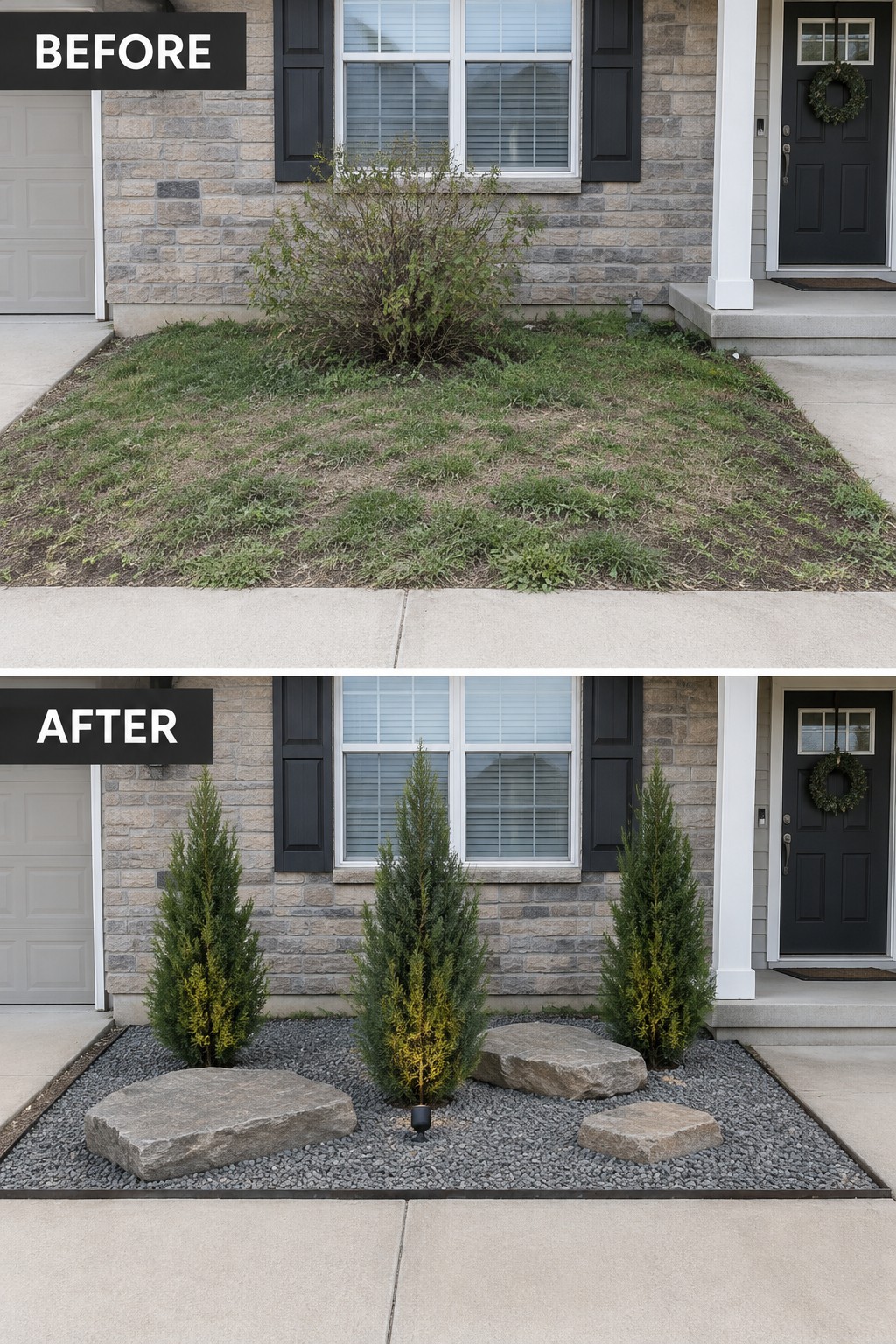
A simple rock garden can give a neglected foundation bed a cleaner, more deliberate shape. Here, the patchy grass is replaced with gravel, a few large rocks, and upright evergreen shrubs, so the area looks planned without needing a lot of different plants.
This idea works well in a small front yard where lawn is difficult to keep healthy. Clear out weeds first, then lay landscape fabric if appropriate and choose gravel and shrubs suited to your climate. Leave enough room for the plants to grow, rather than crowding them between the rocks.
Add Structure To A Narrow Side Yard
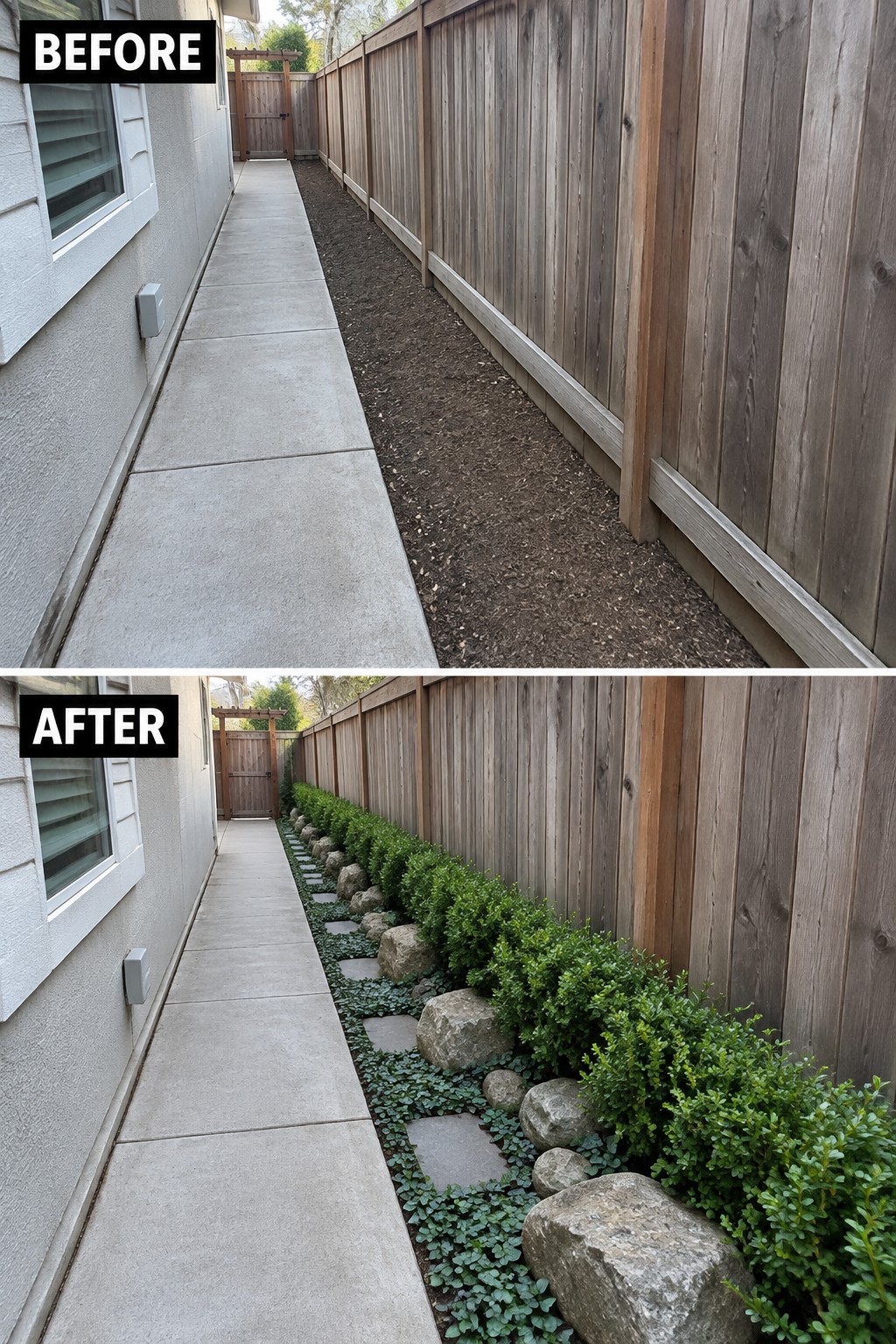
A narrow strip beside the house can look unfinished when it is left as bare soil. A simple border of large rocks and evergreen shrubs gives the space a clear shape, while low ground cover fills in around the stepping stones.
This idea works well in side yards where space is limited but a path still needs to stay easy to use. Keep the shrubs trimmed and leave enough room around each stone so the route stays clear.
Give Raised Garden Beds A Clean, Defined Edge
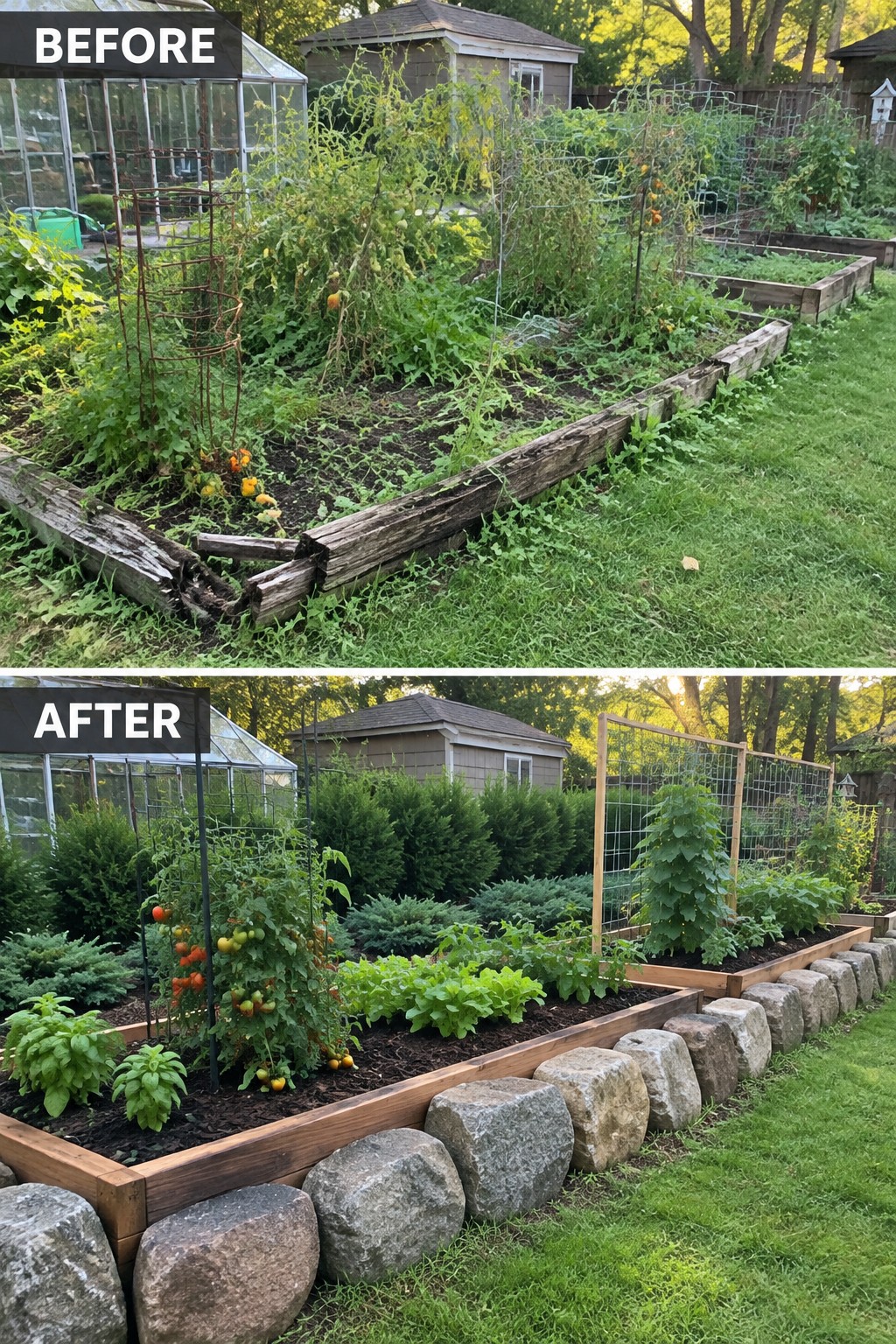
The overgrown vegetable bed looks more orderly once the planting area has a clear edge. Fresh boards and large stones define the bed, while a layer of dark mulch makes the plants easier to see and the garden simpler to maintain.
This approach works well in a busy backyard where vegetables and other plants need room to grow without spilling into the lawn. Clear out weeds first, then choose sturdy edging that suits the space and leave enough room to reach the plants.
Make A Backyard Pond Feel Part Of The Garden

A pond can look out of place when its edge is just a thin line of scattered stones. Here, larger boulders and grouped evergreen shrubs give the water a clear, natural-looking border and make the garden feel more planned.
For a similar look, arrange a few larger rocks along the pond edge, then use evergreens to add structure behind them. Leave enough space between plants for them to grow, and keep the stones low enough that they do not block the view of the water.
Add Evergreen Structure Along A Fence
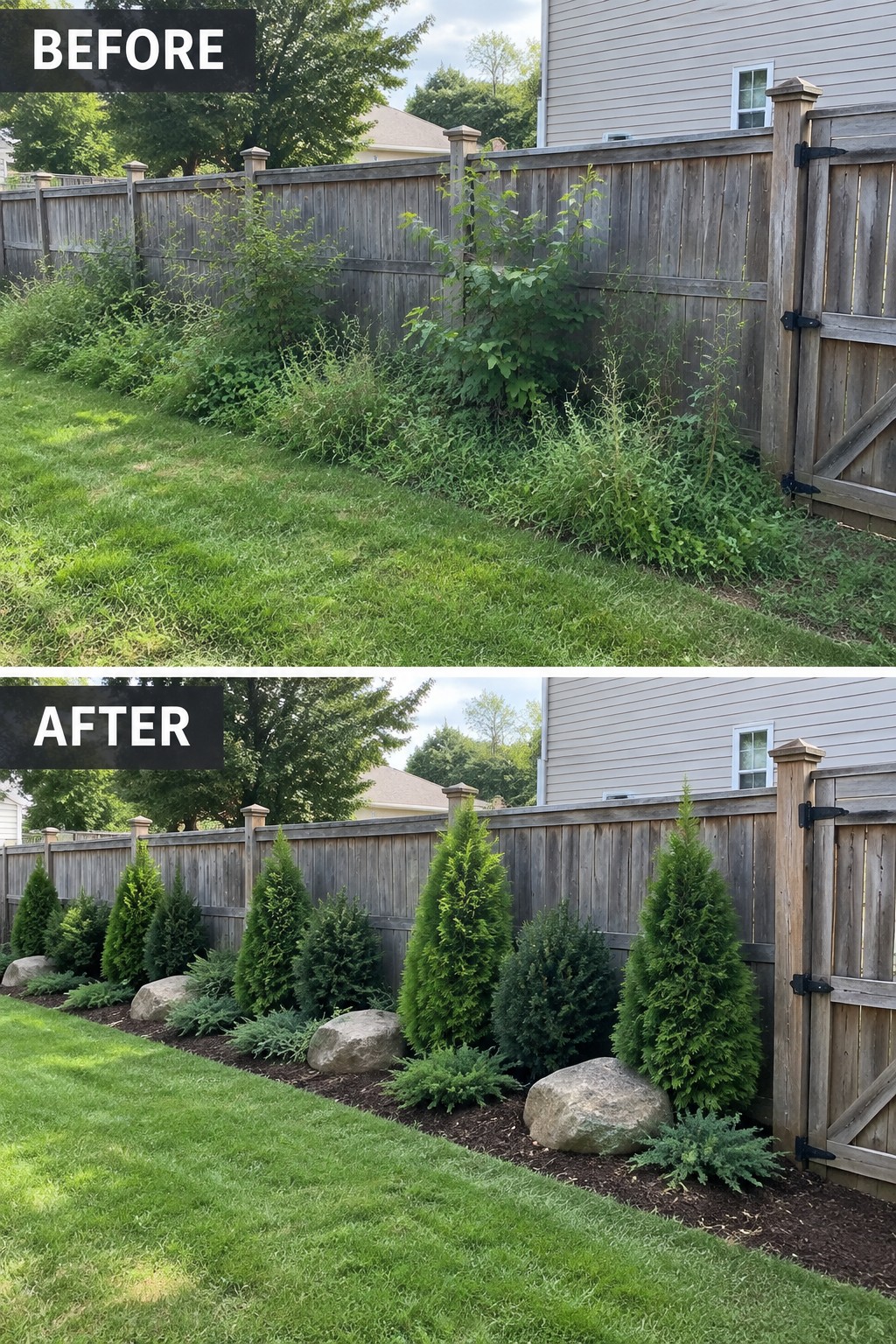
Replacing an overgrown fence line with a simple row of evergreen shrubs and large rocks gives the yard a clearer shape. The plants provide year-round greenery, while the rocks help make the bed look intentional.
Start by clearing unwanted growth, then leave enough space between shrubs for their mature size. A mulched bed can keep the edge tidy, but avoid packing in too many plants or rocks.
Build Stone Steps Into A Sloped Yard
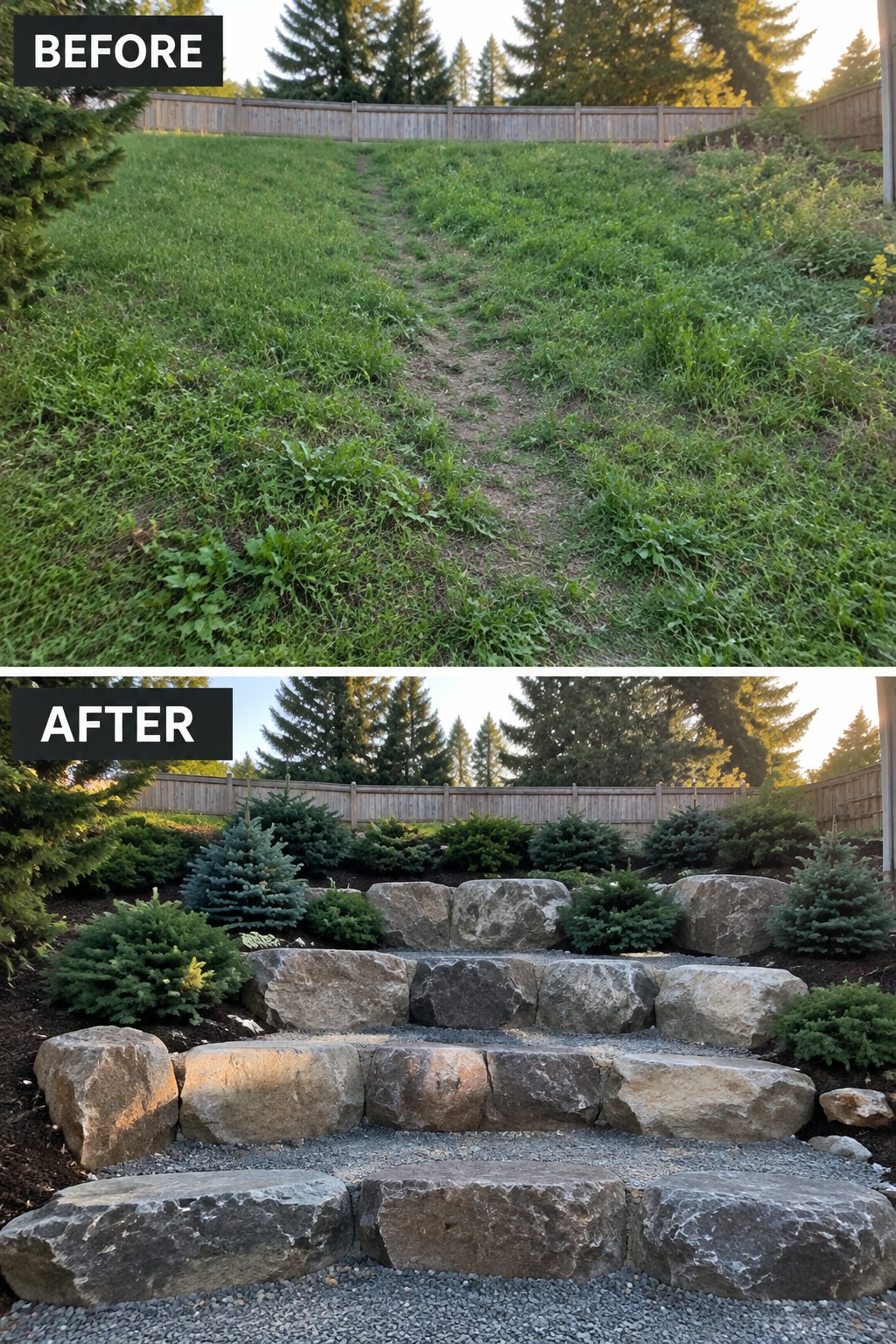
A worn dirt track can be hard to use and leaves a slope looking untidy. Broad stone steps give the hill a clear route, while evergreen shrubs help the rocks feel settled into the garden.
For a similar yard, plan the step width and rise around comfortable footing, and make sure the stones are properly supported. Keep plantings low beside the path so they do not crowd the stairs.
Frequently Asked Questions
Q: How do I keep large boulders from looking out of place in a small yard?
A: Use just a few rocks and partially bury each one so it looks settled into the ground. Plant low evergreen shrubs around them, leaving enough open space that the yard doesn’t feel crowded.
Q: What evergreen shrubs work well beside boulders?
A: Choose compact shrubs that suit your climate and the amount of sun the spot gets. Dwarf junipers and small mugo pines are popular choices because they stay low and pair naturally with stone.
Q: Should I put landscape fabric under a boulder planting?
A: Usually, no. Fabric can make it harder to add plants or refresh the soil later, and weeds can still grow in the gaps. A layer of mulch and a little hand weeding are often simpler.
Q: How can I keep weeds from growing around the rocks?
A: Clear weeds before planting, then spread mulch between the shrubs and boulders. Keep mulch a few inches away from shrub stems so they don’t stay damp.
