


A backyard pond can feel unfinished when the edges look scattered or the surrounding plants have no clear shape.
I like how boulders can give the water a more natural border while helping the whole yard feel grounded and cared for.
The right placement also makes a pond easier to enjoy, whether it creates a simple path to the water or a quiet spot to sit nearby.
Small changes in stone size, spacing, and planting can make a noticeable difference without reworking the entire yard.
I’d save a few ideas to adapt to the pond’s shape, the slope, and the stones already on hand.
Build A Rock Waterfall Around The Pond

The pond goes from having an exposed liner and uneven edges to a more finished landscape with a boulder waterfall. The rocks give the water a clear focal point and help the pond edge look more natural.
For a similar backyard, arrange boulders to create a low cascade rather than stacking them too high. Leave the pond pump and liner accessible for maintenance, and use plants sparingly so they do not crowd the water.
Stabilize The Pond Edge With Boulder Terracing

A bare, sloping pond bank can erode and is difficult to plant. Large boulders set in low terraces give the shoreline more structure, and the planted sections help it look like part of the yard rather than a steep, exposed slope.
For a similar bank, follow the pond’s curve and keep the stone placement secure, especially near the water. Leave pockets for plants suited to damp conditions, but avoid crowding the edge so it stays easy to maintain.
Replace A Hard Pond Edge With Natural Stone

The plain concrete border around a backyard pond can feel stark and unfinished. Replacing it with rounded stones gives the water’s edge a more natural look and helps the pond sit comfortably within the yard.
For a similar update, use stones suited to the pond’s scale and secure the edge so they stay in place. Leave enough room to move safely around the water, and keep the planting simple so the stone border remains clear.
Add A Clear Path Along The Pond

A simple stepping-stone path turns an overgrown pond edge into a place that’s easier to walk beside and enjoy. In the updated yard, large flat stones sit in a defined route, while gravel and low plants help keep the muddy bank from looking untidy.
Use broad, stable stones that are easy to step on, and leave enough room between them for a comfortable stride. This works well along a small backyard pond, but avoid placing stones where they could shift or make the path slippery.
Use Boulders To Create A Planted Pond Edge

Replacing the bare, uneven bank with large boulders gives the pond edge a clearer shape and helps hold the soil in place. Ferns and other pondside plants tucked between the rocks make the border feel like part of the garden rather than a loose strip of dirt.
For a similar look, set the larger stones first and arrange them at slightly different heights, then add plants suited to damp soil around the gaps. Leave enough open space to reach the water and avoid crowding the pond with too many rocks.
Create A Seating Area Beside The Pond

A muddy, unused pond edge can become a practical place to sit when you shape it into a small outdoor living area. Here, a gravel seating space and simple built-in bench make the pond feel connected to the yard instead of leaving a bare, worn bank.
For a similar setup, choose a level spot near the water and use gravel or another permeable surface underfoot. Place sturdy seating where people can enjoy the pond, but leave enough clear space to walk along the edge.
Turn A Bare Pond Edge Into A Dry Creek Bed

Replacing the weedy slope beside a pond with a rock-lined channel gives the yard a clearer shape and helps manage runoff from the house. In this makeover, the stones define a route down to the water, while a small log bridge makes the channel feel like part of the garden.
Use a mix of small river stones and a few larger boulders to keep the creek bed from looking too uniform. Check where rainwater naturally flows before placing the rocks, and leave enough room around the pond edge for access and maintenance.
Use Low Lighting To Highlight The Pond Edge

The pond feels more planned when its rocky edge is easy to see after dark. In the after photo, small lights tucked near the boulders draw attention to the water without changing the pond’s simple shape.
For a similar effect, place low-voltage lights beside a few key rocks and aim them toward the water or nearby plants. Keep the fixtures spaced out so the pond stays the focus, and make sure cords and equipment are suitable for outdoor use.
Add Stone Steps To A Sloped Pond Edge

The steep, overgrown bank is reshaped into broad stone steps, making the pond edge look more organized and easier to manage. The stones give the slope a clear structure while leaving room for low plants between them.
This approach works well when a pond sits below a lawn or along a hillside. Set the stones securely and keep planting low around the steps so the edge stays visible and water can still drain properly.
Add A Planted Border Along The Pond

A bare lawn edge can make a backyard pond feel unfinished. A curved planting bed with a few large boulders gives the shoreline a clear shape and brings the garden right up to the water.
Keep taller grasses and flowers toward the back, with lower plants near the front so the pond stays visible. Leave room to walk along the lawn, and choose plants suited to damp conditions if the soil near the water stays wet.
Stabilize An Eroding Pond Bank With Boulder Terracing

The exposed soil along a pond can keep washing away, leaving a ragged edge that is hard to maintain. Large boulders set along the bank create a sturdier boundary, while plants tucked between them help the edge feel like part of the garden.
For a similar yard, start by addressing the erosion and make sure the stones are sized and placed securely for the slope. Ferns and other suitable plants can fill the gaps, but leave room to reach the water and maintain the pond.
Add A Waterfall To Make The Pond A Focal Point

A plain pond edge can feel unfinished, even when the water itself takes up plenty of space. A low rock waterfall gives the pond a clear feature and adds movement, while the surrounding plants help it fit naturally into the yard.
For a similar setup, build the cascade along one side rather than crowding the whole pond with stone. Check that the pump can keep water moving steadily, and leave enough open edge to reach the pond for cleaning.
Add A Gravel Border Along The Pond

A narrow gravel border gives a bare pond edge a cleaner, more finished shape. Here, the loose soil was covered with small stones and low shrubs were planted along the boulders, making the strip between the patio and water look planned rather than neglected.
For a similar result, define the border first and keep it wide enough to maintain without spilling onto the patio or into the pond. Choose gravel that suits the surrounding stone, and leave room for plants to grow without blocking access to the water.
Turn A Plain Pond Edge Into A Fern-Lined Waterfall

A bare, leaf-covered strip beside a pond can feel unfinished. Here, boulders shape a small waterfall, while ferns fill the gaps and make the pond edge feel like part of the garden.
For a similar look, build the stones into a stable, stepped arrangement and tuck moisture-loving plants around them. Keep the spillway modest and leave access to the pond clear, especially in a narrow side yard.
Protect An Eroding Pond Bank With Rocks

The exposed bank in the before photo has worn away around the drain pipe. Large rocks and gravel help hold the soil in place, while clumps of pond plants give the edge a more established look.
For a similar spot, set the larger stones along the slope and use smaller gravel where water runs toward the pond. Make sure the drain can still flow freely, and choose plants suited to wet soil so their roots can help secure the bank over time.
Turn An Eroding Pond Edge Into A Sandy Shore

The bare, uneven bank in the before photo gives way to a small sandy shoreline, with boulders and grasses helping define the edge. This approach makes the pond bank look more intentional while giving the water a softer transition to the lawn.
For a similar yard, use boulders to help hold the bank in place and choose plants suited to the site’s moisture and sun. Keep the sandy area modest, and check local pond or shoreline rules before changing the water’s edge.
Create A Fire Pit Seating Area Beside The Pond

A bare patch beside a pond can become a useful place to sit when you give it a clear purpose. Here, the muddy ground is replaced with a gravel area centered on a stone fire pit, making the space feel planned instead of leftover.
For a similar yard, choose a spot with room to move around the fire pit and keep seating far enough from the water’s edge. Gravel can help define the area, but check that the base drains well and stays stable underfoot.
Add A Planted Border Along The Pond
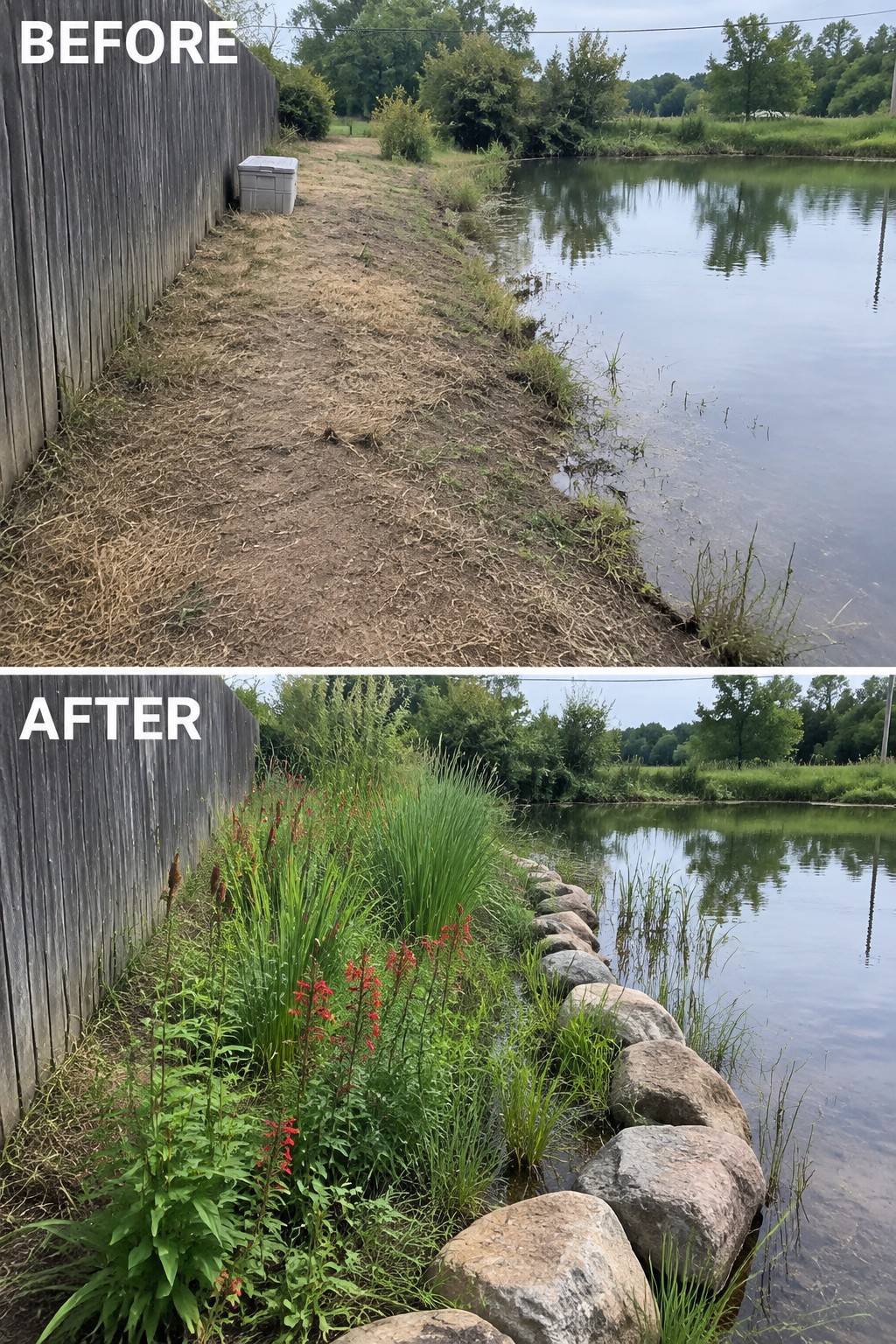
A bare pond bank can look unfinished and leave the soil exposed. Planting a border and setting boulders along the water’s edge gives the shoreline a clearer shape while helping hold the bank in place.
Use moisture-tolerant plants near the water, leaving enough space for them to grow without blocking access. The same approach works well beside a fence or along a sloped pond edge, but avoid packing plants too tightly.
Add A Rock Waterfall To A Backyard Pond

A bare pond edge can look unfinished, even when the water itself is clear. Here, boulders and plants reshape the edge, while a small waterfall gives the pond a clear focal point and brings movement to the water.
For a similar look, build the cascade from stones that fit the scale of your pond, and make sure the water can circulate safely over them. Keep planting low near the water so the rocks stay visible and the pond remains easy to reach.
Add Stone Steps To A Sloped Pond Edge
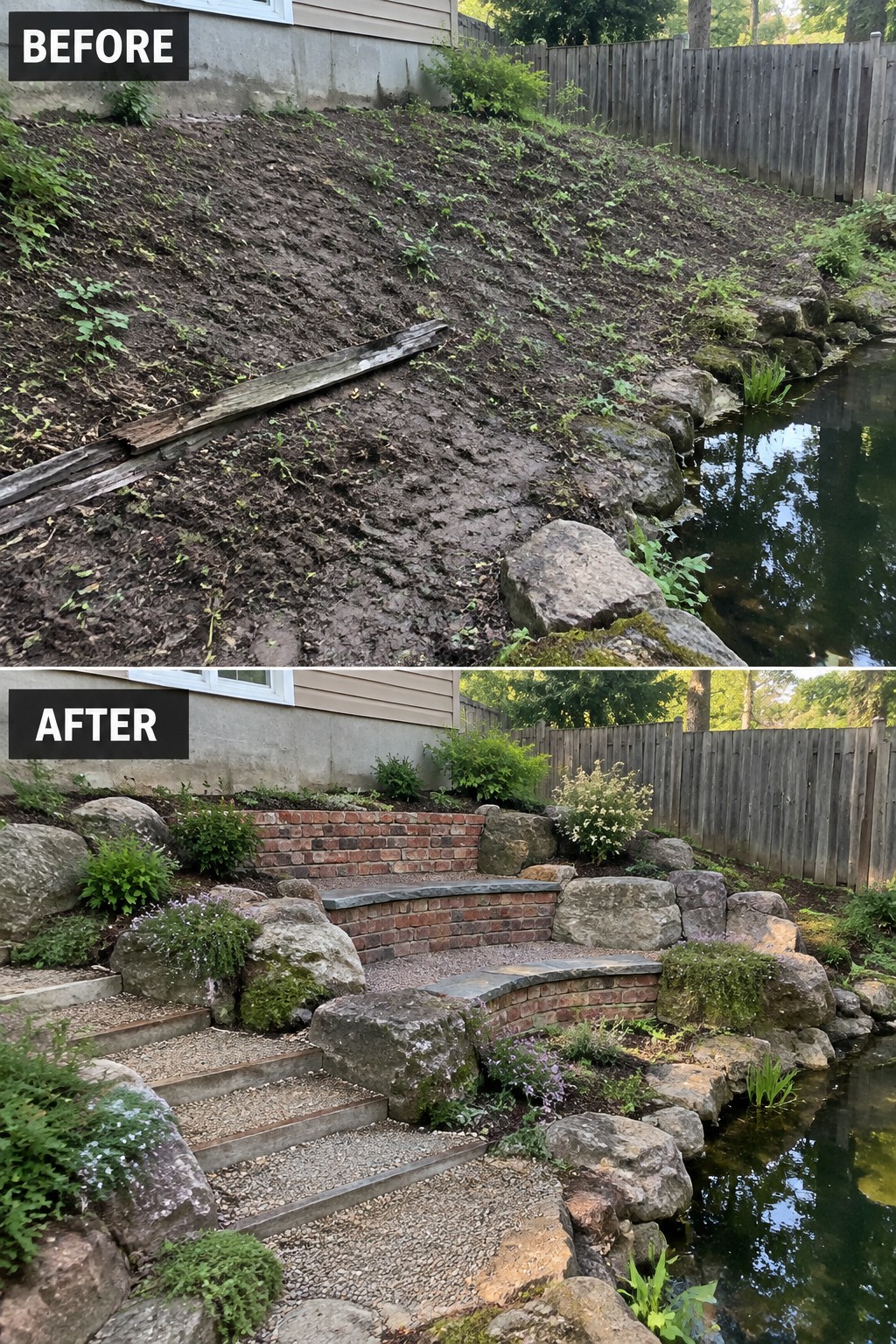
A steep, muddy bank can be hard to walk on and difficult to keep in place. Adding stone steps and short retaining walls gives the slope a clear route down to the pond while helping hold the soil. Here, gravel-filled steps replace part of the bare bank.
This idea works well where a pond sits below the rest of the yard. Keep each step wide enough for a comfortable footing, and make sure the retaining structure is suited to the slope and soil conditions. Planting between the rocks can help the finished edge feel at home in the garden.
Replace A Bare Pond Edge With A Planted Boulder Border
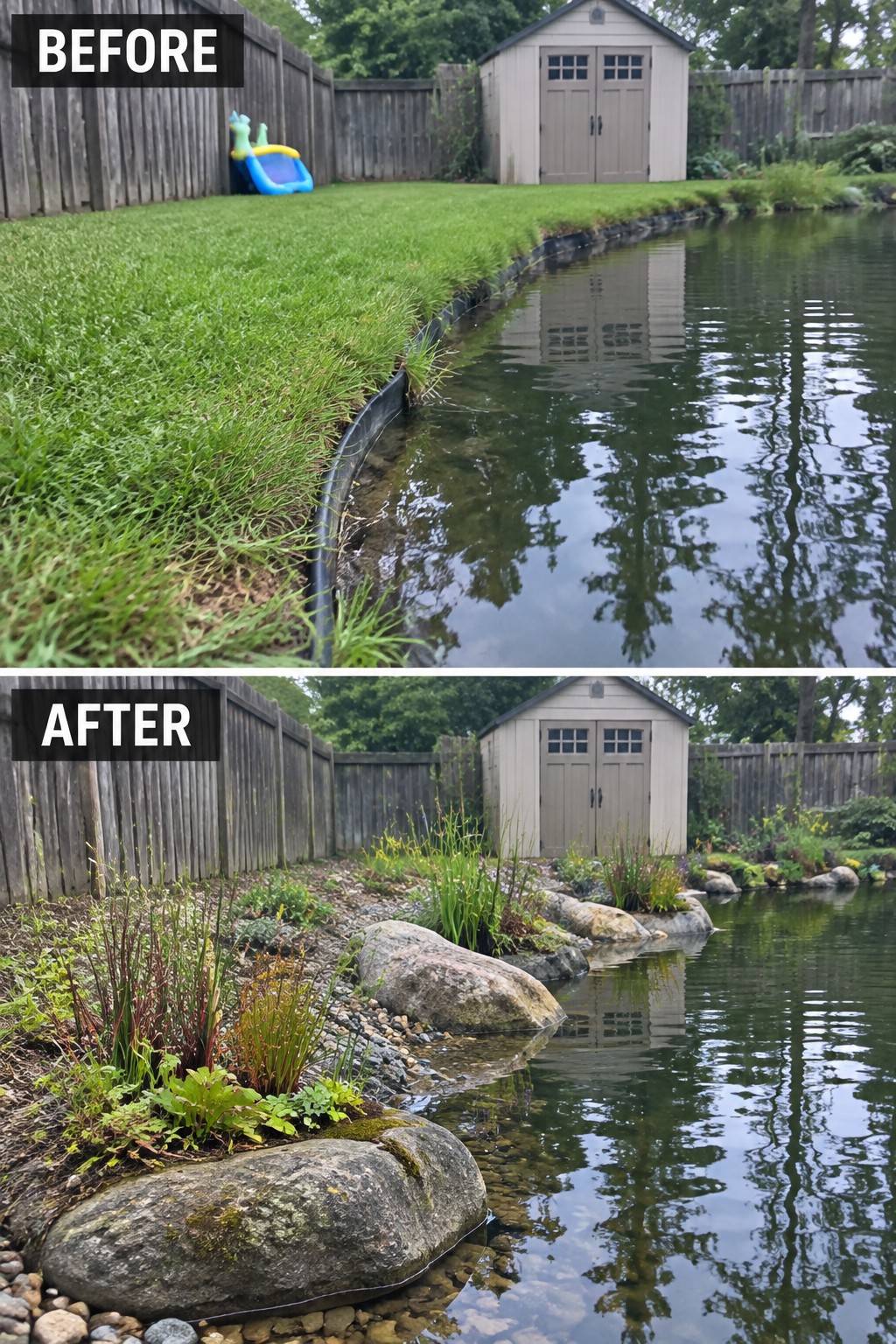
The grassy bank gives way to a more defined pond edge, where large boulders and plants help the shoreline look planned and natural. This approach also breaks up a long stretch of lawn right beside the water.
For a similar effect, place a few substantial stones along the bank and add pond-friendly plants between them. Keep the stones secure and leave enough room for plants to grow without blocking access to the water.
Add Structure To A Pondside Garden

The pond edge looks more planned when loose, overgrown planting gives way to a defined gravel bed and a simple row of small trees. This approach tidies the area beside the water without hiding the pond behind a dense mix of plants.
Start by clearing back crowded growth, then choose a few plants that suit the pond’s conditions and leave room for maintenance. Repeating a small number of shapes or varieties can make the border feel orderly, especially in a compact backyard.
Make A Clear Gravel Path To The Pond

A defined path makes a pond easier to reach and gives an overgrown area a clear shape. Here, loose stepping stones are replaced with a continuous gravel walkway edged in rocks, so the route feels steadier and more intentional.
For a similar path, clear the weeds first, then lay a compacted base and add gravel with a simple stone edge. Keep the walkway wide enough to pass comfortably, and choose materials that suit the garden and won’t wash toward the pond.
Frequently Asked Questions
Q: How do I keep boulders from shifting around the edge of a pond?
A: Set each boulder on firm, compacted ground rather than loose mulch or soft soil. Partly burying the bottom helps it stay put and makes the placement look more natural.
Q: Will rocks around my pond make it harder to care for?
A: They can if they leave lots of narrow gaps where leaves and debris get trapped. Leave a clear path for pond maintenance, and keep the water’s edge easy to reach.
Q: What plants work well between boulders by a pond?
A: Choose plants that suit the dampness and sunlight in that spot, such as low-growing sedges or creeping ground covers. Keep them far enough from the water that they won’t spread across the pond edge.
Q: Can I use large boulders in a small backyard pond area?
A: Yes, but use a few well-placed stones rather than crowding the pond with them. Smaller surrounding plants can soften the scale.
