


I often find that starting with a clear structure of heights and spreads makes the whole planting feel more settled from the start.
In my experience the lower layers of native ground covers help keep the soil in place while the mid and upper layers add the visual depth people notice first when they step outside.
Once the plants begin to knit together the edges along paths require less maintenance than I expected at first.
Many yards look promising in the first year but the real test comes when the layering starts to influence how water moves and how weeds stay out.
It is worth trying on a small section first.
Layered Planting In Raised Beds
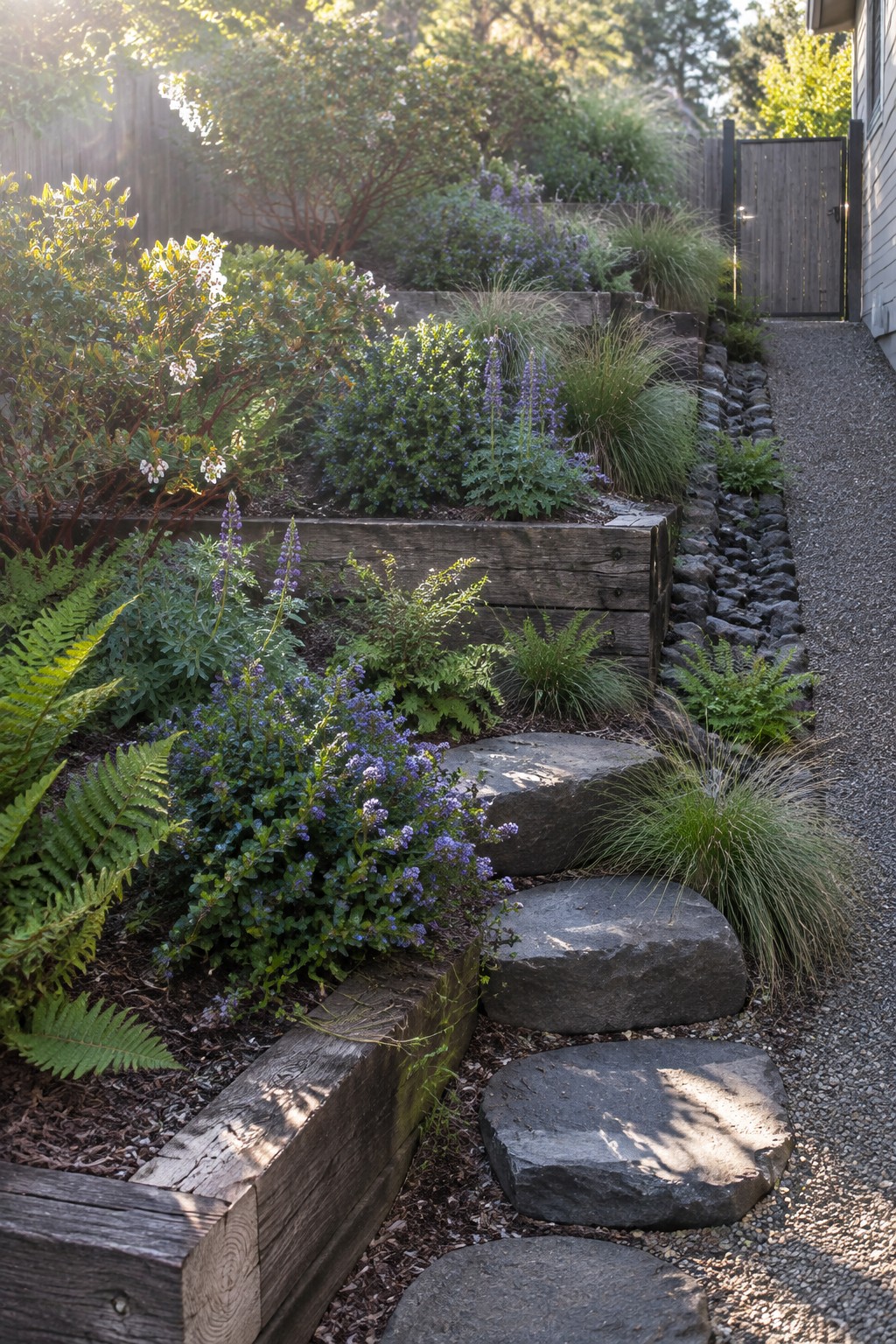
Raised beds make it easier to build layers with native plants at different heights. You can place taller shrubs toward the back, mid-size flowering plants in the middle, and lower ferns or ground covers along the front edge so everything stays visible and full.
This works especially well on sloped lots or beside a path where you need structure without a flat look. Use simple wood edging and local plant choices so the beds stay low-maintenance and blend into the rest of the yard over time.
Layered Planting Along Curved Paths
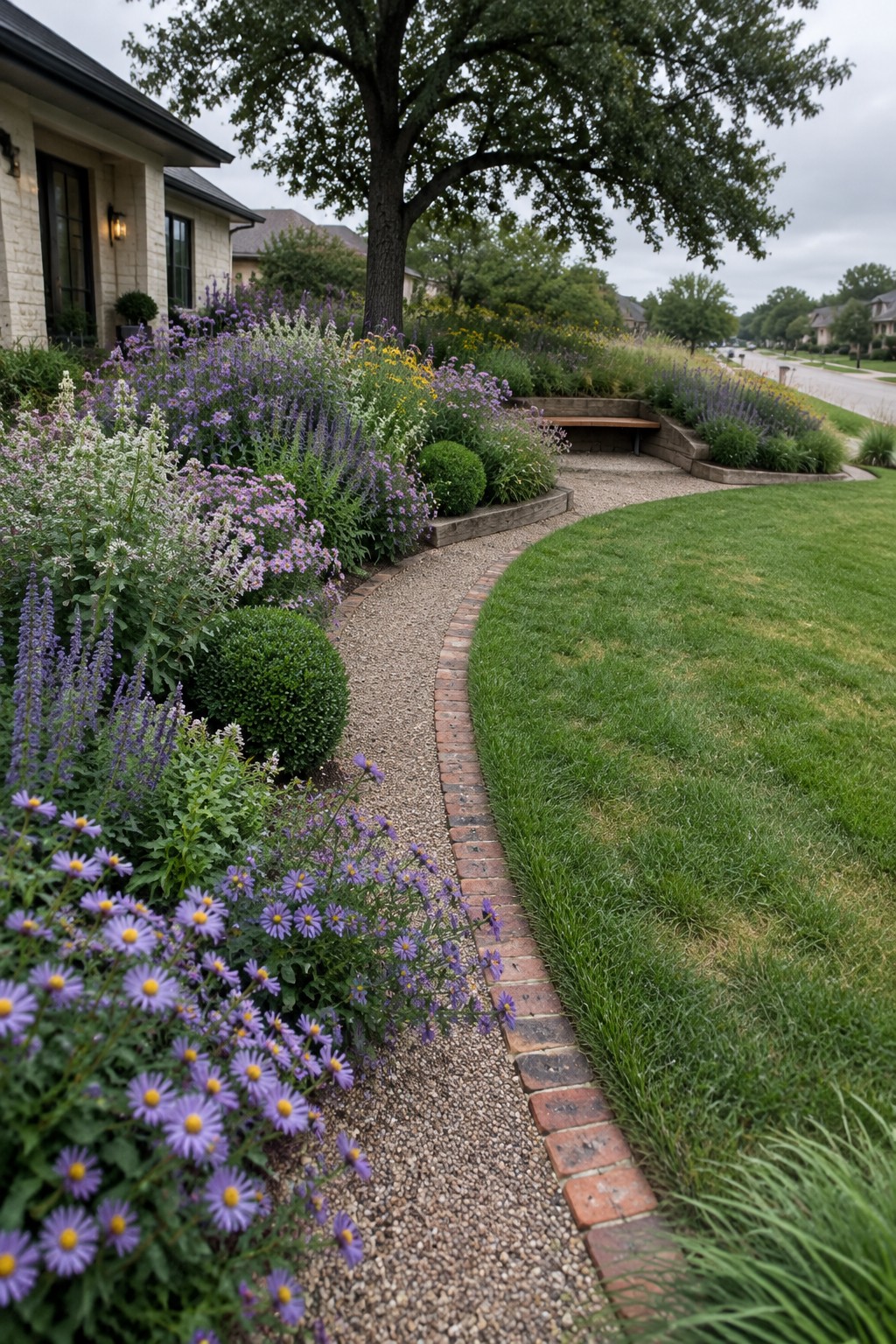
One simple way to make a path feel more natural is to plant in layers right beside it. Low flowers spill over the edge while taller stems rise in the middle and back, creating a soft border that changes through the seasons.
This approach works best on homes with some yard space where you can let plants grow a bit loose. Stick with native perennials that handle your local conditions, and let the path curve gently so the planting feels like it belongs there rather than sitting in a straight line.
Layered Native Planting By The Pool

One way to soften a pool edge is to use layered native plants instead of a sharp line of lawn or paving. Different heights and textures create a gradual shift from water to garden that feels more natural and less abrupt.
This works best in spaces with room for depth, where you can place taller plants toward the back and let shorter ones move forward. Gravel along the base helps with drainage and keeps maintenance low while the plants do most of the visual work.
Layered Native Beds With Stone Edging

Layering native plants in different heights gives a path a settled, natural look instead of a planted border that feels added on. Low groundcovers and ferns sit in front, medium grasses and flowers fill the middle, and taller shrubs and trees rise behind. Rough stones hold the edge without cutting a sharp line.
This approach works best in shady or wooded yards where you want the garden to feel like part of the existing landscape. Pick plants suited to your area and let the layers fill in over a season or two so the whole bed stays low maintenance.
Layer Plants By Height For Natural Depth

Layering plants by height gives a garden bed that full, settled look without feeling crowded. Taller shrubs and grasses sit toward the back, mid-level perennials fill the middle, and lower growers spill along the edges, so the whole planting reads as one connected mass rather than separate clumps.
This approach works well along walkways and entry steps because it softens the hard lines while still leaving room for movement. It suits homes with gravel or stone paths, since the lower plants can drape slightly over the edges without blocking access. Stick to a few repeating textures so the layers stay calm rather than busy.
Blend Seating Into the Landscape With a Curved Stone Wall
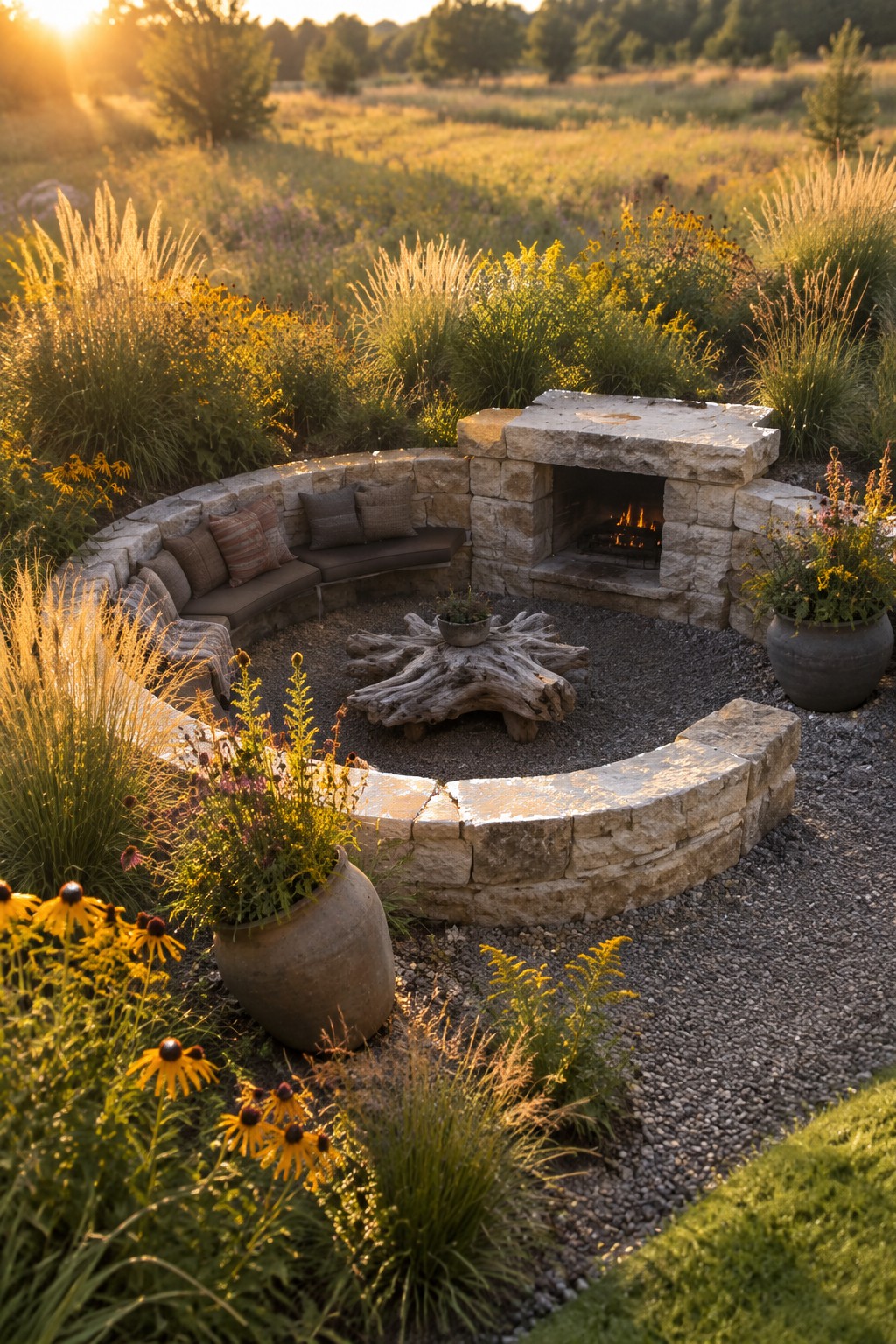
A low stone wall shaped in a gentle curve gives you a place to sit without making the area feel boxed in. The wall sits low enough that grasses and wildflowers can grow right up against it, so the seating blends into the rest of the planting instead of standing apart.
This approach works best in open yards where the goal is to keep a natural flow. Place the wall on a slight rise if you have one, then let the outer plantings stay loose and tall so they soften the edge and tie everything back into the surrounding meadow.
Layering Plants Along Entry Paths

Layering different heights and textures of plants makes a path feel like it belongs in the garden instead of cutting through it. Tall grasses at the back give height and movement, while shorter flowers fill in the middle and edge the walk with color.
This approach works best on homes with simple front paths or steps where you want soft borders without a lot of hard edging. Mix a few tall native grasses with mid-size perennials that bloom in sequence, and keep the lowest plants right along the concrete so the whole bed looks natural rather than arranged.
Layering Native Plants For Natural Texture
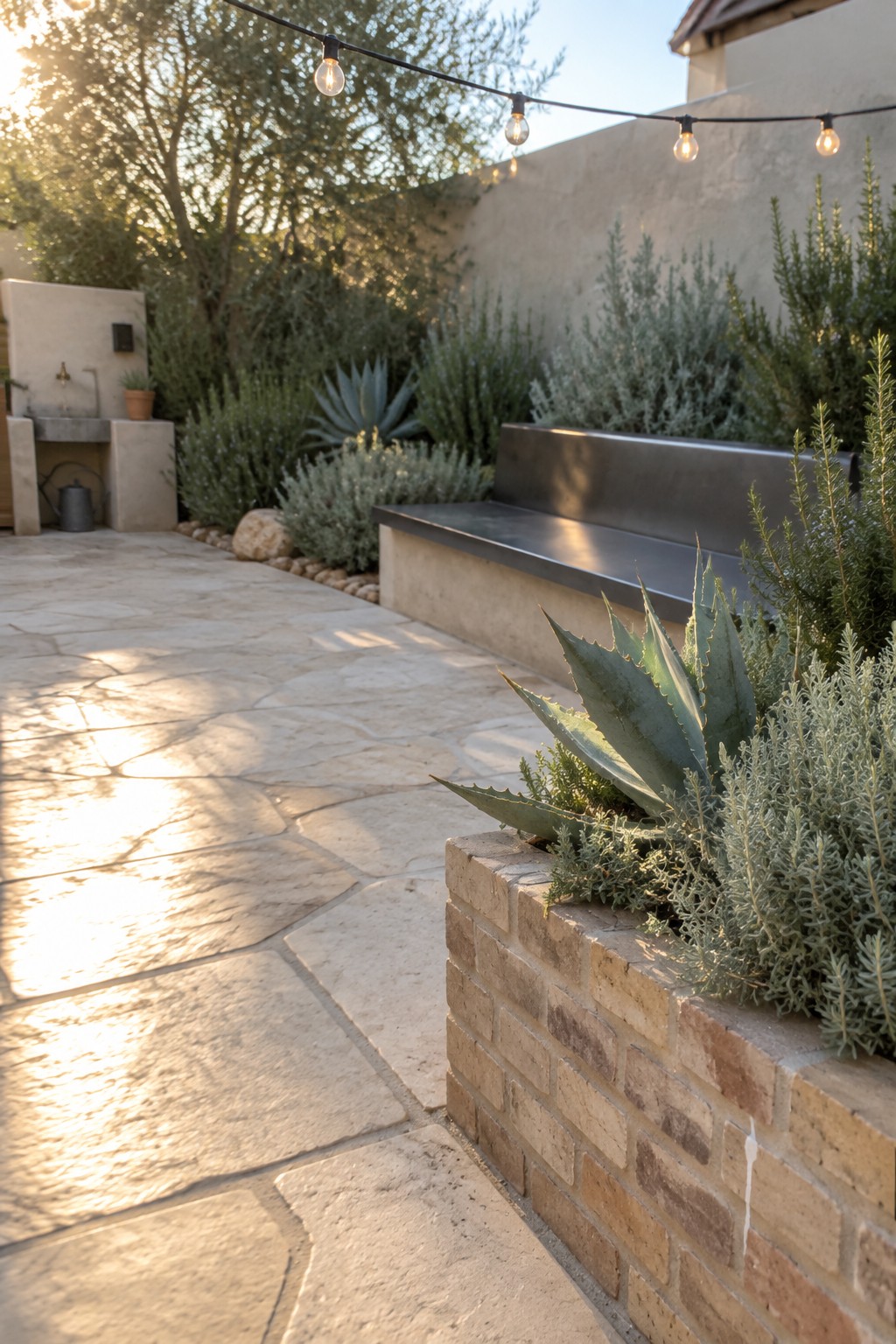
One simple way to make a garden feel more settled is to layer native plants by height and texture. Put taller shrubs or small trees toward the back, then medium bushes, and finally lower succulents or ground covers in front so the planting looks full without needing constant work.
This style works best in dry or sunny climates where water is limited. It suits homes with existing hardscape like stone paths or low walls, and it helps tie the built elements into the landscape over time. Give plants room to spread so the layers fill in on their own.
Layer Plants By Height Along Paths

Layering native plants by height gives a path a soft, full edge without looking messy. Taller stems sit toward the back while shorter flowers and foliage fill in the front, creating that gradual transition from ground to taller growth that feels natural over time.
This approach works well on homes with open yards or meadow-style areas where you want low maintenance and seasonal color. Stick to a few repeating species in groups rather than scattering everything, and keep the path itself simple so the planting stays the focus.
Layer Plants Along Pool Edges
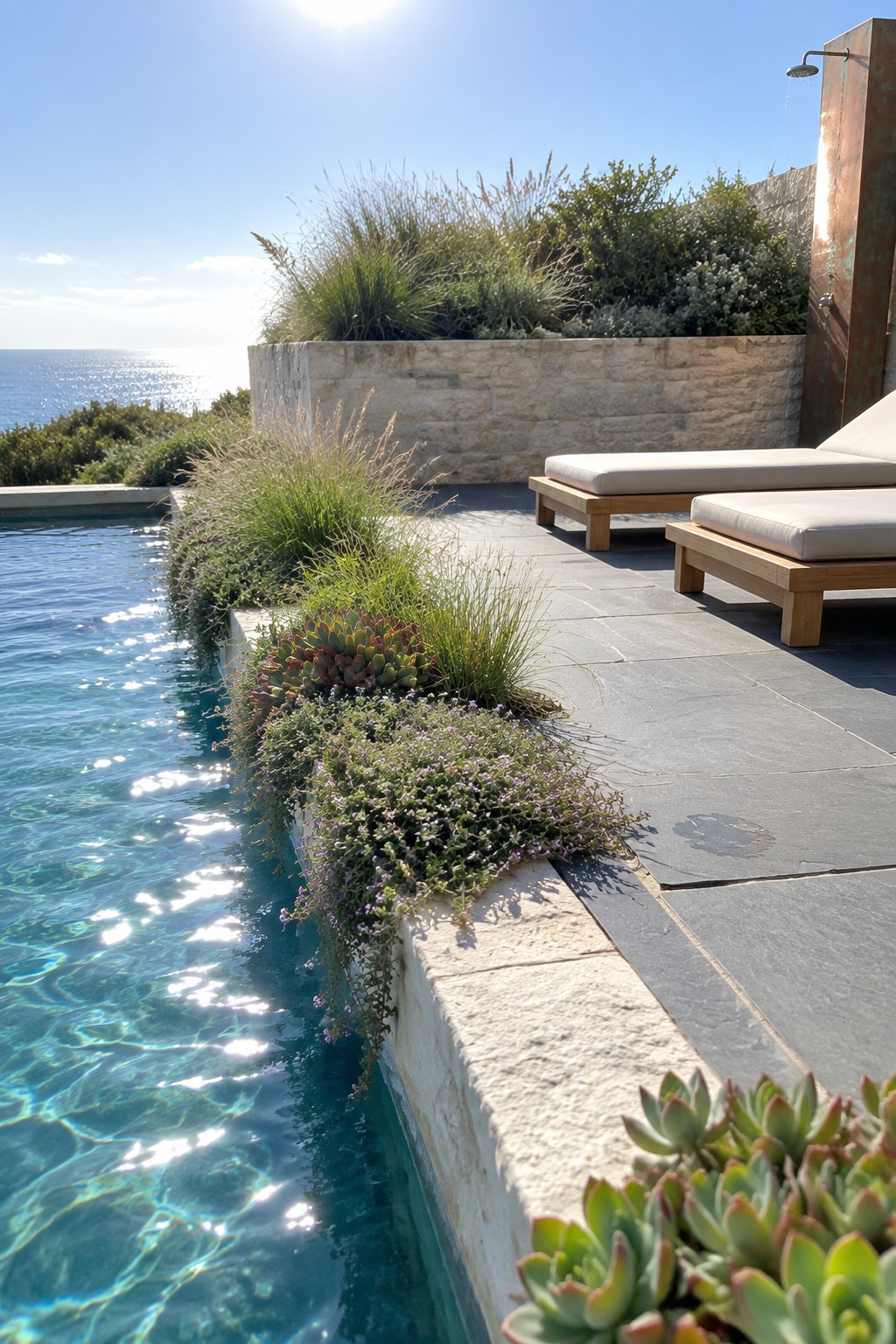
Layering plants right at the edge of a pool helps the water blend into the surrounding garden instead of ending in a hard line. A mix of low flowering ground covers, succulents, and taller grasses creates soft movement and texture that changes with the seasons.
This approach works best in sunny, well-drained spots where plants can spill slightly over the coping. Choose species suited to your climate and let them fill in naturally rather than keeping everything trimmed back.
Layer Plants by Height Along Paths
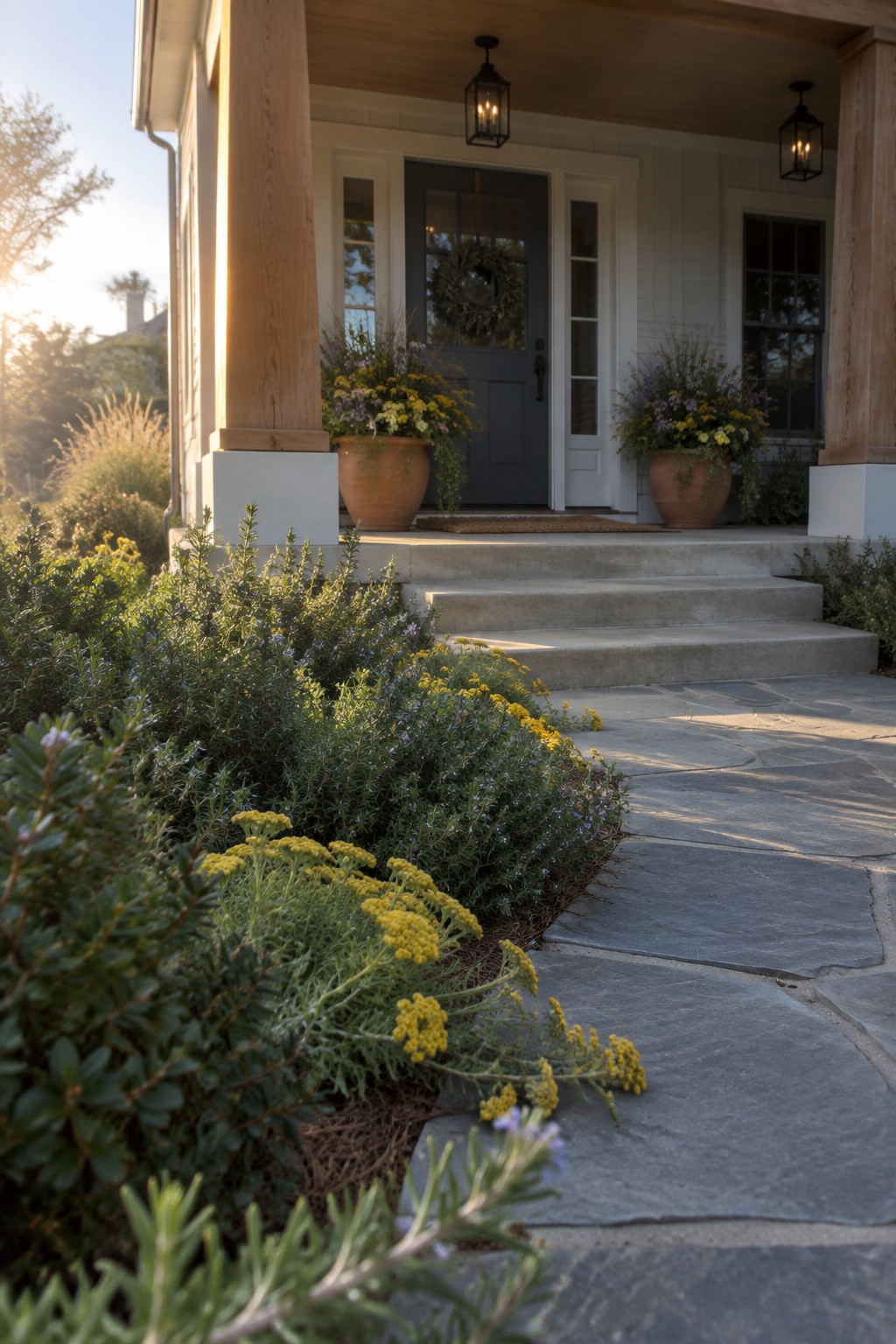
One simple way to make a path feel part of the garden is to plant in layers right along the edge. Low spreading shrubs sit closest to the stones, mid height perennials fill the middle, and a few taller plants add height behind them. The result looks full but still natural.
This approach suits homes with stone or gravel walks where you want a relaxed look. Use plants that match your climate so the beds stay neat with less watering and trimming over time.
Layer Native Plants in Raised Beds

One simple way to get a naturalistic look on a deck or rooftop is to use raised beds filled with layered native plants. Grouping taller flowers behind grasses and lower blooms creates depth in a small space without needing a full yard.
This approach suits urban homes where soil is limited. Pick natives that match your area, vary the heights, and keep the beds narrow enough so the plants stay easy to reach and maintain over time.
Layer Native Plants Along Stone Paths
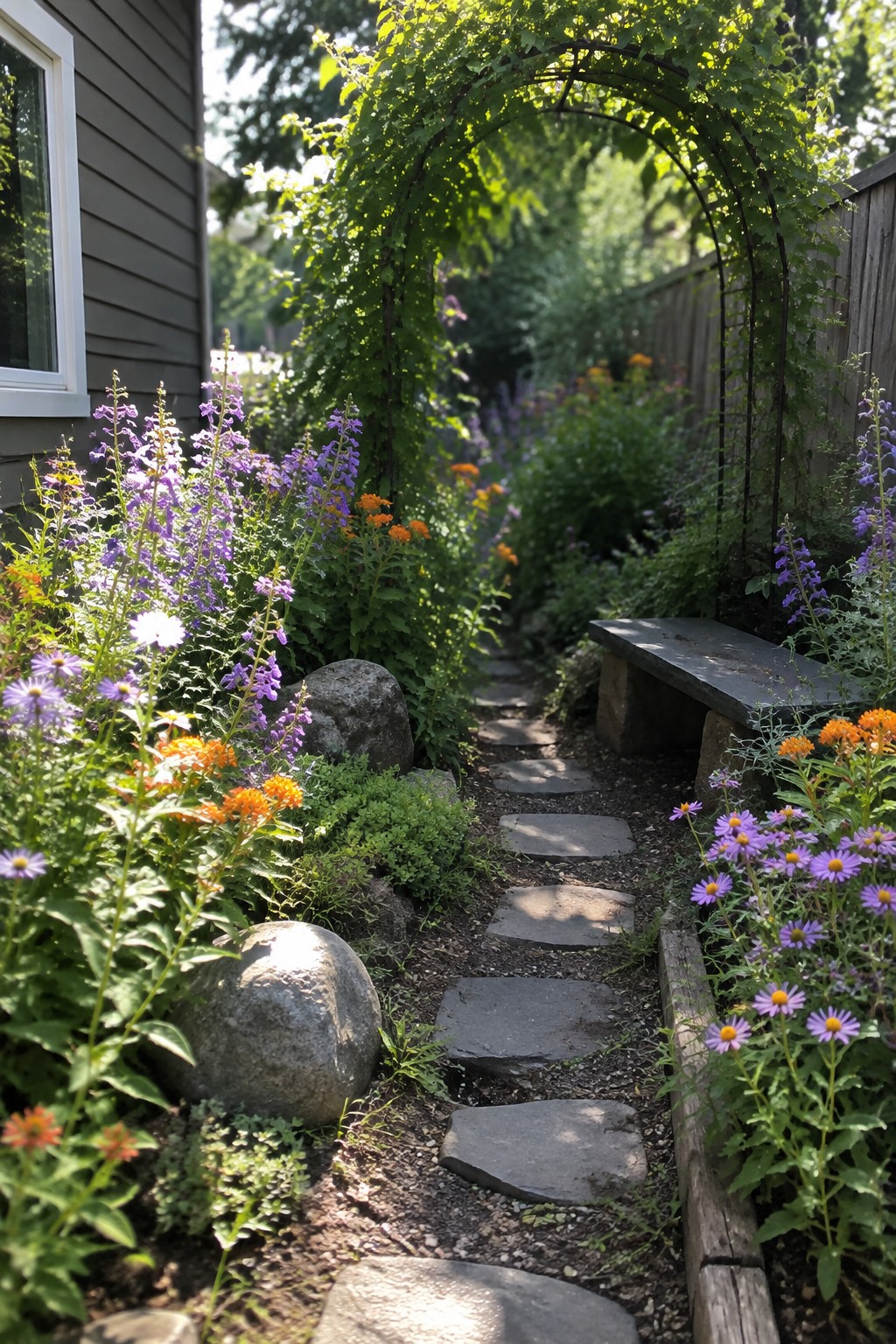
A stone path feels more welcoming when you plant in layers right beside it. Tall spiky flowers in the back, mid-height blooms in the middle, and lower spreading plants at the edge create depth without looking planned. This setup softens the hard edges of the stones and makes the walk feel like part of the garden instead of just a route through it.
This approach works well in smaller yards where you want variety without crowding. Stick to natives that match your soil and light so the beds stay full with less watering and weeding. Keep the path width consistent so the plants do not spill over too far.
Layer Plants by Height for Natural Beds

Mixing heights in a planting bed gives it that full, settled look right away. Tall grasses and upright flowers stand behind lower shrubs and spreading perennials, so the bed feels planted rather than lined up. The result is softer edges against pavement and a bit more privacy without needing a fence.
This approach works best in narrow strips along sidewalks or driveways where space is limited. Stick with native species that handle wet conditions and group them in drifts rather than single rows. A simple metal edge and a few larger stones keep everything contained while still letting the plants spill forward a little.
Layer Native Plants on Slopes
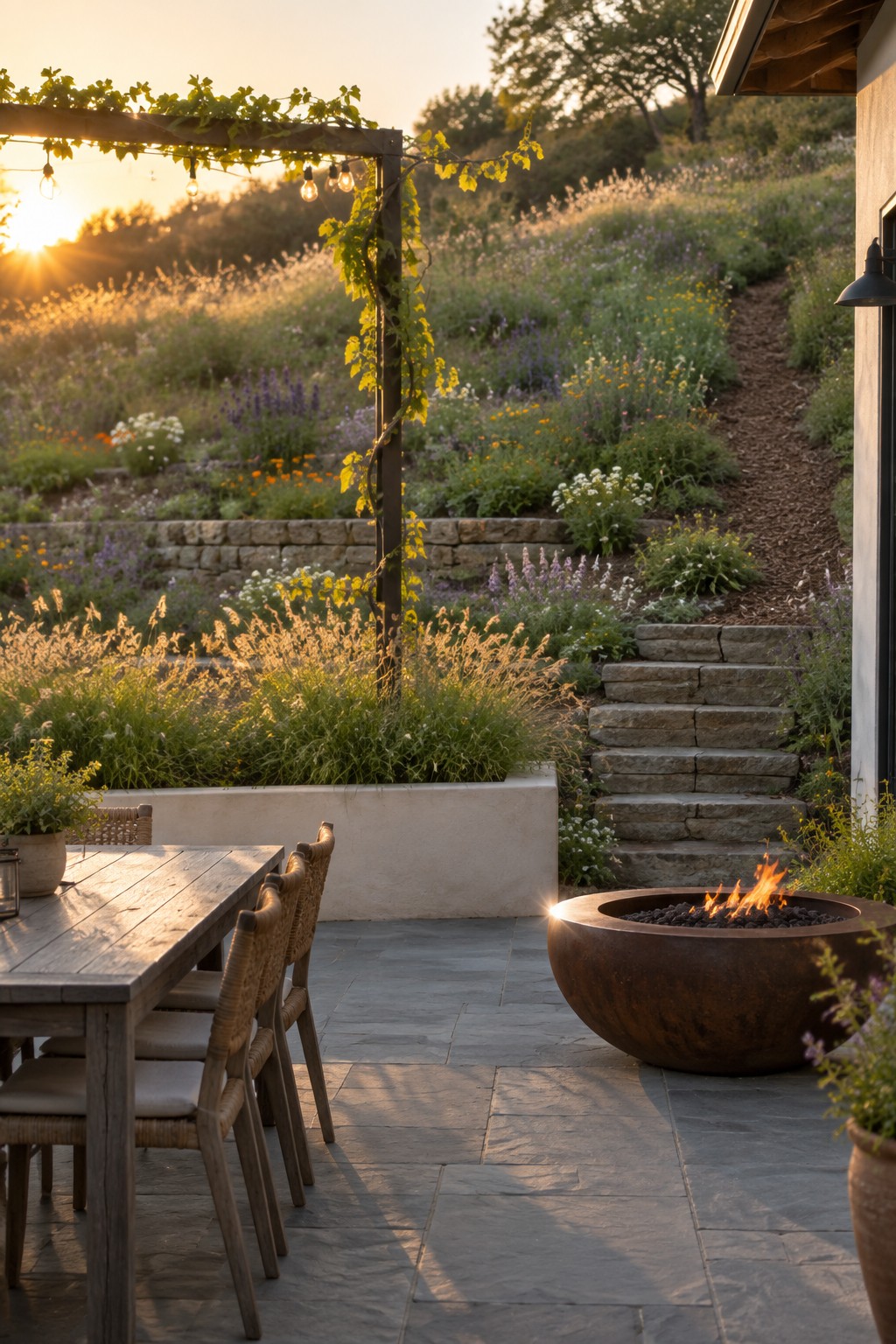
Layered native planting works well on slopes because it follows the natural lay of the land instead of fighting it. The plants fill in at different heights, which helps hold the soil and cuts down on erosion without needing a lot of extra work.
This approach suits homes with rolling or terraced yards where a flat lawn would feel forced. Start with taller grasses and shrubs at the back, then move to lower perennials and ground covers toward the front. Stone steps or simple retaining walls can help define the layers and make the garden easier to walk through.
Layer Plants by Height in Curved Beds

Mixing taller shrubs and small trees with lower herbs and ground covers creates a full, settled look that feels natural over time. The curved shape of the bed helps the layers flow together instead of looking like separate rows, and the mix of textures keeps the planting interesting even when colors are mostly green.
This approach works best in sunny gardens with decent soil depth. Start with one or two taller elements for structure, then fill in with mid-height shrubs and let low plants spill over the edge. Keep the curve gentle so the bed does not fight the rest of the yard.
Create Layers With Mixed Plant Heights

Layering plants of different heights gives a garden bed more depth without needing a lot of extra work. The mix of tall grasses, mid-level flowers like coneflowers, and lower spreading plants fills the space naturally and keeps it looking full through the seasons. Logs placed along the edge help hold the layers in place while adding a simple, organic border that blends right in.
This approach works well along paths or in side yards where you want coverage without a formal look. It suits homes with larger beds or natural areas where you can let plants grow into each other a bit. Stick to natives that handle your local conditions, and space the taller ones toward the back so shorter plants still get light.
Frequently Asked Questions
Q: My yard has heavy clay soil. Will layered native plants still take hold? A: Choose natives like switchgrass and Joe Pye weed that handle wet feet without extra fuss. Work in a bit of compost only in the planting holes to give roots a start. They will loosen the clay over time as they spread.
Q: How do I stop weeds from taking over before the layers fill in? A: Pull them early while the ground stays moist. A thin layer of leaf mulch around the new plants helps without choking everything. Once the natives knit together most weeds lose their chance.
Q: Can I add these ideas to an existing lawn? A: Start by killing off sections of grass in patches. Then plant your layers right into the cleared spots.
Q: Do I need to water the whole design every week? A: Water deeply only during the first season while roots settle. After that most native layers handle dry spells on their own.
