


I have always liked how cottage gardens manage to look full without feeling crowded when the beds are laid out with some thought to height and spread.
Over the years I have seen plenty of flower beds start strong in spring only to look sparse by midsummer because the planting structure was not planned for growth.
Small changes in edging can shift the whole feel of a garden path.
When I plan my own beds I usually test a few plant combinations in one corner first before committing across the yard.
These approaches tend to hold up better once the flowers actually fill in and the seasons change.
Mix Tall and Low Flowers in Cottage Beds

Tall flowers like hollyhocks planted right against the house give the beds instant height and a full cottage look. The lower plants in front fill in the space and keep everything from feeling flat or bare at ground level.
This works best along a foundation or beside a path where you want the garden to feel lush without crowding the walkway. Stick to a few strong colors and let the heights do the work. Watch the spacing so the tall stems do not shade out the shorter plants too much.
Border a Gravel Path With Flower Beds

A gravel path between two flower beds gives the whole garden a relaxed cottage look. The path keeps things easy to walk through while letting the plants grow right up to the edge and spill over in a natural way.
This setup works best in side yards or narrow spaces where you want lots of color without a formal layout. Use a mix of climbers on simple posts and lower flowers in the beds so everything feels full but still easy to maintain.
Layer Flower Beds Along a Low Stone Wall

A low stone wall gives flower beds a clear edge while letting plants build up in layers behind it. This setup works especially well for cottage gardens because it creates depth without needing a big space. The wall holds the soil and gives taller plants a backdrop so shorter ones can spill forward naturally.
Place the wall to curve gently around a lawn or path. Fill the beds with a mix of heights and bloom times so color stays steady through the season. Keep the front line loose so flowers can drape over the stone.
Edge Flower Beds With A Low Stone Wall
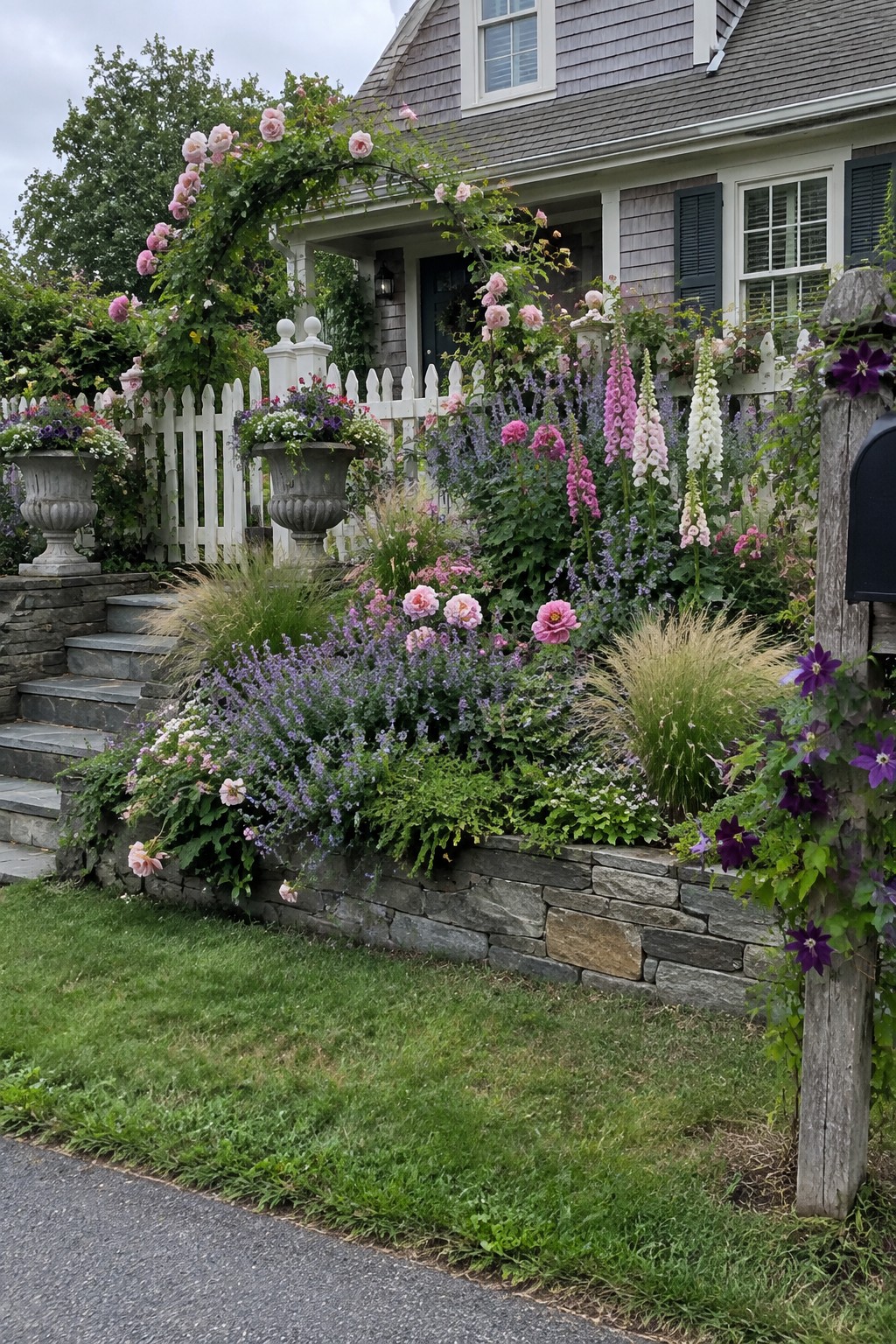
A low stone retaining wall gives cottage flower beds clear shape and a bit of extra height. It lets the plants spill forward in a loose way while keeping the whole bed from looking flat or scattered.
This approach works best along a front walk or at the base of entry steps on older homes. Keep the wall under two feet high and fill the bed with a mix of tall spikes in back and shorter spillers along the edge so the layers stay full all season.
Line Paths With Mixed Flower Borders
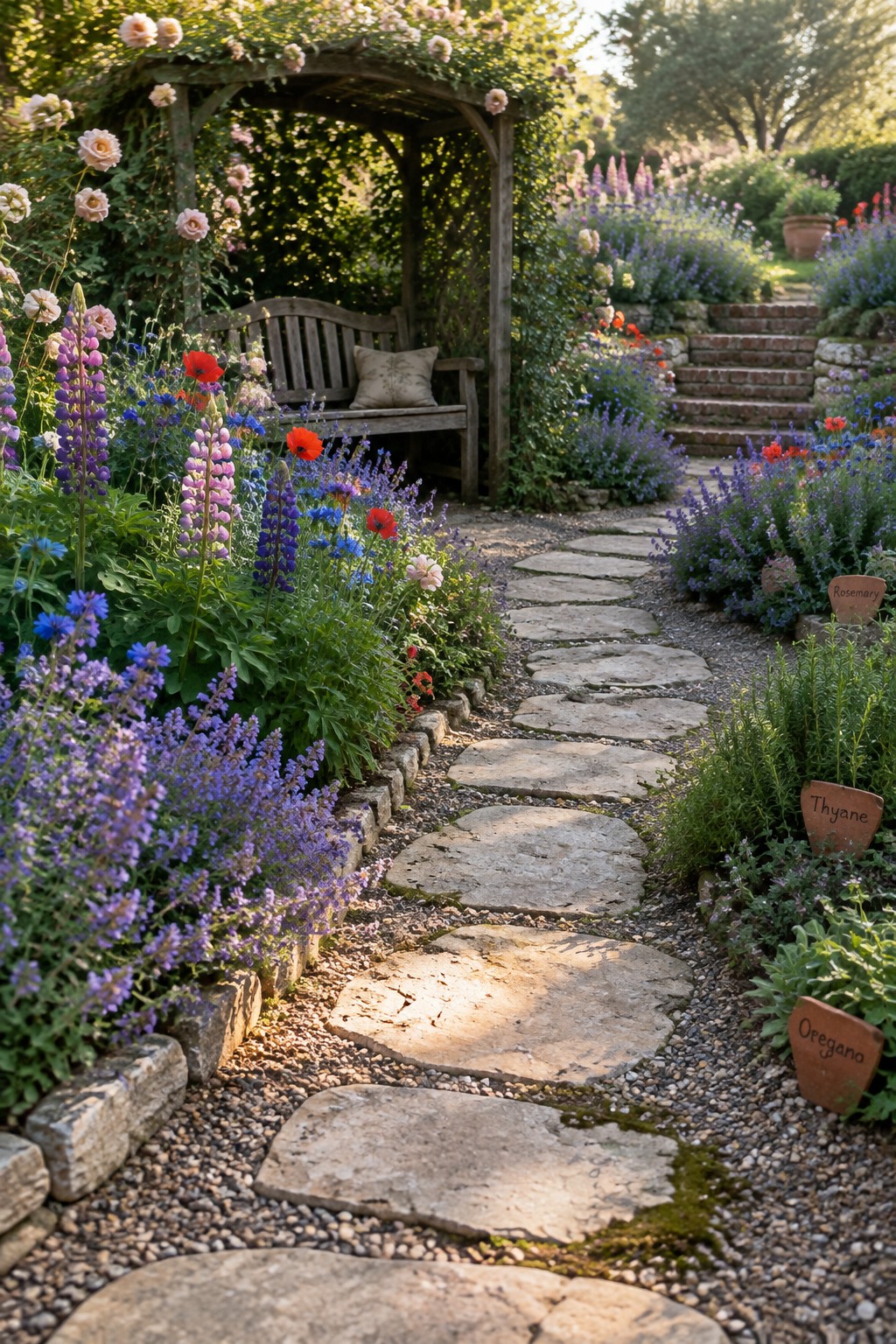
A stone path running between wide flower beds gives the garden an easy, welcoming structure without making it feel too planned. The flowers can spill over the edges a bit, which adds to the cottage look and keeps the path from feeling too formal.
This works best in smaller gardens or along a side yard where you want plenty of color but still need a way to walk through. Mix taller blooms toward the back with lower plants near the path, and add a few herbs close to the edge so you can reach them easily while passing by.
Planting Flowers Right Up to the Pond Edge

One of the easiest ways to get that full cottage look is to let the flowers grow right up to the water. The plants soften the hard line of the pond and make the whole area feel more like a natural part of the garden instead of something added on.
This approach works best in smaller spaces where you want plenty of color without a lot of open ground. Stick with plants that handle a bit of extra moisture near the edge, keep the path simple, and let the beds stay a little loose so everything blends together.
Layer Tall Spikes Among Lower Blooms
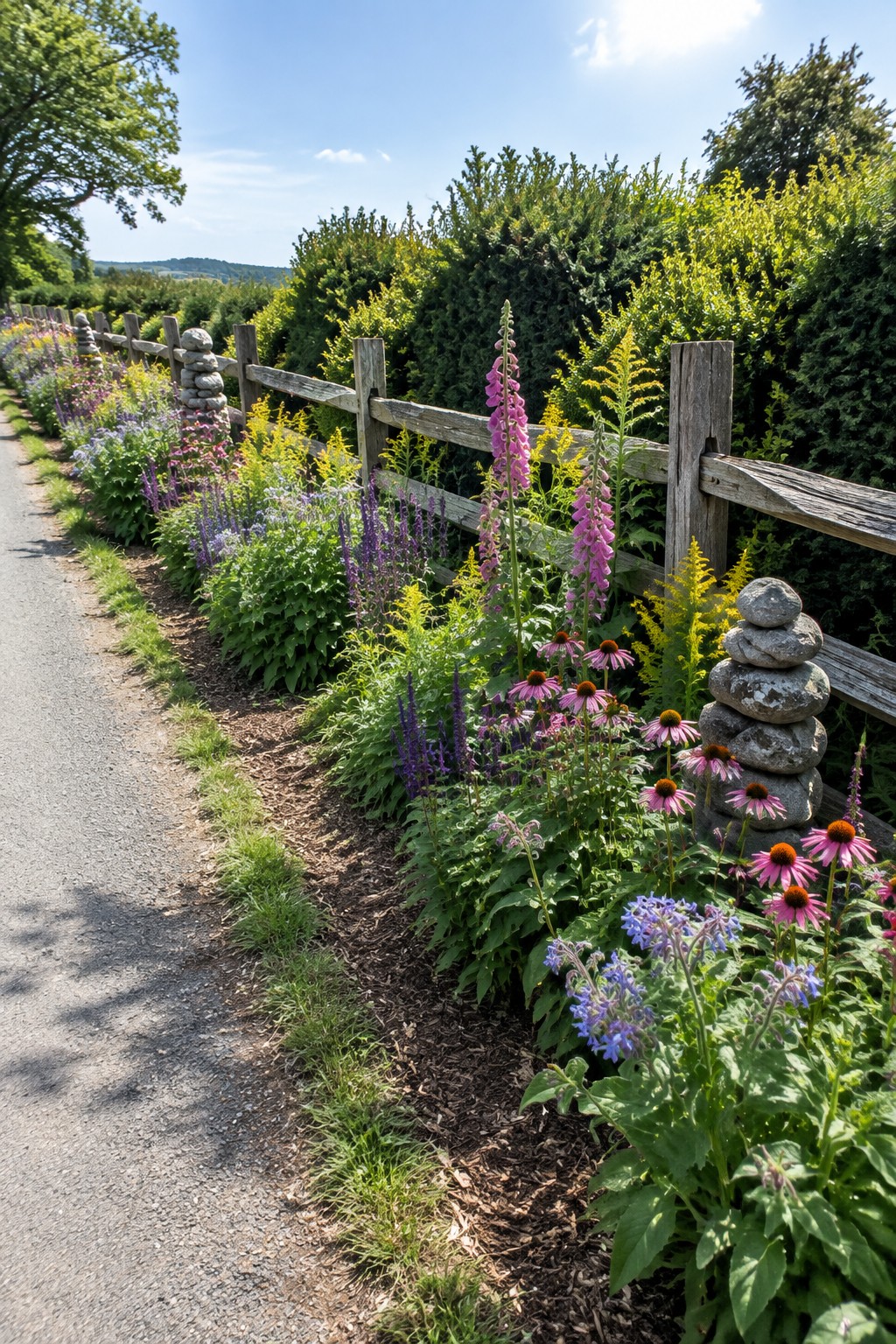
Cottage gardens often look best when they mix different heights in the same bed. Tall spiky flowers give the planting some lift and make the whole border feel fuller without needing a lot of width.
This approach works especially well along a path or fence where you want the flowers to show from a distance. Place the tallest plants toward the back and let shorter ones spill forward so the bed stays interesting even as individual blooms come and go.
Brick Borders for Cottage Garden Beds

Low brick walls work well as edging because they give the beds a clear shape while still letting the flowers spill over in that loose cottage way. The bricks keep the path open and dry, and they make the whole garden feel more settled without needing fancy materials.
This approach suits older homes or any place where you want the planting to look full but not wild. Use reclaimed bricks if you can, and keep the walls low so the color and texture of the flowers stay the main focus.
Define Flower Beds with Low Stone Walls

A low stone wall gives cottage garden beds a clear edge without looking too formal. It keeps the soil and plants contained while letting the flowers spill over naturally. This kind of border works especially well along a path where you want the planting to feel abundant but still organized.
Try this approach in front of older homes or along side yards where the path leads to a gate or seating area. The stones add texture that pairs nicely with gravel or mulch paths, and they hold up well over time with minimal upkeep. Just make sure the wall stays low so it does not block the view of the flowers.
Raised Beds Along a Garden Path

Raised beds give a cottage garden clear structure without making it feel stiff. They hold the soil in place, keep plants from sprawling onto the path, and make it easy to reach everything for watering or picking.
This works best in a narrow side yard or along a lawn edge where you still want some open grass. Stick with simple wood for the sides and fill the beds with a mix of flowers and herbs so the whole thing stays full but easy to manage.
Let Flowers Spill Over Path Edges
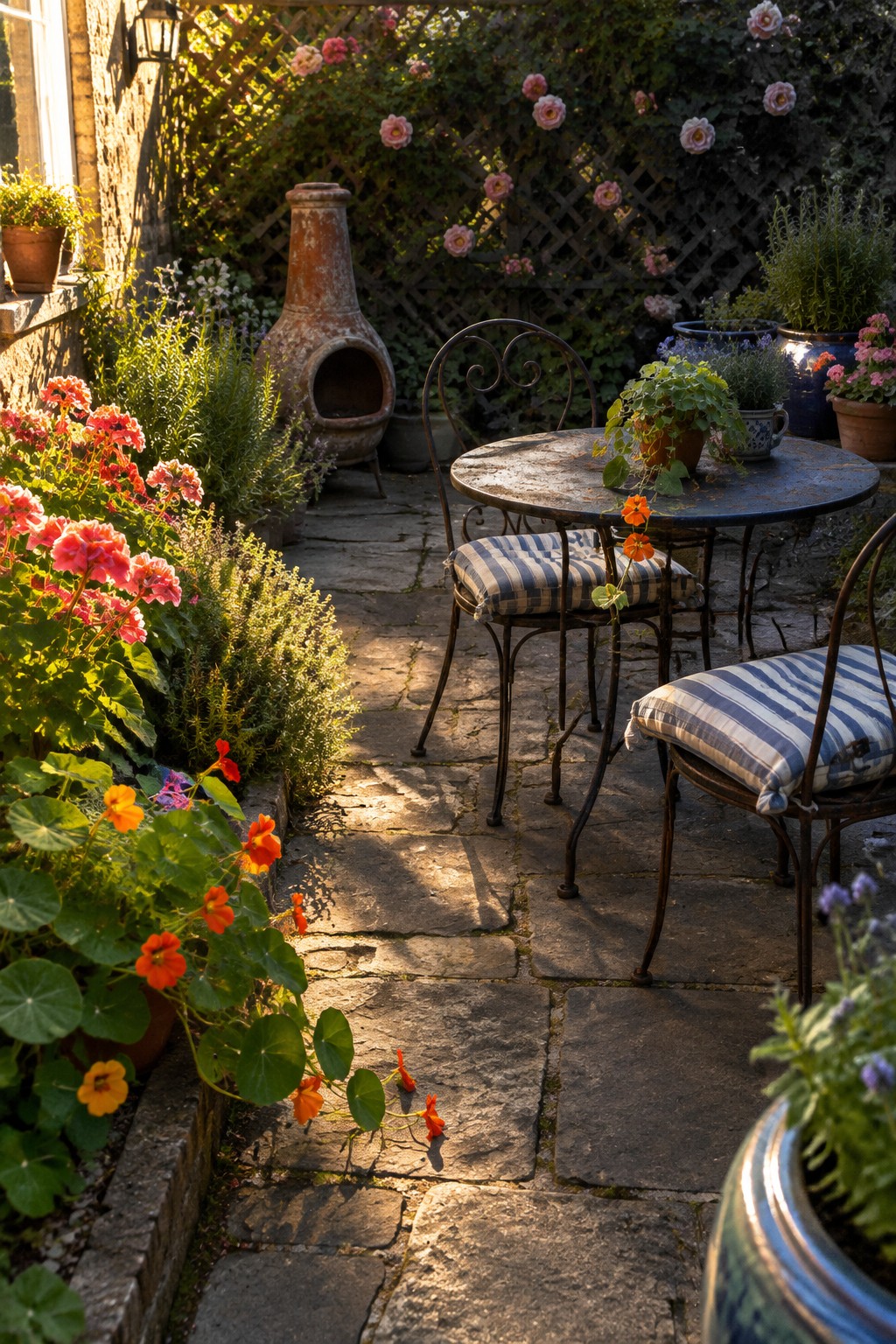
One simple way to get a cottage garden feeling is to let flowers and foliage grow right up against the path and tumble over the edge a little. The soft mounds break up the hard lines of the stones and make the walkway feel like part of the garden instead of something separate.
This approach works best with low trailing plants that can handle a bit of foot traffic nearby. Nasturtiums and similar spillers do well in full sun and give steady color without needing much fussing once they are established.
Brick Edging for Cottage Flower Beds

A low brick wall gives the garden bed a gentle shape while still letting the flowers grow in a loose, natural way. The curve softens the line between the path and the planting, so the whole bed feels like part of the cottage rather than something set apart.
This kind of edging works best along a front walk or driveway where you want a bit of structure without losing the informal look. Keep the wall no higher than a single course or two so the flowers can spill forward and the border stays easy to maintain.
Layer Plants by Height
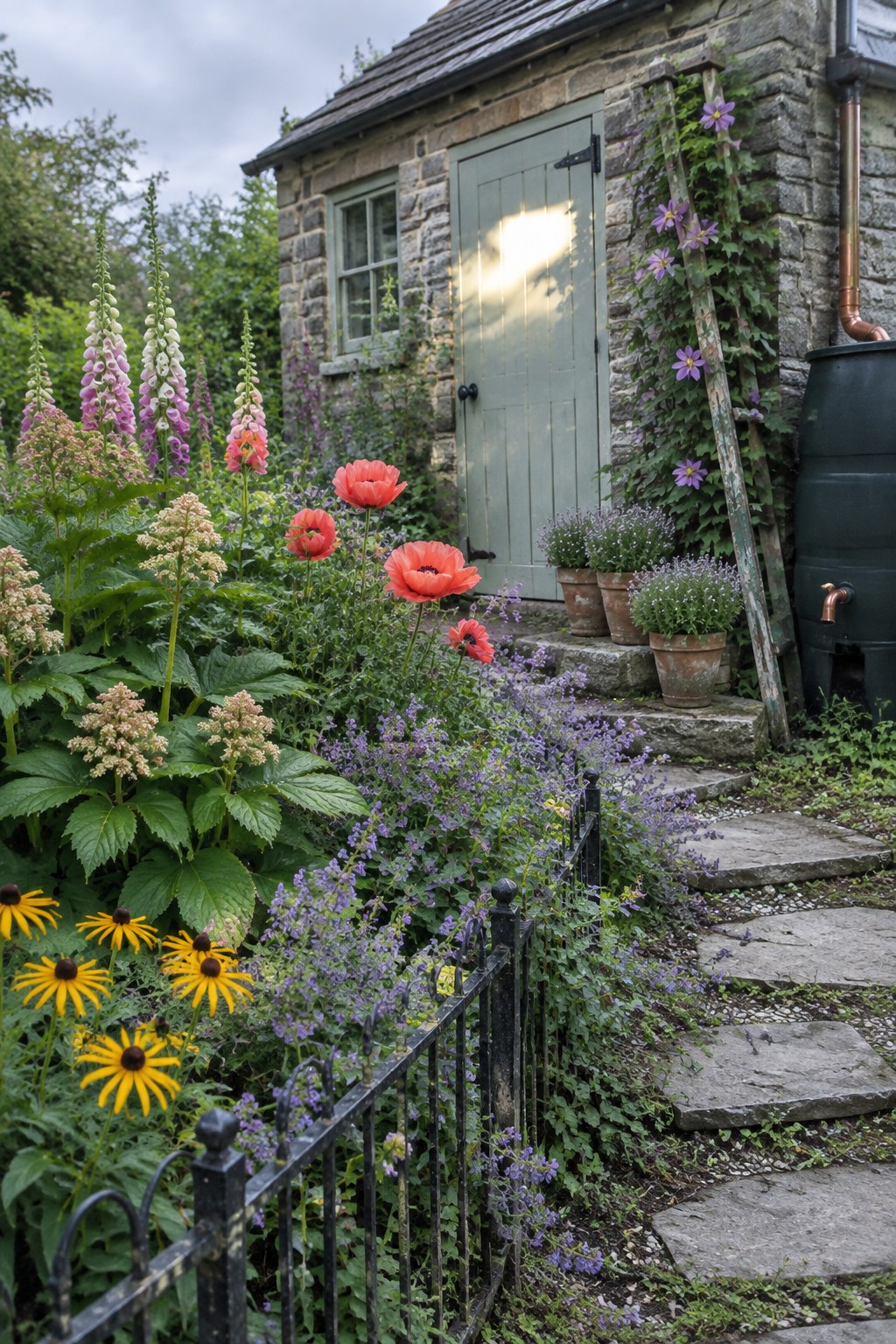
Cottage gardens look best when the beds have some height variation. Tall flowers at the back give the planting structure while shorter ones fill in lower down, so nothing feels flat or sparse.
This approach works well along paths and steps where you want the garden to feel full without crowding the walkway. Try starting with spires or large blooms in the rear and work forward with mid and low growers. Just watch the mature sizes so the front layers stay visible.
Add Climbing Vines Along Walls
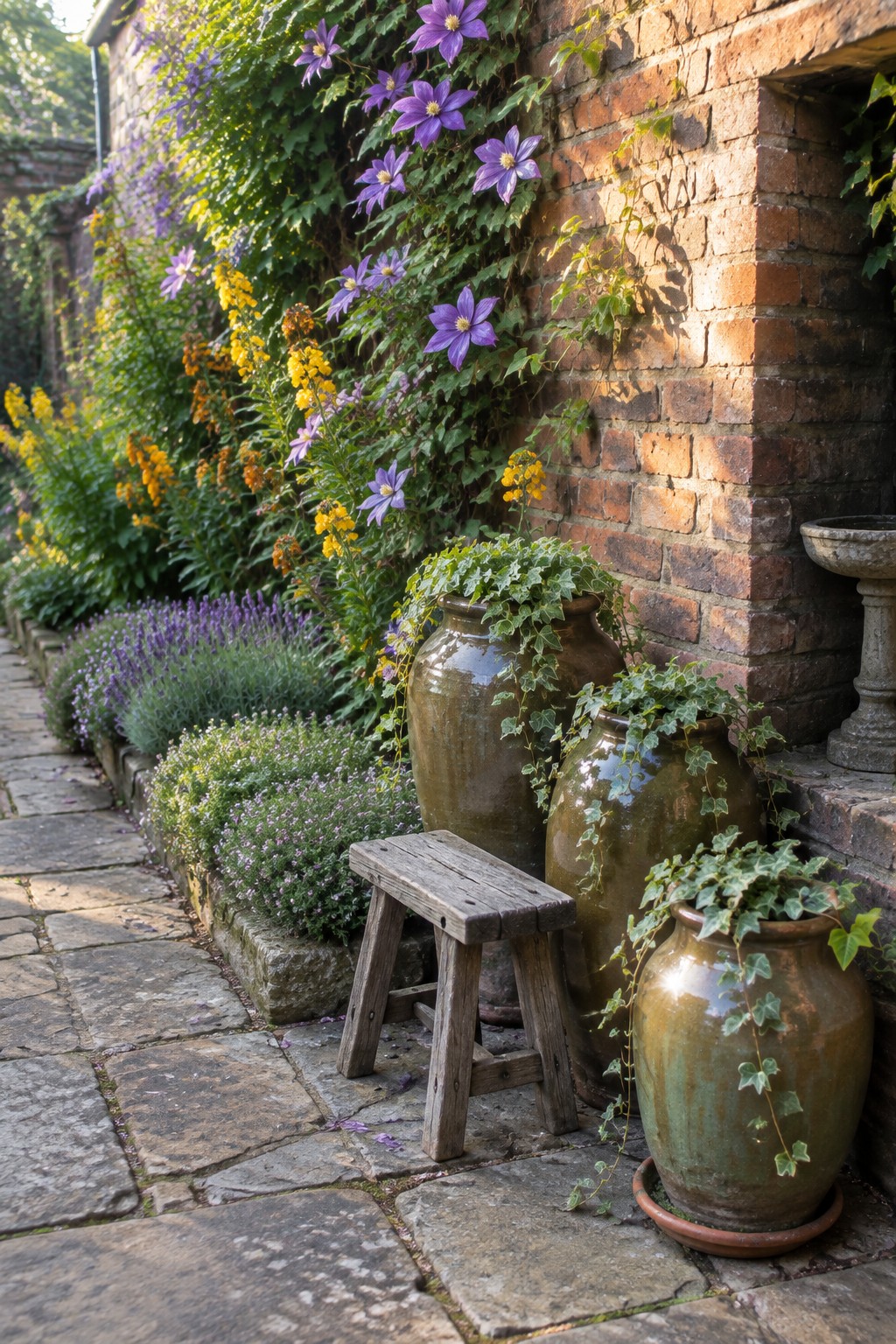
One simple way to get more from a cottage border is to let flowering vines climb right up the wall behind it. This adds height and color without crowding the beds, and it makes the whole stretch feel fuller even in a narrow space.
It works best where you already have a solid wall or fence next to a path. Choose something like clematis that will reach upward on its own, then keep lower plants in front so the layers stay clear. Just watch that the climbers do not overwhelm smaller shrubs at the base.
Layer Plants by Height in Your Borders

Layering different heights of flowers gives a border that feels full and lively without needing a huge amount of space. The mix of tall spikes in back, rounded blooms in the middle, and lower drifts along the edge creates that soft, overflowing look common in cottage gardens.
This works best along a path or the front of a bed where you want steady color from spring through summer. Stick with perennials that return each year and add a few annuals for extra fill if needed.
Layer Plants by Height
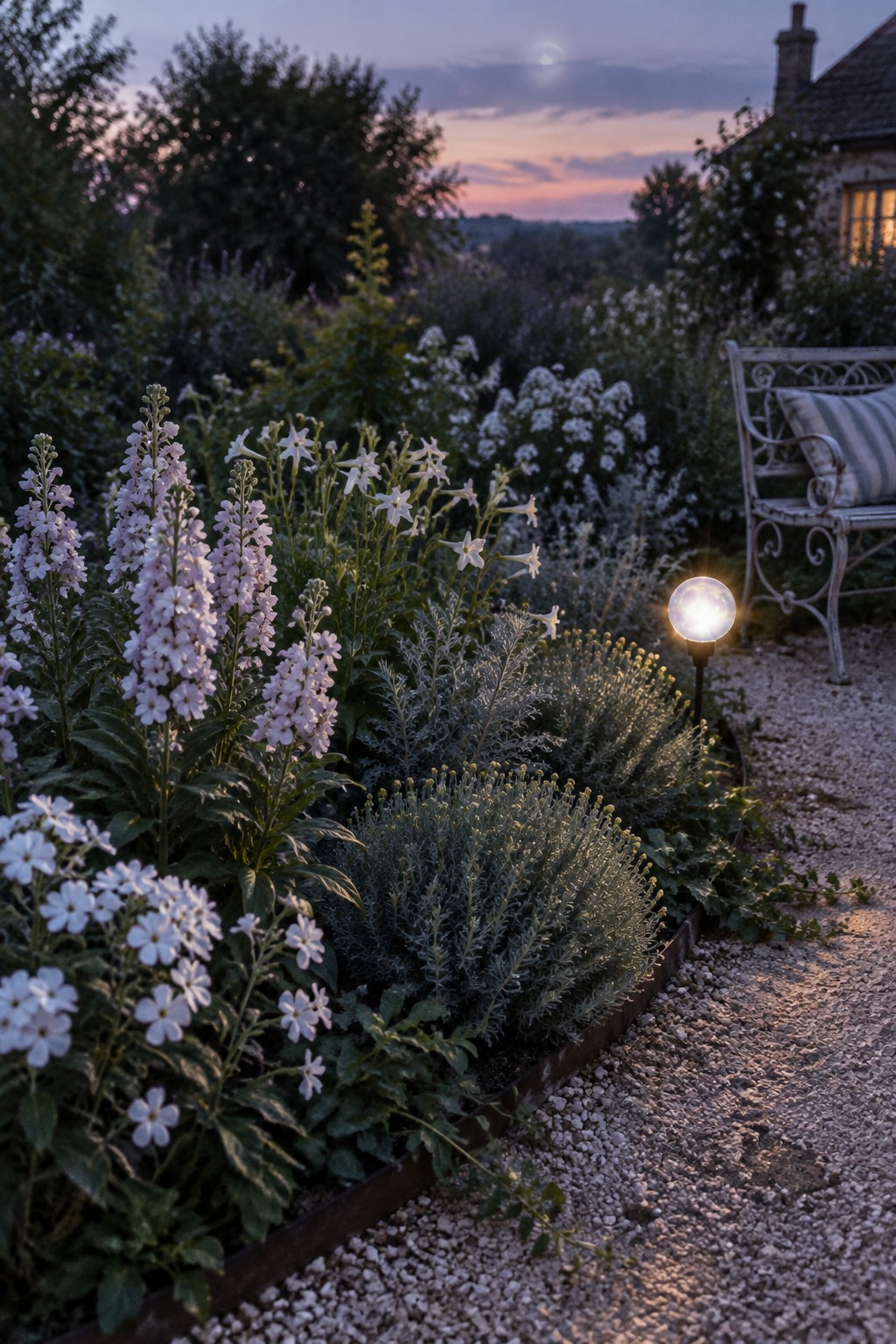
One simple way to get a cottage garden feel is to layer plants by height in the same bed. Tall flower spikes sit behind lower mounds and silvery foliage, which fills the space and gives it that soft, overflowing look without needing too many different varieties.
This approach works best along paths or near seating areas where the layers can be seen from the side. It suits older homes with informal yards and helps smaller beds feel generous. Use a low metal edge to keep the gravel clean while letting the plants spill forward naturally.
Line a Path with Layered Flower Beds

A stone path feels more inviting when it is edged with flowers planted in layers. Tall shrubs and roses sit toward the back, while lower blooms and ground cover fill in closer to the walkway. This setup softens the hard edges of the stones and makes the garden look fuller without needing a lot of extra space.
It works well on most cottage homes where the path leads from the street or driveway to the front door. Keep the plant mix loose rather than perfectly matched, and choose varieties that bloom at different times so the border stays interesting for months.
Raised Planter Boxes Line a Narrow Path
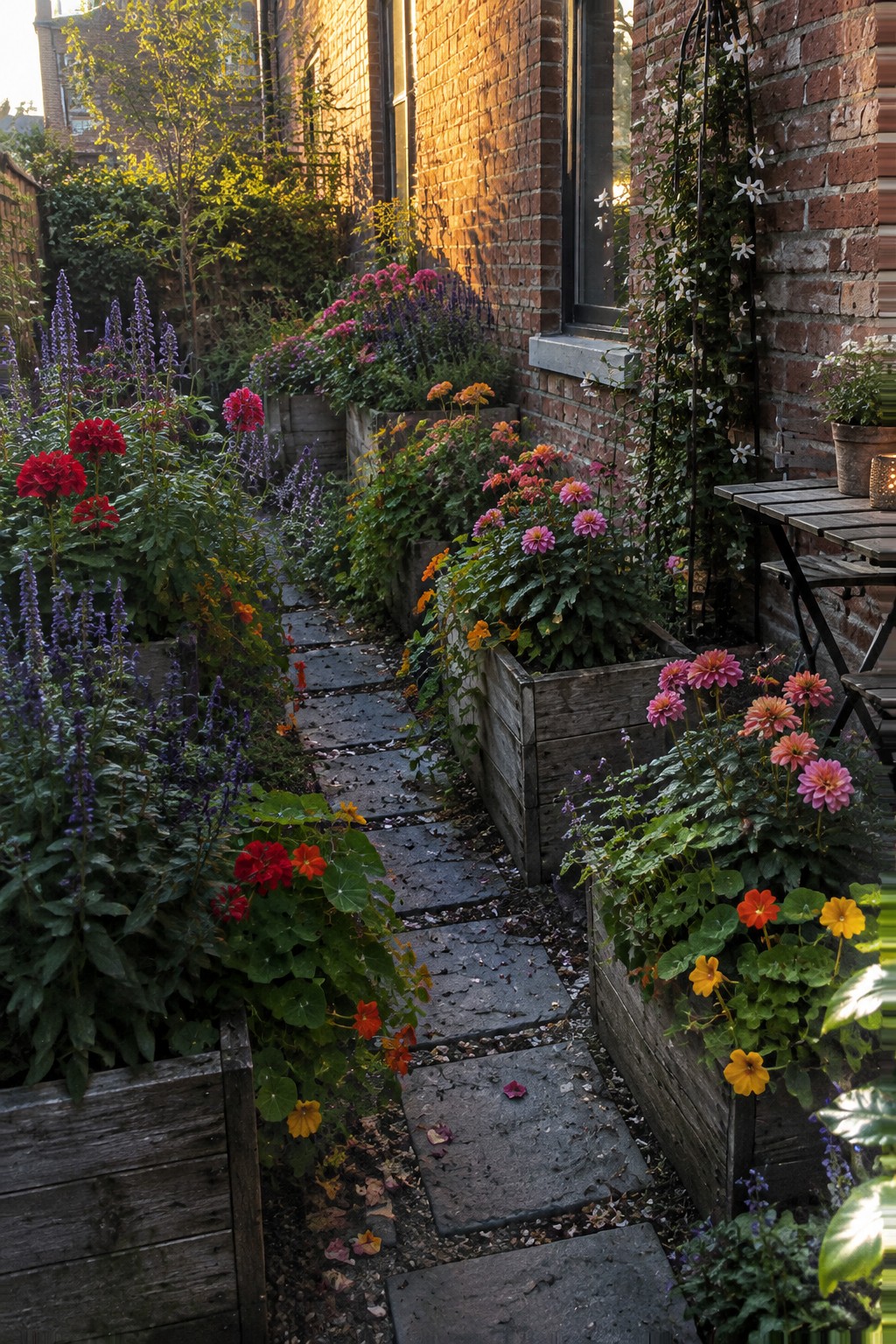
Raised wooden planters give you a simple way to pack flowers into a slim side yard or walkway. The boxes keep the planting neat and contained while letting you layer different heights and colors right along the route.
This setup suits small urban gardens or tight spaces where digging wide beds is not practical. Use plain wood boxes, choose a mix of taller and spilling flowers, and make sure the path stays wide enough for easy walking.
Frequently Asked Questions
Q: What if my yard only gets morning sun? A: Pick shade-tolerant cottage plants such as astilbes and hostas to fill the beds. They create soft textures that match the style well. Group them in odd numbers for a natural look.
Q: How much should I water these flower beds? A: Give new plants a good soak twice a week at first. Once established cut back to when the soil feels dry an inch down. This avoids root rot while keeping blooms coming.
Q: Can I add cottage style to a tiny front yard? A: Yes start with a narrow bed along the path using compact flowers like lavender and daisies. It brings that full garden feel without taking over the space.
