

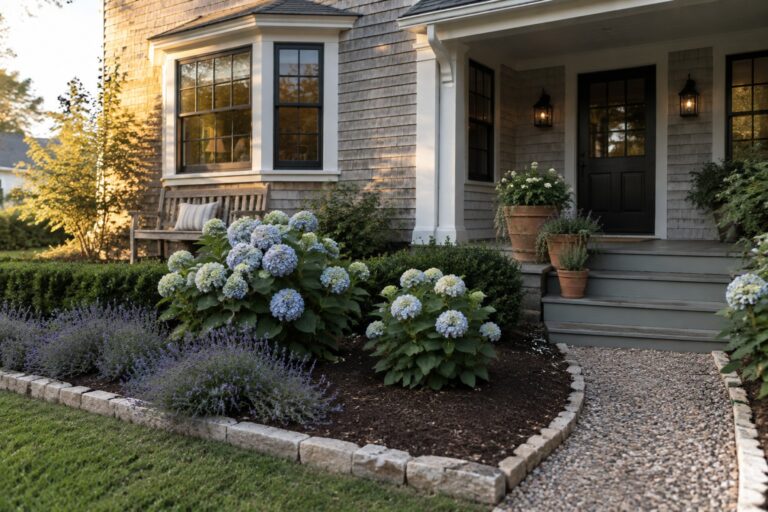
Over the years I have learned that foundation planting works best when you plan for how each shrub or perennial will fill out rather than how it looks in the pot.
The right choices create a natural edge that guides the eye from the walkway up to the front door without any awkward gaps or overlaps.
Not every trend holds up in practice.
Layering taller plants behind lower ones near the house gives depth and keeps the beds looking balanced even after a few growing seasons.
I tend to start with evergreens for structure and then add seasonal color around them to keep things interesting throughout the year.
Layer Foundation Beds With Mixed Heights
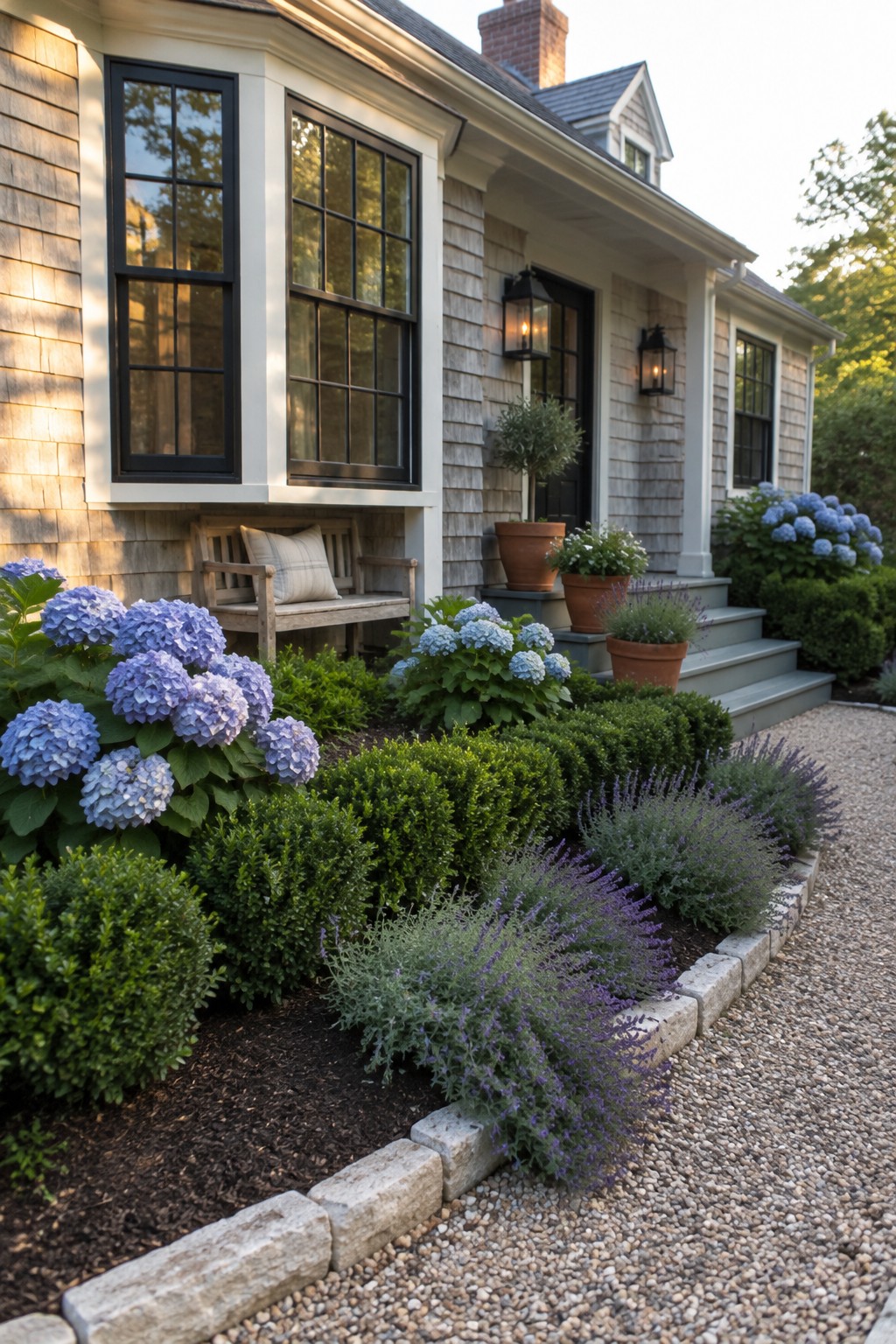
Layering plants by height makes a foundation bed feel full without looking crowded. Taller shrubs sit closer to the house while lower flowers and ground covers spill forward, creating a natural transition from the siding down to the ground. The stone border keeps everything neat and stops mulch from spilling onto the path.
This approach works well on most traditional homes where you want the planting to soften the base without hiding windows. Keep the tallest plants under the windows and use a simple edge like stone or brick so the beds stay defined even in winter. It is easy to maintain once the plants fill in.
Gravel Walkways With Ornamental Grasses
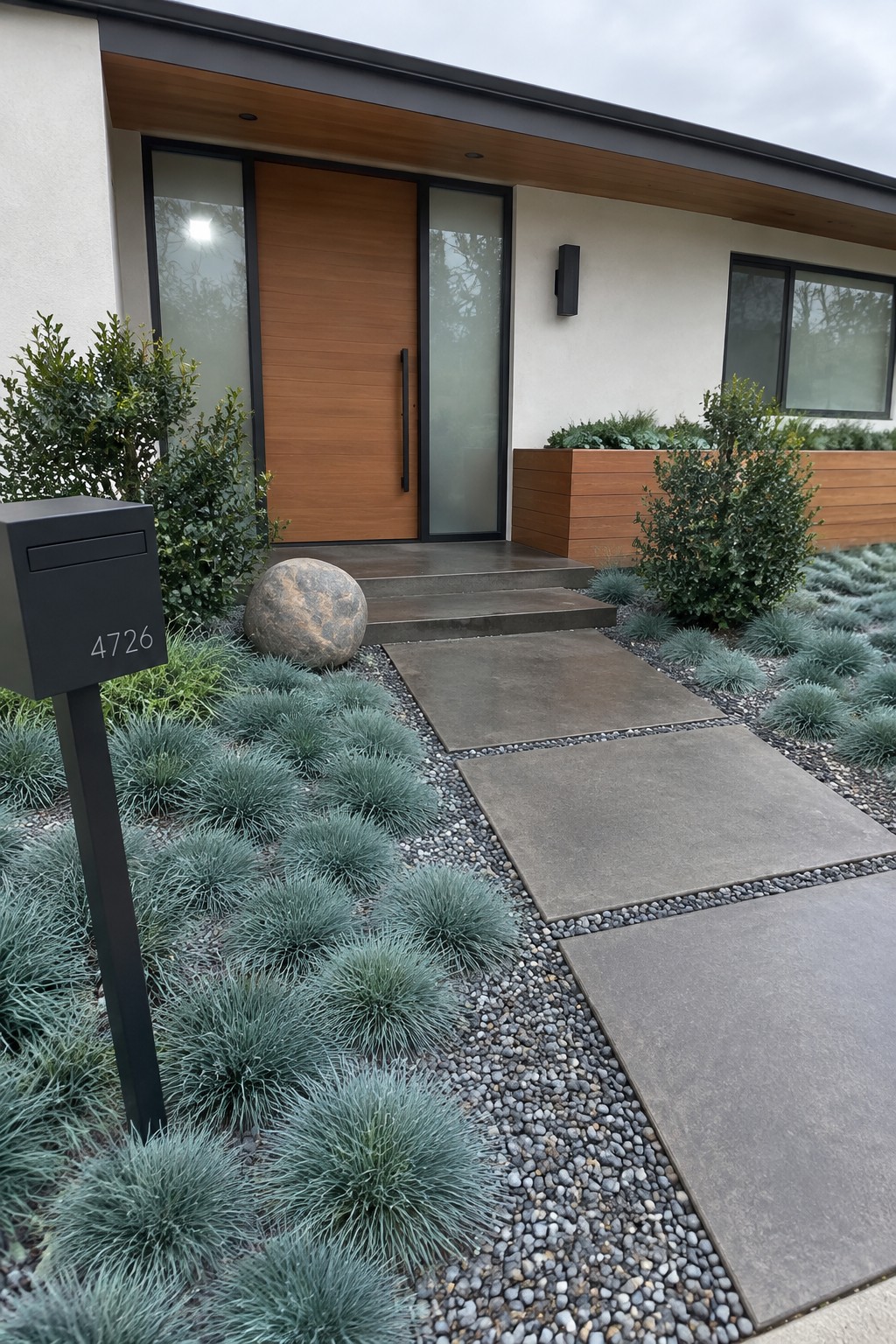
Many people like this approach because it keeps the front beds looking neat without a lot of upkeep. The gravel gives a clean base that drains well, while the rounded clumps of blue grass add soft texture and color that stays interesting through the seasons.
This works best on modern or simple homes where you want the planting to feel structured but not fussy. Space the grasses in groups rather than single rows, and let the stepping stones sit slightly above the gravel so they stay visible after rain. Skip it if your soil stays wet for long periods, since gravel can hold moisture underneath.
Layer Foundation Plantings by Height
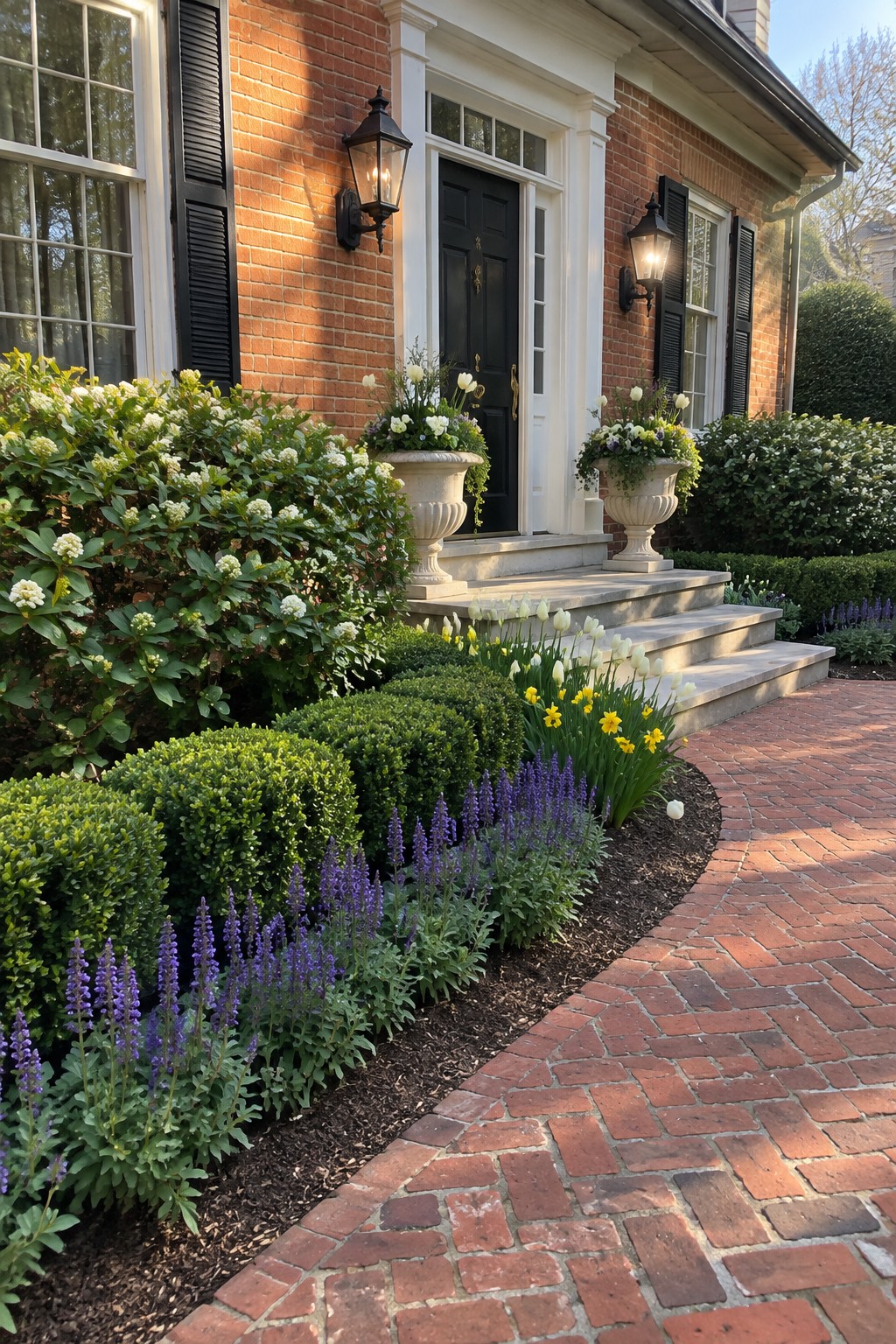
Layering plants by height gives foundation beds a fuller look without crowding the house. Taller shrubs sit closest to the brick, medium evergreens fill the middle, and lower flowers edge the bed so the whole planting feels balanced and soft from the street.
This approach works well on homes with a clear walkway or steps leading to the door. Keep the tallest plants under windows and let the bed curve gently with the path so it guides visitors without blocking light or access.
Layer Plants by Height at the Foundation
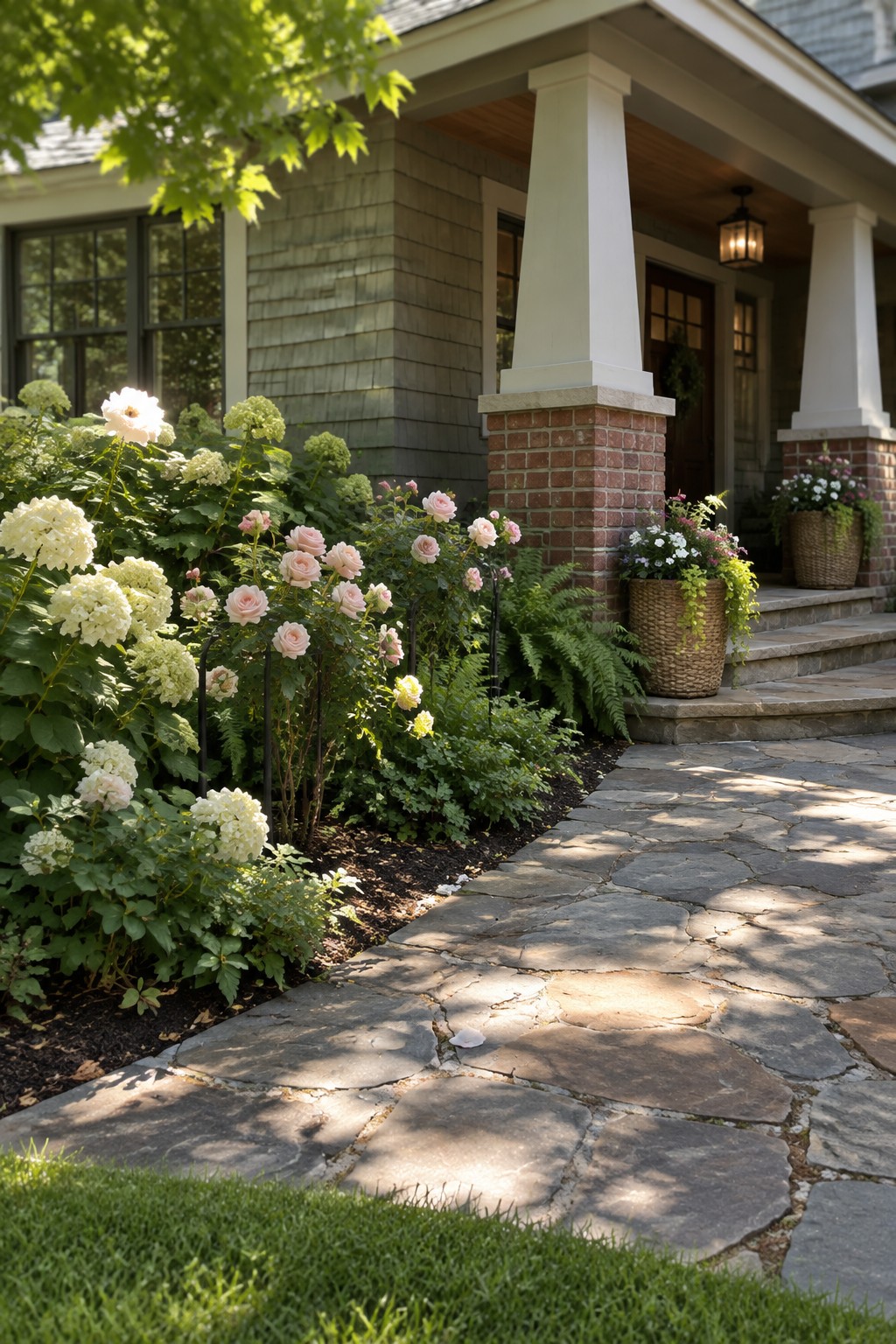
Mixing taller shrubs with mid-height flowers and lower greenery right along the house base gives the planting real depth without looking crowded. The different levels keep the beds from feeling flat and help the house sit more naturally into the yard. A simple stone path along the edge makes the whole thing feel finished and easy to walk past.
This approach works well on most homes because it hides the foundation while still leaving room for air and light. Stick to plants that stay in scale with your siding and windows, and group the same varieties together so the layers read clearly.
Layer Foundation Beds With Shrubs And Pots
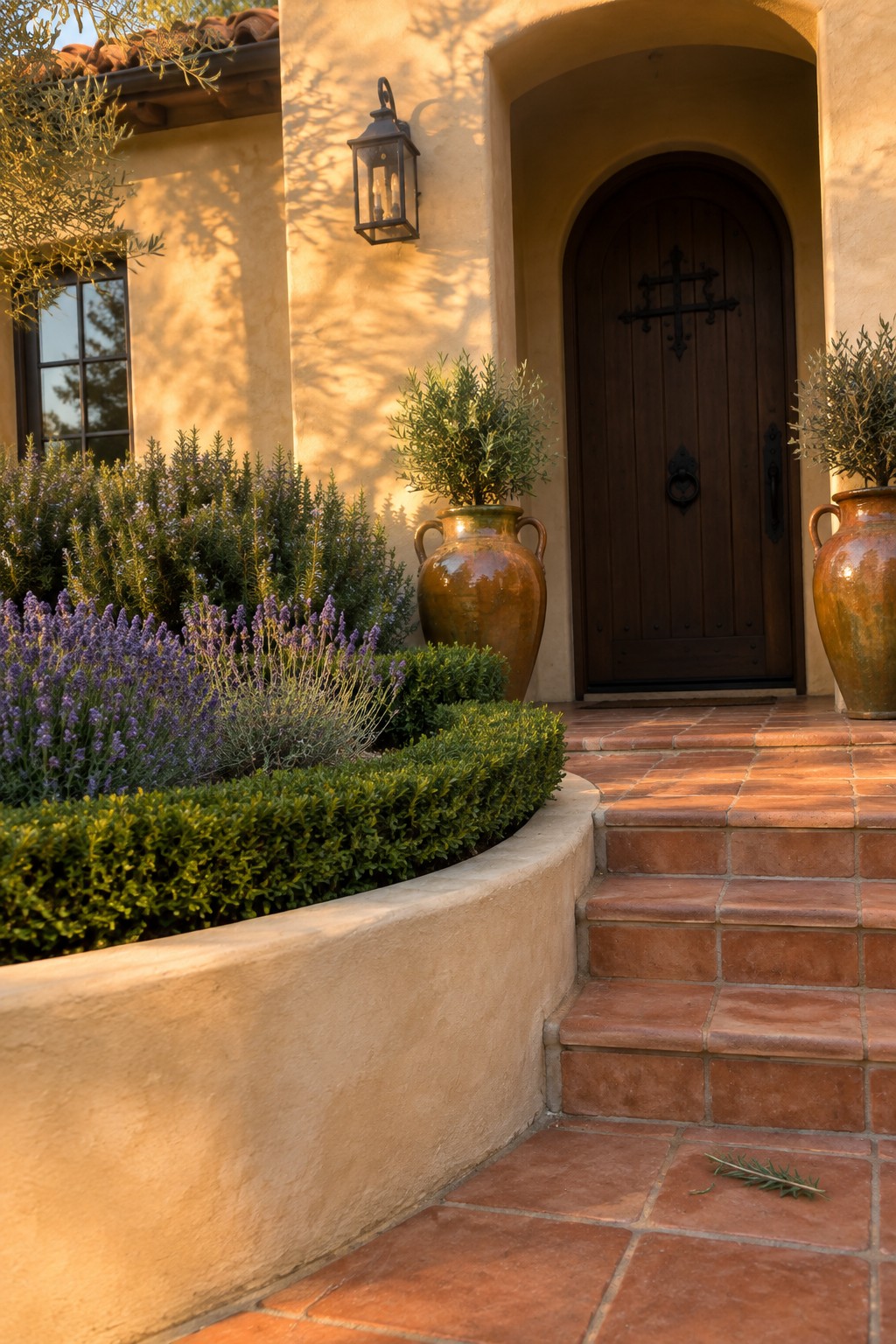
Layering low shrubs with taller perennials and a few big pots gives foundation areas more depth without crowding the house. The curved bed shape keeps the planting from looking flat, and the pots add height where the ground drops away near the steps.
This approach works well on homes with stucco or adobe walls that need some softening at the base. Keep the lowest layer tight to the wall, add mid-height flowering plants in front, and place one or two large containers to balance the look. It stays simple to maintain if you choose plants that need little water once established.
Metal Edging Keeps Foundation Beds Tidy
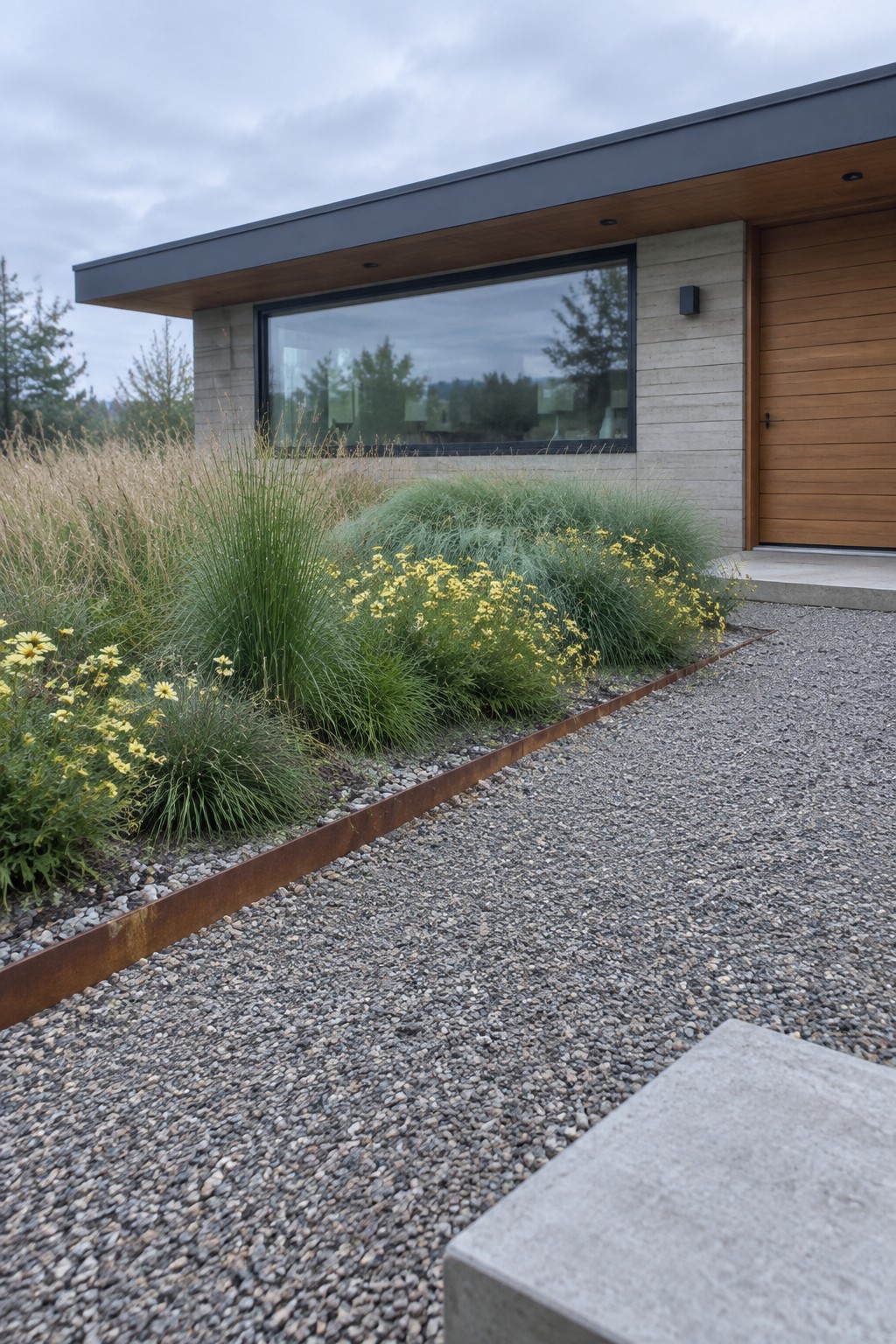
A metal border gives foundation plantings a finished edge that gravel or lawn alone cannot provide. It stops the bed from spilling into the path while letting the plants stay the focus.
This approach works best along driveways or walkways where you want a low-maintenance line that still allows room for grasses and flowering perennials to grow in loose layers. It suits homes with simple architecture and helps the planting feel deliberate instead of scattered.
Frame Your Entry with Symmetrical Foundation Plantings
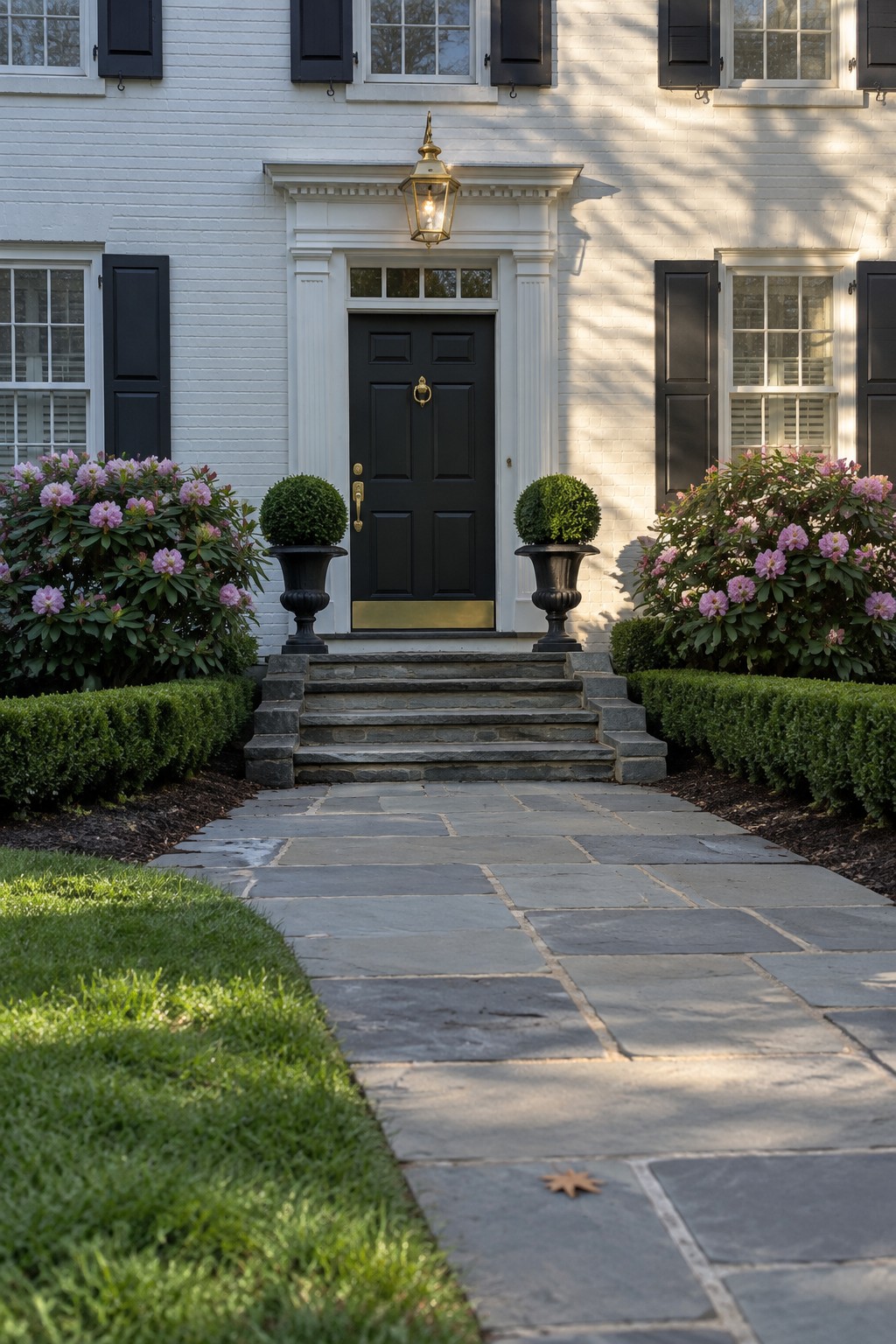
Placing a pair of matching potted shrubs right beside the front door gives the whole entrance a settled, balanced feel. The round shapes echo each other and keep the eye from wandering, which works especially well on a centered door with a straight walk leading up to it.
This idea suits traditional homes that already have some trim detail around the door. Use simple, evergreen forms in the pots so they stay neat year round, then fill the beds on either side with lower flowering shrubs for color without crowding the steps.
Shape Foundation Beds With Stone Edging
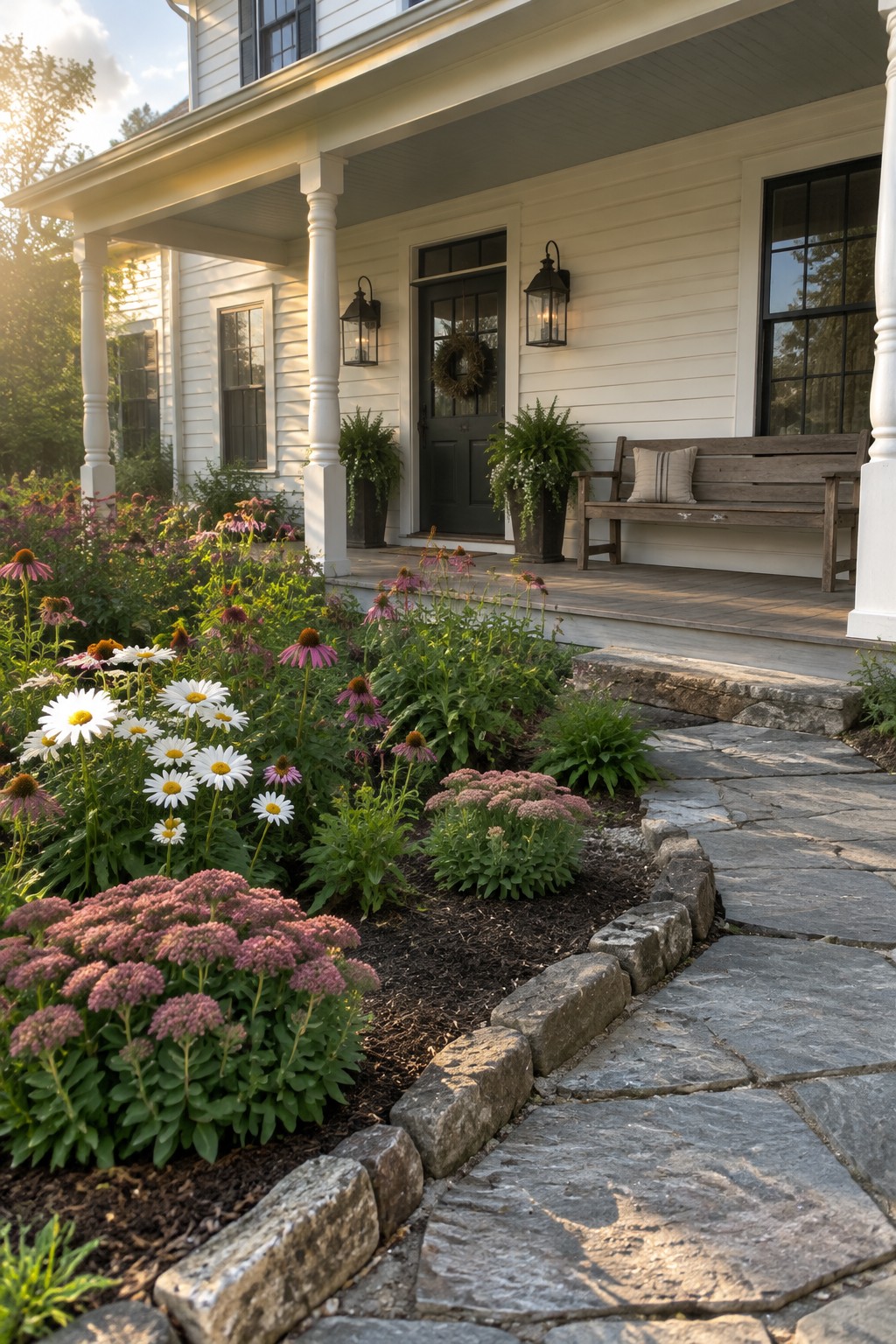
Stone edging gives foundation plantings a finished look without making them feel stiff. The low border holds the soil in place while letting taller flowers and low shrubs grow right up against the house wall in a relaxed way.
This approach works best on homes with simple siding where you want the garden to soften the base. Lay the stones in a gentle curve rather than a straight line, and mix heights in the bed so nothing looks too uniform.
Tiered Stone Walls For Layered Foundation Beds
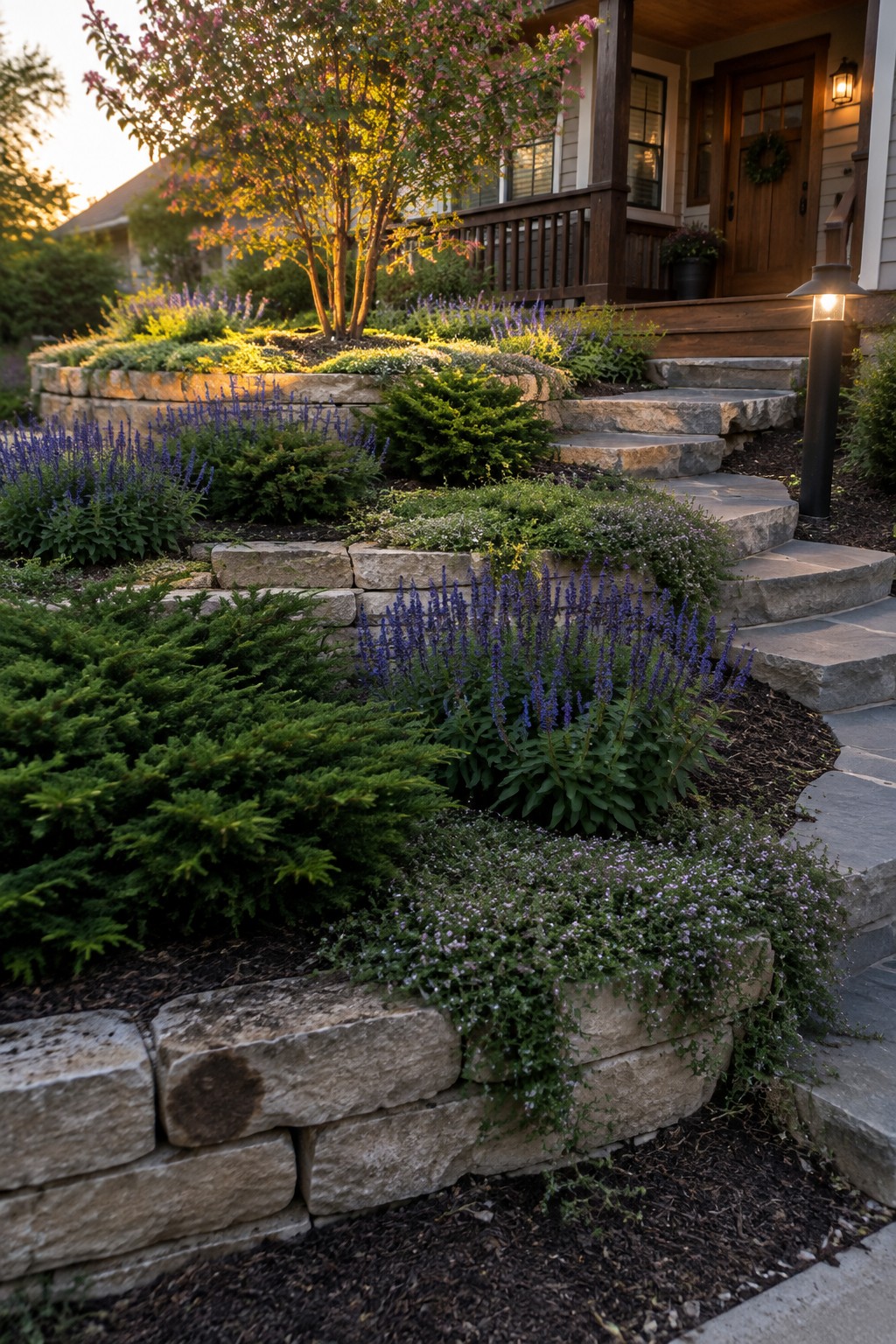
Stone retaining walls let you turn a sloped front yard into a series of planted terraces. The different levels keep plants from looking flat and give each layer its own space to grow without crowding.
This setup works best on homes where the ground drops away from the foundation. Use low spreading plants along the edges and taller shrubs or perennials in the back rows so the beds feel full from the street.
Vary Plant Heights in Foundation Beds
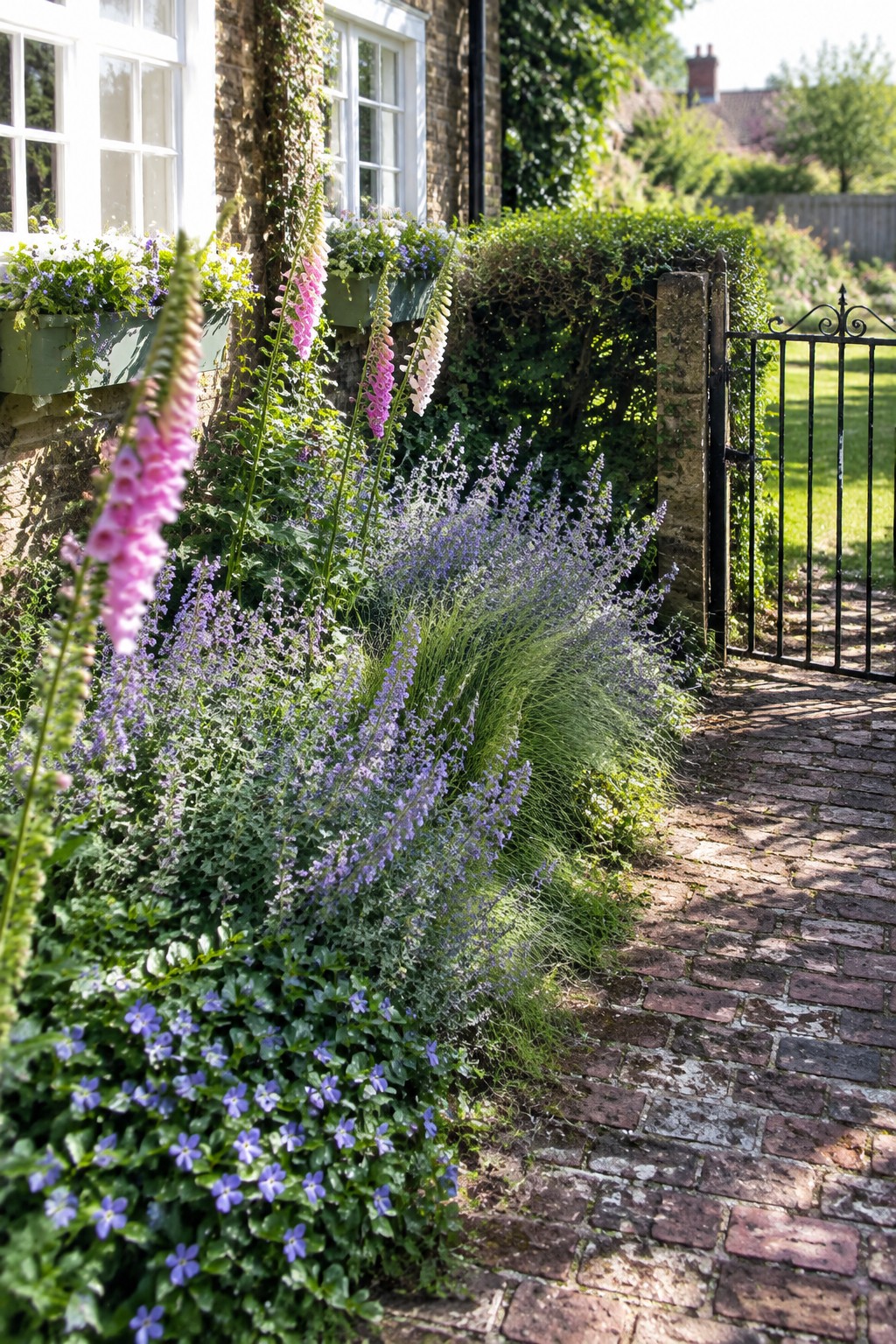
Layering plants by height gives foundation plantings a soft, full look without crowding the house wall. Taller spikes rise at the back while shorter blooms spill forward, creating natural depth that makes the whole border feel generous.
This approach works especially well along walkways or the front of older homes where you want color without blocking windows. Keep the tallest plants toward the house and let low growers edge the path so the bed stays easy to maintain.
Gravel And Boulders For Foundation Beds
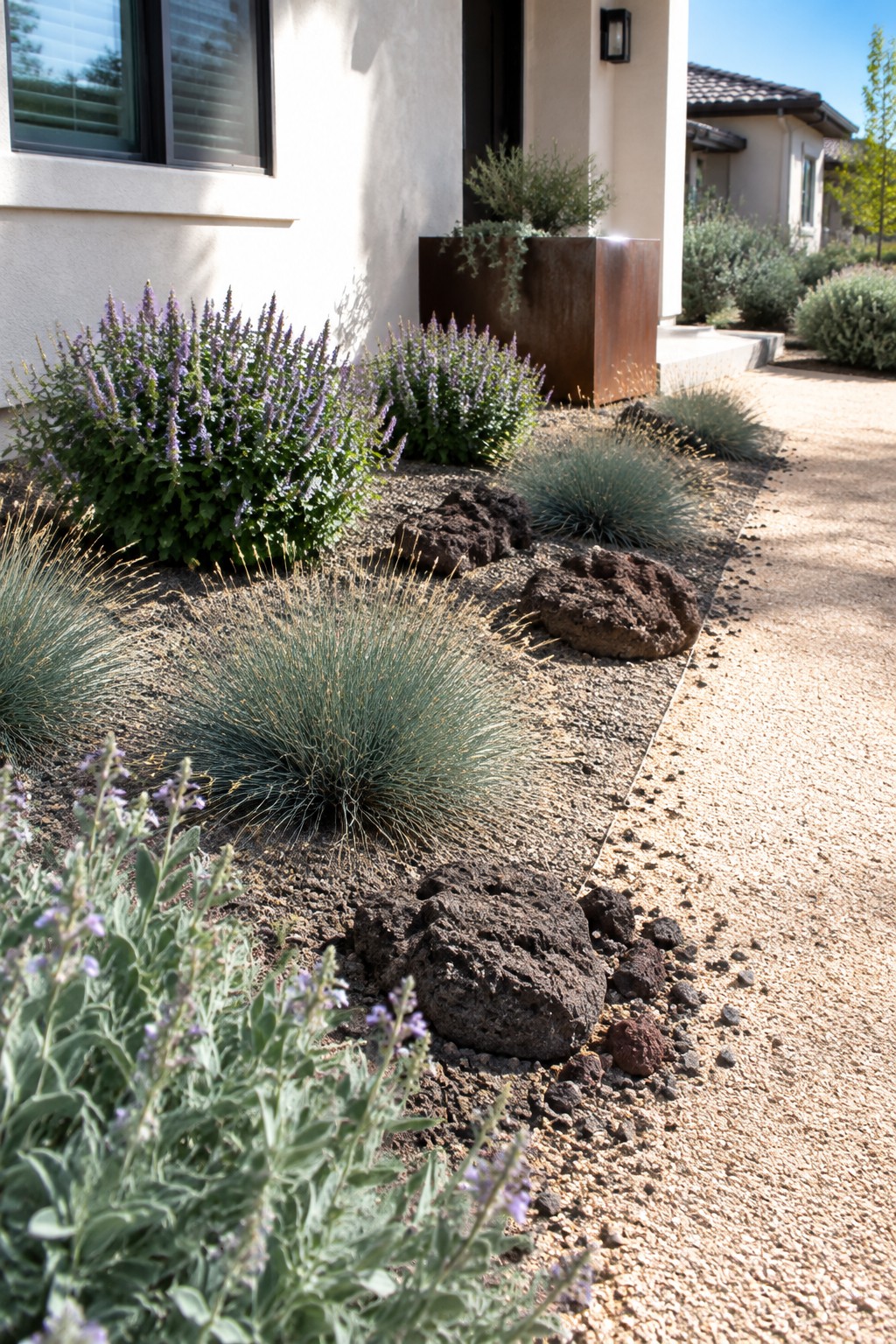
Many homeowners like using gravel as the main ground cover right along the house. It keeps the area looking neat while cutting down on weeds and the need for constant watering.
This setup pairs well with a mix of shrubs and grasses that stay low and need little care. It works best on homes with simple stucco or siding where you want the planting to feel natural without adding too much work near the foundation.
Anchor the Entry with a Central Fountain
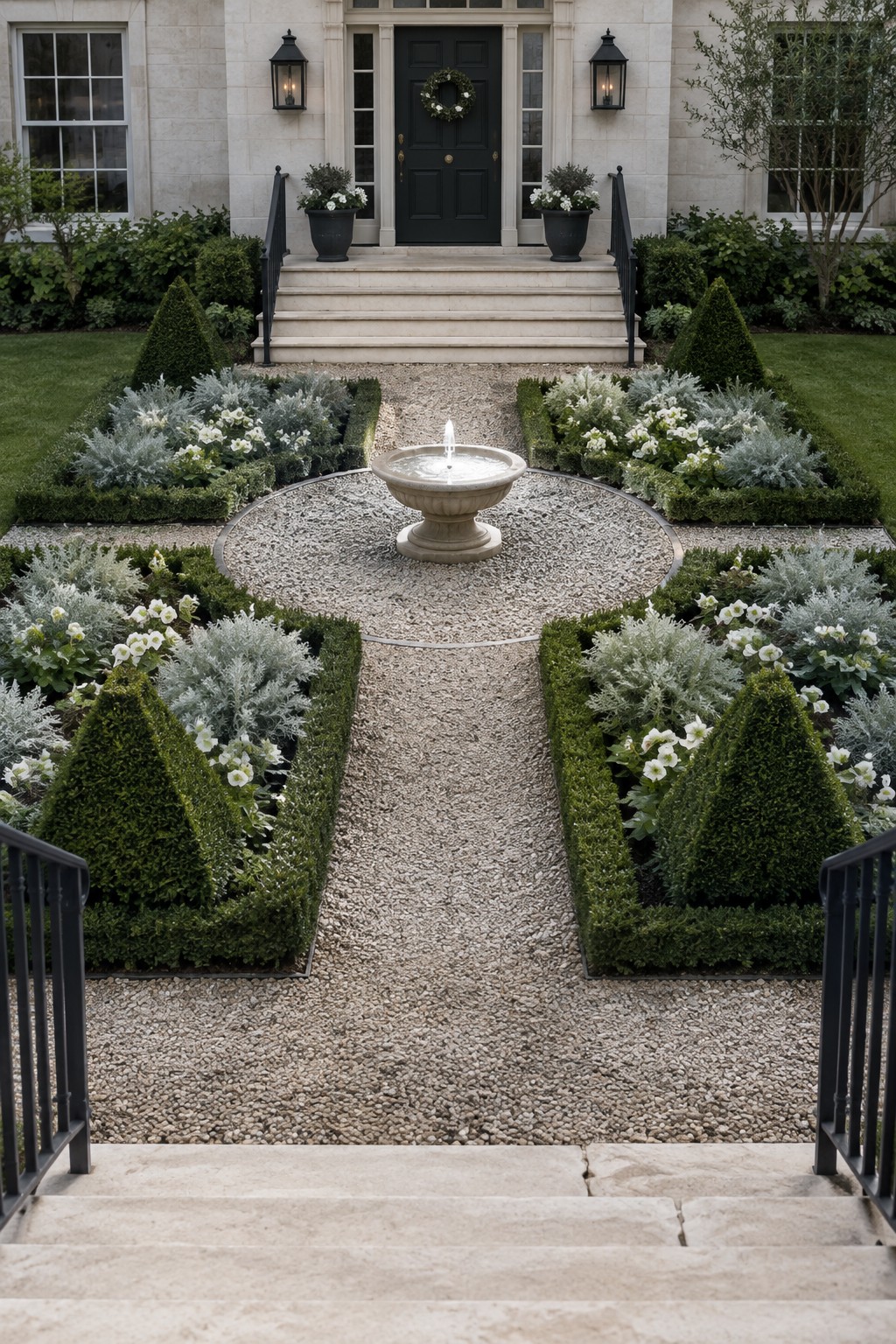
A small fountain in the middle of the front beds gives the whole yard a clear center point. The gravel paths that radiate out from it keep the layout simple and make the walk to the door feel deliberate rather than open and empty.
This works best on a fairly flat lot where you can keep the beds symmetrical. Use low boxwood or similar edging to hold the shape, then fill in with a mix of taller shrubs and lower perennials so nothing blocks the view of the fountain from the street.
Layer Spring Bulbs In Front Of Shrubs
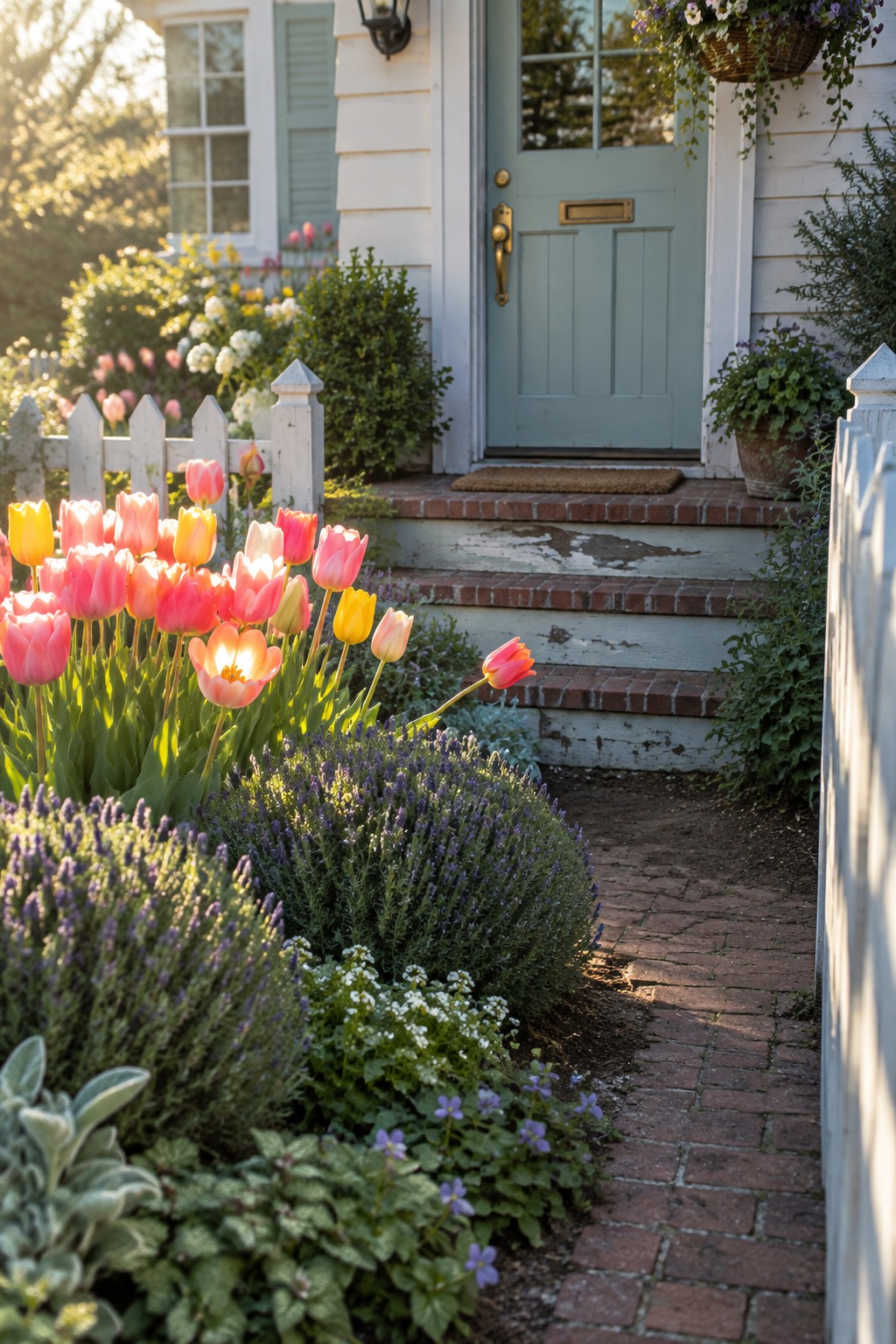
One simple way to brighten up a foundation planting is to tuck low spring bulbs right in front of the shrubs. The tulips add a burst of color at eye level while the lavender and other perennials fill in behind them for a fuller look.
This approach works best along the front of older homes or smaller yards where you want color without hiding the house. Group the bulbs in loose drifts and let a few spill toward the path so the bed feels natural rather than stiff.
Layer Plants by Height Along the Foundation
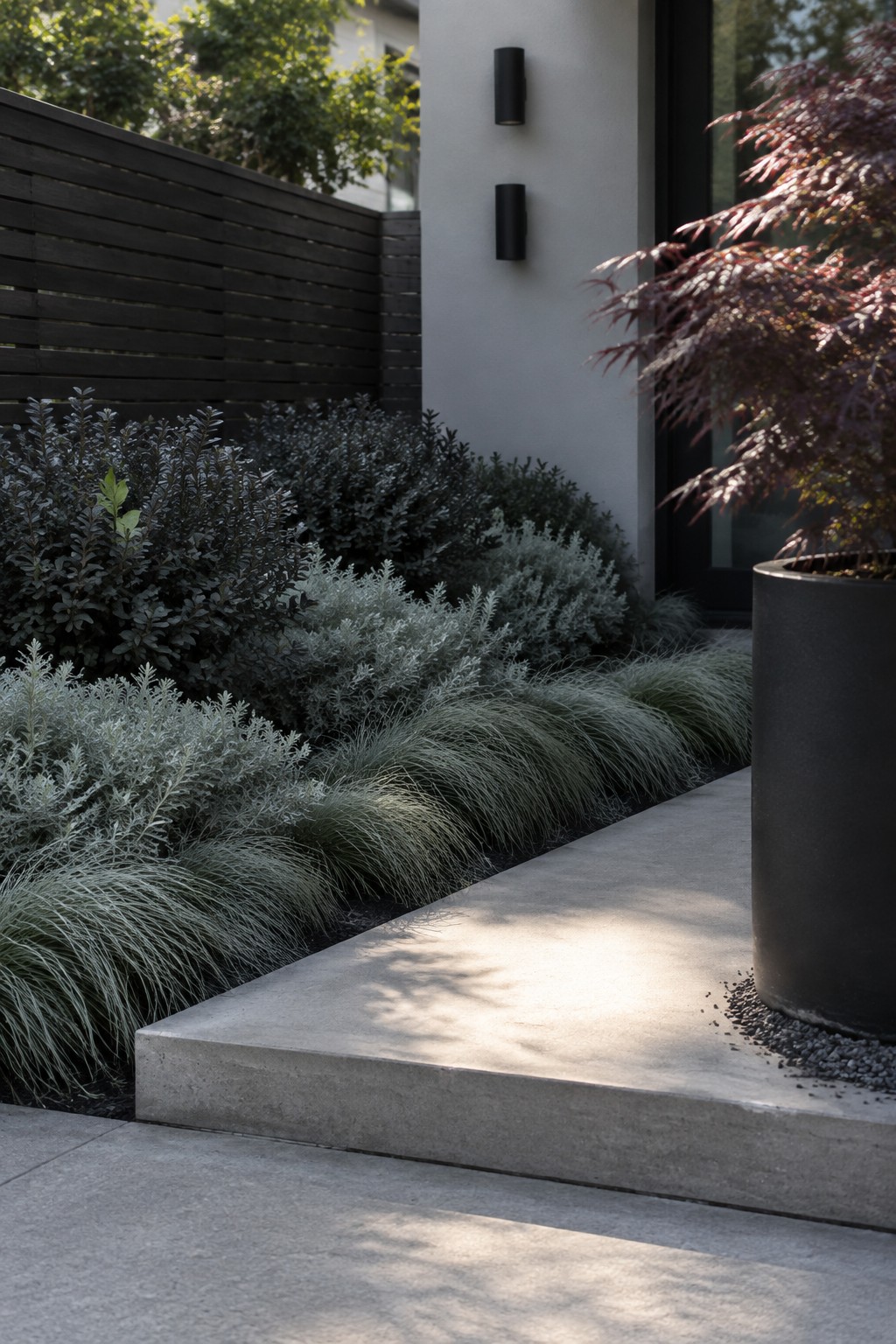
Many front yards look better when the planting starts low near the walkway and steps up toward the house. Taller dark shrubs sit at the back, silvery foliage fills the middle, and fine grasses spill forward. This simple order keeps the bed from feeling flat or crowded right at the edge of the concrete.
The approach works on homes with straight modern lines where you want some softness without hiding the architecture. Place the tallest plants against the wall, then work down in height as you move toward the path. Just leave enough room so the lowest layer can spread without spilling onto the walking surface.
Layer Plants by Height in Foundation Beds
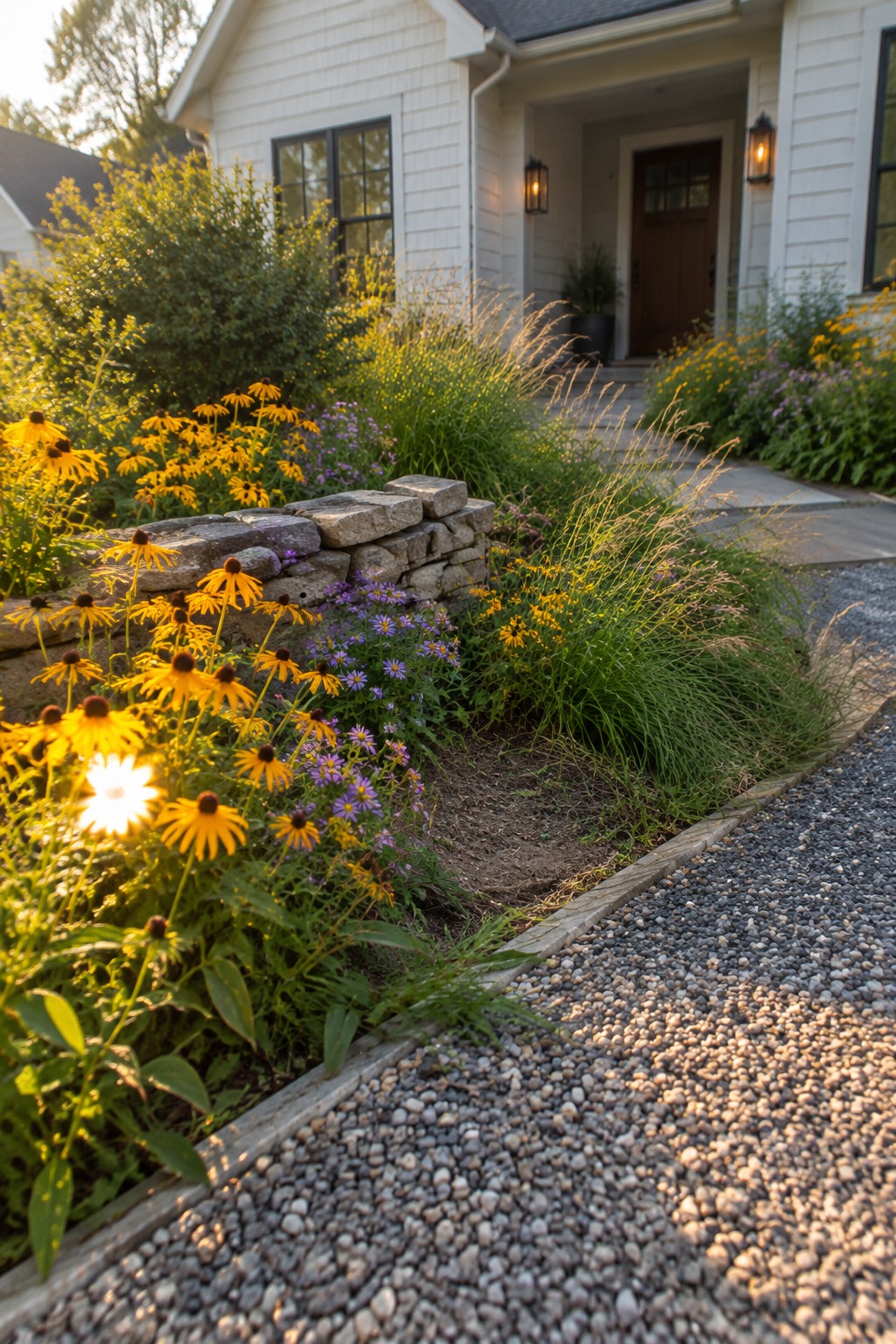
Foundation beds often look flat when everything sits at the same level. Stacking plants in layers changes that. Put shorter flowers and ground covers along the front edge, then mid-size blooms behind them, and taller grasses or perennials closest to the house.
This setup adds depth without needing a big space. It works on most homes with a clear bed line and simple edging, like stone or timber, to keep the layers from spilling onto paths or grass.
Layer Plants By Height Along The Foundation
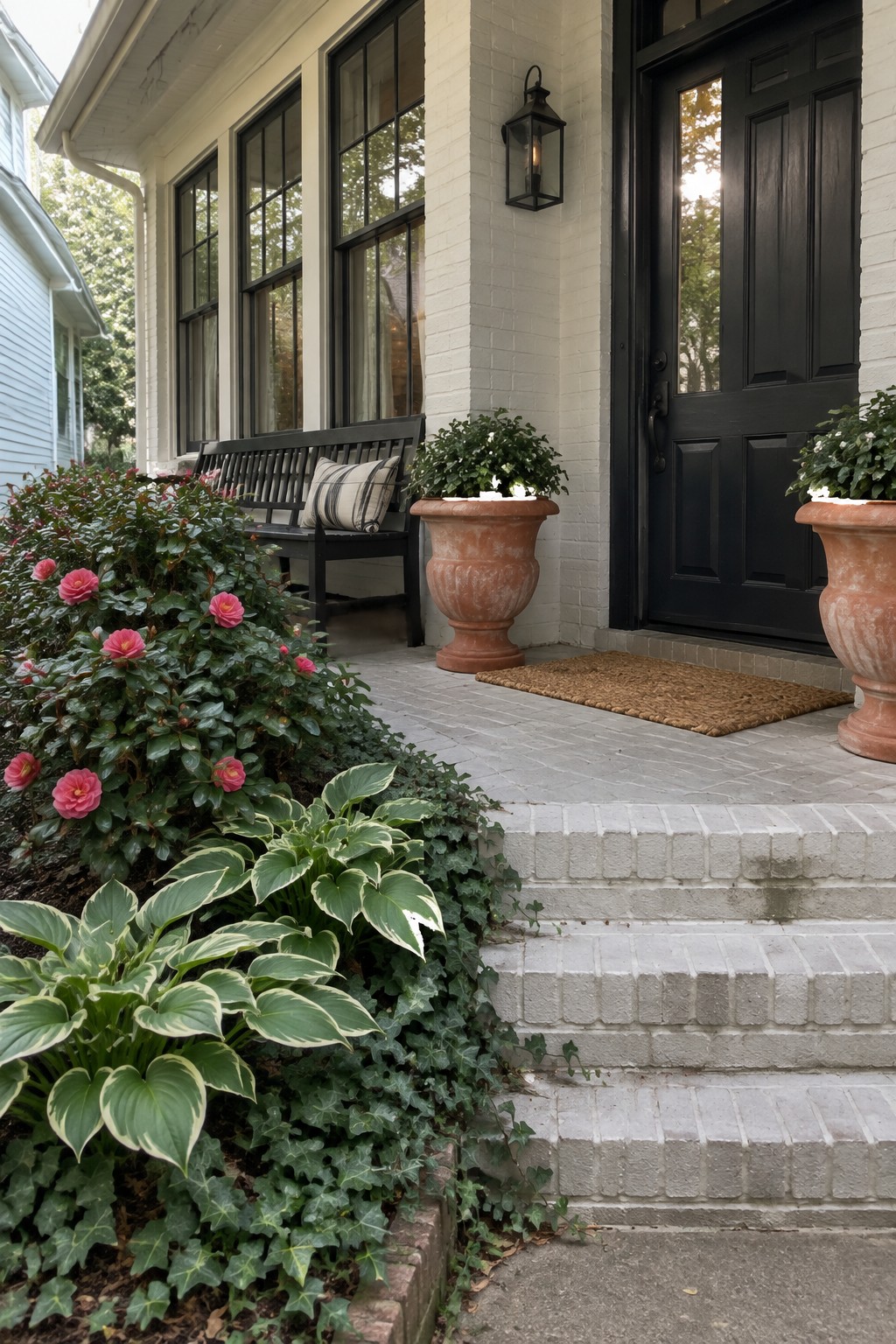
Layering different plant heights right against the house makes the foundation look less stark and helps the whole front feel more finished. The taller shrubs sit farther back while lower plants fill in closer to the walkway, creating a natural slope that draws the eye up toward the porch without crowding it.
This works well on older homes where the base of the house meets the ground in a straight line. Keep the tallest plants a foot or two away from the siding so air can still move, and use ground covers like ivy to hide any bare soil near the steps.
Layer Plants for Better Foundation Coverage
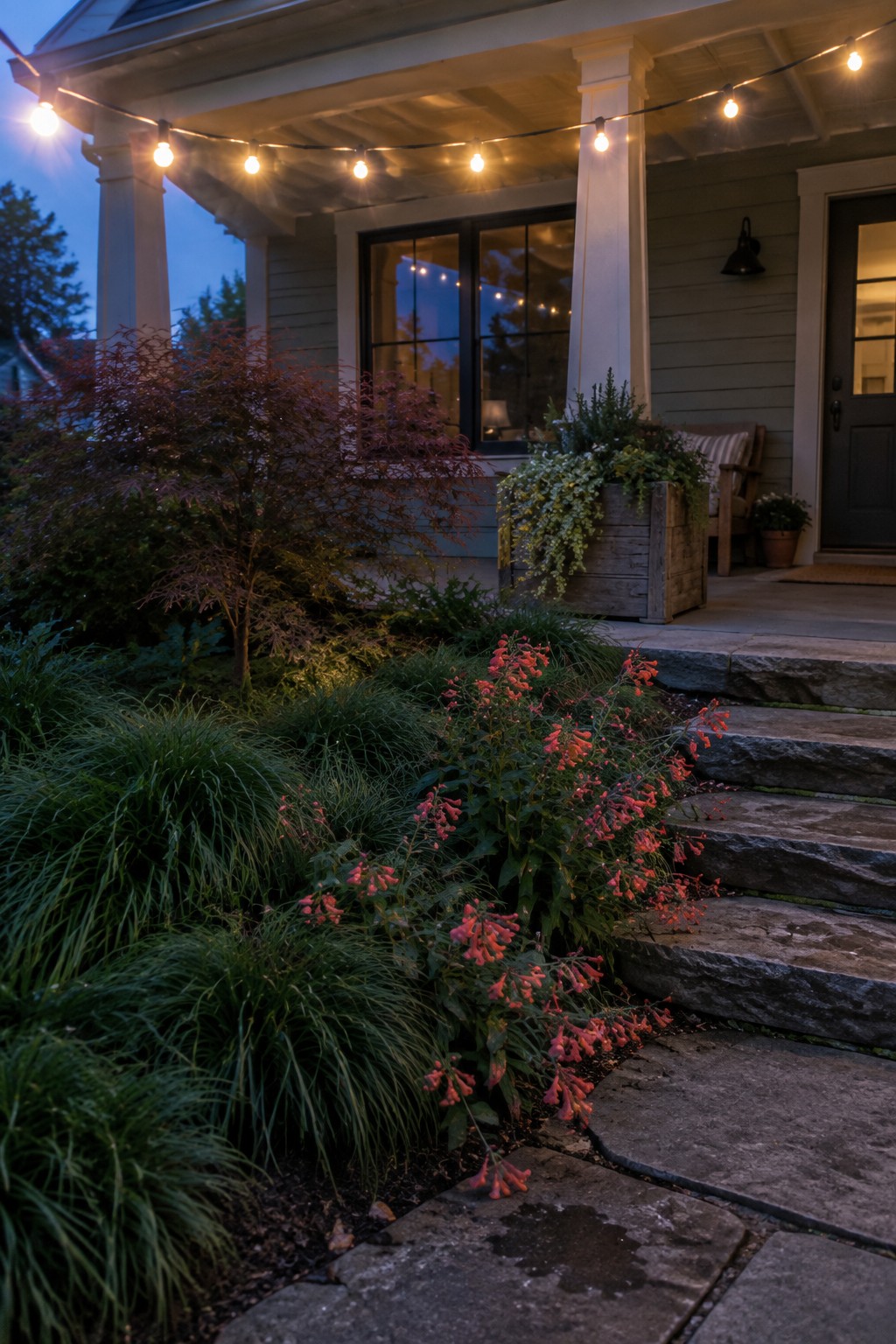
Many front yards look a bit bare right at the base of the house because everything sits at one height. Adding plants in layers changes that. Taller shrubs or small trees go closest to the wall, mid-size grasses or bushes fill the middle, and lower flowers or ground covers sit along the front edge.
This setup works on most homes with a visible foundation and a simple path or steps nearby. The lower plants can spill forward a little without blocking the walkway, while the taller ones give the bed some weight. It keeps the area looking full even when some plants finish blooming for the season.
Edge Foundation Beds With Low Fencing
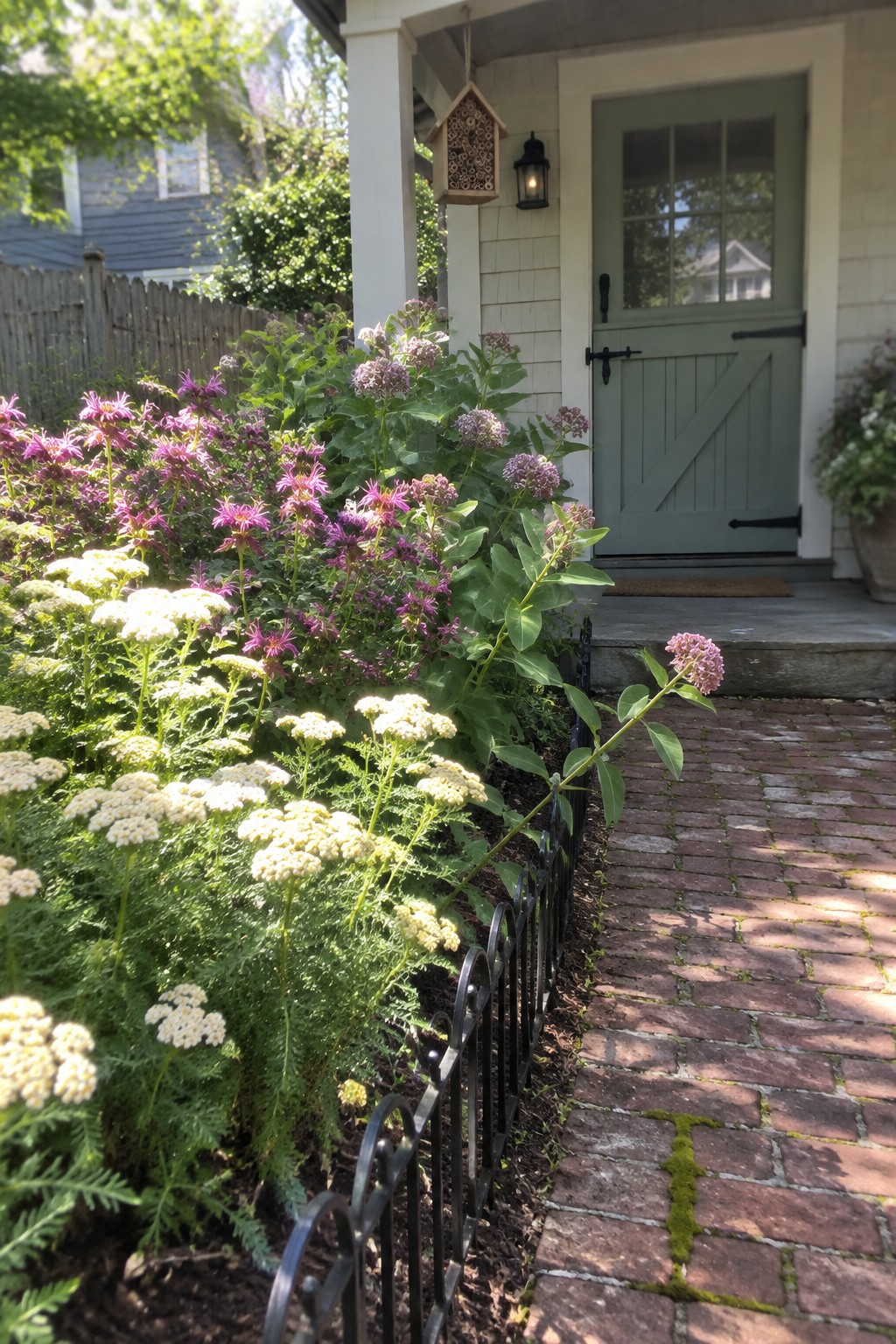
A low fence gives foundation beds a finished edge and keeps the plants from creeping onto the walkway. It also adds a bit of structure so the flowers do not look like they are just spilling out everywhere.
This approach works best on narrow beds where you want a clear line between the garden and the path. Keep the fence short so it frames the plants instead of blocking them.
Frequently Asked Questions
Q: How far should I keep the plants from my house walls?
A: Stick to at least three feet for larger shrubs so you avoid moisture issues on the siding. Smaller perennials can sit closer if the soil drains well.
Q: Do these foundation plants need fertilizer every season?
A: Most of them get by fine with the nutrients already in your soil after the first year. Add a light dose of compost in spring only if growth seems slow.
Q: What about winter damage to the leaves or branches?
A: Pick hardy varieties suited to your zone. They bounce back in spring after any winter damage. Trim off broken branches once the weather warms.
