

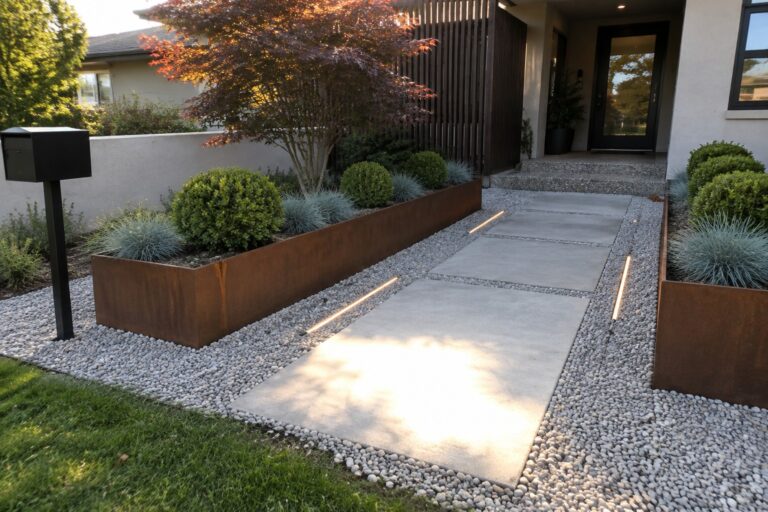
When I walk up to a house the first thing I notice is whether the front beds look intentional or just left to spread on their own.
Clean lines and repeated shapes in the planting make the whole approach feel steadier and easier to follow.
Some setups hold up better than others once the seasons change.
I have learned that keeping the beds narrow enough to reach across saves a lot of awkward trimming later on.
A couple of these layouts strike me as worth marking down so I can test them against the actual slope and sun in my yard.
Raised Metal Planters Define Clean Garden Beds
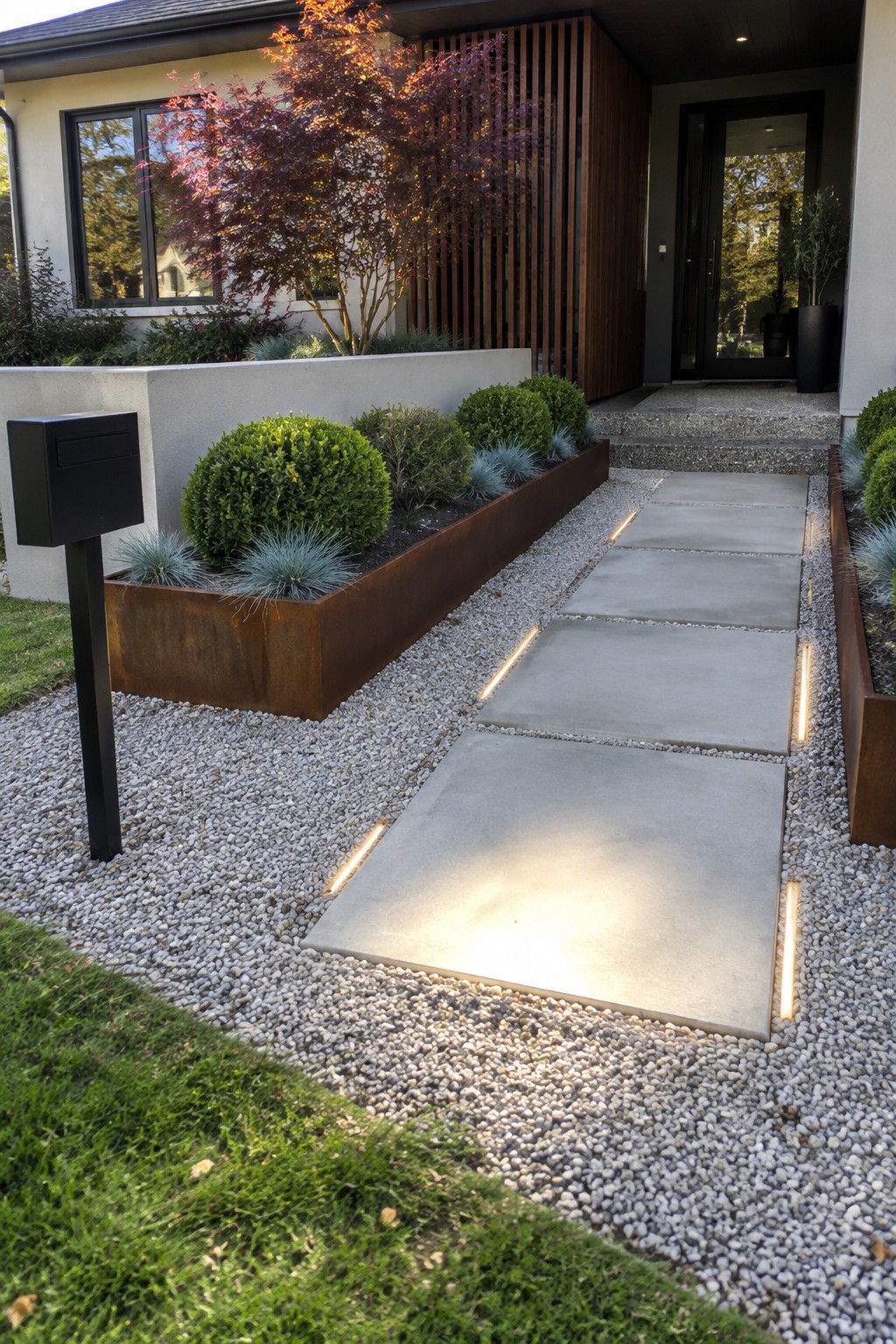
Raised metal planters give front yard beds a sharp, finished look without a lot of extra work. The straight edges keep plants contained and make the whole space feel more organized, especially when the rest of the yard uses gravel and simple paving.
This setup works well on narrow side paths or along the front walk of modern homes. Just keep the plant choices low and repeat a few varieties so the beds stay neat over time.
Linear Paths With Structured Edges

A straight concrete walkway broken up by dark stone bands keeps the front yard looking neat and intentional. The narrow gravel strips on either side and the clipped boxwood hedges reinforce those lines so the whole space feels orderly without much fuss.
This approach suits homes with simple architecture and works best when the beds stay narrow and the plants are kept trimmed. Gravel helps contain the beds and cuts down on weeding, so the clean look lasts with regular but light upkeep.
Linear Lawn Strips With Gravel Borders

A straight strip of lawn can give a front yard a clean, organized look that feels modern without much fuss. The gravel on either side keeps the grass contained and makes the whole space read as one simple shape instead of a scattered mix of plants and paths.
This works best on flat lots where you want low maintenance but still need some green. Keep the strip narrow so mowing stays easy, and use a dark edging to hold the gravel in place. A few raised beds along the sides give you room for a bit of planting without cluttering the main lines.
Raised Planters Create Structured Beds
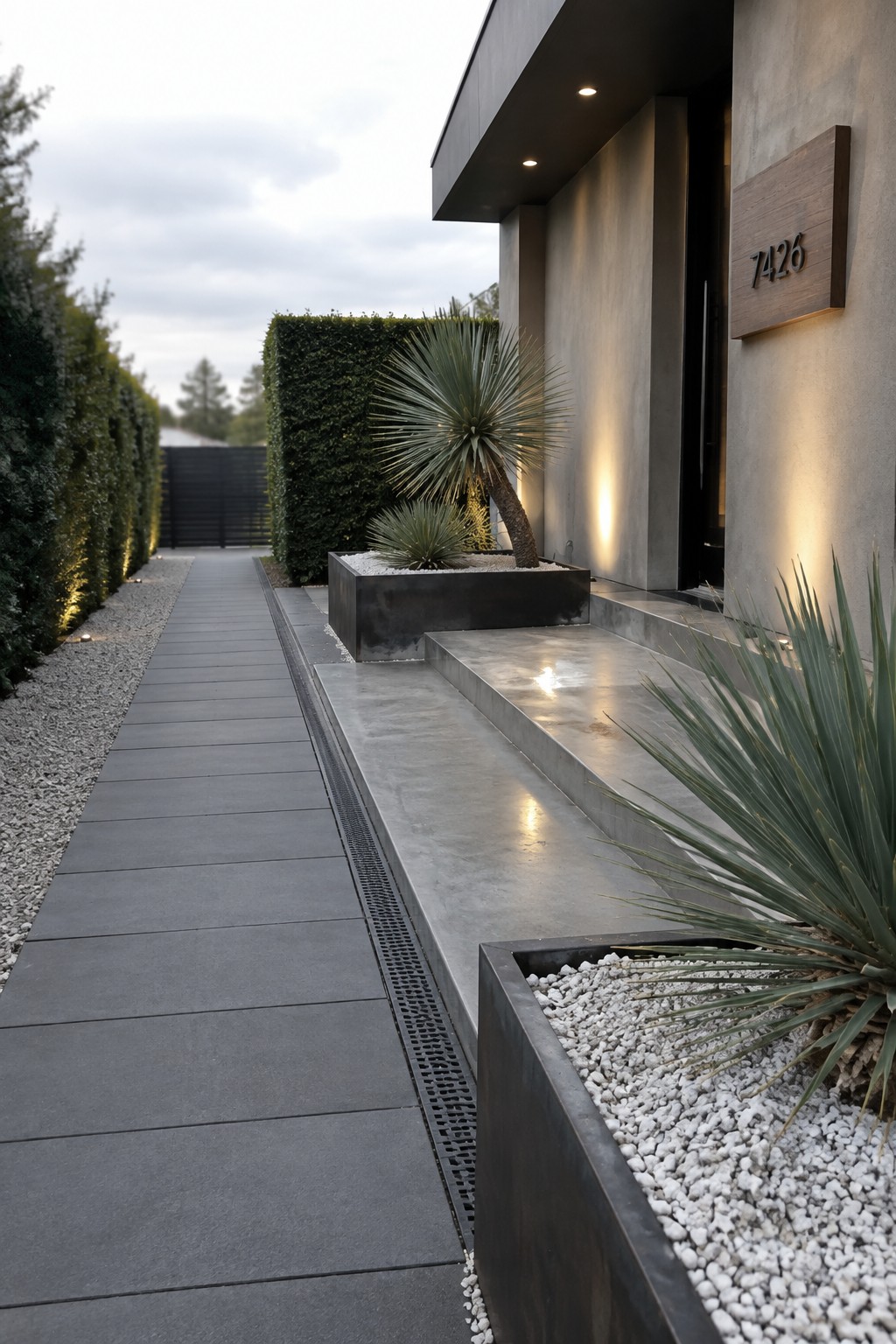
Raised metal planters give front yards a sharp, organized look without needing lots of plants or complicated layouts. They keep the beds in clean rectangles and make the whole space feel more intentional and low maintenance.
Use them along a walkway or at the entry on homes with simple lines. Dark metal works especially well against concrete and gravel, and it holds the planting medium in place so the beds stay neat year after year.
Paver Paths With Grass Joints

Large concrete pavers set with narrow strips of grass between them give a front yard a clean, modern structure without making it feel stiff. The gaps break up the hard surface and let a bit of green run through the path, which keeps the whole layout feeling balanced and simple.
This approach suits homes with straightforward architecture and smaller front yards where you want order without heavy maintenance. Metal edging along the beds helps hold the lines and keeps gravel or mulch in place, so the look stays tidy over time.
Gabion Walls For Structured Beds

Gabion walls give front beds a solid edge that stays put and keeps the planting neat without constant trimming. The wire cages filled with stone create a low wall that holds back soil and lets the grasses and succulents sit at different heights along the path.
This approach works best on modern homes where the beds run parallel to a walkway. It needs little maintenance once the plants settle in, and the stone texture pairs well with wood decking or concrete paths.
Raised Metal Planters Keep Beds Neat
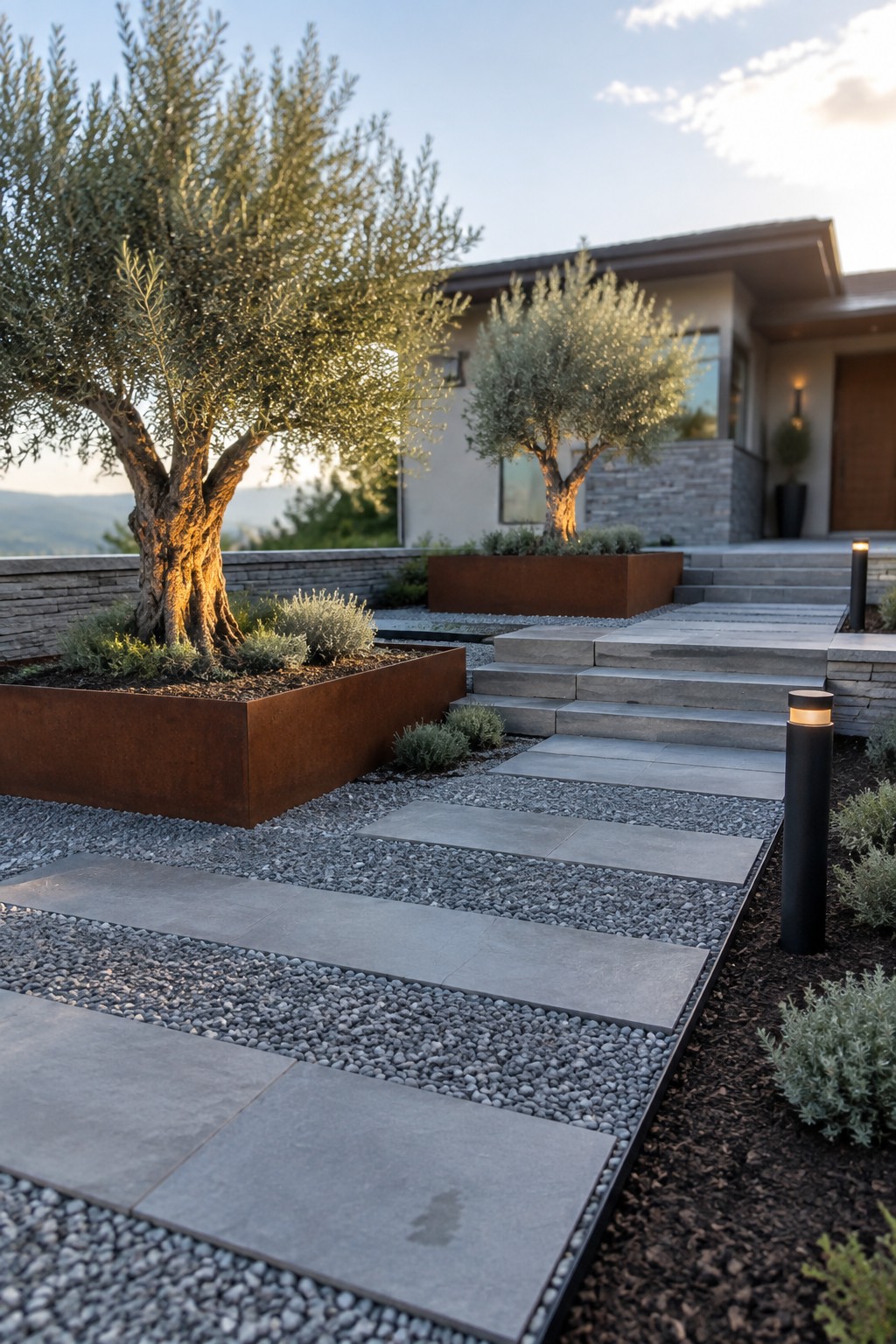
Raised metal planters give front yards a clean structure that lasts. They box in the soil and plants so the edges stay sharp, and the material holds up well without much upkeep. The warm rusted finish also blends easily with gravel and stone.
This setup works best on homes with modern lines where you want clear separation between the path and the garden. Keep the planters large enough for the trees you plan to use, and line them up along the walkway so the whole front feels balanced.
Structure Front Beds With Clean Edging
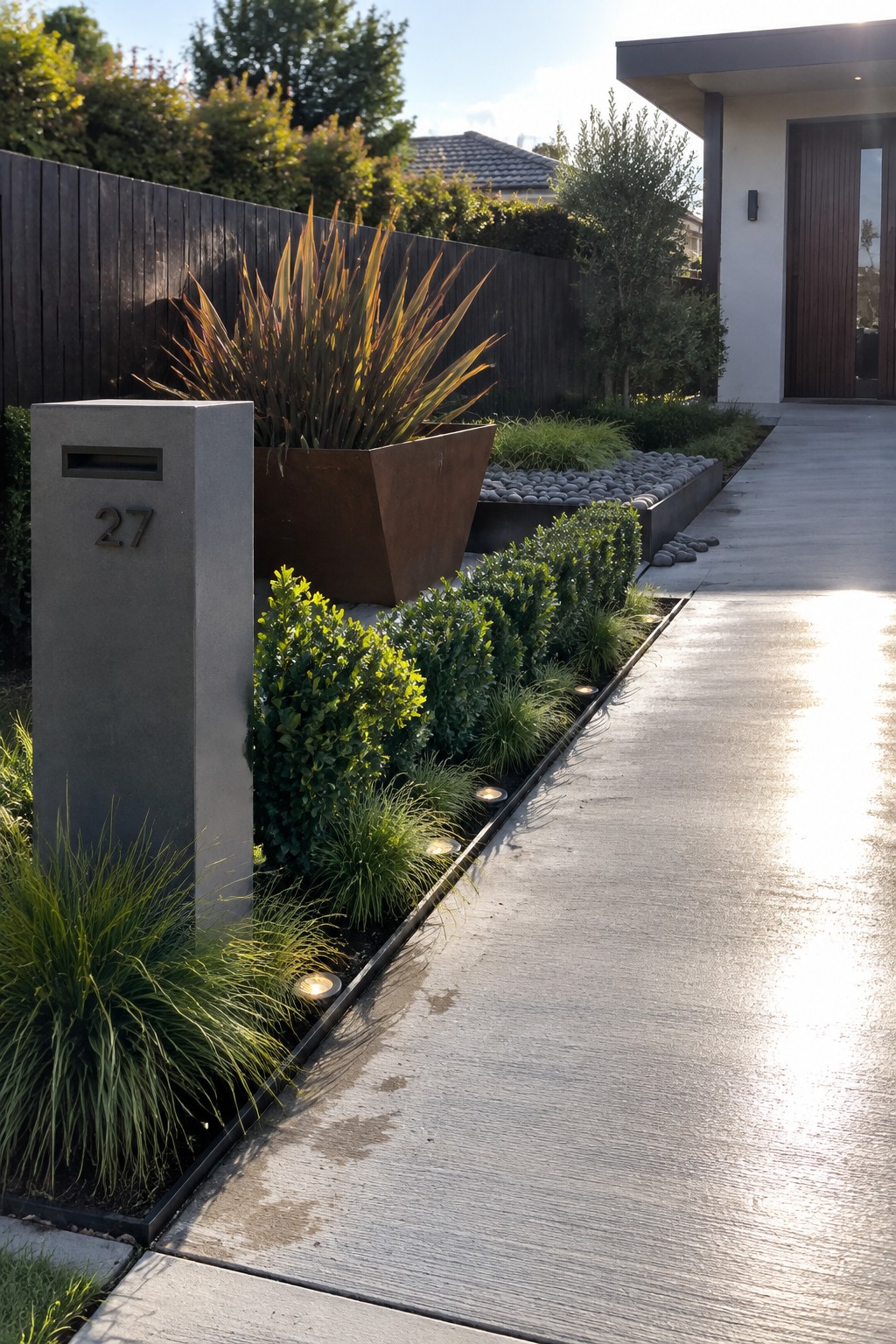
One way to get a modern look in a front yard is to keep the planting beds straight and clearly edged. The beds run in a long, narrow strip beside the path, filled with low shrubs and grasses that stay neat without much fuss. This approach makes the whole space feel organized even when the plants grow a bit.
It works well on homes with simple concrete paths or small front setbacks. Try it if you want something that stays tidy year round and does not need constant pruning. Just make sure the edging material matches the path so the lines stay consistent.
Use a Large Boulder for Natural Contrast
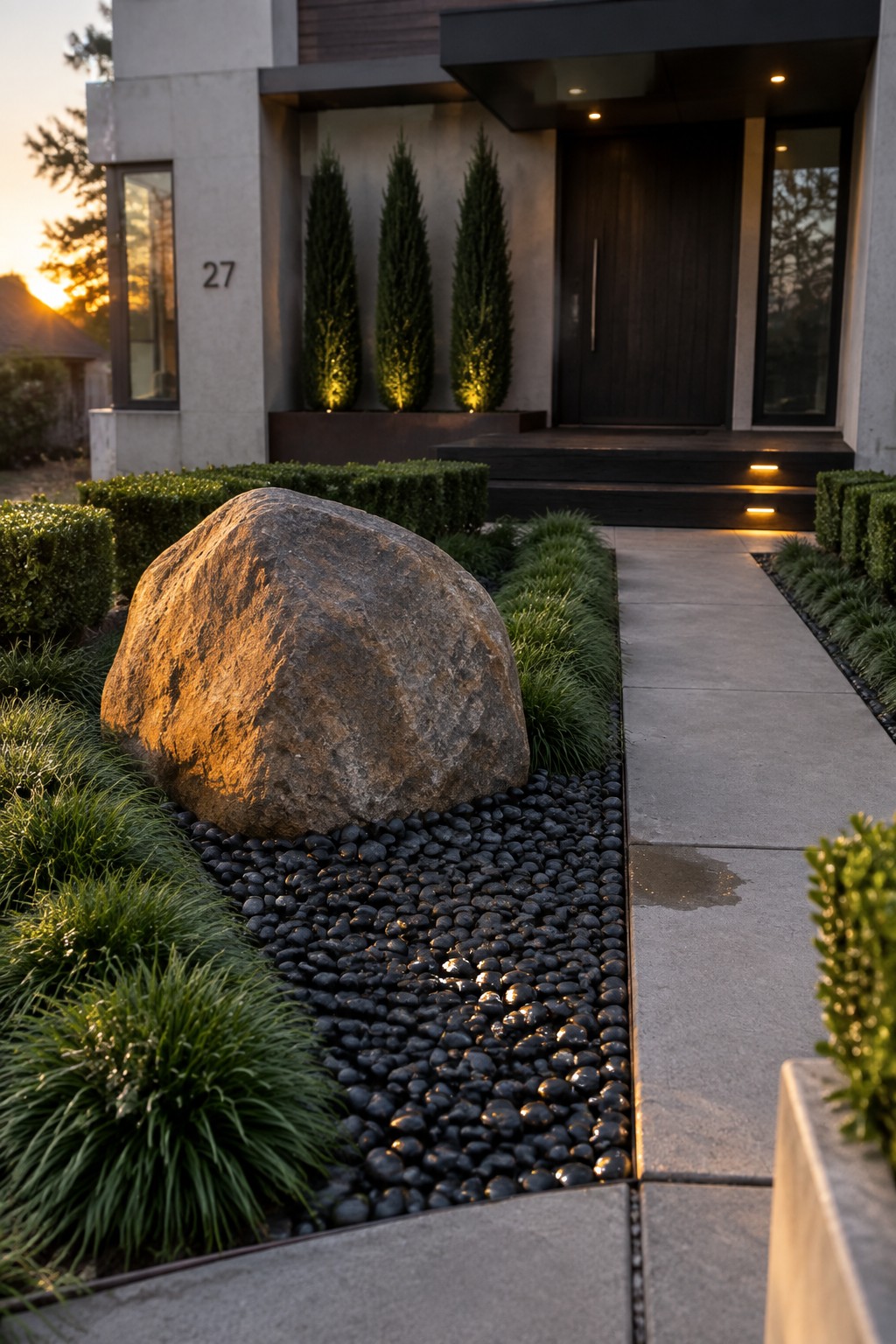
A large boulder gives a front yard bed real presence without adding clutter. The dark pebbles around it keep everything looking neat and modern while the rock itself brings in some texture that plants alone cannot match.
This works best on homes with clean architecture and wider planting areas. Keep the bed shape simple, use low plants around the edges, and make sure the boulder sits low enough to feel grounded rather than perched.
Raised Planters Define Clean Entry Beds
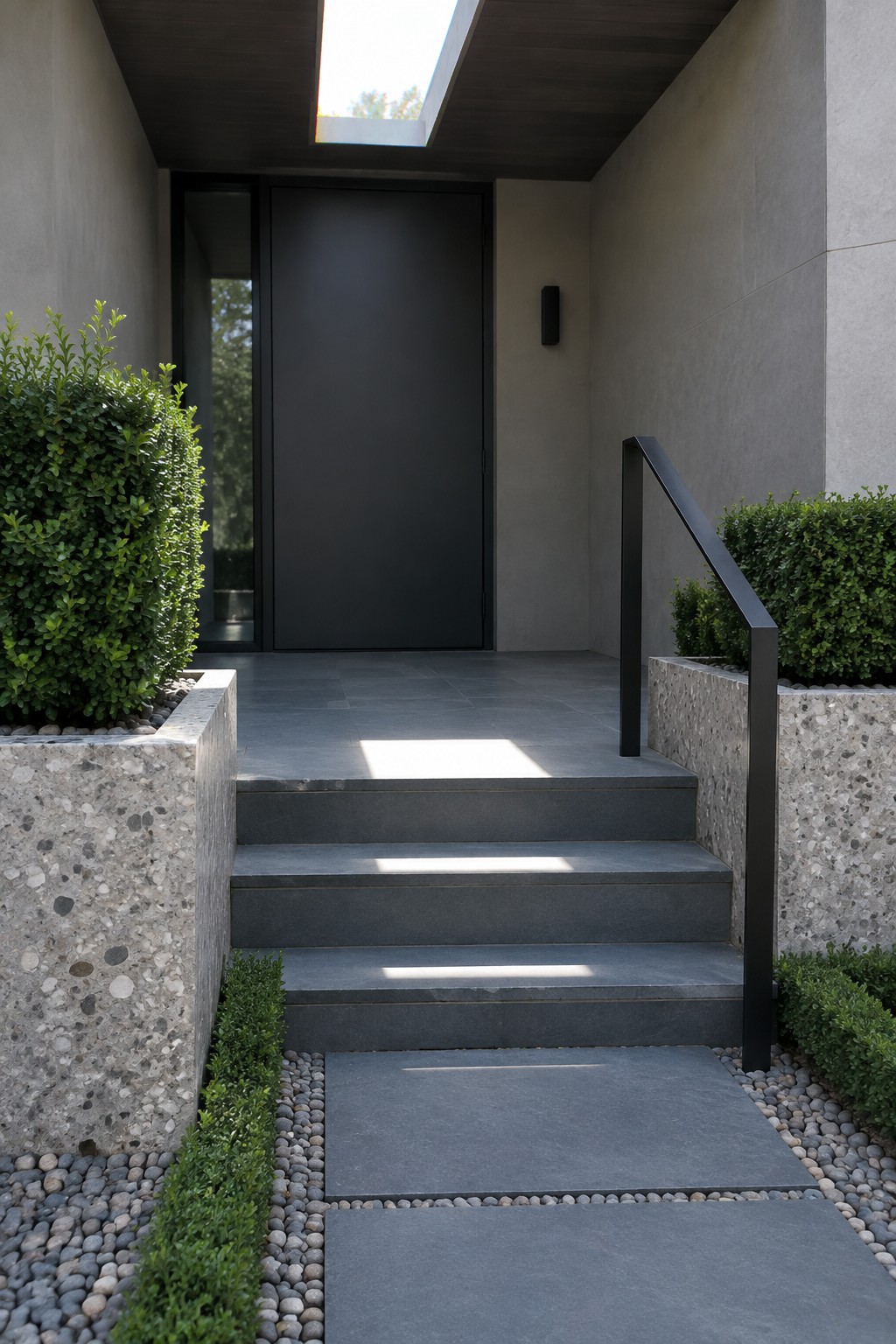
Raised planters give the front entry a clear shape without needing a lot of plants. The concrete boxes hold the shrubs in place and keep the gravel from spreading, so the whole area stays neat even after a season or two. This setup works especially well when the house has simple lines and you want the landscaping to match that same order.
It suits homes with a modern or minimalist feel and works best on flat or gently sloped lots. Keep the plant choices low and evergreen so the structure stays visible year round. Avoid overcrowding the boxes or the clean effect gets lost.
Raised Planters Shape Structured Front Beds

Large dark planters give the front beds a clear rectangular shape that stays neat over time. They keep plants contained and create a strong grid pattern when paired with the moss and gravel sections.
This setup works well on modern homes where you want simple maintenance and defined edges. It also helps separate planting from walking areas without needing constant trimming or weeding.
Define Beds With a Low Stone Wall
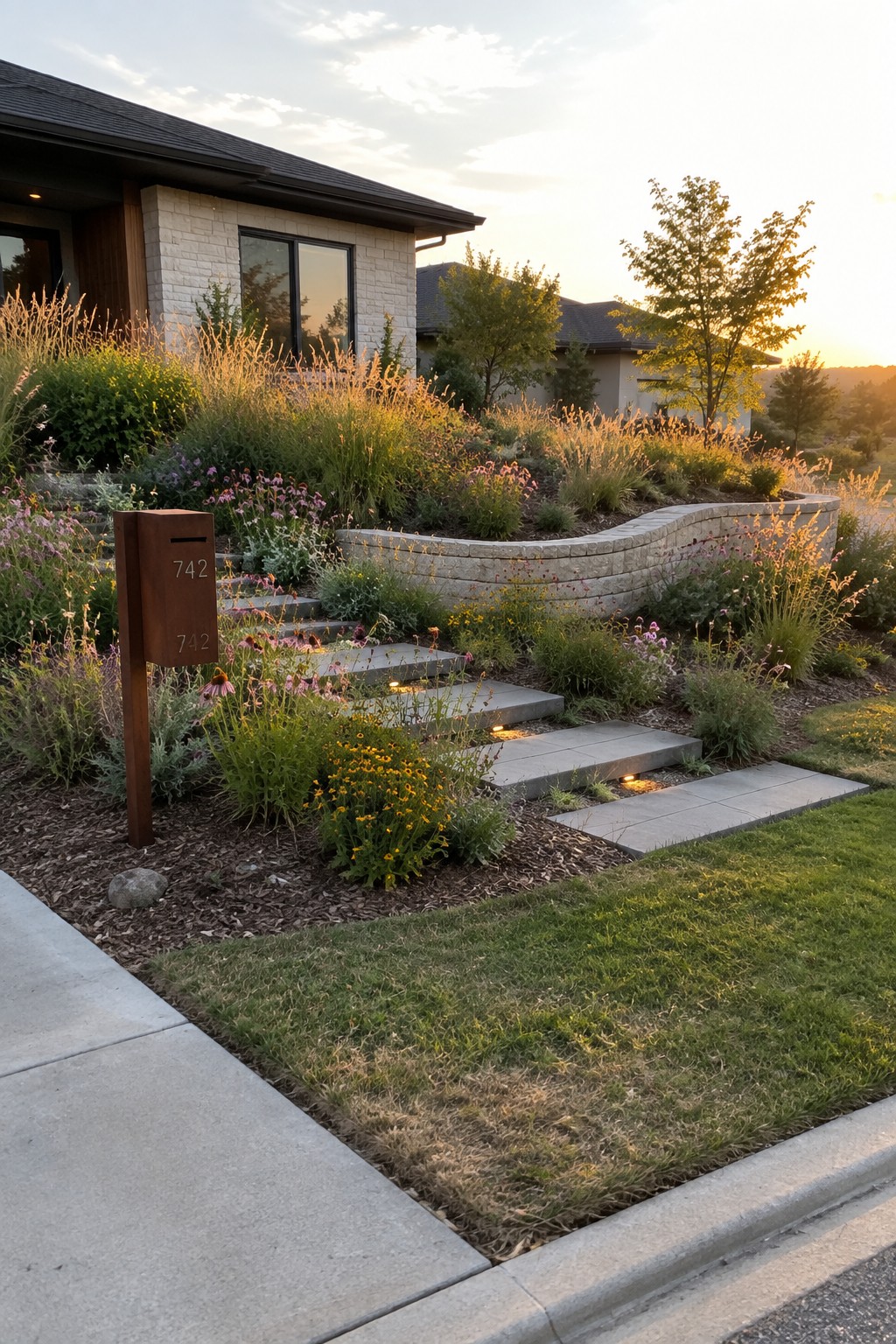
A low stone wall turns loose planting areas into clear, structured beds. It gives the front yard a finished look while handling small changes in grade without needing a big retaining system.
This approach works well on lots that slope toward the street. Keep the wall height modest, follow the natural curve of the land, and let the plants grow right up to the edge so the stone reads as part of the garden rather than a separate feature.
Structured Hedges Frame the Entry Path

Low boxwood hedges clipped into simple rectangles give a front yard a tidy, organized look that holds up year round. Placing them in gravel beds along a concrete path keeps the lines sharp and the beds clearly defined without needing constant upkeep.
This works best on homes with straight architecture where you want the planting to match the clean feel of the building. The gravel also helps keep weeds down and gives the beds a finished edge even when the ground is bare. Just plan for occasional trimming to keep the shapes neat.
Stone Paths And Metal Edging

Stone paths made from large pavers work well when you want clean lines without a lot of fuss. The metal edging keeps the planting beds in place and gives the whole front yard a neat, structured look that stays that way with little upkeep.
This approach suits modern homes where the goal is simple maintenance and clear shapes. It works best on flat lots with gravel or low-water plantings, and the edging helps stop grass or mulch from spilling onto the walkway.
Raised Metal Planters Keep Planting Beds Looking Sharp
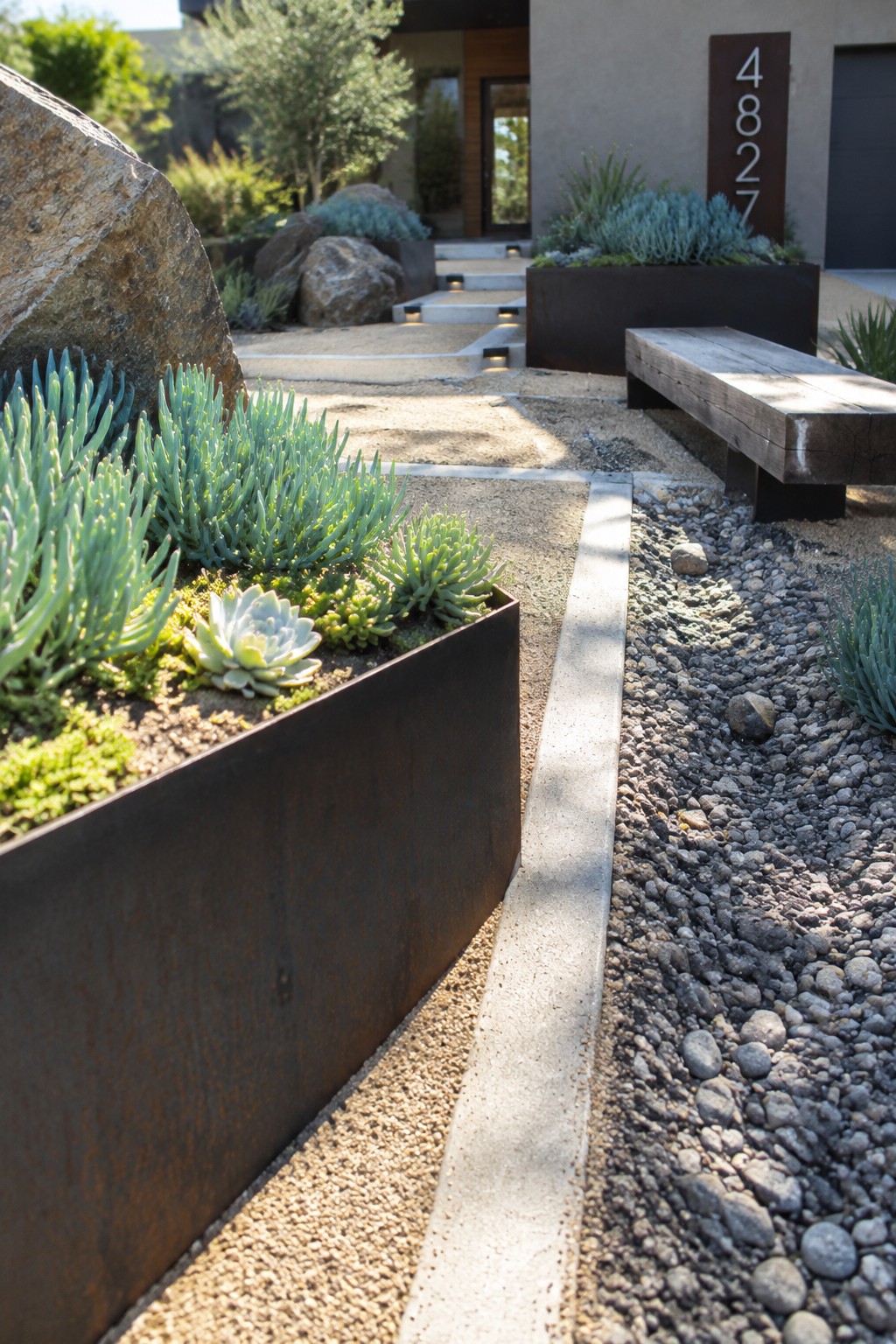
Many front yards end up with beds that spread or lose their shape over time. Raised metal planters solve that by giving the planting area a hard edge that stays put and keeps the layout looking intentional.
They work especially well on modern homes where the goal is clean lines and low upkeep. Place them along a path or near the entry and fill them with drought-tolerant plants so the whole area stays tidy with minimal watering or trimming.
Frame the Path With Tall Narrow Hedges
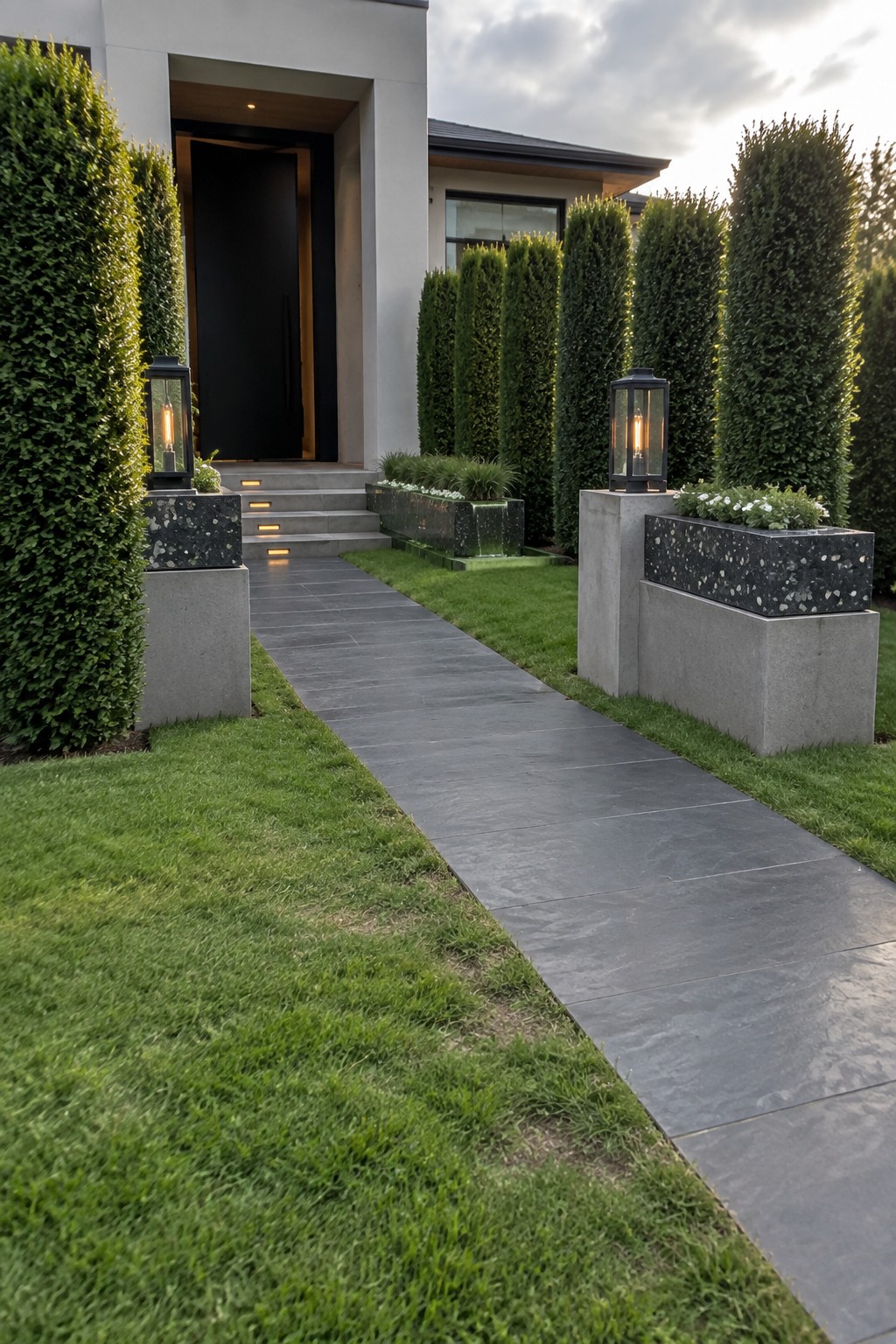
Tall narrow hedges give a front yard a clear sense of order. They keep the space from feeling scattered while still leaving room for grass and smaller plantings on the sides. The straight lines also make the walk to the door feel more direct.
This works best on homes with simple architecture where you want the landscape to feel modern but not too busy. Plant them evenly along both sides of the path and trim them regularly so they stay uniform. Concrete planters placed at the start of the walk can hold lighting without adding extra clutter.
Concrete Steps With Underlighting

Concrete steps work well in front yards because they give a clean, simple path that does not compete with the plants. The soft light along the edge of each tread makes the steps easy to see after dark and keeps the whole area feeling open instead of cluttered.
This idea suits modern homes with straight lines and structured beds. Use dark metal edging on the beds so the glowing steps remain the main feature, and keep the planting low and orderly along the sides.
Blend A Bench Into Stone Bed Edges
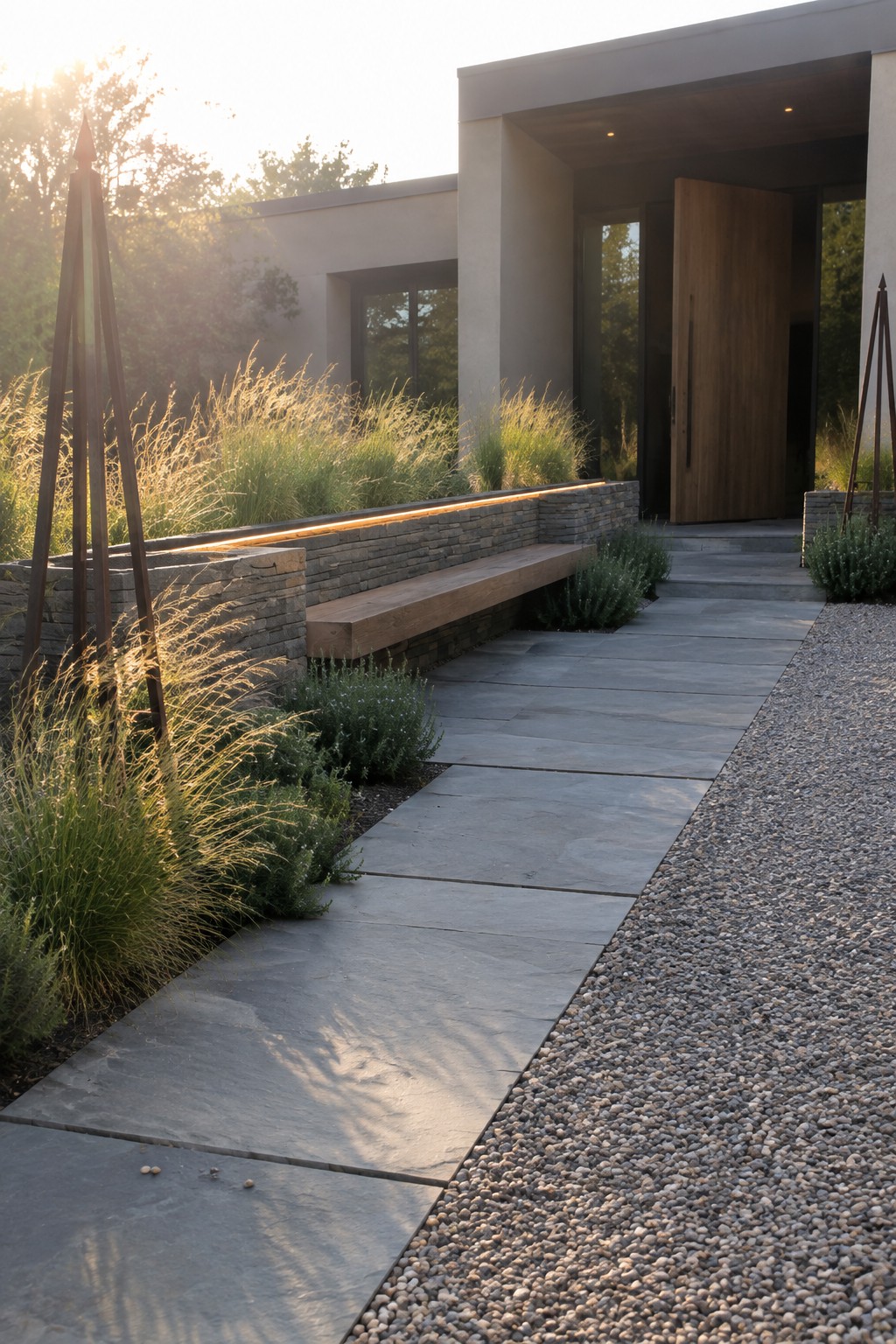
One simple way to get clean lines in a front yard is to build a low stone wall around your planting beds and tuck a bench right into the edge. This turns the bed into a functional boundary while keeping the whole area looking structured and intentional rather than scattered.
It suits modern homes especially well because the flat stone and straight bench lines echo the architecture without adding clutter. Try it along a walkway where people might actually stop and sit, and keep the planting behind the bench fairly tall and simple so the bench stays visible.
Raised Beds For Clean Planting Lines
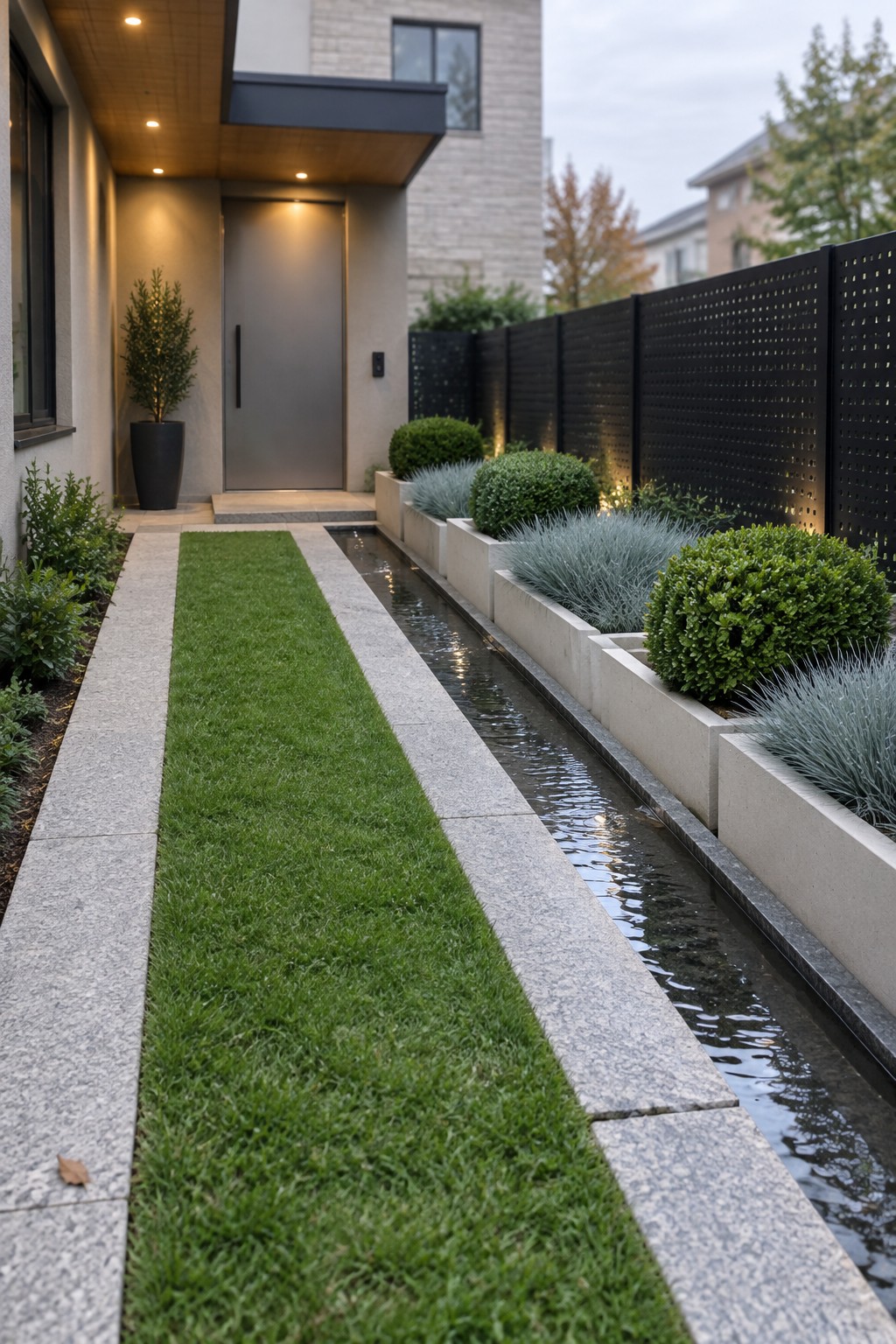
Raised beds give the front yard a tidy, organized feel without a lot of extra work. The concrete edges create sharp boundaries that keep the planting areas looking deliberate and modern, especially when paired with a simple path alongside.
This approach works best on homes with a straight entry route or narrow side strip. Fill the beds with a mix of compact shrubs and grasses that stay neat year-round, and the whole space will feel more structured with minimal upkeep.
Frequently Asked Questions
Q: Do I have to rip out all my grass to get those structured beds?
A: Start by marking off narrow strips along paths or the house foundation. Cut the sod cleanly with a spade and add simple edging to hold the new shape. This keeps most of your lawn intact while giving you the modern lines.
Q: How do I stop the beds from looking ragged after the first year?
A: Trim plants the moment they push past the edges instead of letting them fill in wild. Add a thin layer of mulch right after planting to block weeds and keep soil from washing out. And check the borders once a month during spring growth.
Q: What plants actually stay neat without constant fuss?
A: Choose slow-growing shrubs like dwarf yew or lavender that hold a natural shape. Space them evenly so they touch but do not overlap the bed lines. This cuts down on pruning while keeping the clean structure.
