

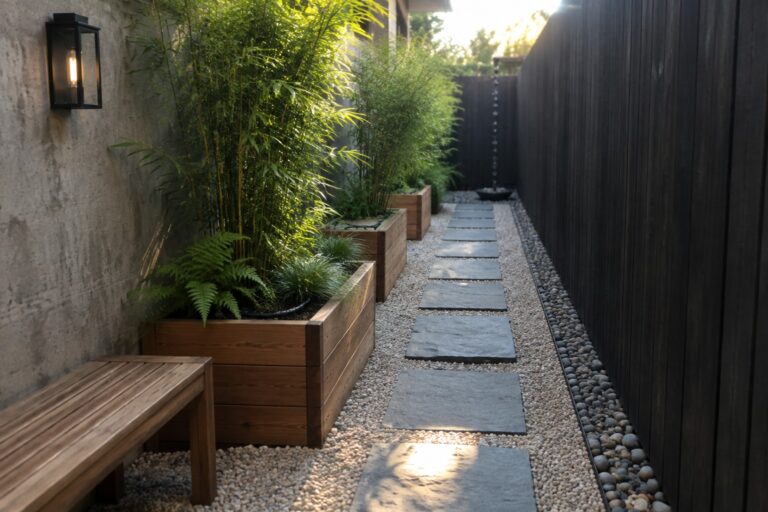
Narrow side yards tend to get ignored because their shape makes standard garden plans feel off balance from the start.
I have found that focusing on vertical elements and low ground covers helps these spaces gain purpose without overwhelming the narrow footprint.
A well placed path often becomes the feature that ties the whole area to the rest of the yard.
Over time the plants settle in and reveal which ideas actually hold up to foot traffic and changing weather.
Testing a few simple repeats in the layout usually shows what will last.
Raised Planters Make Narrow Yards More Practical
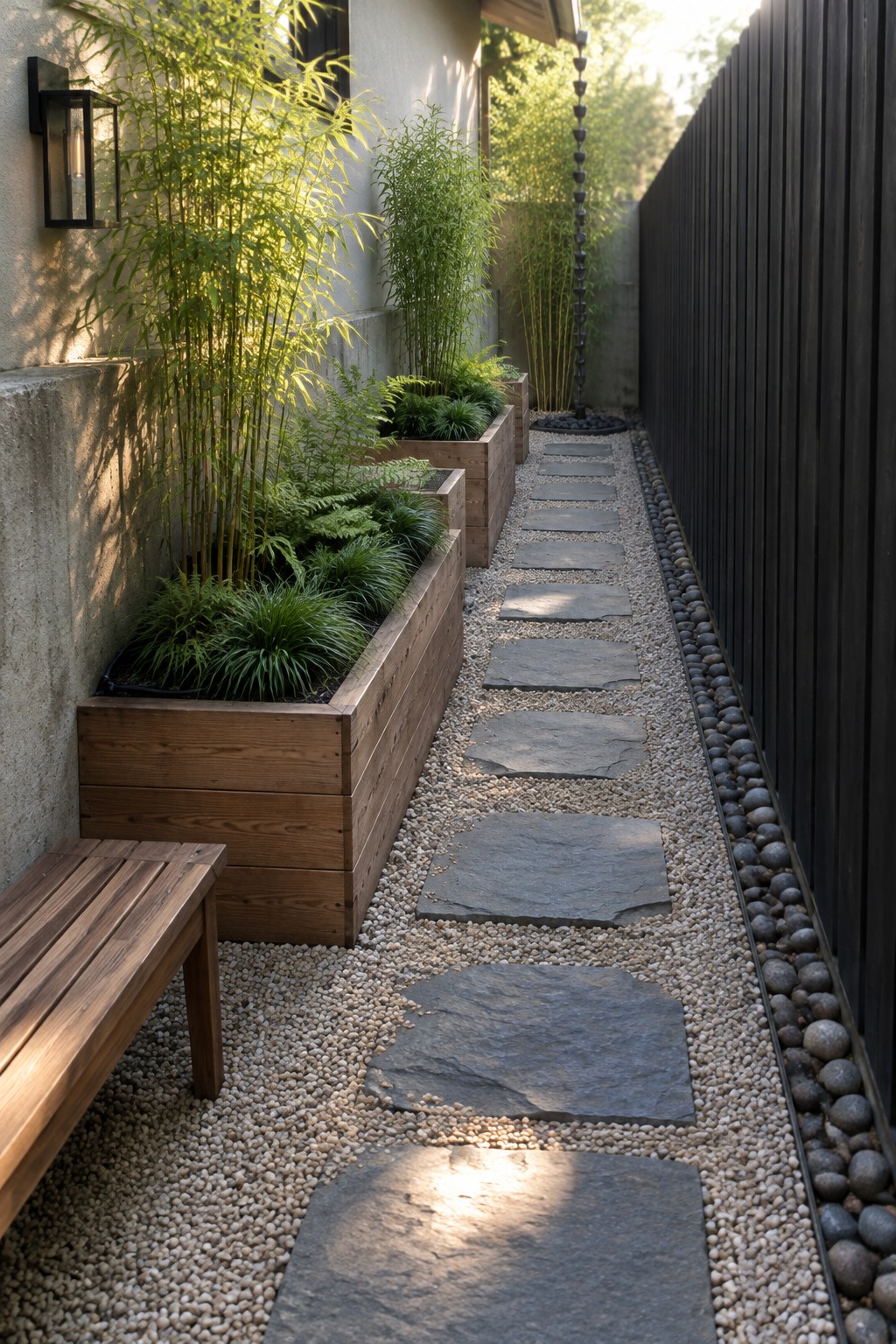
Raised planters solve one of the biggest problems in tight side yards by giving you planting space without eating into the walkway. Instead of trying to dig beds right next to the house or fence, you build up with simple wood boxes that sit along one side. This keeps the ground level clear for walking and still lets you grow taller plants like bamboo that add height and privacy.
The setup works best on homes where the side yard is mostly a pass-through or utility space. Keep the boxes at a height that matches the fence so everything feels like one clean line. Just make sure the wood is treated for ground contact and the boxes have drainage holes, since side yards often stay damp.
Brick Paths Keep Narrow Side Yards Functional
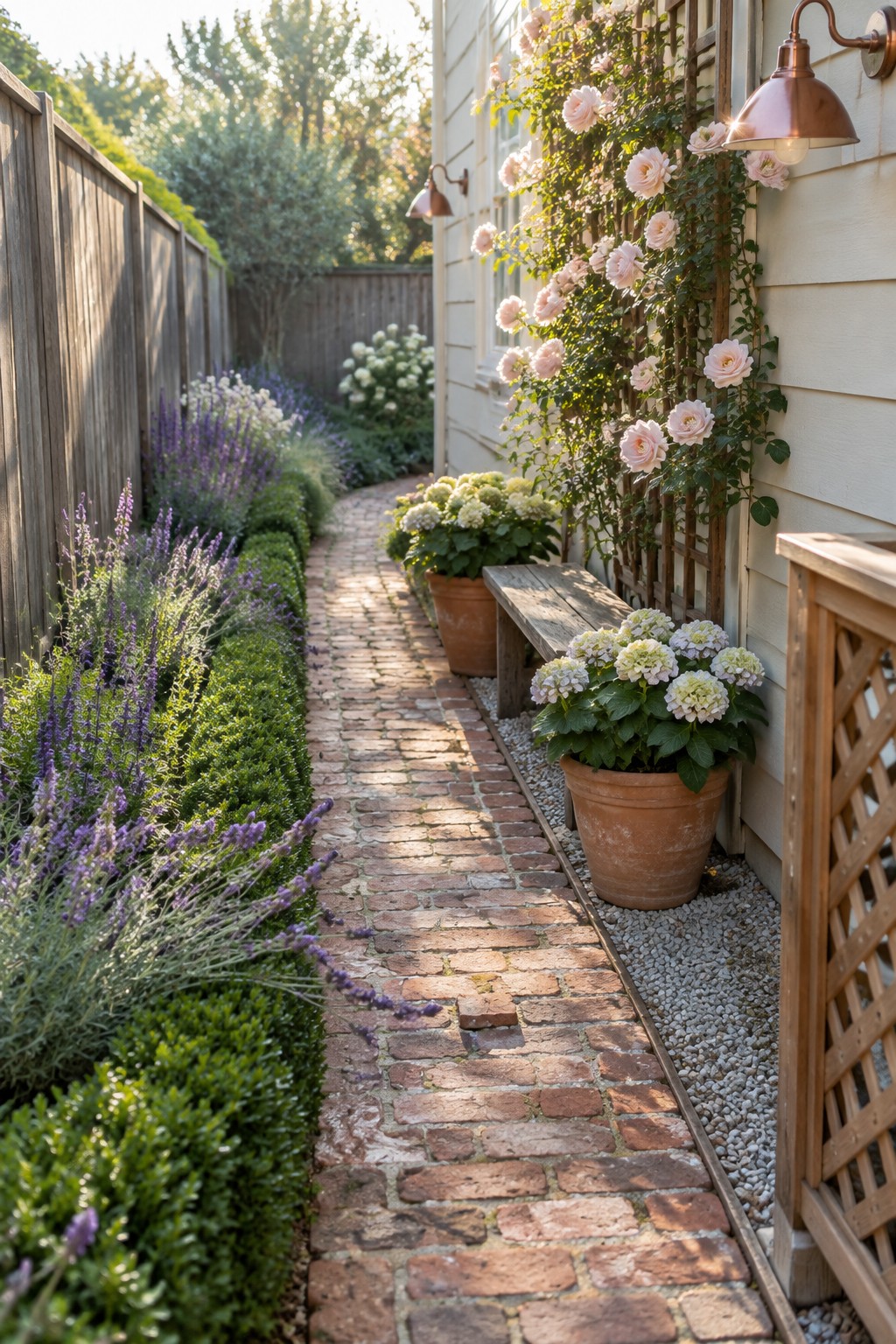
A simple brick path gives a narrow side yard a clear purpose without eating up much space. It turns what might feel like leftover ground into a usable walkway that still leaves room for planting on both sides.
This setup works best on homes with long, tight passages where you need access but do not want a wide paved area. Use the same brick for the path and keep the edges low so plants can spill over naturally. Stick with a mix of taller border plants on the fence side and a few pots near the house to add height without crowding the walk.
Stone Paths Keep Narrow Side Yards Practical
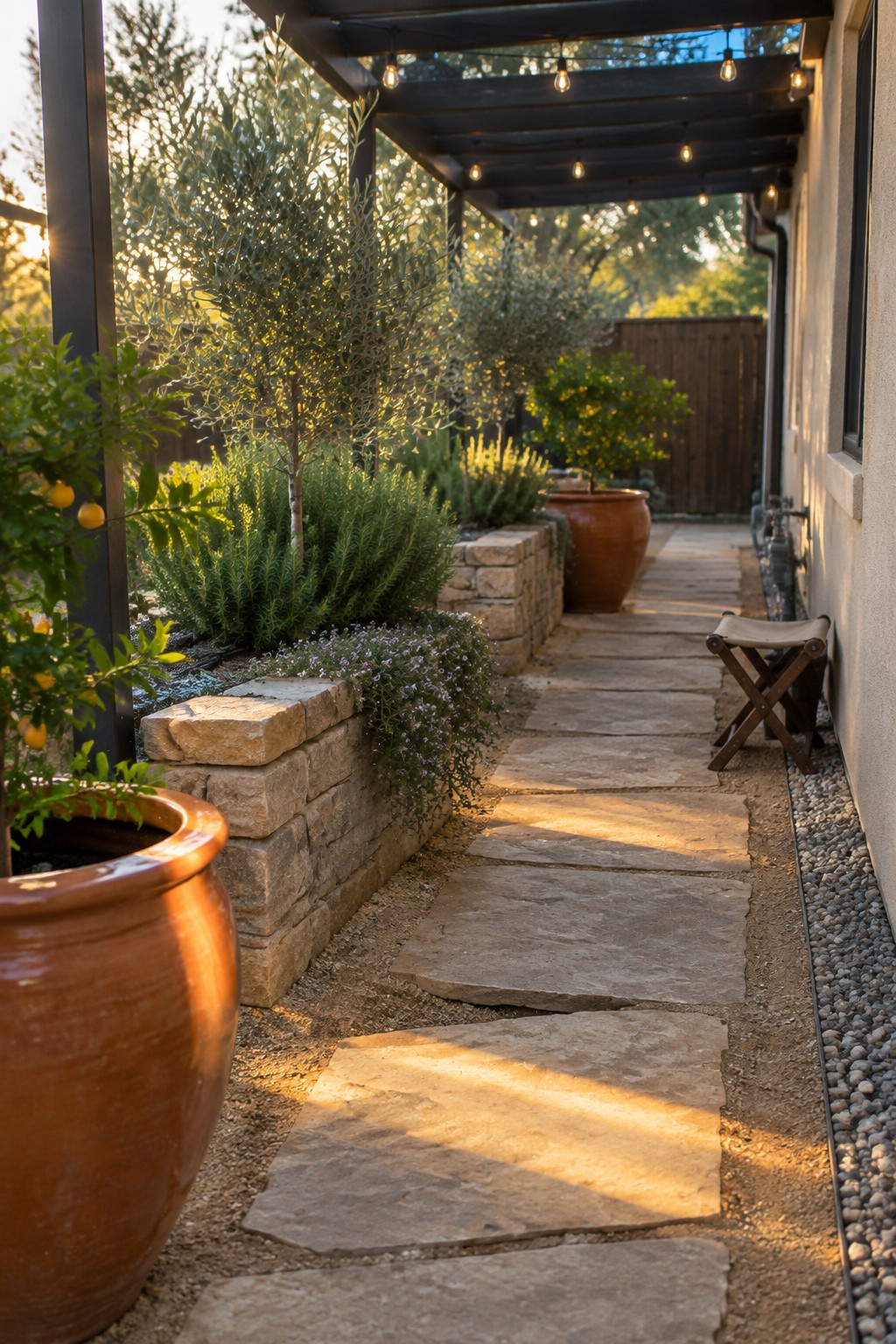
A simple stone path gives a narrow side yard a clear route without eating up planting space. The flat pavers sit low enough that they do not feel like a barrier, and the gravel strip along one edge helps with drainage while keeping the whole thing from looking messy.
This approach works well on homes where the side yard mainly serves as a walkway to the backyard. Keep the path about three feet wide, use low edging on the house side, and stick with tough shrubs or small trees so nothing crowds the route over time.
Raised Beds Along Narrow Side Yard Paths
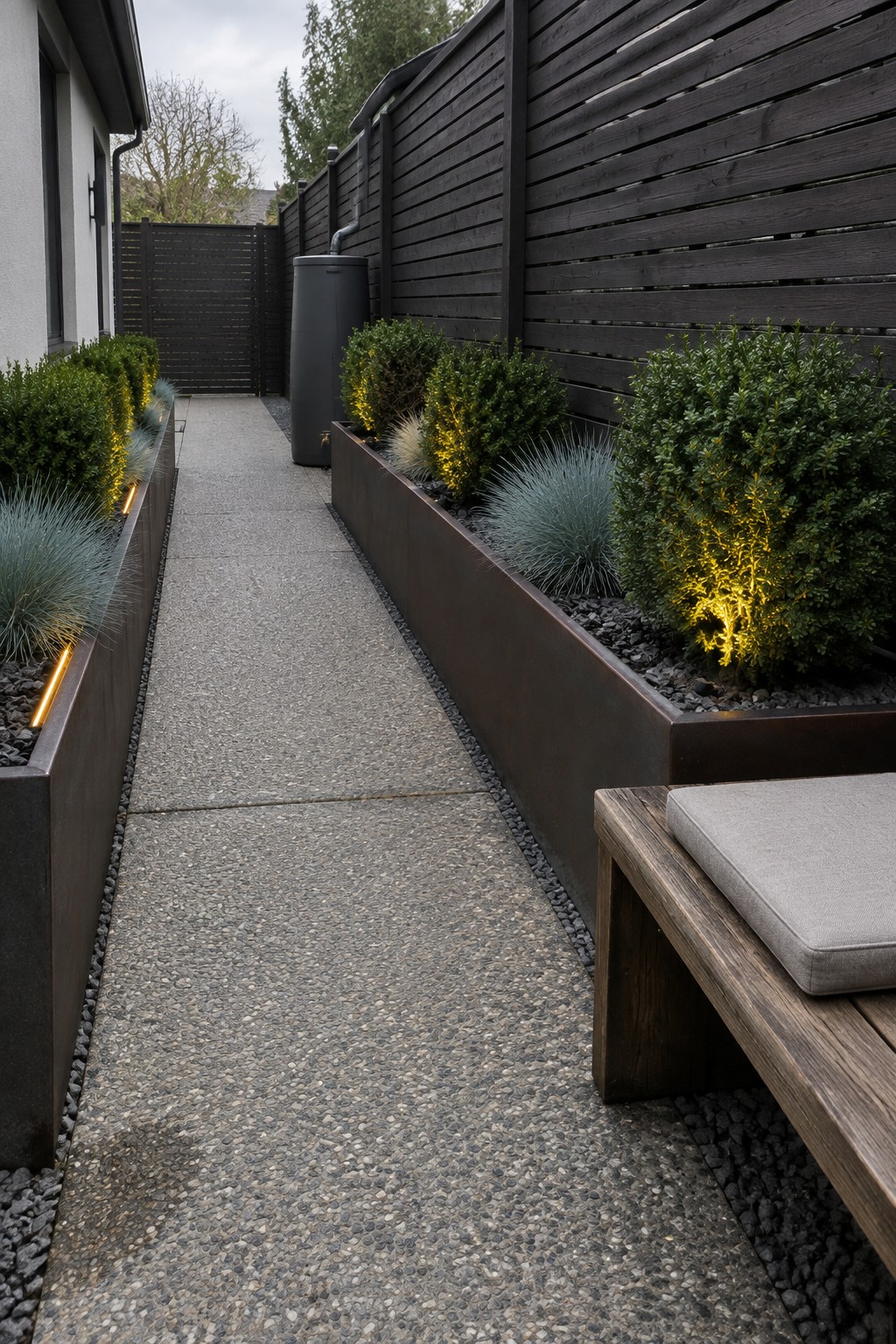
One simple way to handle a tight side yard is to run raised planters along the edges of the path. This keeps the walkway open and usable while adding planting space that does not eat into the width. The beds create clear boundaries without needing wide borders or extra structures.
Metal planters work well in this setting because they stay slim and hold up over time. Place them on both sides if space allows, or just one side if the area is especially tight. Low lighting along the base helps at night and keeps the path practical for everyday use.
Stepping Stone Paths For Narrow Side Yards
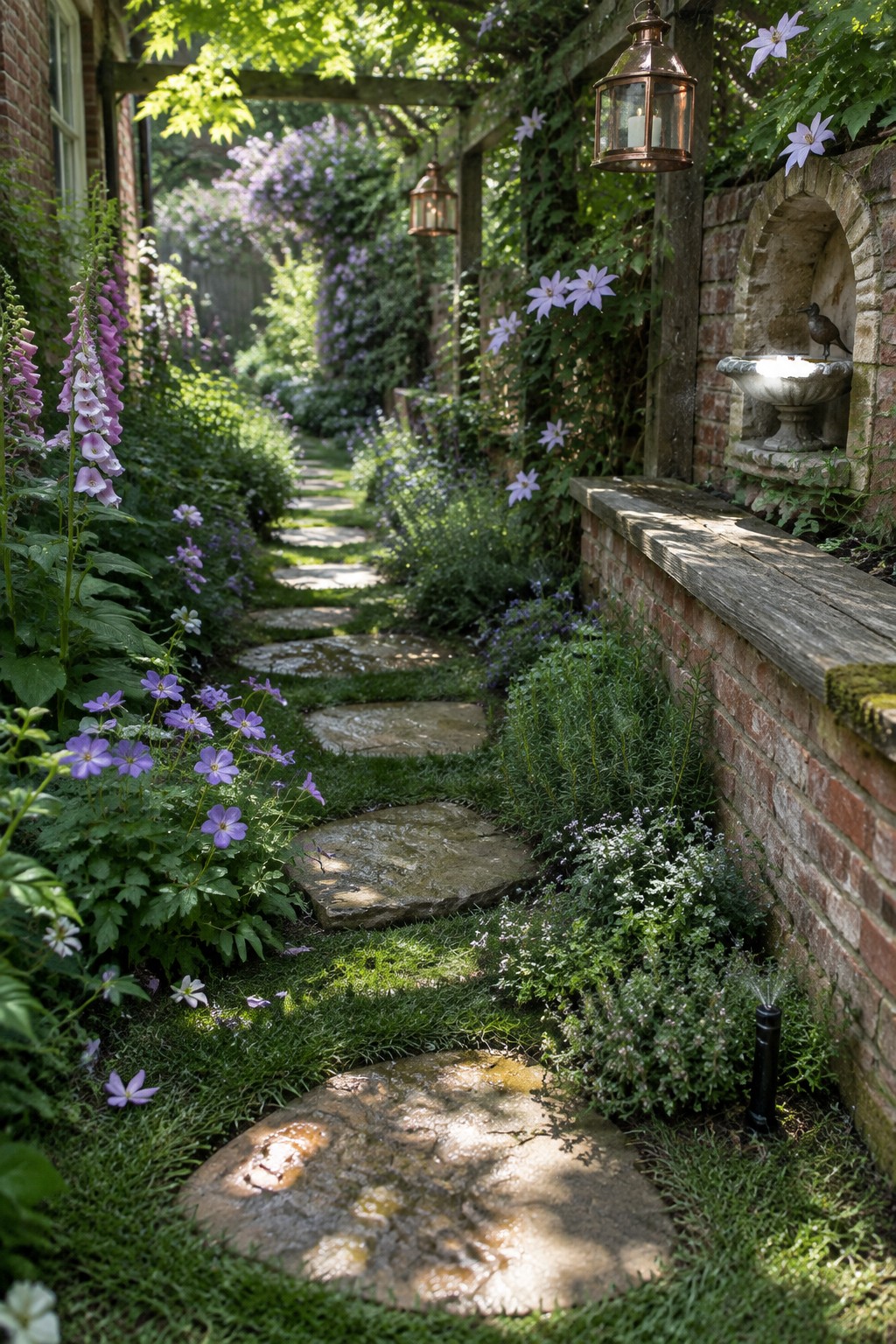
A stepping stone path keeps a narrow side yard usable without turning it into a solid walkway that crowds out plants. The stones sit just far enough apart for easy walking while still letting soil and low plants fill the gaps between them.
This layout works best along the side of a house where space is tight and you still need a route to the backyard. Use stones that are large enough to feel steady underfoot but leave room on either side for flowers or shrubs to soften the edges.
Raised Planters Along Narrow Paths
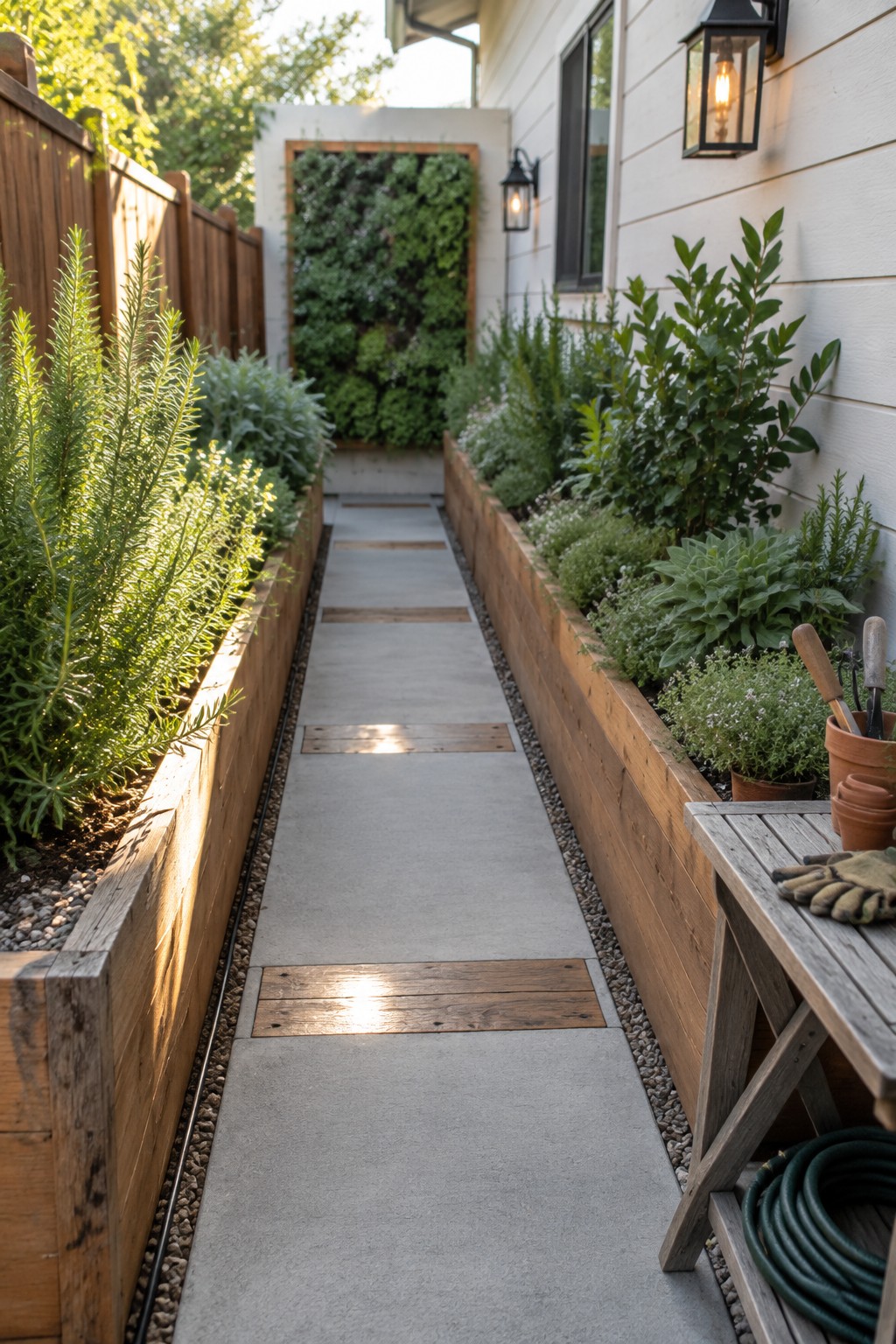
Raised planters give a narrow side yard real planting room without crowding the walkway. They keep the beds tidy, hold the soil in place, and let you grow a mix of taller shrubs and lower greens right beside the house. The wood edges also create a simple border that keeps gravel from spilling onto the path.
This approach works best on homes where the side yard is mostly a long strip. Build the boxes from rot-resistant lumber and keep the path clear enough for easy foot traffic. Add a few stepping stones or wood inserts if the concrete feels too plain.
Stepping Stone Paths In Narrow Side Yards
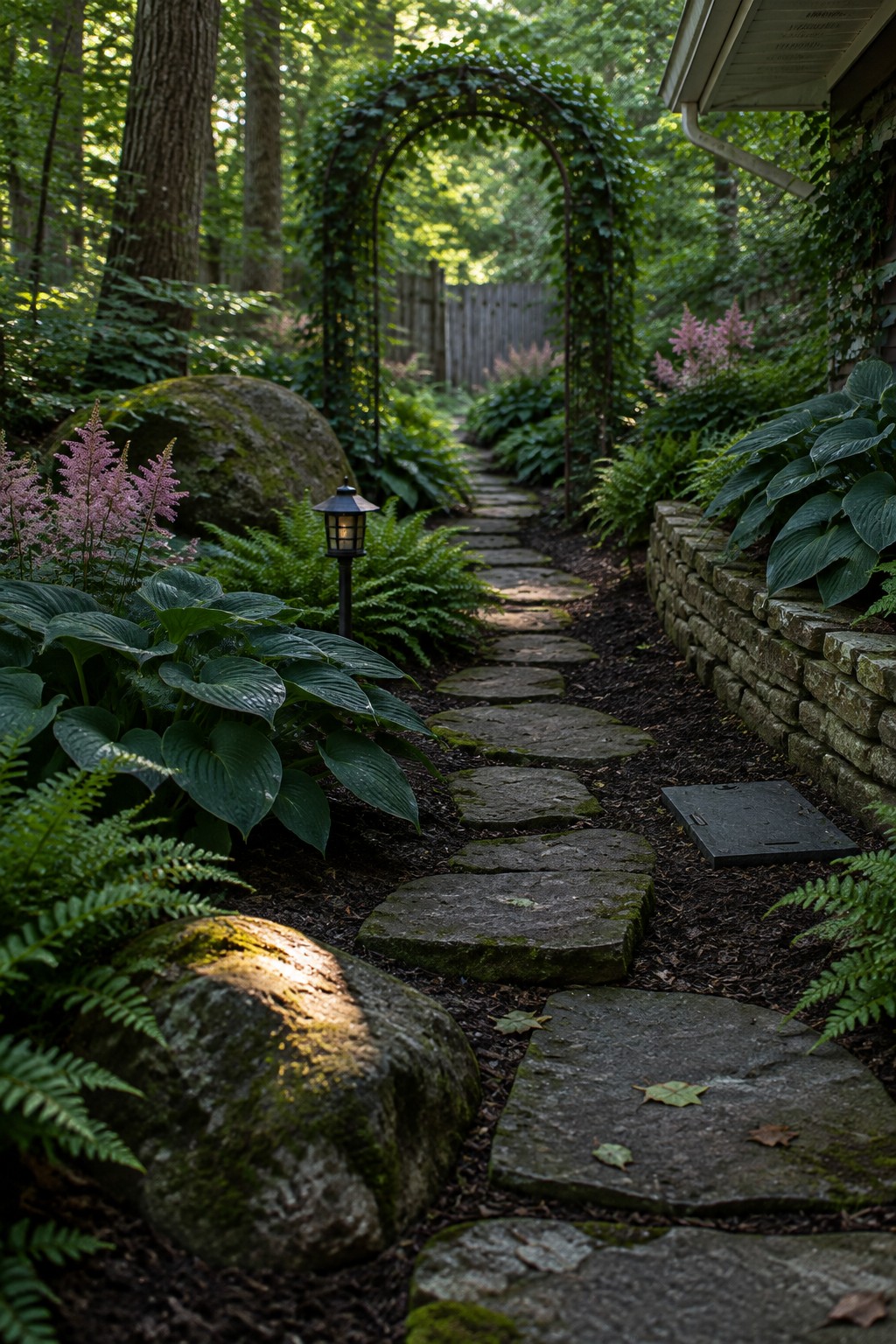
A stepping stone path gives you a simple way to move through a narrow side yard without covering the whole area in hard surface. The stones sit right in the soil so plants can grow close on both sides, keeping the space feeling like a garden instead of a walkway.
This works best on homes where the side yard is mostly dirt and you need occasional access to the back. Space the stones a little unevenly and let the surrounding plants soften the edges over time. Avoid lining them up too straight or making the path too wide.
Line Narrow Paths With Oversized Pots
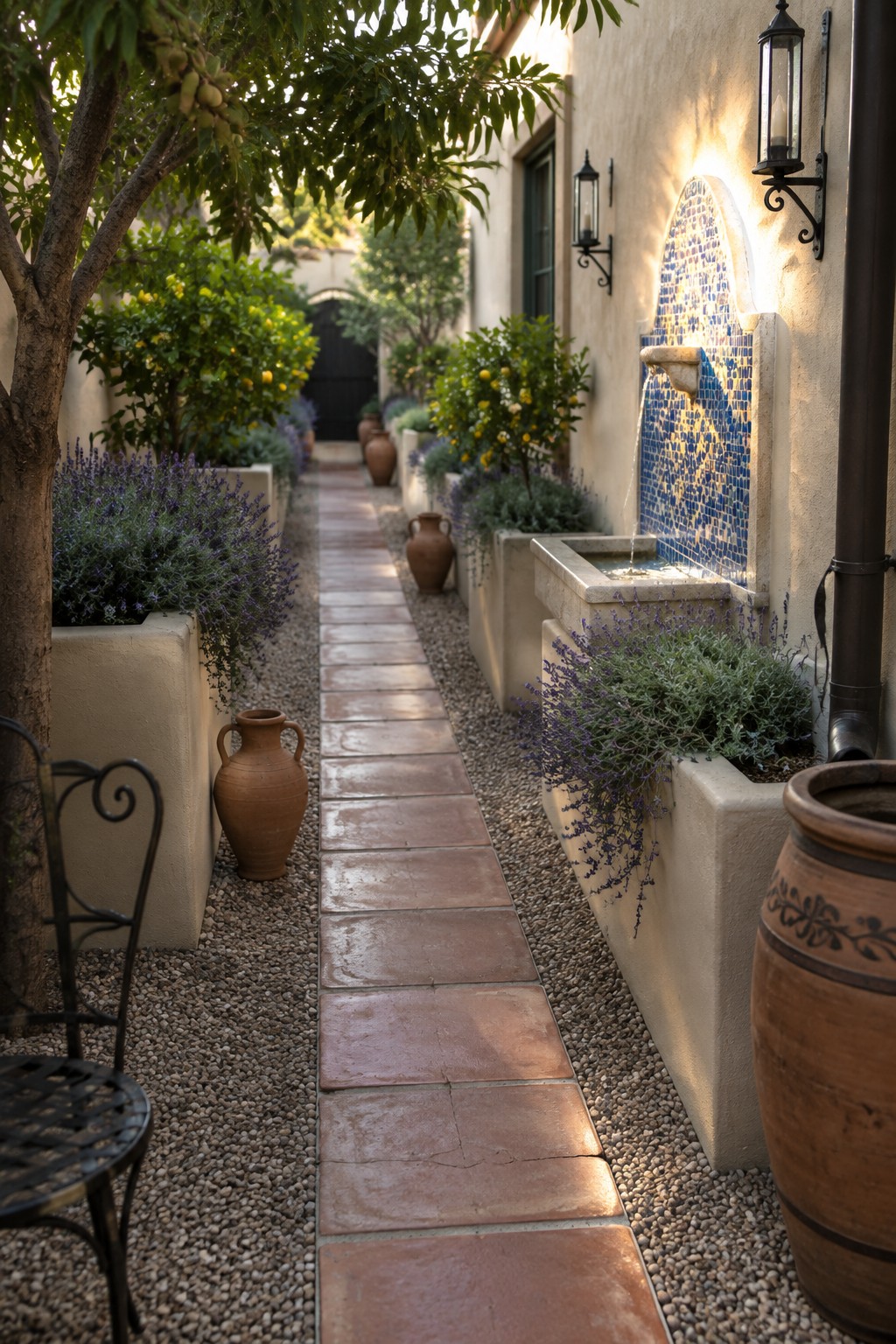
One simple way to handle a tight side yard is to lay a straight path and place large pots along the edges instead of trying to dig full beds. The pots keep everything contained and let the path stay clear while still giving the space some structure and greenery.
This approach works best on homes where the side yard is mostly gravel or narrow strips of soil. Pick sturdy pots that can handle weather changes and group plants that like similar light so nothing looks neglected after a few months.
Lay Stepping Stones in Gravel
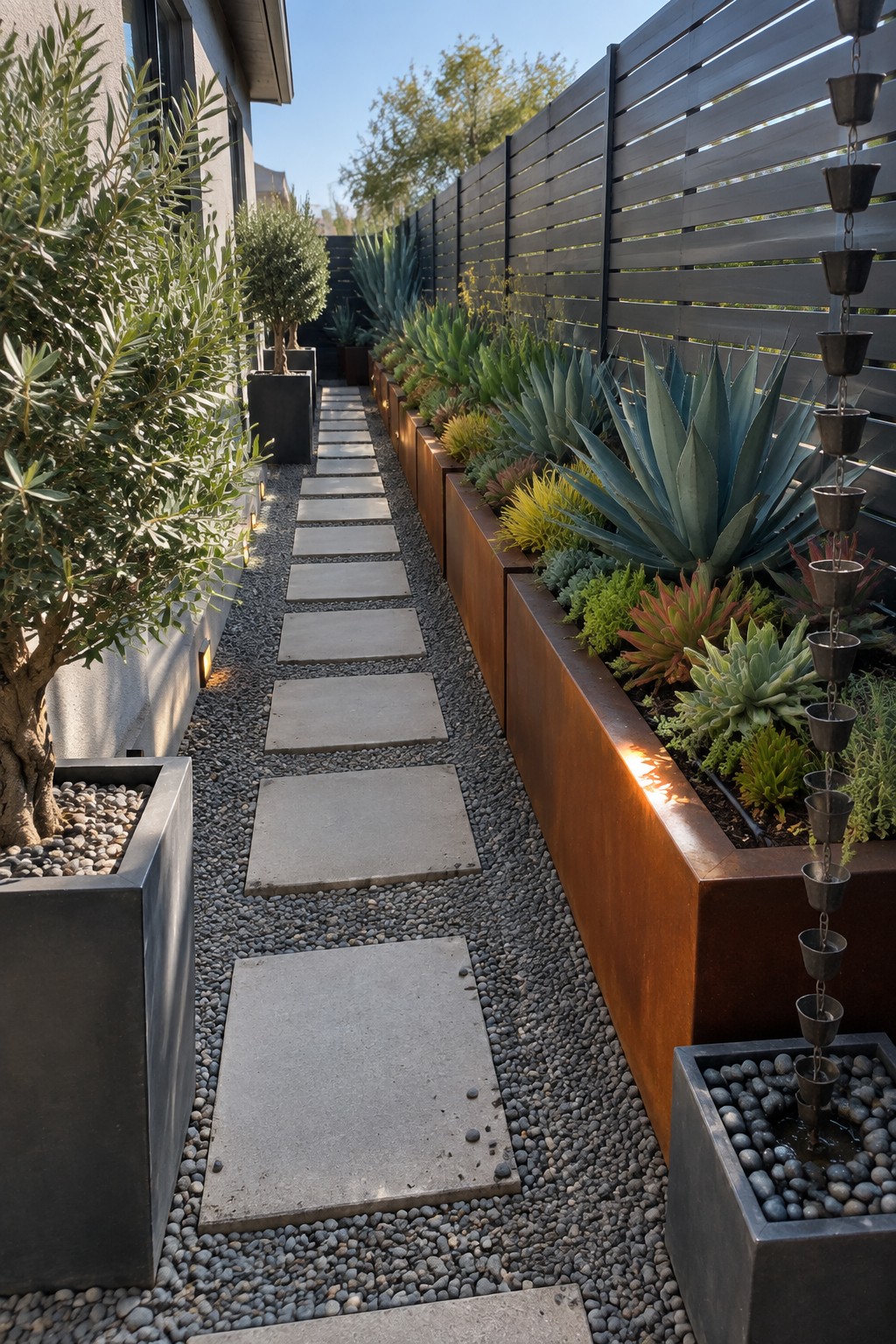
A gravel base with concrete stepping stones gives a narrow side yard a clear path without crowding the space. It keeps the ground stable underfoot and lets water drain easily, which helps in areas that stay damp or shaded much of the day.
Raised metal planters along the fence hold the plants in one line and leave the rest of the yard open for walking. This works best on long, tight lots where you need regular access to the backyard but do not want a solid paved surface.
Layer Plants Along a Narrow Path
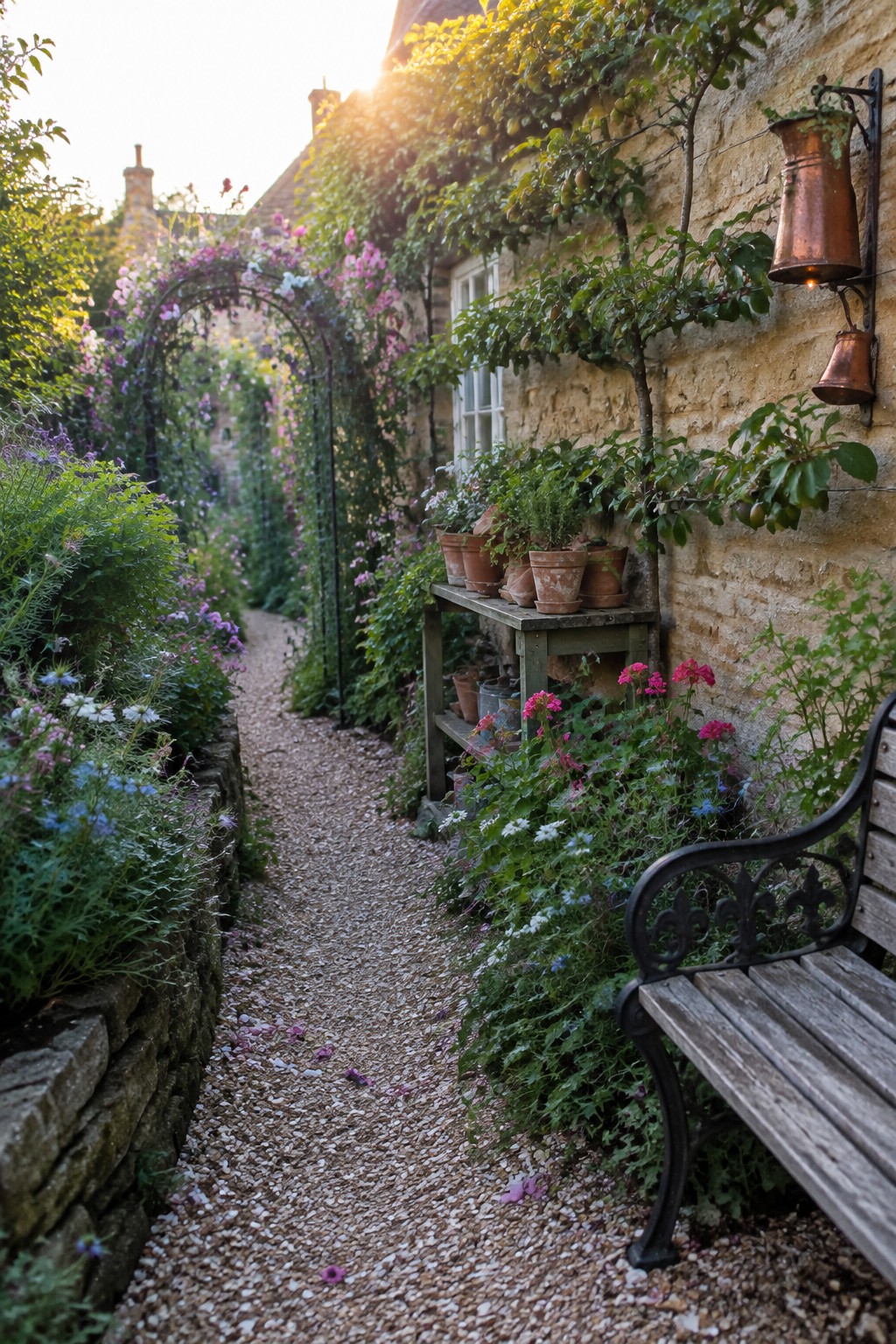
A gravel path works well in a narrow side yard because it keeps the space open and easy to walk while giving you room to plant on both sides. Layering taller plants near the house and lower flowers along the edges helps the area feel fuller without crowding the walkway.
Pots placed on a simple bench or low table add height and color where ground space is limited. This approach suits older homes with stone walls and works best if you choose plants that stay contained and do not need constant trimming.
Run a Grass Strip Down the Center of the Path
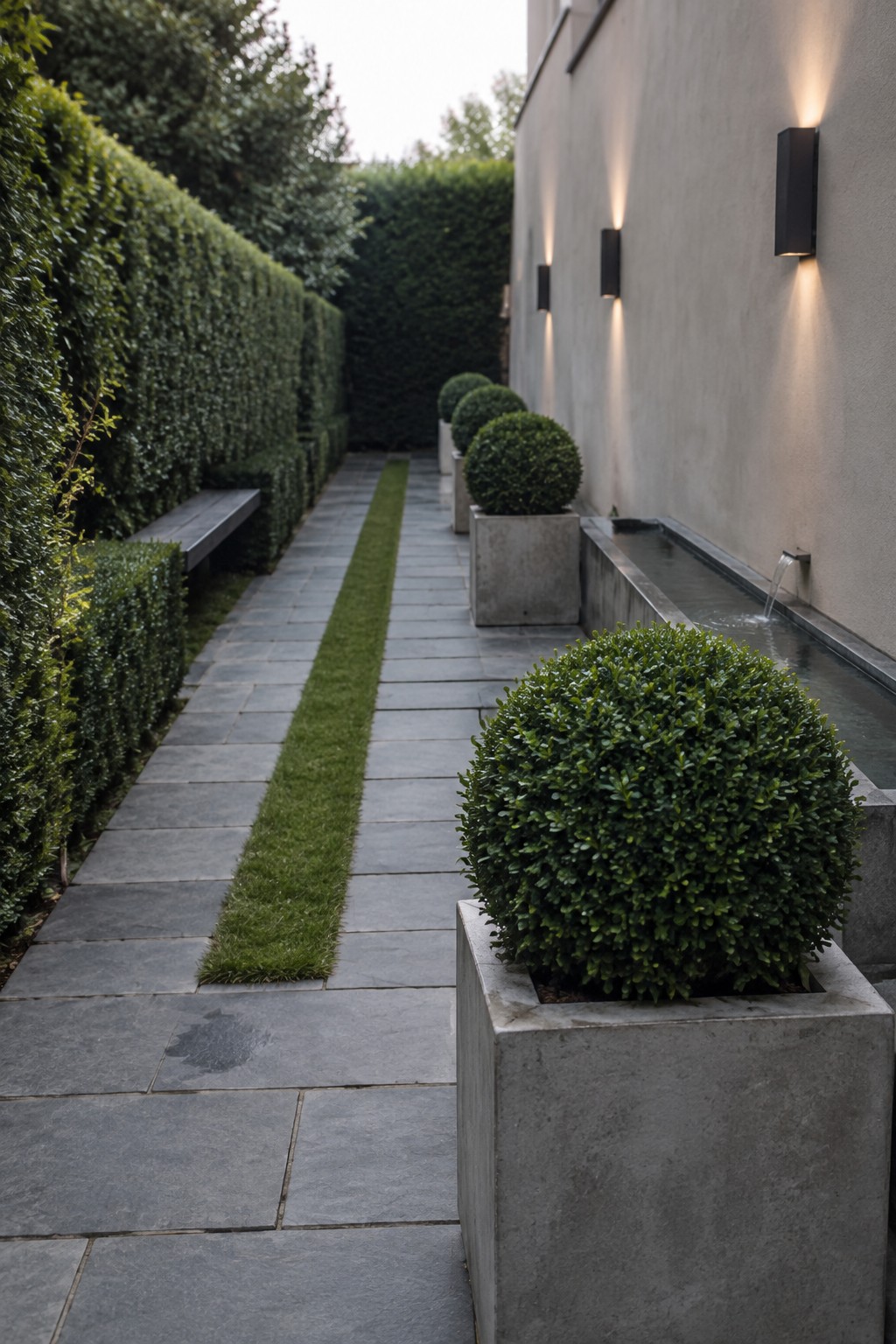
A paved path in a narrow side yard often feels too hard and tunnel-like. Adding a thin strip of grass right down the middle breaks up the stone and gives the eye something softer to follow without eating into walking space.
This works well in side yards that already have some shade from hedges or walls. Keep the grass strip narrow, choose a tough variety, and make sure the paving on either side stays wide enough for easy foot traffic.
Gravel Paths For Narrow Side Yards

A gravel path keeps a narrow side yard from feeling cramped because it uses very little width and still creates a clear route through the space. The loose material also lets water drain away easily instead of pooling along the house.
Plant tall screening like bamboo or ferns along one side and add flowering vines on the other to soften the edges and add privacy. This setup works best on homes with at least a few feet of clearance between the wall and fence, and it stays low maintenance as long as the gravel stays contained with simple edging.
Line Narrow Side Yards With a Long Planter

A long planter along one edge turns a tight side yard into a usable path instead of wasted space. It adds greenery in a straight line that feels clean and keeps the walkway open for foot traffic or storage.
This works best on homes with straight walls and limited width where you need low upkeep. Fill the planter with tall grasses that soften the look without spreading, and pair it with a simple paved strip and a narrow band of turf for contrast.
Line the Path With a Narrow Water Channel
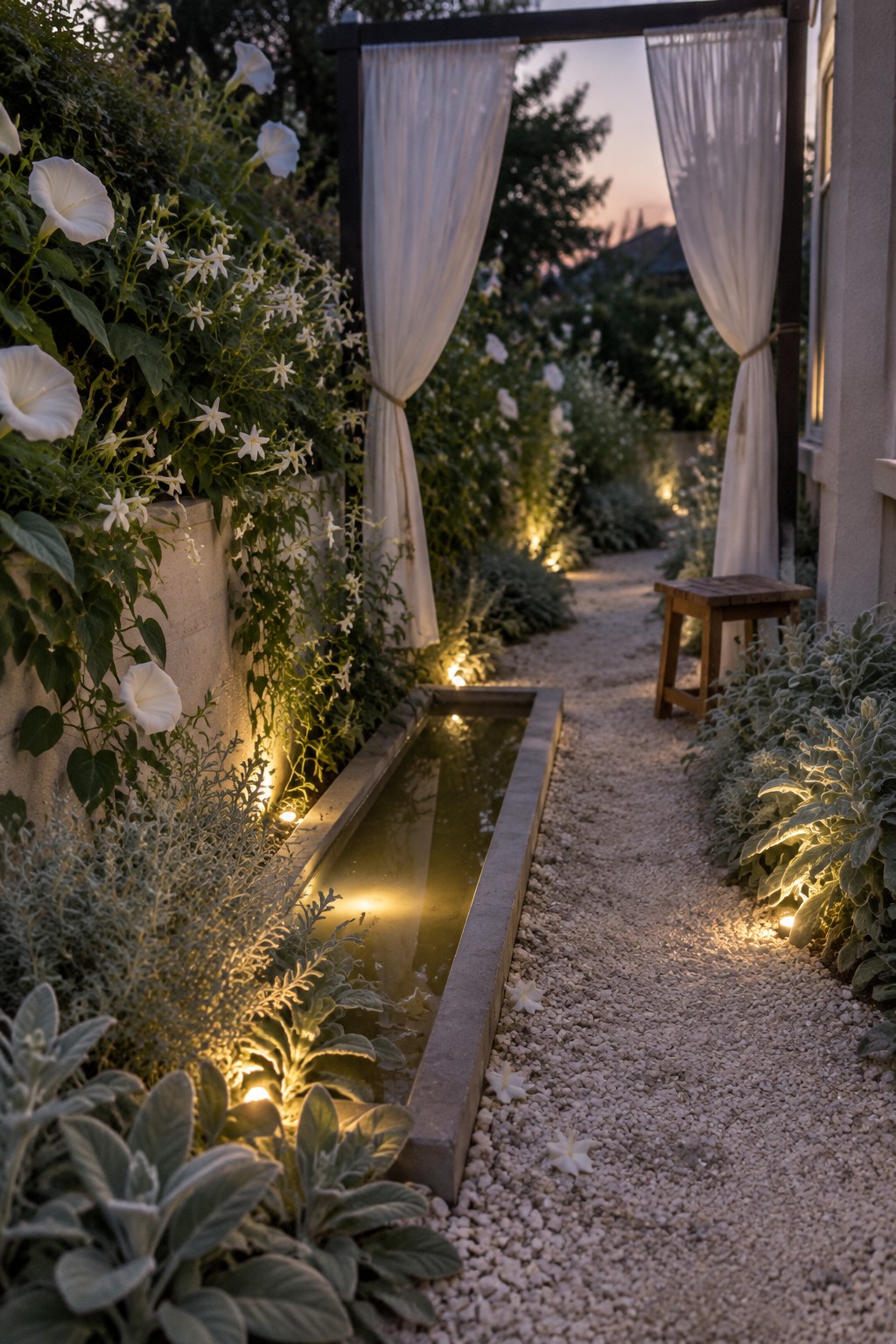
A slim water channel is one of the simplest ways to give a narrow side yard a clear purpose. It runs along the path without eating into the limited width, and the sound and reflection add a calm feeling that plain gravel or mulch alone rarely achieve.
This idea works especially well on straight, tight passages between the house and a fence or neighbor’s wall. Use a concrete trough like the one shown, keep the surrounding plants soft and low on one side, and light it gently so the water stays visible at night. Just make sure the depth stays shallow if children or pets use the area often.
Mount Planters Along the Side Wall
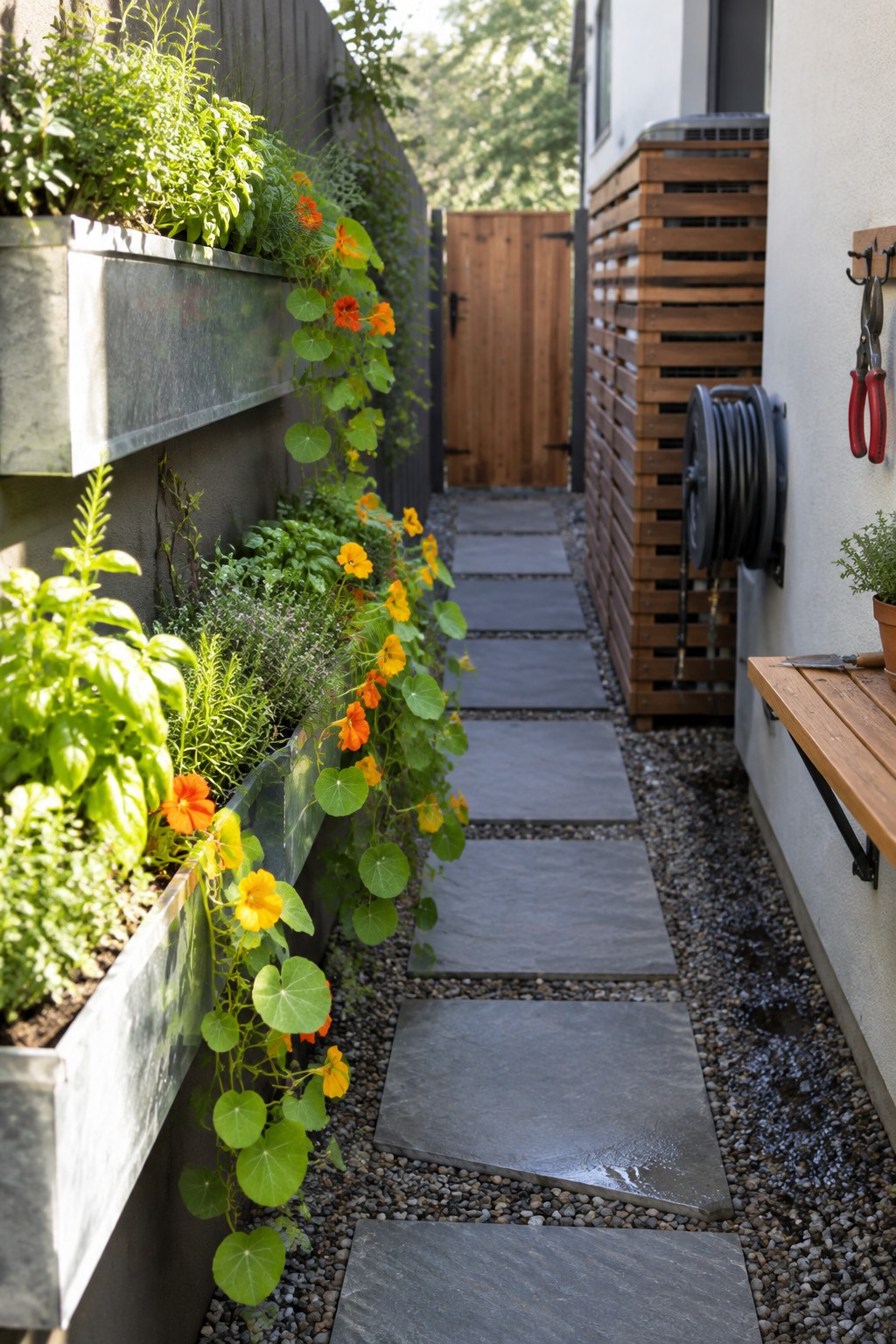
One simple way to add planting space in a narrow side yard is to run long trough planters along the wall. This keeps the ground open for walking while still letting you grow flowers, herbs, and trailing plants without crowding the path.
It works best in passages that are too tight for regular beds or borders. Secure the planters well so they stay level, and pick plants that handle the light conditions in that spot.
Raised Beds Along Narrow Paths
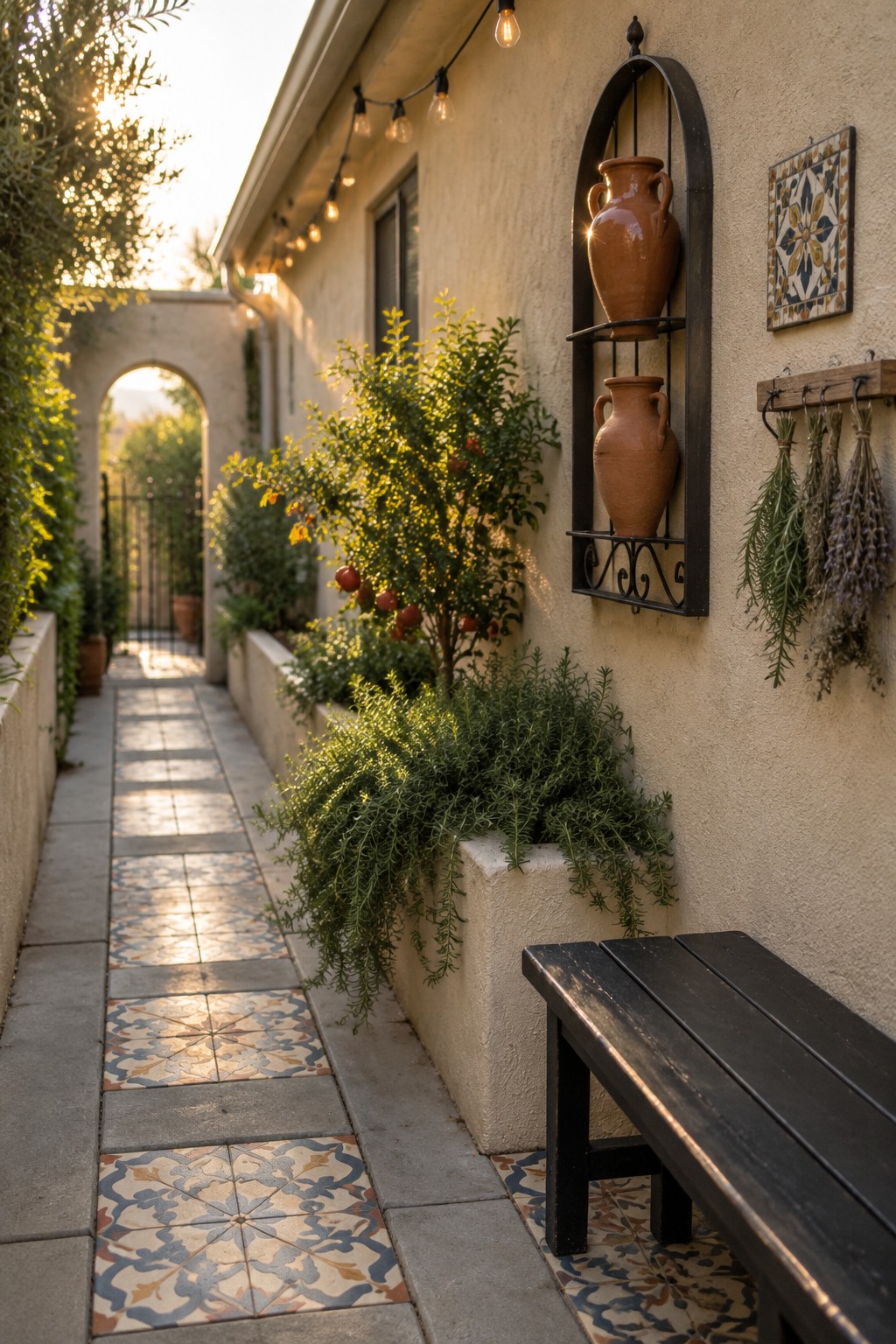
Raised beds give you a clean way to bring real planting into a narrow side yard without eating into the walkway. They create a clear edge, hold soil well, and let you layer different heights of plants so the space feels fuller.
This setup works best on homes with a long, tight side passage where a regular garden bed would get stepped on or look cramped. Keep the plants simple, like low shrubs mixed with something that trails a bit over the edge, and the path stays open for walking.
Frequently Asked Questions
Q: What plants work best if the side yard stays damp most of the time?
A: Go with moisture loving options like astilbe or certain grasses. They handle wet soil without root rot and still look full in a narrow strip.
Q: How can I keep the path clear when adding pots or decor?
A: Place larger items against the house or fence. This leaves the walkway open while still adding interest.
Q: Is gravel a good idea for the ground cover?
A: Yes it drains well and needs little upkeep. Spread it over landscape fabric to stop weeds from popping up.
