

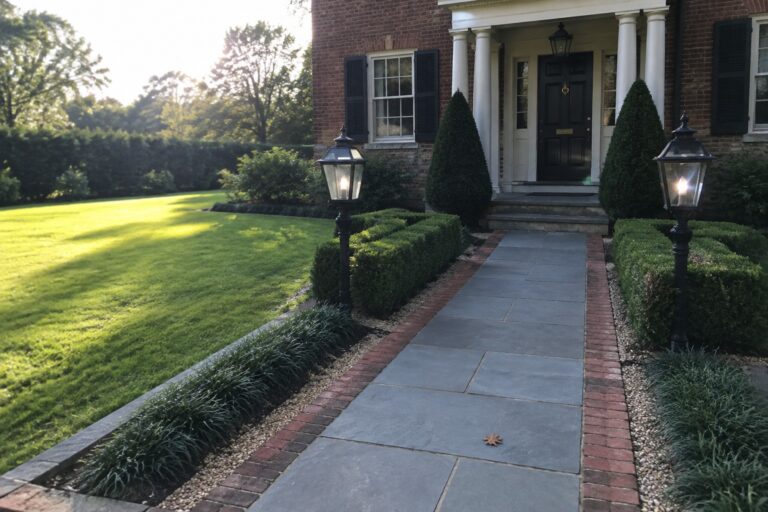
I often find that the overall look of a yard comes down to how the lawn meets the beds around it.
Formal designs gain their structure from those clear separations that keep everything in place.
I start small.
Trying a new edge along one section of the lawn shows me how it affects the flow before I apply it everywhere else.
These kinds of choices also hold up better when the weather shifts or when plants grow in over time.
Brick Edging For Crisp Lawn Lines
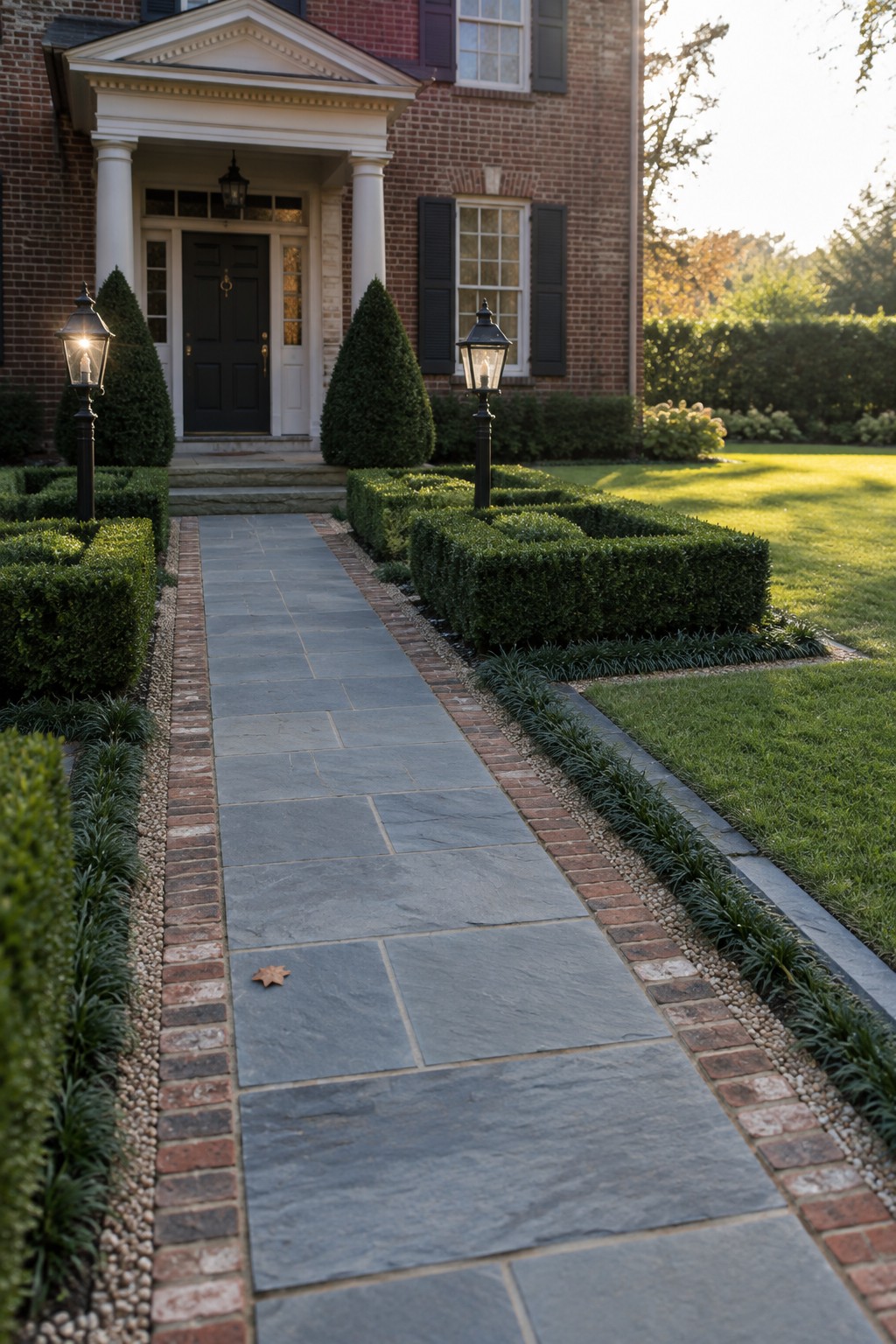
Brick edging gives a path or lawn a clear boundary that holds its shape season after season. The narrow brick strip next to the stone walkway keeps grass from creeping in and makes the whole layout look more intentional without needing constant trimming.
This works best on homes with traditional architecture where you want a bit of structure. Lay the bricks on a sand or gravel base so they stay level and allow water to drain away from the path.
Define Beds With Metal Edging
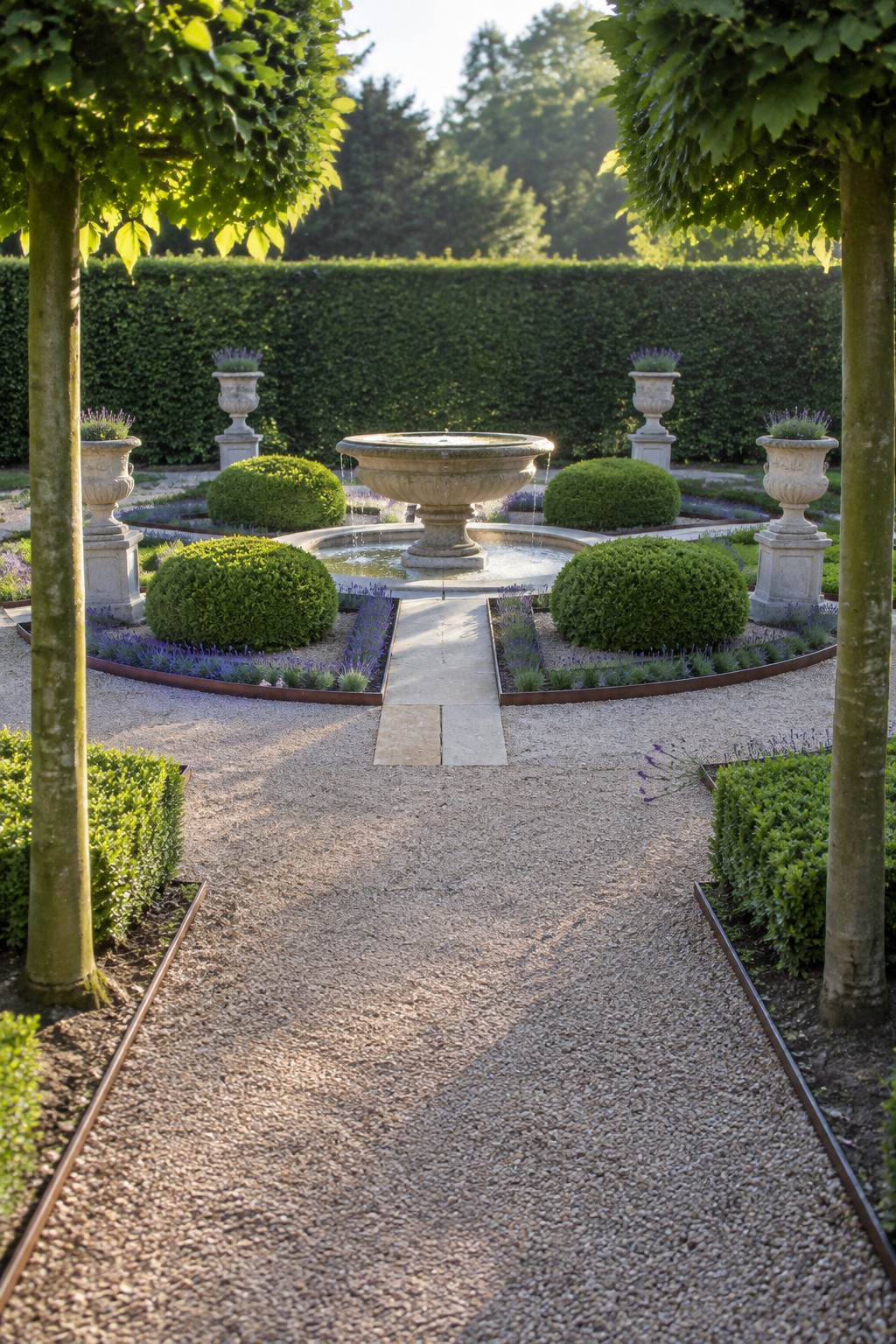
Many formal gardens get their tidy look from simple metal edging that holds gravel and plants in place. It creates a clean line that keeps the beds from spilling into the paths and makes the whole layout feel more structured.
This works best in symmetrical gardens where you want the shapes to stay sharp over time. It suits classic homes and needs little more than occasional weeding along the edge to stay looking good.
Stone Edging For Clean Lawn Shapes

Stone borders give lawns a crisp outline that holds its shape season after season. The hard edge stops grass from creeping into beds and makes the whole layout feel more organized without much extra work.
This approach suits older homes or any garden where you want a traditional feel. Keep the stone low so it blends with the ground, and pair it with simple hedges if you want added structure without crowding the space.
Defined Lawn Edges Along Hardscape
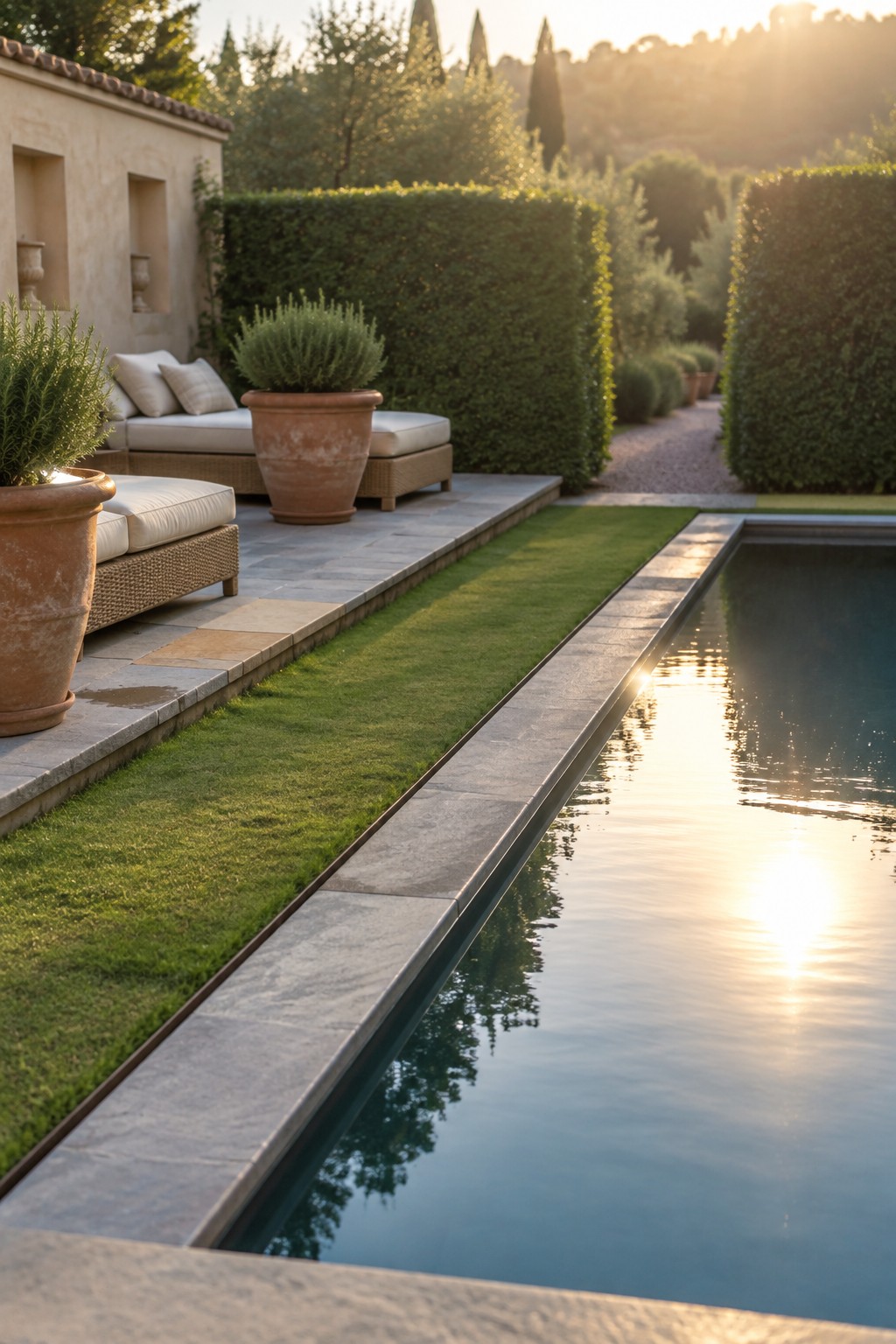
A straight, narrow strip of grass running right up to a stone border gives the whole garden a neat, settled look. The edge keeps the lawn from creeping into the pool deck and makes the space feel more intentional instead of loose.
This works best on flat sites where you want a classic formal feel without a lot of fuss. Use a solid material like stone or concrete for the border so the line stays clean through the seasons, and keep the grass mowed right up to it.
Clipped Hedges For Sharp Formal Lines
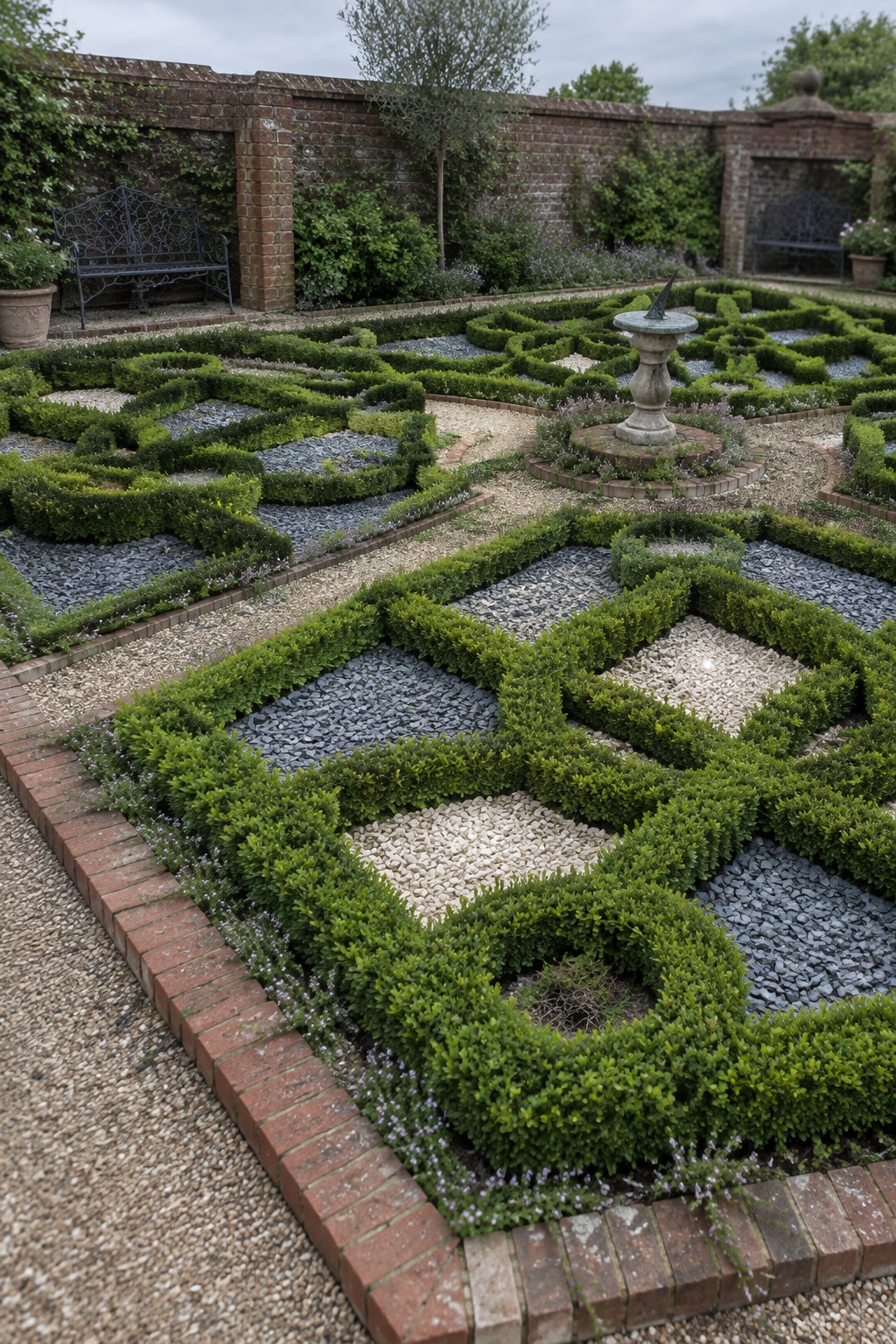
Low clipped hedges work well when you want a garden to feel structured without looking stiff. The tight shapes hold the layout in place and make the paths and beds read clearly even from a distance.
This approach suits older homes or smaller yards where you want order without a lot of maintenance. Choose slow-growing evergreens, keep the lines simple, and let the gravel or planting inside the shapes stay plain so the edges stay the main feature.
Defined Lawn Edges Create A Classic Formal Look
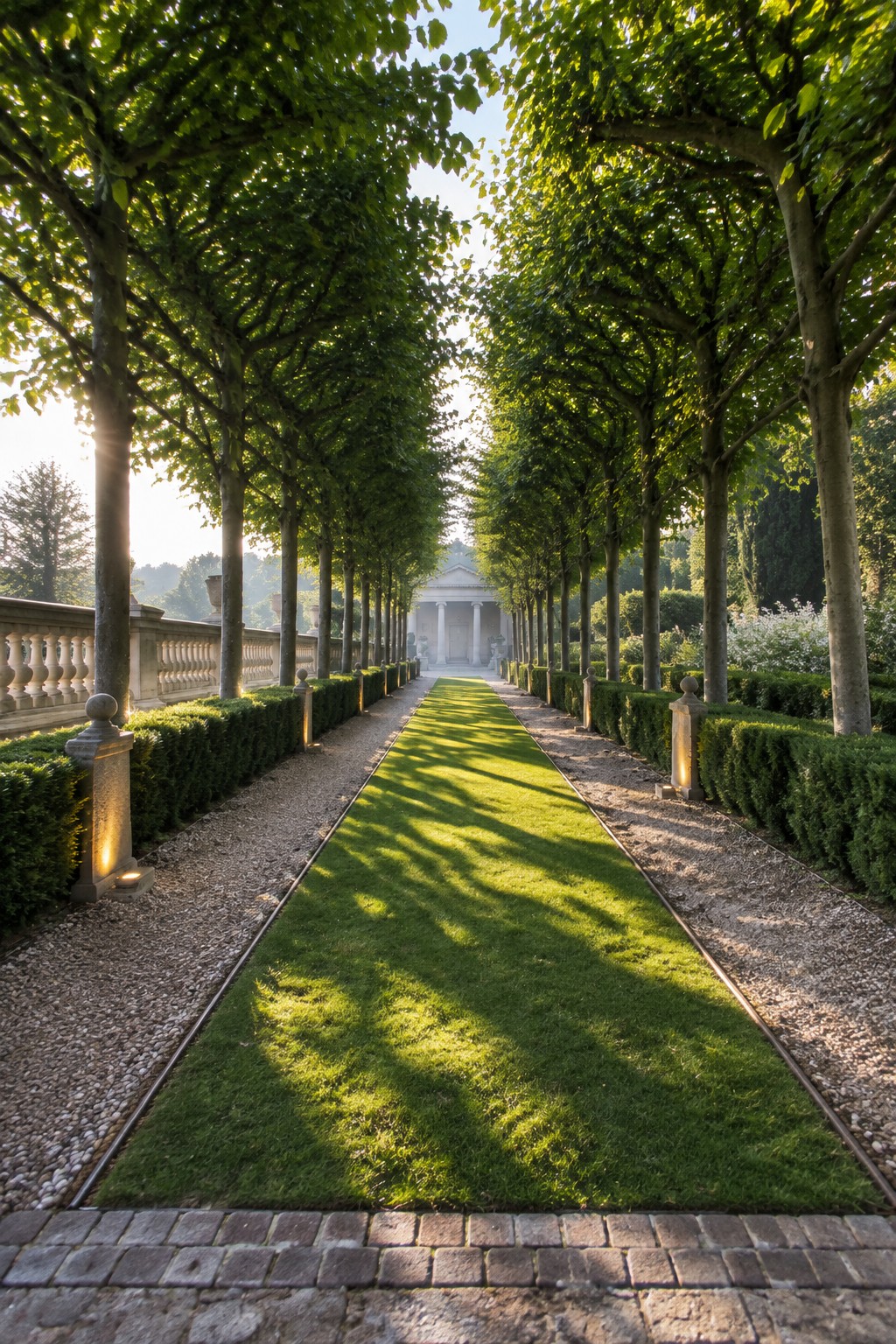
Clean borders along a central grass path keep the whole layout looking neat and intentional. The gravel strips and low hedges stop the lawn from spilling over and give the eye a clear line to follow all the way down the garden.
This style works best on larger properties where you can keep the runs straight and long. It suits traditional homes and needs steady trimming to hold its shape over time.
Use Metal Edging for Clean Lawn Borders

Metal edging gives a garden that sharp, finished look without a lot of fuss. It keeps the lawn from creeping into the beds and holds everything in a straight line, which makes the whole planting feel more structured and intentional. In this kind of formal setup the edge turns a simple row of lavender and boxwood into something that reads as deliberate rather than loose.
It works best along straight or gently curved beds where you want a clear separation between grass and planting. Steel or aluminum strips hold up well over time and stay low enough that they do not get in the way of mowing. Just make sure the top sits slightly above the soil so grass does not spill over.
Square Grass Panels Keep Formal Lines Sharp
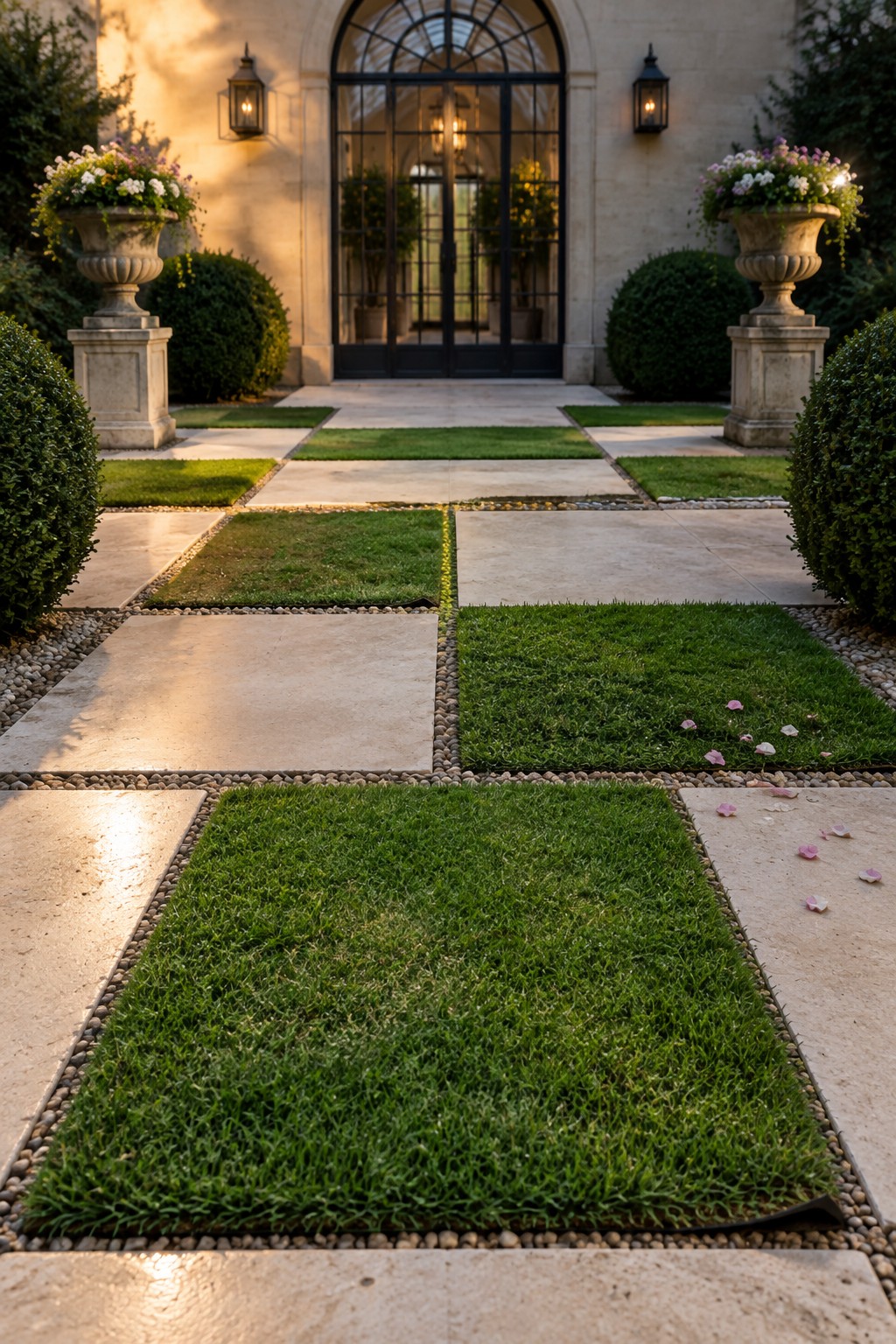
Many people like square sections of turf because they create clear, repeating edges that feel orderly without needing fancy plants. The borders stay visible all year and give the lawn a finished look even when the grass is simple.
This layout suits classic homes with straight walkways or symmetrical fronts. Use gravel or small stones along the seams so the edges stay defined and do not blur together over time.
Formal Hedging For Defined Lawn Edges
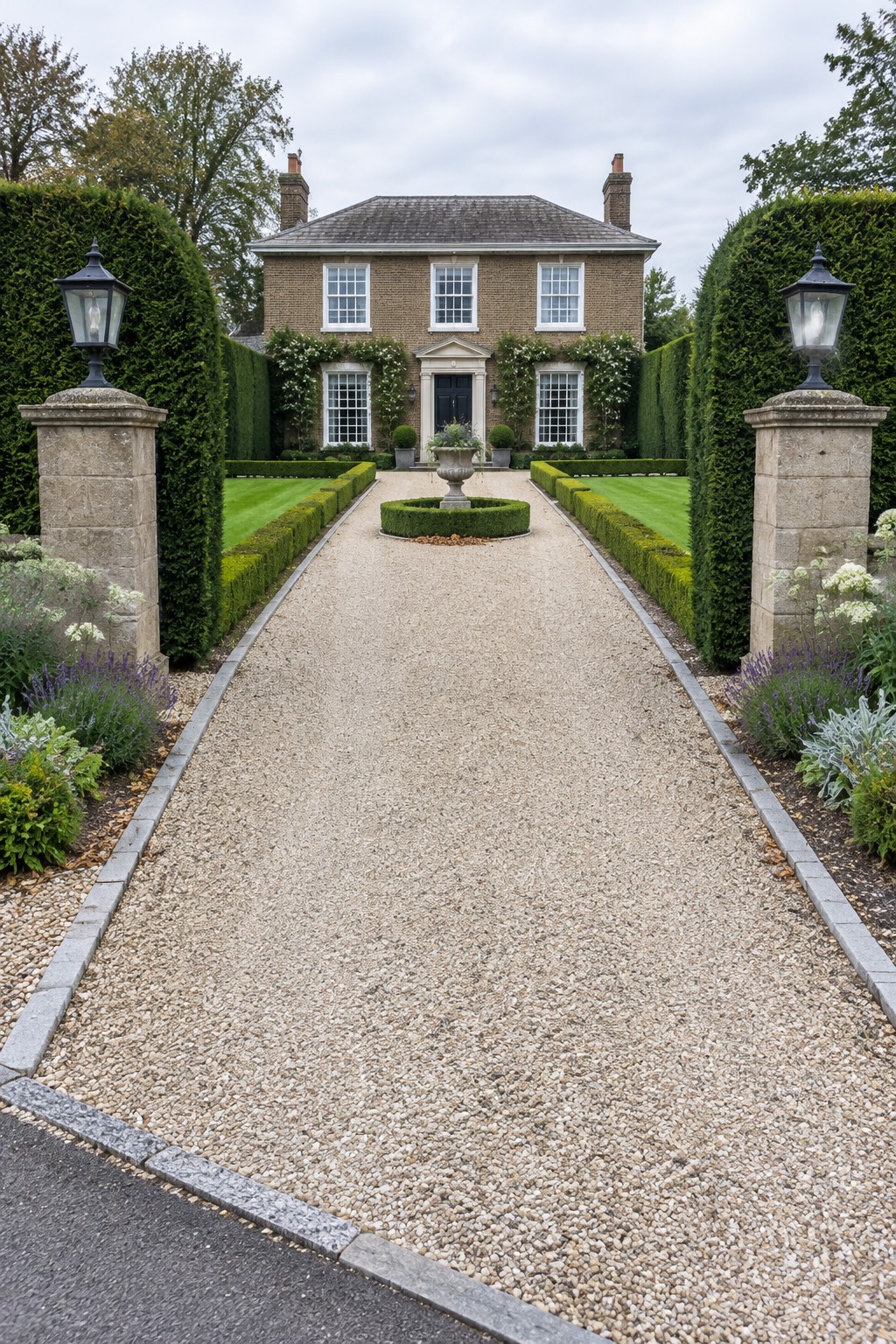
Formal hedging gives a garden that structured look by turning ordinary lawn borders into clear, intentional lines. It works especially well when the hedges run straight along both sides of a central path, keeping the grass neat and the overall layout easy to read.
This style suits older homes or properties with a traditional layout. Keep the hedges low and clipped so they frame the lawn without blocking views, and use them to guide movement toward the house rather than letting the planting sprawl.
Defined Edges Give The Garden A Formal Shape

Clean borders around the lawn and paths pull everything together and keep the space from looking scattered. The contrast between the grass, gravel, and stone makes the layout feel intentional rather than random.
This approach works best on homes with straight lines and smaller yards where you want order without heavy planting. Match the edging material to your steps or walls so the whole front feels connected instead of pieced together.
Define Circular Beds With Sharp Lawn Edges
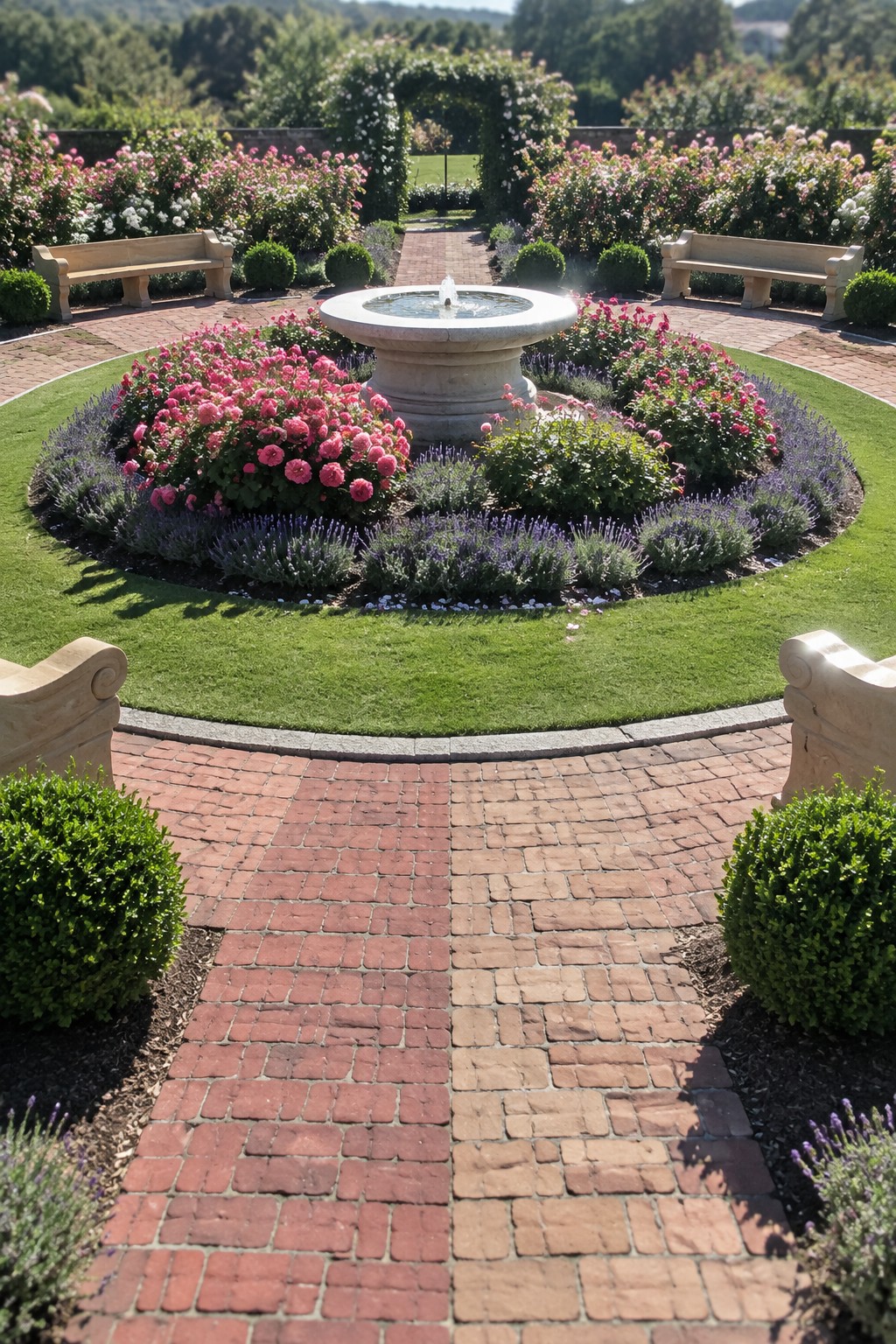
A circular planting bed with a clean edge against the lawn gives any garden that formal structure right away. The shape keeps the focus on whatever sits in the middle and stops the beds from bleeding into the grass.
This layout works well in open areas where the curve can be seen from several angles. Brick paths around the edge help hold the shape and make mowing easier, especially on larger properties that already lean toward classic styles.
Straight Edges Help Formal Gardens Feel More Structured
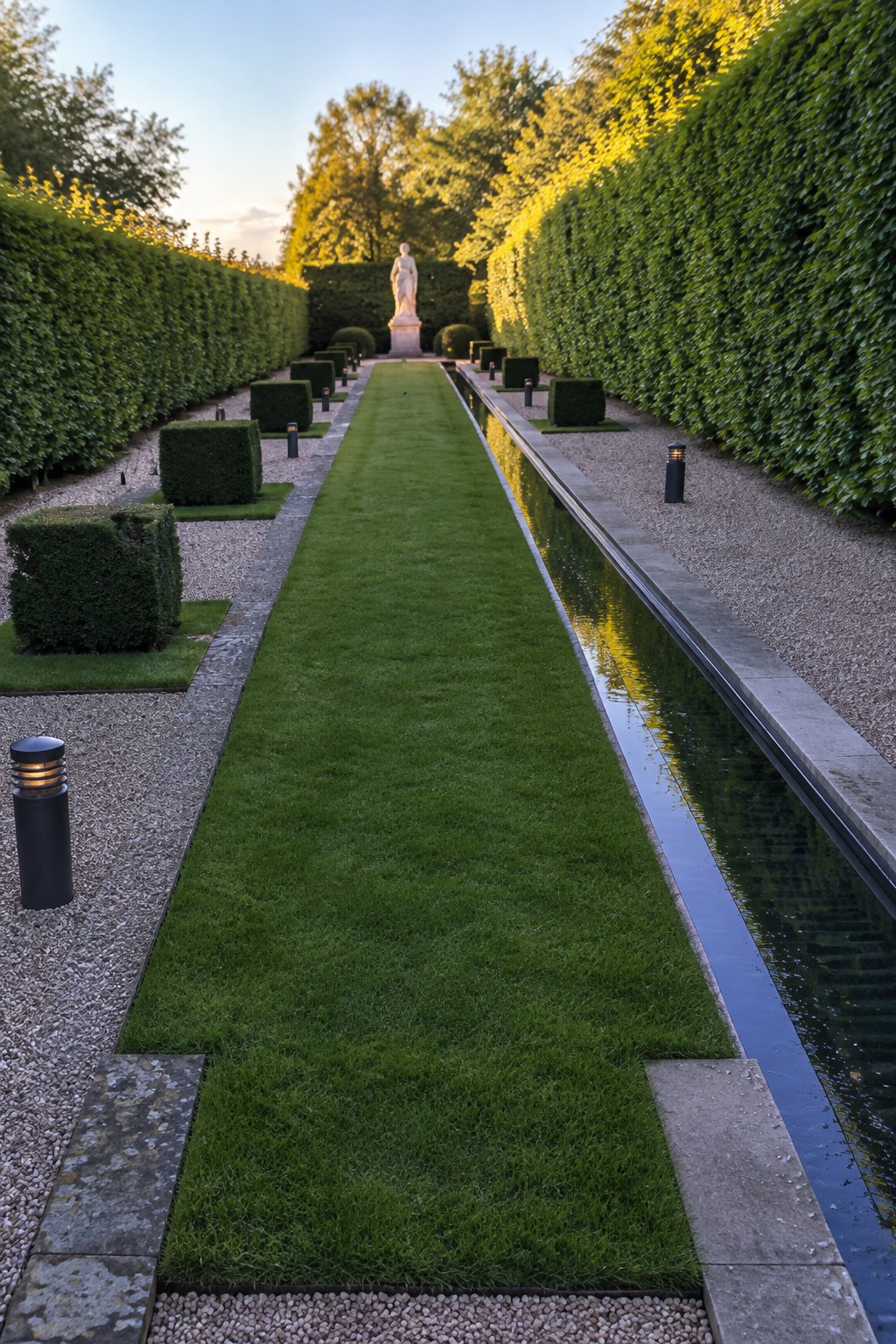
One simple way to get a classic formal look is to keep lawn edges perfectly straight and crisp. This approach makes the space feel organized right away, and the clean lines stand out even more when they run alongside gravel or a water feature.
It works best in long, narrow gardens where you want everything to feel balanced and directed. Just match your edging material to the surrounding paths and keep the borders low so mowing stays easy.
Defined Edges Keep Lawns Looking Intentional
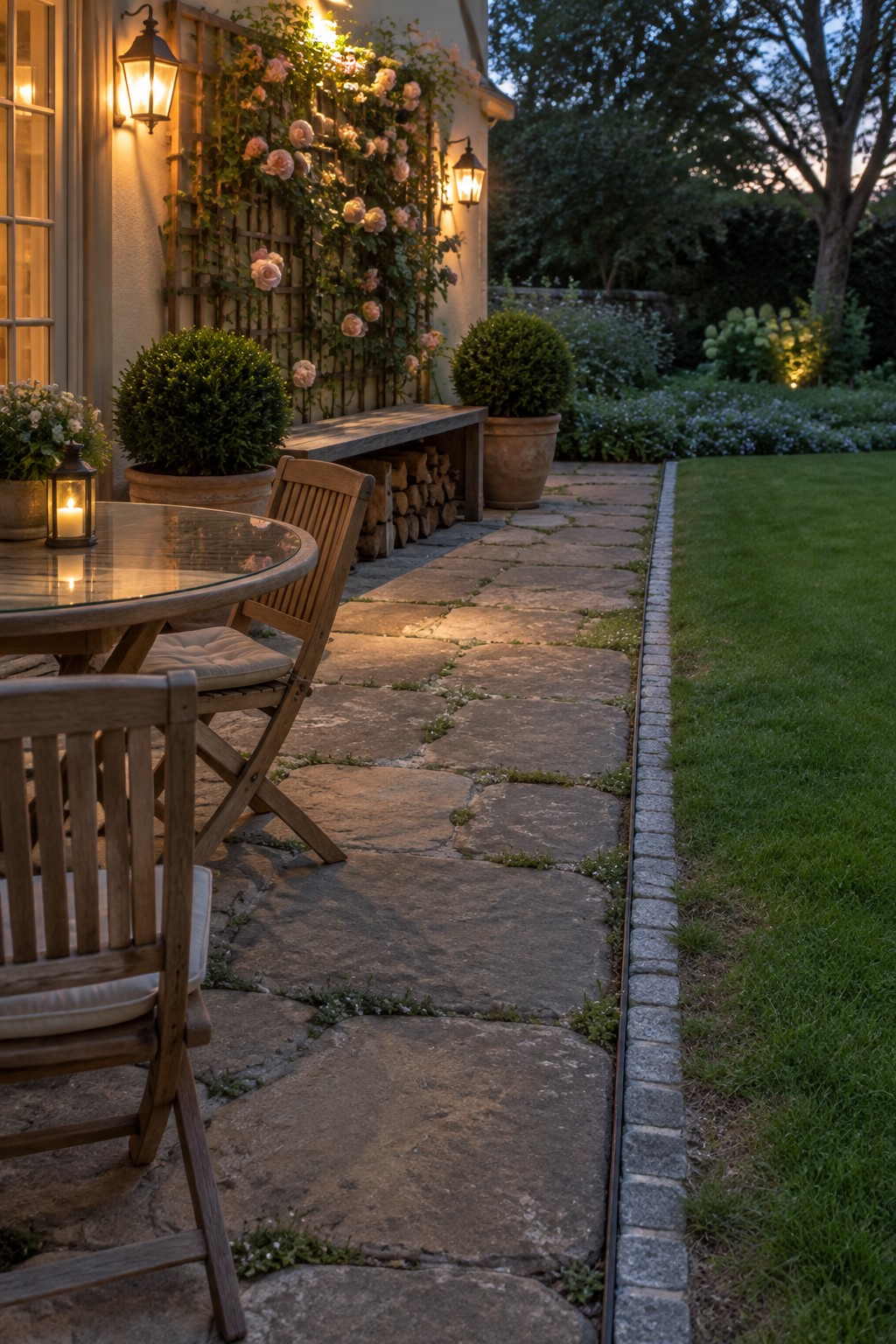
A low border along the lawn stops the grass from spilling into the path and gives the whole garden a clearer shape. It turns what could feel like a loose patch of lawn into something more structured without adding much extra work.
This approach works best along straight walkways or beside patios on homes that already lean classic. Match the border material to the path or keep it slightly different so the line stays visible over time.
Stone Edging Keeps Lawn Lines Clean
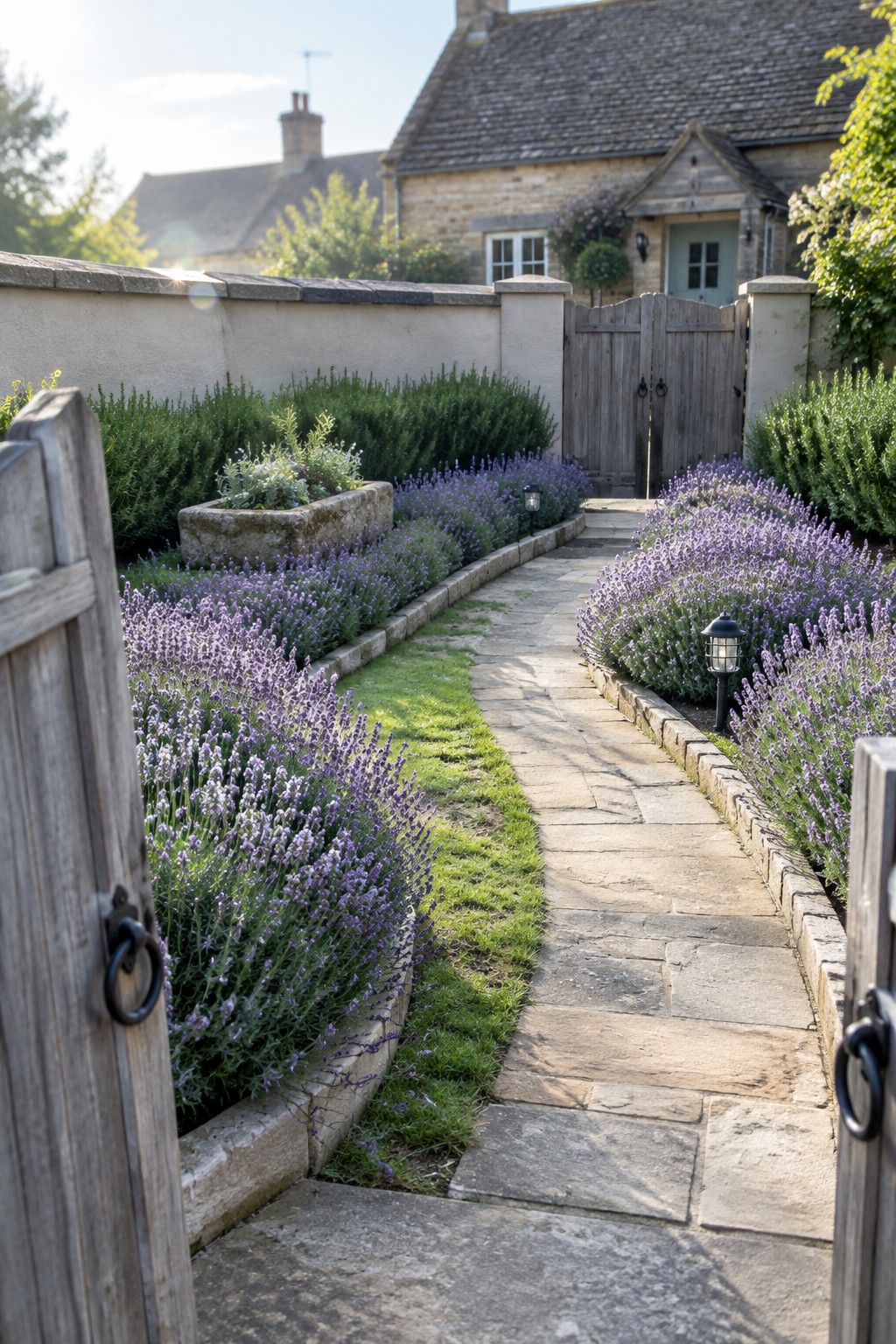
Stone edging gives a garden that tidy, structured look that feels classic rather than fussy. It holds the lawn in place so the grass does not creep into the beds, and the beds stay looking intentional even when the plants grow full.
This approach works best along paths or in smaller yards where you want a formal layout without high maintenance. It suits older homes and any garden where you prefer clear shapes over loose blending between lawn and planting.
Define Lawns With Crisp Metal Edging

Metal edging gives lawns a clean, finished look that holds its shape through the seasons. It keeps grass from creeping into gravel paths and makes the whole layout feel more structured without adding extra plants or fuss.
This works best in gardens that already have a formal feel or in smaller yards where every line shows. Set the edging level with the soil so the mower can pass right over it and you avoid constant trimming.
Stone Edging For Clean Lawn Lines
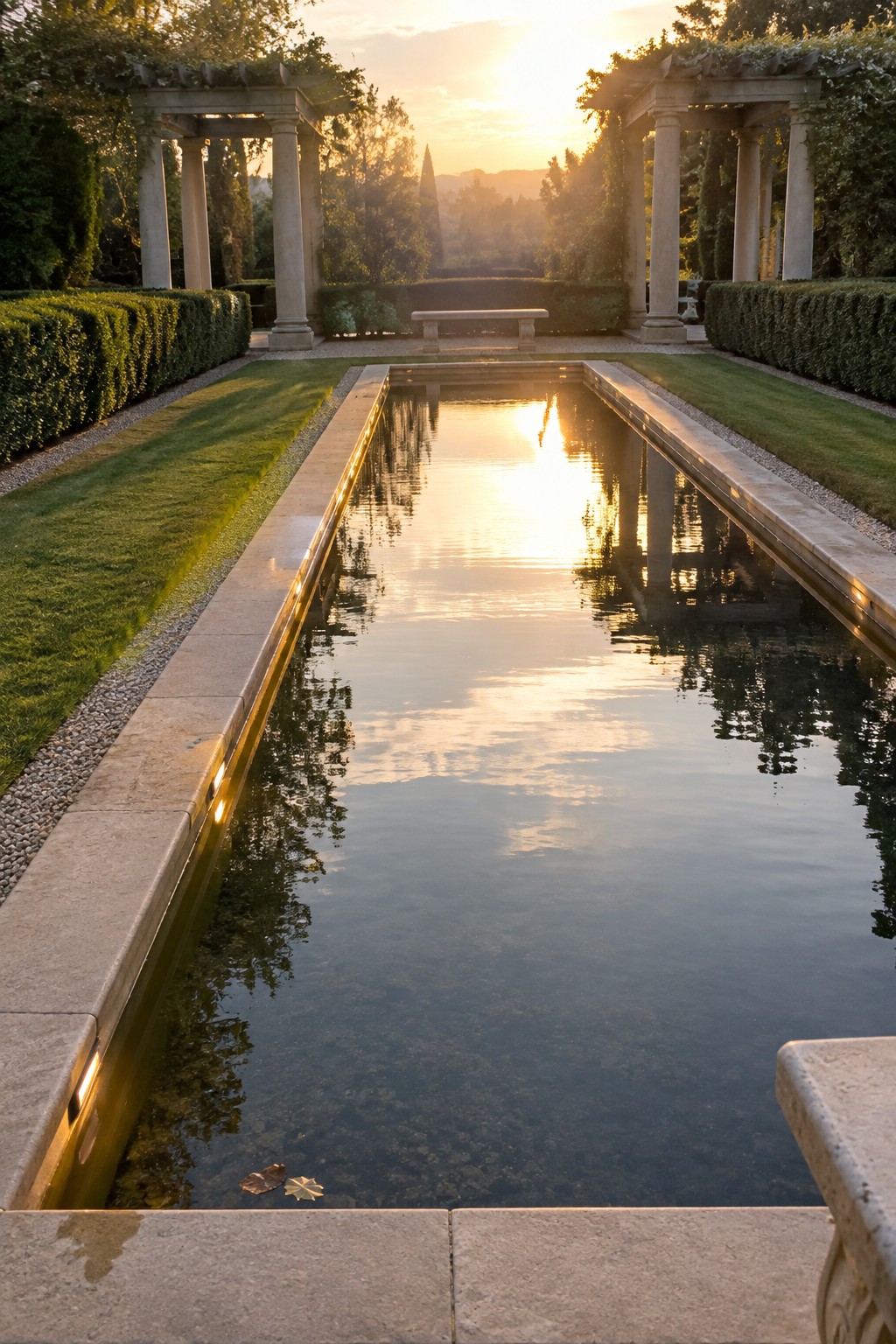
Stone edging gives lawns a finished look that feels intentional and orderly. It holds the grass in place and stops it from creeping into gravel or water areas, which keeps the whole garden looking structured over time.
This approach suits older homes or any yard where you want a classic formal feel without constant trimming. Keep the stone low and simple so it blends with the surrounding grass and hedges rather than standing out.
Metal Edging For Defined Lawn Edges
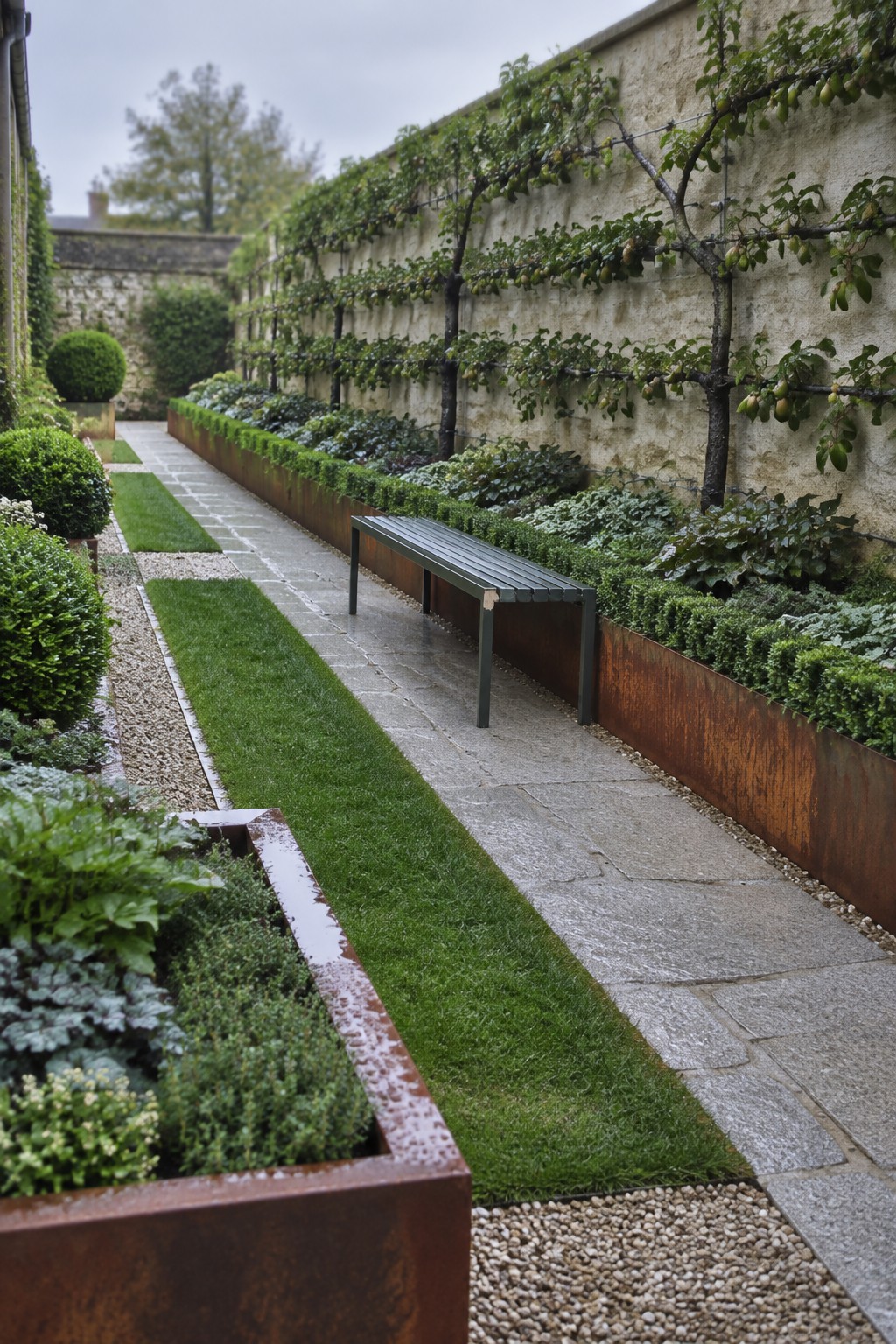
Metal edging gives a garden that sharp, finished look without adding extra fuss. It holds the lawn in place and keeps gravel or paths from spilling over, which makes the whole layout feel more orderly right away.
This works best in straight or gently curving beds where you want clear separation but still need to mow easily. It suits formal gardens on older properties and holds up well in wet climates since the material resists rotting or shifting over time.
Create Formal Structure With Clipped Hedges
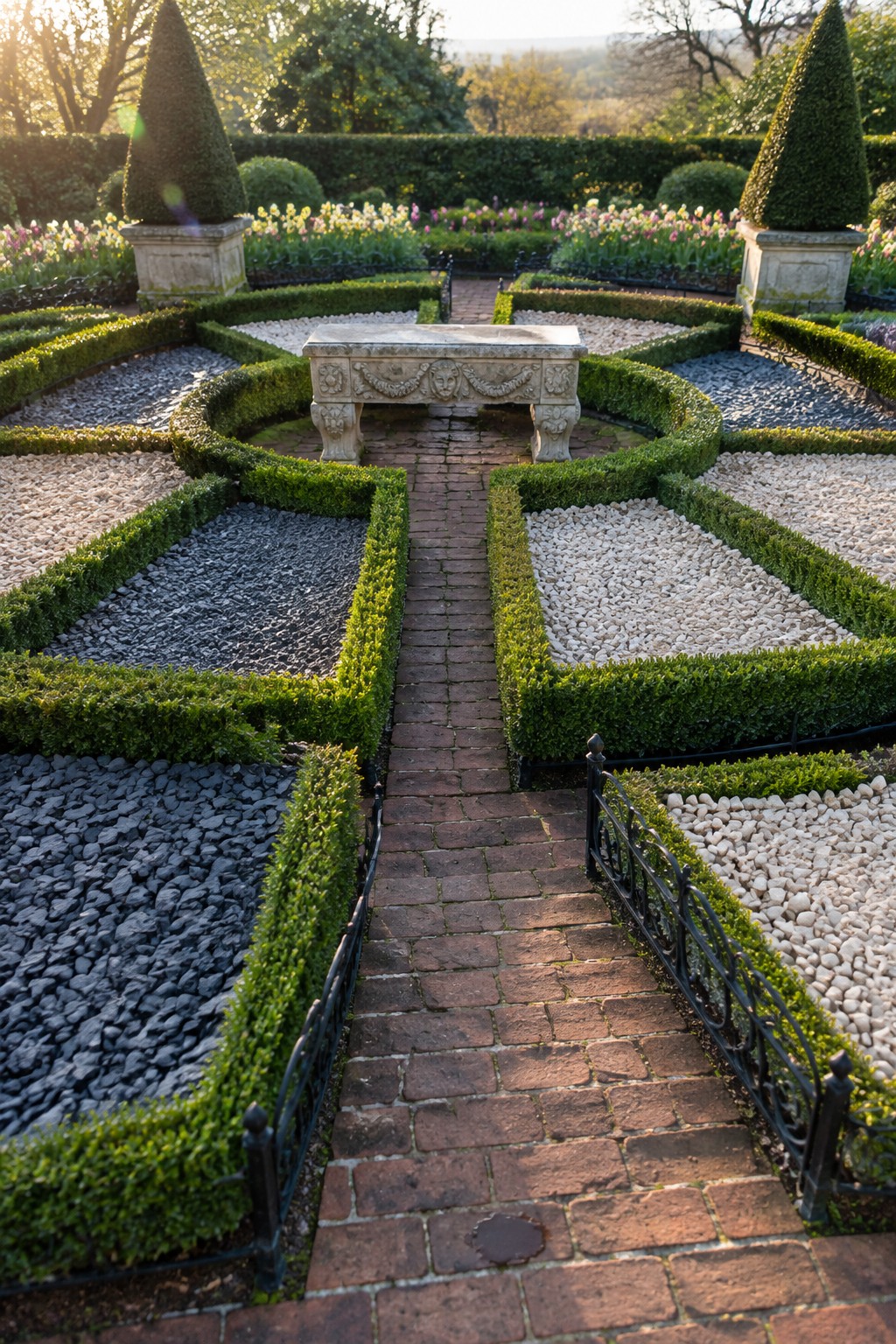
Low clipped hedges make a garden feel organized and classic by giving every bed a sharp, permanent edge. They turn gravel areas and open spaces into clear shapes without needing a lot of extra plants or hardscaping.
This approach works best on flat sites where you can keep the lines straight. Boxwood or similar evergreens hold up well if you trim them a couple of times a year, and the look suits both small courtyards and larger formal layouts.
Sharp Edging Keeps Formal Gardens Tidy
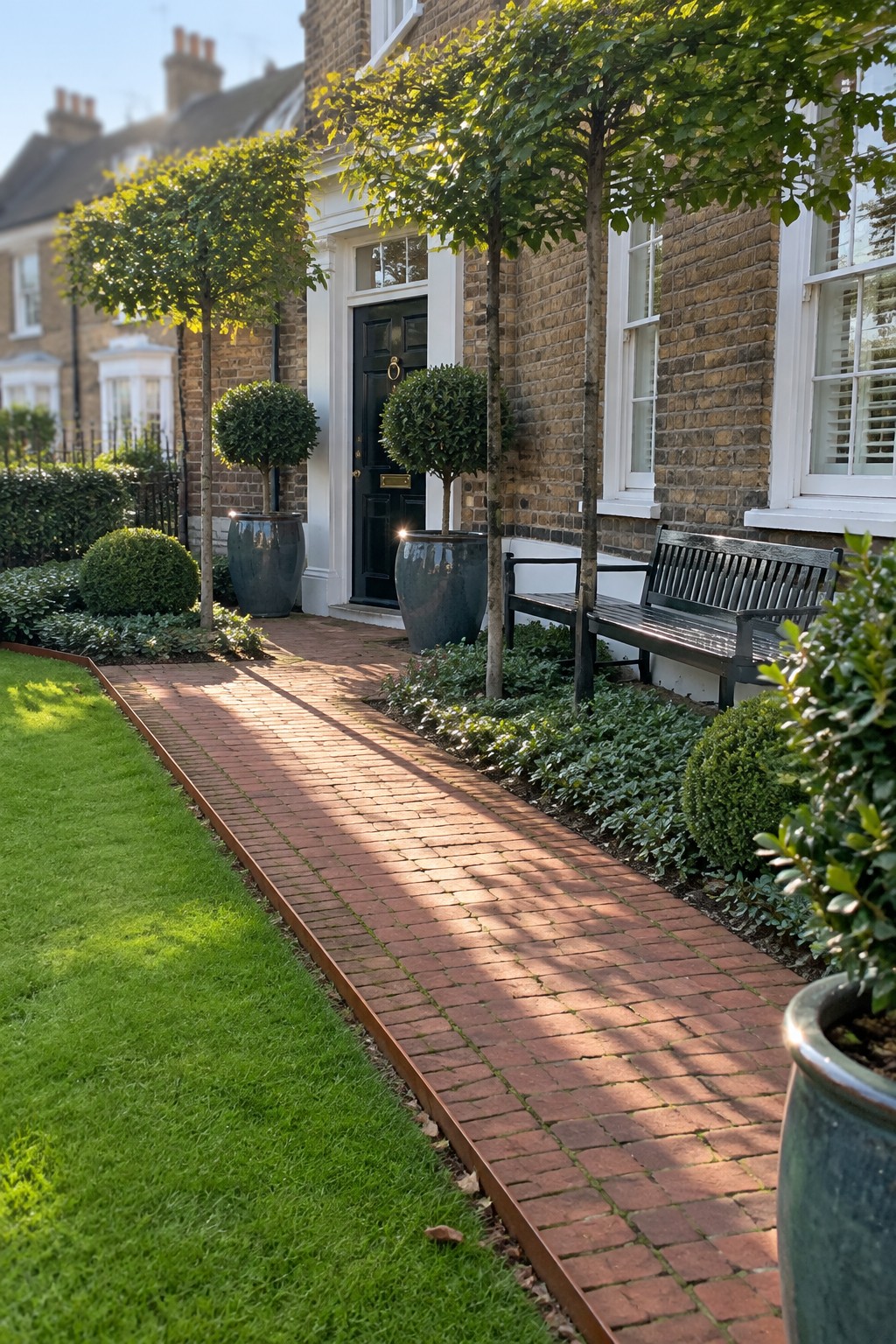
A thin metal strip along the lawn edge gives the whole garden a more structured look. It holds the grass in place and creates a clear line that makes the path feel intentional rather than just laid down.
This kind of edging suits brick paths on older homes especially well. It stays low enough not to catch the eye and makes it easier to keep the lawn neat without a lot of extra trimming.
Frequently Asked Questions
Q: How often do I need to recut the edges to keep them looking crisp?
A: Cut them every two weeks during the growing season. Use a half moon edger for clean results. This keeps the formal look without much extra work.
Q: What edging material holds up best in formal designs?
A: Brick or stone works well because it stays in place. Install it level with the lawn so mowing is easy. Avoid plastic strips since they tend to shift over time.
Q: Can I add flowers without ruining the clean lines?
A: Plant low hedges like boxwood along the edges. Keep them neatly trimmed to match the formal style. This adds interest while preserving the defined borders.
