


When I walk down the steps in my own yard I always notice how the sides start to look bare once the weather shifts and the ground settles.
Adding some edging or low ground cover along the path can keep things looking intentional without turning the whole area into a big project.
Small details like that make a real difference over time.
I have tested a few ways to blend the steps with the surrounding beds and the ones that hold up best are usually the ones that work with the slope instead of fighting it.
It is usually smartest to try one change on a single section before committing to the rest of the steps.
Frame Steps With Large Pots
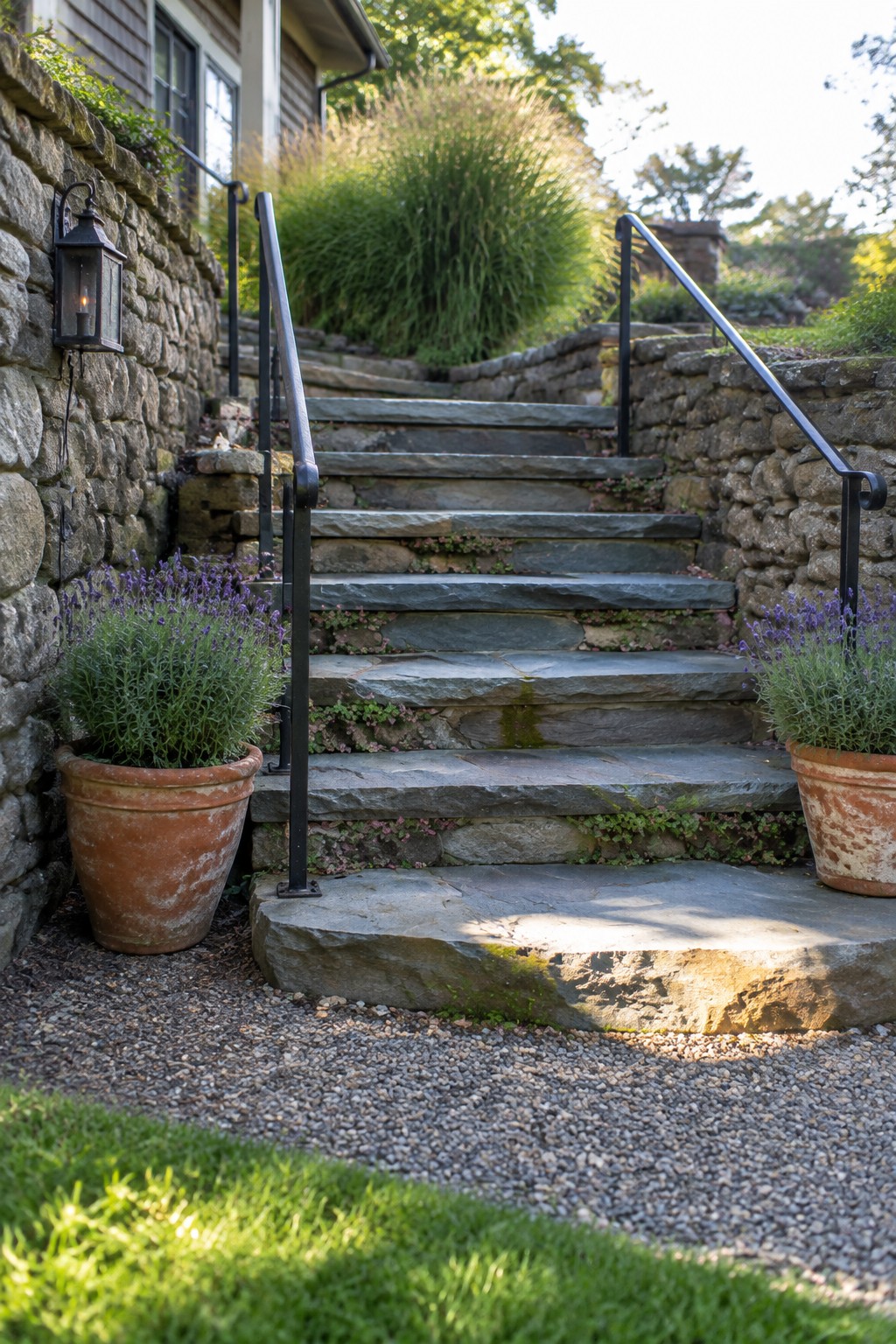
Placing a pair of large pots at the base of outdoor steps adds softness and color to all that stone. It breaks up the hard lines and gives the entrance a finished look without any major construction.
This approach works on most homes with steps leading to a door or garden. Match the pots to the existing materials if you can, and choose plants that stay neat and full through the season so the effect lasts.
Gravel Between Steps Handles Slopes Easily

Gravel between wooden steps helps with drainage and cuts down on mud after rain. It also gives the steps a lighter feel so they blend into the garden instead of looking like a heavy structure.
This setup works best on gentle slopes where you want a clear path but still need room for plants along the sides. Use pressure-treated wood for the treads and keep the gravel layer thin so it stays level. Edge the whole thing with ferns or hostas to soften the look and hide the edges.
Soften Steps With Cascading Flowers
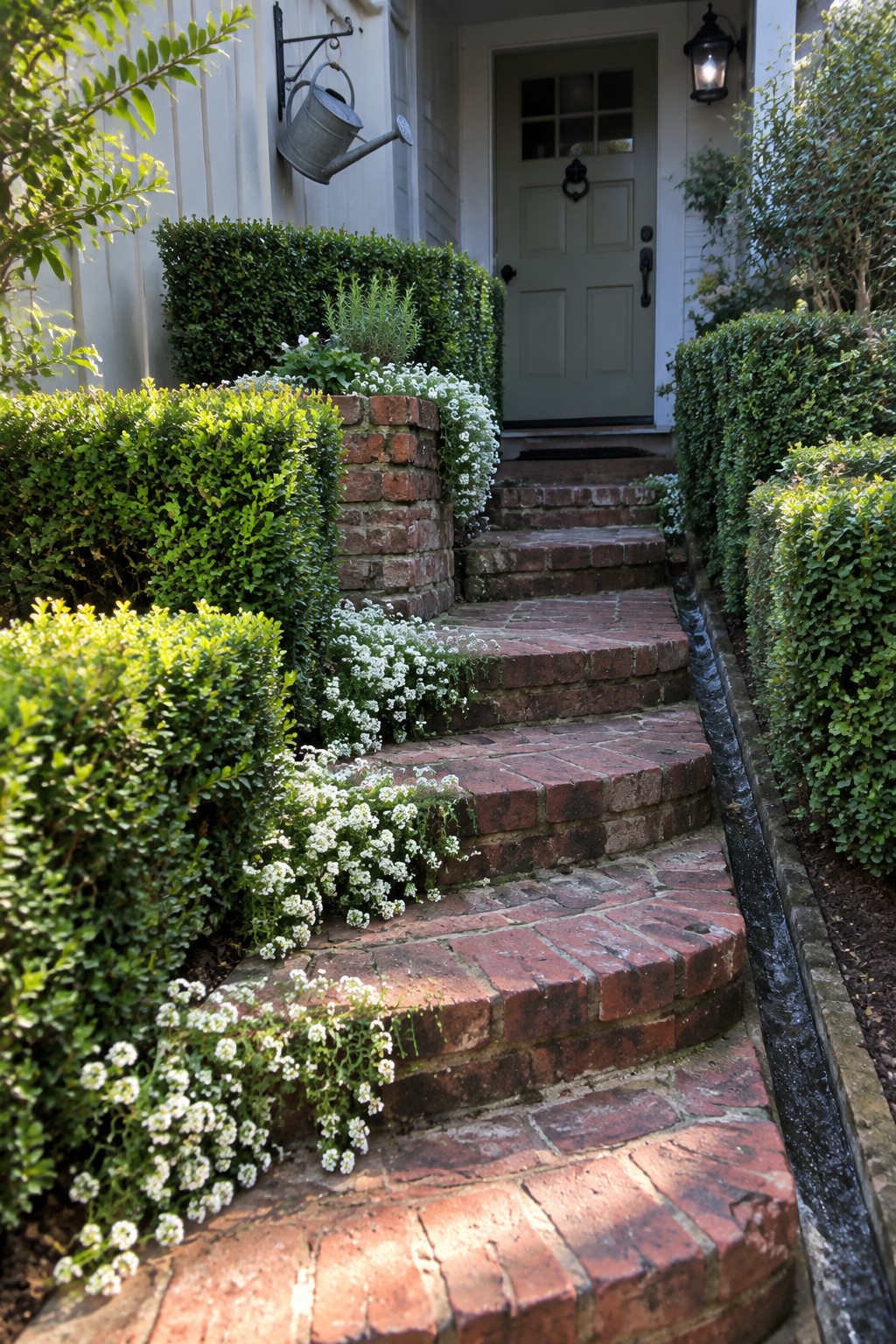
Brick steps often feel a little rigid on their own. Letting small white flowers spill along the edges softens the lines and makes the path feel more connected to the garden around it.
This approach works best on homes with older brickwork or in gardens that already use low ground covers. Pick plants that stay compact and trim them back once or twice a year so they do not cover the walking surface.
Add Lighting Under Concrete Steps

One simple way to improve outdoor steps is to run a line of lights right under the front edge of each tread. It creates a gentle wash of light that marks the path clearly after dark and keeps the overall look clean.
This works especially well with concrete slabs set into gravel, as the lights stay protected and the glow stays low. It suits modern homes with straight lines and low plantings along the sides. Use outdoor-rated LED strips and check that the wiring stays hidden and dry.
Edge Stone Steps With Pebbles

One simple way to improve outdoor steps is to add a border of small pebbles along the edges. It gives the steps a finished look and helps keep soil and plants from creeping onto the treads.
This works best on garden paths or steps that already use stone or concrete. Set the pebbles in a thin layer of mortar so they stay in place, and keep the border narrow so it does not take up walking space.
Line Steps With Raised Planters

Raised wooden planters placed along outdoor steps turn a basic walkway into a working garden space. The boxes keep soil contained at different levels and let herbs grow right beside the stairs without spreading into the path.
This approach works best on sloped yards or entries where flat ground is limited. Use rot-resistant wood, add drainage at the bottom of each box, and choose plants that can handle the amount of sun the steps receive.
Timber Steps With Gravel Infill
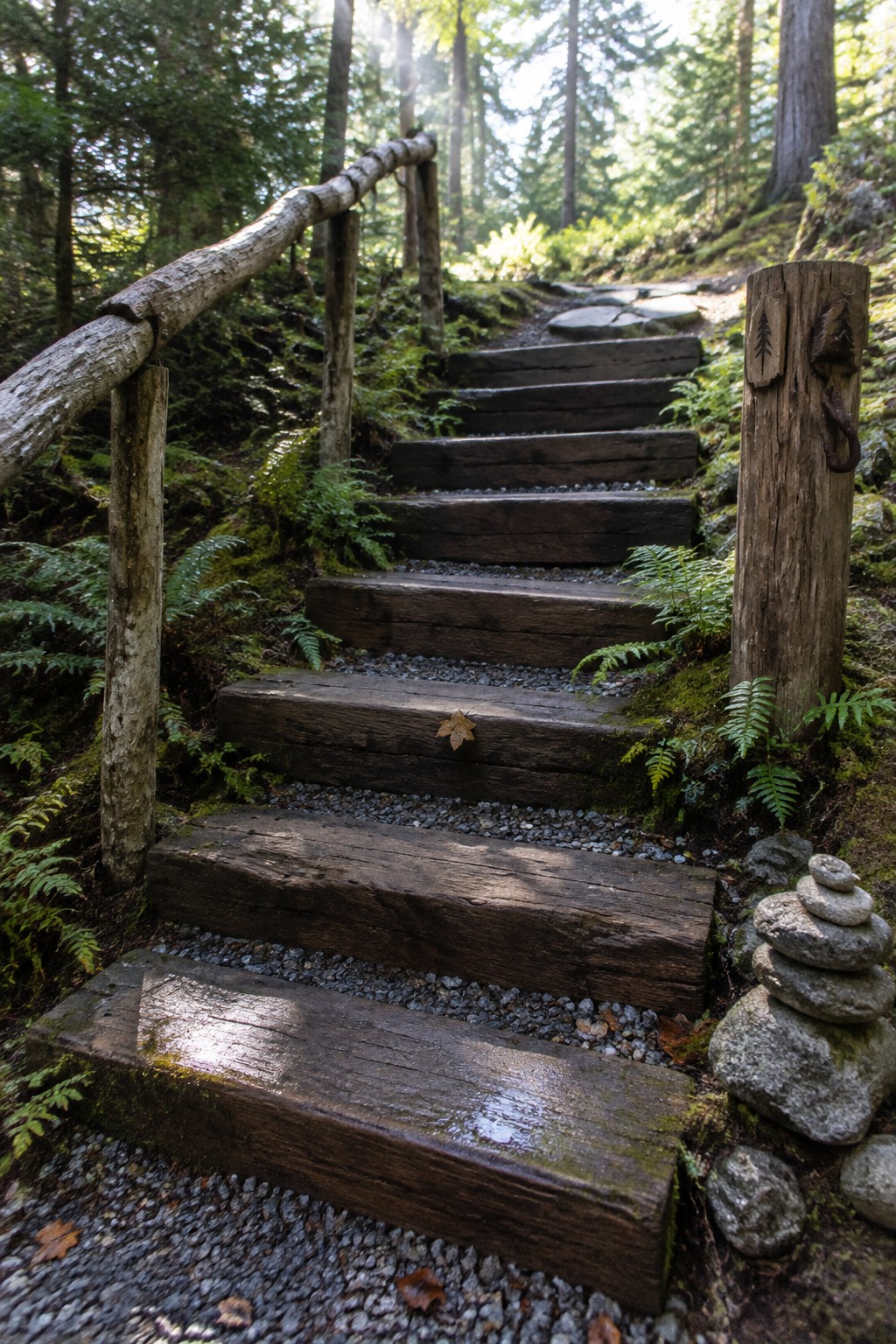
Thick timber beams make a simple and sturdy choice for garden steps on a slope. The wood sits naturally into the ground and the gravel between each tread helps with drainage while keeping the steps from shifting over time.
This setup works well in wooded or informal yards where you want the path to feel like part of the landscape rather than a separate structure. Cut the beams to length, set them level, and pack gravel around them so water can run off easily.
Tile Borders on Outdoor Steps

Adding a border of patterned tiles along the edges of outdoor steps gives them a finished look that stands out without much extra work. The tiles create a repeating line that draws the eye up or down the stairs and helps the steps feel more connected to the surrounding garden beds and hard surfaces.
This works especially well in sunny climates where the colors hold up and the style fits with stucco walls or clay pots. Keep the tile pattern simple and repeat it on both sides so the steps feel balanced rather than busy.
Gabion Walls Along Steps
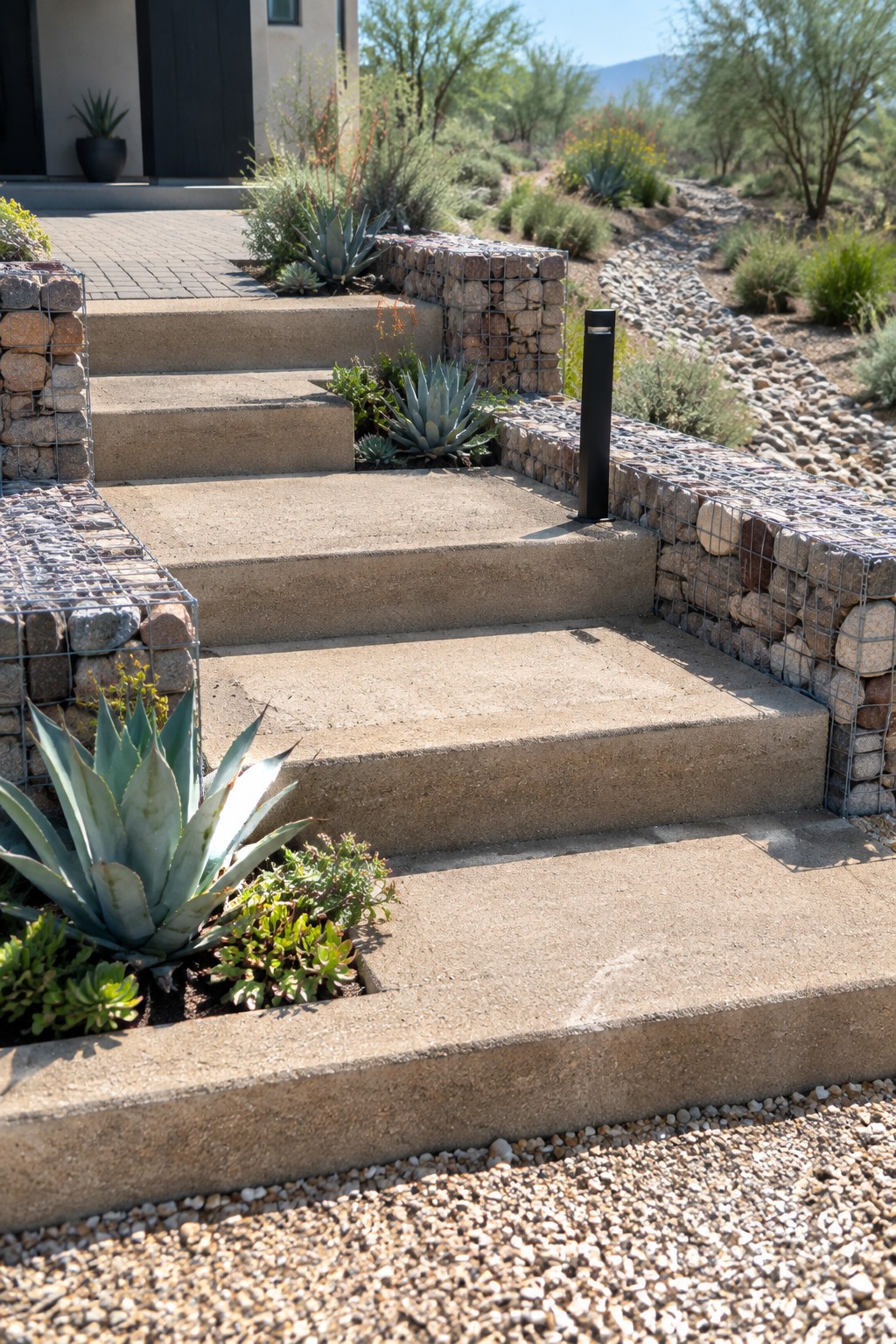
Gabion walls give steps a solid border that feels more natural than poured concrete or brick. The wire cages hold stones in place and create a low retaining edge that handles slopes without looking too formal.
They work best on homes with dry landscapes or rocky soil where you want low maintenance. Fill the cages with whatever local stone is cheapest, then tuck plants right against the base so the whole thing softens as the garden fills in.
Plant Colorful Borders Along Stone Steps
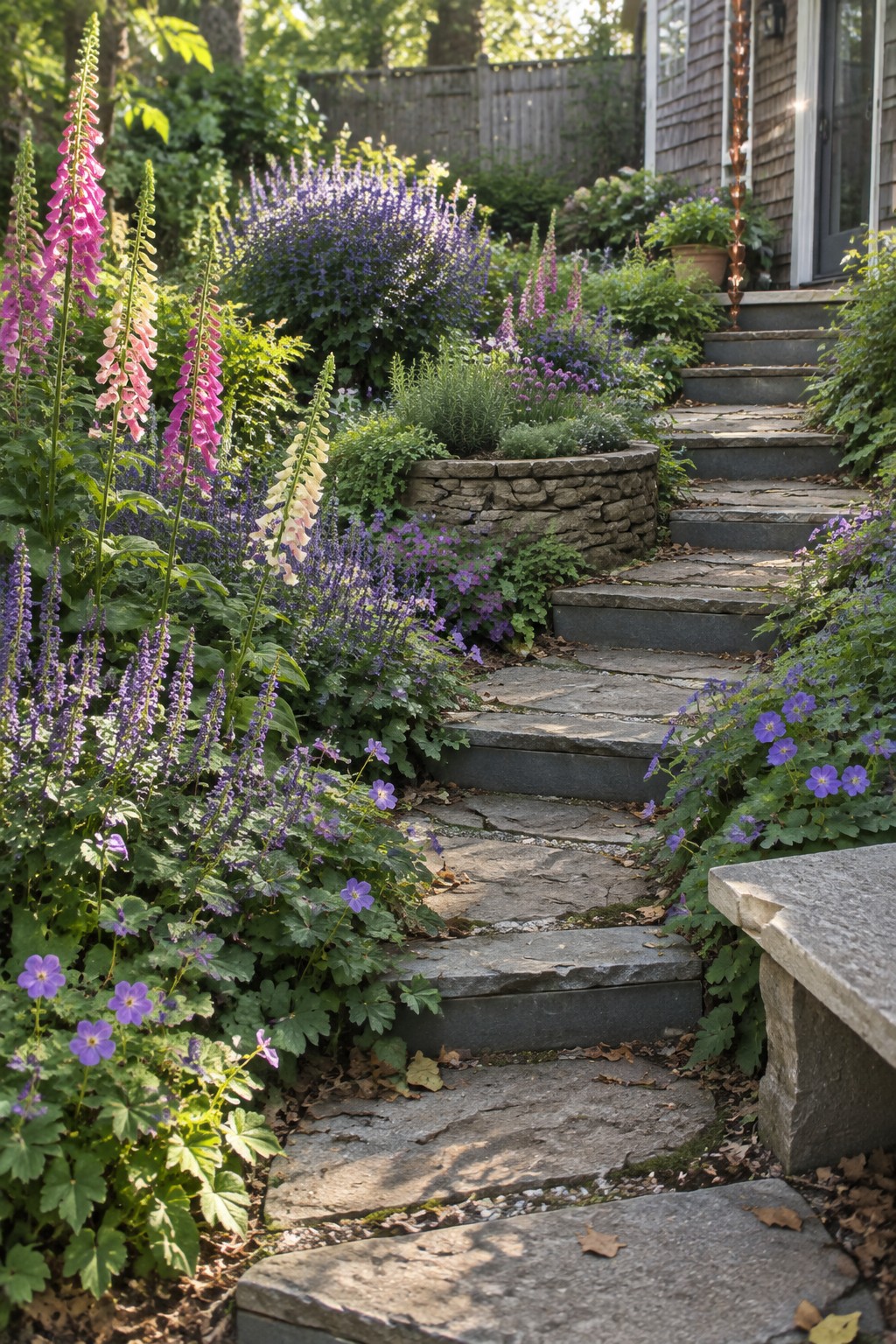
Stone steps often look plain by themselves. Adding flowers and greenery right along the edges turns them into part of the garden and makes the climb feel more natural.
This works best on homes where the steps already exist and you want to add color without changing the hardscape. Keep taller plants toward the back and lower ones near the treads so the path stays clear and easy to use.
Stepping Stones Through Moss

Stepping stones set right into a carpet of moss make a simple path that feels like it belongs in the garden. The stones stay level and steady while the moss fills in around them, so you get a walkway that handles rain well and needs almost no extra work once it settles.
This approach suits shady backyards or side gardens where grass struggles but moss grows easily. Space the stones about a comfortable step apart, and let the surrounding plants soften the edges over time.
Edge Your Steps With Ground Cover
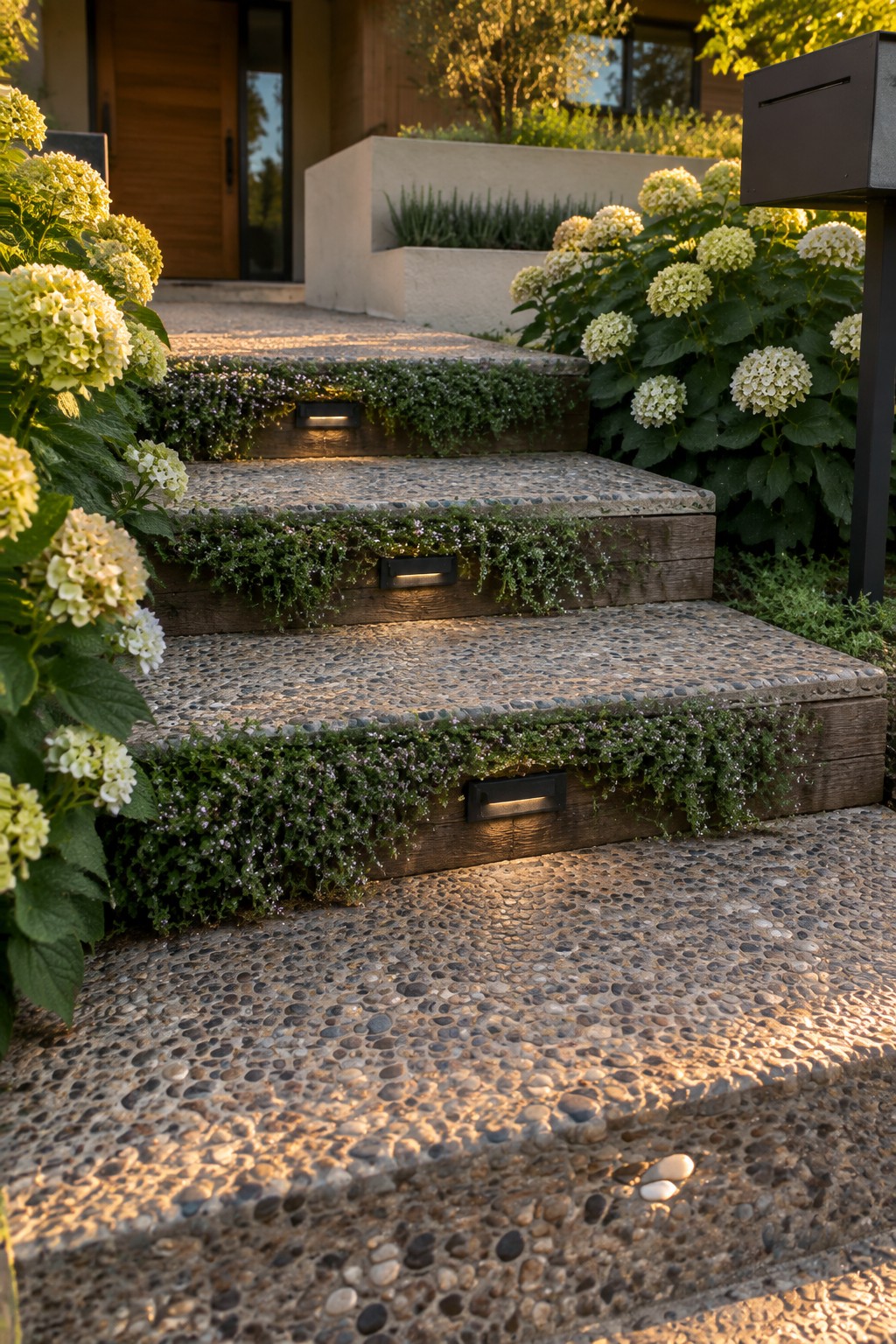
Many people add a narrow strip of low plants along the sides of their steps because it softens the hard edges without taking up much space. The plants trail just enough to hide the riser lines while still letting the steps stay easy to walk on.
This works best on straight outdoor stairs where the ground cover can spill over a bit but stays contained. Pick something tough that handles foot traffic nearby and add small recessed lights if you want the steps to stay visible after dark.
Rope Railings Keep Garden Steps Simple

Many people reach for rope and wood posts when they want steps that feel part of the garden instead of something added on. The rope gives a light handhold without cutting off the view or looking heavy next to the stone.
This setup works well on slopes near trees or water where a full railing would feel out of place. Set the posts firmly in the ground and use thick, weather-treated rope so it stays tight over time.
Set Stone Steps In Gravel
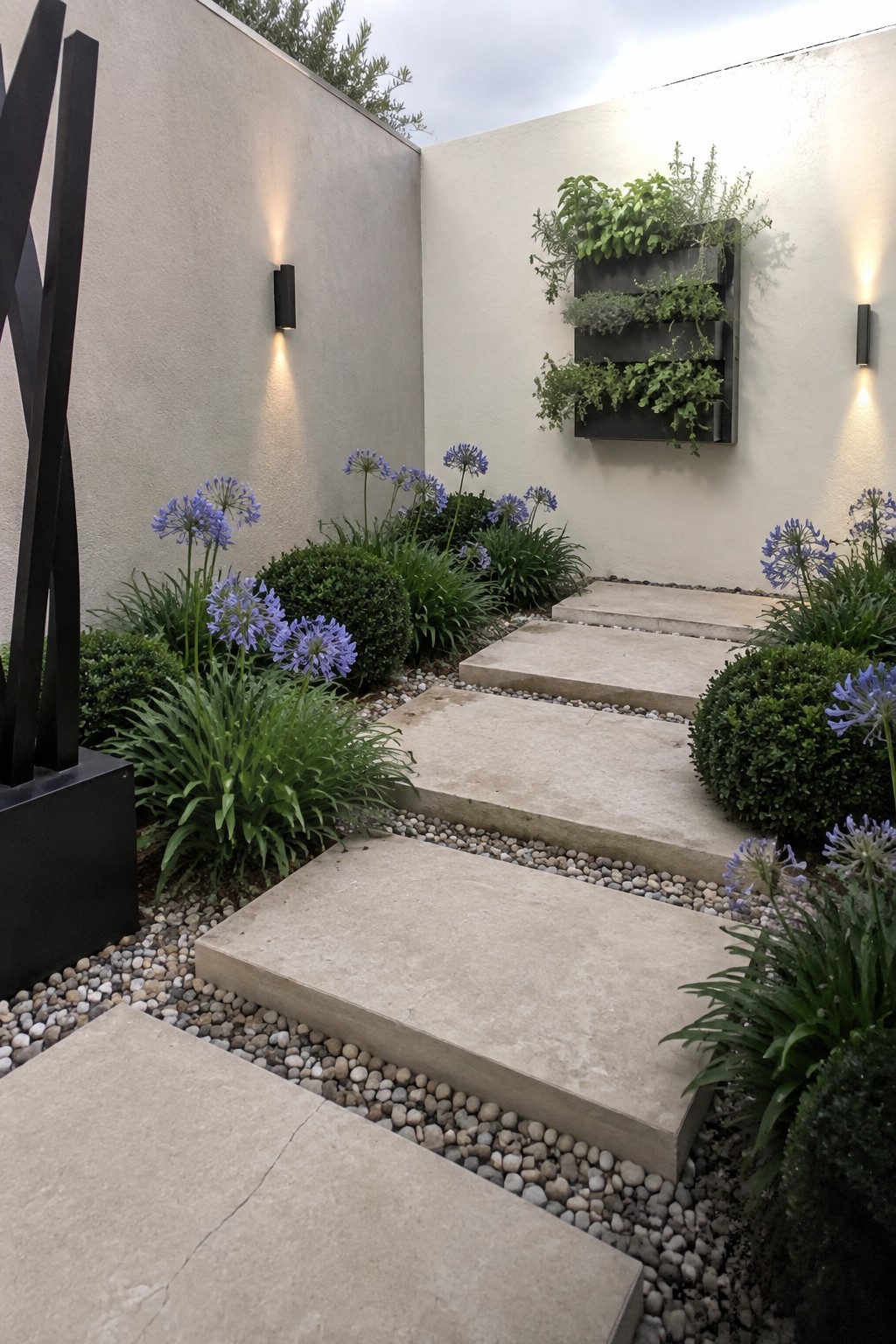
Wide stone steps placed straight into gravel make a path feel simple and relaxed. The gravel fills the gaps, handles drainage, and keeps the look low key without extra borders or materials.
This setup works best in small yards or side entries where you want easy upkeep. Use a few layers of plants along the edges to soften the stones, and pick gravel that stays put over time.
Plant Along The Edges Of Outdoor Steps
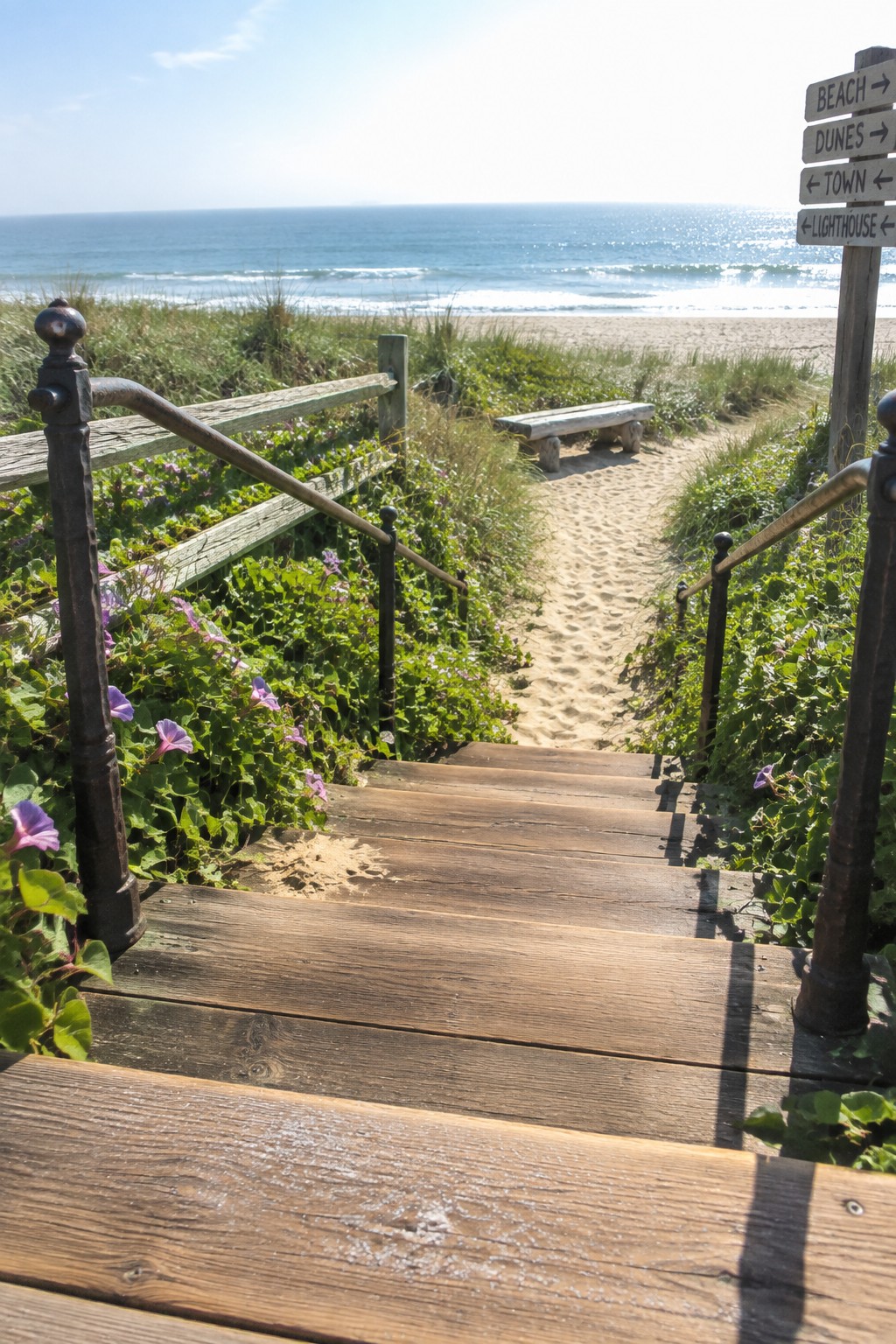
Many people add plants right next to their outdoor steps so the whole path feels more natural. The greenery softens the hard lines of the wood and helps the steps blend into the surrounding yard instead of standing out as a separate structure.
This works best on slopes or gentle hills where steps connect different levels of a garden. Low plants along both sides keep the walkway clear while adding color and texture. Just choose varieties that can handle some foot traffic and match the light conditions in that spot.
Build Planters Into Your Steps

One way to make outdoor steps feel more finished is to add narrow planting channels along the edges. These built-in troughs let you tuck in low-growing plants that soften the hard lines of stone or concrete without taking up extra space on the treads.
This works especially well on wider steps where you can run a long, shallow planter box between levels. Succulents and similar tough plants do fine in these spots since they need little water and stay compact. Just make sure the channel has decent drainage so water does not pool against the step material.
Add Solar Lights Along The Steps
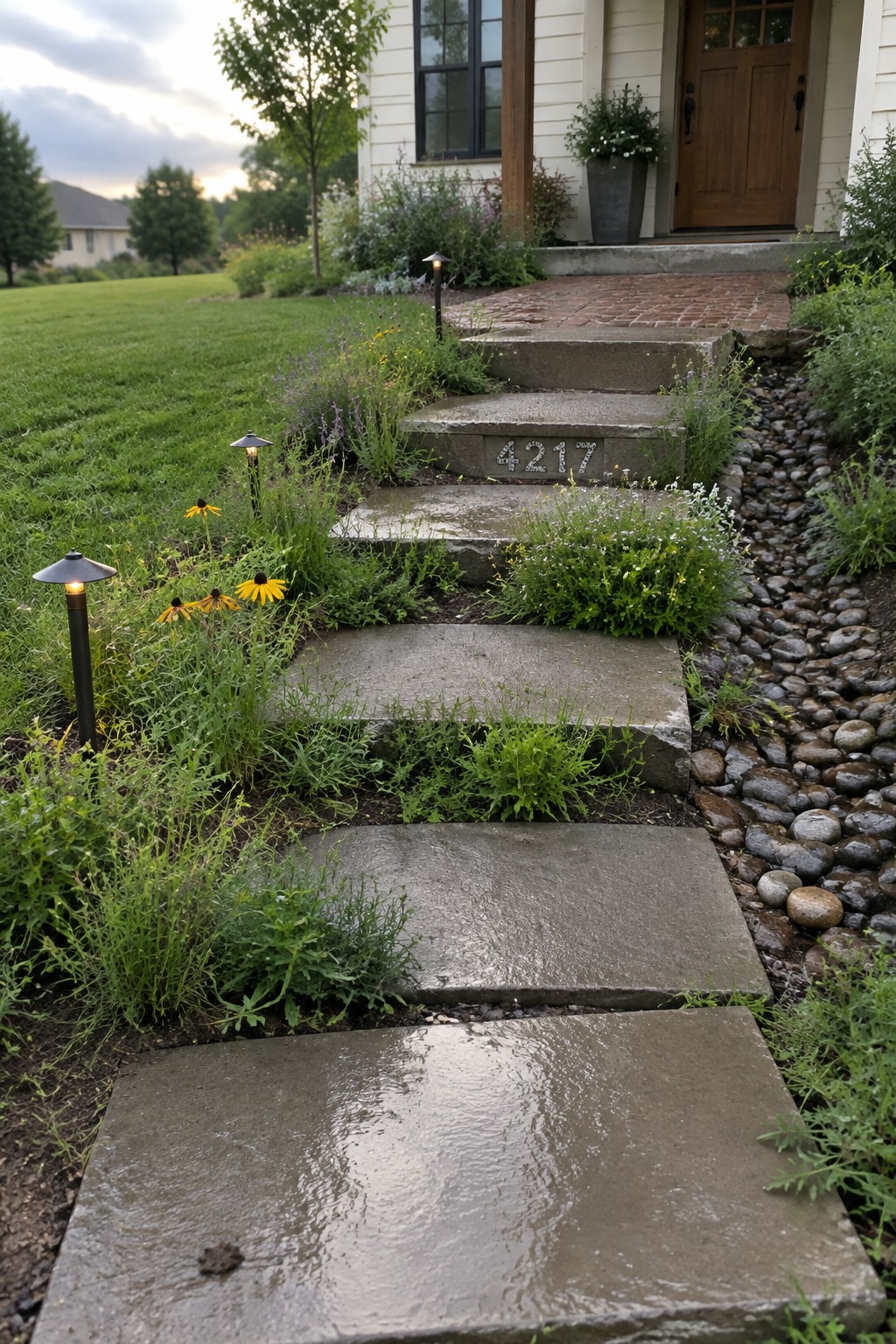
Solar lights tucked into the planting beds make the steps safer to use after dark without needing any wiring. They also bring a little extra life to the flowers and grasses right next to the stone treads.
This setup works best on steps that see regular evening foot traffic. Place the lights low among the plants so the beams stay focused on the walking surface and do not create glare.
Add Lighting Along Your Outdoor Steps
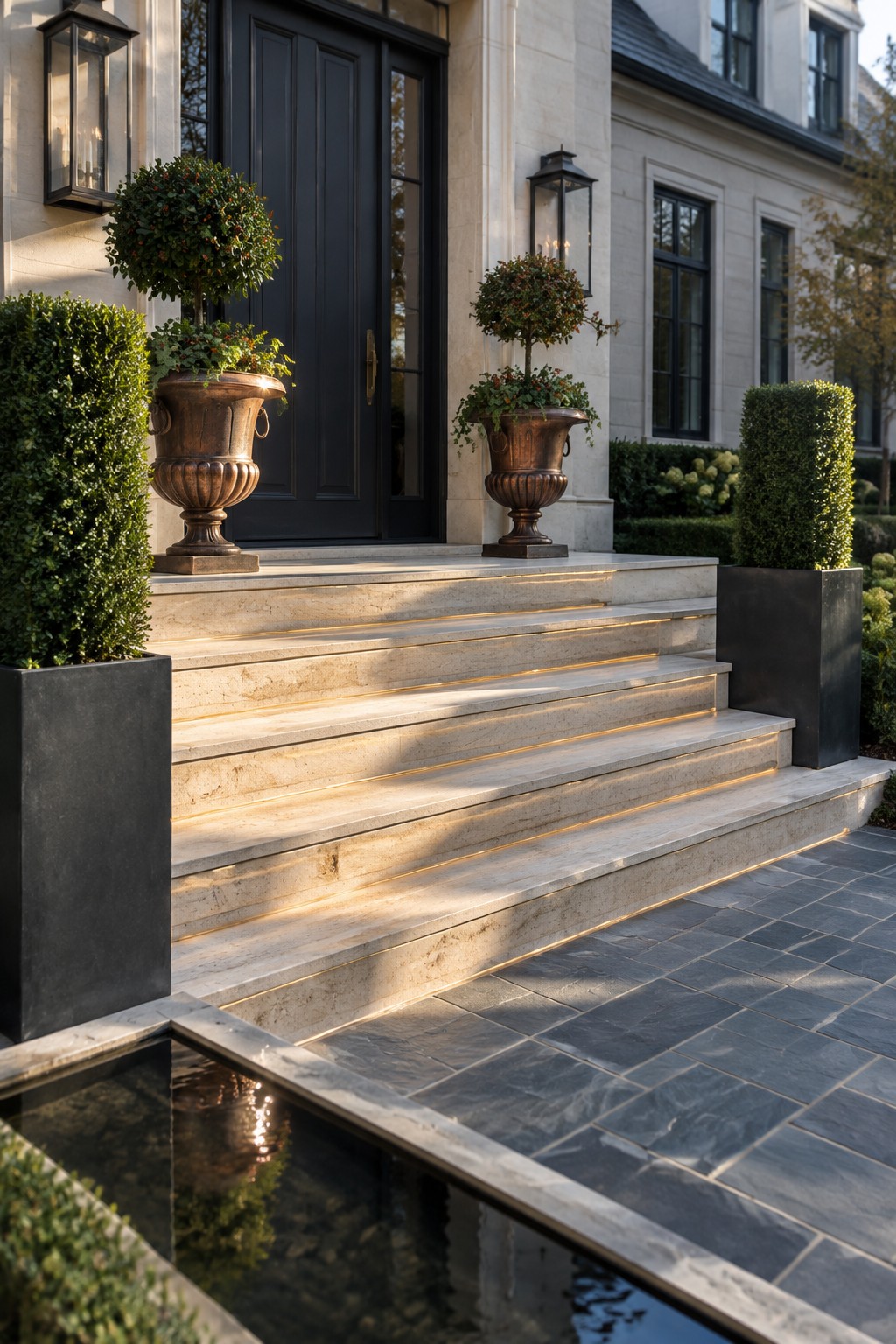
Many people forget how much a simple line of light improves outdoor steps after dark. It makes the path safer without needing tall fixtures that clutter the look.
This approach works best on stone or concrete stairs that already have a solid tread edge. Tuck low-voltage LED strips under the front of each step so the light washes down the riser. Keep the wiring hidden and use outdoor-rated fixtures so they last through rain and snow.
Stepping Stones Through Flower Beds

Setting stepping stones directly into the planting lets the path feel like a natural part of the garden instead of a separate feature. The stones sit low so the surrounding ground cover and flowers grow right up to the edges and soften the look over time.
This works best in informal yards where you want a simple route without adding extra edging or gravel. Choose stones that are wide enough to feel stable and space them so the planting can fill the gaps without crowding the walking surface.
Frequently Asked Questions
Q: How do I keep the steps from getting slick after a rain? A: Spread a thin coat of outdoor sealant mixed with fine sand across the surface. Walk on it once it dries to check the feel under your shoes. This adds grip while letting the material keep its natural look.
Q: What if the ground around my steps settles unevenly after a few months? A: Scoop out the low spots and pack in fresh gravel or soil to bring them level again. Press down firmly with your foot to test stability before moving on. Doing this early stops the whole setup from tilting.
Q: Can I add lighting to these step ideas without running wires everywhere? A: Place a few solar stake lights along the sides where they catch the sun during the day. Angle them so the glow hits the treads at night. They charge on their own and need almost no upkeep.
