

I have found that small backyards often feel cramped until you start thinking about how plants and paths divide the space without closing it in.
When I look at my own yard I realize that adding structure through low edging or simple borders changes how the whole area reads from the house.
One good layout tweak can open everything up.
Over time those choices shape whether the space invites you to spend time outside or just looks like an afterthought.
I usually test one new planting idea each season to see what actually holds up.
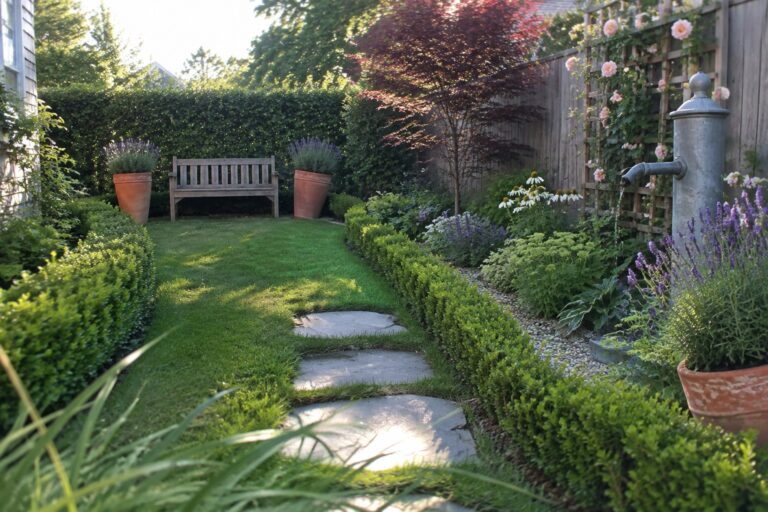
Lay a Stepping Stone Path Through the Lawn

A stepping stone path gives a small backyard some structure while still keeping most of the grass. It creates a clear walking route that feels natural and stops the lawn from getting trampled in one spot.
This idea works well in narrow gardens or side yards where space is tight. Space the stones so they feel comfortable to walk on and let low hedges or border plants soften the edges over time.
Raised Metal Planters Organize Small Backyards

Raised metal planters give structure to a narrow backyard without eating up much room. They keep the planting area contained so the path stays clear and the overall layout feels deliberate rather than scattered.
This approach suits tight side yards or slim lots where you want clear boundaries. Fill the beds with low-water plants and gravel to cut down on weeding and make the whole space easier to maintain over time.
Raised Beds Organize a Narrow Yard

Raised beds give you a clean way to grow plenty of plants even when the space is tight. They keep everything contained so the path stays clear and the beds do not spill into each other or the walkway. The wooden boxes also add height, which makes the garden feel fuller without crowding the ground.
This setup works best in side yards or small back gardens where you need order more than free-form planting. Build the boxes to match the width of your path and line them along one side or both. Keep the soil mix light so the beds stay easy to tend over time.
Mix Bench Seating With Chairs
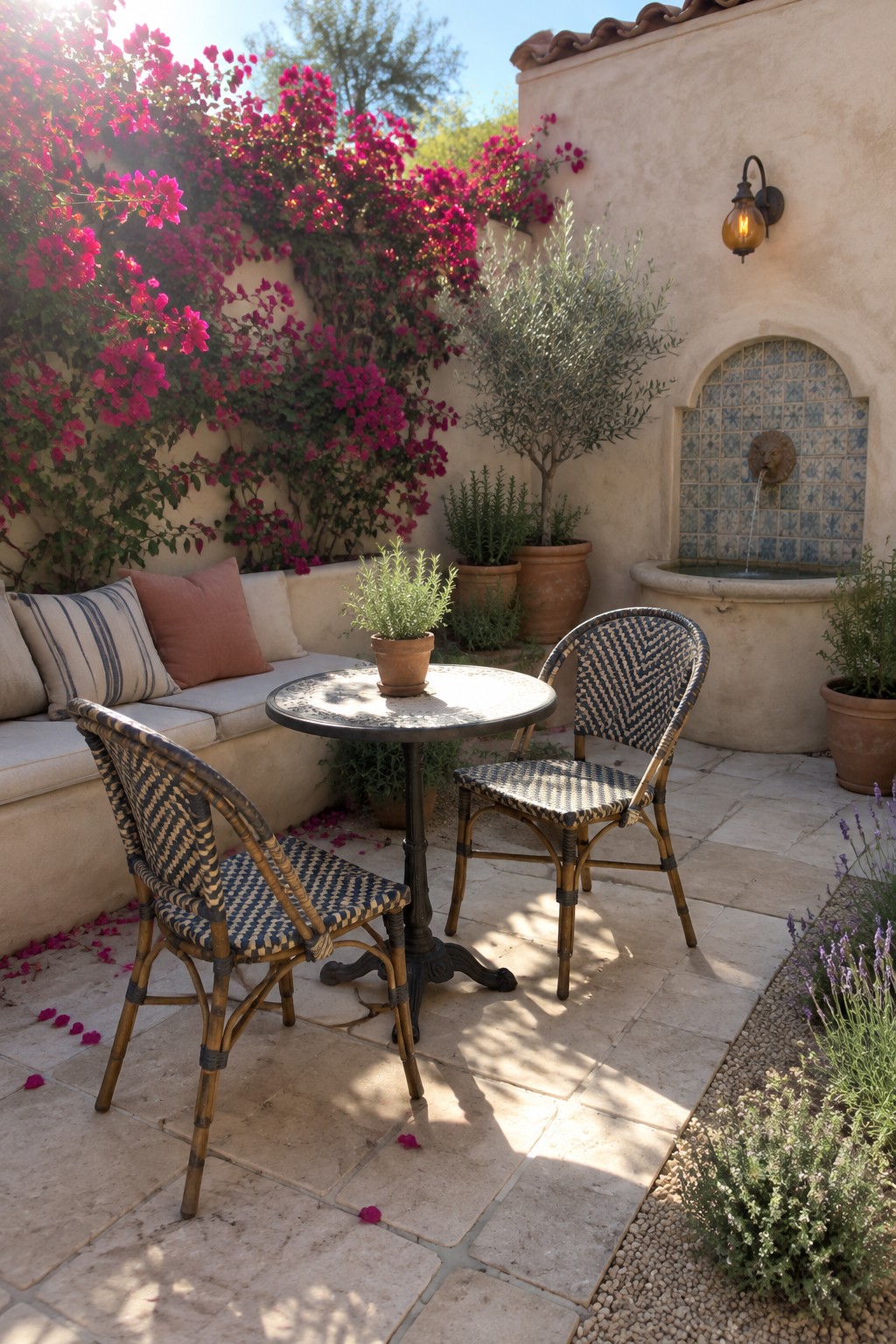
A built-in bench along one wall gives you steady seating without eating into floor space, and pairing it with a couple of lightweight chairs lets you adjust the setup as needed. This mix works especially well in a tight courtyard where a full set of furniture would feel crowded.
It suits homes with existing walls or raised beds that can double as seating edges. Keep the table small so there is still room to walk around, and add a few pots nearby to soften the hard surfaces without blocking movement.
Mount Planters on Side Walls for Narrow Yards
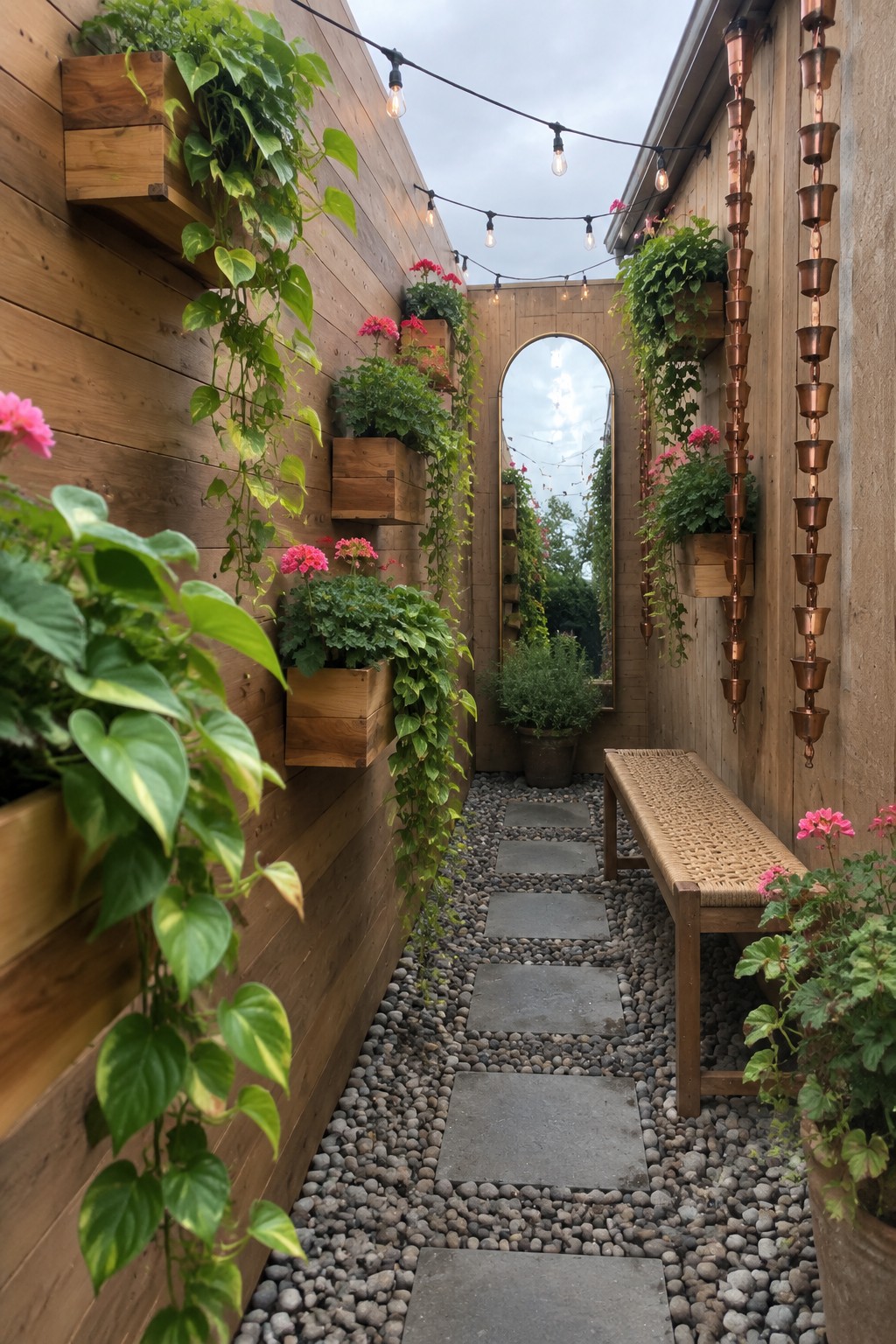
One simple way to add more plants to a small backyard is to run them up the walls instead of spreading them across the ground. Wooden boxes attached at staggered heights let vines spill down and create depth without blocking the path.
This approach suits tight side yards or alley spaces where floor room is limited. Use lightweight boxes and choose trailing plants so the setup stays easy to maintain and does not overwhelm the narrow layout.
Stepping Stones For Small Garden Paths

Stepping stones keep a small backyard feeling open because they do not cover the whole ground the way a patio would. They let grass, moss, or gravel fill the gaps, which helps the space stay green and simple even when the yard is tight.
Place them in a straight line or a soft curve so people can walk through without trampling plants. They work best in compact gardens where you want a clear route but still need room for low plantings and a few larger stones or a water feature.
Add a Fire Pit to Anchor Small Yards

A fire pit gives a compact backyard a clear reason to spend time outside after dark. It pulls seating into one spot so the space feels used instead of empty, even when the yard itself is not very big.
This setup works best on a simple paved surface where you can place a few low stools around the circle. Keep the surrounding planting low and the path open so the fire pit stays the main draw without crowding the rest of the yard.
Add a Narrow Water Feature

A long narrow pond works well in a tight backyard because it stretches the space visually and brings in the sound of moving water without taking up much room. The waterfall at one end keeps things lively while the straight edges help the whole area feel organized instead of cluttered.
This setup suits homes with a fence or wall along one side where you can tuck the pond in and still leave room for a path or small seating area. Keep the planting simple on the far side so the water stays the main focus.
Curved Raised Beds For Small Yards
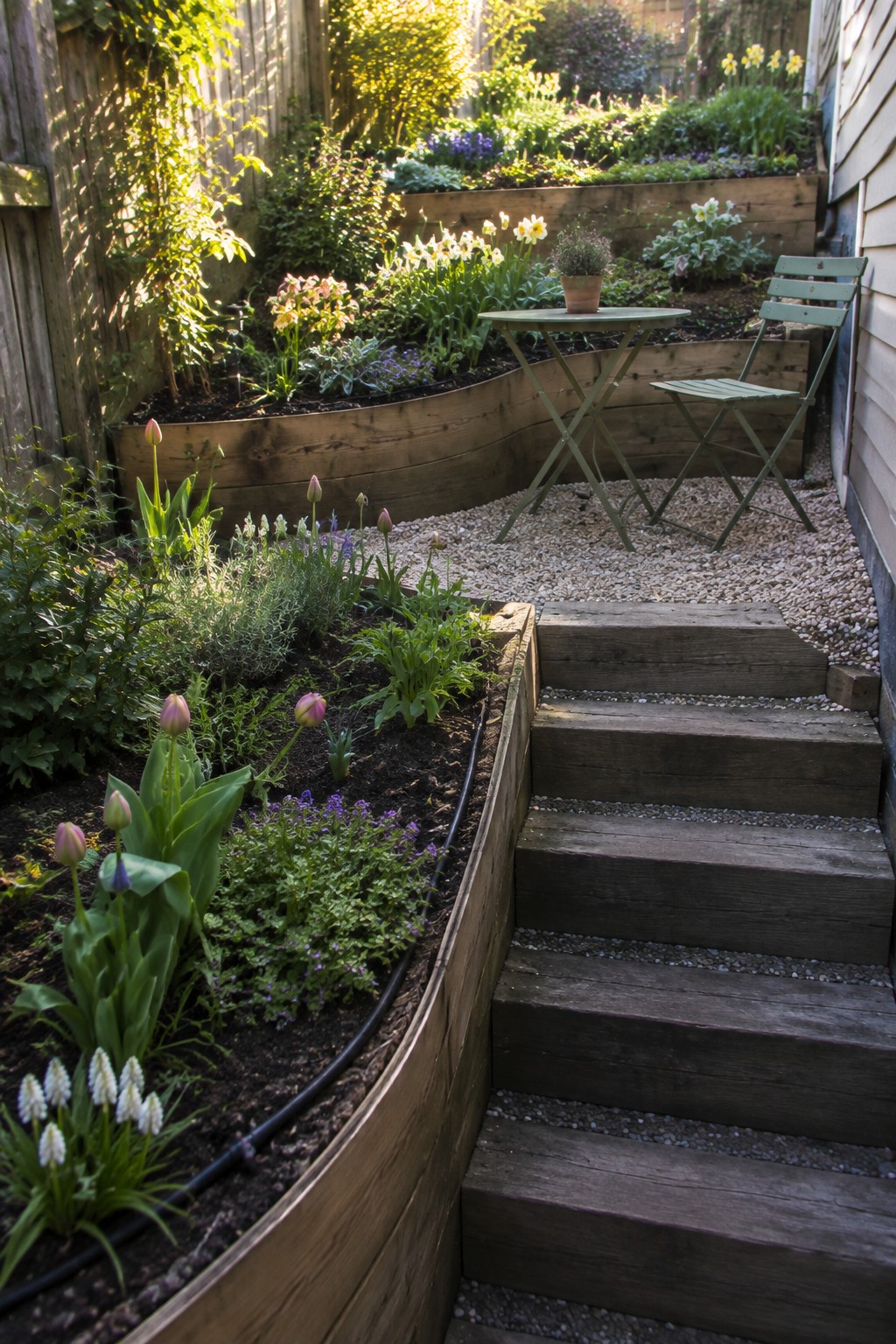
Curved raised beds give a small backyard more planting room without crowding the space. The rounded edges let you fit in more layers of flowers and greenery while keeping the overall look relaxed instead of boxed in.
This setup works best on narrow lots or gentle slopes where straight lines would feel too tight. Keep the beds low enough to reach easily and use simple gravel beside them for a path or a spot for a chair.
Try a Gravel Path with Stepping Stones

A gravel path keeps a small yard feeling open while still giving it structure. It is cheaper than full paving and lets water drain away easily, which helps in tight spaces where you do not want puddles.
Place the path so it leads to a simple seat or focal point. Add a few flat stones at the start for a steadier surface underfoot. Keep the gravel contained with a low metal edge or a strip of smaller pebbles so it stays neat over time.
Add a Built-In Bench to Make the Most of Small Yards
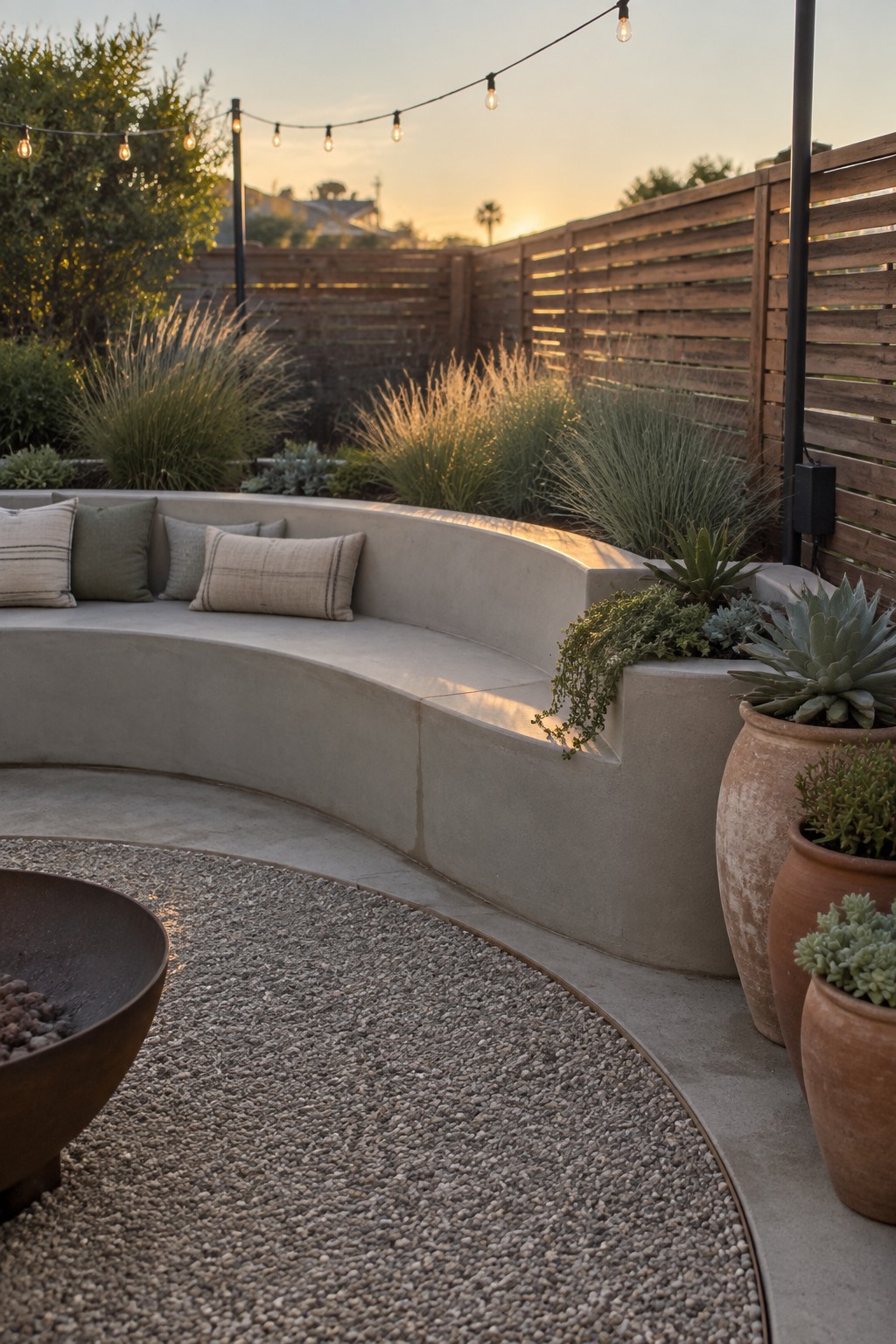
A curved bench built right into the landscape gives you plenty of seating without taking up extra floor space. It also creates a natural boundary for a gravel seating area, which keeps the whole setup feeling contained even in a tight backyard.
This works especially well when you tuck in a few larger pots along the edge and keep the planting low and simple around the perimeter. It suits homes with limited patio room or those who want a low-maintenance spot for evening use. Just make sure the bench height matches how people actually sit so it stays comfortable.
Line Your Path with Labeled Herb Beds
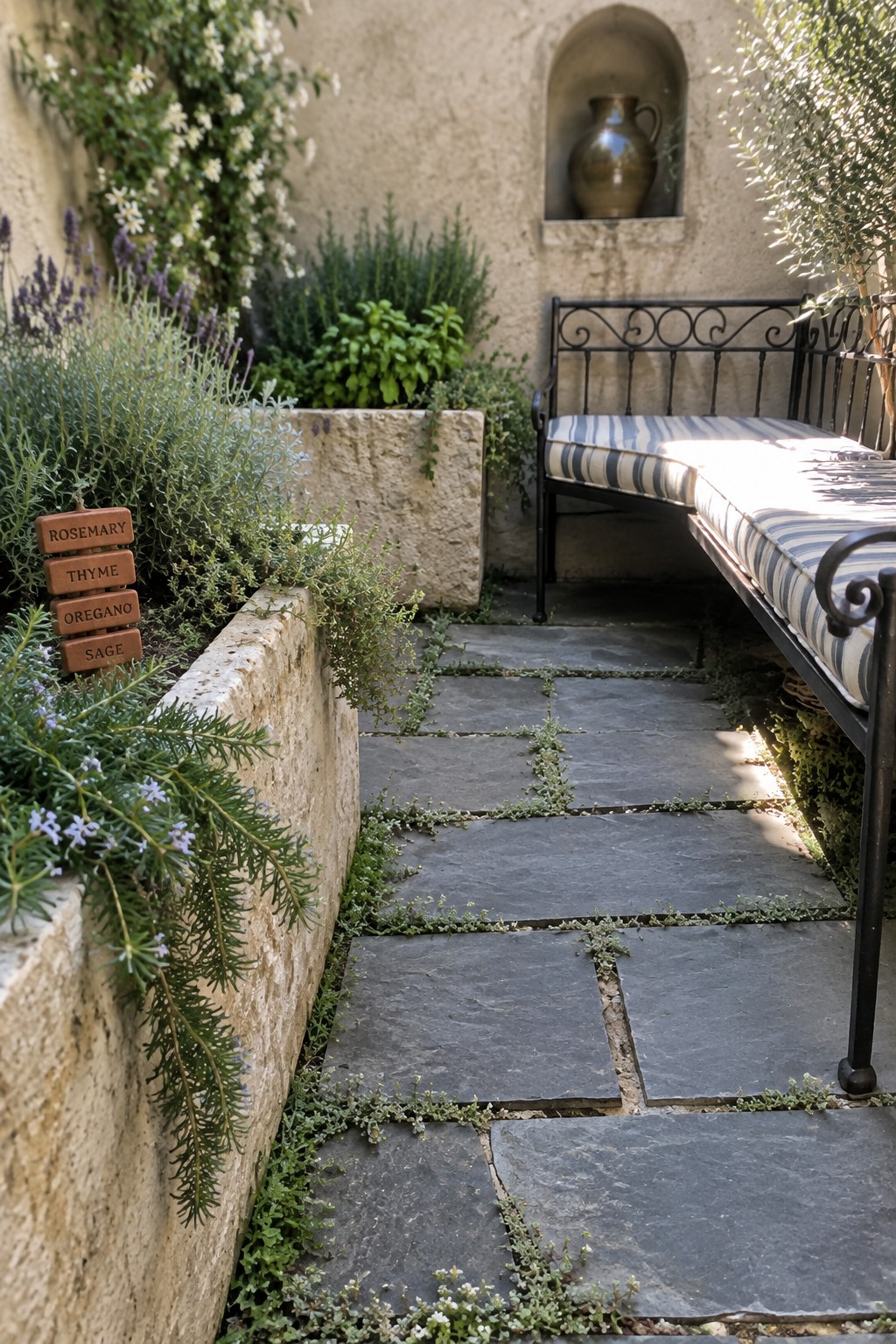
A raised stone bed placed right beside a narrow path gives you an easy way to grow herbs without losing walking space. The labels keep everything clear so you can reach for what you need without guessing.
This works well in small yards where a full garden bed would feel too big. Stick with tough herbs that spill a little over the edge and let low plants fill in between the pavers for a softer look.
Train Fruit Trees Along a Fence
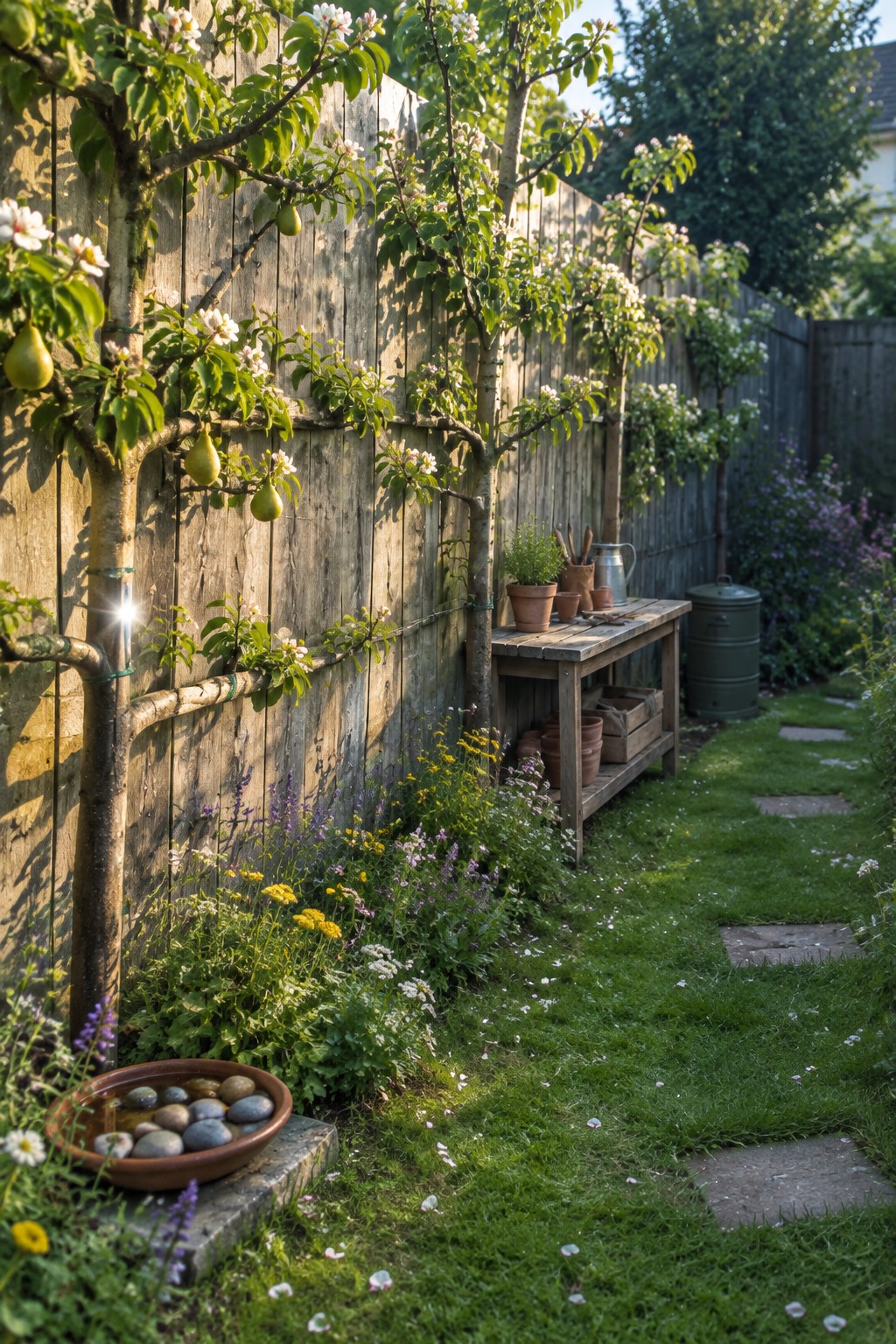
Training fruit trees flat against a fence is a simple way to add productive plants in a narrow yard. The branches stay contained and out of the way, so you still have room for a path and lower plantings right below them.
This approach suits small side yards or tight back gardens where ground space is limited. Start with young trees and guide the branches along wires or the fence boards as they grow. It keeps the area tidy and makes the fence itself more useful instead of just a plain boundary.
Add Artificial Turf For Kid-Friendly Play
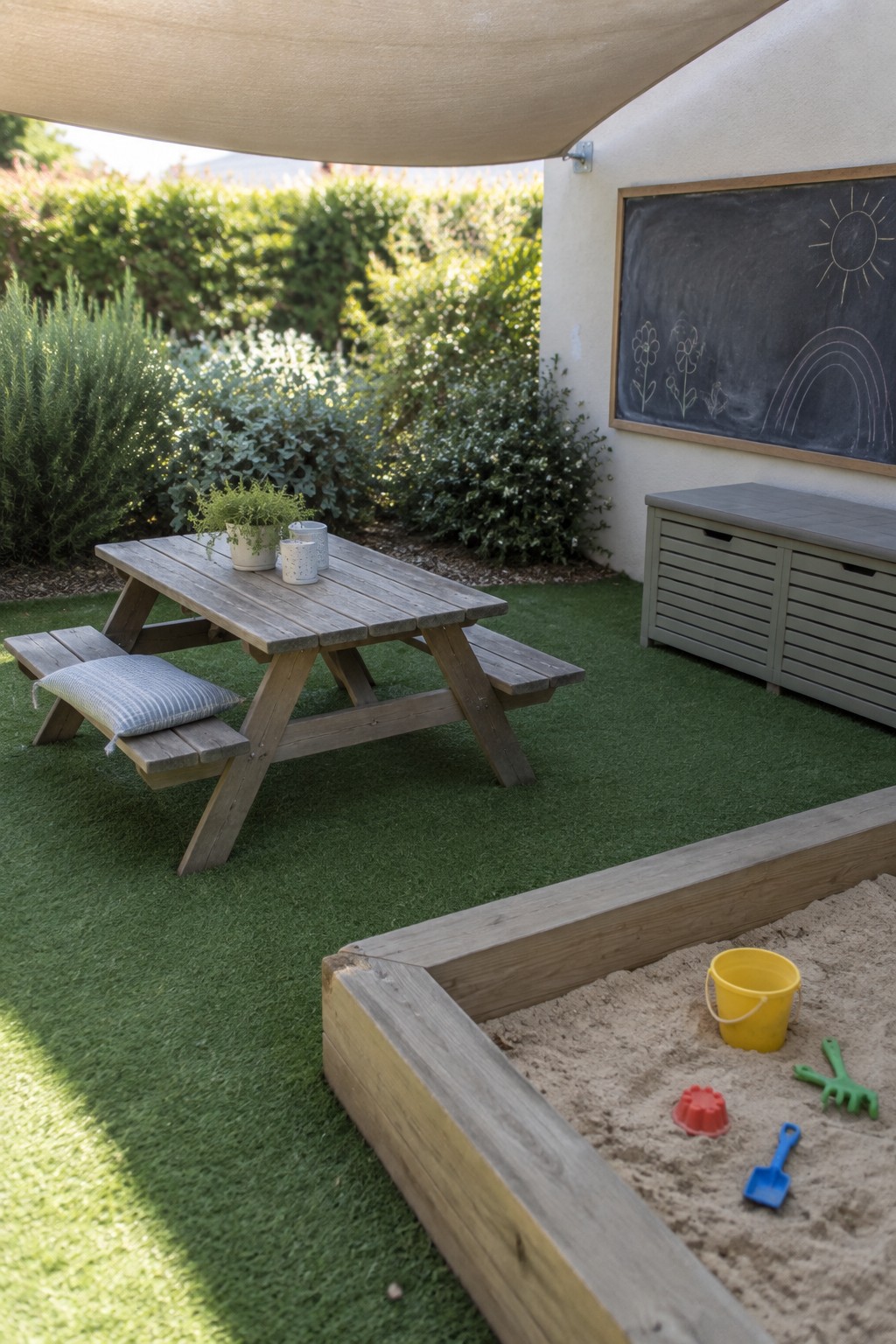
Artificial turf works well in small backyards because it stays green without much upkeep and holds up to daily use. It gives kids a soft spot to run around while keeping the space looking neat even in high-traffic areas.
Pair the turf with a simple sandbox and a low table so the yard can handle both playtime and meals without extra work. This setup suits homes with limited grass or shady spots where real lawn struggles.
Stepping Stones In Moss Make An Easy Path
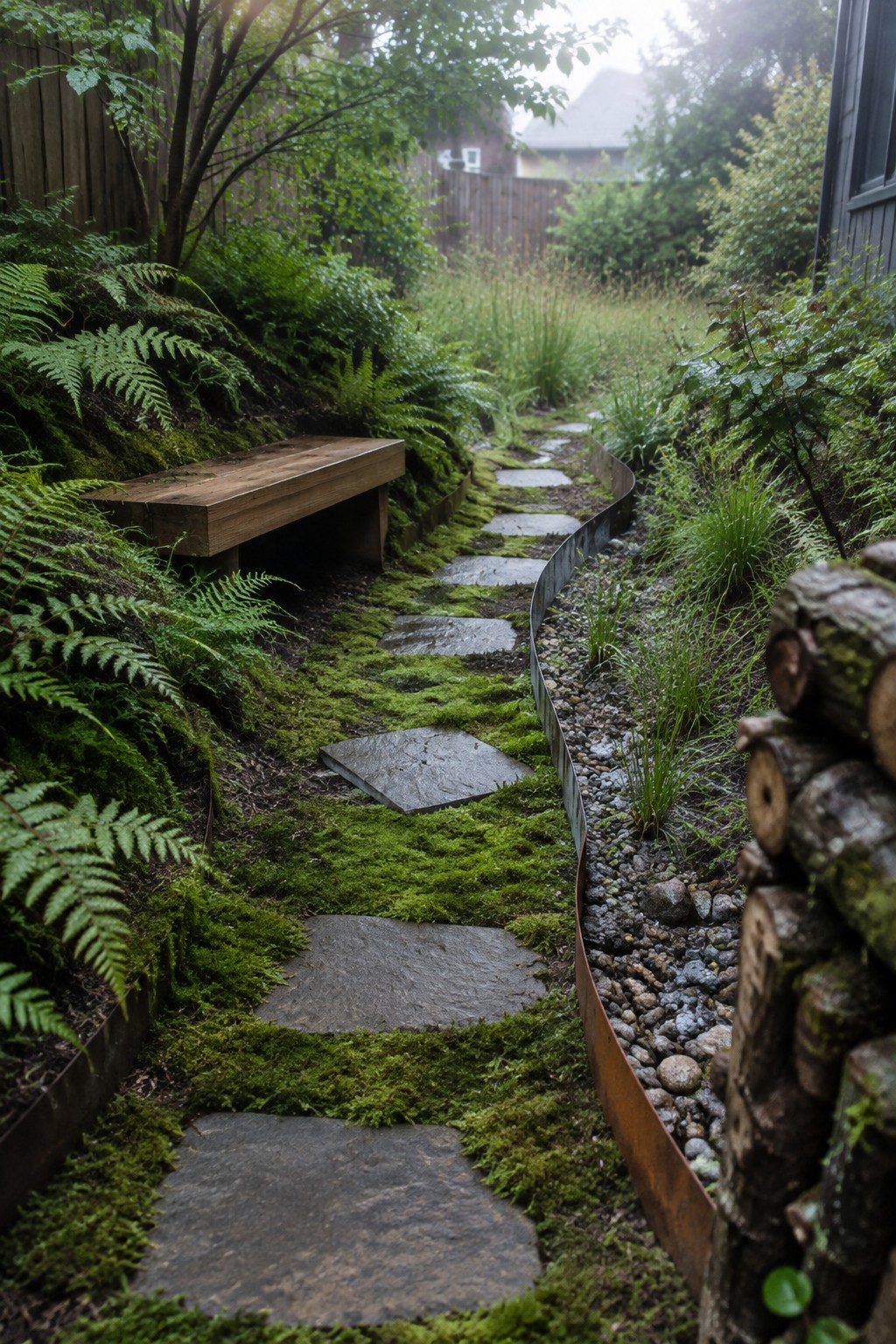
A path made of flat stones set into moss works well in small yards because it avoids the need for a wide paved surface. The moss fills the gaps naturally and keeps the ground soft underfoot while the stones provide solid footing.
This idea suits shaded spots where moss grows without much help. Level the stones evenly and space them for normal steps so the path feels comfortable to walk on every day.
Build A Sandbox Into Raised Beds

A sandbox tucked right into the raised bed layout keeps play space contained without eating into the lawn. It turns a small backyard into a spot that works for both kids and gardening, and the lid keeps things neat when the sandbox is not in use.
This setup suits compact yards where you want clear zones without adding separate structures. Place the sandbox near the edge of the lawn so it feels connected to the beds, and choose a lid that matches your deck or path material for a cleaner look.
Use Paver Paths With Ground Cover
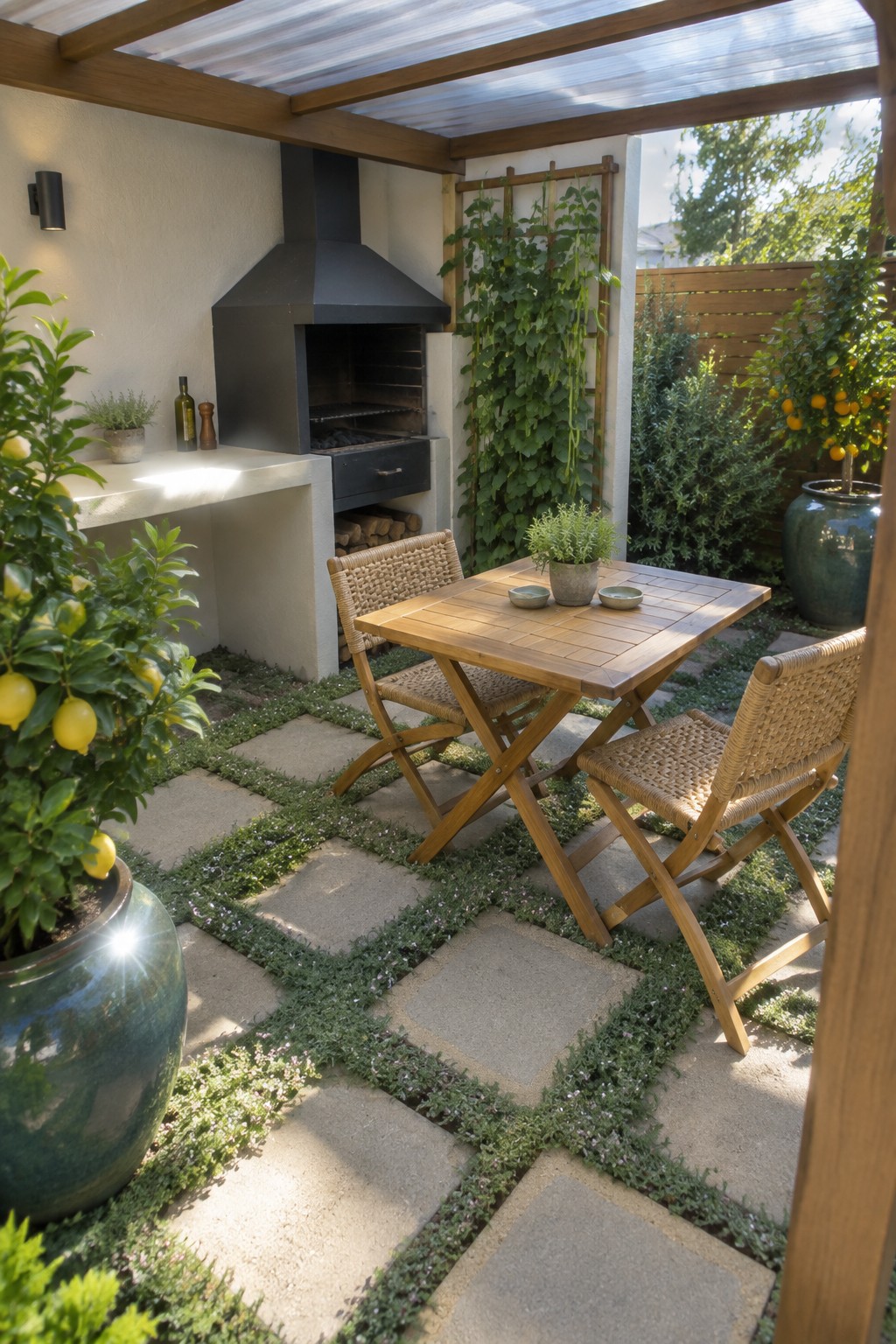
A grid of large stone pavers with low plants growing between them gives a small backyard a clean walking surface without taking over the whole area. It keeps some green underfoot and cuts down on the need for regular mowing or big lawn patches.
This setup works well in compact spaces where you still want room for a table and chairs. Place the pavers to lead toward a seating spot or outdoor cooking area, and choose a tough ground cover that handles foot traffic. Just check that the gaps stay narrow enough for easy walking.
Add a Linear Planting Bed Along One Side

A long narrow planting bed along the edge of a patio adds greenery without cutting into the walking or seating area. It keeps the space feeling open while giving you room for shrubs and flowers that soften the hard surfaces.
This works best in small yards where you need to keep the floor plan simple. Use a raised bed with a dark border and a strip of pebbles to separate it from the paving, then fill it with low plants that stay neat year round.
Brick Edging Defines Small Garden Beds

Brick edging gives a small backyard a clear structure without crowding the space. It separates paths from planting areas so everything stays neat as the garden fills in.
This works best in compact yards where you want low-maintenance borders that can follow gentle curves. Lay the bricks along the edges of beds and paths, then keep the inside mulched so weeds stay down and the layout stays easy to follow.
Checkerboard Deck Tiles With Grass

A checkerboard layout of wood deck tiles and grass squares gives a small yard some structure without covering the whole ground in one material. The mix adds texture and keeps the space from feeling too paved or too wild at once.
This works best in compact backyards where you still want a bit of lawn but need steady footing for tables and chairs. Lay the tiles on a simple grid, leave the other squares open for grass or low ground cover, and edge the whole thing with raised beds if you want extra planting room.
Set Up a Backyard Movie Screen

Adding a projector screen to a deck gives a small backyard a clear purpose after dark. The screen turns an ordinary seating area into a spot for movies or sports without taking up much extra space or requiring a big renovation.
This setup works best on a raised deck where you can face the screen toward the seating and keep cables out of the way. String lights help with visibility while the rest of the yard stays simple and low maintenance.
Use a Narrow Path to Make the Most of Small Yards
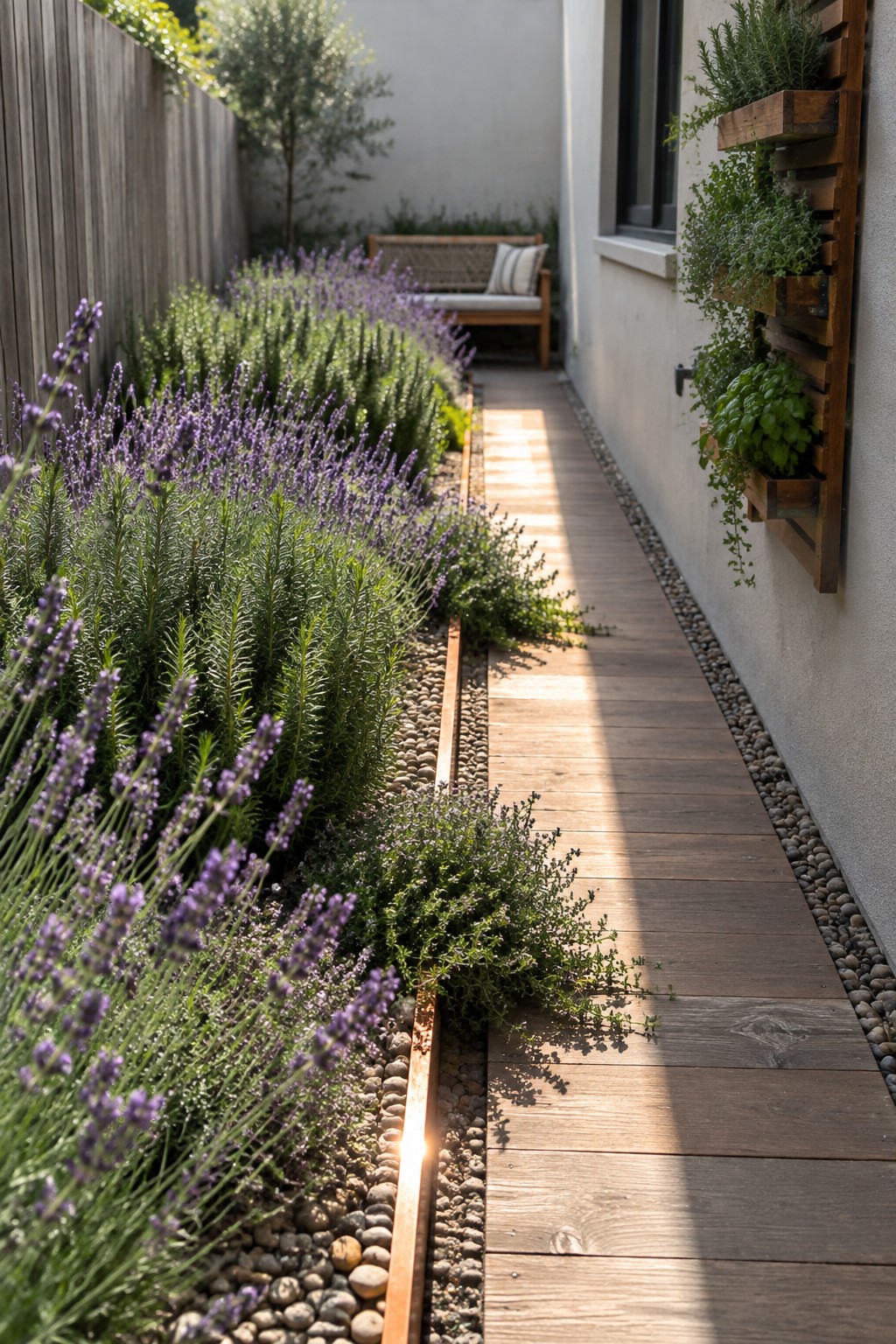
A narrow wooden path edged with gravel gives you a clear route through a tight backyard without taking over the whole space. It leaves room on either side for planting and keeps the area from feeling closed in.
This works well in side yards or along a fence where width is limited. Fill the beds with low plants like lavender and tuck in a vertical planter or two on the wall to add more growing space without spreading out.
Use Vertical Planters On Walls

Small yards often run out of ground space fast once you add seating or a work area. Vertical planters solve that by moving plants upward along a fence or wall so you still get plenty of greenery without crowding the floor.
This setup works best on a solid wall that gets decent light. Mount a few tall units side by side and fill them with herbs or leafy greens you can reach easily for cooking or trimming.
Add a Stepping Stone Path
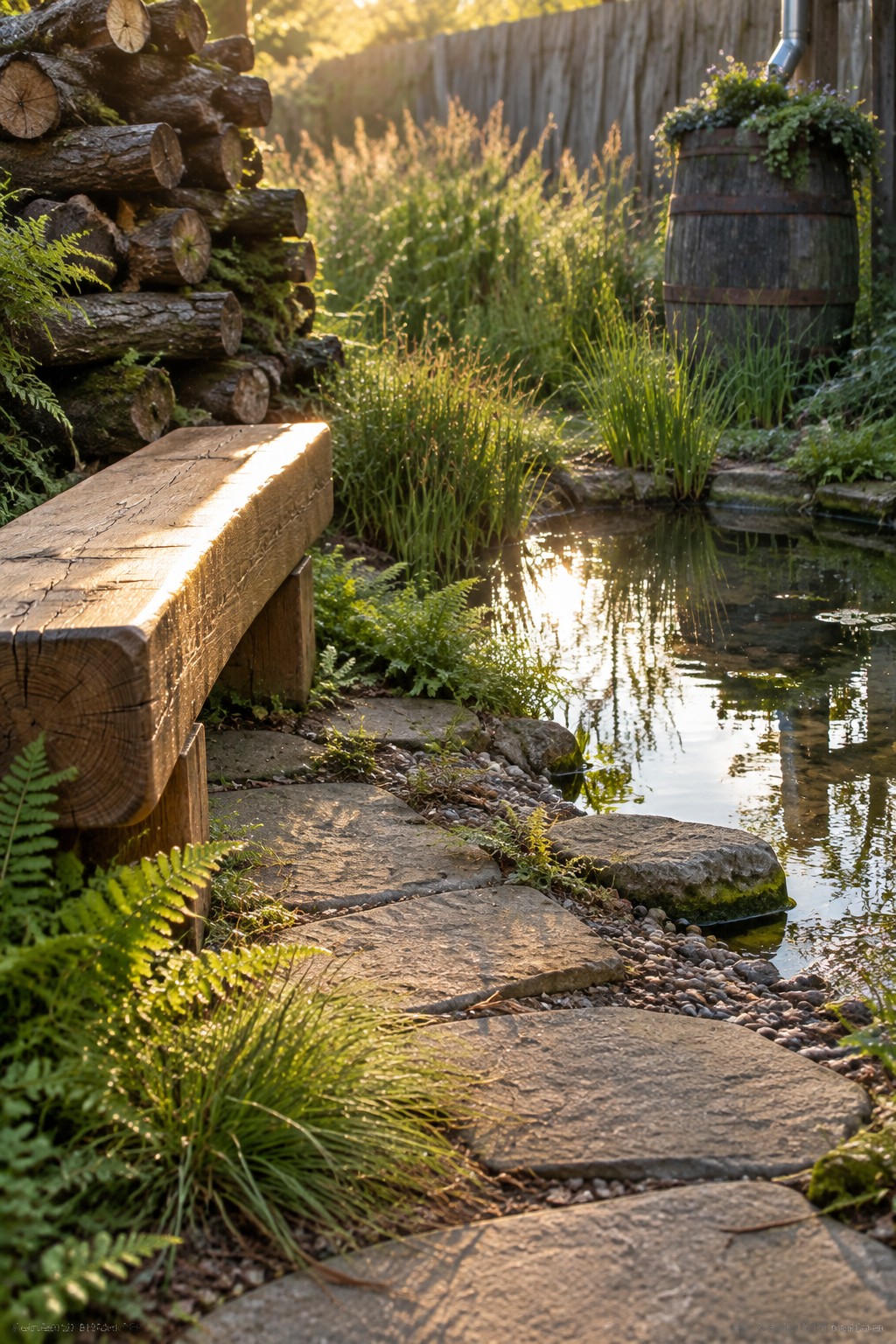
A stepping stone path gives you a clear way through a small garden without taking up much room. Stones set into gravel let grass and plants grow around them, so the whole area still feels soft and green instead of paved over.
This works best in tight yards where you want to reach the far side of a pond or bed without a wide walkway. Keep the stones uneven and slightly spaced so the path looks natural and does not feel too formal.
Frequently Asked Questions
Q: What if my small space gets almost no sun? A: Focus on shade loving plants like ferns or hostas. They fill in nicely without much light. Add a few potted flowers that tolerate low light too.
Q: How much does it usually cost to try a couple of these ideas? A: You can start small with mulch and a few plants for under fifty dollars. Many projects reuse items you already have around the house. Skip fancy materials at first.
Q: My backyard has a slope. Will any of the ideas still work? A: Terracing with simple retaining blocks helps level things out. Or place containers on the higher parts to create flat spots for seating. Start with one area to test what feels stable.
Q: Do these landscaping ideas need a lot of watering in summer? A: Choose drought tolerant options like succulents or native grasses. They cut down on daily checks once established. Group plants with similar needs together so you water only where it matters.
