


When I plan changes to my backyard I always start by figuring out where people will actually walk and sit once the fire pit is in place.
Fire pits can anchor a space nicely but only if the plantings and paths around them create a clear sense of how the area should function day to day.
I have seen setups where the surrounding beds look full on paper yet end up blocking easy access once everything grows in.
That changes everything.
A few of these approaches focus on keeping the structure simple enough that the landscaping can evolve without constant fixes.
Curving Seating Around The Fire Pit

A curved bench makes the fire pit feel like a real gathering spot instead of just a hole in the ground. It gives people a place to sit close to the flames without needing a bunch of separate chairs that get moved around all the time.
This setup works best in smaller yards where you want to keep the seating tied to the fire pit itself. Keep the bench low and simple so it does not compete with the surrounding plants and paths.
Position the Fire Pit Next to the Bench

One simple way to make a backyard feel more usable is to place the fire pit right beside a long bench. This keeps the warmth close at hand and turns the seating into the natural spot to gather without adding extra chairs or tables.
It works especially well on a stone patio where the bench can run along one edge. Many homes with smaller yards like this setup because it keeps the layout open while still giving people a clear place to sit and stay warm.
Built In Seating Around The Fire Pit
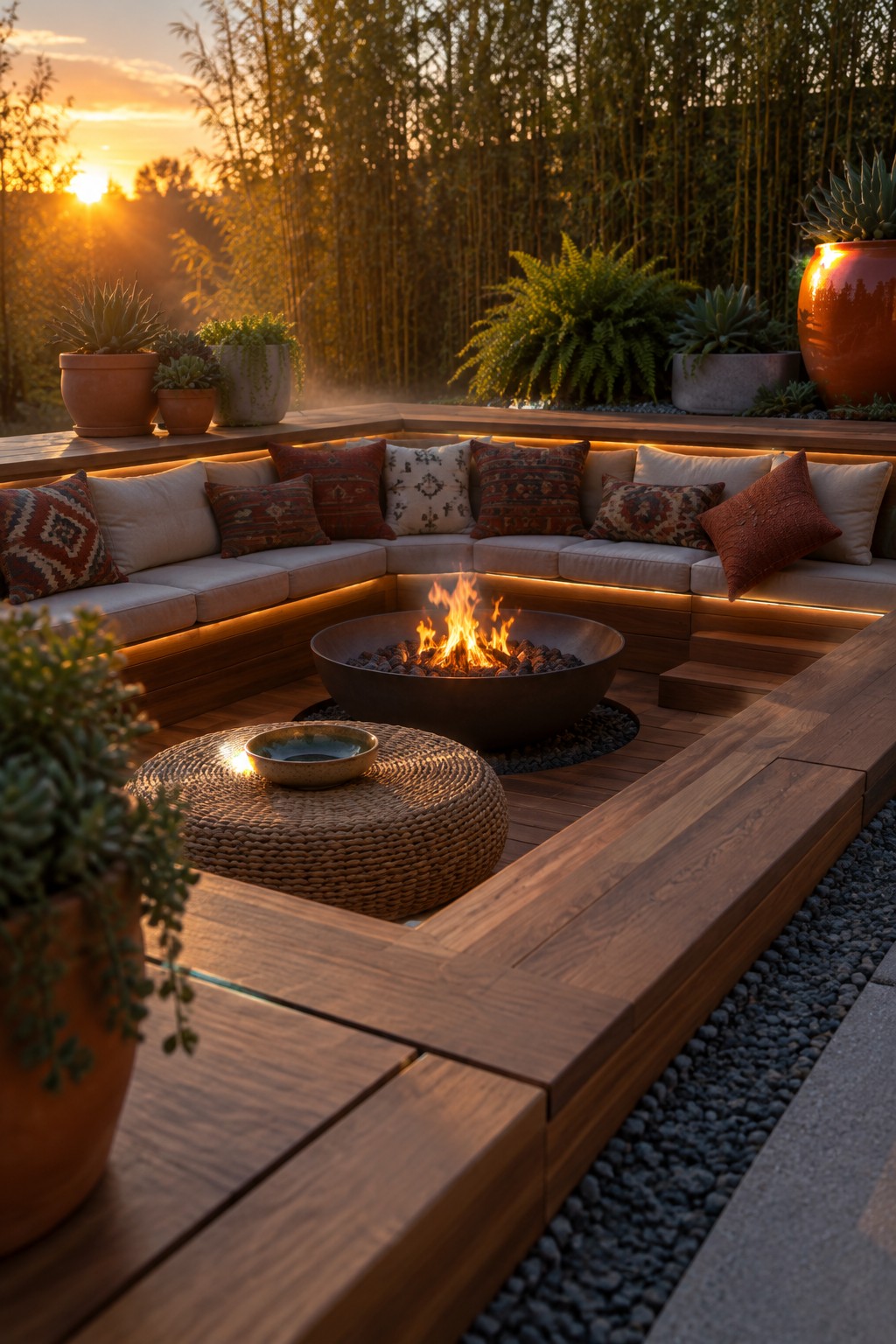
One simple way to make a fire pit feel like the heart of the yard is to build the seating right around it. The benches create a natural circle so everyone stays close to the fire without needing a bunch of loose chairs that get moved around all the time.
This works best on a deck or patio where you can tie the benches into the existing structure. Keep the back edge open enough for easy access and use weatherproof cushions so the space stays comfortable through the seasons.
Center The Fire Pit In The Seating Area
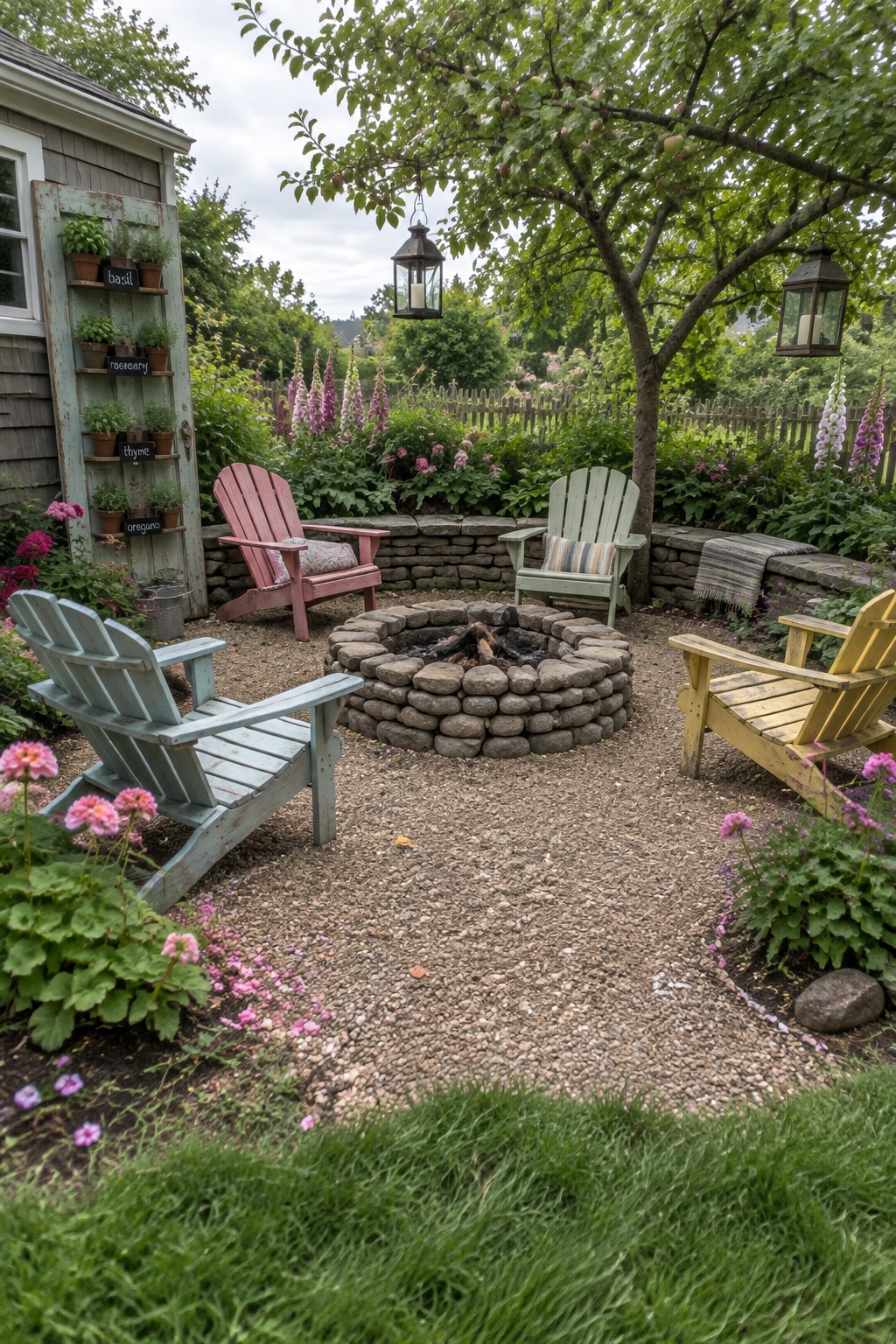
A fire pit feels more inviting when it sits at the center of the chairs instead of off to one side. People can face the flames without turning their backs on anyone, and the whole spot feels like one connected space.
This works especially well on gravel or simple hardscape where you want low upkeep. Keep the ring of chairs close enough for easy conversation and add a few plants around the edge to soften the look without crowding the seating.
A Gravel Circle for the Fire Pit

A gravel or pebble ring gives the fire pit a clear edge and keeps the seating area from blending into the surrounding grass or sand. It also helps with drainage and cuts down on mud after rain, which makes the spot more usable year round.
This setup works well in open backyard spaces where you want a low-maintenance zone that still feels intentional. Place the fire pit in the center, add simple benches around the edge, and keep nearby plantings low so the gravel stays the main feature.
Add Built-In Seating Around the Fire Pit
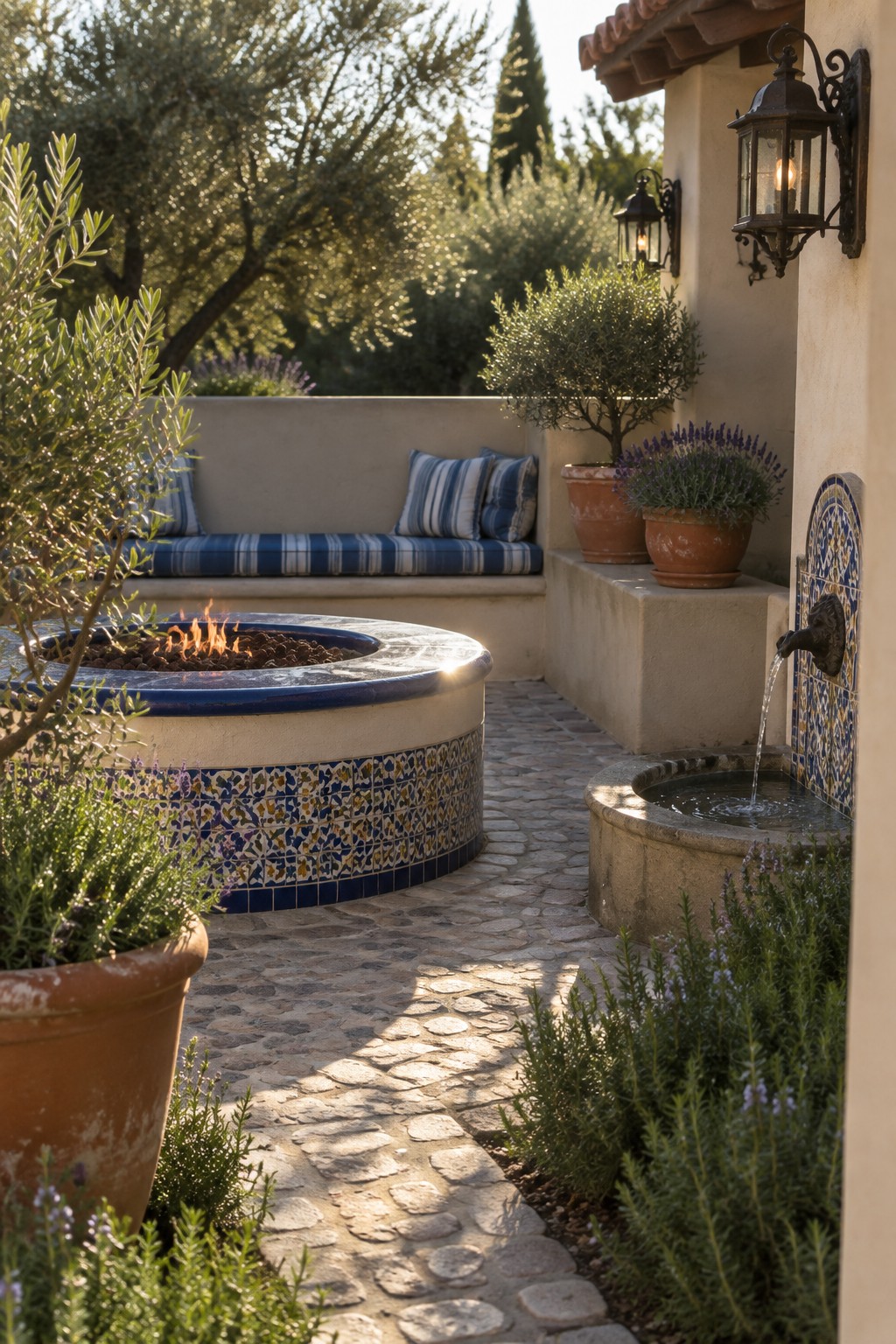
Building a bench right next to the fire pit turns the whole spot into a real gathering place. The seating stays put, so you do not have to drag chairs out every time, and it makes the area feel finished instead of scattered.
This setup works best on smaller patios or in backyards where space is tight. Keep the bench material close to the fire pit surround and add a few large pots nearby if you want more softness without extra furniture.
Layer Rugs to Anchor the Fire Pit
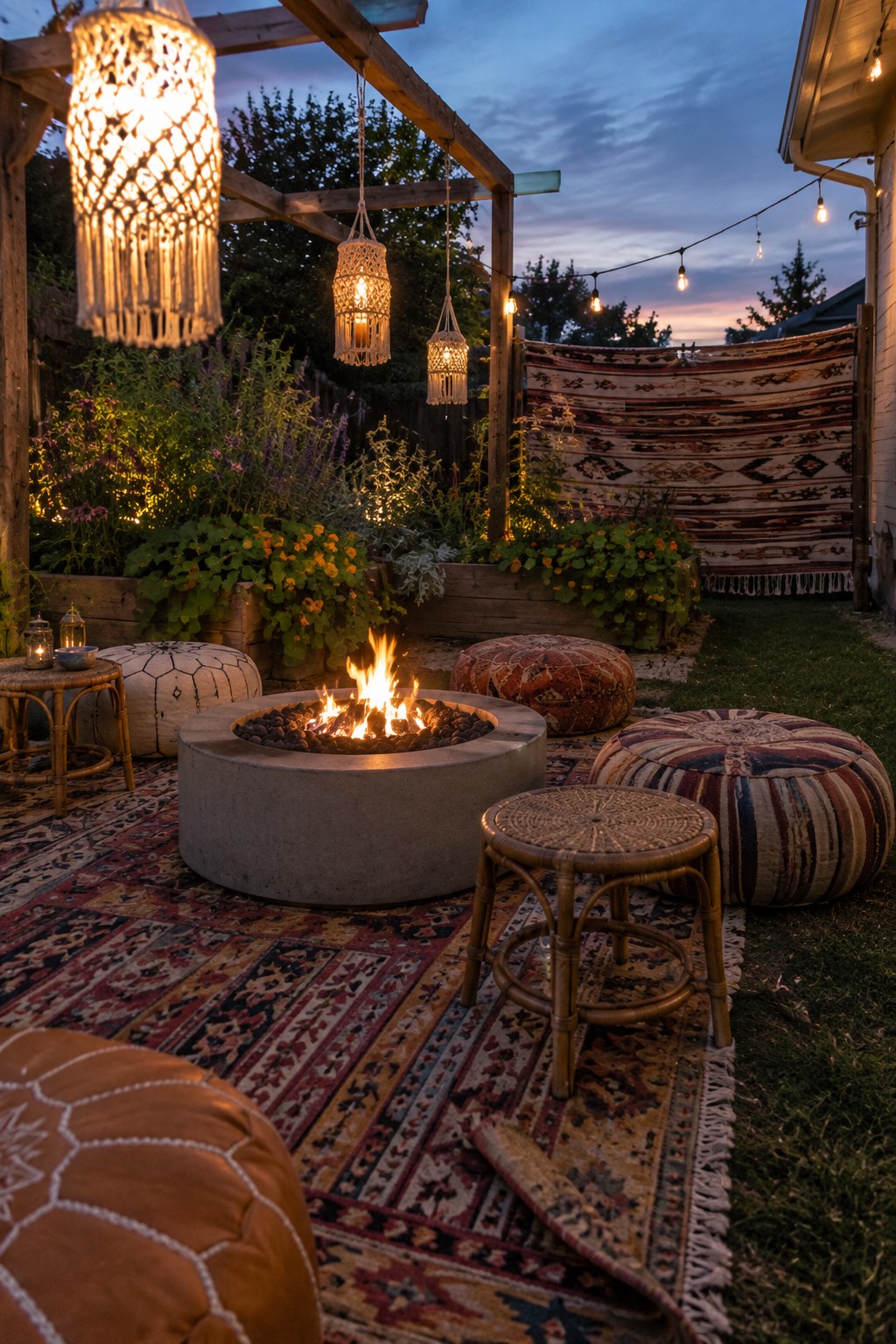
Rugs turn a simple fire pit into a real seating zone. They add softness underfoot, pull different chairs and poufs together, and keep the area from feeling like it just ends at the grass edge.
Use two or three overlapping rugs in different patterns so the fire pit sits in the center. This works best in smaller yards or on patios where you want a clear gathering spot without building anything permanent.
Build a Stone Path to Your Fire Pit
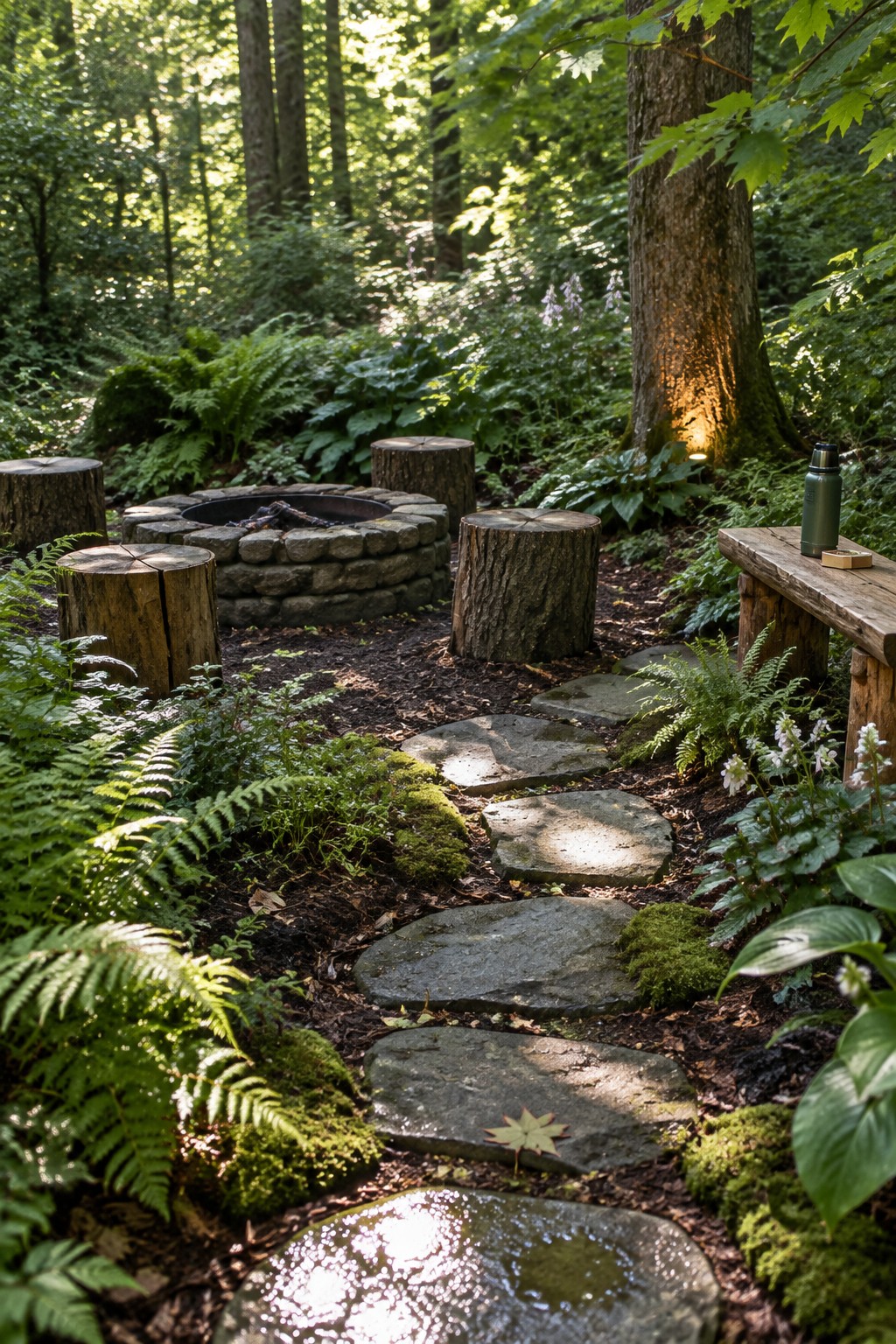
A stone path turns the fire pit into a clear destination rather than a spot people wander toward. It also helps protect the ground from heavy foot traffic and keeps the area looking intentional even when the rest of the yard stays wild.
This approach works best in wooded or shady yards where you already have ferns and moss. Set the stones slightly uneven so small plants can grow between them over time.
Place the Fire Pit in the Middle of the Seating Area
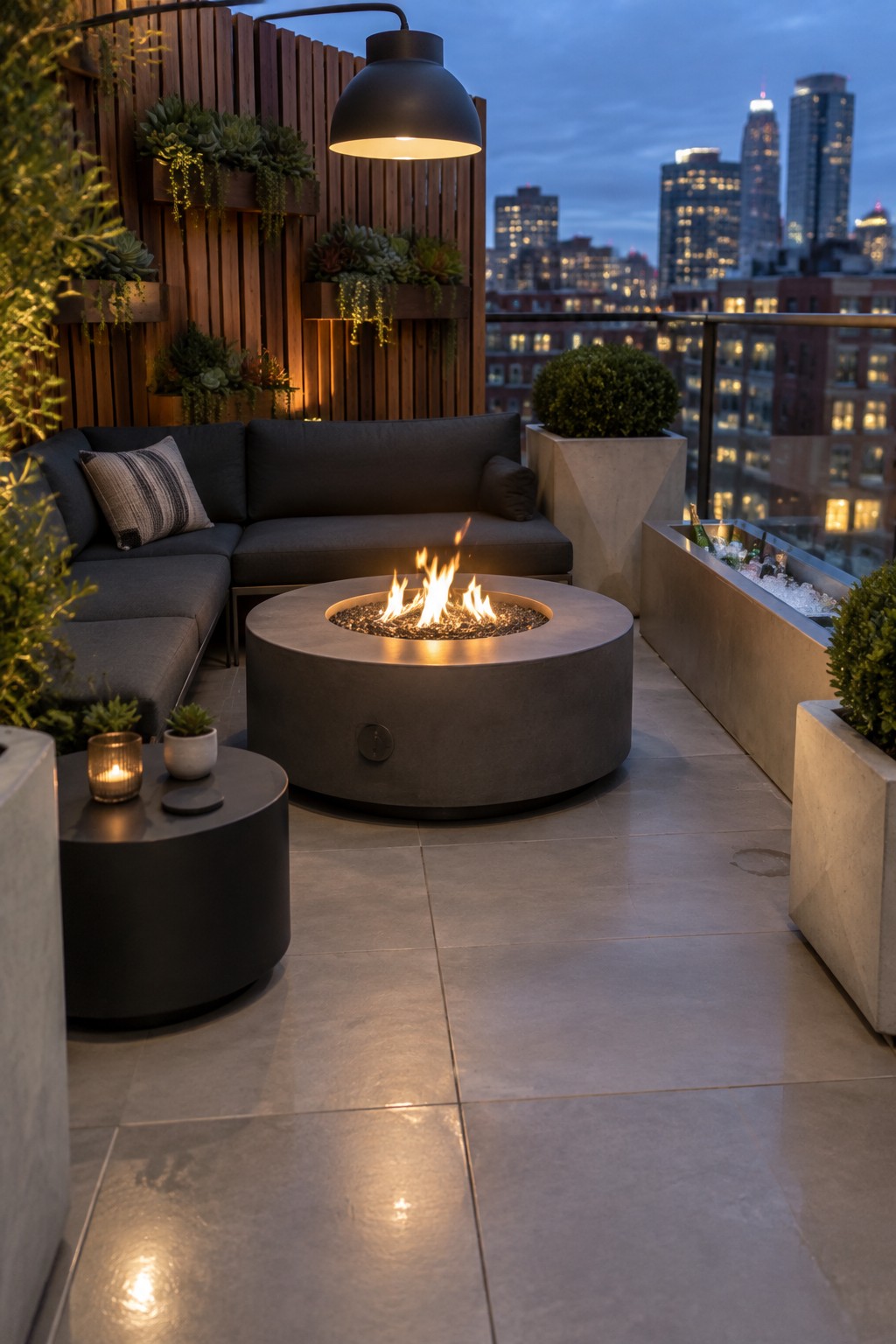
A central fire pit makes it easy for people to sit close and keep the conversation going without anyone feeling left out. The round shape helps here because it lets the seating wrap naturally around the heat source on all sides.
This setup works well on a rooftop or small patio where space is limited. Keep the surrounding area open so chairs or a sectional can slide in close without blocking walkways.
Build the Fire Pit Into the Deck

A fire pit set flush with the deck surface pulls the whole seating area together. It turns the deck into one steady gathering spot instead of a collection of separate pieces. The low profile also keeps the view open across the yard.
This setup works well on medium to large decks where you can fit four or more chairs around the circle. It suits homes that already have wood decking and want a simple way to add warmth without adding more furniture. Just check that the deck boards can handle the heat and that you leave clear paths around the edge.
Nestle a Fire Pit Among Your Plantings

A brick fire pit works especially well when it sits right in the middle of garden beds rather than on a bare patch of gravel. The plants soften the hard edges and make the whole spot feel like part of the yard instead of a separate feature.
This layout suits bigger backyards where you have room for both seating and shrubs. Keep the seating low and simple, like stump stools or old metal chairs, so the focus stays on the fire and the surrounding greenery. Just make sure the plants are a few feet back from the heat.
Raked Gravel Around the Fire Pit
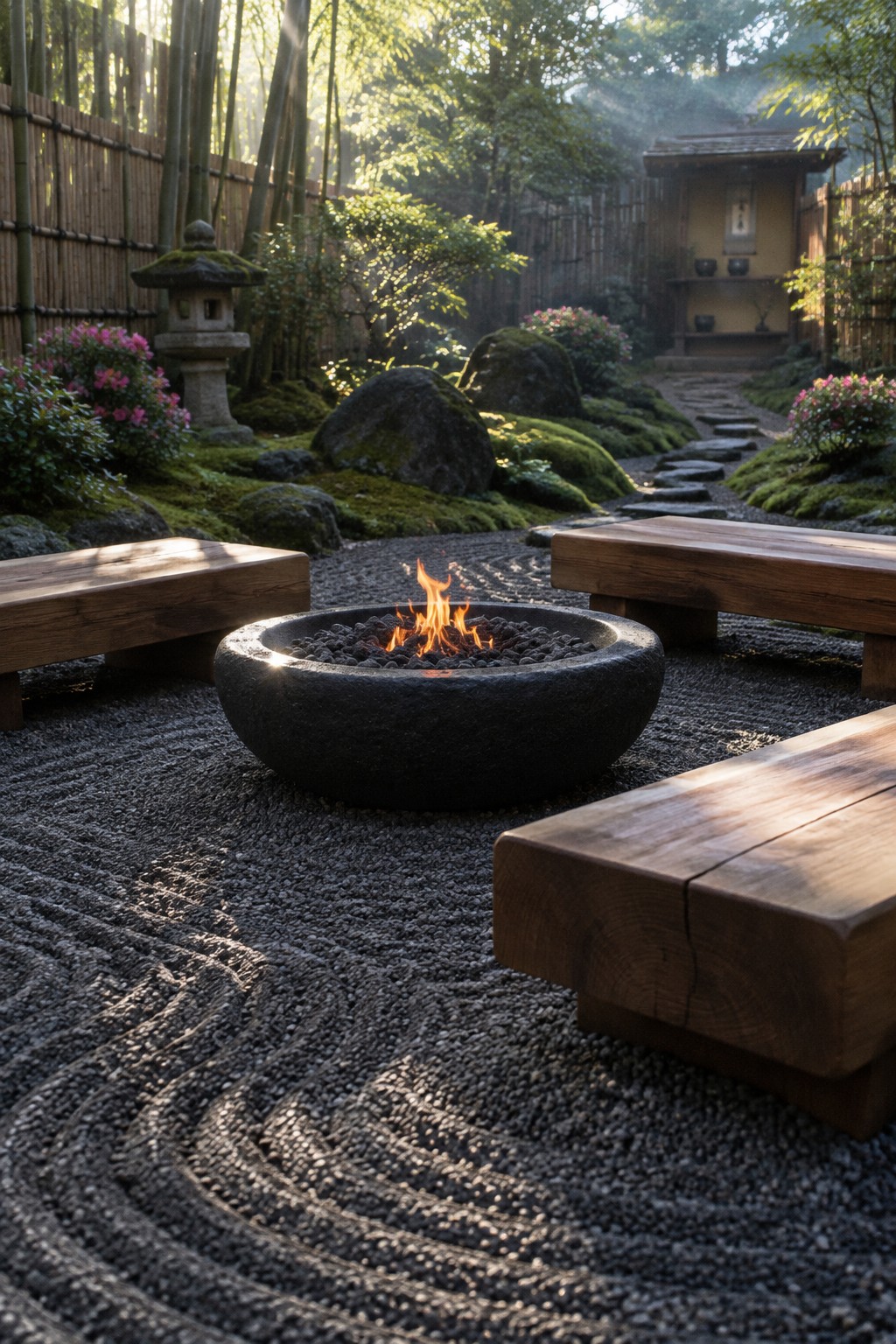
Raked gravel gives the fire pit a clear spot without turning the whole yard into a hard patio. The patterns keep the area looking neat while the loose surface stays cooler than stone or pavers right next to the heat. It works especially well when you want the fire to feel like part of the garden instead of something set on top of it.
This setup fits smaller yards or gardens that already use gravel or moss. Set a few low benches around the edge so seating stays flexible. Make sure the gravel layer is thick enough that feet do not sink through after a season or two.
Brick Paving Around Fire Pits
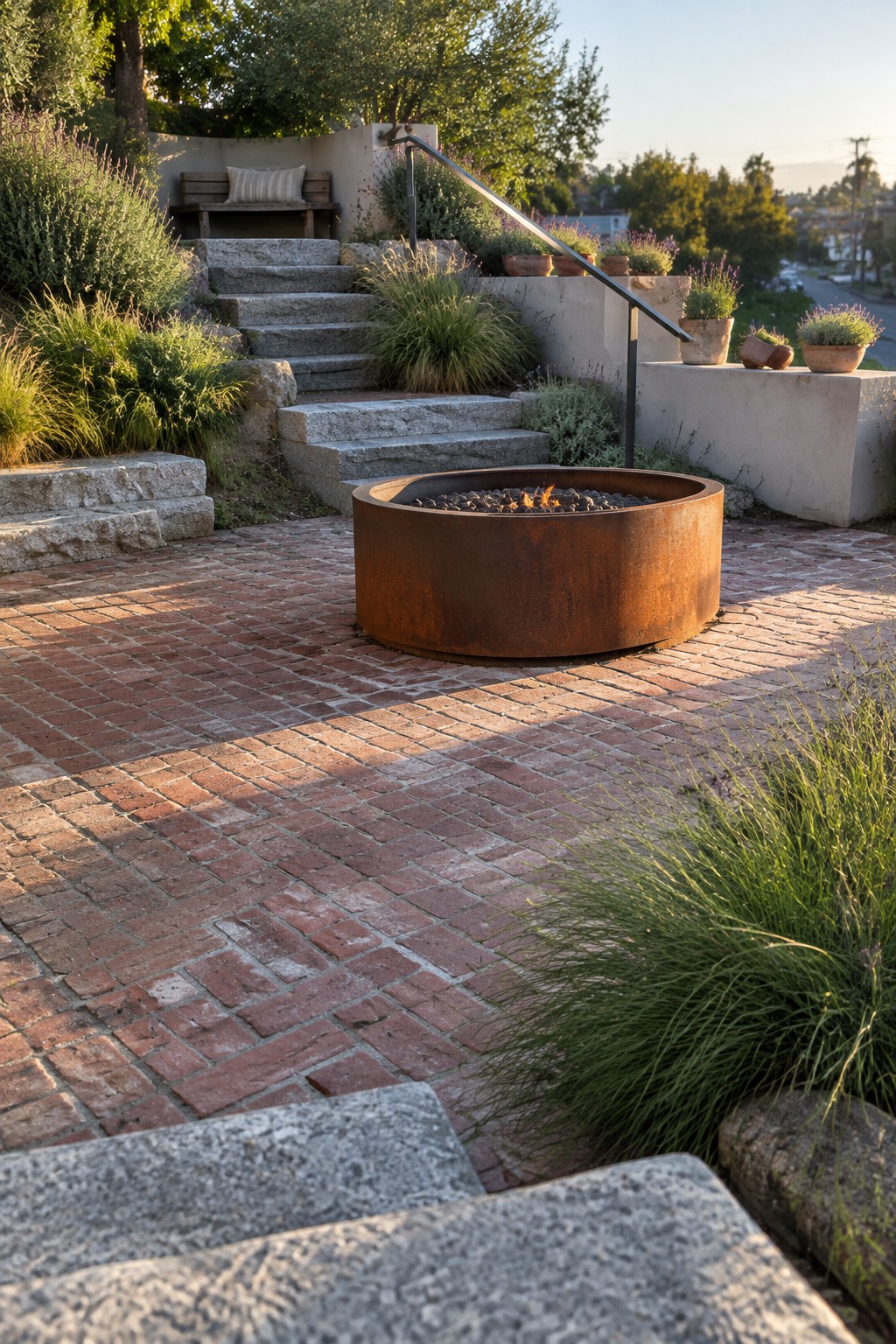
Brick paving gives a fire pit a solid base that feels like part of the yard instead of something added later. It holds up well to heat and foot traffic while letting the surrounding plants and stone steps connect naturally to the seating area. The warm color also softens the look of the metal pit itself.
This approach works best on slightly sloped sites or in gardens that already use stone and brick. Keep the paved area simple and let the plants spill over the edges so the space stays relaxed rather than too formal. Watch the slope when you lay the bricks so water drains away from the fire pit.
Use Gravel and Native Plants Around the Fire Pit

Gravel makes a good base for a fire pit in dry climates because it drains well and stays low maintenance. Pairing it with tough desert plants keeps the whole area looking natural instead of like a separate feature dropped into the yard.
This works best on larger lots where you can spread plants out in loose groups. Stick with things like agave that handle heat and little water, and add a few stone pavers so the seating stays easy to reach.
Anchor Your Patio With a Fire Pit
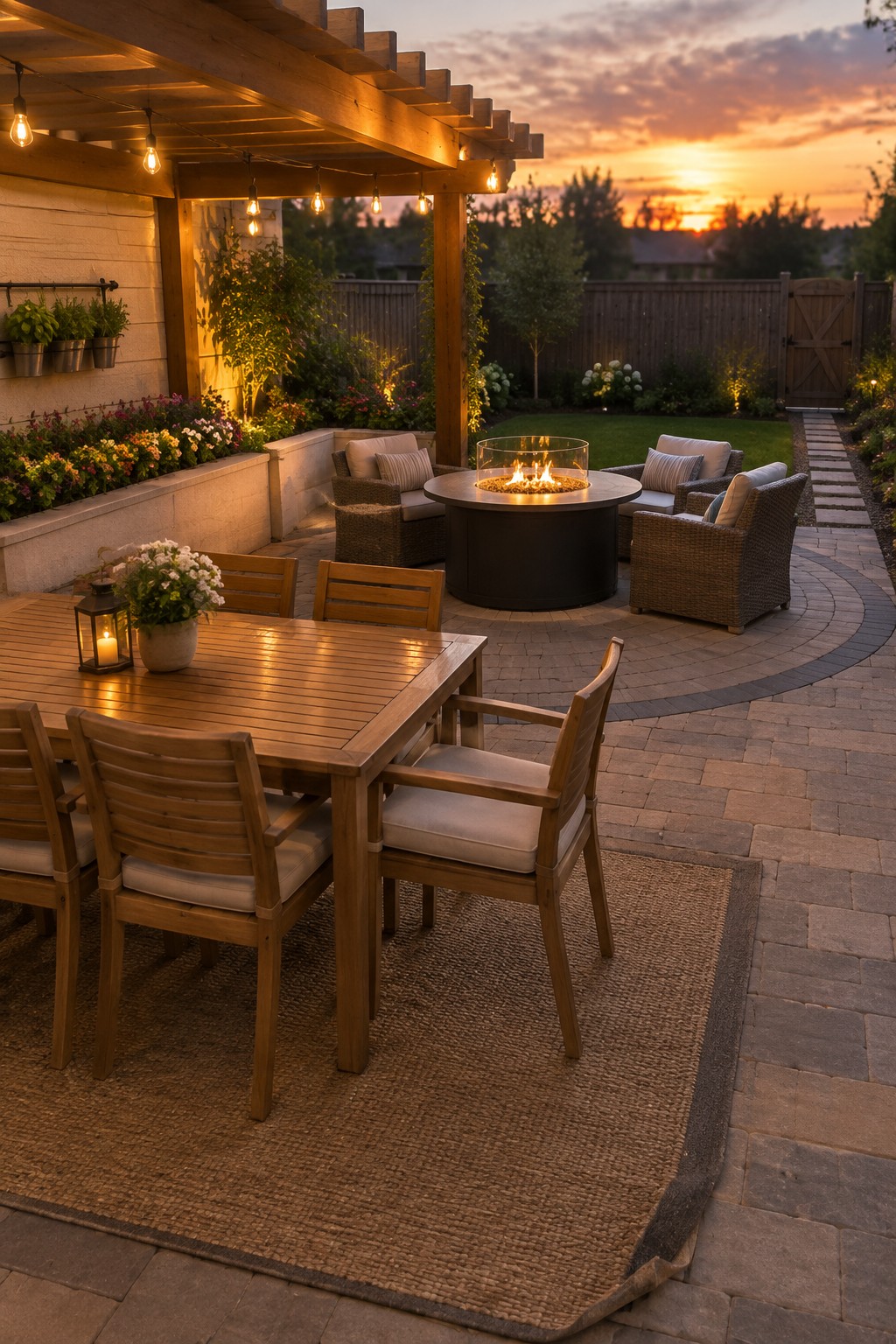
A fire pit works best when it sits at the center of the seating area rather than off to the side. This layout turns the pit into the natural spot where people gather, with chairs pulled close on all sides. The paved surface around it keeps the zone defined and easy to walk around even when the rest of the yard is grass or garden beds.
This approach suits most backyard patios that already have room for four to six chairs. Keep the dining table nearby but separate so the fire pit area stays focused on conversation and warmth. Make sure the surrounding path stays clear so people can move between the two zones without crowding the flames.
Arrange Seating Close to the Fire Pit
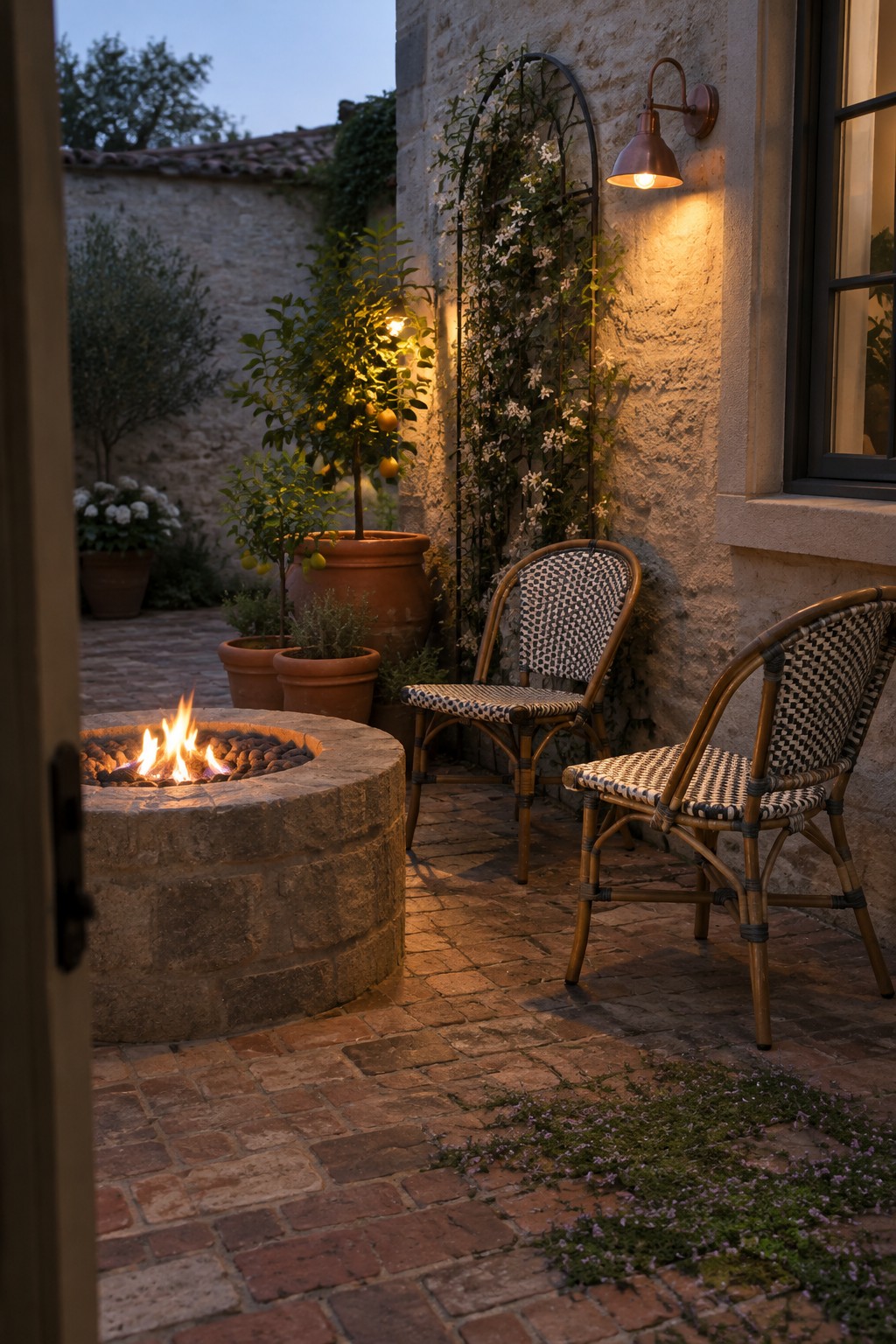
A fire pit works best when the seating sits right beside it instead of scattered farther out on the patio. This keeps the heat in reach and makes the whole spot feel like one small room instead of a loose collection of pieces.
Brick paving helps here because it stands up to the heat and gives a solid base for pulling chairs in tight. Try two or three seats at most so people can actually talk without raising their voices, and leave a little open space on one side for moving around the fire.
Built-In Seating Along the Fire Pit Wall

A low stone wall that curves around the fire pit and includes a bench gives the whole area a settled look without needing lots of extra furniture. The bench stays at a comfortable height and turns the space into a natural gathering spot where people can sit close to the flames.
This works especially well on patios that already have stone or masonry details. It keeps the seating permanent so it does not shift or blow around, and it suits homes that want a simple, low-maintenance setup rather than loose chairs scattered around the fire.
Wrap Seating Around the Fire Pit

One simple way to make a fire pit feel like the center of the yard is to build the seating right into it. A low brick ring around the pit turns into a bench that holds cushions and keeps everyone close to the flames without needing extra chairs scattered around.
This works best in a medium to large backyard where you can leave open space on the other sides for walking or adding a table later. Keep the bench height low enough for comfortable sitting and choose a material like brick that holds some warmth after the fire dies down.
Center A Fire Pit On A Stone Patio
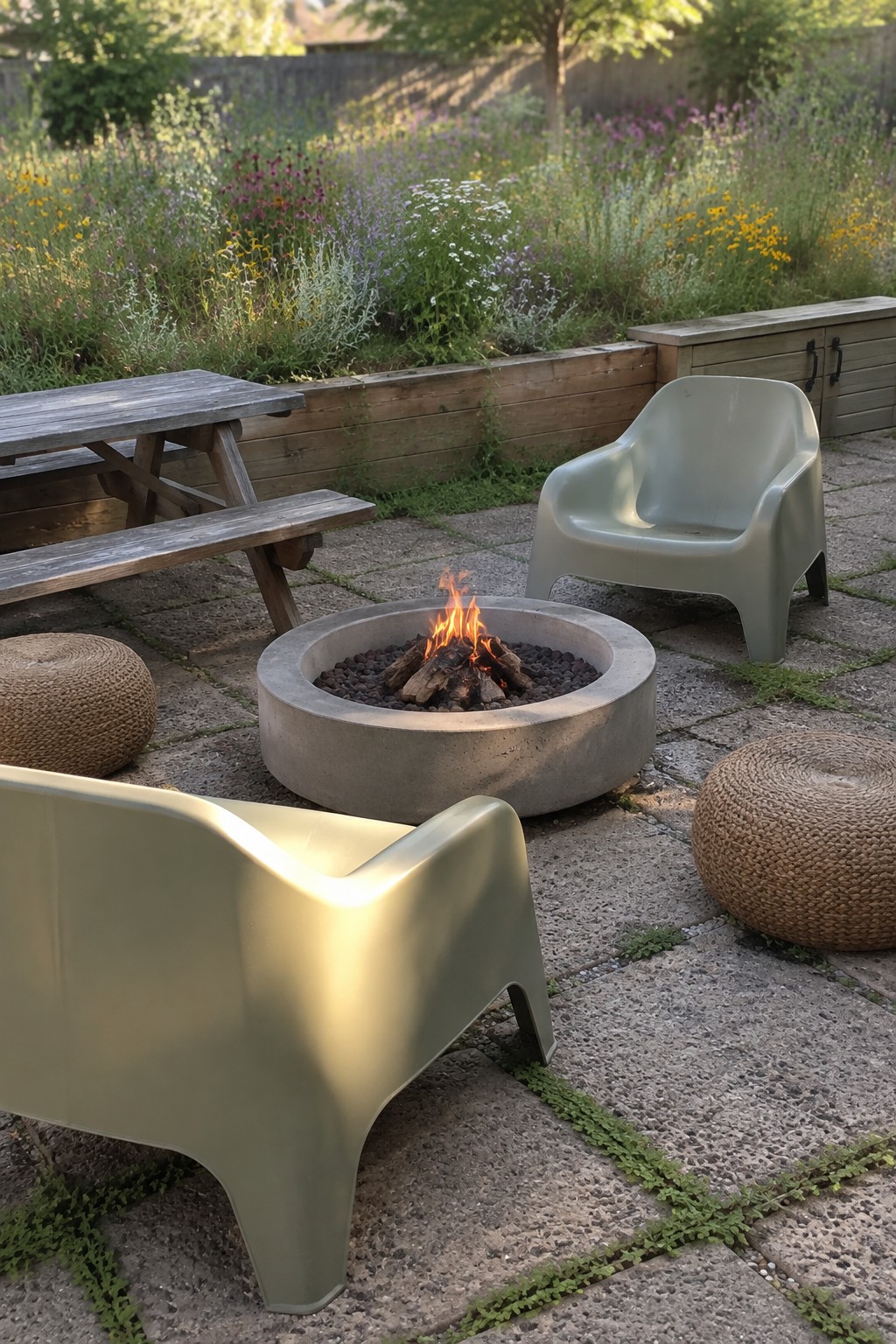
A fire pit works well when it sits right in the middle of a paved area. This setup lets people pull chairs close without crowding the space or needing extra structures around the edges.
It suits most flat patios that already have room to walk around the pit. Keep the seating low and simple so the fire stays easy to reach and the whole spot feels open.
Center the Fire Pit in Your Outdoor Seating

Placing the fire pit right in the middle of the seating area keeps the focus on the flames and makes conversation easy from every chair. This layout works especially well on a patio where you can pull a few chairs and a sofa into a loose ring without blocking the path around it.
It suits smaller backyards that need one clear gathering spot rather than scattered zones. Keep the surrounding planters low and simple so they add greenery without crowding the fire or the seats.
Set Up a Fire Pit on the Patio
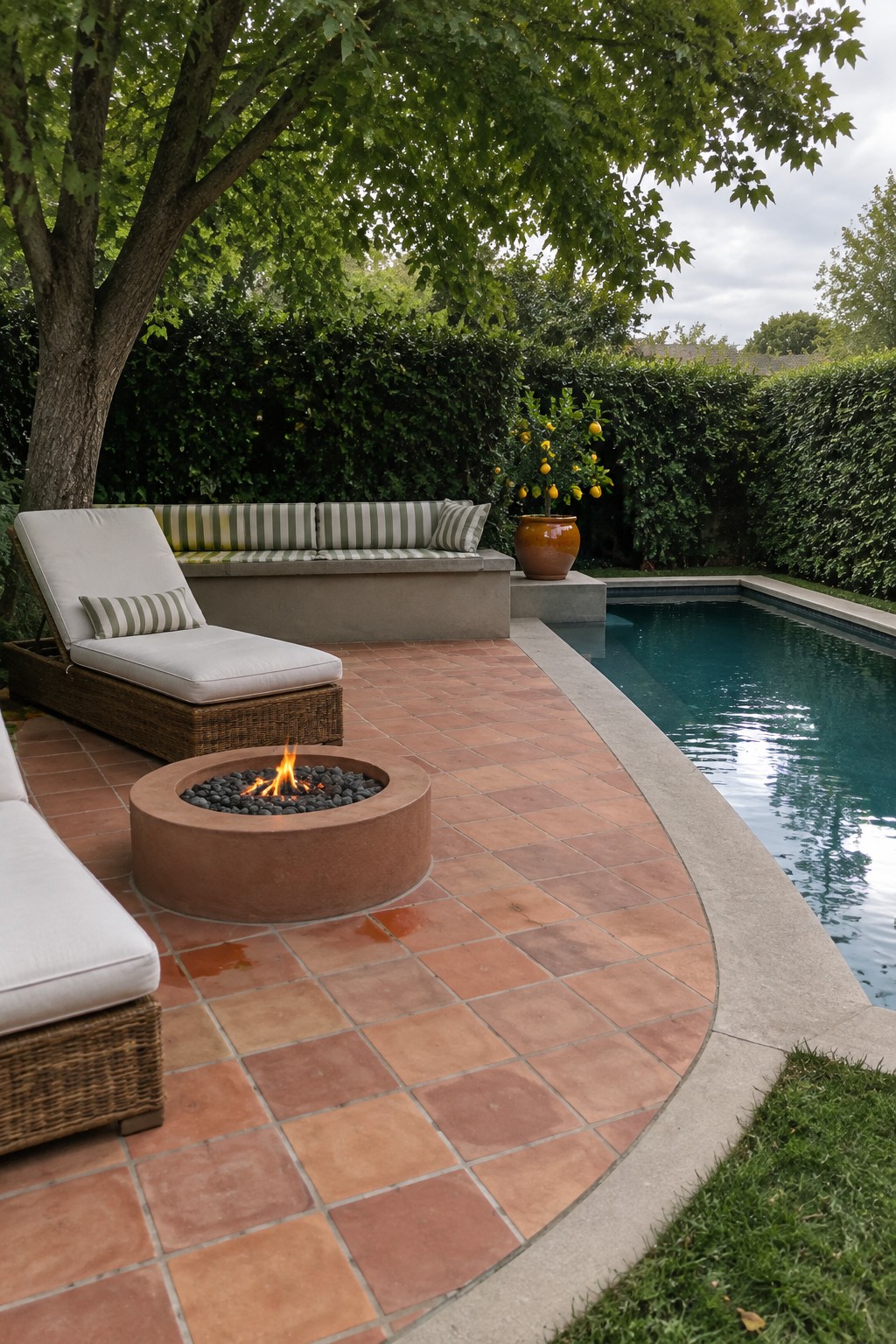
A round fire pit placed right on the patio tiles gives the whole area a clear spot to gather after dark. The low profile keeps the view open toward the pool and makes it easy to move between the water and the seating without extra steps or platforms.
This setup works best in backyards that already have a paved surface and some built-in seating nearby. Leave a few feet of open tile around the pit so people can pull up chairs or walk past safely, and keep the surrounding plants trimmed so the fire stays the main focus.
Center The Fire Pit With Seats All Around

A fire pit works best when it sits at the center of the seating instead of off to one side. This layout keeps the warmth shared evenly and makes conversation easier for everyone around it. Gravel underfoot keeps the area simple to maintain while letting you rearrange chairs without much effort.
This setup suits smaller backyards or side gardens where space is limited. Mix a few different chair styles so the area feels collected rather than matched, and leave enough room between seats and the pit for people to move safely.
Center The Fire Pit On The Patio
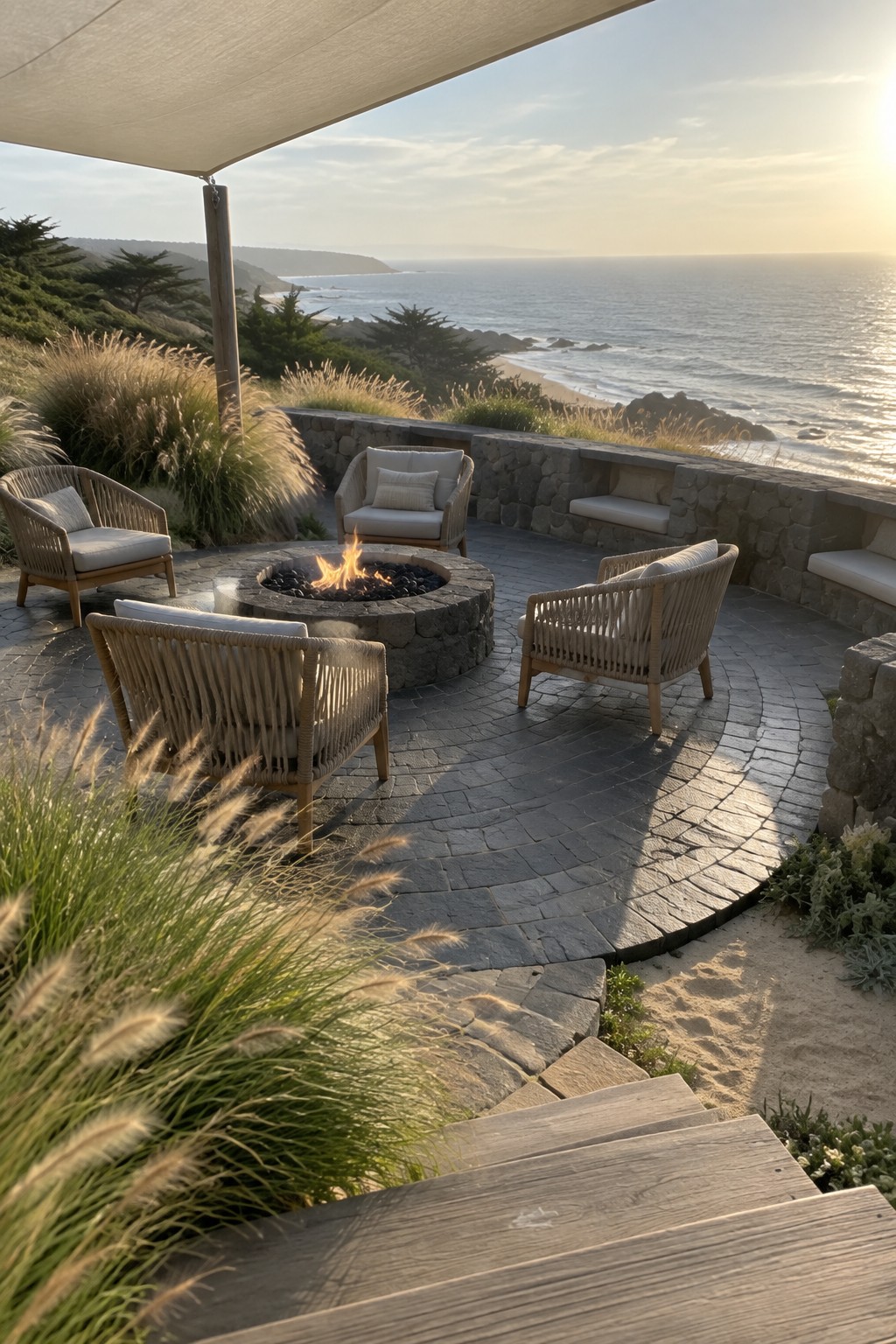
Placing the fire pit right in the middle of a paved patio gives the whole space a clear purpose. People naturally gather around it, and the seating can be arranged in a loose circle without feeling cramped or forced.
This works best on patios that have a bit of room to spare. Stone or concrete pavers stand up well to heat and traffic, and adding a few chairs with low backs keeps the view open while still feeling enclosed enough for conversation.
Frequently Asked Questions
Q: How far from the house should I place the fire pit? A: Keep at least ten feet between the pit and any walls or wooden structures. This distance lets the heat radiate nicely to your seating area without risk. Move it farther if your yard has lots of dry leaves or grass nearby.
Q: Which plants work best right around the fire pit area? A: Go with tough perennials like yarrow or fountain grass. They shrug off occasional heat and add nice texture to the landscaping. Plant them in clusters a safe distance back from the flames.
Q: What seating arrangement feels most comfortable for gatherings? A: Arrange chairs in a loose circle about four feet from the pit edge. This setup lets everyone chat easily while staying warm.
