


I have noticed that narrow front beds often get overlooked until the walkway starts to feel too tight or the plants crowd the steps.
Over the years I found that a simple defined path changes how the whole front of the house reads from the street and keeps the beds from looking messy.
In my yard I usually sketch the bed widths first and then check them against the actual walkway width before I plant anything new.
Clear edges also help water drain away from the foundation instead of pooling near the door after a storm.
One good layout can fix most of the problems.
Metal Edging Keeps Narrow Beds Looking Sharp
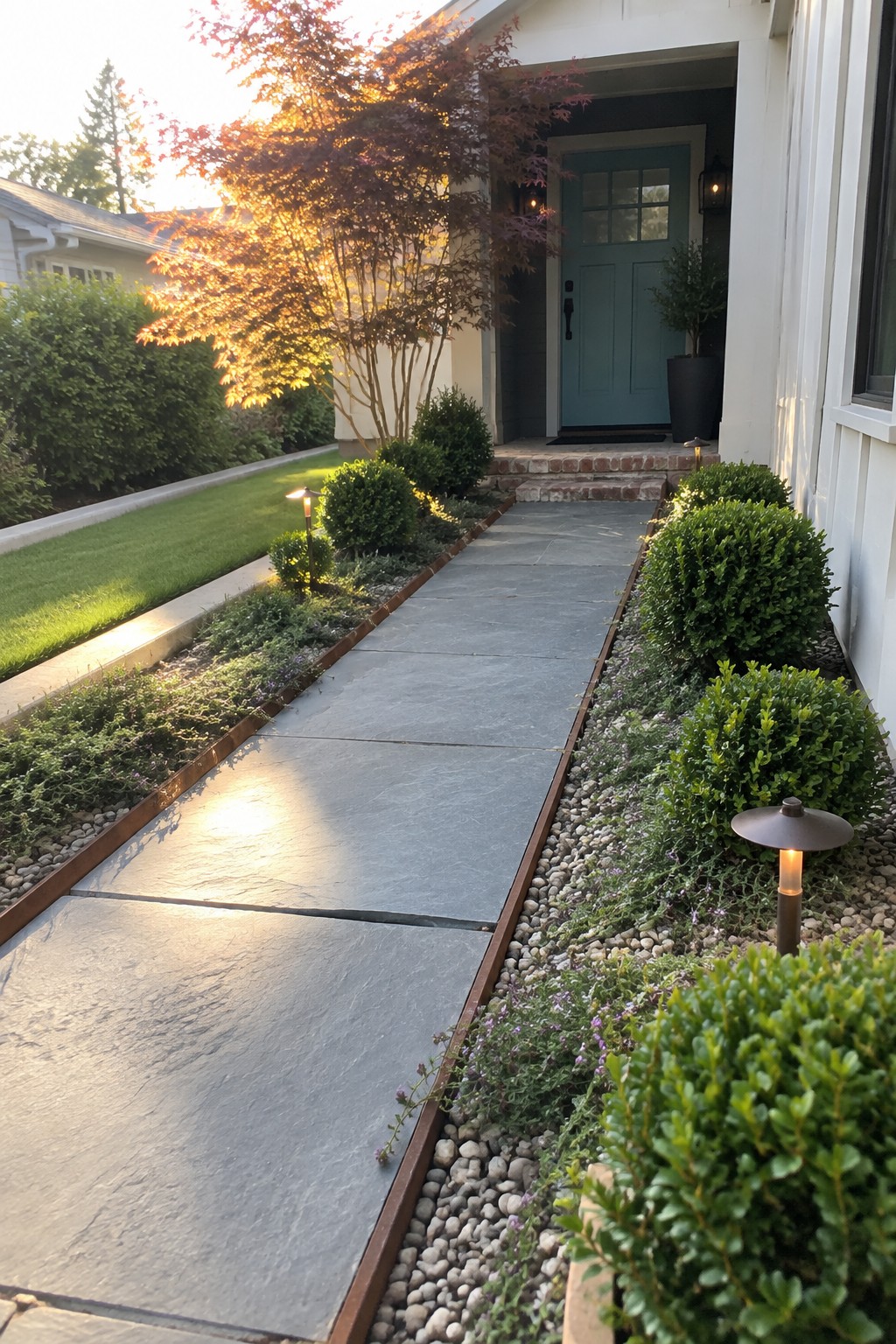
Metal edging works well along a front walkway because it holds everything in place without adding width. It creates a clear line between the path and the beds, which helps narrow spaces feel more organized and easier to maintain.
This setup fits homes where the walkway runs close to the house or lawn. Use it with gravel and low plants so the beds stay contained and the path remains the main feature.
Narrow Beds Along A Straight Stone Path

A straight stone paver path with narrow beds on each side keeps a front yard looking orderly without taking up much space. The beds stay contained by low edging, which makes weeding and watering easier while still allowing room for a mix of shrubs and flowers. This setup works especially well on smaller lots where wider planting areas would crowd the walkway.
It suits homes with simple facades and modest front setbacks. Stick to low-growing or mounded plants so nothing spills onto the pavers, and use gravel between the stones to help with drainage. Avoid tall or floppy flowers that block the path.
Stepping Stones in Gravel Define a Front Walkway
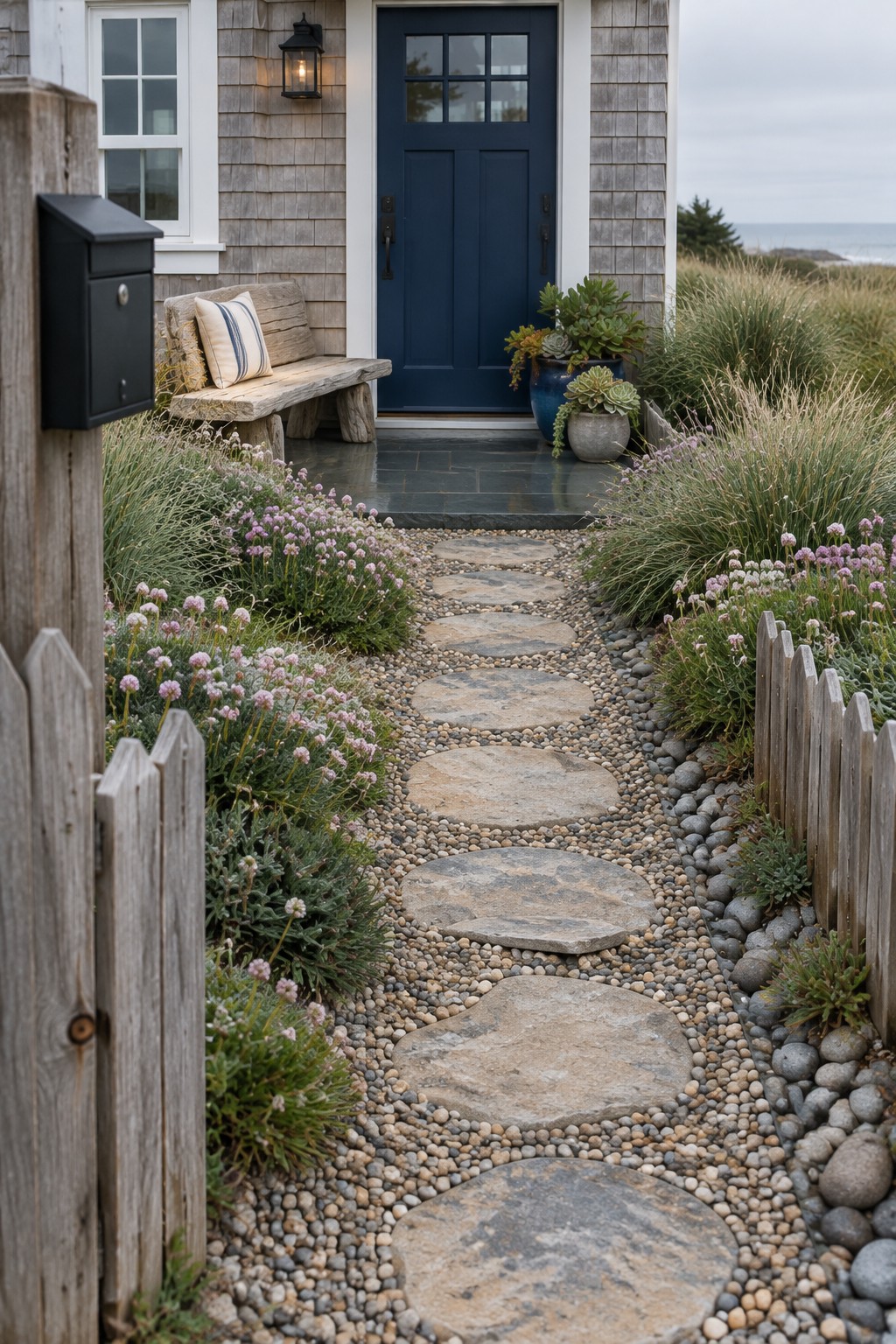
This layout keeps the path clear and easy to follow even when the beds on each side stay narrow. The flat stones sit directly in the gravel so the walkway feels firm while the small pebbles fill in around them and stop the soil from shifting.
It works best on a straight approach to the door where you want a simple route without wide paving. Plant low growers along the edges and leave enough space so the beds do not spill onto the stones.
Add A Center Planting Strip To Your Walkway
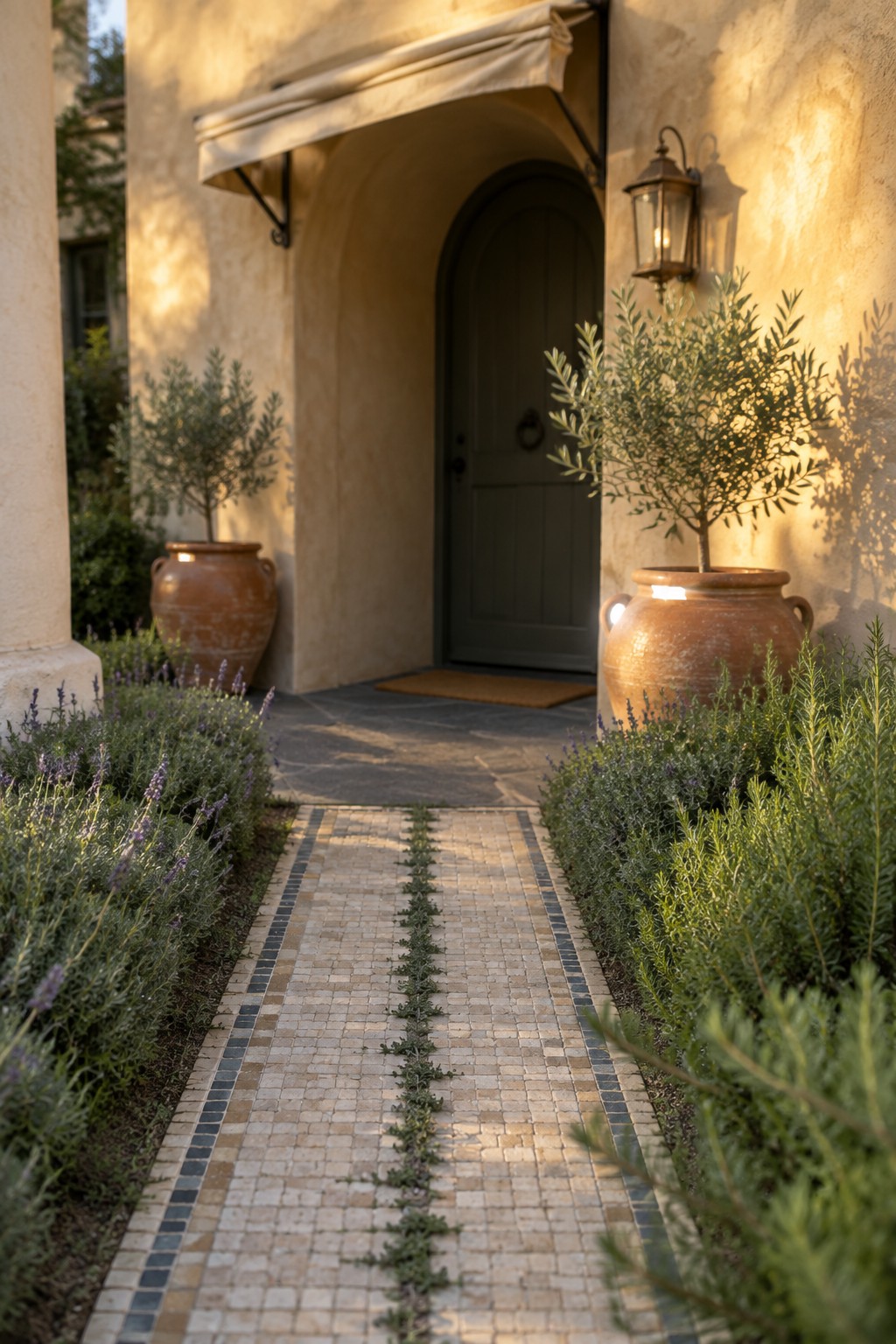
A narrow front path can feel too hard and flat when it is all one material. Running a thin line of low plants right down the middle softens the surface and gives the eye something to follow without taking up extra width.
This works best on straight runs in small yards where you want clear walking space but still need planting on both sides. Keep the side beds narrow and repeat the same low shrubs or herbs so the whole strip stays neat and easy to maintain.
Gravel Beds With Metal Edging Along The Path
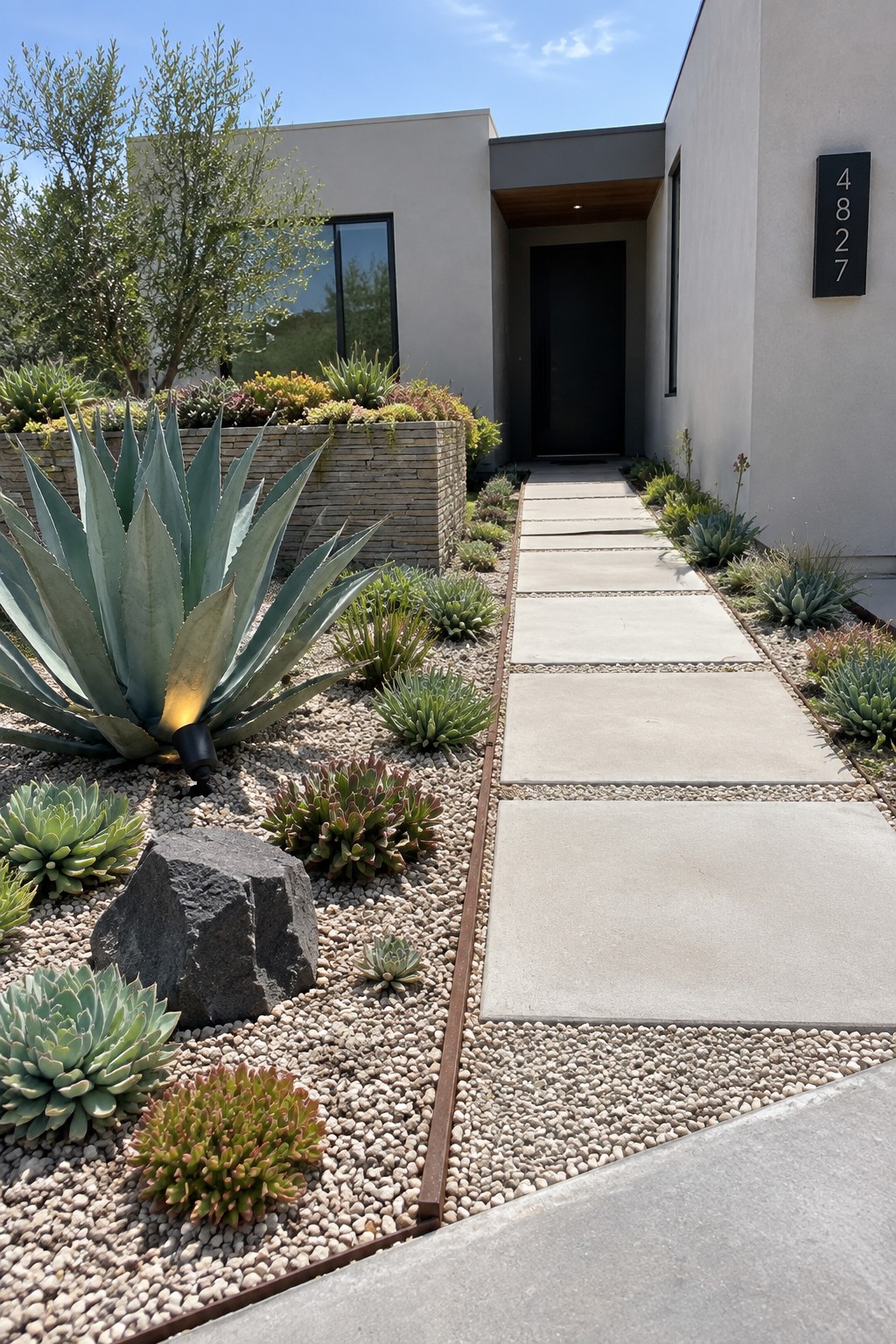
Gravel beds with metal edging work well along a walkway because they stay contained and keep the path looking clean without much effort. The edging stops the gravel from spilling onto the pavers while still letting water drain away from the house.
This setup suits narrow front yards where you want a clear walking surface but do not need lawn to maintain. Stick with low-water plants that stay compact so the beds do not crowd the path over time.
Line Narrow Beds Along a Stone Path

A stone path with planting on both sides gives a narrow front yard structure without eating up space. The beds stay contained, the walkway stays clear, and the whole entry feels more intentional than a wide open lawn.
This layout works well on small lots or along the side of a house. Keep each bed under two feet wide, use simple edging like brick, and layer plants by height so nothing flops onto the stones.
Wood Edging Shapes Narrow Beds

Raised wooden planters work well along front walkways because they give the planting a clear edge and keep everything looking tidy even in a tight space. The wood adds some warmth against the stone path and helps the bed feel more intentional instead of just a strip of ground.
This setup suits homes with straight walkways and modern or simple architecture. Keep the planter height low so it does not block the path, and choose plants that stay mostly upright to avoid crowding the walkway.
Define Narrow Beds with a Curved Brick Path
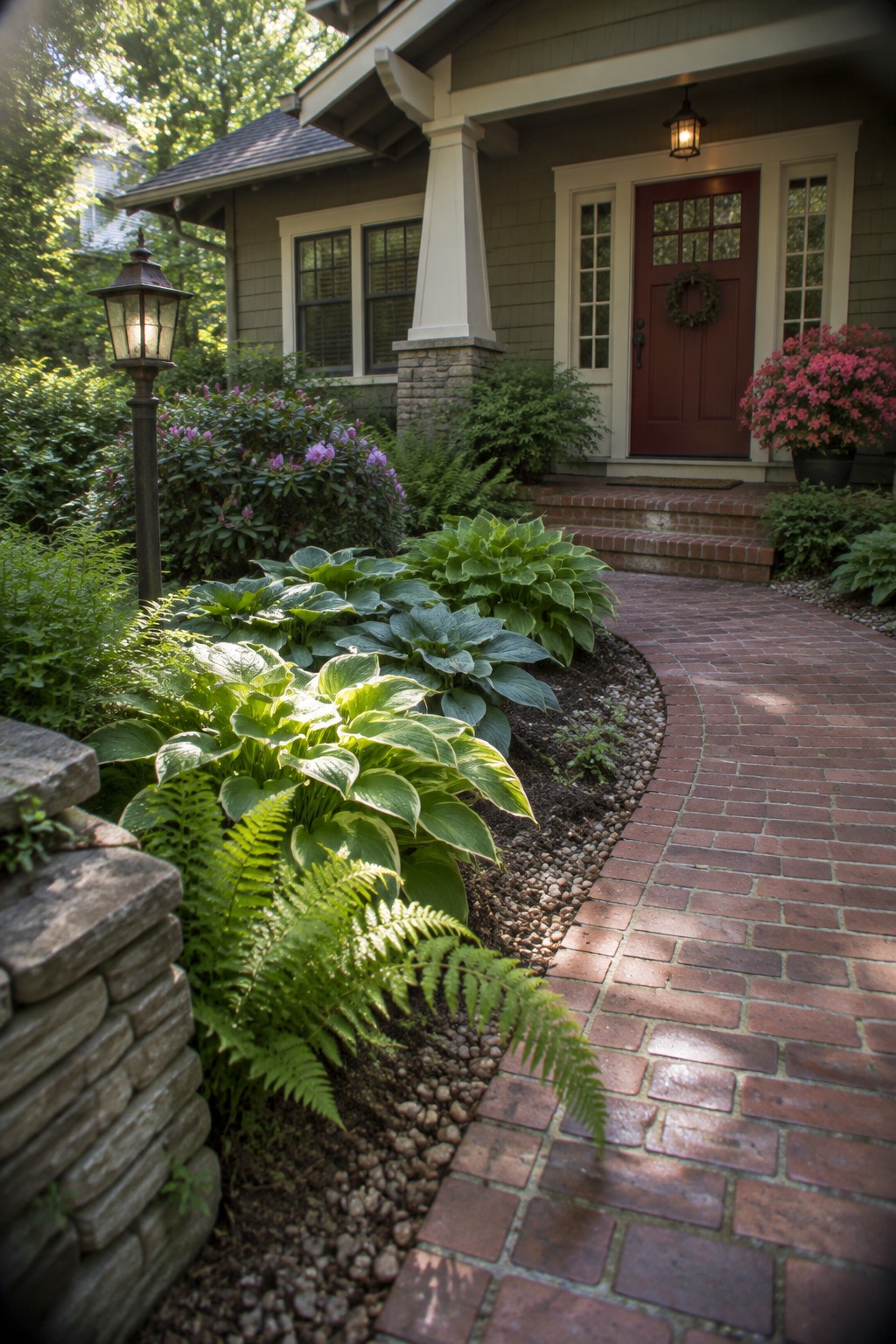
A curved brick path gives narrow beds a clear shape without making them feel cramped. The curve softens the line of the house while still keeping the walkway easy to follow, and it turns a thin strip of soil into something that looks intentional rather than leftover space.
This approach works best on smaller front yards where the bed runs right beside the house. Stick with mounding plants that stay contained, and use a simple gravel edge so the path stays defined even as the plants grow.
Plant Compact Evergreens in Narrow Gravel Beds

This setup keeps a narrow strip along the house looking tidy while still adding some green. The gravel fills the bed completely so the small trees have room to grow without the whole area feeling cluttered or overgrown.
It works best on homes where the front space is tight and you want a clear path to the door. Choose slow-growing varieties and keep the gravel layer thick enough to block weeds.
Stepping Stones Through Gravel For Narrow Walkways
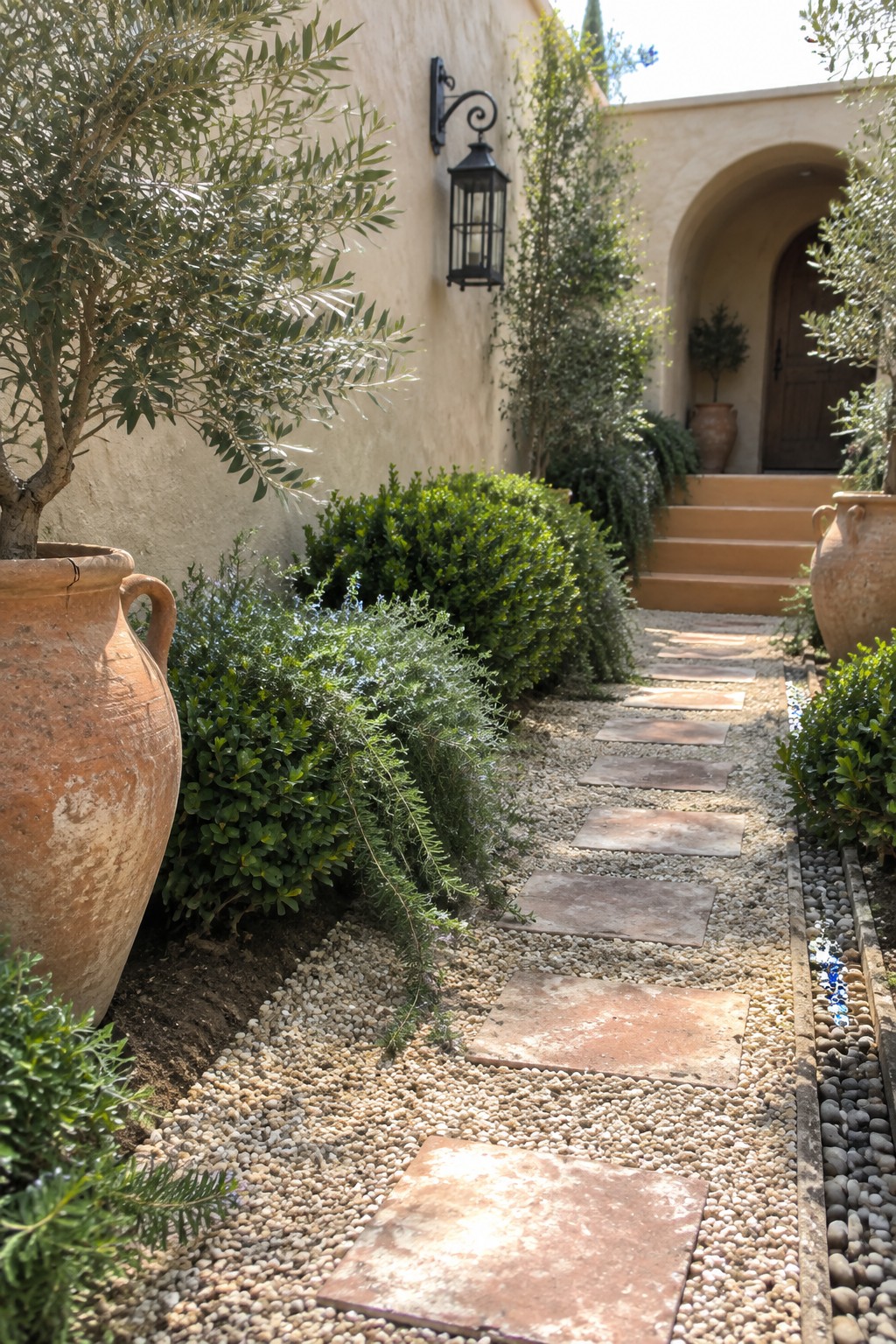
Stepping stones set into gravel make a good choice for narrow front yard beds because they keep the walkway functional without spreading out too wide. The stones give solid footing while the gravel handles drainage and keeps the look simple and low maintenance.
This setup works best on homes with tight planting strips along the entry. Place the stones at a comfortable stride length and keep the beds planted low so nothing crowds the path. Terracotta pots can add height at the edges without blocking the way.
Stone Steps Define Walkways On Sloped Front Yards
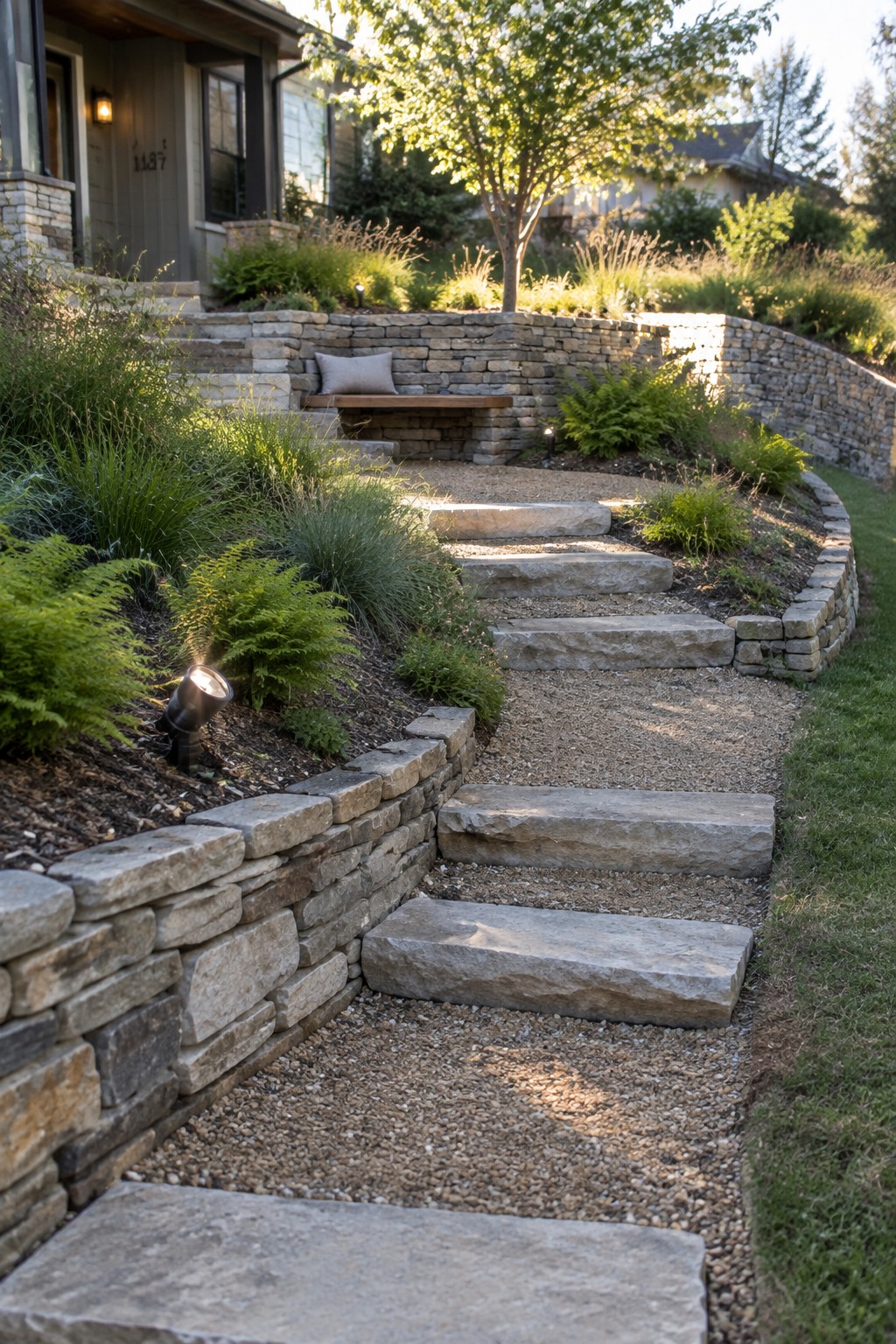
Stone steps set into gravel create a clear route through a front yard even when the ground drops. The low walls on either side keep the path contained and give narrow planting beds a firm edge so the beds stay neat instead of spilling onto the walkway.
This approach works best on homes with a gentle slope where you need an obvious way to the door without building a wide staircase. Use similar stone for the steps and walls so the whole path feels like one structure rather than separate pieces added over time.
Edging Narrow Beds With River Rock
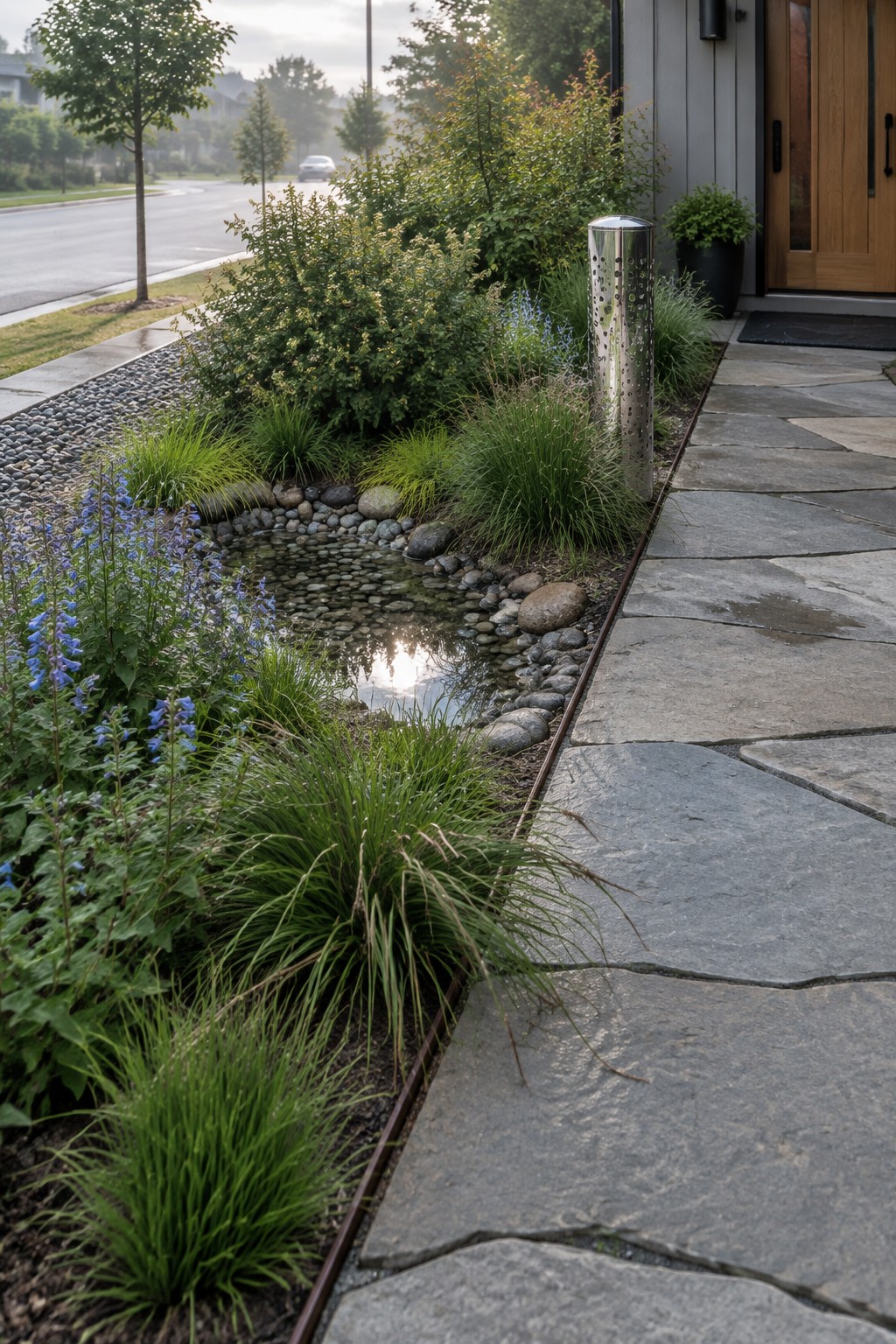
River rock edging gives a narrow bed a finished border that keeps soil and plants from spilling onto the walkway. It also creates a simple transition between hard paving and softer planting without adding width.
This works best on homes with tight front space where you want a bit of water interest right along the path. Choose rocks in a size that stays put and pick plants that stay contained so the edge stays visible.
Define Narrow Beds with Metal Edging
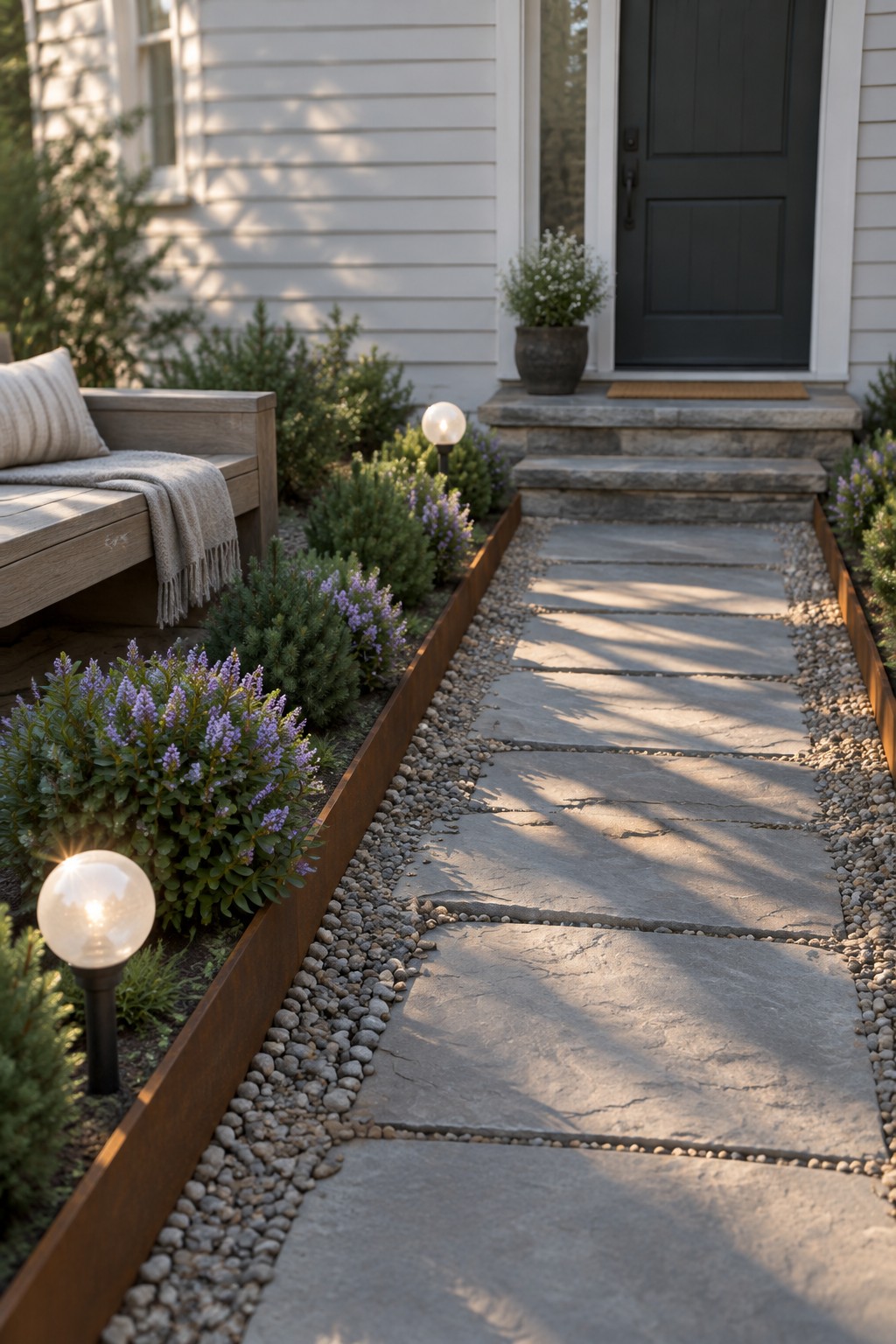
Metal edging gives narrow beds a clean border that stays put year after year. It keeps the gravel from mixing with the soil and helps the planting strip feel purposeful instead of messy.
This works best along front walks where space is tight. The edging also makes it easier to keep the beds weeded and mulched without constant touch-ups.
Brick Paths With Stone Edging
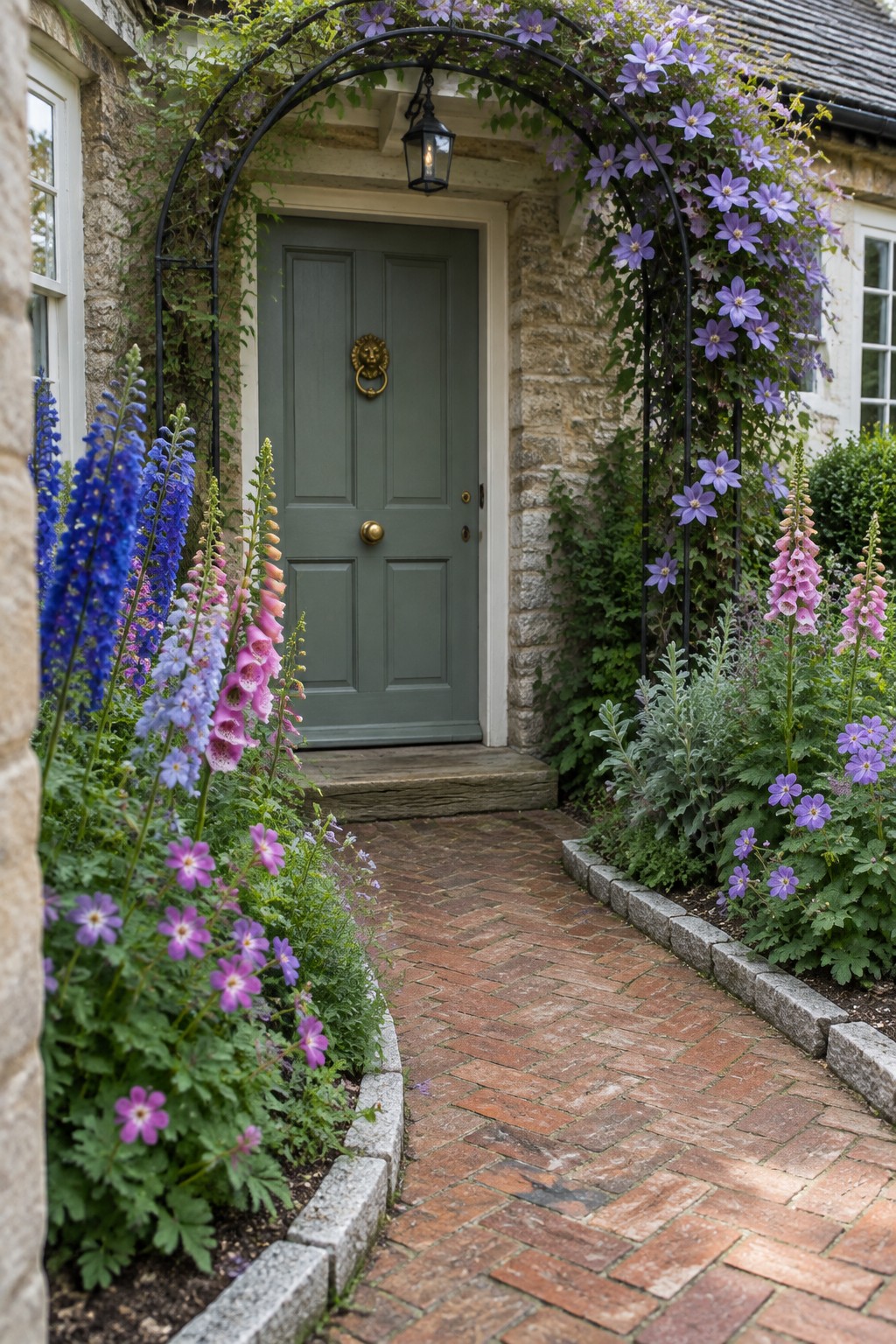
A brick walkway gives the front yard a clear route that feels finished and easy to follow. The narrow beds on each side stay contained because of the low stone edging, which keeps soil and plants from spilling onto the path.
This layout suits older homes or small lots where space is limited. Use the same edging material around all the beds and plant taller flowers toward the back so the walkway stays open and welcoming.
Narrow Raised Beds Along a Stone Path

Narrow raised beds work well when you want to add planting without letting the front yard feel crowded. They keep the beds contained, give the path a clear edge, and make maintenance easier since you are not dealing with soil spilling onto the walkway.
This setup suits homes with limited space between the street and the front door. Dark wood boxes keep the look simple, while the stone slabs stay level and easy to walk on. Just make sure the beds are not too deep, or the path can start to feel closed in.
Paver Walkways With Grass Strips
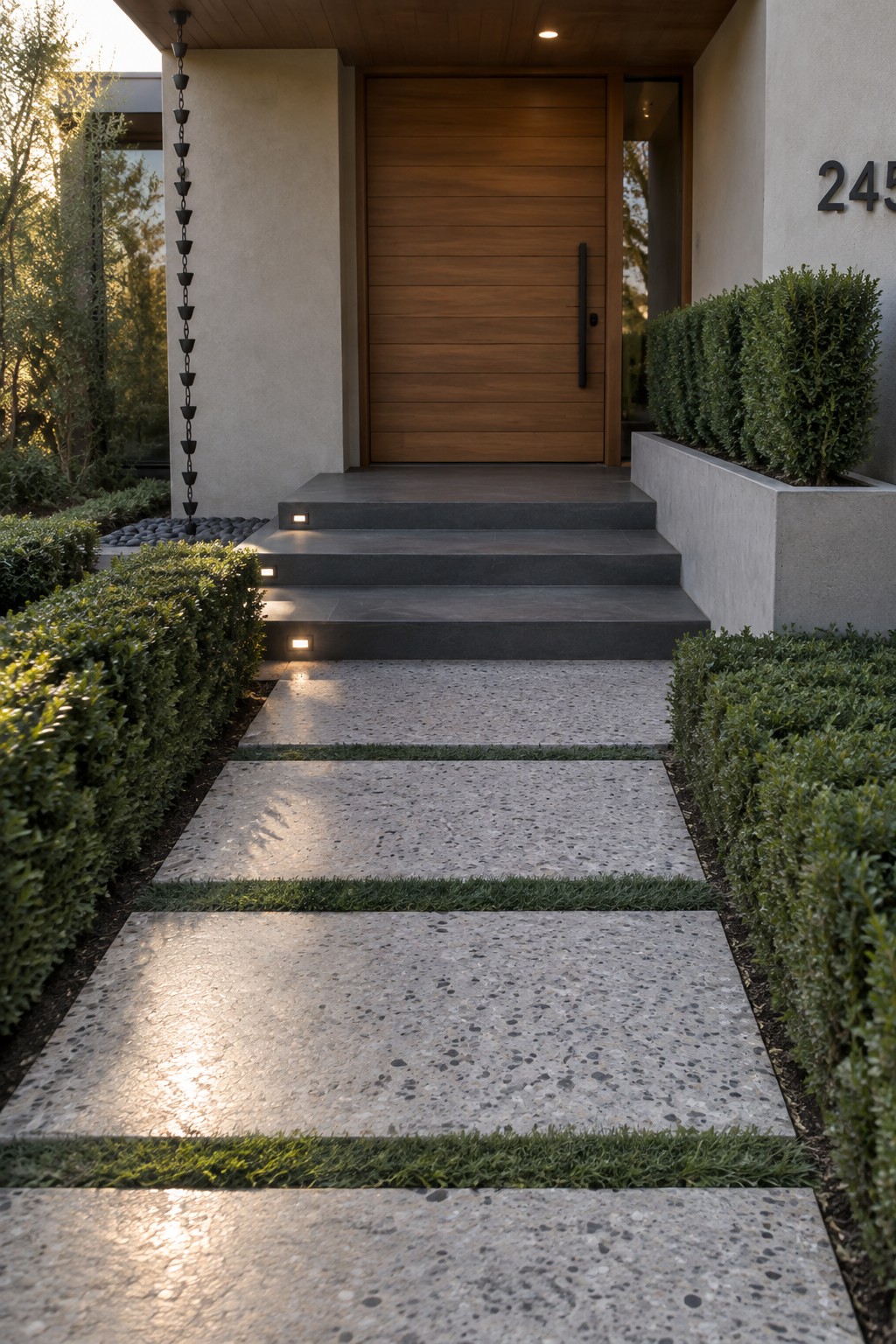
Large pavers set with grass running between them give a front walk a clean line without feeling too hard or heavy. The grass softens the look and helps the path blend into the surrounding beds instead of dominating them.
This setup works well on narrow lots because the grass joints keep the walkway from looking too wide or solid. Low hedges planted right along the edges add definition and hold the shape of the beds without crowding the path.
Brick Paths With Edged Flower Beds
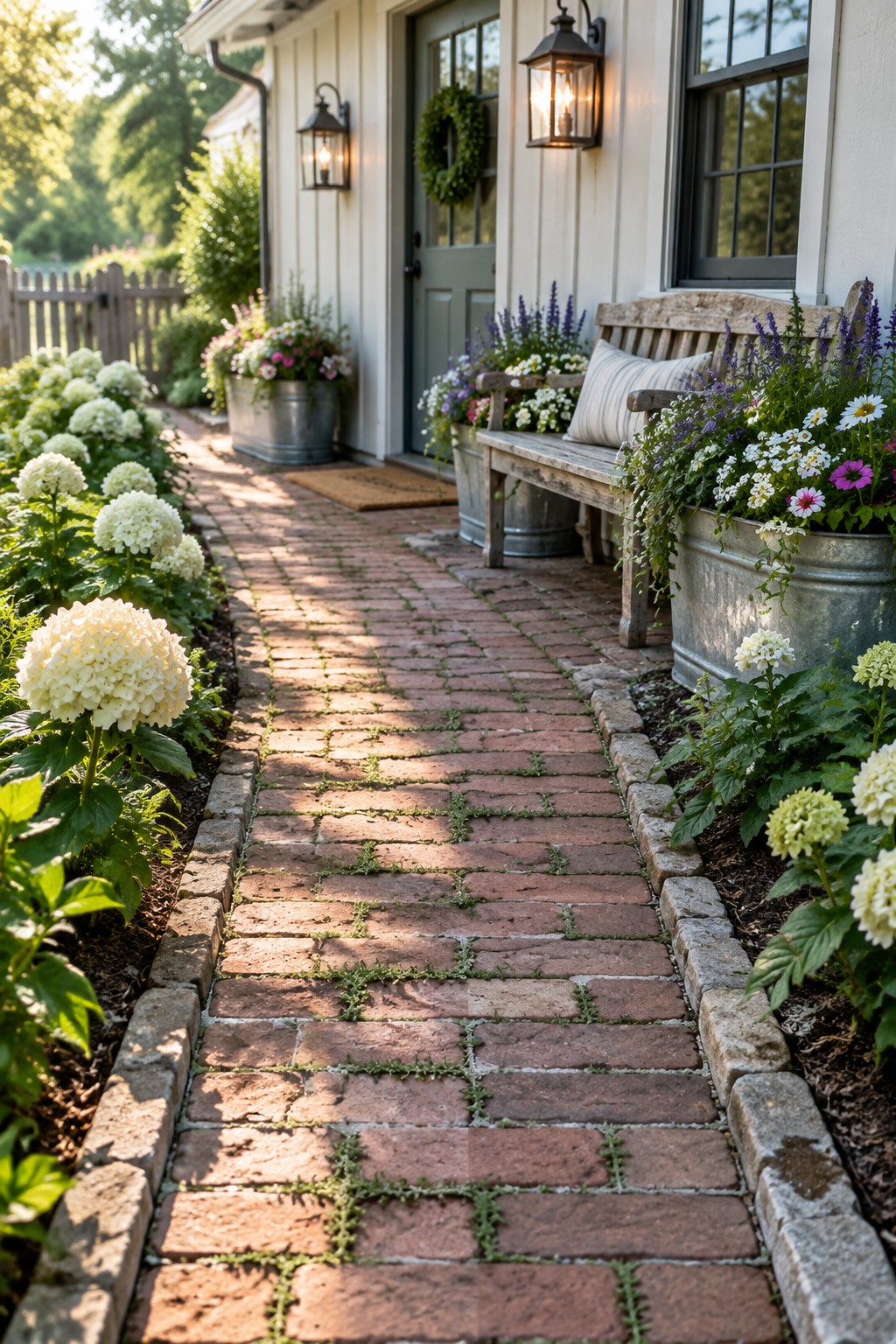
A brick walkway edged in stone turns narrow planting strips into a clear, structured feature. The borders hold the soil in place and keep the beds from spilling onto the path, which makes the whole front look more intentional without needing a lot of extra space.
This approach works especially well on older homes or cottages where the front yard runs long and thin. Use lower plants right along the path edge and save taller flowers for the side closest to the house so the walkway stays open and easy to follow.
Gabion Walls Define Narrow Beds

Gabion walls give narrow beds a solid edge that stays put over time. They work well along a gravel path because the wire cages hold the soil and plants in place while still letting water drain through.
This setup suits homes with straight or slightly curved front walkways where you want clear separation between the path and the planting areas. Fill the cages with local stone and keep the beds fairly shallow so the plants stay in scale with the walkway.
Define Narrow Beds With Stone Paths And Wood Edging

A stone path paired with a simple wood border gives narrow beds a clear shape without crowding the plants. The edging keeps soil and mulch in place while the irregular stones create a walkway that feels natural rather than rigid.
This approach works well along the front of older homes or smaller lots where you need both access and planting space. Keep the wood low so it does not become a tripping hazard and choose stones that are fairly flat for easier walking.
Stepping Stone Paths Work Well In Narrow Yards
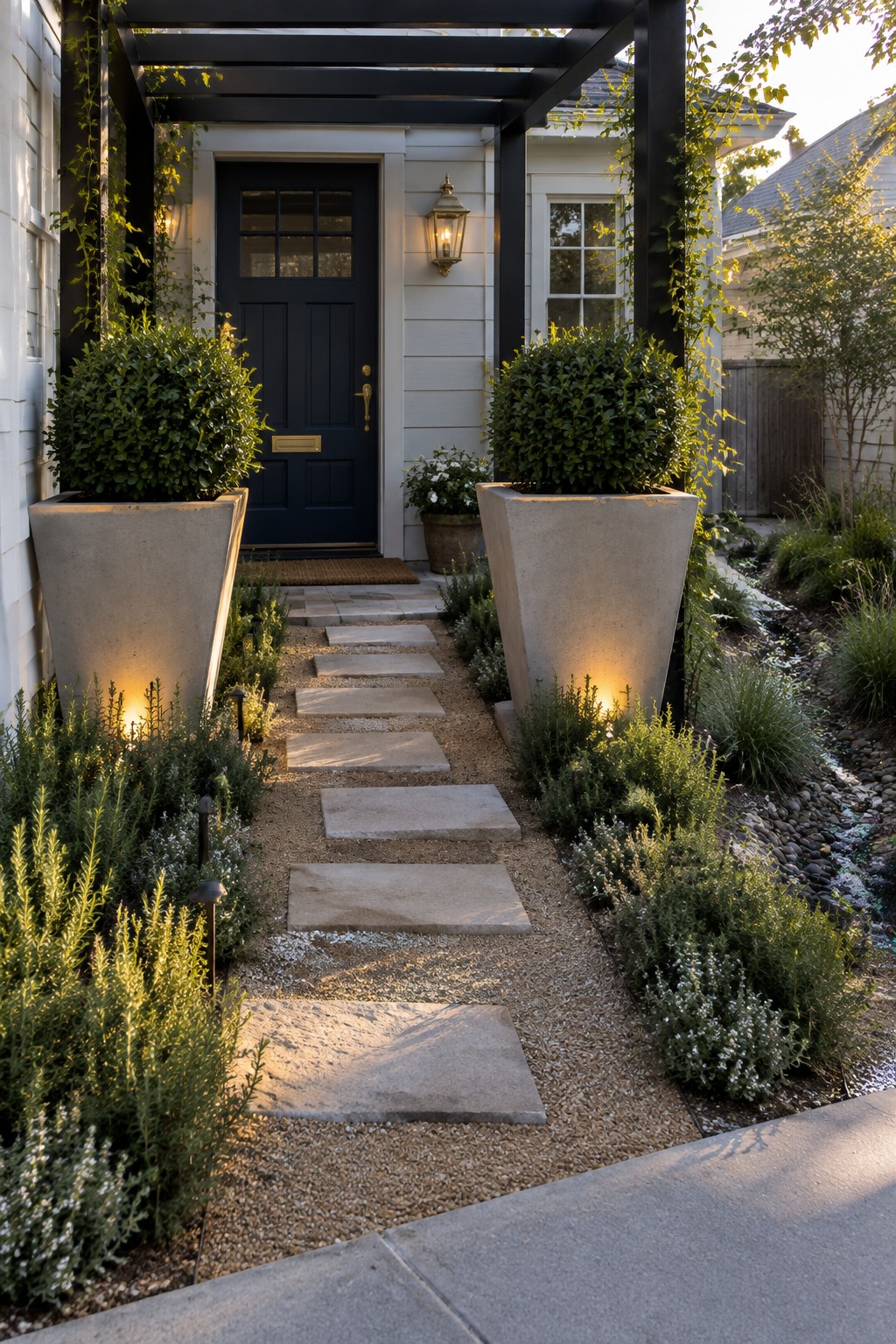
A stepping stone path set into gravel gives a clear line to the front door without eating up space on either side. The narrow beds stay planted and full while the walkway stays easy to follow and simple to maintain.
This layout suits homes with tight side yards or slim front approaches where a full width path would crowd the planting. Keep the stones level with the gravel and choose compact plants that stay within the bed edges so the walkway stays open.
Frequently Asked Questions
Q: What plants work well in a narrow bed next to a walkway?
A: Pick low growing perennials like hostas or ferns if shade is an issue. They fill the space without blocking the path. Trim them back once a season to keep things tidy.
Q: How do I keep the edges of my walkway clean and defined?
A: Use a simple metal edging strip pushed into the soil along the bed (nothing fancy required). It holds mulch or soil in place without much fuss. Check it each spring and adjust where needed.
Q: Can I add color without crowding the narrow space?
A: Tuck in a few annuals like pansies right along the front edge. They add pops of color and you can swap them out easily.
