

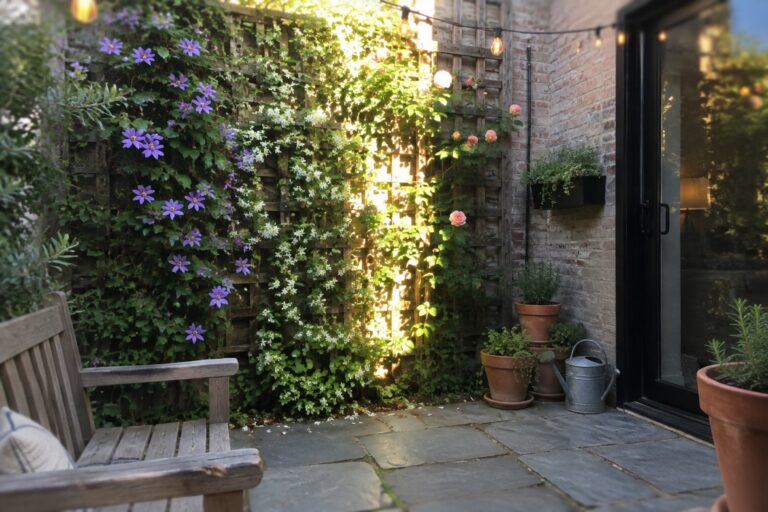
In my own small yard I learned early on that cramming everything at ground level just leads to paths that are hard to walk and plants that compete for light.
Turning to vertical options opened up ways to shape the space without sacrificing room for seating or movement.
Some structures hold up better than others once weather hits.
I have started paying more attention to how the supports integrate with the overall layout so the garden does not end up looking like an afterthought.
A couple of the methods described here are ones I want to try out myself to see if they fit the way my garden actually gets used.
Grow Climbing Plants on a Trellis
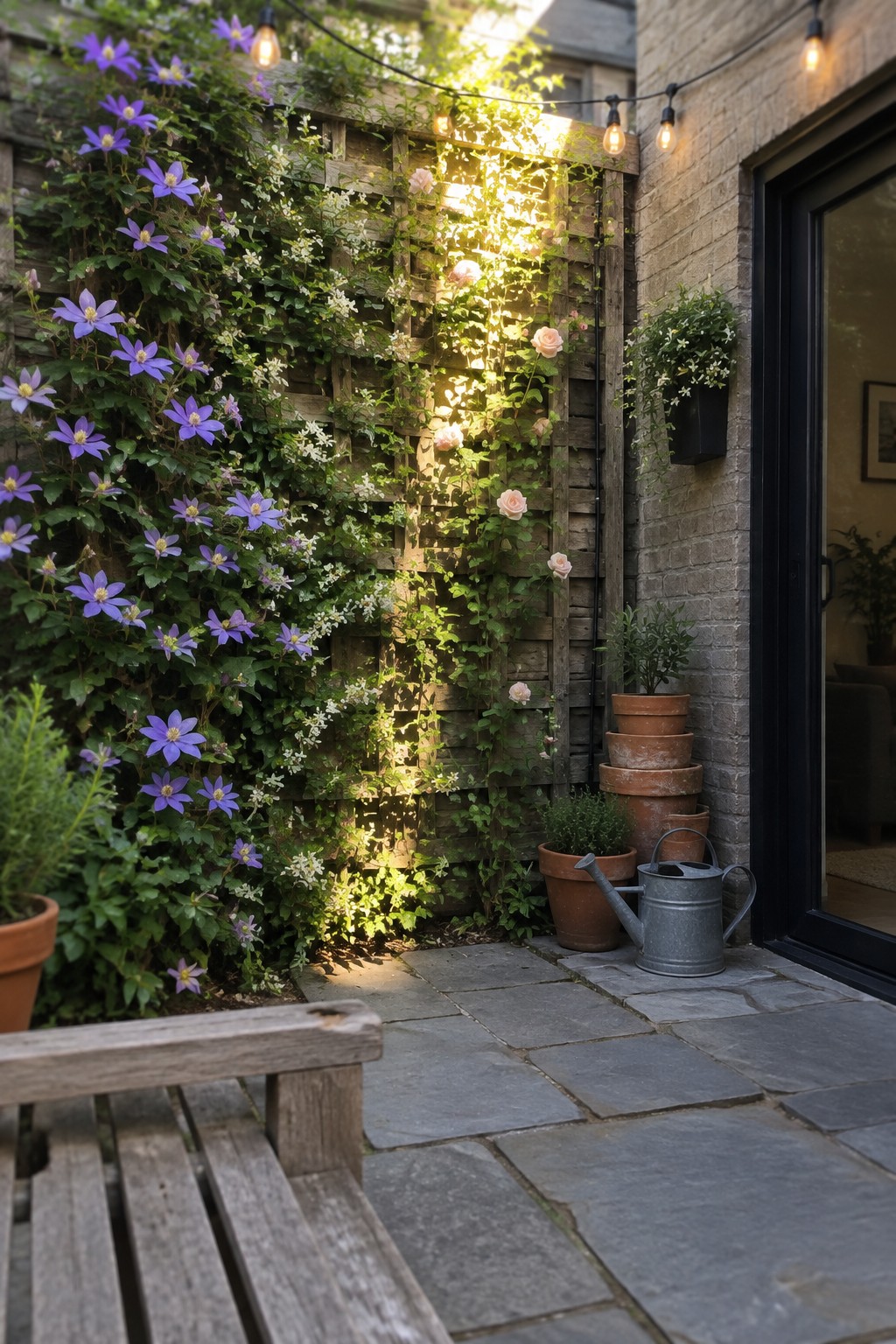
A trellis gives you a way to add height and color without crowding the ground. In small gardens it turns an empty wall or fence into useful growing space, and the plants stay off the path or seating area.
Place the trellis against a solid wall or fence and choose vigorous climbers that suit your light. Keep the base clear or add a few pots at the foot so the roots have room. Check the structure now and then because the weight of mature vines can pull on older wood.
Use Vertical Planters On Walls To Save Ground Space
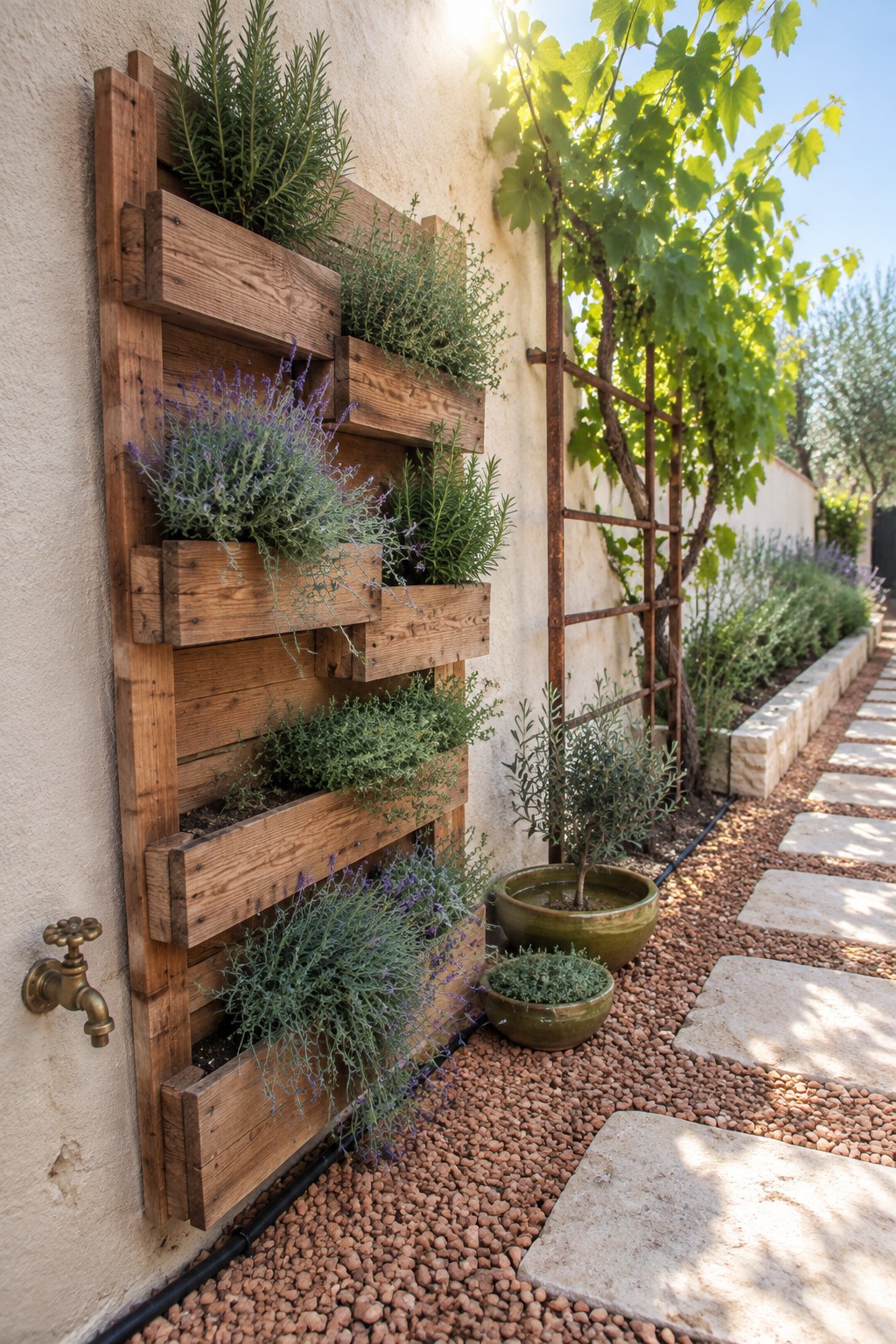
One simple way to grow more in a small garden is to put plants on the wall instead of the ground. A wooden frame with staggered boxes holds herbs and flowers without crowding the path or taking over bed space.
This works best on a sunny exterior wall near a walkway or patio edge. Make sure the frame is well secured and the boxes drain properly so the plants do not sit in water.
Use a Framed Vertical Panel to Add Plants Without Losing Floor Space
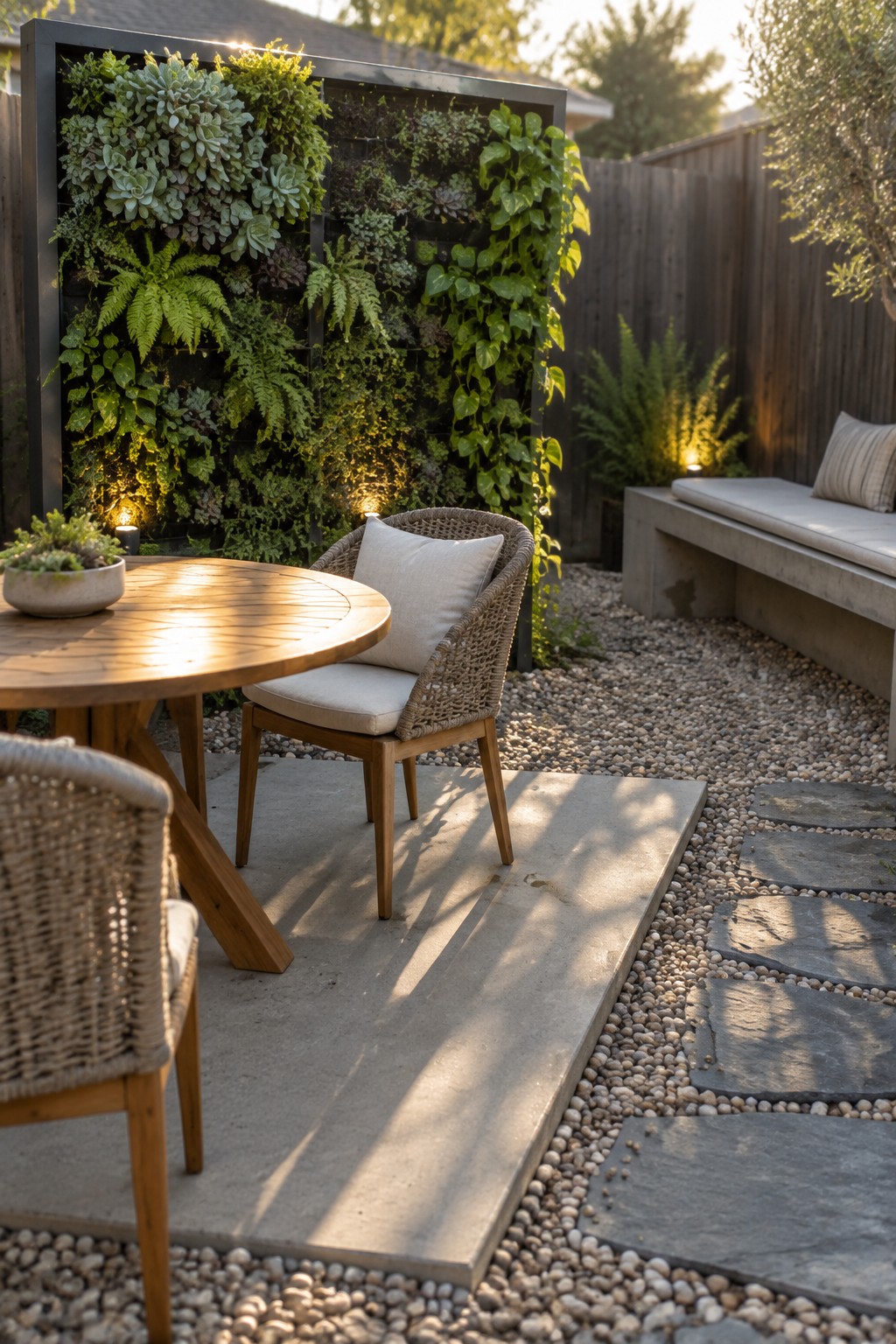
A tall planting panel mounted on a simple frame lets you bring in a lot of greenery while keeping the ground clear for seating or paths. In small gardens this approach works well because it turns an empty wall or fence line into usable growing space without crowding the area below.
Place the panel where it gets decent light and water it as needed through the grid. It suits compact patios, gravel yards, or side gardens where every square foot counts and you still want a full planting display.
Train Fruit Trees Against Walls
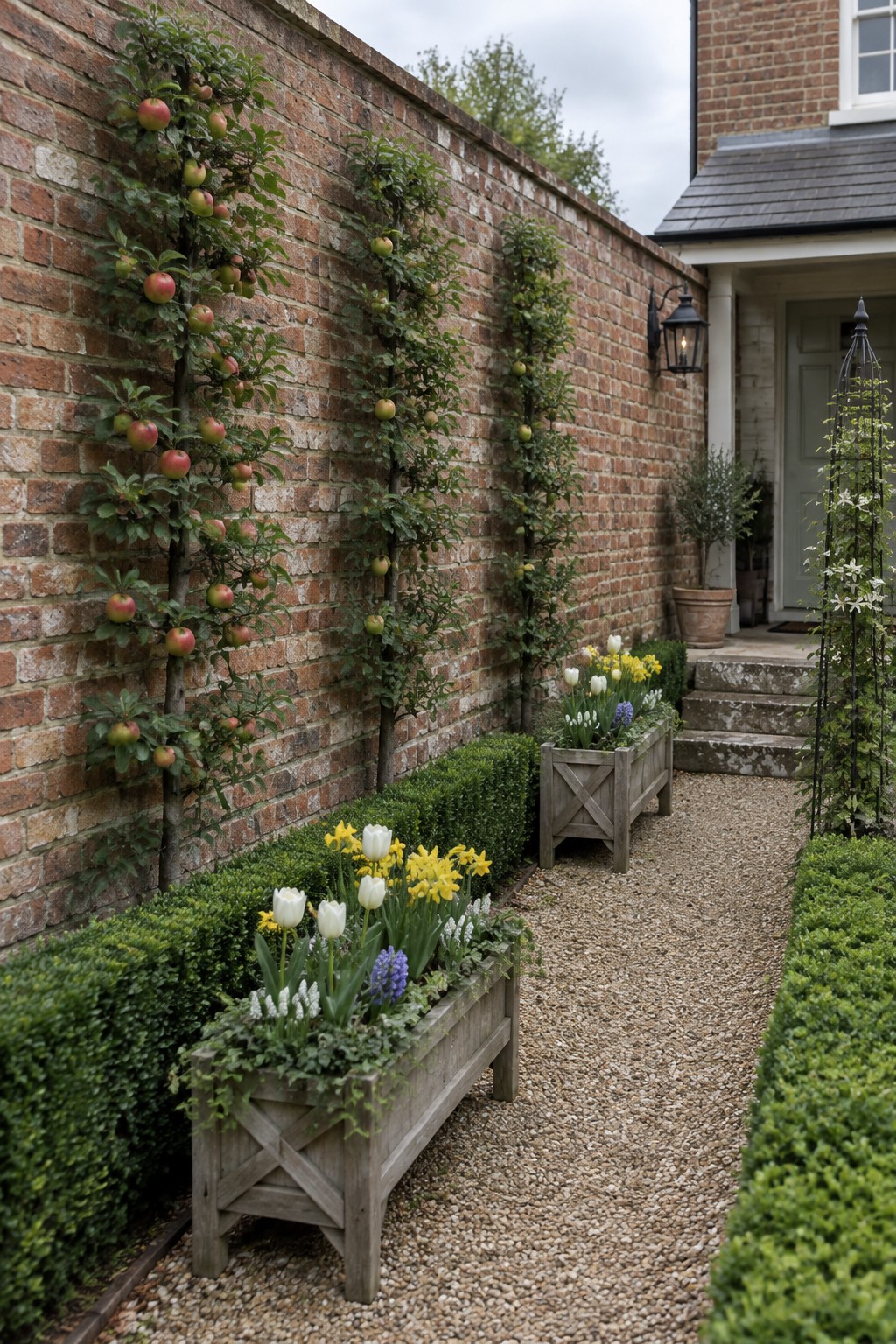
Training fruit trees flat against a wall works well in narrow gardens where every inch of ground space counts. The trees still produce fruit while taking up almost no floor area, and the wall gives them support and warmth.
This approach suits small urban yards or side passages with solid brick or stone surfaces. Keep the trees pruned each year so they stay flat and productive without spreading out into the path.
Stack Planters Vertically Along a Wall
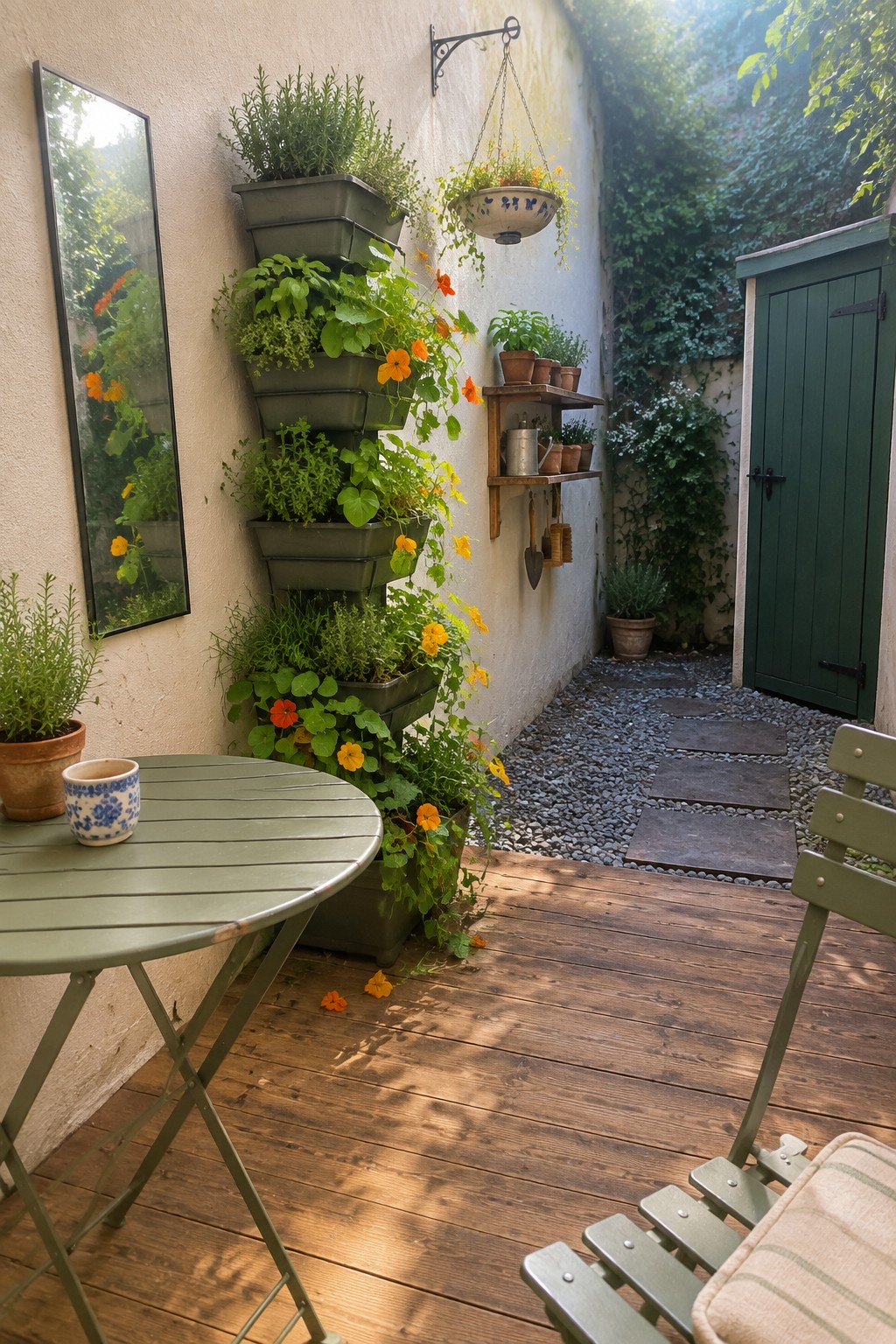
Many small gardens lose ground space fast once you add seating or paths, so building upward with stacked planters keeps the planting area compact. The tiered setup lets vines trail down naturally while still fitting plenty of herbs and flowers in one narrow spot.
This approach works best against a solid wall on a patio or side yard where horizontal room is tight. Choose sturdy stackable units that can handle the weight once filled, and water from the top so it drains through each level.
Add a Vertical Planter to the Railing
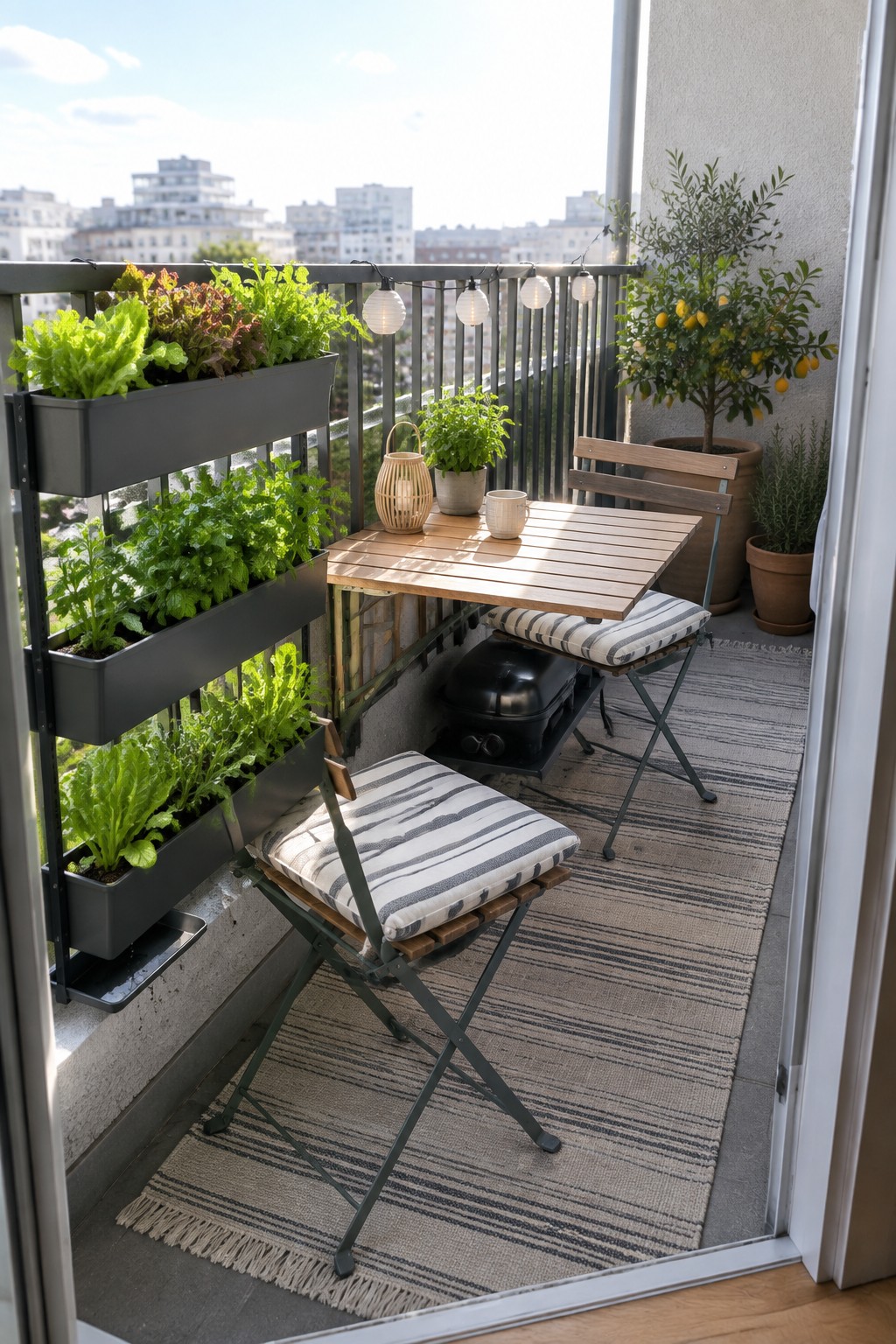
A railing-mounted planter gives you extra growing space without crowding the floor on a small balcony. It keeps herbs and greens within easy reach while leaving room for a table and chairs.
This setup works well on apartment balconies or any tight outdoor spot where ground space is limited. Just make sure the railing can support the weight and choose a system with good drainage so water does not drip onto the area below.
Build a Vertical Garden Wall With Wire Mesh
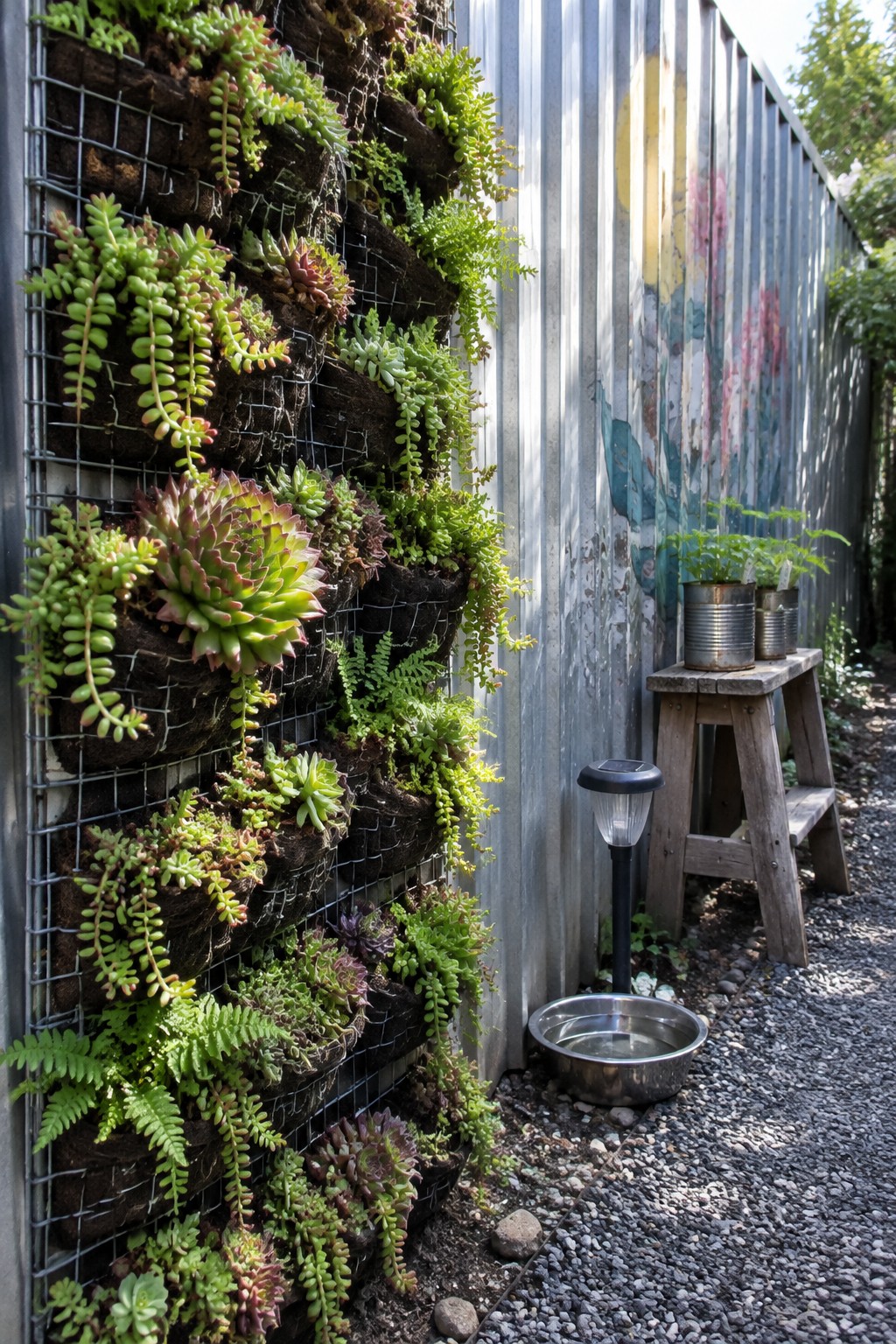
A vertical garden wall works well when ground space is tight and you still want plenty of plants. The mesh frame holds pockets of soil so roots can settle in while the plants spill outward and downward.
This setup fits best along a fence, shed side, or narrow path edge where a bed would get in the way. Start with a few rows of easy plants like succulents and ferns, then add more once the first ones take hold.
Use Vertical Trellises In Raised Beds
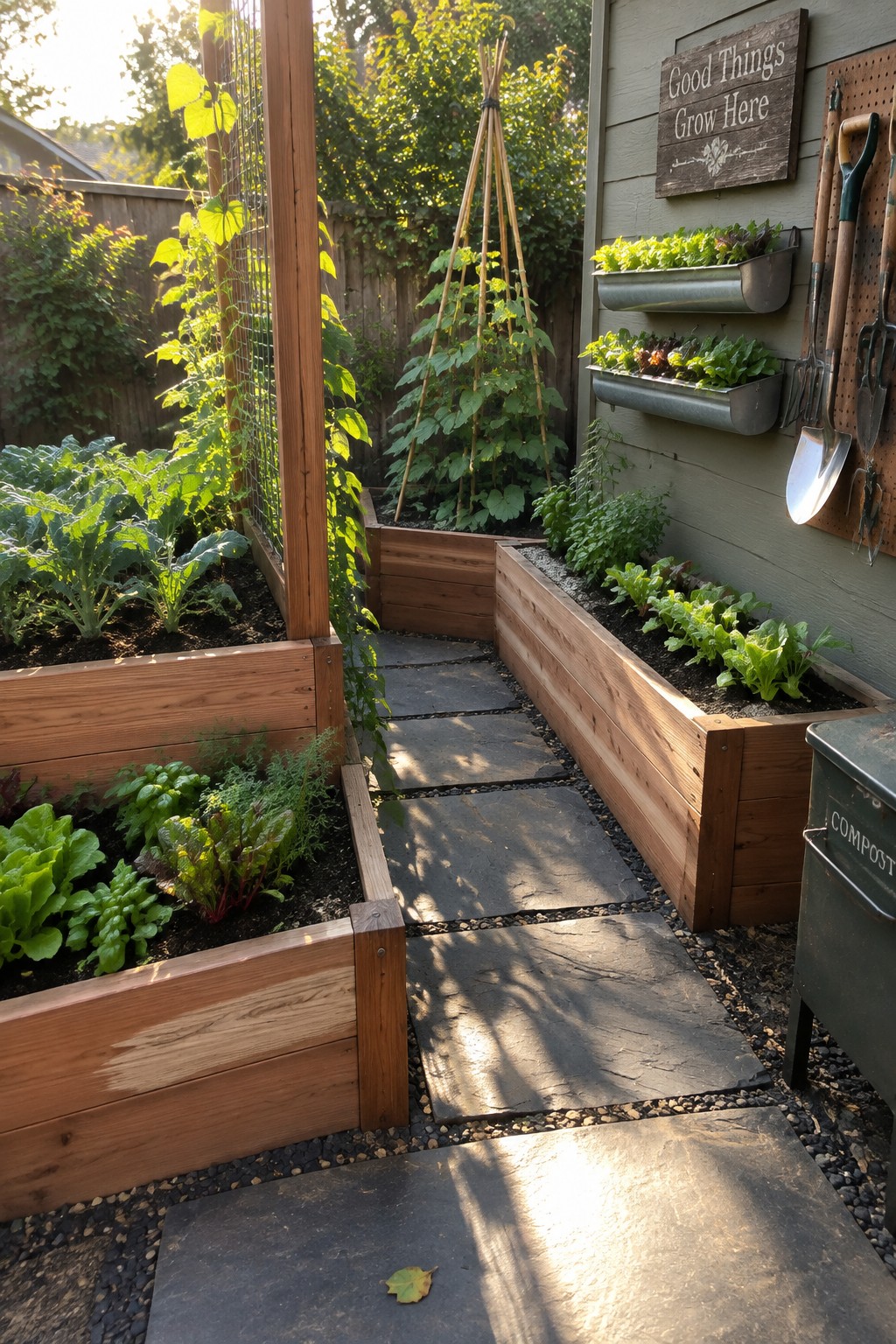
One easy way to fit more plants into a small garden is to add a vertical trellis right inside the raised bed. The structure lets vines grow upward instead of spreading out and taking over the soil below.
This setup works best in narrow side yards or along paths where ground space is tight. You can grow beans, peas, or cucumbers on the trellis while keeping the rest of the bed for lower crops like lettuce or herbs.
Use Raised Planters To Grow Tall Plants Vertically
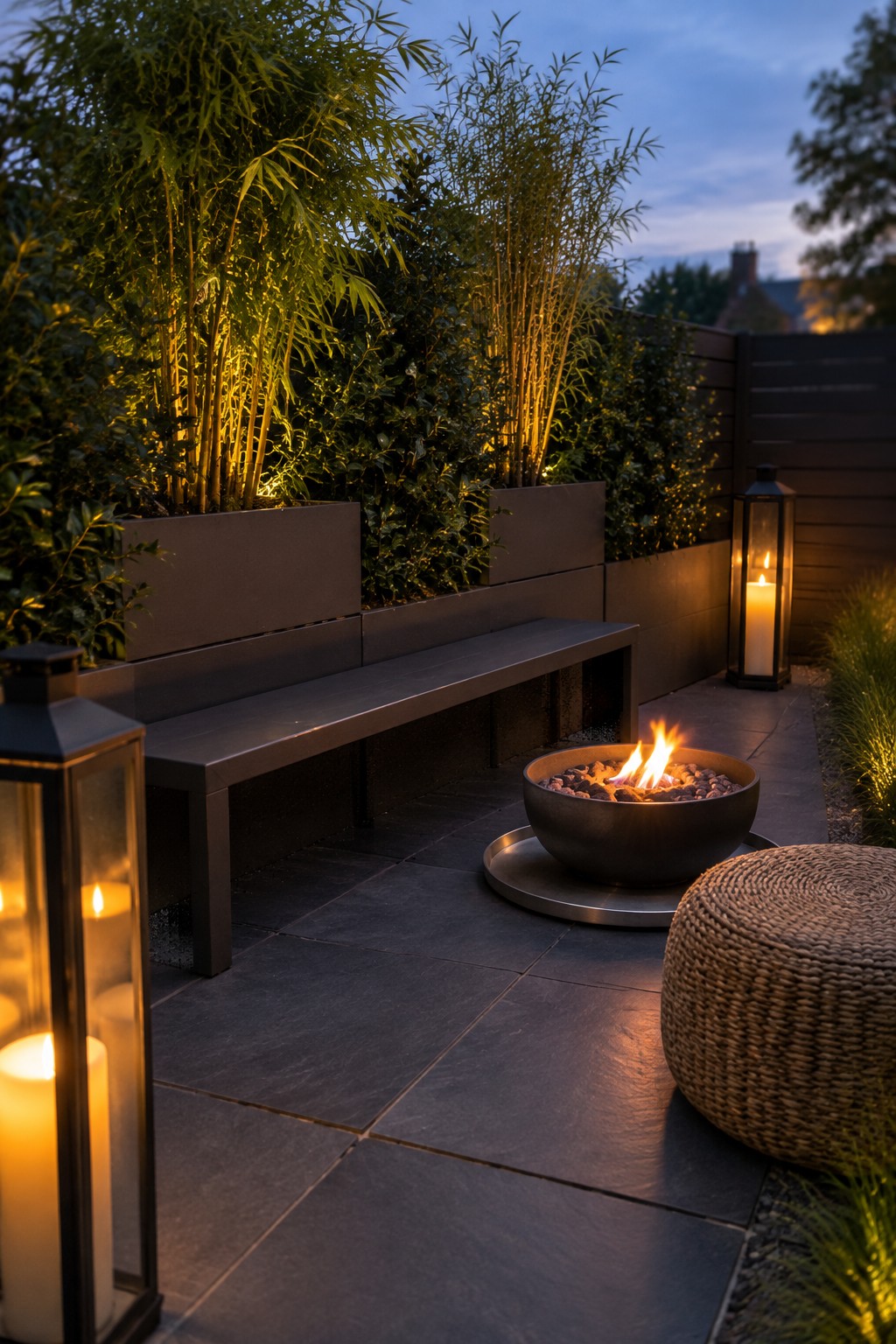
Raised planters work well when ground space is tight because they let you stack height without spreading out across the patio. Tall plants like bamboo or grasses fill the vertical area fast and create a green screen that feels more private.
Place them along a fence or wall so the seating area stays clear for a bench or fire pit. This setup suits small yards where you want greenery but still need room to move around or gather. Just make sure the planters are deep enough for the roots and water them regularly since raised soil dries out quicker.
Use A Living Wall To Keep Ground Space Open
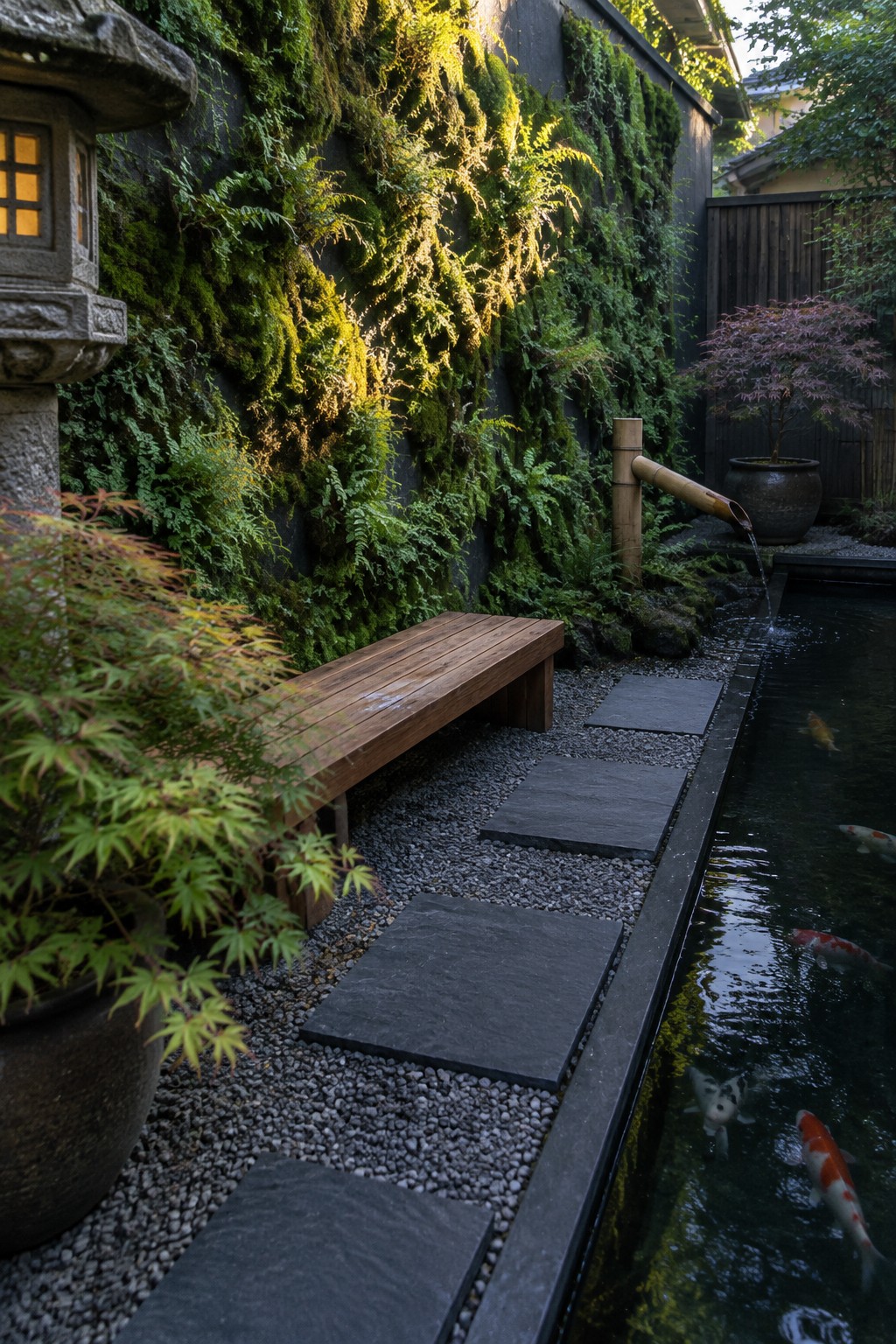
A living wall gives you room for lots of plants without taking over the ground. In small gardens this keeps paths clear and leaves space for seating or water features while still creating a full green backdrop.
It works best on blank side walls or fences where light reaches the plants. Keep the setup simple with a basic irrigation line so the wall stays healthy without constant upkeep.
Vertical Towers Free Up Floor Space on Balconies
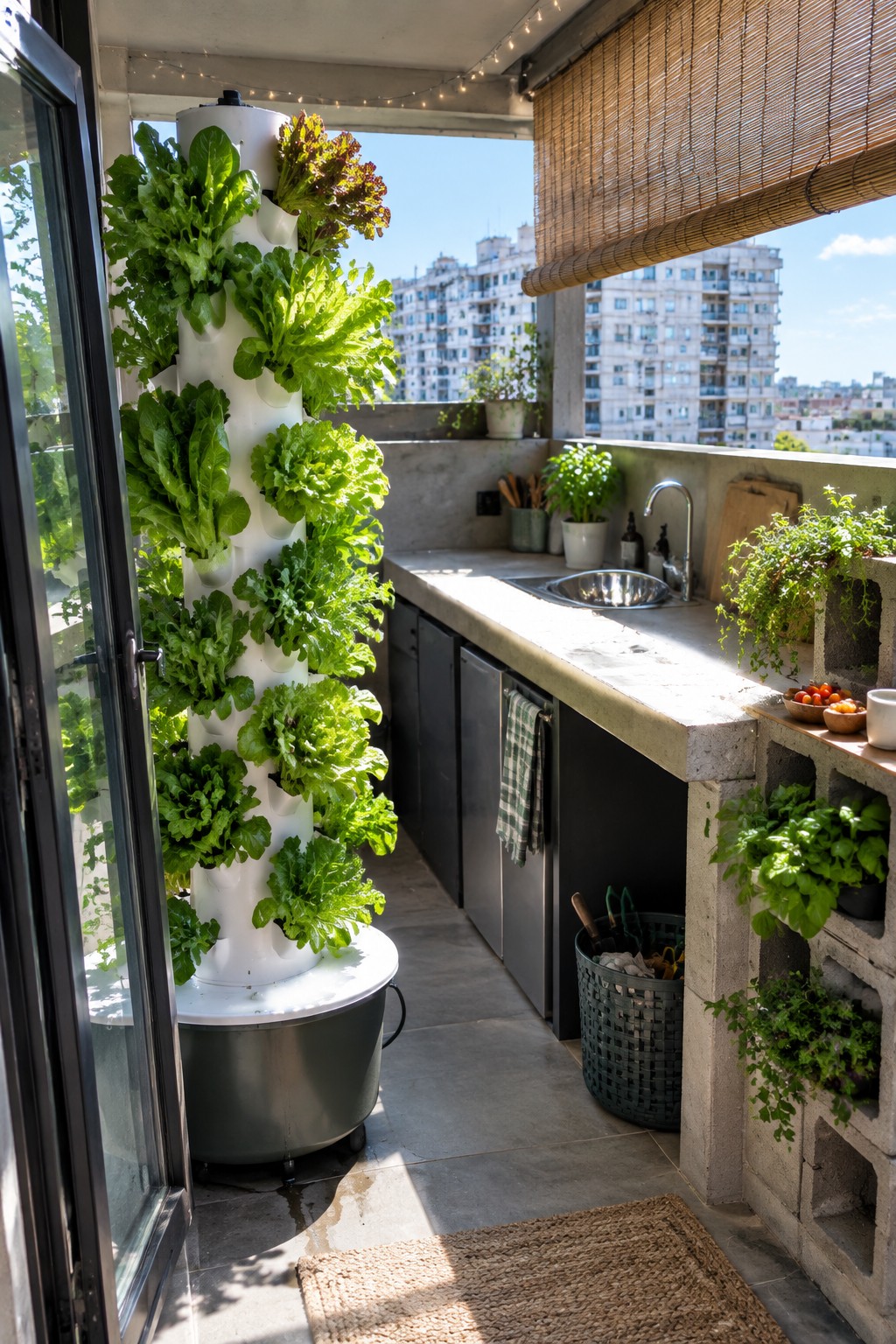
A vertical tower planter lets you grow a large amount of leafy greens without spreading out across the ground. It stands in one spot and uses the height instead, which keeps the rest of the balcony open for movement or other uses.
This approach suits small concrete balconies or patios where traditional beds are not possible. Set the tower near a wall or counter so it does not block the main walkway, and choose a model with easy access for watering and harvesting.
Mount Planters on Walls to Save Ground Space
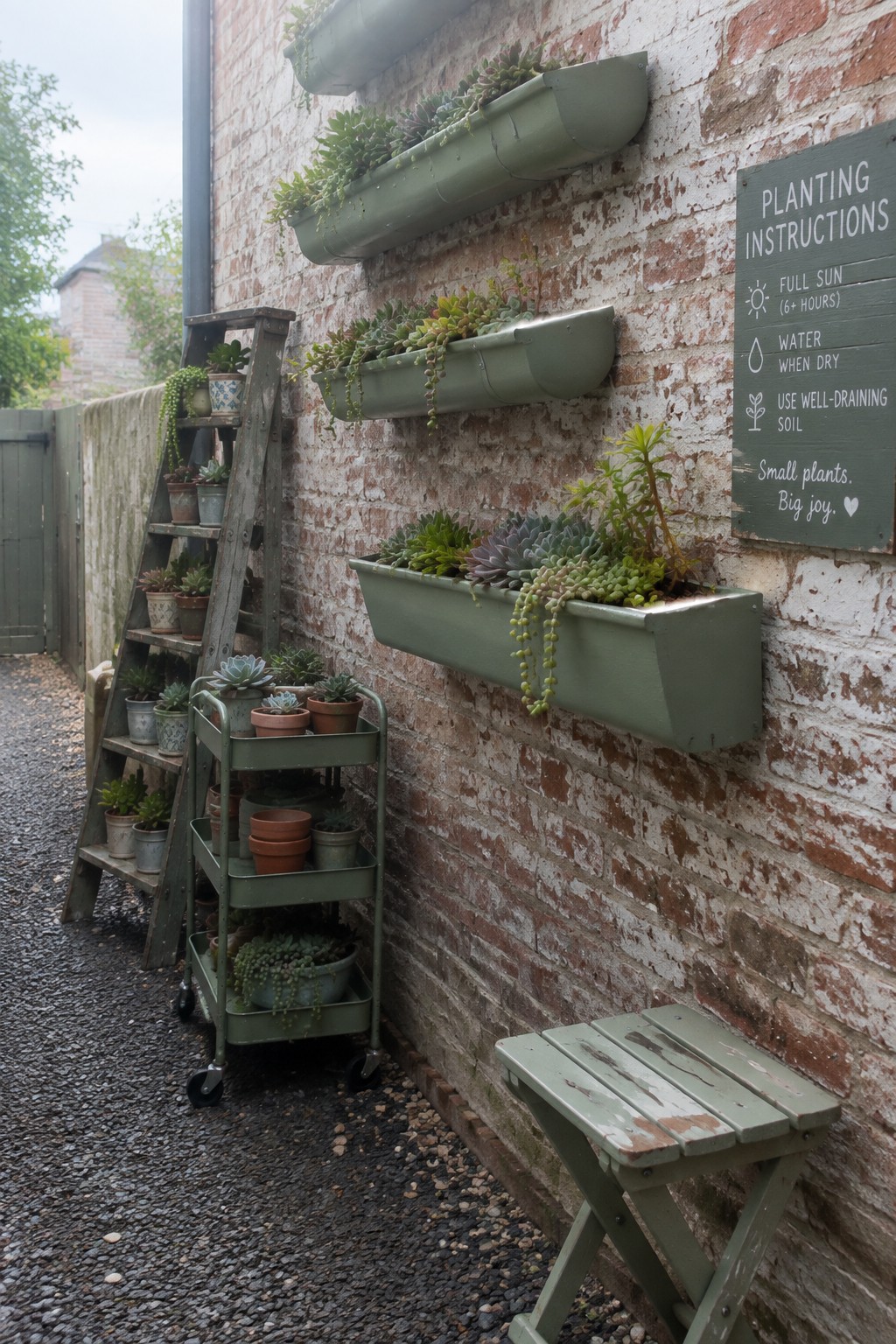
One simple way to fit more plants into a tight garden is to fix troughs straight onto a wall. This keeps the ground clear for walking or seating while still giving the plants room to spread out. The troughs catch plenty of sun and stay easy to reach for watering.
This setup works best on a solid wall that gets at least six hours of light. Make sure the planters are fixed firmly and have good drainage so the soil does not stay soggy. A few wall troughs can turn a narrow side path into a useful growing area without taking up extra floor space.
Use Vertical Planting to Keep Small Decks Open
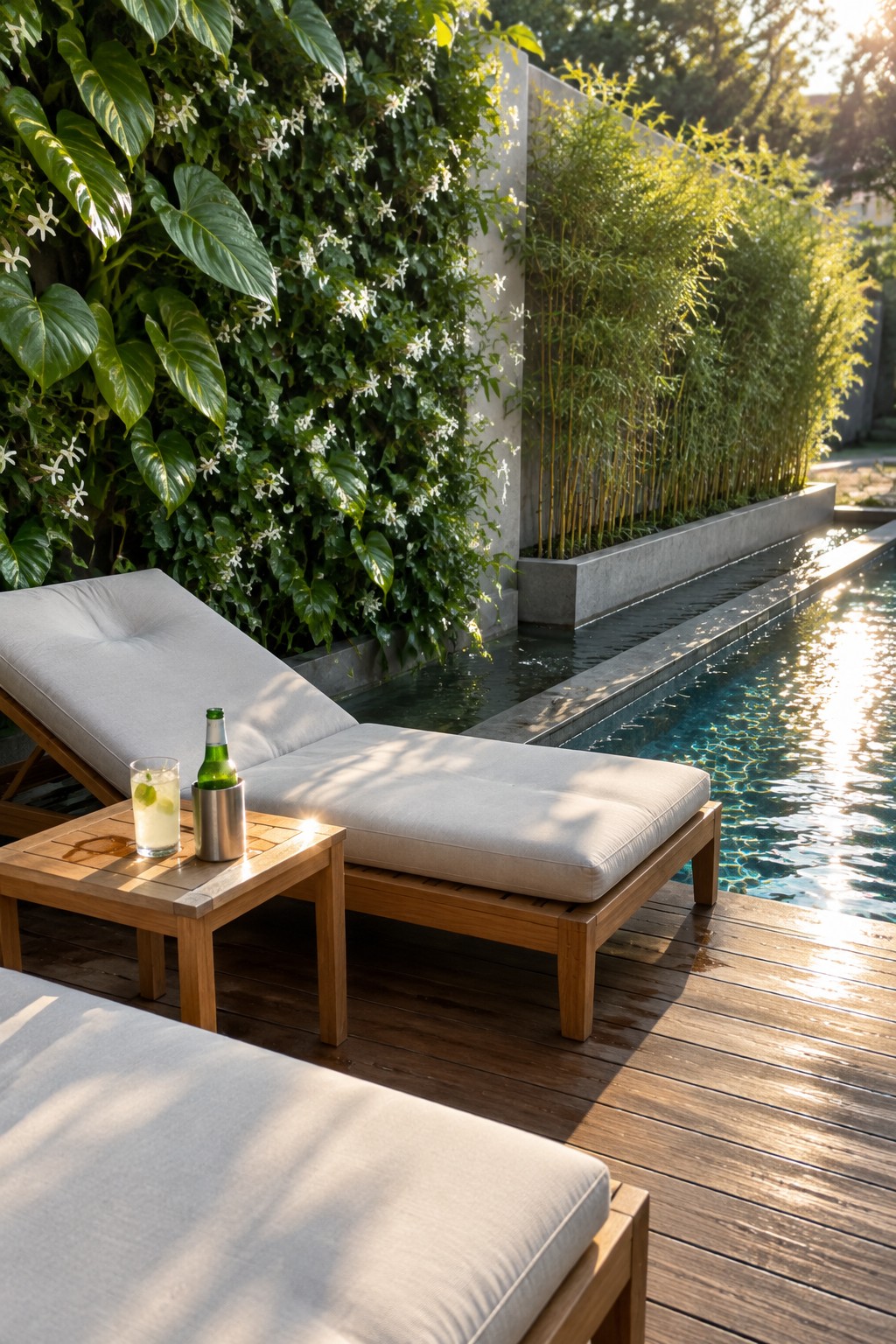
A planted wall works well when you want more greenery but cannot spare floor space around seating or a pool edge. It adds height and coverage without extra pots or beds taking up room on the deck itself.
This setup suits compact yards or townhomes where the ground needs to stay clear for walking and lounging. Mount the plants on an existing boundary wall or fence using a simple grid or pocket system, and choose varieties that handle sun or shade as needed.
Stack Planters Against a Wall
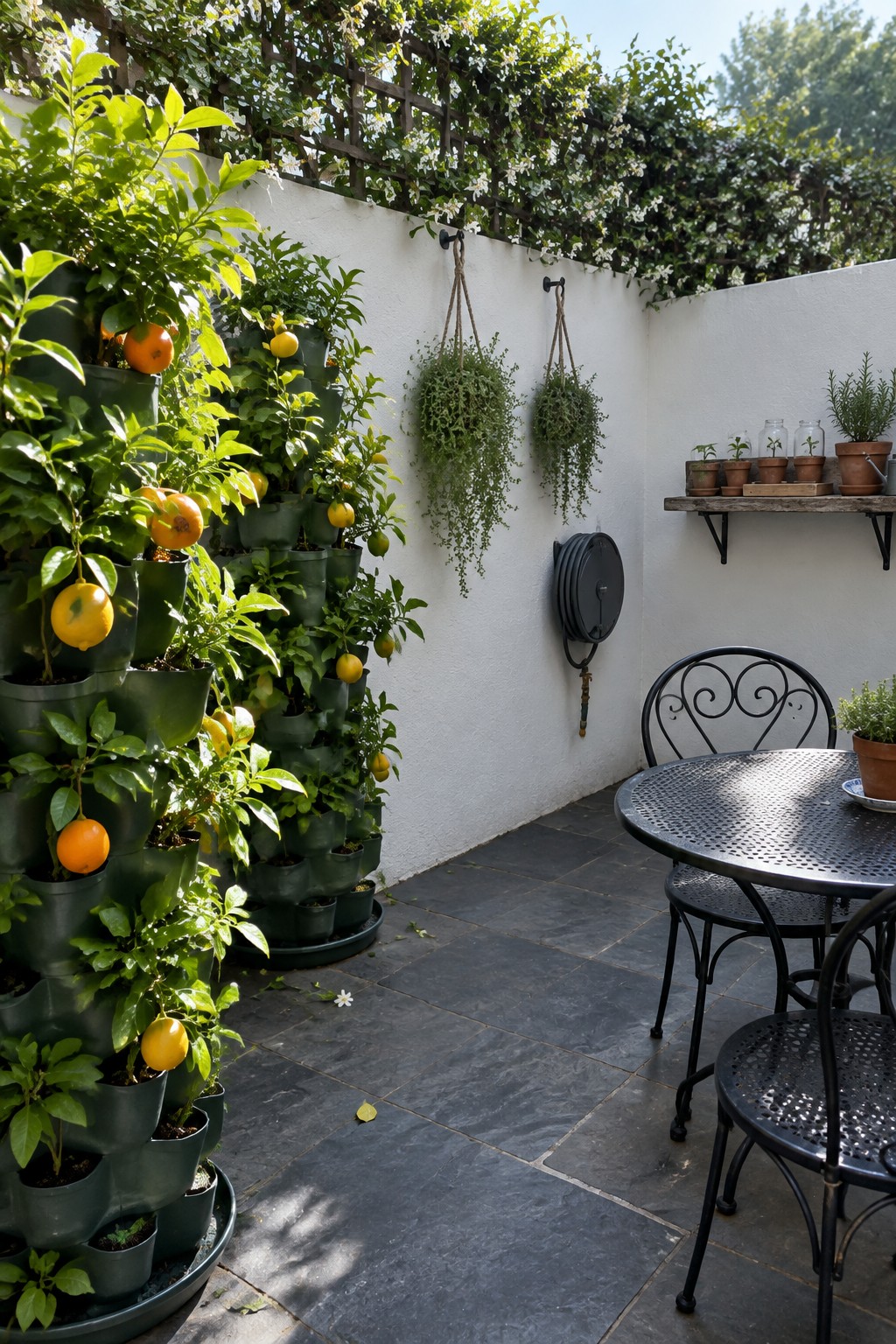
One easy way to fit more plants into a small patio is to stack planters straight up the side of a wall. This approach keeps the floor clear while still giving you a big growing area, which works well when you want to leave room for a table and chairs.
It suits courtyards or narrow outdoor spaces where ground room is limited. Just check that the wall can support the weight and that the plants get the sun they need throughout the day.
Vertical Planting Along Walls Frees Up Floor Space
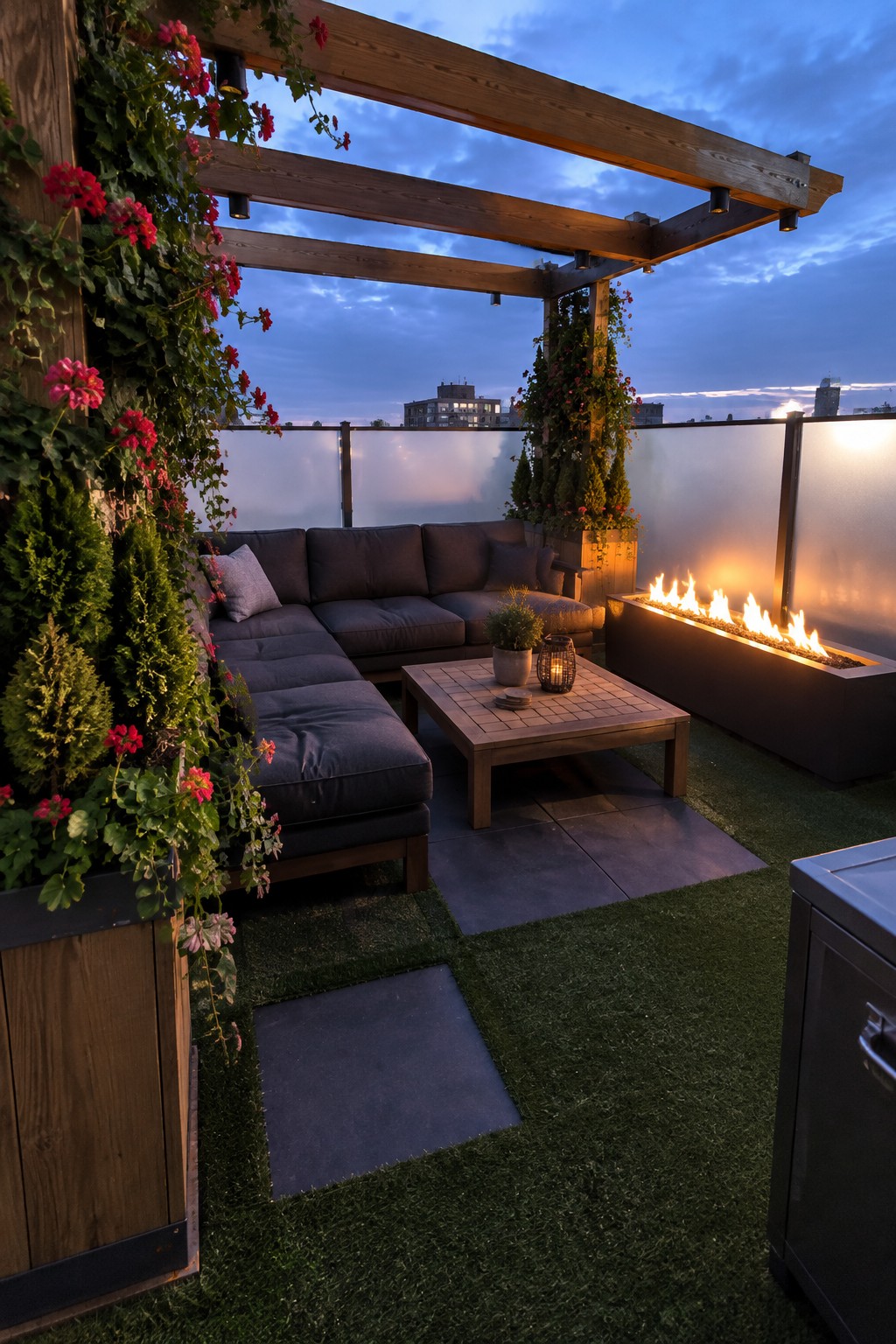
Vertical planting works well when you want more greenery but have limited ground to work with. In this setup the plants climb a side wall and the edge of the pergola instead of spreading across the deck, so the seating area stays open and easy to move around.
This approach suits small patios, rooftops, and urban gardens where every square foot counts. Mount a simple trellis or planter system on a solid wall, choose vines or cascading plants that handle your light conditions, and keep the base clear for furniture or paths.
Mount Planters on Walls to Save Ground Space
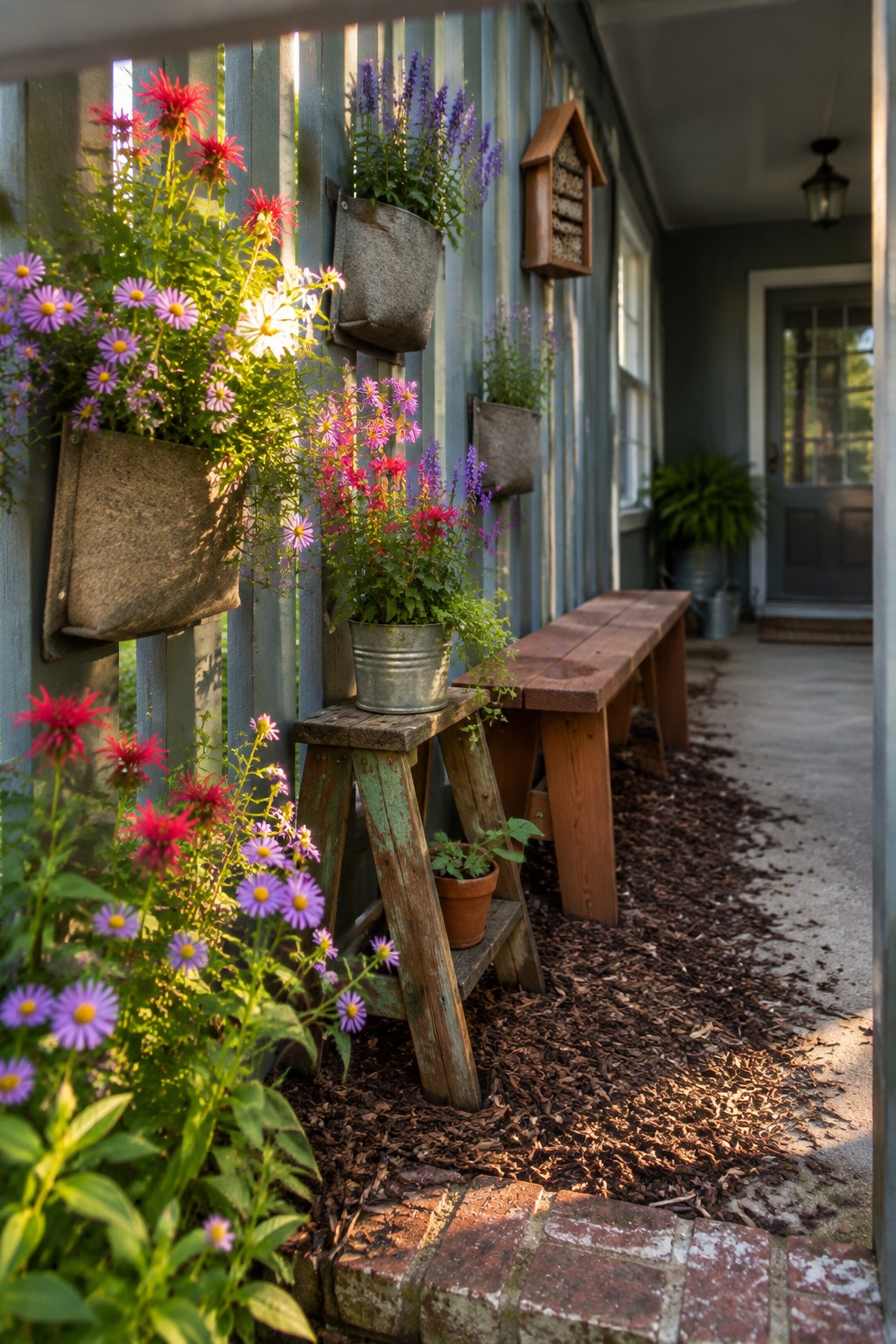
Mounting planters directly on the house wall lets you add flowers and greenery without using up valuable ground space. This approach works well in narrow side areas where a full bed would crowd the path or block access.
It suits homes with long foundation walls or limited yard room. Fabric pockets and small stands help vary the heights, and they keep plants off the mulch so they stay visible and easier to tend.
Vertical Pallet Planters For Small Gardens
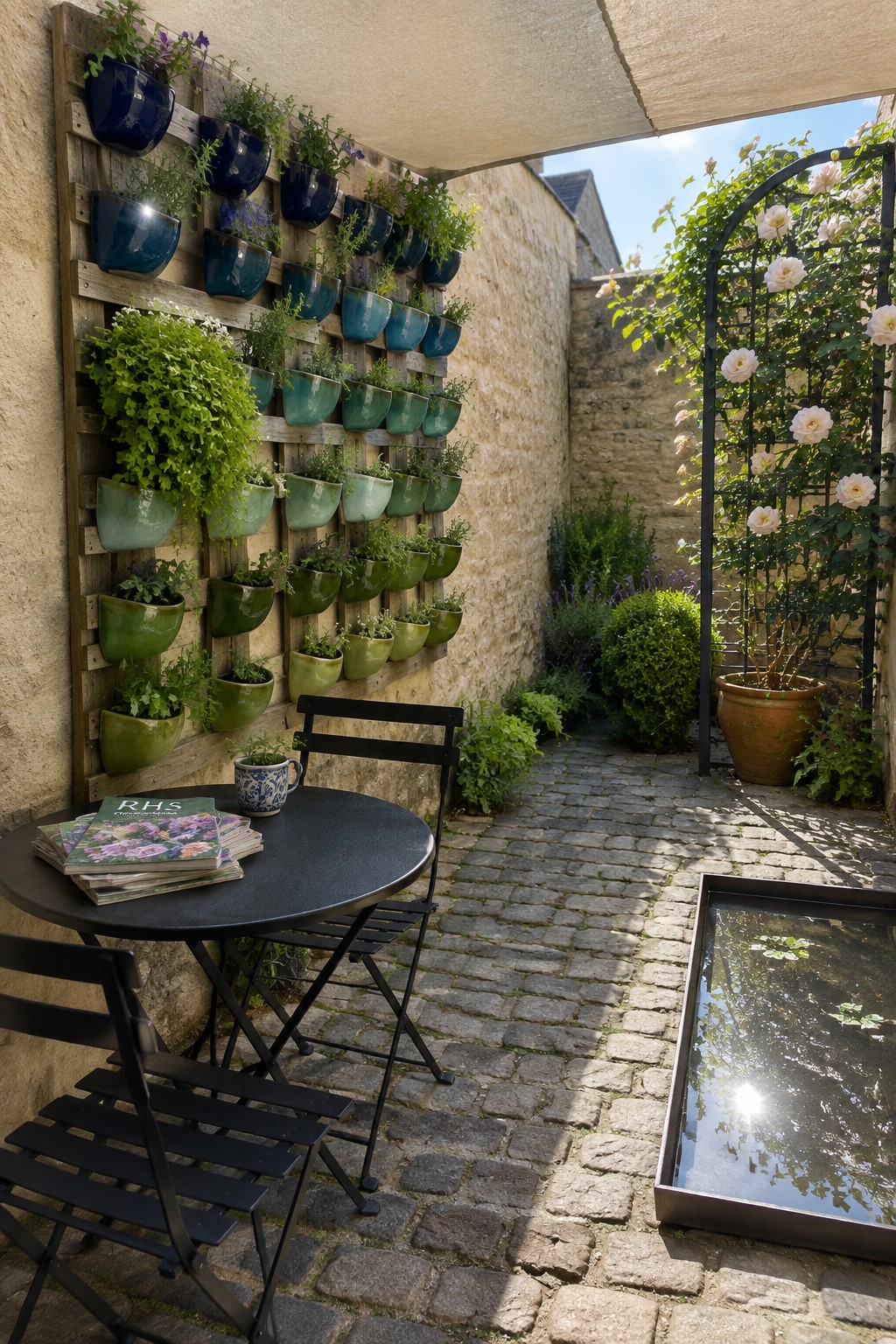
Many small gardens run out of ground space quickly, so mounting a simple pallet on a wall and adding rows of pots turns unused vertical space into useful planting room. This keeps the floor clear for walking or seating while still giving you room for plenty of plants.
It works especially well in courtyards or narrow yards where every square foot matters. Secure the pallet firmly, choose pots that are not too heavy when filled, and water carefully so the wall stays dry.
Hang Wooden Crates On Walls For Vertical Herbs

Mounting old wooden crates on a wall gives you room to grow herbs even when the ground is tight. The boxes sit at different heights so plants get decent light and stay easy to reach for picking or trimming. It turns a plain wall into useful growing space without spreading out across the path or patio.
This works best on homes with solid exterior walls that can take a few screws and some weight. Secure the crates well and line them if needed so soil stays in place. Keep a simple list nearby to track what needs water each day, since the plants dry out faster than ones sitting on the ground.
Layer Hanging Troughs Along a Wall
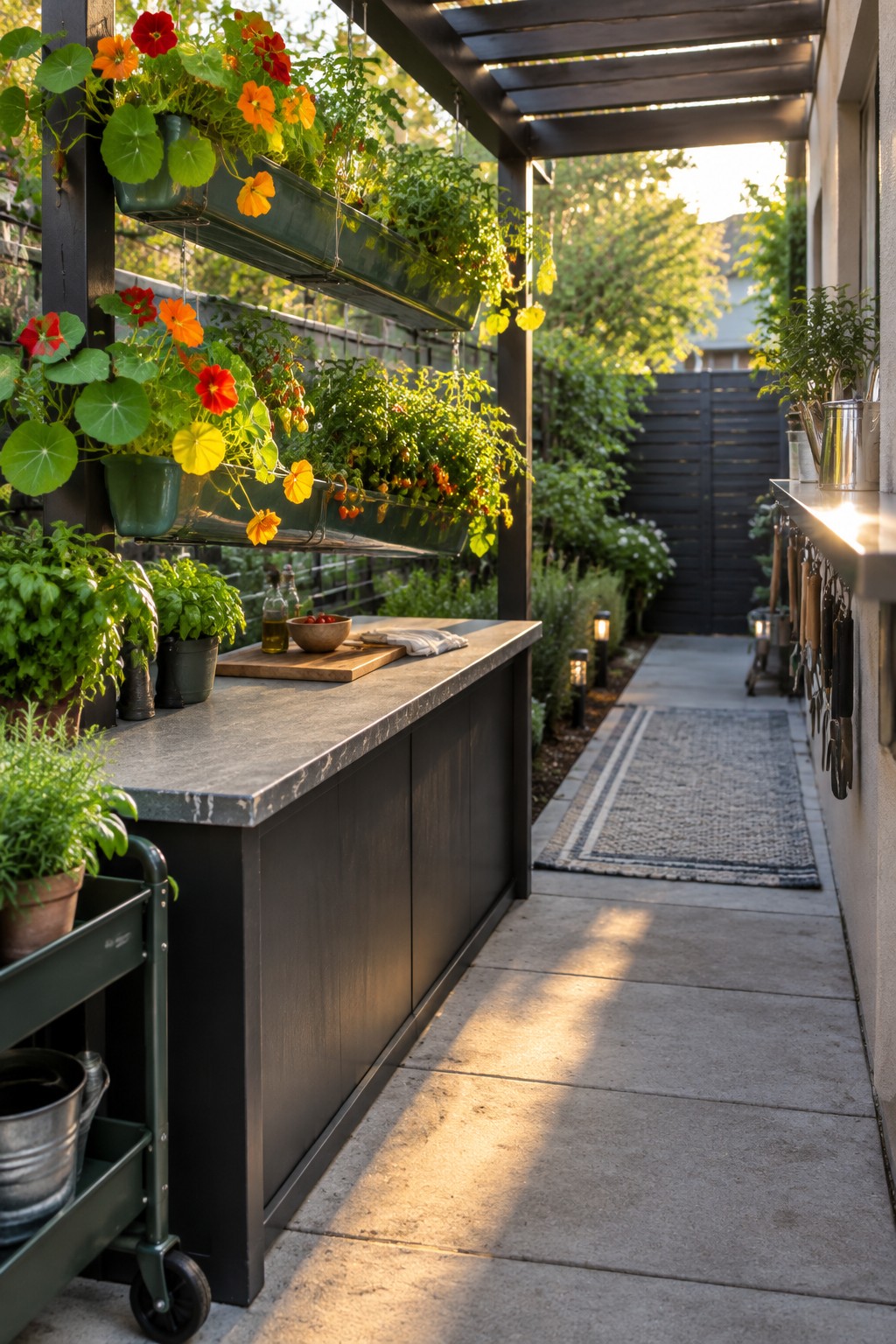
Hanging troughs at different heights lets you grow more in a narrow garden without crowding the ground. The setup keeps the path or work area open while the plants get good light and stay within reach for watering and harvesting.
This approach fits well beside a walkway or next to an outdoor counter, especially in side yards or small back gardens. Use a strong frame or brackets, and check that the wall or posts can support the added weight once the troughs are full.
Grow Plants Up a Wall
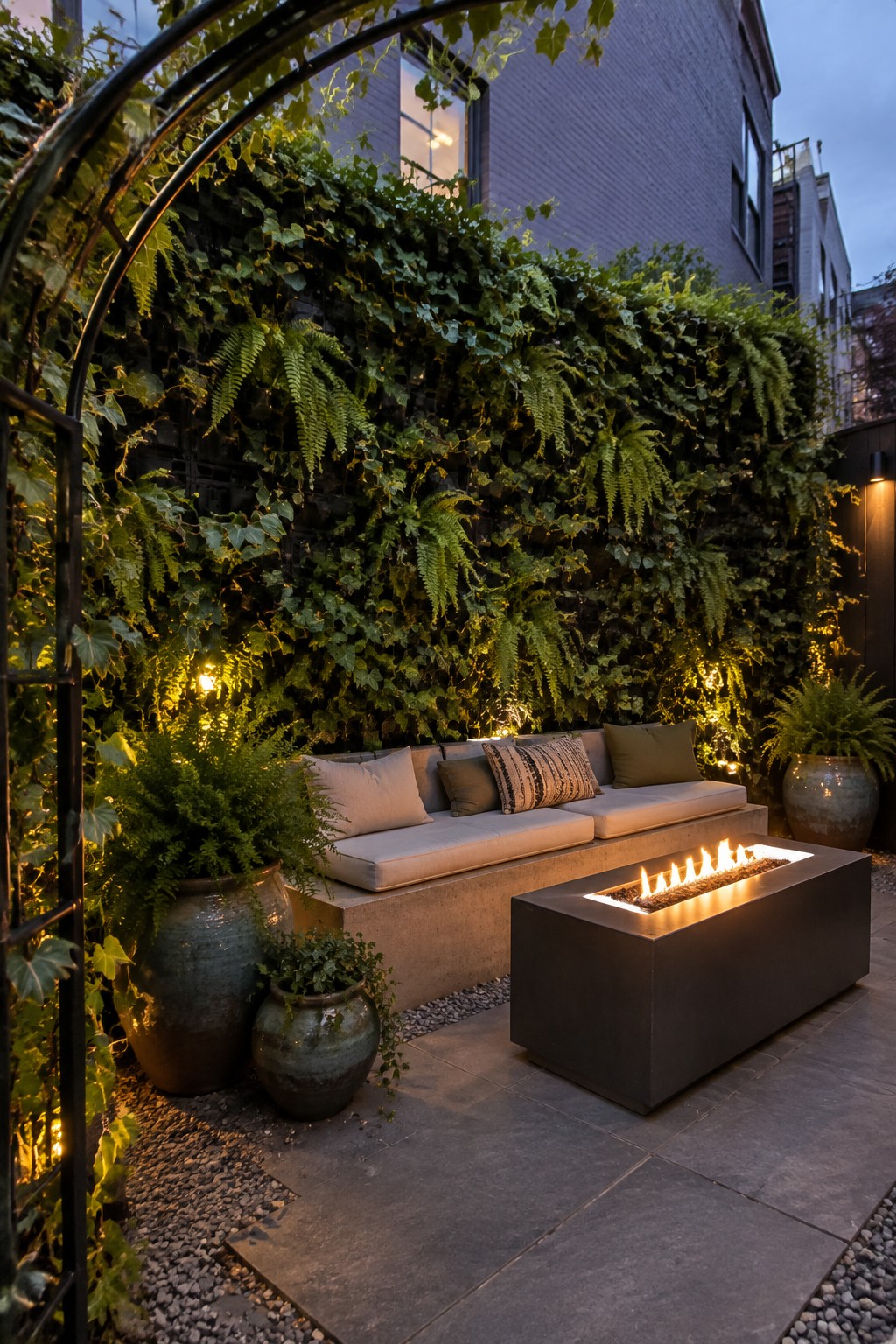
Covering a wall with plants is a straightforward way to bring in greenery when the ground space is tight. Ferns and vines can fill the vertical surface and create a full backdrop without needing extra pots or beds on the patio floor.
This works well in small courtyards or narrow side yards where you still want a seating spot. Keep the plants in pockets or panels attached to the wall and place a simple bench in front so the area stays open and easy to move around in.
Vertical Trellises Free Up Ground Space
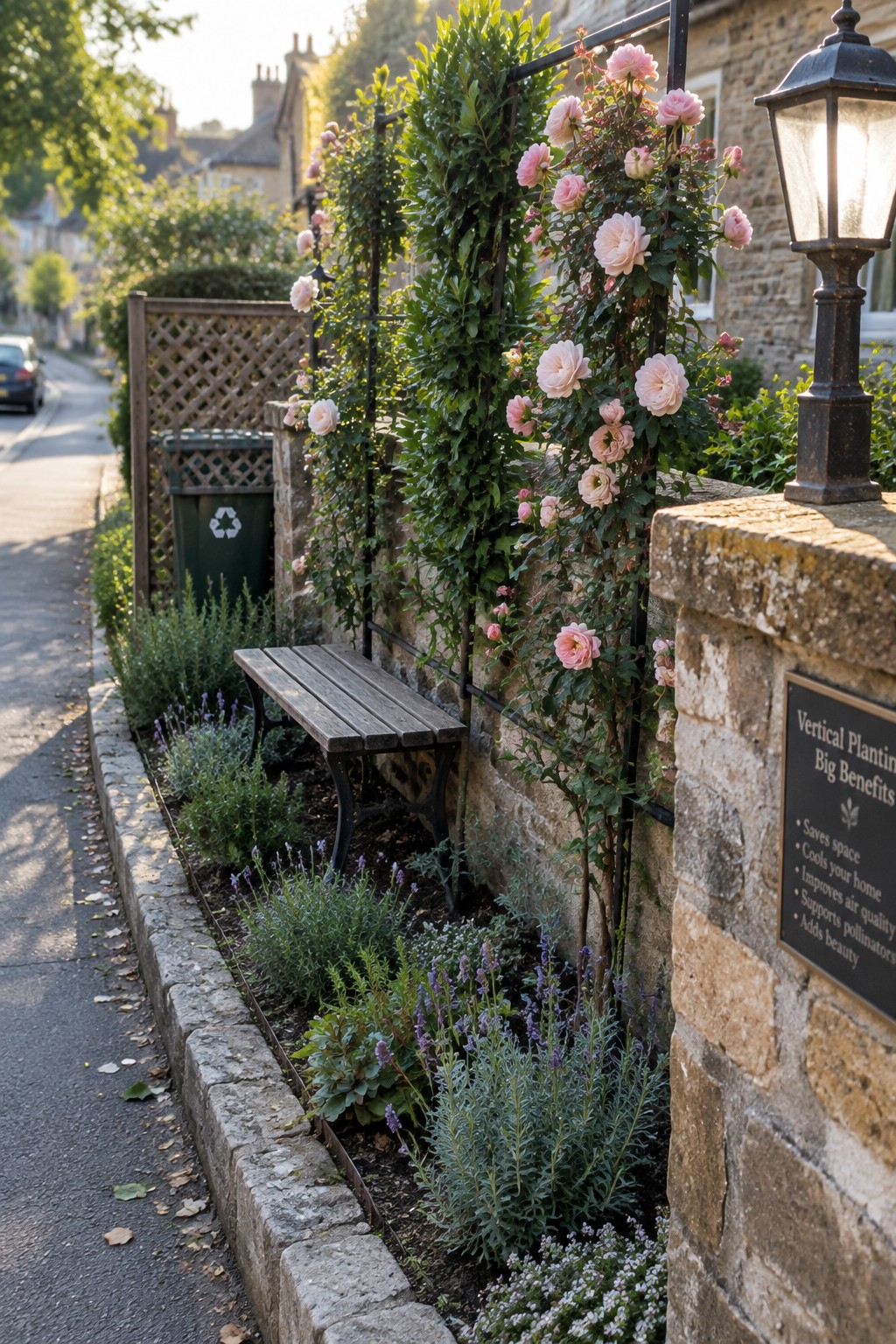
A trellis fixed to a wall gives climbing roses a place to grow upward instead of spreading out across the soil. This keeps the narrow bed open for smaller plants and a simple bench while still adding height and color right where the eye lands.
It works best along paths or beside buildings where ground room is limited. Pick a sturdy frame that can be secured to brick or stone, and choose roses or other climbers that match your light and climate so the display stays full without extra work.
Frequently Asked Questions
Q: How often do I need to water my vertical garden?
A: Check the soil moisture with your finger each morning. Most vertical setups dry out faster than ground beds because of the extra air flow. Water until it drains from the bottom to keep roots healthy.
Q: Can I grow vegetables vertically without them toppling over?
A: Pick compact varieties like cherry tomatoes or bush beans. Secure the stems to the trellis with soft ties as they grow.
Q: What if my vertical planter starts to lean after a few weeks?
A: Add a few extra anchors to the wall or frame right away. Shift heavier plants lower down to improve balance. Check the supports weekly so nothing comes loose.
