

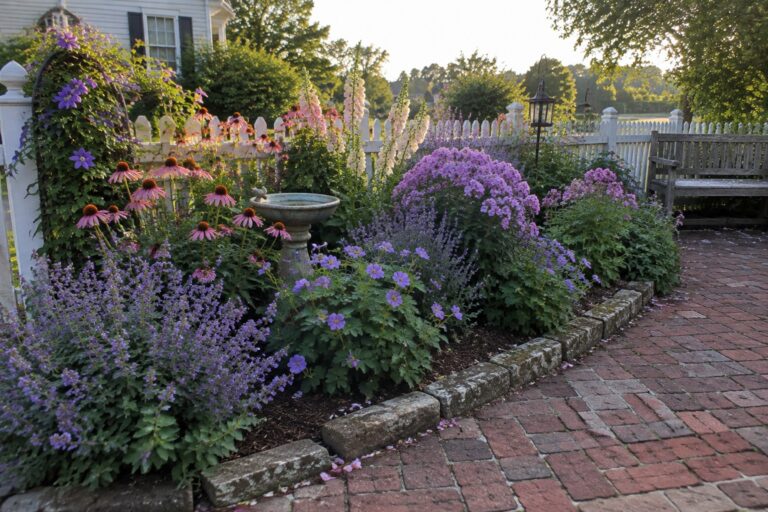
I have spent years watching how perennial borders change from one season to the next in my own yard.
The ones that hold color longest always seem to rely on careful layering of plants rather than just picking pretty flowers.
Layout matters a lot here.
I often sketch the border heights and spacing on paper first so the beds do not end up looking uneven once everything grows.
It is worth trying small sections of a new design before scaling it up across the whole yard.
Layer Perennials by Height Along Paths
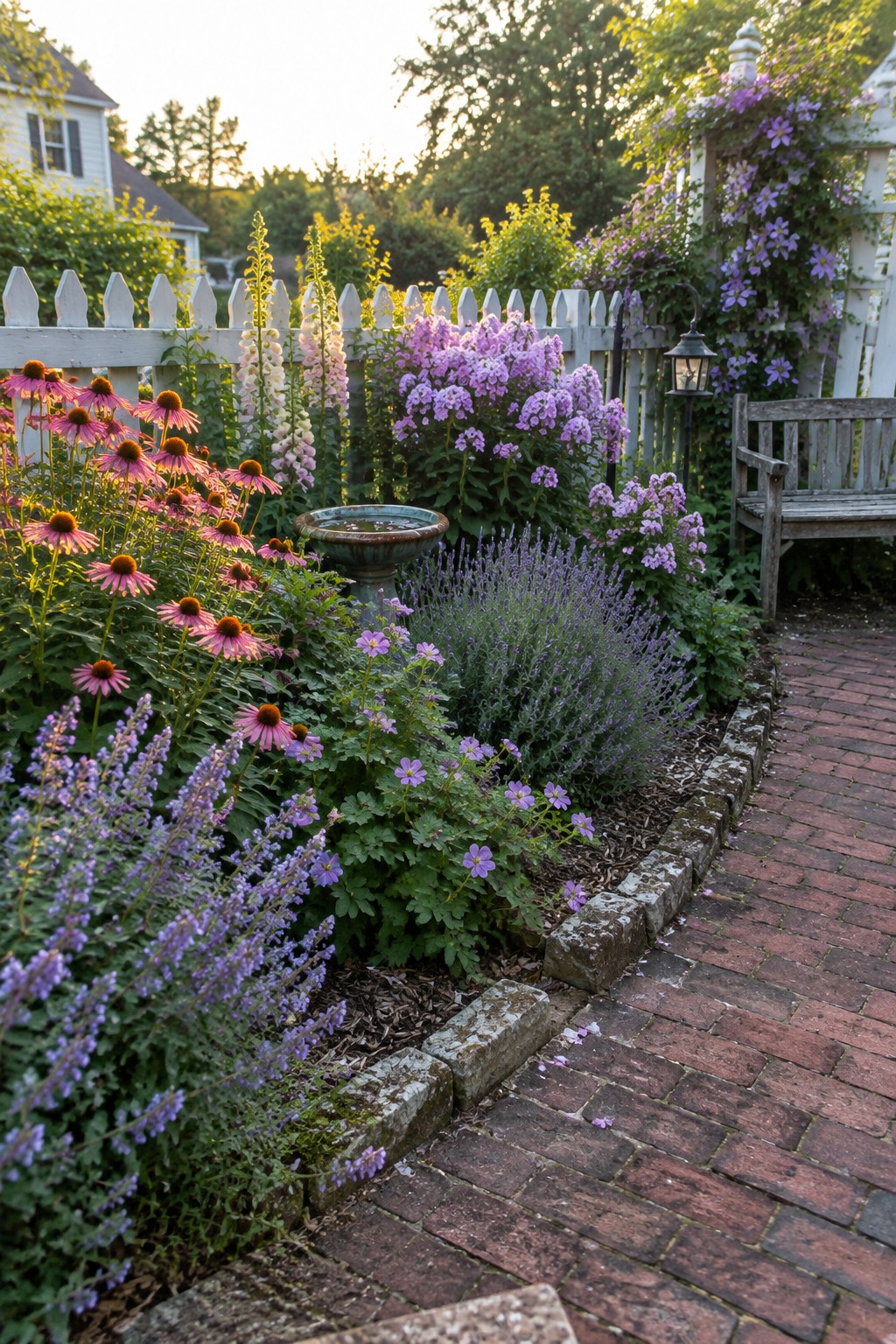
Layering perennials by height gives a border real staying power through the seasons. Taller stems in the back, midsize plants in the middle, and lower growers up front keep the color going without big gaps. The brick path in this setup shows how that layering also keeps the walkway feeling open and easy to follow.
This works best in front yards or side gardens where you want steady color without constant replanting. Stick to varieties that overlap in bloom times and use simple stone edging to hold the soil in place. It suits older homes with picket fences or any space where you want the plants to do most of the work.
Line a Path with Layered Perennials
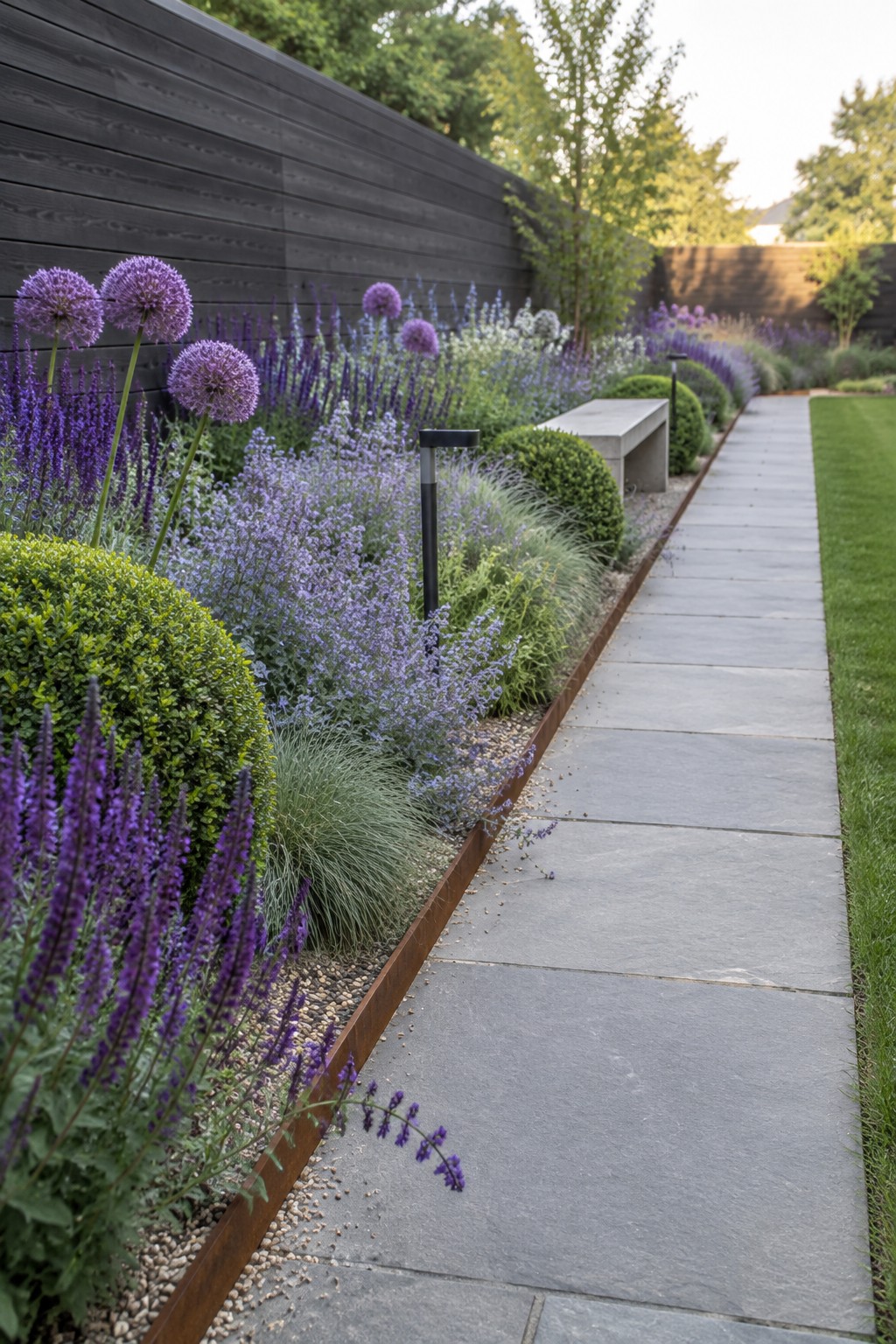
A perennial border along a walkway gives you color that lasts without constant replanting. The mix of tall spiky flowers, round blooms, and lower grasses creates depth while keeping the edge looking neat all season.
This works best in a narrow side yard or along a main garden path where you want steady interest from spring through fall. Keep the bed about three feet wide and use a simple metal strip to hold the gravel in place so the plants stay contained.
Layering Perennials Along Garden Paths
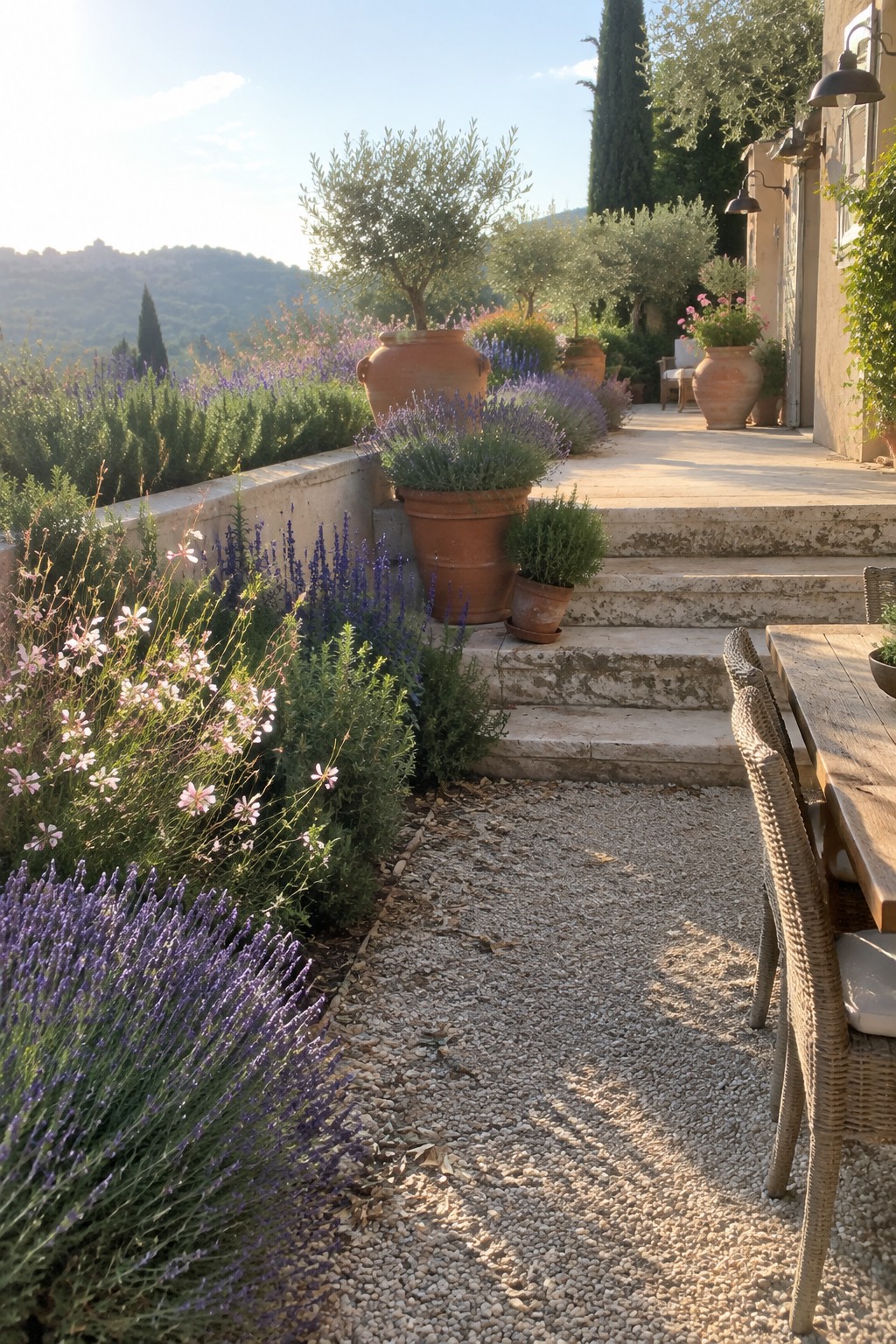
Mixing perennials of different heights and bloom times creates a border that stays colorful for months instead of weeks. The lower plants in front stay neat while taller ones add depth behind them, so the edge never looks bare even as one variety fades.
This setup works best along gravel paths or low walls where you want soft color without blocking the view. Stick to reliable long bloomers and repeat a few key plants so the border feels full but still easy to maintain.
Stepping Stones Through Perennial Borders
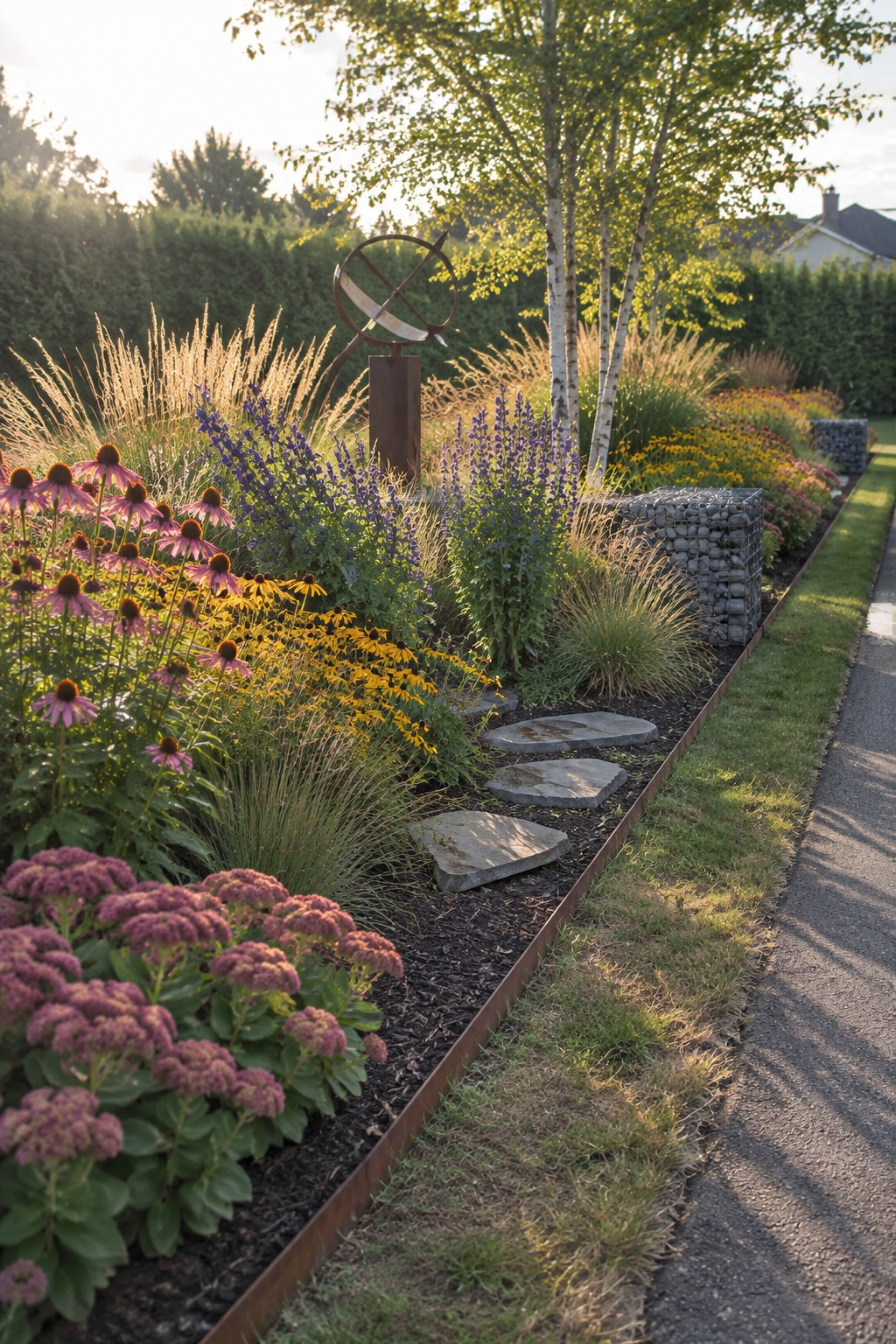
Stepping stones work well in a long perennial border because they let you move through the planting without trampling anything. You can get close to the flowers for deadheading or just to enjoy them, and the path keeps the bed from turning into a trampled mess by late summer.
Place the stones on a slight curve rather than a straight line so the walk feels more natural. Space them about a normal stride apart and set them low enough that mower wheels can pass over the edges if the border runs next to lawn. This layout suits homes with deep front or side beds where you want access without adding a full walkway.
Layer Different Perennials Along Retaining Walls
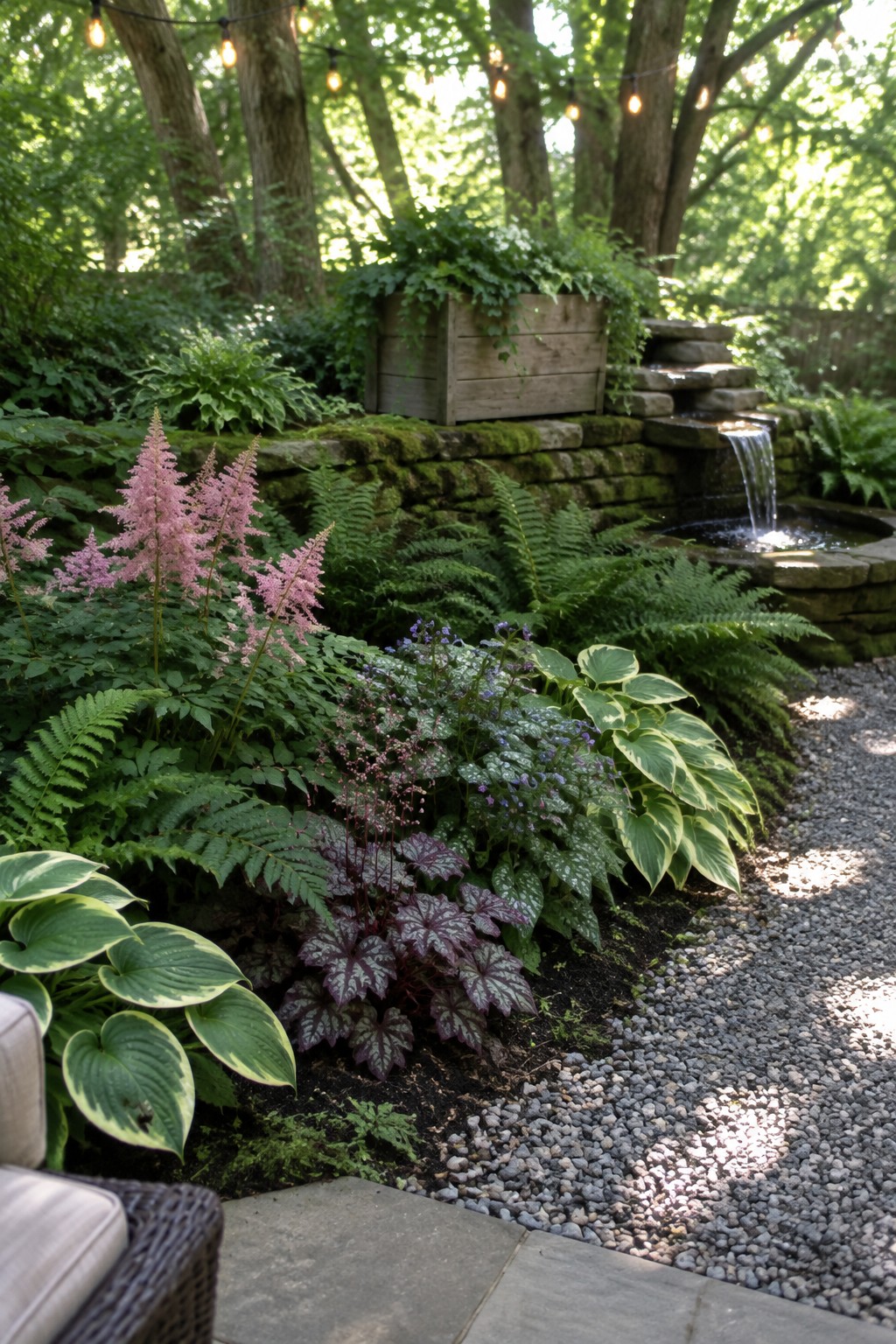
Many people build borders by planting in layers right up against a stone wall. The different heights and leaf shapes fill the space without looking crowded, and the flowers keep coming in stages instead of all at once.
Place taller ferns and astilbe toward the back, then add hostas and smaller plants like heuchera closer to the edge. This works well in partly shaded spots where you want steady color without a lot of extra work each season.
Brick Edging for Perennial Garden Borders
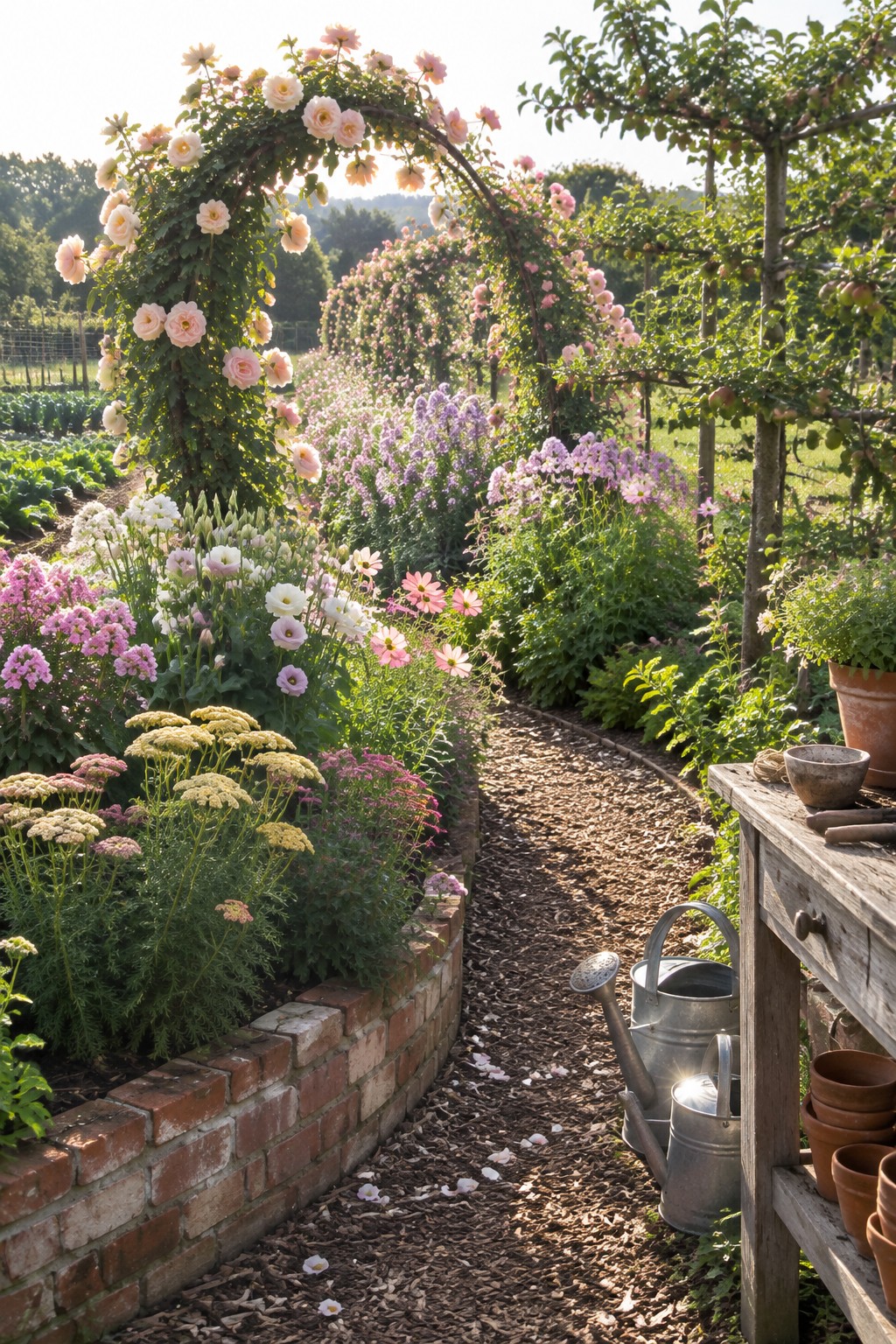
A simple brick edge gives perennial beds a clean outline that lasts all season. It keeps the flowers looking intentional even when different plants take turns blooming, and it stops the border from creeping into the path over time.
This works well in most home gardens where you want low maintenance structure without a lot of fuss. Set the bricks level with the ground so mowing stays easy and the focus stays on the flowers rather than the edging itself.
Layer Perennials Along Paths for Steady Color
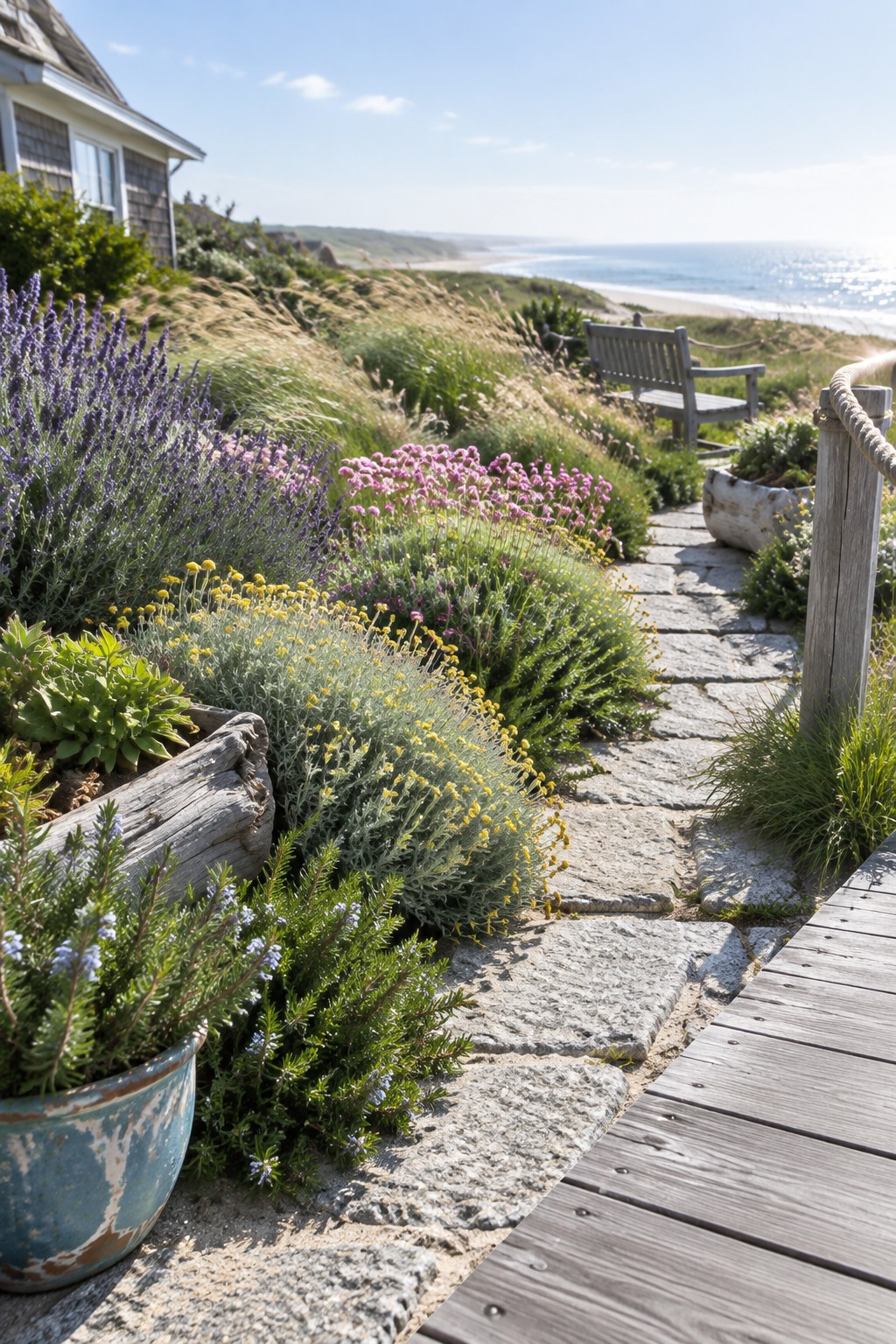
Mixing perennials of different heights and bloom times right beside a walkway gives you color that lasts without constant replanting. The lower growers fill in near the edge while taller ones add depth behind them, so something is always flowering as the seasons shift.
This approach works well on any home with a garden path, especially in coastal or open settings where you want the planting to feel natural rather than fussy. Stick to tough varieties that handle wind and salt if your spot is exposed, and leave enough space between plants so they can spread without crowding the stones.
Layer Perennials Along Paths for Steady Blooms
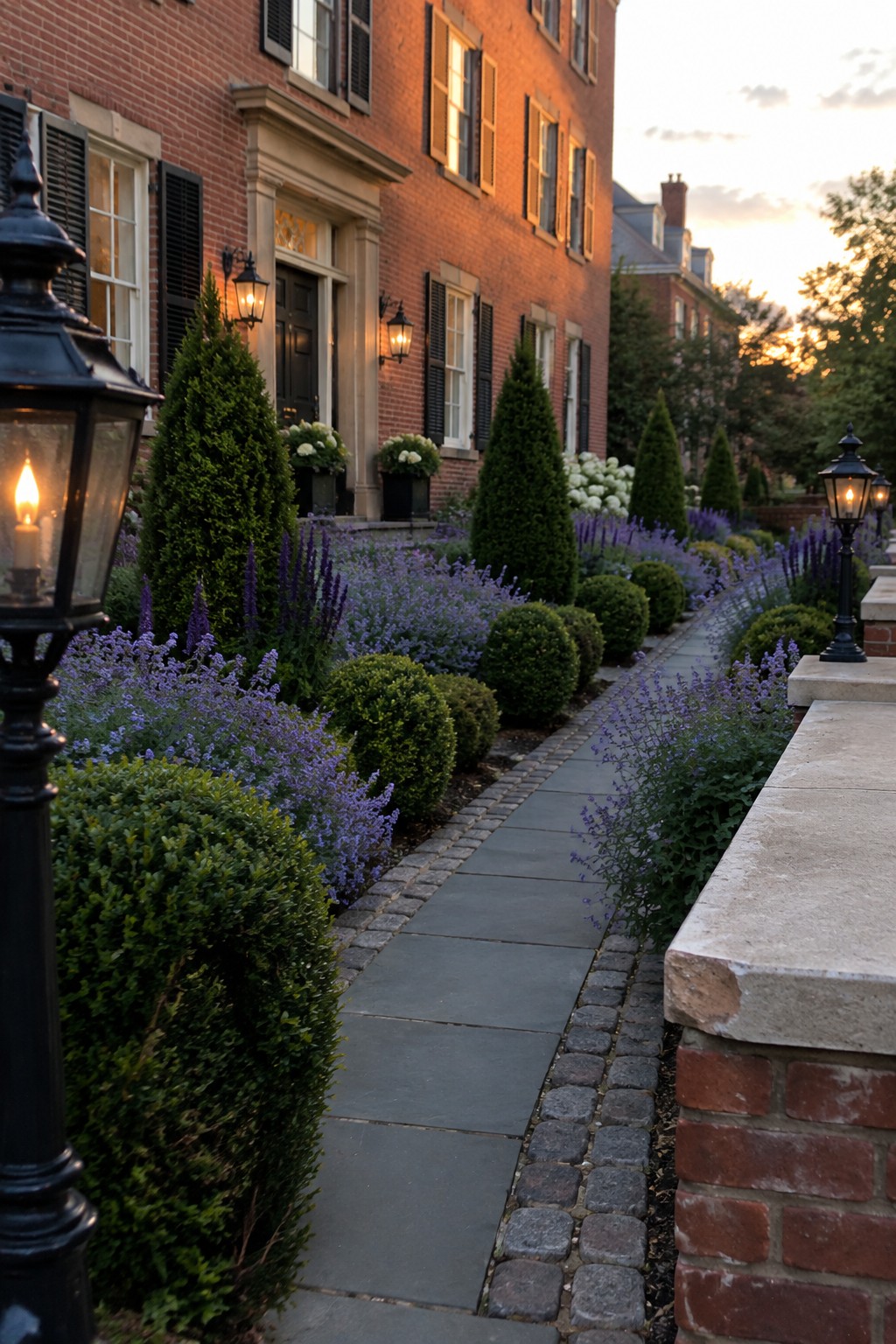
A simple way to get months of color is to run a border of perennials right along a walkway. The mix of low mounding plants in front and taller flowering ones behind keeps the edge looking full without a lot of gaps.
This works well on narrow side yards or front walks where you want something softer than a straight hedge. Space the taller plants every few feet and fill in with lower ones so the color stays continuous as different varieties take turns blooming.
Stone Terraces For Layered Borders
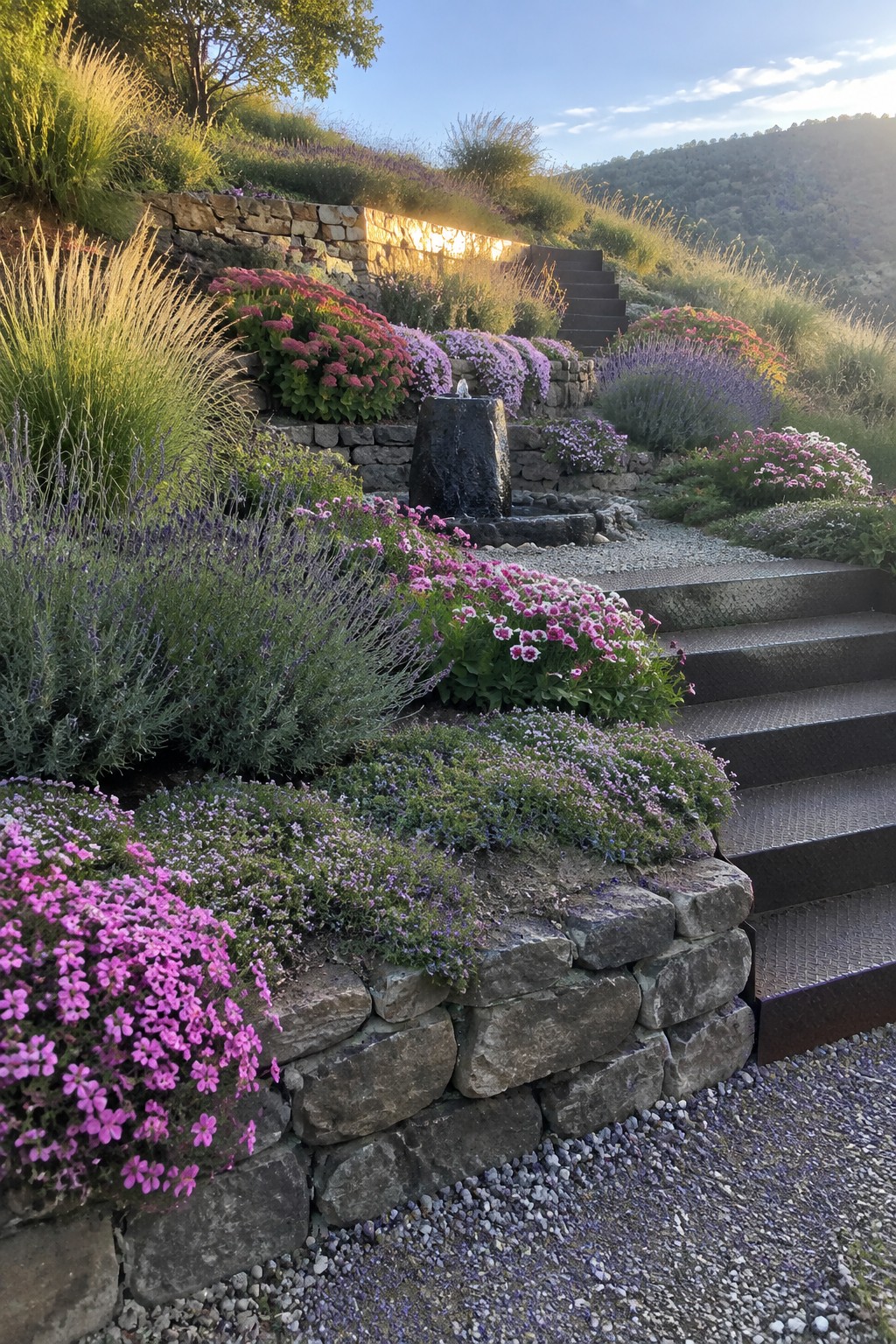
Stone retaining walls work well on a slope because they turn a tricky hillside into a series of flat beds that can each hold a different mix of perennials. The flowers stay visible at eye level instead of disappearing behind one another, and the stone itself gives the planting a clean edge that lasts through the seasons.
This setup suits homes with a noticeable grade where a single flat border would feel too narrow. Keep the walls low so the plants can spill over the edges, and choose varieties that bloom in succession rather than all at once. The result is a border that looks full for months without needing constant replanting.
Layer Perennials Along a Path
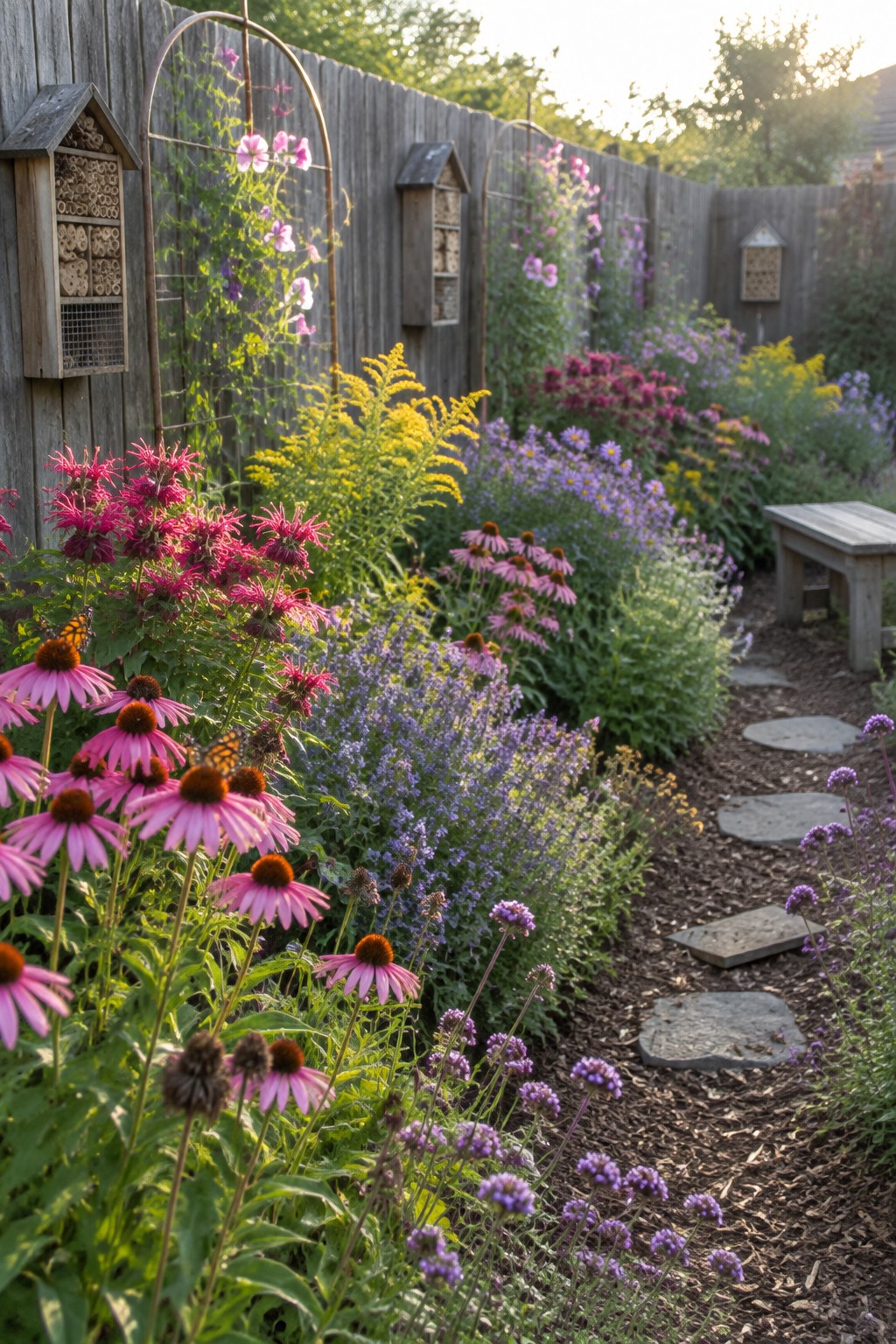
A simple path of stepping stones lets the eye travel through the whole border without breaking up the planting. The flowers sit right up against the edges, so the border feels full and continuous instead of divided into separate beds. This layout works well when you want to show off height changes and repeat colors over a longer stretch.
Place the stones on mulch so the path stays dry underfoot and easy to maintain. It suits narrow side yards or back gardens where you still want to walk among the plants. Keep taller flowers toward the fence and shorter ones near the path so nothing blocks the view as you move through.
Curved Perennial Borders Along Paths
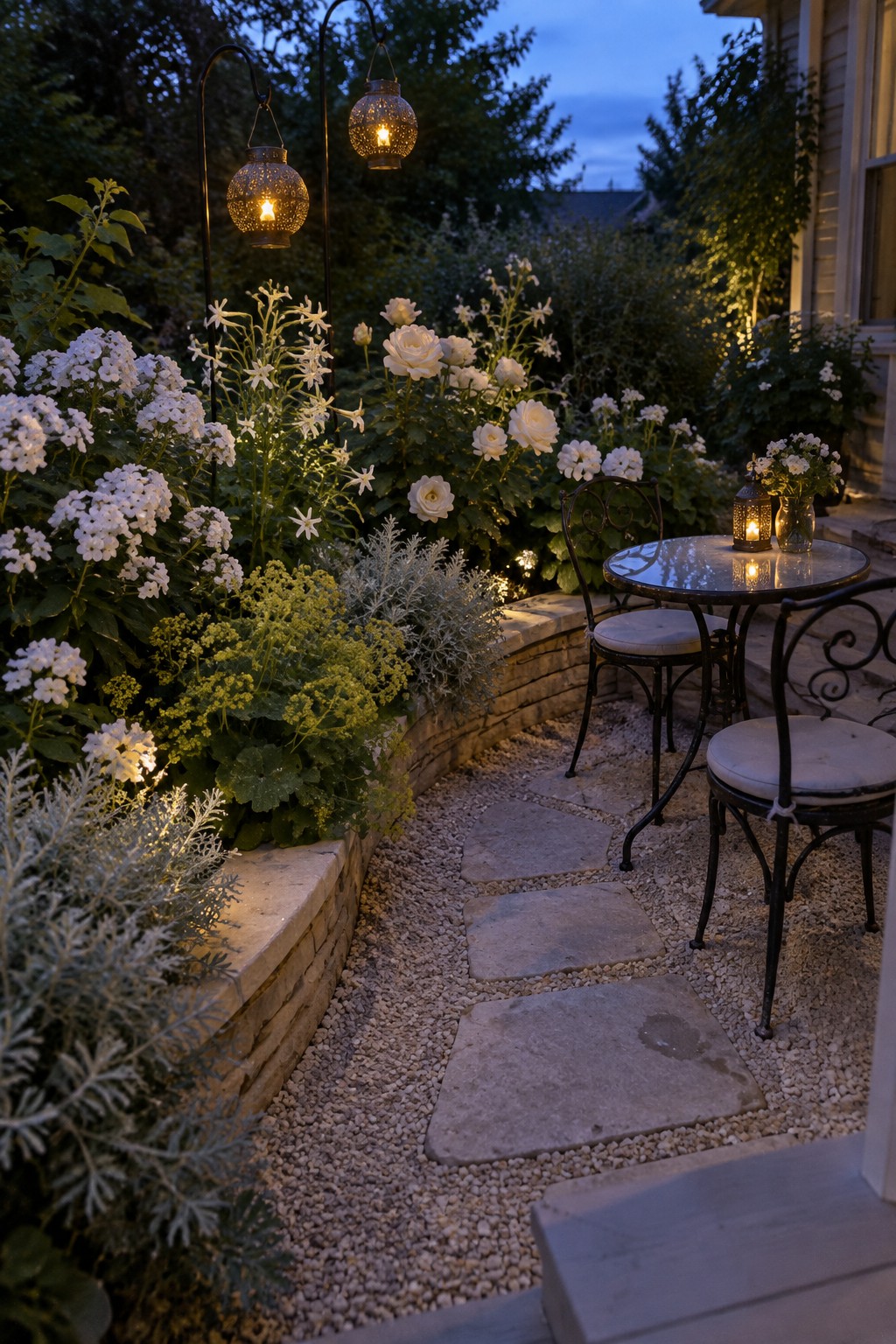
A curved raised bed gives perennials room to layer naturally without looking stiff. Different heights of white blooms mixed with greenery keep the edge interesting even when some plants finish their main show.
This setup works best in smaller yards where a straight line would feel too formal. Use a low stone wall to hold the soil, then plant taller stems toward the back and shorter ones up front so the border stays full for months.
Layer Perennial Heights Along a Path
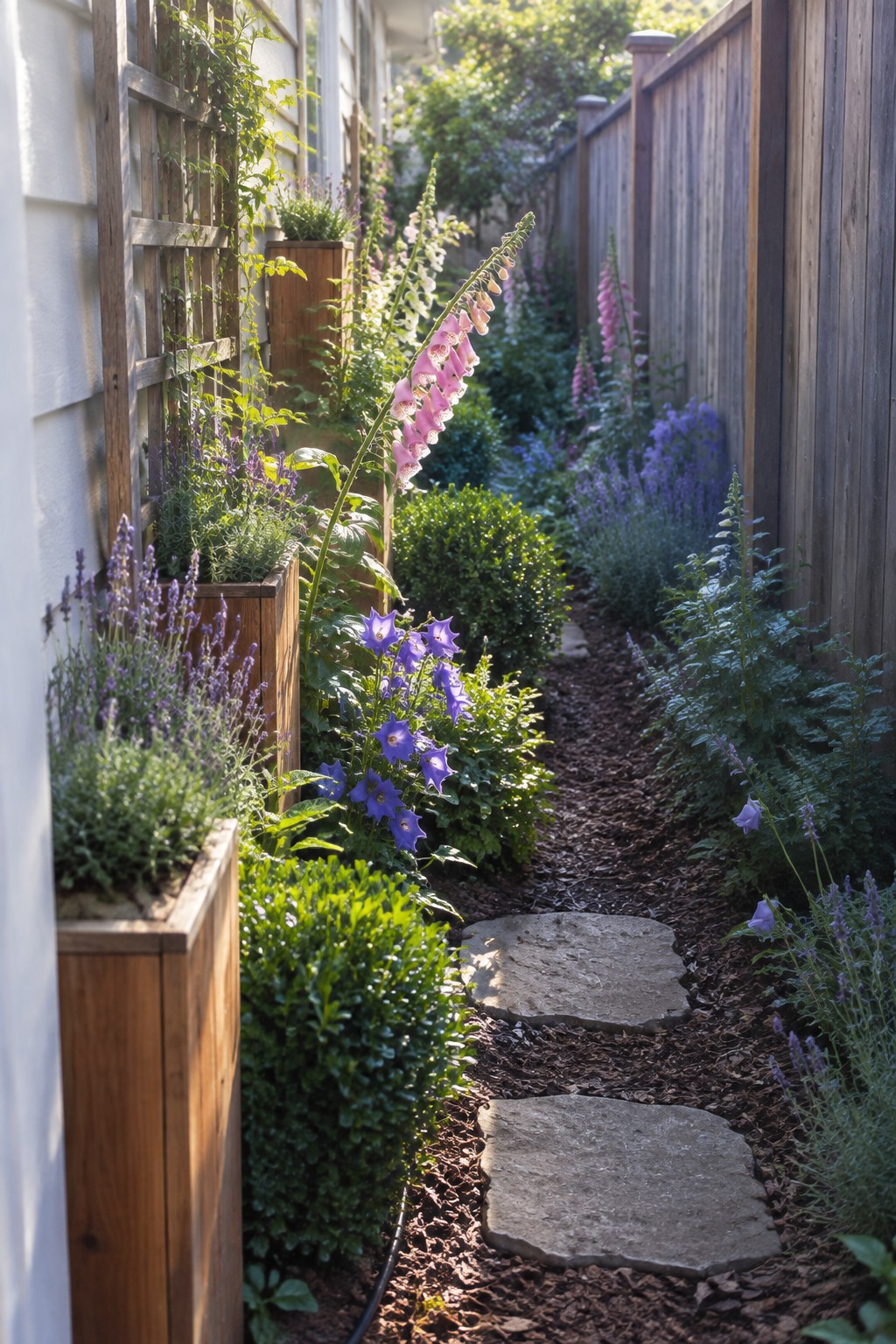
Placing taller flowers behind shorter ones creates a fuller look in narrow spaces and keeps color going longer. The mix of spikes and mounds also helps the border feel more natural instead of flat.
This works well in side yards or tight passages where you need plants that perform without spreading too wide. Keep the tallest ones toward the back and repeat a few lower varieties in front so the border stays balanced as blooms come and go.
Mix Heights for a Longer Blooming Border
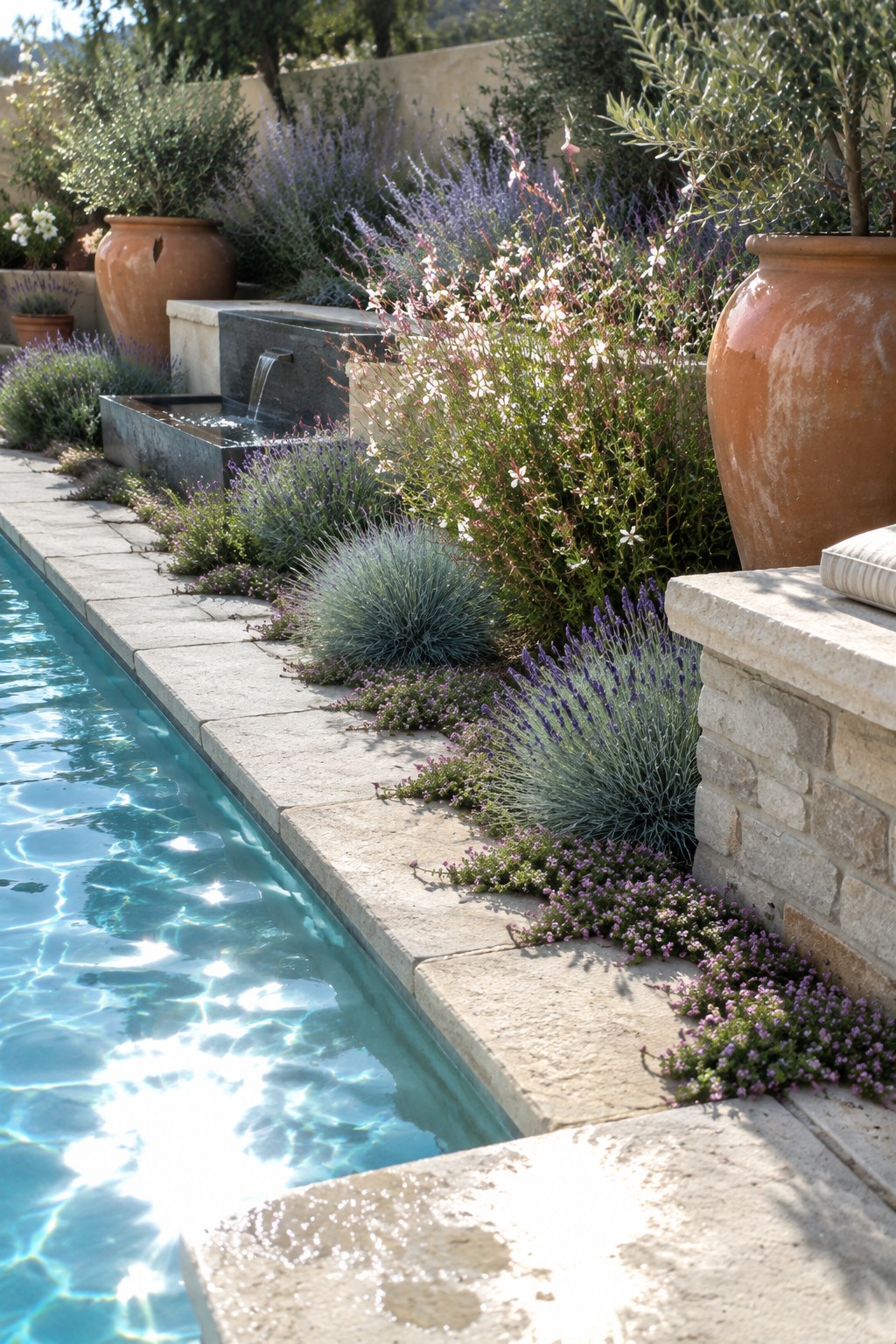
Layering plants by height keeps a border interesting without a lot of extra work. Low growers spill right over the stone edge while taller ones fill in behind them, so color lasts from one season into the next.
This setup works well along pools or paths where you want soft planting against hard lines. Choose perennials that bloom at different times and give the lower ones room to spread near the paving so they do not get shaded out.
Define Borders With Simple Stone Edging
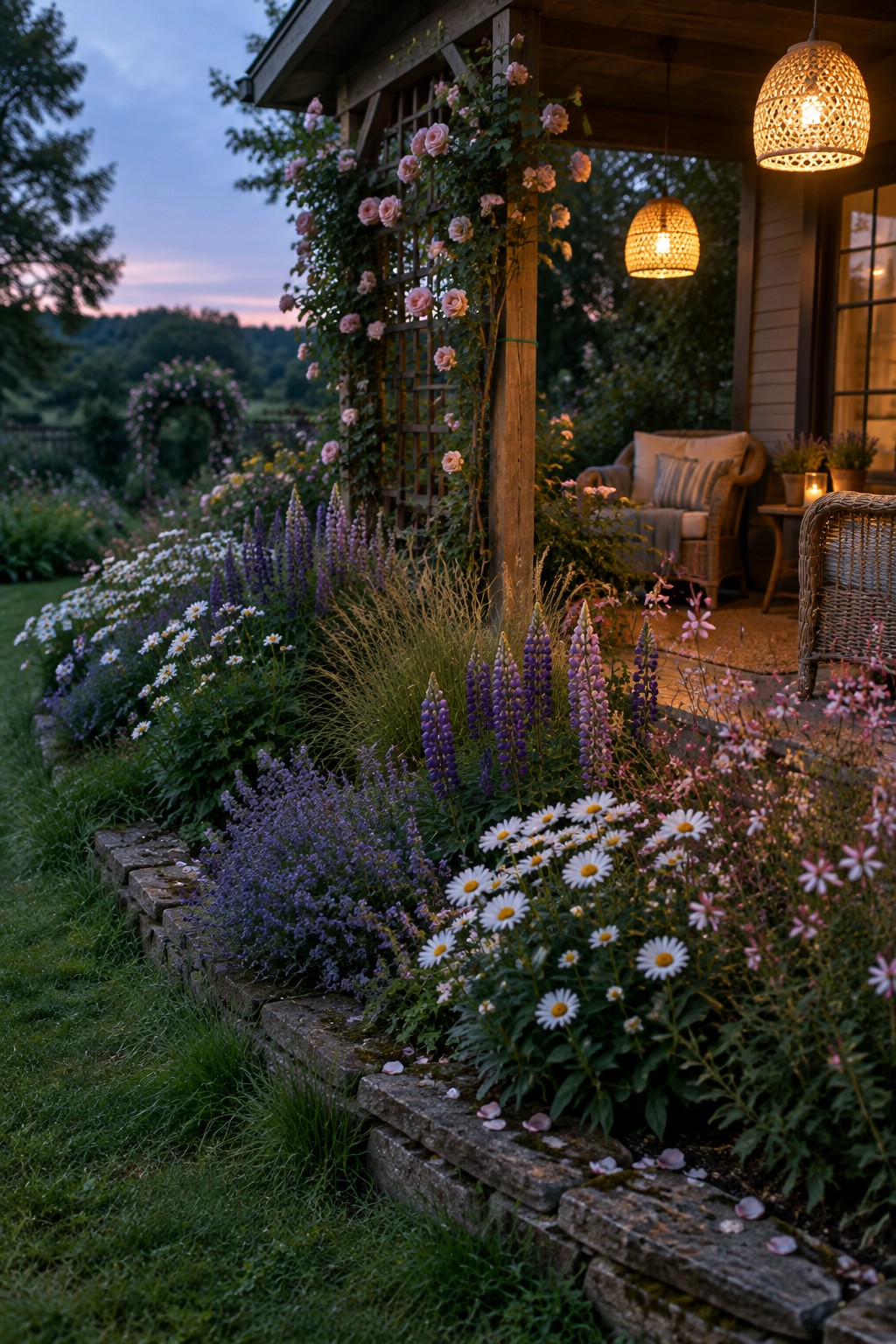
Stone edging gives perennial borders a clean shape that holds up through the seasons. It keeps the plants from spilling onto the lawn and makes it easier to see the different layers of height and color working together.
This approach works well along a house wall or fence line where you want the garden to look tended without a lot of extra work. Choose stone that matches the local landscape so the edge feels like part of the setting rather than an added feature.
Raised Beds For Perennial Borders
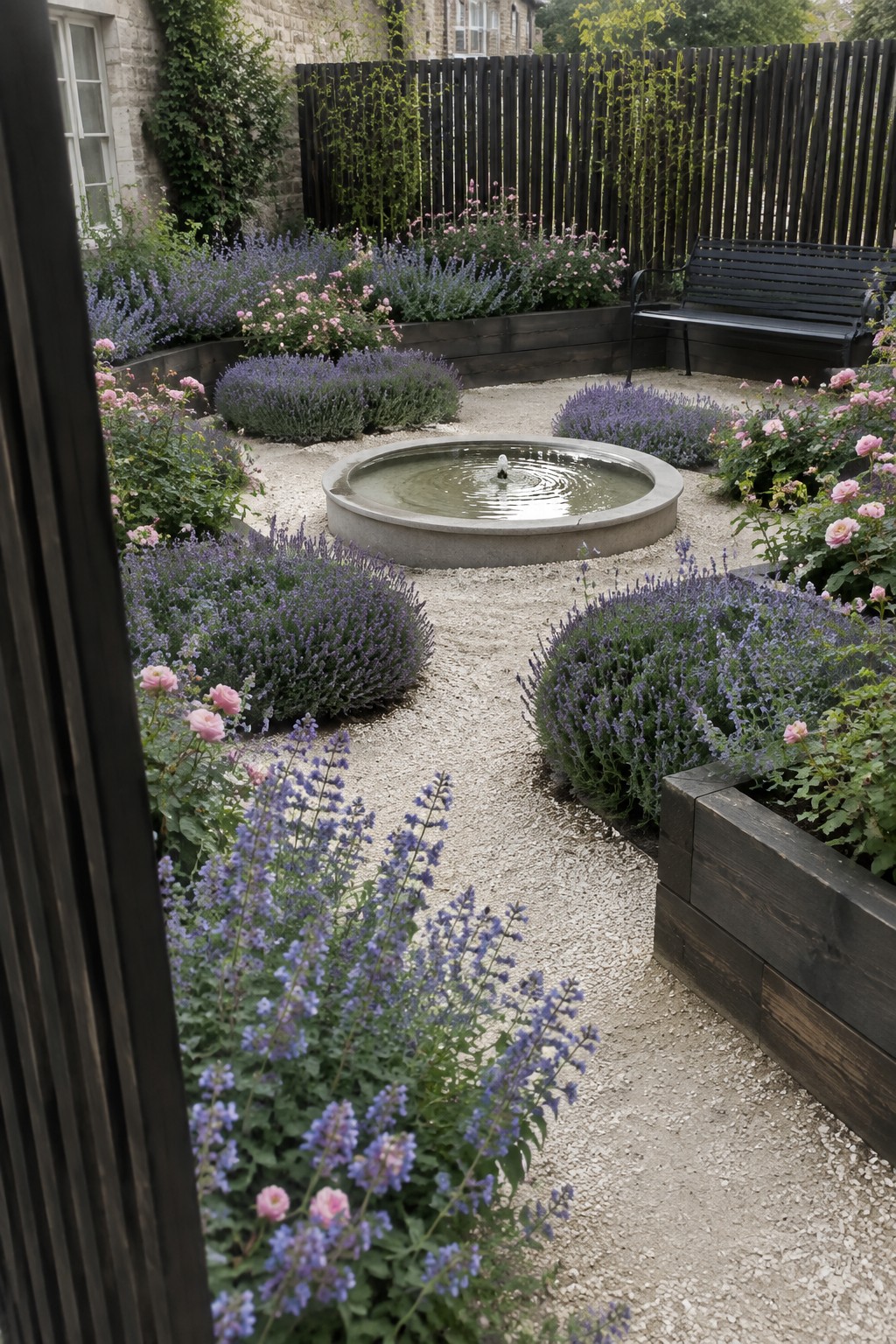
Raised beds add clear structure to perennial borders while still letting the plants spill over in a natural way. They help keep taller flowers like lavender and catmint in place and make it easier to manage different bloom times without the whole border looking messy.
This layout works well in smaller courtyards or enclosed spaces where you want defined edges but still need room for gravel paths and a central feature. Just keep the beds at a consistent height and choose plants that bloom in overlapping waves so color lasts from spring into fall.
Layering Perennials Along the Foundation
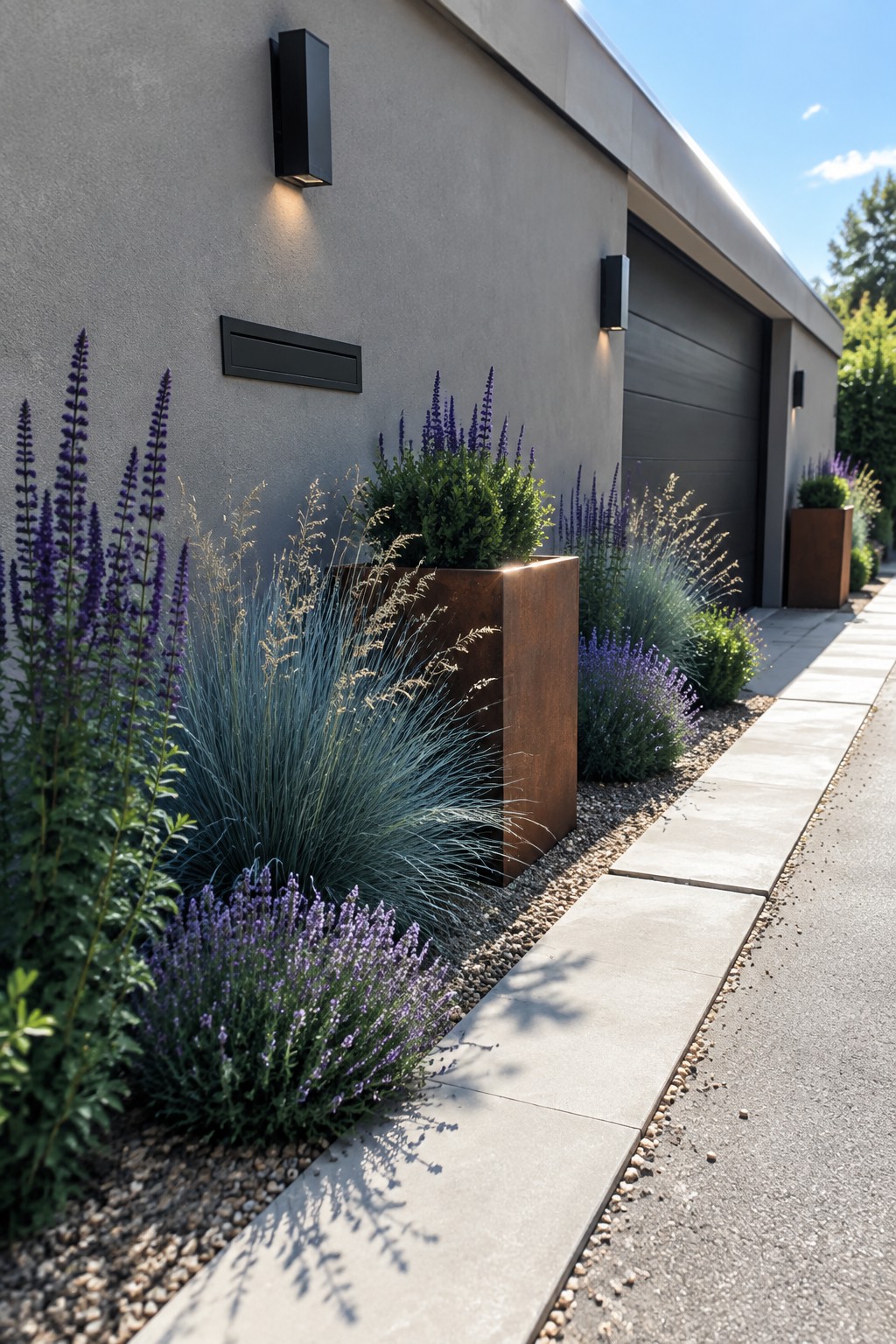
Layering plants by height right next to the house wall gives the border a full look while keeping it neat. Taller spikes in the back, lower blooming clumps in front, and grasses in between create steady color and texture that lasts through the season without much fuss.
This works best on homes with simple lines where the planting can soften the edge without covering the architecture. Keep the bed fairly narrow so it stays easy to maintain and does not crowd the path.
Frame Perennial Borders with a Curved Path
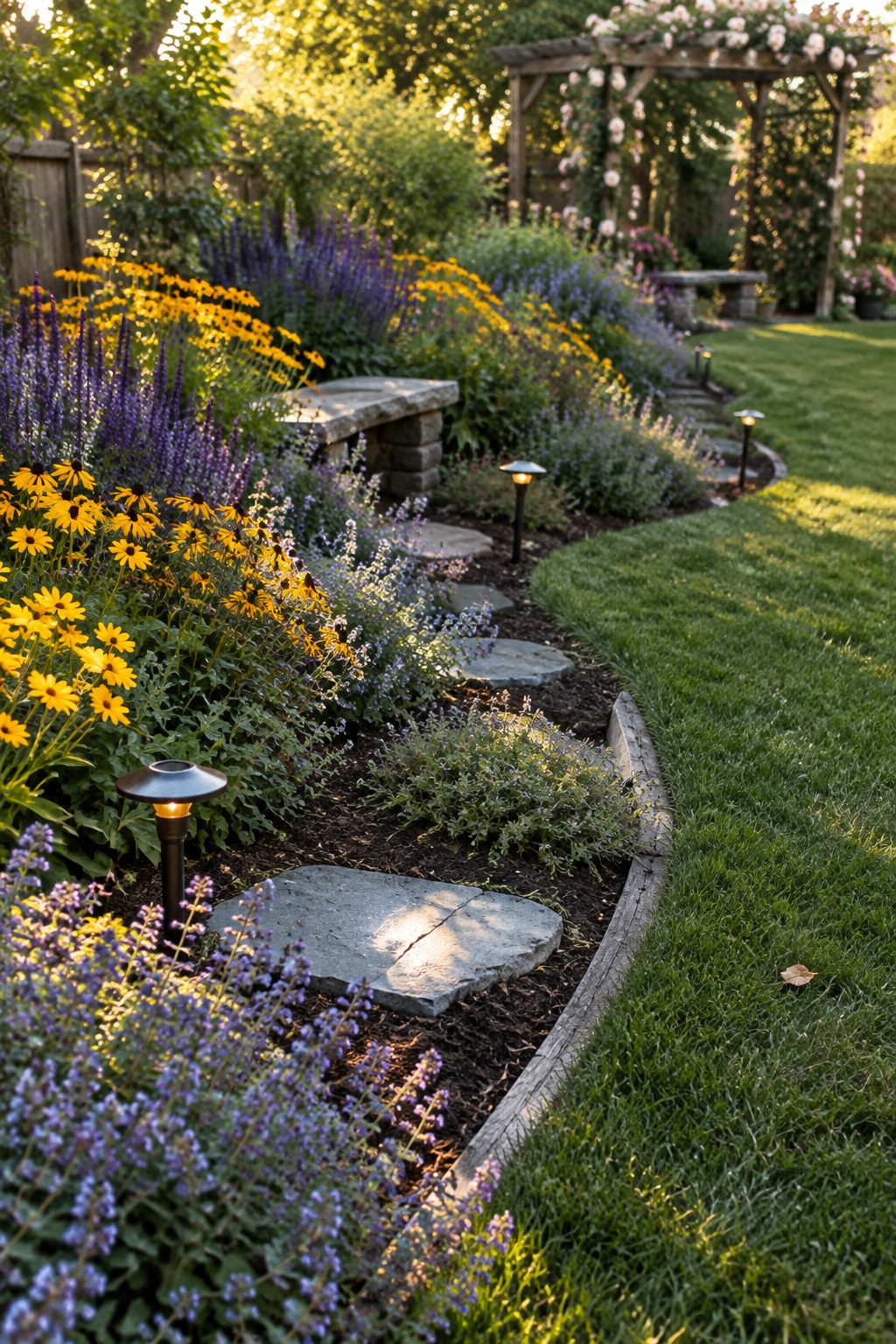
A gentle curve in the path gives perennial borders room to show off layers without looking crowded. The low edging keeps the beds neat while letting taller plants sit behind shorter ones so the color lasts from spring into fall.
This layout suits side yards or long strips next to a lawn. Use simple materials for the path and edge so the focus stays on the flowers rather than the hardscape.
Long Raised Planters for Perennial Borders
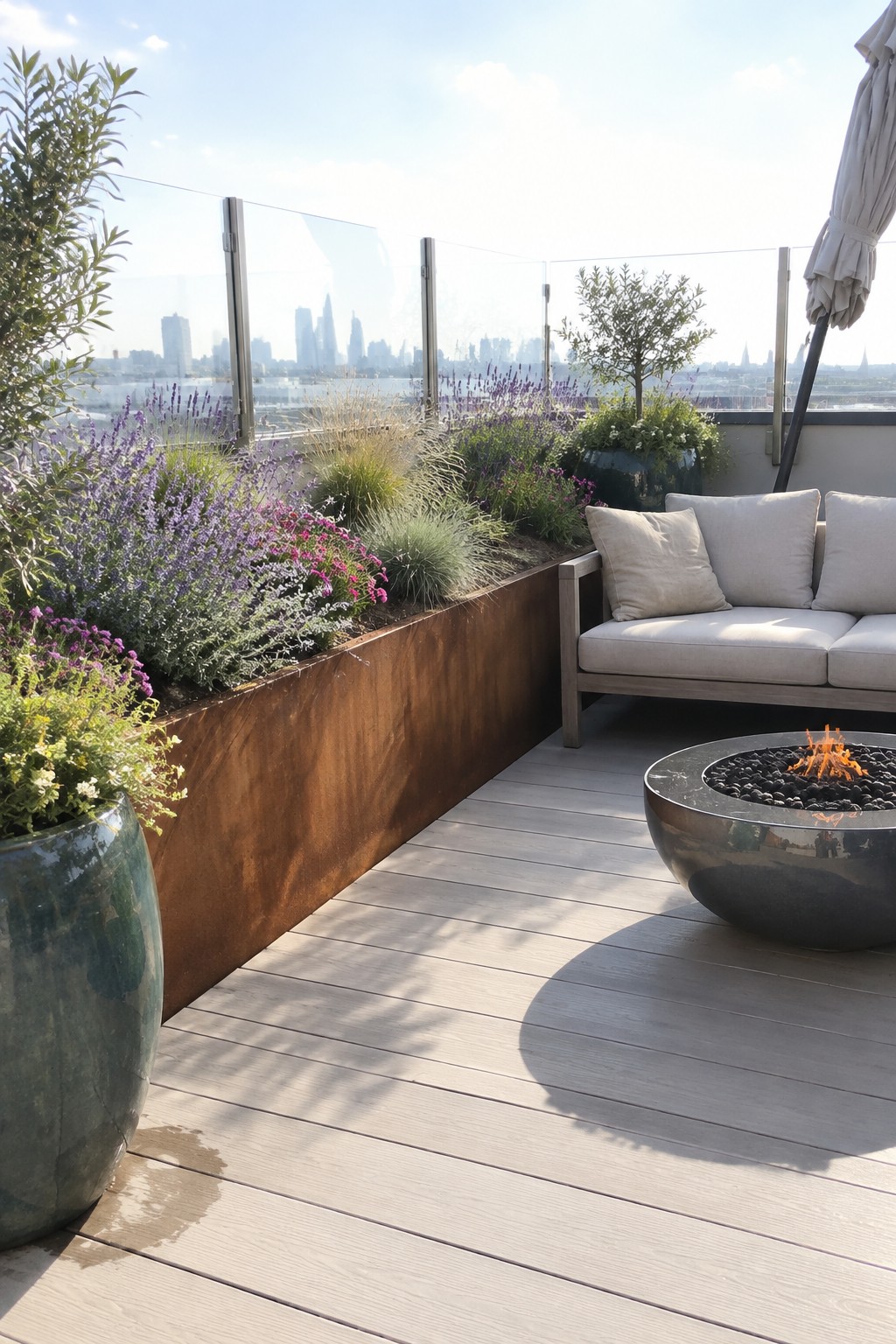
A long raised planter makes a strong border along a deck or patio edge. It keeps the planting contained while giving the flowers room to grow in layers, so something stays in bloom from spring through fall without much extra work.
This setup works well on rooftops or balconies where space is tight but you still want a full garden feel. Use a mix of taller grasses and shrubs at the back with lower blooming perennials in front, and choose varieties that overlap in flowering times so the color lasts.
Line Perennial Borders with Field Stones
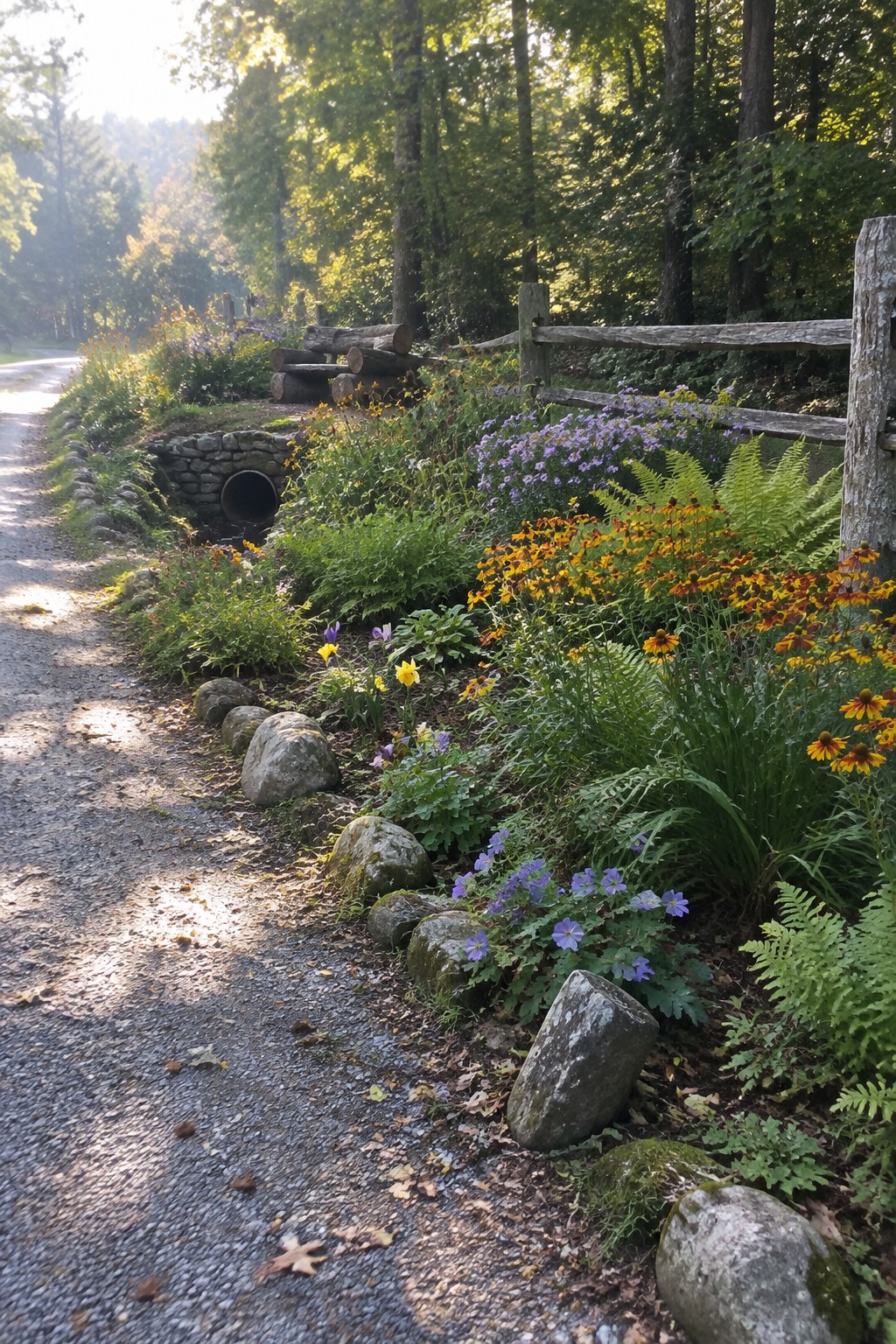
Many people use stones to mark the front edge of a flower bed that runs along a path or driveway. It keeps the planting from spilling onto the gravel and gives the border a settled look that fits right into a natural setting.
This approach works best in spots where you can find or buy stones that match the local ground. Set them in a loose line and let taller perennials fill in behind so the stones feel like part of the planting rather than a hard border.
Raised Brick Borders for Perennial Beds
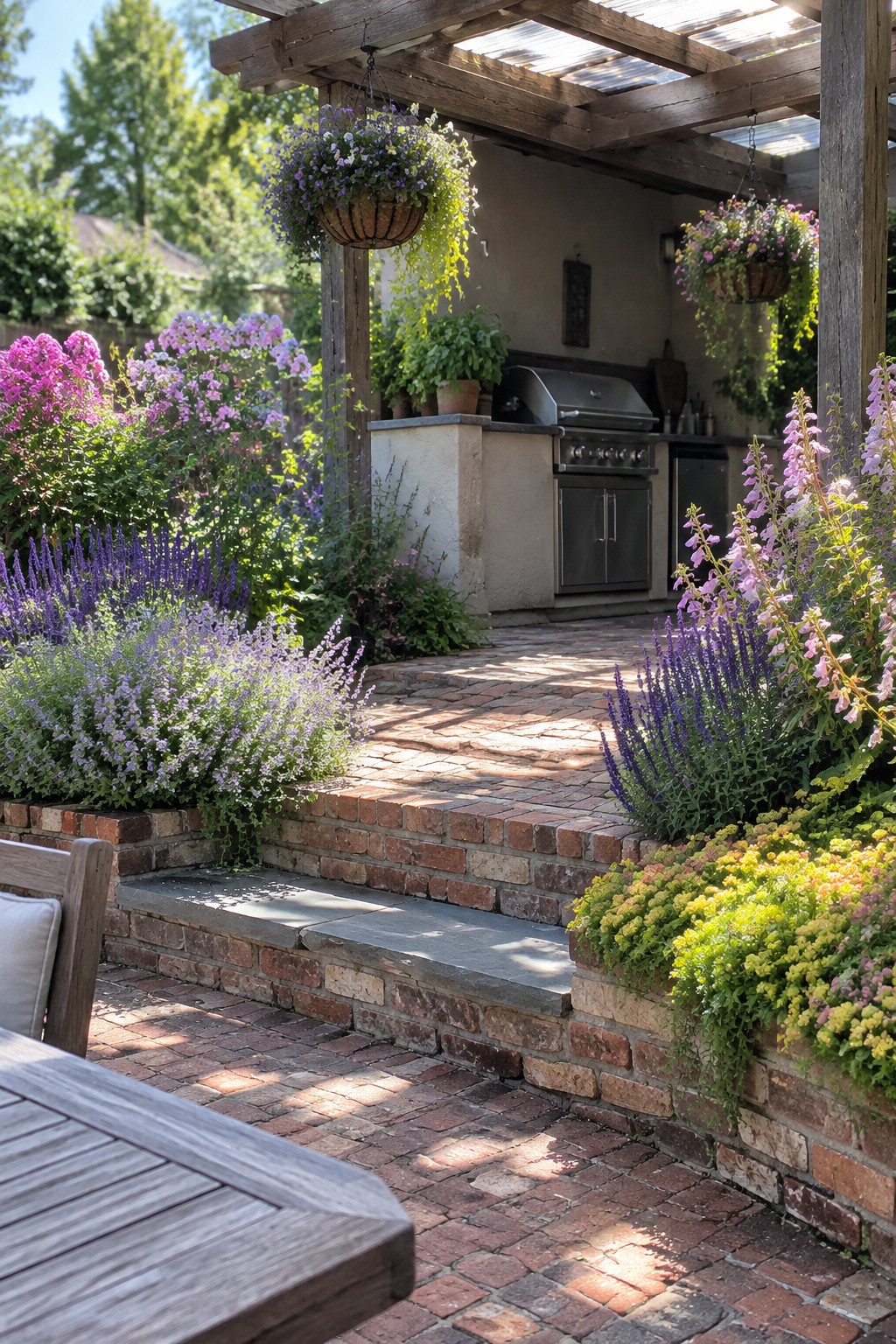
Raised brick borders give perennial plantings a clean edge that holds up over time. The brick also lets you create slight height changes so the flowers look fuller without needing constant staking or rearranging.
This works best along patios or paths where you want the garden to feel connected to the seating areas. Keep the beds about two to three feet deep so you can reach the back plants easily, and mix early, mid, and late bloomers to stretch the color through the season.
Line Paths With Mixed Perennial Borders
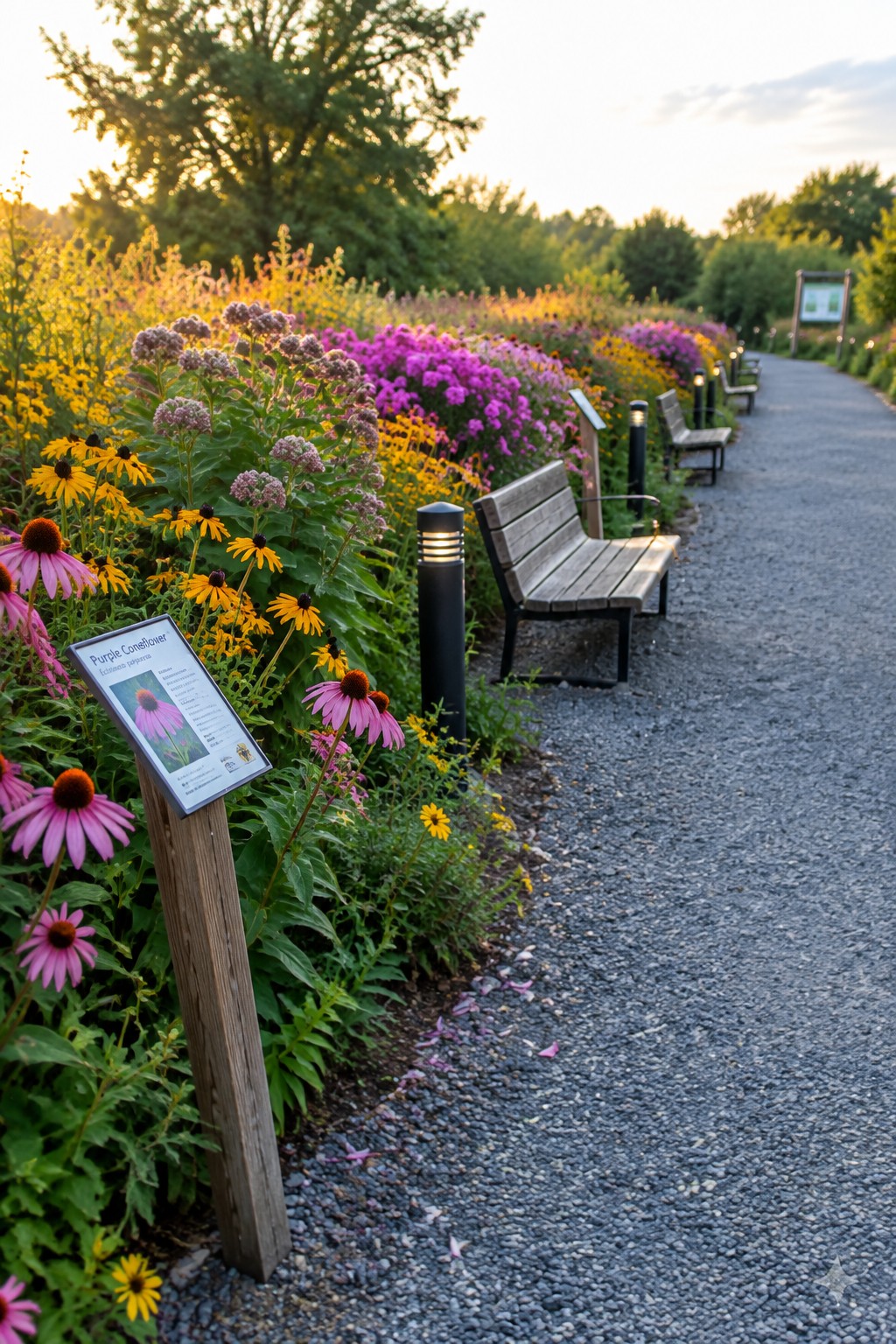
One simple way to get months of color is to run a perennial border right along a path. The variety of heights and bloom times keeps the edge interesting from early summer into fall, and the path lets you walk right up to the plants without stepping on anything.
This works best in yards where you already have a walkway or can add a simple gravel or mulch one. Pick a few reliable long bloomers like coneflowers for the front, add mid height options behind them, and let the tallest plants fill the back of the bed. A small label on one or two favorites helps people notice what is growing there.
Frequently Asked Questions
Q: Which perennials give the longest color in a border? A: Choose plants like salvia and coreopsis that flower from early summer into fall. Space them evenly so the blooms overlap and cover the whole area without bare spots showing up.
Q: How often should I water these perennial borders? A: Water deeply once a week during dry spells. This encourages strong roots that help the plants keep blooming longer through the season.
Q: Can I divide my perennials to make the border bigger? A: Split clumps every few years in early spring. Replant the divisions right away in new spots along the edge to expand the colorful area naturally.
