

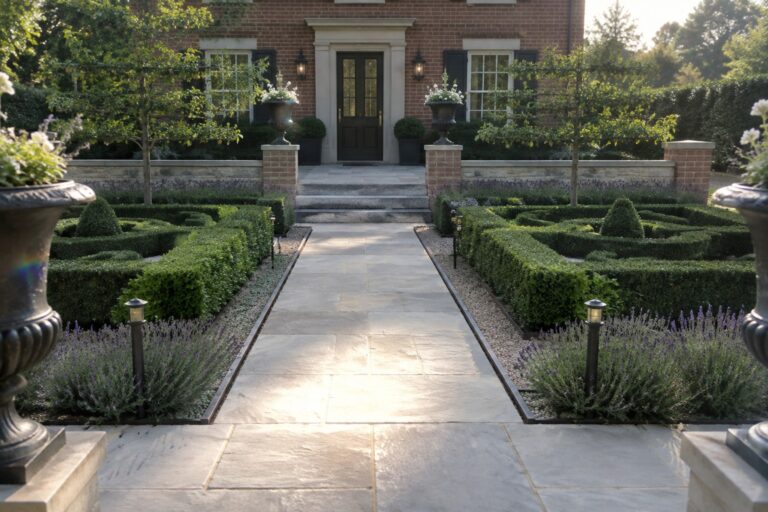
I have always found that formal gardens with clean lines tend to hold their shape better as the seasons change.
When I walk through a garden, the first thing that stands out is how the paths guide movement without feeling forced.
Symmetry matters more than most people expect.
I often think about which geometric patterns would actually work in my own yard before committing to any changes.
Over time these structured beds seem to reward careful planning because they keep the overall space from looking scattered.
Straight Central Paths With Matching Hedge Borders
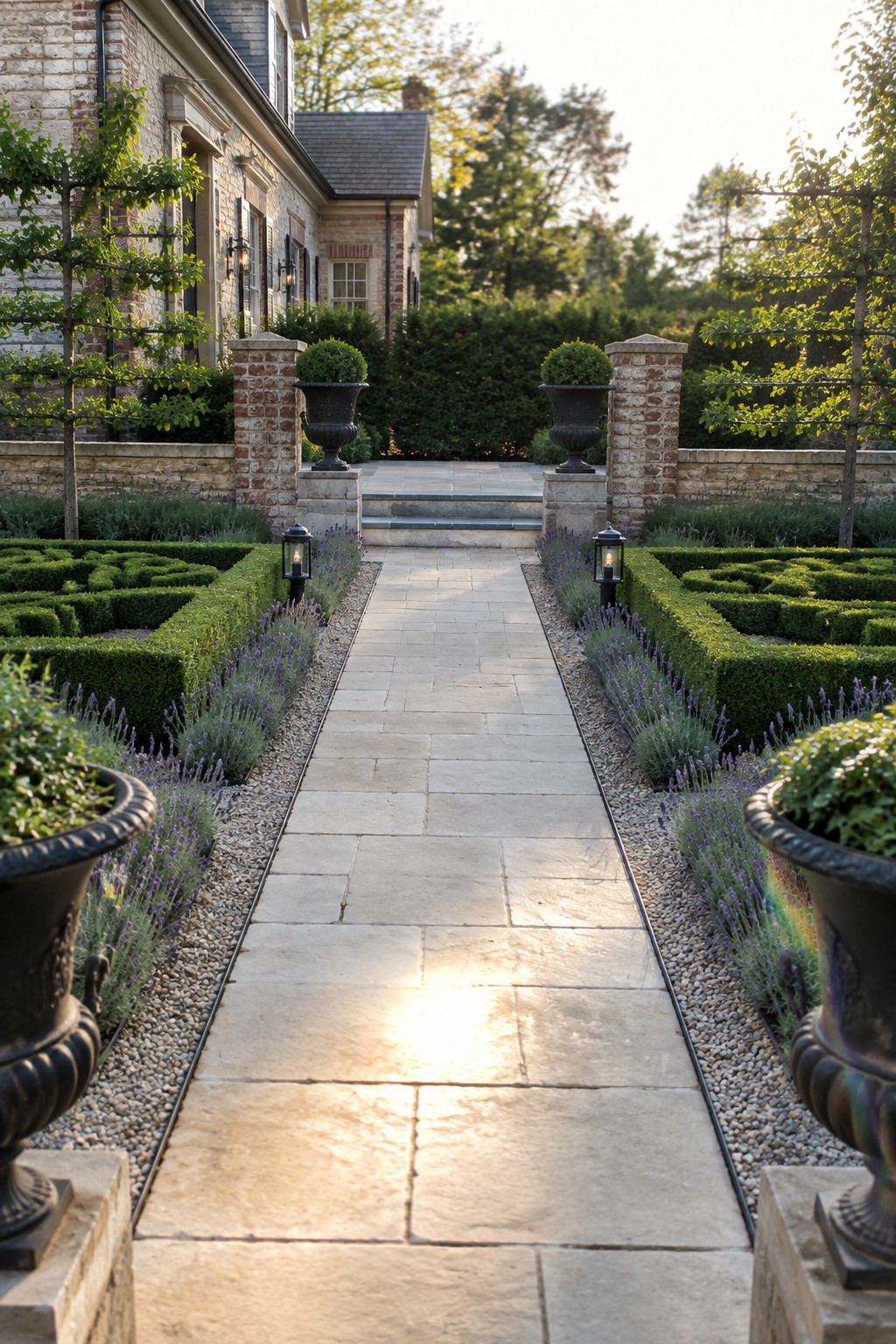
A straight central path with matching beds on both sides gives a garden an orderly, finished look without much fuss. The clipped hedges keep the shape strong while the lavender softens the edges just enough to feel inviting rather than stiff.
This approach suits traditional homes or larger lots where you want clear structure. Match the beds exactly on each side, use boxwood or similar evergreens that hold a clean line, and add the lavender border only if you like the extra color and scent.
Symmetrical Paths Shape Formal Garden Beds
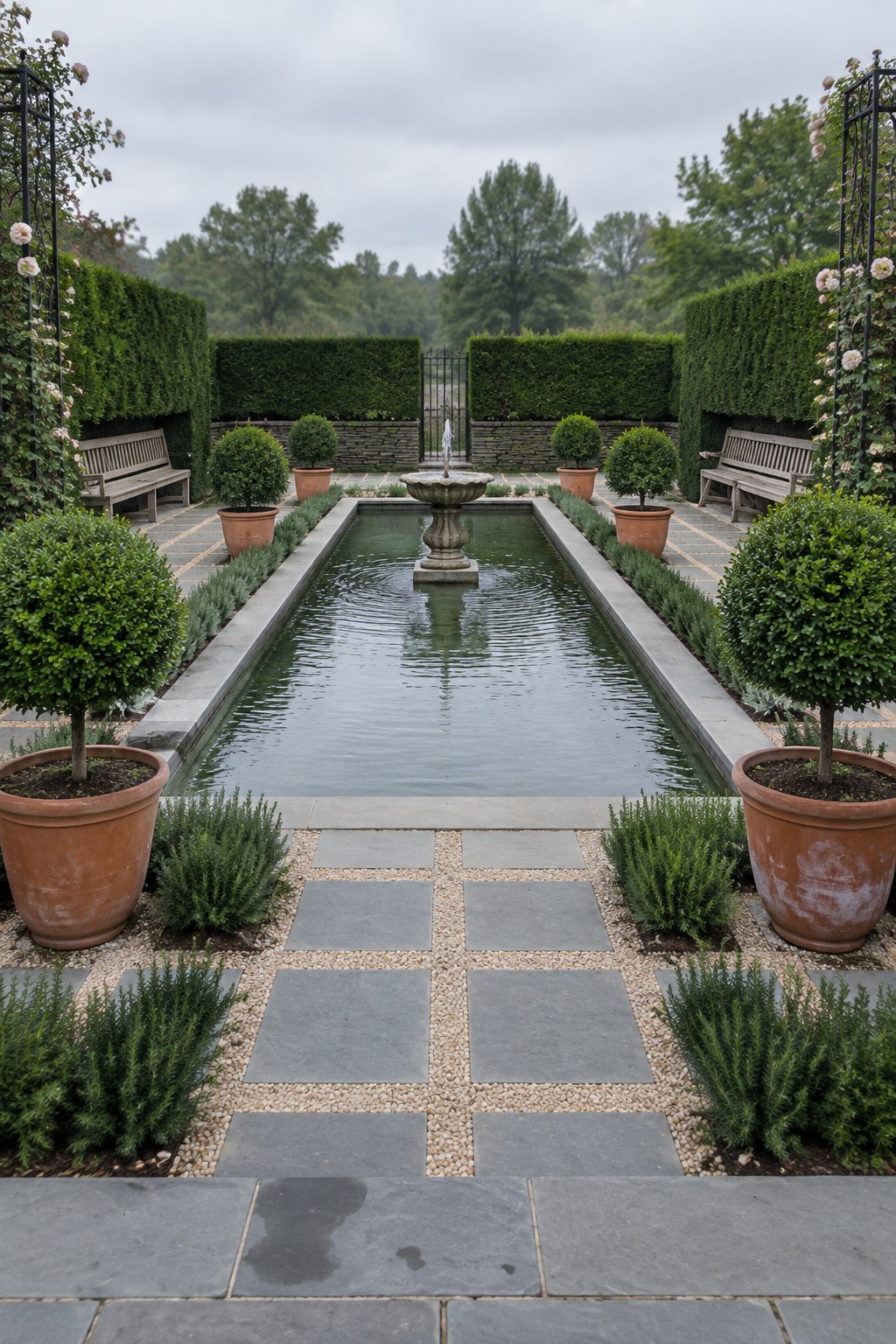
A long central axis with matching paths on each side keeps a garden feeling orderly and easy to walk through. The even layout draws attention straight down the middle and makes the space look larger without extra decoration.
This works well in yards that already have a strong rectangular shape or a focal point like a pool. Stick to clipped hedges and repeated container plants on both sides, and keep the path material simple so the lines stay clean.
Geometric Beds Bring Clear Structure To Formal Gardens
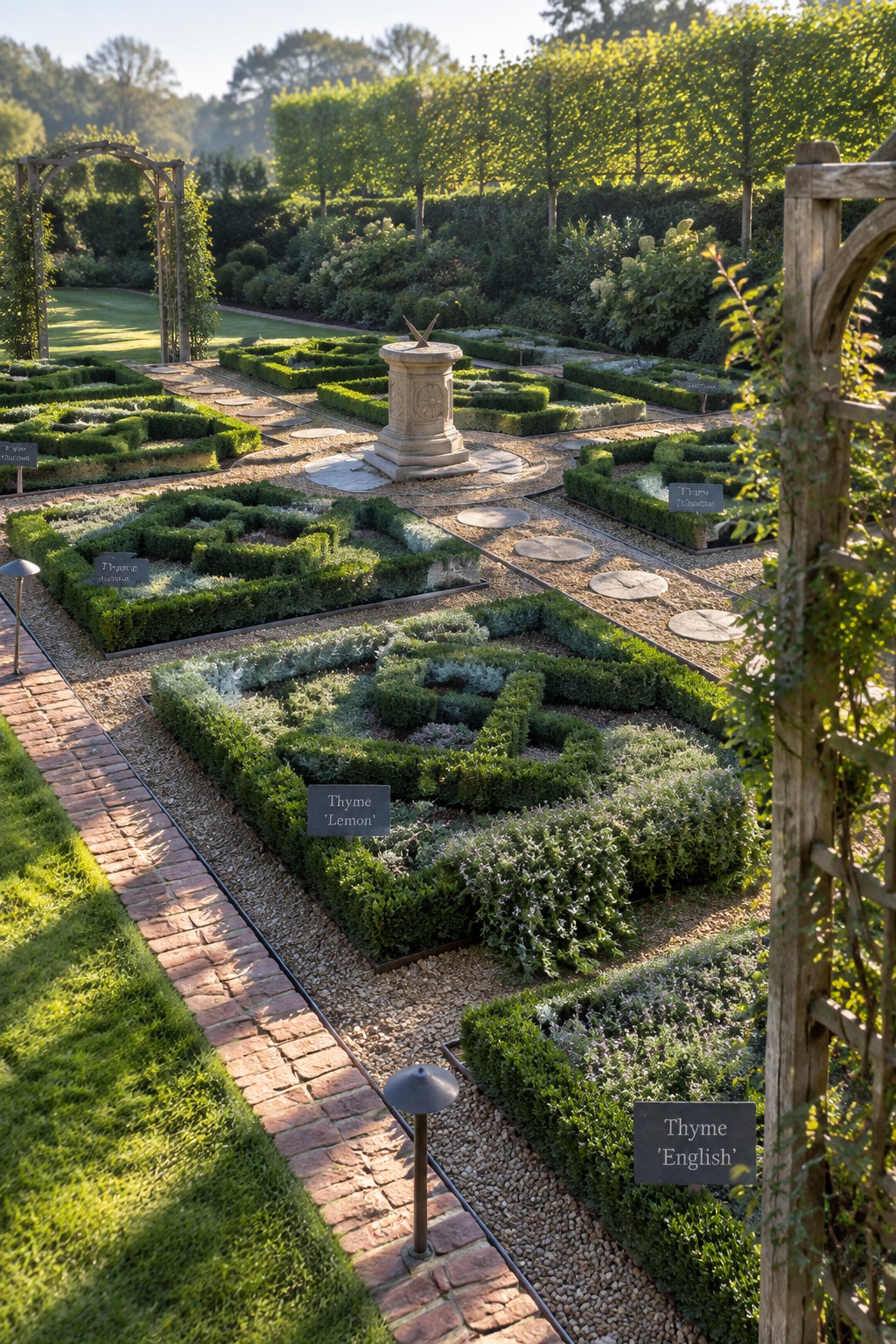
Geometric beds work well because they give the garden a tidy, organized feel without needing a lot of extra decoration. The straight lines and repeated shapes make the whole space look intentional and balanced, especially when paths run through them in a symmetrical pattern.
This approach fits best in yards with traditional homes or those that already have some formal elements. Keep the beds to a manageable size so they stay easy to maintain, and use low plants like thyme so the shapes stay visible all year.
Symmetrical Paths With Raised Beds
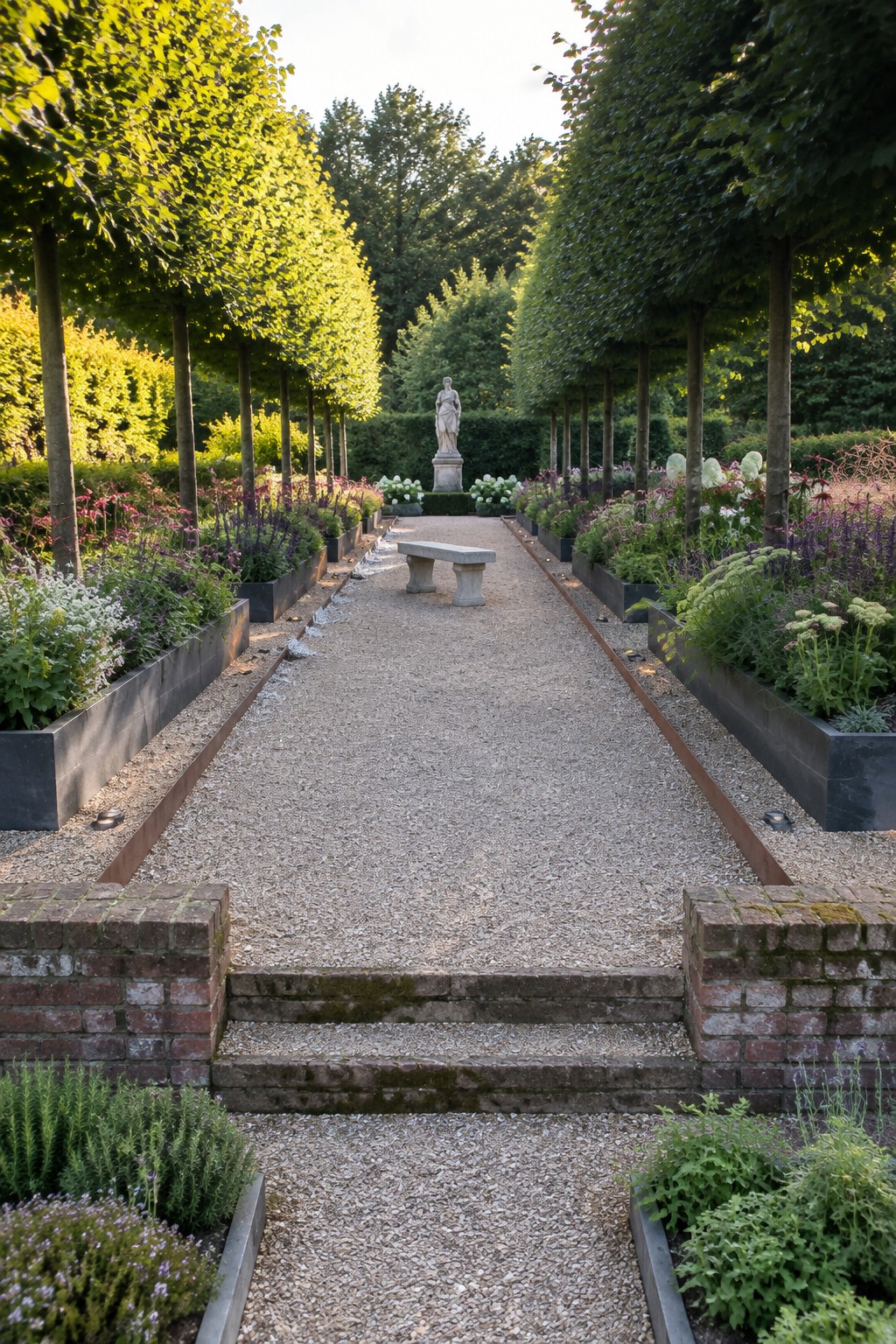
A central path with matching raised beds on each side creates a simple, balanced layout that feels deliberate. The straight lines keep the garden from looking scattered and make the whole space easier to walk through and maintain.
This approach works best in longer yards where you can run the path toward a focal point like a statue or bench. Use matching materials for the beds and keep plantings similar on both sides so the symmetry stays clear.
Symmetrical Hedges Along Straight Paths
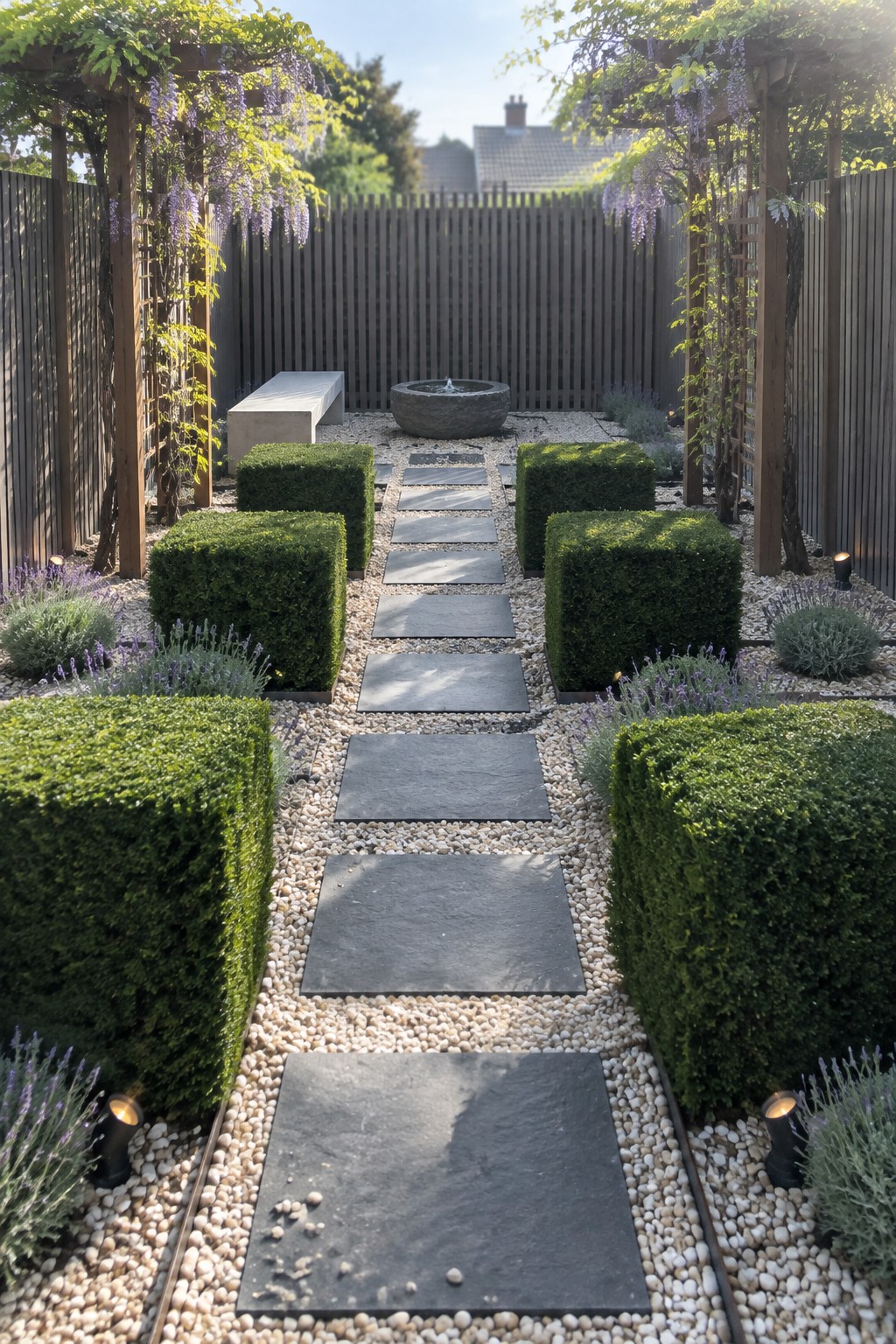
Placing matching hedges on either side of a central path gives a garden a clear sense of order. The even shapes keep the eye moving forward and make the space feel more settled and intentional.
This approach works well in smaller gardens or narrow side yards where you want structure without extra clutter. Stick with simple path materials and trim the hedges often so the balance stays sharp.
Rectangular Grass Panels Create Formal Paths
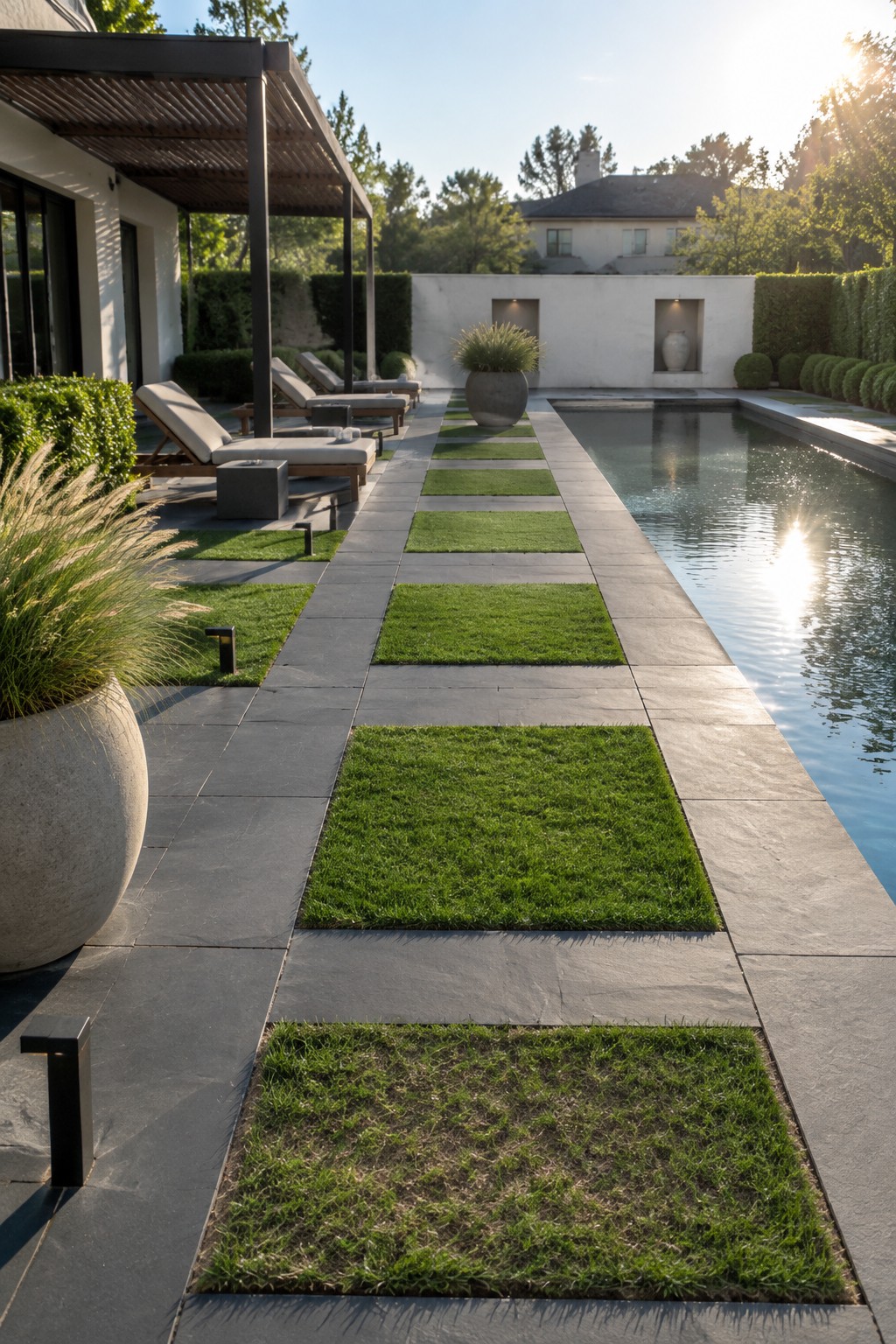
This layout uses a straight line of matching grass rectangles set into stone to form a clean, repeating walkway. The pattern keeps the space feeling organized and balanced while still allowing grass underfoot instead of solid paving.
It suits larger gardens where you want a strong visual line that leads toward a pool or main feature. Stick to even spacing and simple edging so the rectangles stay sharp and the whole path reads as one deliberate element rather than scattered lawn.
Symmetrical Paths Keep Formal Beds In Order
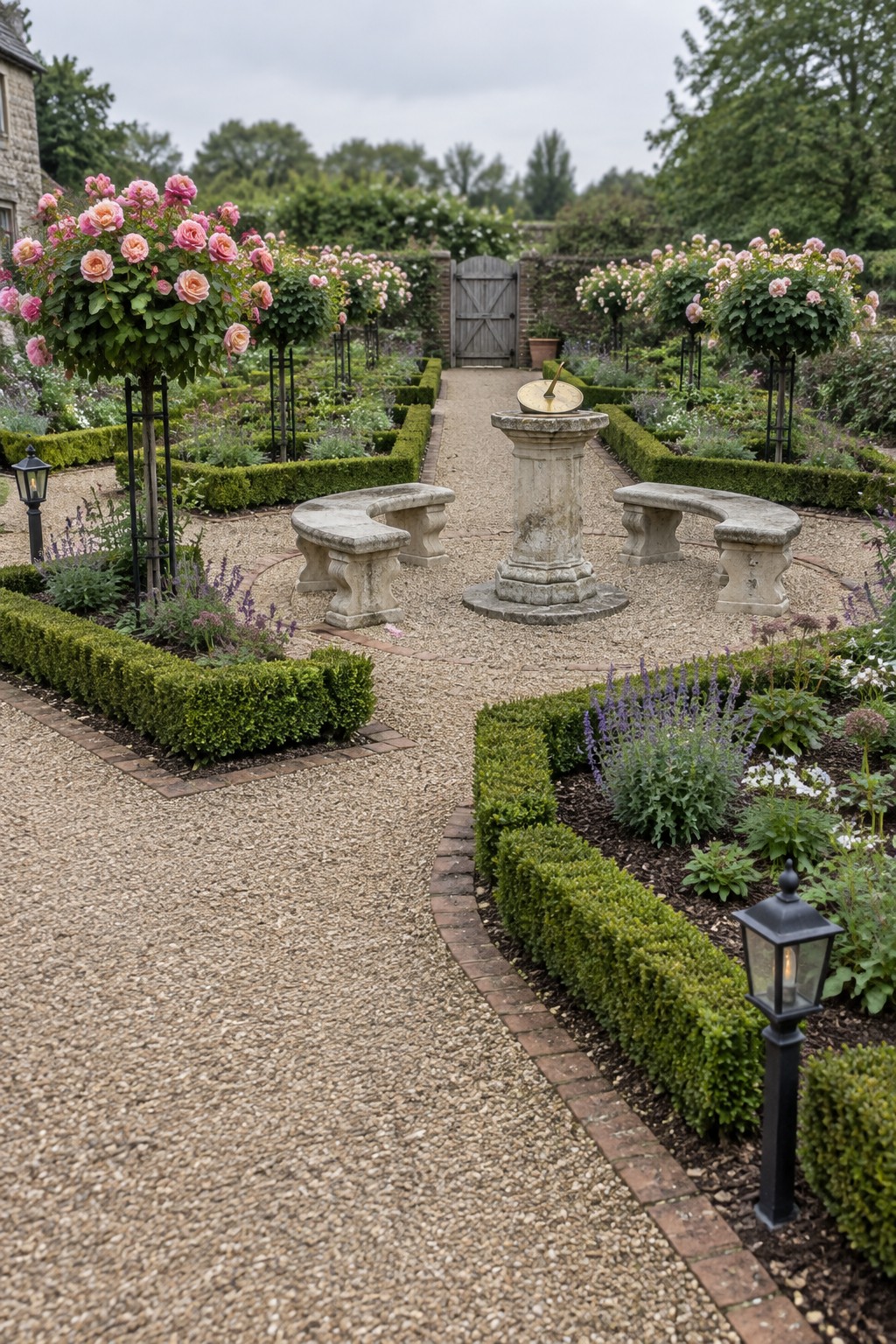
Symmetrical paths give a garden a clear structure that feels settled rather than scattered. The gravel walks divide the space into matching sections, and the low box hedges follow those lines so every bed stays neat and easy to read.
This layout suits homes with a central view or a focal point at the end of the path. Use the same edging material throughout and keep the plantings simple so the symmetry does the work instead of competing colors or heights.
Checkerboard Layouts For Symmetrical Garden Paths

A simple grid of grass squares and stone pavers gives a garden a clear, organized feel without much fuss. The pattern creates strong lines that guide the eye straight through the space and make even a modest courtyard look intentional and balanced.
This approach works best in smaller urban yards or enclosed outdoor areas where you want structure without crowding the space. Keep the plantings simple and repeat a few shapes, like round shrubs in matching pots, so the pattern stays the main feature rather than competing with too many other elements.
Symmetrical Paths Organize Formal Garden Beds
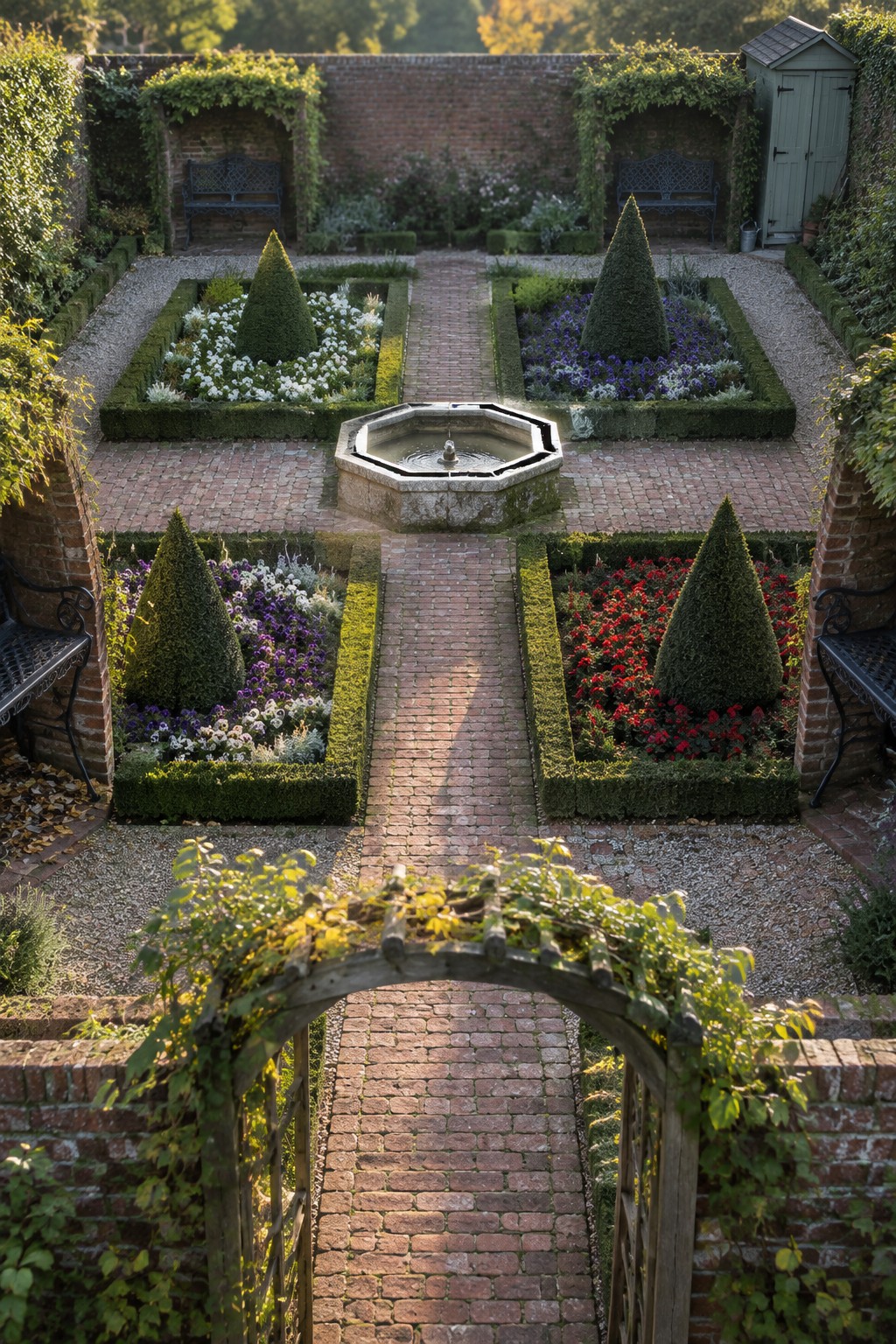
A central path that runs straight through the middle of the garden makes the whole space feel balanced right away. Matching beds on both sides keep the layout simple and easy to follow, even when the plantings inside the beds change with the seasons.
This works best in smaller enclosed gardens or courtyards where you want clear structure without crowding the space. Repeat the same bed shapes and edging on each side, and let a single focal point like a fountain sit at the end of the path so the symmetry stays the main feature.
Symmetrical Paths Keep Formal Beds Looking Intentional
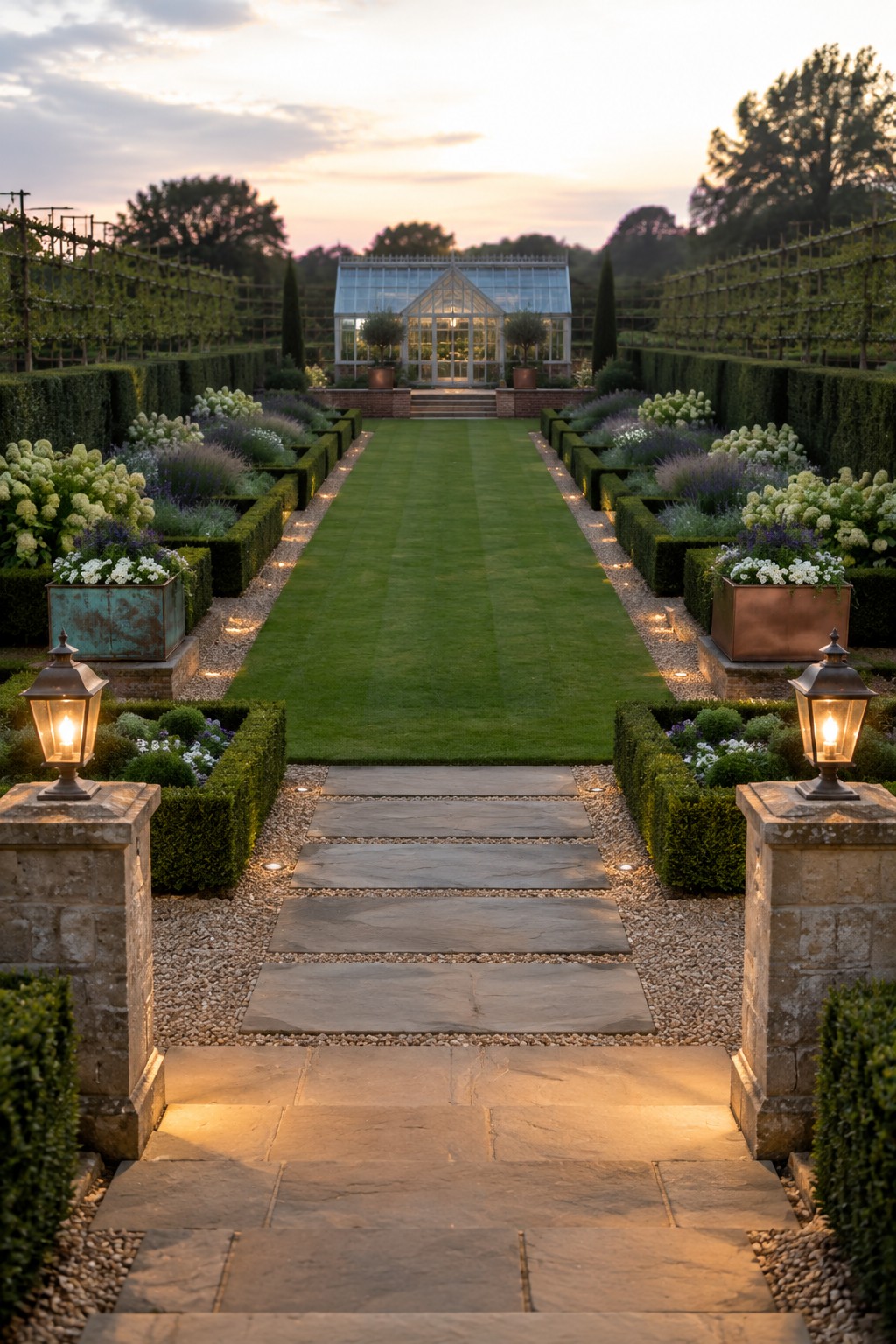
Symmetrical paths give a garden that clean, organized feel without needing a lot of extra decoration. They work because the eye follows the lines straight through, which makes the whole layout feel balanced and easy to read at a glance.
This approach suits larger yards where you have room for a strong central line and matching beds on both sides. Stick to simple shapes for the beds and repeat the same plants or hedge heights so the symmetry stays clear instead of getting fussy.
Stone Steps Define Symmetrical Garden Paths
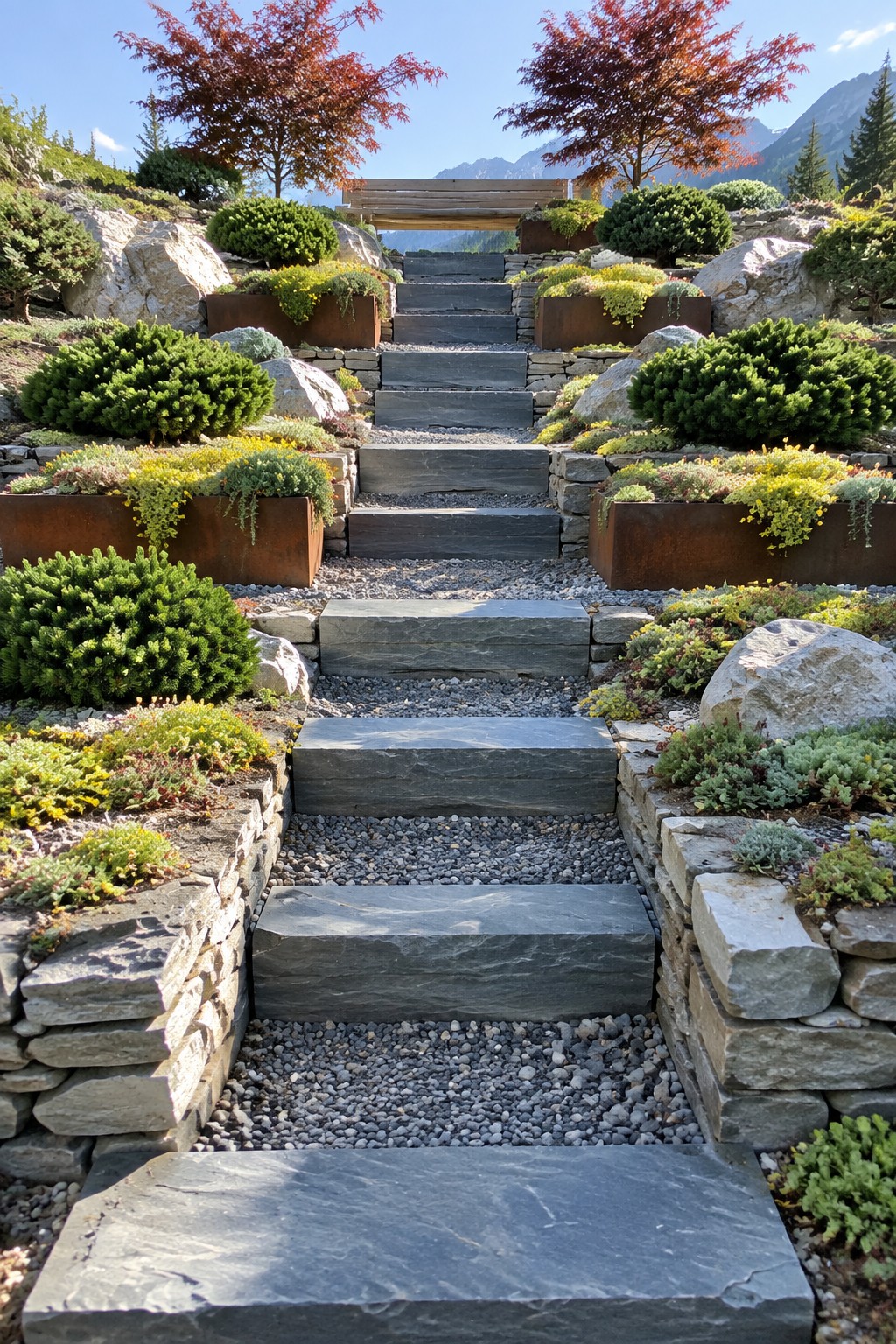
Stone steps give a formal garden a steady rhythm that feels intentional rather than random. The dark slabs break up the slope and keep the eye moving straight down the center while the beds stay balanced on each side.
This approach works best on gentle slopes where you want clear movement without losing the structured look. Repeat the same stone and keep the beds at matching widths so the path stays the main focus.
Symmetrical Hedges Along a Central Path
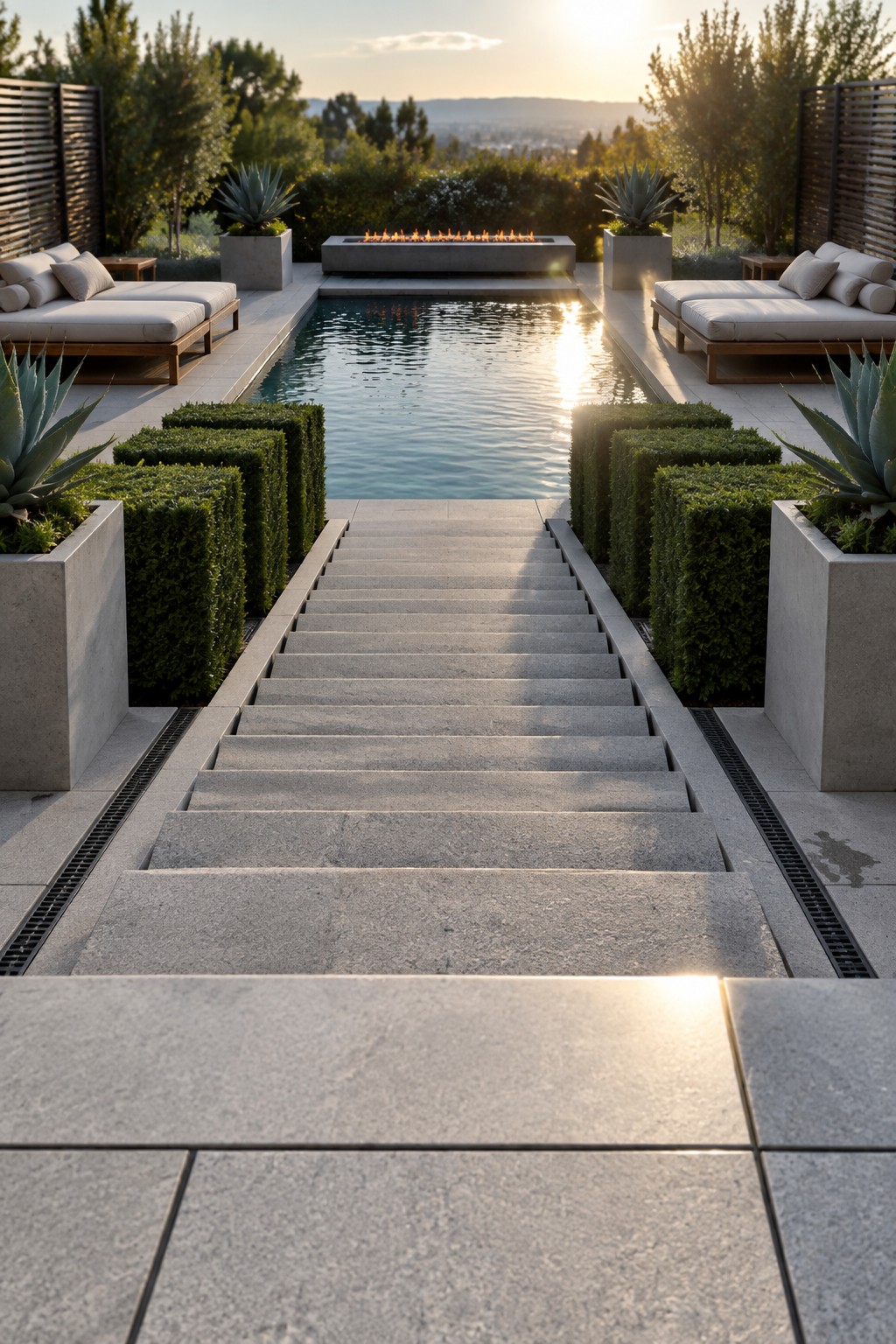
This setup uses matching rows of clipped boxwood to run alongside a wide stone path. The repetition creates a clear line that leads the eye straight through the garden and makes the whole space feel organized without much extra effort.
It works well in a flat backyard where you want to connect one area to another, like a pool or seating zone. Keep the hedges at a consistent height and width so the lines stay sharp, and choose plants that tolerate regular trimming.
Center Your Outdoor Table Between Symmetrical Plantings
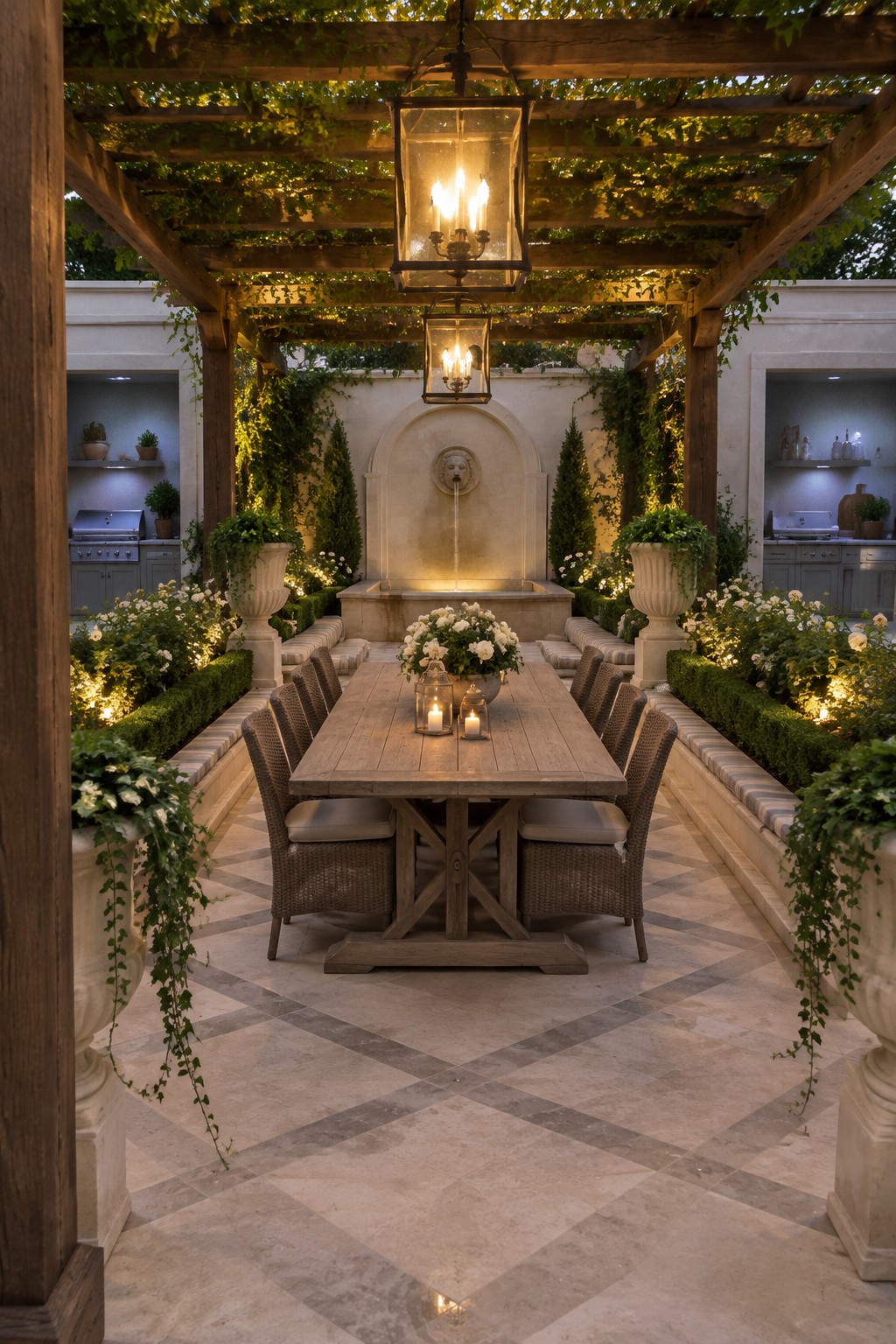
One simple way to make an outdoor dining area feel more formal is to place a long table right down the center line. Matching hedges and large pots on both sides keep the view balanced and give the space a clear structure instead of a scattered look.
This works best in gardens that already have some width to work with. Keep the plantings even in height and spacing, and stick with plain seating so the symmetry stays the main feature rather than competing with extra details.
Geometric Raised Beds For Symmetrical Garden Paths
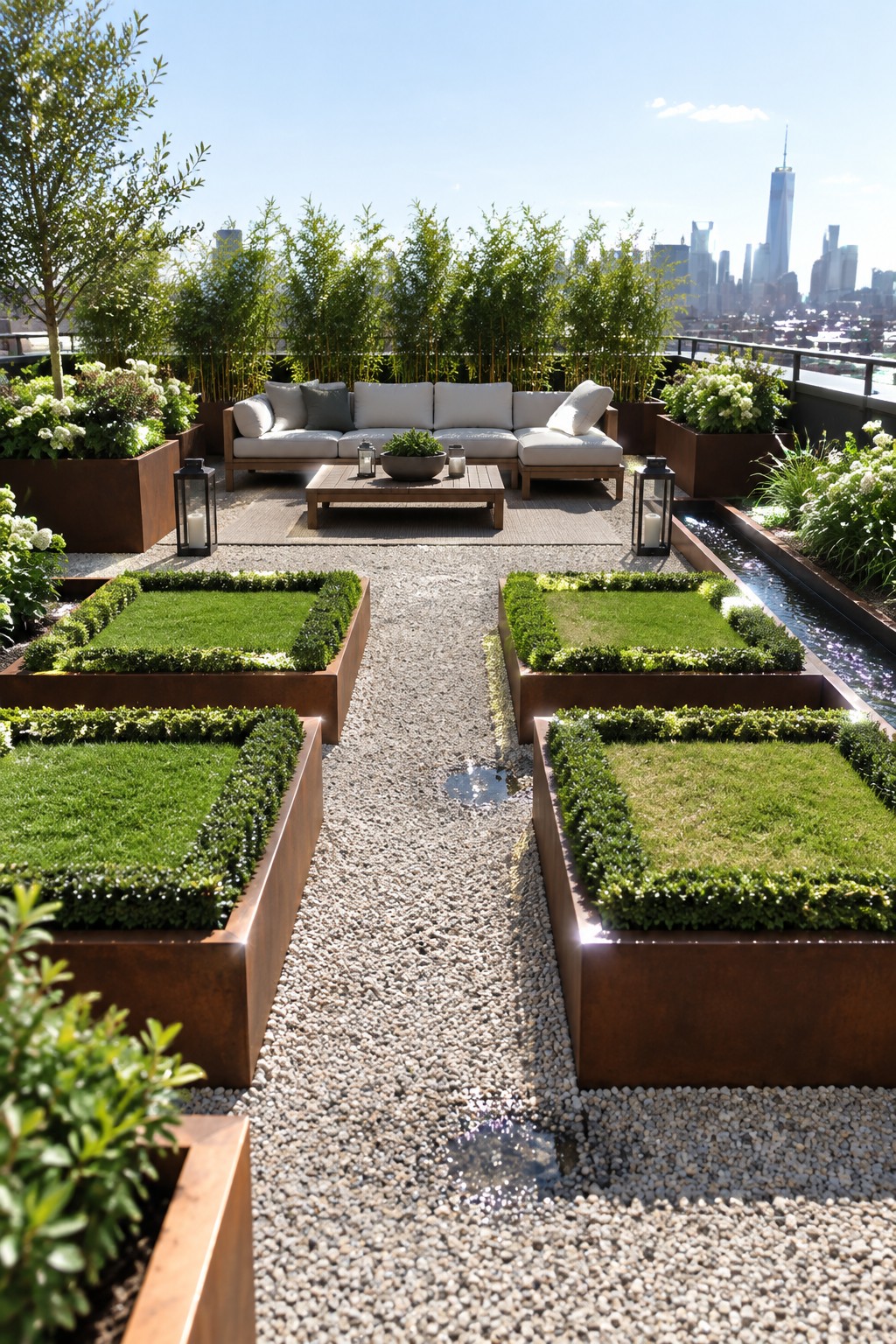
Raised beds in clean rectangles give a garden an immediate sense of order. The gravel paths running between them keep the layout easy to read and make the space feel larger than it actually is.
This approach works especially well on rooftops or compact urban yards where you want structure without crowding the area with too many different plants. Keep the beds low and repeat the same shape to hold the symmetry.
Symmetrical Paths With Geometric Beds
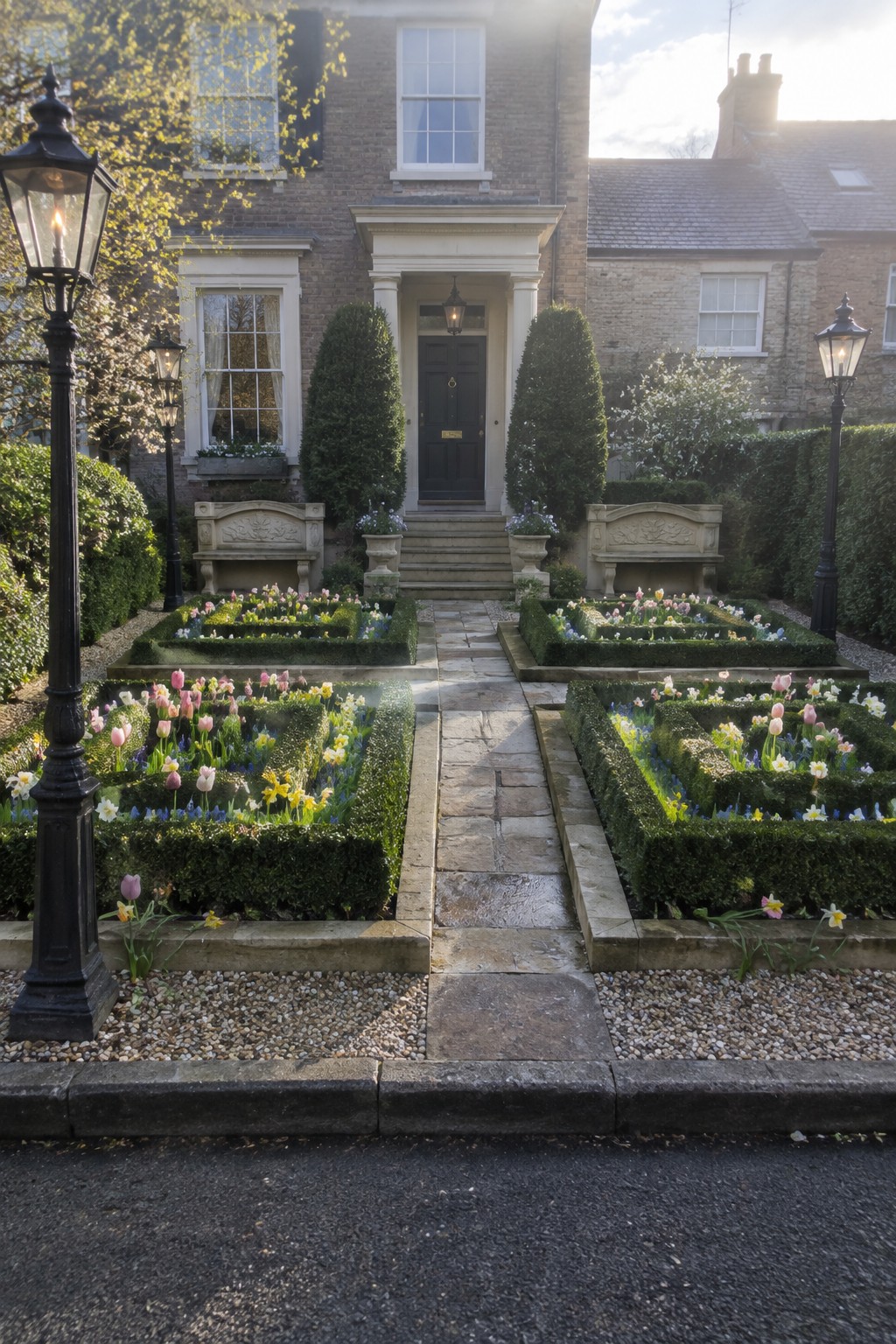
A central stone path that runs straight through matching square beds gives the garden a clear structure. The low box hedges hold the shapes in place so the whole front feels organized even when the flowers change.
This approach suits homes with a straight walk to the door and enough width for two beds on each side. Keep the hedges clipped tight and use simple plantings inside the boxes so the lines stay the main feature.
Central Mosaic Paths Between Staircases
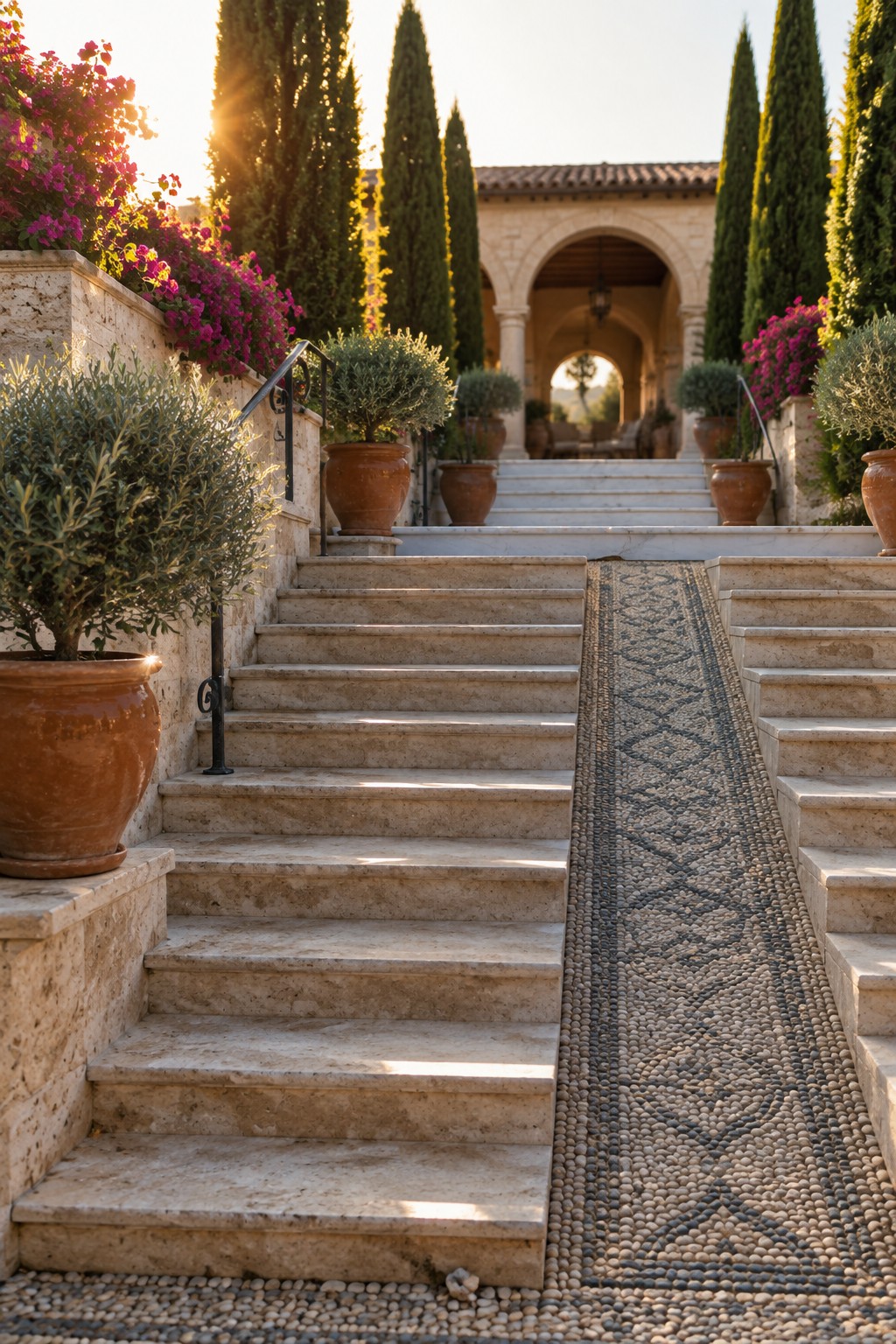
A patterned pebble path running straight down the center of a split staircase gives a formal garden a clear sense of order. The design keeps the stairs practical while the narrow runner adds rhythm and draws the eye forward without needing extra beds or borders.
This works best on larger properties where the stairs can be wide enough to support the split. Keep the pattern simple and use matching pots or clipped plants along the edges so the path feels like part of the overall layout rather than a separate feature.
Stone Paths Give Formal Gardens Clear Structure
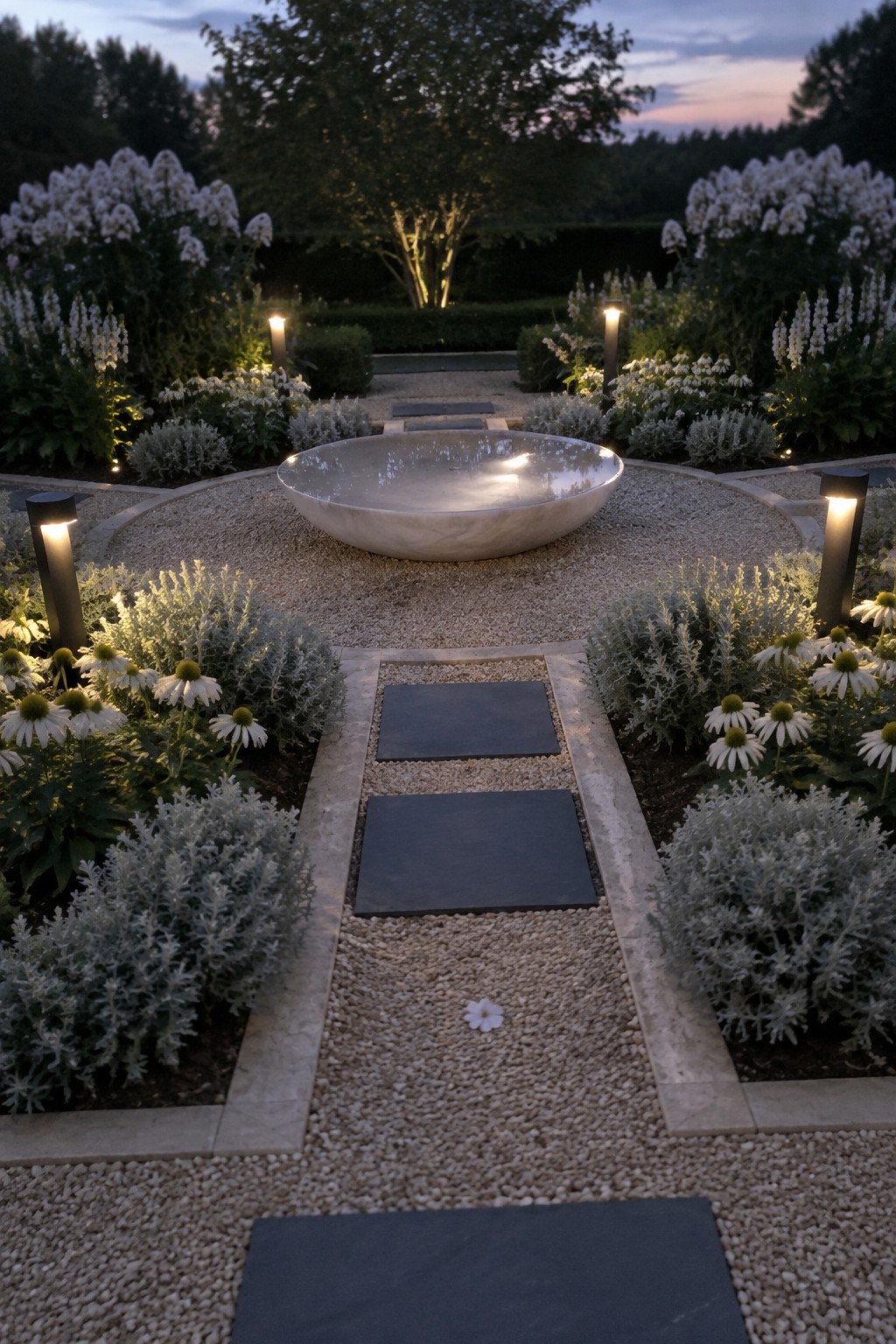
Straight paths made from dark rectangular stones set into gravel help keep a formal garden feeling organized and easy to walk through. The clean lines separate the planting beds without adding extra fuss, so the overall layout stays balanced and simple.
This works best in smaller gardens or side areas where you want order without blocking the view. Keep the beds low and even on both sides, and let the path lead toward one main focal point so the design feels purposeful rather than busy.
Center A Straight Path For Formal Symmetry
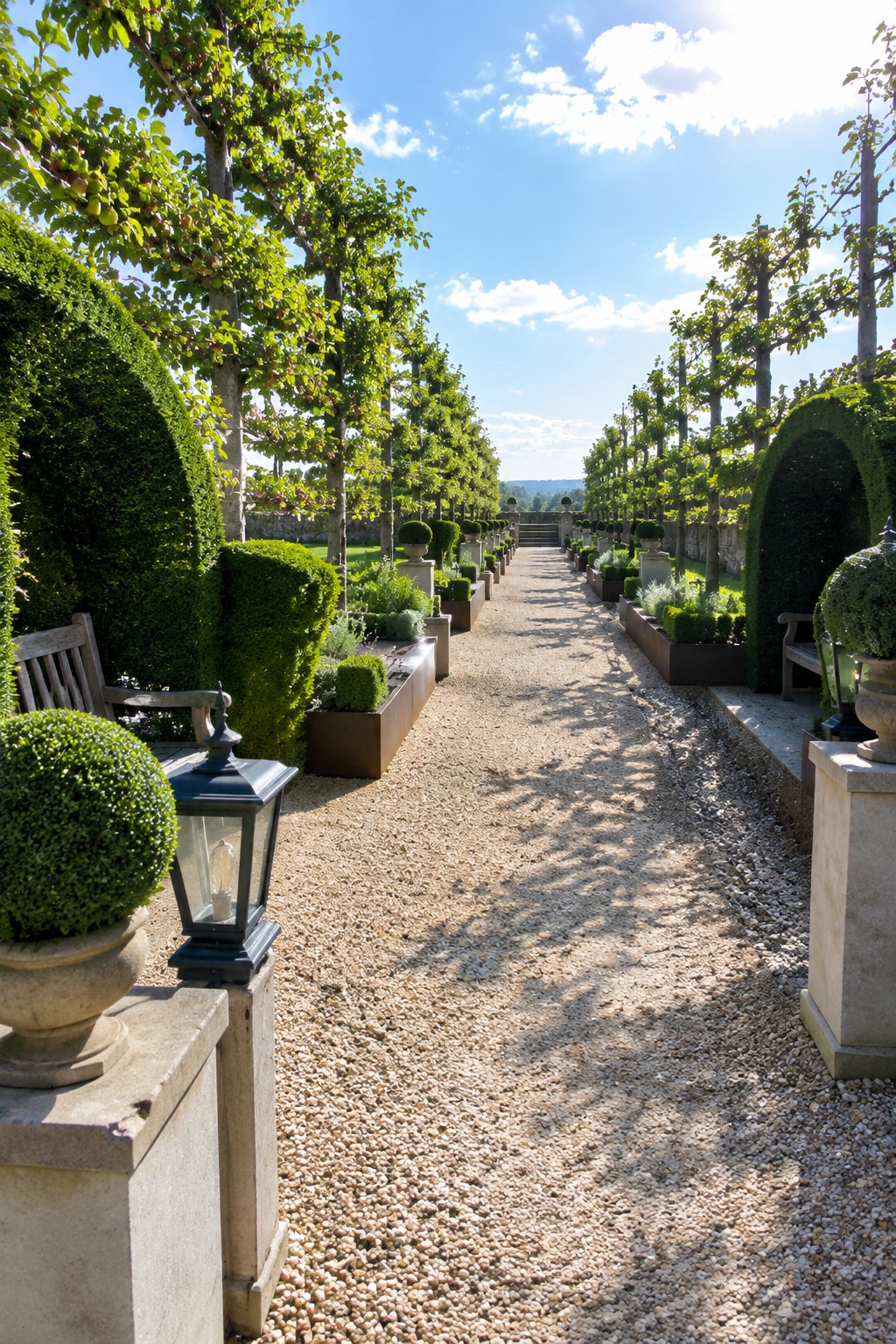
A straight central path gives any garden a clean formal structure right away. It keeps the eye moving forward while the matching plantings on each side stay balanced and easy to maintain.
This layout works best in longer spaces where you can repeat the same trees or hedges in even rows. Gravel keeps the surface simple and lets the planting do the main work without extra edging or curves to manage.
Match Planting Beds on Both Sides
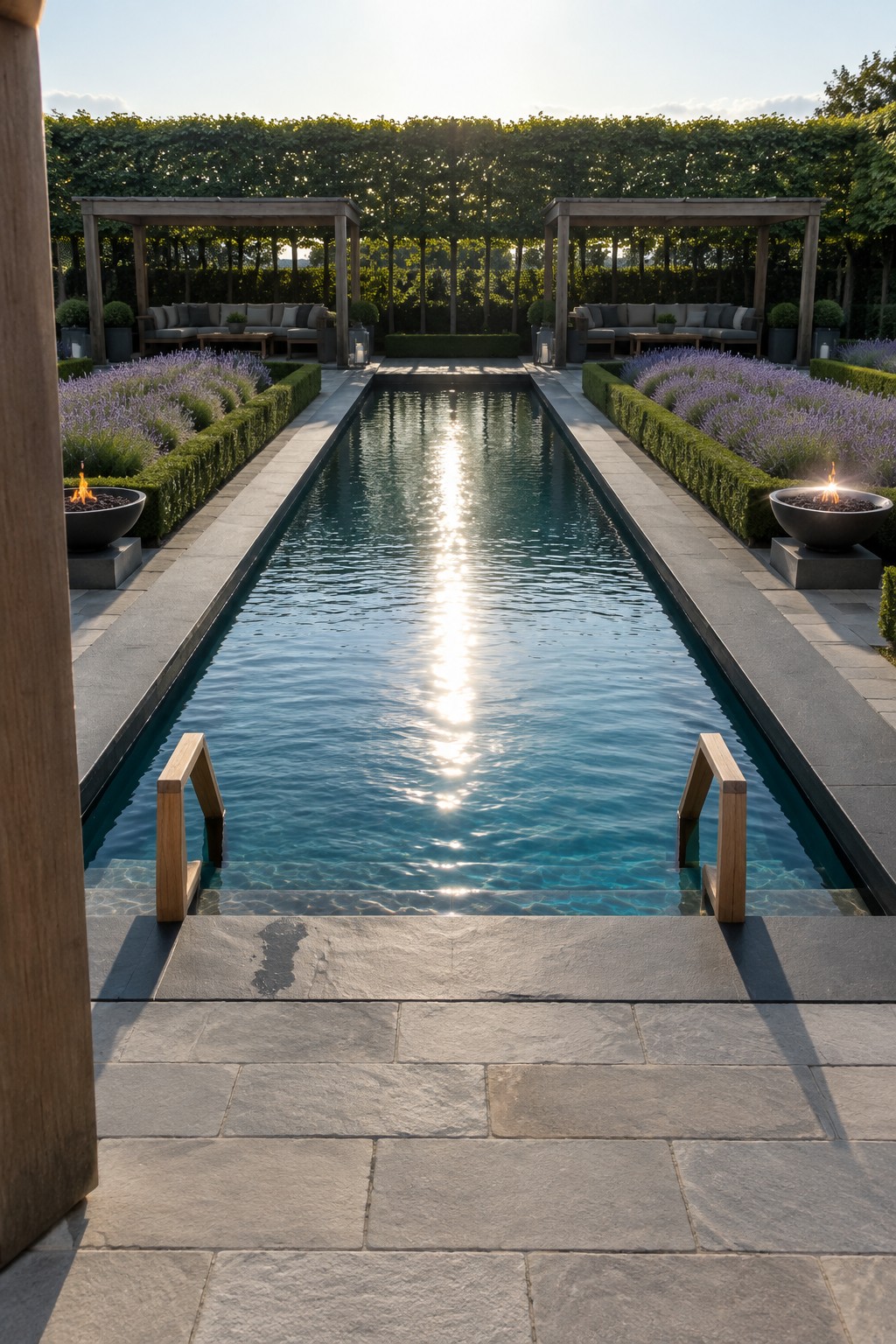
Matching beds on each side of a central feature is one of the easiest ways to give a garden that clean, formal feel. The repetition creates order without needing lots of different plants or complicated shapes. It works especially well when the beds are the same size and planted with the same mix of low hedging and a single flowering plant.
This layout suits larger backyards or side gardens where you have room for a long central line, whether that is a path or a pool. Keep the beds narrow enough to reach across for maintenance and stick with one or two plant types so the symmetry stays clear. Avoid adding too many ornaments that break the line.
Checkerboard Paths With Symmetrical Beds
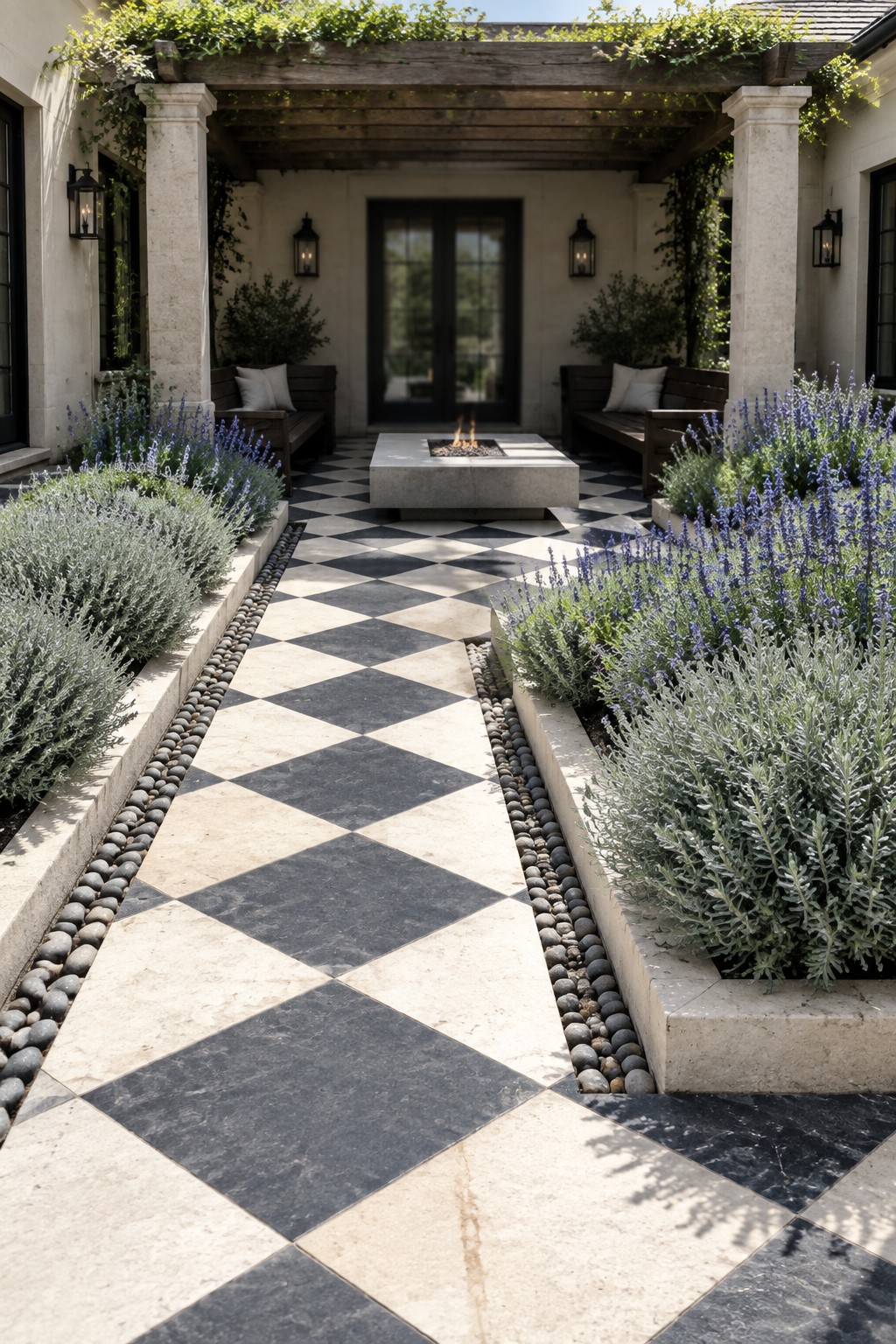
A checkerboard path made from light and dark stone gives a garden a strong sense of order right from the start. The pattern stands out best when the beds on each side stay even in width and repeat the same planting style.
This layout works well in formal gardens that have enough room for a clear central line. Keep the plantings low and consistent so the path remains the main feature instead of getting lost in taller growth.
Mirrored Square Beds Along a Central Stone Path
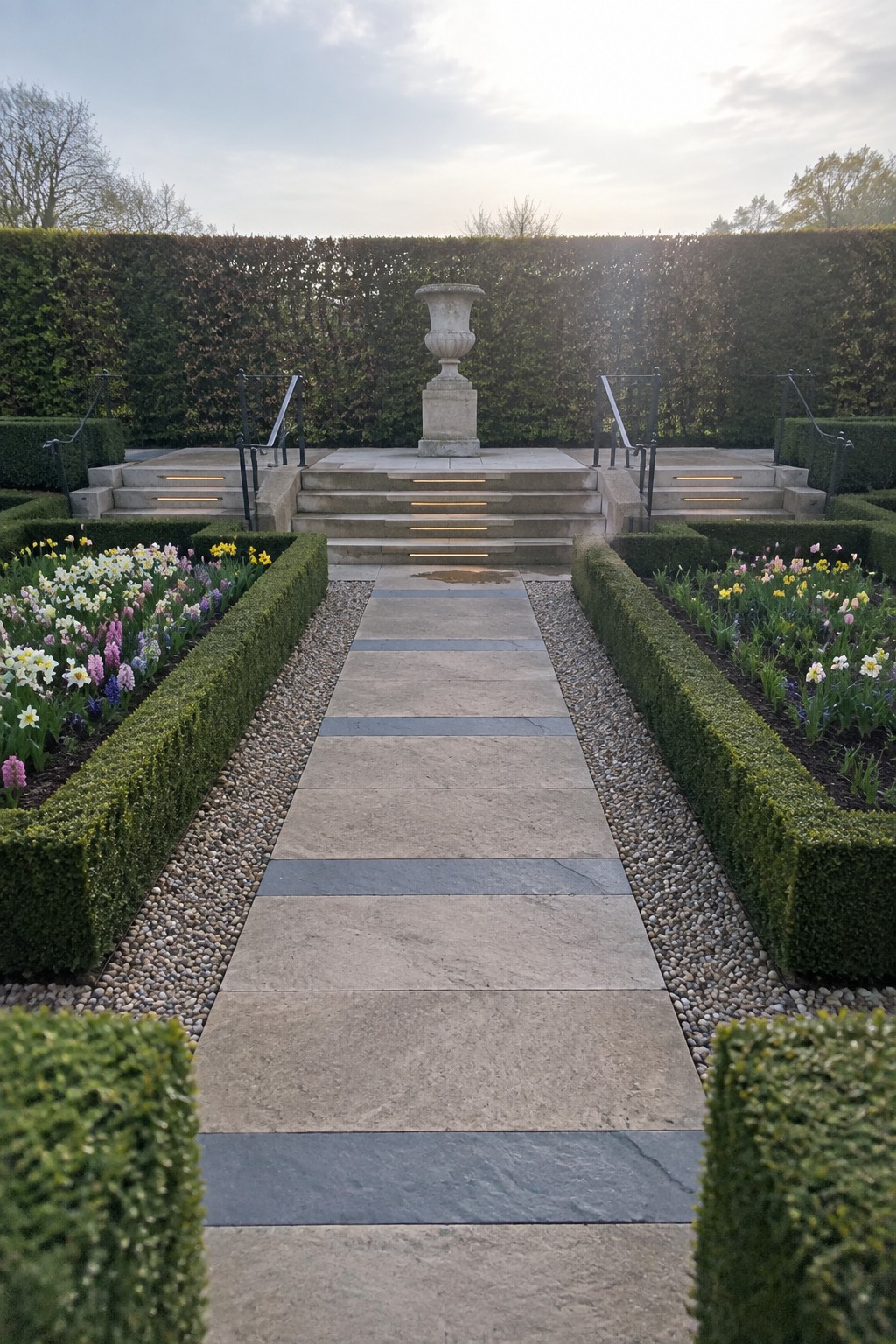
A straight central path with matching beds on each side gives the garden a clear sense of order. The repeated shapes and balanced layout keep the space feeling calm and easy to read, even when the flowers change with the seasons.
This works well in front gardens or smaller yards where you want structure without a lot of fuss. Use low hedges to hold the bed shapes, add gravel along the edges for clean lines, and keep the planting simple and mirrored on both sides.
Frequently Asked Questions
Q: How do I stop the paths from looking uneven after a season or two? A: Rake them weekly and add a thin top layer of fresh material each spring. That keeps the edges straight and stops dips from forming where people walk most.
Q: Which plants hold a sharp shape in the beds without constant clipping? A: Use boxwood or yew for the borders since they grow slowly and stay dense. Inside each bed, plant one type of perennial that reaches the same height so the pattern stays balanced.
Q: What if my yard slopes and perfect symmetry feels impossible? A: Level just the main path first with a simple retaining edge on the low side. Then build the beds outward from that line so the whole layout still reads as balanced from the house.
