


I have seen too many backyard seating areas that look fine on their own but never quite connect with the surrounding plants and paths.
When you start shaping the space with low hedges or gravel edges first, the dining zone starts to feel like it belongs there instead of just being dropped in.
Some layouts work better than others.
Over time the plants grow in and change how the whole area feels, which is why I like to test a few simple edging ideas before committing to bigger changes.
My own yard taught me that a straight path leading to the table makes guests more likely to use the space regularly.
Cover a Pergola With Flowering Vines
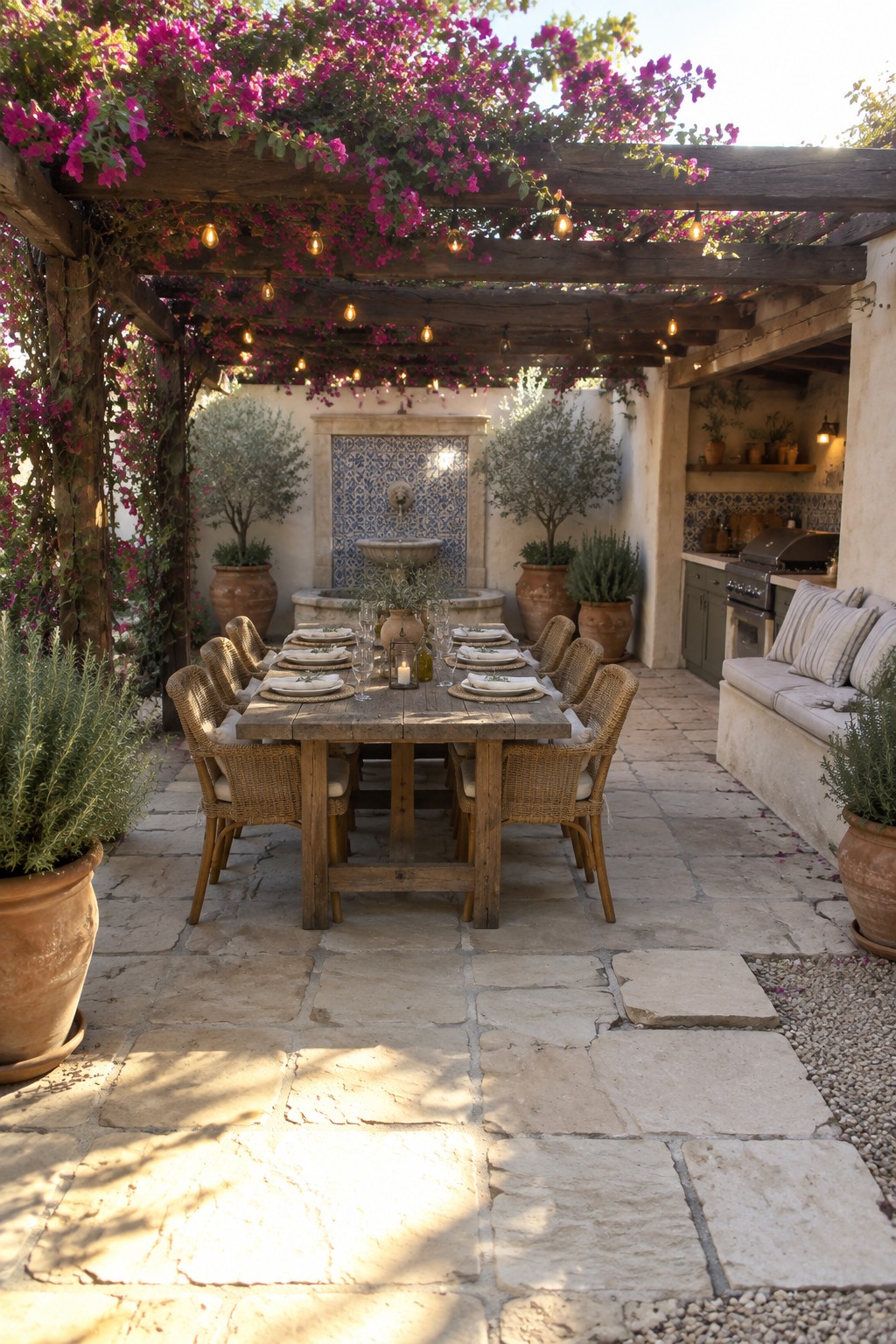
A pergola draped in flowering vines gives an outdoor dining area real presence without feeling built up. The plants create shade that shifts with the seasons and pull the whole space into the surrounding garden.
This setup works best on a patio that already gets good sun and has room for the vines to spread. Use a sturdy wood frame, choose a climber that blooms for months, and keep the floor simple so the greenery stays the focus.
Raised Planters Around Built-In Seating
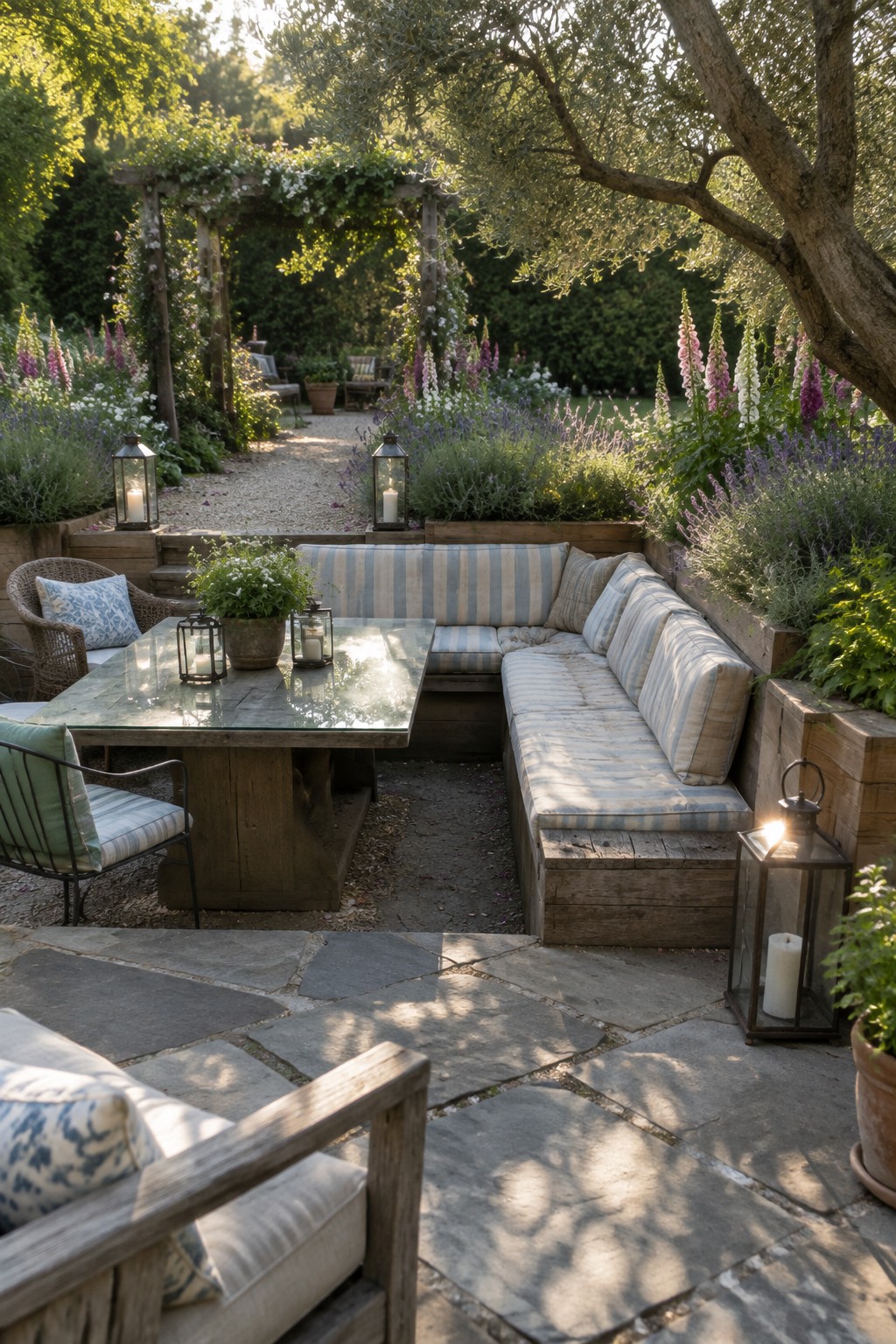
One easy way to make an outdoor dining spot feel settled is to build the seating right into raised wooden planters. The plants grow up around the edges and soften the whole area without needing extra screens or furniture. It also keeps the space from looking like a separate patio dropped into the yard.
This works best in gardens that already have some depth and room for larger beds. Use the same wood for the benches and the planter walls so everything reads as one structure. Just leave enough space for people to walk around the table and keep taller plants toward the back so they do not block the view while sitting.
Add a Pergola Over the Dining Table
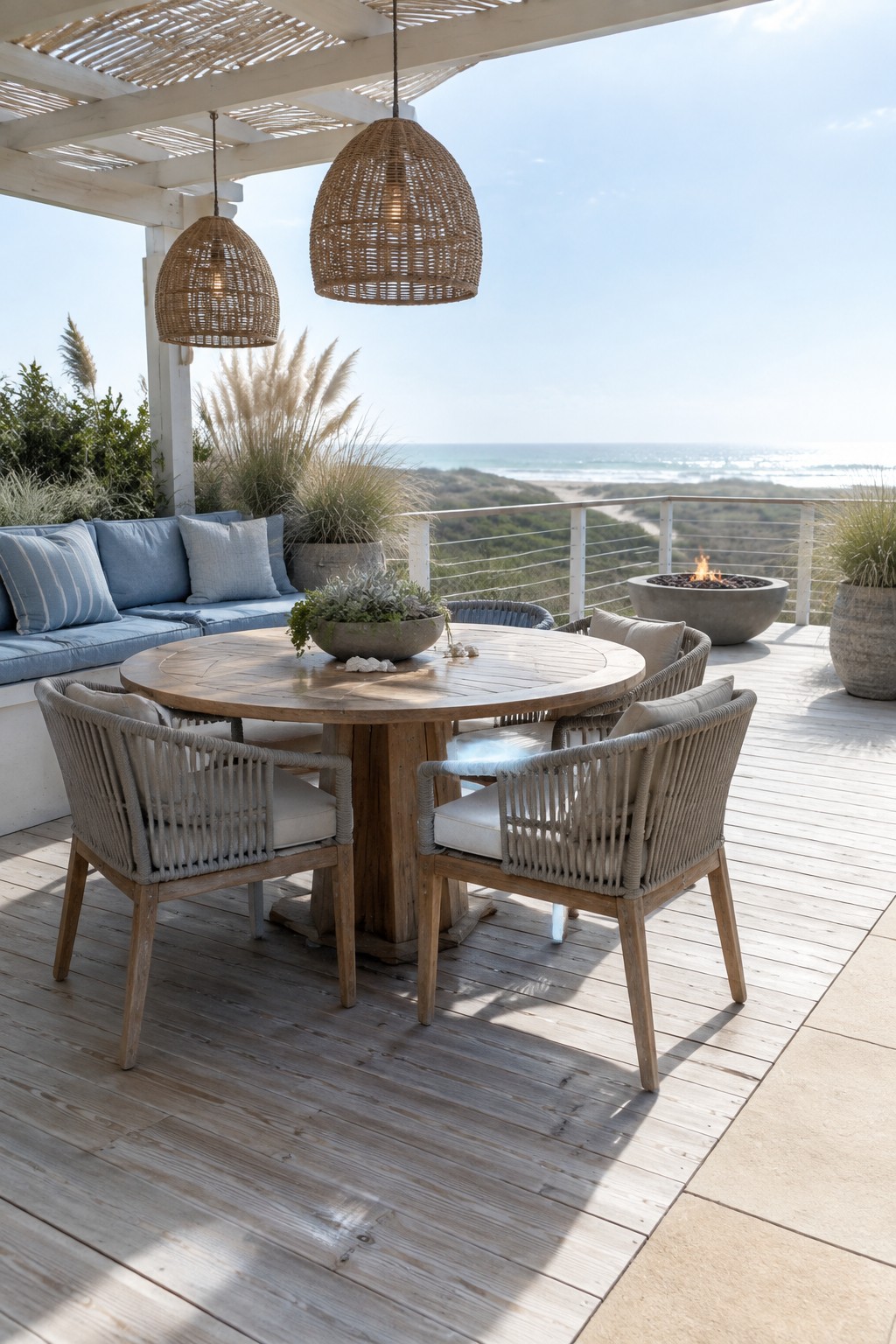
A pergola gives an outdoor dining area a clear sense of place without closing it in. It creates shade during the day and a spot to hang lights when the sun goes down, which keeps the table usable longer into the evening.
This works well on a deck or patio that already has good views. Keep the structure simple and light in color so it does not block the surroundings. Pair it with a sturdy round table and chairs that can stay outside year round.
Add a Living Wall Beside the Table
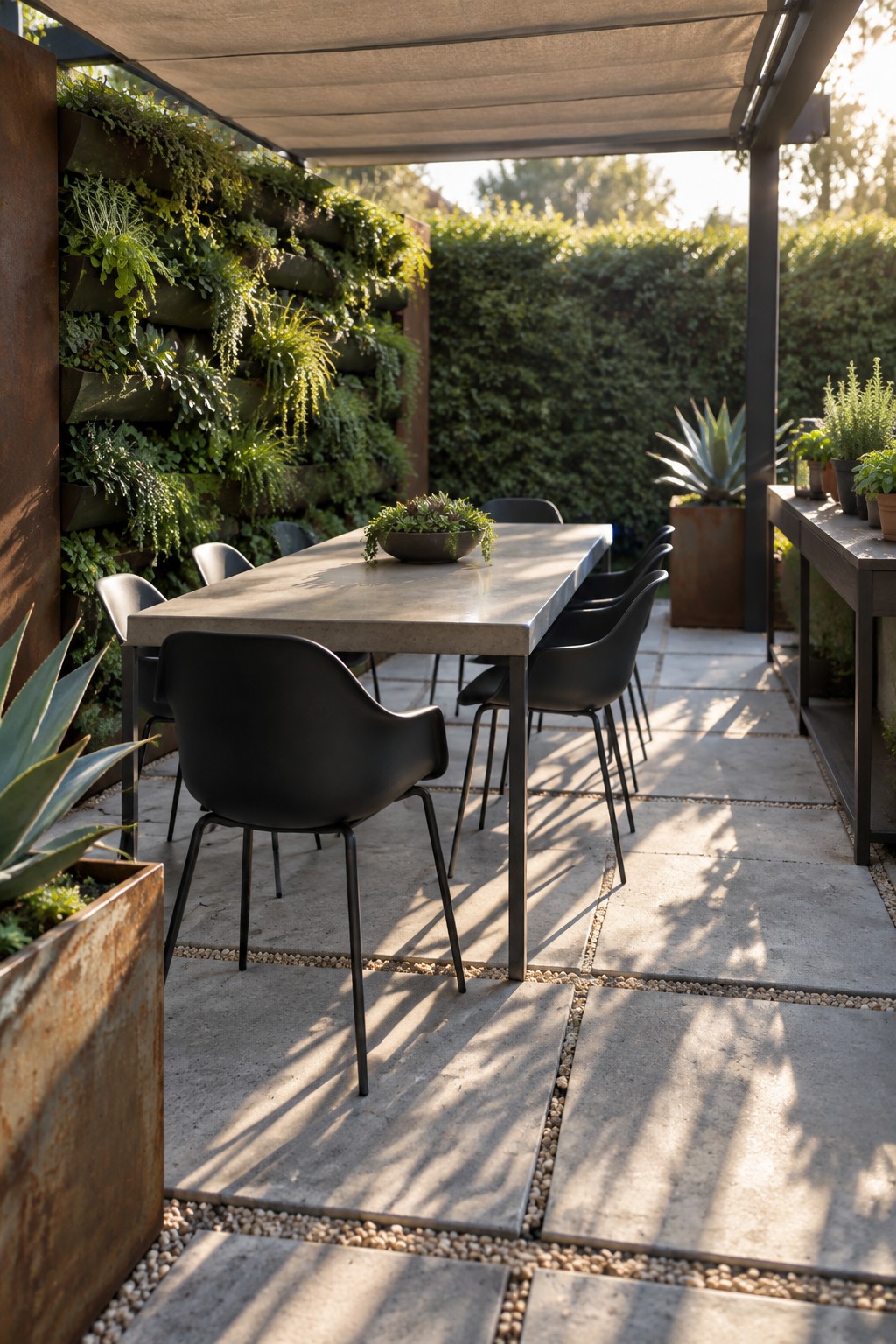
A living wall gives an outdoor dining area a sense of enclosure without building any solid structure. The plants soften the hard surfaces around the table and create a quiet backdrop that makes the space feel more settled.
This works best on patios with plenty of sun and a solid wall or fence to support the planters. Keep the rest of the planting simple so the vertical garden stays the main feature rather than competing with pots scattered everywhere.
Adding Hanging Lights To Outdoor Dining Spaces
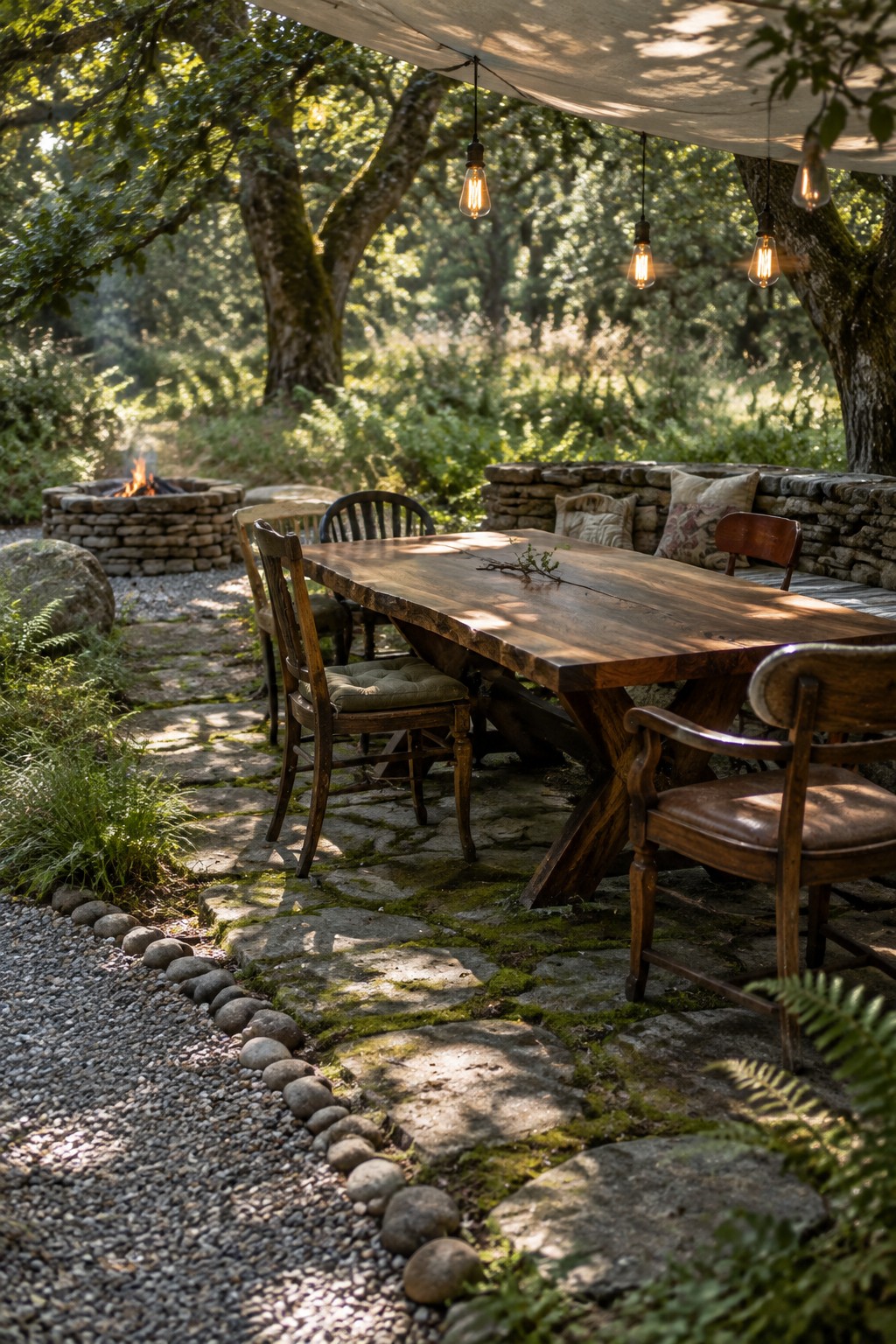
Hanging a few simple bulbs over an outdoor table makes the whole area feel ready for evening meals without much extra work. The lights draw people in after sunset and keep the space usable even when the garden gets dark. Many people like this because it turns a daytime spot into something that works for longer gatherings.
This setup works best in gardens with some tree cover or a partial canopy already in place. Keep the fixtures basic and the cord lengths practical so nothing feels fussy. It suits homes with room for a solid table and a few chairs rather than tight patios or formal layouts.
Use Climbing Vines on a Fence for Natural Privacy
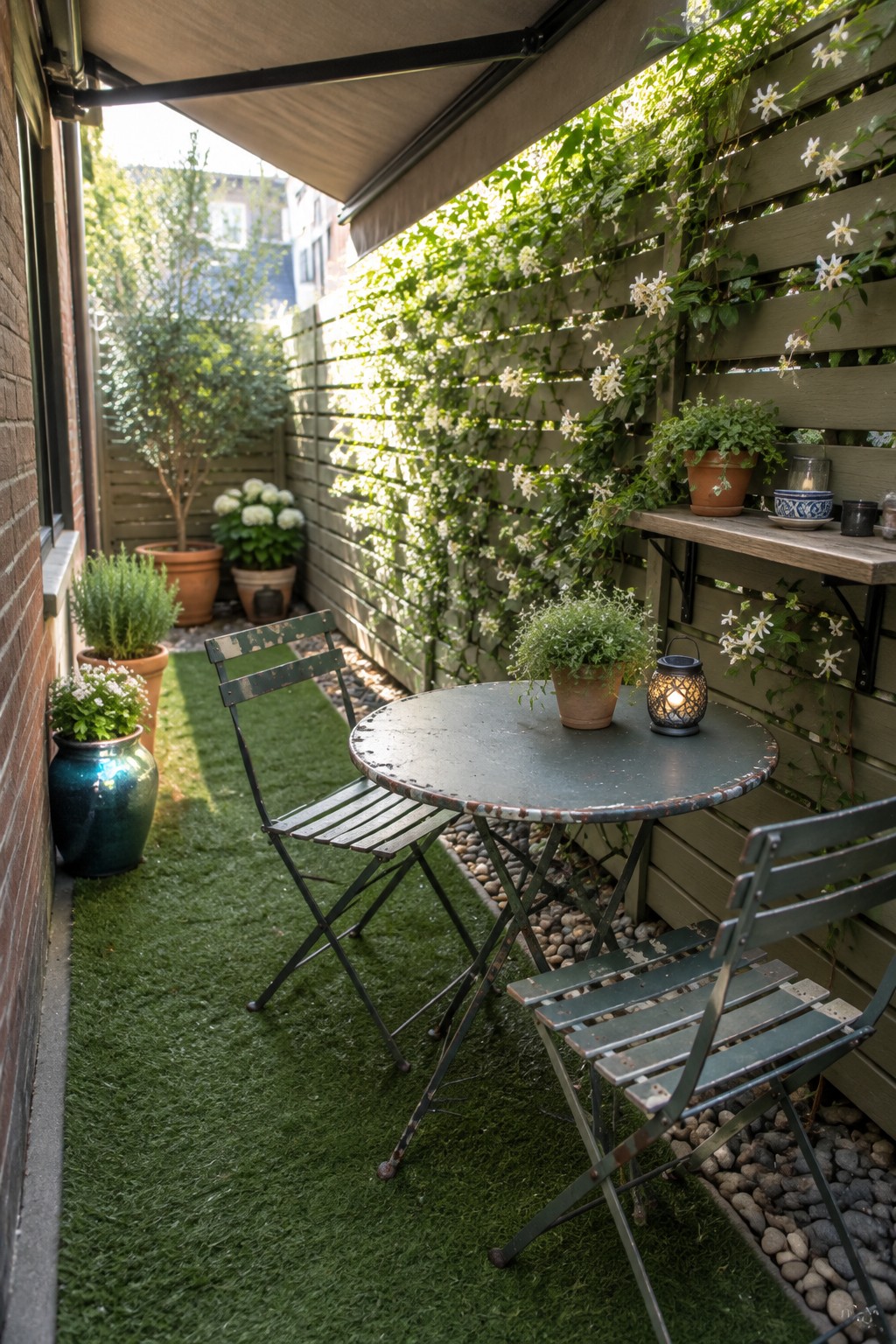
A planted fence can turn a basic patio into a more private spot without adding a heavy structure. The vines soften the boundary and give the table area a quiet, enclosed feel that still lets in light and air.
This approach suits small yards or side patios where space is tight. Pick a slatted fence, choose a fast climber that flowers, and let it fill in over a season or two. Keep the base clear so the table and chairs still have room to move.
Edge Pools With Low Planting Beds

A narrow strip of plants right along the pool creates a clean separation between the water and the dining area. It softens the hard edges of the stone without taking up much space or blocking movement around the table.
This works well on straight pool sides where you want the seating zone to feel connected but still distinct. Stick to low-growing plants that stay under knee height and make sure the bed has solid edging so mulch or soil does not wash into the water.
Grow Vines Over an Outdoor Dining Table
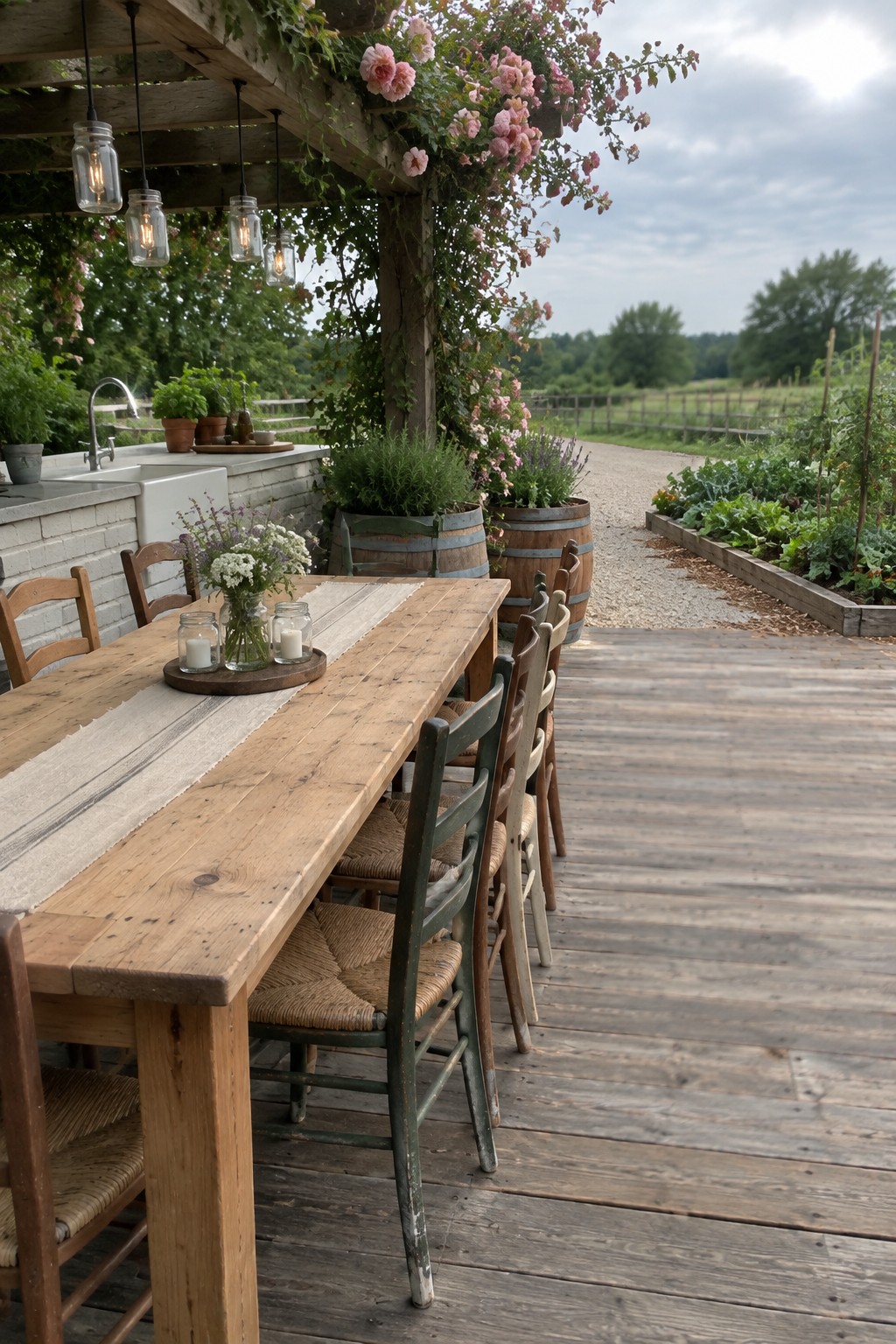
One easy way to tie a dining area into the garden is to let climbing plants cover the structure right above the table. The roses soften the wood and make the whole spot feel less like a separate deck and more like an extension of the beds and paths nearby.
This works best on a deck or patio that already sits close to the garden. Use a sturdy post or simple pergola frame, pick a vigorous climber that suits your climate, and keep the surrounding beds or containers planted with the same style of greenery so nothing feels cut off from the rest of the yard.
Create Seating With Low Garden Platforms
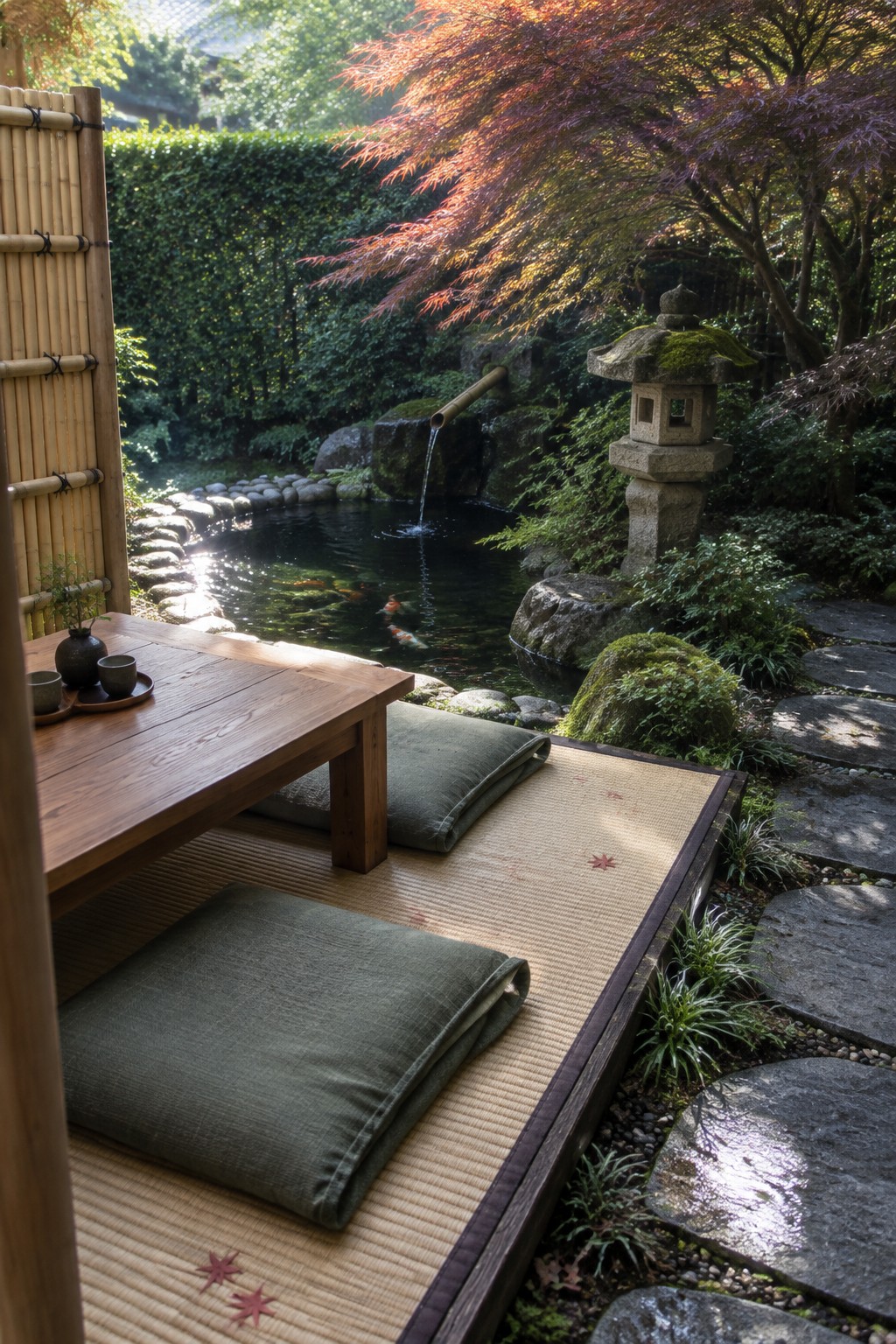
A low platform covered in tatami mats gives you a simple way to set up seating right in the middle of the garden. It keeps the area open and connected to the surrounding plants and water instead of adding a big deck or patio that would feel separate.
This approach works especially well in smaller yards or tucked corners where you want a quiet spot for meals without a lot of construction. Keep the platform low and use natural edges so the garden flows around it, and place it near a water feature or grouping of trees for the best effect.
Place a Fountain in the Center of Your Seating Area

A small fountain can act as a natural anchor for an outdoor seating zone. It draws the eye and gives the space a settled, finished look without needing lots of extra decoration. The water sound also helps the area feel calmer and more usable during warm weather.
This works best in a courtyard or patio that already has some enclosure, like walls or planting. Keep the fountain modest in size so it does not block movement around the table and chairs. Make sure the surrounding floor can handle splashing and that the pump is easy to reach for cleaning.
Add a Large Container Tree Beside the Table
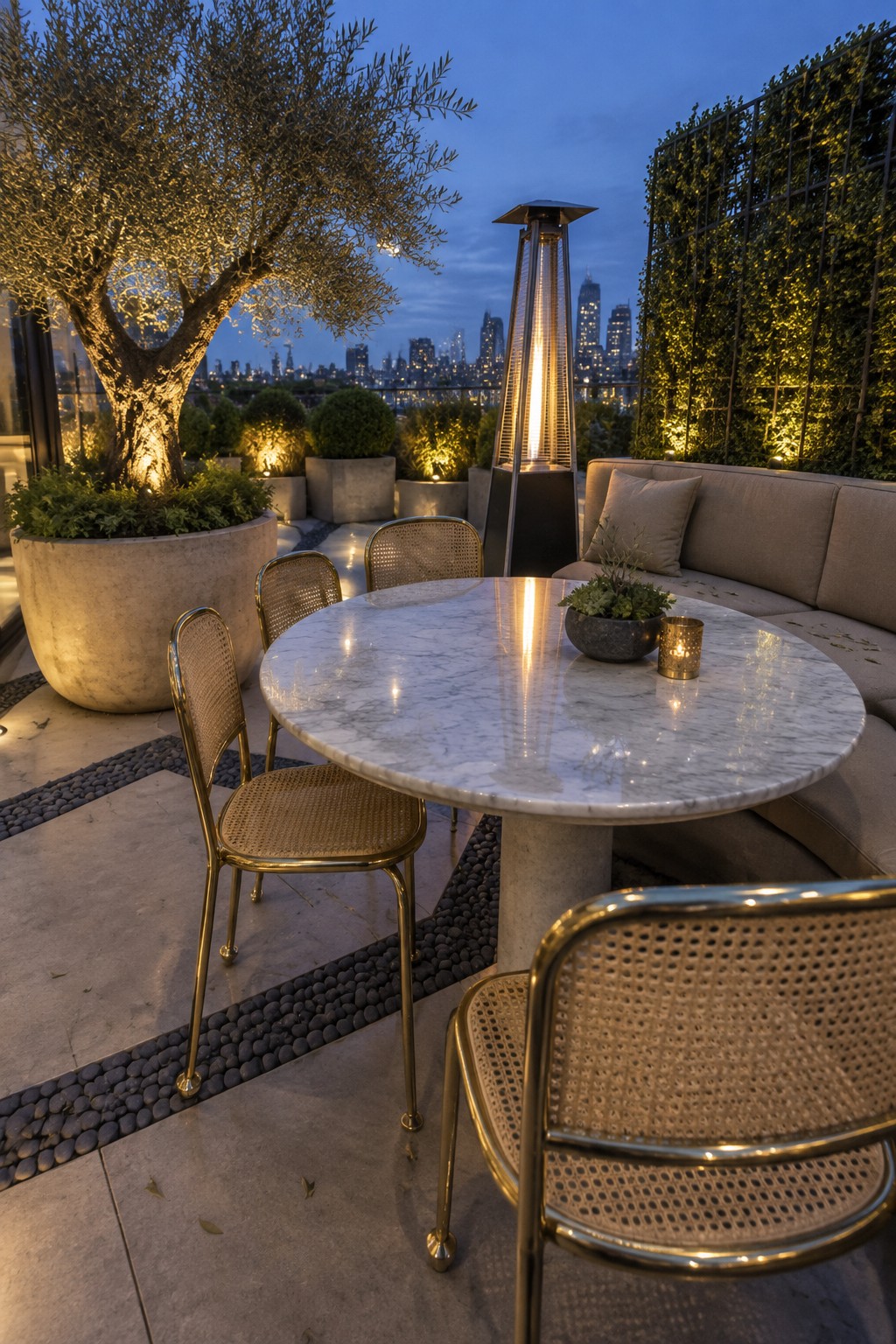
One simple way to give an outdoor dining area more presence is to set a big tree in a heavy planter right next to the seating. The height and foliage create a natural anchor that makes the whole zone feel more settled and less like furniture just placed on a hard surface.
This approach works well on rooftops or terraces where digging into the ground is not an option. Pick a tree that holds its shape through the seasons, use a sturdy pot that matches the scale of the table, and keep the surrounding plants low so the tree stays the main feature.
Let Flowers Grow Right Up to the Table
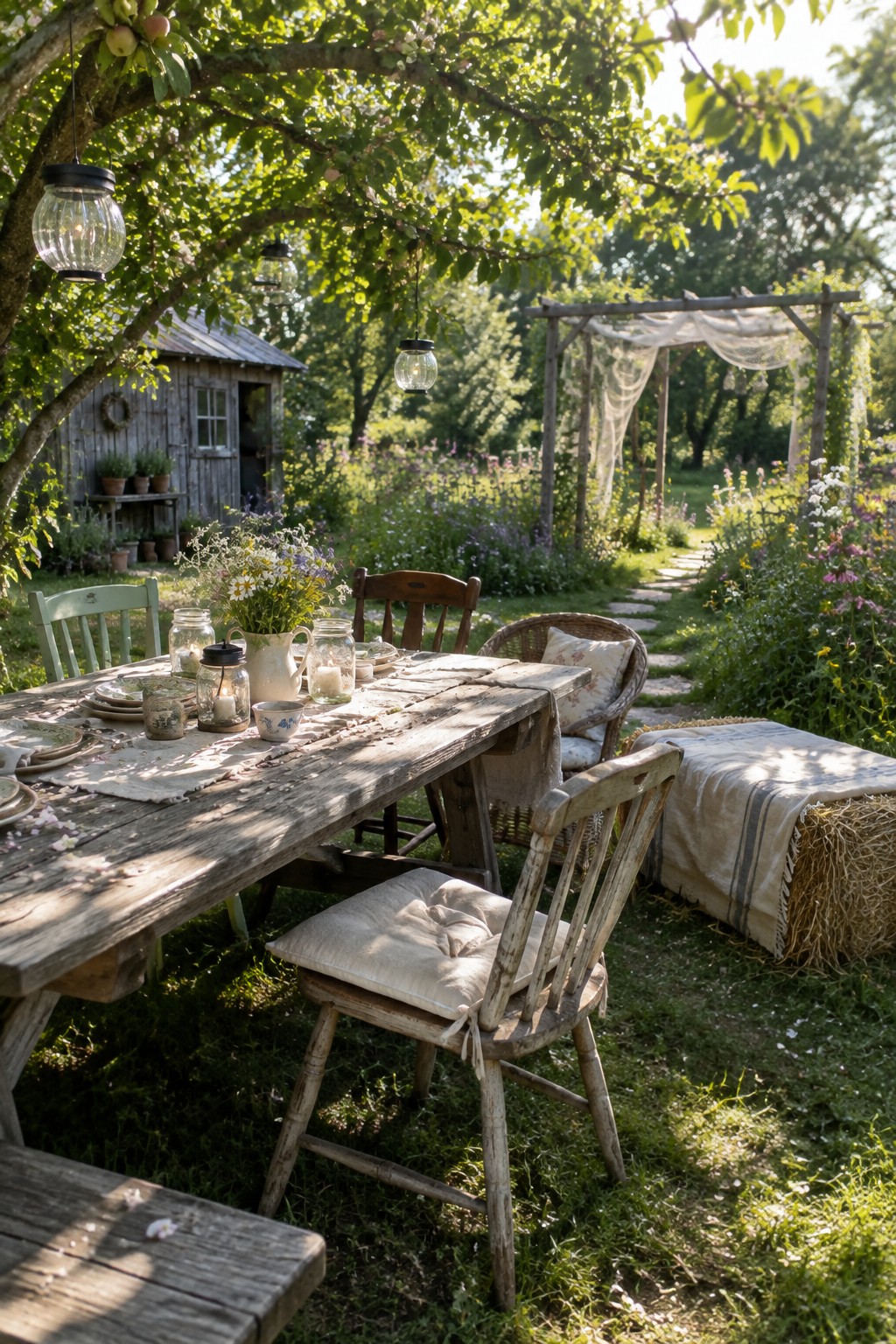
One simple way to make an outdoor dining spot feel part of the garden is to let the plantings come close instead of keeping a tidy gap. The flowers and grasses can spill around the edges of the table and chairs so the whole area sits inside the garden rather than next to it.
This approach works best in a yard with room for loose, informal beds. Just leave enough space around the seating so people can pull chairs back without crushing the plants, and choose lower growers near the table itself.
Gravel With Pavers For Outdoor Dining Zones
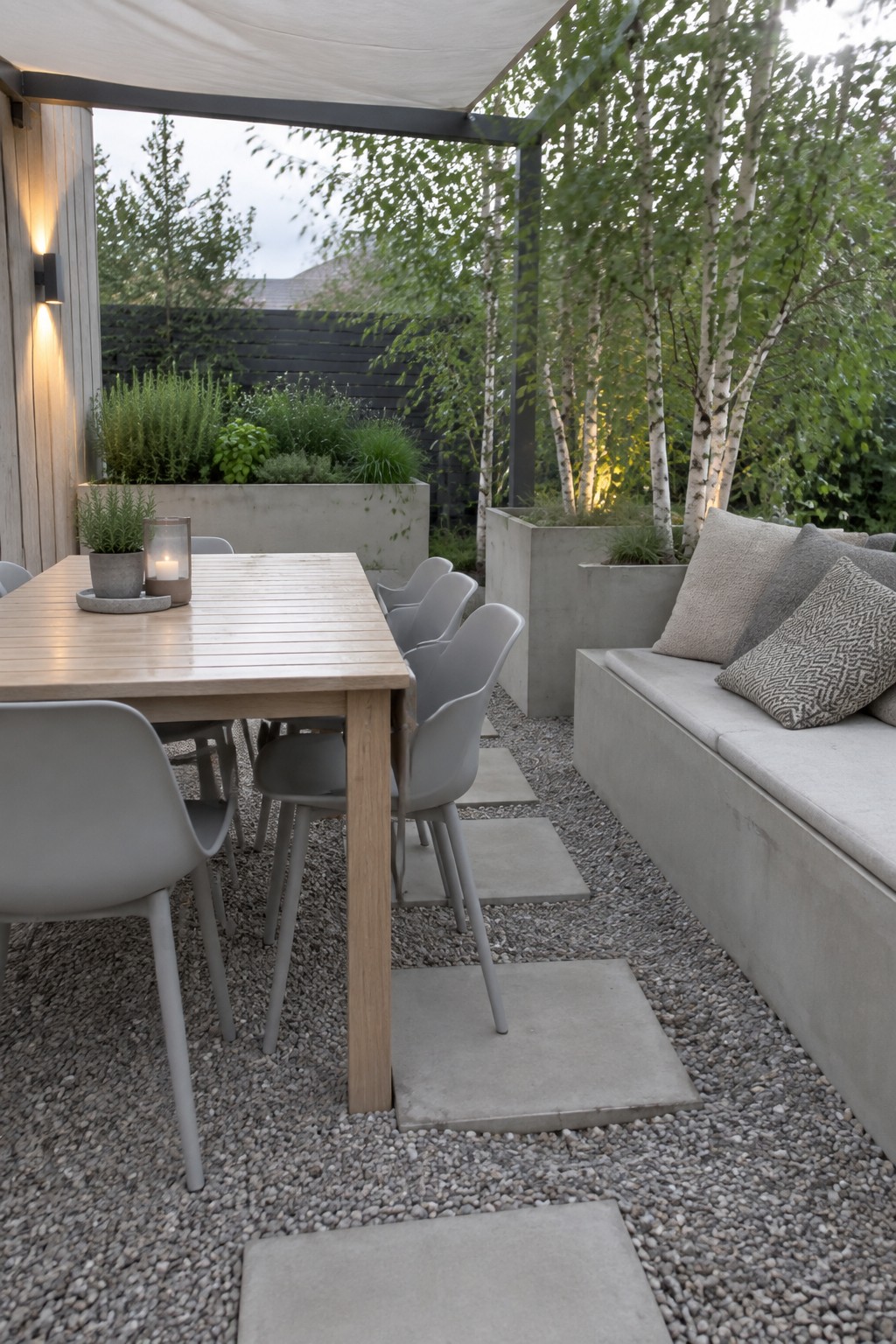
Gravel paired with simple concrete pavers works well underfoot in outdoor dining areas. It drains quickly after rain, stays cooler than solid paving in summer, and gives the space a relaxed garden feel without looking too finished. The stepping stones keep chairs stable and create clear walking paths so guests do not sink into loose stone.
This approach suits smaller yards or side patios where you want seating that feels connected to the garden rather than set apart on a deck. Keep the gravel layer thin and edged so it does not scatter into nearby beds, and choose pavers in a size that fits the scale of your table and chairs.
Anchor An Outdoor Dining Area With Large Potted Trees
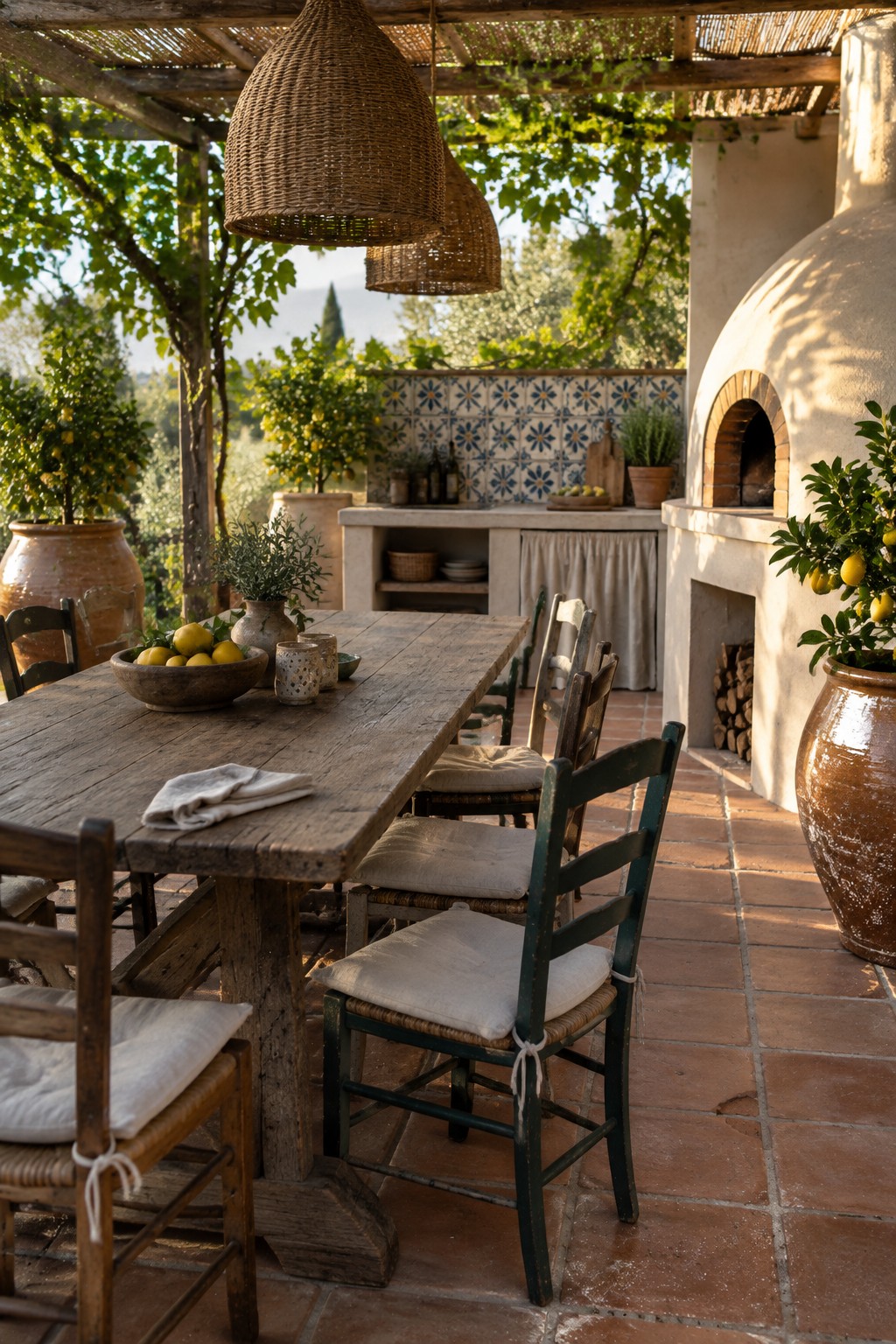
Large pots filled with citrus trees can give an outdoor dining spot a settled look without any permanent planting. They add height and greenery right where you need it most, turning a plain patio into something that feels more like a room.
This approach works best on hard surfaces like brick or tile where digging is not an option. Place the pots at the corners or along one side of the table so they frame the seating without blocking the view or the path.
Railing Planters Keep Small Spaces Green
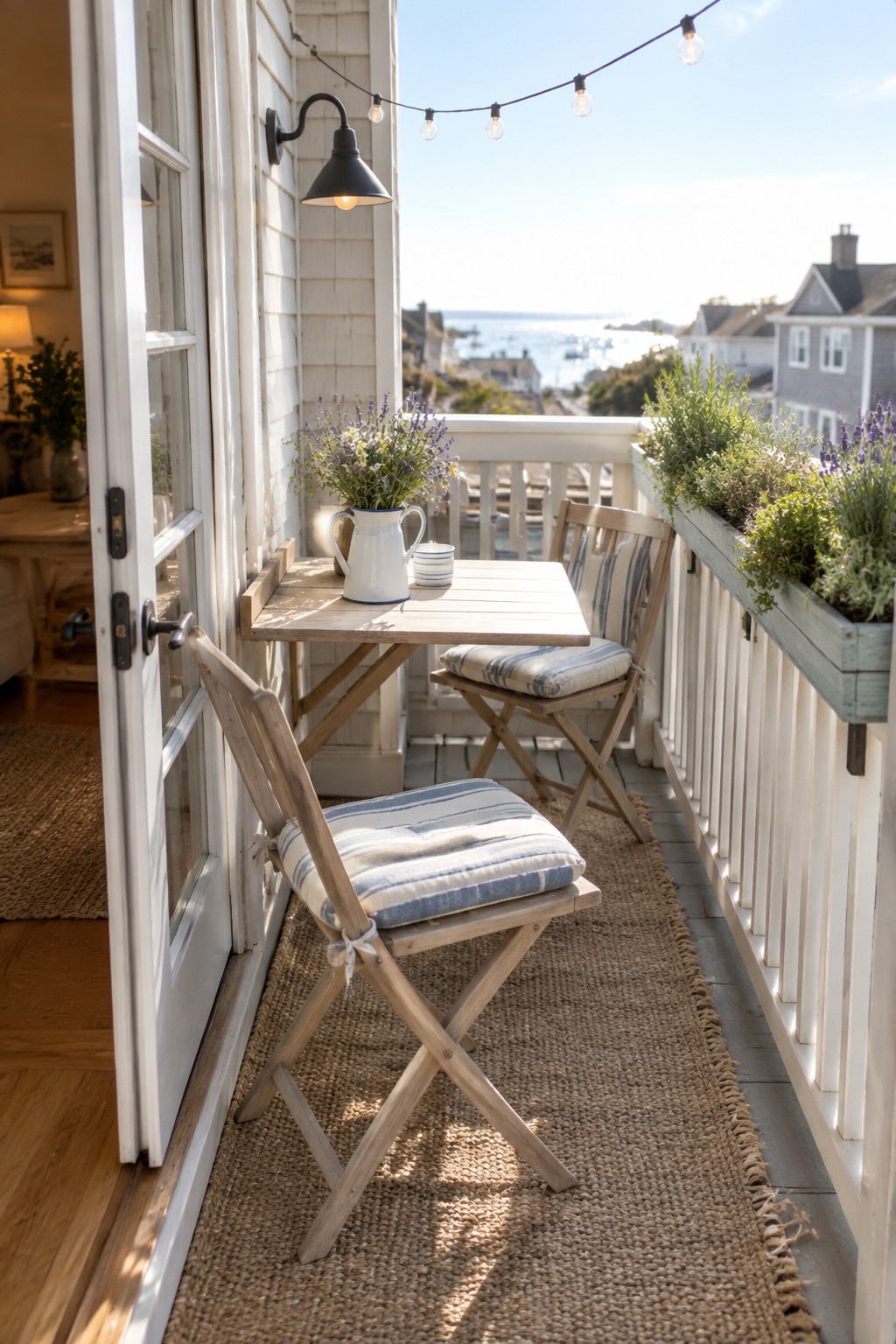
A long planter box mounted along the railing adds planting right where you sit without using up floor space. It turns a narrow balcony into a spot that feels more like a garden while leaving room for the table and chairs.
This works best on small decks or upper level seating areas where ground beds are not an option. Secure the box well, pick sturdy plants that handle wind, and keep the scale simple so the seating stays usable.
Run a Planter Down the Center of the Table
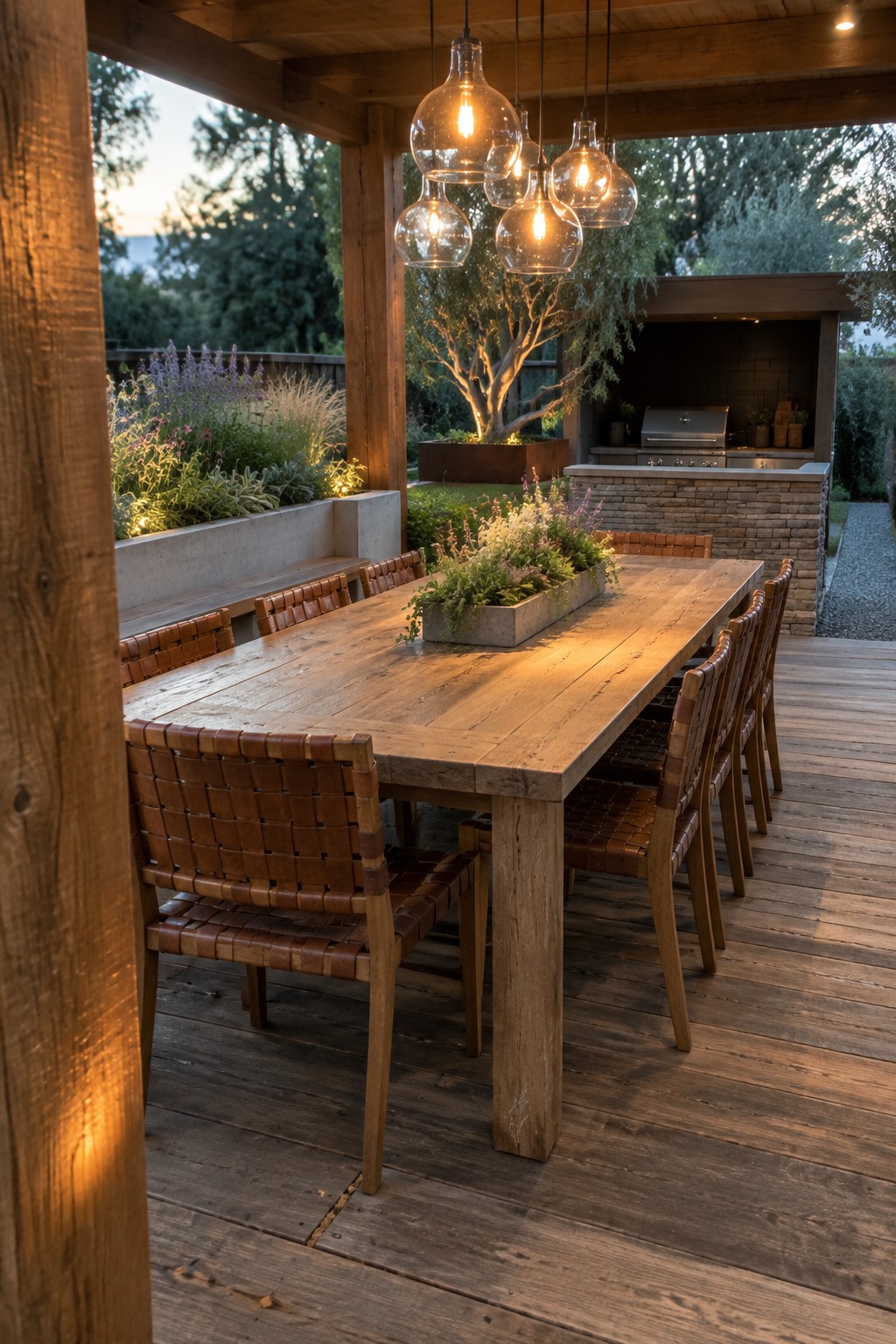
One simple way to tie landscaping right into an outdoor dining spot is to set a long planter straight down the middle of the table. The plants sit at table height so they become part of the seating instead of just sitting off to the side.
This works well on a deck or covered patio where the table can stay in place through the season. Choose a low concrete or wood trough and fill it with herbs and flowers that do not mind a bit of overhead shade. It fits homes that already have raised beds nearby and keeps the whole area feeling practical.
Use Curved Stone Walls to Shape Dining Areas
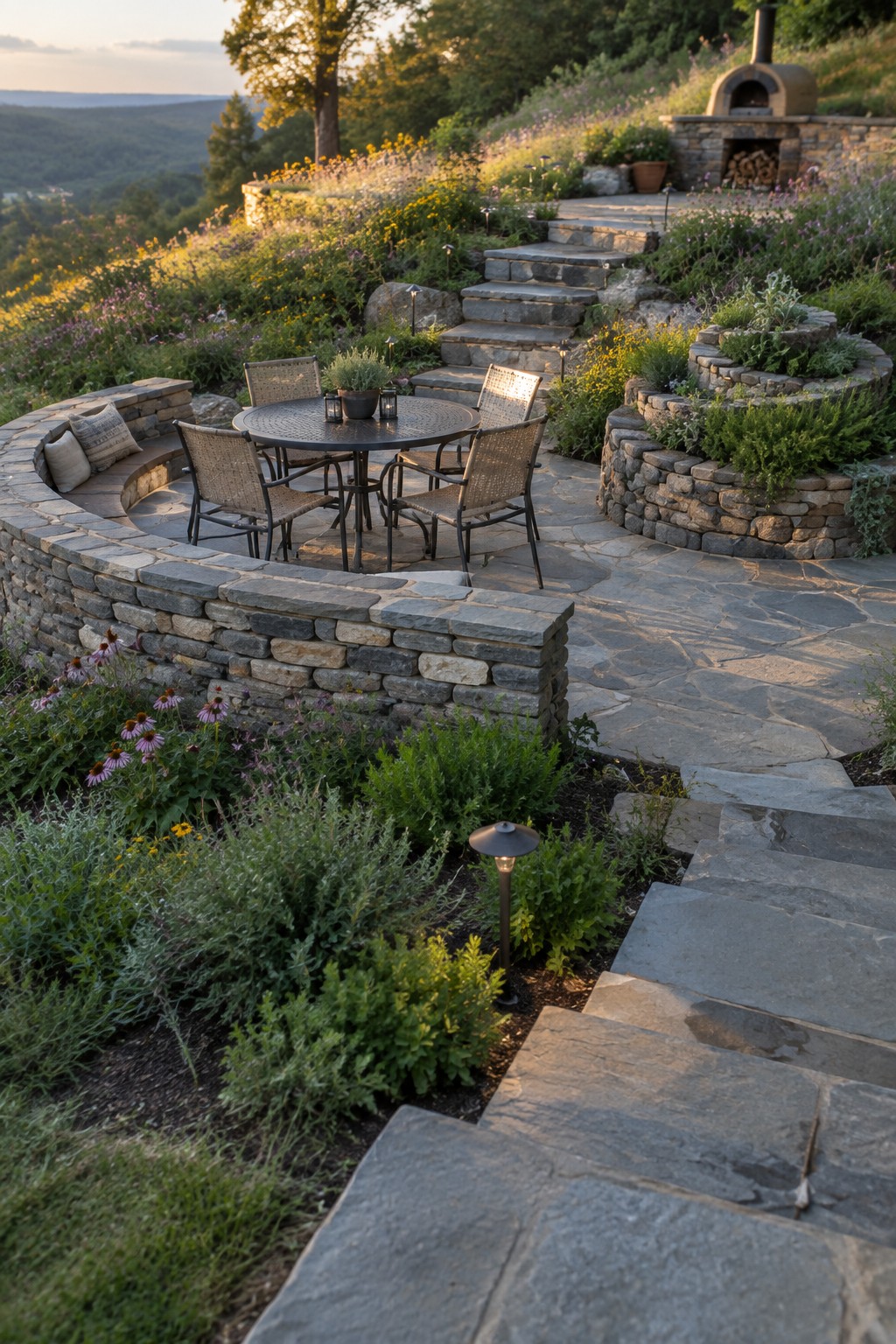
Curved stone walls work well for turning a sloped yard into a usable dining spot. They hold the soil, create a natural boundary, and give the seating area a settled feel without needing a flat lot from the start. The low height also lets plants spill over the edges so the space feels part of the garden rather than set apart from it.
This approach suits homes on hills or uneven ground where a standard patio would require heavy grading. Keep the curve gentle and match the wall height to the surrounding plantings so the table and chairs sit comfortably inside the shape. Watch the drainage at the base, since water can collect along the inside edge if the slope runs toward the wall.
Built-In Benches for Outdoor Dining Areas
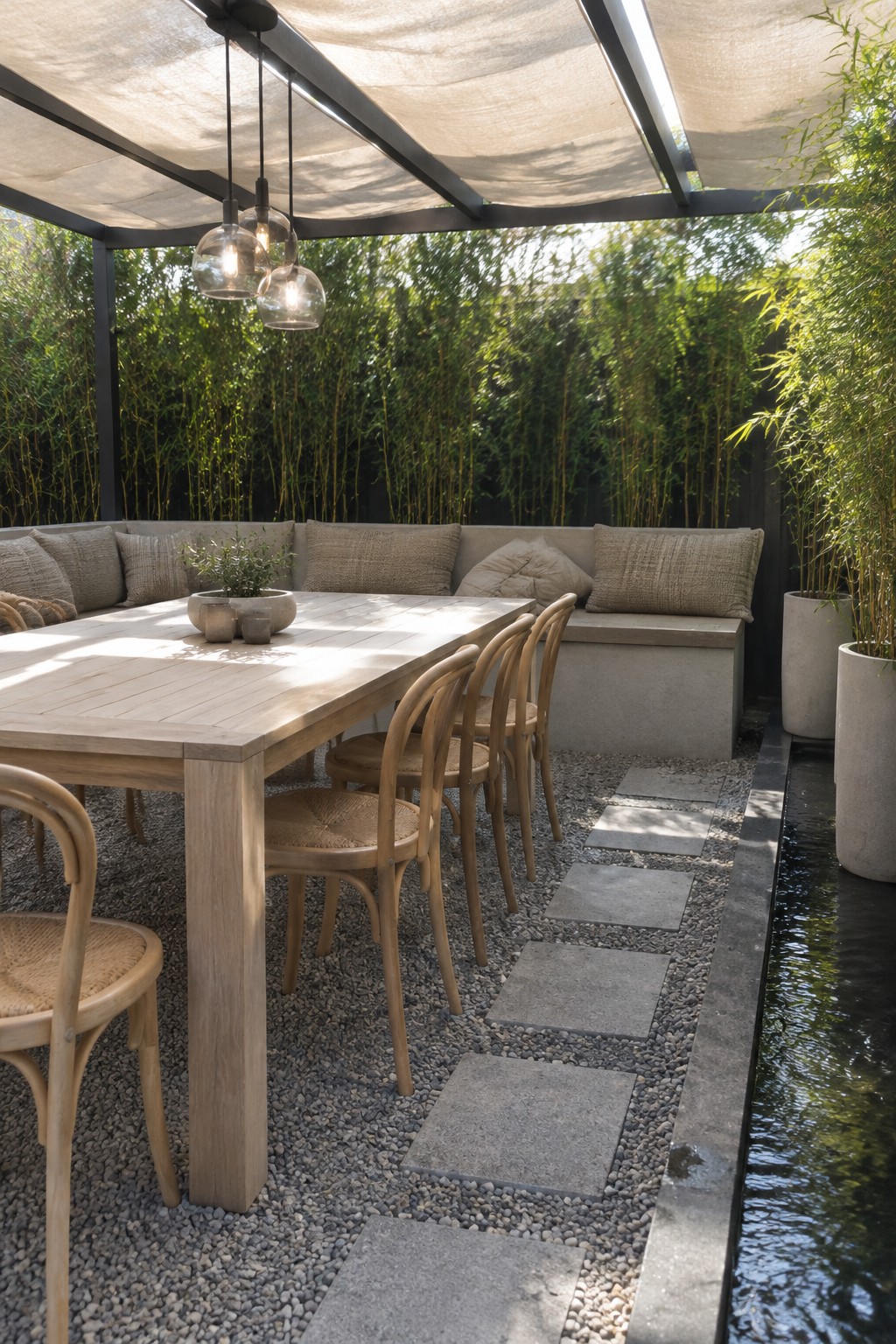
A built-in bench gives you plenty of seating without crowding the space with extra chairs. It works especially well when placed against a planted wall or fence, since the greenery adds a natural backrest and some privacy at the same time.
This setup suits homes with a decent-sized patio or deck where you want room for six or more people. Keep the bench simple in concrete or wood, add a few cushions for comfort, and make sure the table is long enough to match. Gravel or stepping stones around the edges help with drainage and keep the area from feeling too closed in.
Add Potted Plants Around Your Outdoor Dining Table
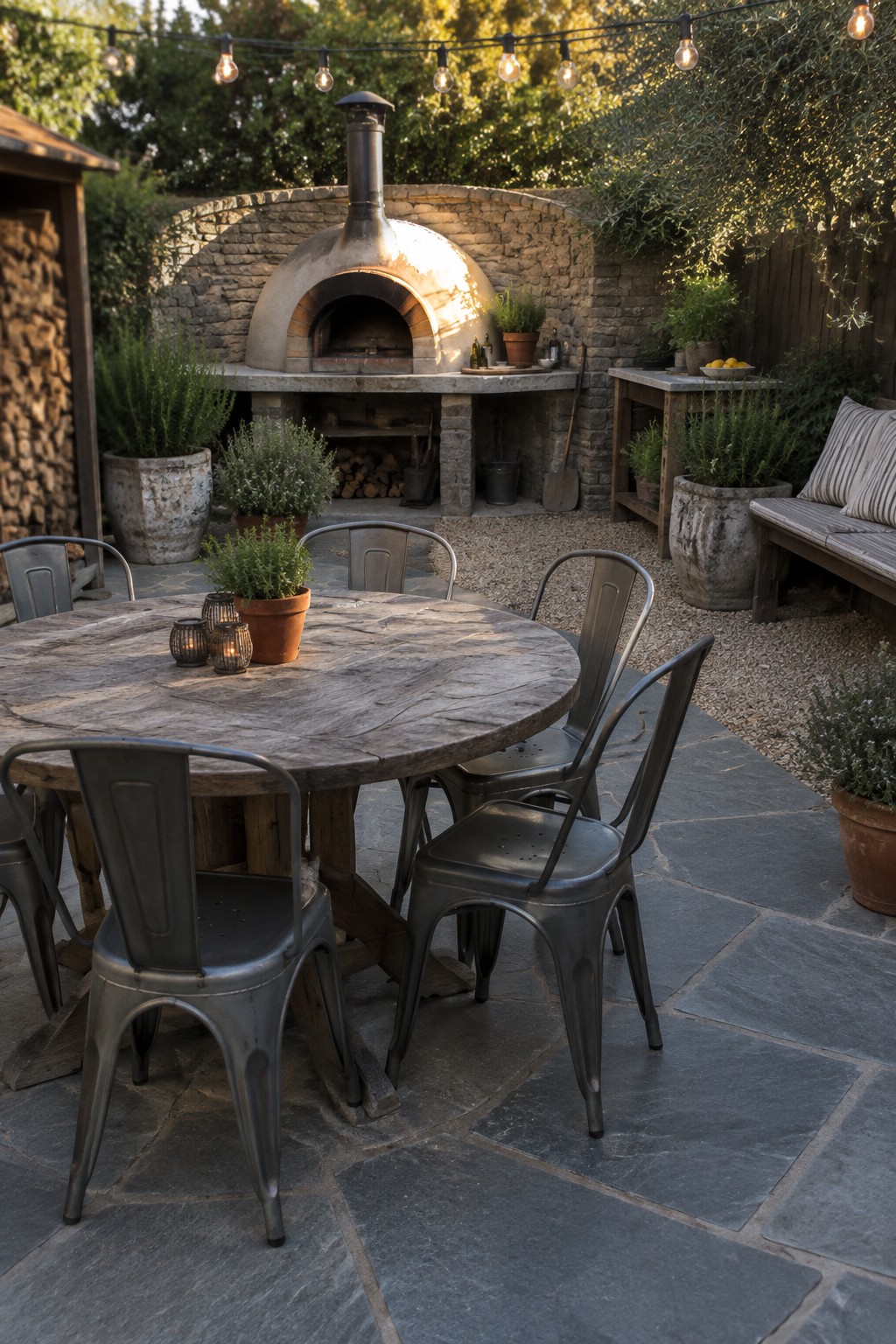
Potted plants help turn a simple patio table into something that feels more connected to the garden. They add height and greenery without needing permanent beds, and they can be moved around as the seasons change or as you rearrange the space.
This approach works well on patios or gravel areas where you want some softness but do not want to commit to built-in landscaping. Stick with a few larger pots in similar styles rather than scattering small ones everywhere, and place them near the edges of the seating area so they do not get in the way of chairs.
Enclose Outdoor Dining With Vertical Greenery

Dense walls of ivy can turn an ordinary patio or garden corner into a private dining spot that feels removed from the rest of the yard. The planting does most of the work by softening hard edges and blocking views from outside, which makes the space feel more intentional without needing extra structures.
This approach works well on smaller lots or in urban gardens where privacy matters. Use fast-growing vines on existing fences or trellises, and keep the floor simple with brick or gravel so the focus stays on the greenery. Watch how much shade the vines create over time, since too much cover can limit what else grows nearby.
Frequently Asked Questions
Q: How do I stop weeds from popping up in my new stone seating area? A: Pull weeds by hand every couple of weeks before they spread. Lay down a thick layer of mulch or landscape fabric underneath the stones from the start. This keeps the area clean without much extra work.
Q: What plants work well if I want to eat outside without bugs bothering us? A: Pick herbs like rosemary and lavender to plant nearby. Their scents help keep mosquitoes away naturally. Place them in pots around the edges of your dining zone.
Q: How can I add some shade without blocking the whole view? A: Hang a simple cloth shade sail from posts or trees. It gives relief from the sun during meals.
