


I keep coming back to the fact that many backyards stay empty during the day because the sun makes them too hot to use for long.
A pergola adds the kind of overhead cover that turns an open patch of grass or pavers into a spot where we might actually sit with coffee or dinner.
Not every layout holds up once the light shifts.
I have found that the ones that work best tie the posts to simple seating or climbing plants so the shade lands where people want to gather.
A couple of these setups look like they could fit the way my own yard gets used in the afternoons.
Pergola Shade Over A Fire Pit Lounge

A pergola works well when you want to define an outdoor space without closing it in. Placing the main seating and a fire pit underneath gives you shade during the day and a clear spot to gather once the sun goes down. The wood structure and simple rug help keep the area feeling like an extension of the house rather than a separate zone.
This setup suits most backyards that already have some paving or a level patch of ground. Keep the furniture low and the surrounding plants soft so the pergola stays the main anchor. Avoid crowding the edges with too many pots or tall screens if you want the shade to do most of the work.
Grow Vines Over the Pergola for Shade

A pergola with vines overhead gives real shade while still letting some light through, which makes the whole patio feel usable during the day. The vines also help keep the air a bit cooler without needing extra screens or curtains.
This setup works best on a patio or terrace that gets strong afternoon sun. Pick a sturdy frame and a vine that grows fast in your area, and leave enough room around the table so chairs can pull out easily.
Pergola Shade Over a Fire Pit Lounge
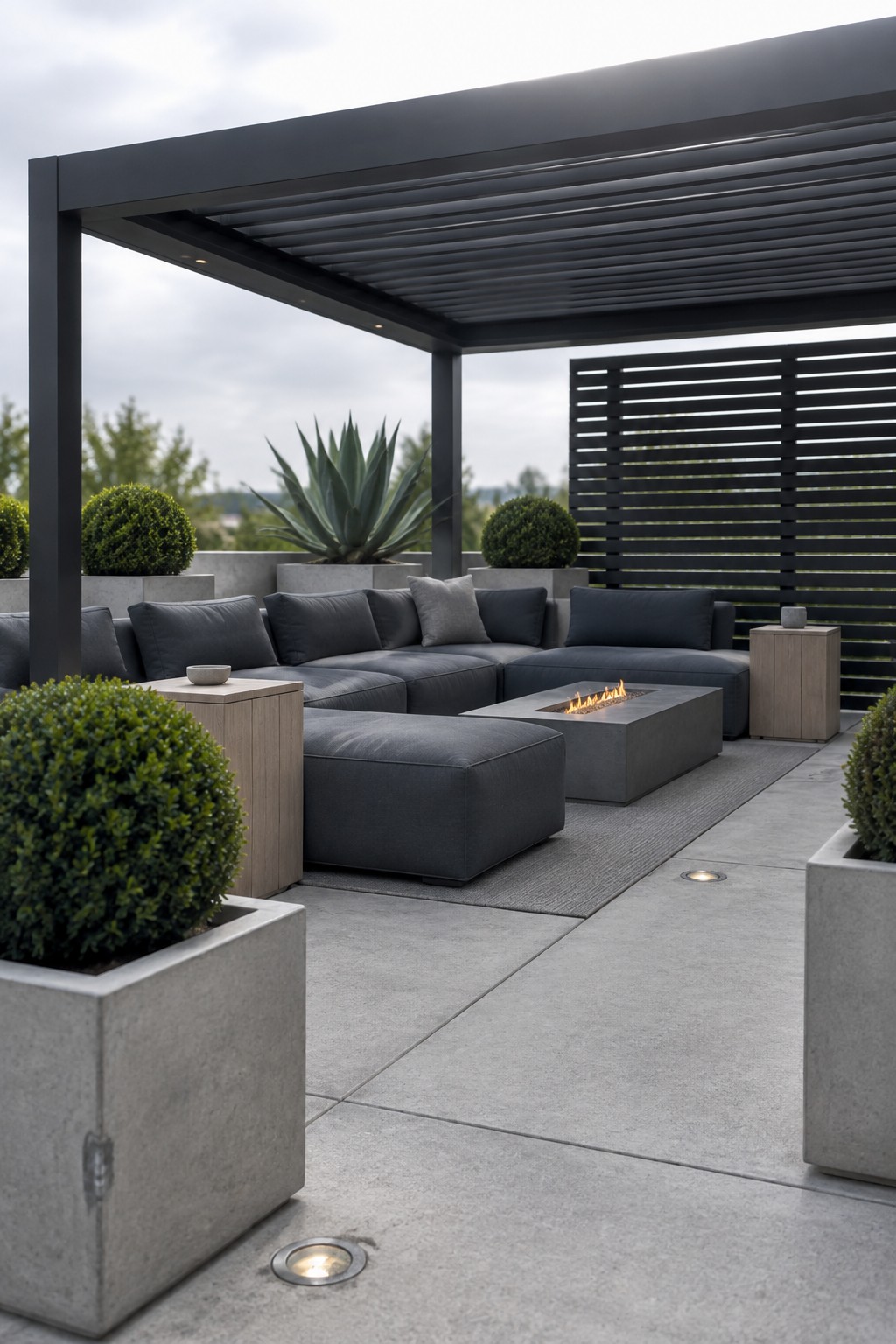
A pergola with wide slats can turn an open patio into a usable space even when the sun is strong. It gives enough cover to keep the seating comfortable while still letting in some light and air. Pairing it with a low fire pit table in the middle keeps the area centered and practical for cooler evenings.
This works best on a mid to large patio where you want one clear spot for gathering. Use neutral colors on the furniture so the structure stays the main feature. Make sure the pergola height leaves room for people to stand and move around the seating without feeling closed in.
Pergola Shade Creates a Defined Outdoor Seating Area

A pergola works well when you want shade that still feels open and connected to the garden. The wooden beams give structure while vines and hanging plants soften the edges and add a bit more coverage as they grow.
This setup suits smaller garden corners or side yards where you need a clear spot to sit without building walls. Place it over gravel or simple ground cover, and keep the seating low and relaxed so the whole area stays easy to use year after year.
Pergola Shade For Outdoor Dining

A pergola makes a simple way to mark off a shaded spot for meals outside. It turns an open patio into a defined dining area that feels protected without closing it in, and the hanging lanterns add a bit of light once the sun goes down.
This setup works best on a paved surface close to the house, especially if you have room for a table and several chairs. Keep the structure basic so it blends with the garden rather than competing with it.
Try Natural Roofing on a Pergola for Soft Shade
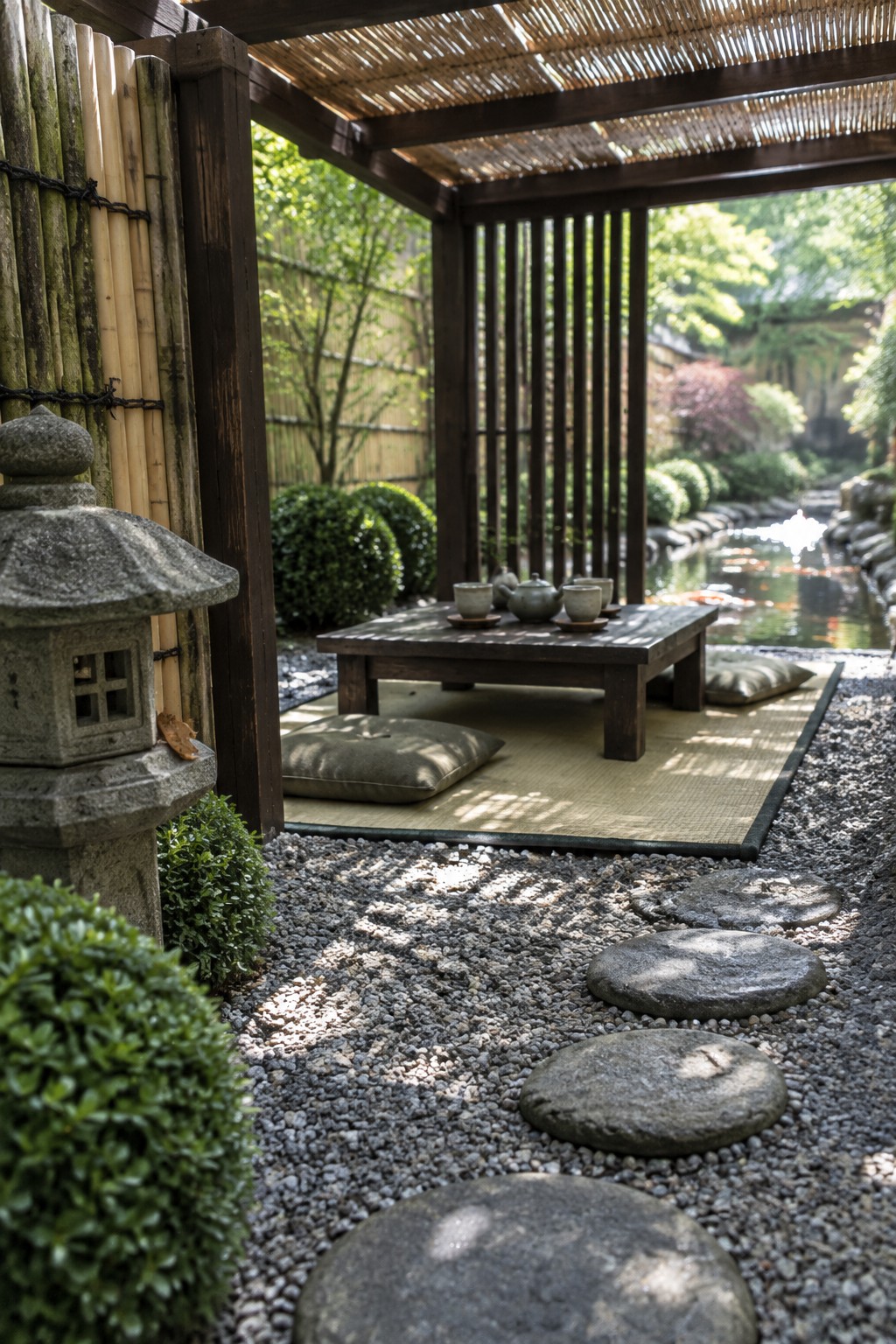
A pergola with reed or thatch roofing gives just enough shade without blocking all the light. This setup lets you sit outside comfortably even on bright days, and the material adds a simple, organic feel that fits right into a garden setting.
It works especially well over low seating areas placed near paths or water features. Keep the structure modest in size so it feels like part of the garden rather than a separate room. Avoid heavy fabrics or solid panels if you want that same gentle light effect.
Pergola Shade Over Poolside Seating

A pergola with a thatched roof gives steady shade right over the seating area. It keeps the space usable during the day instead of leaving everything exposed to full sun.
This setup works best on homes that already have a pool or wide patio. Keep the frame in natural wood and add simple cushions so the whole spot feels relaxed rather than formal.
Cover a Pergola With Climbing Roses for Shade

A pergola with roses growing over it gives light shade without blocking the sky completely. The open structure lets air move through while the flowers add color and a bit of privacy around the table. It turns a simple patio into a place that feels more settled and used.
This works best in smaller gardens where you want to mark off one spot for meals. Set the table in the middle and let the roses fill in over a season or two. Just check that the posts can handle the weight once the plants mature.
Pergola Shade Over an Outdoor Kitchen
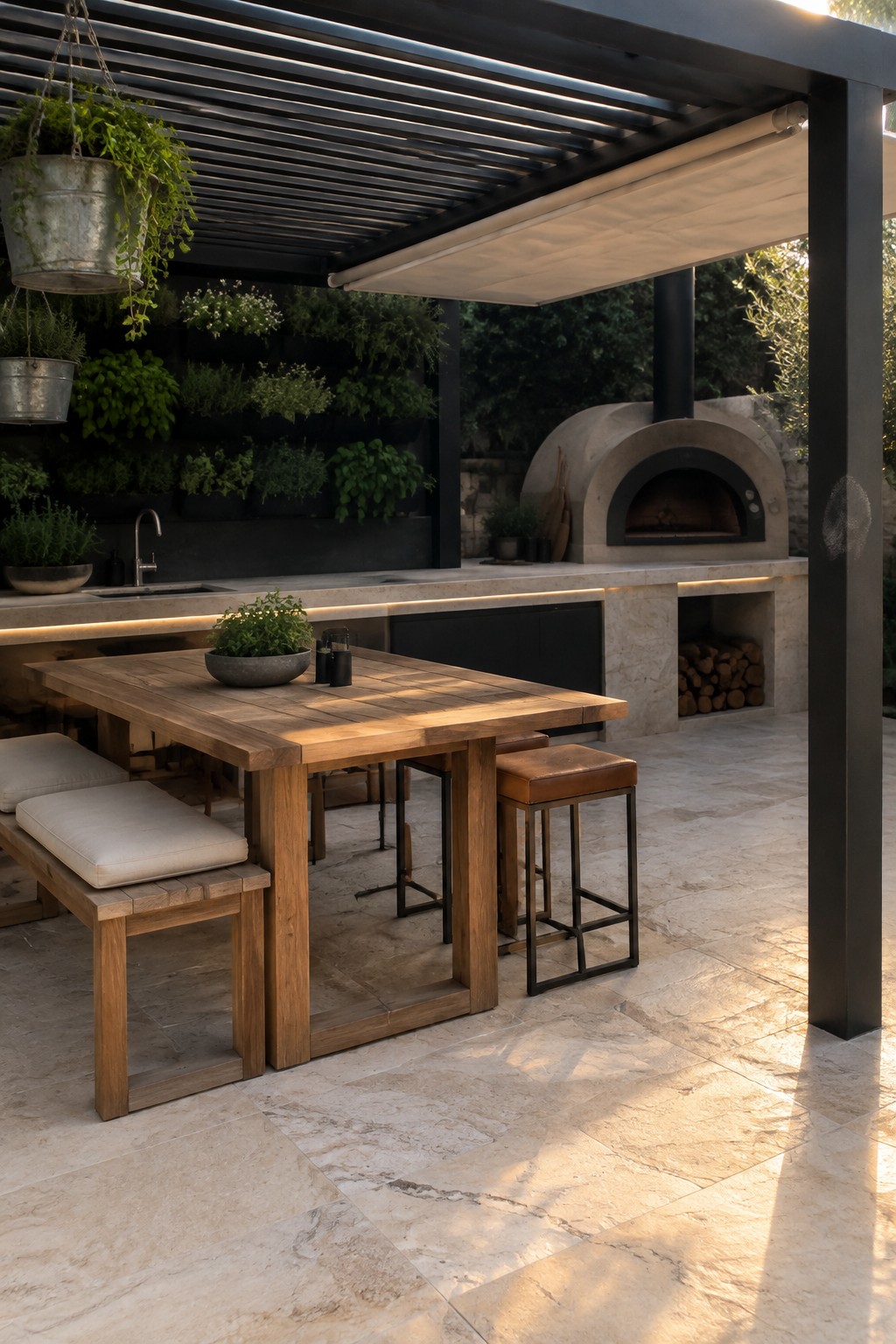
Putting the kitchen and dining table under the same pergola makes the whole space feel like one room instead of a few separate spots. The shade keeps the area comfortable during the day, and the setup encourages people to stay outside longer without having to move back inside when the sun gets strong.
This works well on patios that get heavy afternoon light. Keep the pergola structure simple so it does not compete with the cooking area, and leave enough room around the table for people to move easily when the space is in use.
Pergola Shade Over a Sectional Sofa

A pergola with a fabric shade cover gives a deck or rooftop space real protection from the sun without closing it in. The light material keeps things cooler underneath while the open sides still let air move through. This setup works well when you want to use the area during the day instead of only in the evening.
Place a large sectional directly under the shade so the whole seating area stays comfortable. It suits rooftops or wide patios where sun exposure is strong, and it pairs easily with potted plants around the edges. Just check that the frame can handle wind if the space is high up.
Pergola Shade Over A Fire Pit

A pergola gives an outdoor fire pit its own clear spot without making the whole yard feel closed in. The overhead beams add just enough cover and structure so the seating feels like a real room instead of a few chairs scattered around.
This setup works best on a stone or paver patio where you can circle chairs close to the fire. Keep the pergola simple and add string lights along the rafters so the space stays usable after dark.
Pergola Shade Over Outdoor Seating

A pergola makes a patio seating area feel more intentional and usable during the day. The slatted roof blocks direct sun without turning the space into a dark cave, so you can sit outside longer even when the light is strong.
This setup works best on open patios that get afternoon sun and pairs well with simple paving and low plantings. Keep the furniture light so the area does not feel crowded, and make sure the pergola size matches the seating group rather than stretching across the whole yard.
Pergola Shade Over Outdoor Dining Tables

A pergola covered in vines creates reliable shade right over a garden table. The structure keeps the space usable during the day without needing a full roof or heavy canopy.
This setup suits larger yards or wooded lots where you already have some natural cover nearby. Let the vines grow thick on top so light comes through in patches, and keep the table and chairs simple so the whole area stays relaxed.
Pergola Shade With Colorful Patterned Panels
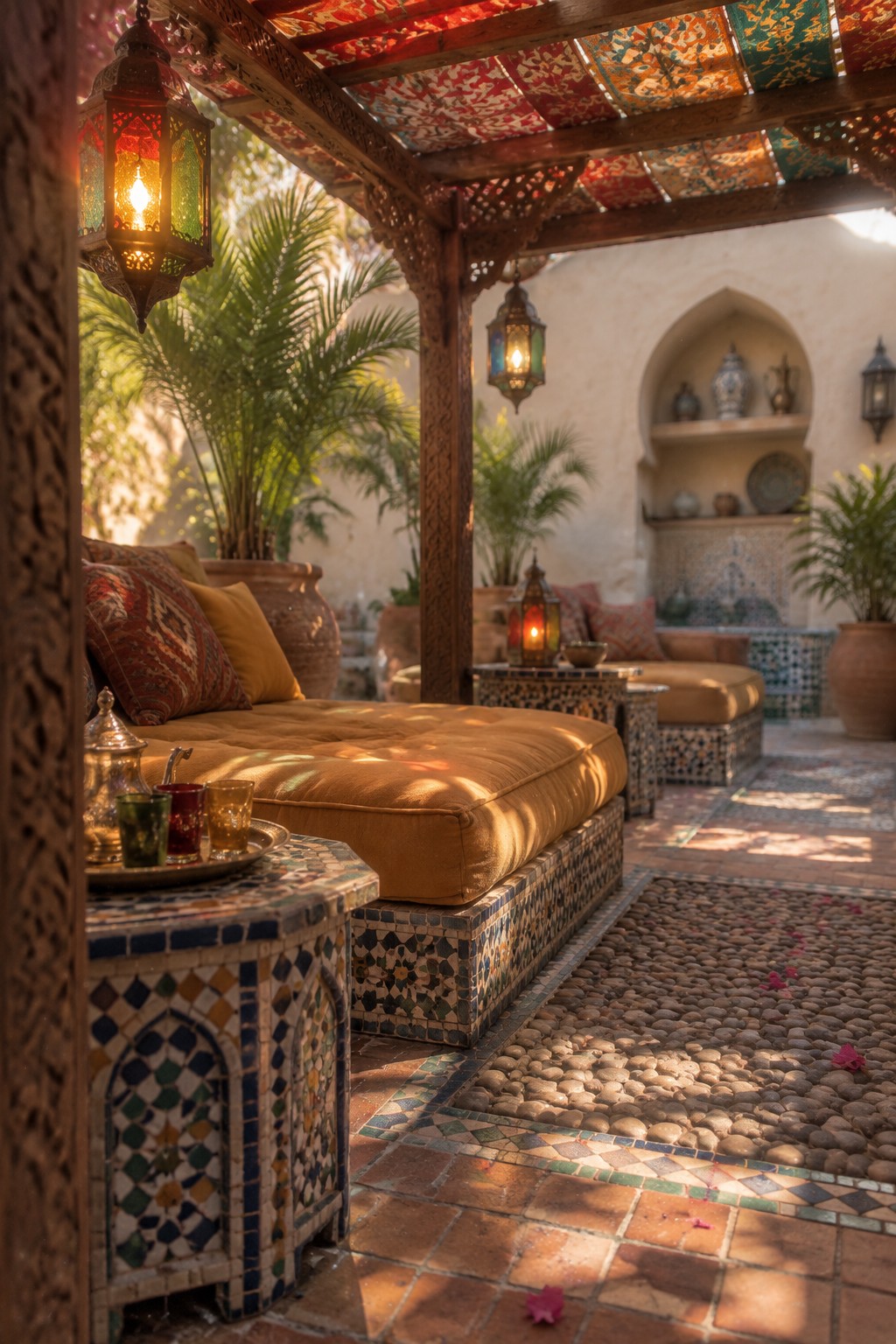
One simple way to improve a pergola is to cover parts of the top with patterned panels. The panels filter sunlight into soft colors and keep the area cooler without making it feel closed in.
This approach works best in sunny courtyards or patios that already have seating and a few lanterns. It suits homes that lean toward relaxed, layered styles and gives you shade that still feels open and welcoming.
Pergola Shade Over A Hot Tub Deck
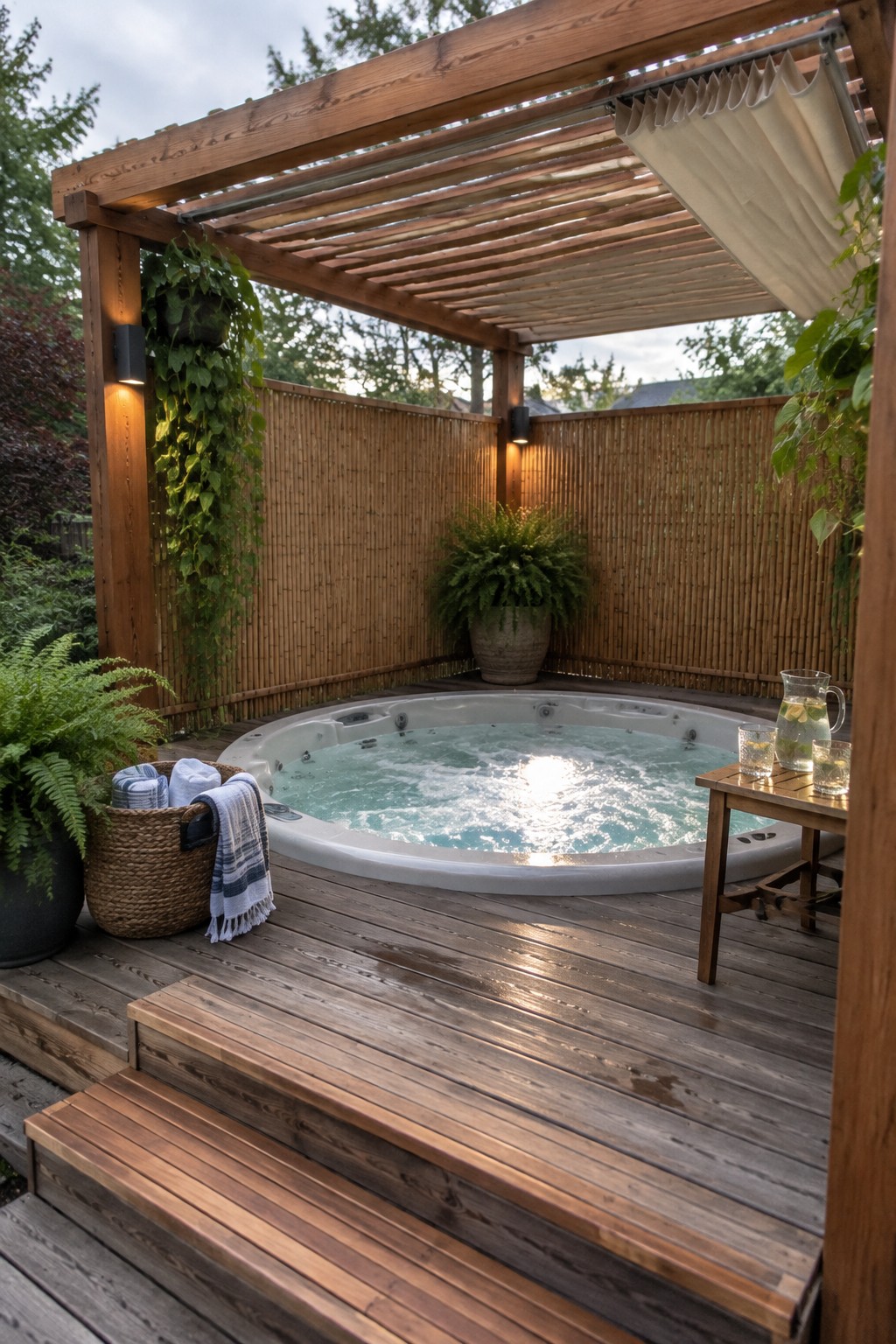
A pergola gives you steady shade right where it matters most over a hot tub. It cuts the glare, keeps the water from heating up too fast in the sun, and makes the whole spot feel more settled on a deck.
This setup works best on a mid-sized deck with some fencing already in place for privacy. Add the pergola first, then keep the planting simple so the space stays easy to use year round.
Shade an Outdoor Kitchen with a Pergola Roof

An outdoor kitchen needs real protection from the sun if you want to use it regularly. A pergola with a solid roof overhead creates steady shade and turns the space into a place where cooking feels normal instead of like a chore in the heat.
This setup works best in backyards that already have some structure or fencing around the edges. Open shelves and a simple hanging rack keep pans and herbs within reach while leaving the floor clear for moving around the grill. It suits homes where outdoor meals happen often rather than just on weekends.
Pergola With Built-In Benches

A pergola with built-in benches gives you a shaded seating area without needing extra furniture. The structure itself creates the space, and the benches stay put through all seasons.
This works best in modest backyards or side gardens where you want to mark off a spot for sitting. Keep the ground simple with gravel or pavers, and add pots nearby if you want more color without crowding the area.
Line a Pergola Path with Trough Planters

A pergola already gives shade, but adding long trough planters along both sides turns the walkway into something more useful. The metal troughs keep the planting neat and contained while the brick path stays clear for walking. It works especially well in narrower gardens where you want greenery without crowding the route.
This setup suits homes with straight garden access or side yards that need a bit of structure. Metal troughs hold up well outdoors and let you change the planting each season without much effort. Just make sure the planters sit low enough that they do not block the view through the space.
Vertical Gardens Free Up Space on Small Balconies
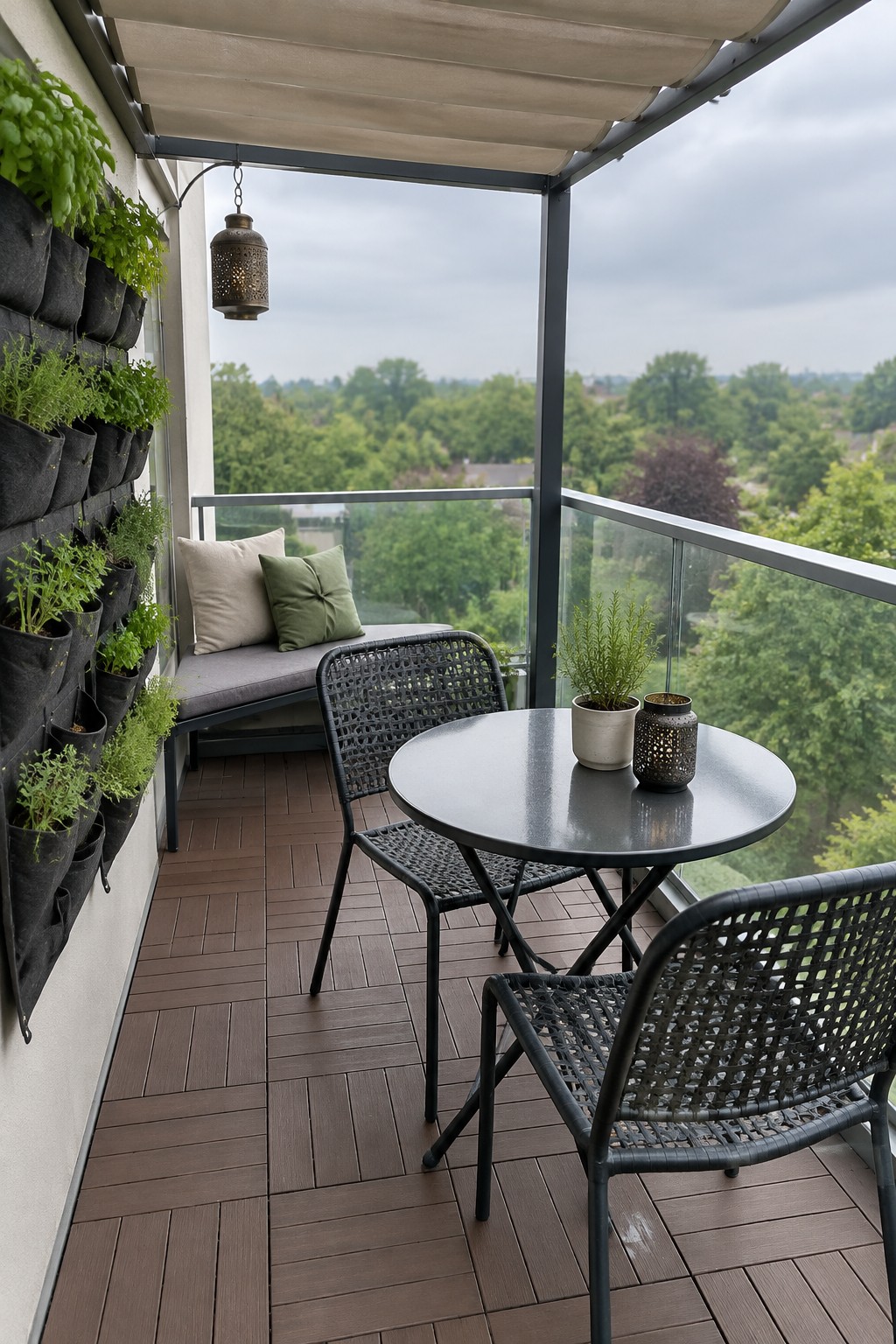
A vertical garden wall gives you room for lots of plants even when the floor is already taken up by chairs and a table. It turns an empty side wall into something useful and green without crowding the walking area or blocking the view.
This works best on balconies or narrow patios where ground space is limited. Mount fabric pockets or a simple panel system on the wall and choose herbs or leafy plants that handle the local light. Keep the watering system simple so it does not drip onto the deck below.
Pergola Shade Over A Hanging Bench

A pergola gives a hanging bench the kind of cover that makes it usable all day instead of just in the early morning or late evening. The structure blocks direct sun while still letting air move through, so the seat stays comfortable even when the rest of the garden feels warm.
This setup suits smaller yards or side gardens where you want one clear spot to sit without taking up much floor space. Keep the bench simple with loose cushions and a light throw, and let the path lead right to it so the whole area feels intentional rather than scattered.
Outdoor Dining Under Pergola Shade

Placing a dining table under a pergola next to the pool creates a shaded spot that stays comfortable even on bright days. The structure blocks direct sun while still letting you enjoy the view of the water and garden right beside you.
This works best on homes where the pool deck has room for seating without crowding the edge. Keep the table size modest so the pergola covers it fully and the space feels usable for regular meals rather than just special occasions.
Frequently Asked Questions
Q: What plants work best if I want quick shade coverage? A: Go with fast growing vines like jasmine or grape. They climb easily and fill in the gaps within a season or two. Water them regularly at first so the roots take hold.
Q: How do I add a seating area without crowding the space under the pergola? A: Start with a simple bench along one side. It keeps the middle open for walking through while giving you a spot to relax. Add cushions for comfort.
Q: Is it worth adding curtains for extra shade on hot days? A: Yes, lightweight outdoor curtains slide easily on a rod. They block the sun when you need it most and pull back when you want more breeze. Choose a fabric that dries fast after rain.
