

When a garden sits on a slope the first thing that stands out is how quickly the ground shifts after rain and how few plants can actually take hold without help.
Terraced beds fix the basic layout problem by turning the hill into a series of flat planting zones that keep soil in place and give roots room to grow.
That difference shows up right away.
Over the seasons the terraces also start to define pathways and edges so the whole space feels more organized instead of just sliding away.
I would test the versions with low stone or timber borders first because those materials hold up without much fuss once the plants fill in.
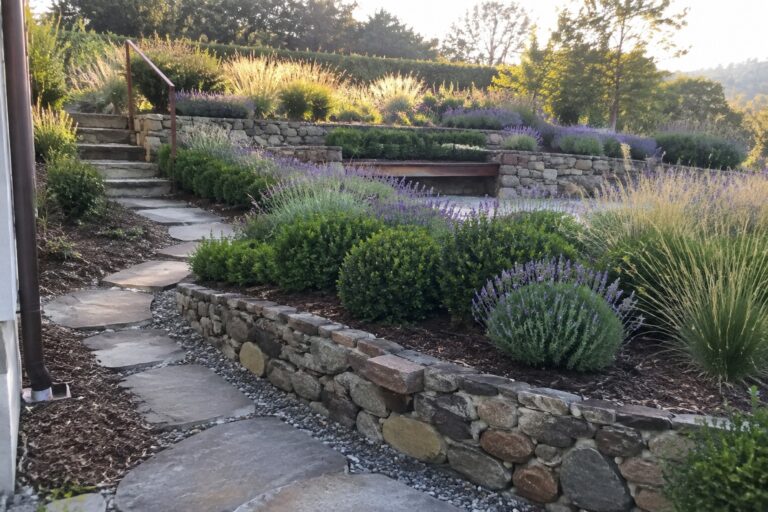
Stone Terraces Create Usable Planting Beds On A Slope

Stone retaining walls turn a steep yard into a series of flat beds that are much easier to plant and maintain. The walls hold the soil in place while giving each level its own planting zone, so you can grow different things without everything sliding downhill.
This approach works best on moderate slopes where the walls stay under three feet high. Check local rules for taller walls and make sure the base has good drainage so water does not push against the stone.
Terraced Beds Turn Slopes Into Usable Space

Sloped gardens often lose soil and water before plants can take hold. Terraced beds solve this by creating flat planting areas that stay put and give roots a better chance.
Wooden sides work well for holding the levels in place and blending with the steps. This setup suits side yards or back gardens where you need both access and room for shrubs. Make sure the wood is treated for ground contact or it will rot faster than you expect.
Terraced Beds With Curved Metal Edging

Curved metal beds make it easier to terrace a slope without building full retaining walls. They hold the soil in place while letting the planting step down naturally, which keeps the garden from feeling flat or forced.
This approach works best on moderate slopes where you want clear planting zones but still need good drainage. The metal also holds heat, which can help in cooler climates, though it is worth checking how the curves will line up with any paths or steps nearby.
Terraced Beds For Balcony Gardens

Tiered wooden planters let you grow plenty of vegetables and herbs even when space is tight. The different levels make watering and harvesting easier while keeping plants from crowding each other.
This setup suits urban balconies or small decks that slope or sit above ground level. Use sturdy lumber, line the boxes well, and group plants by height so the lower beds stay sunny.
Terraced Beds Keep Vegetable Gardens Level On Slopes

Sloped yards often make growing vegetables difficult because water drains away too fast and soil shifts over time. Terraced beds fix this by creating a series of flat planting areas that hold moisture evenly and keep plants stable. The mix of brick walls and timber edges gives the beds enough strength to handle the grade without looking too heavy.
This approach works best in smaller back gardens where every level inch counts. Start with the lowest bed and work upward, making sure each step has a clear path beside it so you can reach the plants without compacting the soil. It suits homes that already have some change in level rather than flat sites where raised beds alone would be enough.
Gabion Walls Make Terracing Simple
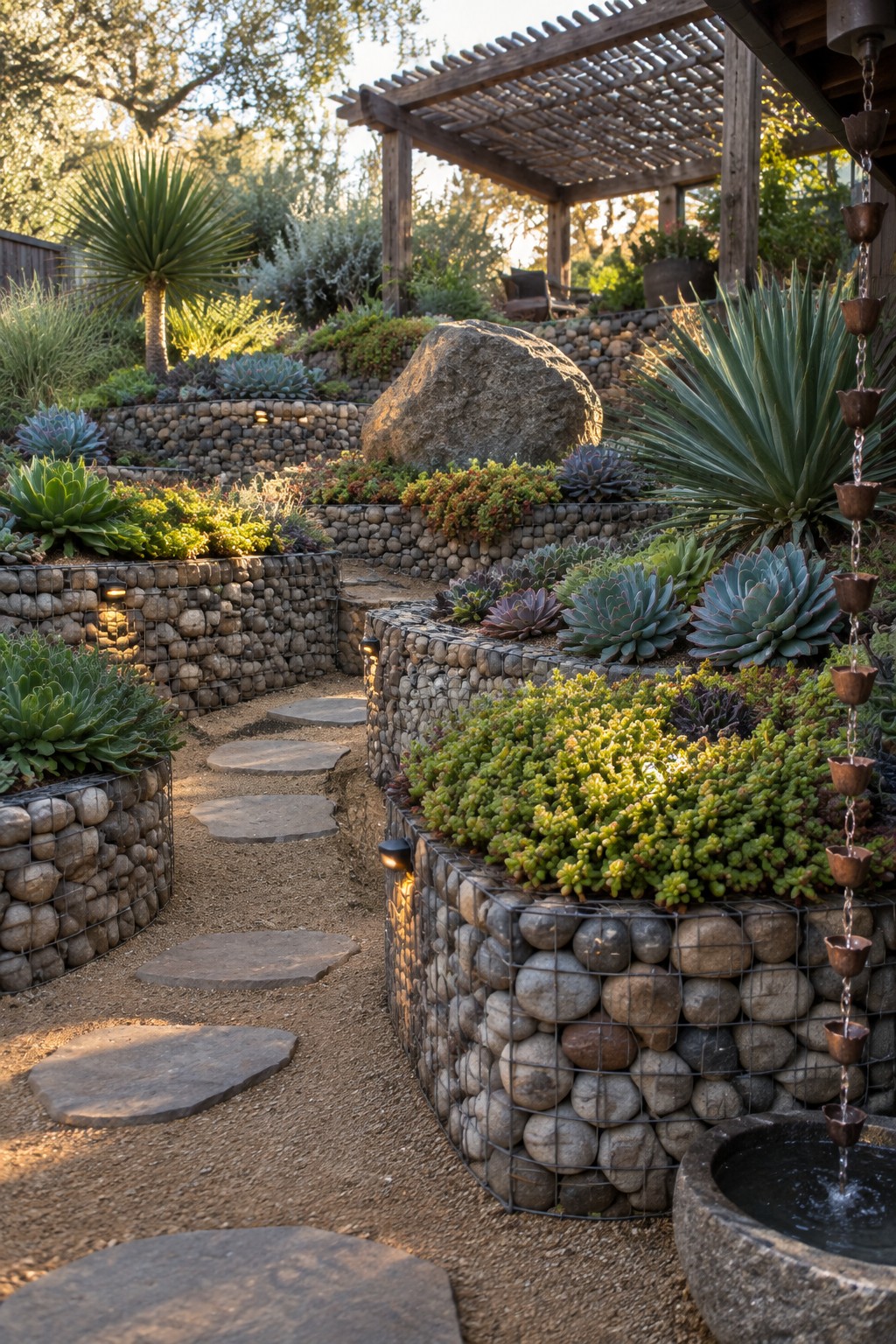
Gabion walls filled with stones give you a sturdy way to terrace a sloped garden without needing fancy masonry. The cages hold the soil in clean levels and let water drain through, which keeps the beds from sliding during heavy rain.
This setup works best on yards that drop several feet and need both planting space and a walking path. Stack the cages to match the slope, then add a simple stepping stone path between the tiers so the garden stays easy to reach and maintain.
Terrace A Slope With Timber Retaining Walls
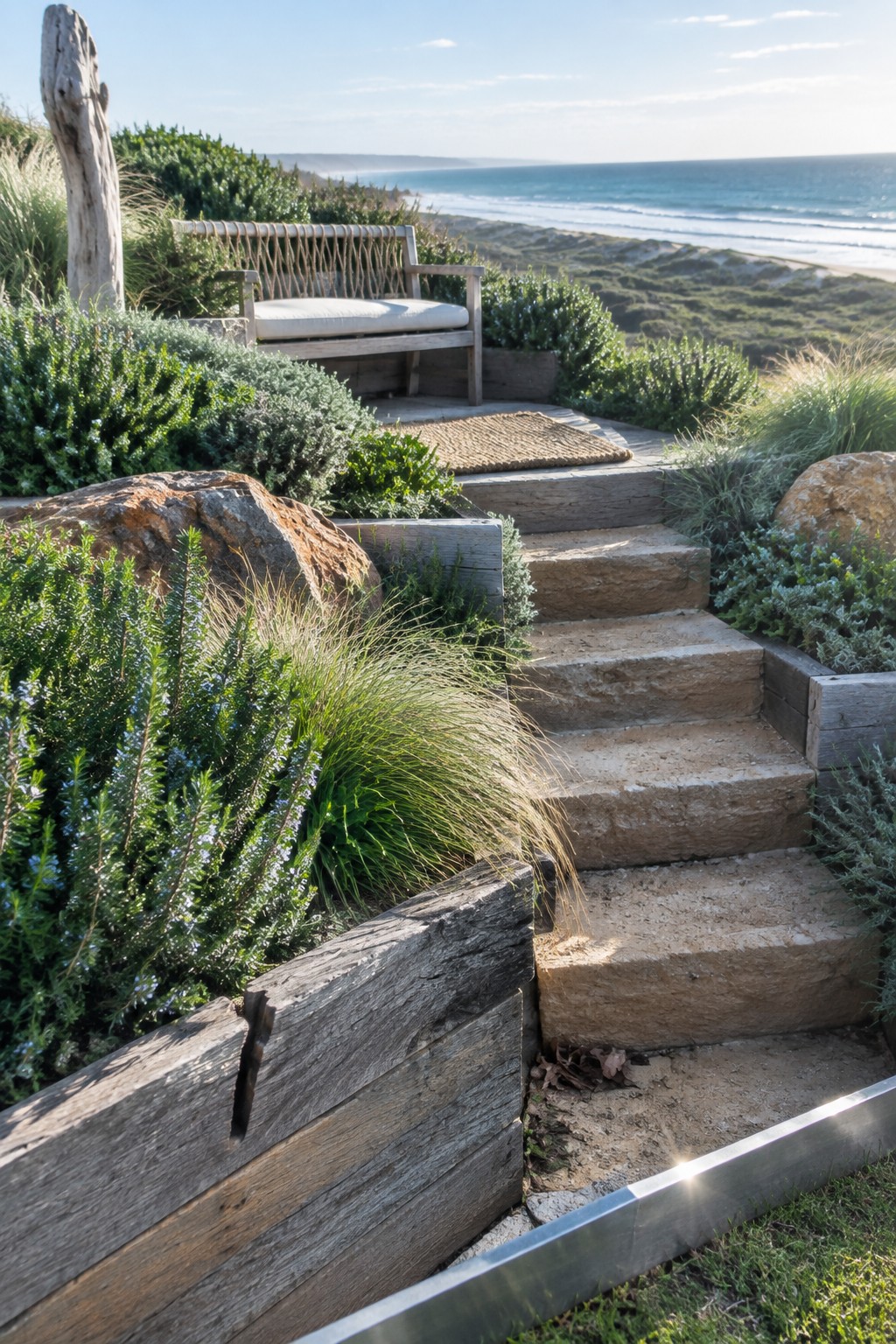
Wooden retaining walls work well on sloped sites because they hold back soil in simple, straight runs and create flat planting areas that are easier to maintain. The timber gives the beds a solid edge without looking too formal, and it pairs naturally with stone steps that let you move through the garden without fighting the hill.
This approach suits homes on gentle to moderate slopes where you want planting beds rather than a single steep bank. Keep the wood thick and well anchored, and make sure each terrace is wide enough for roots to spread. Avoid very wet soils unless you add drainage behind the walls.
Terraced Beds Help Manage Steep Garden Slopes

Terraced planting beds turn a difficult slope into something you can actually work with. The flat levels make planting, watering, and weeding much simpler than trying to garden straight up a hill.
Stone walls hold each bed in place and create natural steps between them. This approach works well on moderate to steep yards where drainage and access are the main problems.
Terraced Beds With Integrated Seating

Terraced beds solve the problem of a sloped garden by creating level planting areas that stay in place. Building a bench directly into one of the terraces adds seating without taking up extra space or breaking up the flow of the garden.
This works best on moderate slopes where you need both planting room and a place to sit near the house or pool. Match the bench material to the retaining walls so it reads as part of the structure instead of an afterthought.
Terraced Beds With Metal Edging
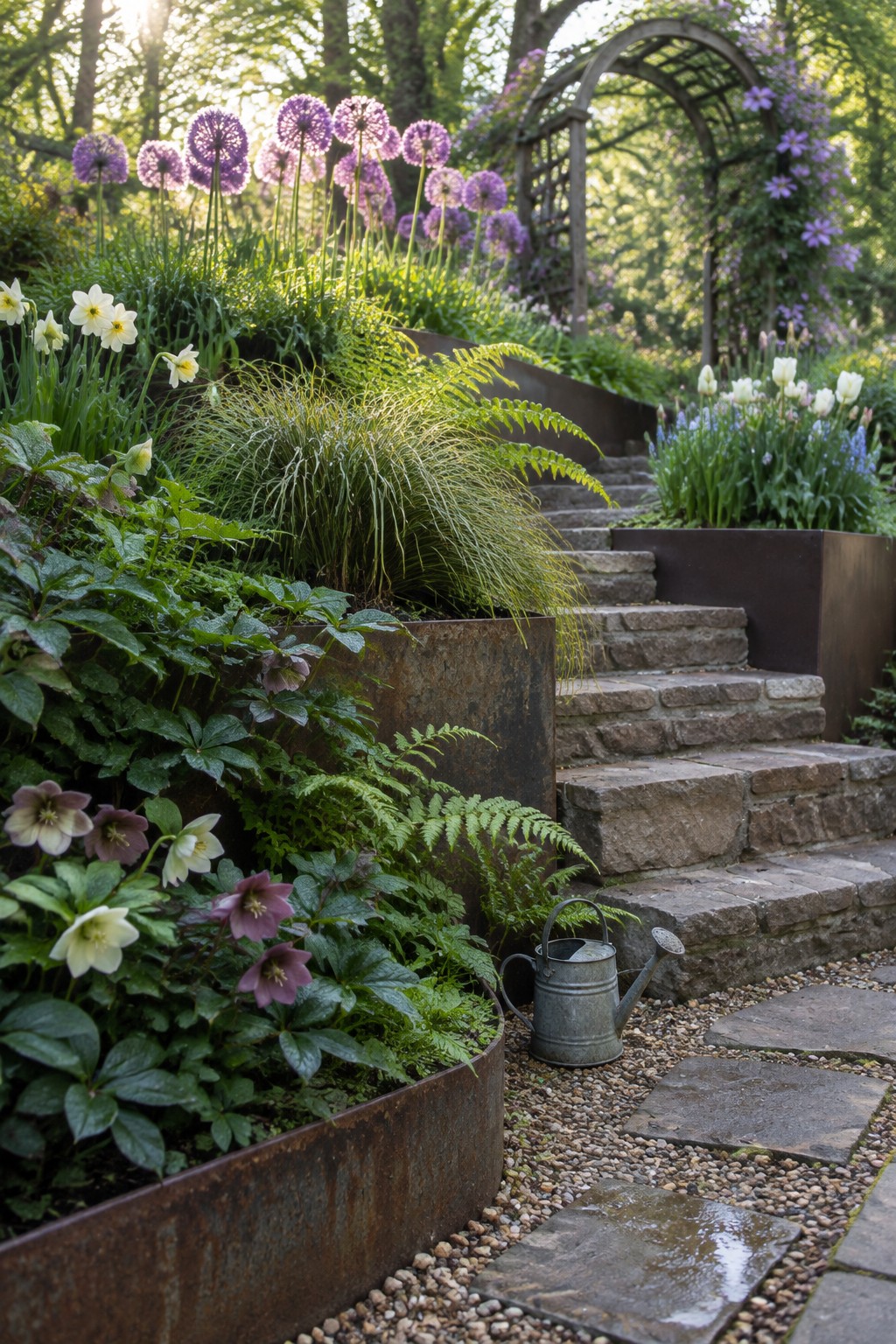
Metal planting beds make it easier to terrace a slope without major excavation. They hold the soil in place at different levels and keep each planting area flat and contained.
This works best on moderate inclines where you need structure but still want a natural look. Set the beds along the fall of the land, then link them with simple stone steps and gravel paths so the garden stays easy to walk through and maintain.
Terracing A Slope With Retaining Walls

Terracing turns a sloped yard into flat planting beds that stay in place and are easier to work with. Retaining walls hold the soil while creating level areas for grass, shrubs, and flowers without constant erosion.
Low walls that follow the natural curve of the land work best on gentle to moderate slopes. Adding lights along the steps between levels makes the garden safer and more usable after dark. This approach suits homes with backyards that drop away from the house.
Terrace A Slope With Brick Retaining Walls
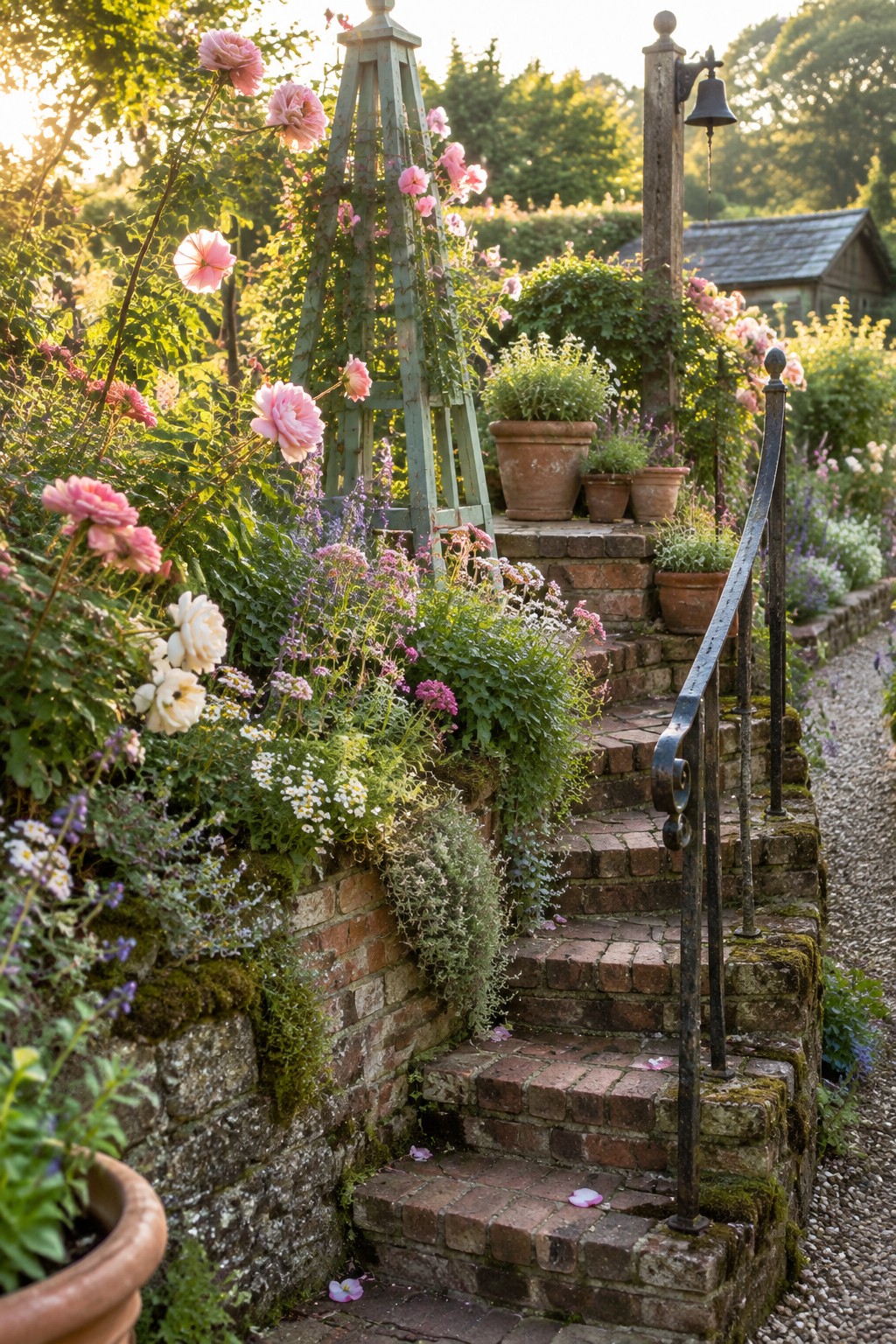
Brick walls work well for turning a sloped garden into a series of flat planting beds. They keep the soil from washing down the hill and give you steady levels where plants can settle in and grow without constant erosion problems.
This setup suits homes with noticeable drops in the yard and works best when you want both beds and a clear path through the garden at the same time. Keep the walls low enough to build by hand, and let the plants spill over the edges to soften the lines.
Terrace A Slope With Stacked Timber Beds
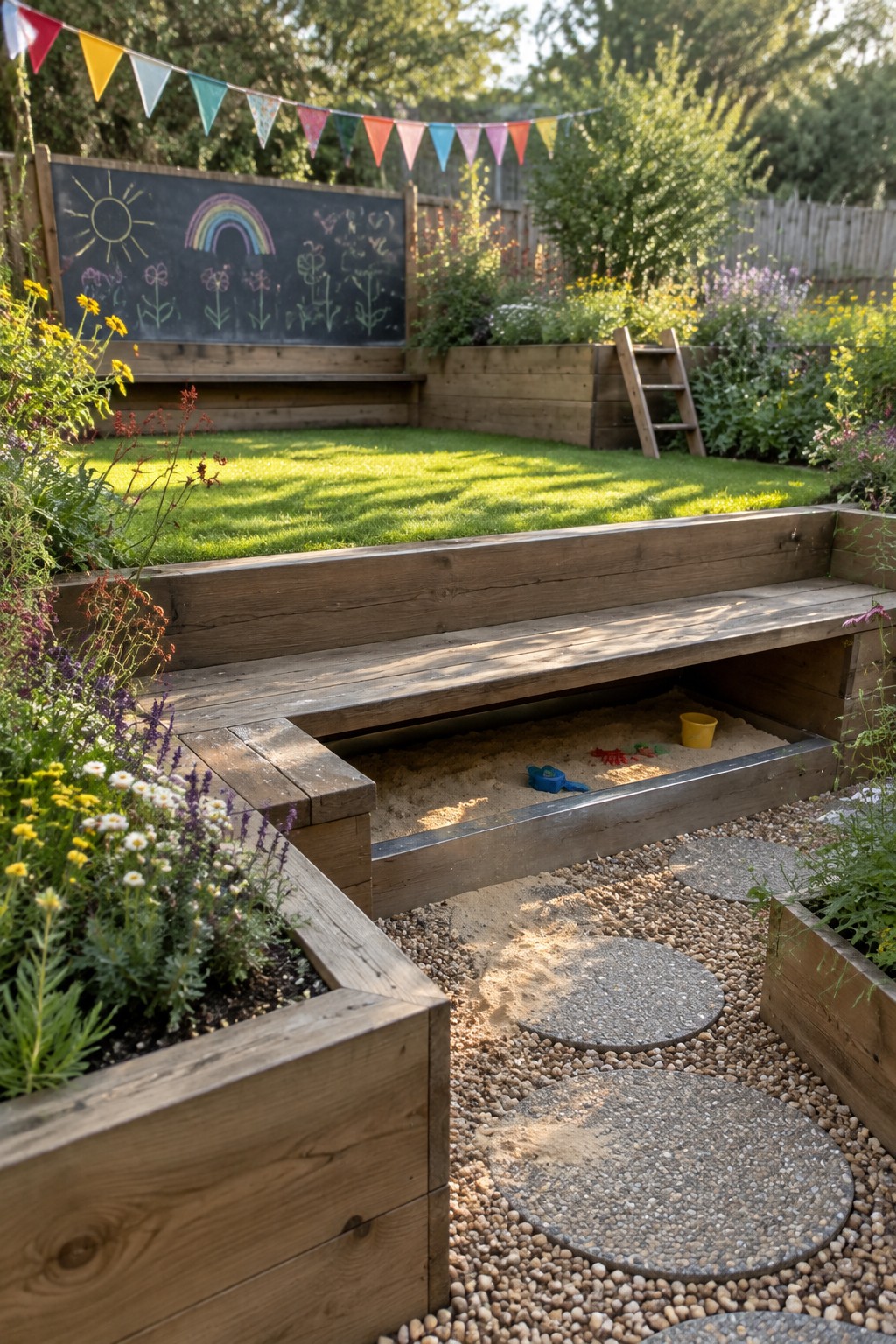
Wooden retaining walls stacked in steps turn a sloped garden into flat planting areas that are much easier to work with. The beds hold soil in place, stop erosion, and give you several levels for different plants without needing major earth moving.
This approach works well on gentle to moderate slopes where you want clear planting zones rather than a single steep bank. Keep the timber thick enough to hold the soil pressure and add a simple path or gravel strip between levels so the beds stay accessible after rain.
Stone Terraces Make Sloped Gardens Easier To Plant
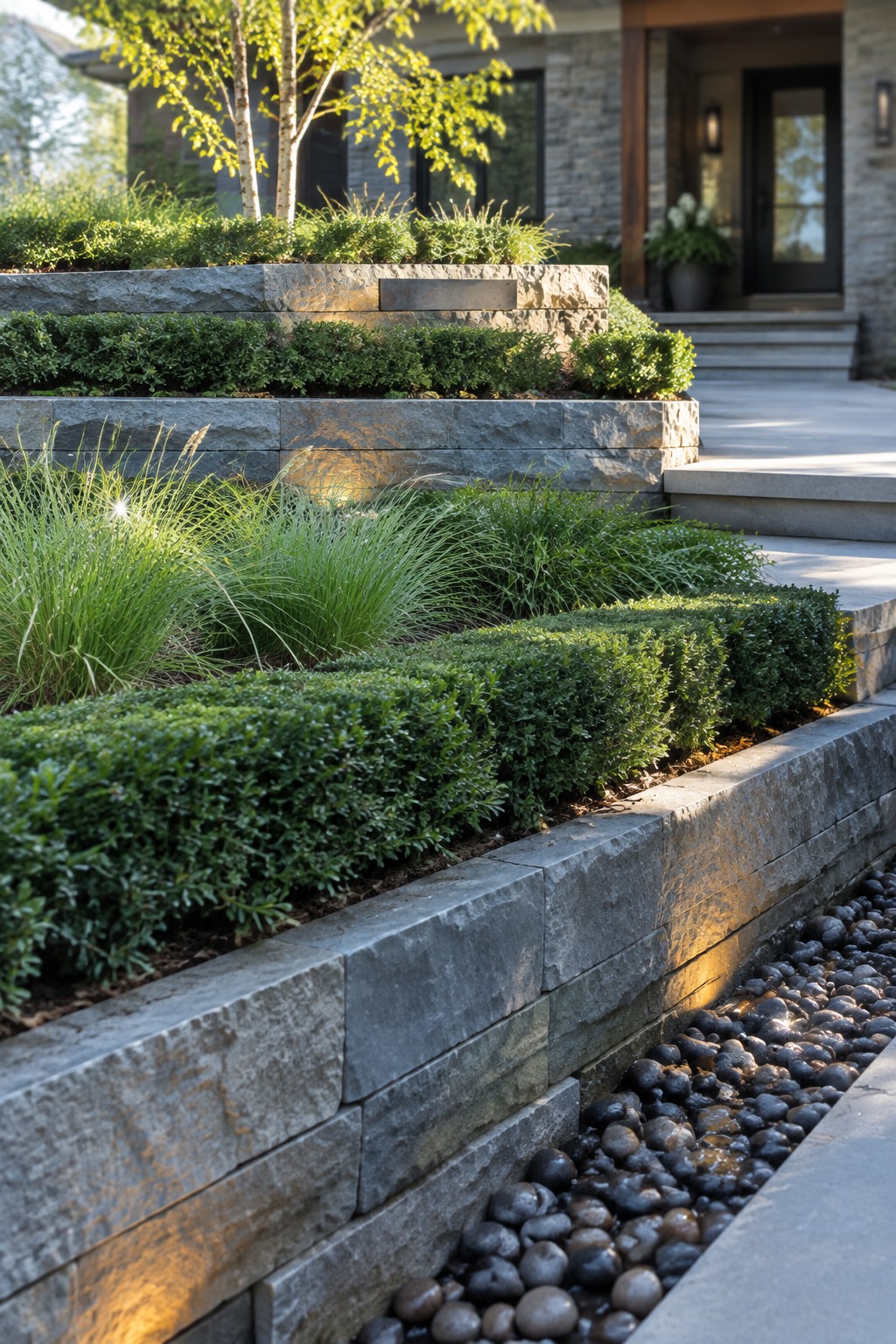
Sloped yards often turn into problem areas where soil washes away and planting feels uneven. Building terraced beds with stacked stone walls solves this by creating flat, stable planting zones that hold everything in place.
This works especially well on gentle to moderate slopes right beside the house. Use stones that match your existing paths or walls, and keep the plant layers simple so each terrace stays easy to reach and maintain over time.
Terrace Sloped Gardens With Wood Retaining Walls

Wood retaining walls turn a steep slope into a series of flat planting beds that are much easier to work with. The levels keep soil from washing away and let you group plants by height or color without everything sliding down.
This setup suits homes with backyards that drop away from the house. Start with pressure-treated timber or similar material, set each wall level, and backfill as you go so the beds stay stable through the seasons.
Frequently Asked Questions
Q: How do I stop soil from washing down the slope once the terraces are built?
A: Mix plenty of compost into the soil in each bed before planting. The extra organic matter helps everything bind together. Water slowly at first so the new roots can take hold without creating ruts.
Q: Which plants actually thrive in these stepped beds?
A: Place taller sun lovers on the upper levels where they get full light. Tuck shade friendly ground covers on the lower terraces that stay cooler. Match each spot to what already grows well in that light.
Q: How do I keep watering from turning into a runoff mess?
A: Run a basic soaker hose along the back of each terrace. It lets water soak in slowly instead of racing downhill. Check the setup after a heavy rain to see if any spots need adjusting.
