

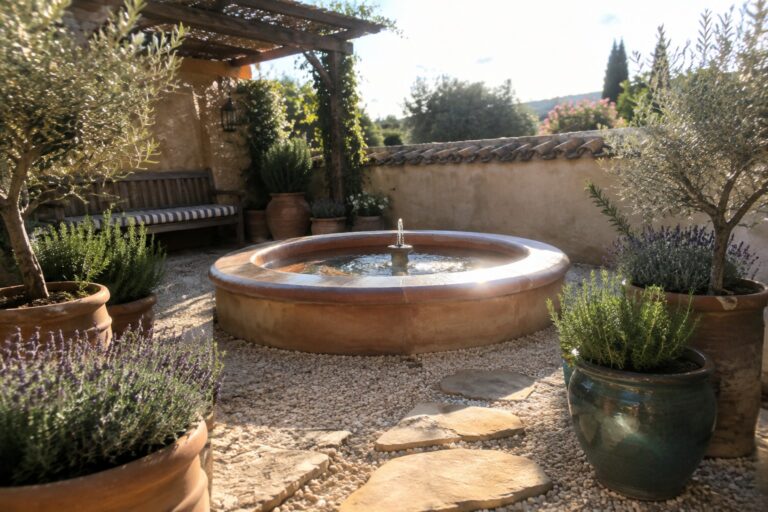
Gardens in warmer climates often need a careful balance between hard surfaces and plants that can handle dry spells without constant care.
Gravel works well for this because it drains quickly and keeps the ground from baking in the sun while still letting roots find moisture below.
I would try the edging ideas first in a small corner of my yard.
A few simple edging choices can make the whole area feel more settled over the seasons.
Over time those details add up to a space that holds its shape even when the weather turns harsh.
Gravel Paths With Stepping Stones

Gravel paths work well in Mediterranean gardens because they drain quickly and need almost no watering or mowing. The loose surface also helps keep the ground cooler around the plants.
Lay a compacted base first, then spread the gravel and set flat stones at a comfortable walking distance. This layout suits dry climates and homes with limited time for garden care, especially where you want a simple path that still feels natural.
Gravel Paths With Stone Edging
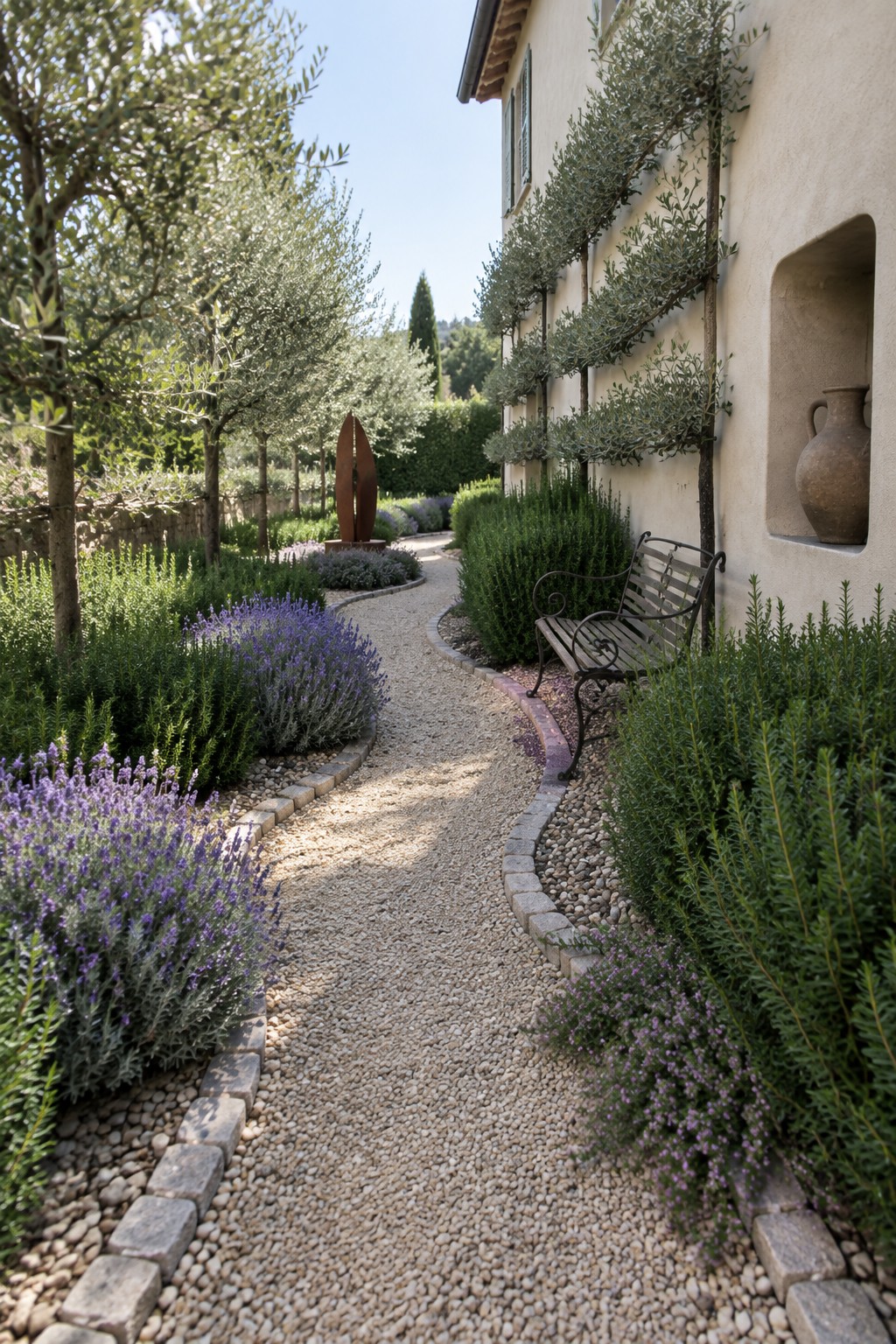
Gravel paths stand out in Mediterranean gardens because they stay practical in dry weather and need very little care once they are down. The loose stone lets water drain straight through while the light color keeps the surface from getting too hot under the sun.
Stone edging helps hold the gravel in place and gives the path a clean shape that lasts. This approach works best along the side of a house or through a sunny backyard where drought-tolerant plants like lavender can fill in beside it without extra watering.
Gravel Paths With Stone Edging On Slopes
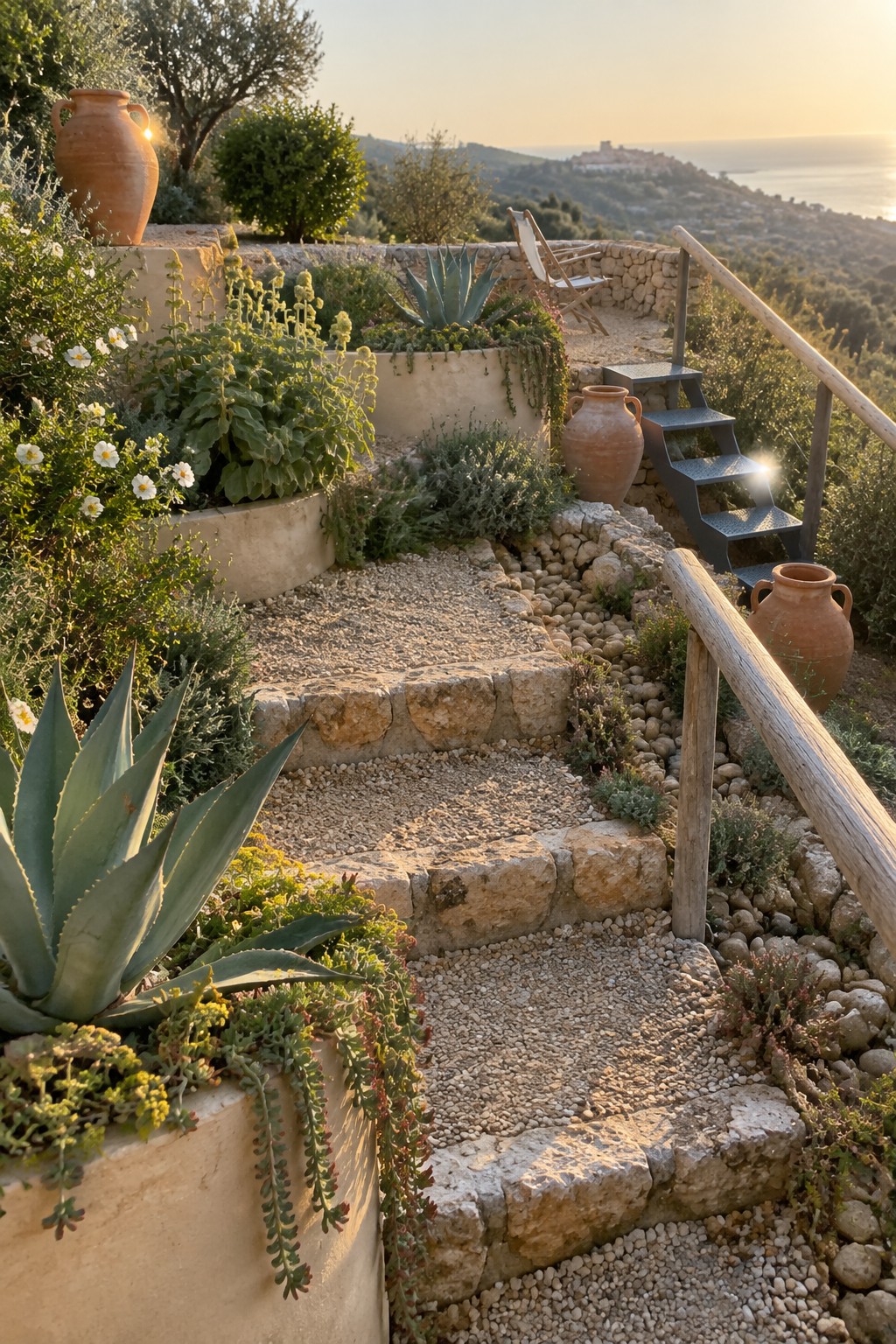
Gravel paths handle slopes better than solid paving because water drains right through and weeds stay easier to manage. Stone edging keeps the gravel from washing away during heavy rain and gives the garden a clean frame that lasts for years.
This works best on sites with gentle terraces or small drops in level where you need steady footing between garden beds. Use the same gravel and stone combo to connect different planting areas and keep the whole layout low on maintenance.
Gravel Beds With Mounded Plants
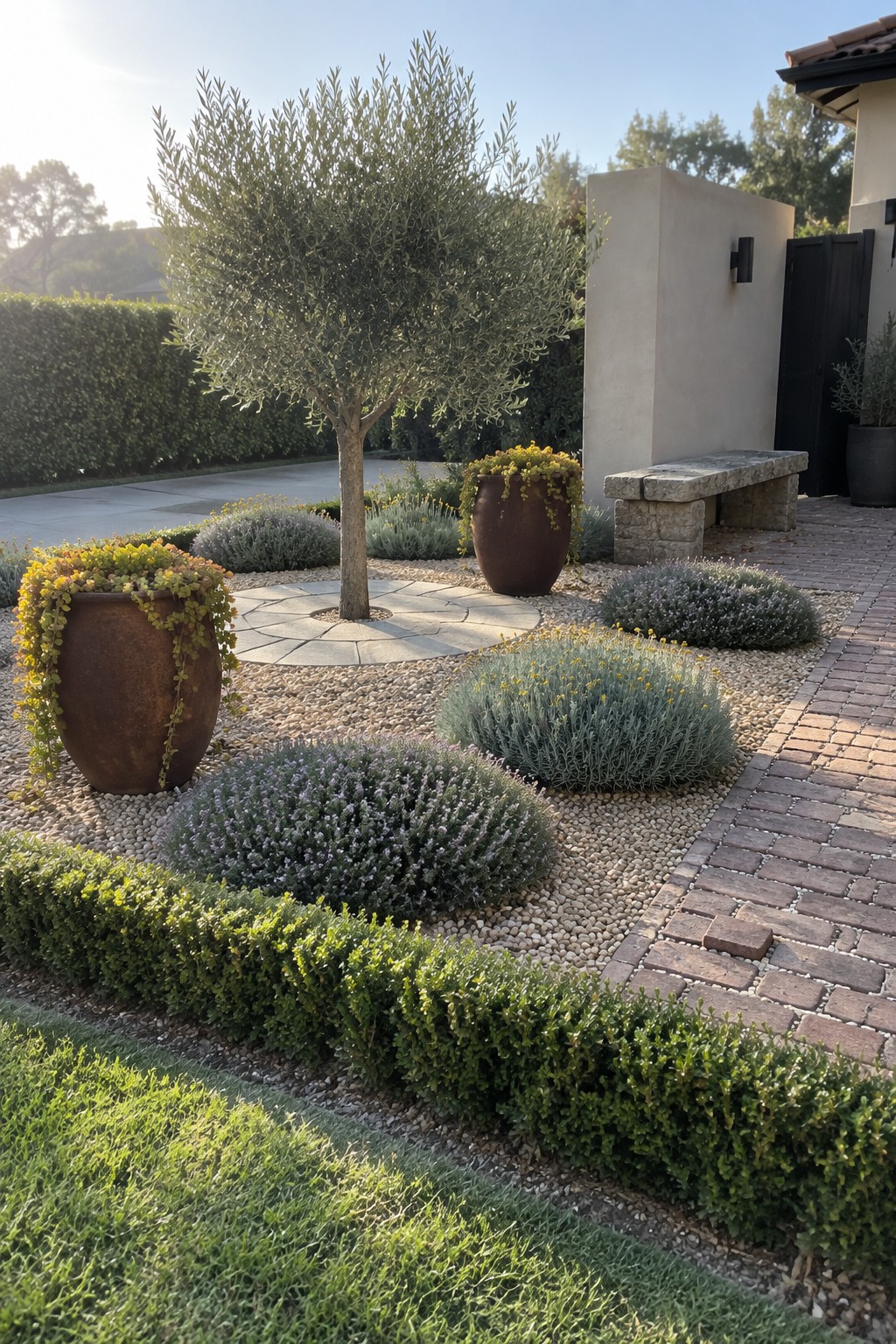
Gravel makes a good base for Mediterranean gardens because it drains quickly and cuts down on weeding. The plants grow in loose mounds that keep their shape with little trimming, and the overall look stays simple even in dry weather.
This approach works best in sunny areas with poor soil. You can add a few large pots for extra height if the space feels too flat, but the main goal is keeping the planting low and the ground cover practical.
Gravel Under Outdoor Dining Tables
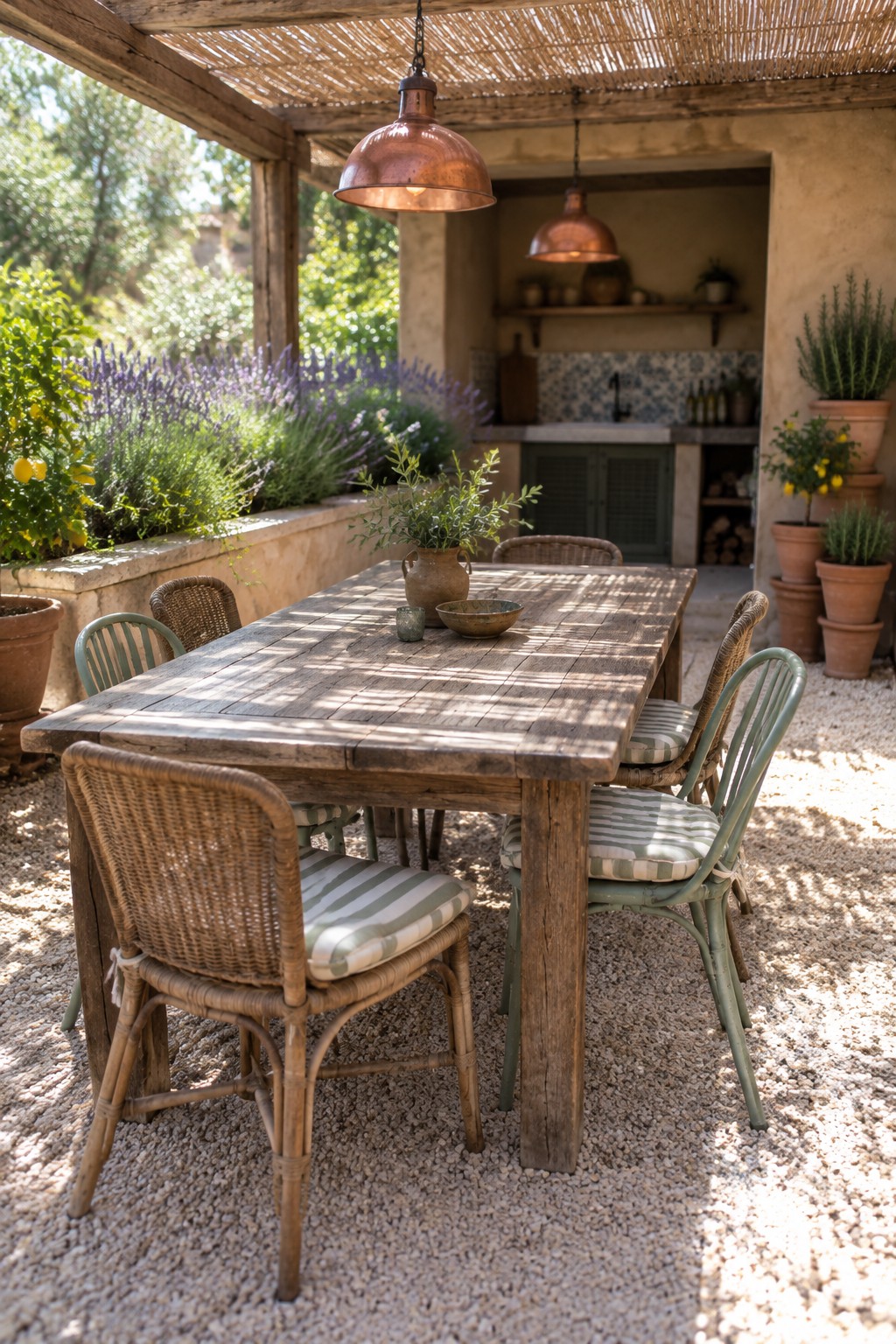
Gravel gives an outdoor dining area a relaxed feel without much upkeep. It drains well, stays cooler than stone or concrete in hot weather, and lets you move tables and chairs around easily when needed. The loose texture also pairs naturally with pots of lavender and other dry-climate plants that need little water.
This setup works best in sunny Mediterranean-style gardens where you want low maintenance. Keep the gravel layer thick enough to stay level, and choose sturdy chairs with wide feet so they do not sink. Add a few larger pots around the edges to soften the look and keep the space feeling like part of the garden.
Gravel Beds For Low Maintenance Planting

Gravel works well as the main ground cover because it drains fast and keeps the garden looking tidy with almost no effort. It lets drought tolerant plants spread naturally without competing for water or needing heavy mulch.
Place it around a simple stone basin or along a path and fill in with layered shrubs and flowers that like dry soil. This approach suits warm climates and homes where you want the garden to handle itself through the summer.
Gravel Bocce Courts Fit Mediterranean Gardens
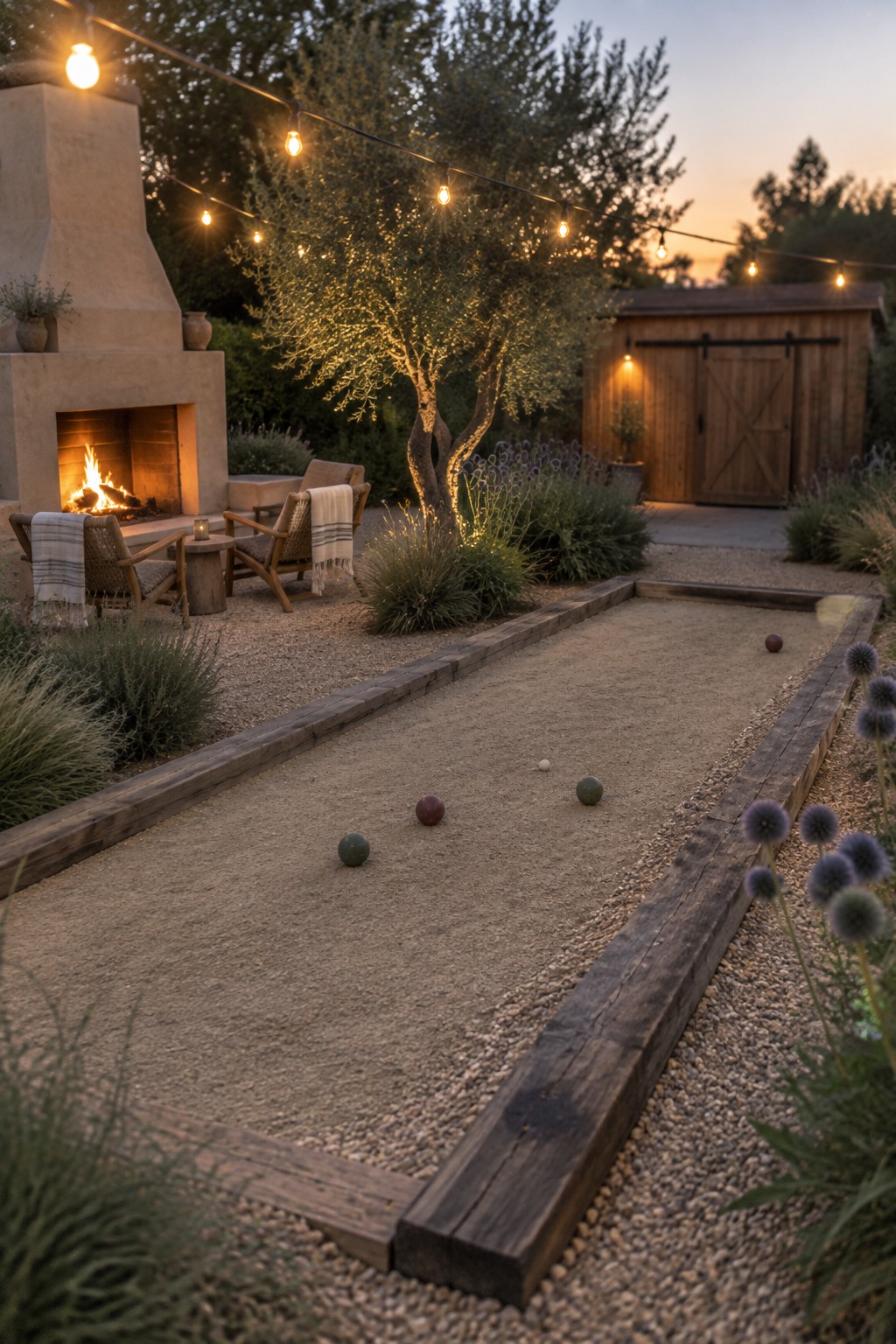
A gravel bocce court adds a simple play area that matches the dry, low-water style of a Mediterranean garden. The same gravel used for paths and open ground works here too, so the whole space feels connected without extra surfaces or upkeep.
Wood borders hold the gravel in place and give the court a clear edge next to the planting. This setup suits larger yards where you can keep the court open while letting drought-tolerant shrubs and grasses grow around it.
Gravel With Potted Plants On Terraces
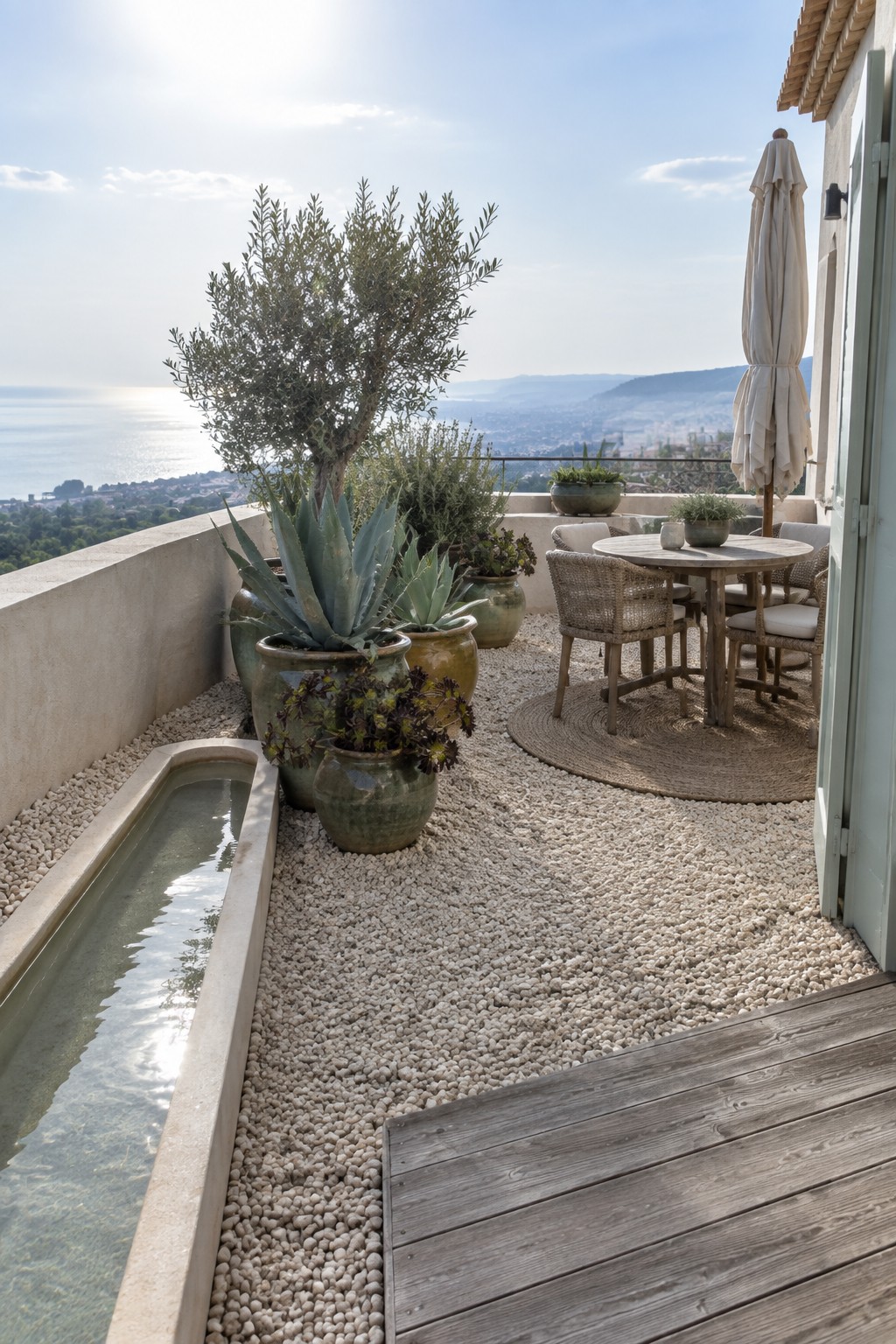
Gravel works well as a simple ground cover on terraces because it drains fast and needs almost no upkeep. It pairs easily with large pots filled with drought tolerant plants like agaves and olives, which is useful in warm climates where watering can be limited.
This setup suits sunny balconies or roof terraces on homes that get little rain. Keep the pots grouped rather than scattered, and add a narrow water channel if you want a bit of movement without much extra work.
Gravel Paths With Drought Tolerant Plants
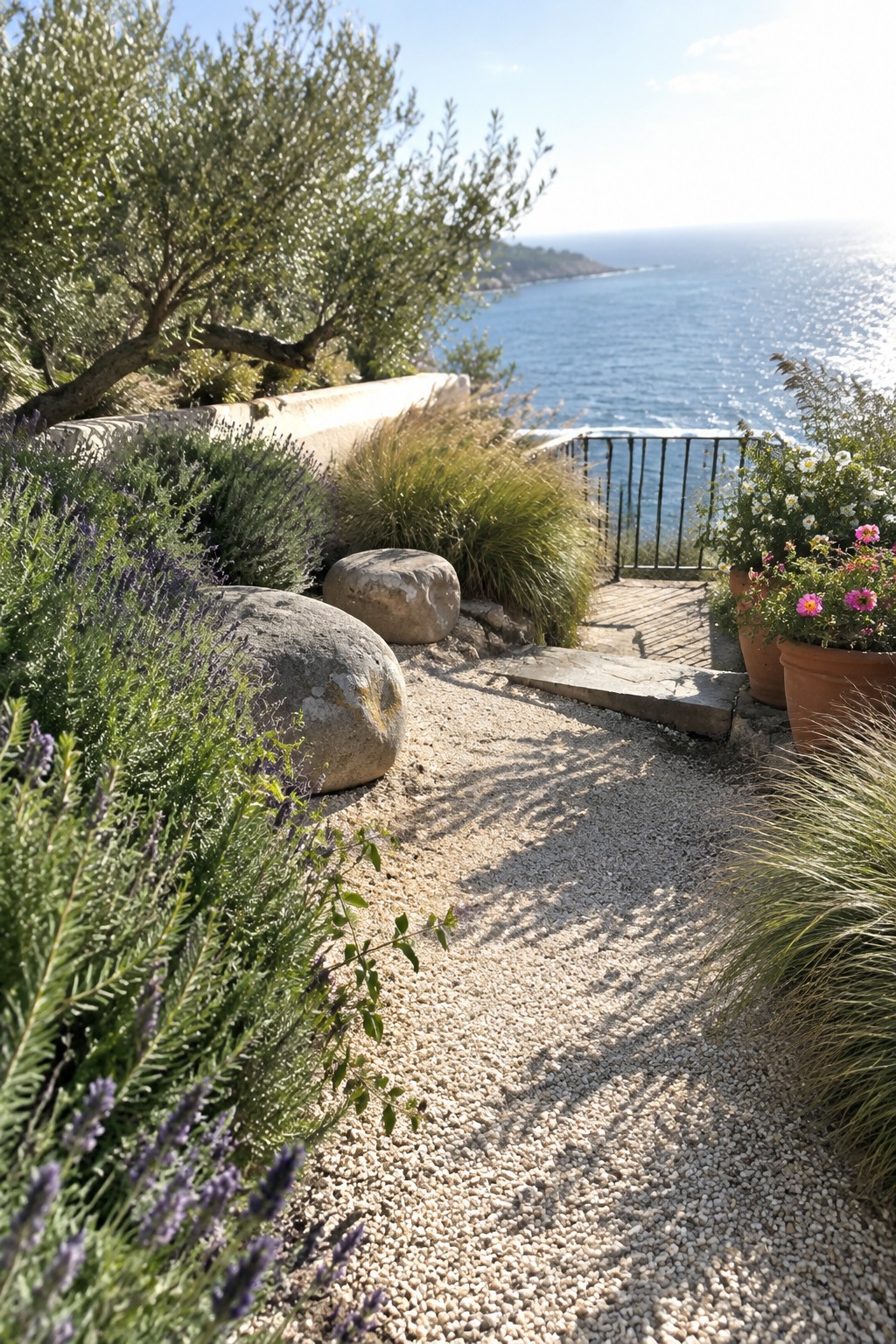
Gravel paths work well in Mediterranean gardens because they handle sun and dry conditions without much upkeep. The light color also reflects heat and keeps the space feeling open even on hot days. Using tough plants like lavender along the edges adds color and scent while keeping water needs low.
This approach suits coastal homes or any spot with full sun and poor soil. Keep the gravel layer thick enough to stop weeds and choose plants that stay compact so they do not crowd the path over time.
Gravel Works Well in Small Courtyards

Gravel gives a courtyard an easy, low-water surface that still feels finished. It drains well, stays cooler than hard paving, and lets you move pots around without much trouble. In this kind of space the gravel also softens the look of the built-in bench and keeps the whole area from feeling too heavy.
It suits homes with limited outdoor room or hot, dry summers. Keep the planting simple with a few large pots and some climbing vines on the walls. Just make sure the gravel layer is thick enough so it does not scatter onto paths or seating areas.
Gravel Paths With Gabion Borders
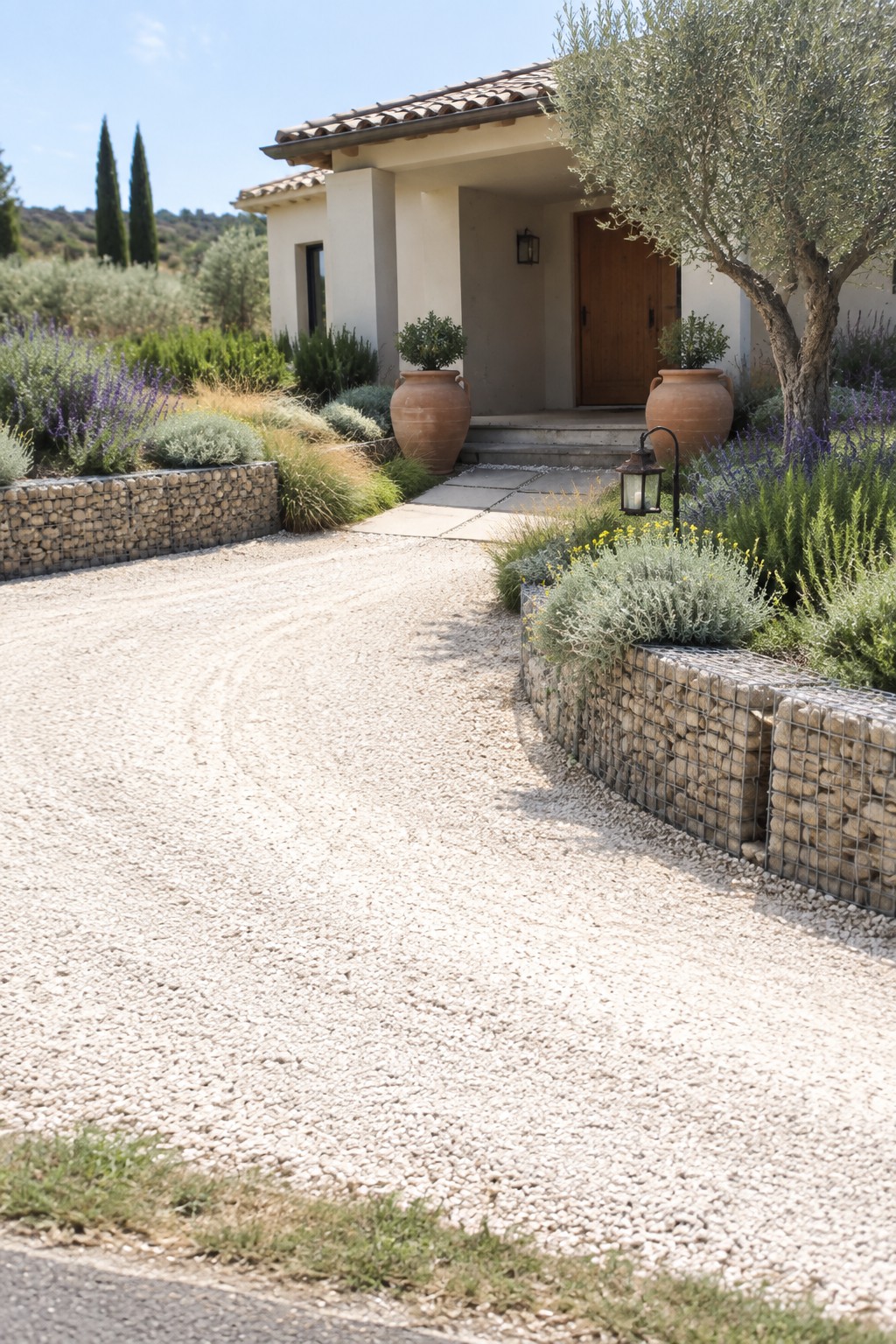
Gravel paths suit Mediterranean gardens because they handle runoff well and stay low maintenance over time. The look works especially well when the gravel is held in place by gabion walls that double as planting ledges.
This setup fits homes with gentle slopes or long driveways where you want clean edges without constant weeding or watering. Keep the planting simple with drought tolerant shrubs and a few larger pots to break up the line of the wall.
Gravel Around Outdoor Kitchens

Gravel works well underfoot when you want an outdoor kitchen that feels relaxed and simple to keep up. It drains fast, stays cooler than concrete in hot weather, and pairs easily with built in counters and a few potted herbs or shrubs. The metal stools and wooden bar in the photo show how the loose surface lets the whole setup feel casual instead of formal.
This approach suits homes with dry summers and limited water for lawn care. Keep the gravel layer thick enough so it does not shift underfoot, and edge it with low walls or timber so it stays contained. Skip the gravel if you need a perfectly smooth surface for rolling carts or if heavy winds tend to blow debris across your yard.
Gravel Paths With Drought-Tolerant Planting
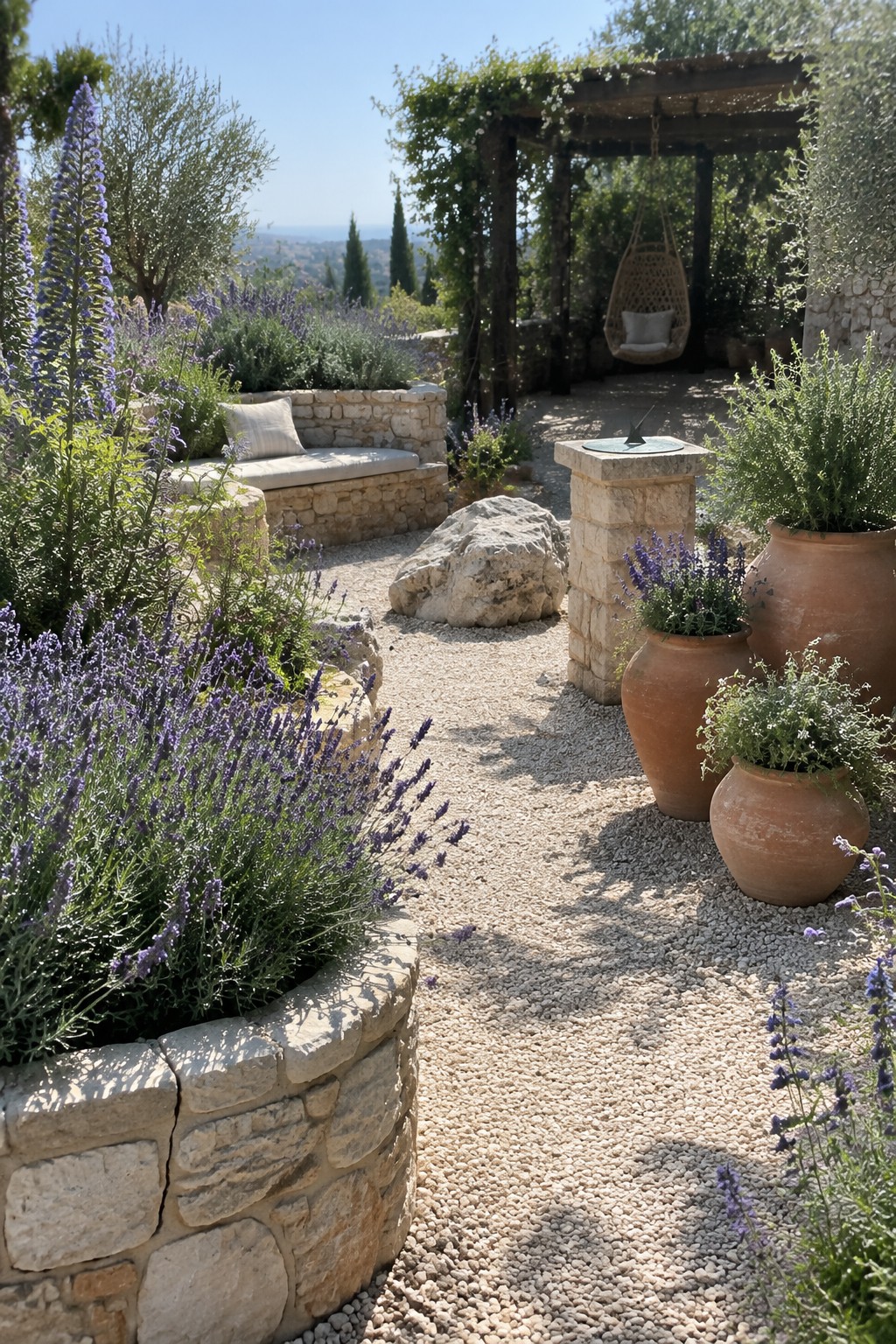
Gravel paths make sense in a warm Mediterranean garden because they drain quickly and need almost no upkeep. They let the planting take center stage without competing hard surfaces, and they handle dry summers without cracking or fading.
Edge the gravel with simple stone walls to hold the beds in place, then fill them with lavender and other tough plants that thrive in poor soil. Terracotta pots can be moved around as the garden fills in, keeping the layout flexible over time.
Gravel Fire Pit Circles Stay Practical
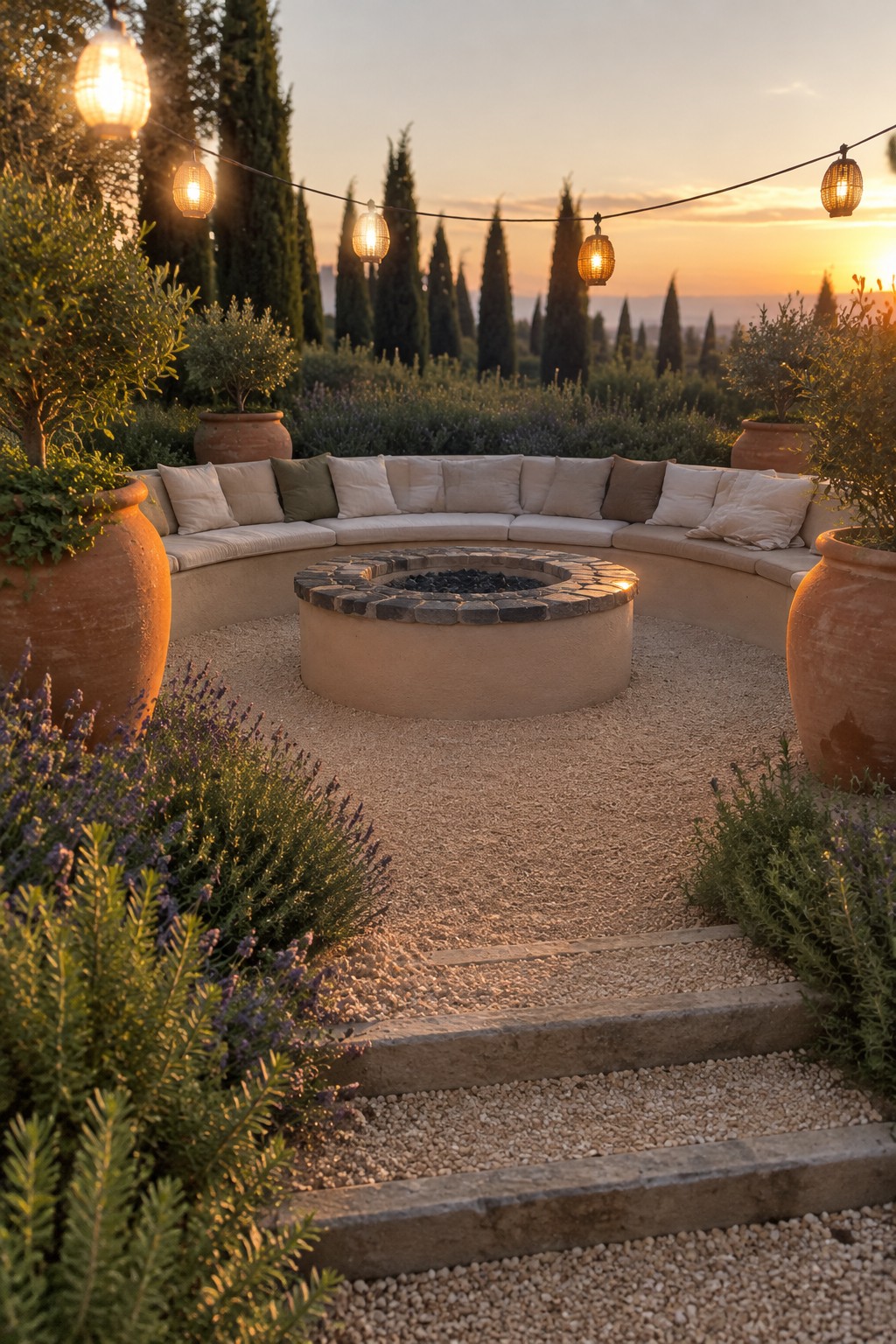
A round fire pit set right into gravel gives you a clear spot for evenings outside without needing much upkeep. The gravel drains well, keeps the area from turning muddy, and works nicely with the kind of dry-climate plants that already suit Mediterranean gardens. You get a simple surface that stays comfortable underfoot and does not fight the look of the surrounding beds.
Place the pit where you can add a low curved bench or a few chairs around it, and keep the planting light and tough so it does not crowd the seating. This setup suits smaller yards or side gardens that get regular use but still need to stay low on water and work. Just make sure the gravel layer is deep enough to handle foot traffic and sparks.
Gravel Paths With Stepping Stones
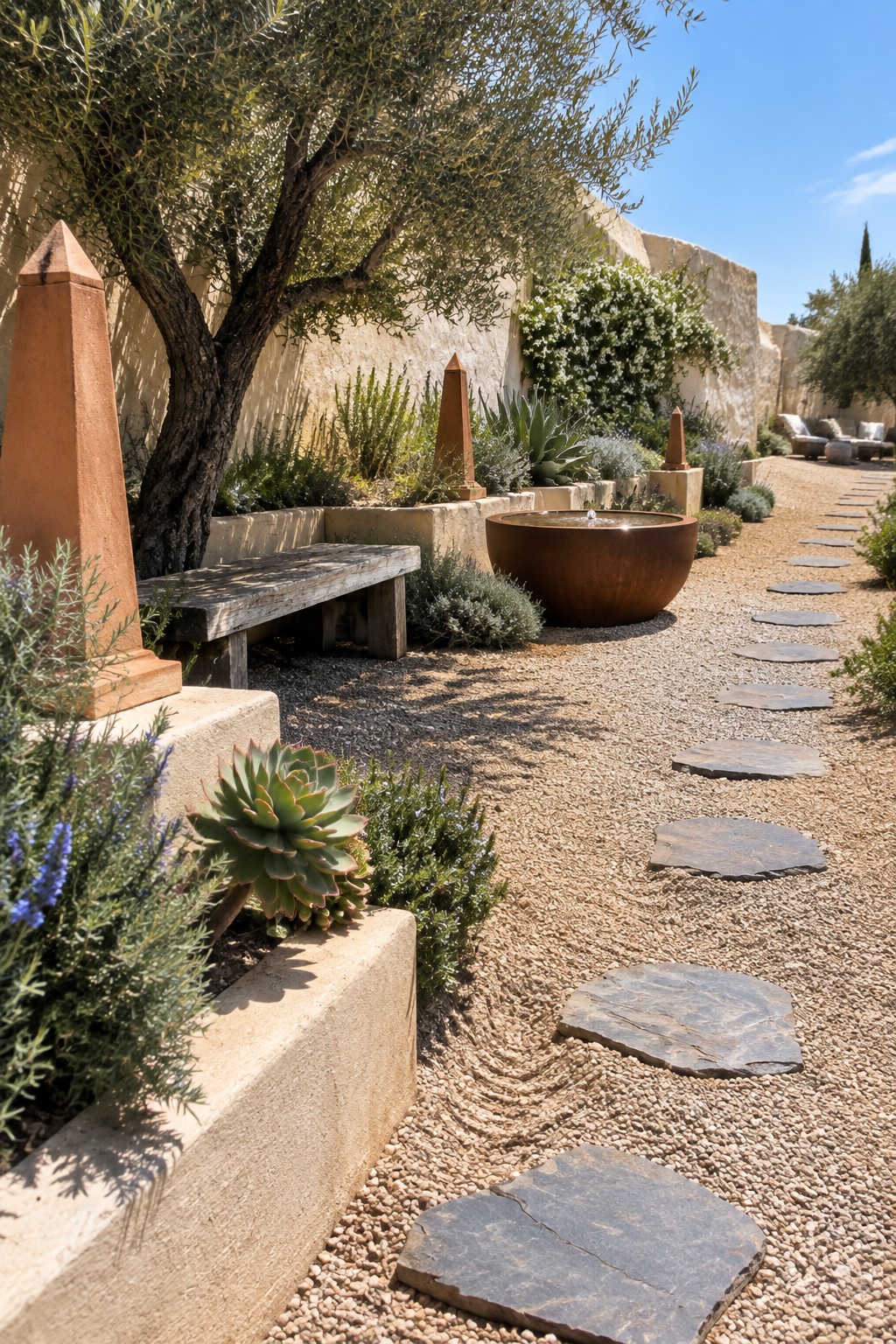
Gravel paths with stepping stones fit Mediterranean gardens because they stay practical in dry climates. The gravel drains well and needs little water, while the flat stones give a steady surface without turning the whole area into solid paving.
This layout works best on larger properties or along the side of a house where you want a clear route through the beds. Use stones that are big enough to step on comfortably and keep the gravel layer thin so it does not shift too much underfoot.
Gravel Pool Surrounds Keep Things Simple
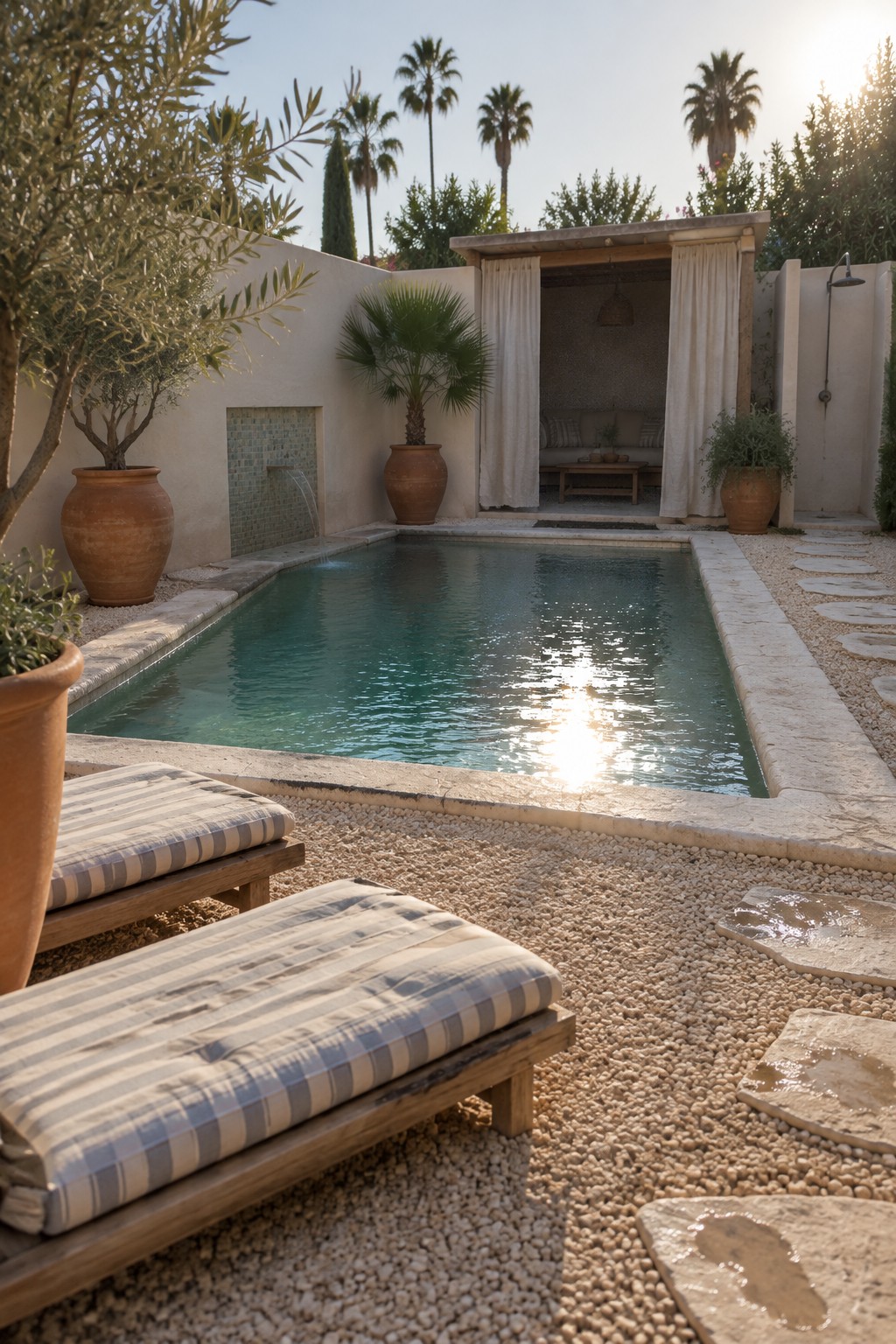
Gravel works especially well right next to a pool because it drains fast and does not get as hot as solid paving. It also gives the whole area a relaxed Mediterranean feel without needing much upkeep.
This approach suits warm dry climates best. Spread the gravel in a wide bed, add a few large pots with drought tolerant plants, and keep the furniture light so the space stays open and easy to walk around.
Gravel Flooring For Mediterranean Balcony Gardens

Covering a balcony floor with gravel gives the space an easy garden feel without much work. It drains well after rain and creates a soft base for moving pots around as needed.
This works best on balconies that get strong sun and suit people who want low maintenance rather than constant sweeping or watering. Keep the planting simple with a few larger pots of drought tolerant herbs and small trees placed around basic seating.
Gravel With Potted Plants For Low Maintenance

Gravel works well as a simple ground layer in Mediterranean gardens because it drains fast and needs almost no upkeep. Pairing it with large clay pots lets you move plants around as needed while keeping the overall look neat and dry-climate friendly. The pots also add height and structure without requiring much planting space.
This approach suits small courtyards or side gardens where you want some greenery but do not want to deal with constant weeding or watering. Keep the pots grouped near a water feature so the eye stays focused on the center while the gravel handles the rest of the surface.
Gravel Paths With Potted Plants
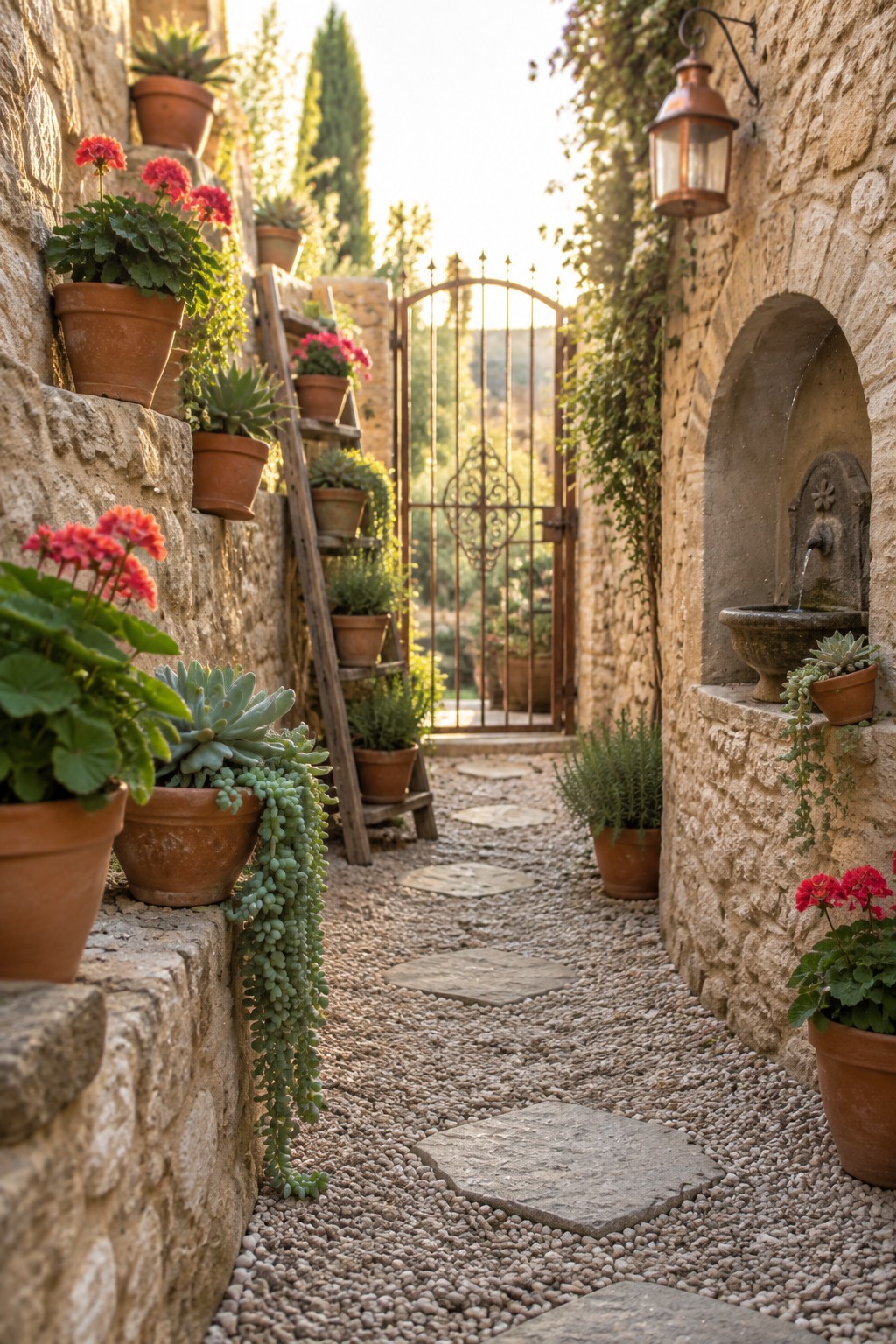
Gravel paths make sense in Mediterranean gardens because they stay cool underfoot and need almost no watering. They also let you shape a walkway without pouring concrete or laying heavy stone all the way through. The loose surface pairs naturally with pots, so you can move plants around as the seasons change.
Place the pots along the edges rather than in the middle so the path stays easy to walk. Terracotta works best because it holds up in sun and matches the dry, warm look most people want in this style of garden. Keep the plants simple and drought tolerant so the whole setup stays low maintenance.
Gravel Paths Between Raised Beds

Gravel paths pair well with raised beds in Mediterranean gardens because they handle drainage easily and cut down on weeding. The setup keeps the whole area looking tidy even when water is limited, and it lets plants like herbs and tomatoes stay productive without constant fuss.
This approach works best in sunny spots with decent air flow. Keep the beds narrow enough to reach across and use the gravel to form simple straight or gently curving routes that connect everything.
Gravel Paths With Mosaic Stepping Stones
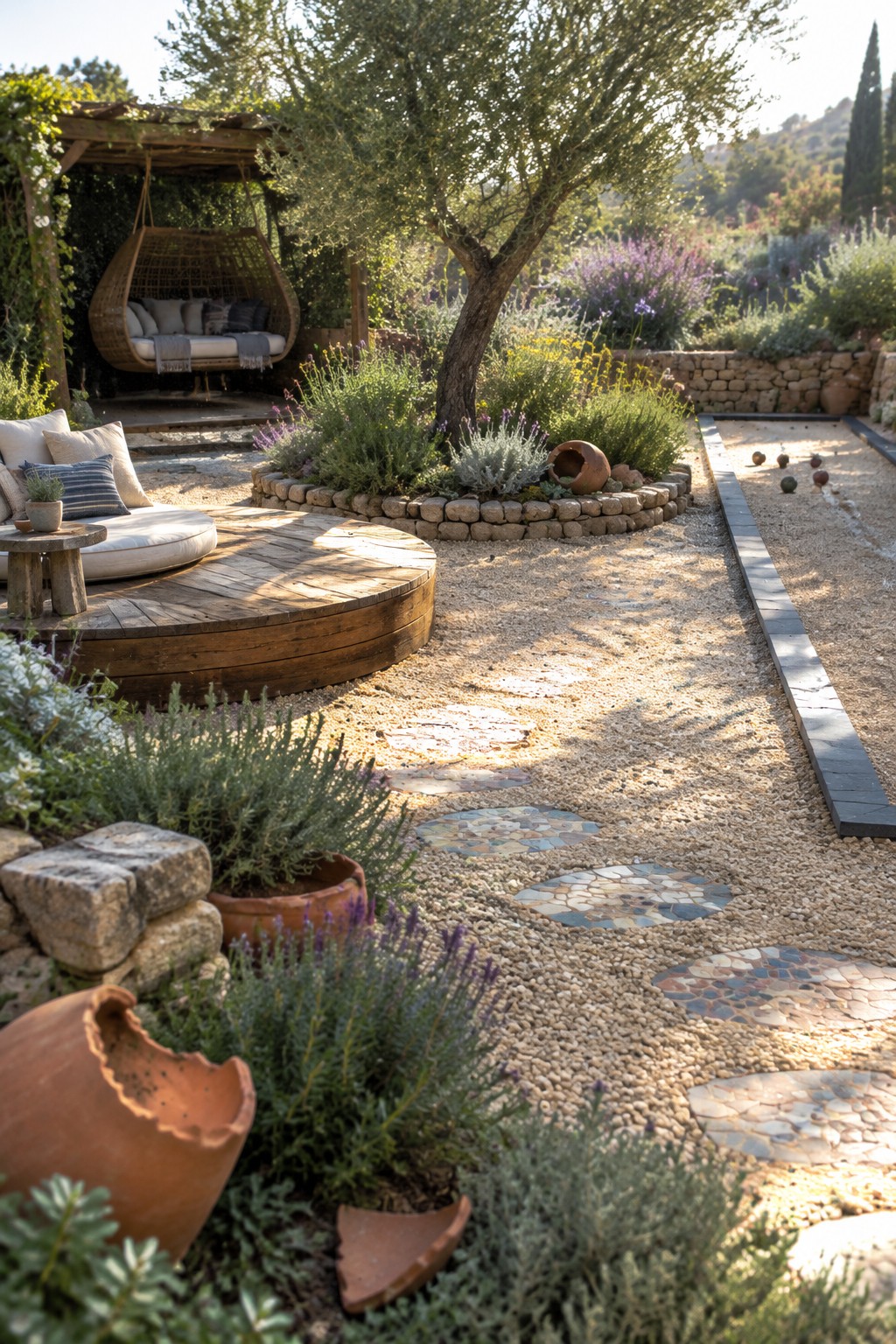
Gravel works well as the main surface in a Mediterranean garden because it drains fast and needs almost no upkeep. Adding a few mosaic stepping stones gives you a clear walking path without covering the whole area in solid paving.
This approach suits dry climates and sunny yards where you want low water use. Keep the stones spaced evenly and choose colors that blend with the gravel so the path feels natural rather than fussy.
Gravel Paths With Stepping Stones
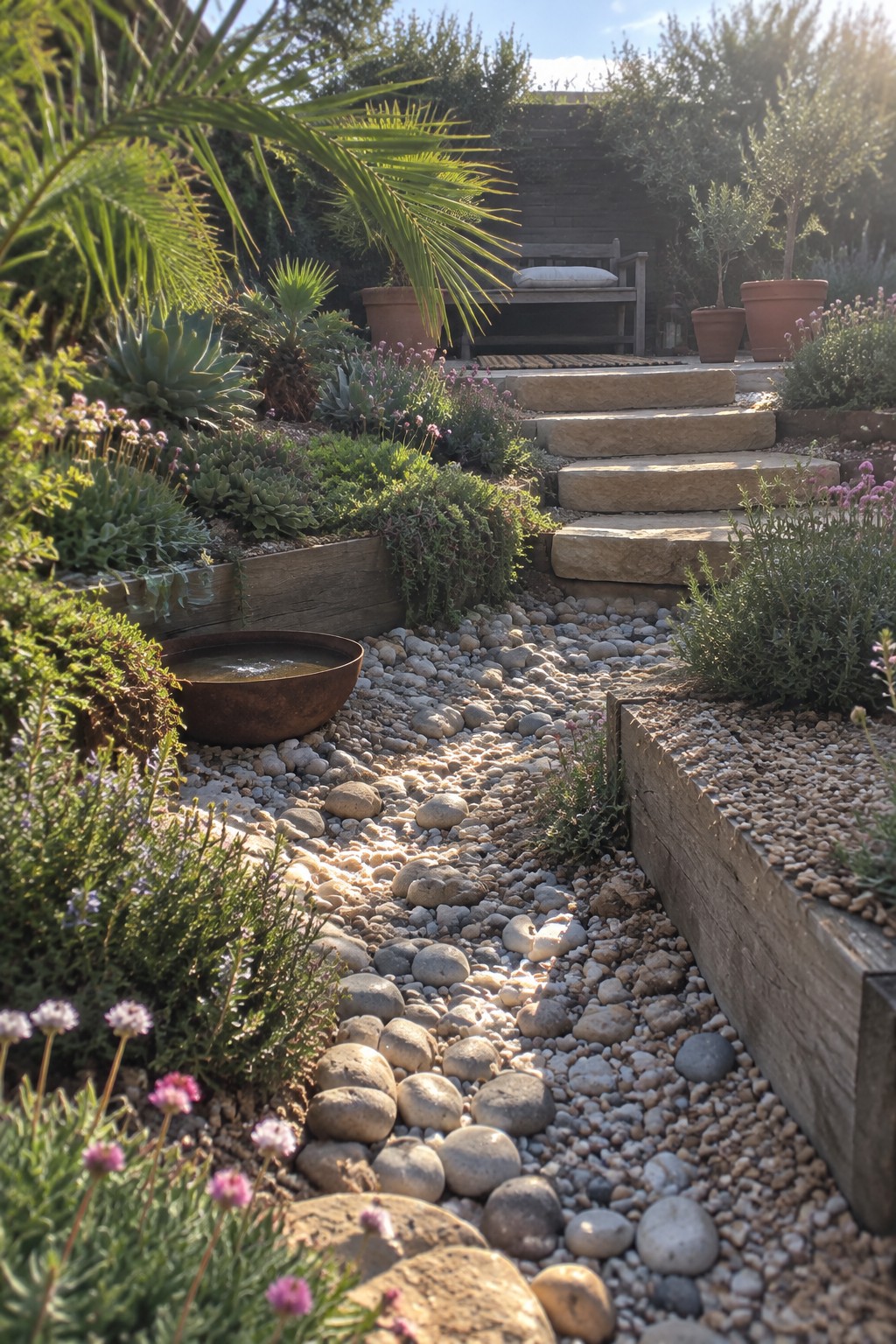
Gravel paths work well in Mediterranean gardens because they drain fast and need very little upkeep. Mixing in larger flat stones gives you solid footing without covering the whole surface, so the look stays light and natural while still feeling easy to walk on.
This setup suits dry climates and smaller yards where you want to keep things simple. Lay the gravel about two inches deep over landscape fabric, then space the stepping stones so people can walk comfortably without stepping off them. Wood edging helps hold the gravel in place over time.
Frequently Asked Questions
Q: How do I keep weeds from growing through the gravel over time? A: Lay landscape fabric down before you spread the gravel. It blocks most seeds from reaching the soil. Pull any stragglers by hand every few weeks at first.
Q: Do these drought-tolerant plants need water at all once established? A: Water new plants weekly for the first season so roots take hold. After that most go months without extra water. Just watch for wilting during extreme heat waves.
Q: Can I add a few flowering plants without losing the gravel look? A: Tuck in clumps of lavender or salvia between gravel patches. They add color and scent while keeping the dry Mediterranean feel. Leave open gravel areas around them so the design stays balanced.
