

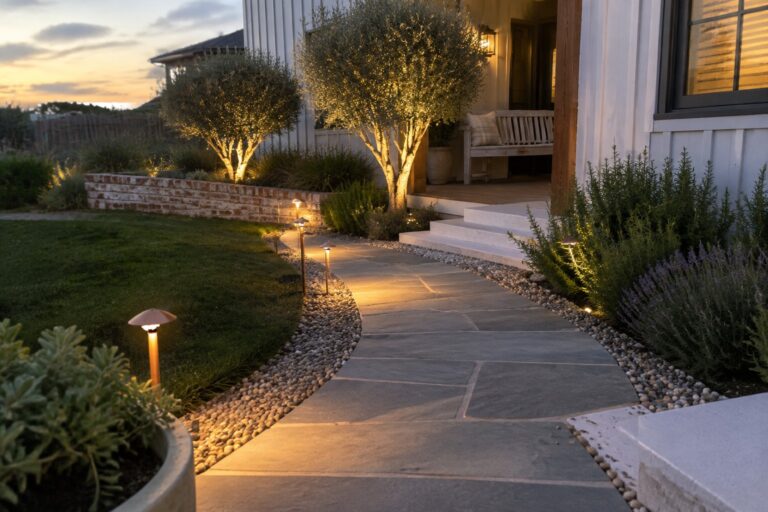
I have found that good path lighting makes a garden feel more navigable at night without drawing too much attention to the fixtures themselves.
When I plan outdoor spaces I think about how uplights can shape the way trees and shrubs look after dark and how that changes the whole layout.
Lighting choices matter more than most people expect.
Over the years I have noticed that low voltage options let me adjust things as plants grow without major rewiring.
I would probably start by testing a few path lights along my main walkway to see how they affect the evening feel of the space.
Light Garden Paths With Low Voltage Path Lights
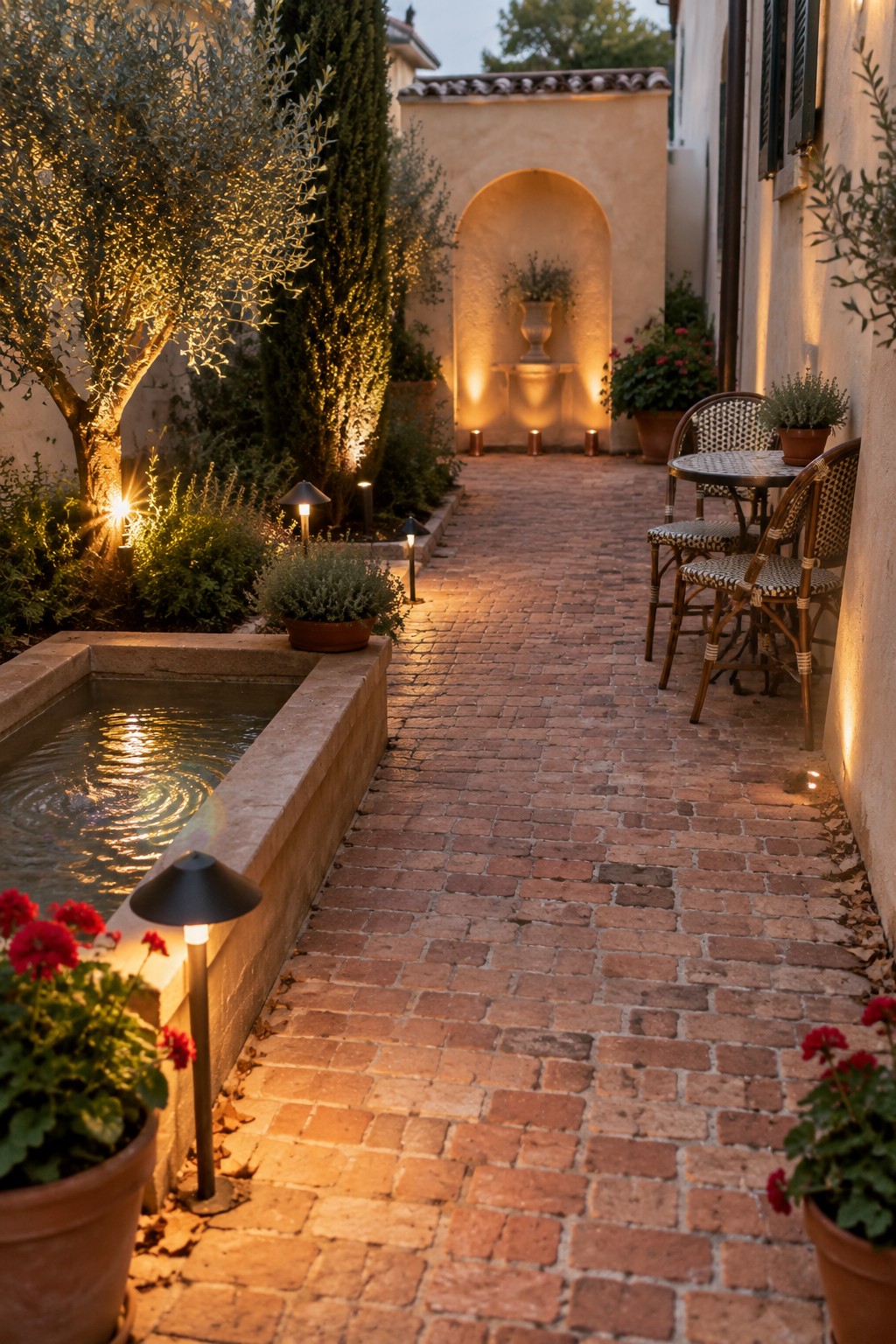
Low voltage path lights work well along garden walkways because they give just enough light to guide people without overpowering the plants. In this setup the lights sit low and follow the brick path, while a few uplights hit the trees and shrubs to add height and keep the space from feeling flat at night.
This approach suits older homes or traditional gardens where you want the lighting to feel built in rather than added on. Place the fixtures close to the edge of the path so they do not get in the way of walking, and keep the beam spread narrow enough that they do not shine into windows.
Line Brick Paths With Low-Voltage Lights
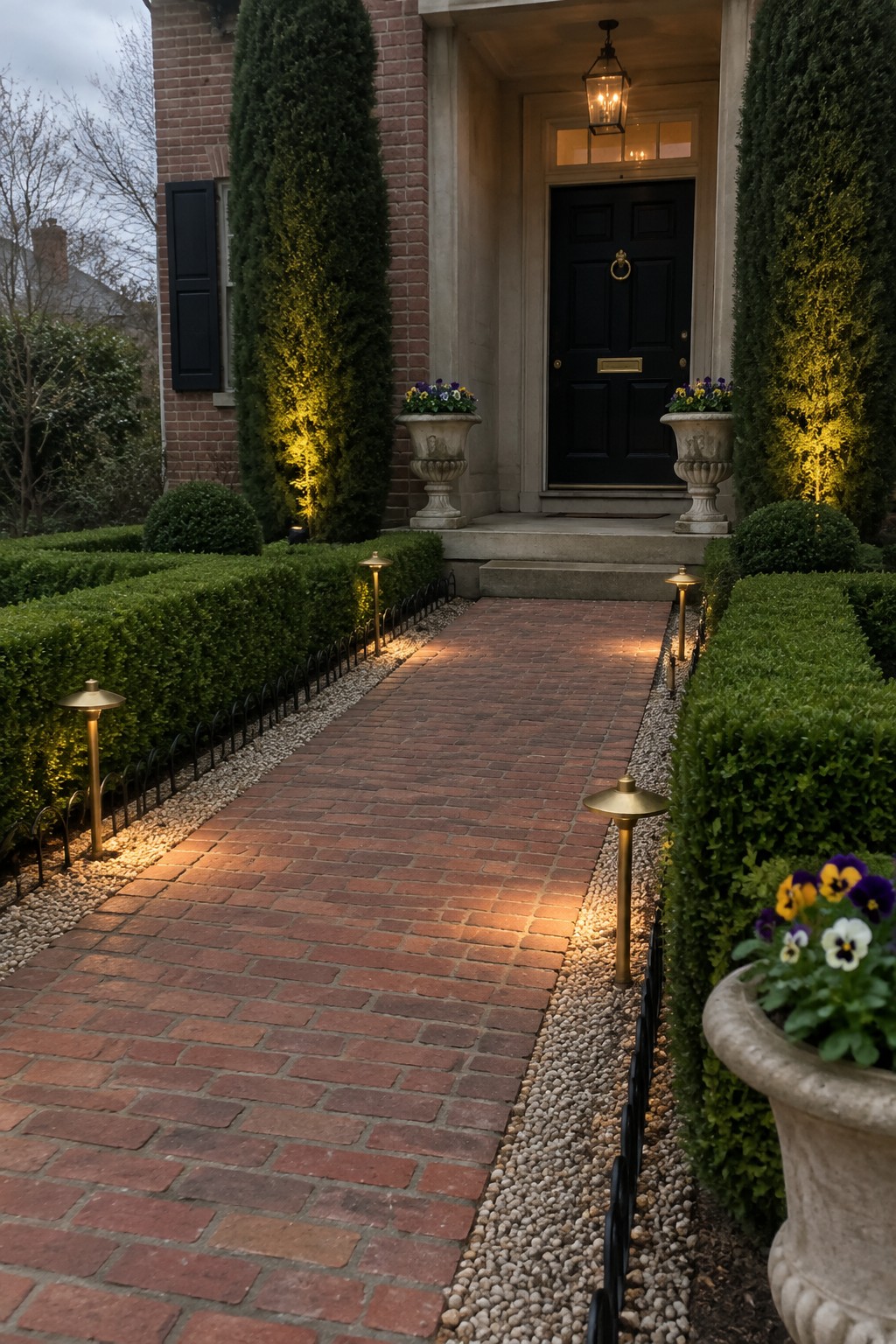
Low-voltage path lights keep a walkway safe and easy to follow at night while staying low enough not to overpower the garden. When you add a few uplights at the base of tall shrubs, the whole path gains a gentle rhythm without needing many fixtures.
This approach works best on straight entry walks in front of traditional homes where the planting already has some height. Place the lights close to the edge of the path and match the finish to nearby hardware so the fixtures stay quiet during the day.
Low Voltage Path Lights Along a Garden Walk
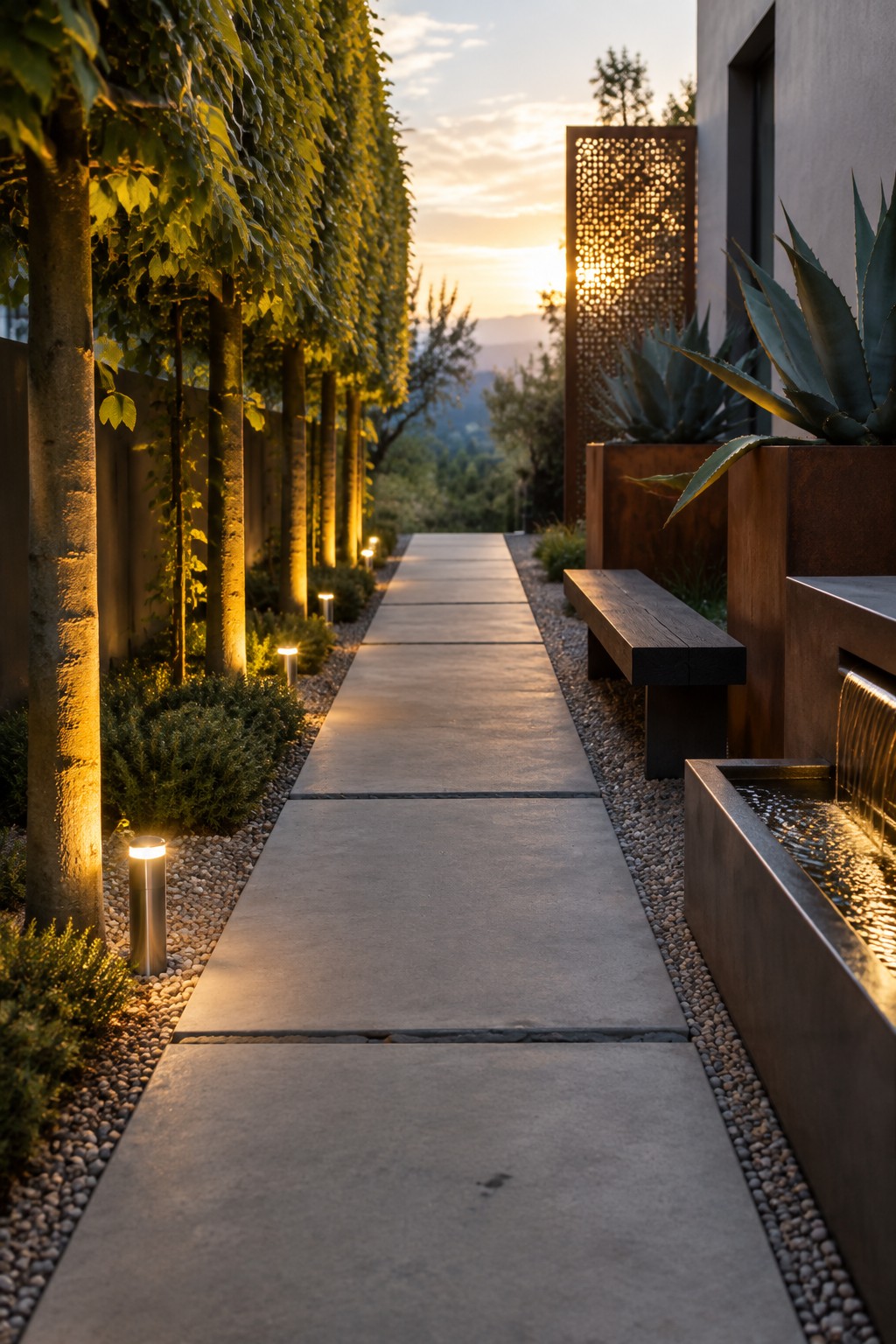
Low voltage path lights work well when they sit right at the edge of a walkway instead of trying to line up perfectly with the paving. In this setup the lights sit in the gravel strip next to the concrete, which keeps the path itself clean and gives the trees a soft wash of light from below.
This approach suits long, fairly straight garden paths where you want steady guidance at night without adding extra fixtures. Space the lights evenly, keep the fixtures low, and let the surrounding planting soften the look so the lights feel like part of the landscape rather than separate objects.
Low Voltage Lights Along Curved Garden Paths
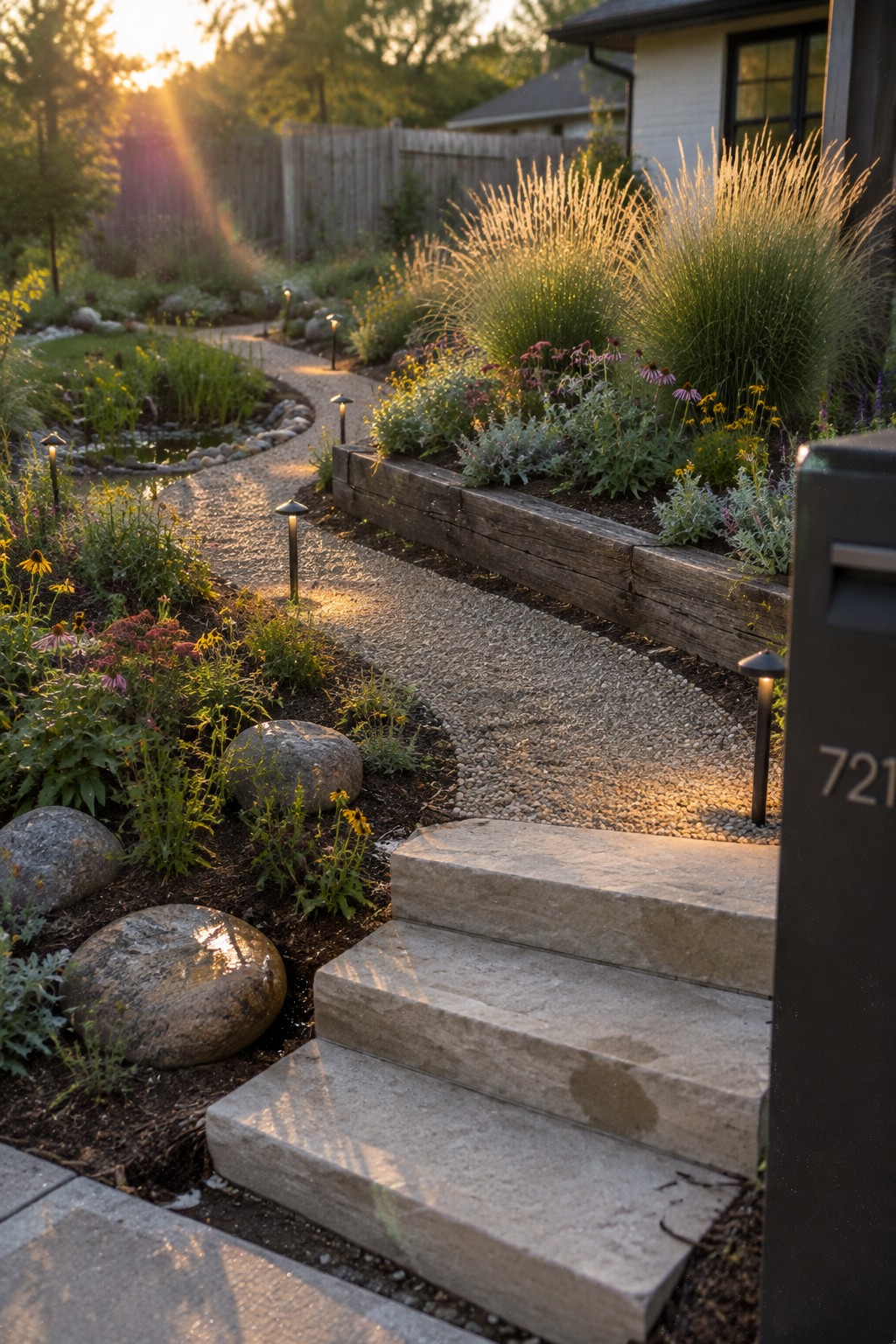
Low voltage path lights work especially well when the walkway curves through the garden instead of running straight. They mark the route clearly at night while staying low enough that the plants and beds still feel like the main feature during the day.
This approach fits homes with informal yards and gravel or mulch paths that wind around raised beds or natural plantings. Space the lights a few feet apart along the outer edge so the glow stays focused on the ground and does not wash out the surrounding foliage.
Uplight Trees to Shape the Night Garden
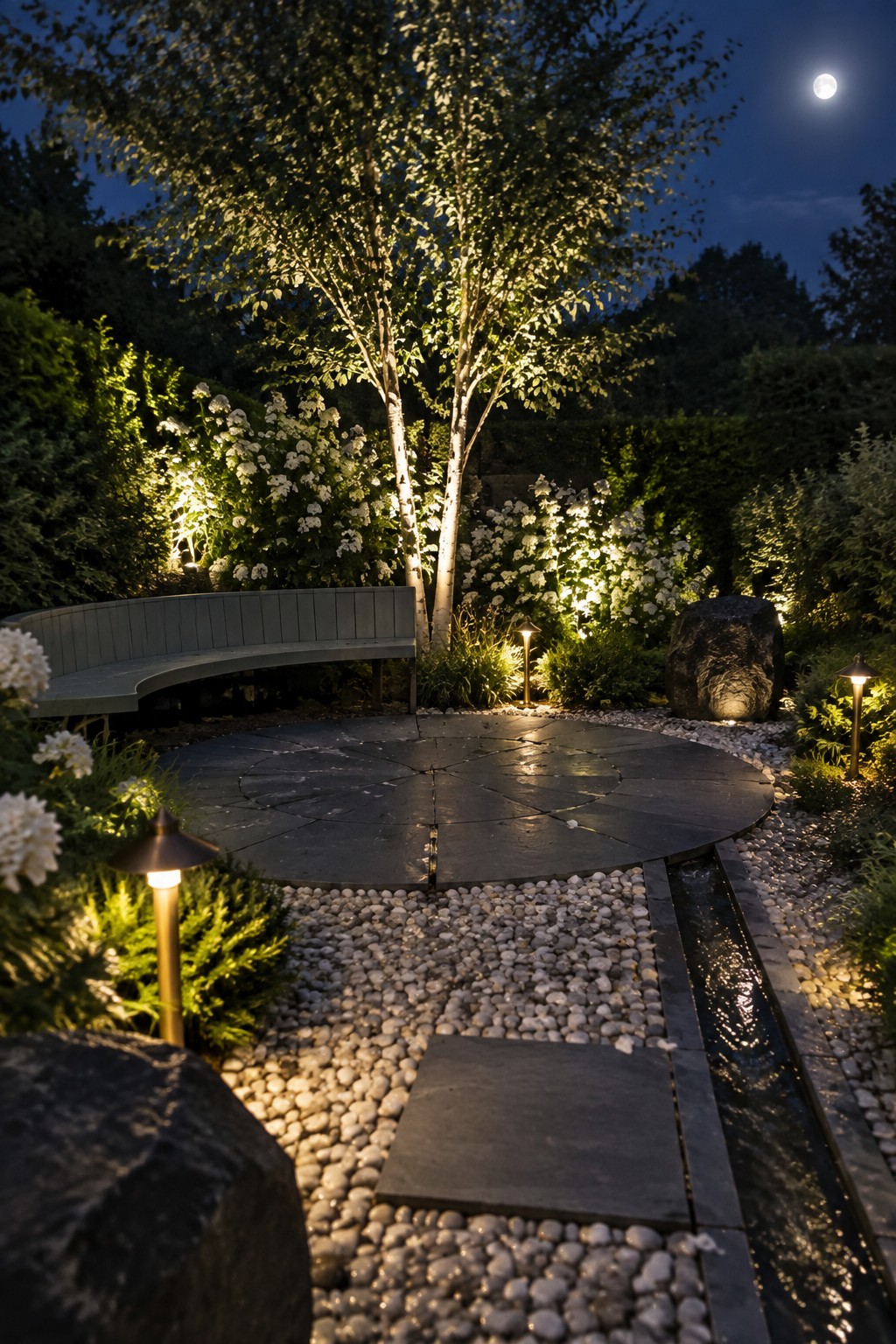
Uplighting a few key trees gives the garden a clear structure after dark. The light travels up through the branches and makes the planting feel taller and more intentional without filling the space with extra fixtures.
Set small low voltage uplights at the base of trees near paths or seating areas. Keep the fixtures tucked into the planting so only the glow shows, and use simple path lights along gravel or stone routes to tie the whole layout together.
Low Voltage Path Lights Along Garden Paths

Low voltage path lights keep a garden walkway feeling natural while still making it easy to navigate after dark. The simple fixtures stay low to the ground so they do not compete with the planting or break up the view.
Use them along stepping stone paths or gravel routes in casual or coastal yards. Space the lights evenly and choose finishes that match nearby pots or fencing so the lighting feels like part of the garden rather than an add-on.
Run Low Voltage Path Lights Along Garden Paths

Low voltage path lights give a garden a clear route after dark without flooding the space with brightness. They sit low and spread a soft pool of light that marks the way while leaving the surrounding planting looking natural.
Space them evenly along the edge of a gravel or stone path and keep the fixtures simple in black or dark finishes. This works best in yards with existing trees and beds where you want the lighting to feel like part of the landscape rather than an added feature.
Low-Voltage Lights Built Into Garden Steps

Low-voltage path lights set right into the edges of stone steps give a clean way to mark the route after dark. They stay low and focused so the path stays easy to follow without flooding the whole garden with light. The warm glow also picks up the texture of the stone and nearby plants.
This approach works well on any sloped garden or multi-level yard where steps connect different areas. Keep the fixtures small and spaced evenly so the light feels steady rather than spotty. It pairs especially well with simple stone or gravel paths and needs little maintenance once installed.
Uplighting Tall Plants Along a Pool Edge
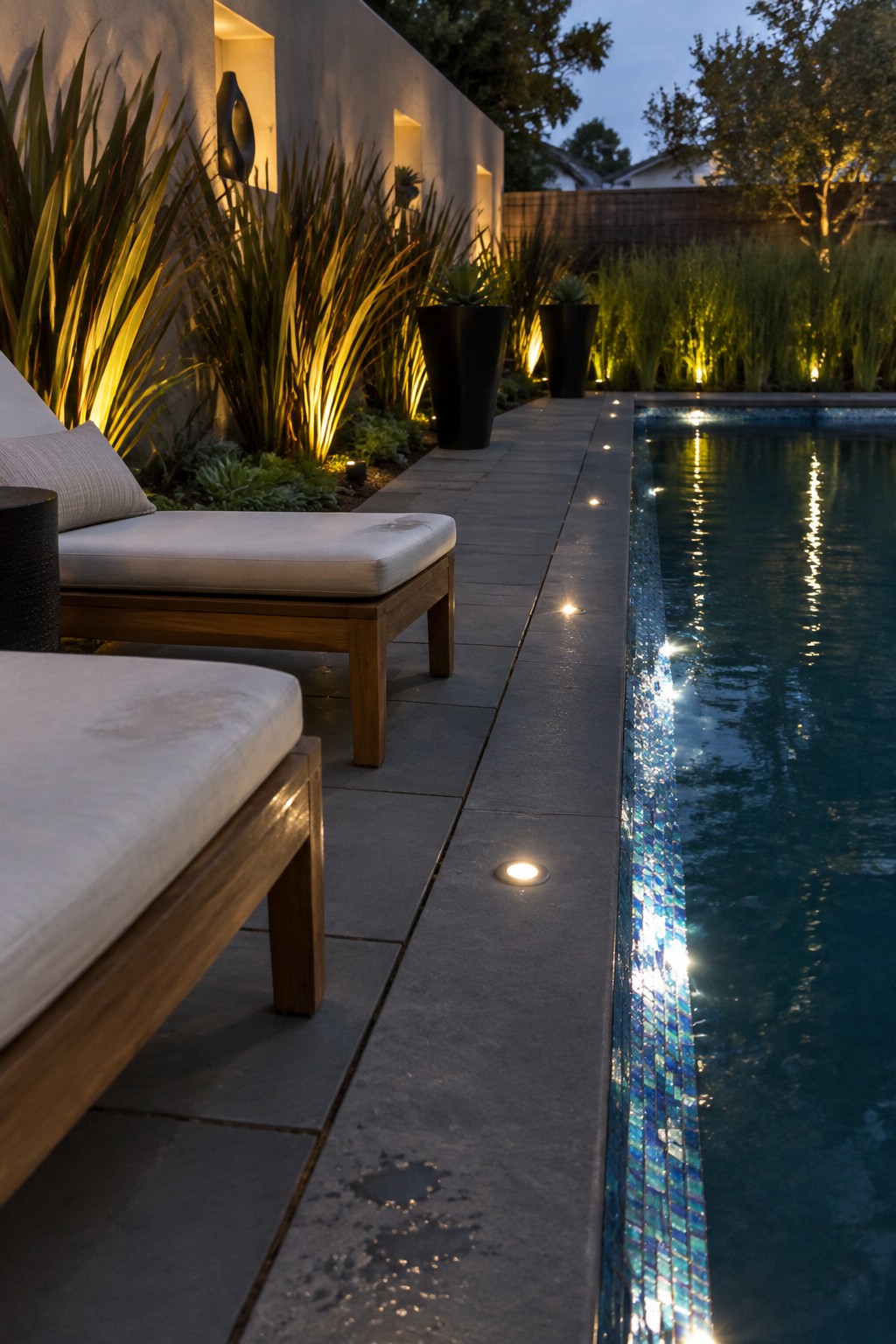
One simple way to make a pool deck feel more finished after dark is to add low voltage uplights at the base of the taller plants. The light brings out the height and texture of the grasses without filling the space with extra fixtures or harsh glare.
This approach works best on homes where the pool runs close to a wall or planting bed. Set the lights so they graze the foliage and add a few small path lights along the walkway to keep the route clear at night.
Low Voltage Lights Along Garden Paths
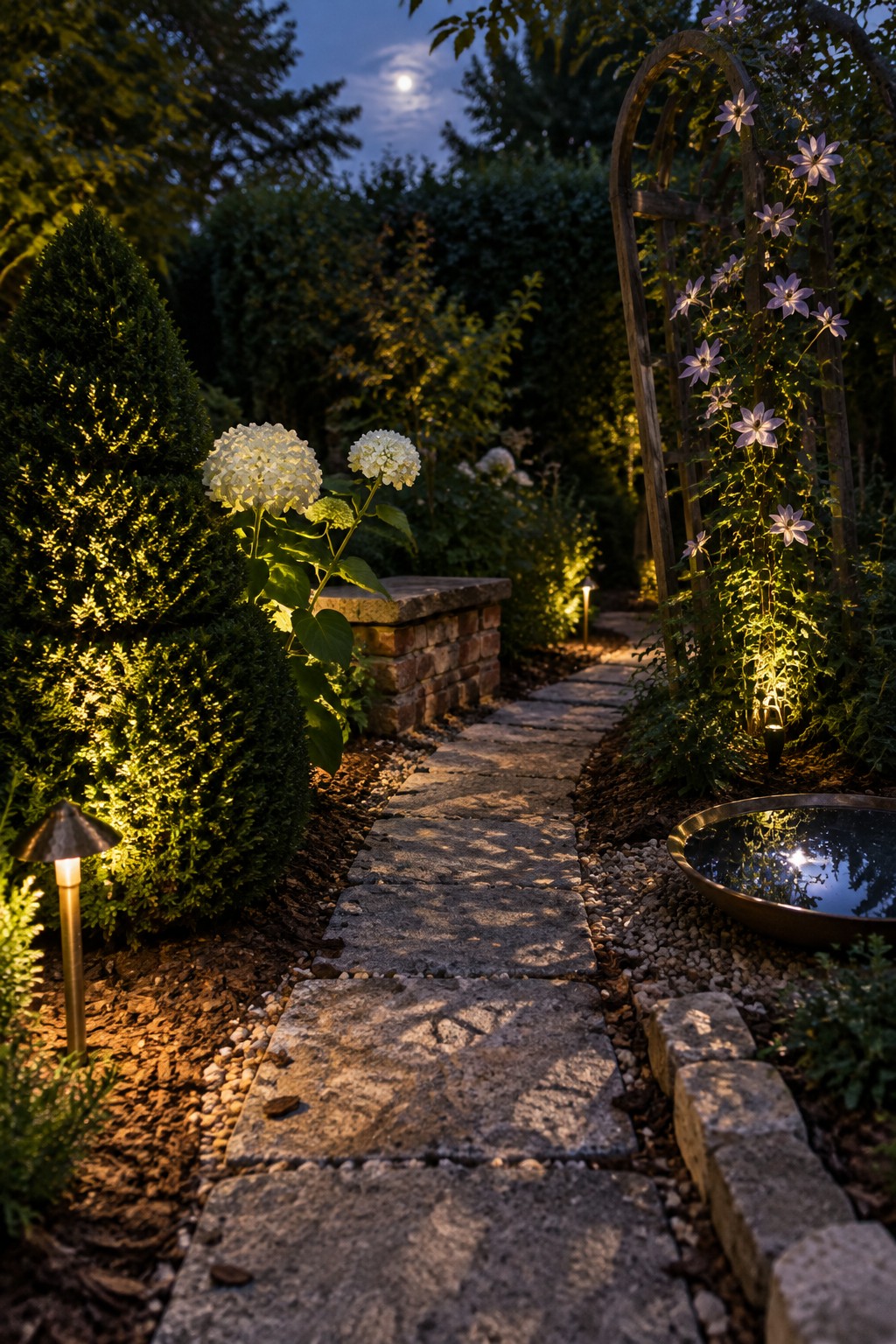
Low voltage path lights give a garden just enough glow to feel welcoming after dark. They keep the focus on the plants instead of the fixtures themselves, and they work especially well when you add a few small uplights to nearby shrubs or vines.
This setup suits homes with stone or gravel walkways that wind through beds. Keep the lights low and spaced evenly so the path stays easy to follow while the plants get a soft lift from below.
Low Voltage Lights Along Brick Paths
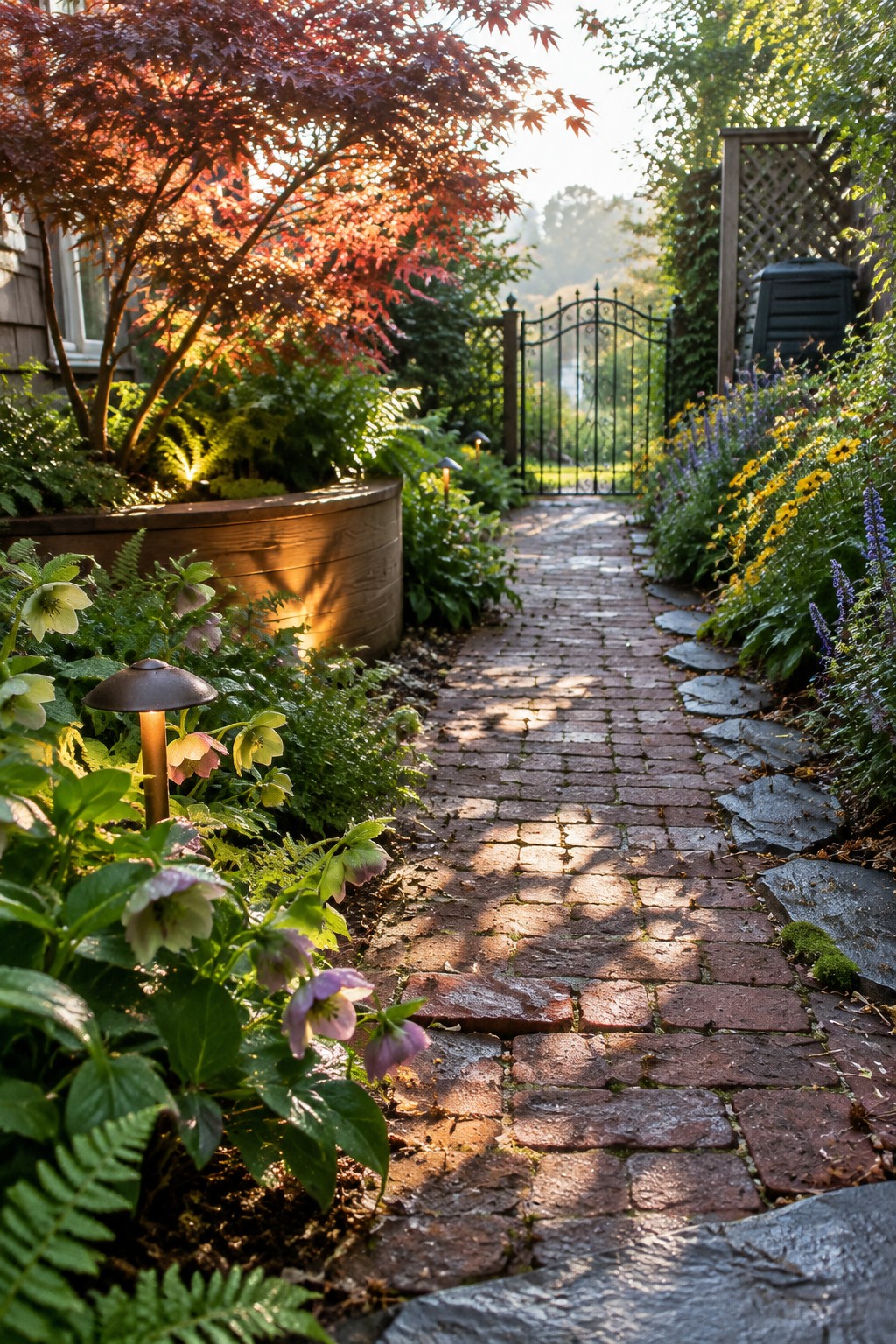
Low voltage path lights work especially well on brick walkways because they stay low and follow the curve without drawing attention to the fixtures themselves. They give just enough light to walk safely while the surrounding plants stay visible at night.
This setup suits homes with established beds or trees right next to the path. Space the lights a few feet apart on the inside edge and add one uplight on a small tree or shrub to add a bit of height without extra wiring.
Uplighting Trees Along Garden Paths

Placing low voltage uplights at the base of trees gives a garden real presence once the sun goes down. The light travels up through the branches and leaves, turning ordinary plantings into a clear focal point without needing overhead fixtures.
This setup works best on properties that already have a few mature trees and a defined walkway. Keep the fixtures small and tucked into the planting beds so they stay out of sight during the day and only appear as soft pools of light at night.
Line Garden Paths With Low Voltage Lights

Low voltage path lights give a garden just enough glow to feel welcoming after dark without turning the whole space into a spotlight. They work especially well when tucked close to the edge of planting beds so the light skims along the ground and picks up the shape of the foliage.
This setup suits narrow walkways or courtyard gardens where you need clear footing but still want the plants to feel like the main feature. Space the lights a few feet apart and keep the fixtures low so they stay hidden during the day.
Uplighting Trees Along a Garden Path

Uplighting trees gives a garden path more depth after dark. The light travels up the trunks and catches the lower branches, so the space feels taller and more open instead of flat. Low-voltage fixtures make it simple to place a few lights without running heavy wiring.
This approach works best on a side path or in a smaller yard where you want evening access without bright overhead lights. Aim the fixtures at the trunk base and keep the beam narrow so the light stays on the tree rather than spilling onto the ground. A couple of smaller path lights can then fill in the walking surface without competing with the taller glow.
Frequently Asked Questions
Q: How far should I space the path lights along a walkway so they actually guide feet without creating a runway effect? A: Place them about eight to ten feet apart on straight stretches. Stagger a few closer together near turns or steps where people need extra footing.
Q: Will tree uplights still look good if the branches are bare in winter? A: Aim the beam higher so it catches the trunk and main limbs instead of waiting for leaves. The structure shows up nicely against the night sky once the canopy thins out.
Q: What happens if a path light gets knocked sideways by a lawn mower? A: Reset the fixture by hand and check the stake is still firm in the ground. Low voltage wiring rarely breaks from a bump like that so you can usually fix it in a minute.
