

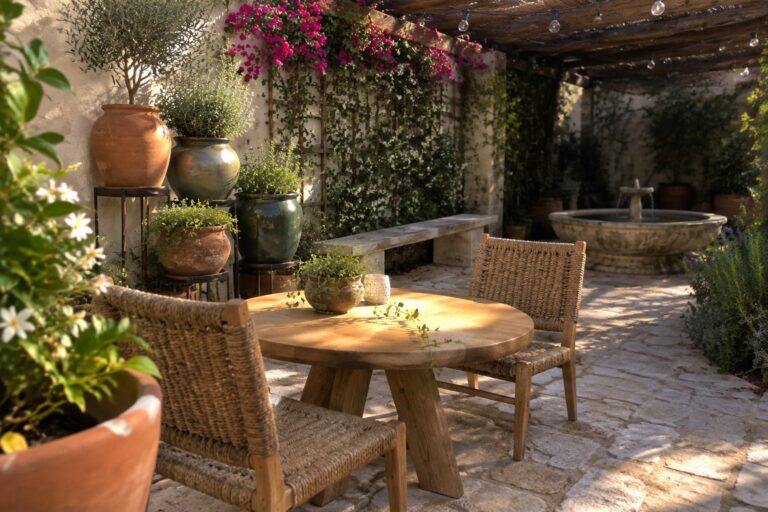
I have noticed that many patios end up feeling flat even when they have plenty of plants because everything sits at the same level.
Layered containers let you build height and texture without digging up the whole area or hiring help for major changes.
The difference shows up right away when you step outside and the space feels more settled.
I would probably start by testing a few taller planters in the corners of my own patio to see how they shift the balance.
Small shifts like that often make the area more comfortable for sitting through an evening rather than just looking neat in photos.
Layer Pots At Different Heights
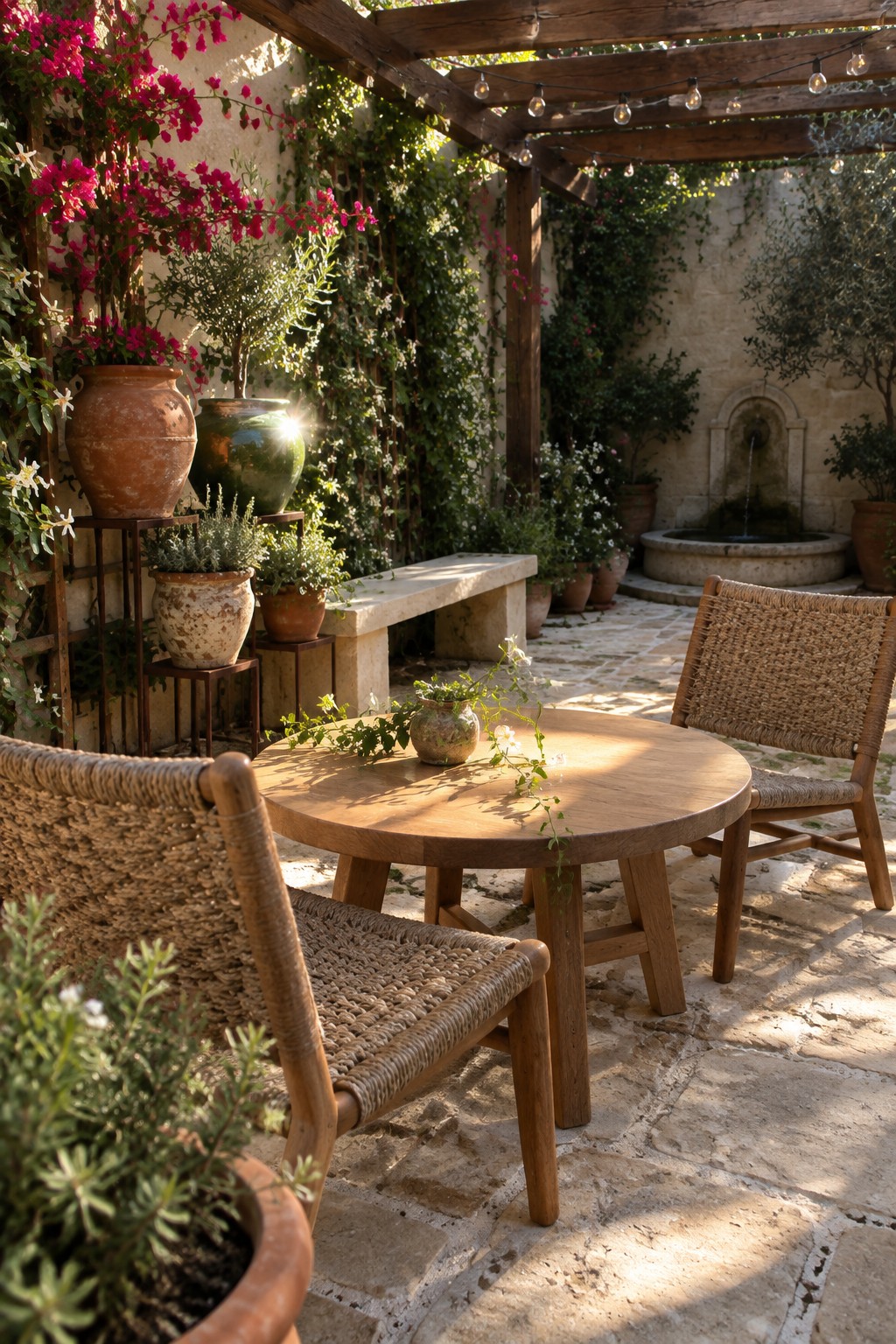
Layering containers at different heights turns a flat patio into something that feels more like a garden. Putting taller pots on stands or low walls next to shorter ones on the ground creates depth without needing built-in beds or big changes to the space.
This works especially well around seating areas where you want some greenery close by but still room to move. Mix a few large pots with smaller ones on simple metal stands, and tuck in trailing plants so the layers connect naturally. It stays easy to rearrange later if the light shifts or you want a different look for the season.
Layered Containers On A Balcony Wall
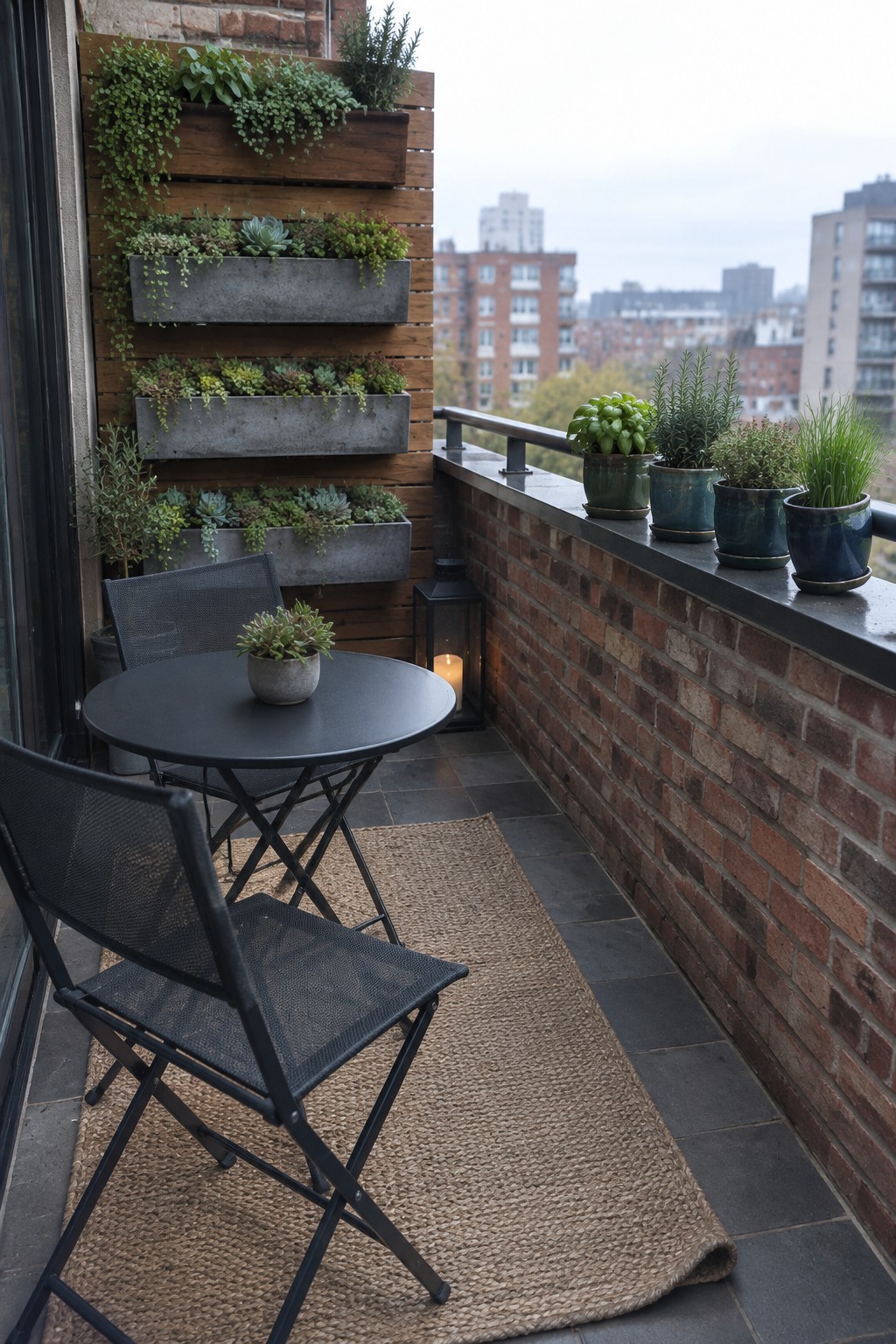
Layered containers let you fit a lot of plants into a narrow space without taking over the floor. Mounting rows at different heights along a wall adds depth and keeps the area open for seating.
This setup suits small urban balconies where you still want a full garden feel. Use a mix of wall mounted boxes and ledge pots, and keep the bottom row lower so the plants do not block the view or the walking path.
Layered Container Planting
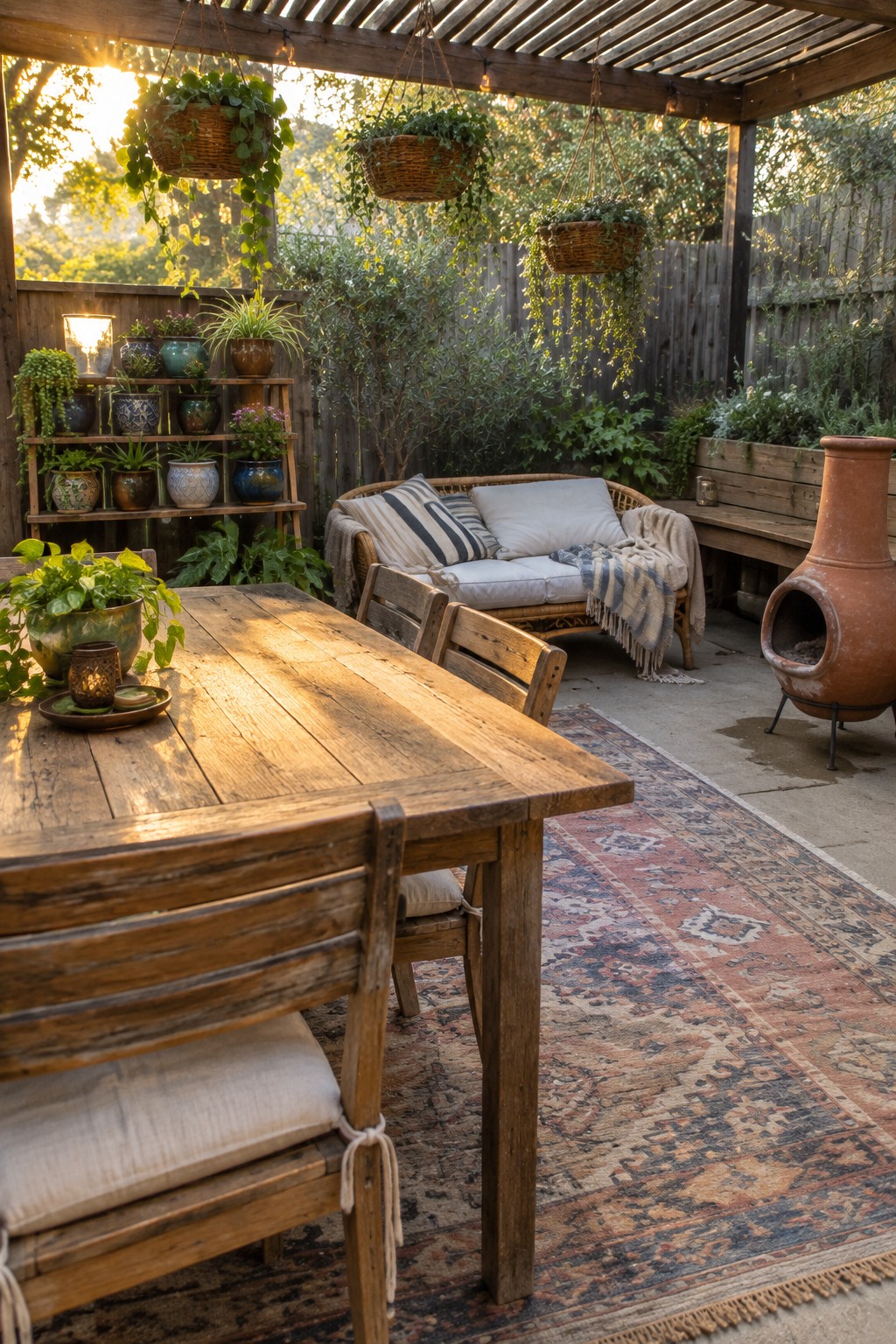
Layered containers let you build up greenery even when the patio has no soil beds. Shelves hold smaller pots at eye level while larger ones sit lower and baskets hang from the ceiling beams. The mix of heights makes the space feel fuller without crowding the floor.
This works best on paved patios or decks where permanent planting is not possible. Group plants by leaf texture and repeat a few colors so the layers read as one loose arrangement rather than separate pots.
Layer Containers Along a Narrow Path
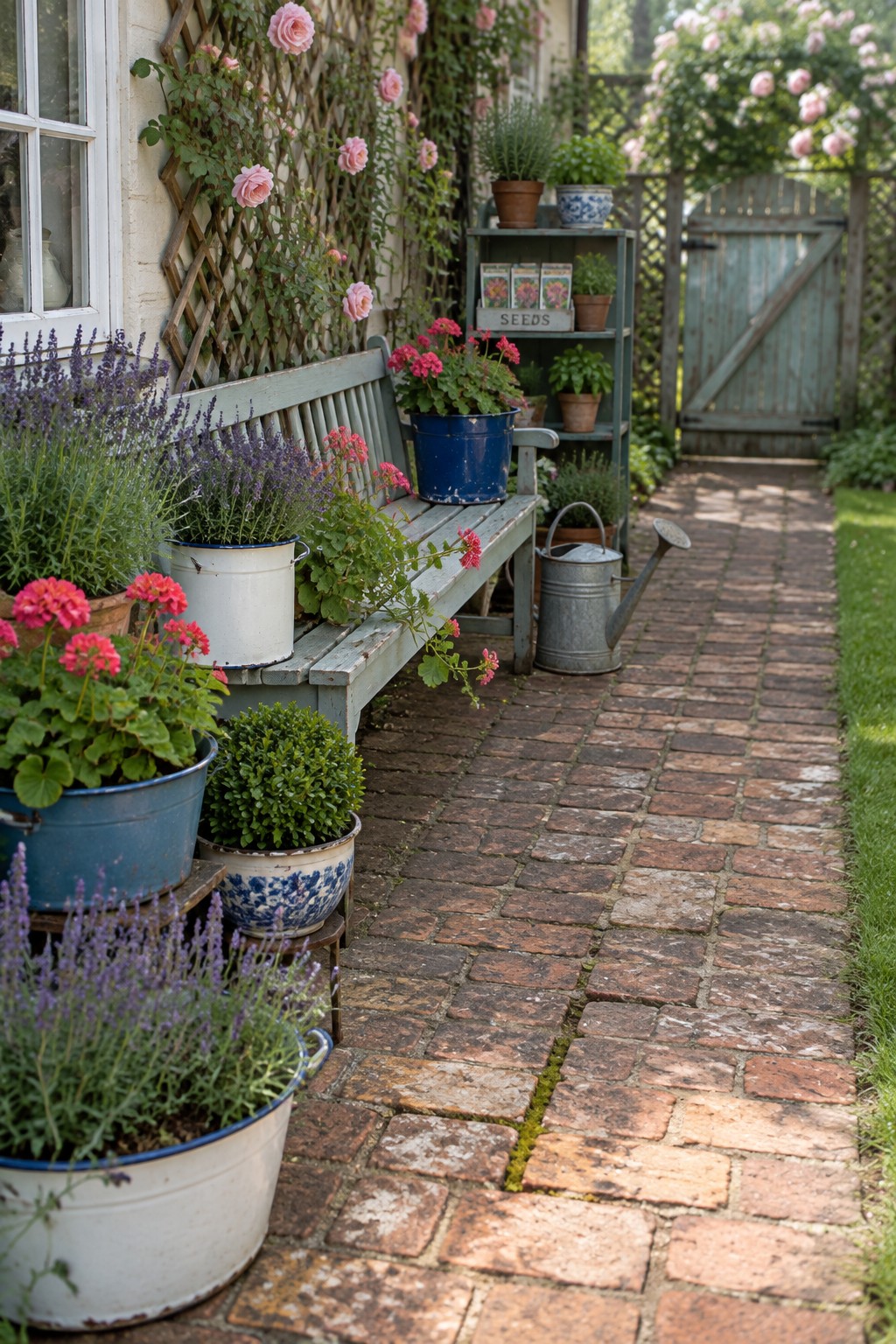
Layering containers of different sizes works especially well when you want to add greenery without digging up a whole border. The mix of taller pots, shorter ones, and a few on low stands creates depth even in a tight space, and it keeps the planting flexible so you can move things around as the seasons change.
This approach suits older homes with side paths or small side yards where a full garden bed would feel cramped. Start with a few larger pots at the back, then fill in with mid-size and smaller ones in front. Just watch the drainage on brick or gravel so water does not pool under the pots.
Layer Plants In Containers Of Different Heights
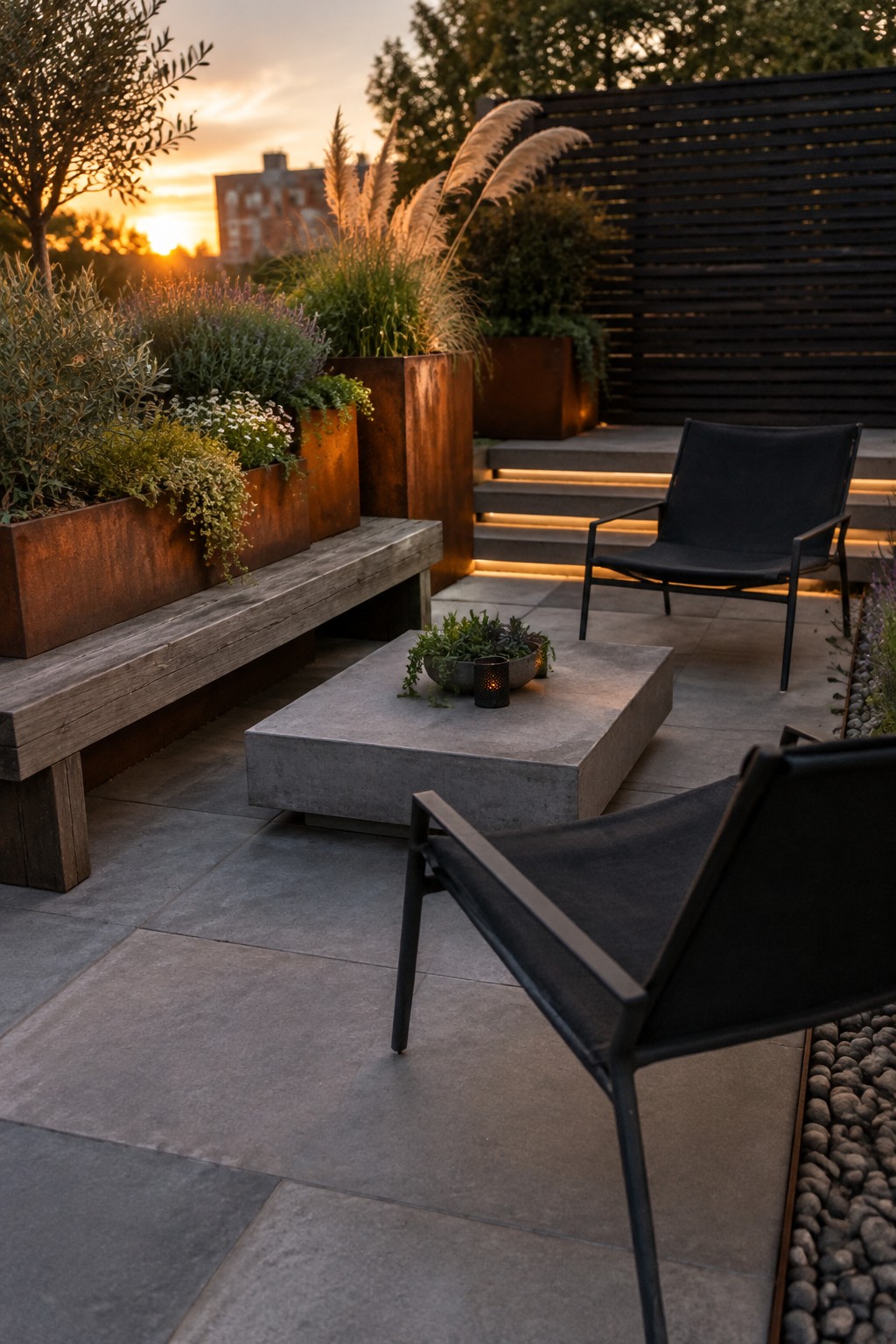
Using containers at varying heights gives you layers of greenery without building permanent beds. The mix of tall and lower planters lets plants overlap naturally and creates depth right around the seating.
This approach works best on patios or terraces where the ground is already paved. Keep the containers in two or three materials so the look stays simple, and group them near the edges to frame the space without crowding the middle.
Layer Container Plants Around Seating
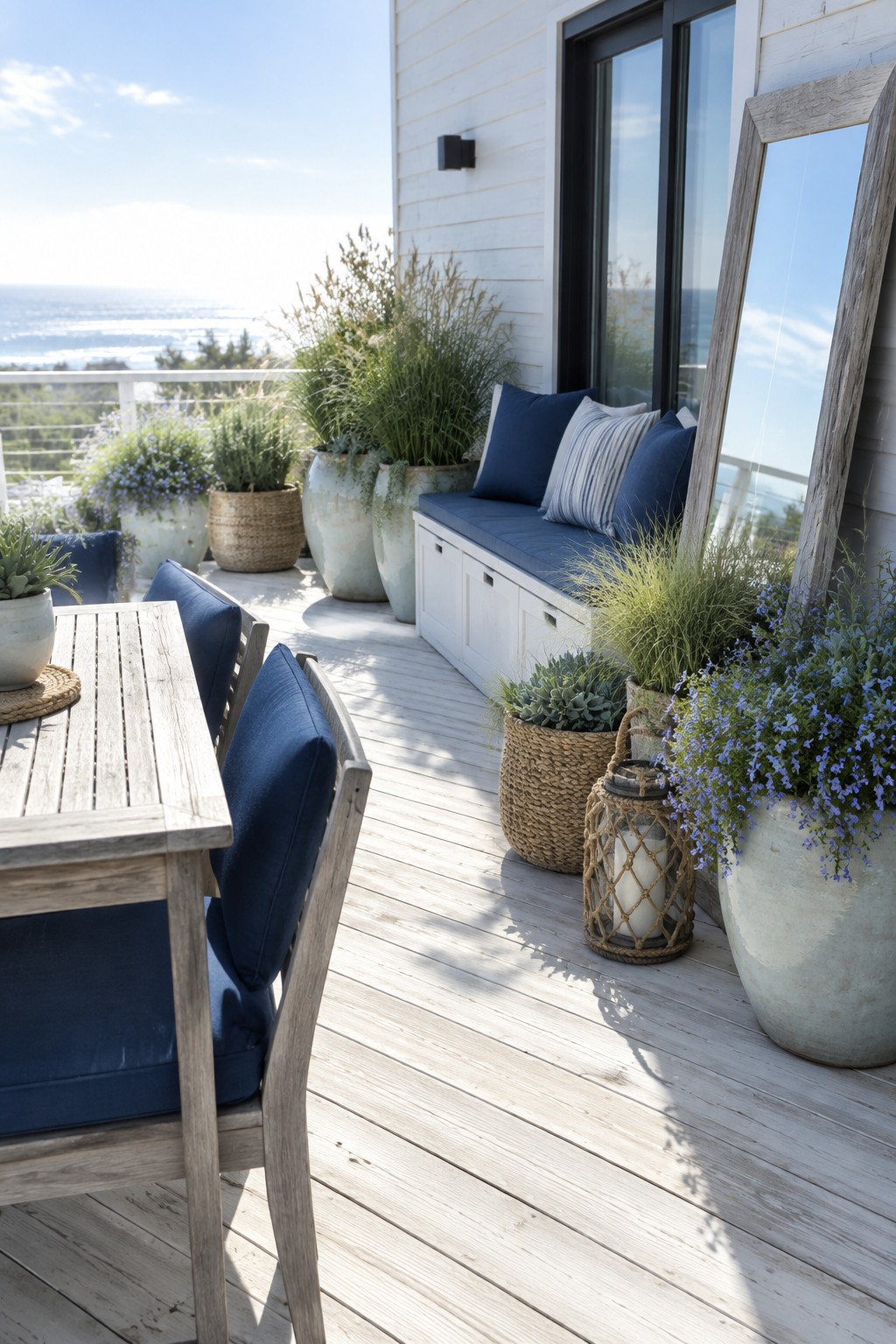
Layering containers gives a deck or patio more depth without needing built-in beds. The mix of tall grasses, low succulents, and flowering pots creates a soft border that still leaves room to walk and sit. It keeps the space feeling open while adding plenty of green.
This works best on wooden decks or balconies where you want plants that can move with the seasons. Start with a few larger pots at the back, then step down to smaller ones closer to chairs or benches. The look stays simple to change if one plant needs replacing.
Layer Container Plants at Different Heights
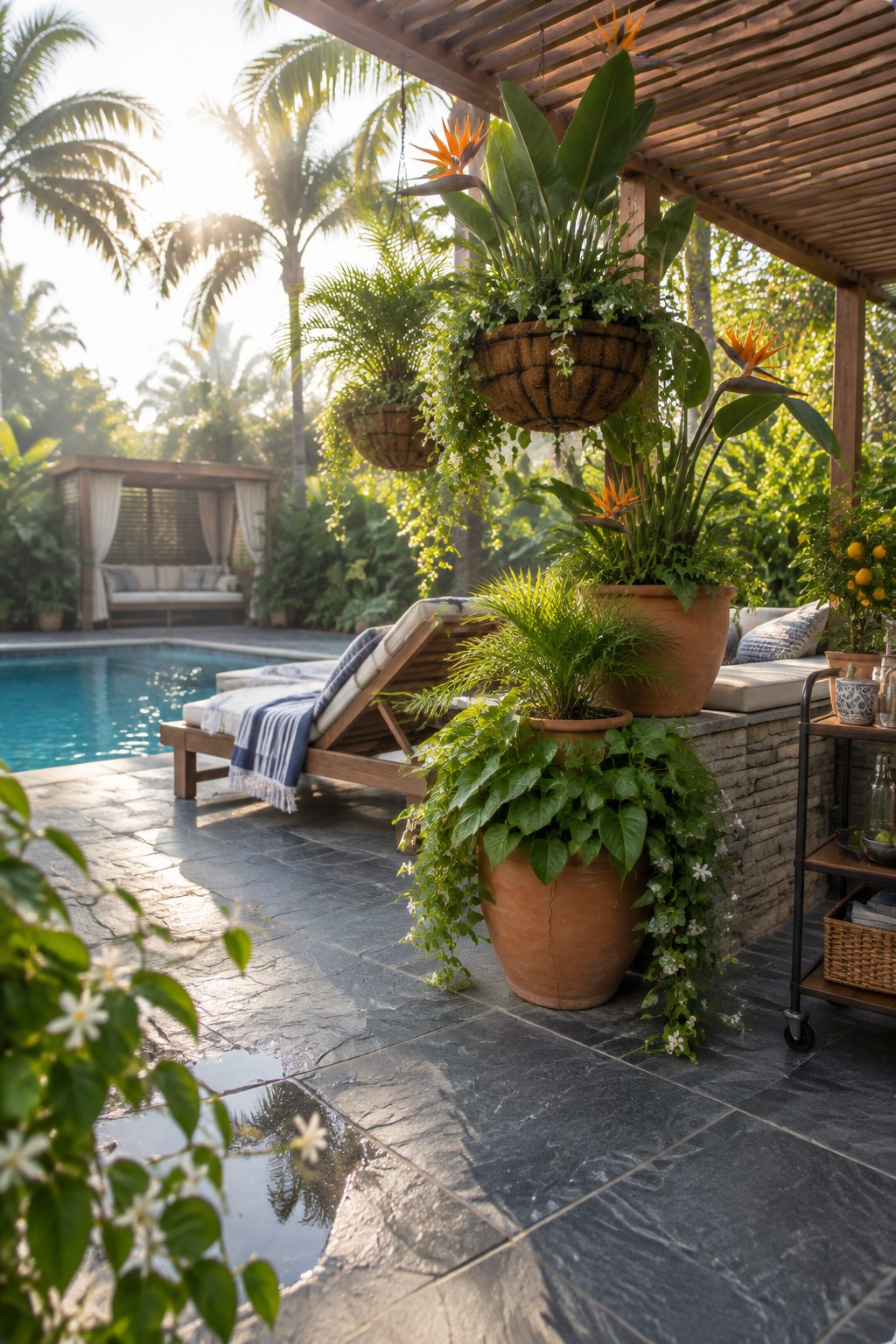
One simple way to make a patio feel more like a garden is to layer container plants at different heights instead of lining them up in a row. Larger pots on the ground give a solid base while hanging baskets and taller plants fill the space above, which adds depth without needing a big planting bed.
This works best on patios with hard surfaces like stone or tile where there is no soil to work with. It suits homes that get plenty of sun and lets you shift pots around when the seasons change or when you want a fresh arrangement.
Layer Container Plantings At Varying Heights
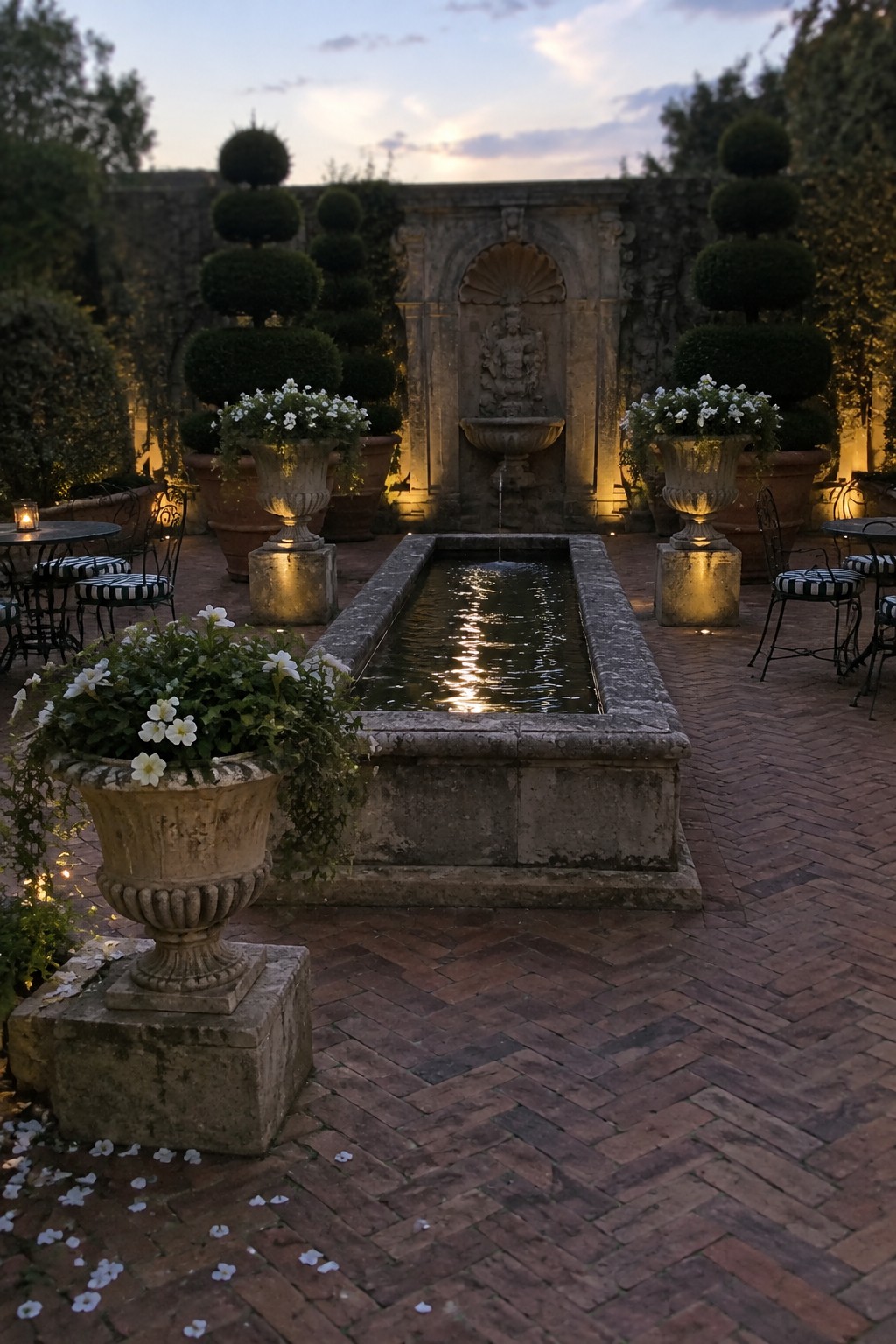
Placing containers at different heights is a simple way to add depth to a patio without crowding the floor space. Large urns set on low stone bases next to shorter pots create a stepped look that draws the eye upward and makes the planting feel fuller.
This approach works best on open brick or stone surfaces where you can group a few tall pieces near seating and fill in with lower ones. It suits both formal and relaxed outdoor areas as long as the containers share a similar material or color tone.
Layer Containers in Different Sizes
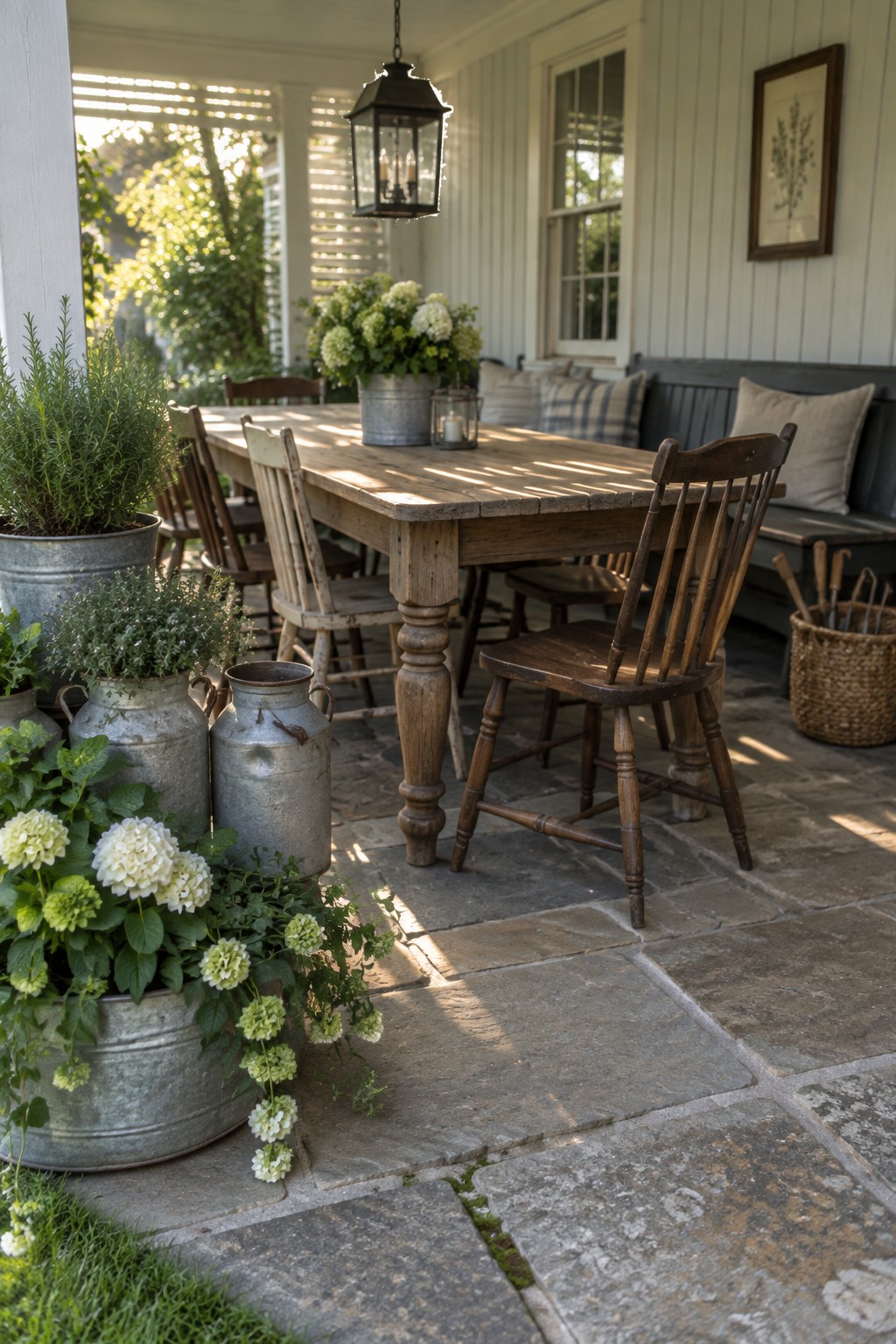
Grouping pots of varying heights and widths is a simple way to add depth around a patio table without any permanent planting beds. The mix lets you play with taller plants in back and lower ones up front so the greenery feels full and natural rather than flat.
This approach suits stone or brick patios where digging is not an option and works best when you repeat a material like metal for the containers. Keep the number of pots modest so the seating area stays open and easy to move around.
Layering Different Sized Containers on Patios
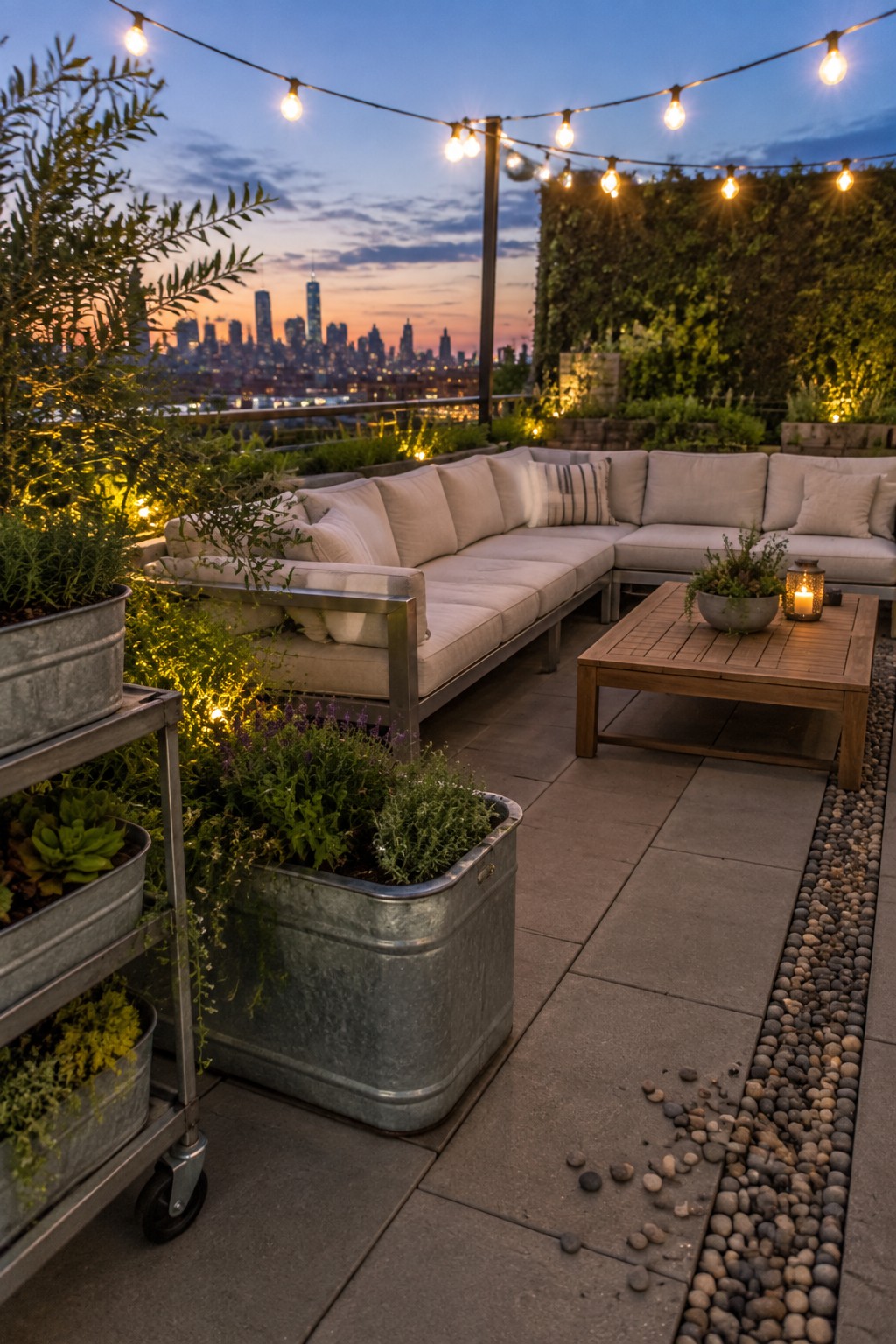
Placing containers in a mix of heights and widths lets you build depth without digging beds. The metal troughs and smaller pots here create a soft green edge around the seating while keeping the hard floor clear for movement.
This setup works well on rooftops or balconies where space is tight. Use a few larger troughs as the base layer, then add mid-size and trailing plants in front or on carts so you can shift them as needed. Stick to two or three container finishes so the planting stays the main focus.
Layer Containers on Steps for Easy Height
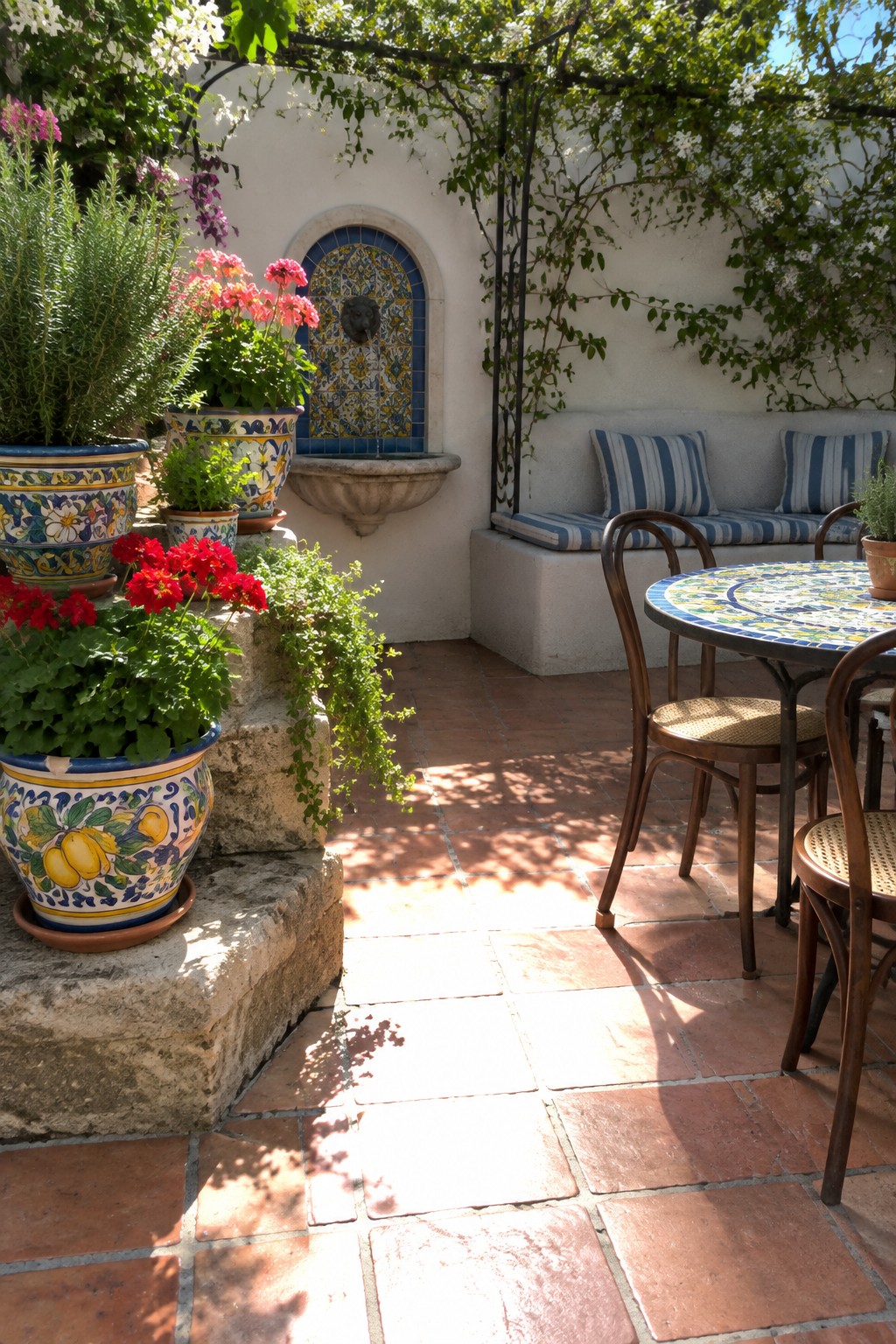
Putting pots at different levels is one of the simplest ways to make a patio feel fuller. Stacking them on low steps or a short wall gives you height without needing tall plants or big structures. The mix of sizes and colors also helps tie the seating area to the planting.
This works especially well on small patios or in older homes where you already have steps or raised edges. Start with a few large pots at the bottom and add smaller ones above. Just keep the arrangement loose so it still feels natural.
Layer Containers for Quick Depth
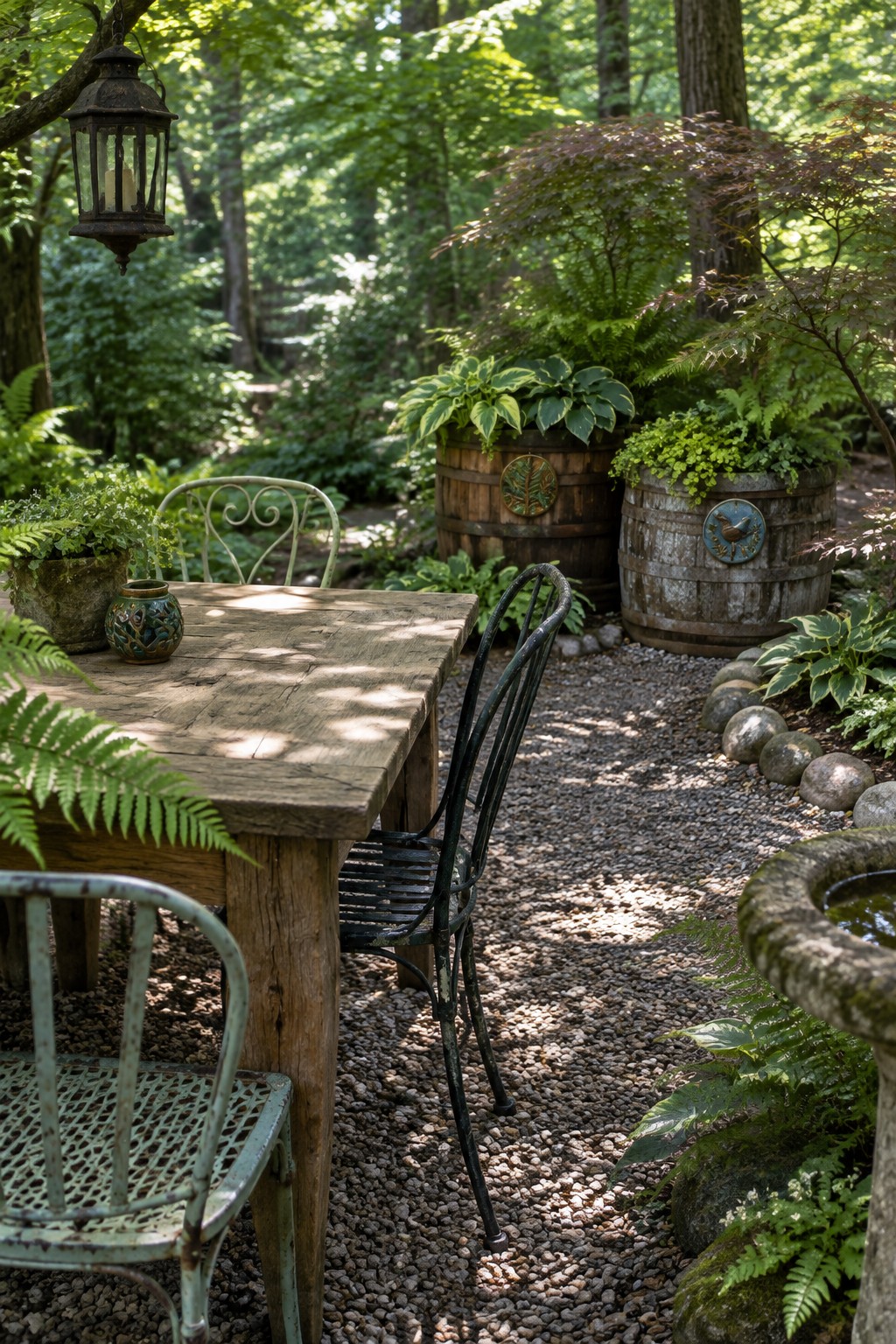
Layering containers of different heights and sizes gives a patio garden instant structure without digging beds. The mix of tall wooden barrels holding larger shrubs and ferns with smaller pots tucked in front creates that full, settled look even in a gravel space.
This approach works especially well along paths or beside seating areas where you want greenery to feel natural rather than formal. Choose barrels for the back layer, mid-size pots for the middle, and low bowls or trailing plants up front so each level stays visible. It suits shady woodland settings and makes it easy to swap plants with the seasons.
Layer Container Plants to Soften Patio Edges
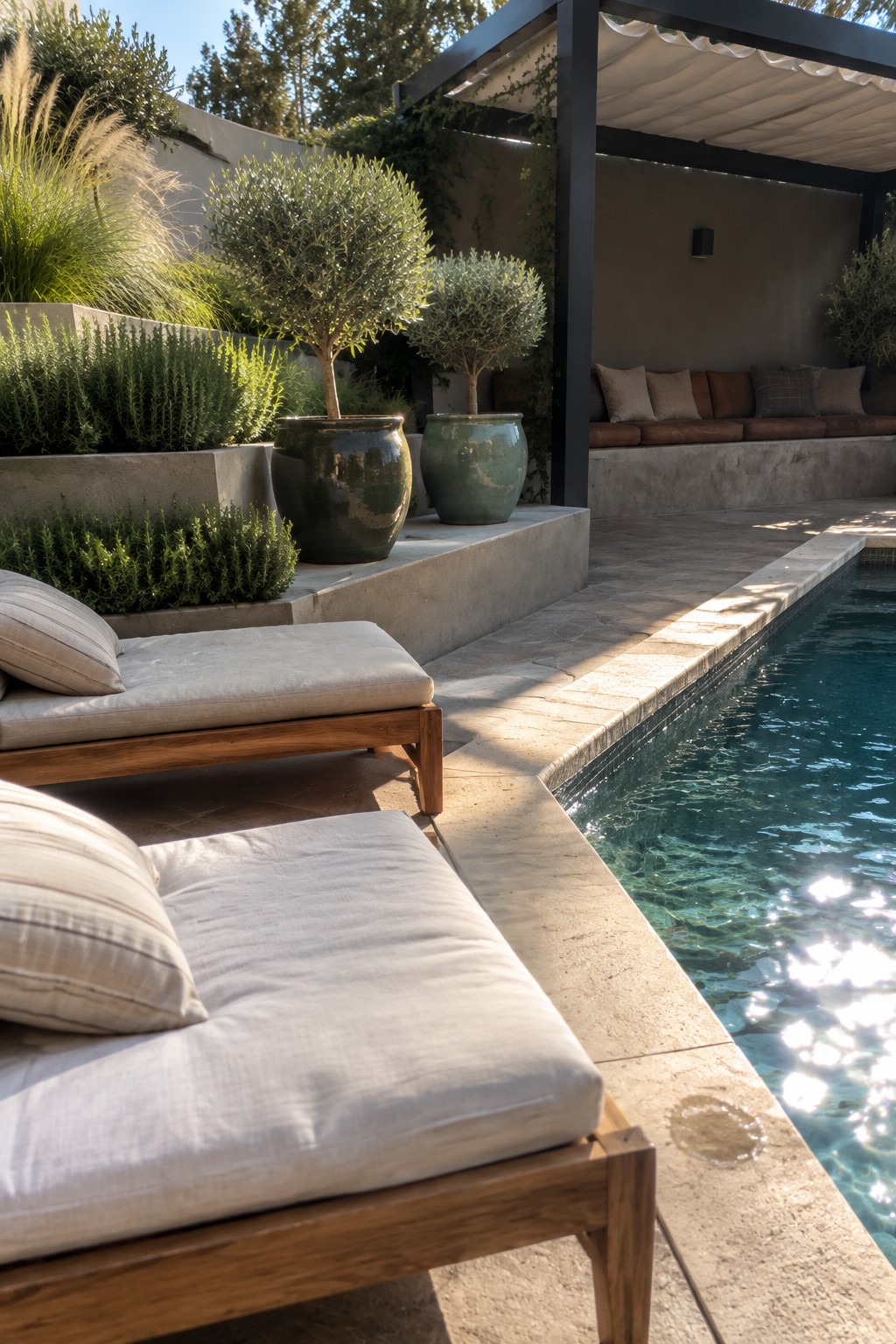
Large pots give you a simple way to add layers of greenery without digging up the hardscape. In this setup, a few tall shrubs in big ceramic containers sit on a raised ledge right beside the pool, creating a soft screen that still leaves the space open. The different heights and textures keep the edge from feeling flat or bare.
This works well on patios or pool decks where you want some planting but need to keep things movable. Start with one or two bigger pots for height, then add smaller ones in front to fill in the gaps. It suits homes with concrete or stone surfaces where permanent beds are not practical.
Layer Containers Along a Low Wall
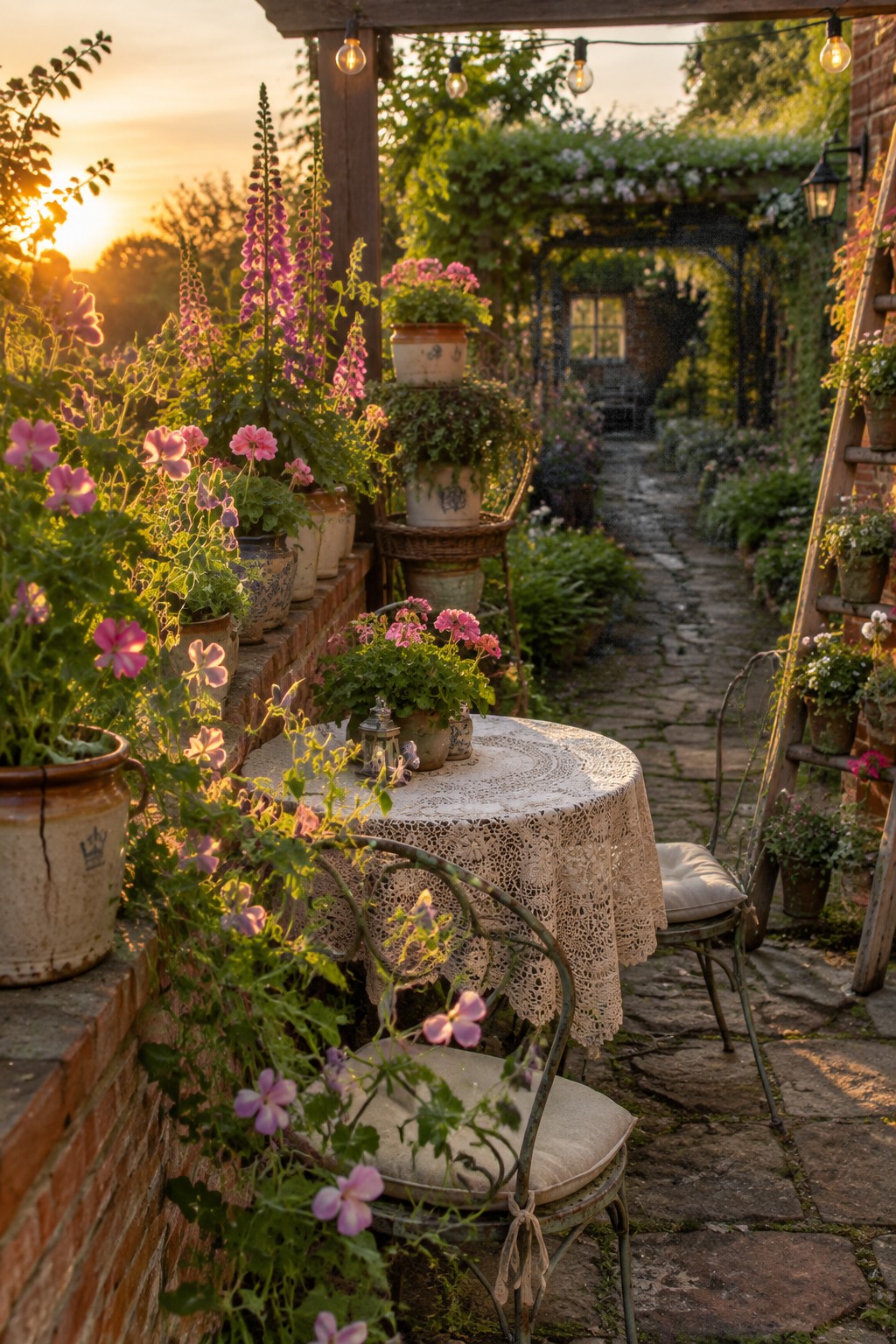
Layering pots at different heights along a brick ledge gives a patio border more depth without taking up extra floor space. It turns a simple edge into a living screen that feels established even in a small area.
Start with larger pots at the back and work forward with smaller ones so every plant stays visible. This approach works especially well on older homes where the ledge already exists, and it lets you swap plants easily when something needs replacing.
Layered Containers Along Narrow Paths
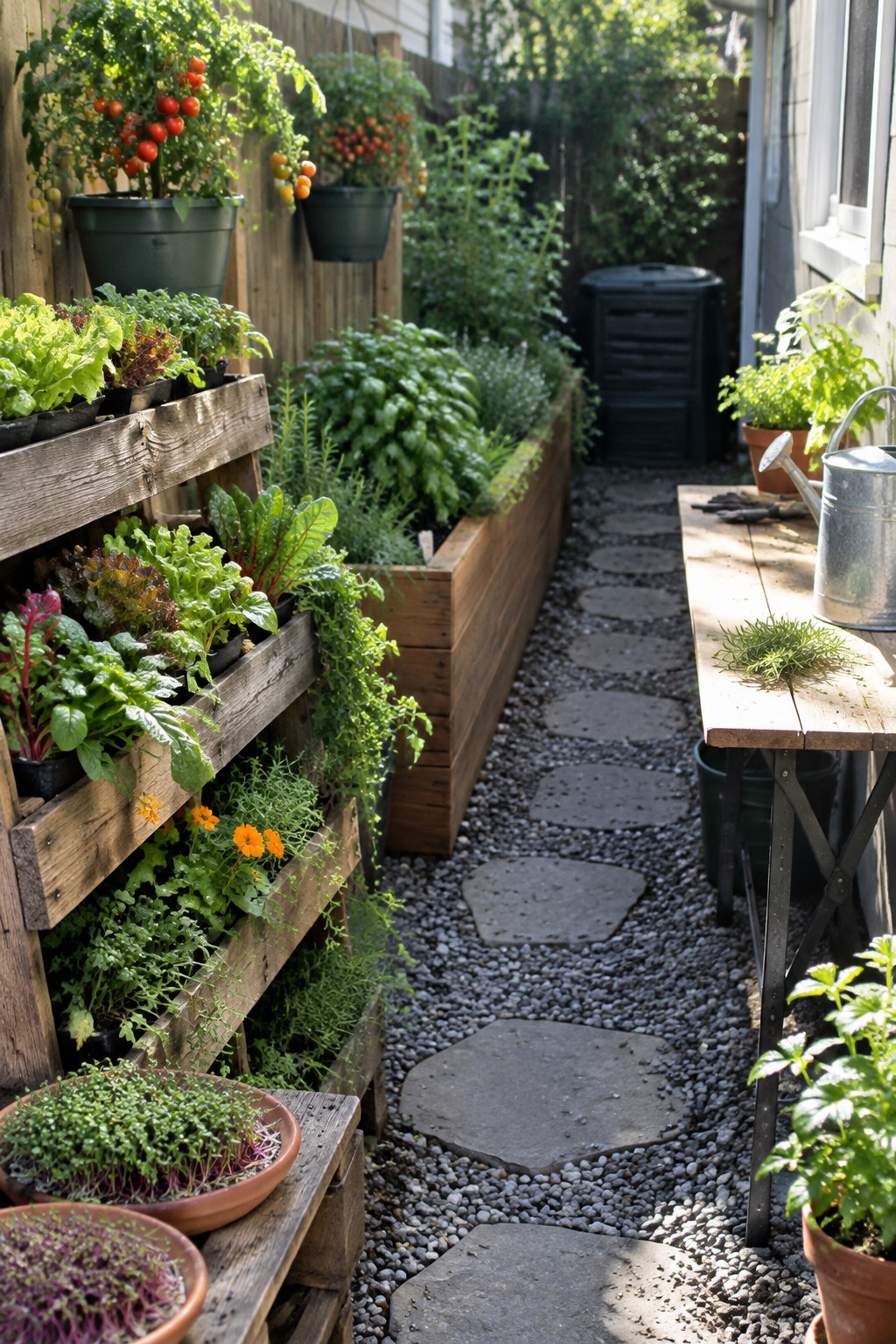
Stacking pots on wooden pallet shelves next to a raised bed lets you grow a lot more in a tight strip of ground. The vertical setup keeps everything reachable and turns what would be wasted wall space into growing room without crowding the path.
This works especially well in side yards or between a fence and the house where soil beds alone would feel cramped. Use sturdy pallets that can handle the weight, and mix herbs, greens, and a few taller plants like tomatoes so the layers stay full but not messy.
Layer Containers at Different Heights
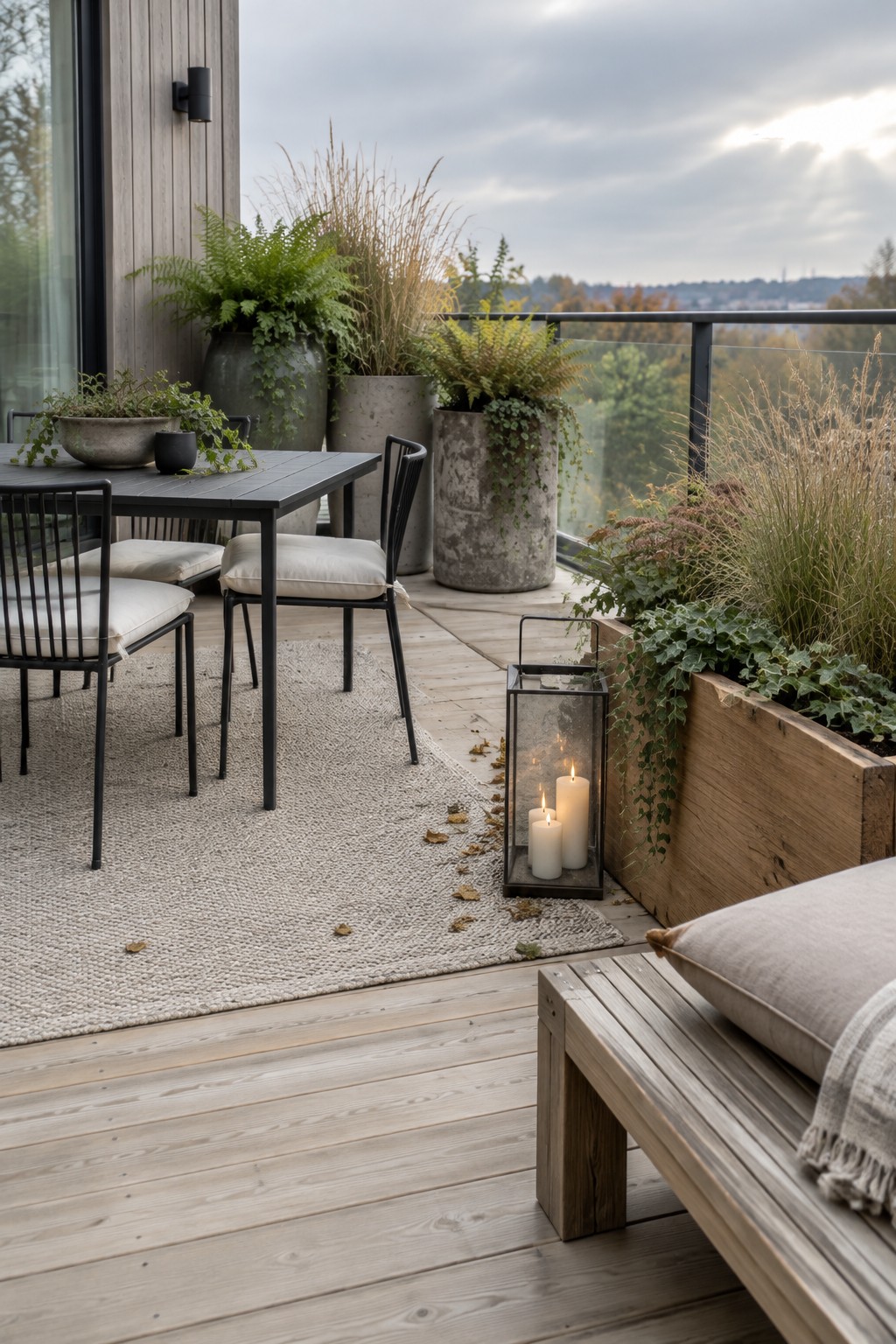
Layering containers of different sizes is a simple way to get more depth on a deck or balcony without building permanent beds. Taller pots at the back and shorter ones in front create a fuller look that feels more like a planted border than a row of separate plants.
This approach works well on spaces with limited floor area because you can move things around as needed. Mix upright grasses with trailing vines and bushier ferns in the same group, and the layers fill in quickly while keeping the deck surface clear for seating.
Layer Pots On Tiered Stands
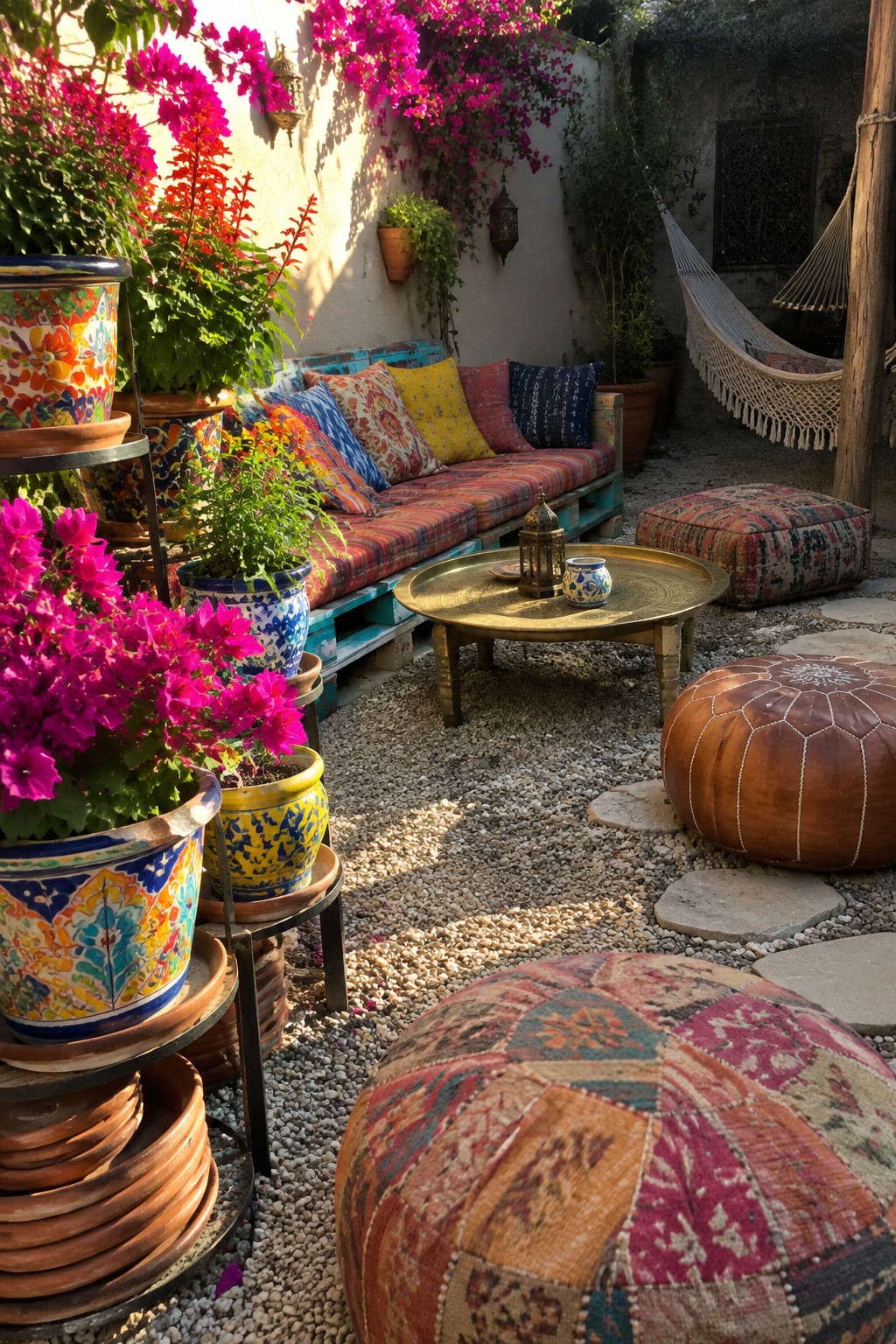
One simple way to add color and fullness to a patio is by placing containers on stands at different heights. The layers let plants overlap without crowding the floor, and it keeps everything movable if you want to rearrange later.
This setup works best on gravel or paved areas where digging beds is not an option. Start with a few tall stands in the back and shorter ones closer to seating so the plants stay in scale with the space.
Vary Pot Heights For Layered Planting
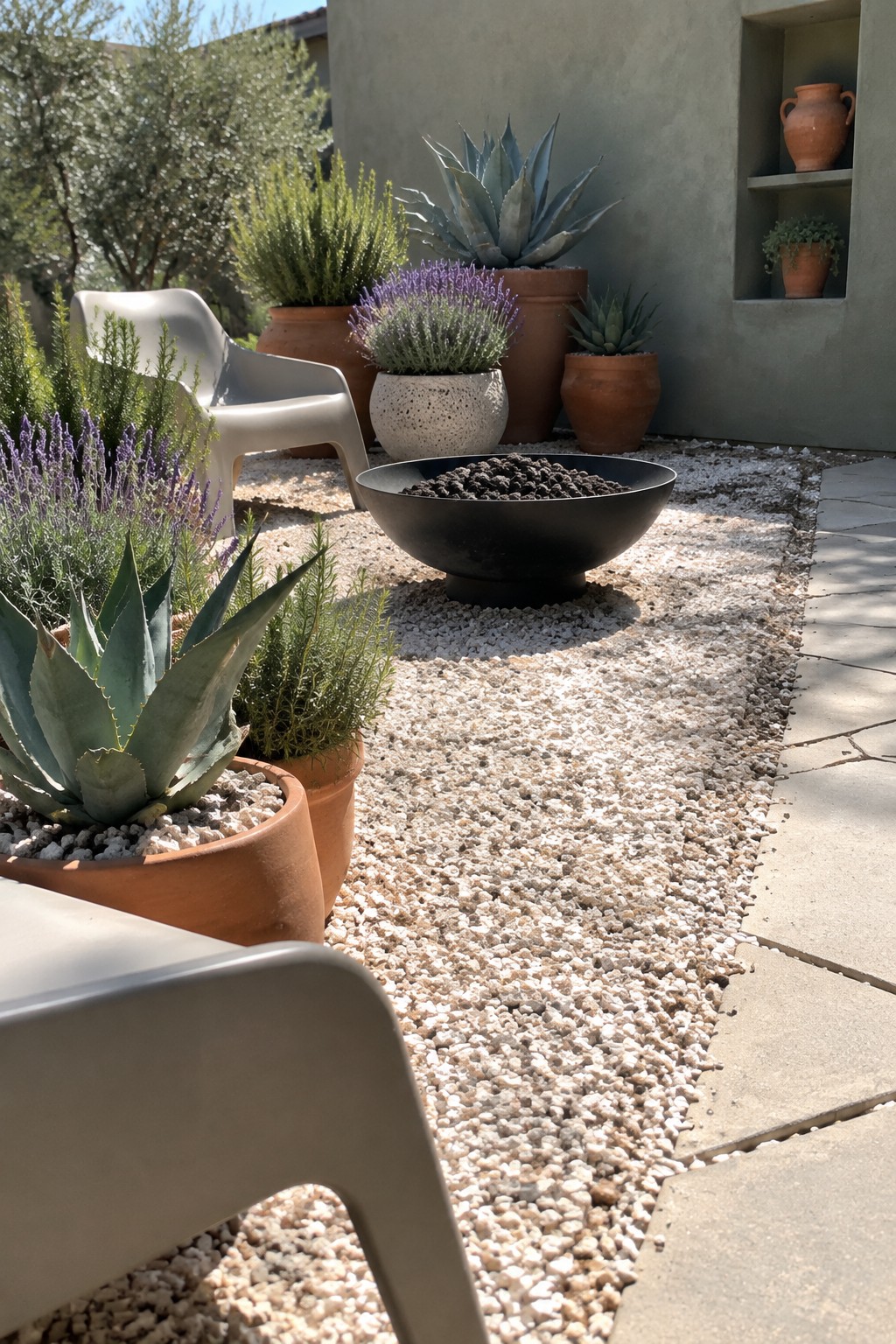
Grouping containers at different heights makes a patio feel more full without needing a big garden bed. Taller pots in the back with shorter ones up front let the plants overlap naturally and add some depth.
This approach works best on gravel or paved areas where you can shift things around as the seasons change. It suits homes that have sun but limited soil space, and it keeps the look simple as long as you stick to a few pot materials.
Frequently Asked Questions
Q: Do lower plants need different care than the ones up top?
A: Water from the top down so everything gets a share. Check the soil moisture in the bottom layer first since it dries slower.
Q: What size pots work best for building layers on a small patio?
A: Start with one large container as your base. Add smaller ones on top or around it to create height without taking over the space.
Q: How often should I rearrange the layers?
A: Move things around once a season if a plant stops thriving in its spot. But test new combinations on a sunny afternoon to see how the light hits each level.
