

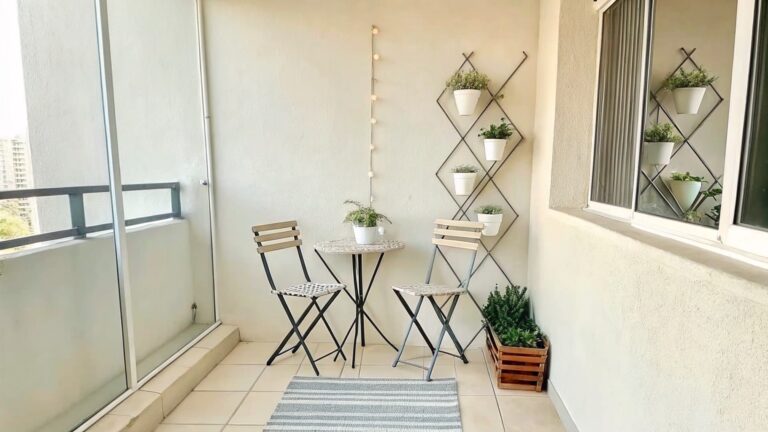
When I first moved into my rental the backyard stayed empty for months because I kept worrying about what would count as damage once it came time to move out.
I have noticed that outdoor spots only get used when the setup feels like it can shift around without much effort.
Weather and daily life wear things down fast so the pieces that last are the ones that do not need to be anchored in place.
What usually makes the difference is choosing items that serve a purpose beyond decoration like providing shade or defining a seating spot without any construction.
One change at a time tends to show me what works.
Lean a Freestanding Grid Against the Wall
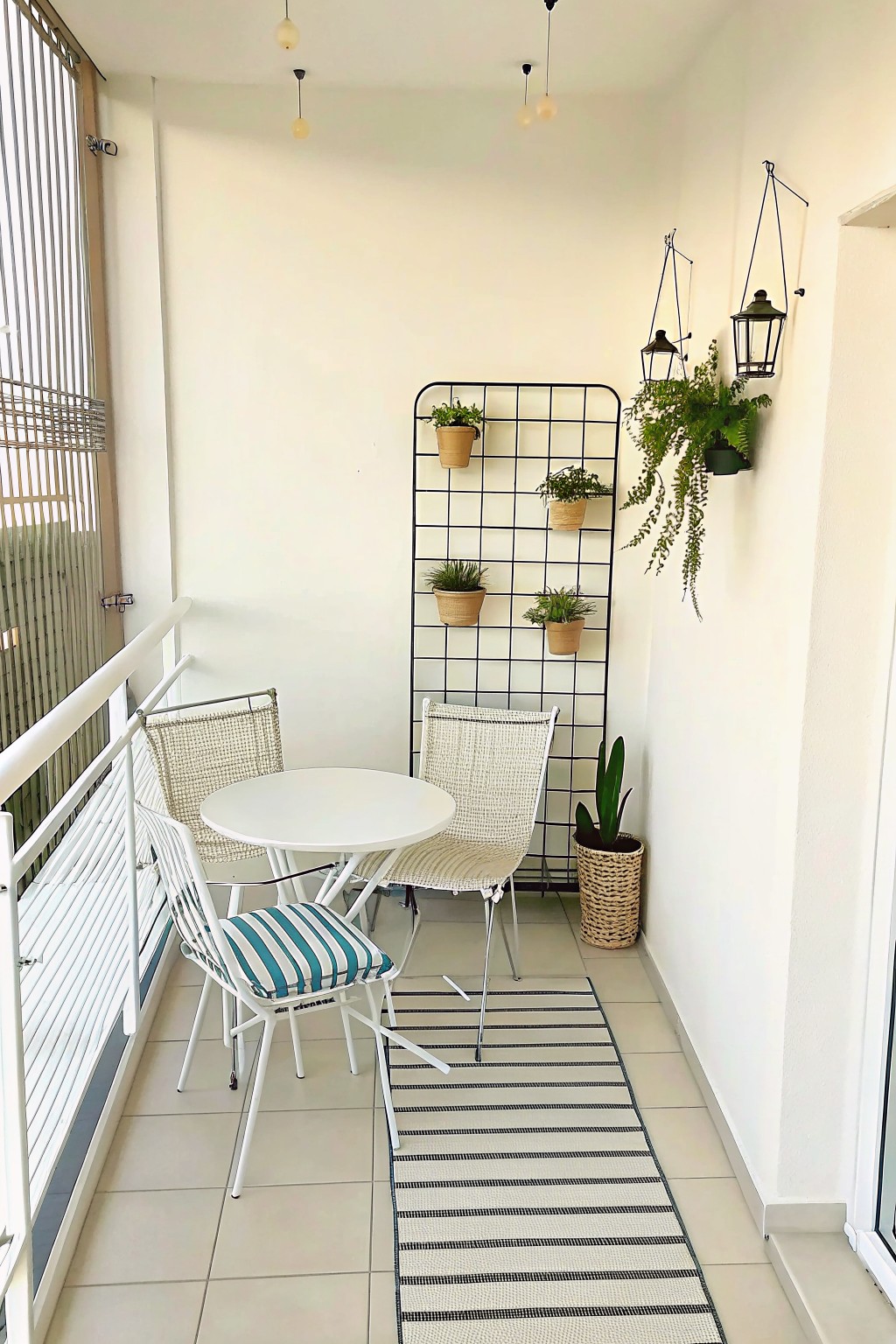
A simple grid panel gives you vertical space for plants without any drilling or wall damage. It leans right where you need it and can be moved or stored when the season changes. Many people like this setup on balconies because it keeps the floor clear while still adding plenty of greenery.
This works well in rentals or small outdoor spots where you cannot attach anything permanently. Choose a grid with wide openings so you can tuck in lightweight pots or clip on small planters. Just make sure the base stays stable on windy days.
Modular Deck Tiles For A Quick Patio Surface
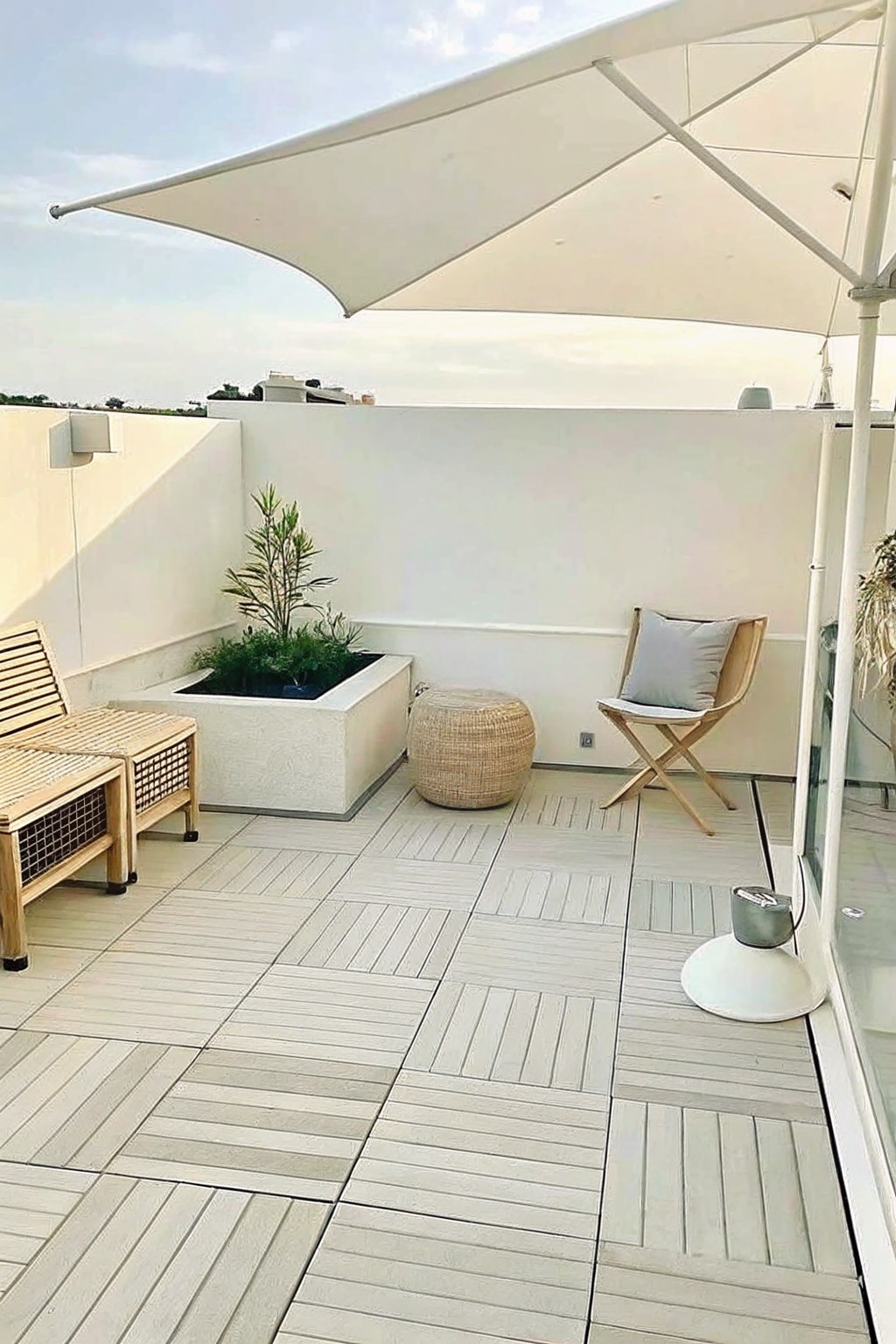
Many renters like modular deck tiles because they turn a plain concrete or balcony floor into something that feels finished without any drilling or gluing. The tiles simply sit in place and can be rearranged or taken away when the lease ends.
They suit small terraces or rooftops best, especially where you want a clean base for a chair or two and a few plants. Just lay them out in the area you use most and stop there.
Use a Portable Screen to Add Privacy

A folding screen is one of the easiest ways to create a sense of privacy on a rented patio or balcony. It blocks the view from outside without any drilling or permanent fixtures, and it helps the space feel more enclosed and comfortable.
Place it along one open side of your seating area where you need the most screening. It works especially well in covered outdoor spots where you want a little separation from neighbors but still need to move things around or take them with you later.
Define Small Outdoor Spaces With a Rug
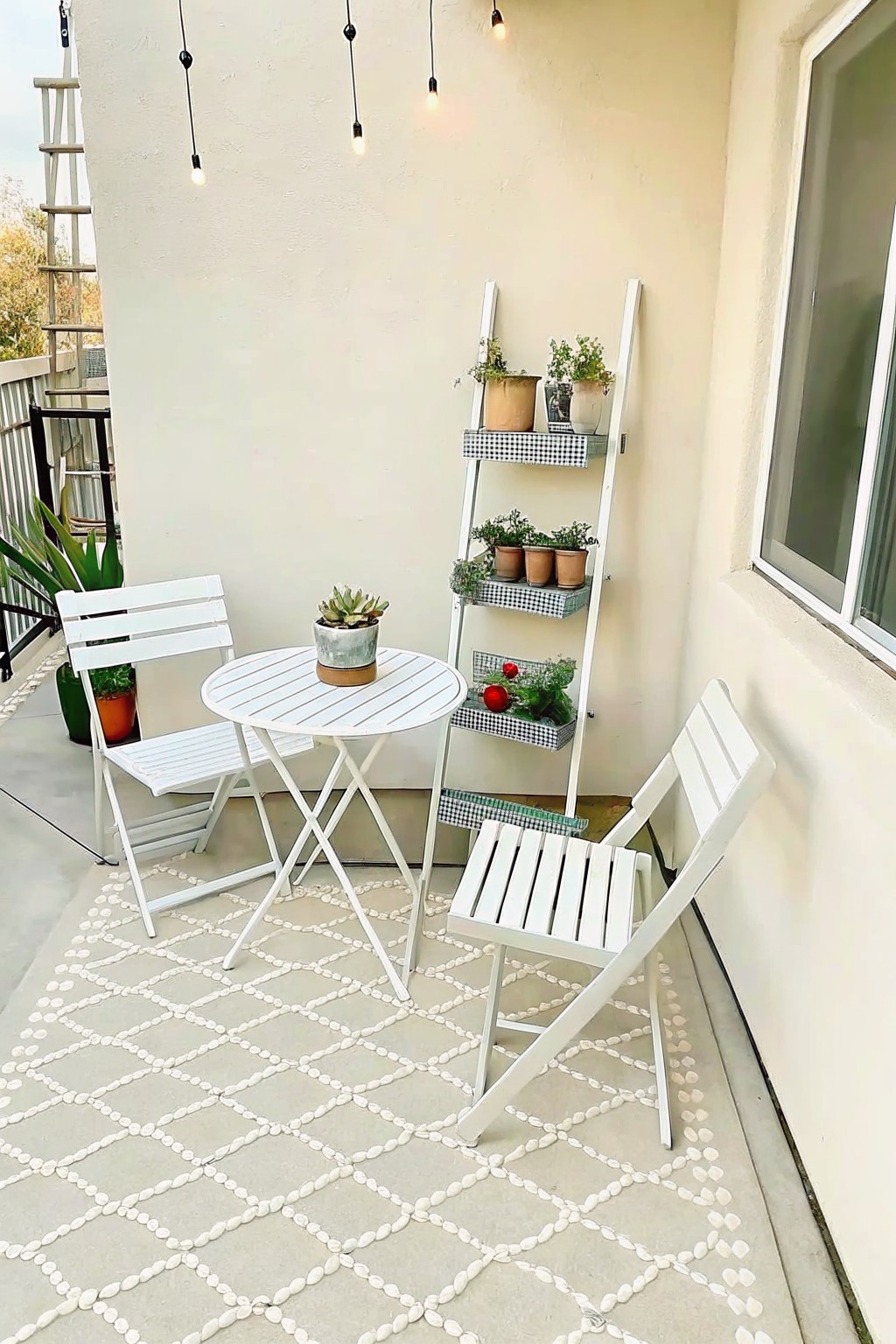
An outdoor rug can turn a bare balcony into a usable sitting area without any drilling or fixtures. It softens the hard floor and gives the space clear boundaries so the seating feels intentional rather than just set down on concrete.
This works especially well on rentals because the rug stays completely removable. Choose one sized to fit under your table and chairs, then add lightweight folding seats that can be stored away when needed.
Folding Tables For Portable Plant Displays

Folding tables give you a quick way to set up a few potted plants near the door without attaching anything to the house. They sit right on the porch floor, hold several containers at once, and can be moved or stored when the space needs to be cleared.
These tables suit renters who want greenery by the entry but may need to take everything with them later. Place them where they catch light but stay out of the main walkway, and choose sturdy models that hold up to weather if the porch is open.
Zone a Patio With a Removable Outdoor Rug

A large rug can turn an open patio into a clear sitting area without any construction or attachments. It brings the chairs and other pieces together so the space feels more like a room and less like a leftover corner of the yard.
This approach suits renters because the rug stays flat with just its own weight and can be rolled up on moving day. It works best in spots that already have decent shade or cover, and it pairs well with lightweight furniture that you can shift around as needed.
String Lights For Quick Outdoor Ambiance
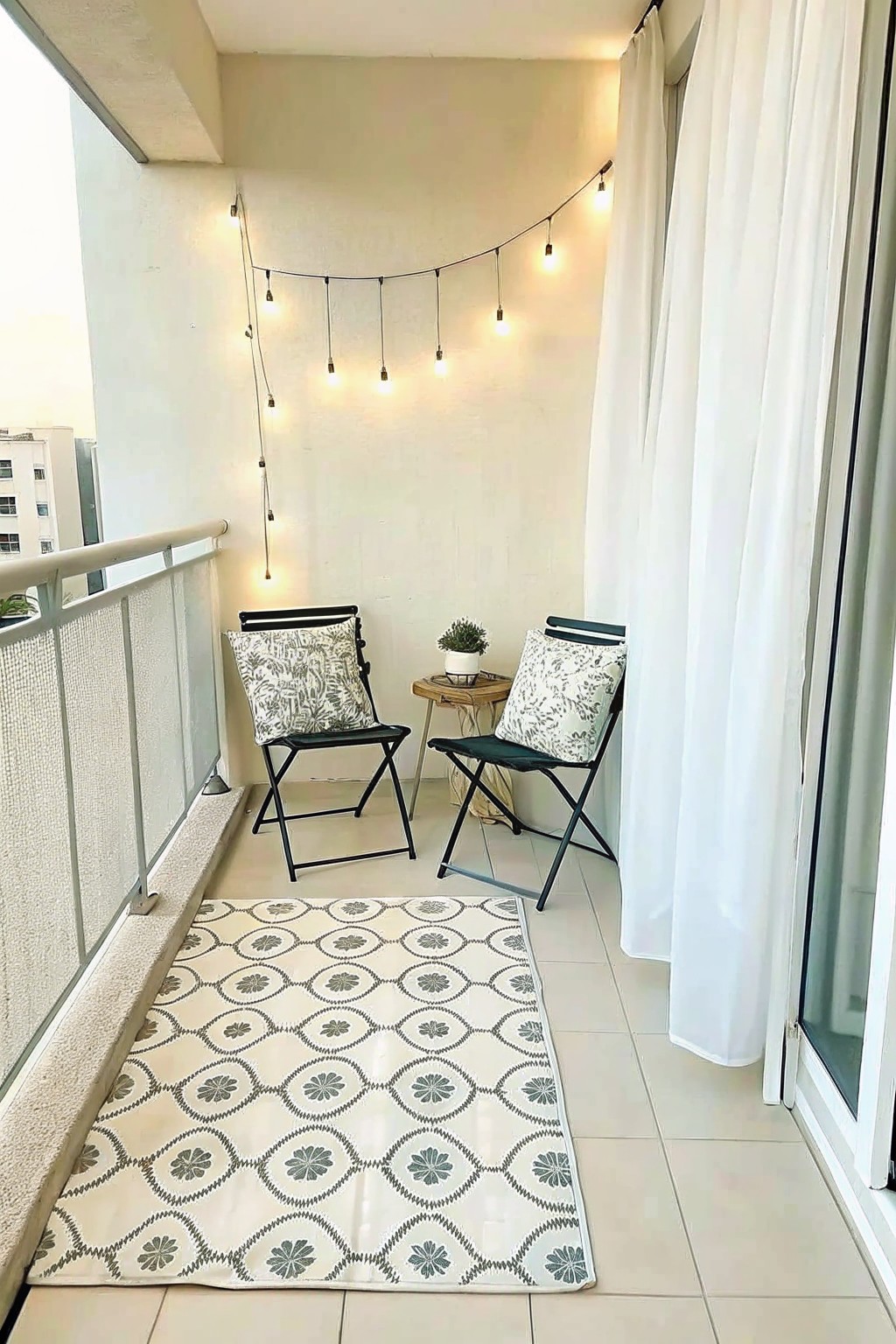
String lights are one of the easiest ways to make a small balcony feel usable after dark. They need no drilling or wiring and can be taken down just as fast as they go up. Many people hang them along the railing or across the ceiling line with simple clips or hooks that come off without a mark.
This works especially well on rental balconies where you cannot change the structure. Keep the strands lightweight and run them at a height that gives even coverage without blocking the view. Test the placement at night before you commit to the final spots.
Use An Outdoor Rug To Define Your Seating Area
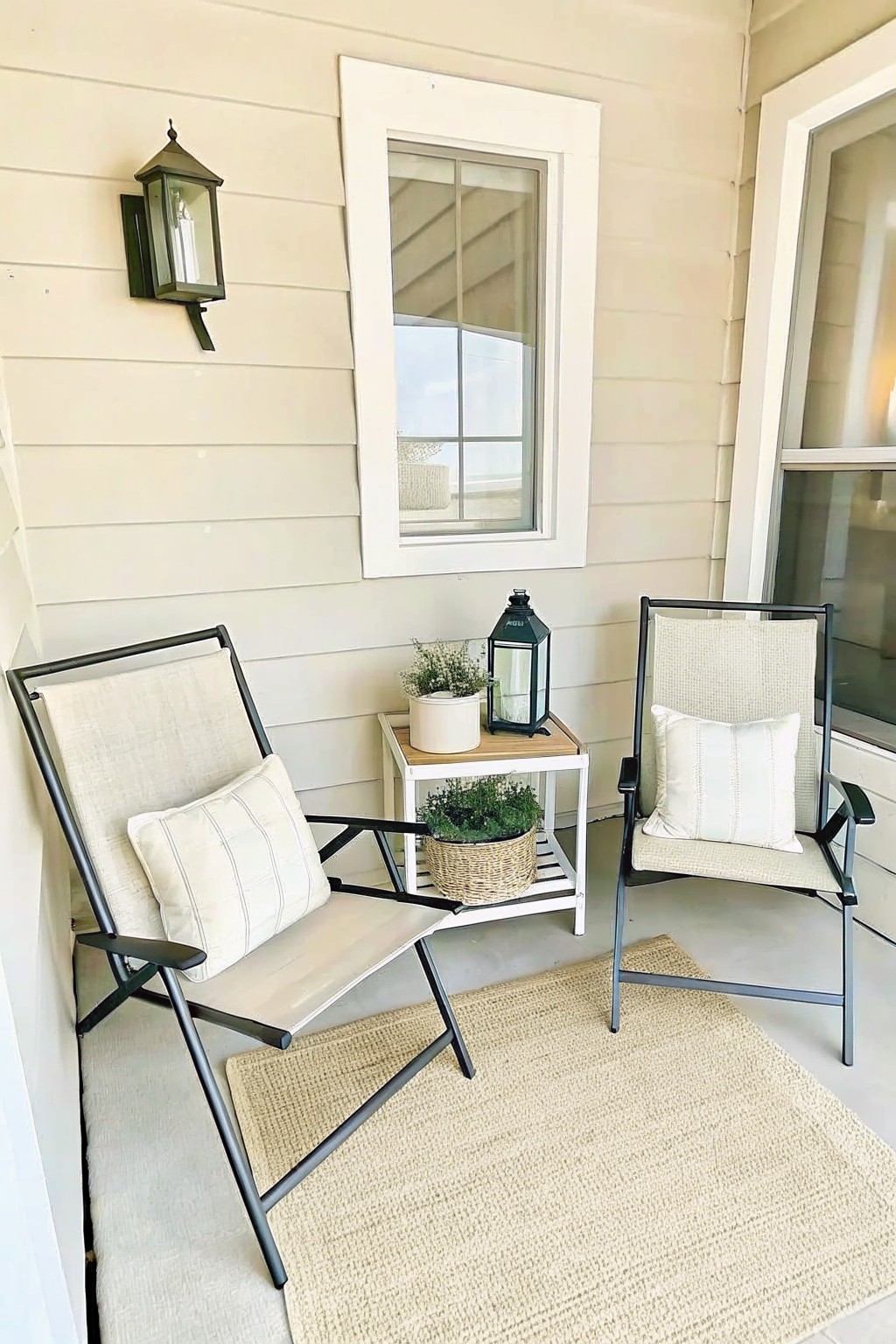
An outdoor rug is one of the easiest ways to turn an empty porch into a usable sitting spot. It marks off the space, brings the chairs and table together, and makes the area feel more finished without attaching anything to the floor.
This approach works well on rental porches or patios where permanent changes are not allowed. Pick a durable, weather-safe rug that fits the scale of your seating and place it so the front legs of the chairs rest on it.
Use a Rolling Shelf for Flexible Planting
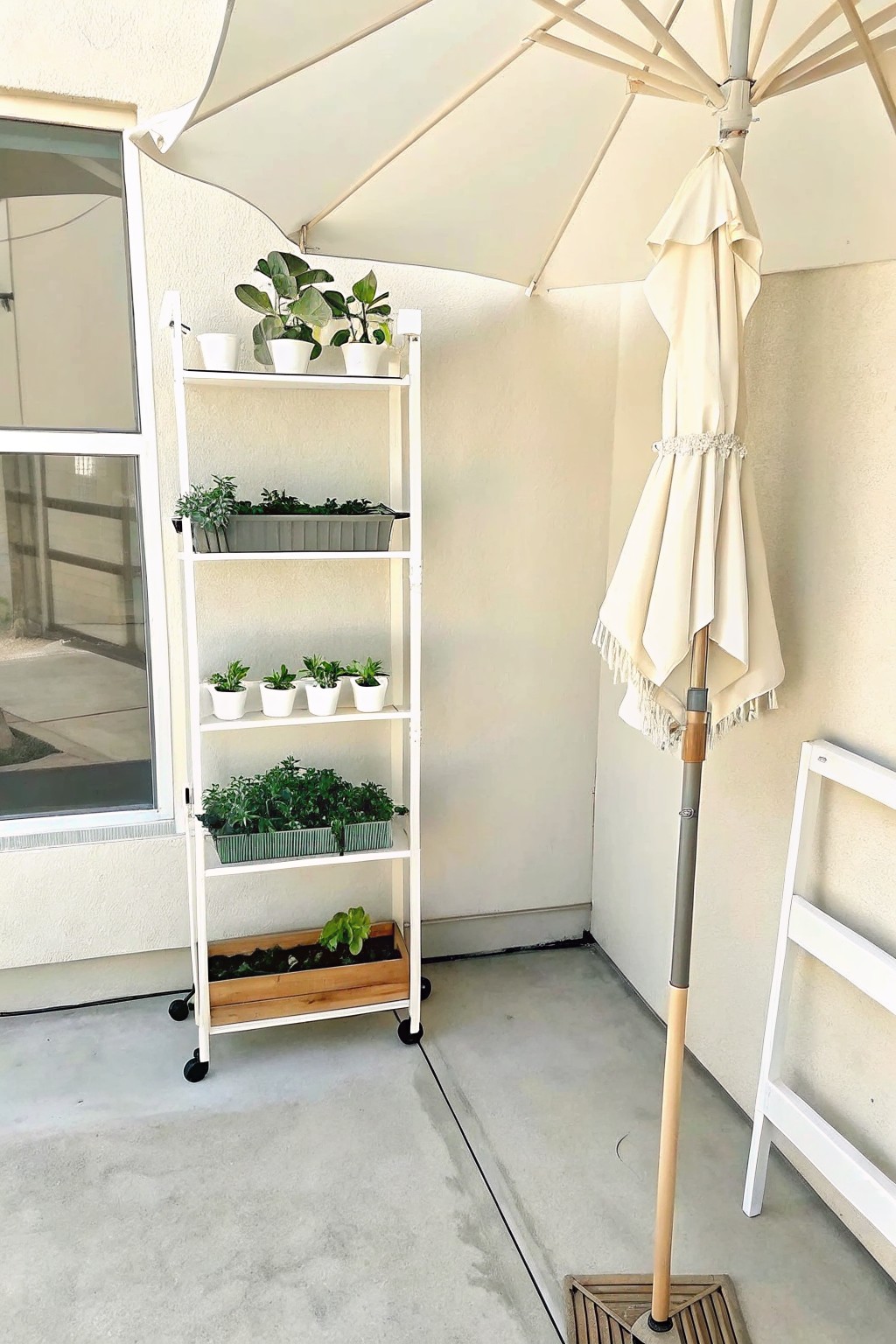
A rolling shelf gives you a simple way to add plants to a patio without any permanent changes. It keeps everything movable so you can shift it for sun, shade, or cleaning.
This works best on concrete or deck surfaces where wheels roll easily. Choose a sturdy unit that can handle trays or small pots, and keep heavier items on the bottom shelf for balance.
Outline Your Patio With Large Potted Plants

Large pots give you an easy way to shape an outdoor space without any drilling or building. They let you mark off a seating area, add height where the walls feel bare, and move everything later if you need to. The white containers in this setup show how a few well-placed pots can make a plain corner feel more finished.
This approach works especially well on rental patios or balconies where you cannot change the floor or walls. Place the pots along the edges of your seating group so the plants act like a soft screen. Choose containers that are sturdy enough to stay put in wind but light enough to shift when you want a new layout.
Line a Path With Portable Planters and a Trellis
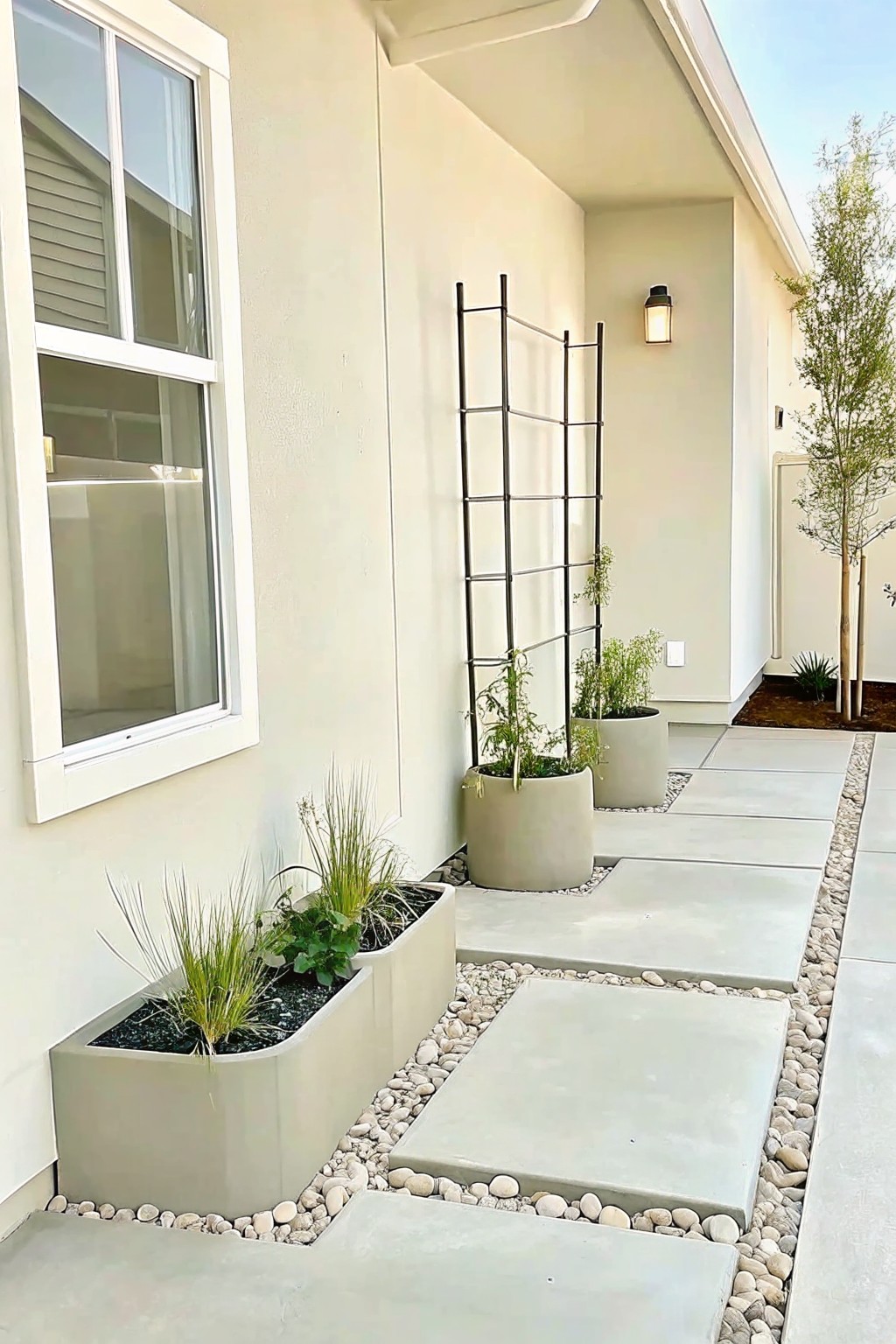
One easy way to add shape to a narrow side yard is to place a few large planters along the edge and lean a simple trellis against the wall. The setup brings height and some climbing plants without any digging or wall mounts.
This works well for renters because both the planters and trellis can be taken down and moved. Use them where you want a bit of separation between the path and the house, and pick plants that will grow up the trellis over time.
Freestanding Plant Stands Keep Balconies Green Without Installation

A tall plant stand that leans or stands on its own gives you several layers of greenery without touching the walls or railings. It works especially well on narrow balconies where space is tight and you cannot add hooks or shelves.
Place it against a plain wall and load the shelves with whatever pots fit. The whole thing moves when you need to clean or rearrange, so it suits renters who want to take their setup with them later.
Use a Rug to Create a Grill Zone on Your Patio

A striped outdoor rug can turn an empty corner of a rental patio into a clear spot for the grill. It keeps the area from feeling scattered and gives the space a bit of structure without any drilling or building.
The rug stays flat underfoot and can be rolled up when you move out. Pair it with a grill on wheels so everything stays easy to shift around or store away at the end of the season. This works well on concrete or wood decks where you want a defined cooking area but cannot make changes.
Use a Freestanding Umbrella for Easy Shade

A freestanding umbrella gives you shade on a patio or balcony without drilling into walls or railings. It works because you can move it around as the sun changes and take it with you when you leave.
This idea fits rentals especially well since nothing stays behind. Set the umbrella over a small seating group and add a simple rug underneath to keep the space feeling pulled together. Just check the base is stable enough for wind.
Wheeled Planters Keep Balcony Gardening Flexible

Wheeled planters solve a common problem on small outdoor spaces. They let you move plants easily for better light or to clear the floor when you need more room to walk or sit.
These work best on balconies and patios where nothing can be attached to the floor or walls. Look for sturdy containers on locking casters so they stay put when you want them to and roll away without much effort.
Use Rugs to Define a Deck Seating Area
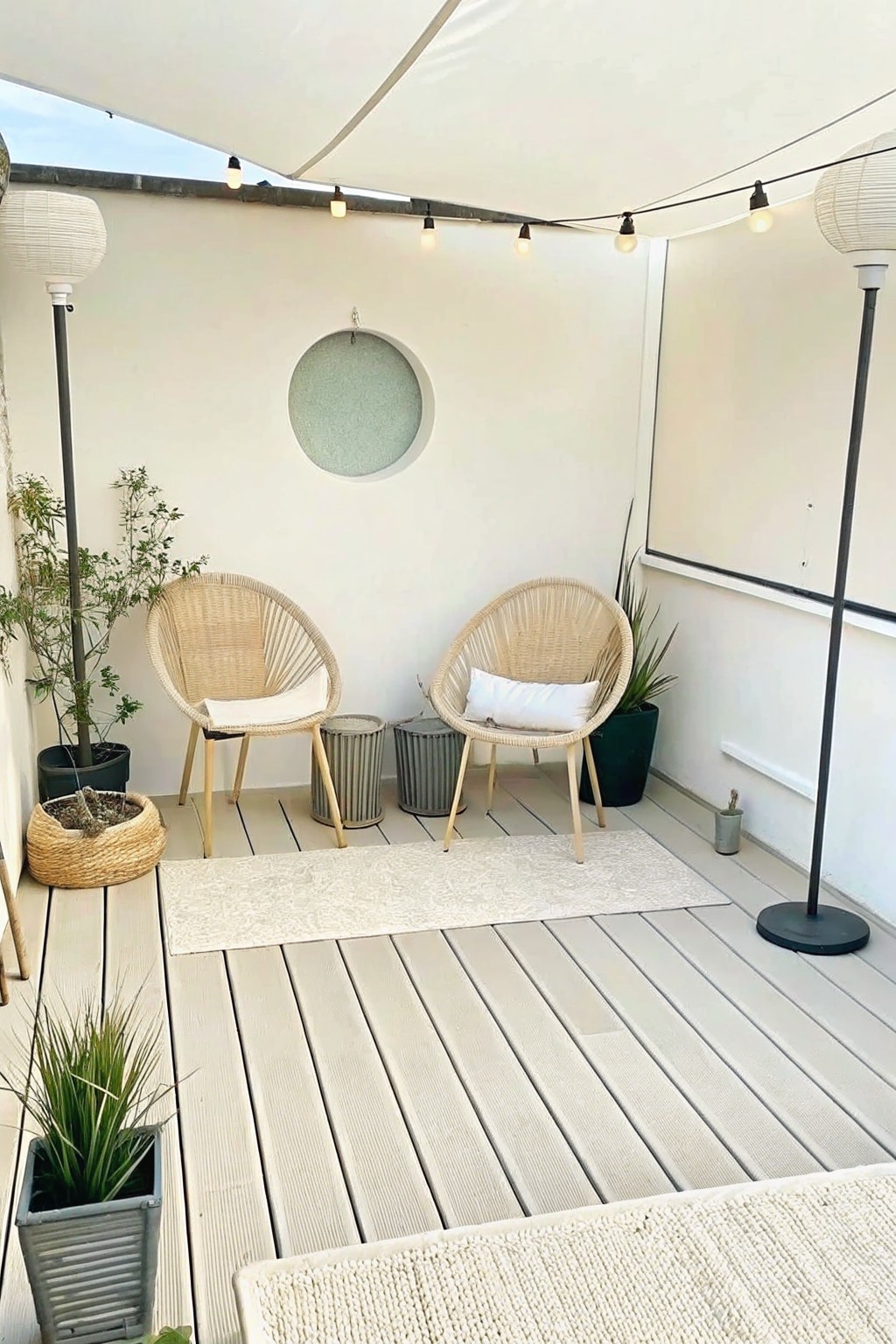
Rugs help turn an open deck into a clear sitting spot without any screws or attachments. They add some softness underfoot and keep the chairs from feeling like they are just floating on the boards.
This works especially well for renters because the rugs roll up easily when it is time to move. Choose flatweave styles made for outdoor use so they do not trap water or slide around.
Use Crates to Hold Plants at the Entry

One simple way to add greenery without any drilling or permanent changes is to set potted plants inside wooden crates. The crates keep everything contained, make it easy to move things around, and protect the porch surface from water or soil.
This works well on small porches or rental entryways where you cannot alter the floor or walls. Just choose sturdy crates that fit your pots, group a few together for impact, and swap plants with the seasons as needed.
Ladder Shelves Keep Plants Visible Without Installation
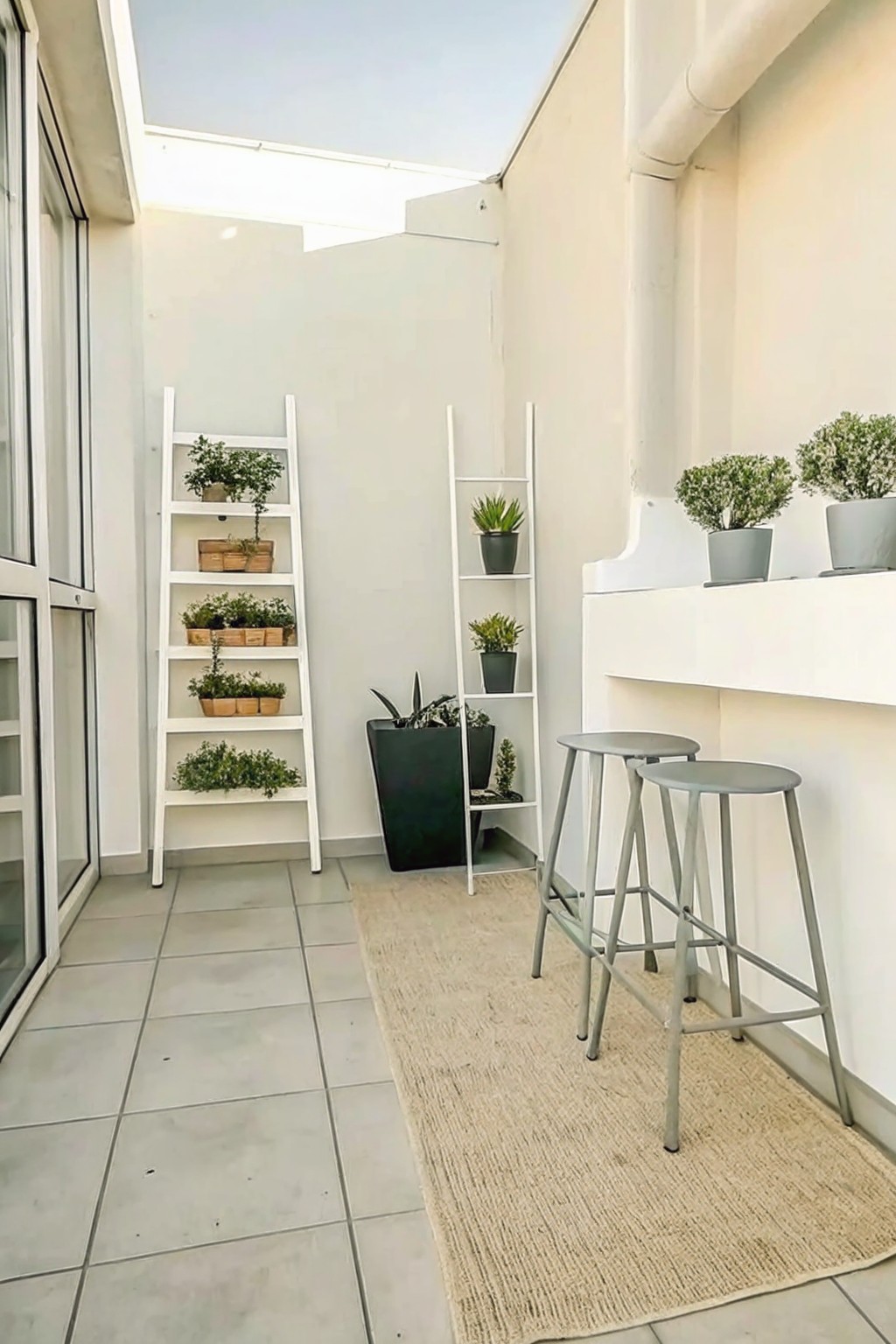
Ladder shelves give you a way to stack plants upward instead of spreading them across the floor. They stand freely so nothing needs to be screwed into walls or railings. This setup works especially well on balconies and patios where space is tight and you still want plenty of greenery.
Move the ladders around as seasons change or as you rearrange seating. They suit renters who want more plants but need to keep everything removable. Tuck them along one side of the space and keep the rest of the floor clear for chairs or a small table.
Frequently Asked Questions
Q: How do I stop lightweight decor from tipping over in the wind? A: Weigh down pots with stones or bricks at the bottom. You can also tuck them behind heavier furniture pieces for extra stability. This keeps everything in place without any permanent fixes.
Q: What if I want to add some string lights on my balcony? A: Drape them over railings or use clip-on hooks that grip without screws. But they come down easily when you leave. No one will notice a thing.
Q: How do I protect my setup from rain and sun damage? A: Choose weather-resistant materials like metal or treated wood from the start. Bring cushions inside during bad weather. A quick wipe down now and then keeps things looking fresh.
