


Balconies can easily feel like leftover space until the planters and layout actually support how people move through them day to day.
I have found that setups with clean edges and the right scale of containers tend to stay comfortable instead of turning into obstacles around a chair or two.
Details matter more than I expected.
Choosing planters that match the railing height and leave room for feet makes the area feel like an extension of the rooms behind it rather than a separate display.
A couple of the simpler ideas here are the ones I would try first to see whether they hold up once real plants and daily use come into the picture.
Long Planters Along the Edge
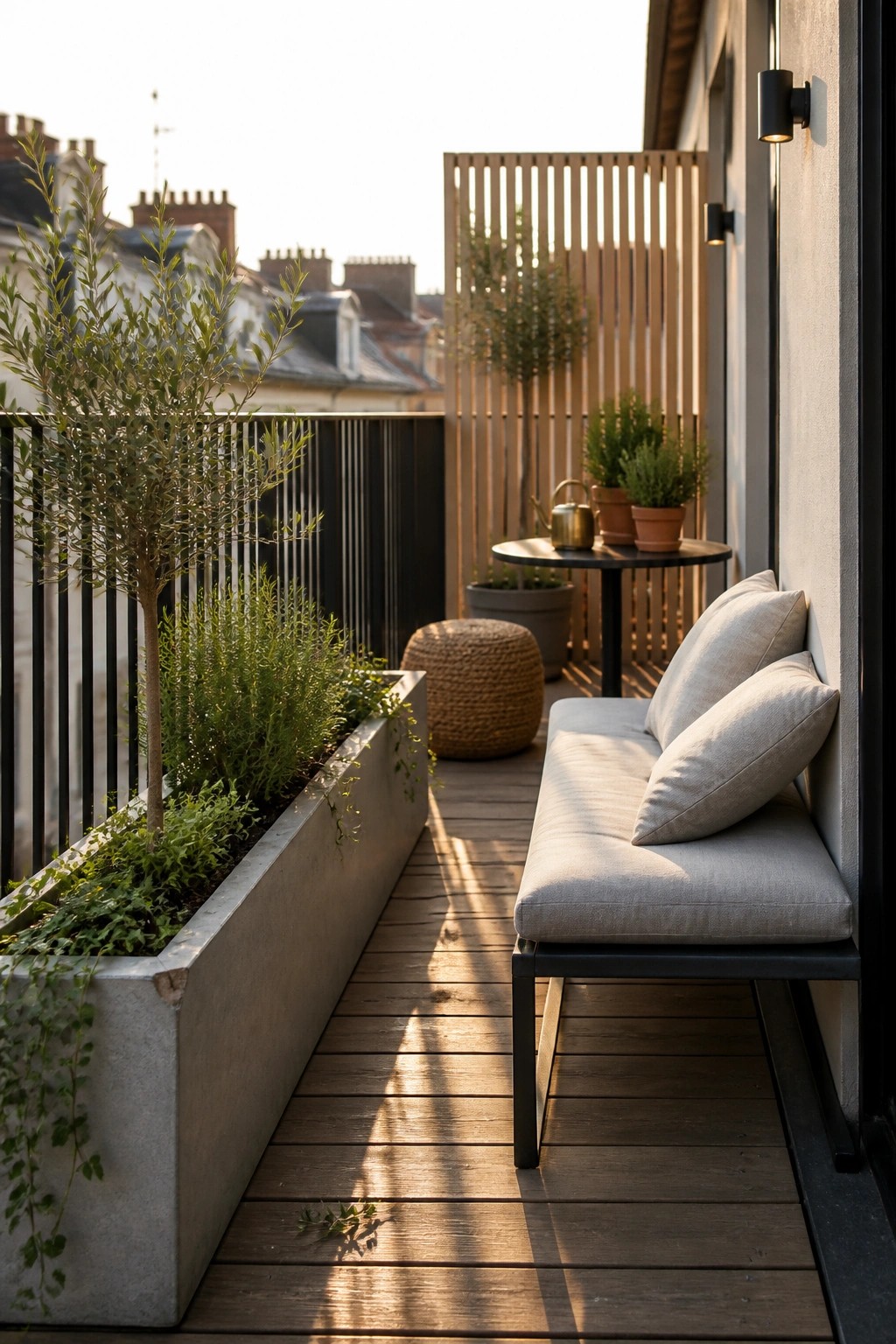
A long rectangular planter takes up very little floor space but still lets you grow a good amount of greenery. It turns the side of the balcony into a planted border instead of leaving it bare, and it leaves the rest of the deck open for seating or movement.
This setup works especially well on narrow balconies where you want plants without blocking the walkway. Place the planter against the railing or outer wall, fill it with a mix of upright and trailing plants, and keep the rest of the furniture simple so the space stays easy to use.
Ceramic Planters Around Lounge Seating
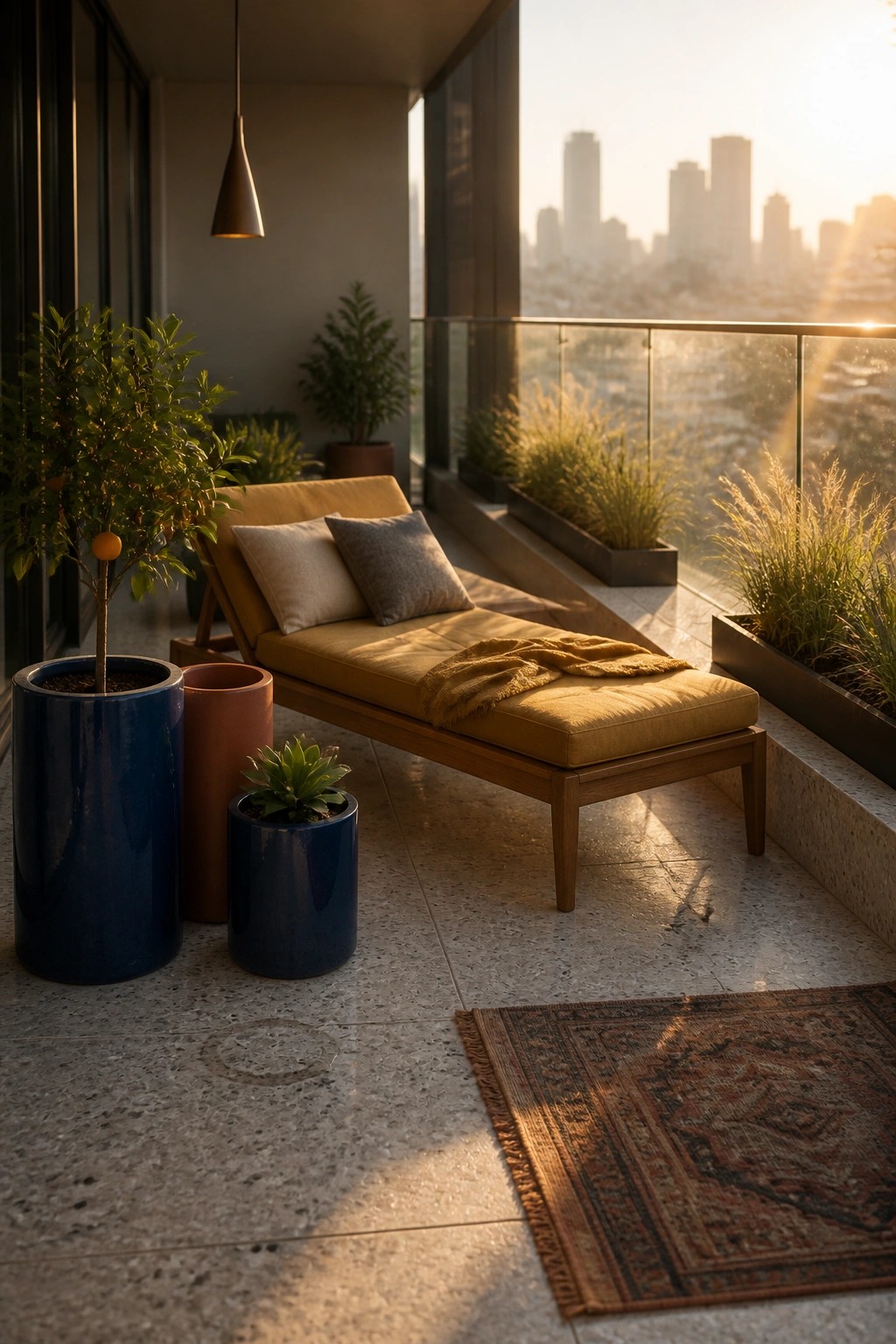
Large ceramic pots work well on balconies because they hold bigger plants without taking over the floor space. The deep blue and terracotta finishes keep the look simple while still adding color next to a lounge chair.
Place the tallest pots at the corners or along the rail to create a bit of enclosure. Smaller ones can sit closer to the seating so the plants feel connected to the area where you actually sit. This setup suits apartments with limited square footage and works best when the pots share a similar material and finish.
Large Planters Along the Balcony Edge
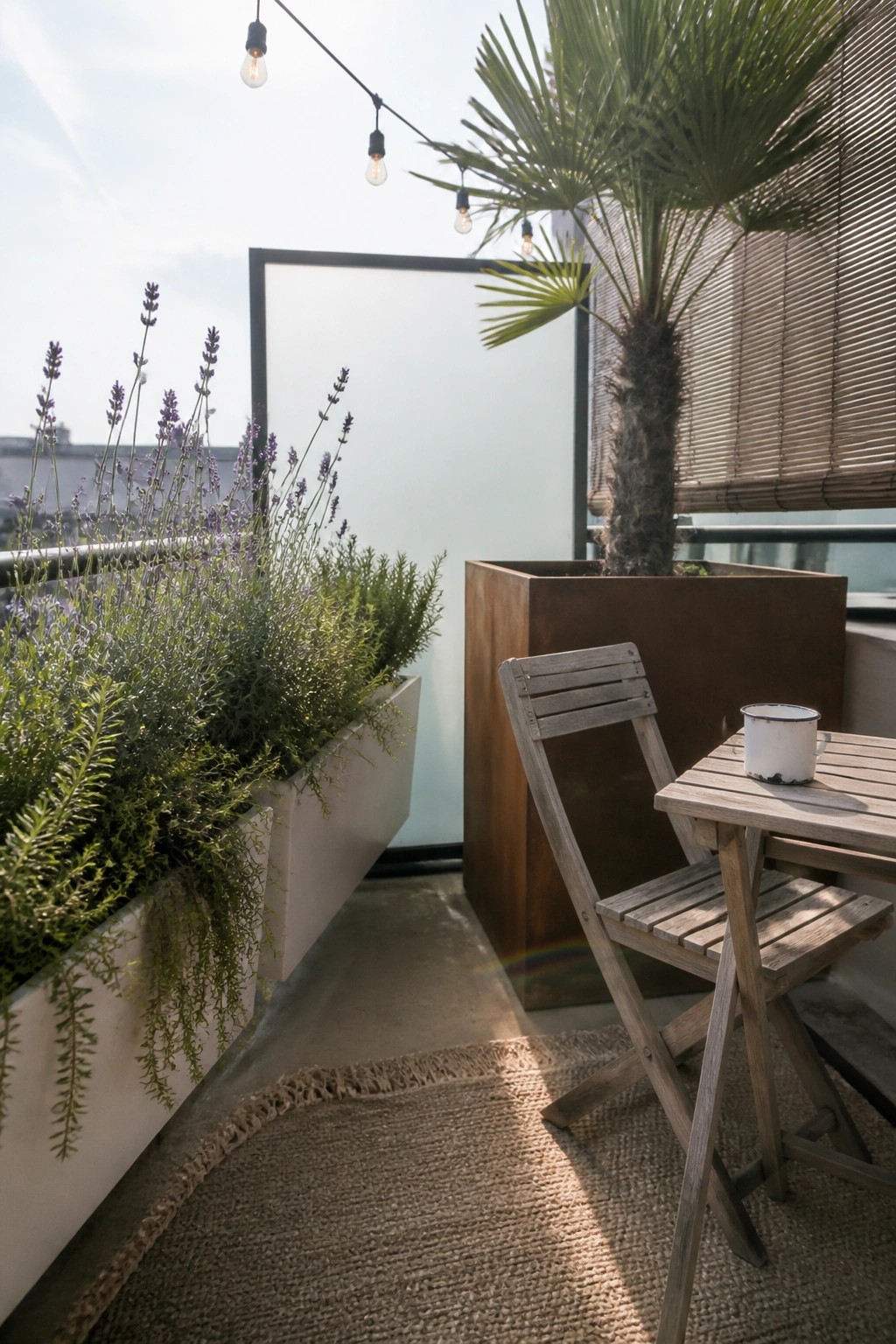
Large rectangular planters work well on balconies because they turn the outer edge into a planted border without eating into floor space. The clean shapes keep the area feeling open while still giving you room for taller plants and trailing ones side by side.
This approach suits small urban balconies where you want greenery but also need space for a table and chairs. Stick to two or three planter finishes at most so the look stays simple rather than cluttered.
Line the Balcony Edge With One Long Planter
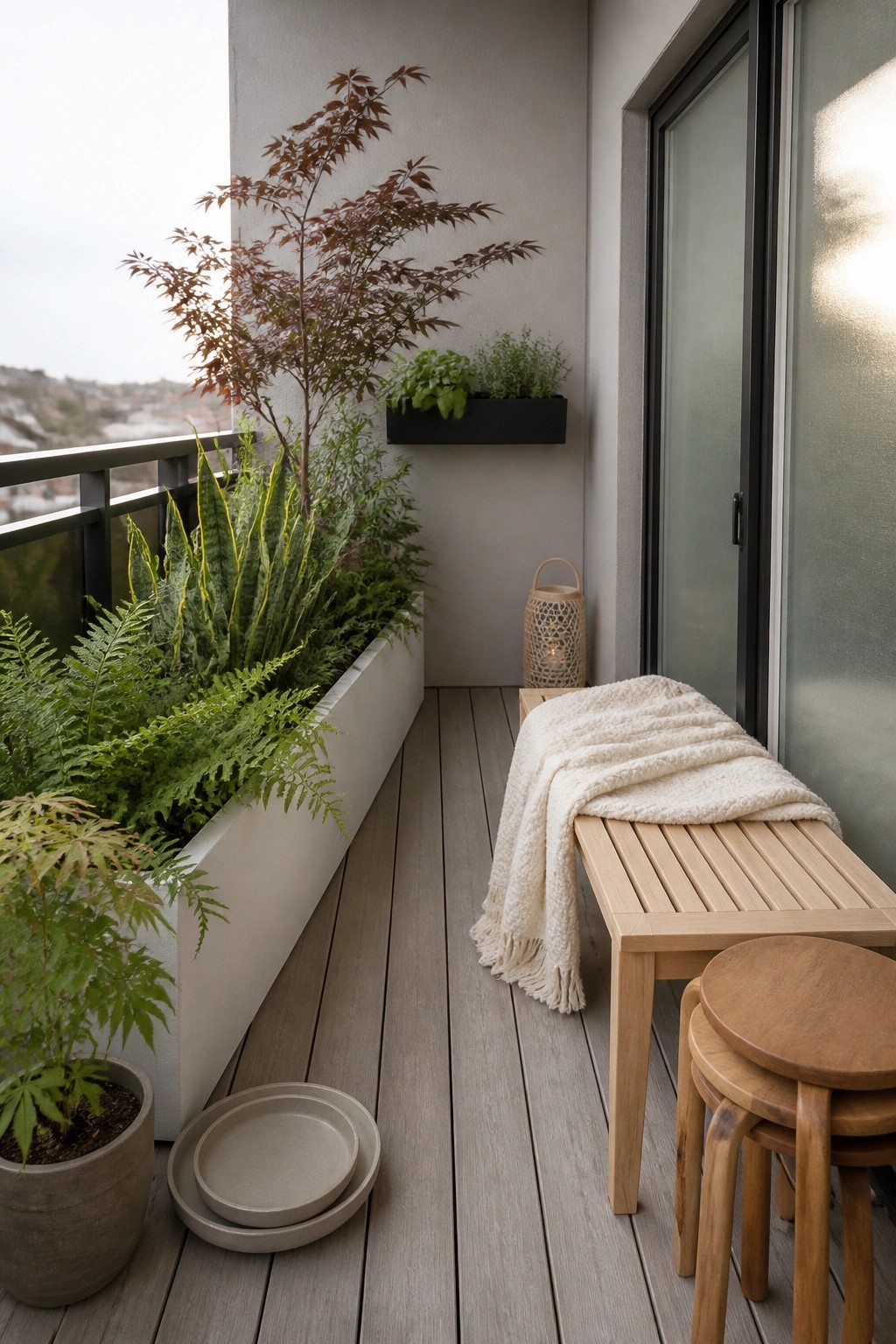
Many small balconies lose space fast when plants sit in separate pots all over the floor. One long planter solves this by turning the side wall into a steady green strip that stays out of the way.
This setup suits narrow city balconies where you still want seating room. Keep the planter low and simple, then add a bench or a couple of stools on the open side so the area stays usable for sitting or moving through.
Pair A Bench With Tall Metal Planters
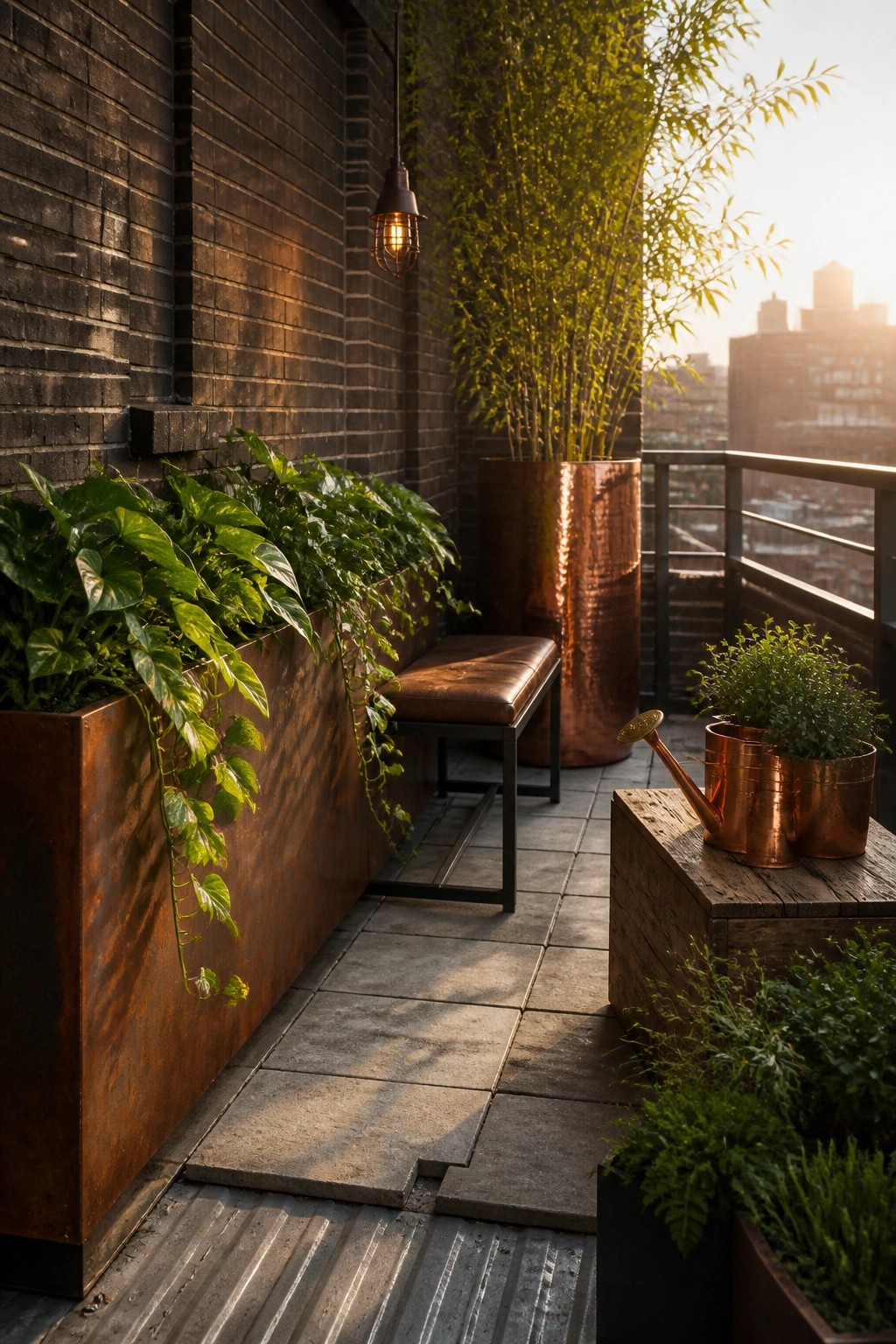
A bench tucked between planters turns a narrow balcony into a place where you can actually sit and enjoy the plants. The metal containers keep the look clean and modern while holding plenty of greenery without taking over the floor space.
This setup works well on city balconies where room is limited. Place the bench along one wall with taller planters behind it and a couple of smaller ones nearby for balance. Stick to one or two metal finishes so the space stays simple rather than cluttered.
Large Planters For Adding Trees
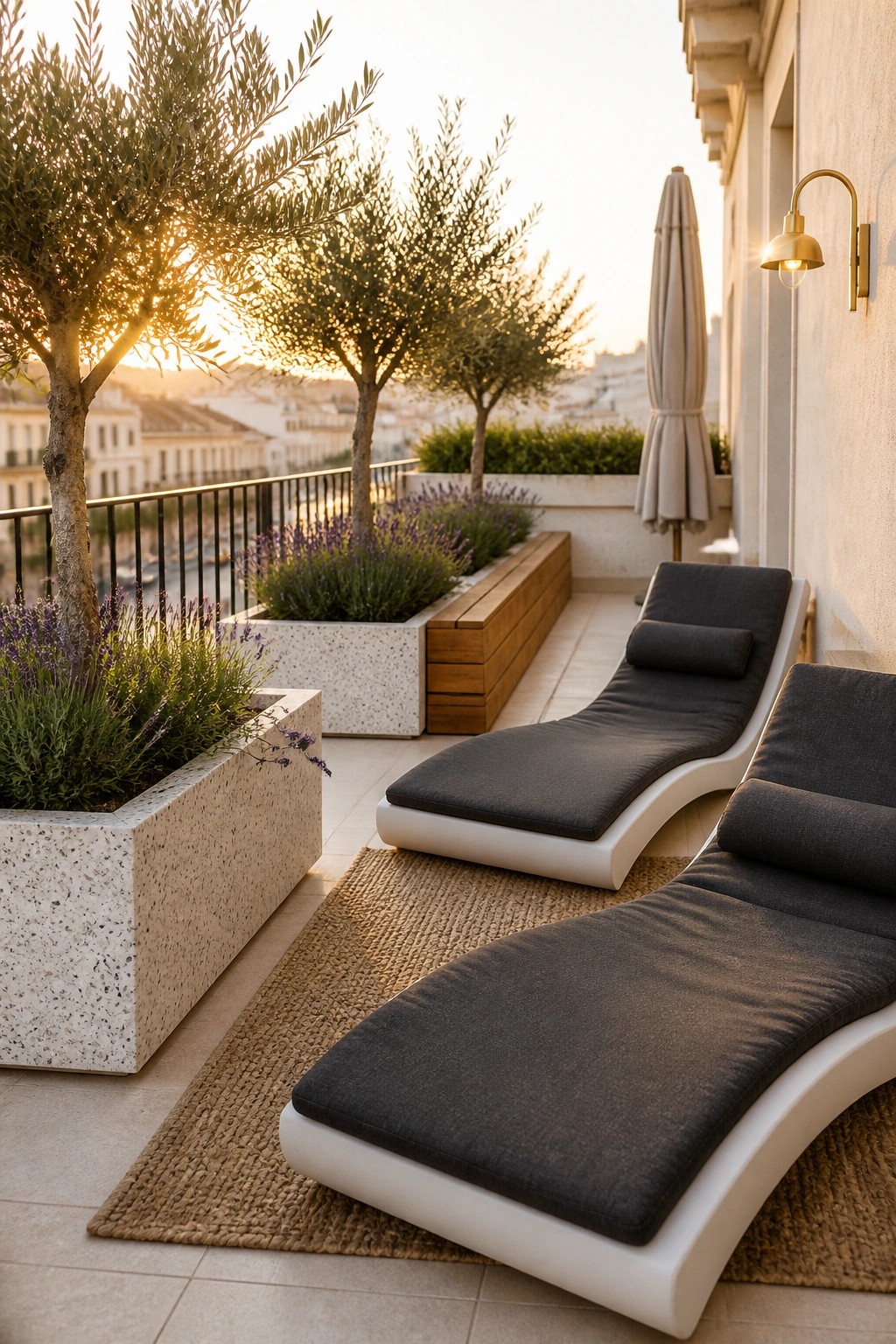
One simple way to turn a balcony into something closer to a garden is to use big planters that can actually hold small trees. The height makes a big difference and gives the space more structure than low pots alone can provide. It also helps create a bit of privacy without needing walls or screens.
This approach works best on wider balconies or rooftops that get plenty of sun. Just check the weight limits first and choose planters with good drainage so the trees stay healthy over time.
Wall Planters Free Up Space For A Balcony Desk
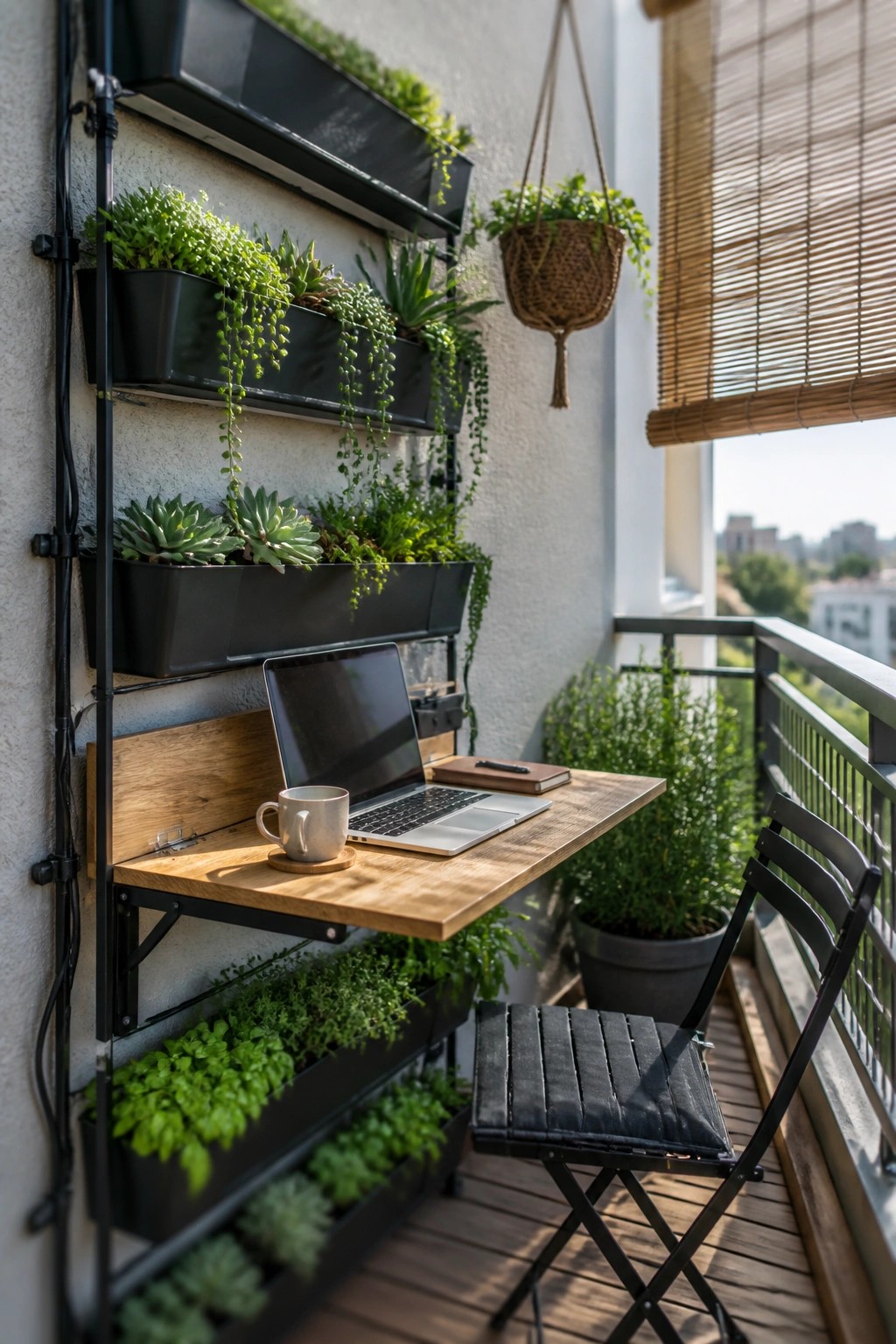
Many balconies feel too small once you try to add both plants and a workspace. Wall mounted planters solve this by keeping the garden off the floor so a fold down desk can sit underneath without crowding the area.
This approach works best on narrow balconies in apartments or townhomes. Choose lightweight planters and check that the wall can support the weight, especially once the soil is wet.
Cluster Pots in Different Sizes
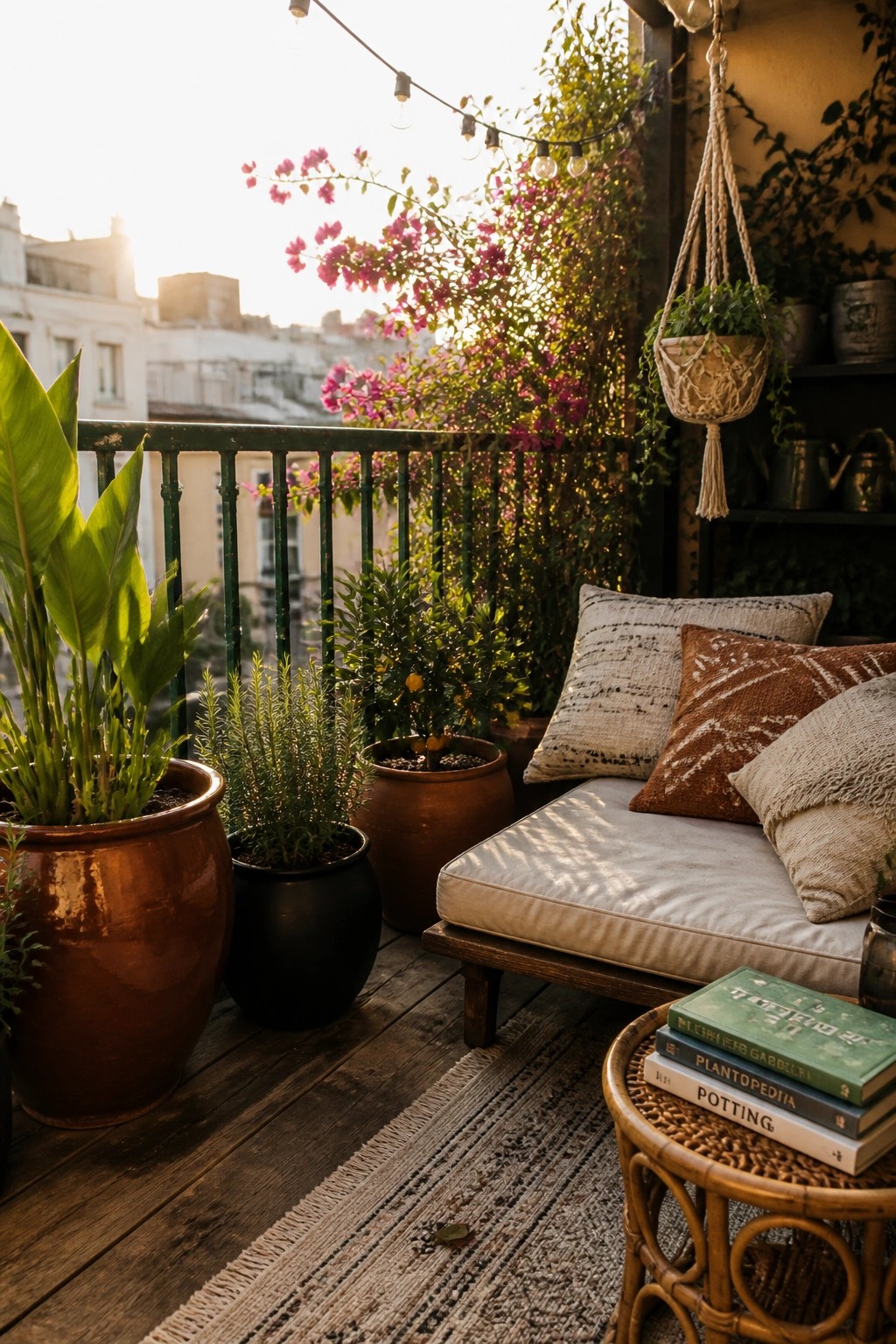
Grouping containers of varying heights and widths turns a balcony into a proper garden without built-in beds. The different levels let plants overlap naturally, so the space feels fuller even when square footage is limited.
This approach suits small urban balconies best, especially when you keep the pots in just two or three similar materials. It keeps the look calm and makes watering and rearranging easier later on.
Mount Linear Planters Along the Railing
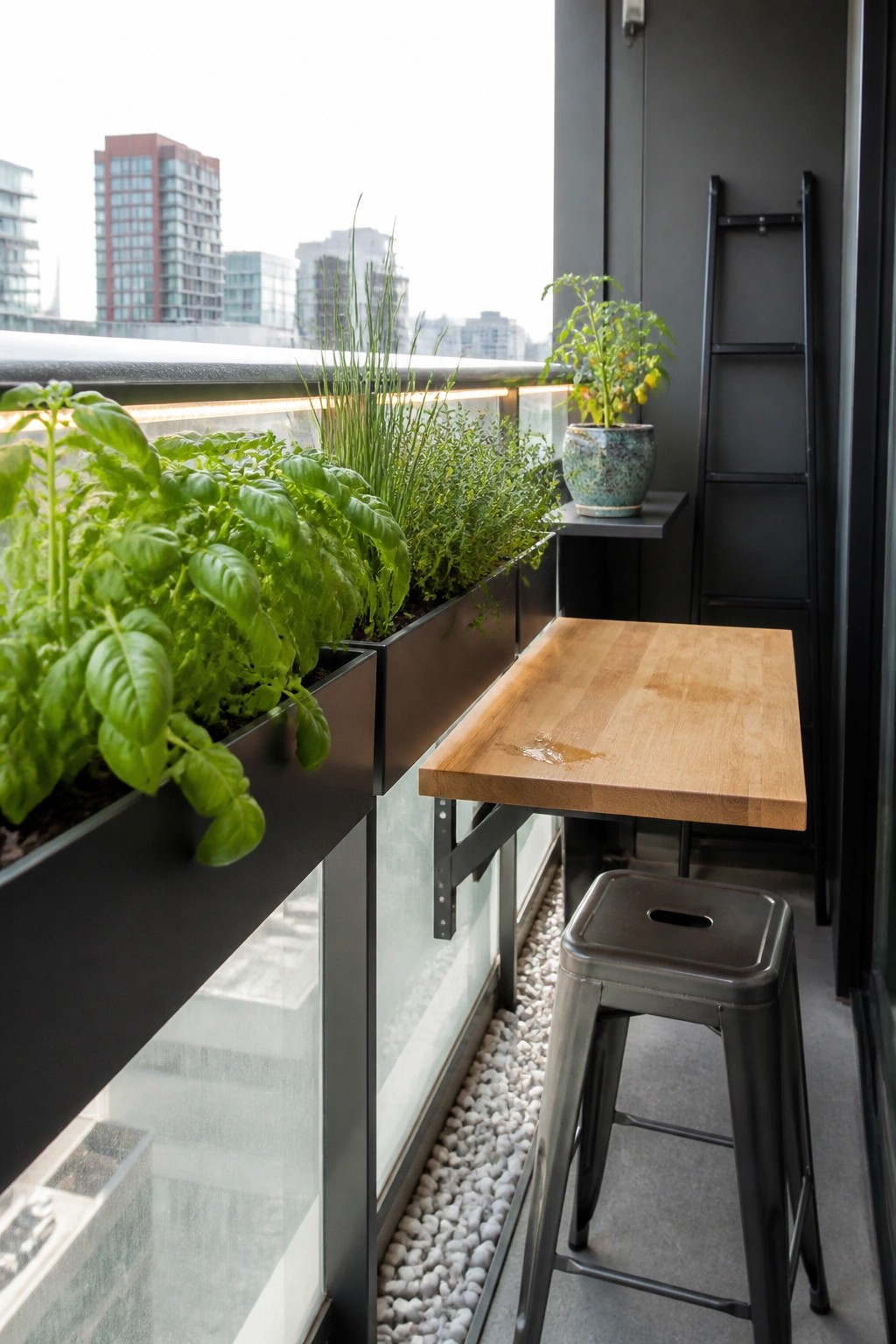
This setup keeps the floor open while still giving you room to grow. The long planters sit right on the edge, so herbs and greens get good light without crowding the seating area.
It works best on balconies that already have a solid rail or glass barrier. Secure the boxes well and stick to plants that do not need constant deep watering.
Large Concrete Planters For Balcony Gardens
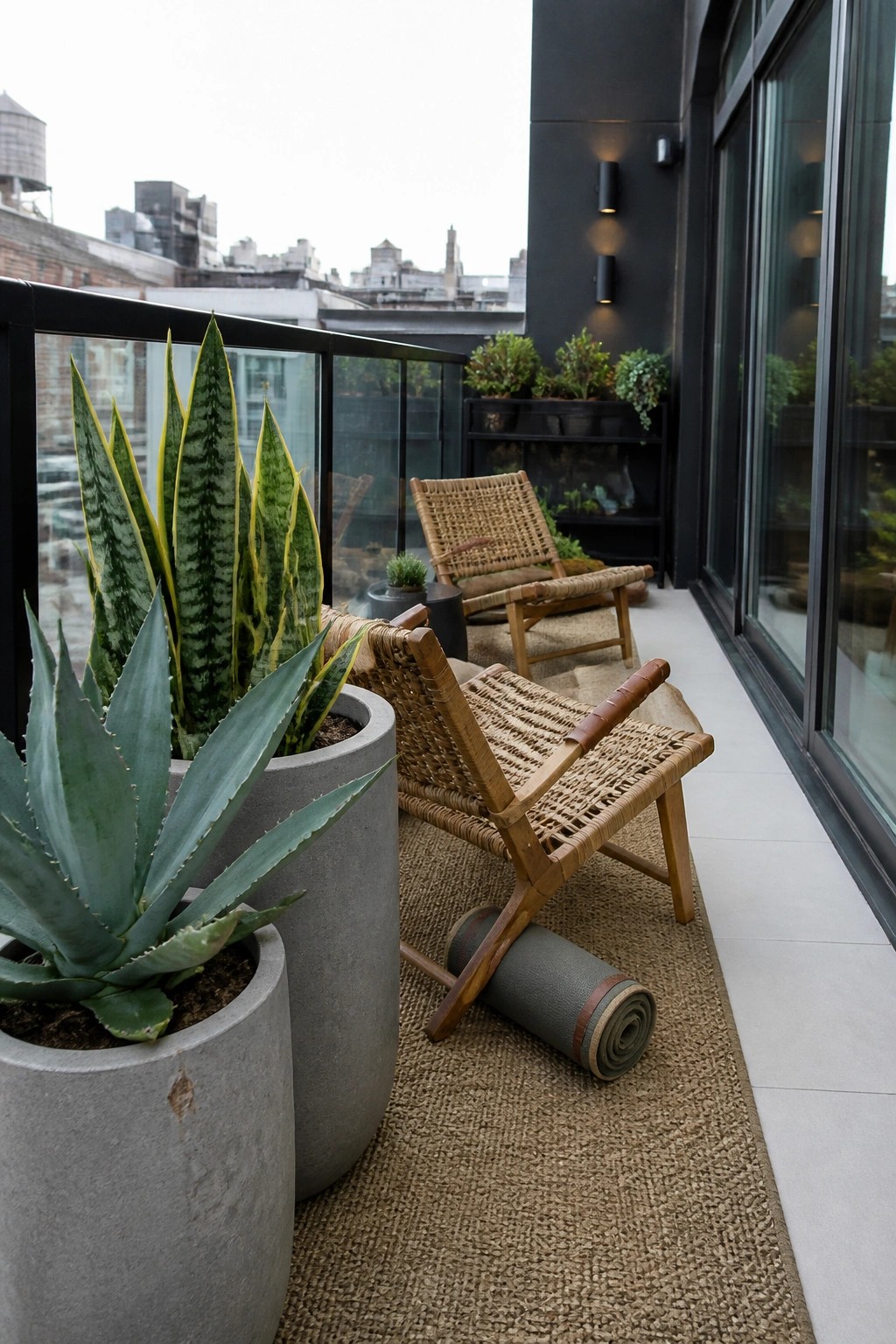
Big, simple planters make a big difference on a balcony because they keep the whole space from feeling scattered. The solid shapes hold bold plants without extra decoration, so the area stays open and easy to move around in.
They suit small city balconies best, especially when you want low upkeep. Stick to two or three matching planters in a neutral tone and let the plants carry the look. Avoid mixing too many styles or colors, or the space can start to feel crowded.
Long Concrete Planters Along Balcony Edges
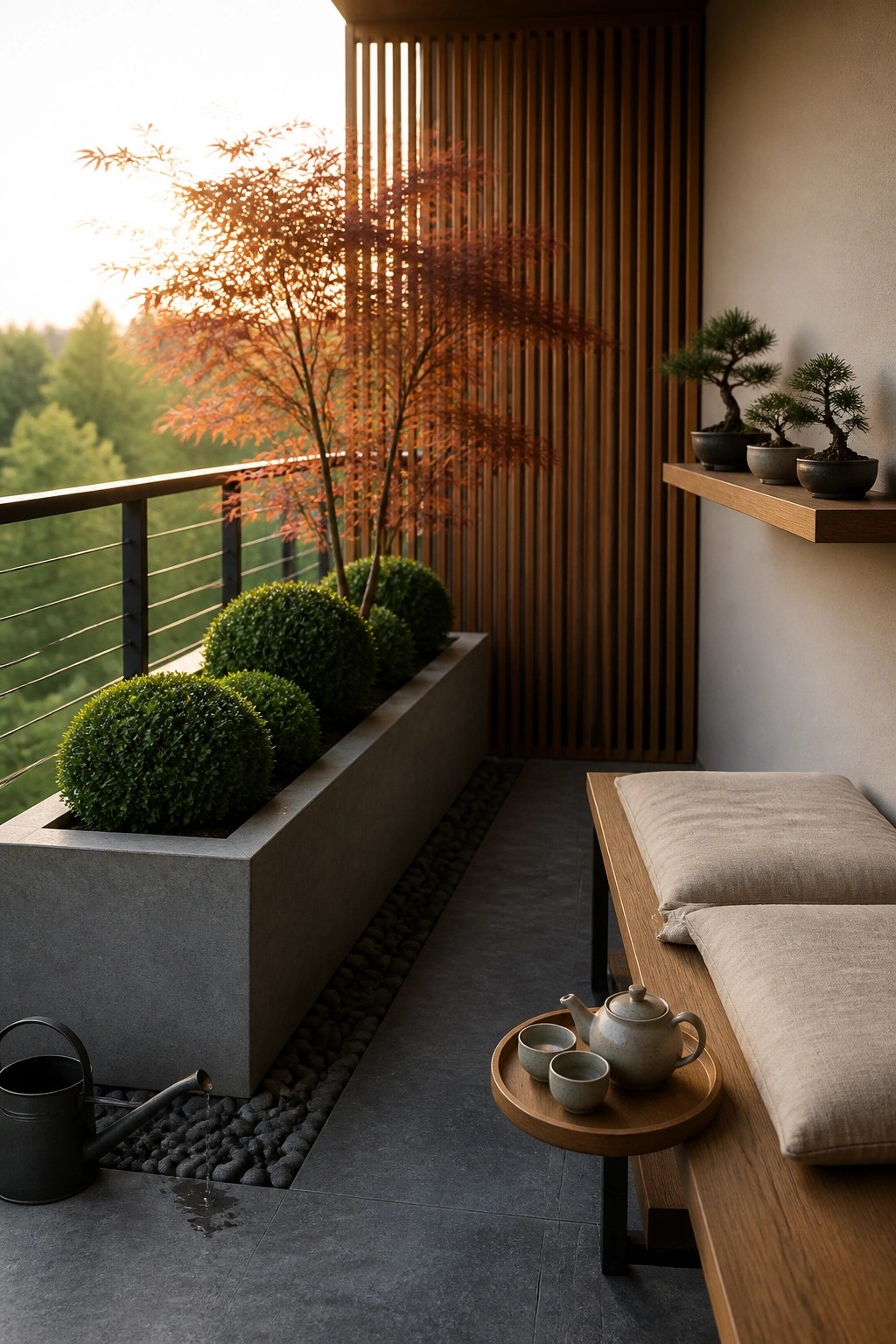
A long, low concrete planter set right along the edge gives a balcony clear structure without crowding the floor space. The straight lines keep the planting neat and contained, which helps the area feel larger and calmer even when it holds several plants.
This works best on modern balconies where you want greenery but still need room to move and sit. Keep the rest of the setup simple with a bench and a small table so the planter becomes the main element instead of competing with too many pieces.
Wall-Mounted Planters Keep Small Spaces Green
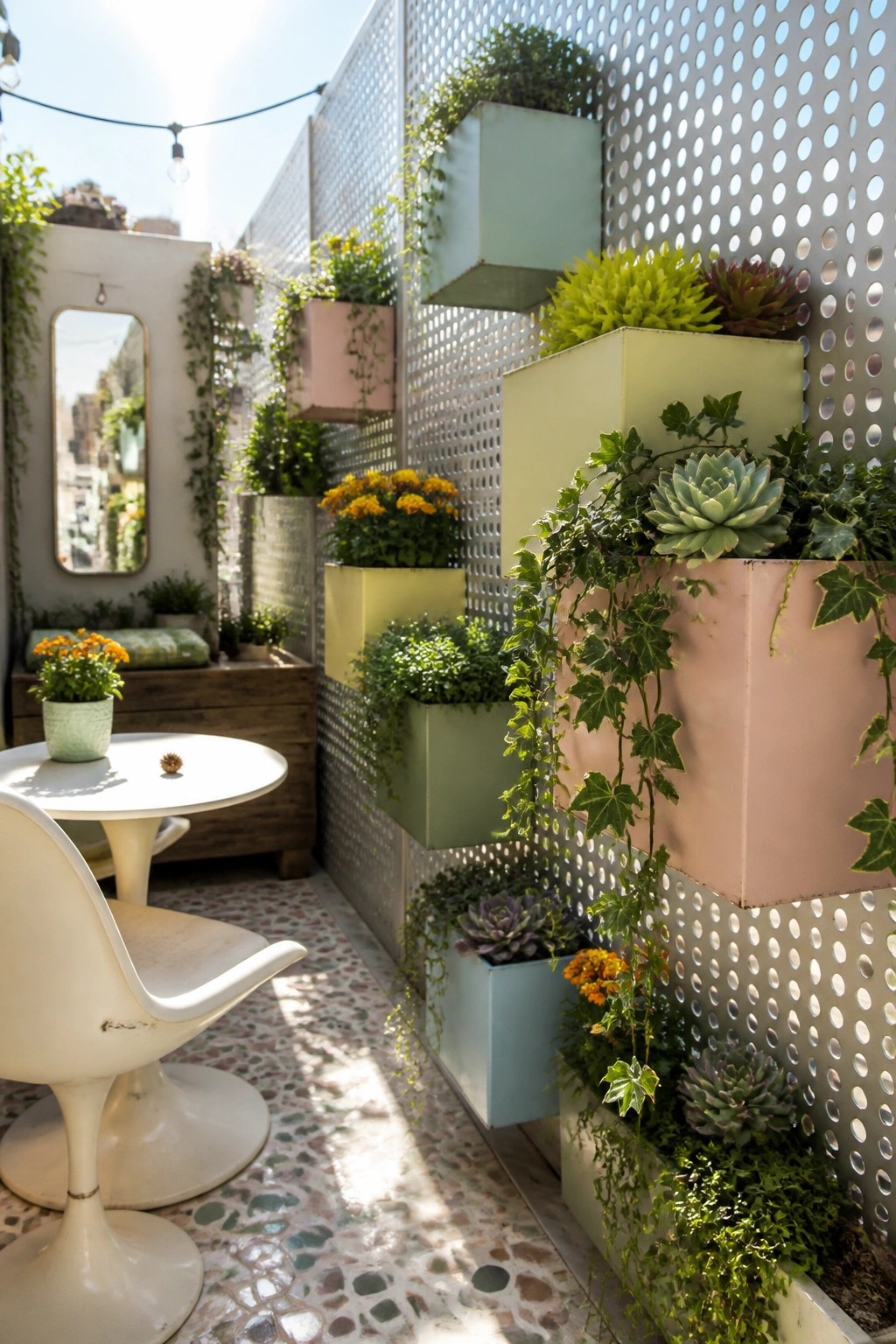
Mounting planters straight onto a wall works well when floor space is tight. It turns an empty vertical surface into the main garden area while leaving room for a table and chairs below. The setup stays neat because the boxes sit at different heights and the plants spill over the edges on their own.
This approach suits balconies and narrow patios that still get decent light. Choose sturdy brackets and boxes that drain properly so water does not run down the wall. Mix a few plant types like succulents and trailing vines so the display fills in without much extra work.
Large Concrete Planters Along Balcony Walls
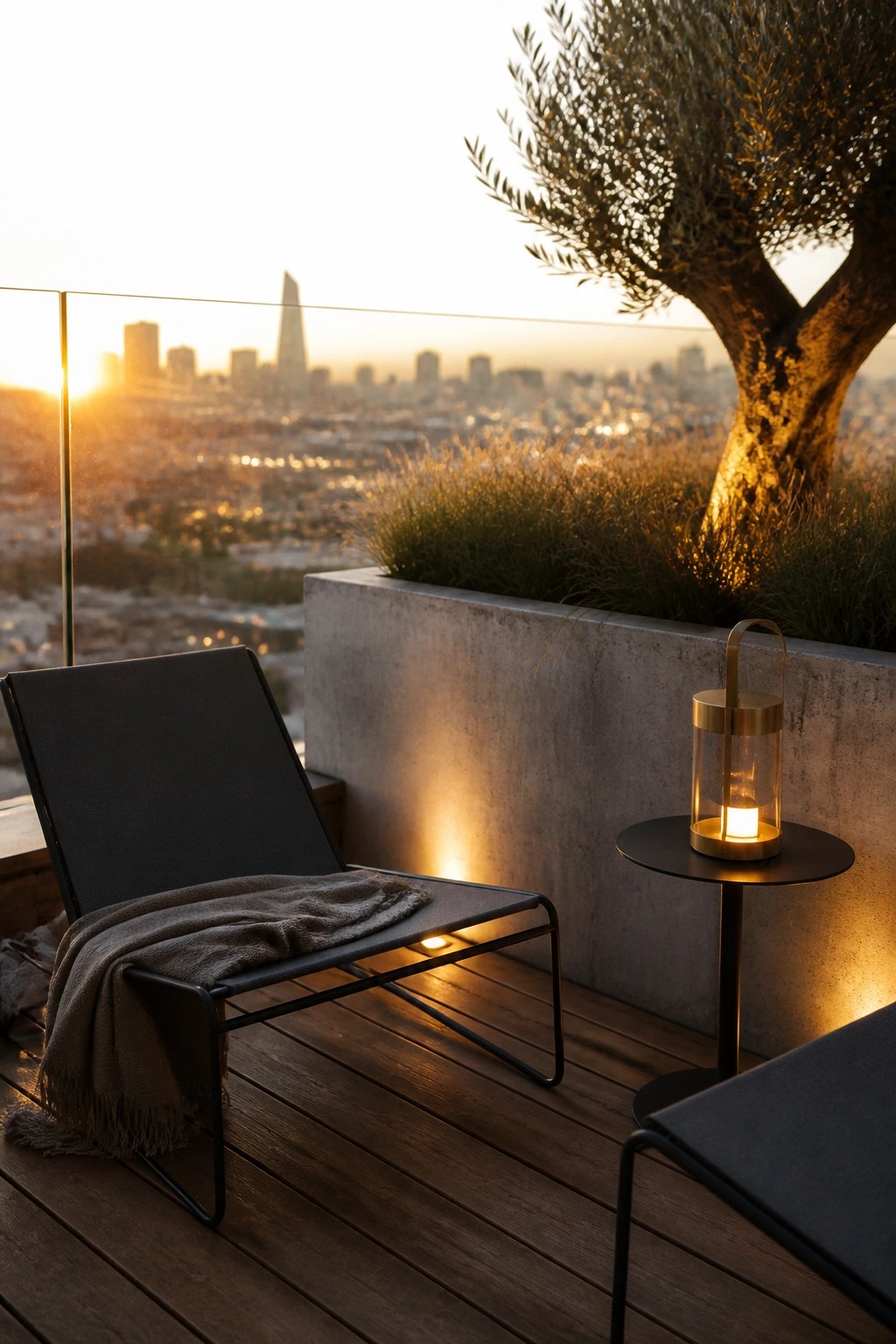
A large concrete planter placed against the edge gives a balcony real presence without crowding the floor. The scale lets you grow taller grasses or a small tree in one spot, which adds height and a natural screen while the rest of the space stays open and simple.
This approach suits urban balconies that already have clean lines and minimal furniture. Keep the planter material and color neutral so it blends with the deck and railing, and check that the structure can handle the weight once filled.
Vertical Planting Along Balcony Walls
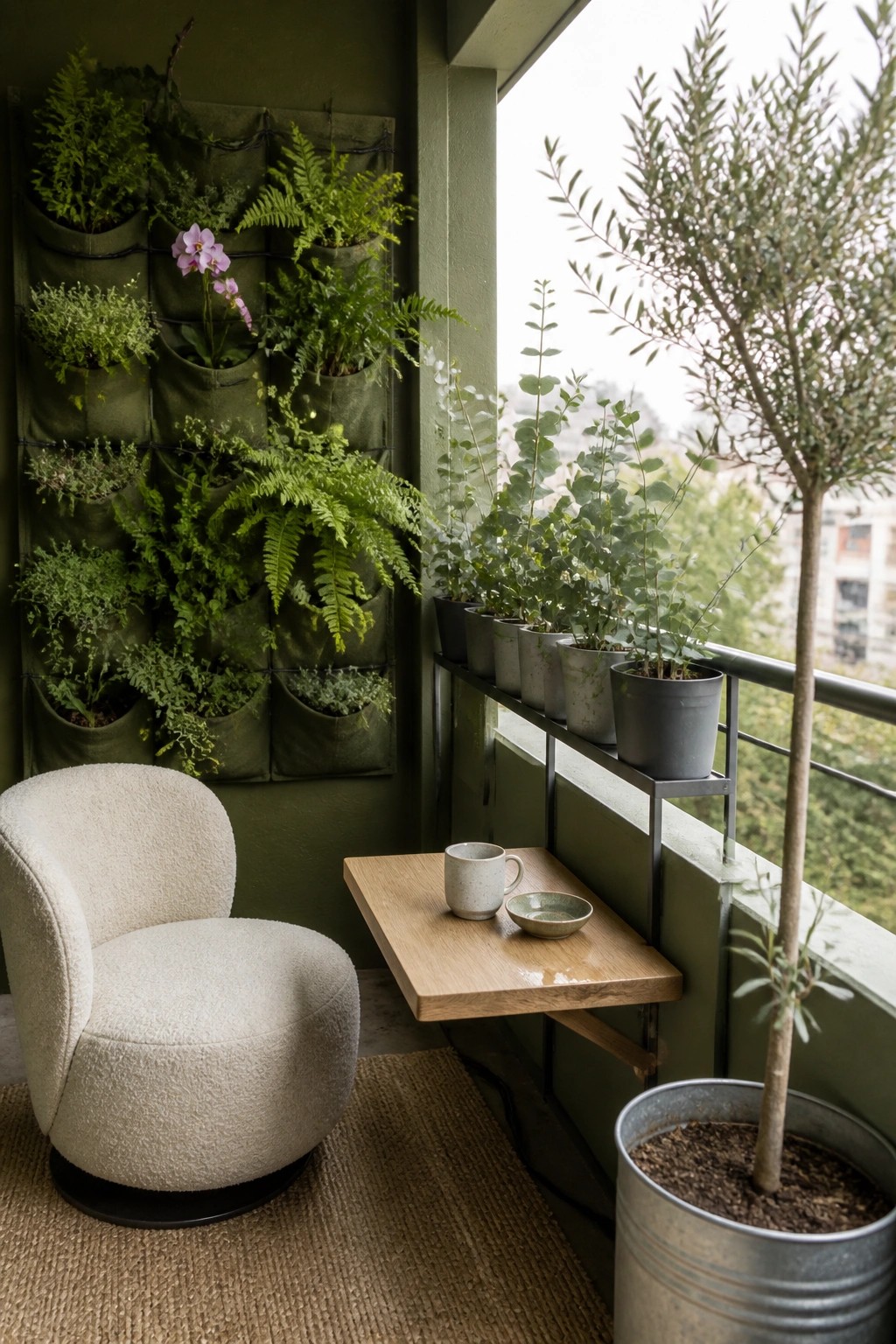
Many balconies feel cramped once you add seating, so vertical planting is a practical way to bring in more greenery without losing floor space. Fabric pockets mounted on the wall hold ferns and smaller plants while a narrow shelf keeps additional pots along the railing.
This approach suits apartments and small outdoor areas where you want a garden feel but cannot spread plants out on the ground. Keep the wall structure sturdy and choose lightweight soil mixes so the setup stays manageable over time.
Tall Grasses in Sleek Black Planters
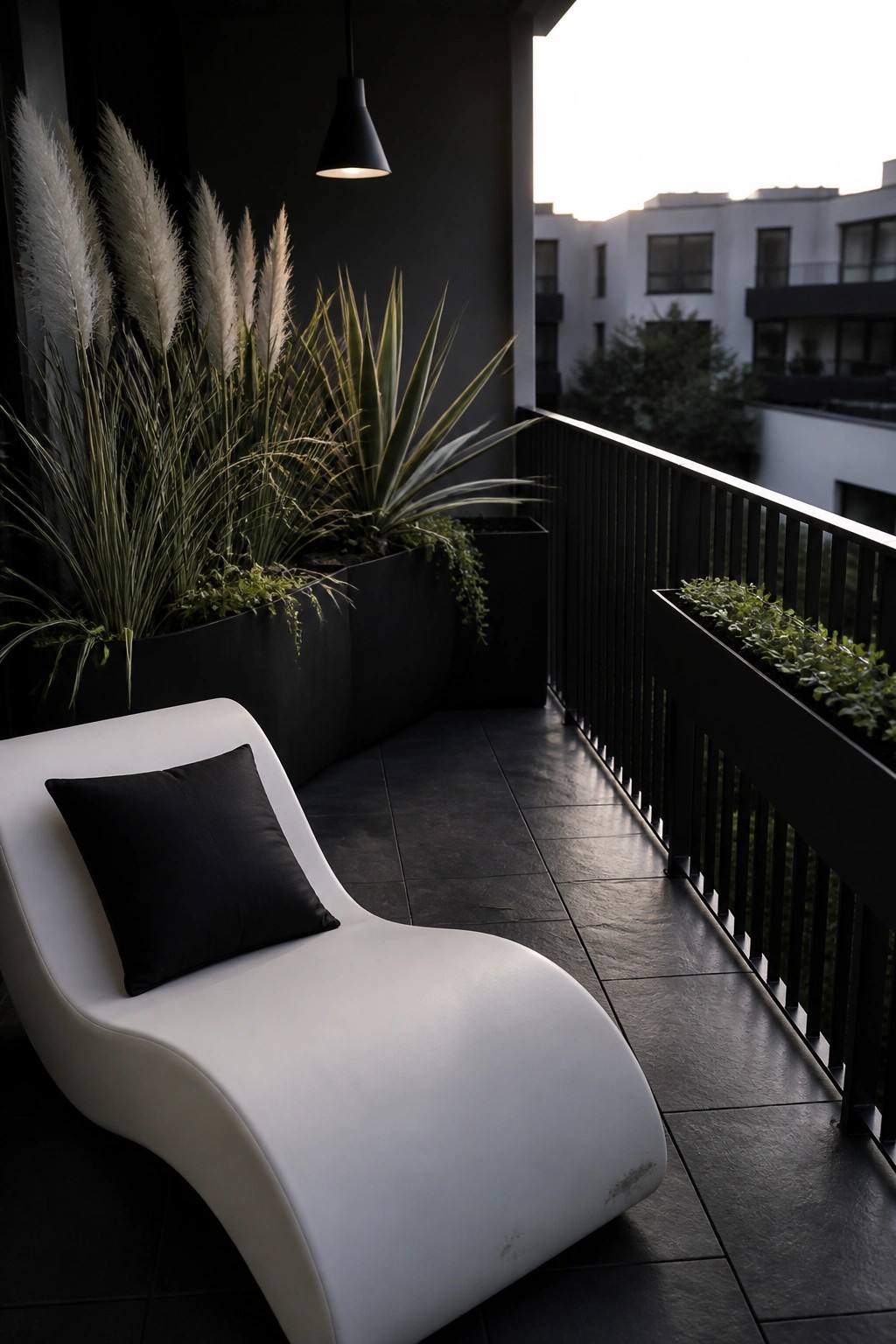
Many balconies feel flat without some height, and tall ornamental grasses planted in long dark planters fix that quickly. The grasses add movement and a bit of softness while the dark containers keep everything looking sharp and contained.
This setup works best on small urban balconies where floor space is limited. Keep the plant choices simple, stick to one or two tones in the planters, and place them along the edge so they double as a light screen without blocking the view completely.
Built-In Planters For A Lush Balcony Look
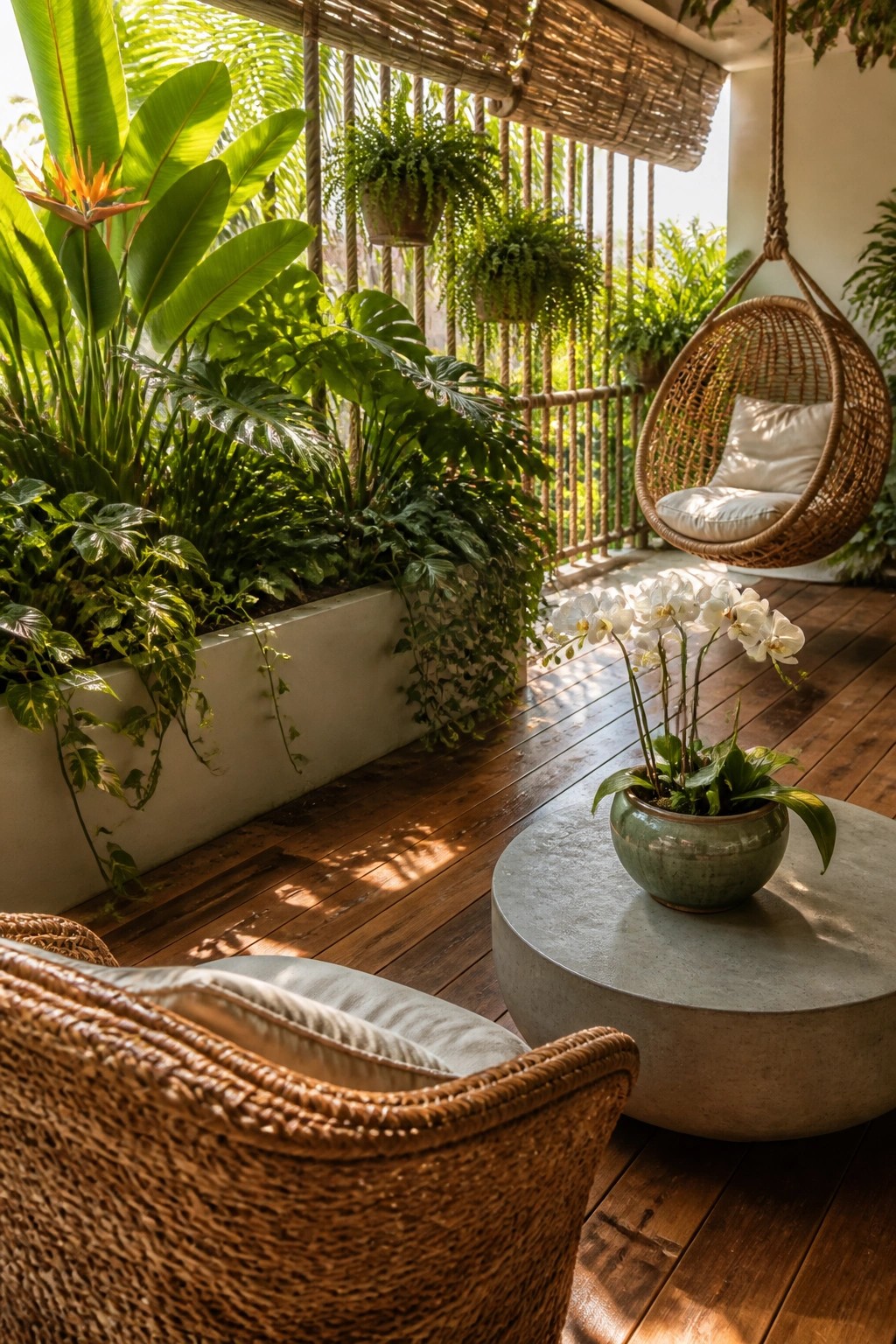
A built-in planter along the edge gives you a solid base for lots of greenery without crowding the floor. It holds a mix of taller plants and trailing ones that soften the space while keeping everything neat and contained.
This setup works best on balconies or decks with a bit of width. Use it for the main planting, then add a few simple pots nearby for variety. It suits homes that want clean modern lines but still plenty of plants to enjoy.
Use Matching Planters For Balcony Fruit Trees
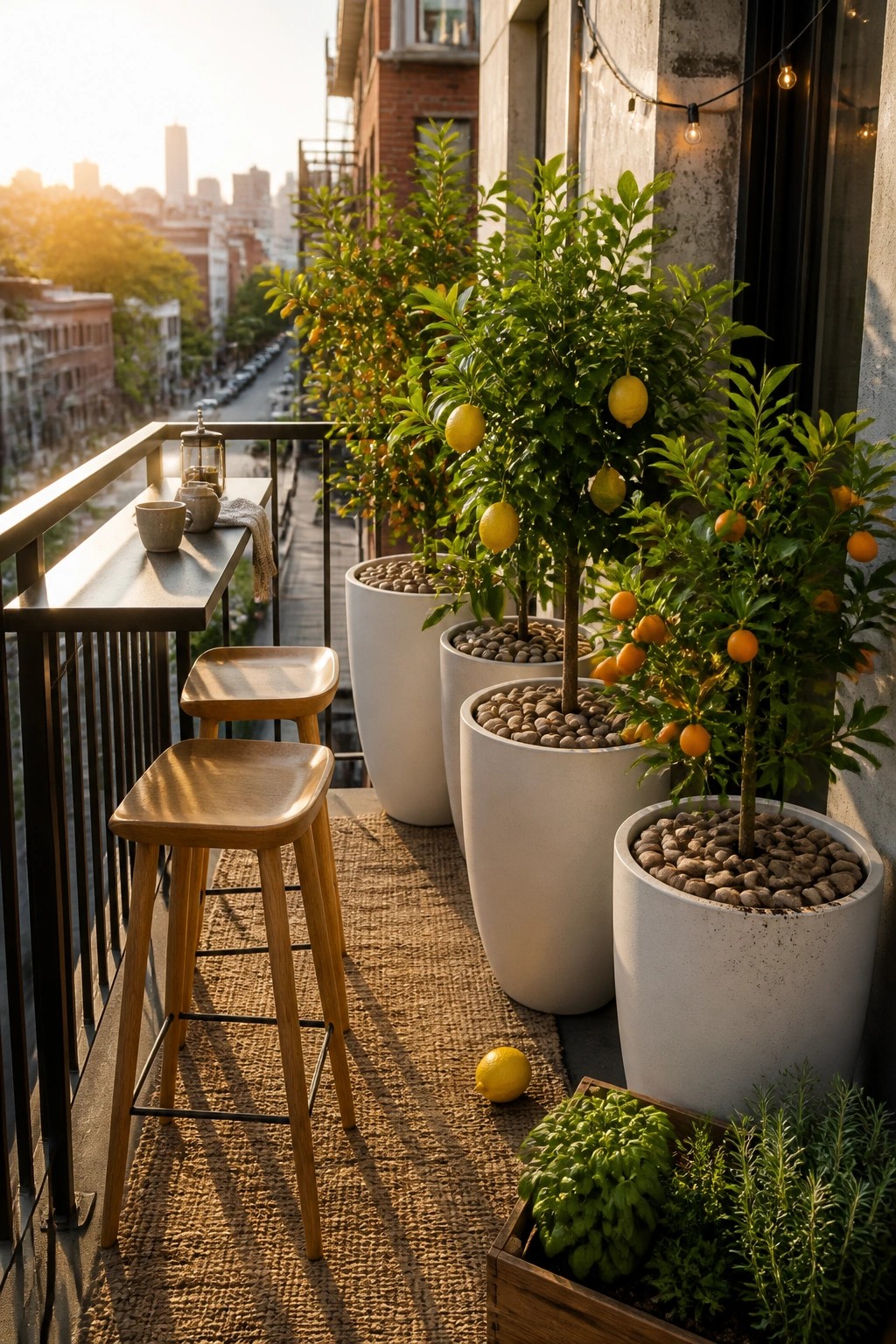
Matching planters make it easier to grow several citrus trees on a balcony without the space looking scattered. The clean white containers keep the focus on the plants while giving the area a simple, put-together look that works well in smaller urban settings.
This approach suits balconies with room for a few larger pots along one side. Place them in a row and add a basic rug underneath to define the spot. Just watch the weight and make sure the containers have good drainage so the trees stay healthy.
Built-In Bench Seating With Integrated Planters
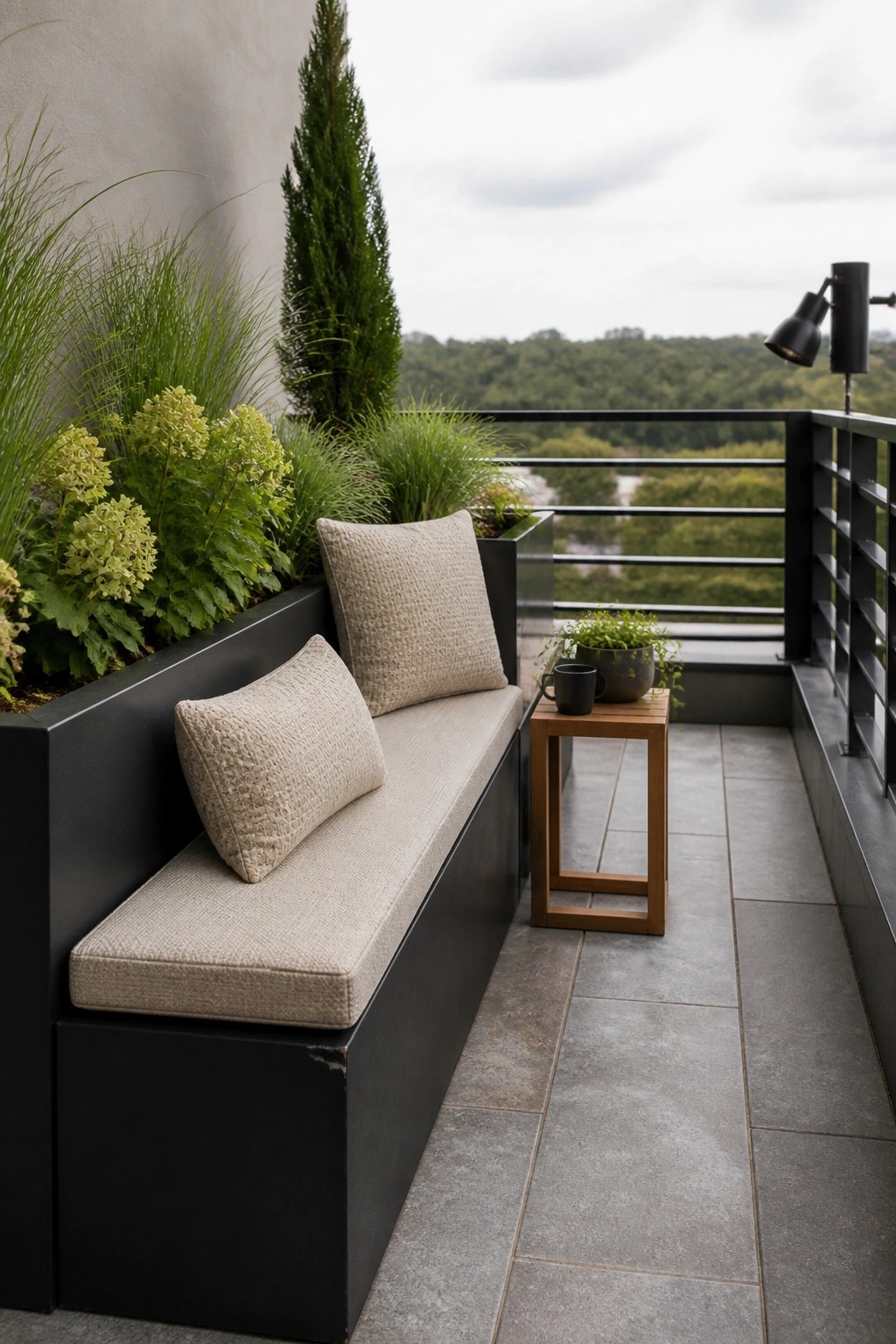
A built-in bench along the edge of a balcony can handle both seating and planting in one clean line. It saves floor space and keeps the area from feeling crowded with separate chairs or pots.
This works best on narrow balconies or terraces where you want a simple layout that still feels comfortable. Use a low planter box so the backrest stays at a good height and pick cushions that can handle some weather.
Wooden Crates for Balcony Fruit Trees
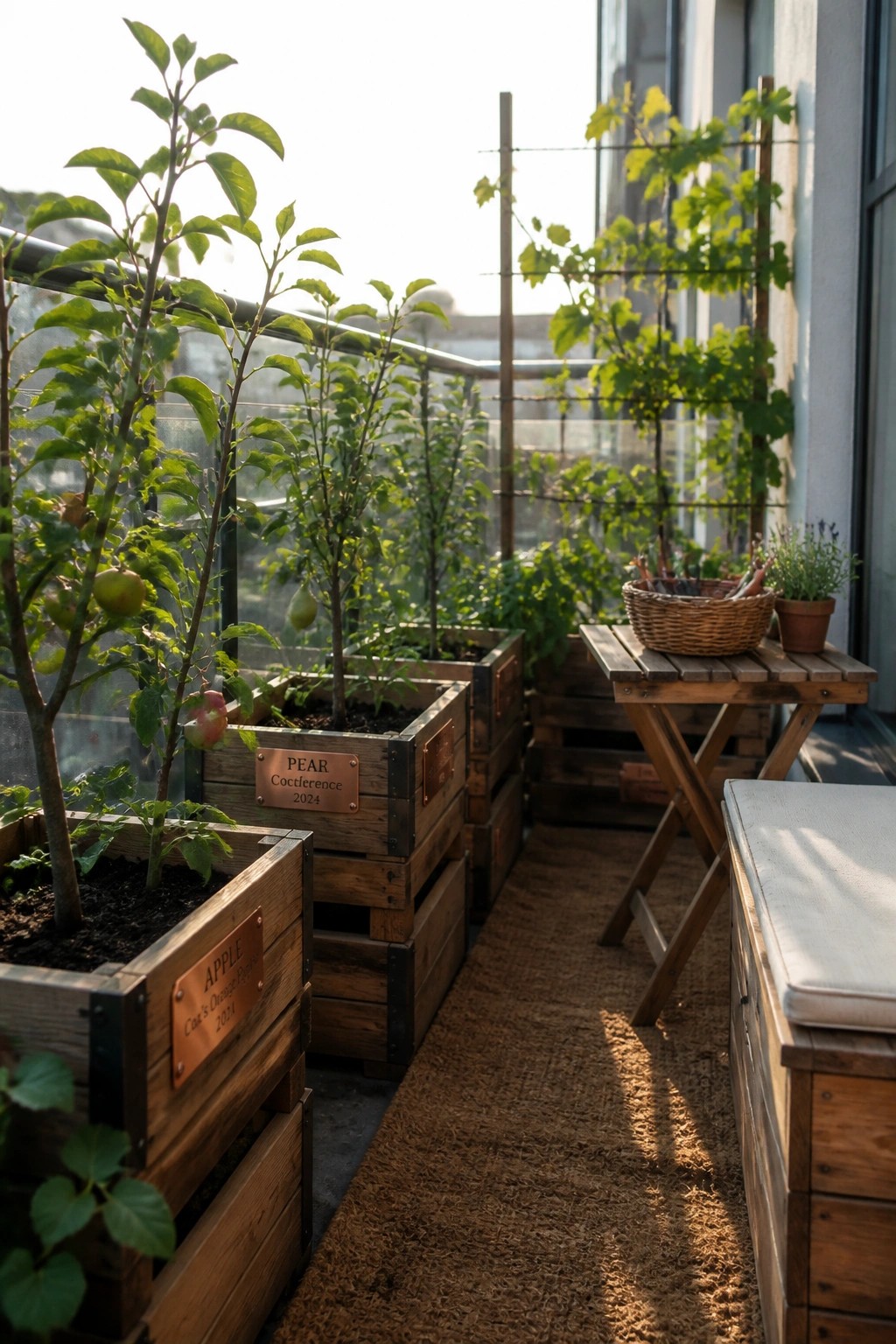
Wooden crates make a simple and practical choice for growing fruit trees on a balcony. They give the plants enough room to root while keeping everything contained and easy to move if needed. The labels on the front also help keep track of what is growing where without extra effort.
This setup works well on smaller balconies where space is limited but people still want to grow something useful. Choose sturdy crates that can handle soil and moisture, and place them along the edge so the trees get good light. Just check the weight load on your balcony floor before filling them completely.
Run Long Planters Along The Balcony Edge
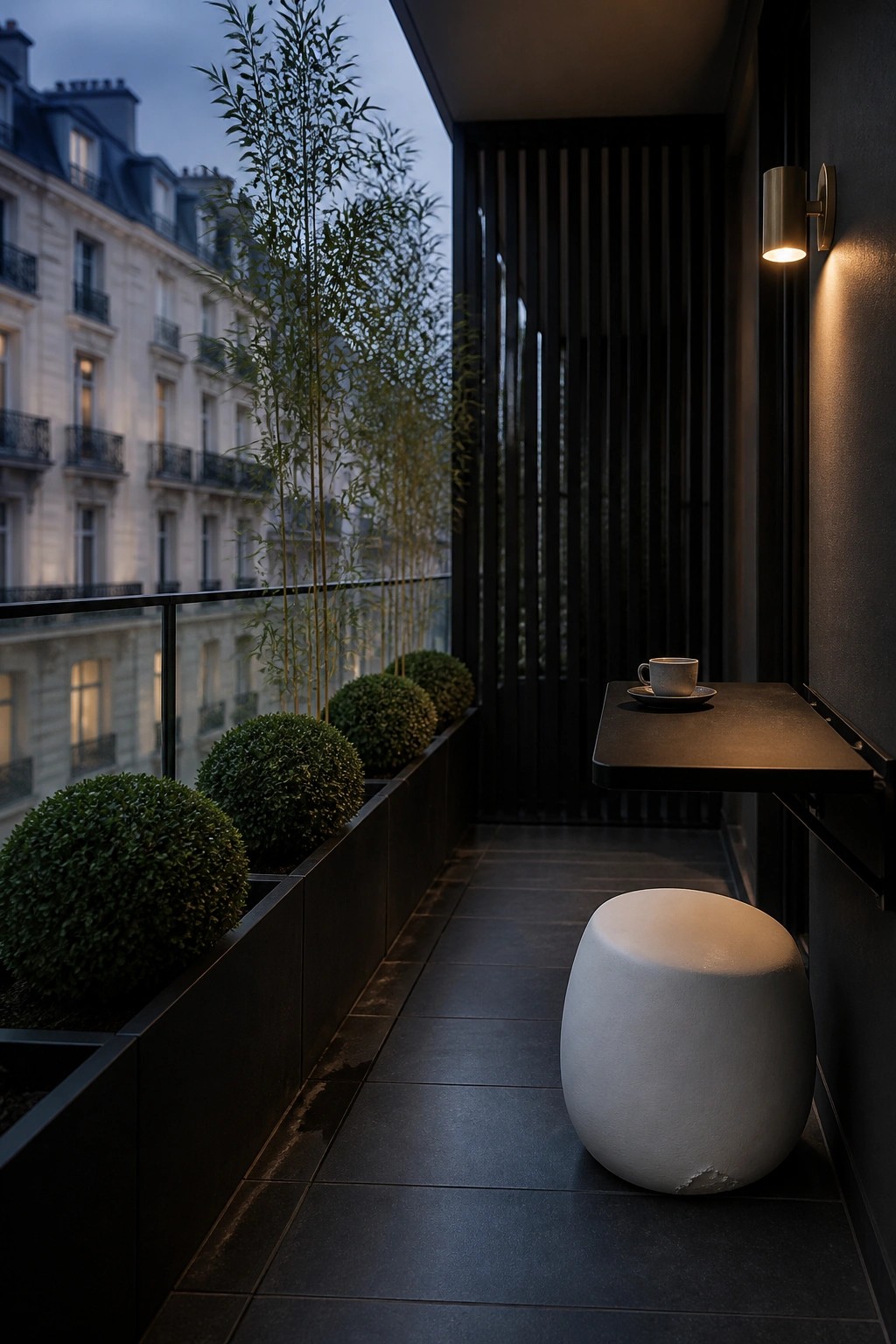
Long planters give a small balcony structure without crowding the floor. They turn the edge into a green border that feels intentional rather than scattered.
Place them in a single straight line and keep the rest of the space open. Dark finishes help them blend with the railing and floor so the focus stays on the plants instead of the containers.
Vertical Garden Walls for Balconies
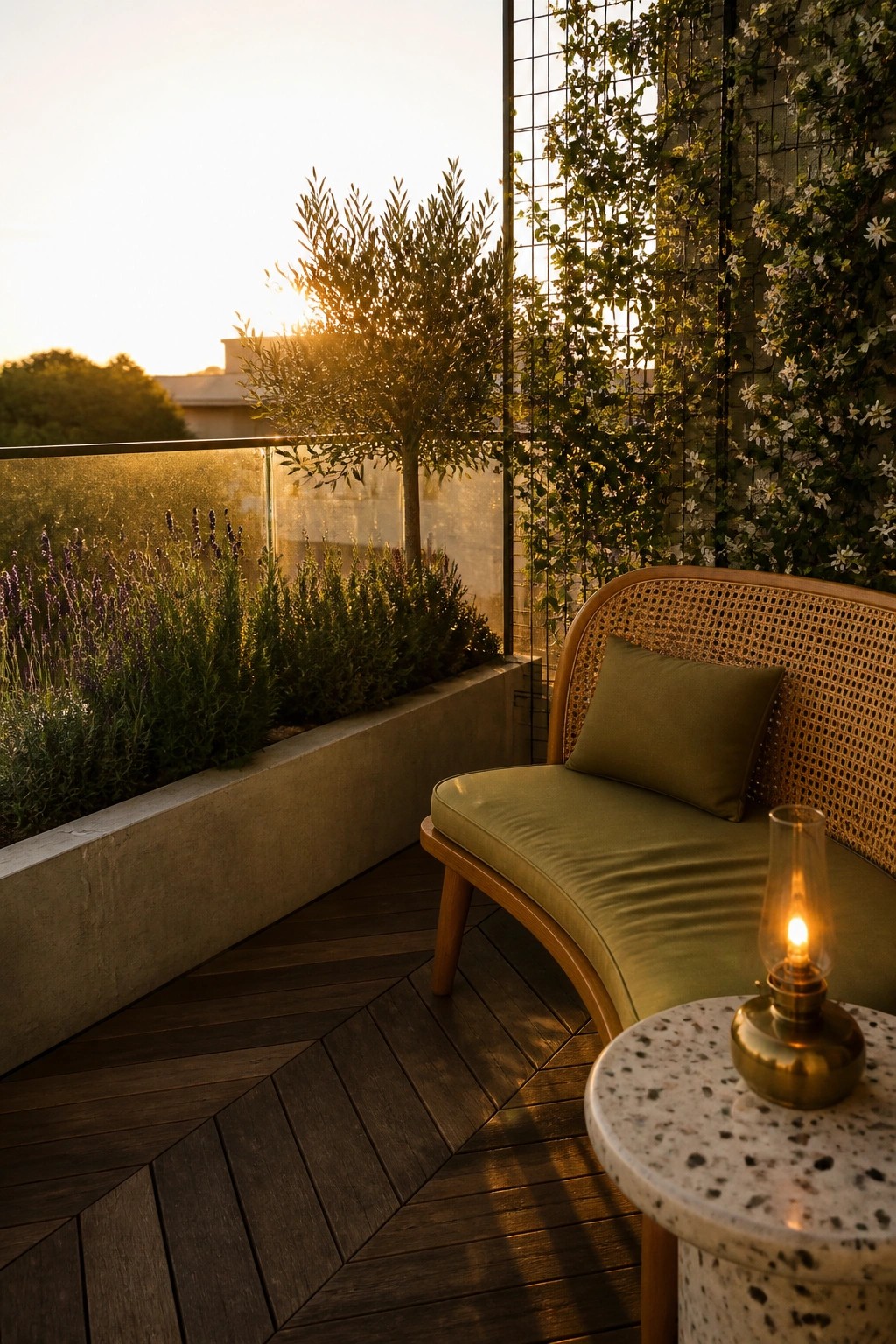
A vertical garden wall adds plenty of greenery without crowding the floor space on a small balcony. It creates a natural backdrop that feels lush while leaving room for seating and walking around.
This works best on urban balconies or compact terraces where ground planters alone would feel limited. Pair the wall with a few simple pots along the edge and keep furniture low and understated so the plants remain the main feature.
Long Rectangular Planters Along the Edge
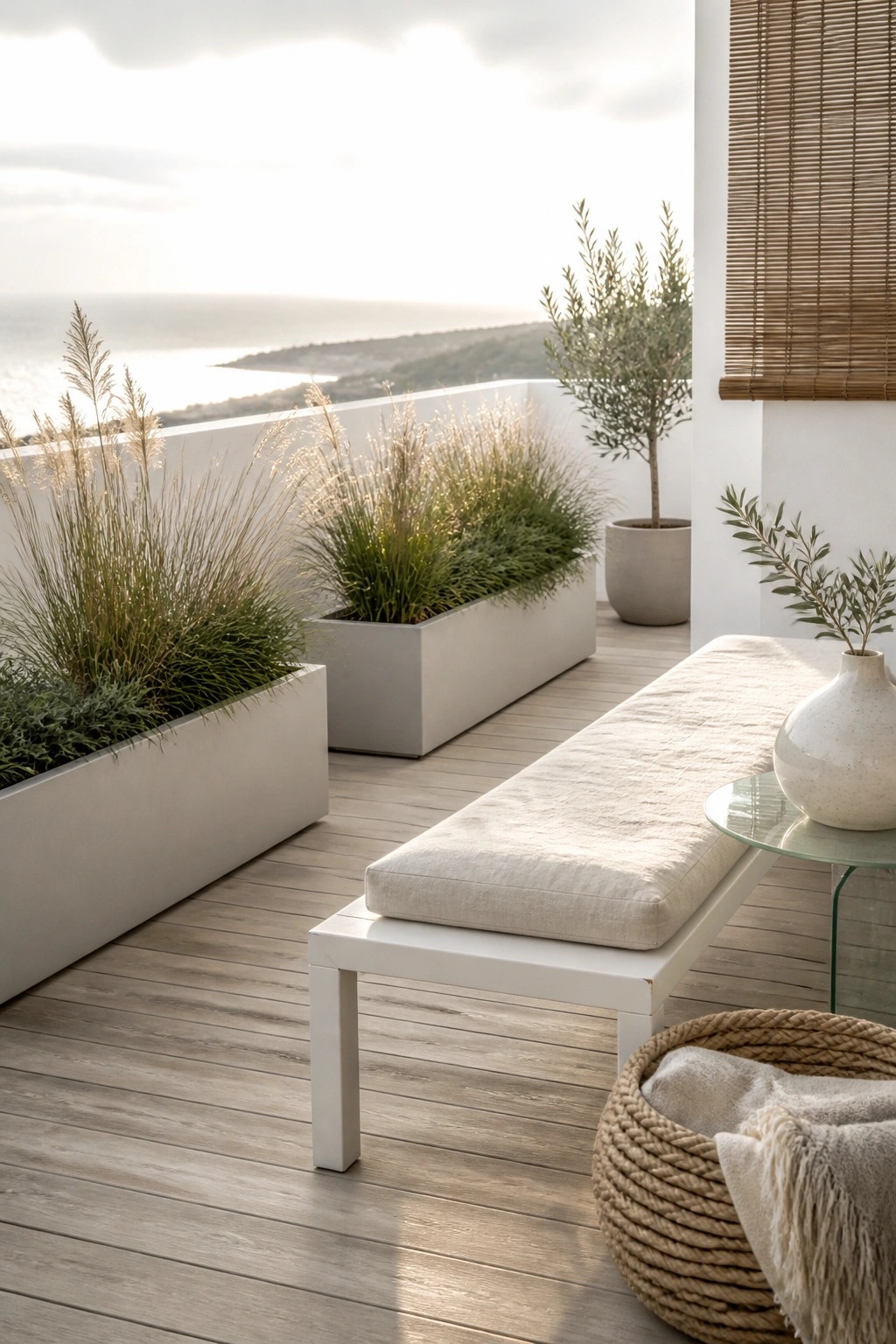
Long rectangular planters work well on balconies because they give the space a clear shape without adding clutter. They sit low and run along the edge, which helps separate the seating area from the open view while still keeping everything feeling open.
This setup suits modern balconies that already have clean lines and simple flooring. Stick with one or two plant types that stay upright, and choose a light finish on the planters so they blend with the deck and railings. Avoid filling every inch of the floor so the area stays easy to move through.
Frequently Asked Questions
Q: How often do the plants in sleek planters need watering?
A: Check the soil every couple days. Water when it starts to feel dry. These containers hold moisture well but sun and wind can speed things up.
Q: What plants keep that clean designer look without much trimming?
A: Go for things like lavender or ornamental grasses. They grow in tidy shapes and add texture that fits the modern style.
Q: Can I set this up on a rental balcony without making changes?
A: Use freestanding planters that sit right on the floor. Skip anything that needs drilling or permanent mounts.
Q: How do I stop water from draining onto the balcony below?
A: Place saucers under each planter to catch the extra. Empty them after watering so nothing drips through.
