

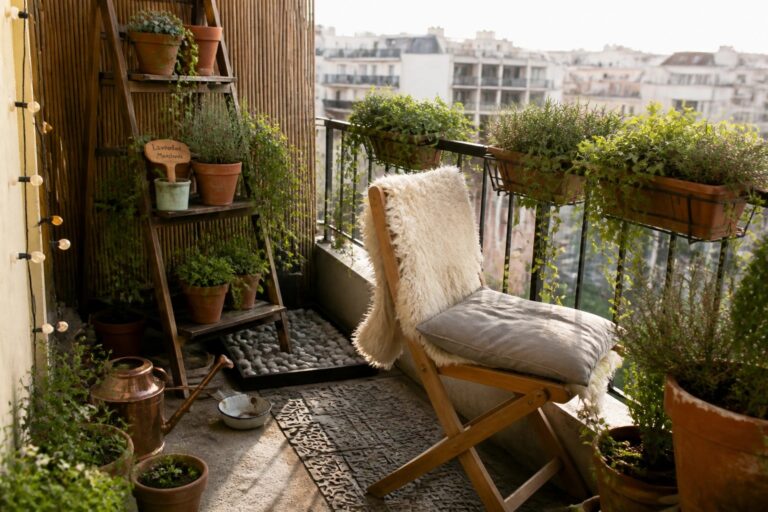
I have found that balconies often end up as storage spots instead of places where you actually want to spend time because the layout never quite works with the limited floor space.
When I look at my own small balcony the first thing that stands out is whether there is room to walk through without stepping around pots or tripping over edges.
Some setups only click once you start using vertical options like rails and shelves to keep plants off the ground.
Over time I have noticed that the ideas worth keeping are the ones that leave enough open area for a chair or two while still letting plants get decent light.
Testing a few of these approaches myself has shown which ones hold up once the weather changes and daily use begins.
Use a Ladder Shelf for Vertical Planting
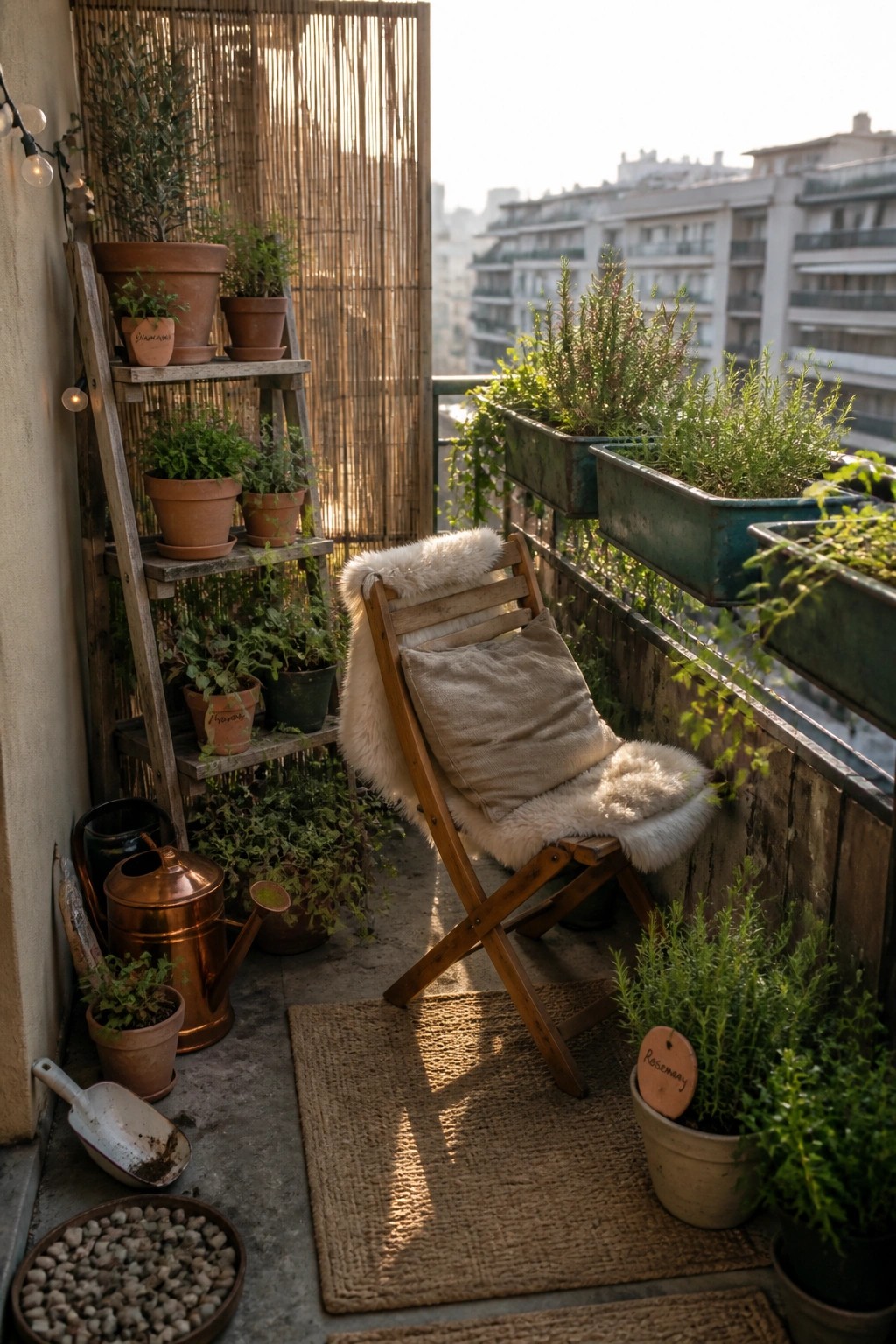
A ladder shelf lets you stack quite a few pots in one narrow spot instead of spreading them across the floor. It works well on balconies because most of the space stays open for walking or sitting while the plants still get decent light.
Set the shelf against a wall or rail and mix pot sizes so nothing feels crowded. This setup fits apartments best where floor room is tight and you need to keep the area usable.
Mount Wall Shelves For Extra Plants
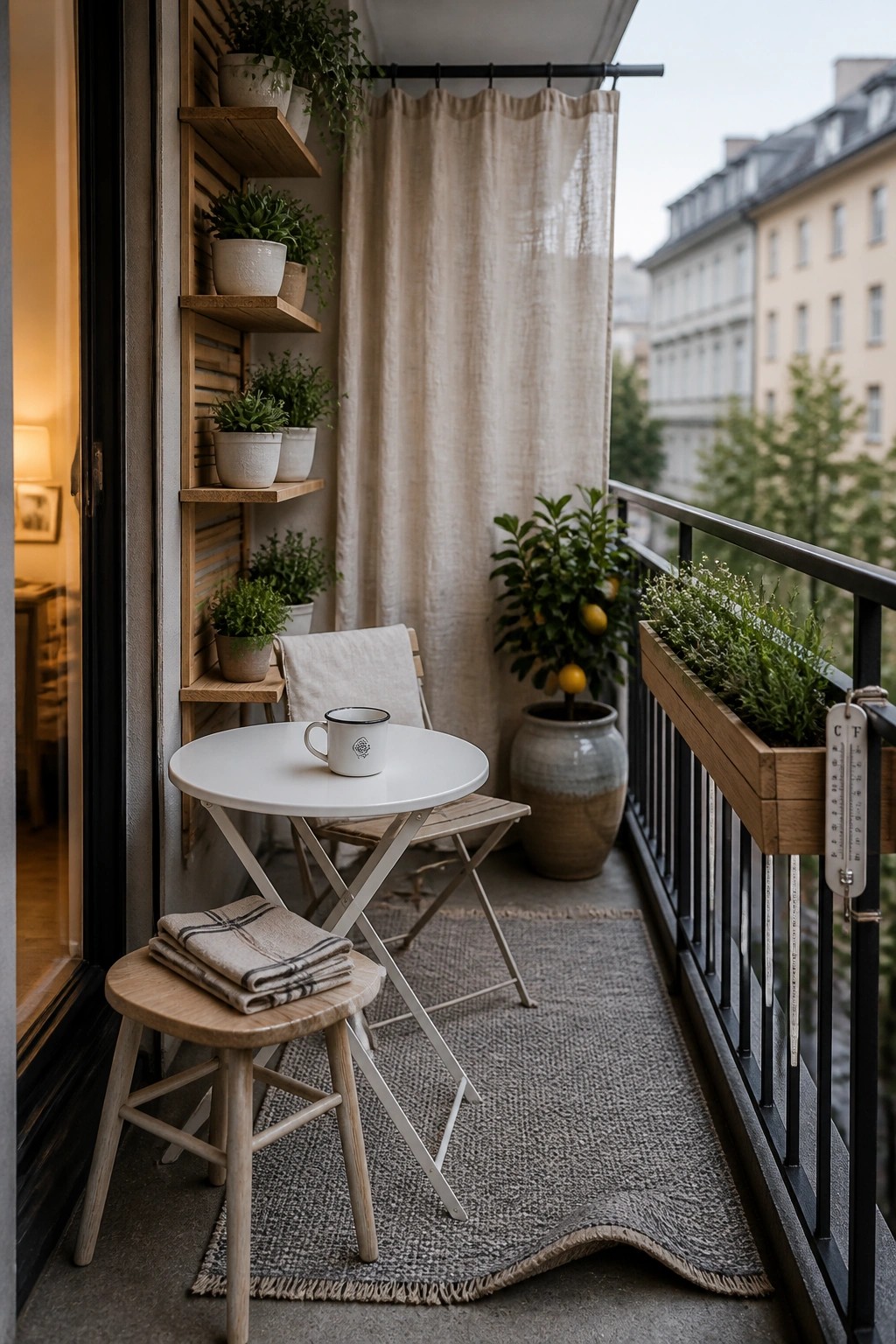
Small balconies often run out of floor space fast, so putting plants on wall shelves keeps the area open while still adding plenty of greenery. The shelves turn an empty wall into a simple vertical garden without blocking the walkway or seating.
This setup works best on narrow balconies where you still want room for a table and chair. Use sturdy brackets and check the weight limits, especially if you plan to add larger pots over time.
Hang Planters from the Ceiling and Walls
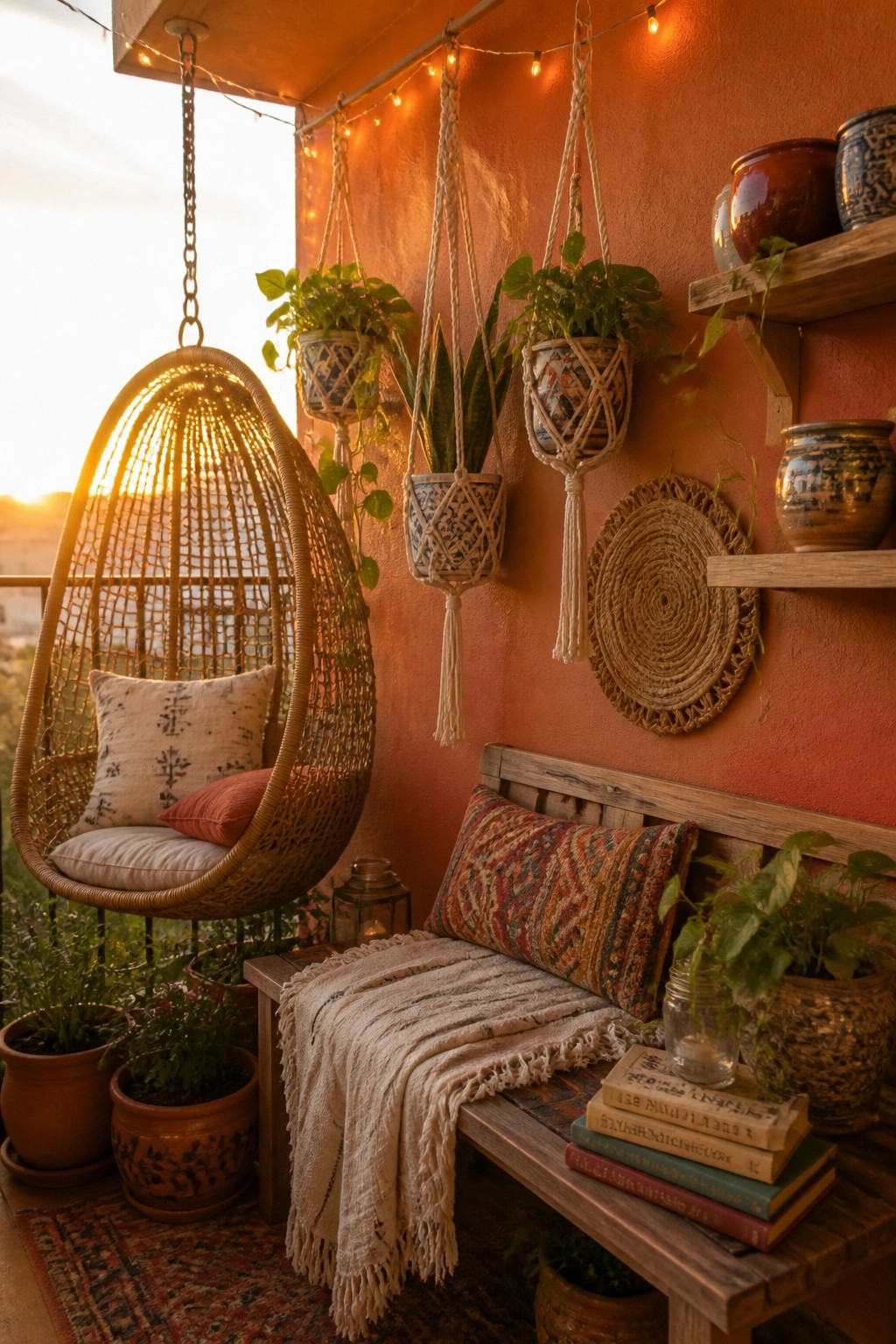
Hanging plants in macrame holders lets you add a lot of greenery without losing floor space on a small balcony. It keeps the area open for seating while still giving you a full garden feel.
Group several holders at different heights along one wall and mix in a shelf or two for larger pots. This works best on apartment balconies where every inch counts and you want to keep things simple to maintain.
Add a Small Table Among the Pots
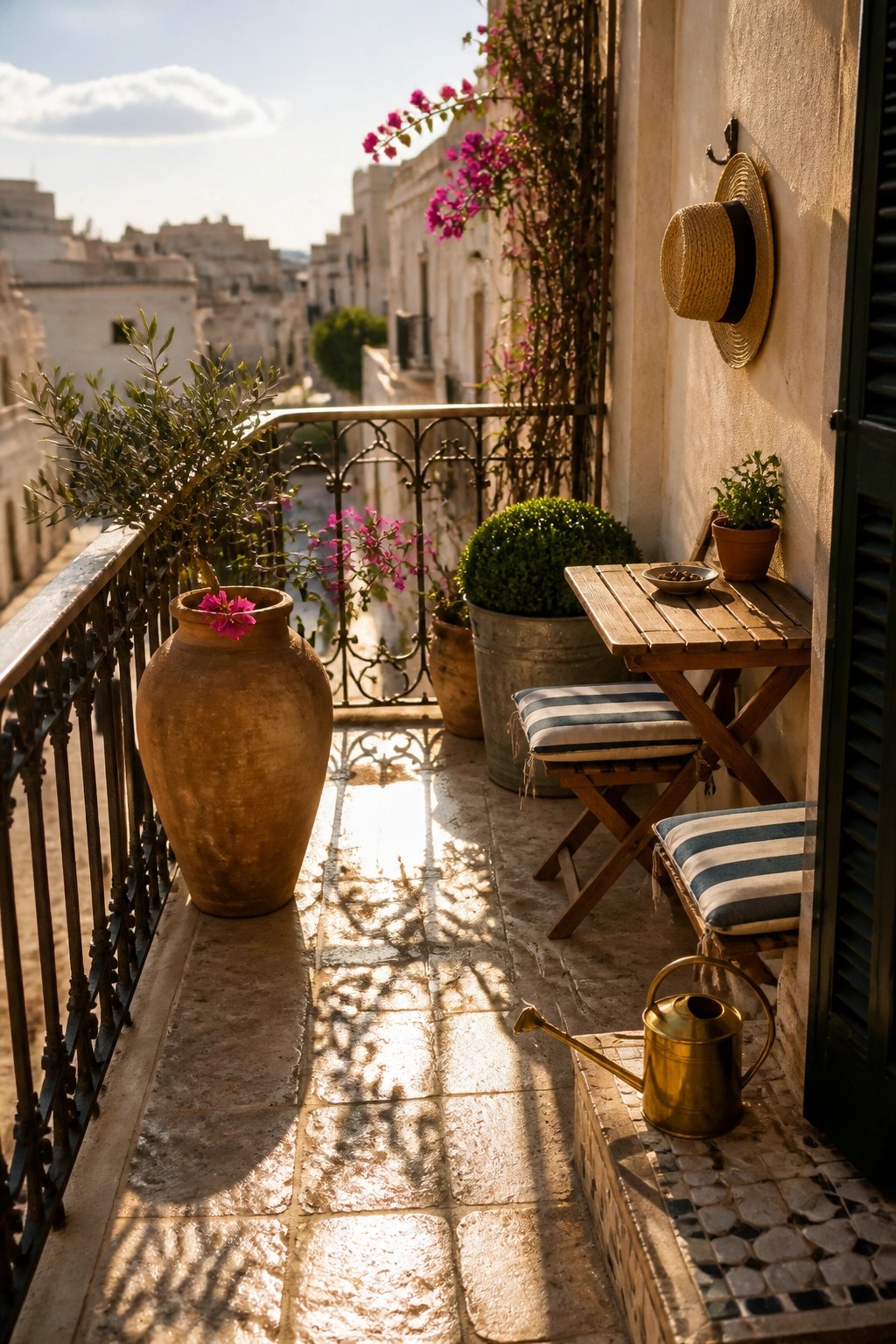
One simple way to make a balcony garden more usable is to tuck a compact table and stools right into the planting area. The table gives you a place to set a drink or a book without crowding out the pots or blocking the walkway.
This setup suits narrow balconies best because everything stays movable. Folding furniture lets you shift things around when you need to water plants or rearrange for more shade.
Built-In Benches Add Function To Small Balconies
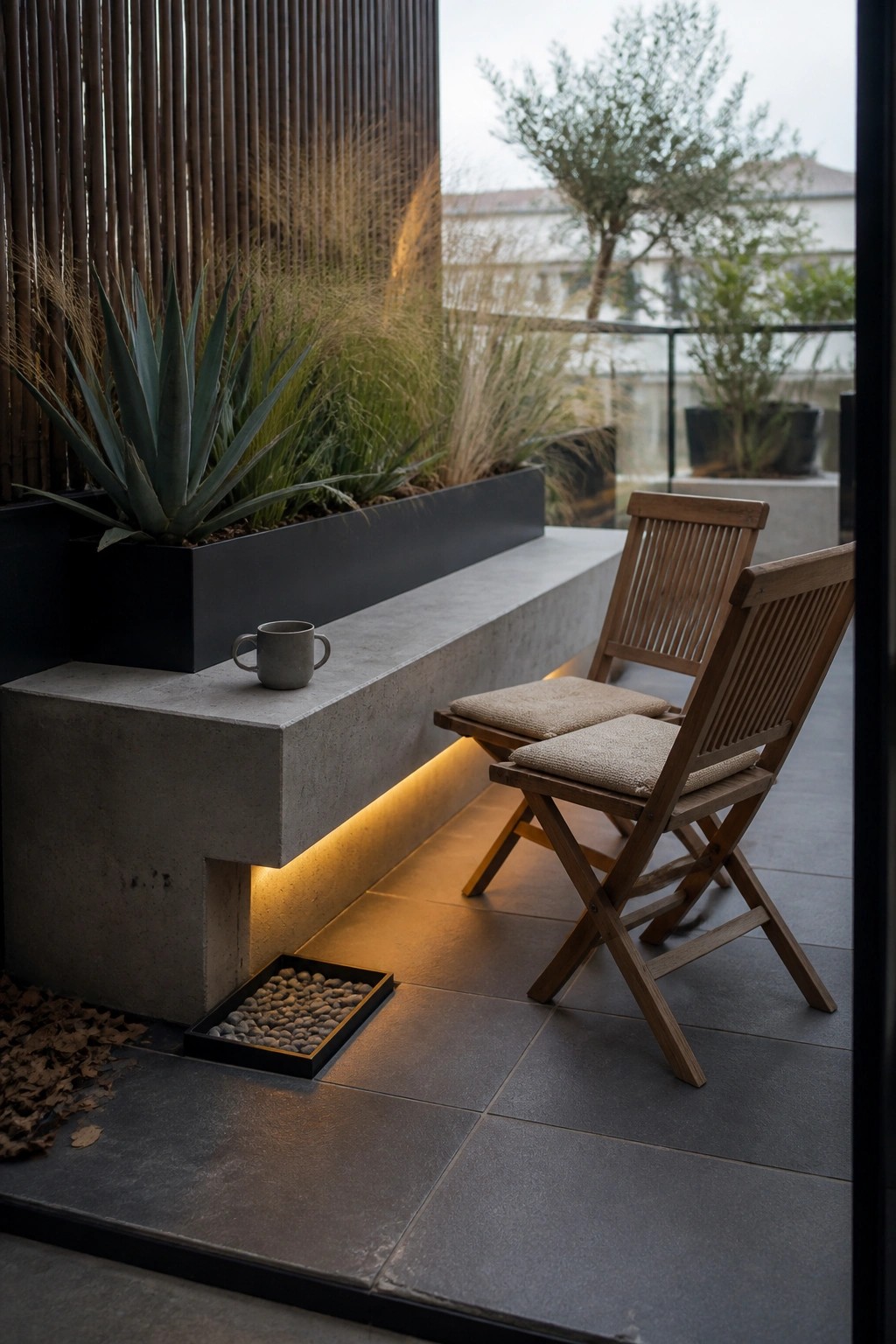
A built-in bench gives you a solid place to sit without crowding the floor with extra furniture. It also creates a low ledge that can hold plants or a few small items while keeping the space tidy.
This setup works best on narrow balconies where every inch counts. Run a simple strip of warm lighting underneath the bench so the area stays usable after dark, and keep a long planter along the back edge for greenery that does not block movement.
Use A Wall Grid For Vertical Planting
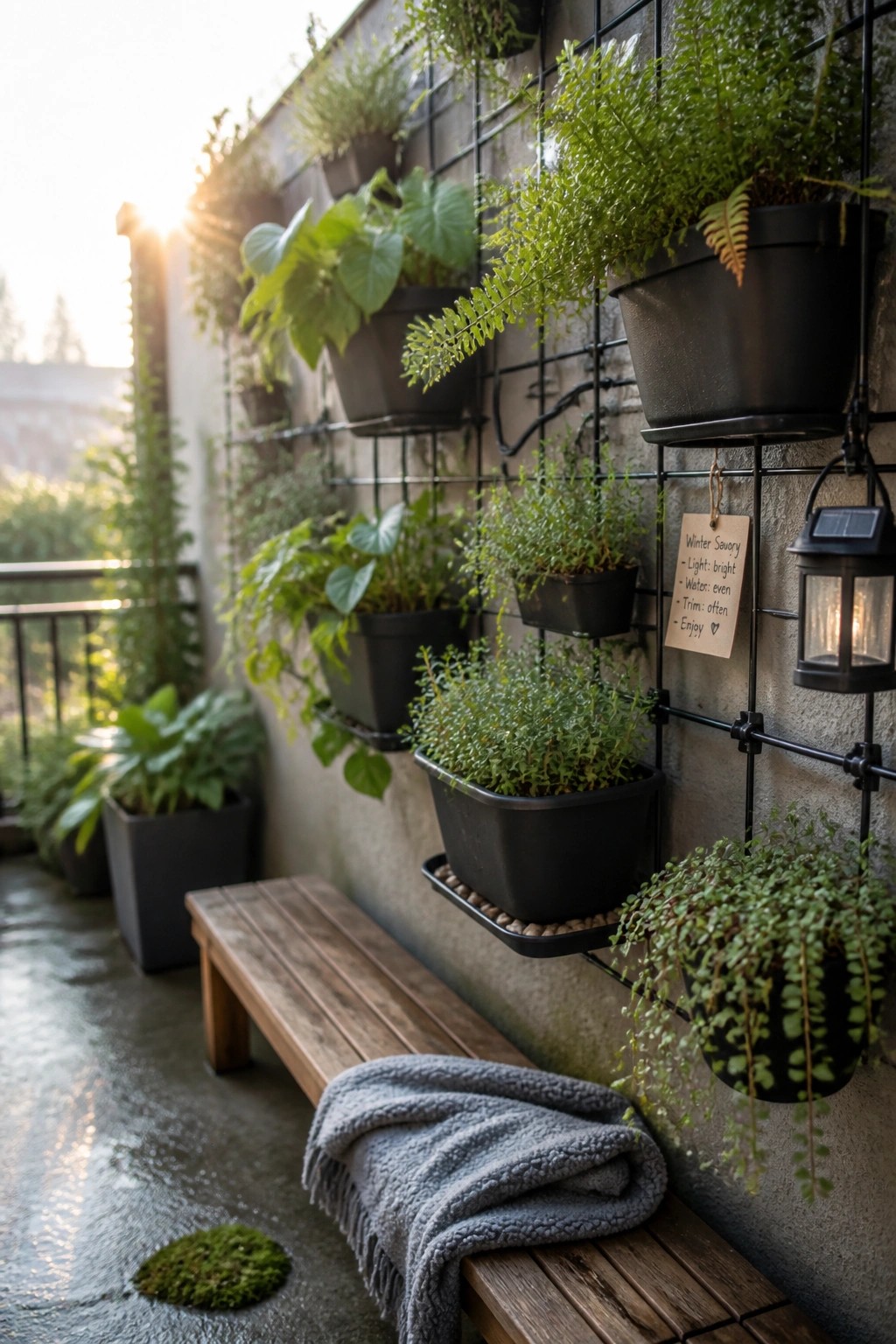
A wall grid gives you a simple way to fit more plants into a small balcony without crowding the floor. It keeps everything off the ground and lets you spread pots across different heights so the space feels fuller.
This approach works best on narrow balconies or those with limited floor room. Start with a sturdy metal grid, add a few hooks or small shelves, and move pots around as needed. Just check the weight limits on your wall before loading it up.
Railing Mounted Boxes Free Up Floor Space
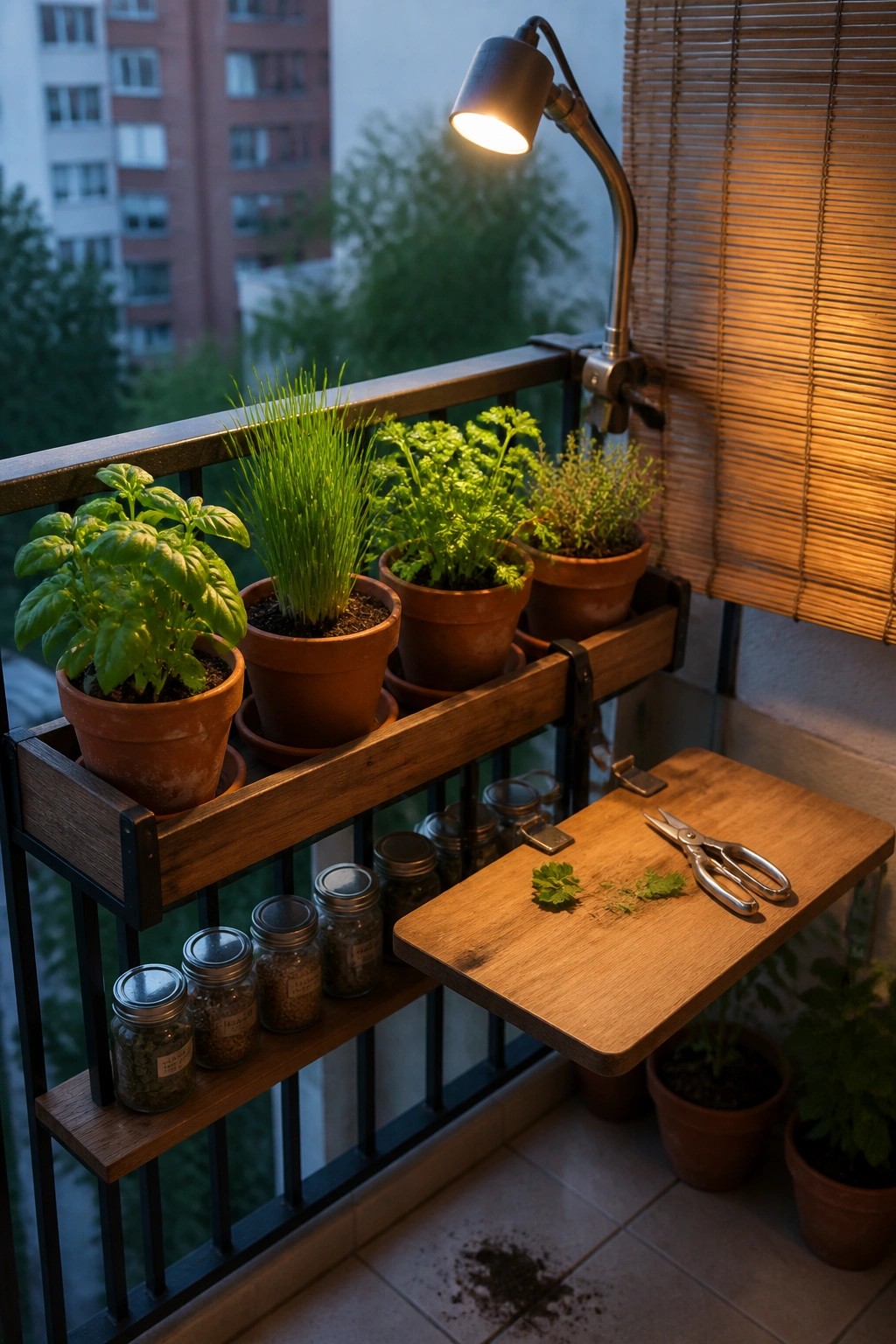
Many small balconies feel cramped once you add more than a few pots. Mounting a long wooden box right on the railing gives you a steady row of growing space without taking over the walking area.
This works best on apartments where floor room is limited and the railing is sturdy metal. Keep the box shallow enough for easy watering and choose herbs that stay compact so the setup stays neat and productive.
Large Pots Help Define Cozy Balcony Corners
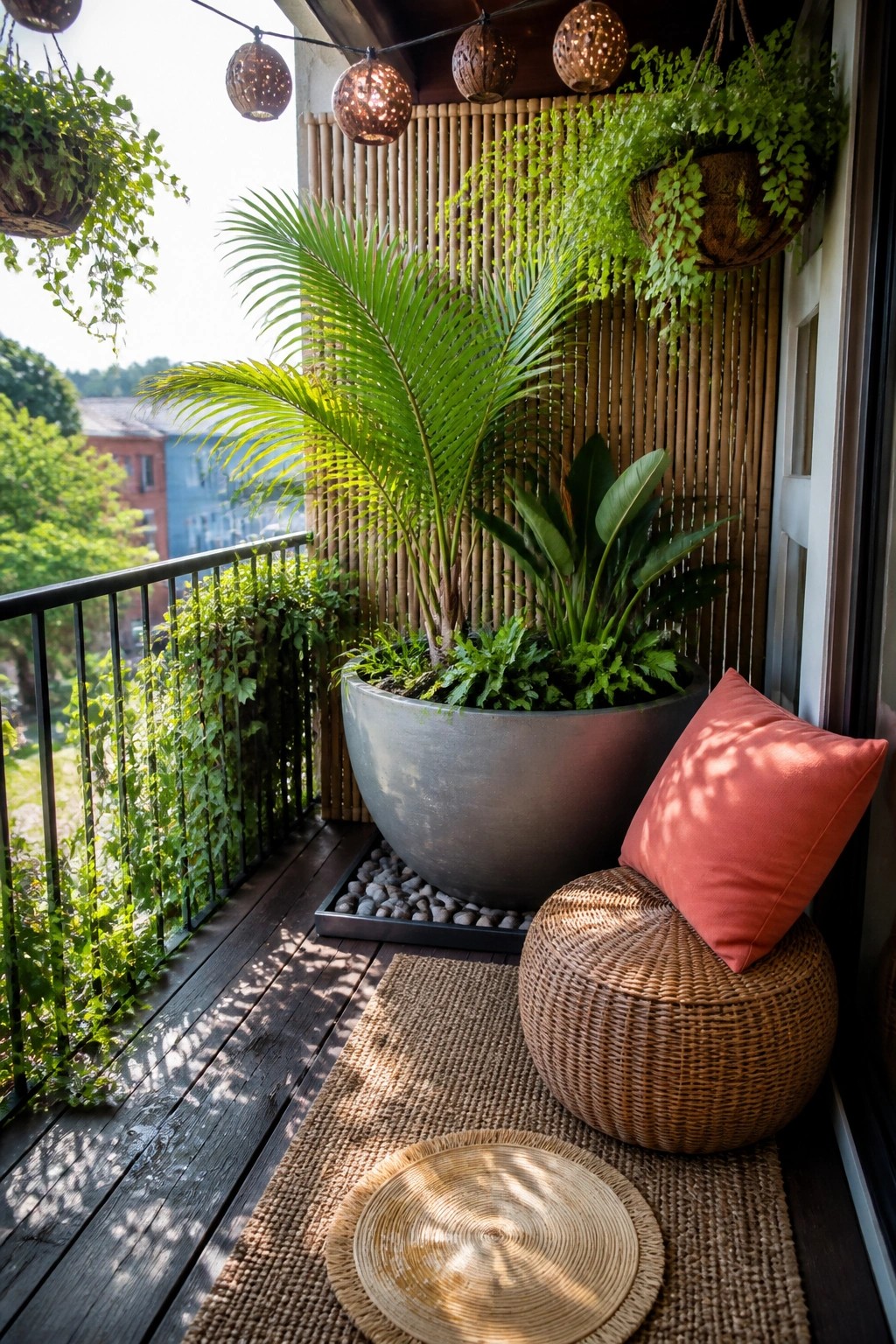
A single oversized planter can turn an empty balcony corner into a usable spot. The tall palm and lower greens in one big container give height and softness without spreading out across the floor.
This works best on narrow decks or apartment balconies where space is tight. Set the pot on a shallow tray with stones for drainage, then add a low seat beside it so the plants act as a natural screen.
Use a Bench to Add Seating to a Balcony Garden
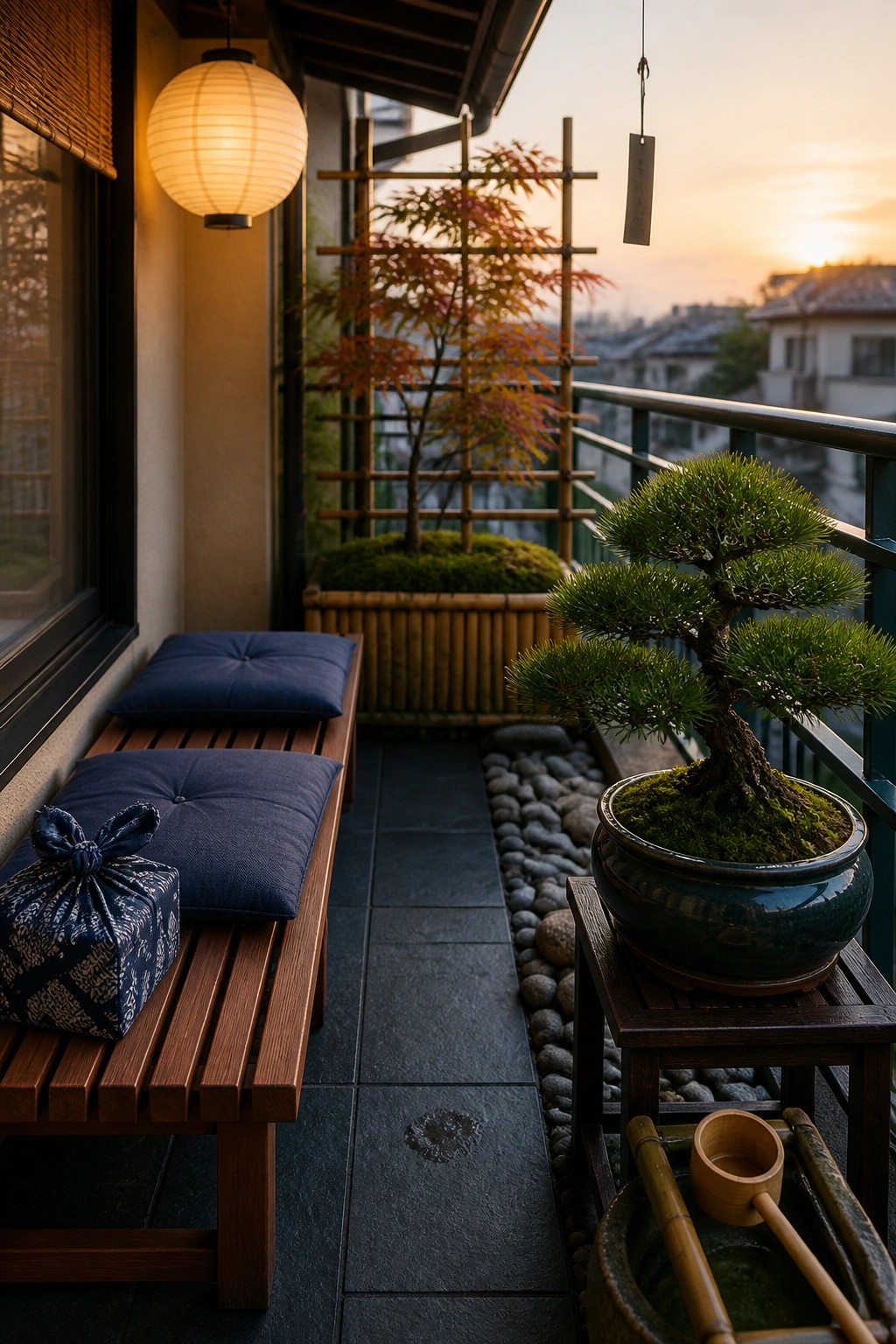
A bench gives you a place to sit without taking up much floor space. It works well on narrow balconies because it tucks against the wall and still leaves room for pots along the sides or in front.
Place cushions on the bench for comfort and set a few larger plants nearby. This setup suits small city balconies where you want both a spot to relax and some greenery without blocking the walkway.
Wall Shelves And A Rolling Cart
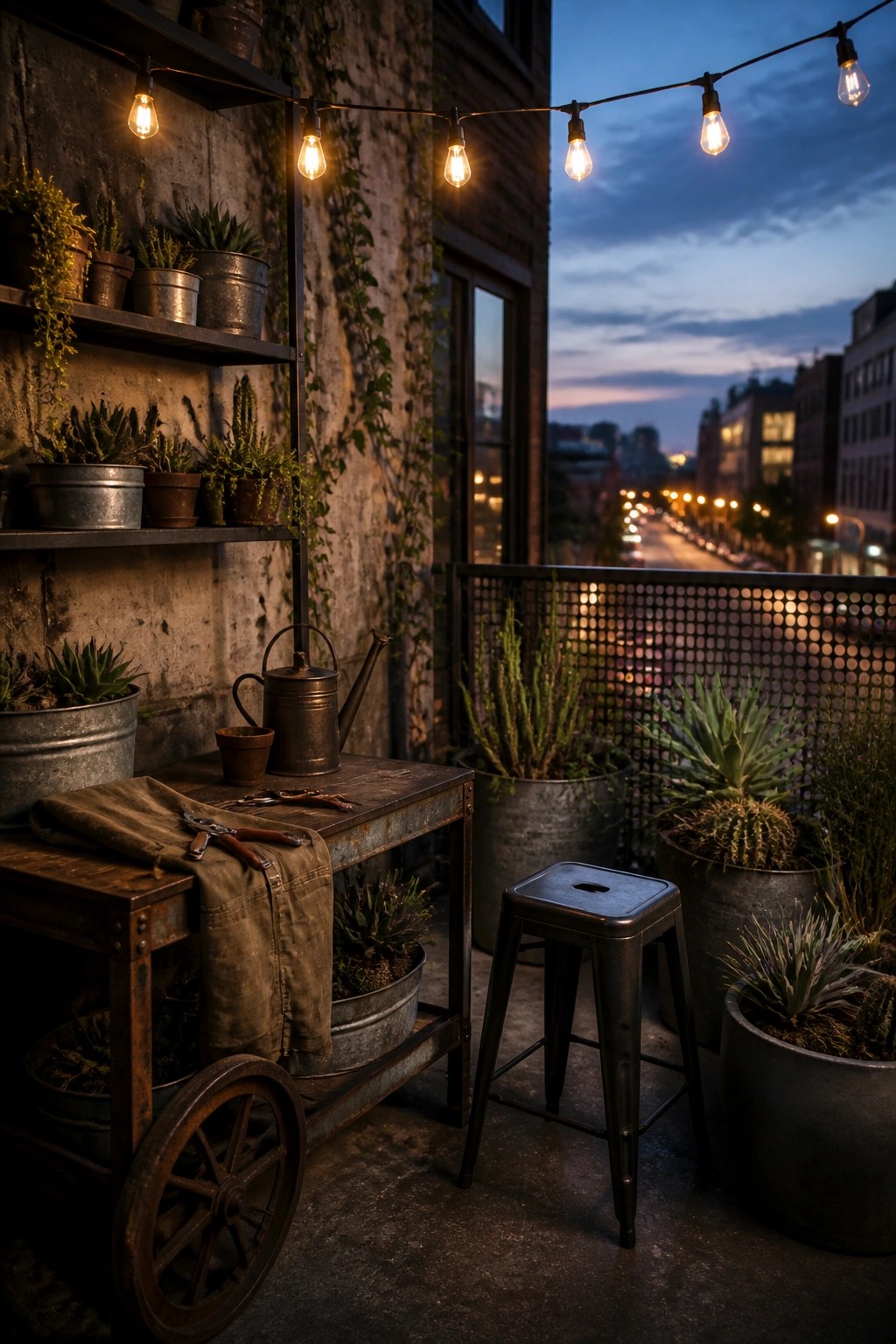
Mounting a few simple shelves on the wall and keeping a cart nearby gives you room for a lot more plants without crowding the floor. The shelves hold smaller pots at different heights while the cart can be moved around as needed for watering or rearranging.
This setup works well on small balconies where space is tight. It suits apartments or any outdoor spot that needs flexible storage, and the cart keeps tools and extra pots handy without adding permanent fixtures.
Grow Citrus Trees in Large Terracotta Pots
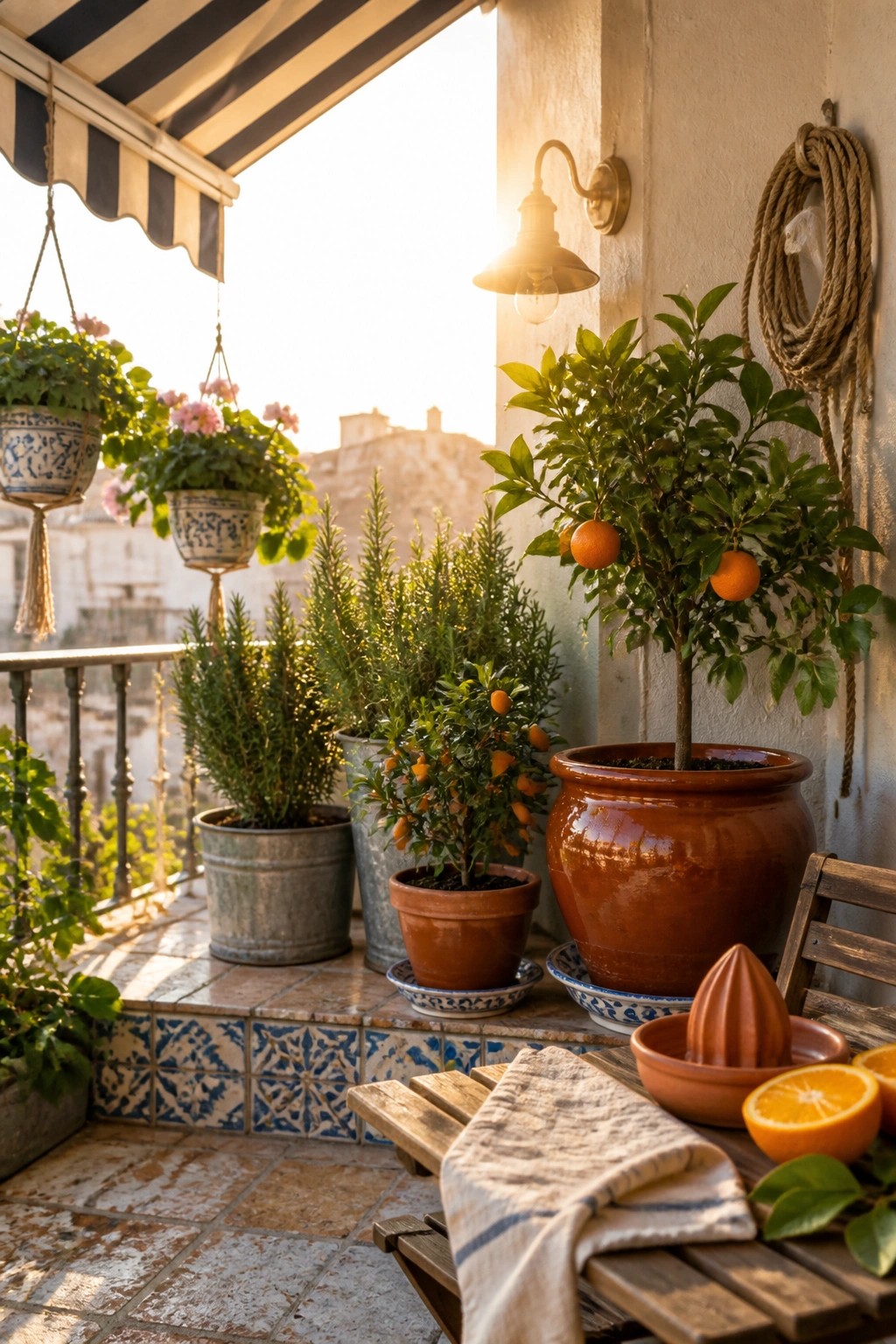
Many balconies feel more alive when you add a citrus tree or two. The big pots give the roots room to grow, and the trees bring both greenery and the possibility of fresh fruit without needing a yard.
This idea works best in sunny spots where the trees can get at least six hours of light. Pick dwarf varieties so they stay in scale with the space, and pair them with smaller pots of herbs or flowers for layers that still leave room to walk around.
Stack Wooden Crates for Vertical Planting
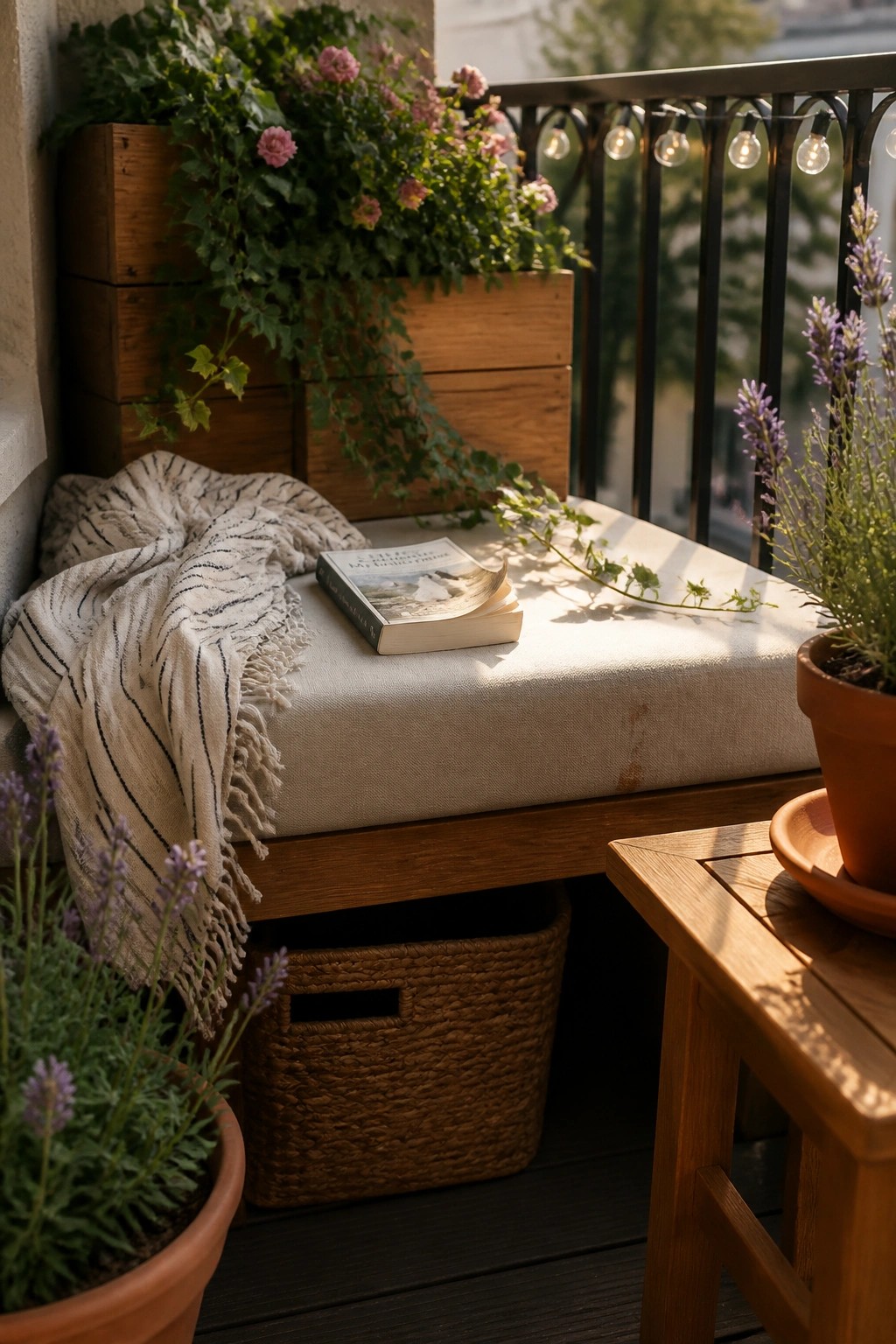
Stacking wooden crates along a balcony wall gives you extra planting space without crowding the floor. It turns an empty vertical area into a simple garden wall and lets vines spill down naturally.
This works best on small balconies where floor room is limited. Fill the crates with trailing plants and keep heavier pots on the ground or a low table so the whole setup stays balanced and easy to water.
Repurpose a Pallet for Vertical Plant Shelves
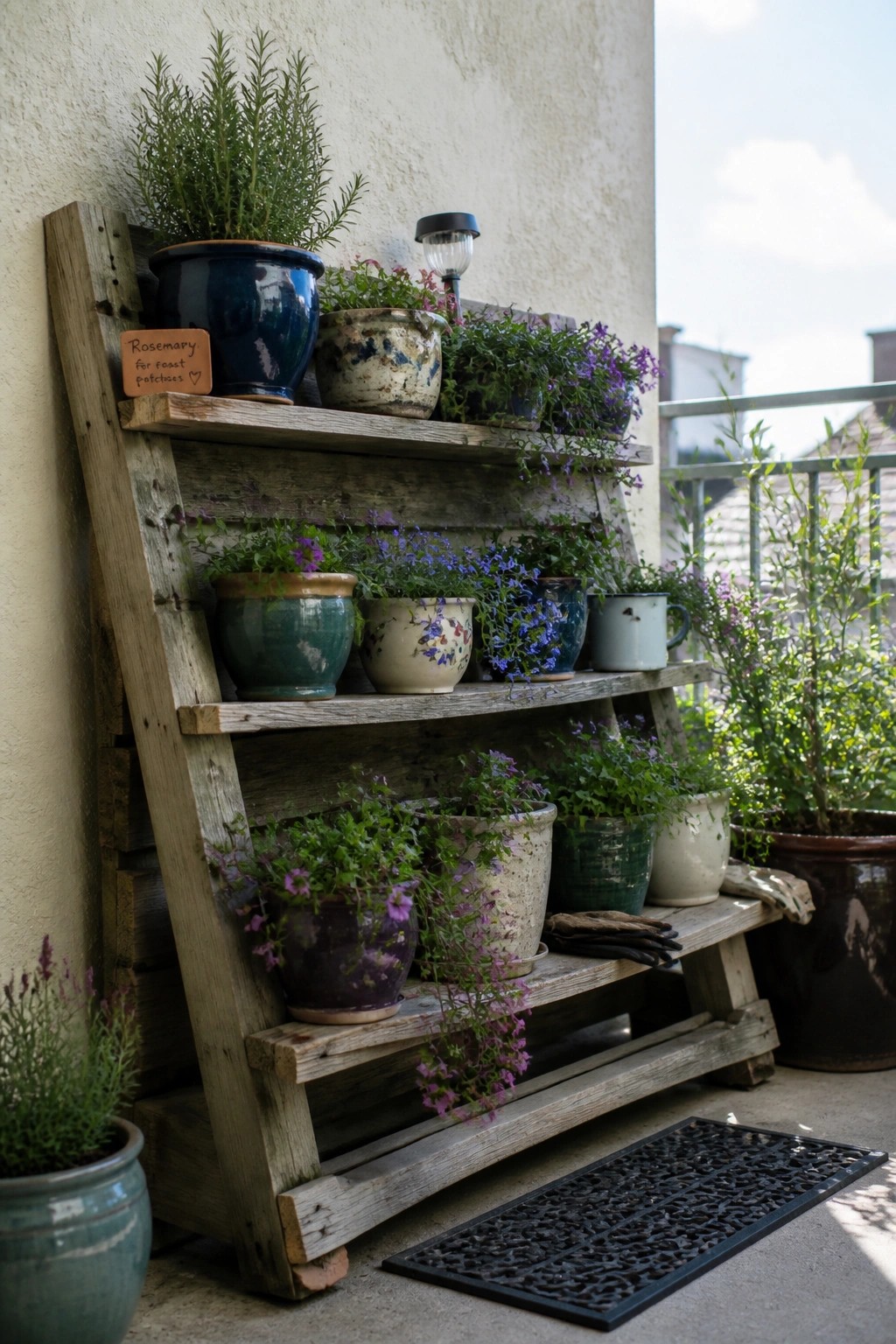
A simple wooden pallet can give you several extra spots for plants when floor space is tight. Lean it against a wall and set pots on the rungs to create quick tiers that hold quite a few containers at once.
This setup works best on a balcony or small patio where you want height without blocking the view. Choose a sturdy pallet, check for loose nails, and place the heavier pots on the lower shelves so the whole thing stays steady.
Cluster Large Pots Around a Bench
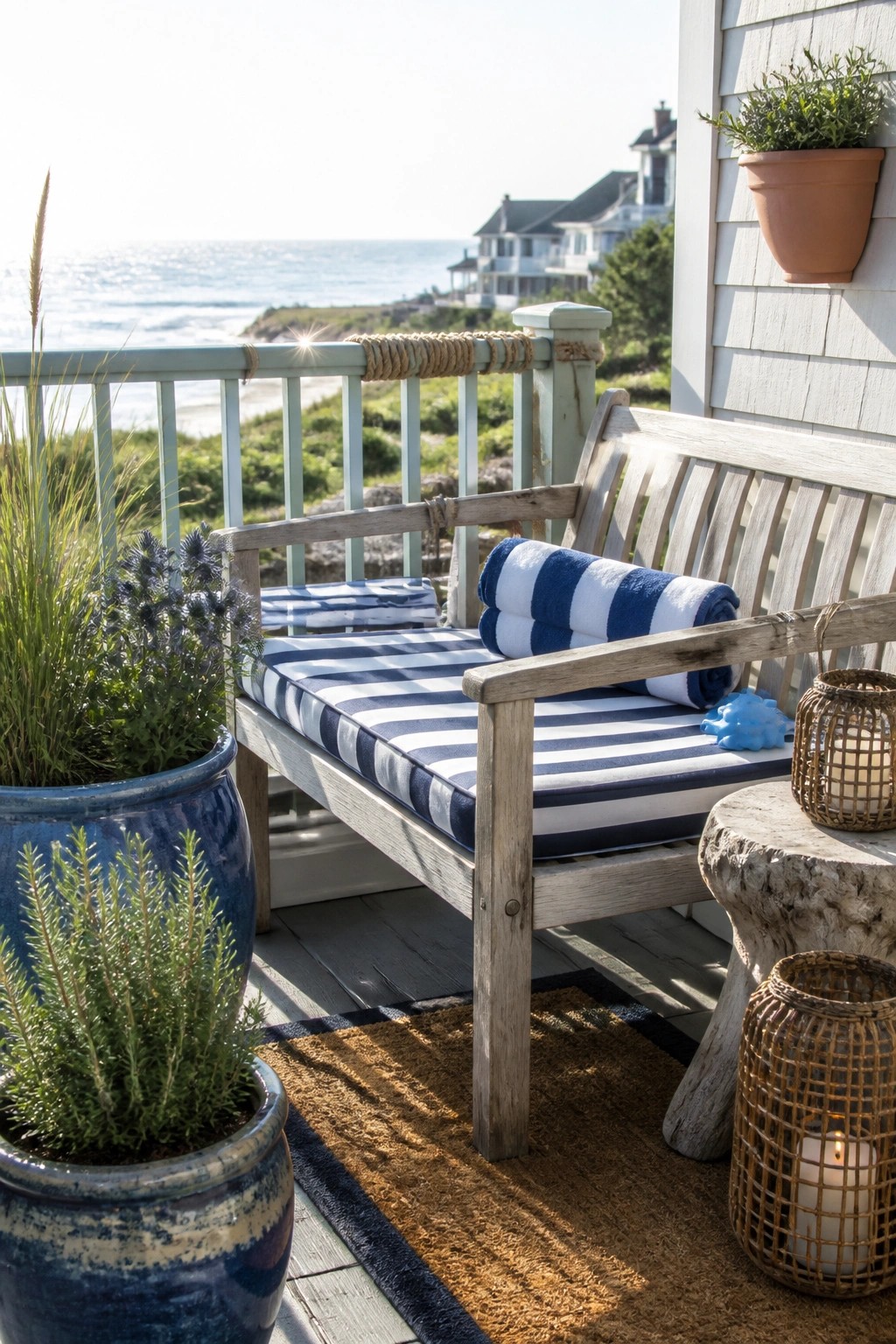
Large pots make a balcony seating area feel like a real garden even when space is tight. They add height, texture, and greenery right where you sit, so the bench does not float alone on the deck.
Set two or three big pots at the ends and front of the bench, then add one or two smaller ones if room allows. This works especially well on decks or balconies that face open views, since the plants soften the edge without blocking the outlook. Choose sturdy ceramic or resin pots that handle weather and keep the plants simple so the arrangement stays easy to maintain.
Layer Plants Using Stands and Stools
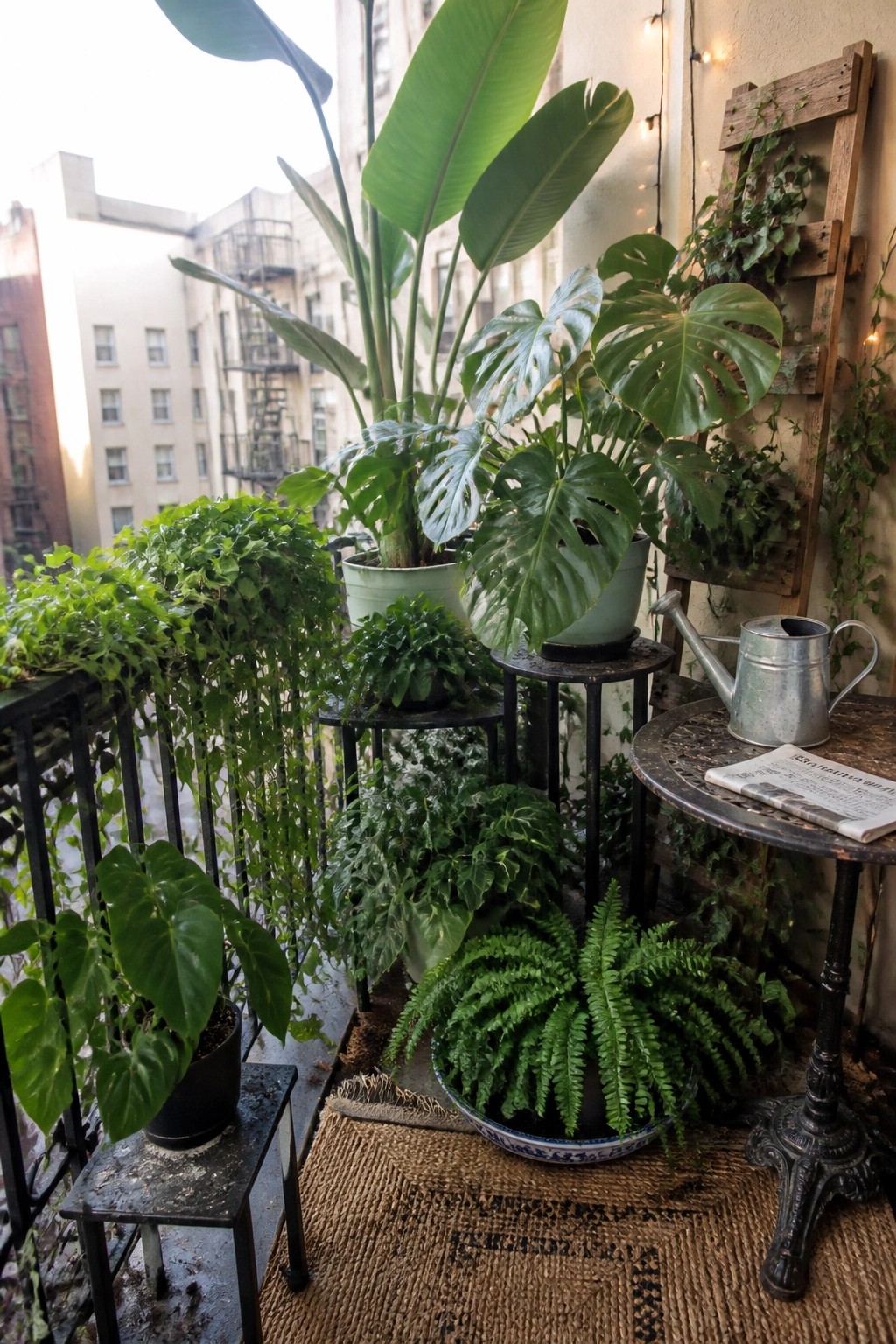
Many balconies feel bigger once you start raising some plants off the ground. Stands and stools let you build layers so the space looks full without crowding the floor.
This works best on small balconies where you need to fit more plants into a tight area. Mix a couple of taller stands with lower ones and keep the largest pots on the ground so nothing feels top heavy.
Place a Bench Along Your Balcony Planter
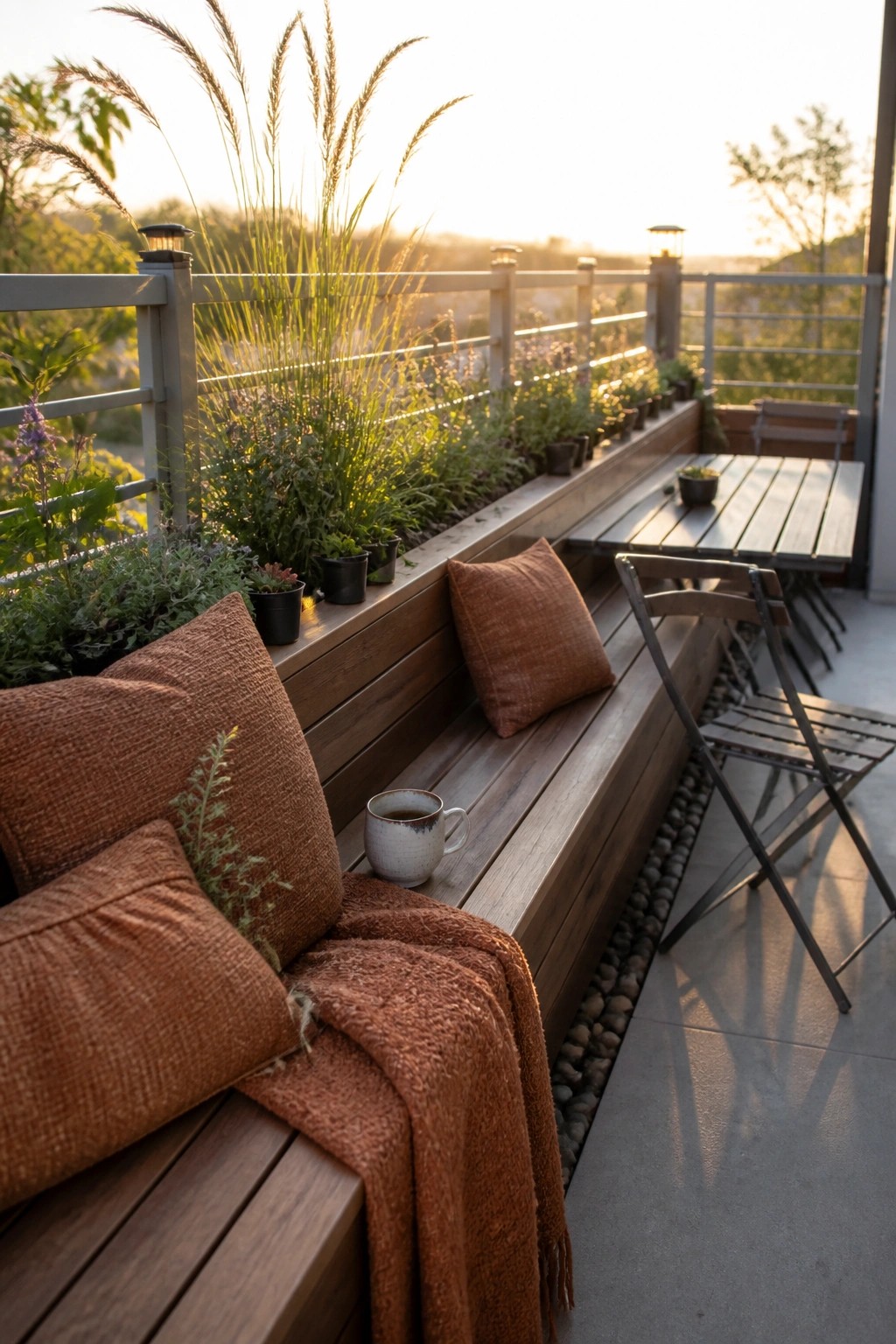
One simple way to gain both seating and planting space on a small balcony is to run a long planter box along the railing and set a bench right in front of it. The plants stay out of the way but still feel close, and the bench makes the area feel more like a real spot to sit rather than just a narrow walkway.
This works best on balconies with a sturdy railing and enough depth for both the box and a seat. Keep the planter narrow, choose wood that can handle weather, and leave a little path so you can still walk past the bench without stepping over plants.
Add A Cabinet For Protected Seed Starting
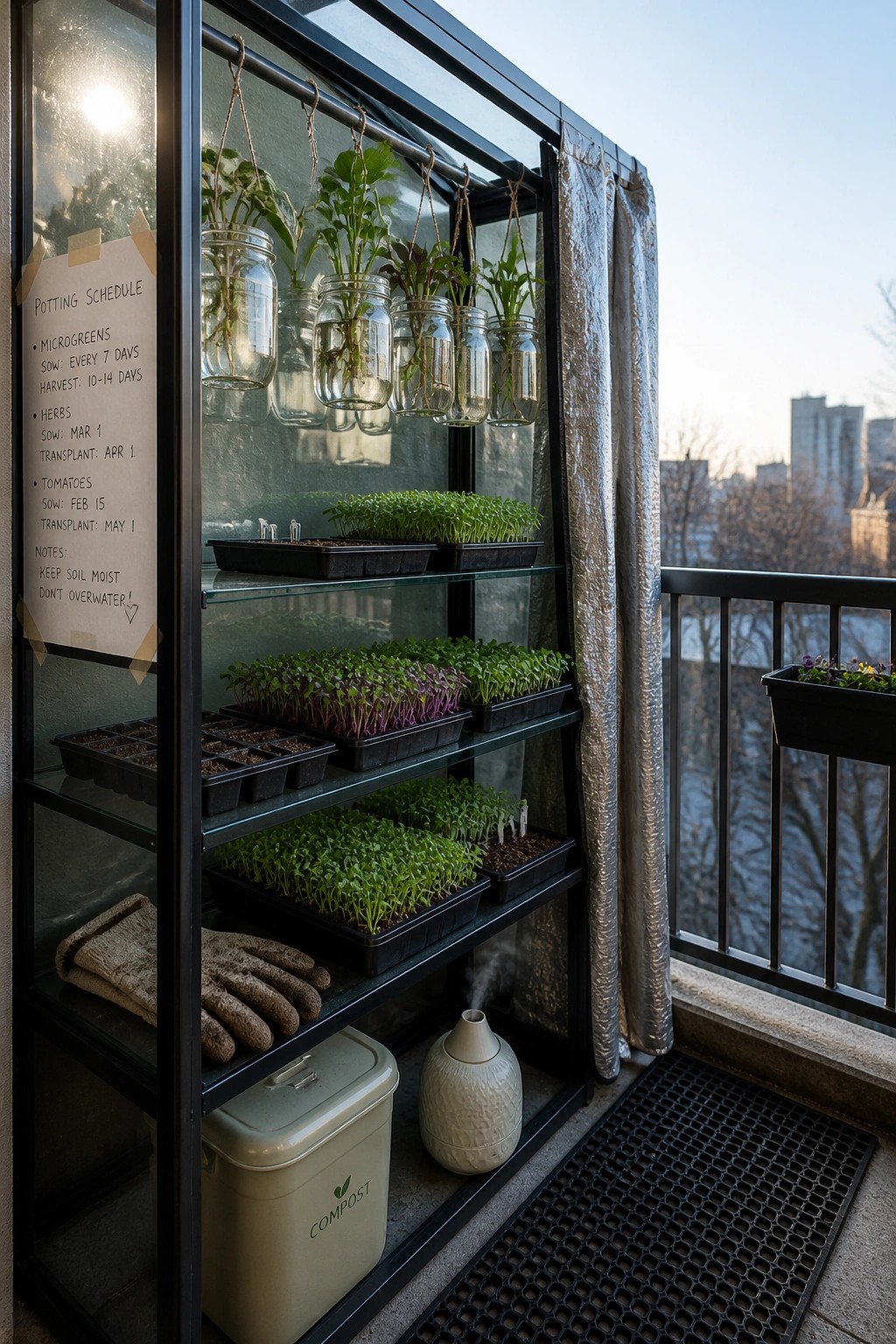
A tall cabinet with glass doors gives you a place to start seeds without worrying about wind or sudden temperature swings on the balcony. It keeps trays organized, holds hanging jars for herbs, and still leaves room for a small compost bin and gloves at the bottom.
This setup works well on small balconies where open shelves would expose everything to the elements. Place it against a wall or railing for stability, and check that the doors can open fully so you can water and move trays easily.
Use Vertical Wall Planters on Small Balconies
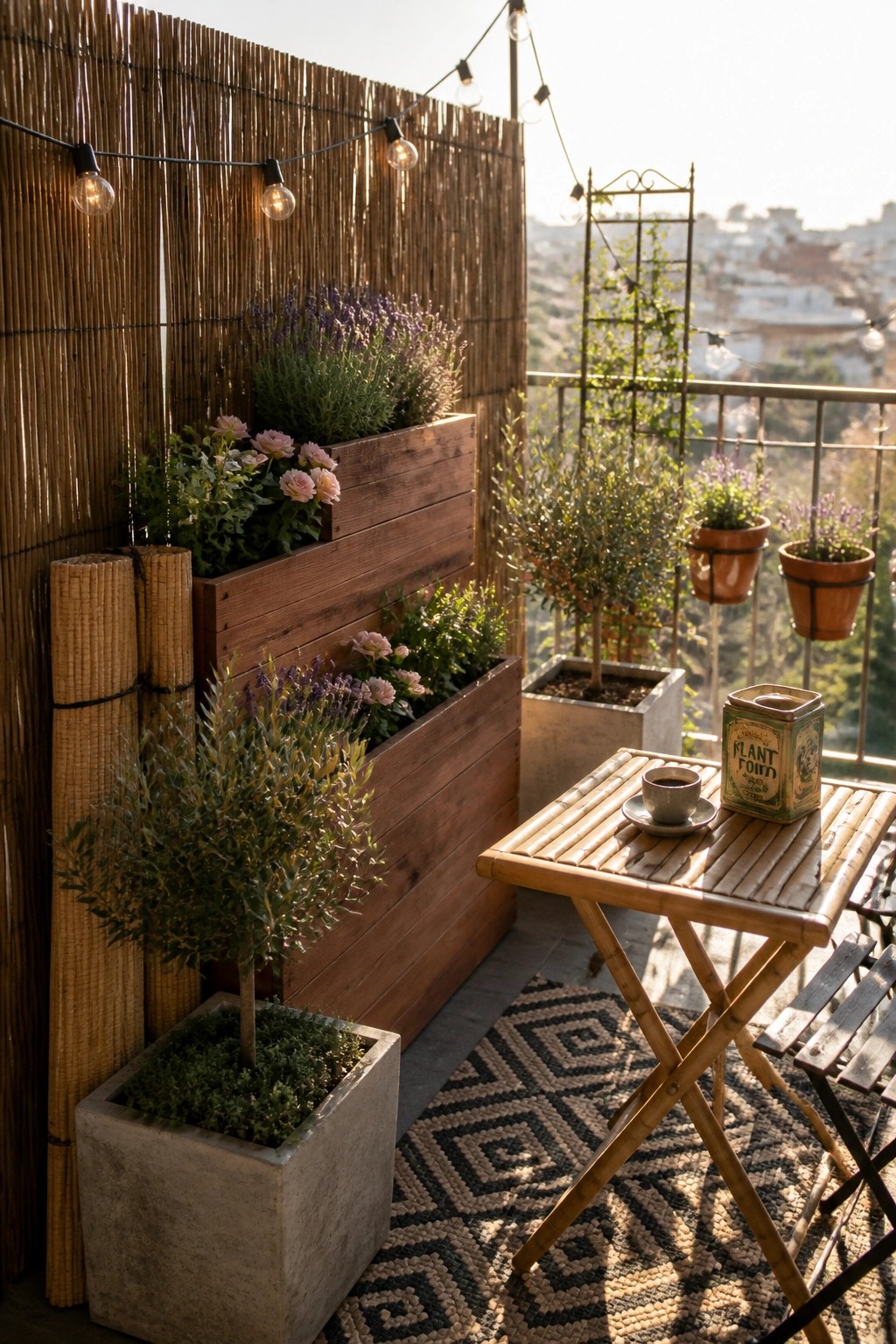
Small balconies often run out of floor space fast once you add a chair or two. Mounting planters in tiers against the wall gives you room for more plants without taking over the seating area.
This setup works best when you have a solid back wall or screen to attach to. Simple wooden boxes like the ones here can hold a mix of flowers and herbs, and they keep everything off the ground so the floor stays open for walking or a small table.
Vertical Pallet Herb Gardens For Small Balconies
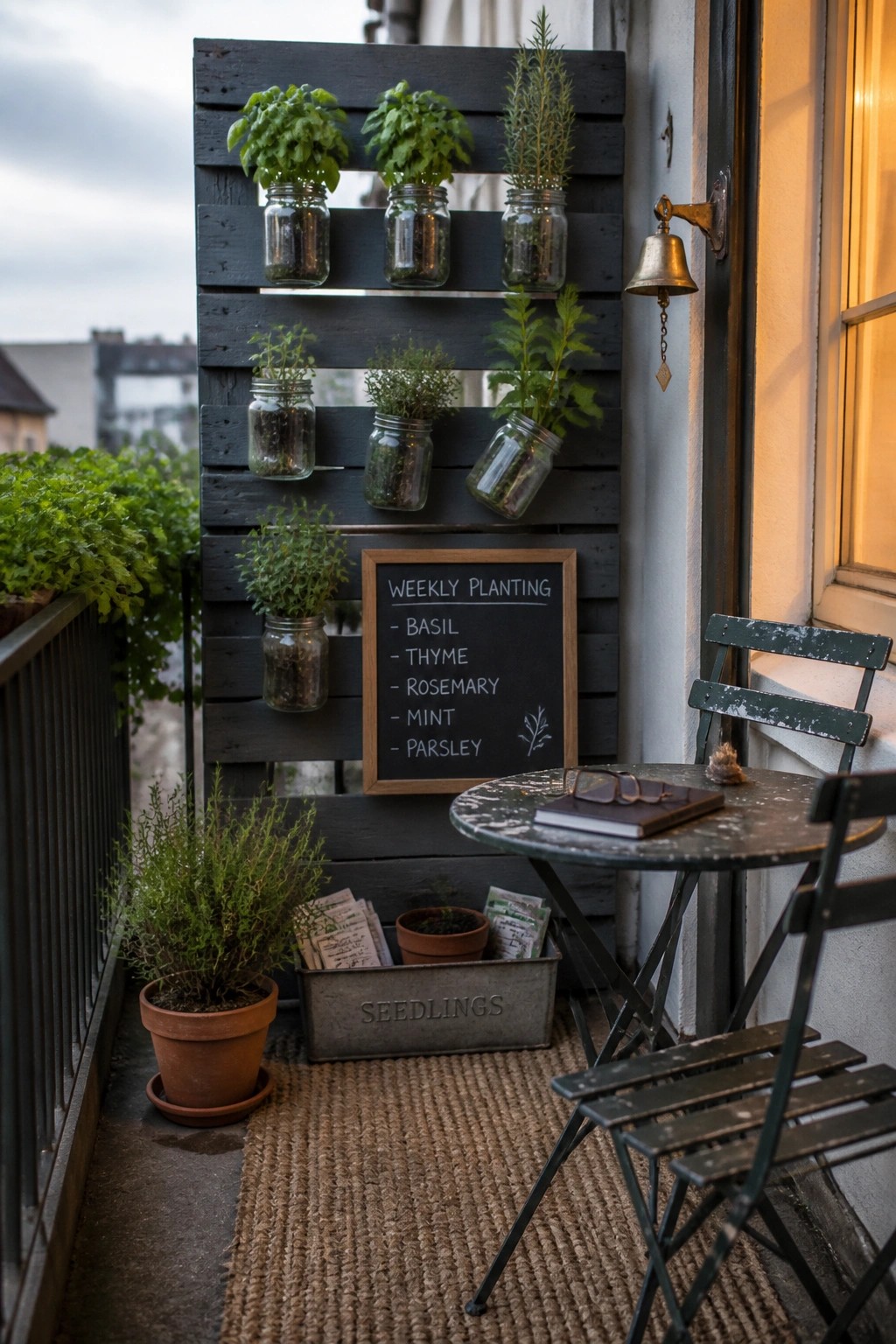
A mounted pallet gives you planting space without eating into the floor area. The jars sit right on the slats so herbs stay within reach while the rest of the balcony stays open for a table and chairs.
This approach suits narrow balconies or rentals where you cannot build permanent beds. Use a sturdy pallet, paint it to match the railing, and check that the jars drain well so water does not run down the wall.
Layered Lighting Extends Balcony Time Into The Evening
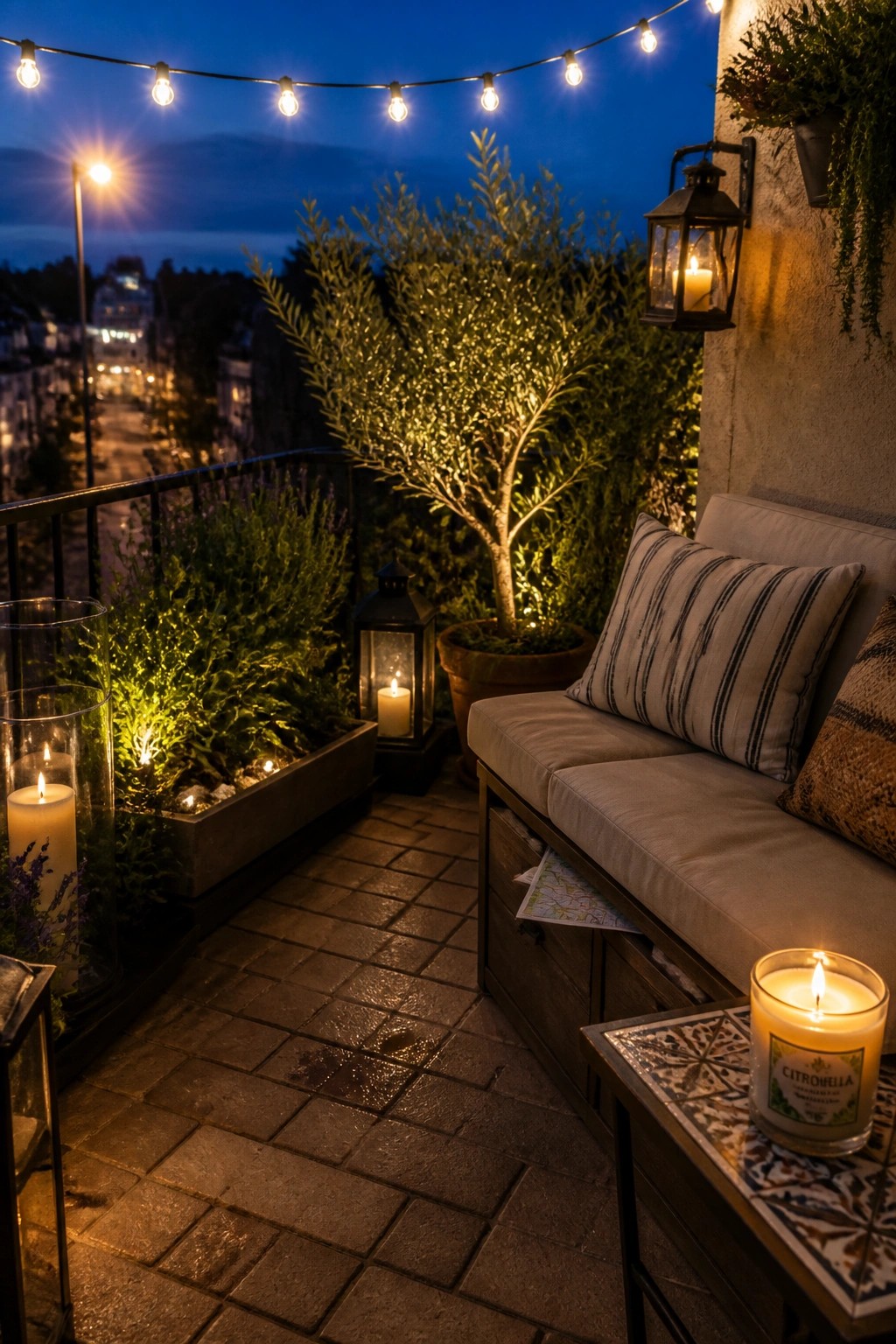
Many small balconies sit empty once it gets dark. A simple mix of string lights overhead and candles or lanterns at seating level gives enough soft glow to keep the space usable without feeling too bright or exposed.
This works best on urban balconies or compact patios where you want to sit outside in the evening. Place the overhead lights first, then add a few lower sources near chairs or tables so the light feels balanced rather than coming from one spot.
Railing Planters For Small Balconies
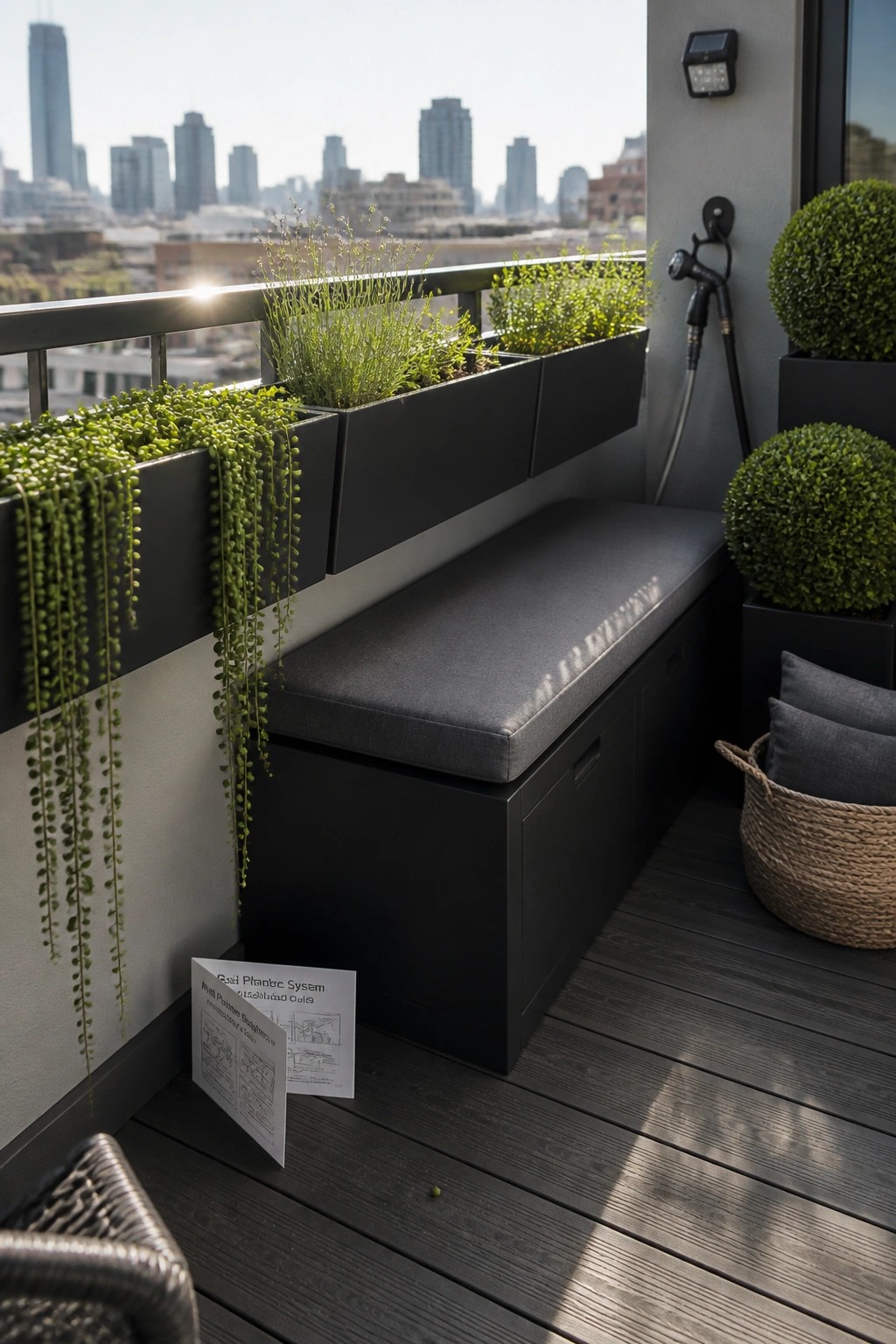
Mounting planters directly on the railing gives you room for plants without losing floor space for seating. The trailing vines and compact boxes stay out of the way while still bringing plenty of green into the area.
This works best on apartment balconies where every inch counts. Secure the planters well and check the weight once they are filled so nothing strains the rail over time.
Frequently Asked Questions
Q: How often do I need to water the plants in those small pots?
A: Check the soil each morning by poking it with your finger. If it feels dry an inch down give them a good soak. Morning watering helps avoid mildew on the leaves.
Q: What happens if strong winds hit my rail planters?
A: Tie them down with some wire or clips to the railing. Pick sturdy pots that sit low and wide. This stops them from blowing over during storms.
Q: Can I put heavy pots on the shelves without them tipping?
A: Place the biggest pots at the bottom of the shelf unit. Spread the weight evenly across the boards. Test the setup by giving it a gentle shake before adding more.
