

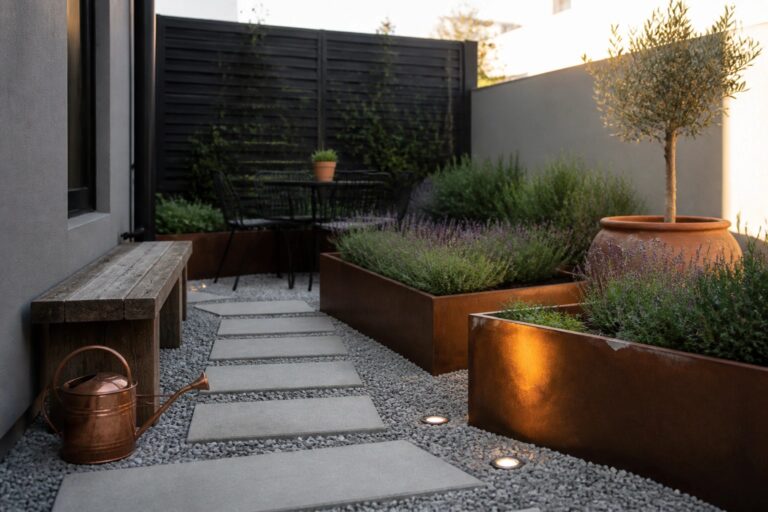
Small gardens often succeed when the hardscaping sets clear boundaries before any plants go in.
Gravel paths and raised beds give that framework right away and let minimal planting feel intentional rather than sparse.
I usually start by mapping out the gravel areas first because they affect drainage and foot traffic more than I expect.
Raised beds then slot in neatly to hold the few key plants without crowding the layout.
Over time the whole setup settles into something that stays low maintenance and still looks put together.
Gravel Paths With Stepping Stones
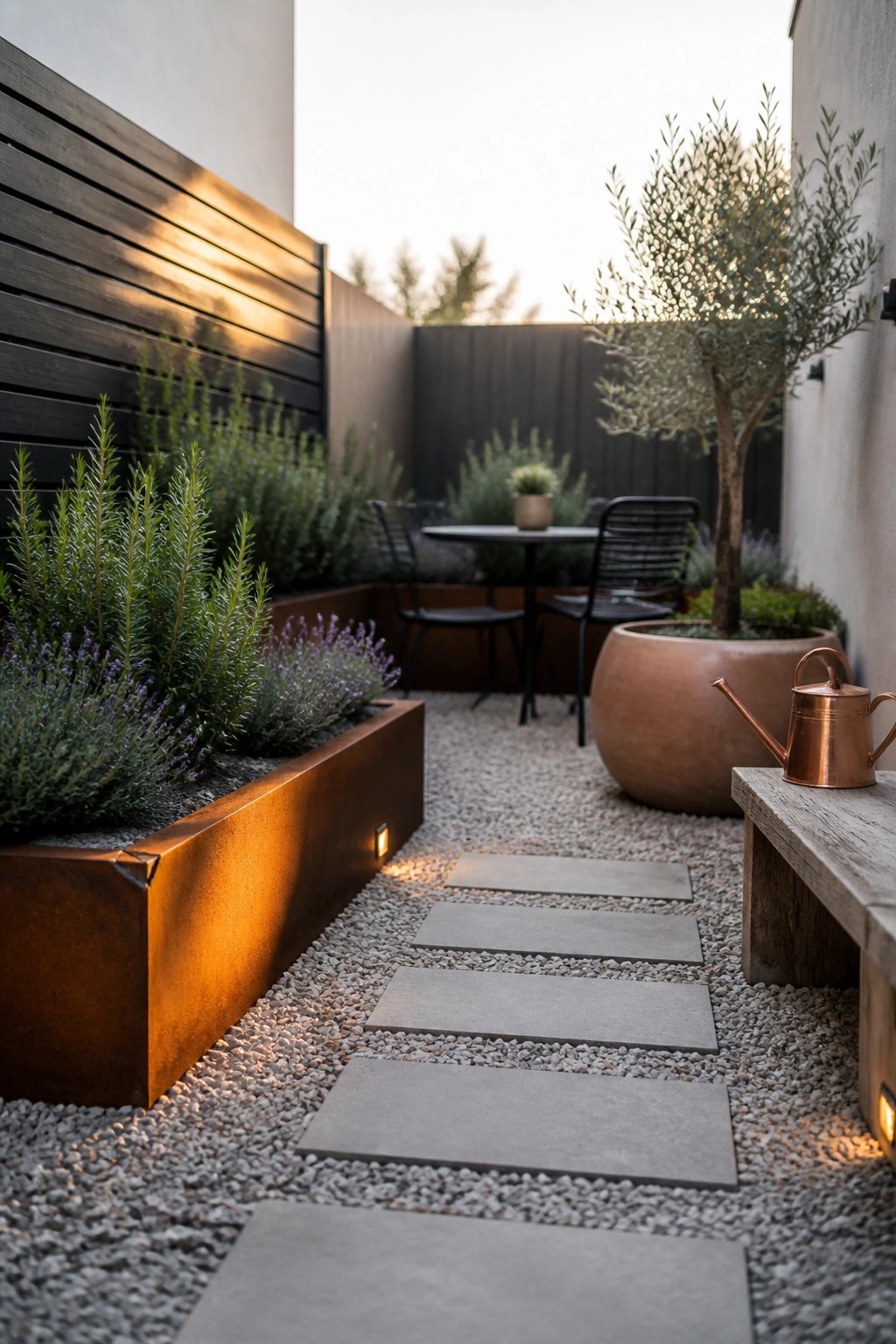
Gravel works well in small gardens because it drains quickly and gives the space a relaxed feel without needing much upkeep. Adding a few simple stepping stones keeps the path clear and prevents the gravel from getting tracked everywhere.
This approach suits narrow side gardens or backyards where you want easy movement but still need room for planting. Raised beds along the edges help contain the soil and keep the overall look tidy with just a few plants.
Raised Stone Beds With Gravel
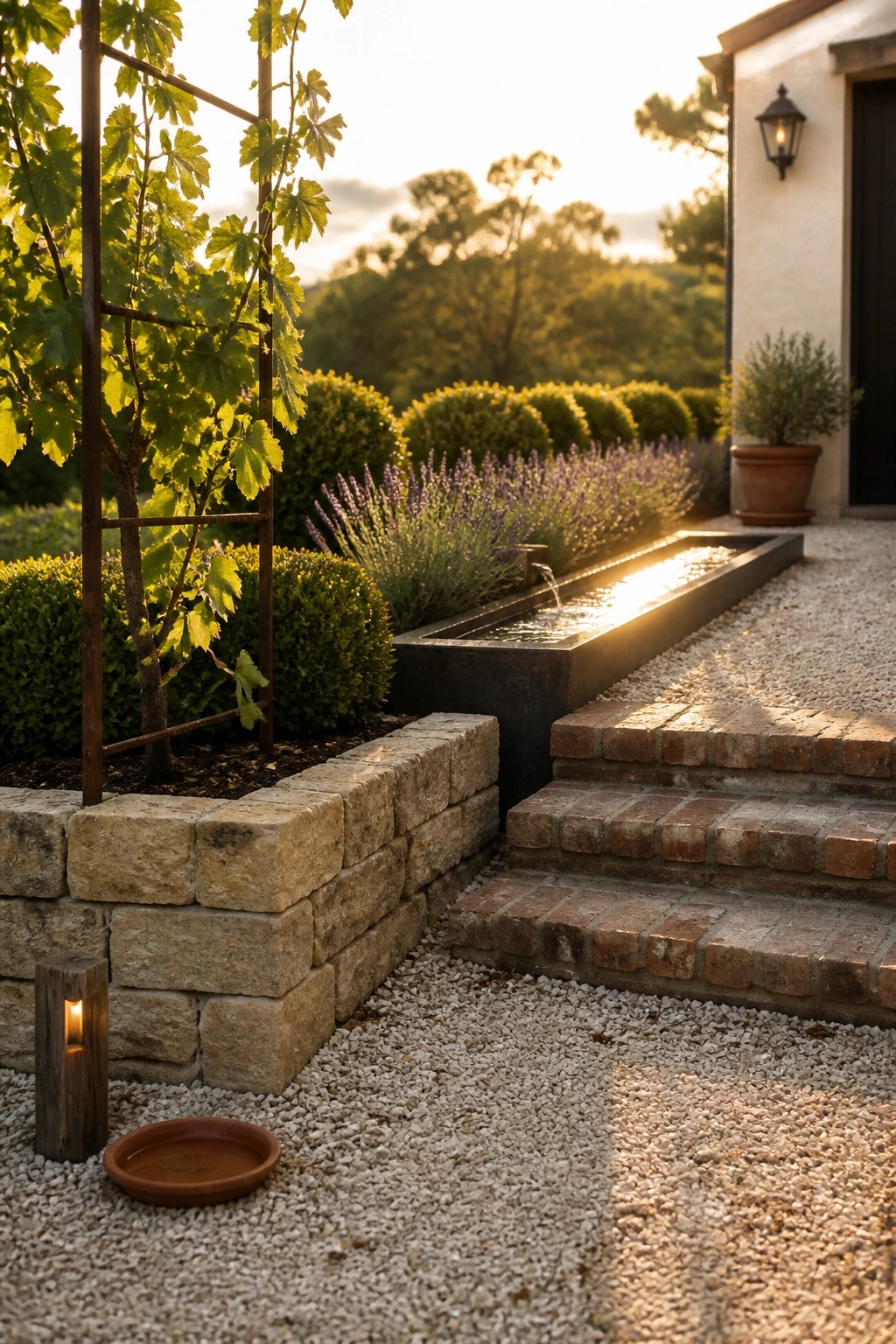
Raised stone beds bring simple structure to a small garden. They keep plants contained, make weeding easier, and give the space a tidy shape without needing lots of different plants or constant upkeep.
This approach works best in compact yards where you want clean lines and low maintenance. Stack the stones to match the height you need, then fill the beds and let gravel handle the ground around them.
Raised Beds With Gravel Paths
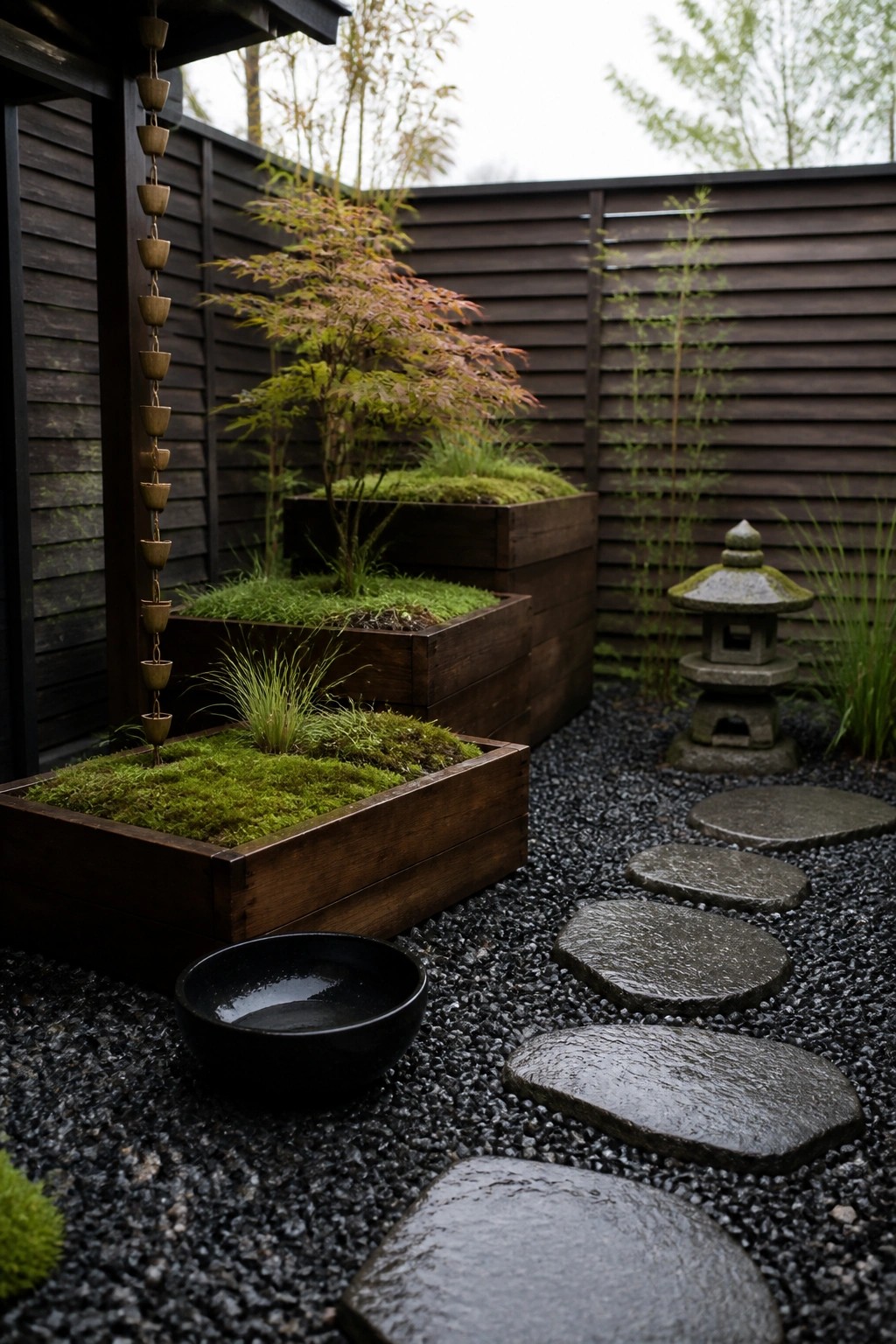
Raised beds give small gardens a clear structure that keeps planting simple and contained. When the ground around them is covered in gravel with a few stepping stones set in place, the whole space feels organized and easy to walk through without needing much upkeep.
This setup works best in compact yards or side gardens where drainage is important and lawn care is not wanted. It pairs well with fences or walls that already define the space, and it leaves room for just a few plants rather than filling every corner.
Long Raised Beds Along Walls
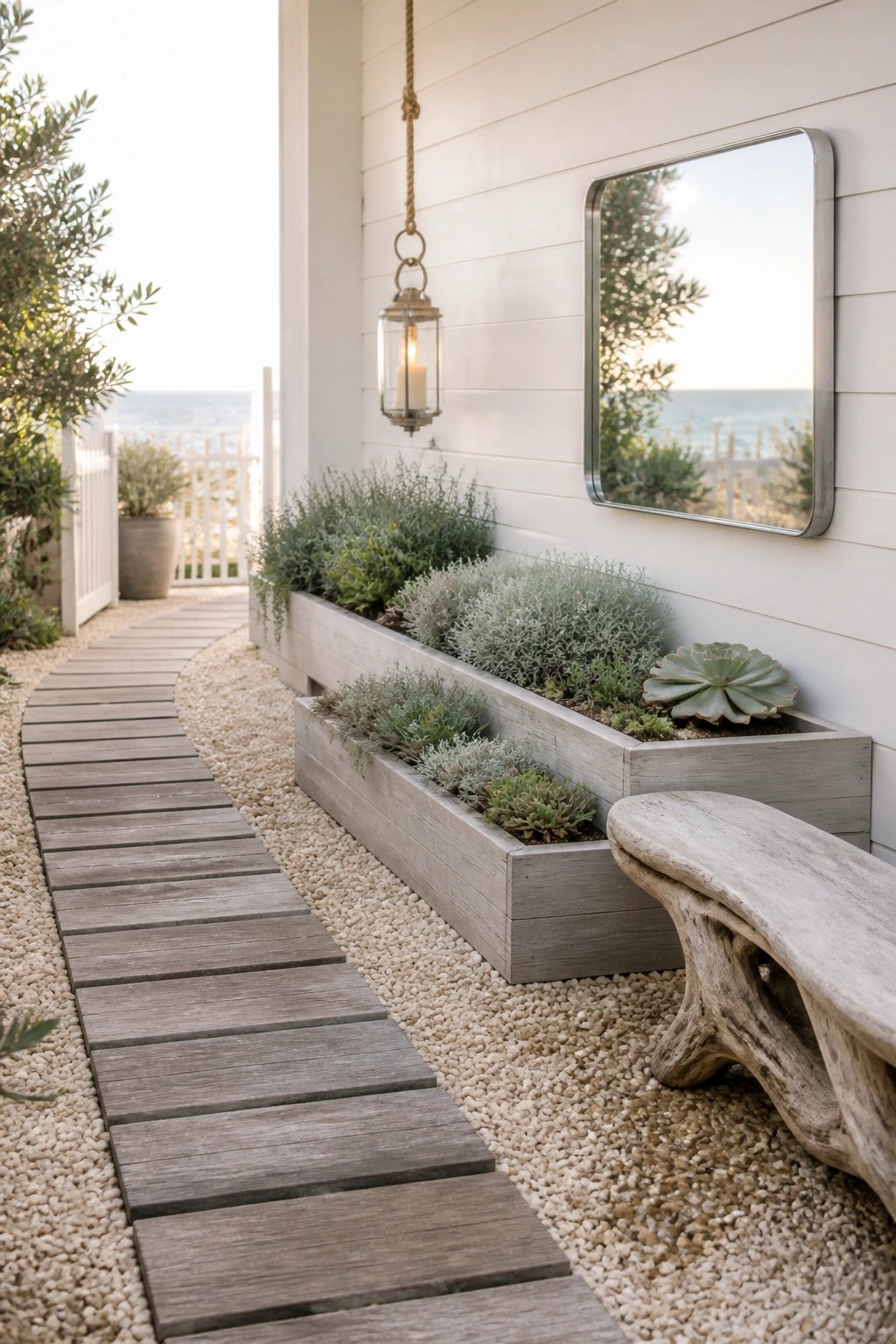
Long raised beds work well when you need planting in a narrow strip without losing ground space. They keep soil contained, improve drainage, and let you control what grows right up against the house or fence. Gravel around the beds cuts down on mud and weeds while keeping the whole area low maintenance.
This setup suits small yards, side passages, or coastal spots where water is limited. Use just a few plant types, keep the beds at a comfortable height for weeding, and let the timber and gravel carry most of the look.
Raised Concrete Beds Over Gravel
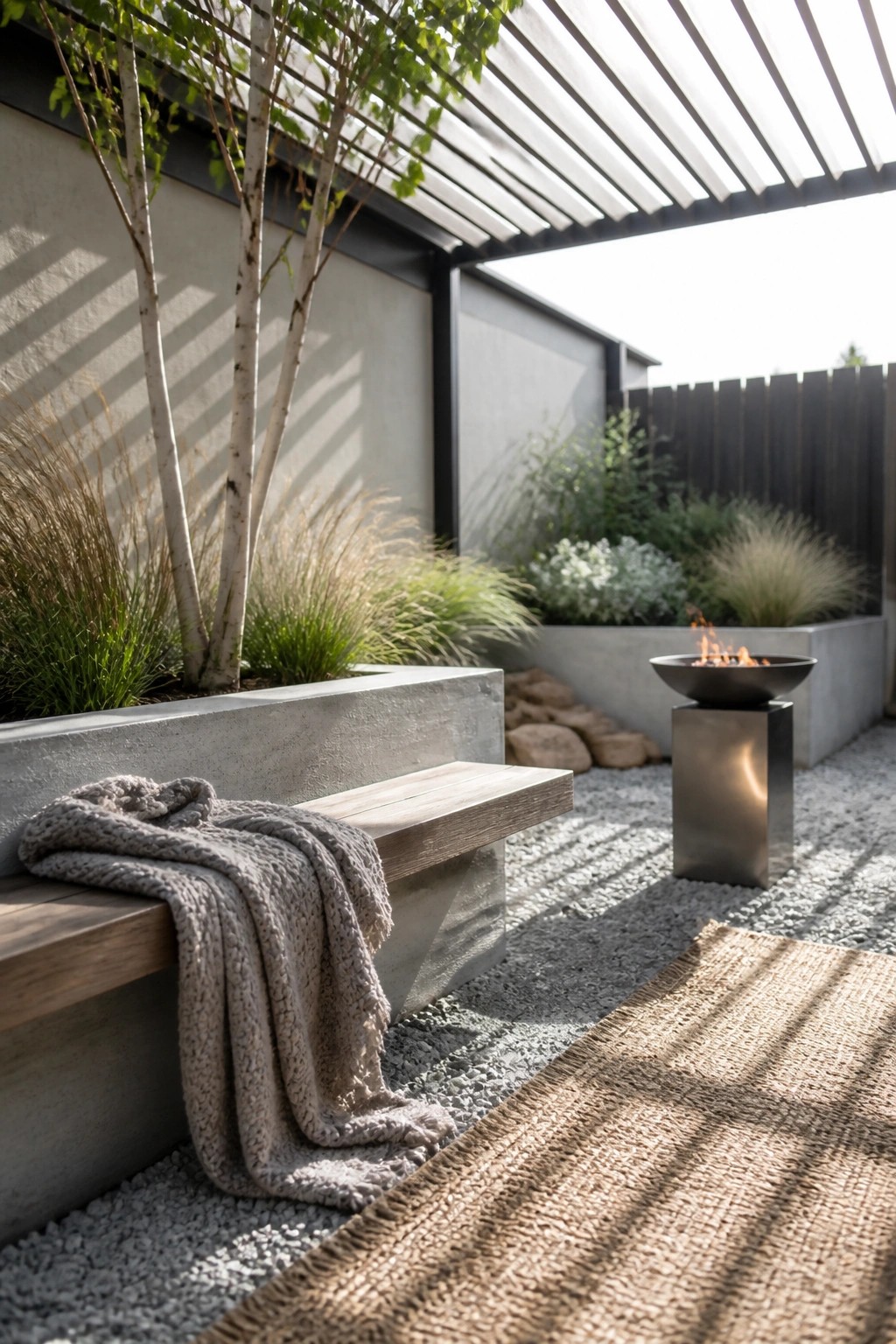
Raised concrete beds give a small garden clear structure without needing lots of plants. The solid edges keep the gravel from looking messy and let a few trees or grasses stand out on their own.
This approach works best in modern yards where space is tight and you want low maintenance. Size the beds to leave room for a simple bench or path, and stick to just a handful of plants so the gravel stays the main surface.
Raised Brick Beds For Gravel Gardens
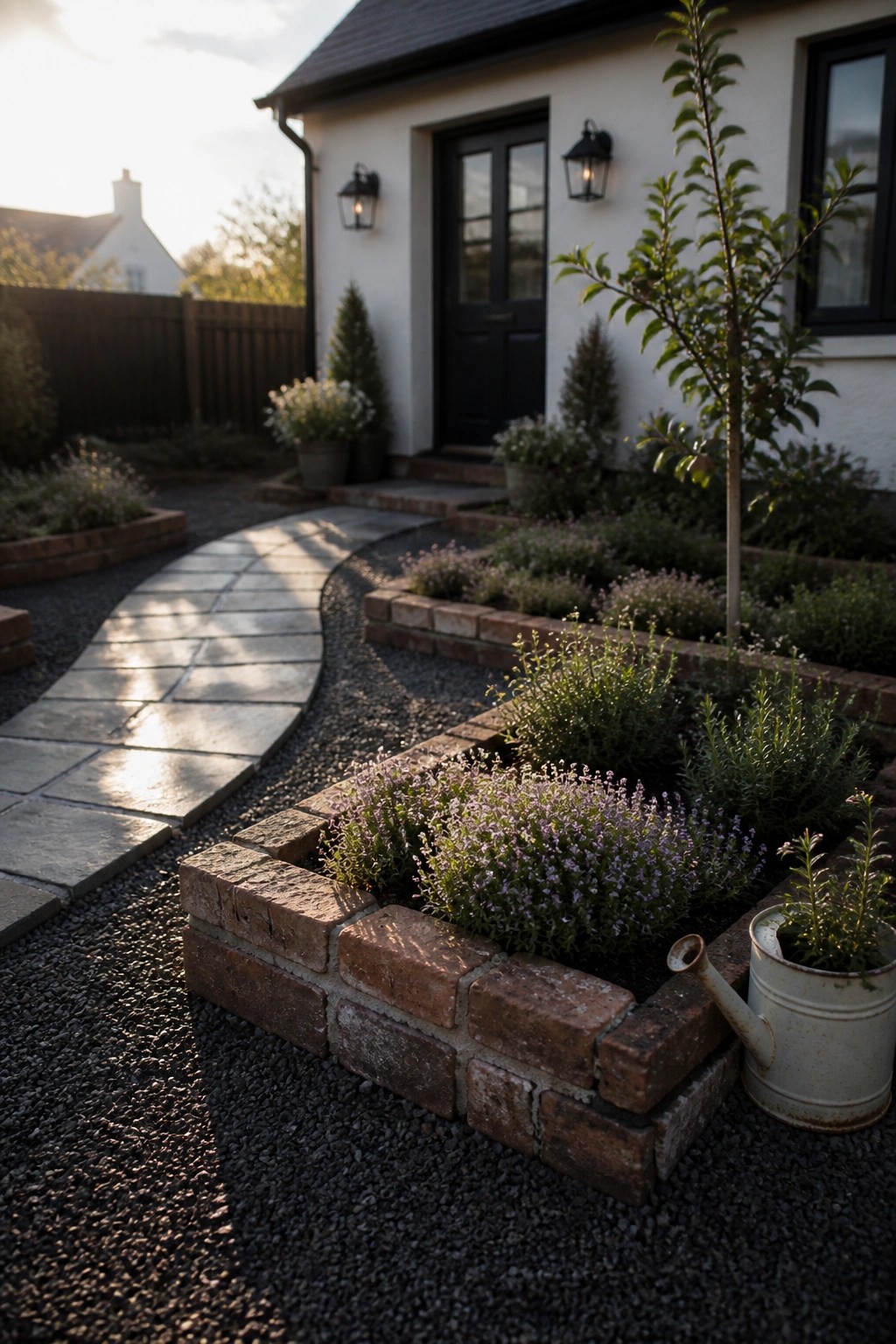
Raised brick beds give a small garden clear shape and keep planting under control. They turn gravel from just a filler into a real design choice that feels neat and simple to look after.
This approach works best in compact yards where you want low maintenance. Build the beds low with reclaimed bricks, fill them with a few shrubs or herbs, and let the gravel handle the open areas around them.
Raised Beds Over Gravel
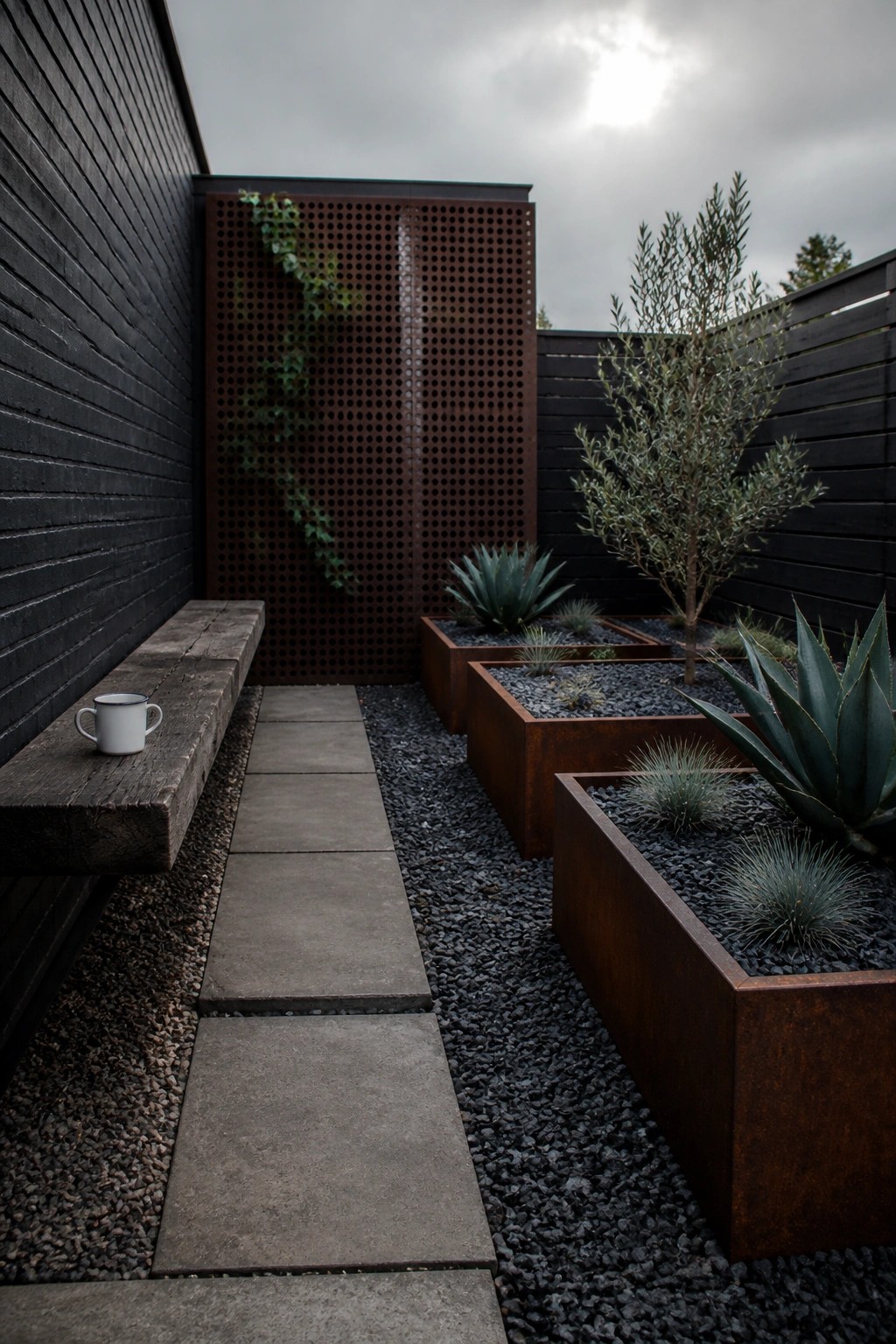
Raised metal beds work especially well when the rest of the garden is kept simple with gravel. The metal gives a solid edge that holds the soil in place and creates a clear planting zone without needing extra borders or edging.
This setup suits narrow side yards or small back gardens where you want low maintenance and a tidy look. Keep the planting minimal, use one or two larger plants per bed, and let the gravel fill the open ground so the whole space stays open and easy to walk through.
Gravel Paths With Stepping Stones
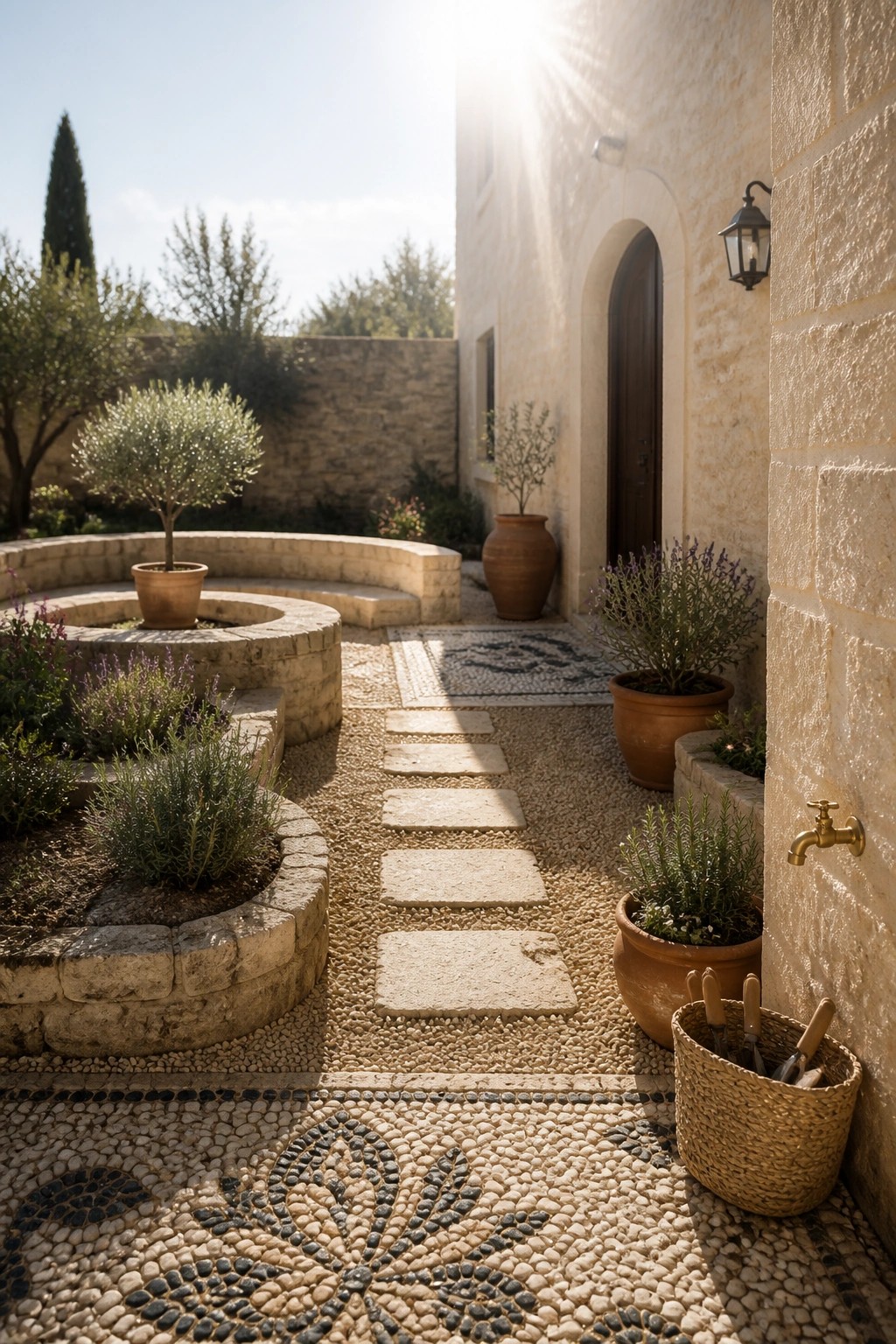
Gravel paths with stepping stones give a small garden clear direction without taking up much space. The loose surface feels softer than solid paving and lets water drain easily, which helps keep the area looking tidy even after rain.
This layout works best in compact yards where you want a simple walking route that still leaves room for planting beds on the sides. Choose stones that sit level and space them for a natural stride. Keep the surrounding beds low and contained so the path stays the main feature.
Raised Beds And Gravel Paths Simplify Small Gardens

Raised beds give a small garden clear structure without needing many plants to fill the space. Gravel around them keeps the ground covered and low maintenance while still allowing the beds to stand out as the main feature.
This setup works best in narrow side yards or compact back gardens where you want defined planting areas but not a lot of upkeep. Use simple wood or painted beds and keep the planting sparse so the gravel and paths do most of the work.
Gravel With Raised Planters
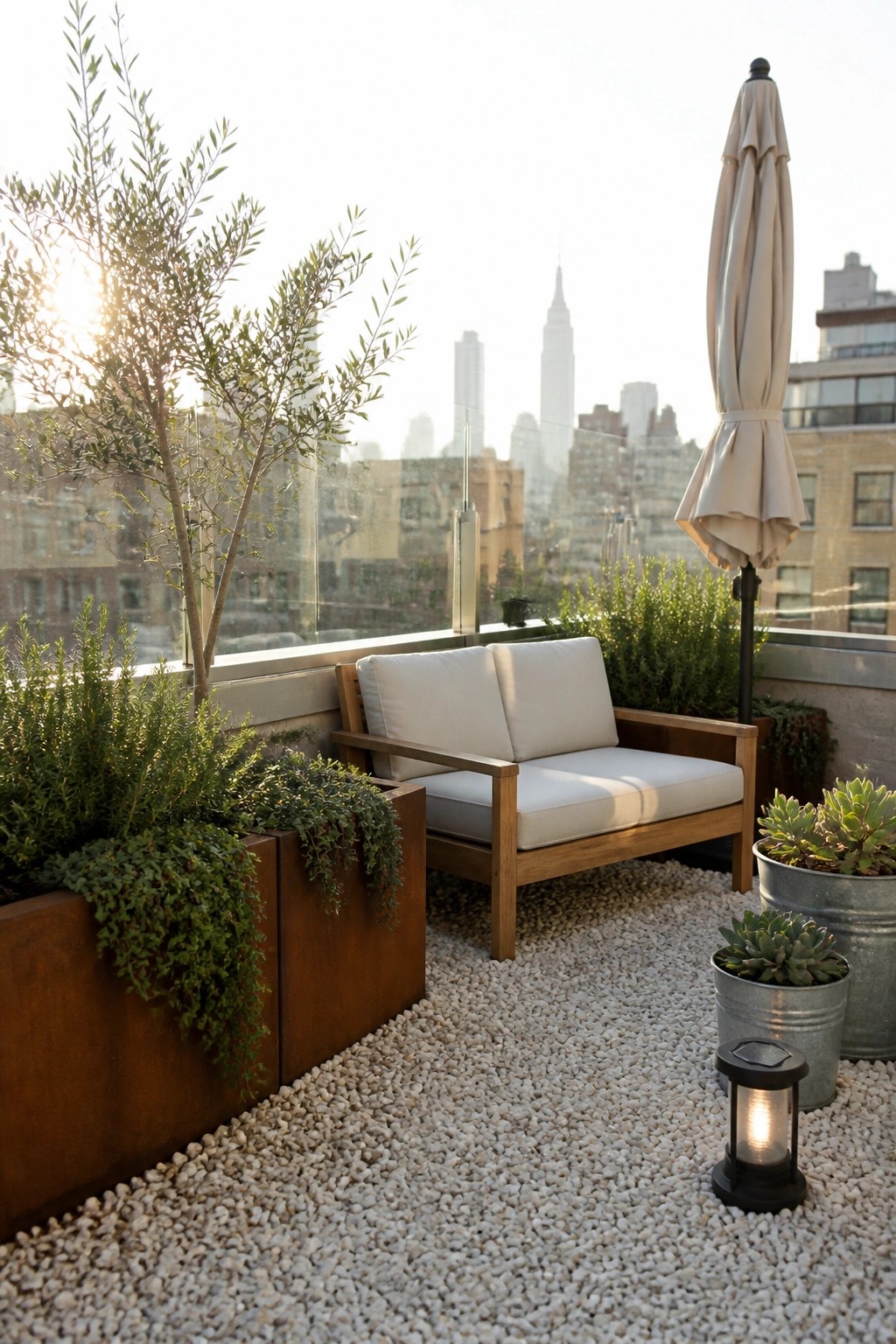
Gravel makes a practical floor for small outdoor spaces because it drains fast and stays low maintenance. Raised planters keep the planting simple and contained so the rest of the area stays open for seating.
This works best on rooftops or balconies where weight and drainage matter. Use a few metal or wood boxes, fill them with easy plants, and leave the gravel mostly bare.
Brick Paths In Gravel Gardens
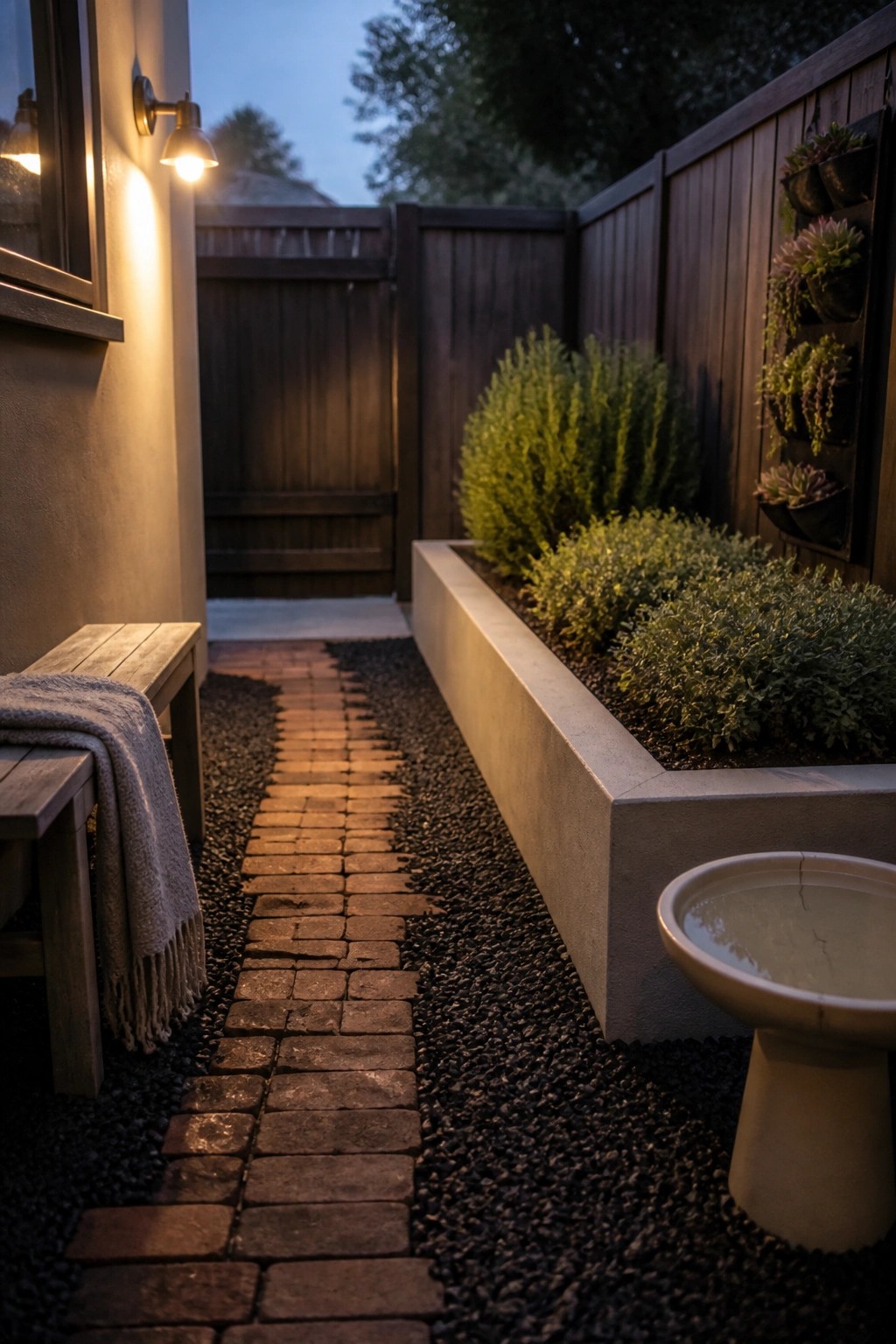
A brick path running through gravel gives a small garden a clear route without making the space feel crowded. The contrast between the solid pavers and loose gravel keeps things simple while stopping the gravel from shifting underfoot.
This layout suits narrow side yards or tight back gardens where you want low maintenance. Keep the planting minimal in a raised bed along one side so the path stays the main feature and the whole area stays easy to care for.
Raised Beds Along A Gravel Path
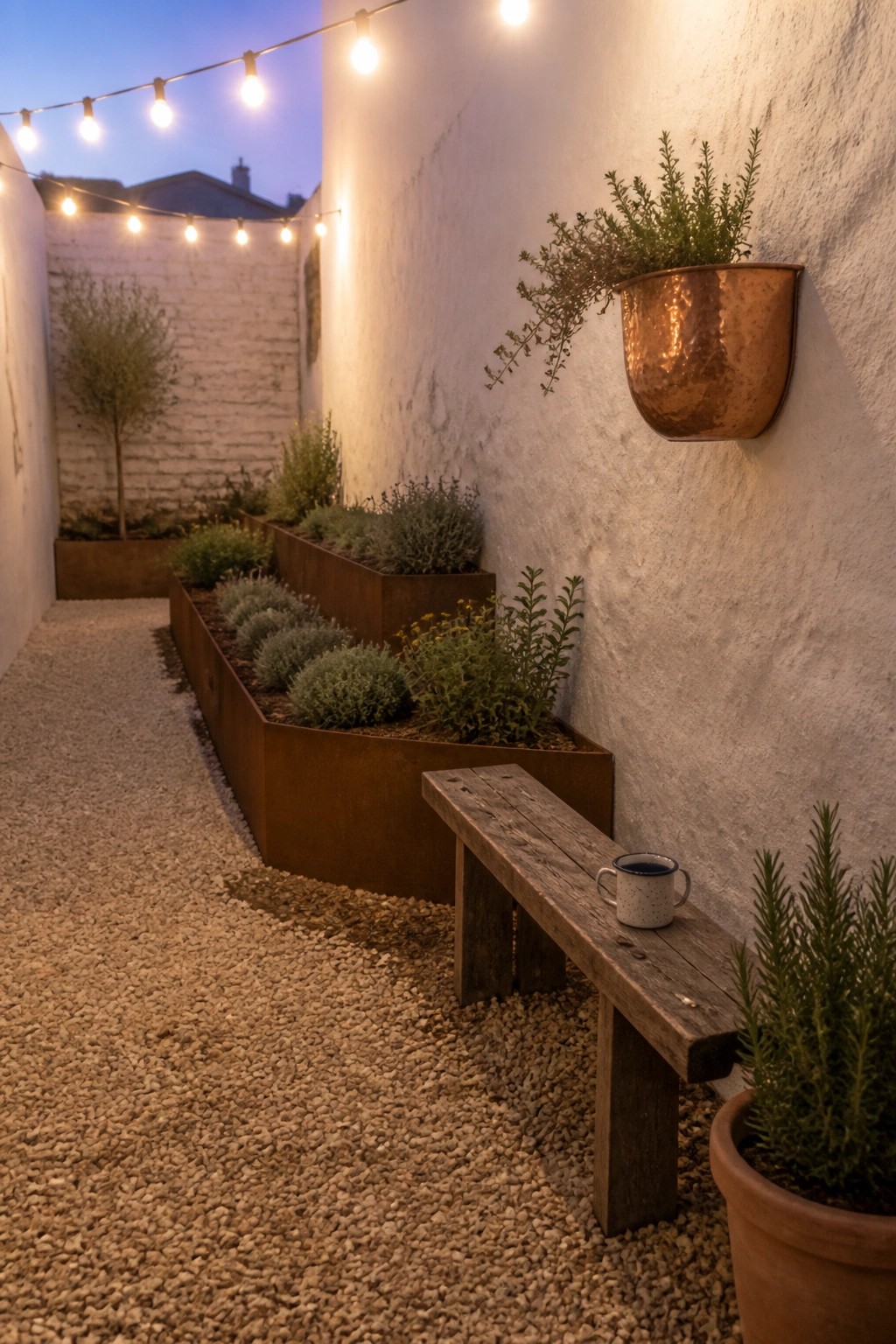
Raised beds give a small garden clear lines and make it easier to control what grows where. Placing them in a row beside a gravel path keeps the layout simple and leaves room to walk without stepping on plants.
This setup suits narrow side yards or urban gardens where you want low planting and minimal upkeep. Metal beds last well in most climates and the gravel helps with drainage while cutting down on weeds.
Stepping Stones Set In Gravel
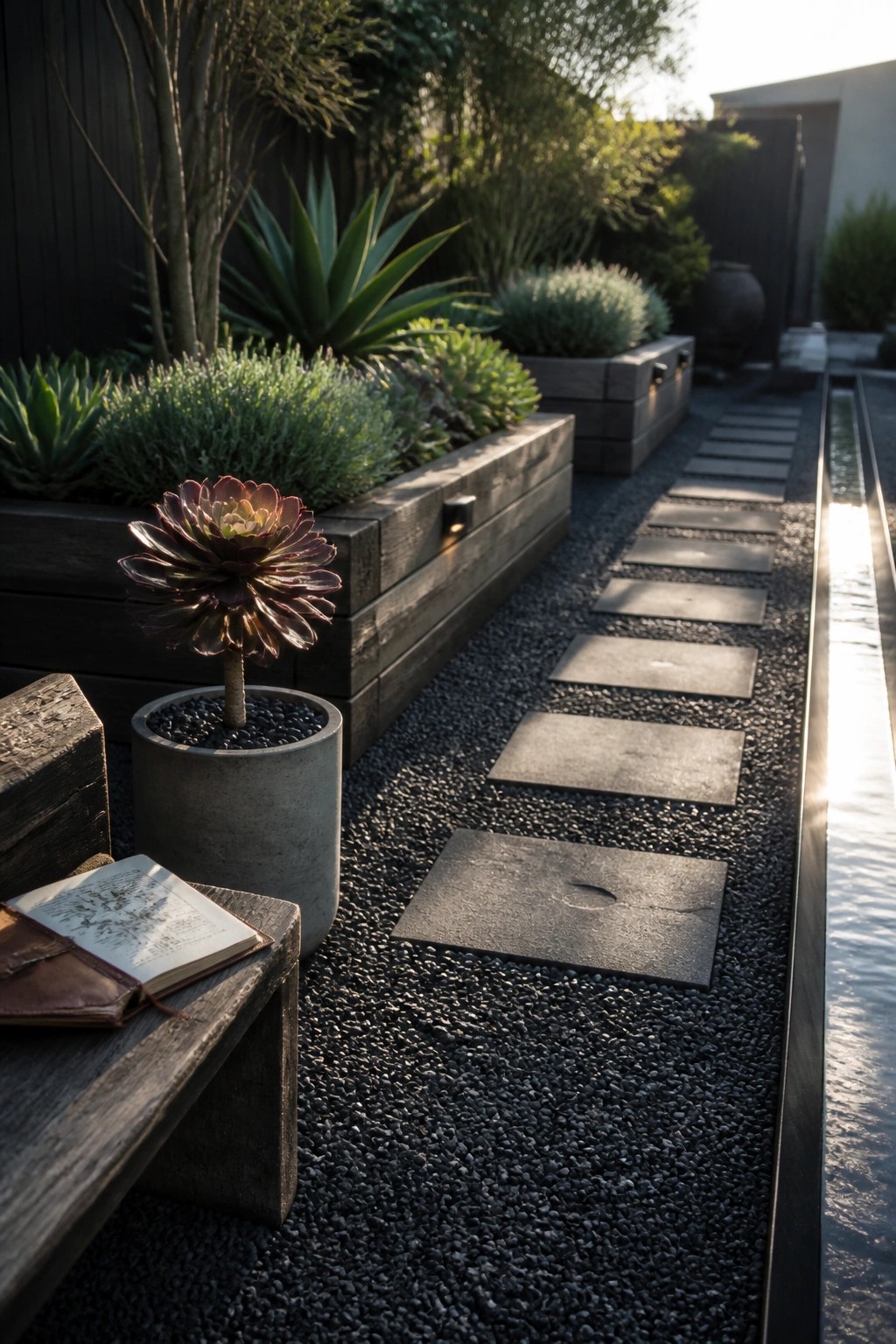
One simple way to handle a narrow garden is to lay large stepping stones right into a gravel base. This creates a clear path without needing much in the way of paving or constant weeding.
It suits small side yards or tight spaces where you want structure but still need room for a few raised beds along the edges. Just make sure the gravel layer is thick enough to stay in place and drain well after rain.
Raised Stone Beds With Minimal Planting
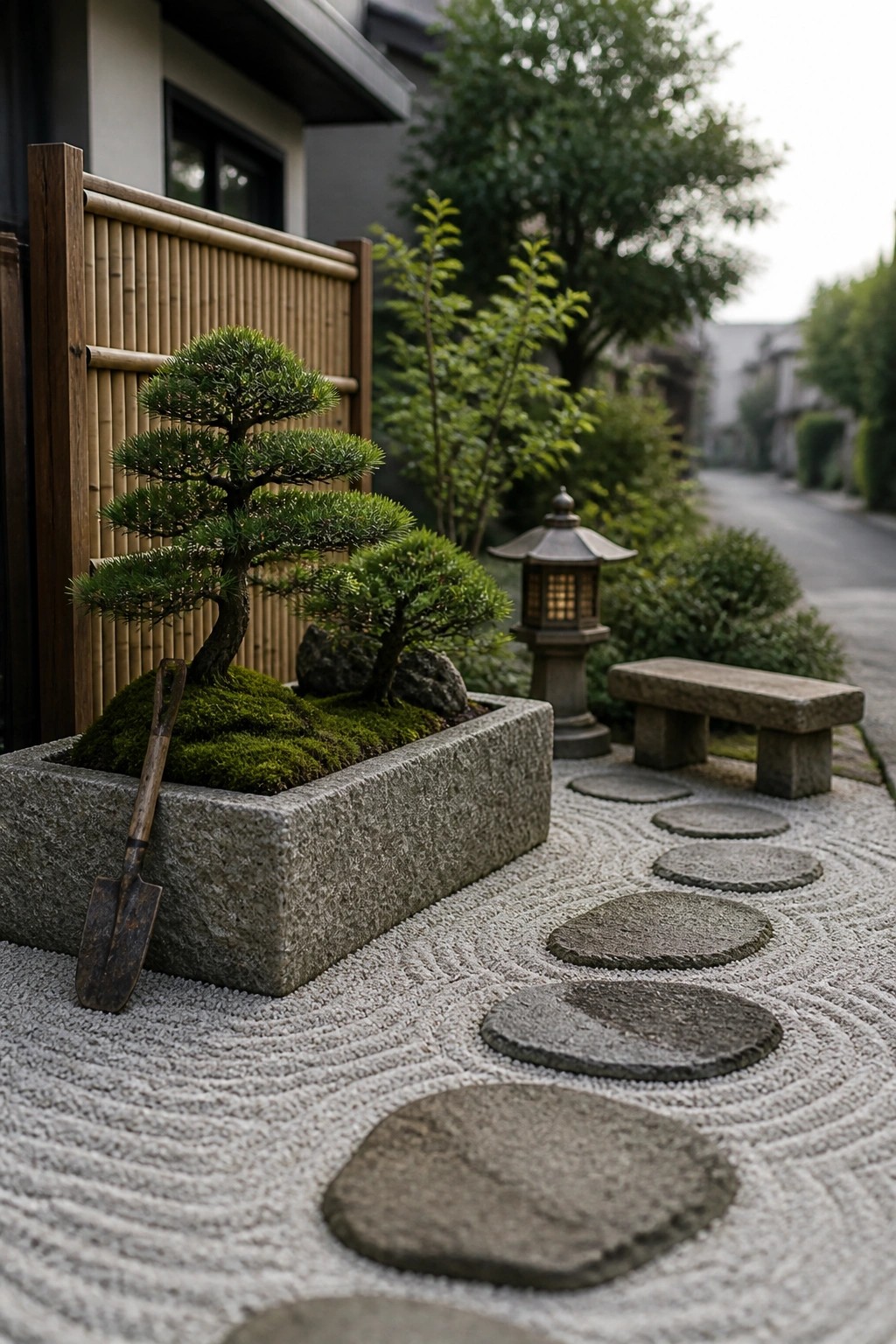
A raised stone bed keeps planting simple and contained in a small garden. It gives structure without needing many plants, so the gravel and stone carry the look while a few trees or shrubs stay the main focus.
This works best along a path or near a house wall where space is limited. Use one or two shaped plants per bed, add a light layer of moss if you like, and keep the surrounding gravel raked so the whole area stays low maintenance.
Raised Beds Over Gravel
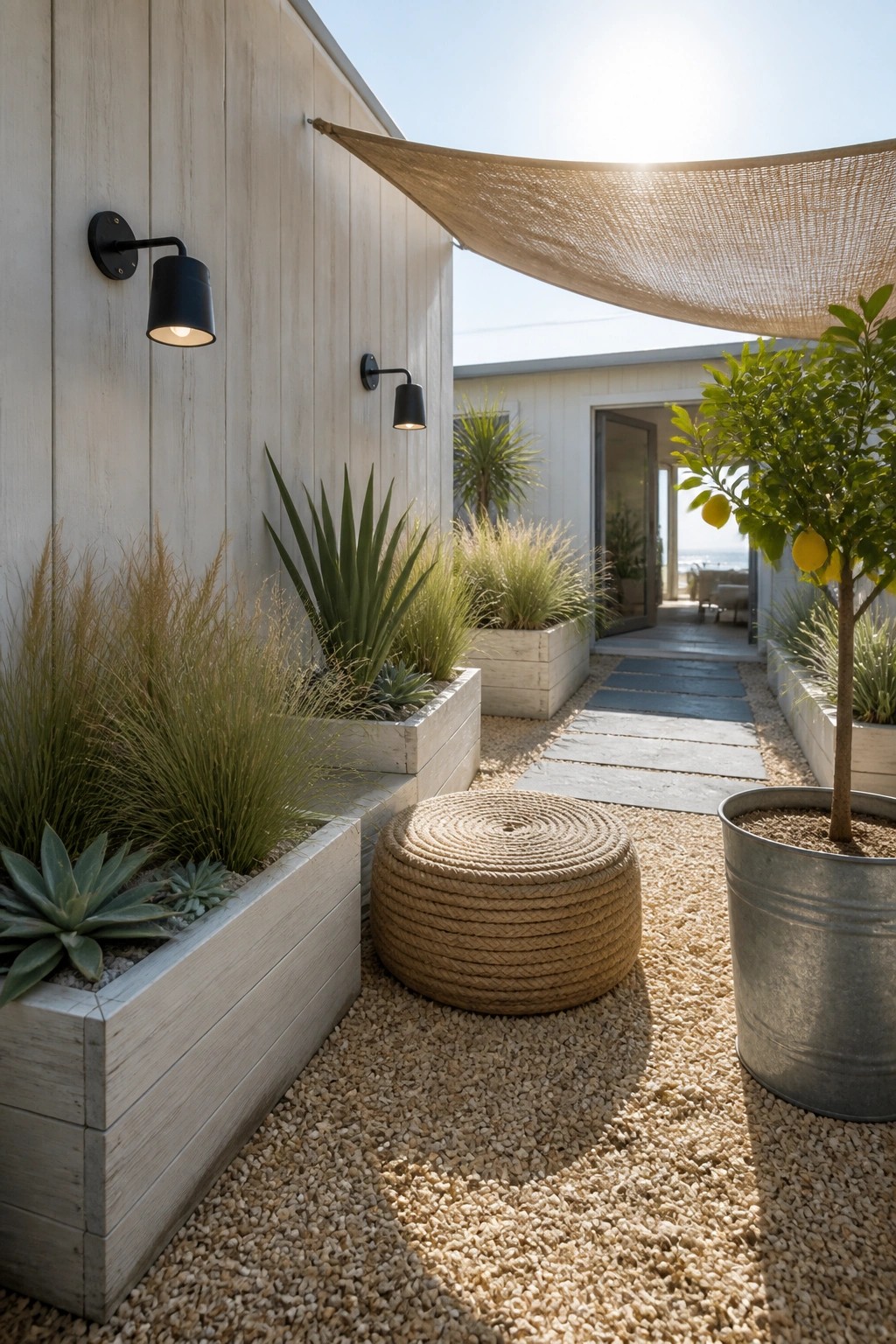
Raised beds work well over gravel because they create clear planting zones while the gravel takes care of drainage and keeps weeds down. This setup feels simple and modern, and it works especially well in small gardens where you do not want a lot of bare soil or complicated borders.
It suits homes with limited outdoor space, side yards, or areas near the house where you want low upkeep. Keep the planting minimal inside the beds so the gravel remains the main surface and the whole look stays open and easy to maintain.
Gravel Paths With Inset Pavers
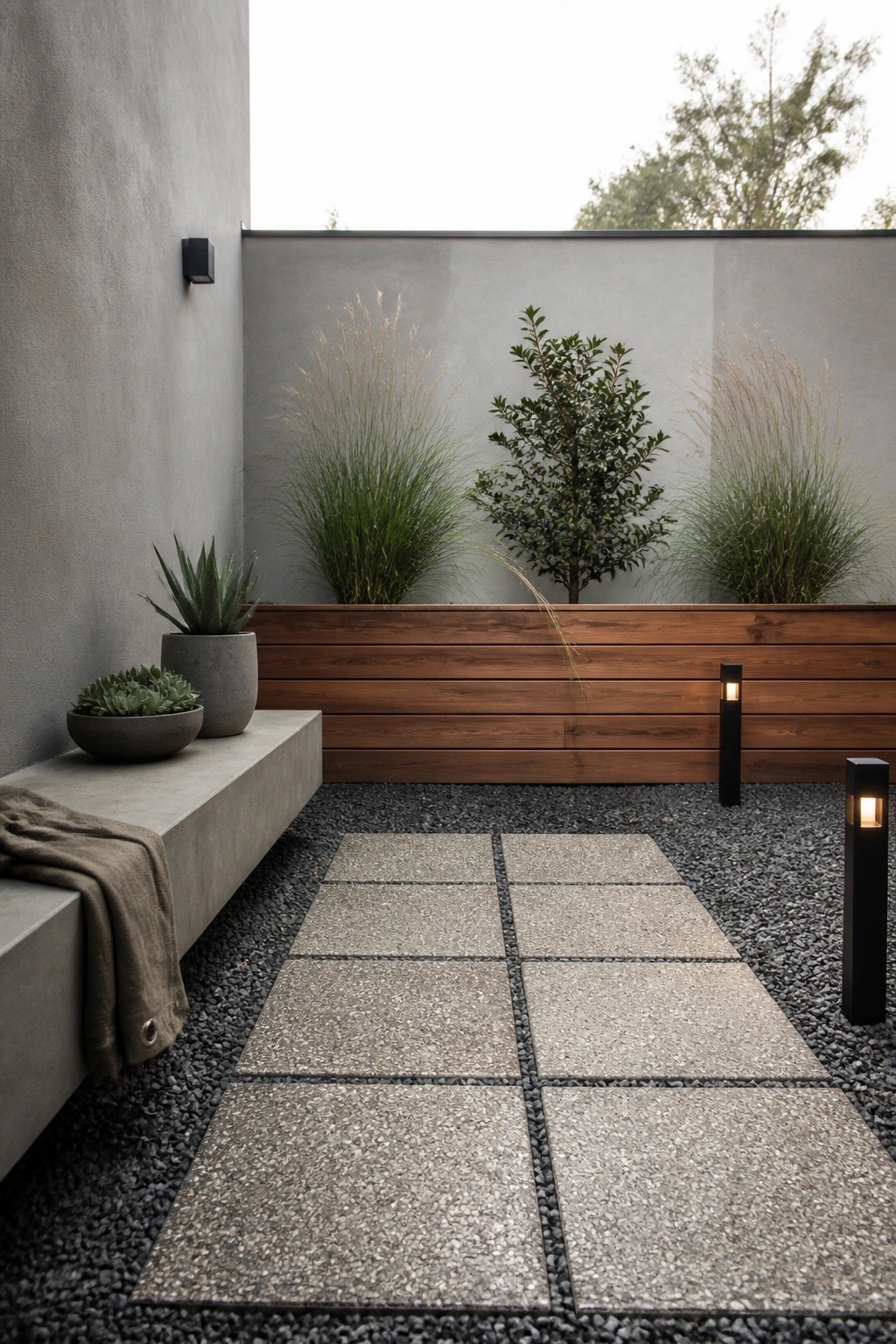
Gravel with large square pavers set into it creates a clean, low-maintenance path that works especially well in small gardens. The gravel fills the gaps, handles drainage, and keeps the surface from feeling too hard or formal while the pavers give you a stable place to walk.
This approach suits compact yards that already use raised beds and minimal planting. Keep the pavers large and evenly spaced so the gravel stays contained, and match the gravel color to your edging or bed materials for a simple, cohesive look.
Gravel Paths With Raised Beds
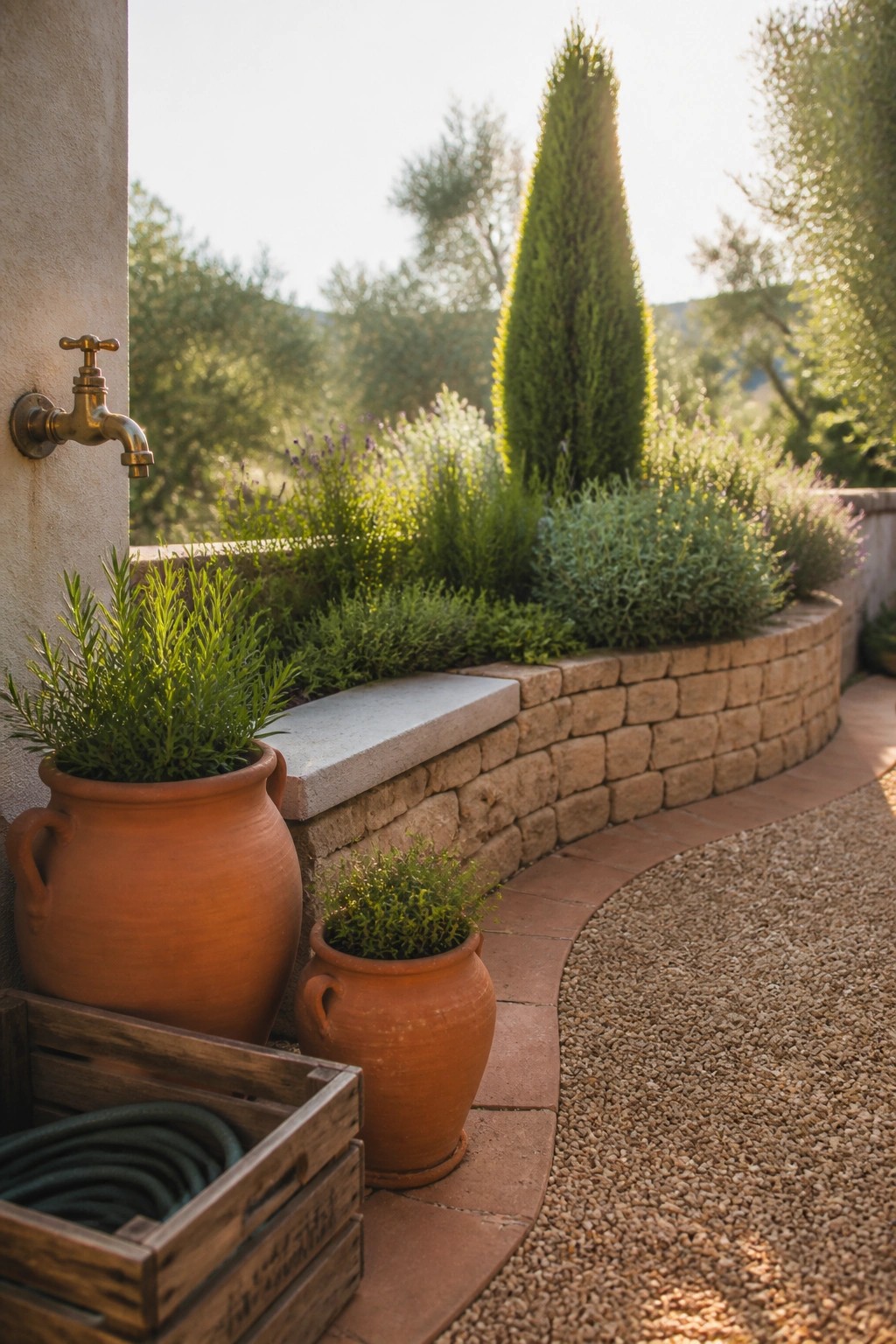
Gravel works well in small gardens because it drains quickly and needs very little upkeep. Pairing it with a low raised bed made of stone gives the space clear edges without adding much height or cost. The curve in the bed here helps the path feel natural rather than boxed in.
This setup suits homes with limited planting space or dry climates where grass is hard to keep. Keep the planting minimal inside the bed and use a few large pots nearby if you want extra greenery without filling every inch. Just make sure the gravel layer sits on a weed barrier so it stays clean over time.
Gravel Paths With Stepping Stones Simplify Narrow Gardens
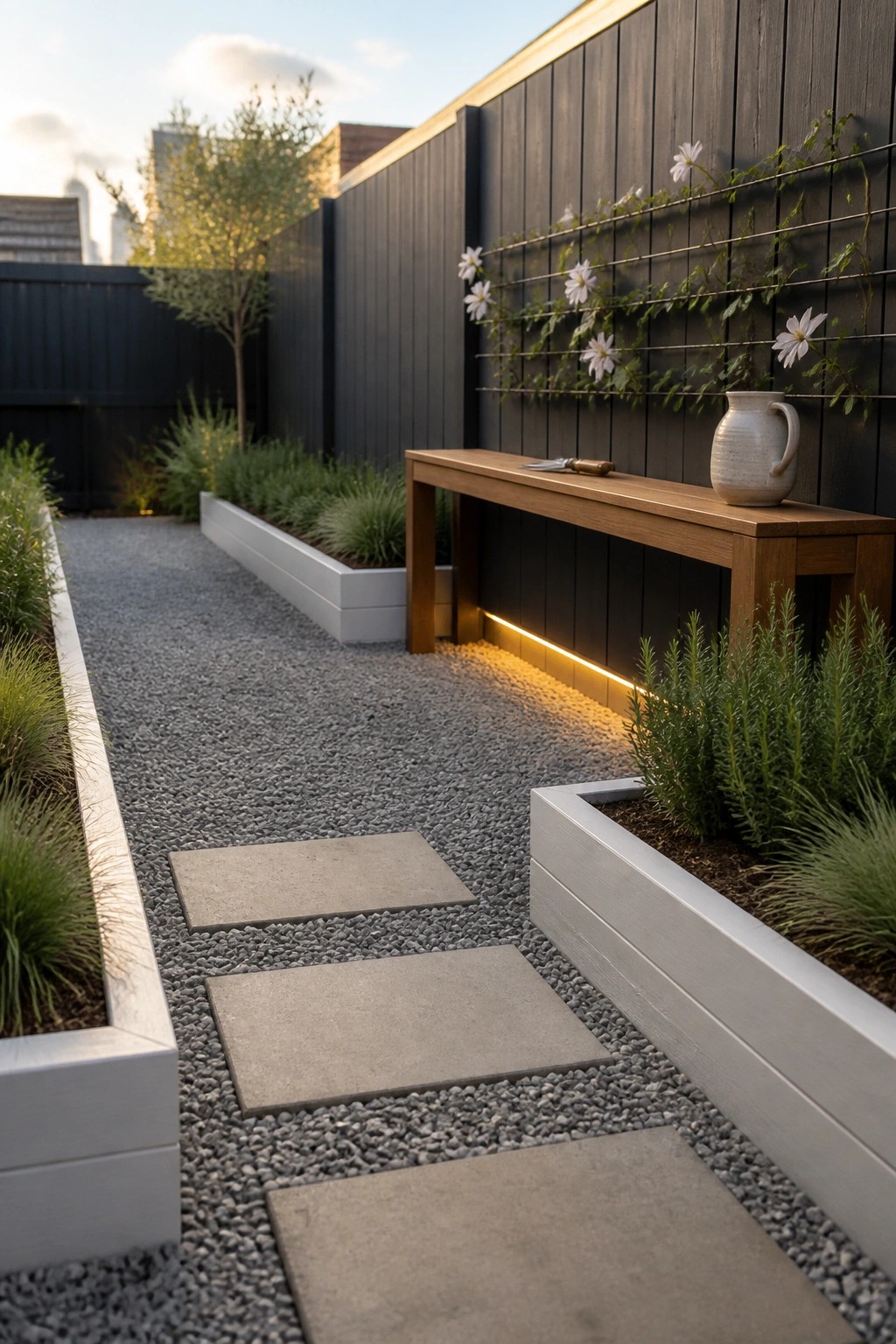
Gravel works well as a base in small gardens because it drains fast and needs little upkeep. Adding a few large stepping stones gives you a clear way to walk through without turning the whole space into a solid path. This setup keeps the area feeling open while still guiding movement from one end to the other.
It suits side yards or slim back gardens where you want some planting but not a lot of lawn to mow. Keep the beds low and simple so the gravel stays the main surface. Make sure the stones sit level and are spaced for comfortable steps.
Gravel With Raised Beds For Low Upkeep
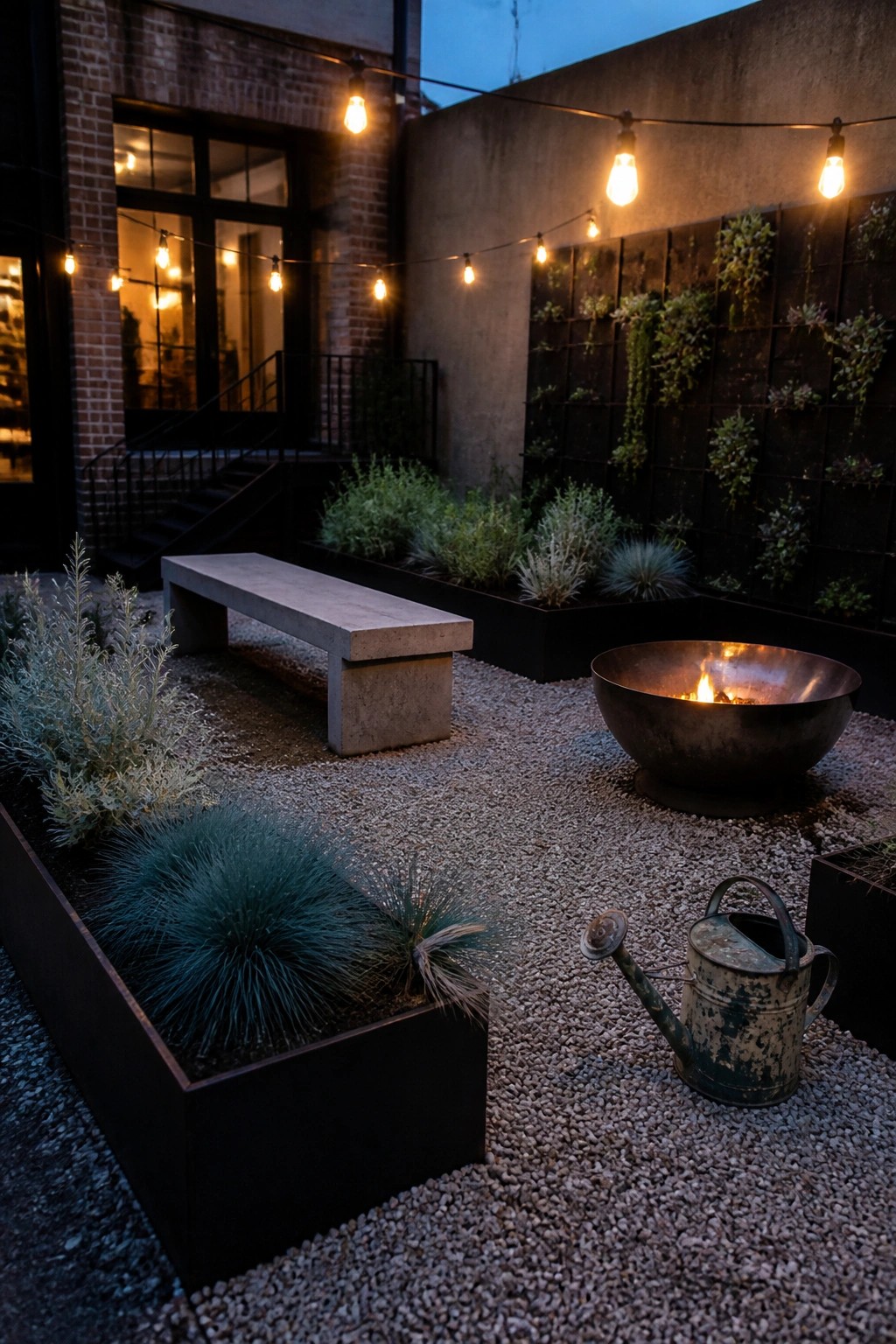
Gravel works well as the main surface in a small garden because it drains fast and needs almost no work once it is down. Pairing it with raised beds gives the planting some structure without filling the whole space with soil or constant weeding.
This setup suits homes with limited outdoor room and people who want a tidy look without much weekend effort. Keep the beds narrow so you can reach every plant from the gravel, and choose a few tough varieties rather than packing in lots of different ones.
Raised Beds Give Gravel Gardens Clear Structure
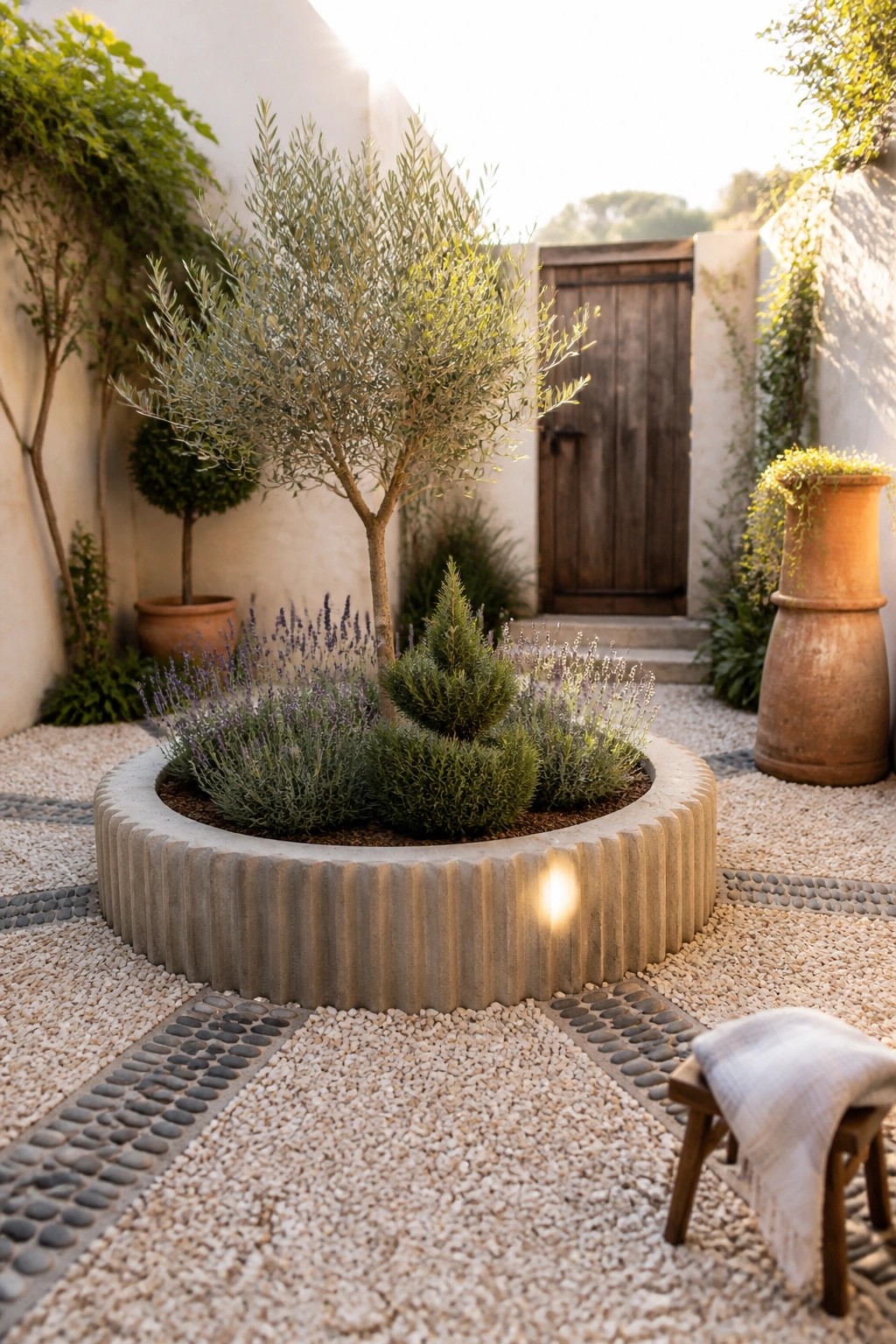
A raised bed set into gravel creates a simple focal point that organizes the whole space. It lets you use just a few plants while still making the garden feel intentional and easy to care for.
This approach works best in small yards or side gardens where you want low maintenance. Keep the planting minimal, choose a bed material that matches your walls or paths, and let the gravel handle the rest of the ground.
Raised Beds With Gravel For Simple Structure
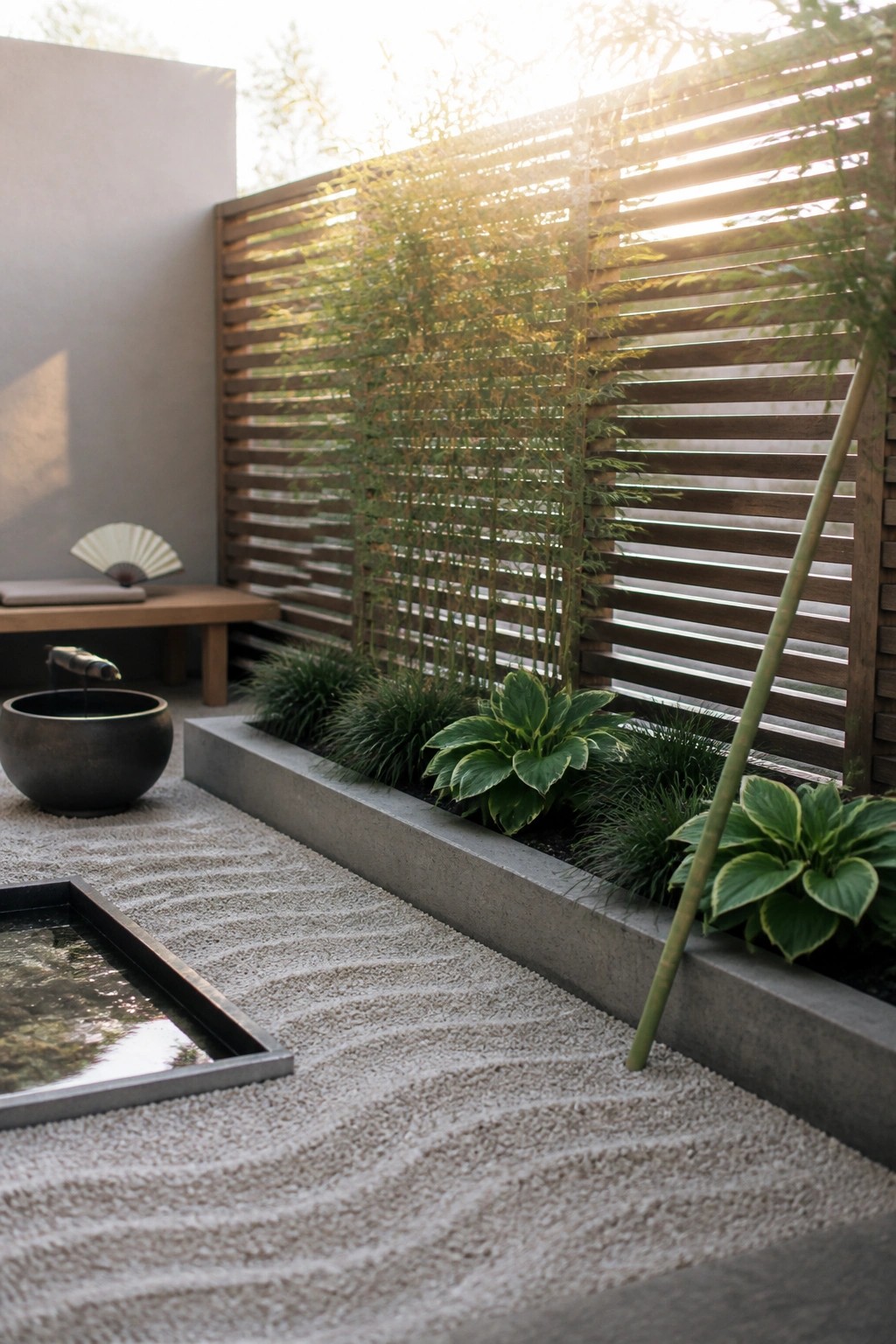
Raised beds give a small garden a clear shape without adding too much planting. The concrete edges keep soil contained and separate from the gravel, so the space stays neat even when the rest of the ground is left plain.
This approach works best in modern yards where you want low upkeep. Place the beds along a fence or wall, fill them with just a few plants, and let the raked gravel handle the rest of the area. Keep the bed height modest so the whole garden does not feel boxed in.
Raised Beds Along Gravel Paths
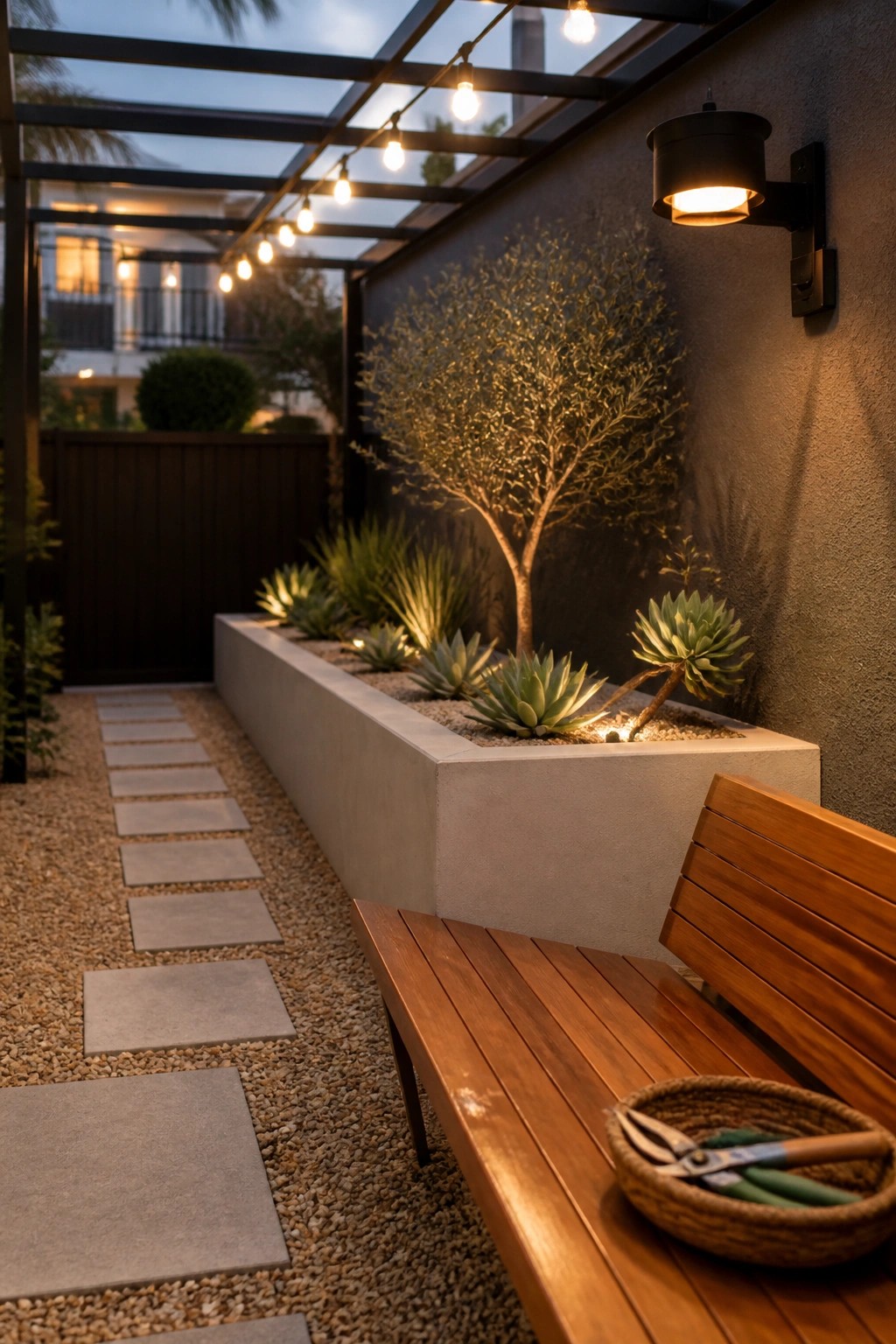
A long, narrow raised bed gives a small garden clear structure without crowding it with plants. The concrete edge keeps everything tidy and makes the gravel path feel more intentional.
This works best in side yards or tight back gardens where space is limited. Keep the planting minimal with just a few succulents or a small tree, then let the gravel and simple stepping stones do the rest of the work.
Frequently Asked Questions
Q: What size gravel holds up best for walking on every day? A: Go for crushed stone in the half inch range. It locks together better than pea gravel and stays flatter underfoot. Top it up once a year where traffic wears it down.
Q: Should I line the raised beds with anything special for drainage? A: Add a layer of small stones at the bottom before the soil. This keeps roots from sitting in water even after heavy rain. Skip the fabric since it can clog over time.
Q: How many plants do I really need to avoid an empty look? A: Three or four well spaced ones per bed work fine. Let them fill in naturally rather than crowding the space.
