

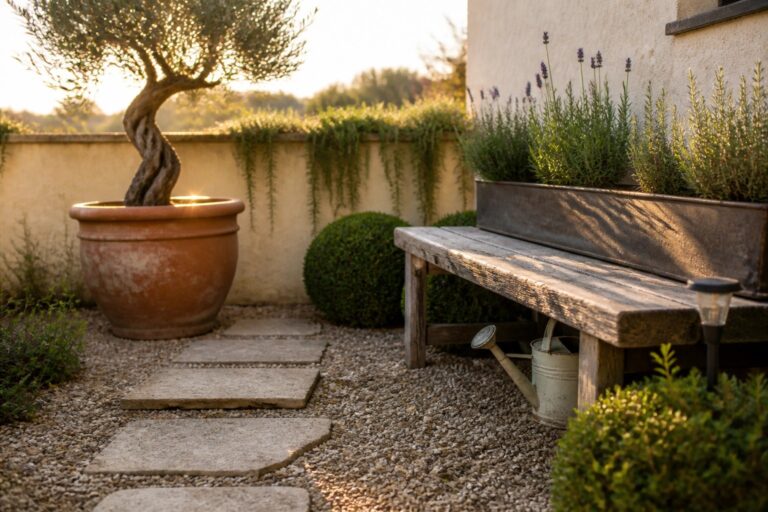
When I started working on a small patch of yard behind my house, the main challenge was figuring out a layout that would not turn into a constant chore.
Focusing on hardy plants helped me shape the space over time without worrying about replacements every few months.
Simple edging and a basic path made the area feel more structured right away.
I usually try one or two new plant groupings each year to see how they settle in my conditions.
Adapting ideas to the actual light and drainage around the garden tends to produce steadier results than copying a plan straight from a page.
Gravel Paths With Stepping Stones For Easy Drainage
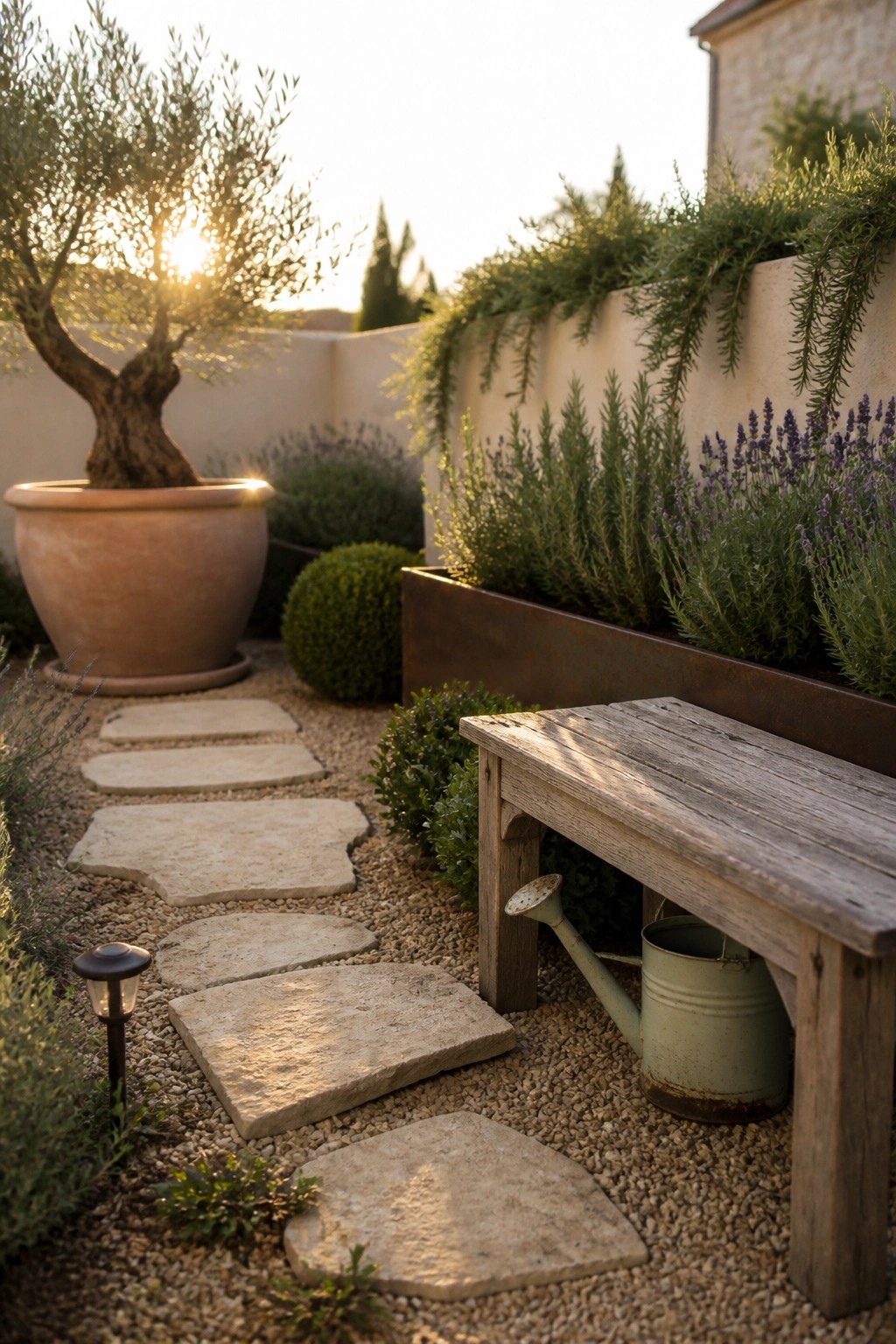
A gravel path with stepping stones keeps a small garden looking tidy without much work. The stones give you firm footing while the gravel fills in the gaps and handles drainage on its own. It suits beginner gardens because it needs little leveling and works with most soil types.
Place the path where you walk most often and keep the stones a comfortable stride apart. Low-care plants along the edges help hold the gravel in place and add color without extra watering. This setup fits narrow side yards or courtyard spaces where a full patio would feel too heavy.
Raised Beds Suit Narrow Side Yards
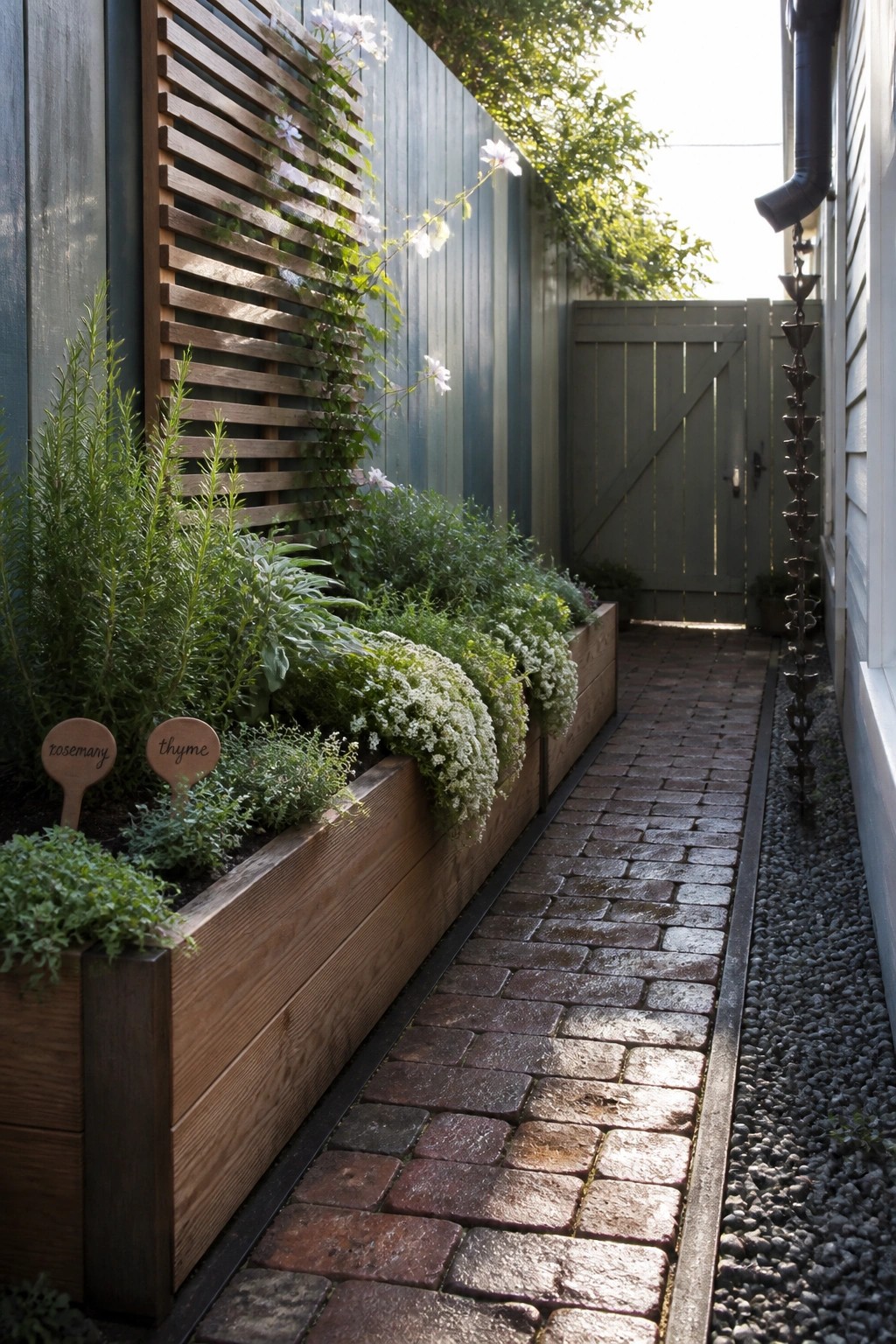
Raised beds give you a simple way to grow plants in tight spaces where the ground might be uneven or hard to work. They keep the soil contained and make it easier to reach everything without bending too much or fighting weeds.
This works well along a path in a side yard or alley. Use wood for the beds and fill them with hardy herbs like rosemary and thyme that need little care once established.
Gravel Paths With Stepping Stones
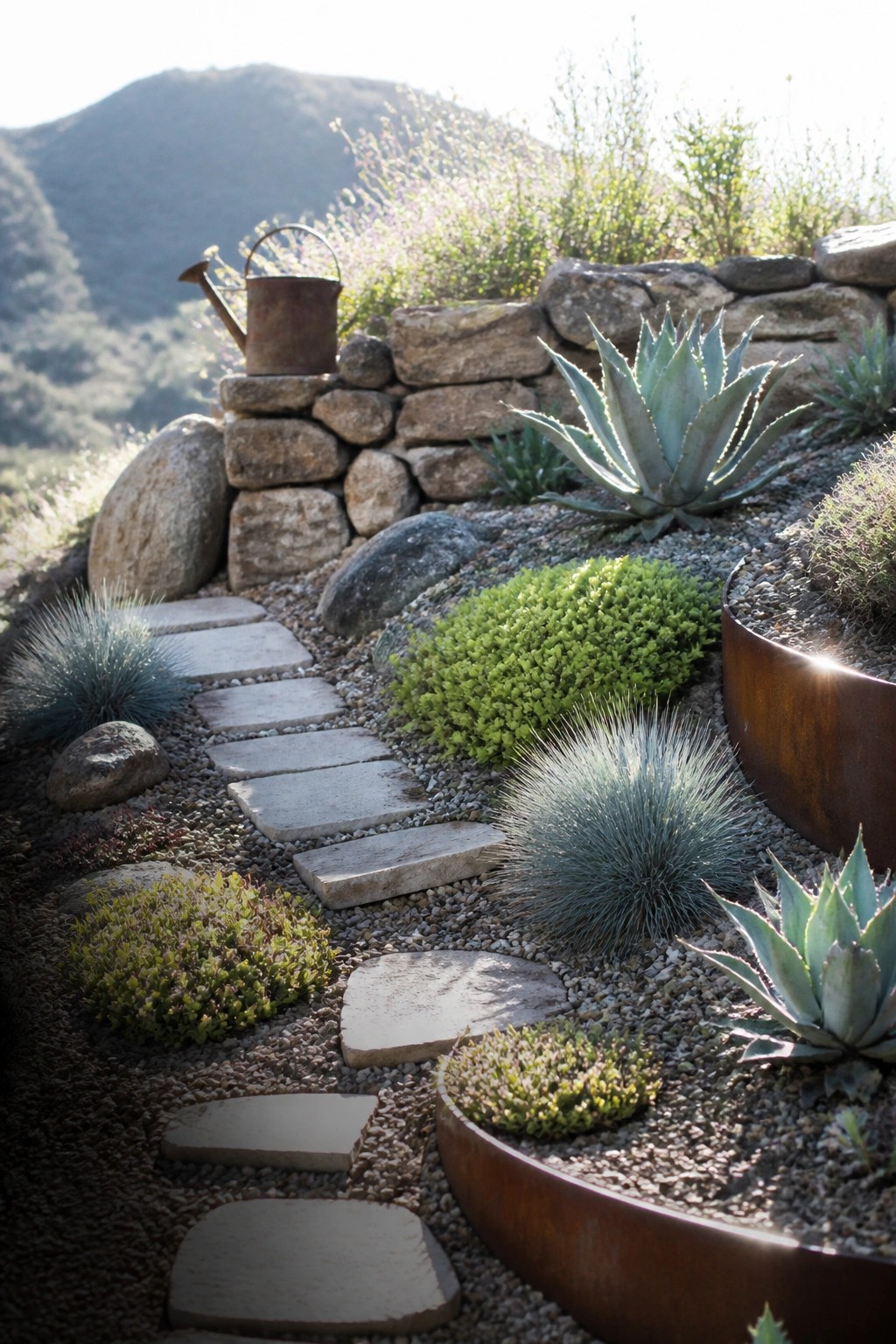
Gravel paths with stepping stones give you a simple way to walk through a small garden without creating extra work. The loose gravel drains well and helps keep the area from turning muddy after rain.
This approach pairs nicely with tough plants that need little water once they are settled. Place the stones where you want foot traffic and fill around them so the plants can spread without blocking the route.
Raised Beds With Plant Labels
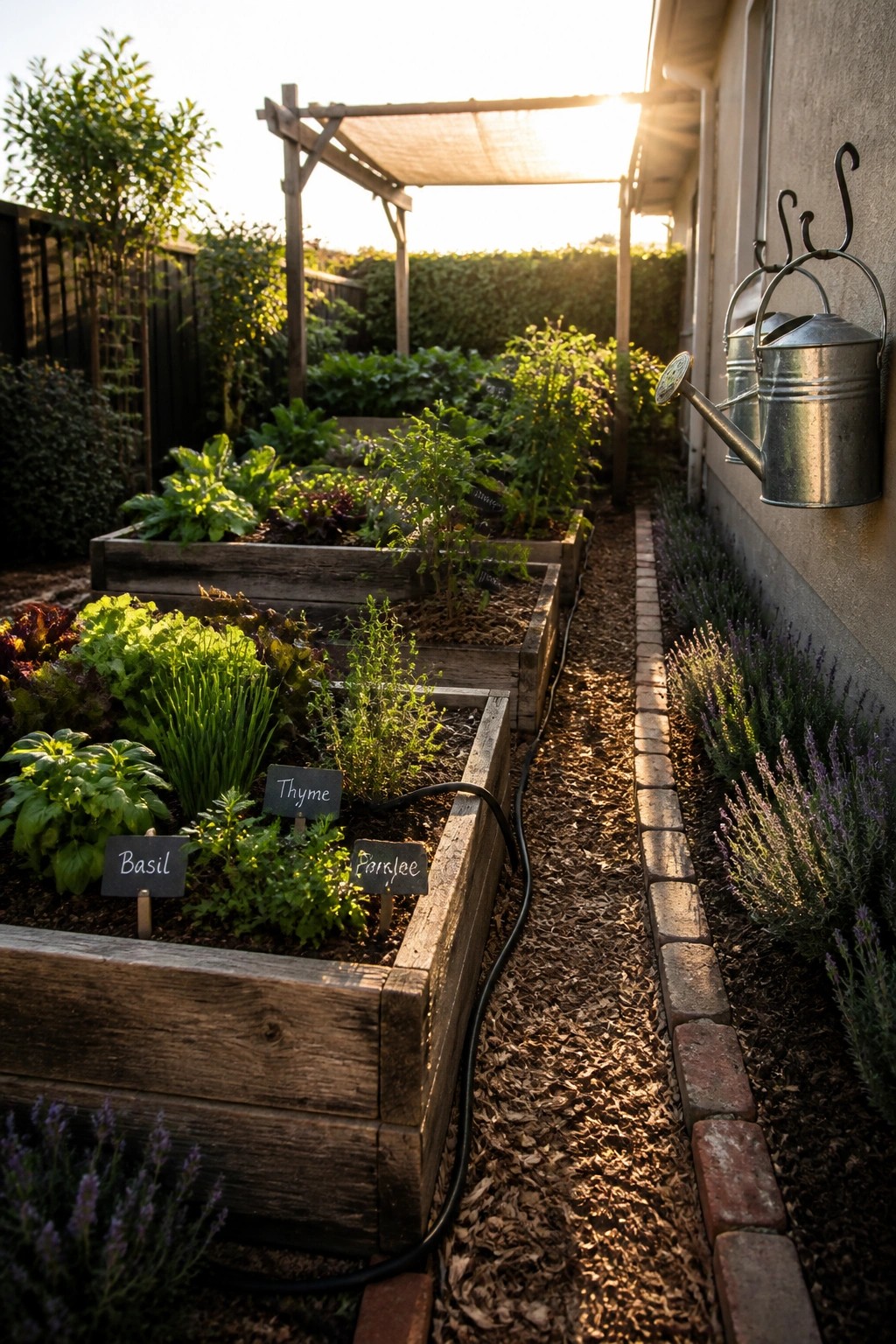
Raised beds make small gardens much easier to manage, especially when space is tight and you want to keep things neat. The wood frames hold the soil in place and let you group plants by type so watering stays simple.
Labels take away the guesswork for beginners. Write the plant names on small signs and place one in each bed so you know exactly what needs harvesting and when.
Vertical Planters Free Up Floor Space
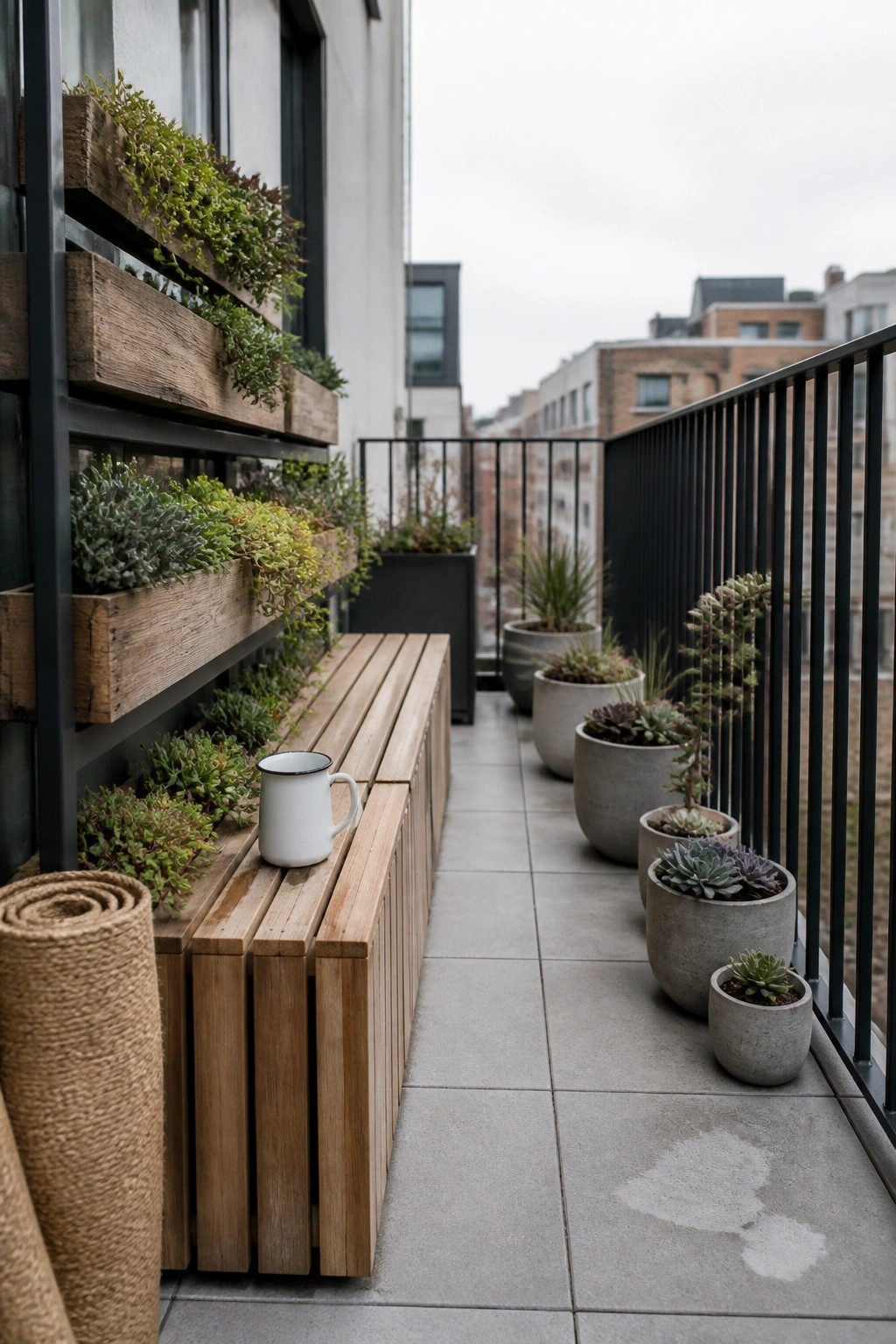
Mounting wooden boxes along a wall turns a narrow balcony into a productive garden without crowding the walking area. This setup works especially well when floor space is limited and you want to fit in more plants than pots alone would allow.
The same idea suits city balconies or small patios where you need low-care options. Choose succulents and trailing greens that handle varying light and need only occasional watering, then keep the rest of the surface clear for seating or storage.
Gravel And Rocks Create Easy Small Gardens
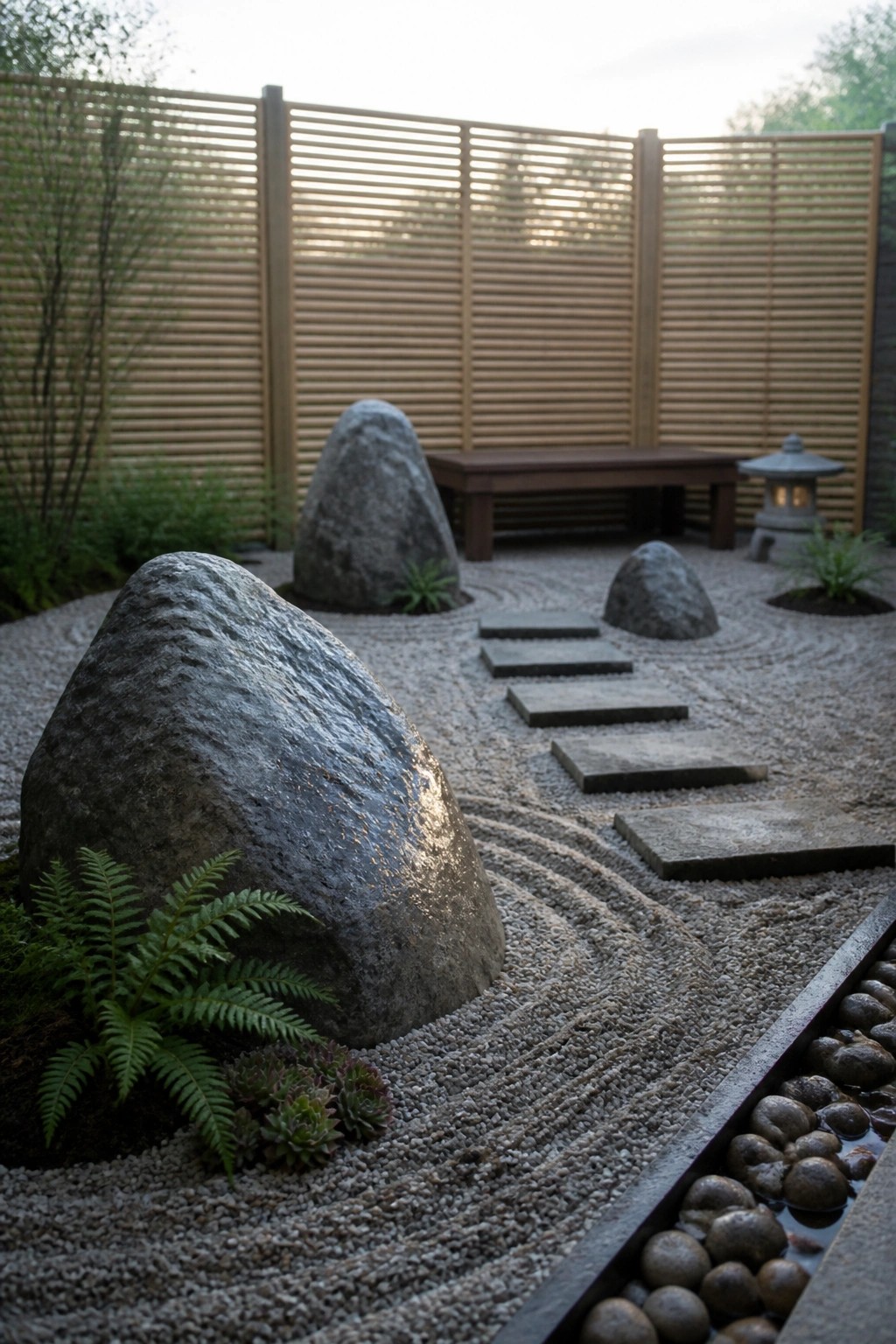
Gravel gardens like this one cut down on the usual work because they need very little watering or weeding once they are in place. The large rocks give the space shape and interest while the gravel fills in around them and keeps the ground covered.
This approach works well in small yards or narrow side areas where you want a calm look without constant care. Add a few stepping stones for a simple path and tuck in a handful of tough plants such as ferns near the edges.
Create a Patio Garden with Pots and a Fountain
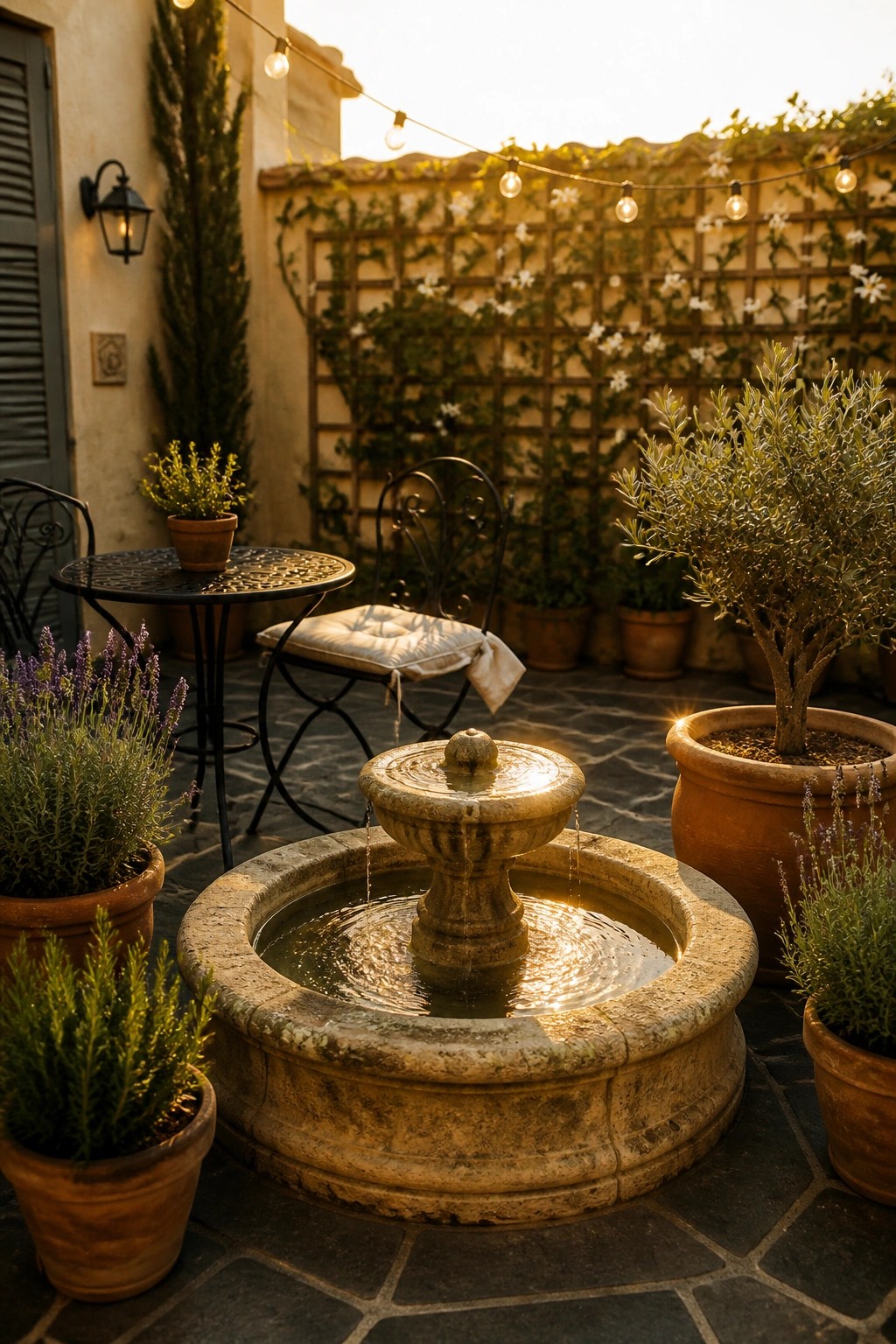
A small stone fountain paired with lots of potted plants turns a plain patio into a real garden space without digging beds or doing heavy work. The pots let you move things around easily and choose hardy plants that need little watering once established. This setup works especially well on paved areas where planting in the ground is not an option.
Place the fountain in the center or against one wall and cluster the pots in different heights around it. Lavender, rosemary, and small shrubs hold up well in containers and give scent and color with almost no fuss. Just make sure the pots have good drainage and group them so the area still feels open for seating.
Stepping Stone Paths Keep Flower Beds Accessible
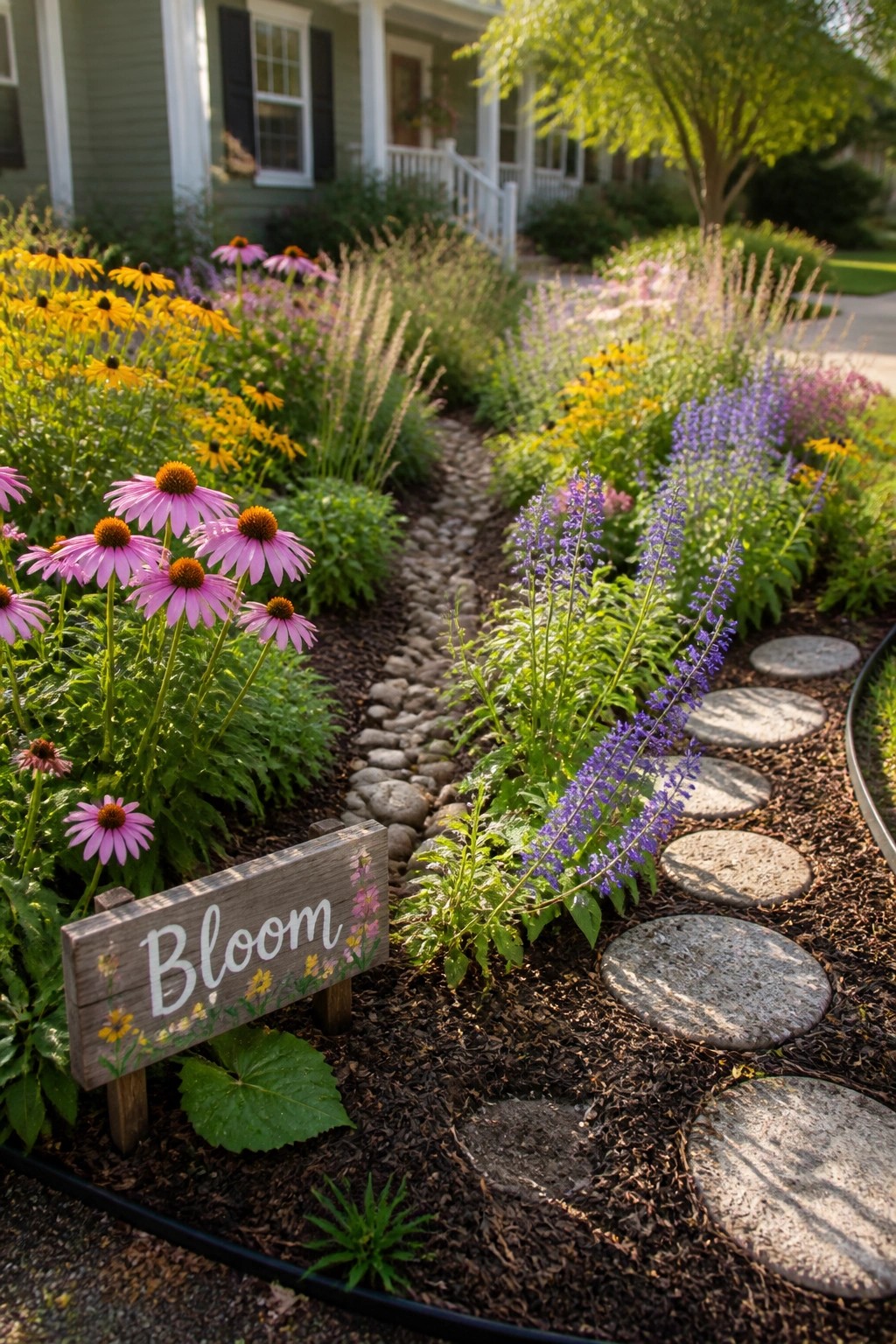
A path made from simple round stepping stones lets you walk through a planted area without stepping on anything or compacting the soil. It gives structure to a small garden while keeping the beds looking full and natural.
This works best in narrow side yards or front beds where you still need occasional access. Place the stones a comfortable stride apart over a layer of landscape fabric and mulch, then fill in with easy perennials that can spill around the edges.
Stone Edging and Gravel Keep Small Gardens Tidy
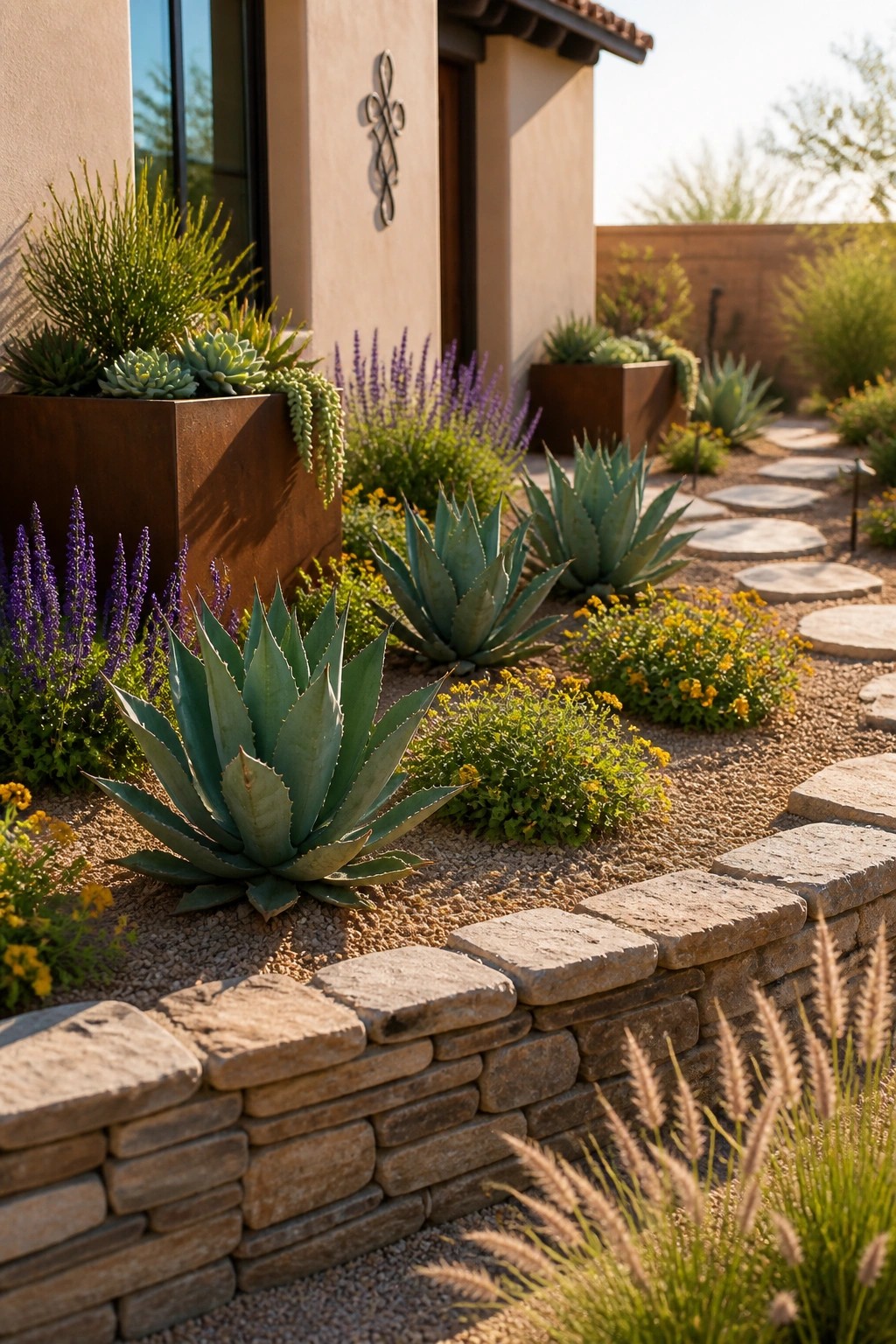
Stone edging paired with gravel gives a garden clear shape right away. It holds the soil in place, cuts down on weeds, and makes the beds look finished even when the plants are still filling in. Beginners often find this setup easier than trying to maintain loose soil edges.
This style suits sunny spots and homes that want low watering. Keep the beds narrow enough to reach across, and choose plants that handle dry conditions once they settle. The gravel also helps with drainage so the roots stay healthy without extra work.
Vertical Wall Planters For Easy Herb Growing
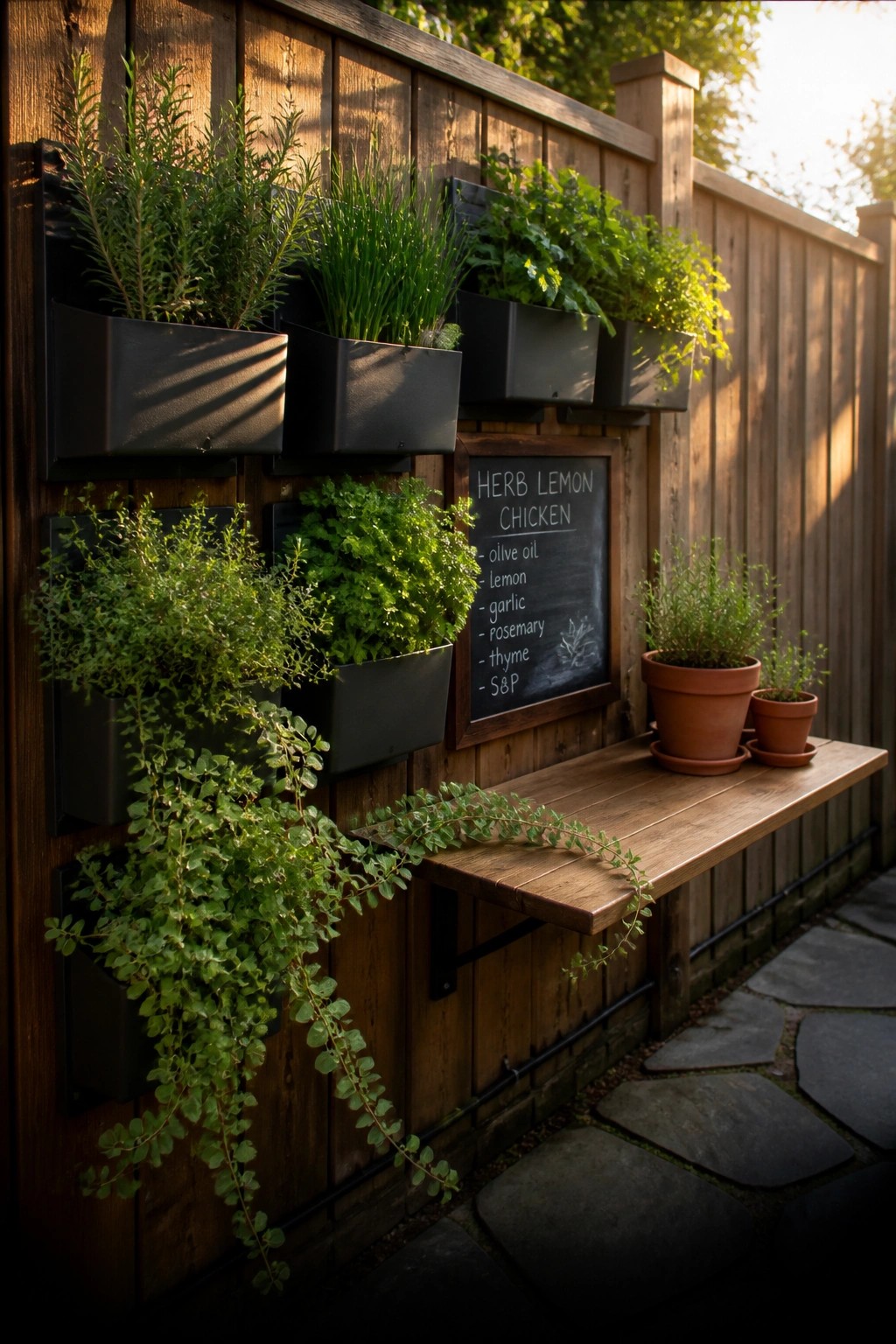
Mounting planters on a fence gives you room to grow herbs without using up ground space. It keeps everything at a comfortable height for watering and picking, and the plants stay neat instead of spreading out across the yard.
This approach works best on a sunny fence or wall where you can fit several containers in a row. Stick with hardy herbs that handle a bit of neglect, and add a simple bench nearby if you want a spot to sit while you tend them.
Stepping Stones For Access Through Gravel Gardens
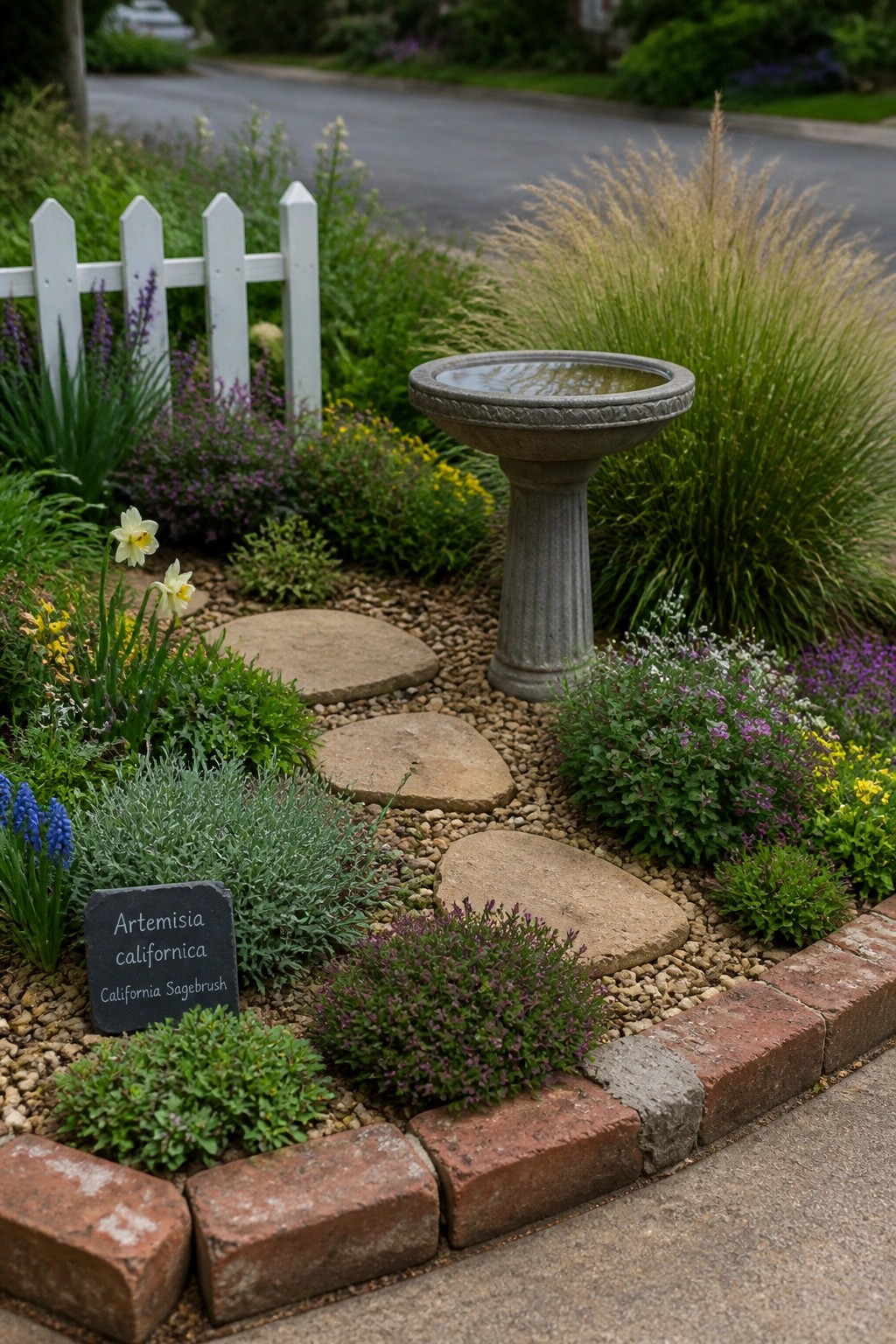
Stepping stones make it simple to move through a small gravel garden without compacting the mulch or stepping on plants. They create clear paths that keep the space looking tidy while still allowing easy access for watering or light maintenance.
This setup pairs well with hardy plants that need little attention once established. Space the stones where you reach most often and keep them level with the gravel so they stay practical over time.
Wall Mounted Planters For Small Balcony Gardens
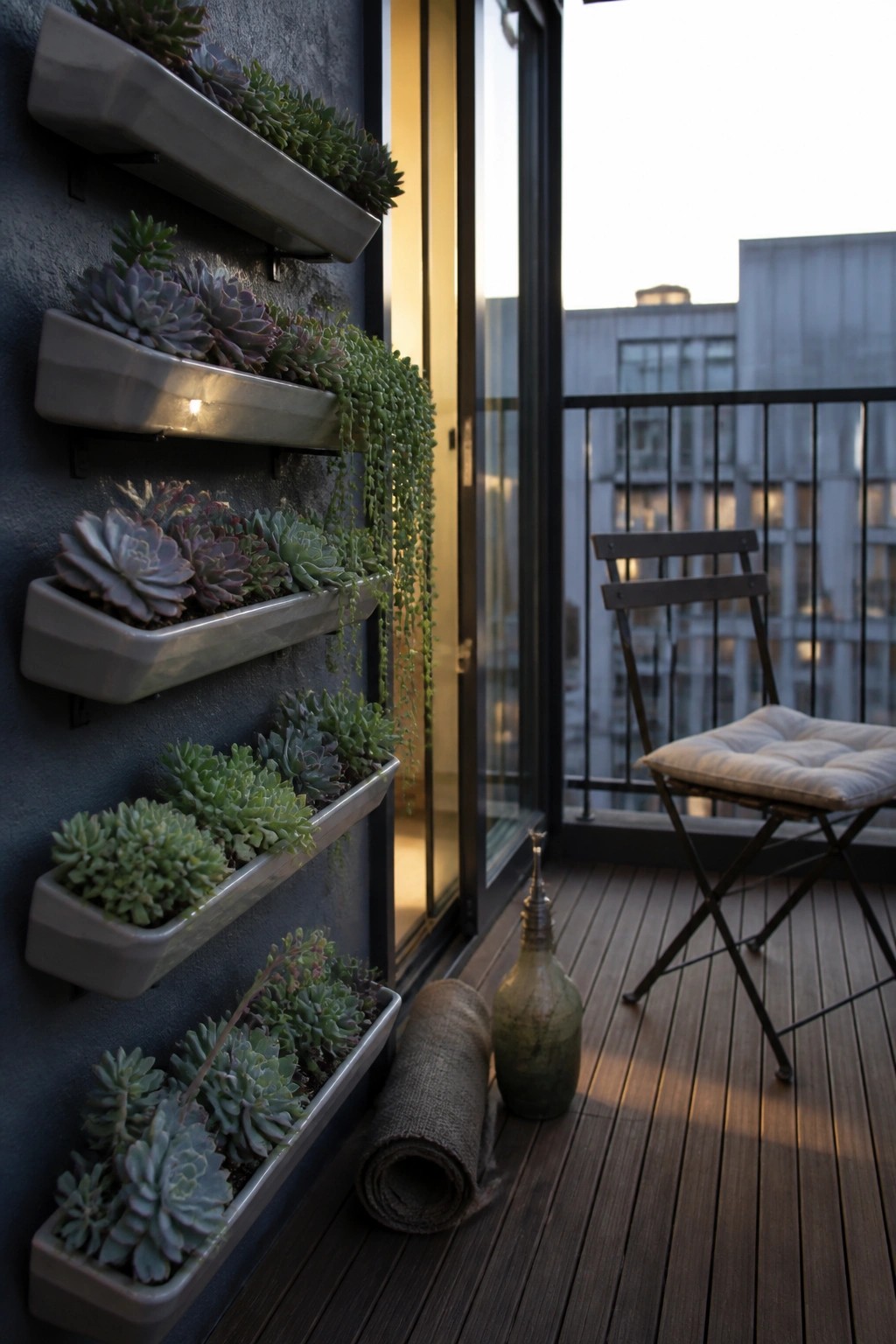
Many balconies have limited floor space, so mounting planters on the wall gives you room to grow plants without cluttering the deck. A row of simple containers can hold a mix of succulents and trailing varieties that stay healthy with minimal attention.
This setup suits apartments and small outdoor areas where people want greenery but do not have time for high maintenance. It works best with hardy plants that tolerate sun and dry conditions, and it leaves the floor clear for seating or walking through.
Tiered Stone Beds For Small Gardens
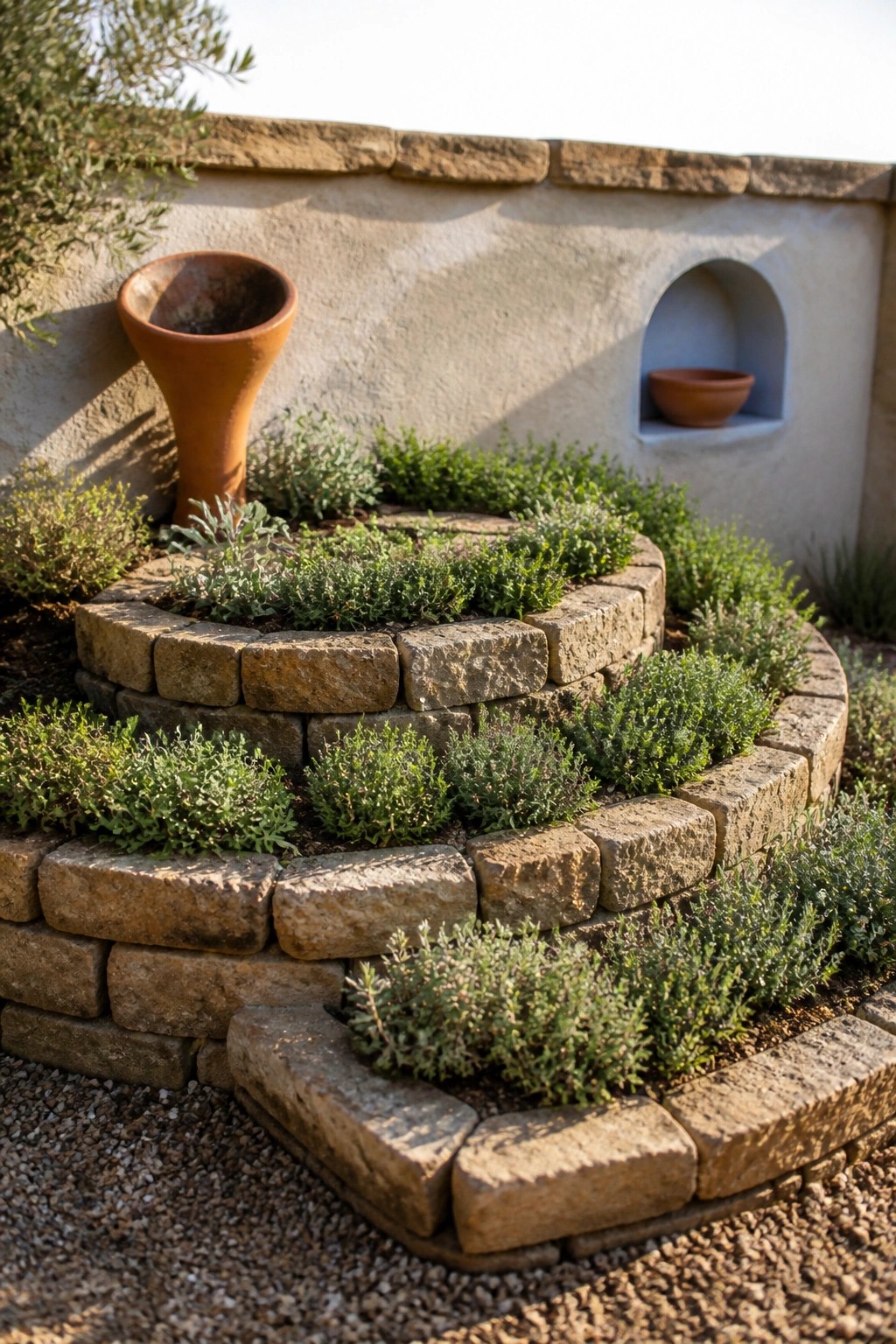
Stacked stone blocks let you create several planting levels in one small spot. The different heights give more room for plants while keeping everything neat and easy to reach.
This setup suits beginners because the stone holds the soil and cuts down on weeding. It works best against a wall or in a corner where space is tight.
Growing Fruit Trees In Pots
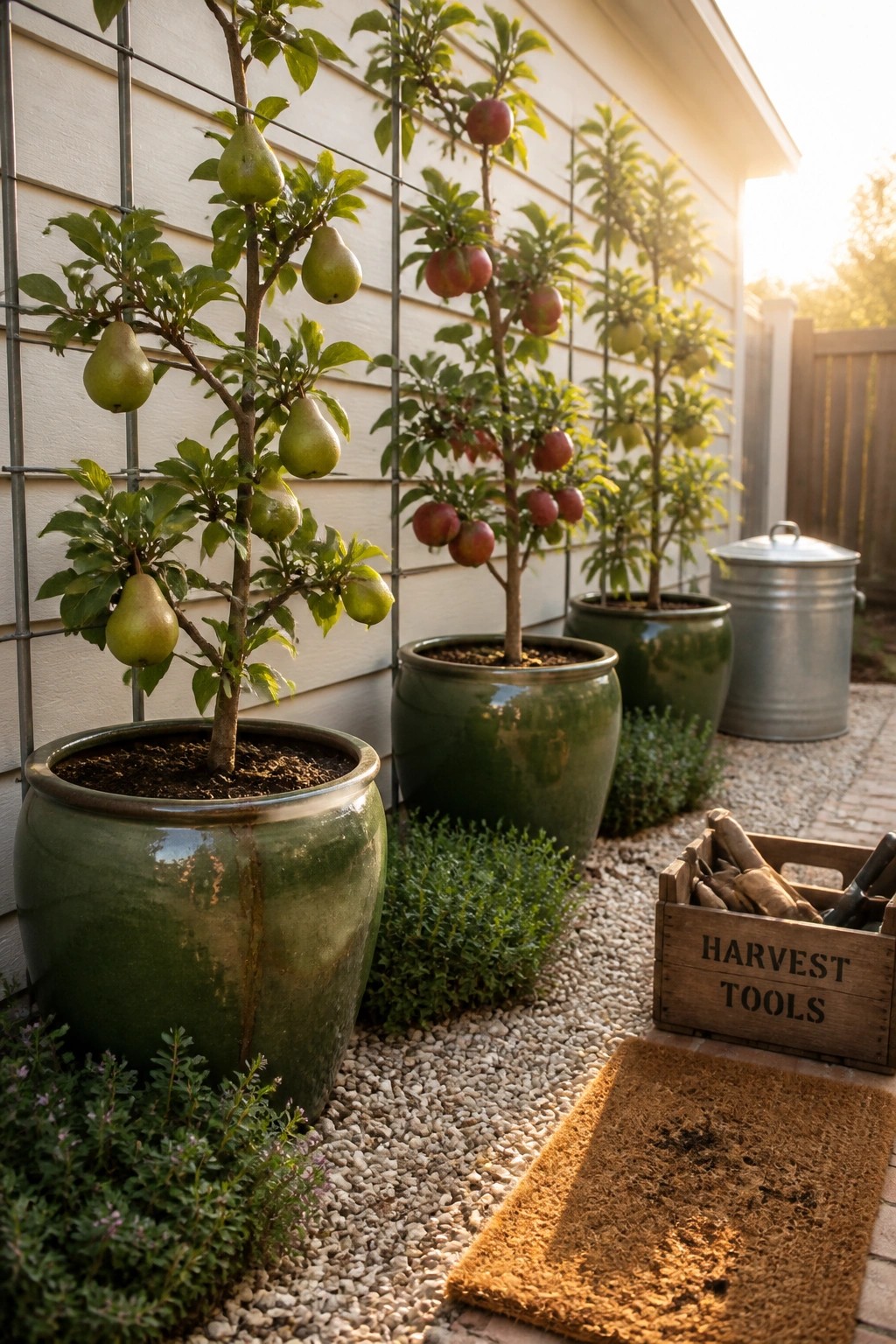
Many small gardens work better when fruit trees are kept in large containers instead of planted straight in the ground. The pots let you control soil and watering, and they keep the trees from outgrowing a tight spot.
Set the pots along a wall with a basic wire grid so the branches can be trained flat and stay easy to reach. This setup suits beginners because it uses hardy varieties that need little pruning and fits nicely into gravel or paved areas.
Add a Narrow Water Feature to a Small Garden
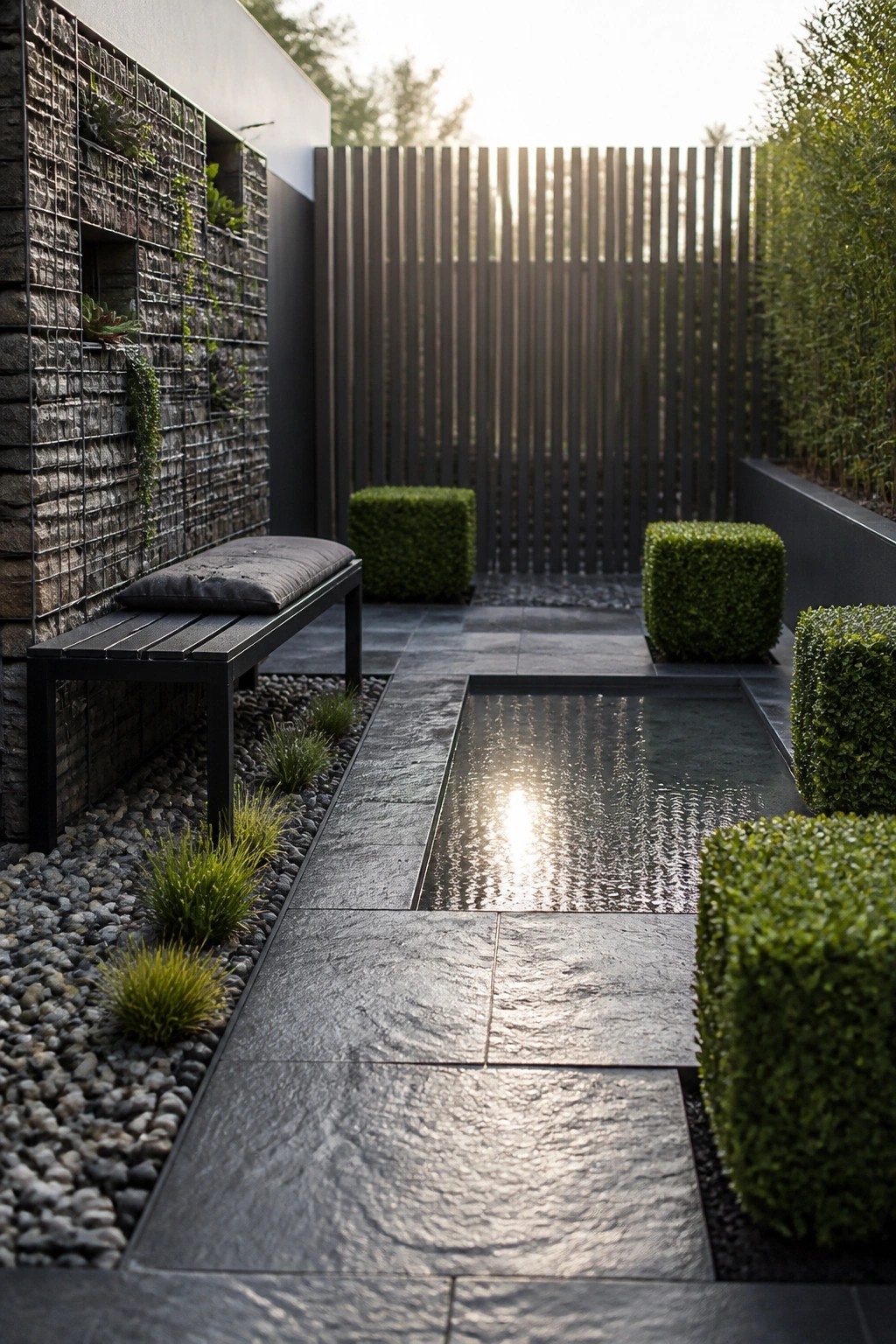
A slim water channel can give a tiny garden a focal point without adding much work. It sits right in the paving so it does not take up planting space, and the sound of moving water helps the area feel calmer even when you are close to the house or a fence.
This setup works best in compact courtyards or side gardens where you want something low care. Keep the edges clean, use gravel beside the channel for drainage, and choose a few tough shrubs to frame it. The water stays clearer with a simple pump and occasional topping up, so beginners can manage it without constant attention.
Gravel Beds Keep Small Gardens Low Maintenance
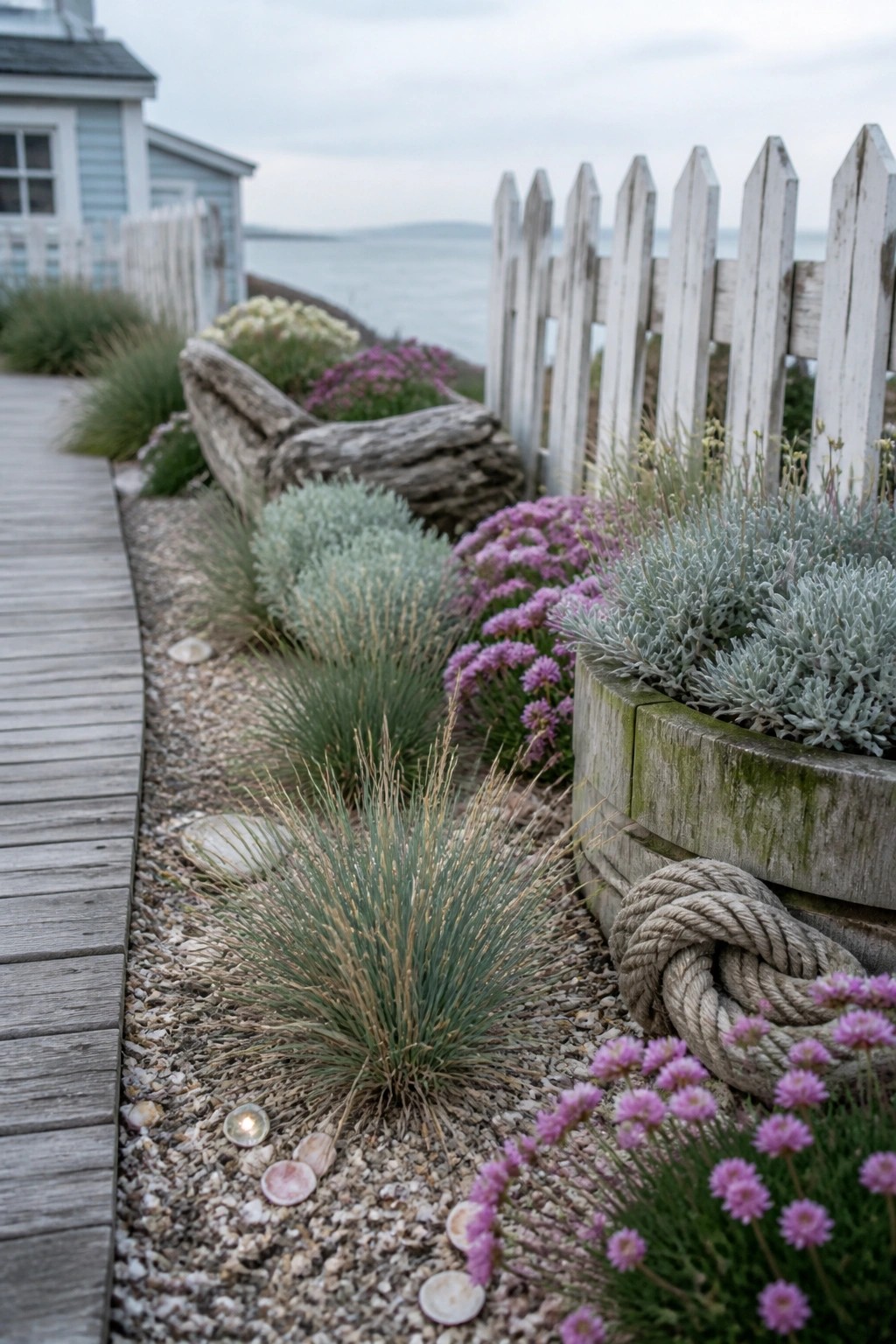
Gravel beds give you a clean base that cuts down on weeding and watering. They work especially well along paths or narrow strips where soil is thin and drainage matters. The mix of grasses and flowering plants in the photo shows how a few hardy types can fill the space without much fuss.
Start with a simple layer of gravel over landscape fabric and choose plants that handle dry conditions once established. This setup suits beginner gardens or coastal spots where salt and wind can be tough. Just keep an eye on how the plants spread so nothing crowds the path.
Pallet Planters For Narrow Spaces
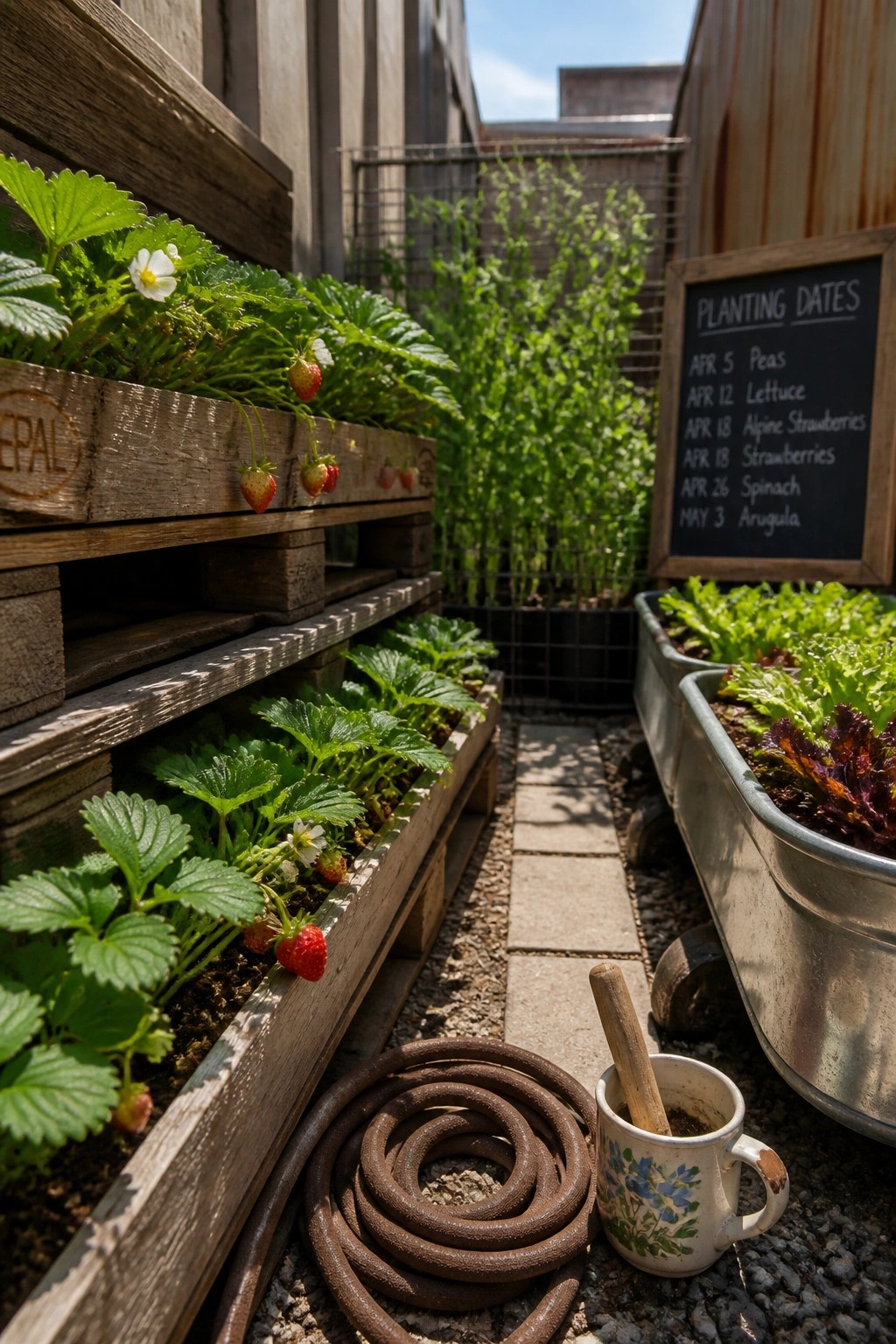
Many beginners like using old pallets to create raised beds because they are cheap and already built. Stacking them gives you height without taking up much ground space, and the gaps let water drain well for plants that like drier roots.
This setup works best along a fence or in a slim side yard where regular beds would not fit. Keep a simple planting schedule nearby so you know when to start each crop.
Line A Patio Wall With A Planter Box
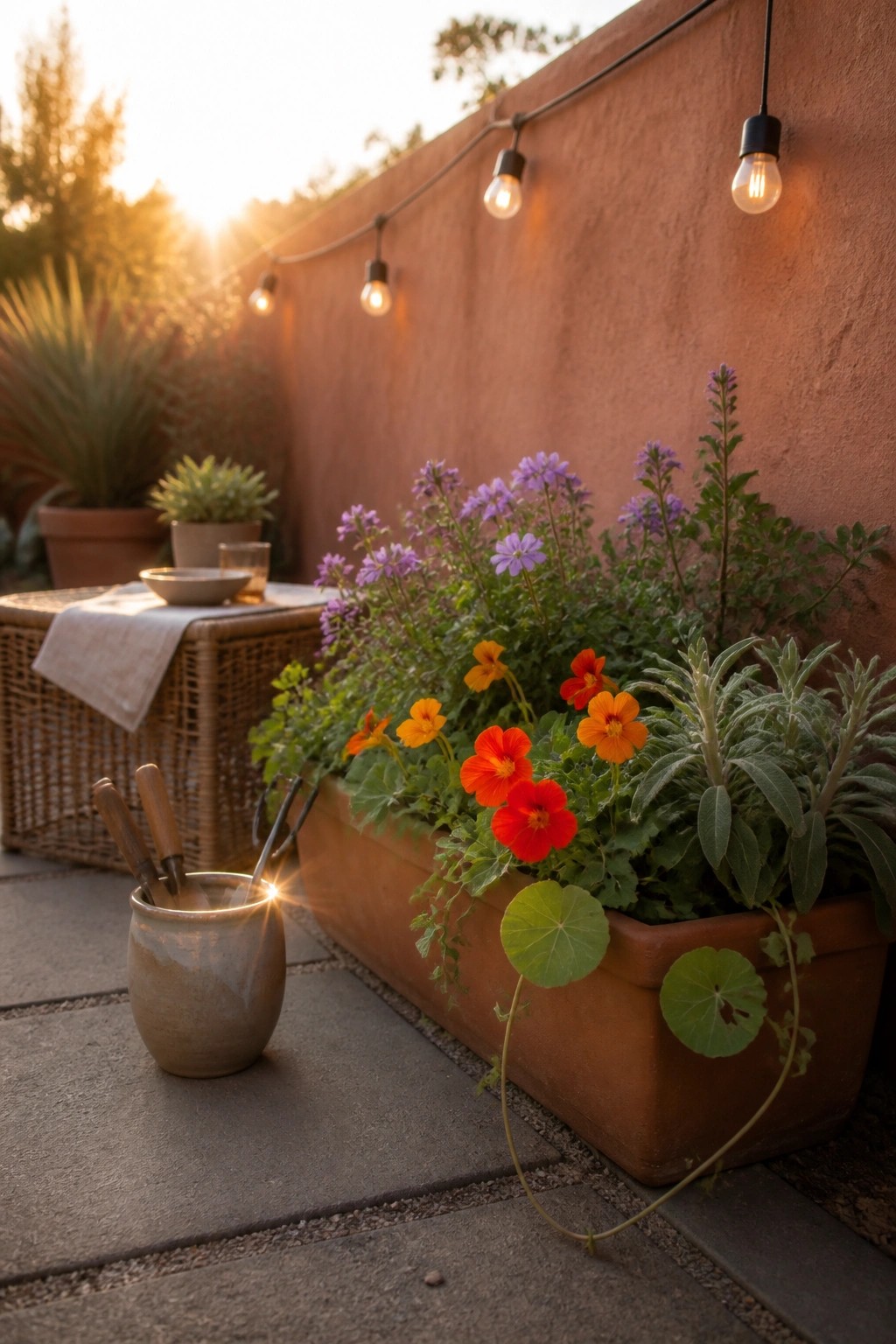
A long planter box set against a wall gives you a ready-made garden bed without digging or major changes. It works especially well on patios or small yards where space is tight and the ground may be paved. The contained shape also makes watering and weeding simpler from the start.
Pick tough plants that match your light and climate, then let a few trail over the edge for a softer look. Keep the setup simple with one or two styles of foliage so it stays low care. String lights above the box can extend the space into the evening if you want that option.
Frequently Asked Questions
Q: My balcony only gets morning light. Which plants from the list will work there? A: Go with the shade tolerant options like certain ferns or ivy. They handle low light without much fuss. Water when the top soil feels dry to the touch.
Q: What if I skip watering during a busy week? A: Most of these hardy plants can handle a short dry spell. But check them when you get back and give a good soak if needed. They bounce back easier than you might think.
Q: Do I need to buy fancy soil mixes to start? A: Regular garden soil works fine for many of these ideas. Mix in some compost if you have it handy. This keeps things simple and cheap.
