

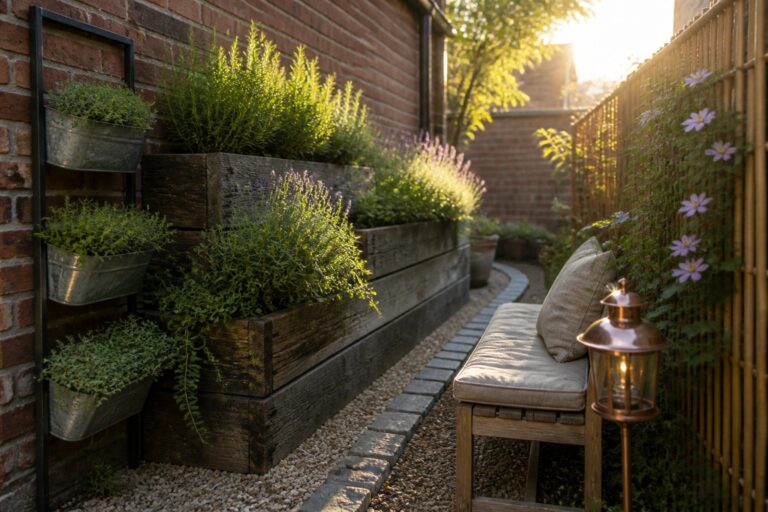
I often find that awkward garden corners stay bare because the usual planting advice does not account for how light hits them or how roots compete in confined soil.
Working around those limits usually means choosing plants that thrive in the actual conditions rather than forcing a standard border.
I test one idea at a time when the space feels this constrained.
That way I can see what actually holds up once the seasons change and the plants begin to fill in.
Many of these suggestions focus on simple structures that guide both the eye and the foot traffic without requiring major excavation.
Tiered Planters Along a Wall
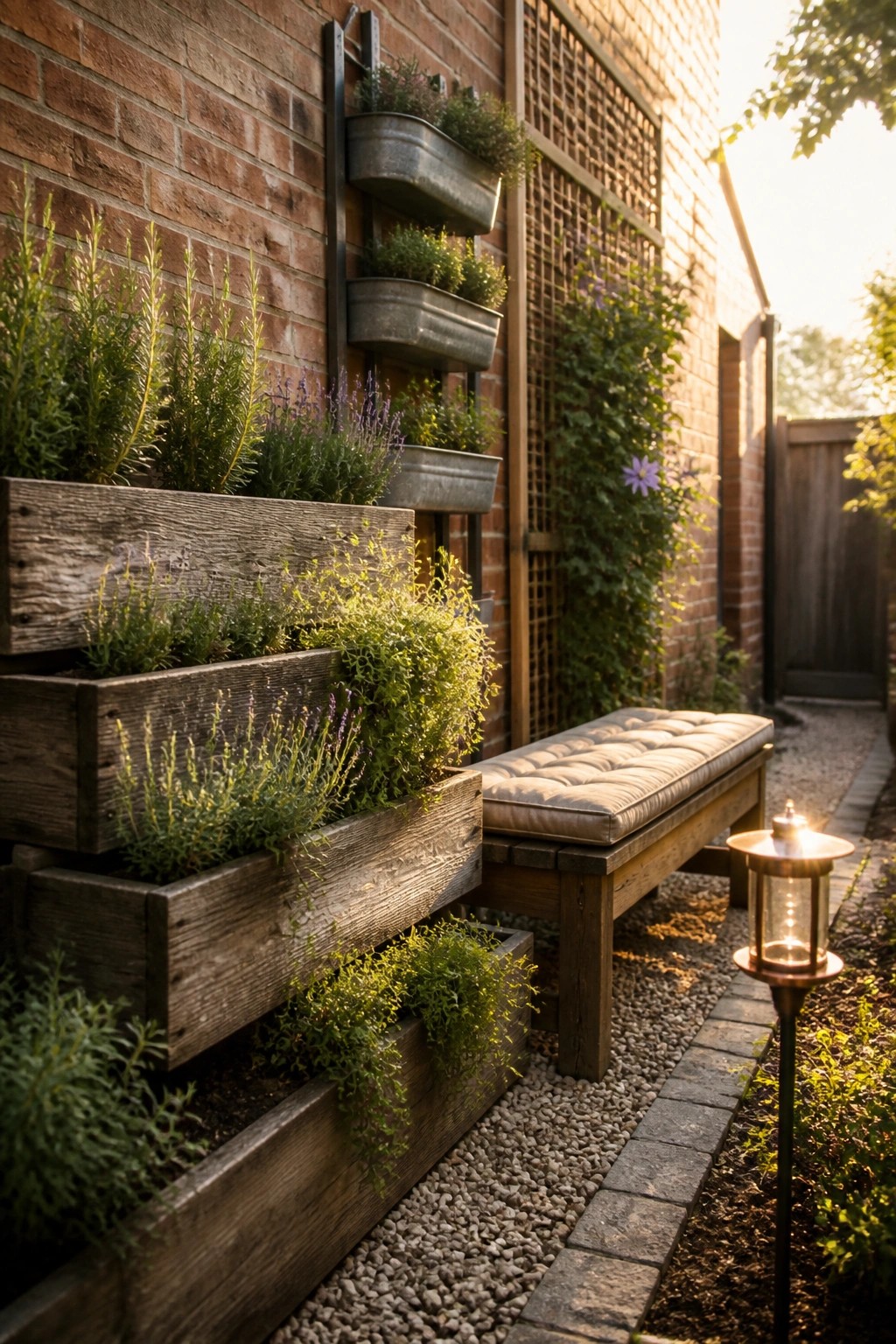
Stacked wooden planters let you pack plenty of plants into a narrow strip without crowding the path. This setup turns an awkward side space into something useful and green while keeping the walkway clear.
It suits homes with tight side yards or between buildings where ground space is limited. Build them in simple tiers from basic lumber so you can match the height to the plants you want to grow.
Mount a Pallet on the Wall for Extra Planting Room
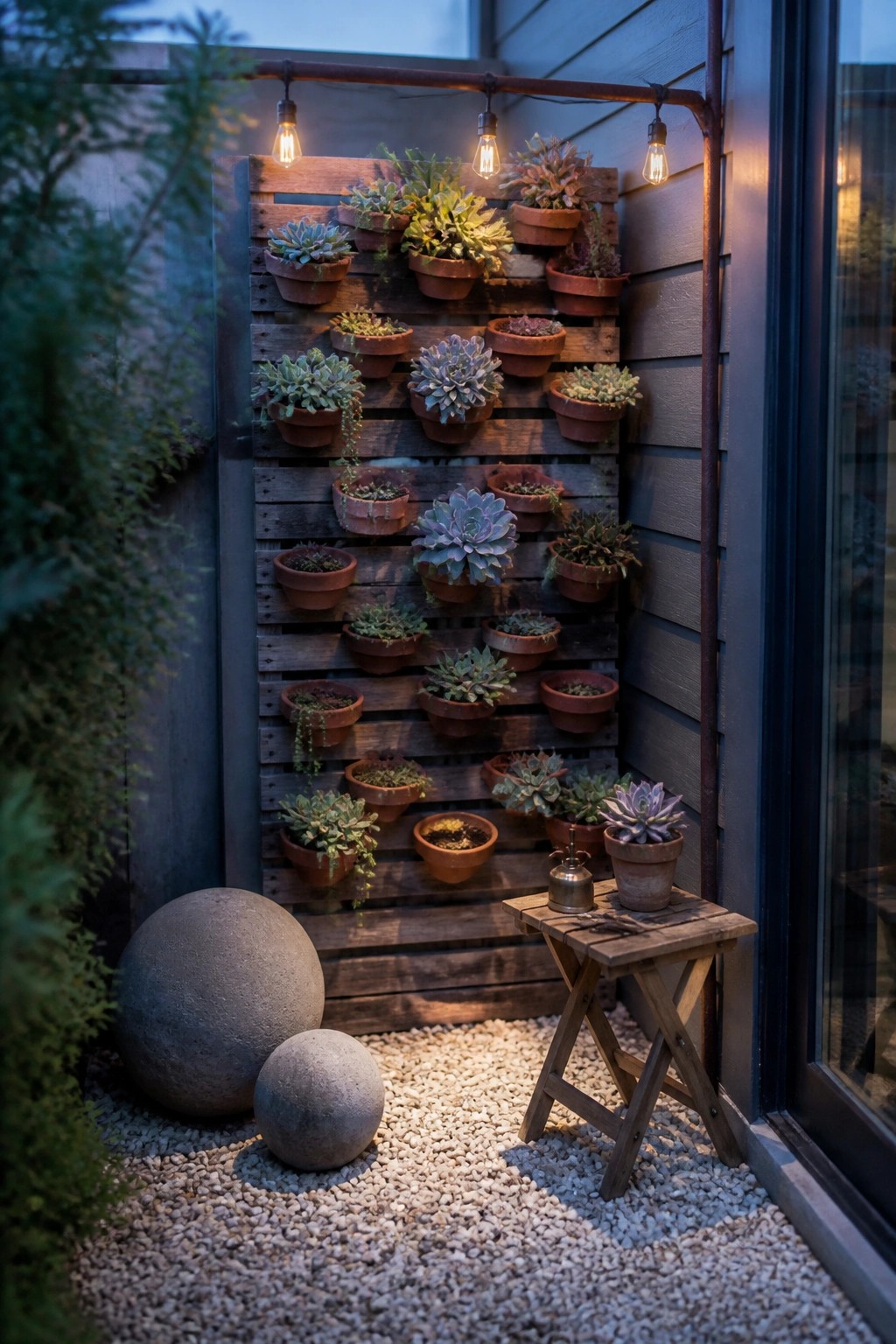
A simple wooden pallet fixed to a wall turns an empty vertical surface into a place for lots of pots. This approach works well in tight corners where floor space is limited and awkward shapes make normal beds hard to fit. It keeps everything off the ground and creates a full display without spreading out sideways.
This setup suits small yards, side passages, or courtyard gardens where you need more growing room but do not want to crowd the path. Choose succulents or other low-water plants so the display stays easy to care for over time. A layer of gravel at the base helps with drainage and keeps the area tidy.
Large Planters Add Height in Narrow Side Beds
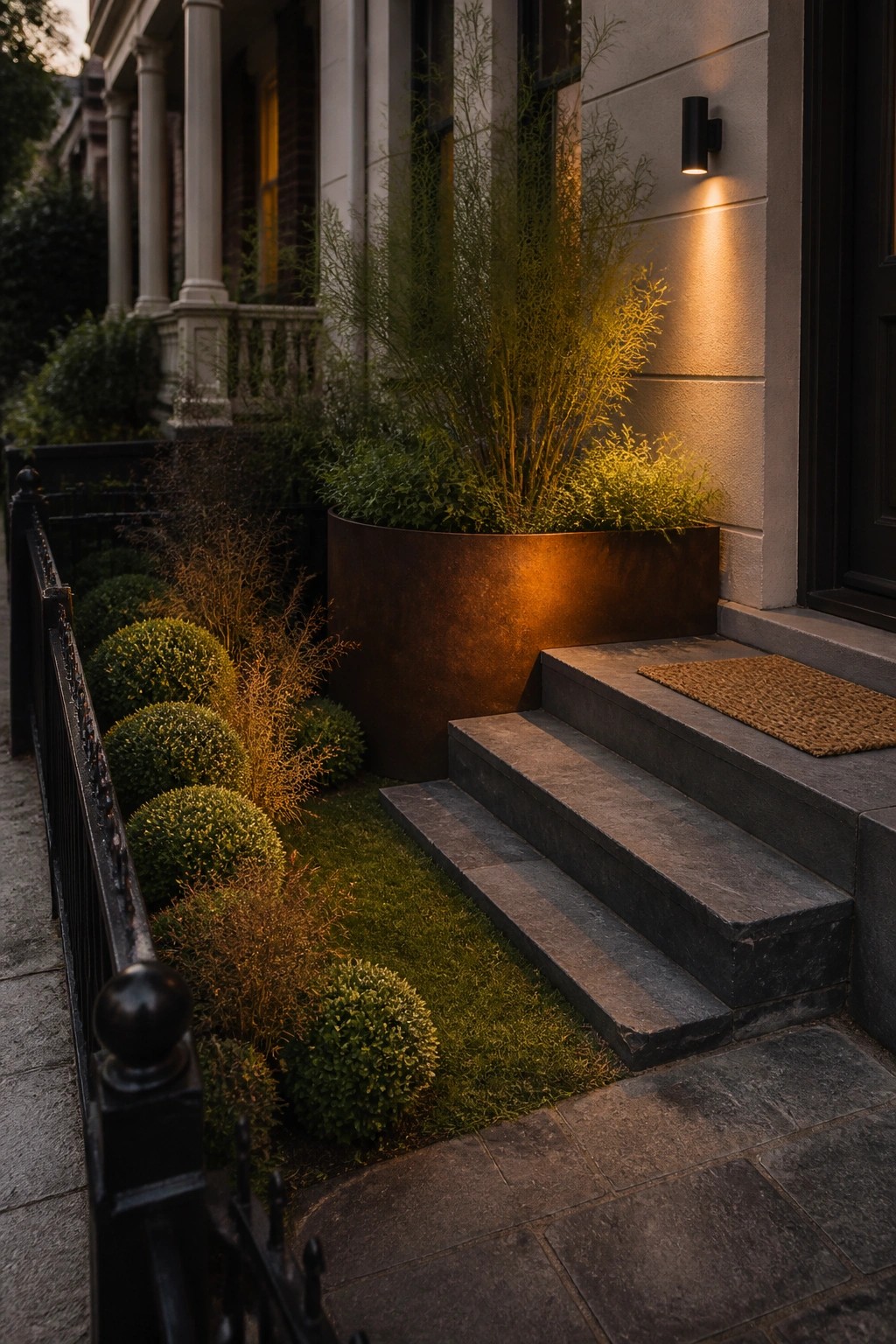
A big container can turn a skinny strip of ground next to steps into something useful. It gives you vertical planting without needing much width, and the rounded shrubs below keep the base neat and low.
This setup works best along house foundations or beside entry stairs where soil is limited. Choose a planter that is wide enough to hold a few taller grasses or shrubs, then fill in with compact evergreens so the bed still feels full even in a tight spot.
Fold-Down Tables For Narrow Balconies
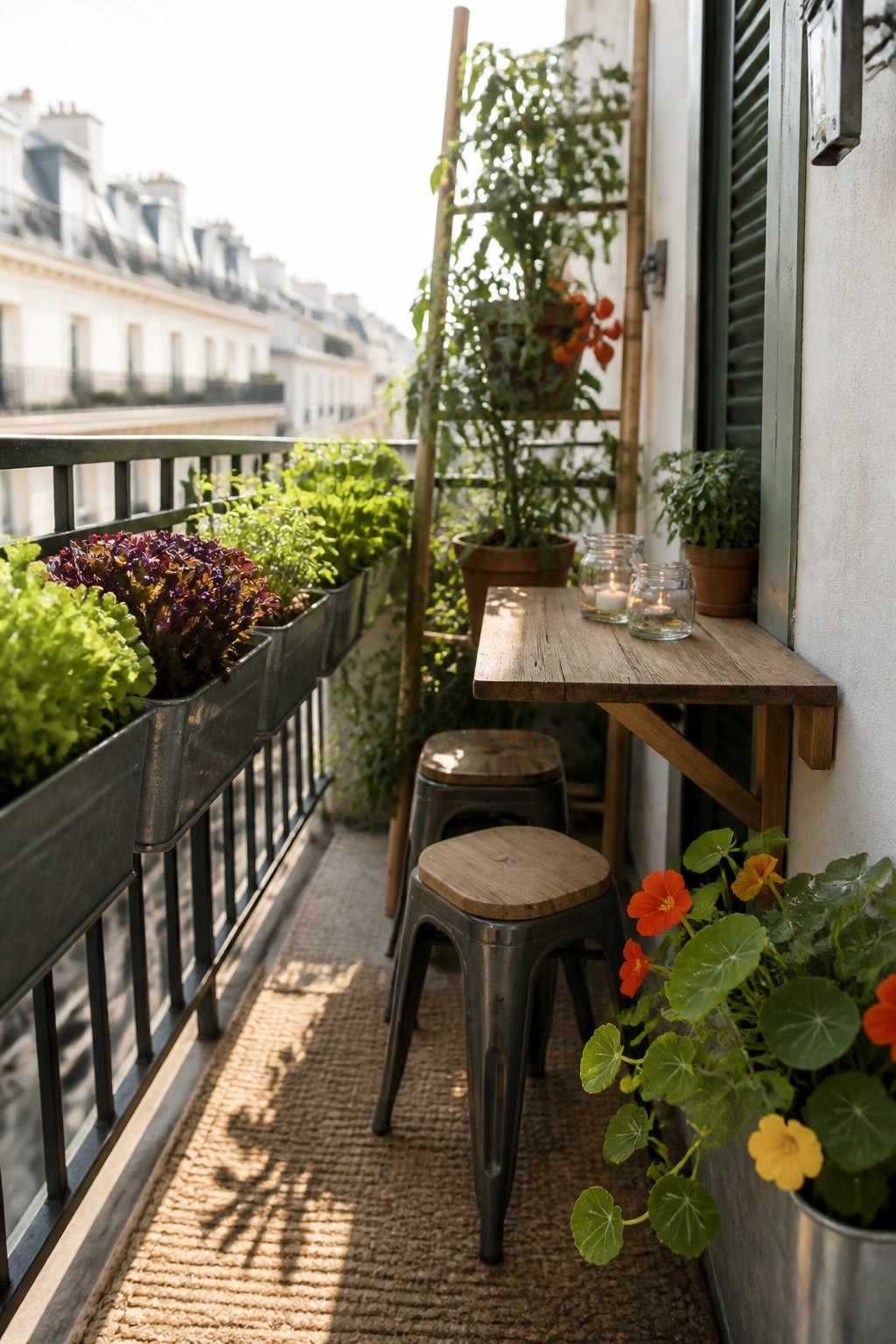
A fold-down table mounted to the wall gives you a usable surface on a slim balcony without eating into the limited floor space. It stays flat against the wall when not in use, so the area still feels open and easy to walk through.
This setup works best on long, narrow balconies where a regular table would block movement. Choose stools that slide underneath and keep a few containers along the railing for plants. Just make sure the wall can support the weight and the table is sturdy enough for regular use.
Curved Raised Beds Fit Narrow Passages
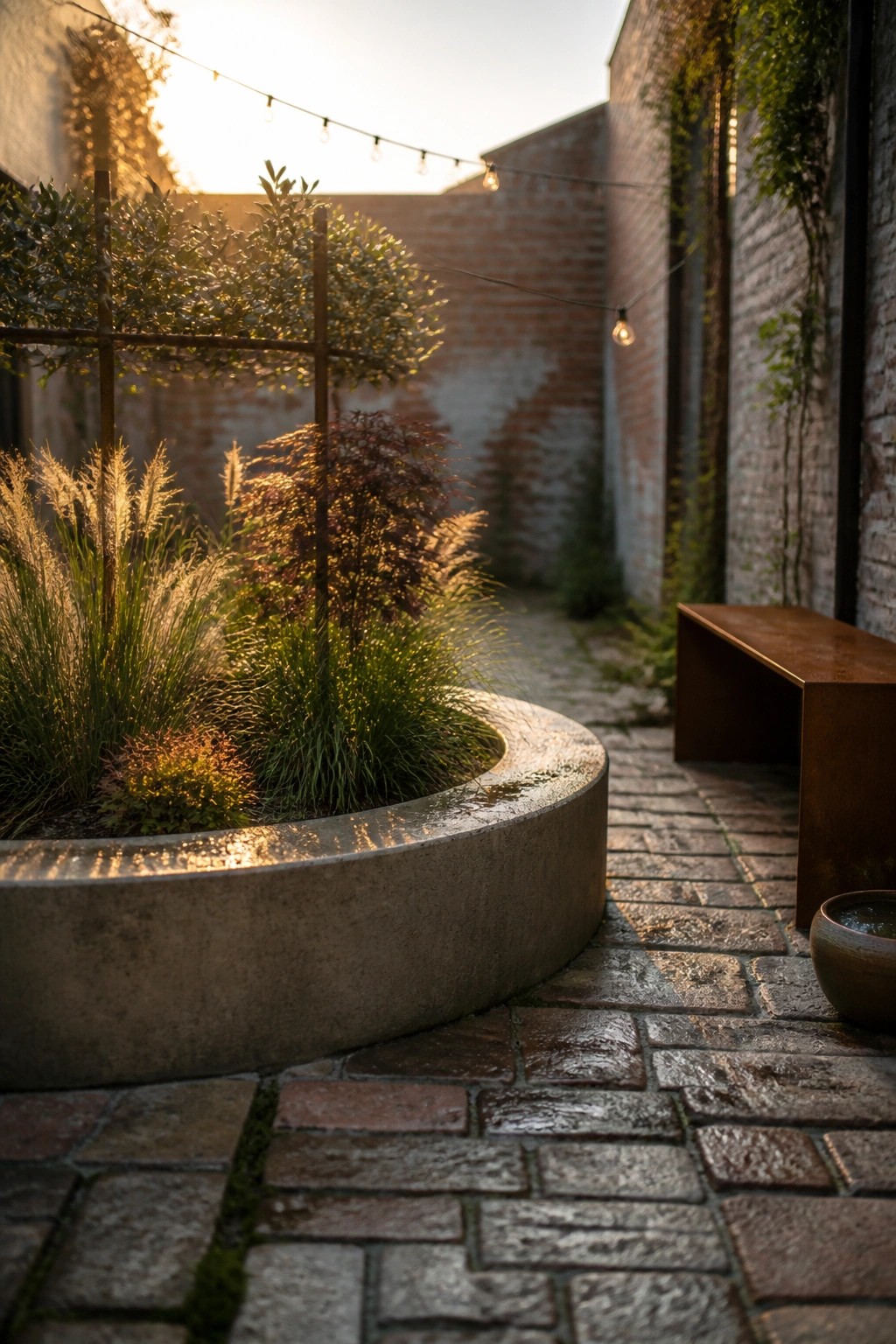
A curved raised bed gives a narrow garden more flow than straight lines ever could. It follows the shape of the space instead of fighting it, which keeps the path feeling wider and less boxed in.
Build the curve in concrete or a similar material so it sits low and ties into the paving. This works best in side yards or between buildings where the layout is long and tight.
Circle One Plant with Pebbles
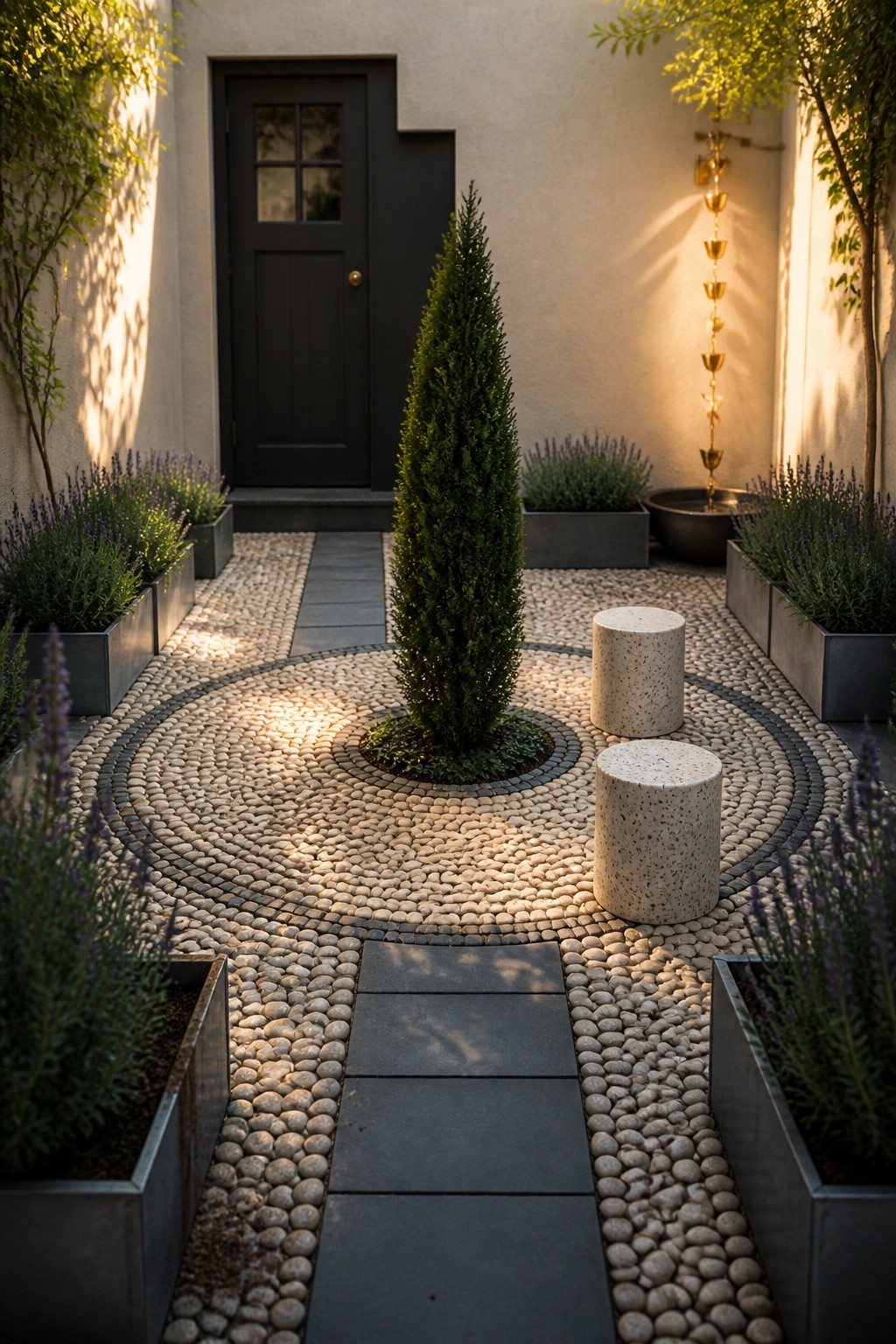
One useful way to handle a narrow courtyard is to place a single strong plant in the center and surround it with a simple circle of pebbles. The round shape breaks up straight lines from walls and paths, and it keeps the whole space from looking busy even when you add a few containers along the sides.
This works best in small rectangular spots where a big bed would feel cramped. Keep the rest of the planting low and repeat a few plants in matching pots so the circle stays the main feature. A low border of darker stones helps hold everything in place over time.
Gravel Paths For Tight Garden Corners
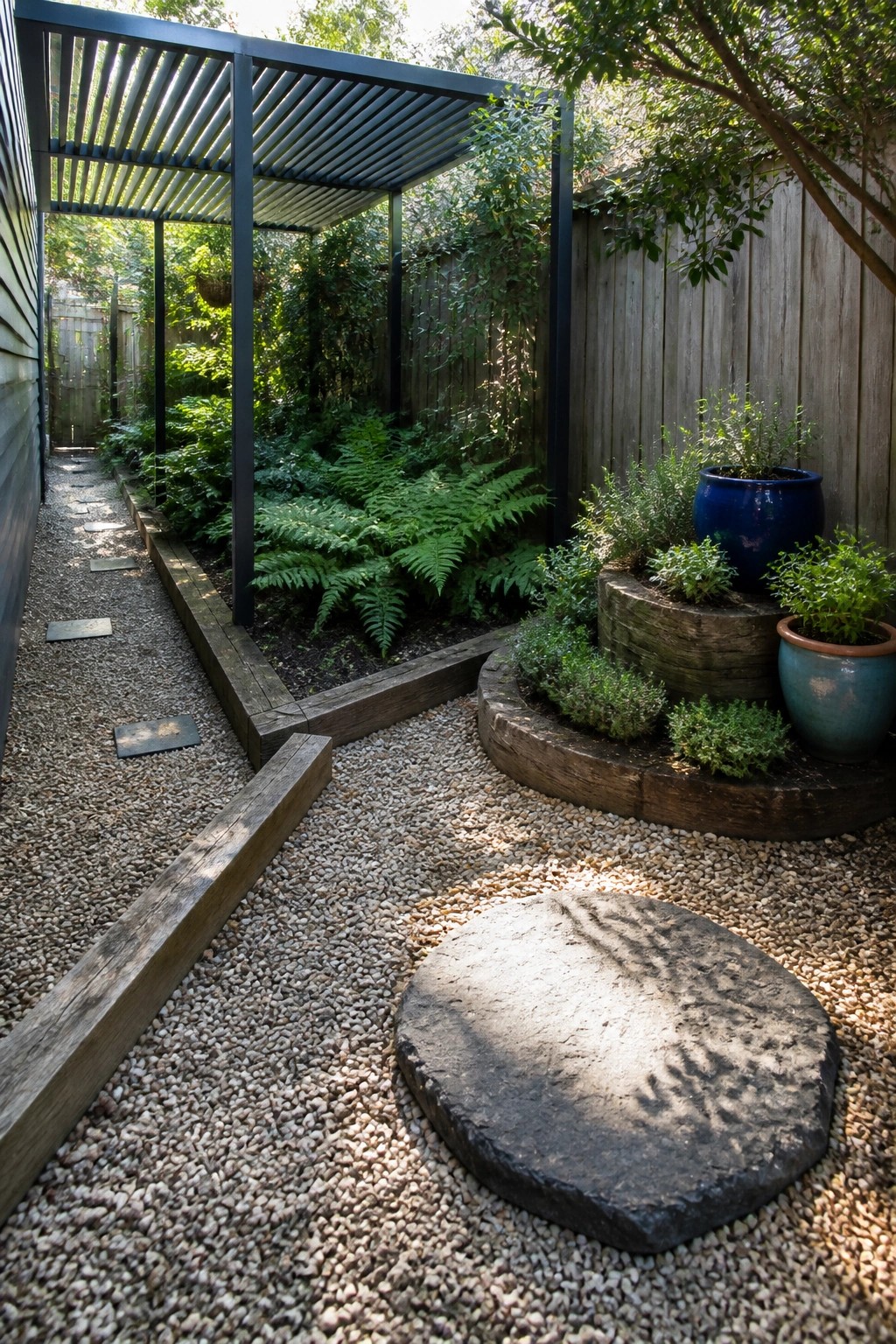
Gravel works well in small or narrow gardens because it fills space without needing much structure. It drains easily and lets you shape paths around odd corners or existing beds without pouring concrete or laying heavy pavers. The wooden edging keeps the gravel in place and gives the beds a clean border so plants stay contained.
This approach suits side yards, slim back gardens, or any spot where a solid path would feel too rigid. Keep the gravel layer thin and use simple timber or sleepers for the edges so the whole thing stays low cost and easy to adjust later if the planting changes.
Metal Edging For Curved Garden Borders
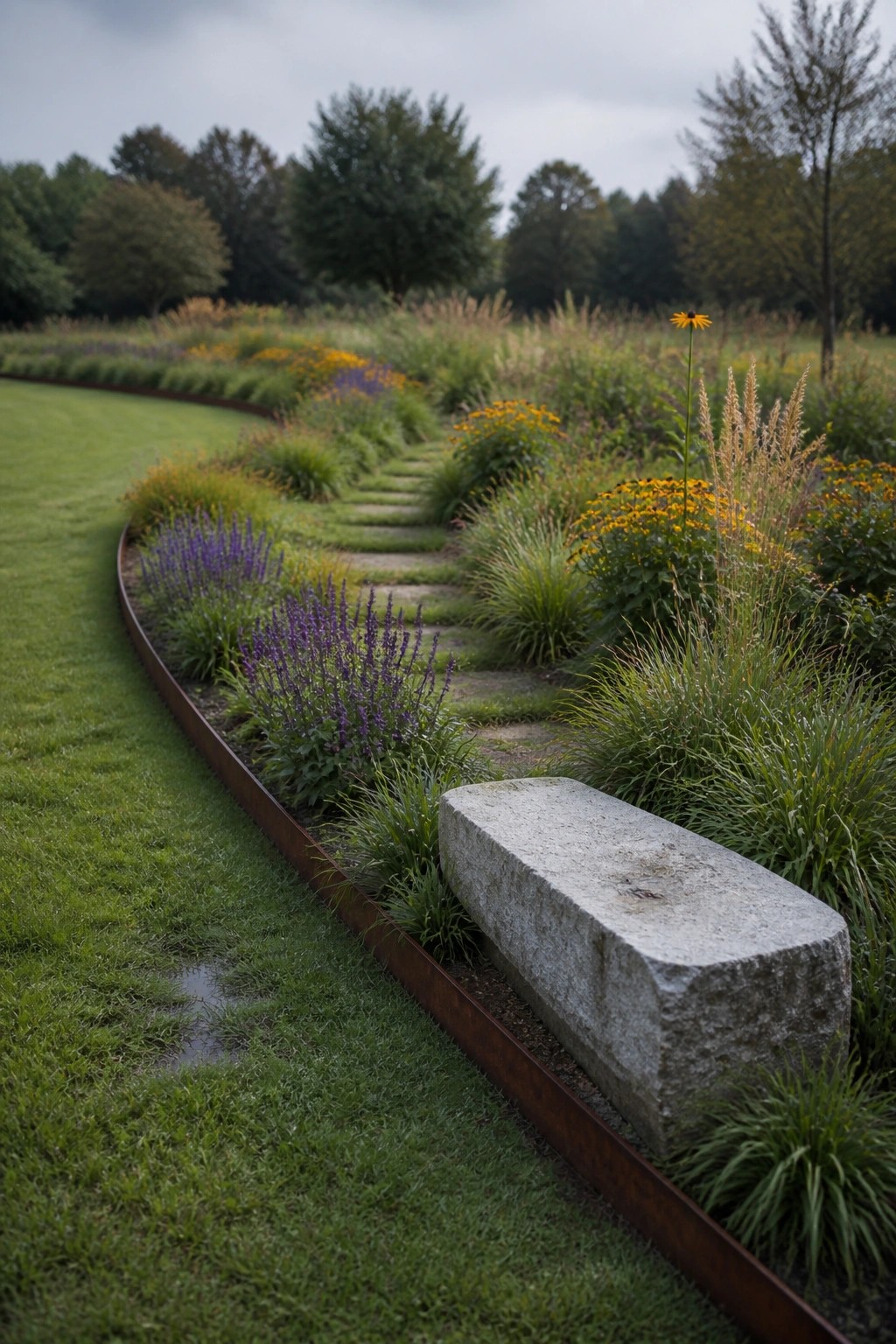
Metal edging lets you follow the natural shape of a space instead of forcing straight lines. It bends without much effort, so you can create a smooth border that fits around trees, slopes, or odd corners where a rigid edge would look out of place.
This works best in narrow side gardens or small back areas where you still want a clear separation between lawn and planting. Set the edging low to the ground and backfill both sides so it stays hidden while keeping the beds tidy over time.
Stepping Stones In A Narrow Strip
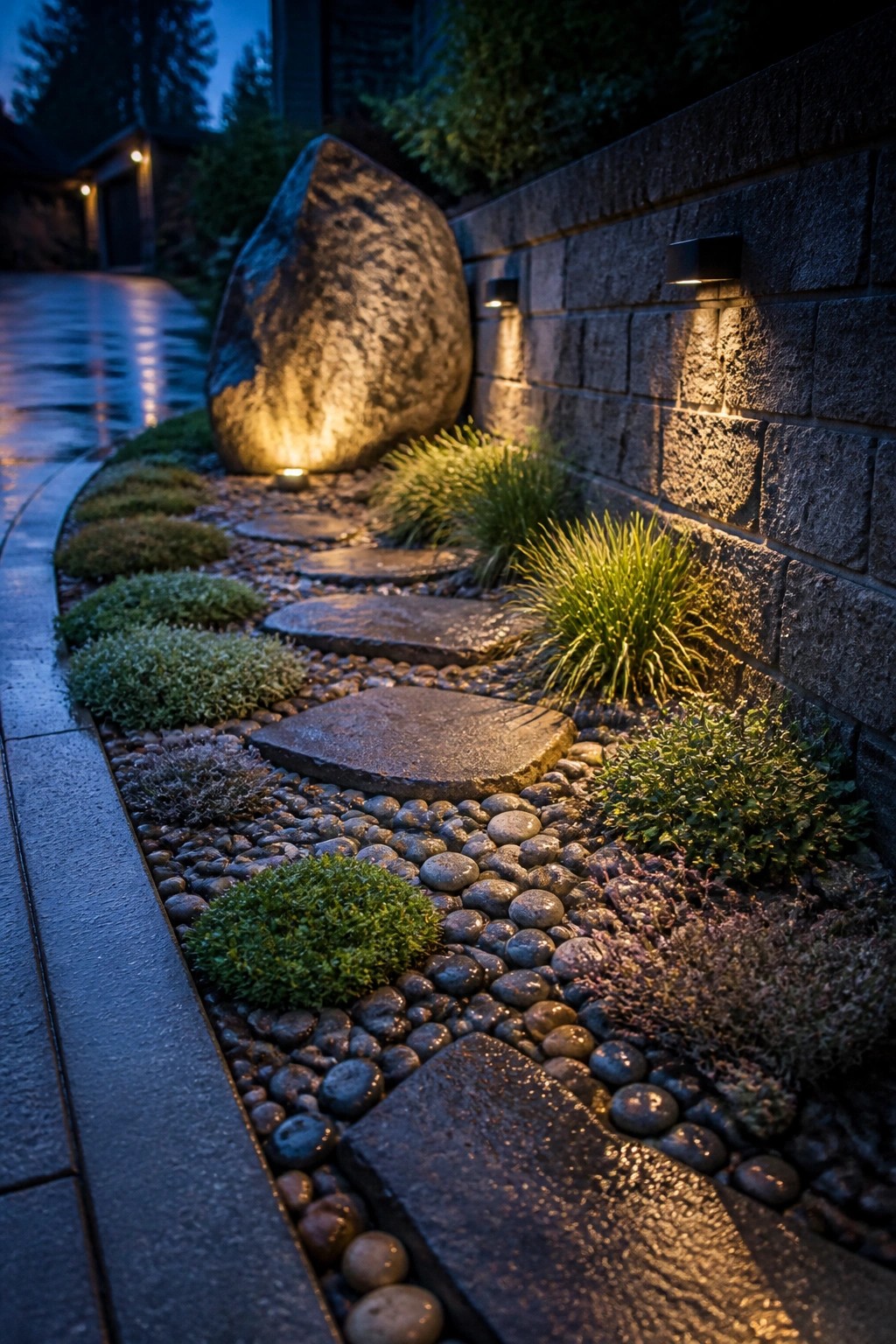
Stepping stones set into pebbles give you a clear way to walk through a tight garden strip without trampling plants or compacting soil. The flat stones keep the path practical while the smaller pebbles hold everything in place and let water drain.
This layout works best along a wall or fence where the bed is too narrow for regular paving. Keep the stones spaced for comfortable steps and choose low plants that stay out of the way. The same idea fits beside a driveway or down the side of a house.
Tall Plants Define a Narrow Balcony Corner
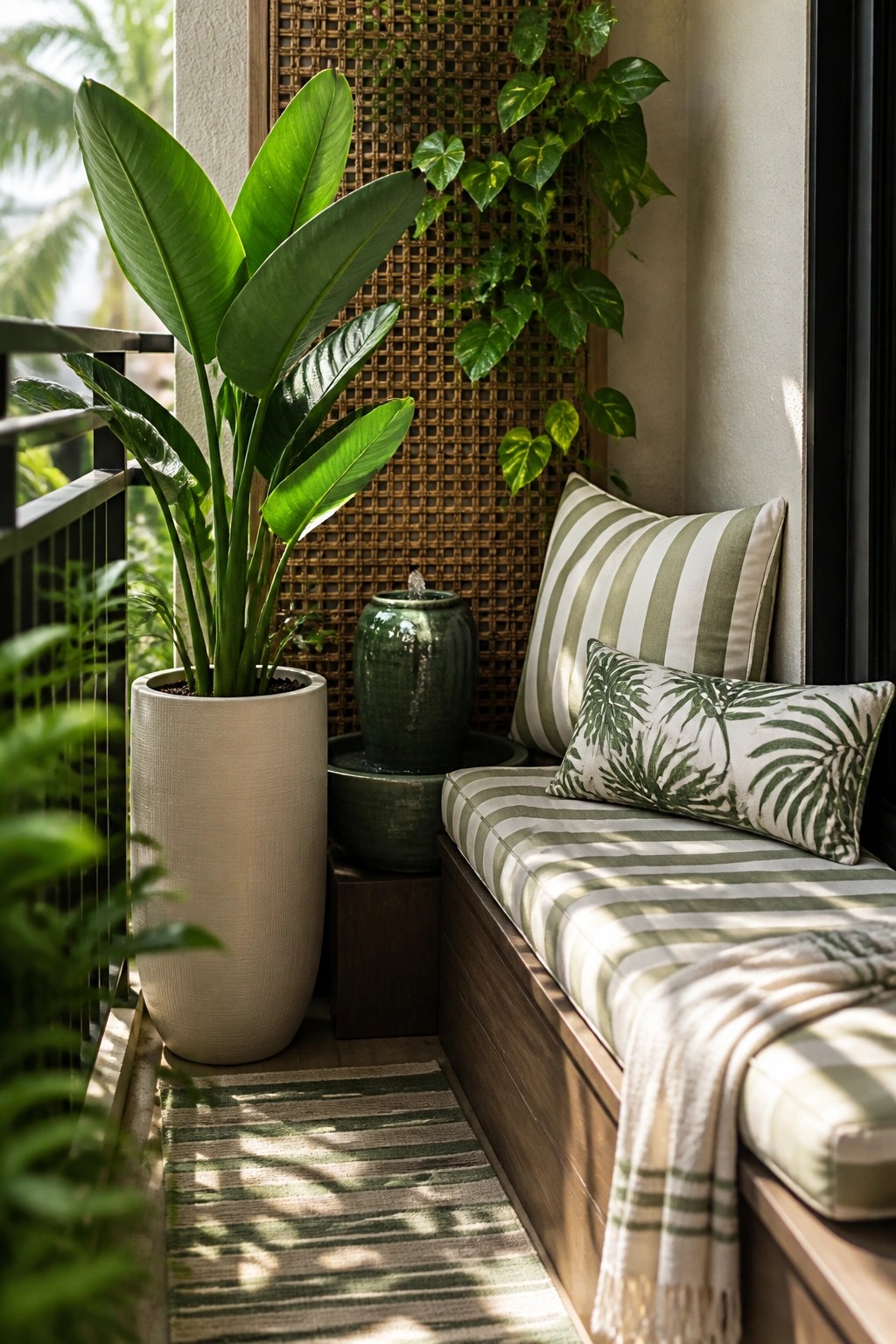
A single large plant can do a lot in a tight outdoor spot. Here the tall pot with broad leaves creates a natural screen and gives the bench a sense of enclosure without any construction. The striped cushions and rug keep the seating simple while the plant does the work of making the space feel like a garden instead of leftover floor space.
This approach works best on balconies or side patios where floor room is limited. Choose one or two pots that reach seating height, place them at the outer edge of the sitting area, and keep the rest of the furnishings low. It suits apartments and townhouses where you want greenery without blocking light or walkways.
Run a Stepping Stone Path Through a Narrow Bed
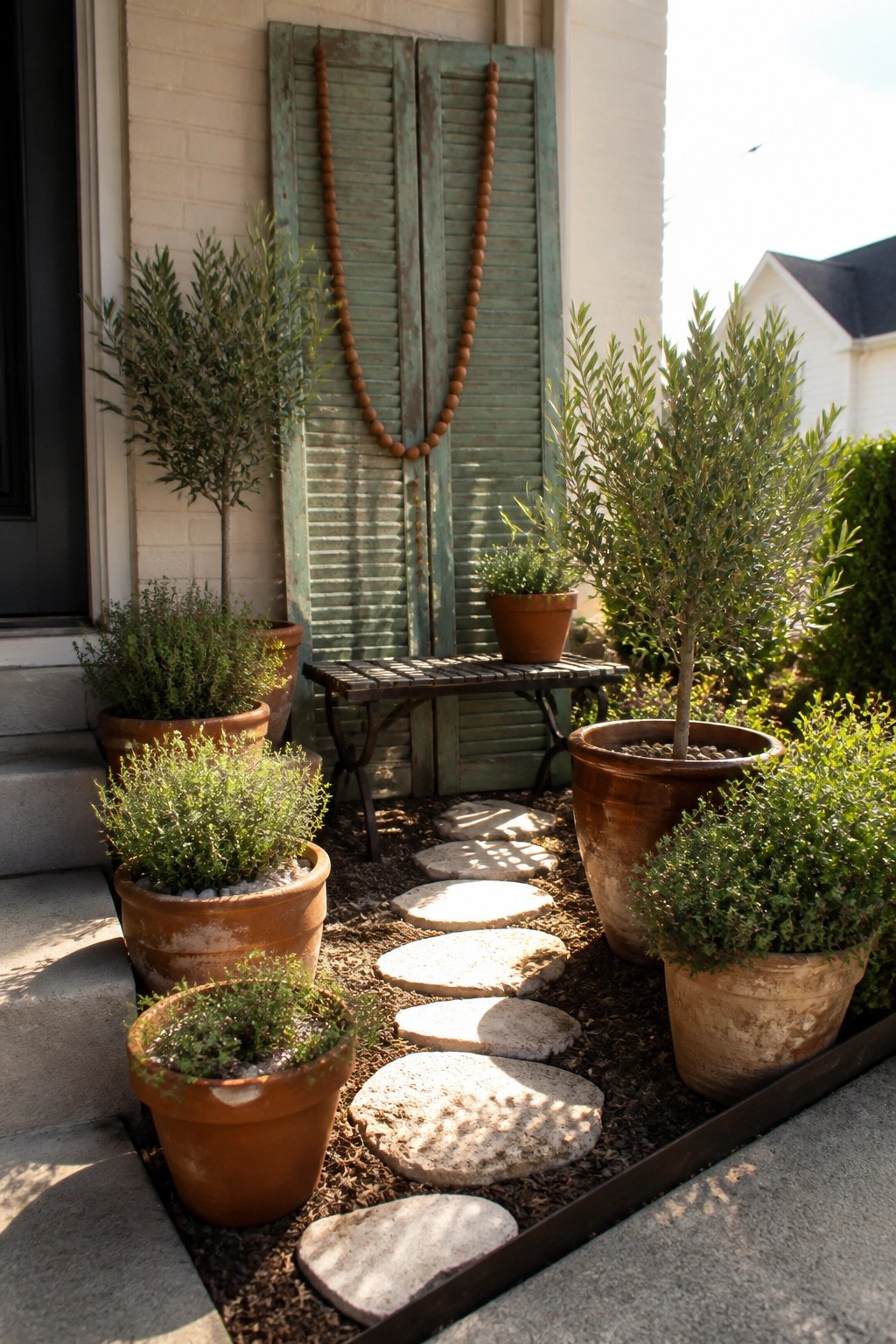
A line of flat stones set into mulch turns a thin strip of ground into something you can actually walk through. The pots sit along the edges and keep the planting from feeling scattered while still leaving room to move.
This setup works best beside a house wall or in any long awkward space where a full border would crowd the walkway. Use fairly large pots so the arrangement stays balanced and choose stones that sit low enough to avoid tripping.
Stacked Planters With a Trellis
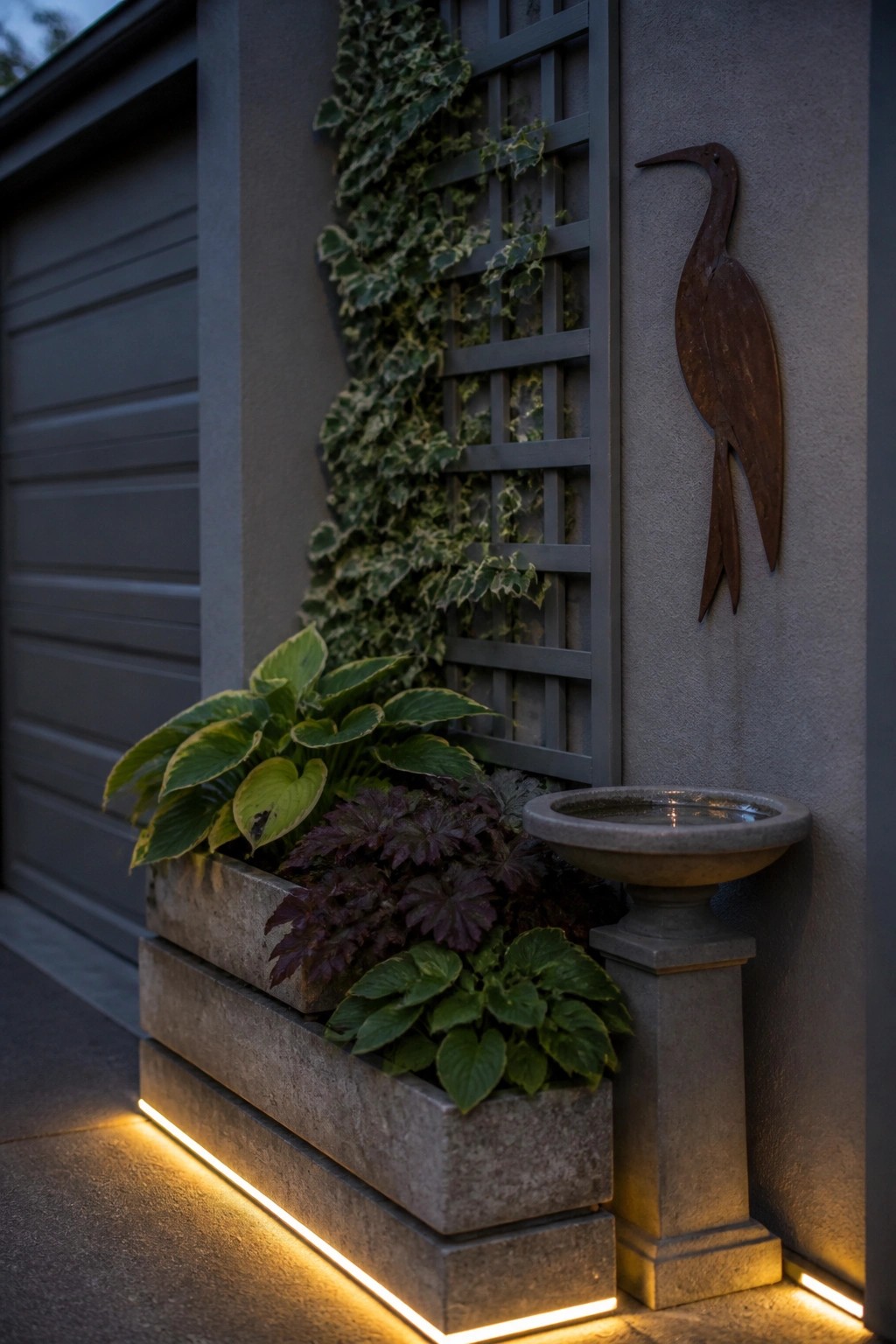
Stacked concrete planters let you add real depth in a narrow corner without taking up much ground space. The lower level holds larger plants while the upper one keeps things from looking flat, and the trellis behind gives climbing vines a place to grow upward instead of outward.
This setup works well along a garage wall or side of the house where soil is limited. Keep the lower planter a bit wider than the one above it so the plants can spill over naturally, and add a simple light strip along the base if the corner stays shady.
Define a Corner with Gravel and Stone Edging
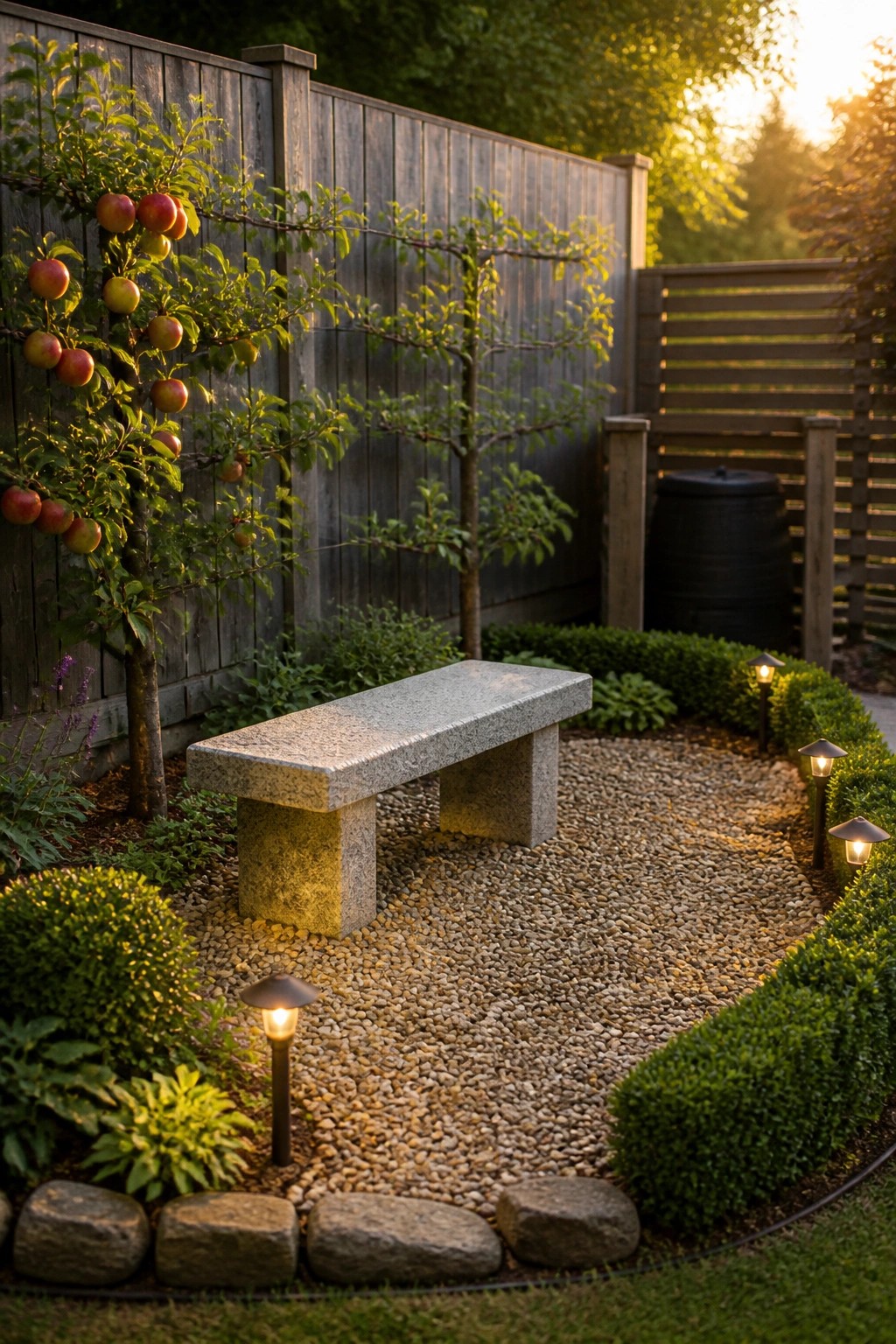
A gravel patch edged with stones gives you a clean way to mark off space for a bench without taking up much room. The border keeps the surface tidy and helps the whole area feel intentional even in a small or oddly shaped spot.
This setup suits tight corners along a fence or beside planting beds where a full patio would feel too big. Keep the gravel layer thin and contained so it stays put and does not creep into the surrounding soil.
Line Up Pots in Narrow Garden Strips
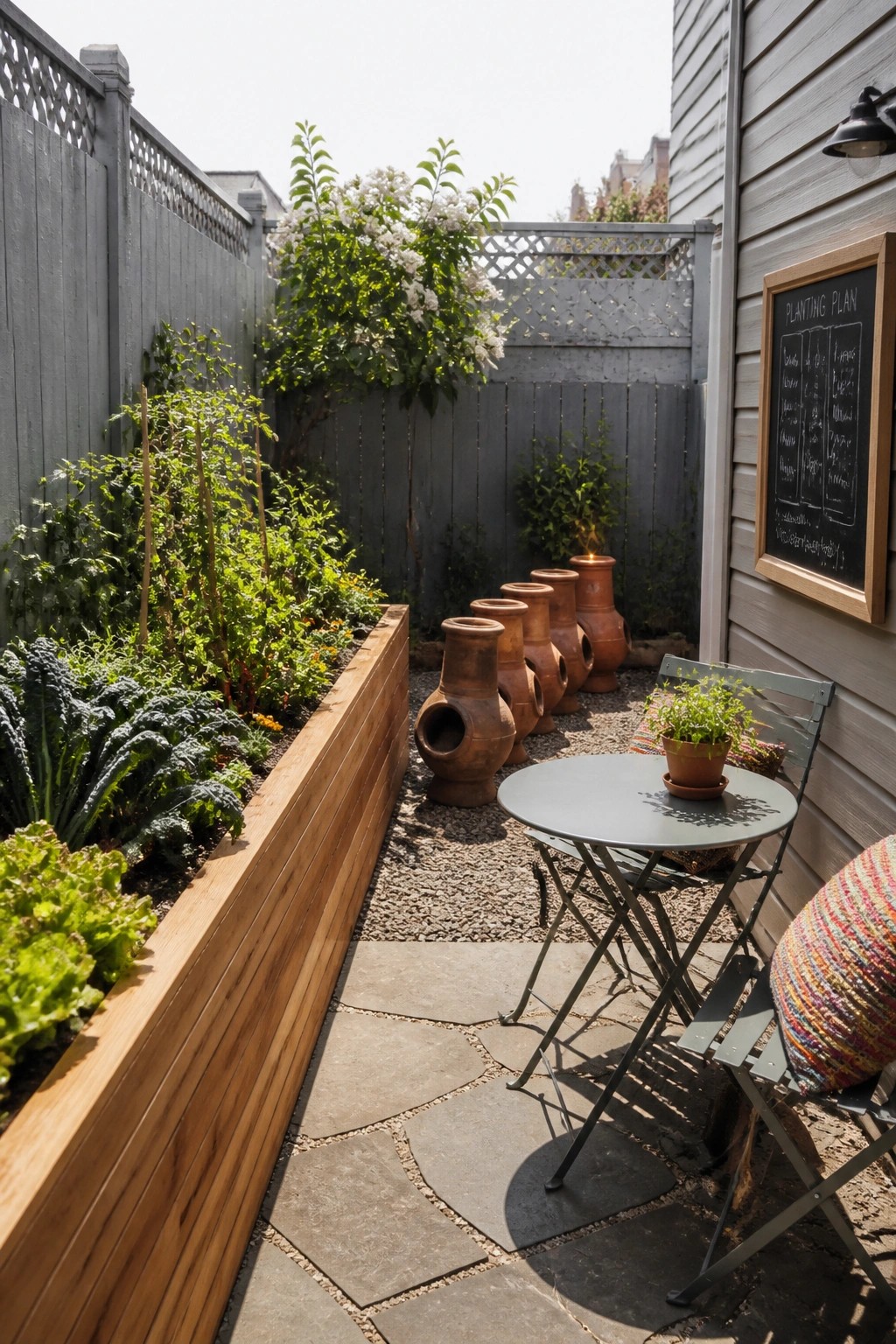
A row of large pots can turn a thin strip of ground into something useful instead of wasted space. In tight side yards or awkward corners, they add height and planting room without needing wide beds or complicated layouts. The gravel underfoot keeps things simple and helps with drainage.
This works best along fences or house walls where the space is long but narrow. Stick to matching pots and leave enough room for a path so the area stays practical for walking or a small seat. Avoid overcrowding them if the strip gets very little sun.
Terraced Stone Walls For Sloped Gardens
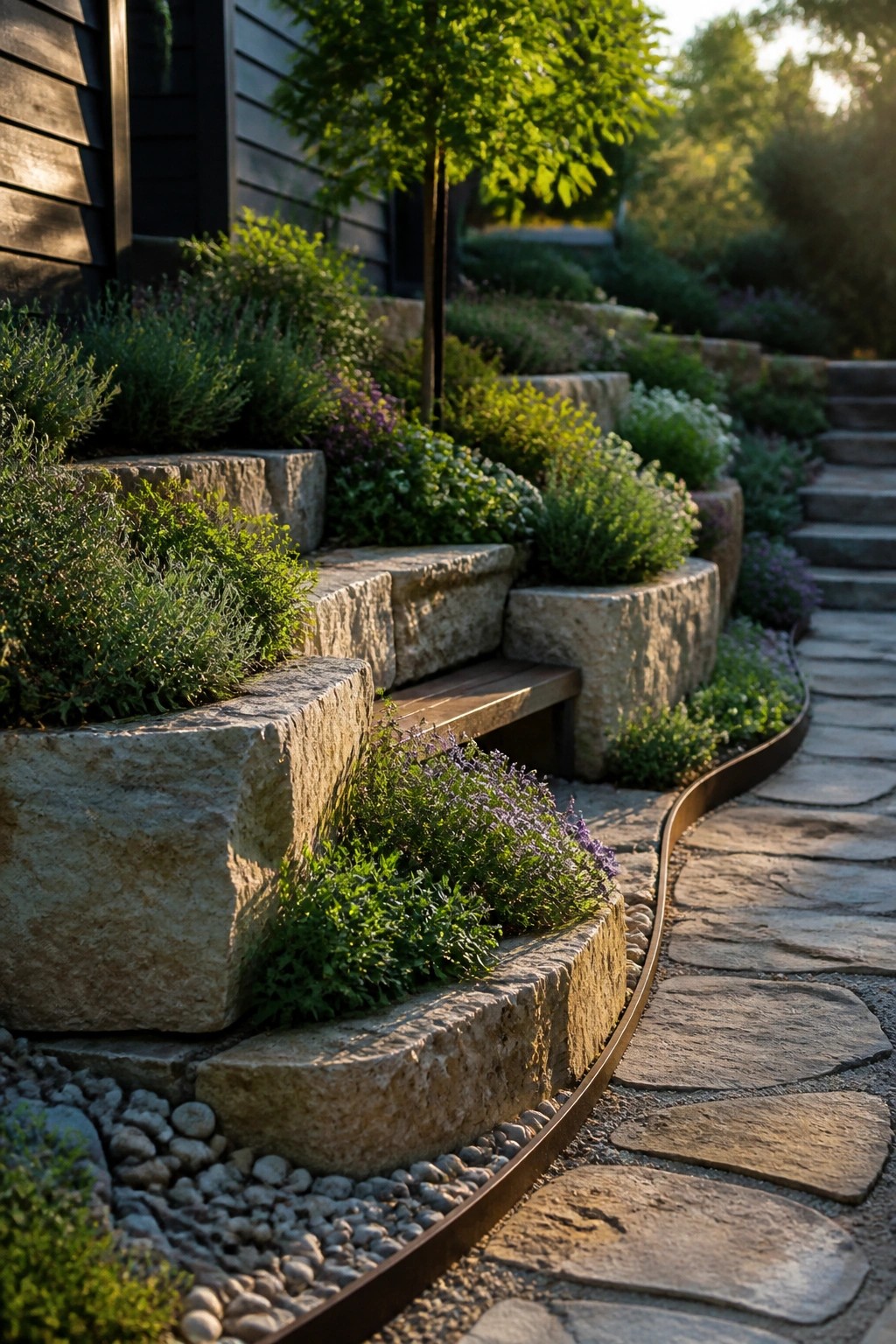
Sloped spots often leave gardeners with little usable planting room. Terracing with stone blocks creates flat beds that hold soil in place and give plants room to spread without constant erosion.
This setup suits homes with uneven backyards or side yards that slope toward a path. Keep the tiers low and follow the natural curve of the land so the beds feel like part of the layout rather than added on.
Use A Central Water Bowl To Anchor A Small Patio
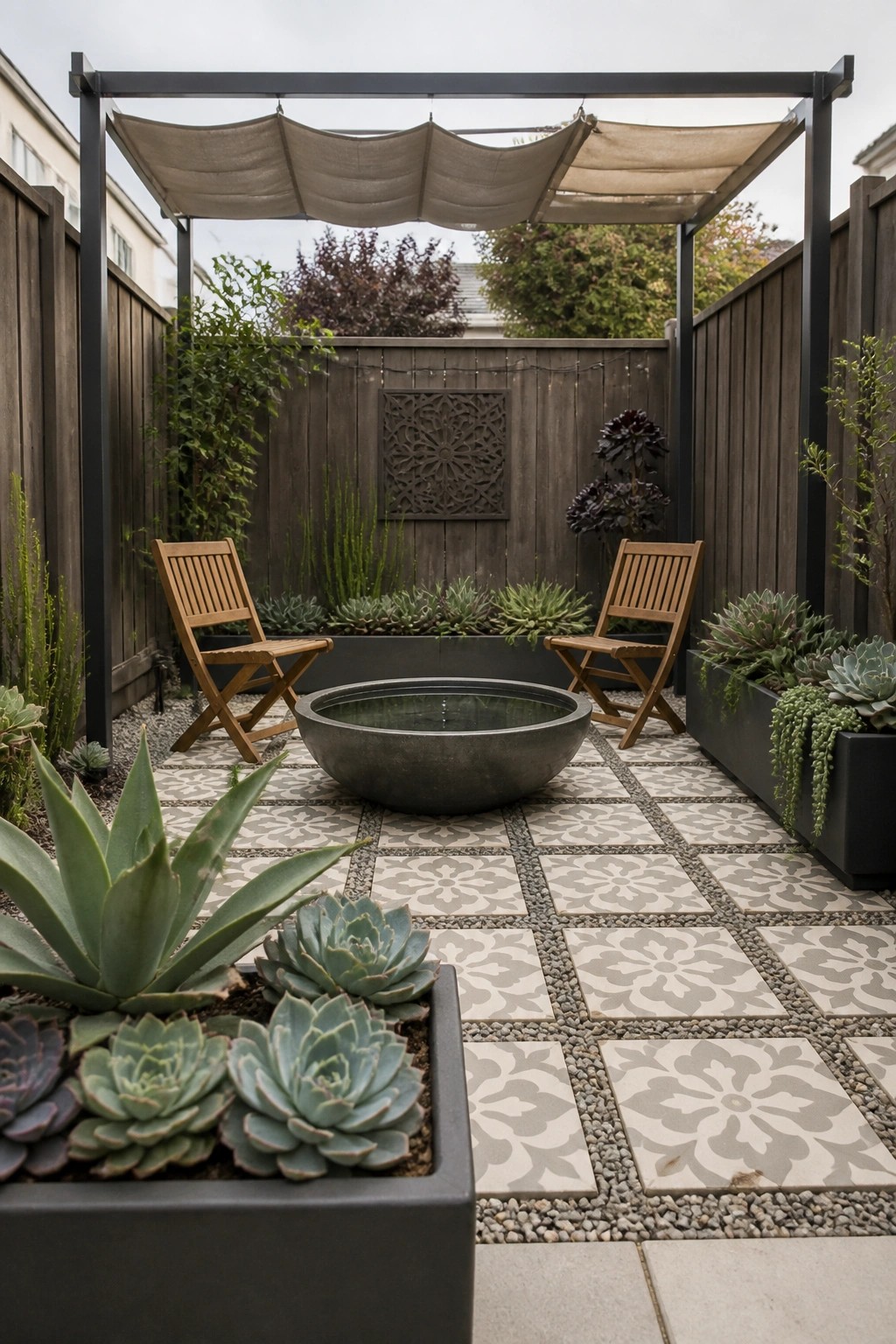
A water bowl works well as the main focal point in a small outdoor space because it gives the area a clear center without crowding it. The bowl draws attention and adds a quiet, reflective element that feels finished even when the surrounding area stays simple.
This approach suits compact courtyards or side yards where paving takes up most of the room. Place the bowl in the middle of the main paved section, add a couple of chairs nearby, and keep the edges planted so the whole layout stays balanced and easy to move around.
Stack Containers To Create Layers In Awkward Corners
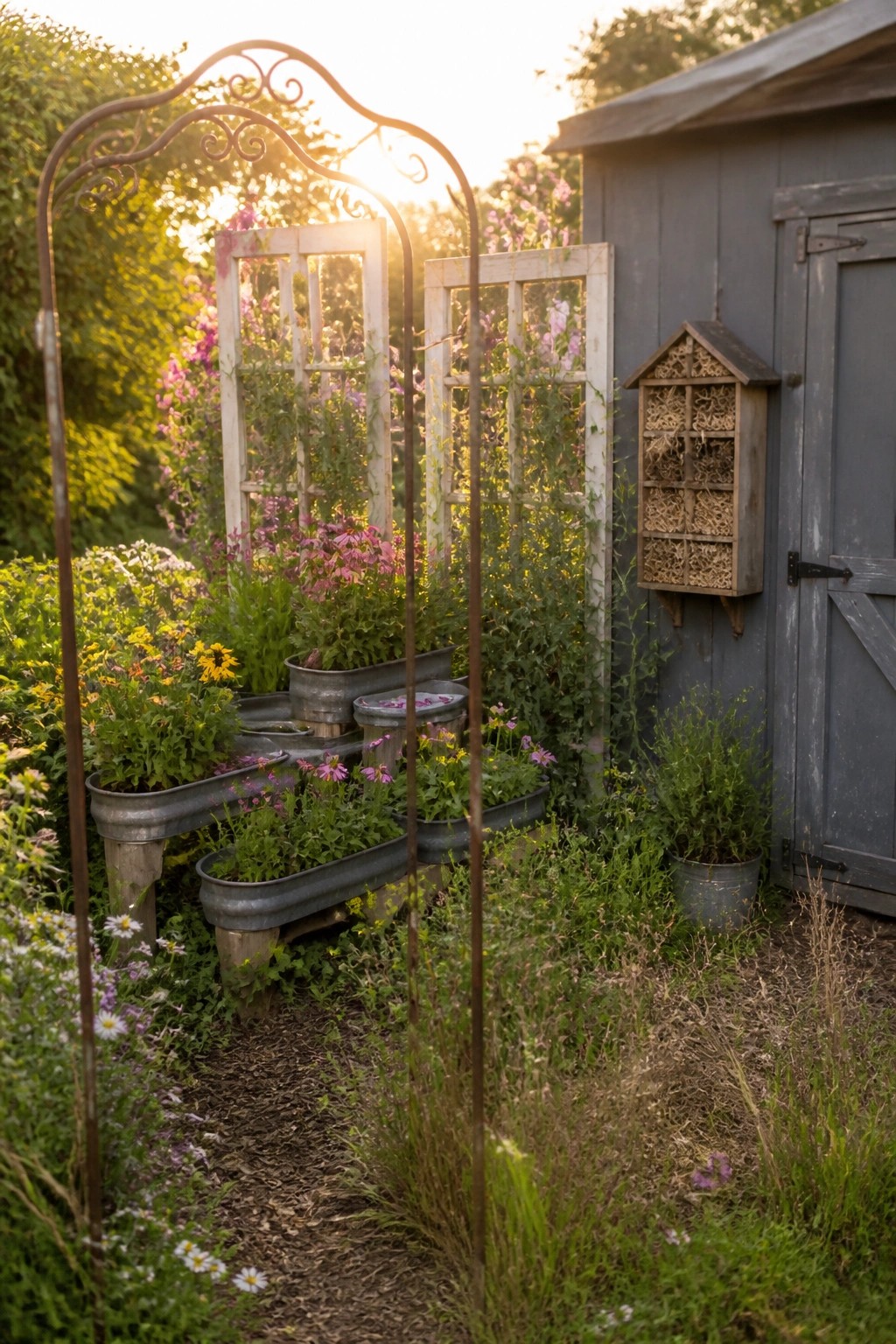
Many small gardens end up with narrow strips or odd corners where a flat row of pots never feels like enough. Stacking a few containers on blocks or low stands adds height and gives you room for more plants without spreading everything out sideways.
This setup works especially well against a fence or shed wall. Use matching troughs or similar shapes so the levels sit steady, and choose plants that can spill over the edges a little to soften the stack.
Mixing Gravel Layers In Narrow Garden Strips
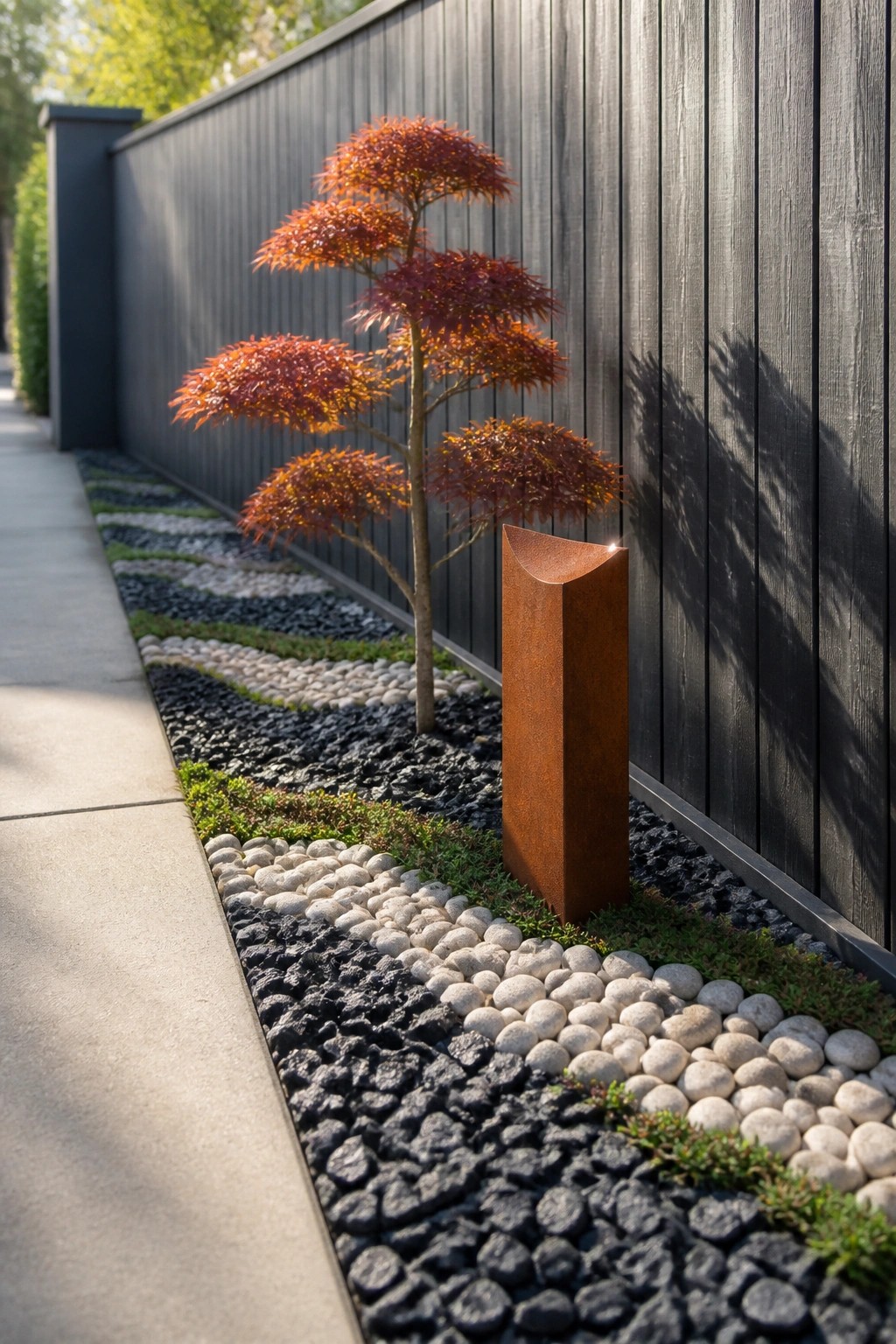
A simple mix of dark gravel and lighter pebbles can turn a thin strip of ground into something that feels intentional. The contrast between the sizes and colors helps the bed hold its shape without needing a lot of edging or plants.
This approach works especially well along fences or walls where space is limited. Keep the curves gentle so the pattern stays easy to maintain, and let a single small tree or accent piece break up the length.
Layer Potted Plants Along Narrow Passages
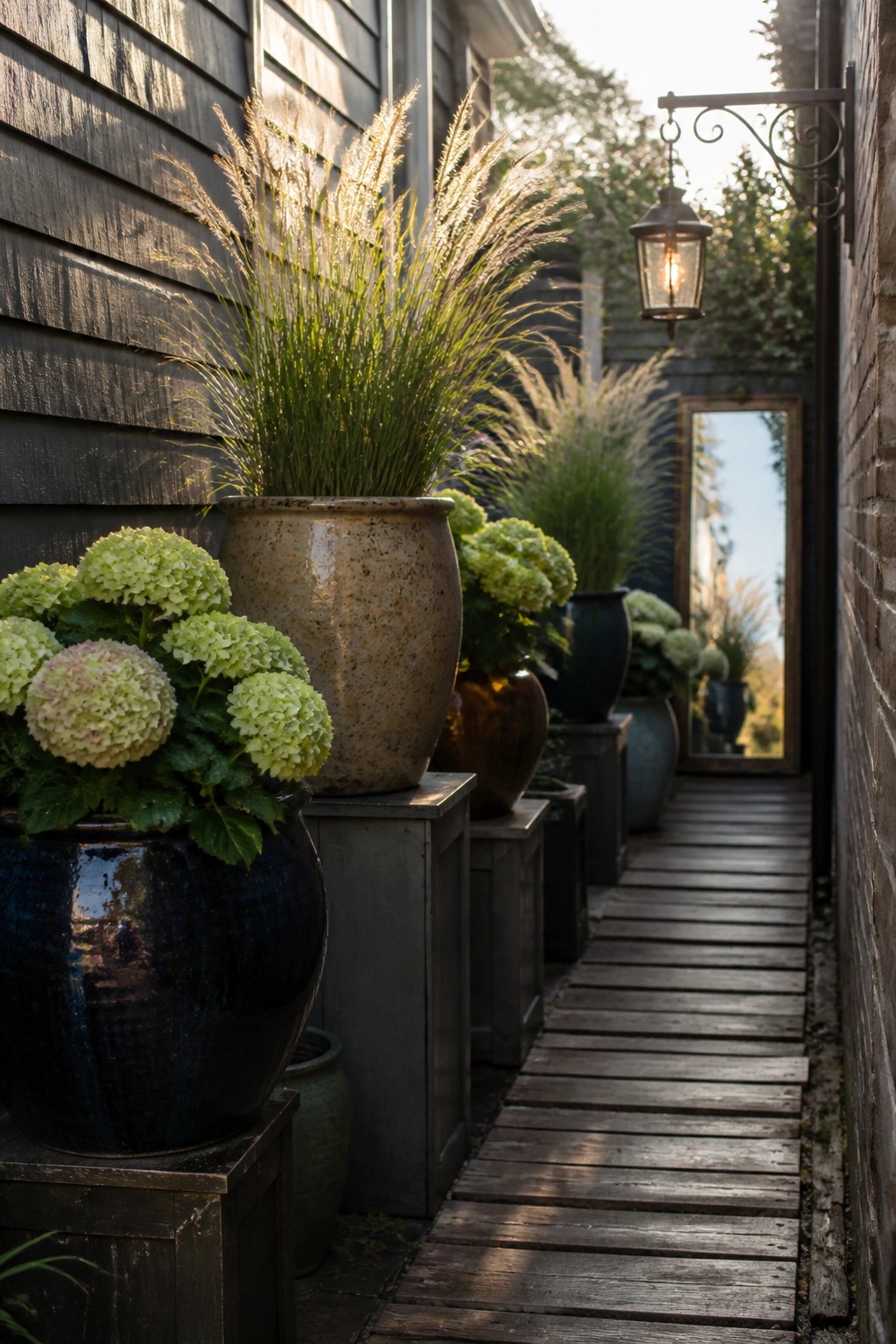
Many homes have narrow side yards or odd passages that feel too tight for a real garden. Placing a row of large pots along one edge adds planting without taking up floor space or requiring new beds.
This approach suits older homes with limited side access or any tight corner between walls. Keep the pots in a similar color range and vary the plant heights so the path stays open and easy to walk through.
Cluster Large Pots in Tight Corners
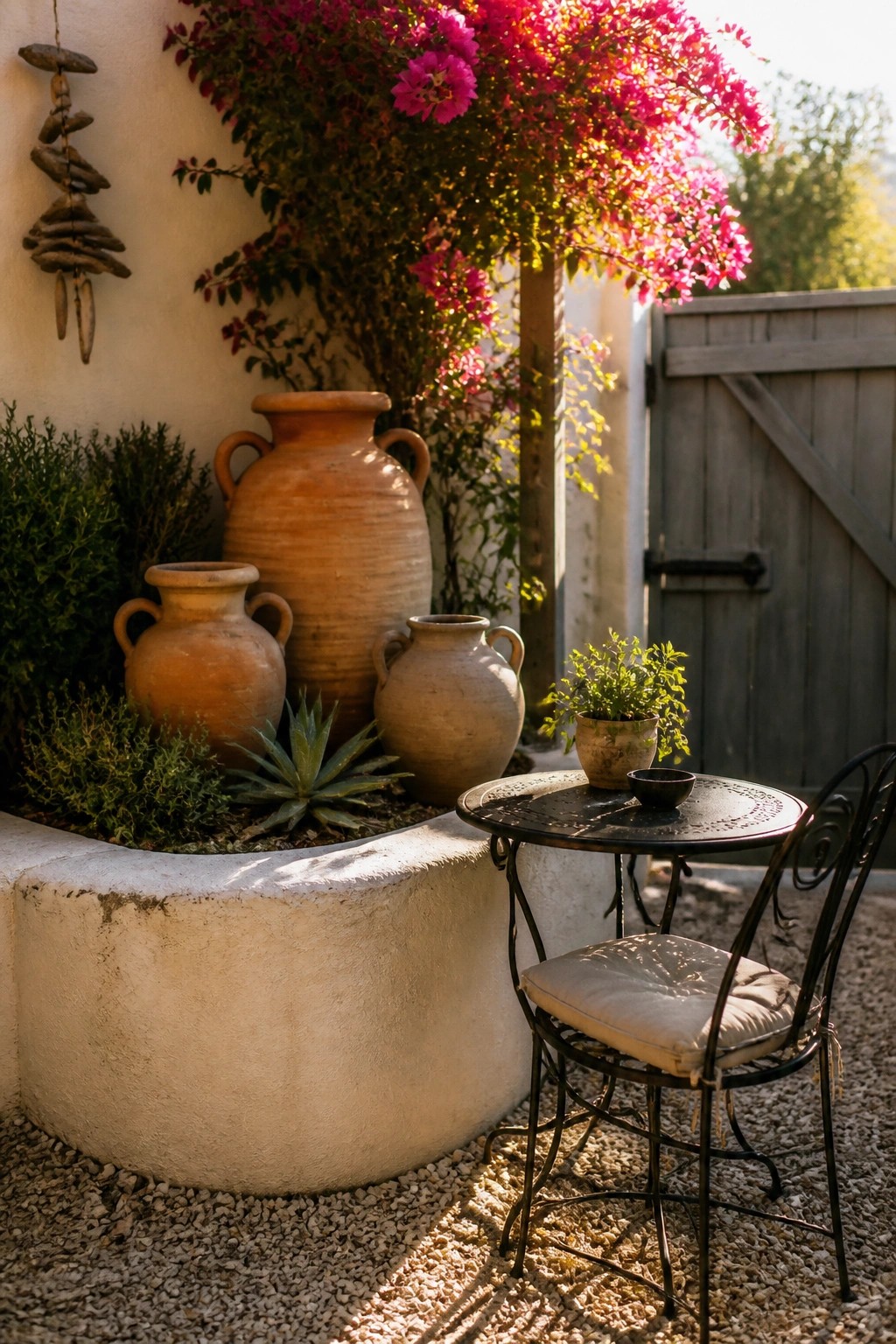
Large pots give you an easy way to add planting and height to corners that feel too small or oddly shaped for regular beds. Grouping a few together creates a simple focal point without needing much ground space.
Try mixing two or three sizes in the same material and set them against a wall or fence. The cluster softens the angle and turns the spot into a usable part of the garden.
Frequently Asked Questions
Q: What if my odd-shaped spot gets almost no sun? A: Pick shade-loving plants like ferns or hostas and group them together. Add a mirror on a nearby wall to bounce light around. Check the soil moisture often since shady areas stay damp longer.
Q: Can I really fit a seating area into a tight corner without it feeling cramped? A: Try a single bench tucked against the wall with slim legs. Hang planters above it instead of putting pots on the ground.
Q: How do I stop weeds from taking over in those awkward layout gaps? A: Lay down cardboard or newspaper first and cover it with mulch. This blocks light so weeds struggle to sprout while your plants settle in. Pull any stragglers by hand every couple of weeks.
