

I often find that the front of a house tells you more about the place than the inside ever could at first glance.
A few well placed elements can shift how the whole facade reads without needing a full overhaul.
Small changes add up.
Some ideas look promising until you consider how they hold up in different weather.
Trying things out in my own yard has shown me which ones actually improve the view from the road.
Potted Plants Give The Entry A Clean Look
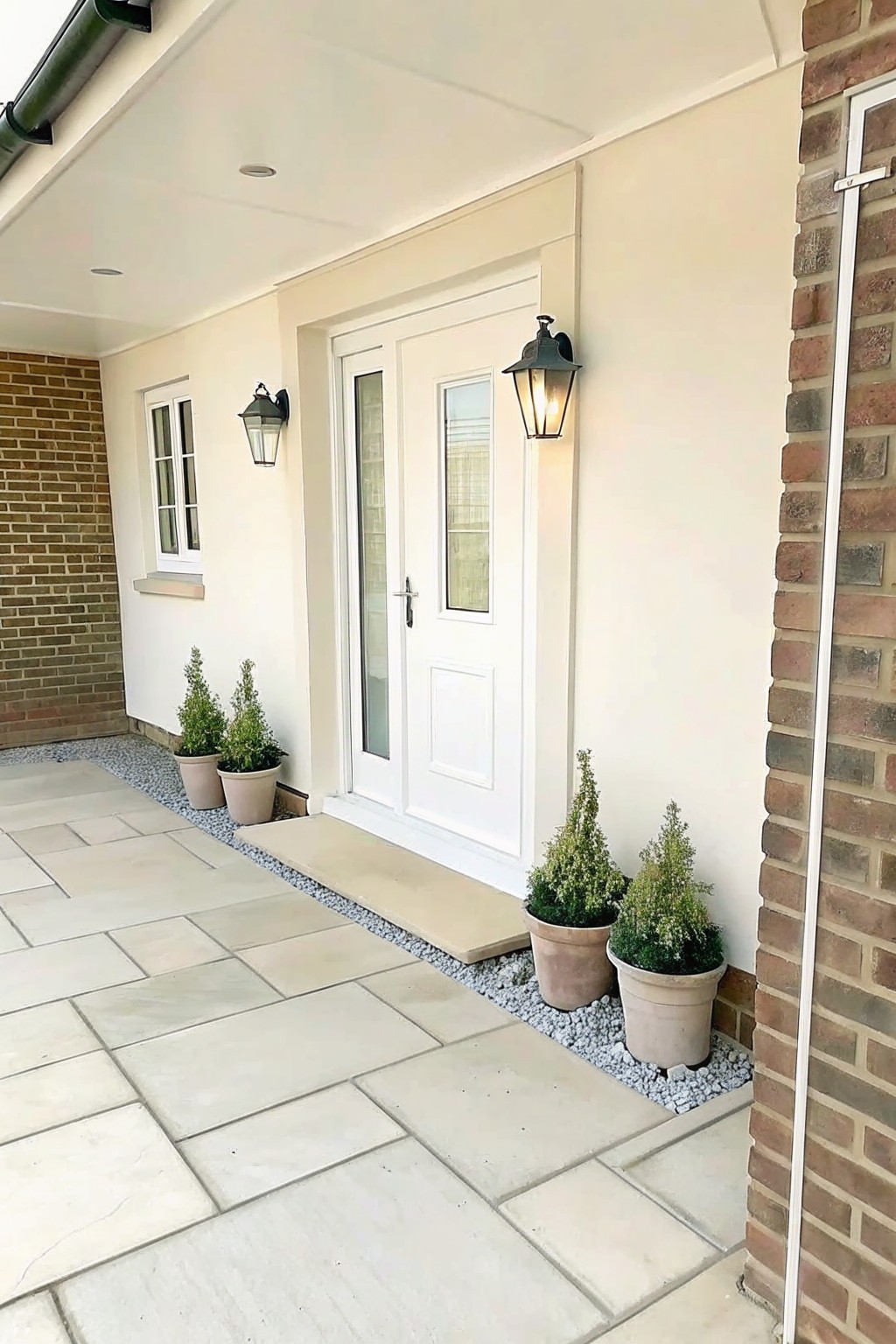
A row of matching pots placed along the side of the path adds some greenery without needing a big garden bed. It keeps the front feeling ordered and gives the door a bit more presence without much work.
This approach works best on homes with a fairly flat entry area and limited planting space. Stick to the same pot style and choose plants that stay green all year so the look holds up with only occasional watering.
Raised Planters Along The Walkway
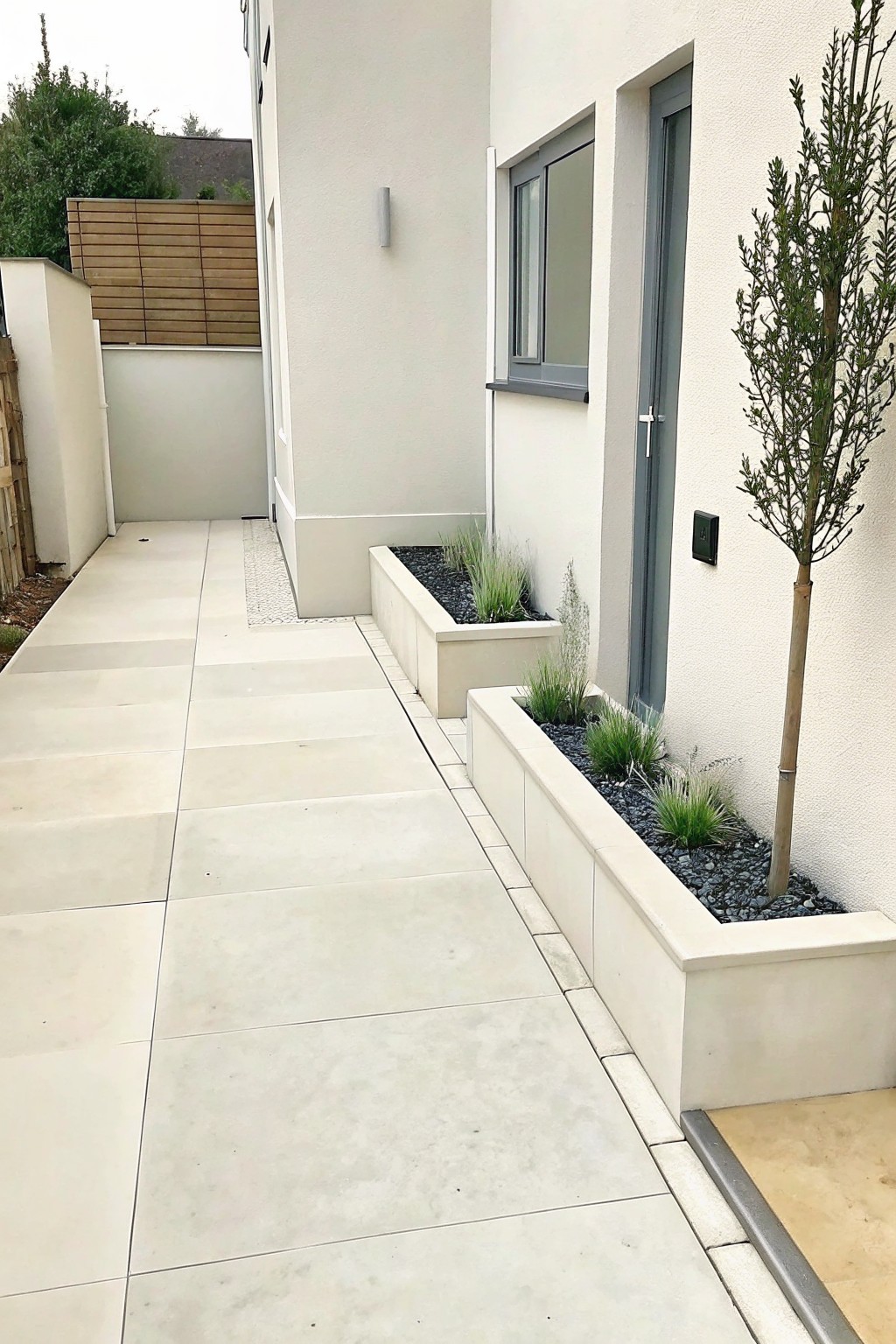
Raised planters give a front path a finished edge without crowding the space. They keep soil and plants neatly contained while adding height that makes the whole approach feel more deliberate.
This setup works best on straightforward modern homes where you want low upkeep and clean lines. Use a dark gravel mulch and simple grasses so the beds stay looking tidy with very little work once they are planted.
Frame the Entry With Matching Pots
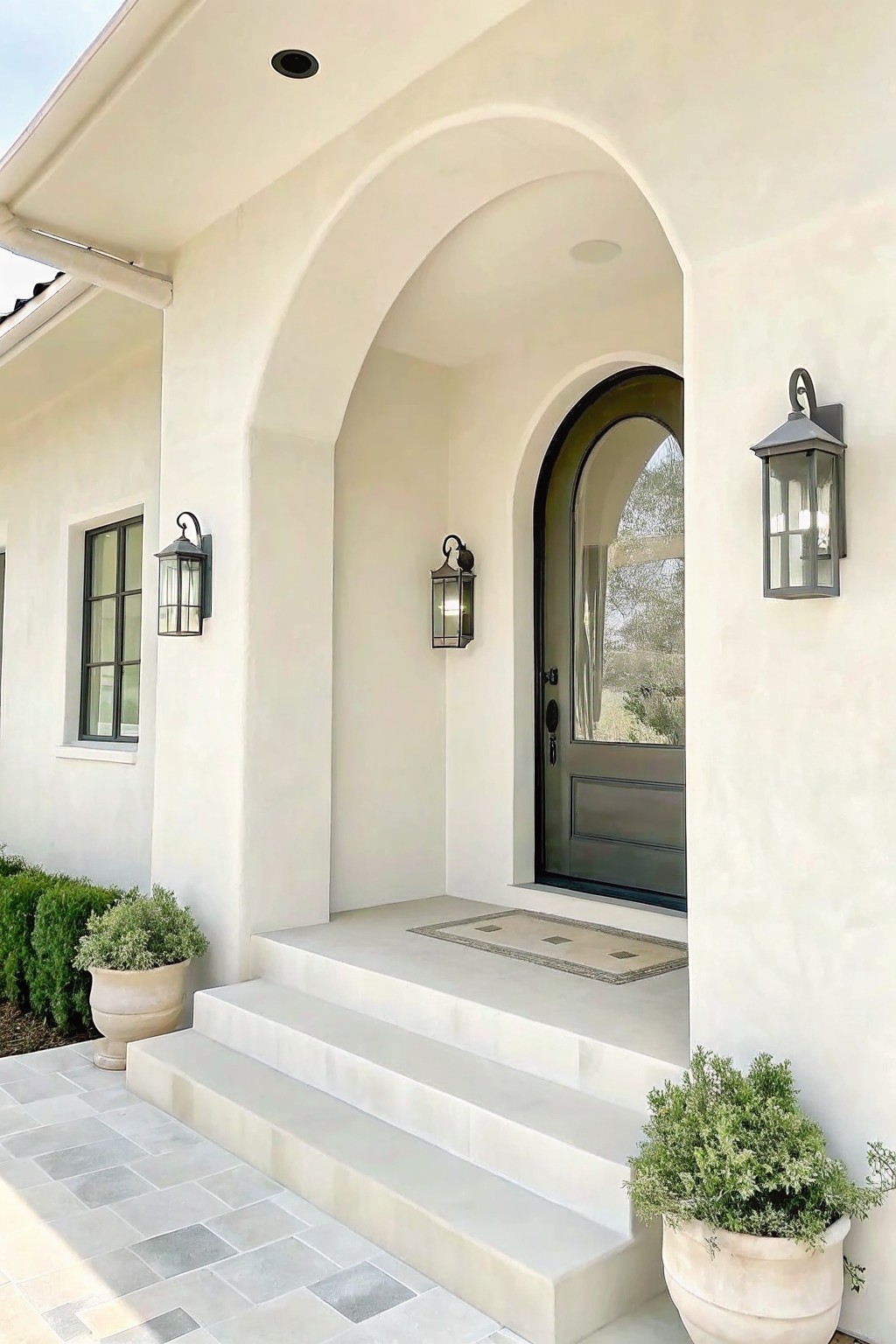
Many homes gain a cleaner, more finished look when you set matching pots on either side of the front steps. The pair gives the entrance weight and draws the eye straight to the door without any extra construction.
This approach suits houses with plain walls and simple architecture. Choose pots in the same size and material, then fill them with the same type of greenery so the arrangement stays balanced year-round.
Edge the Patio With a Raised Planting Bed
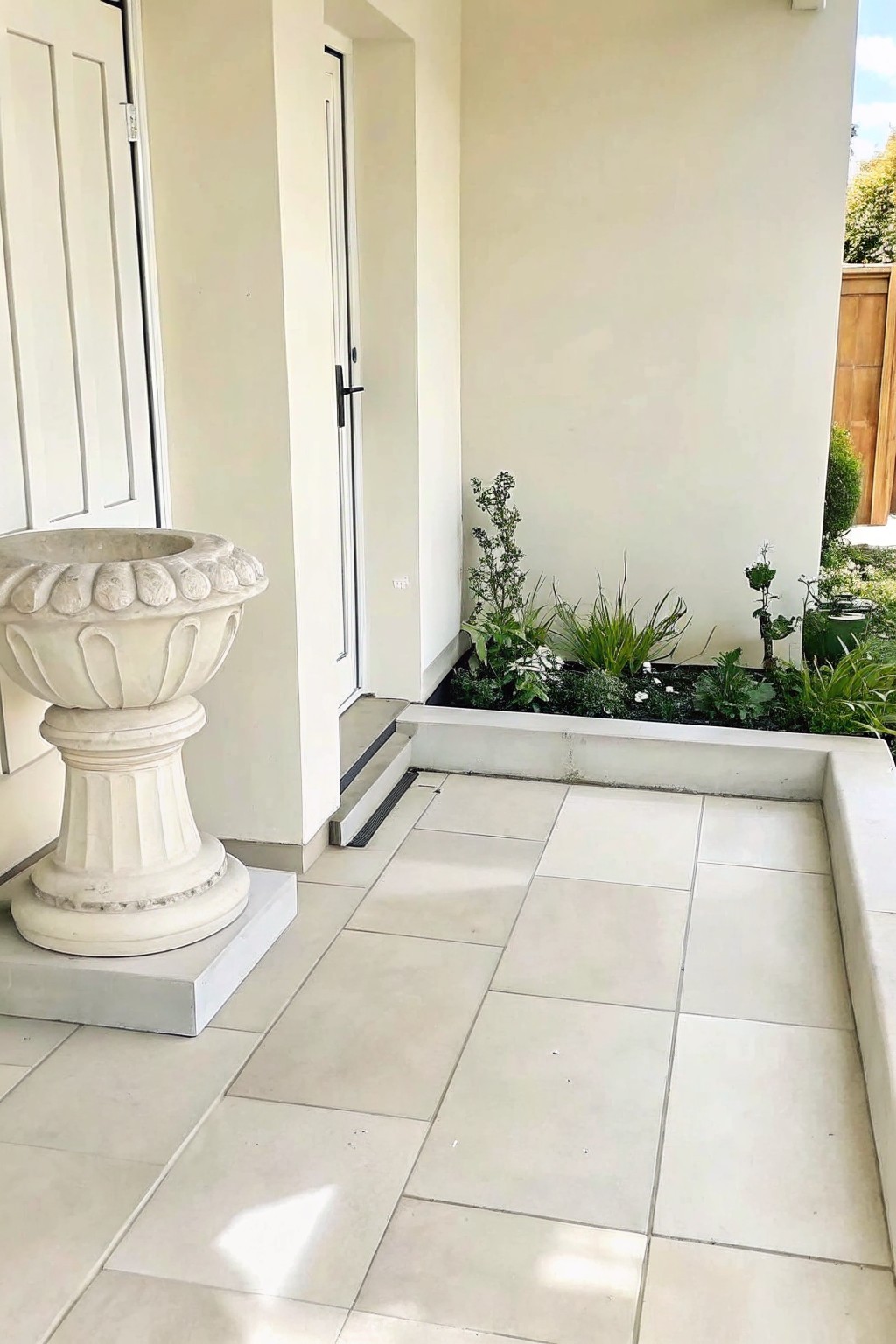
A raised planting bed along the patio keeps the walking area clear while still bringing plants close to the house. It gives the entry a finished look without needing extra pots scattered around.
This works best on homes with a flat paved front or side entry. Keep the bed fairly narrow and choose a simple mix of grasses and shrubs so it stays low maintenance over time.
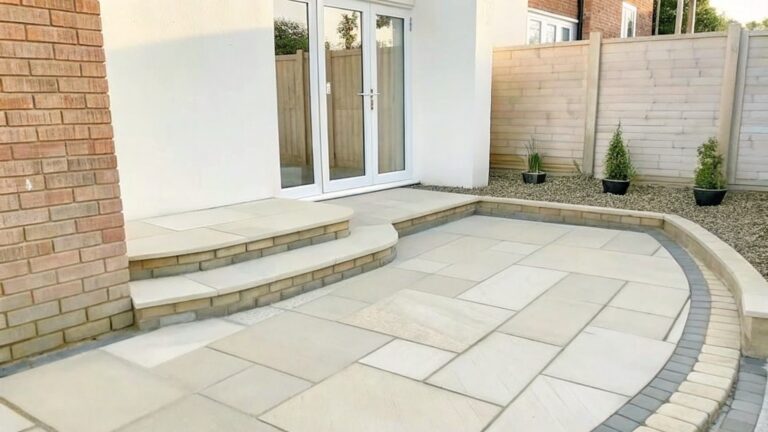
Frame a Front Path with Contrasting Pavers
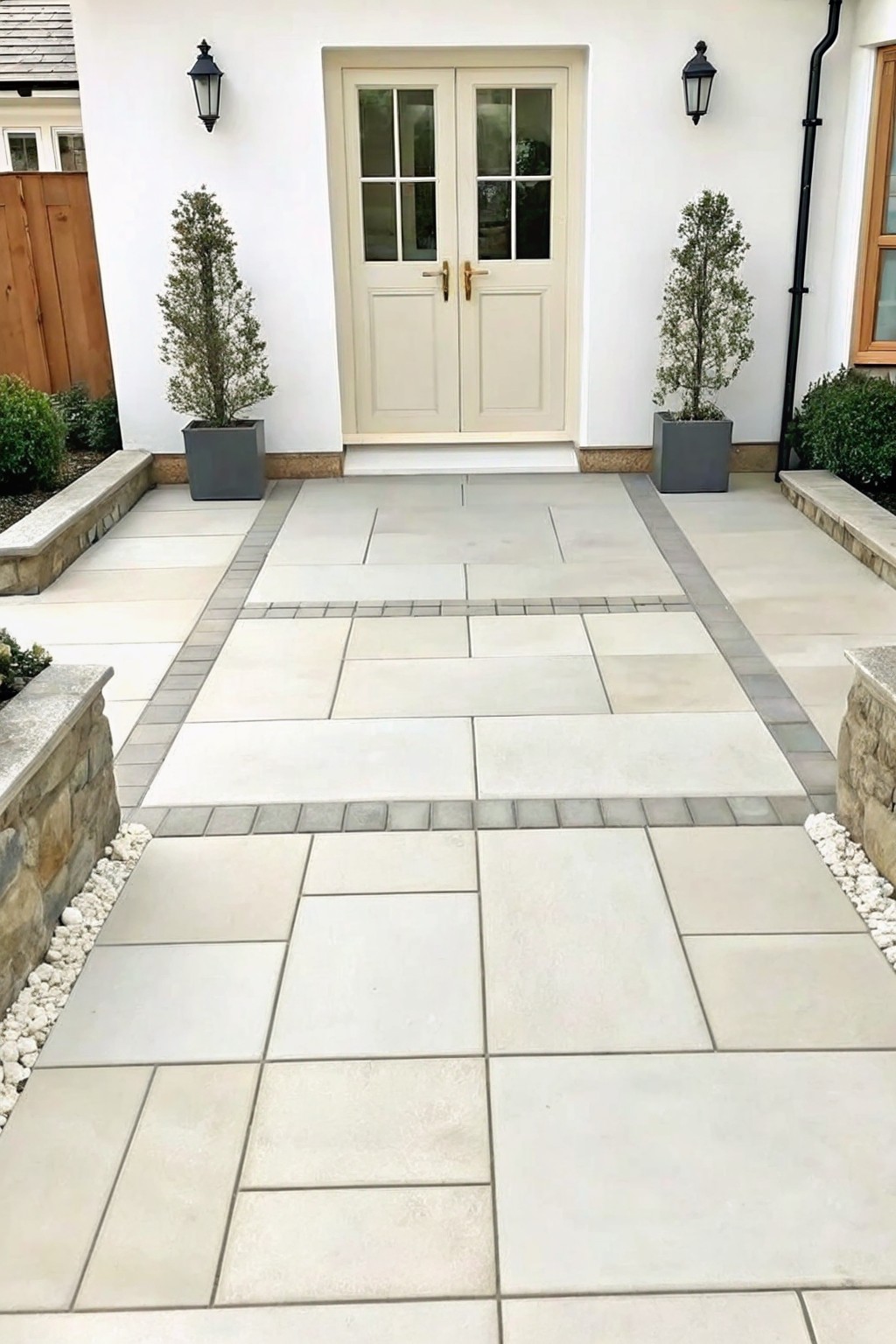
A bordered path gives the front garden a tidy, finished look without much fuss. The large pavers handle the main walkway while a strip of smaller stones runs down the center and edges to break up the surface and add a bit of pattern.
This works well on homes with a fairly straight approach to the door. Keep the border narrow so it stays easy to walk on and choose a color that sits quietly against the larger stones. It suits both newer houses and older ones that need a simple update to the entry.
Paver Paths Set In Gravel Offer Clean Lines
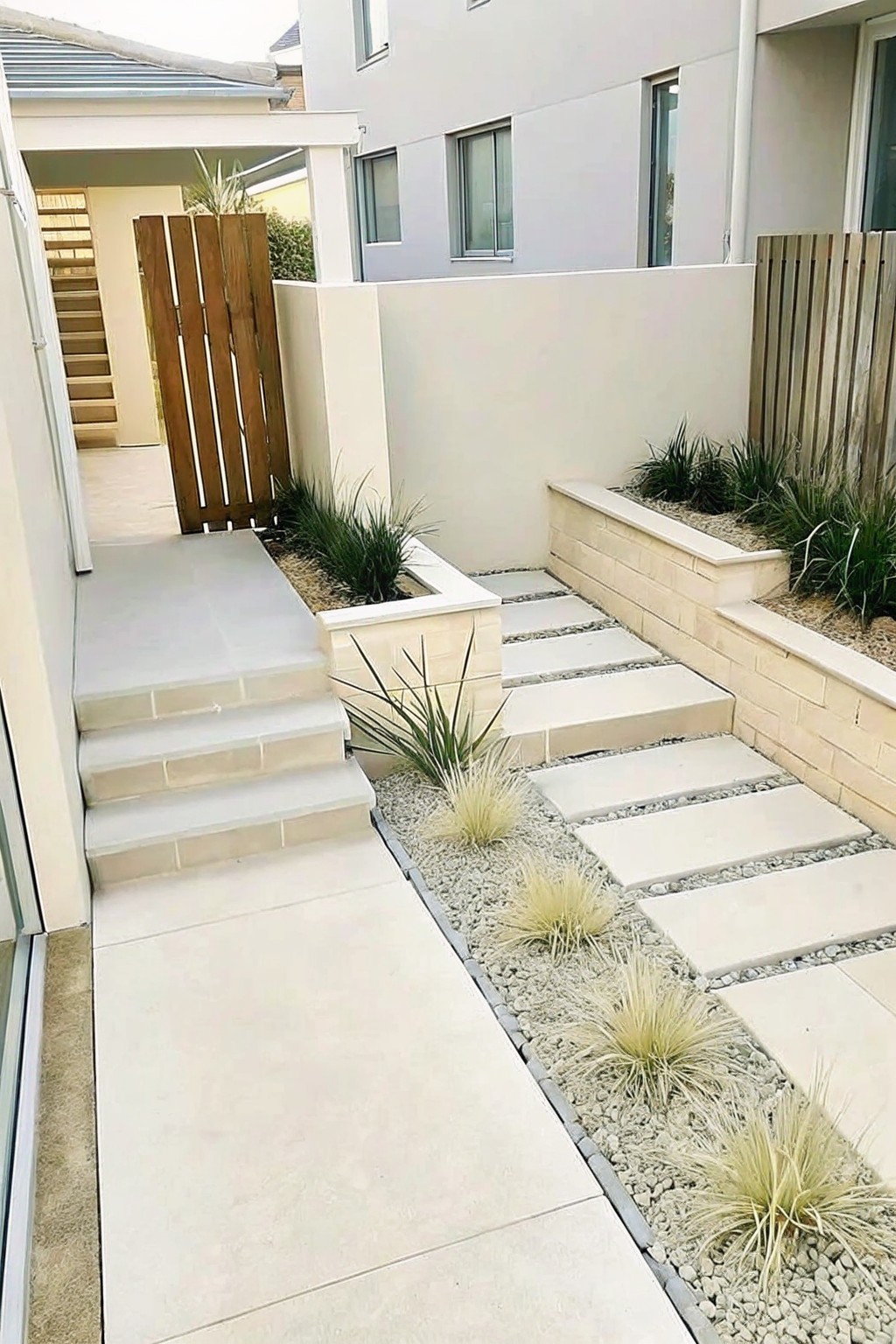
Many front gardens look better with a simple path that guides people in without needing constant work. Laying large pavers in gravel creates solid footing while keeping the overall look open and uncluttered.
This setup works well on narrow lots or along the side of a house where space is limited. Use low grasses along the edges to soften the hard surfaces and choose gravel that matches the pavers so the path feels like one steady line rather than separate pieces.
Line the Front Path with a Raised Planter
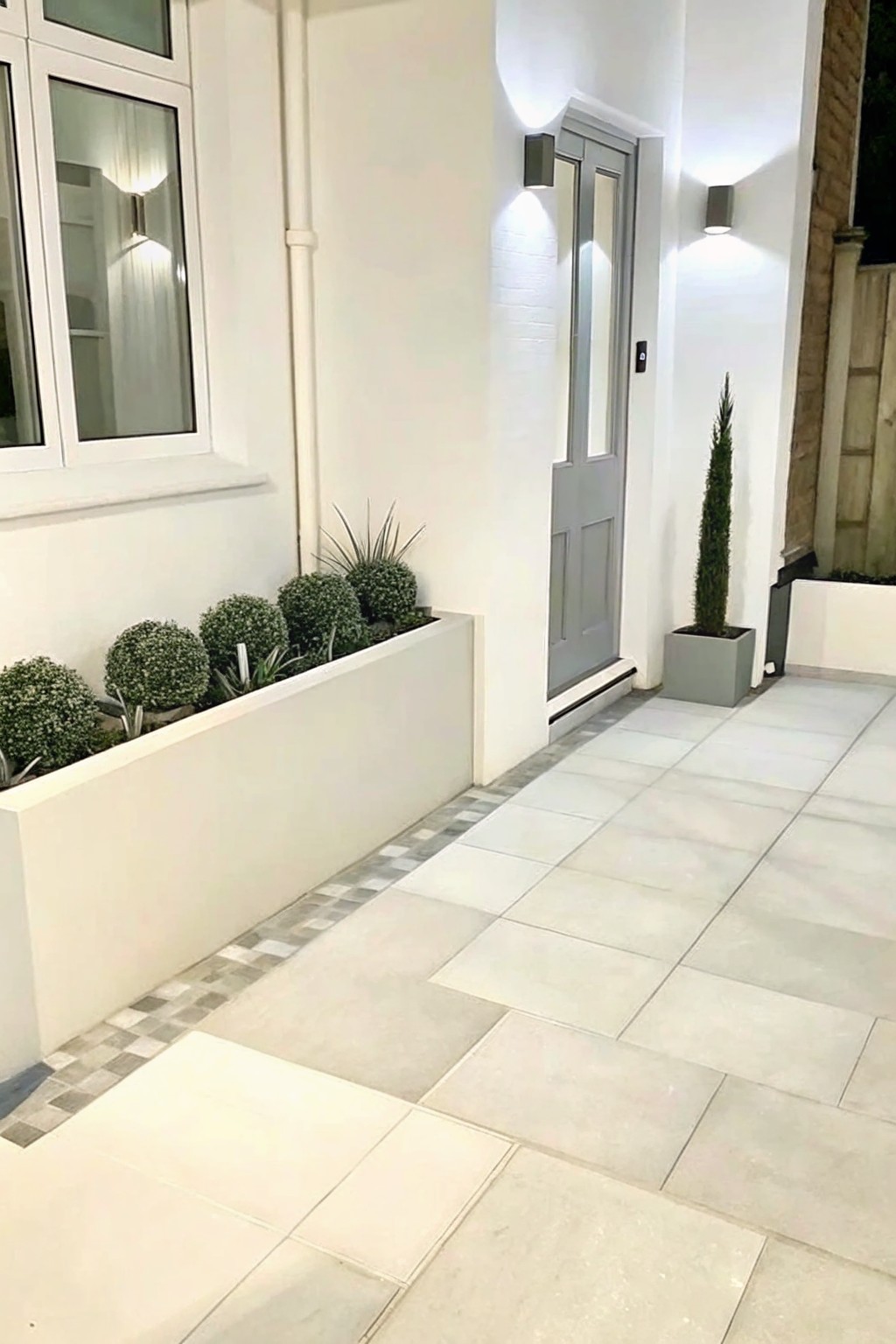
A long raised planter along the walkway keeps the front garden looking tidy and intentional. The contained shape stops plants from spilling out and makes the whole entry feel more put together without needing a lot of extra work.
This works best on homes with a straight path to the door. Stick to rounded or low shrubs so the lines stay clean, and keep the planter height modest so it does not block the entrance or feel too heavy.
Use Container Plants at the Front Door
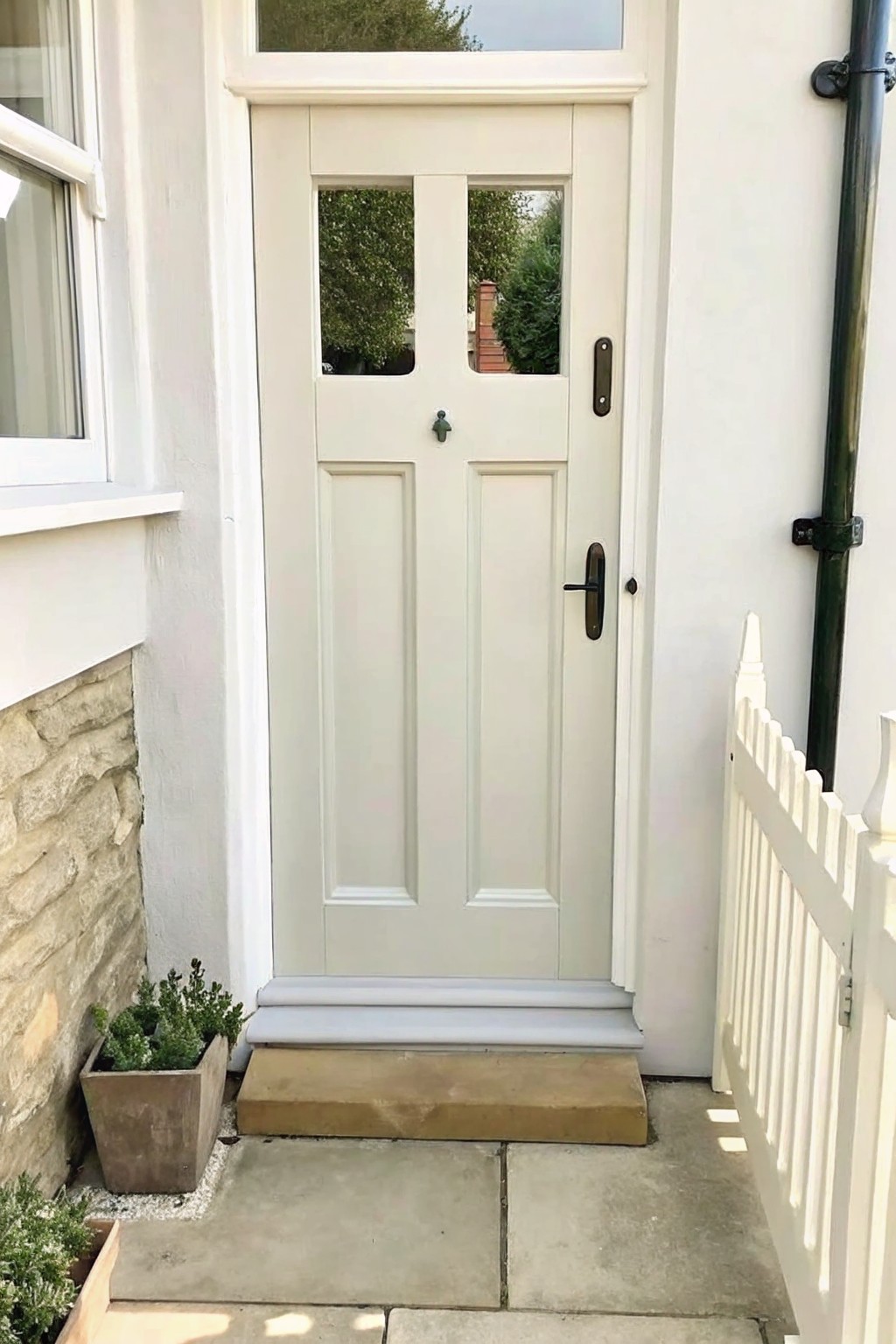
A few well-chosen pots can add life to a plain entry without much work. They bring in greenery that softens hard surfaces like stone walls and concrete steps while keeping the overall look neat.
This approach works best on homes with limited planting space or paved front areas. Pick sturdy containers and plants suited to the light conditions, then group them simply near the door rather than spreading them out.
Gravel And Concrete Keep Front Walks Simple
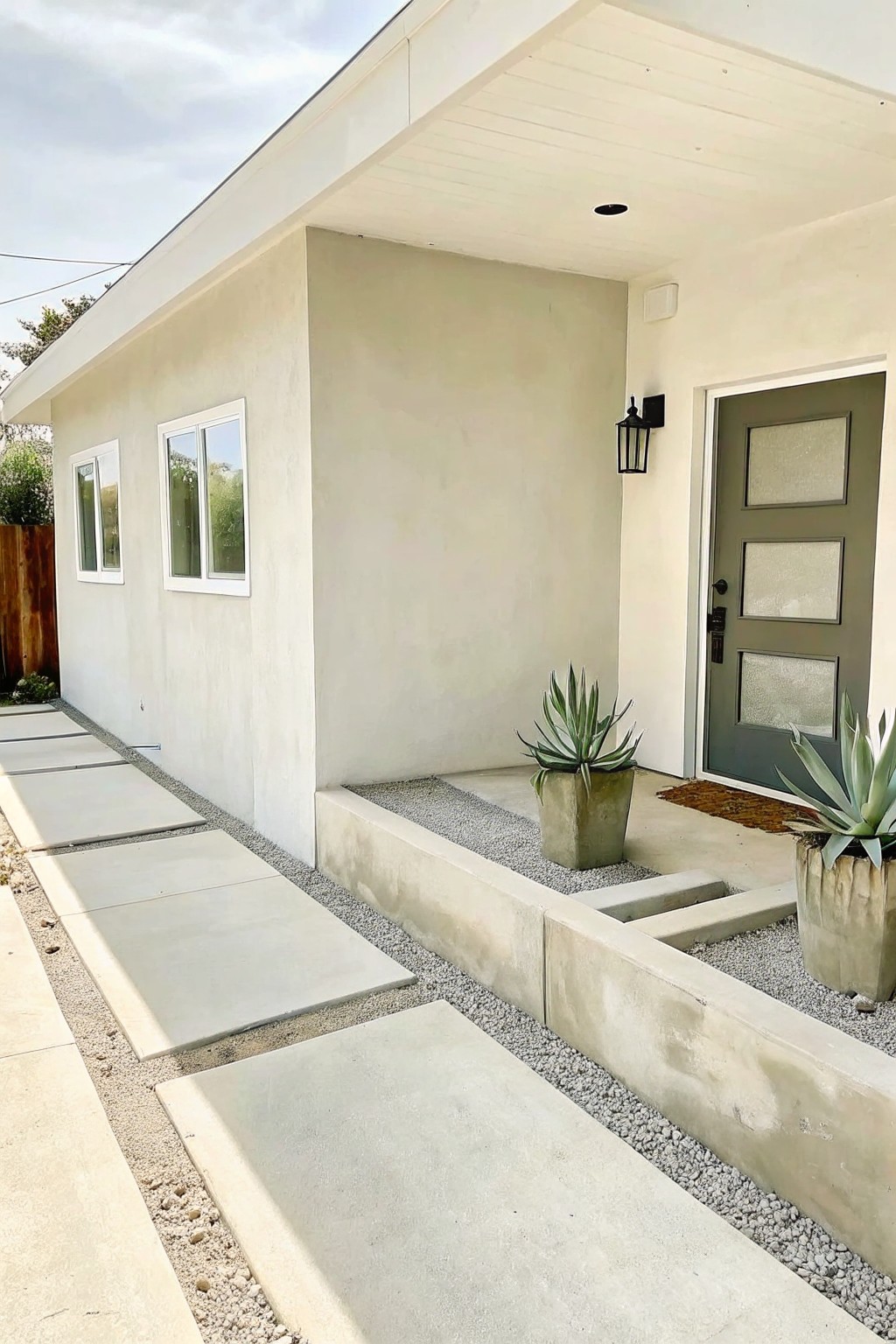
Gravel works well along a front path because it drains fast and stays looking tidy with almost no work. The concrete pavers give a solid place to walk while the gravel fills in around them to create a clean edge that does not need mowing or constant trimming.
This approach suits smaller front yards or homes that want a modern but unfussy look. Keep the gravel contained with low concrete borders and add just a few large pots so the planting stays easy to manage.
Line the Entry With Potted Plants
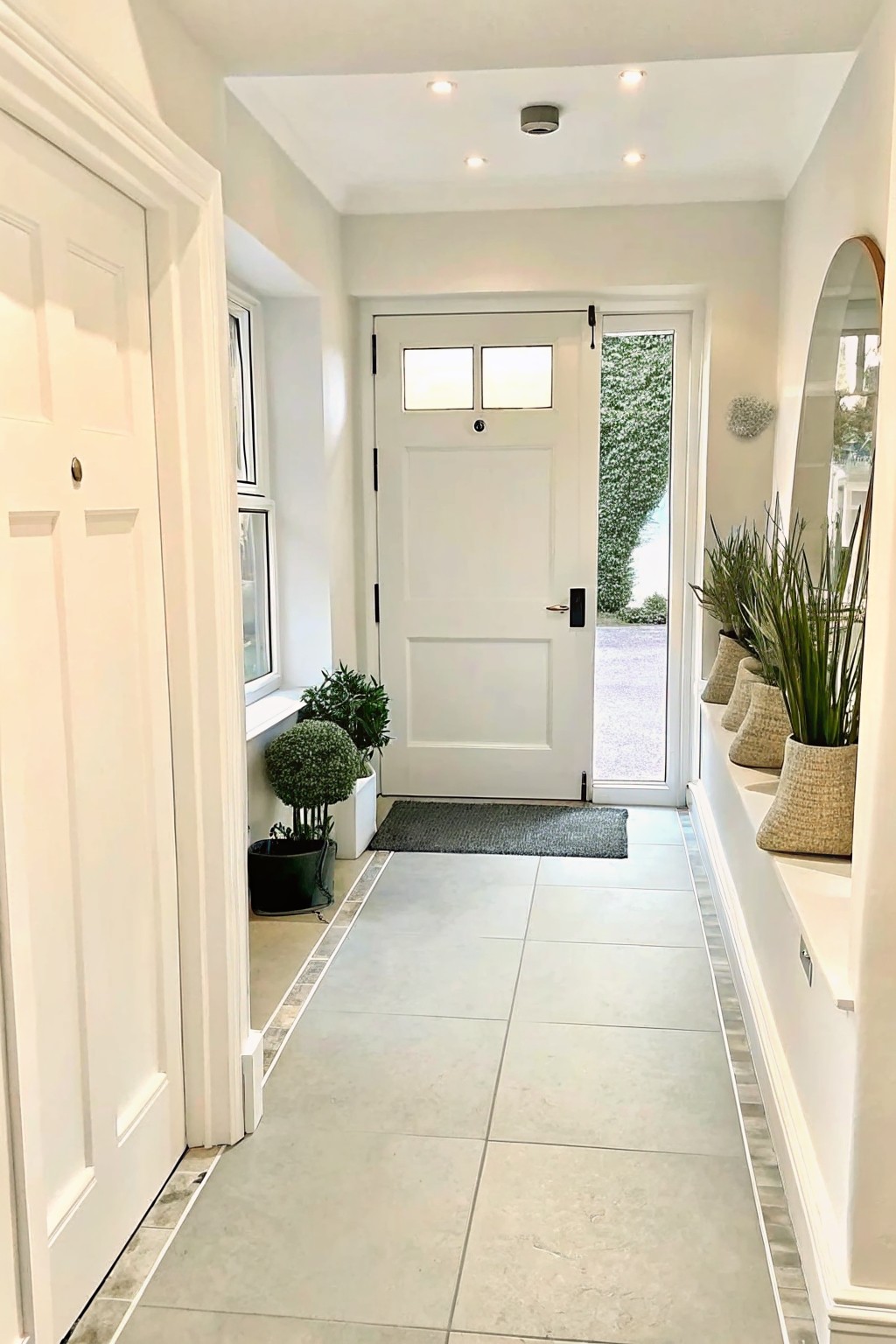
Placing a few potted plants along the entry hall makes the space feel fresher and creates a gentle link to the garden outside. It softens the hard surfaces without adding clutter, and the greenery stays visible even when the front door is open.
This works well in narrow hallways or any home with a straight path to the door. Keep the pots simple and vary the heights slightly so the line feels natural rather than staged. Avoid overcrowding the floor if the walkway needs to stay clear.
Try a Narrow Plant Stand in the Entry
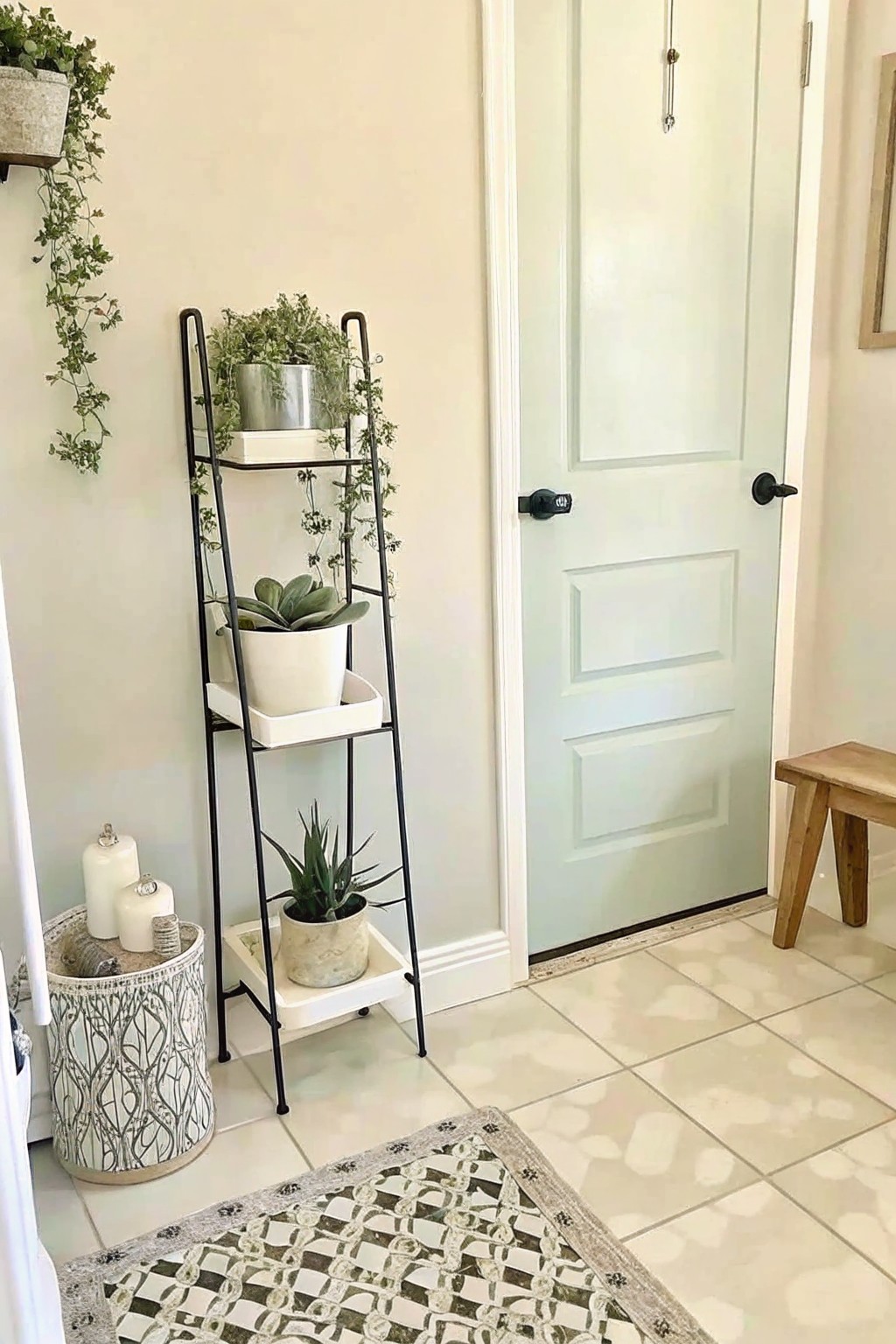
A tall narrow stand gives you room for several plants without taking over the floor space. This keeps the entry feeling open while still adding some life right where people come in.
Set it against a side wall near the door. Stick to one with open shelves so the plants get decent airflow and the whole thing does not feel heavy.
Raised Planters Along the Front Steps
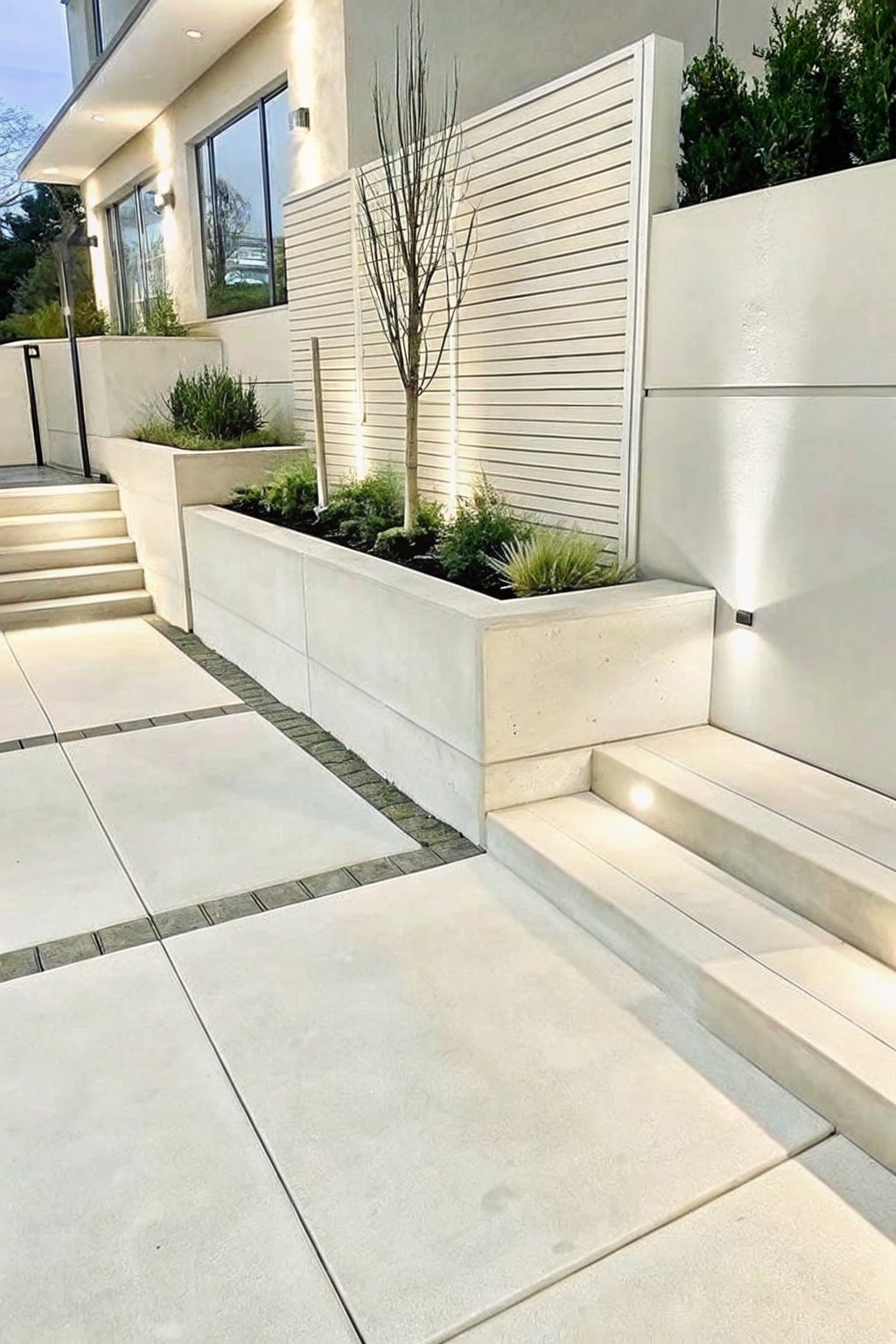
Raised planters give a front garden clear shape without needing lots of separate beds or pots. They keep soil contained, let plants sit at a better height for viewing, and work with the hard surfaces already around the entry. The long concrete style shown here blends right into the steps and walls, so the whole area feels like one planned space rather than pieces added later.
This setup suits modern or minimalist homes where you want greenery but still need clean lines. Keep the planting simple with a mix of low shrubs and one taller accent like a slender tree. Avoid filling the planter too densely, or the tidy look that makes the idea work will disappear.
Add a Stone Path to Your Front Garden
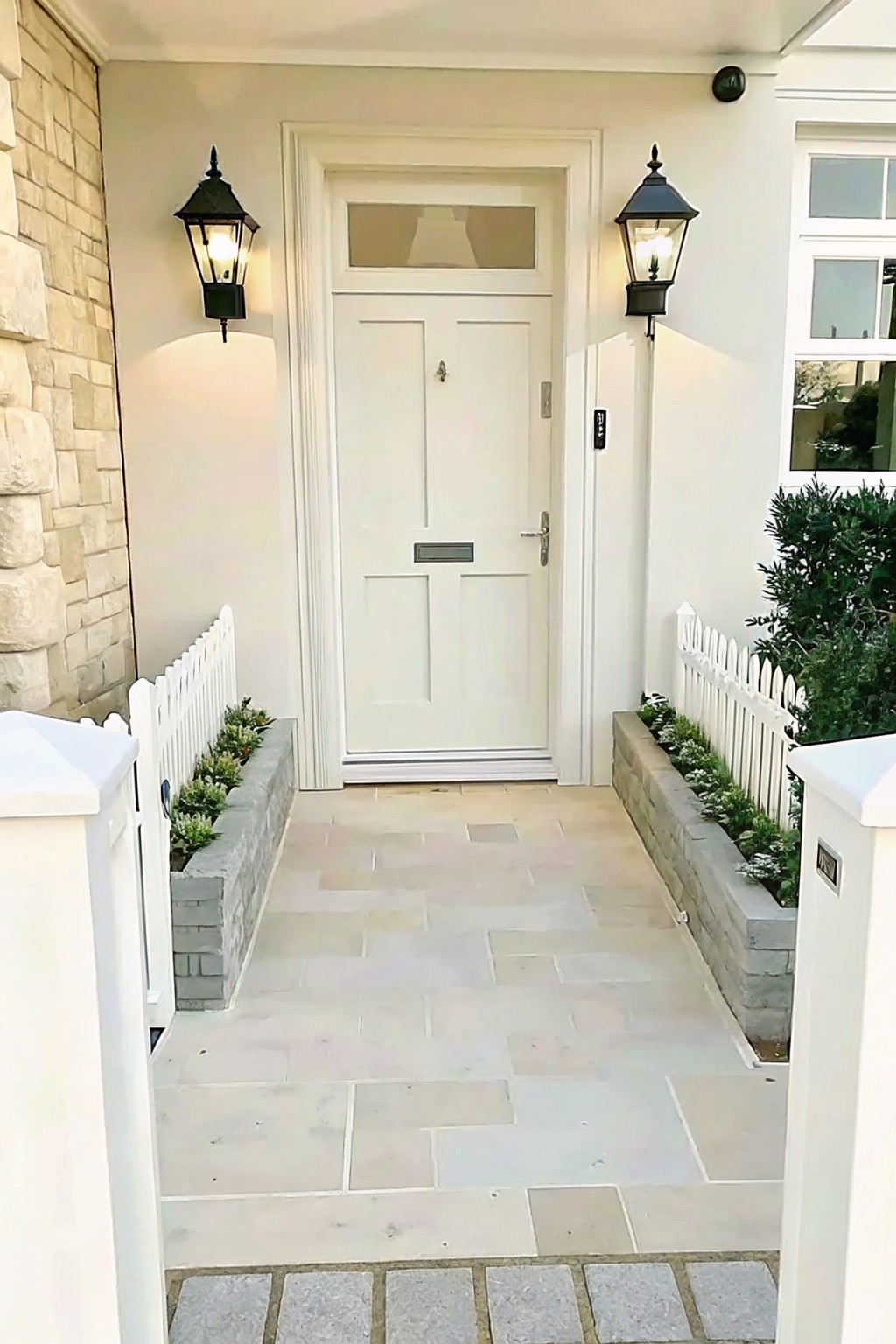
A stone path gives the front garden a clear sense of direction and keeps the space from feeling scattered. It also makes the entry feel more intentional without adding a lot of extra features.
This approach works especially well on narrow front yards or homes with a straightforward layout. Keep the planting low along the edges so the path stays visible and easy to follow.
Frame an Entry With Tall Planters
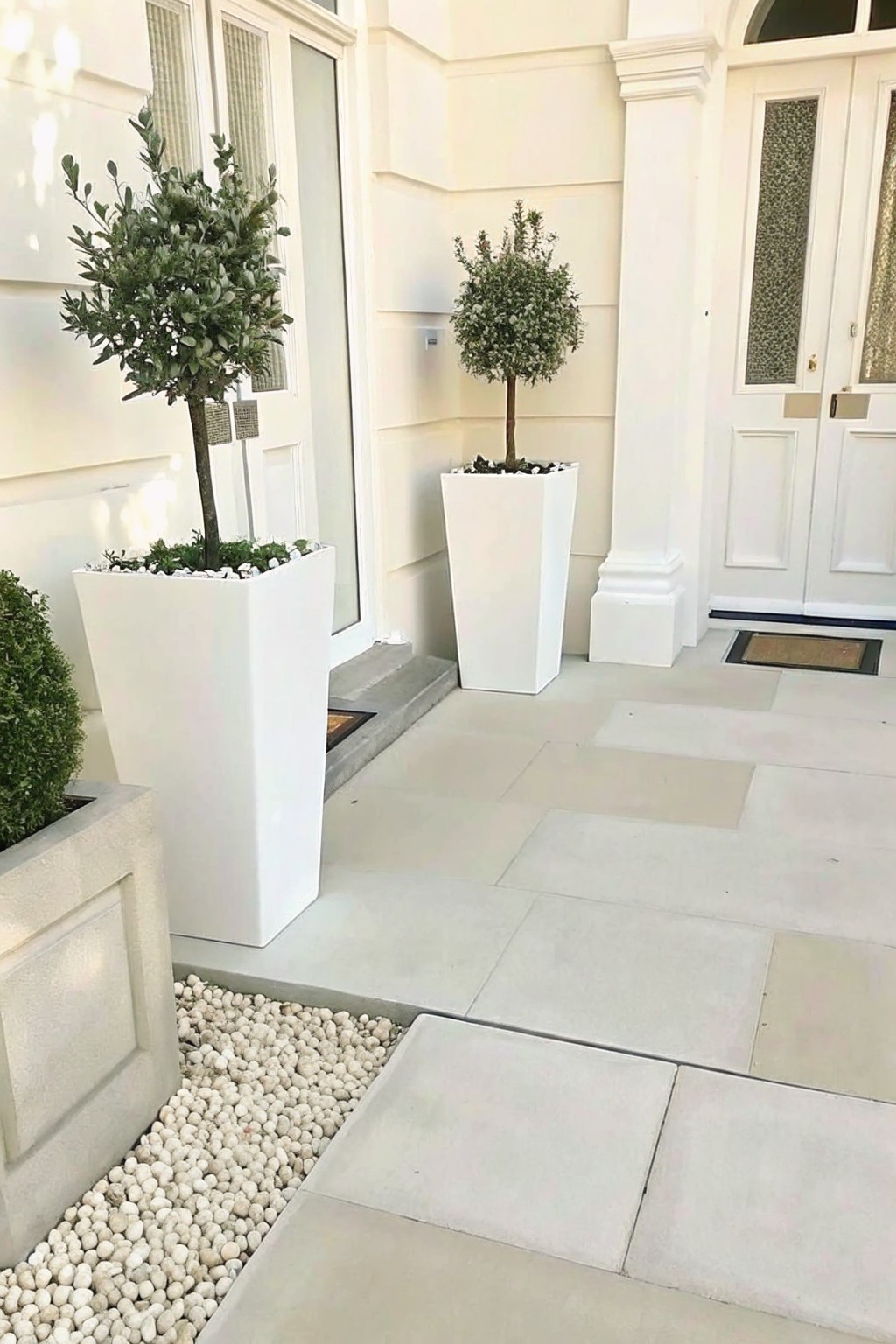
Tall planters give a front entrance height and shape without taking up much ground space. They work well on paved areas where a garden bed would feel out of place or hard to maintain.
Put one on each side of the door or along the path leading up to it. They suit homes with simple lines and look best with small trees or shrubs that keep their form through the seasons.
Line a Narrow Side Path With Pavers and Gravel
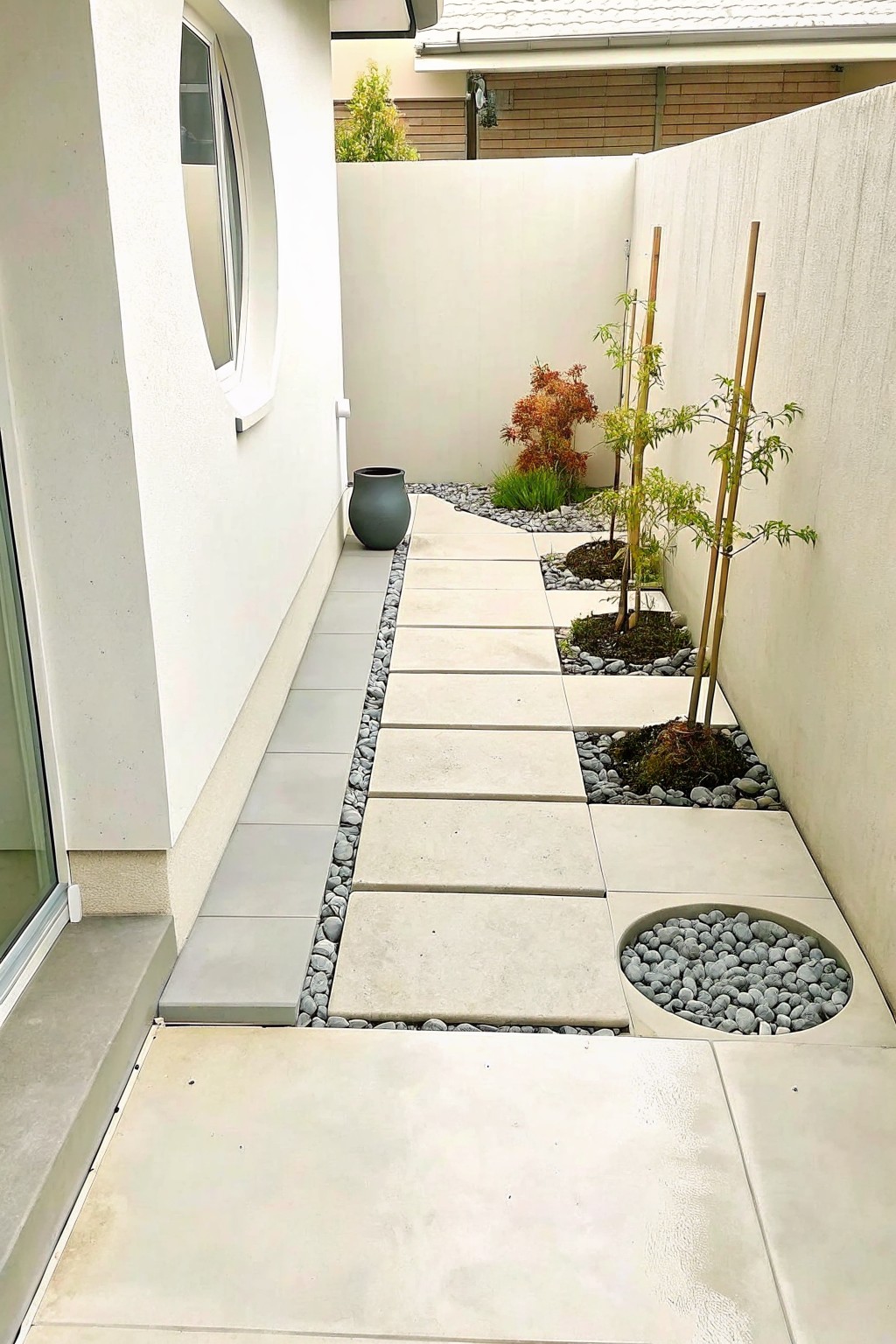
A straight run of large concrete pavers set into gravel gives a narrow side yard a tidy, finished look without crowding the space. The gravel sections break up the hard surface, let water drain easily, and leave room for a few small trees or shrubs to soften the edges.
This setup works well on modern homes where the side passage needs to stay open and easy to walk through. Keep the planting simple with young trees and low ground cover so the path does not feel overgrown later on.
Build Seating Into Your Planters
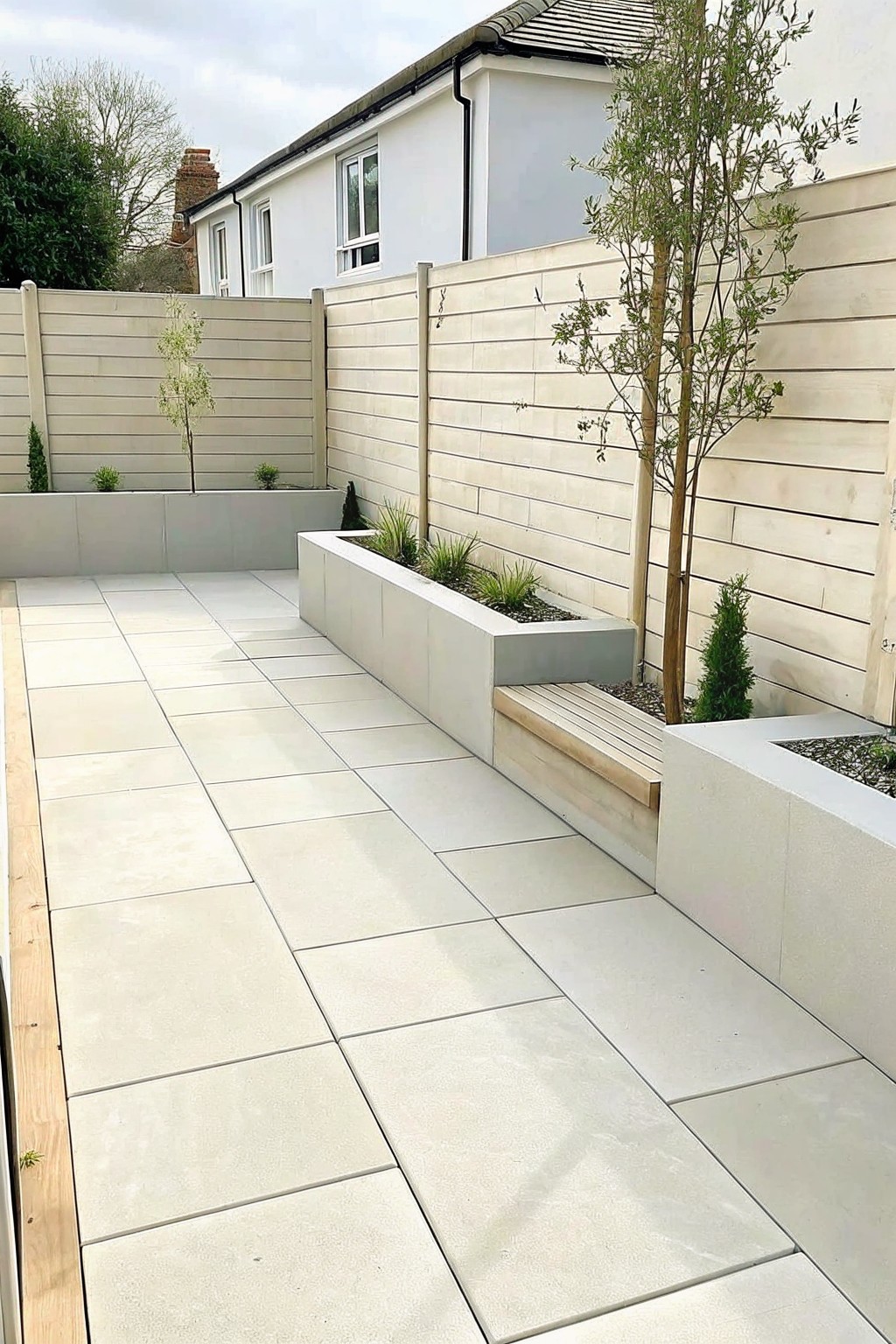
Raised planters with a built-in bench give you planting space and seating without crowding the area. The bench sits at the right height for comfort while the concrete sides keep everything neat and contained. This setup works especially well along a fence or wall where you want structure but still need places to sit.
It suits smaller yards or paved courtyards where freestanding furniture would feel cluttered. Match the bench material to nearby decking or fencing so it blends in rather than stands out. Keep the planting simple so the bench stays usable and the whole area feels open.
Line Front Paths With Pebbles
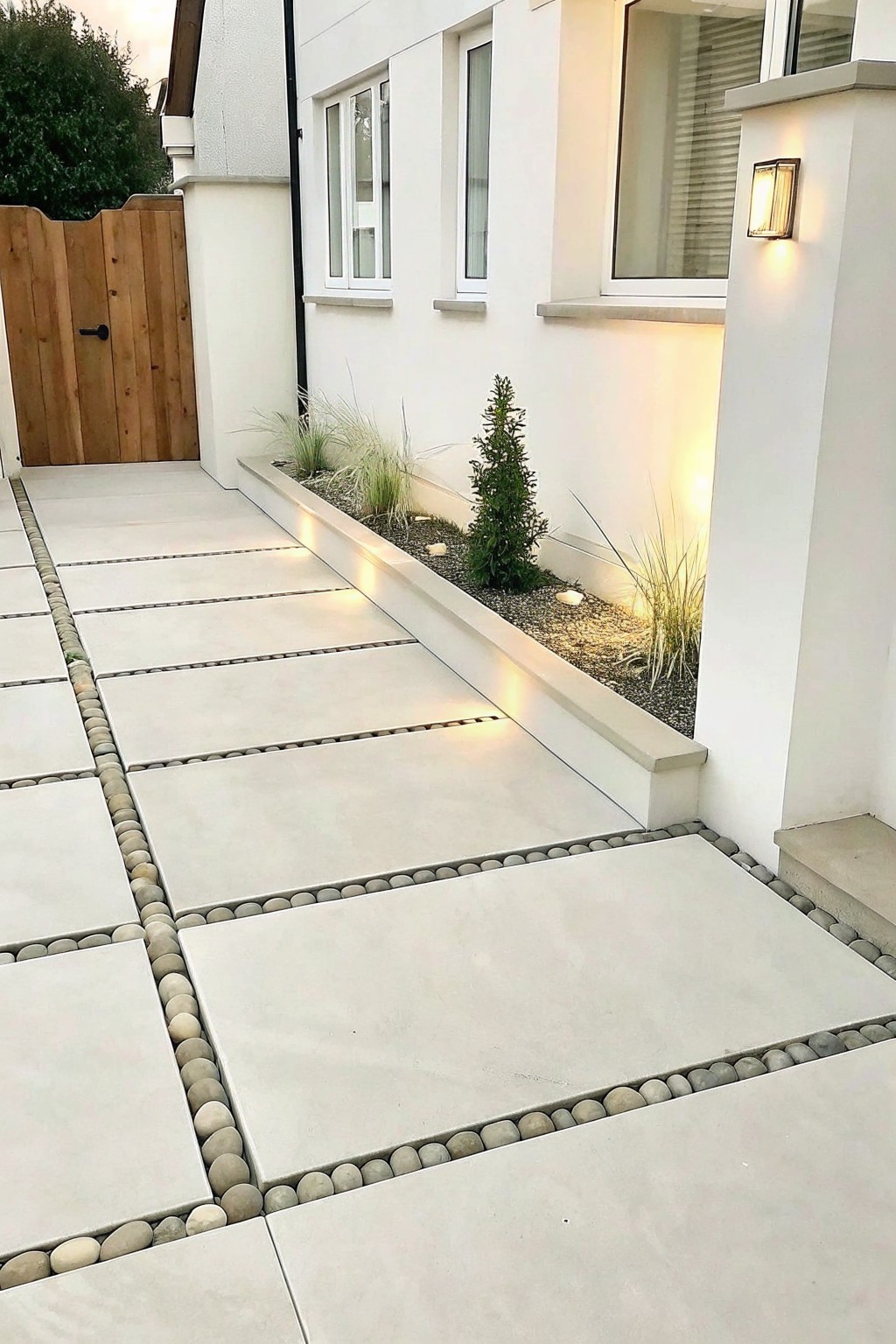
A pebble border between large pavers gives a front path clear shape without adding much fuss. The contrast keeps the walkway from looking like one solid slab and helps it feel more finished next to the house.
This setup suits homes with straight lines and simple plantings. It stays low maintenance as long as the pebbles sit in a shallow channel so they do not spill onto the main walking surface over time.
Large Planters Keep a Front Entry Clean
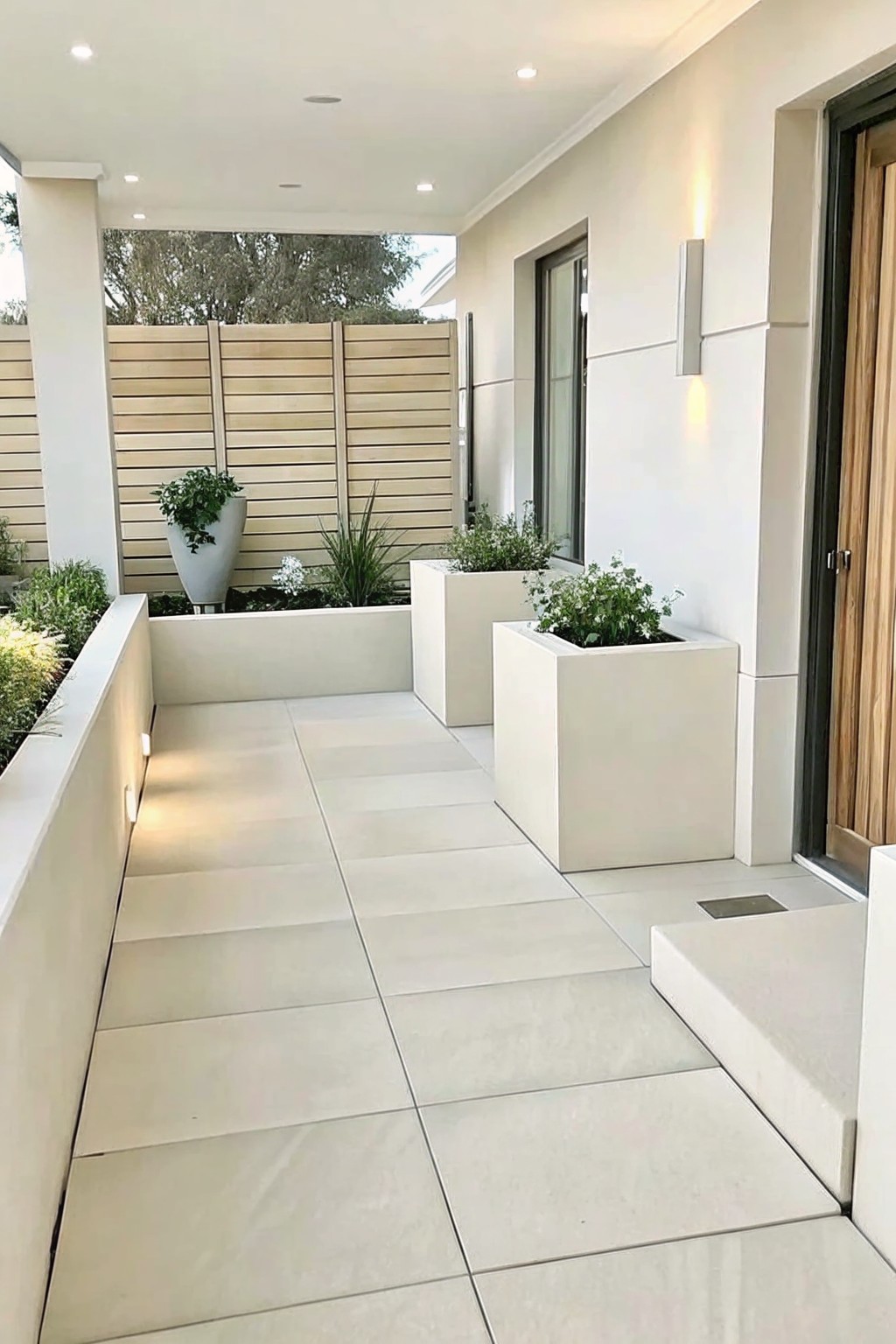
A few oversized planters can do more for curb appeal than filling the space with smaller pots. They add height and greenery while keeping the look simple and uncluttered, which works especially well on paved entries where plants need a clear place to sit.
Place them along the walkway or near the door in matching pairs or groups of three. Light colored concrete ones blend in easily with most homes and let you change the plants with the seasons without much effort.
Frequently Asked Questions
Q: What if I want to add some lights but worry about the electric bill? A: Solar lights are a simple fix here. They charge during the day and glow at night without any wiring costs. Pick a few path lights to highlight your walkway.
Q: My yard is tiny. Will these ideas still work? A: Scale down with smaller accents like a single bench or compact pots. Focus on one focal point near the door to draw the eye without crowding.
Q: How do I keep the decor from looking cluttered? A: Limit yourself to three main pieces max. Arrange them at different heights for interest. Step back and check the view from the street to see what stands out.
