

A sloped front yard can look untidy when the grade feels awkward, plants lack structure, or there’s no clear route to the front door.
I find that boulders can do more than add a natural accent: placed with care, they help define planting areas, steady a hillside, and give the landscape a sense of order.
The best results often come from layering stone with ground cover, shrubs, and simple paths rather than adding features all at once.
Seeing a difficult slope become easier to care for and more connected to the home is satisfying, and these ideas offer practical details worth adapting to your own yard.
Add Terraced Beds To A Sloped Yard

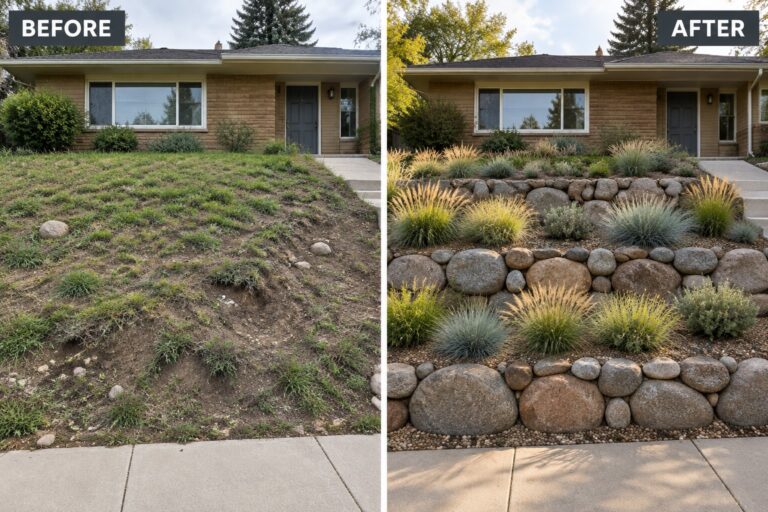
The bare slope was difficult to plant and looked patchy. Low stone retaining walls turn it into clear planting levels, making the yard look more organized while helping hold soil in place.
This approach works well when a front yard drops toward the sidewalk. Keep the terraces low and follow the slope, and choose sturdy plants suited to your climate so the beds don’t need constant attention.
Replace A Steep, Overgrown Path With Stone Steps
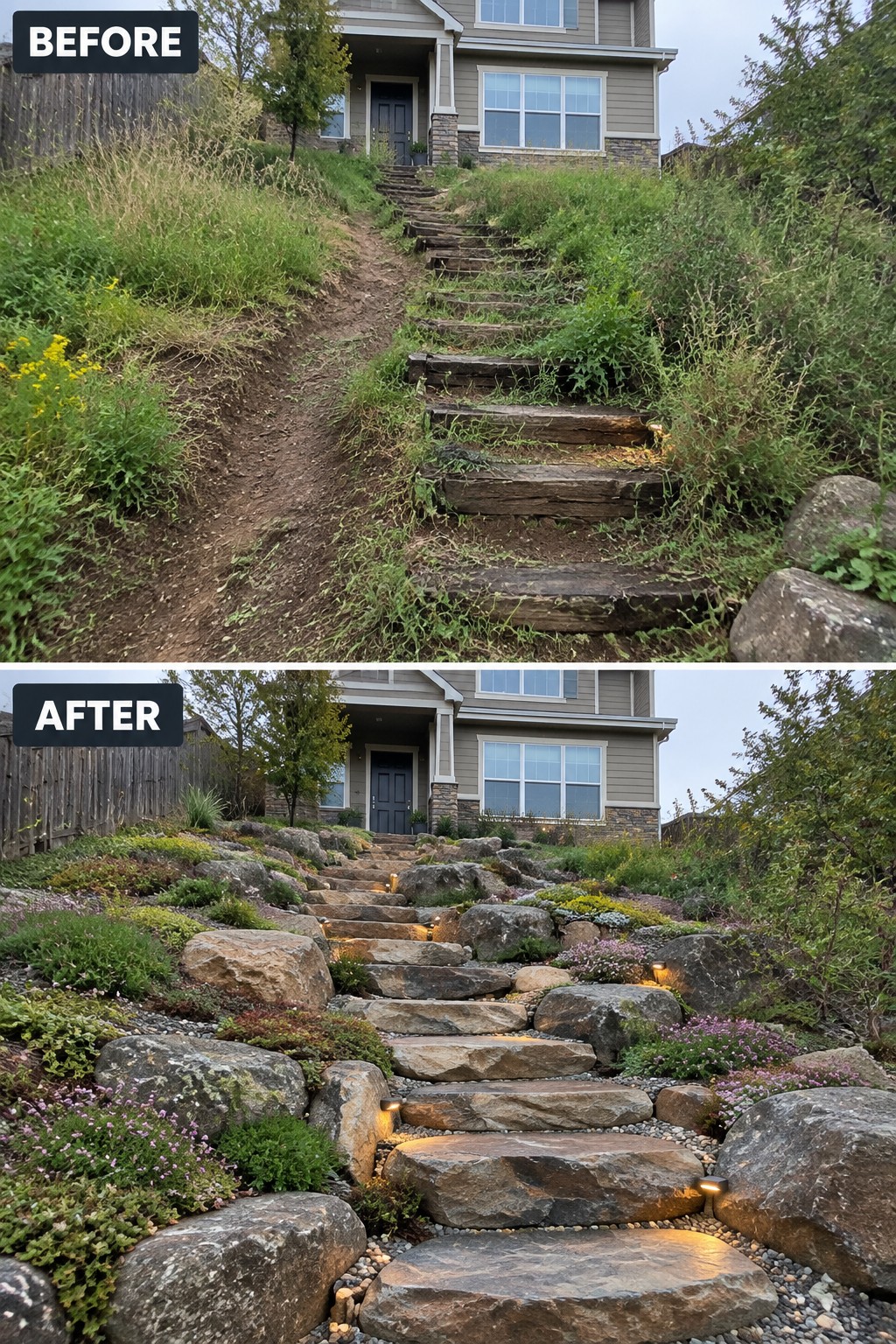
The old timber steps and bare dirt made this steep front yard look hard to use. Broad stone steps set into the slope create a clearer route to the front door and give the landscape a more planned shape.
For a similar yard, start by making the path stable and comfortable to walk on, then plant along the sides to help define it. Choose stone and step sizes that suit the slope, and make sure water can drain away rather than pooling on the stairs.
Replace A Patchy Lawn With A Defined Rock Garden
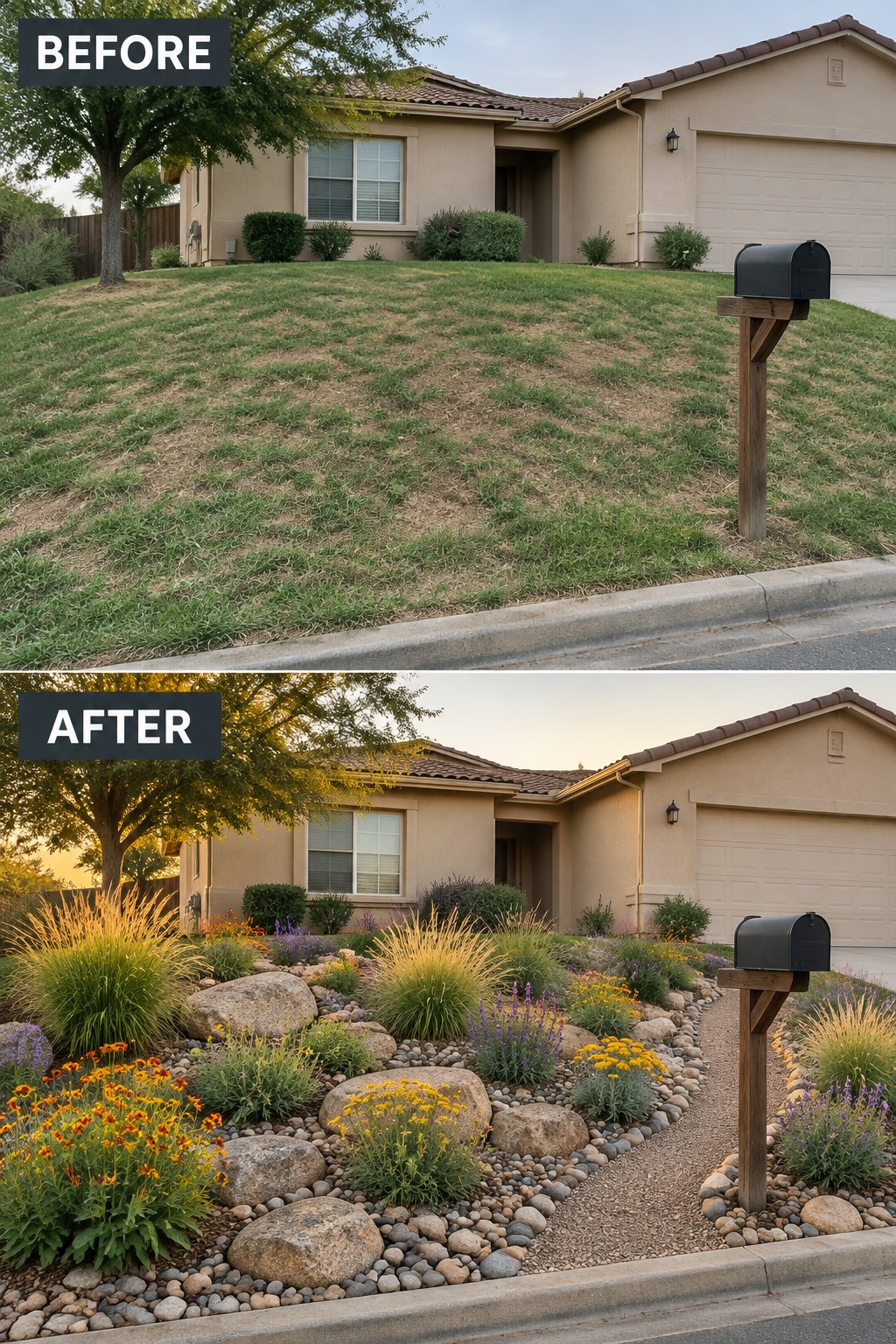
The sloped front yard goes from thin, patchy grass to a planned rock garden. Gravel, larger stones, and clusters of drought-tolerant plants give the slope clear structure without relying on a lawn that can be hard to keep healthy.
For a similar yard, start by clearing the weak grass, then lay out a few simple planting areas and a path that follows the slope. Choose plants suited to your climate, and leave enough space between them so the garden does not become crowded as they grow.
Create A Gravel Seating Area In The Front Yard
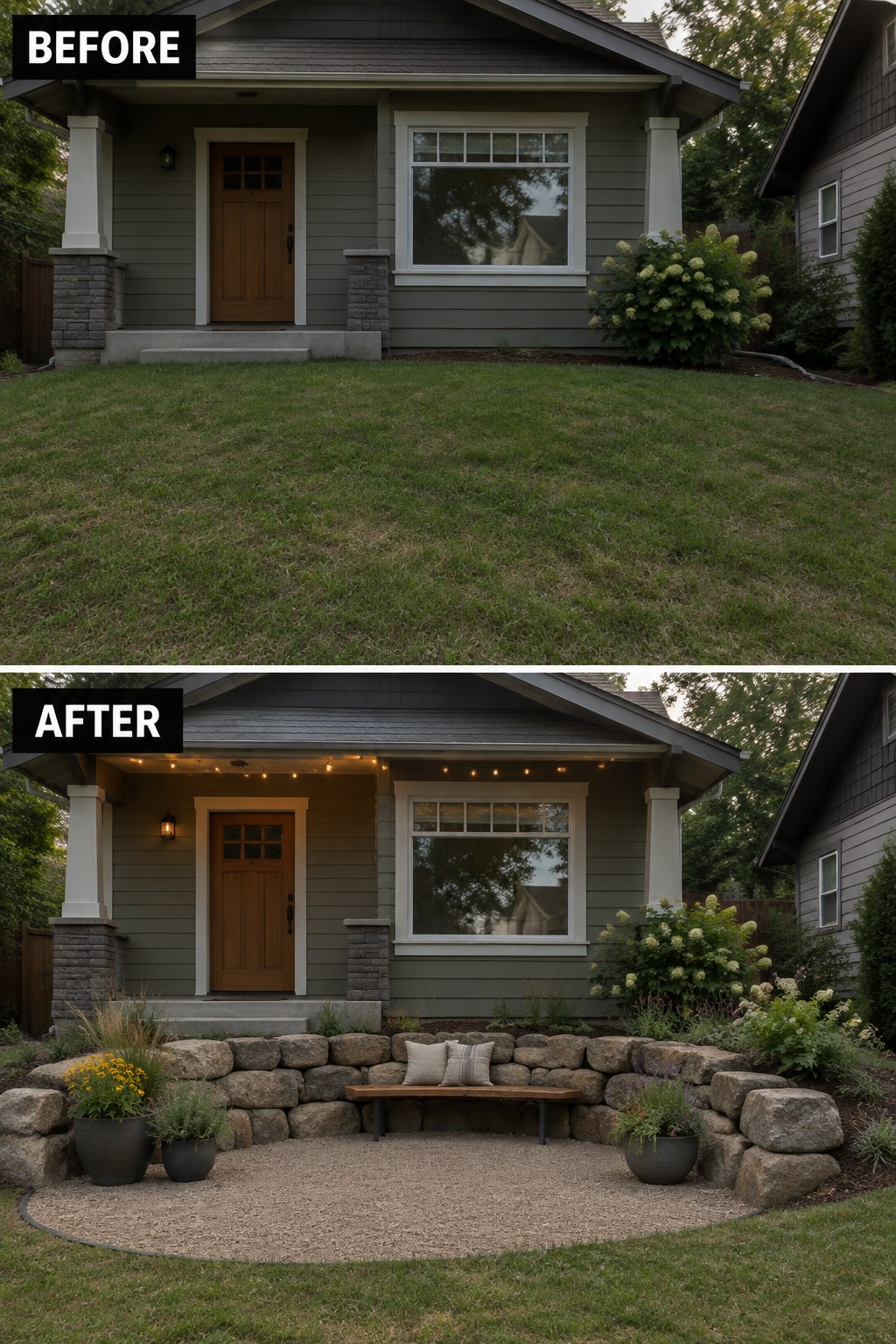
A patch of lawn can be turned into a small outdoor seating area by defining it with a low stone retaining wall and gravel. Here, the wall makes the sloped yard feel more organized while giving the bench a clear place to sit.
This idea works well on a gentle slope where a level spot is useful, but check drainage and plan for a stable base before adding gravel. Keep the seating area modest so there is still room to move through the yard.
Guide Runoff Through A Rock Garden

A bare slope can look messy and let rainwater cut channels through the soil. Here, a dry creek bed of rounded stones gives the runoff a clearer route, while mulch and a few plants make the rest of the slope look more intentional.
This idea works well on a front yard that slopes toward the sidewalk, but the channel should follow the way water naturally flows. Use stones that stay in place and leave enough room for water to pass; for serious drainage problems, check with a landscaping professional before digging.
Replace A Failing Timber Wall With Stone-Filled Terraces

A sturdy terraced retaining wall can bring order to a sloped front yard that has become overgrown. Here, the failing timber wall gives way to stacked rock-filled gabion walls, creating clear levels and making the planting easier to manage.
For a similar yard, use retaining walls to hold the slope and give plants defined areas to grow. Choose materials suited to the grade and soil, and make sure the wall is properly designed for drainage and stability before adding plants or lighting.
Add Colorful Planting To A Bare Slope

The slope goes from mostly exposed soil to a planted garden, making the yard feel more finished without changing its basic shape. A mix of flowers and low plants helps cover the bare ground and gives the hillside a clear purpose.
For a similar yard, start by choosing plants suited to the slope’s sun and soil, then group them in broad patches so they are easier to care for. Keep paths and access points clear, and check that the planting plan allows water to drain properly.
Make A Steep Front Yard Easier To Walk
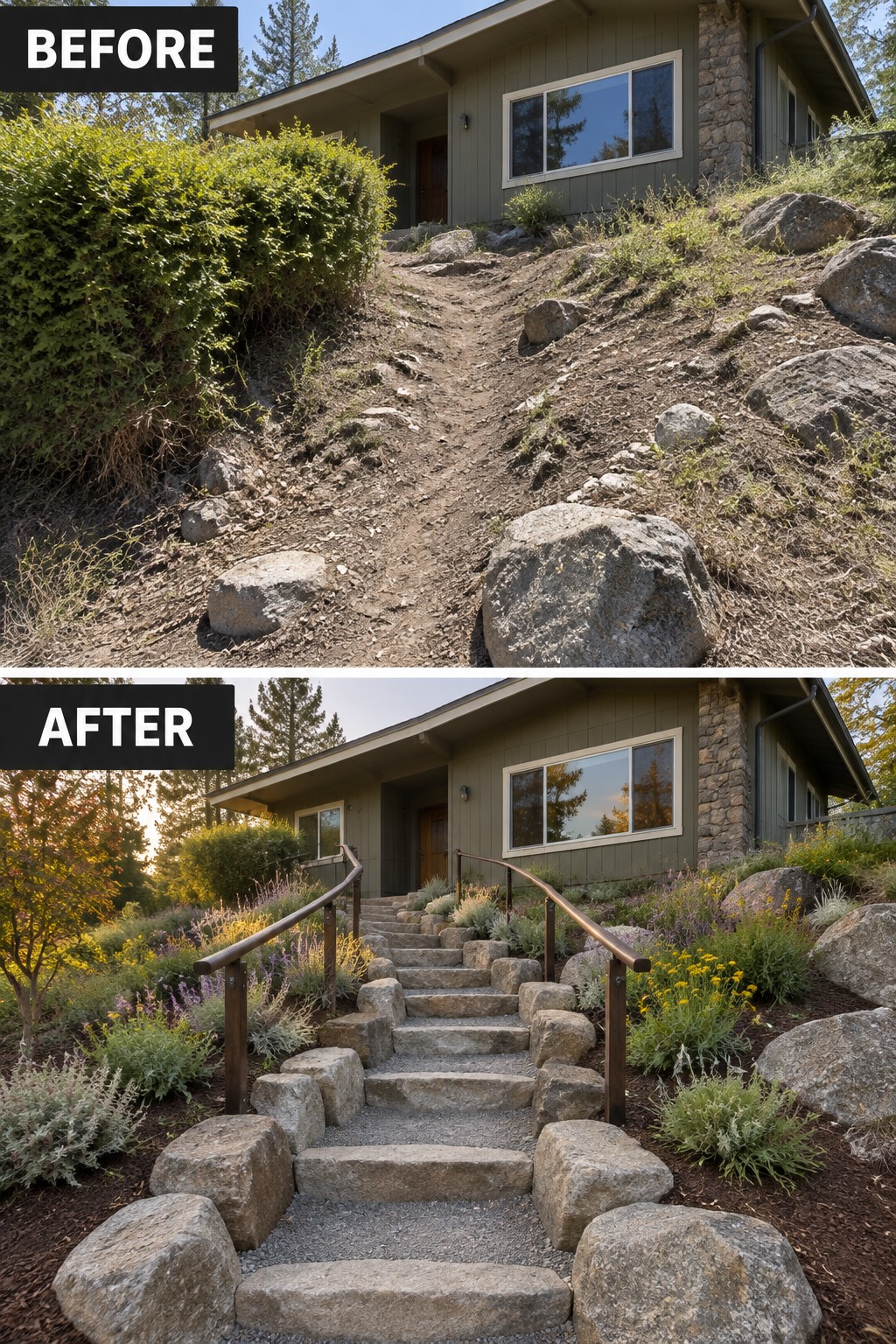
A rough dirt slope can be hard to use and may wash out over time. Building stone steps into the hillside gives people a clear route to the front door, while sturdy rocks along the edges help define the path.
This works well on sloped entries where a straight, uneven trail feels awkward. Use steps with comfortable, consistent heights, and make sure the path has a stable base. Leave enough room beside it for planting without narrowing the walkway.
Use Stone Edging To Shape A Sloped Garden
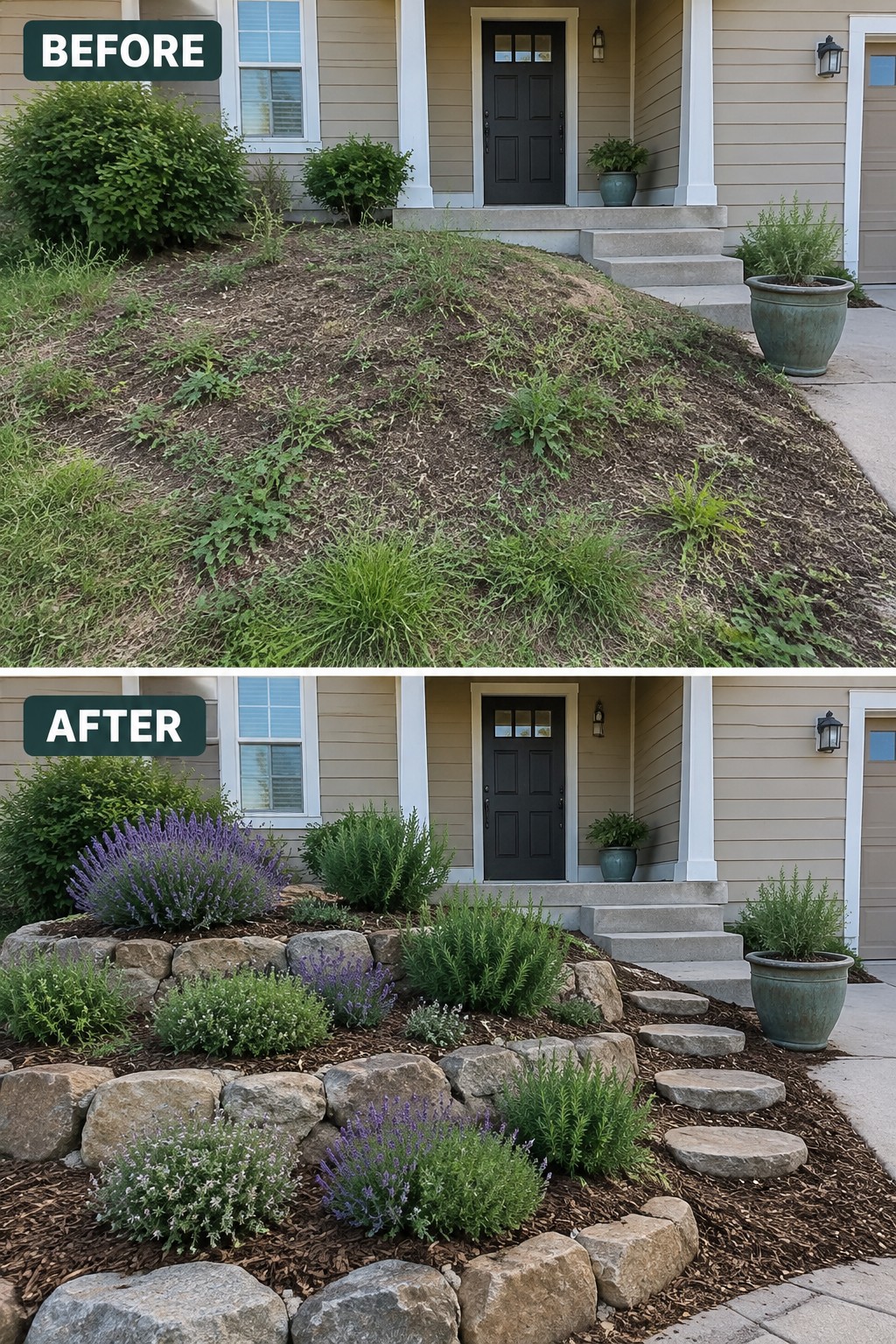
The bare slope feels easier to manage once the planting has clear edges. In this makeover, large stones form low terraces, giving mulch and shrubs a defined place instead of letting the yard look patchy.
This approach works well for a front yard with a gentle or moderate slope. Set stones securely, keep the planting simple, and leave a clear route to the steps so the garden stays practical as well as tidy.
Replace Overgrown Shrubs With Layered Planting

The old shrubs left the sloped bed looking sparse and hard to manage. Replacing them with ornamental grasses and low flowering plants gives the slope a clearer planting structure, while a large boulder adds a focal point.
For a similar yard, keep taller grasses toward the back and choose lower plants near the lawn edge so the bed stays visible and easy to maintain. Use plants suited to your slope and climate, and leave enough space between them for mature growth.
Use Stone Edging To Shape A Sloped Garden

The bare slope feels more manageable once the planting areas have clear edges. In the finished yard, low stone walls hold separate levels of gravel and shrubs, giving the plants room without letting the whole slope read as one untidy bed.
This approach works well for a front yard that drops toward the sidewalk or entry steps. Start by clearing unwanted growth, then use sturdy stone to define beds that follow the slope. Keep the edges low enough to preserve a clear view and avoid blocking access.
Build A Seating Area Into The Slope

The bare slope becomes more useful when a gravel sitting area is set into the hillside. Stone steps and large boulders help define the space, while the fire pit gives people a reason to gather there.
For a similar yard, choose a level spot for seating and plan a stable route to reach it. Keep the planting simple around the edges so the sitting area stays open and easy to maintain.
Replace A Failing Timber Wall With Natural Stone
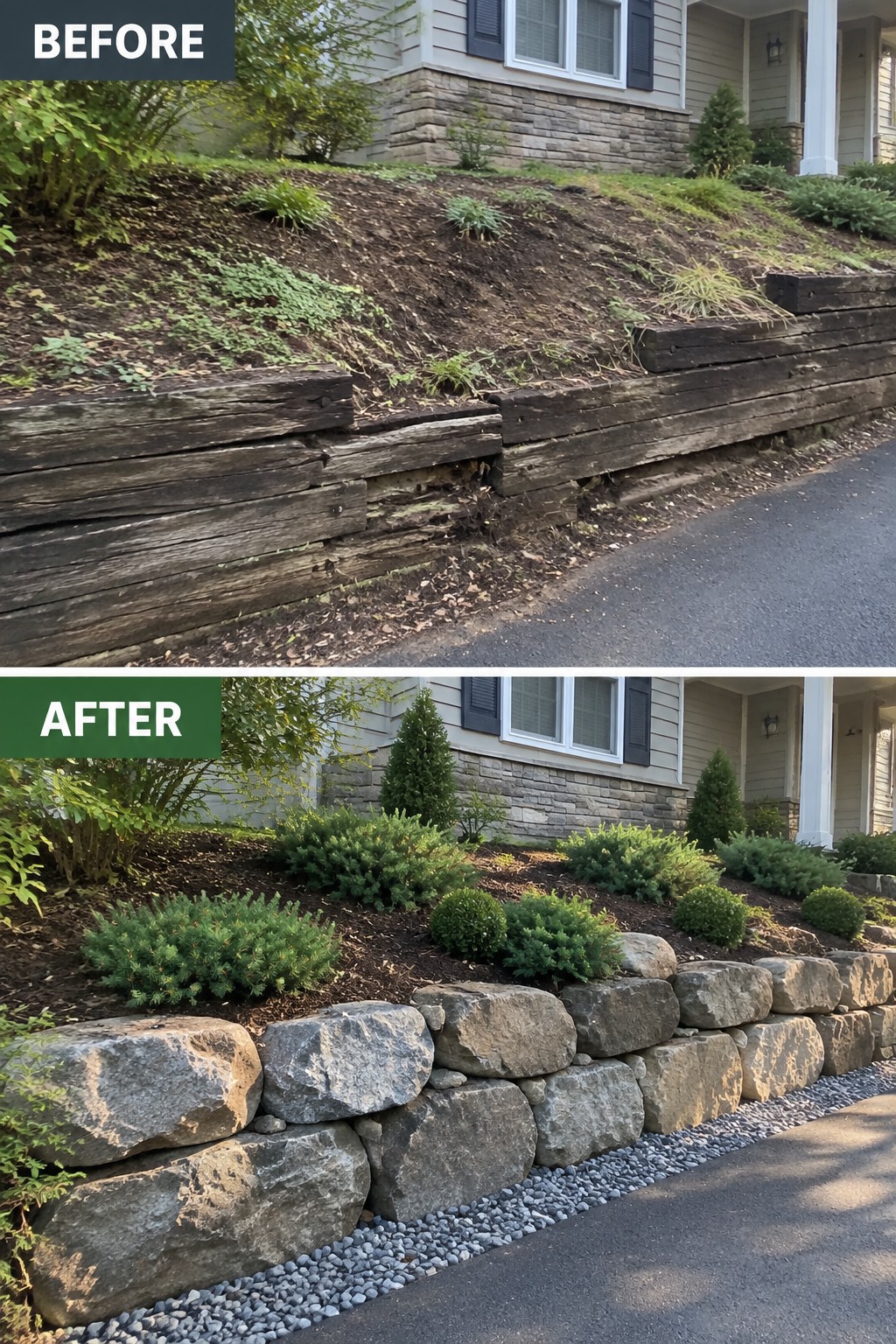
The old timber retaining wall made the sloped yard look worn and uneven. Replacing it with large stone blocks gives the slope a sturdier edge and makes the planting above it feel more organized.
This approach suits a front yard where an aging wall needs more than a quick repair. Use stone sized for the slope and have the retaining wall properly planned, especially where it meets a driveway or supports a lot of soil.
Turn An Overgrown Slope Into A Planted Garden
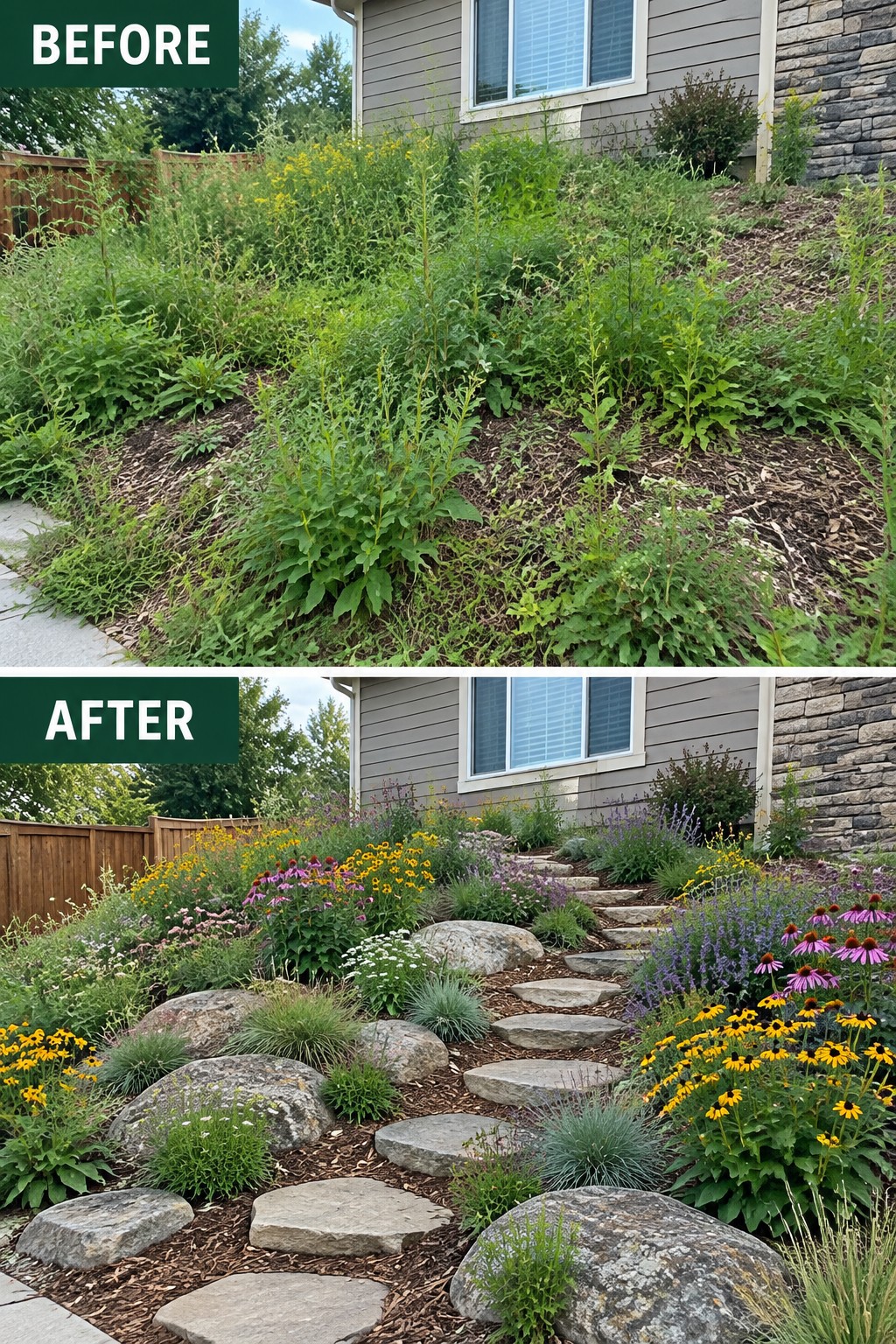
Clearing an overgrown slope and adding a simple stone path makes the yard easier to use and gives the planting a clear shape. Here, the broad weeds give way to stepping stones and groups of flowering plants, so the hillside feels planned rather than neglected.
For a similar yard, start by removing unwanted growth, then lay out a path that follows the slope naturally. Choose sturdy plants suited to your climate and leave enough room to walk safely between them.
Replace Patchy Grass With A Rock Garden
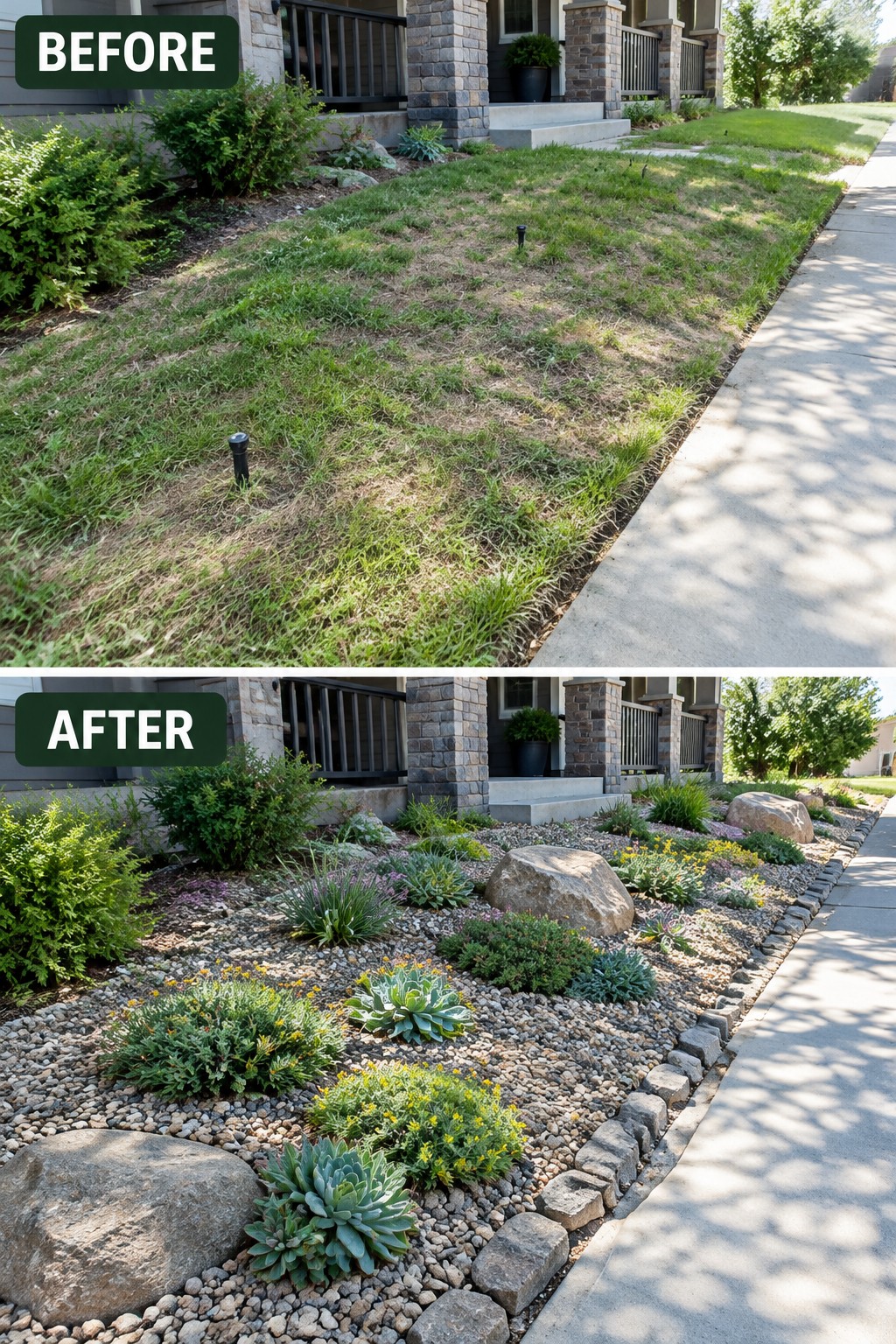
A struggling lawn can be hard to keep looking tidy on a sloped front yard. Here, the patchy grass gives way to gravel, stone edging, and scattered drought-tolerant plants, making the slope look planned instead of worn out.
For a similar yard, clear the weak grass and shape the planting area before adding rock or gravel. Use sturdy edging to keep stones in place, and leave enough room between plants for them to grow without crowding the path.
Add Flower Beds To A Bare Slope
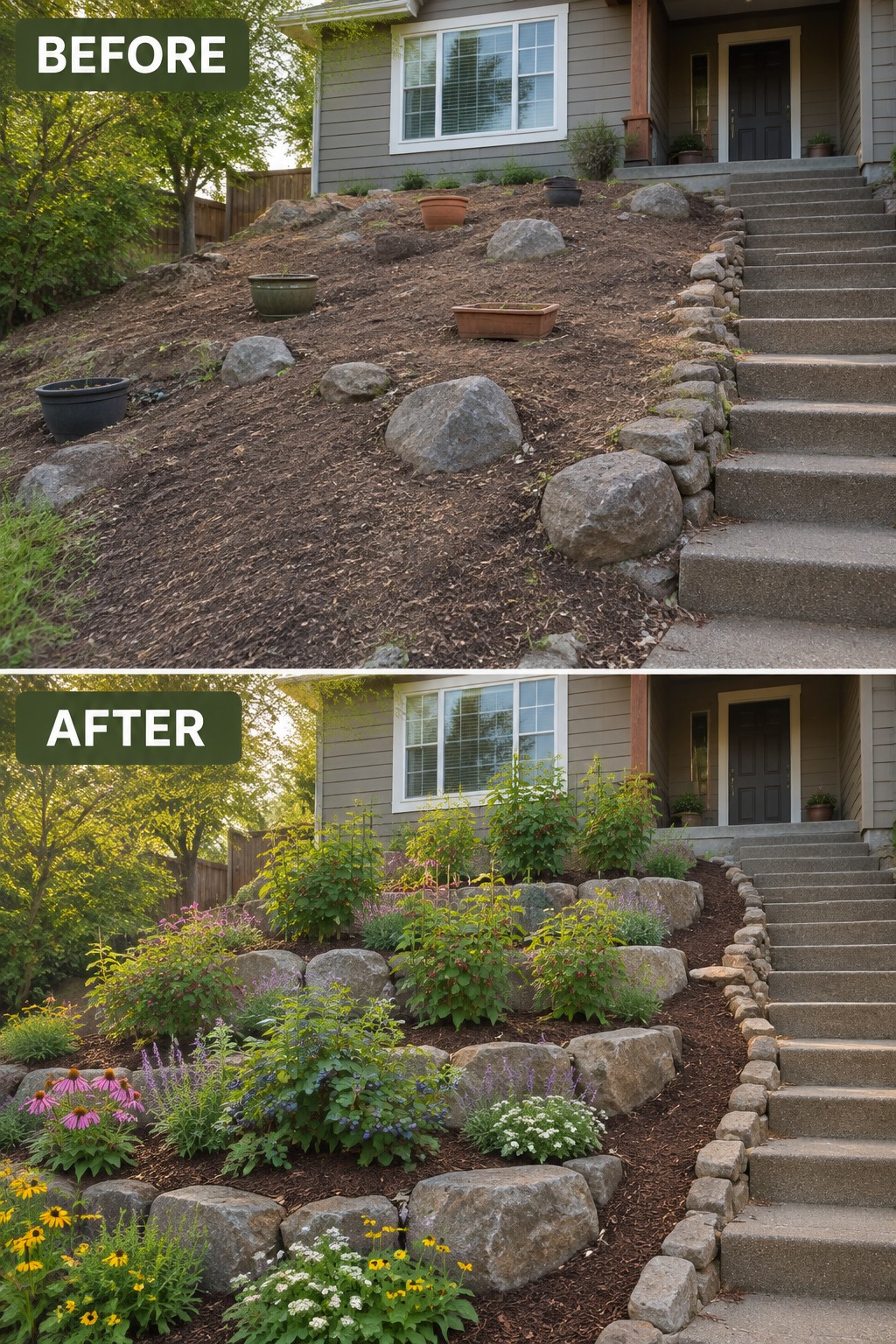
The bare soil on this slope made the front yard look unfinished. Adding groups of flowers and shrubs between the existing boulders gives the hillside a clear planting structure, while mulch helps keep the beds looking tidy.
Use plants suited to your sun, soil, and slope, and leave enough room for them to grow without blocking the steps. A few repeating plant varieties can make a large hillside feel planned without requiring a different plant in every spot.
Replace A Bare Lawn With A Meadow Garden
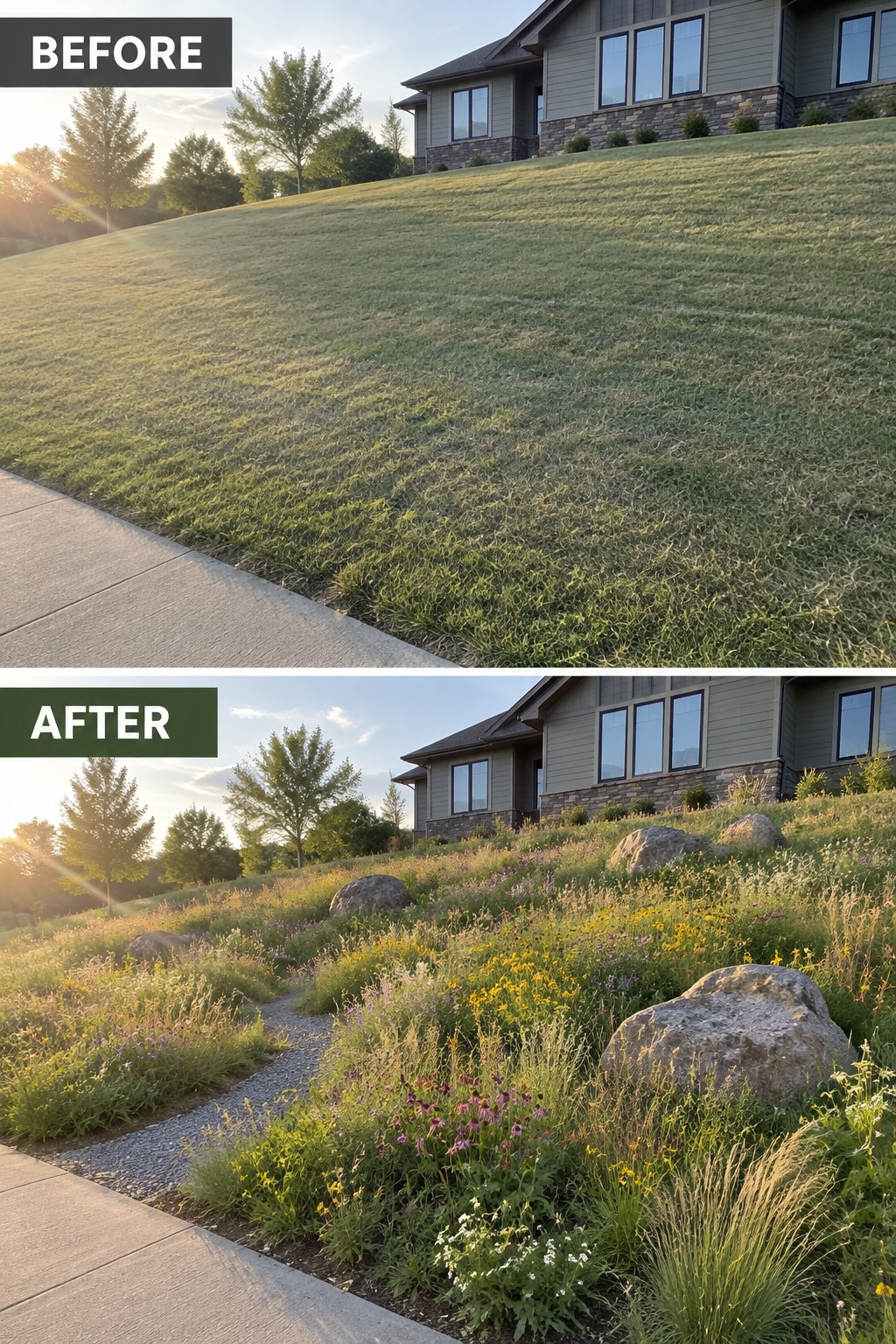
A steep lawn can be hard to maintain and may look sparse, especially where grass struggles to grow evenly. Replacing it with a planted garden gives the slope more structure; here, a narrow gravel path helps make the hillside easier to cross.
Use low-maintenance plants suited to your climate, and group them so the slope looks planned rather than scattered. Keep the path wide enough for comfortable walking, and avoid planting so densely that it becomes difficult to weed or reach the plants.
Add A Lit Mulch Path Through The Yard
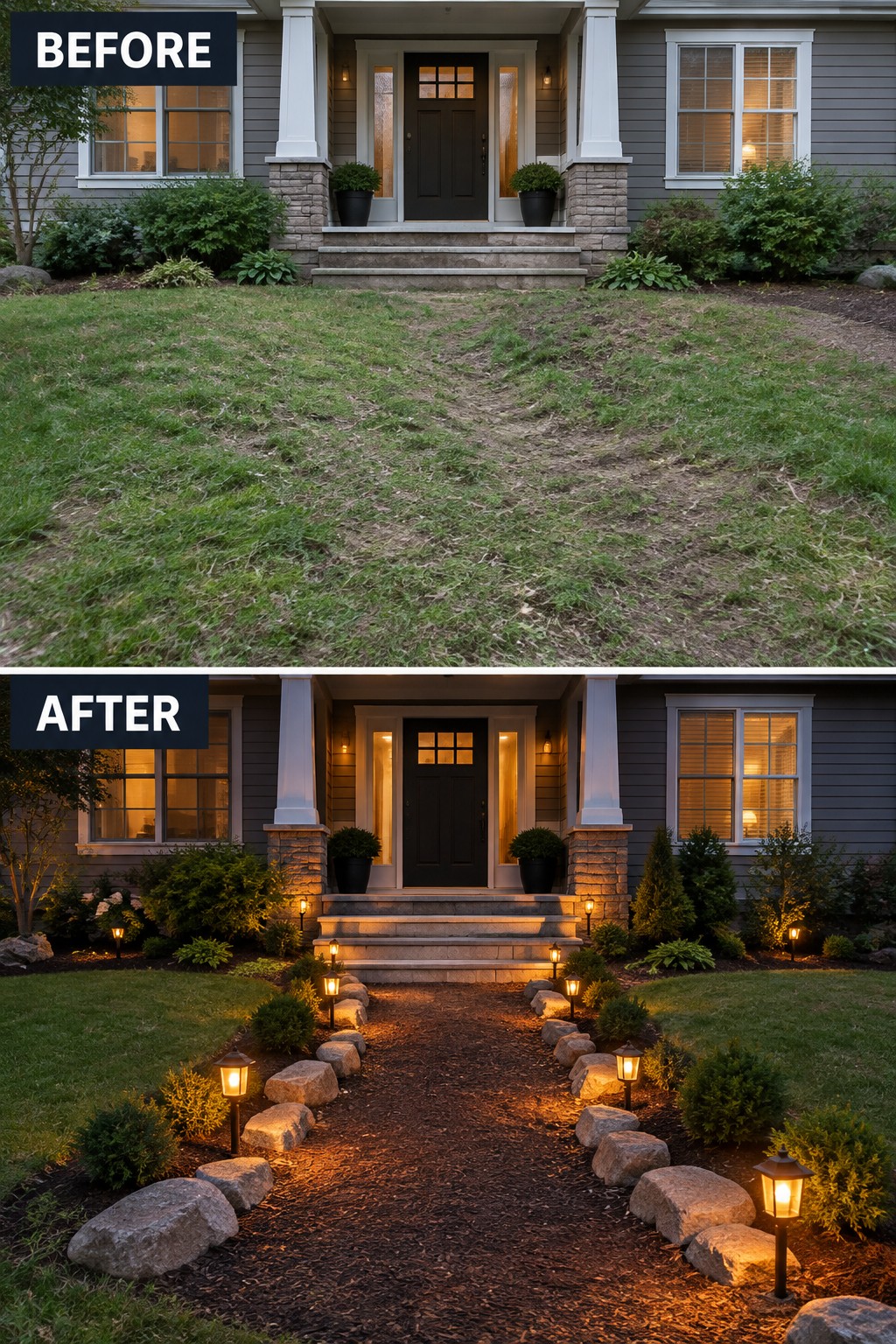
A worn track across a sloped front yard can become a clear, easy-to-follow route to the steps. Here, the bare ground is replaced with a mulch path edged by large stones, so the walking area feels planned instead of cut through the lawn.
For a similar yard, keep the path wide enough to walk comfortably and use sturdy edging to hold the mulch in place on the slope. Small path lights can help mark the route after dark, but make sure they do not narrow the way.
Replace Bare Mulch With A Planted Rock Garden

A sloped bed covered mostly in old mulch can look sparse and hard to maintain. Replacing it with rounded rock and grouping drought-tolerant plants across the slope gives the yard a clearer structure, while the added greenery and flowers keep the stones from looking bare.
This approach suits sunny front yards where a lawn is difficult to manage. Choose plants that fit the slope’s sun and water conditions, and leave enough room for them to mature. A few well-spaced groups usually look better than filling every gap at once.
Build A Stone Border To Define A Sloped Garden

A bare slope can be hard to mow and may look unfinished. A low stone retaining border gives the garden a clear shape, while colorful planting turns the open lawn into a more intentional front-yard bed.
For a similar yard, follow the slope with a wall that steps down gradually, and keep the planting simple enough to maintain. Check drainage and choose stones suited to the height and soil conditions before building.
Use Low Planting To Open Up An Overgrown Slope
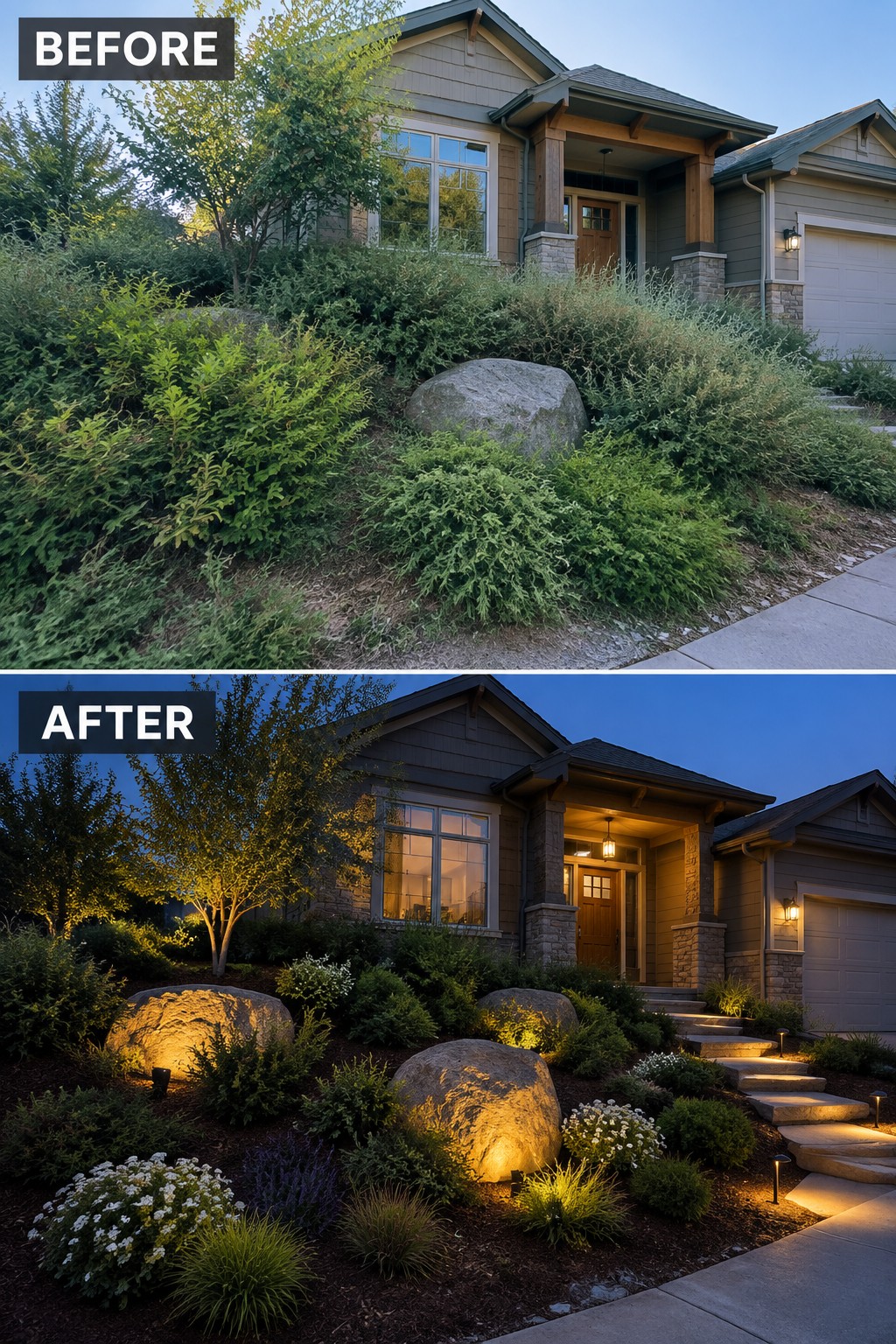
The yard feels more orderly after the dense growth is cleared and the rocks are set into simple planted beds. Low shrubs and groundcover leave the slope visible, while a few larger stones give the garden clear focal points.
On a sloped front yard, start by removing overgrowth and deciding where people need to walk before adding plants. Keep the planting low near steps and paths so the route stays easy to see and maintain.
Frequently Asked Questions
Q: Do I need to terrace a sloped yard before adding boulders?
A: Not always. Boulders can help define planting areas on a gentle slope, but steep sections may need small terraces to slow runoff and give plants room to grow. Keep each terrace modest so it feels natural rather than like a stack of walls.
Q: How do I keep boulders from shifting downhill?
A: Set each boulder into the soil so about a third of it sits below ground, and place its broadest side down. On a steep slope, use a compacted gravel base and avoid putting large stones where water rushes through.
Q: What plants work well around boulders on a sunny slope?
A: Choose low-growing plants with spreading roots, such as creeping thyme, sedum, or native groundcovers suited to your area. They soften the edges of the stones while helping hold the soil in place.
Q: Can I use boulders to control erosion?
A: They can slow water and protect small areas, but boulders alone may not fix a slope with heavy runoff. Watch where rainwater travels, and add groundcover or a shallow drainage channel if water keeps cutting through.
