

A plain fence can leave a backyard feeling exposed, even when the rest of the space is cared for.
I like how decorative screens add privacy while giving a long, blank boundary more shape and character.
They can also soften a seating area, filter harsh views, or bring a little pattern into a yard without replacing the whole fence.
The best changes feel considered rather than complicated, and it is satisfying to see how a focused update can make an outdoor space feel more settled.
I’d save the screen styles that suit your fence and test how their materials, spacing, and placement might work at home.
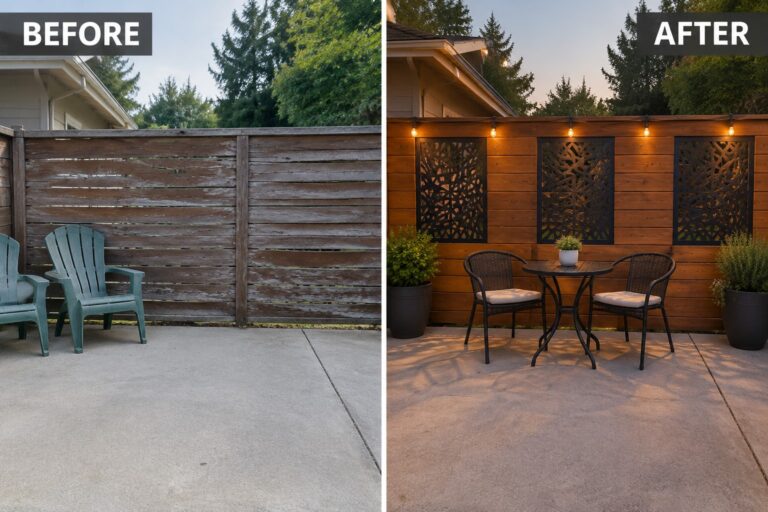
Turn An Unused Patio Into A Private Seating Area

A worn fence can make a patio feel exposed and unfinished. Here, fresh wood boards and decorative privacy panels give the seating area a clear backdrop, so even a small table and chairs feel like they belong.
This idea works well in a compact backyard where the fence is close to the seating. Choose screen panels that let some light through, and space them out rather than covering every board. Keep the furniture small enough to leave room to move around.
Add Privacy To An Existing Fence

The open chain-link fence made the yard feel exposed. Covering it with a reed screen gives the fence a more private backdrop without replacing the whole structure.
This can work well in a small yard where a full fence replacement is not practical. Secure the screen firmly, and leave room for the gate to open and close easily.
Add Privacy To A Bare Block Wall
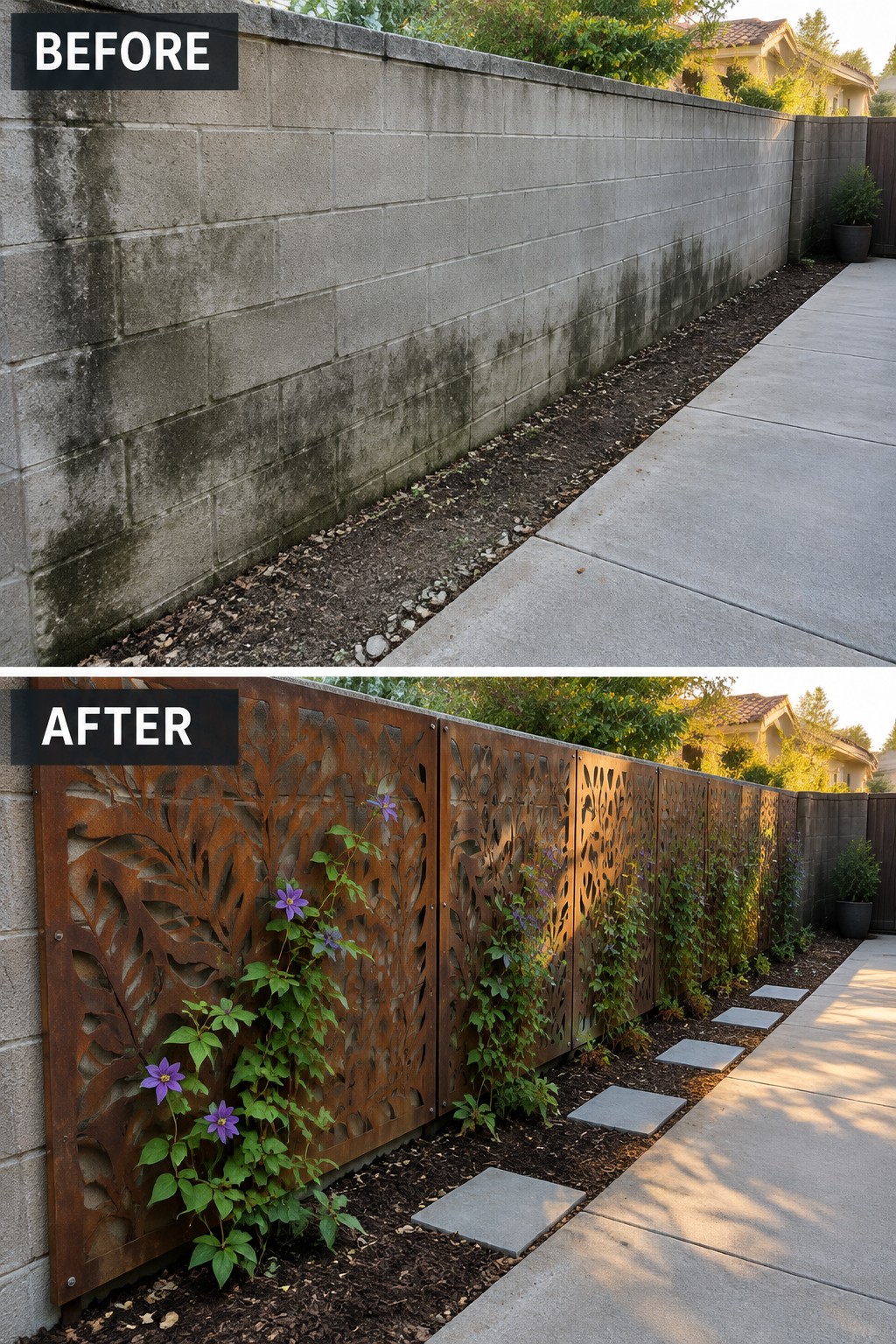
A decorative screen can turn an unattractive boundary into a more private garden edge. Here, rust-colored metal panels cover much of the stained concrete wall, giving the narrow strip beside the walkway a clearer purpose.
This idea works well in side yards where a solid fence is not an option or would feel too heavy. Choose panels that suit the wall’s length, and leave enough space for plants and access so the path stays easy to use.
Turn An Empty Patio Into A Private Seating Area

A plain fence can make a small patio feel exposed and unfinished. Adding a decorative lattice screen above it gives climbing roses room to grow and makes the fence feel more like a backdrop for seating. A simple bench then gives the yard a clear place to sit.
This idea works well in a compact backyard where a full privacy wall might feel too heavy. Keep the seating modest, and leave enough open ground to move around comfortably while the plants fill in.
Replace A Worn Fence With A Private Outdoor Screen
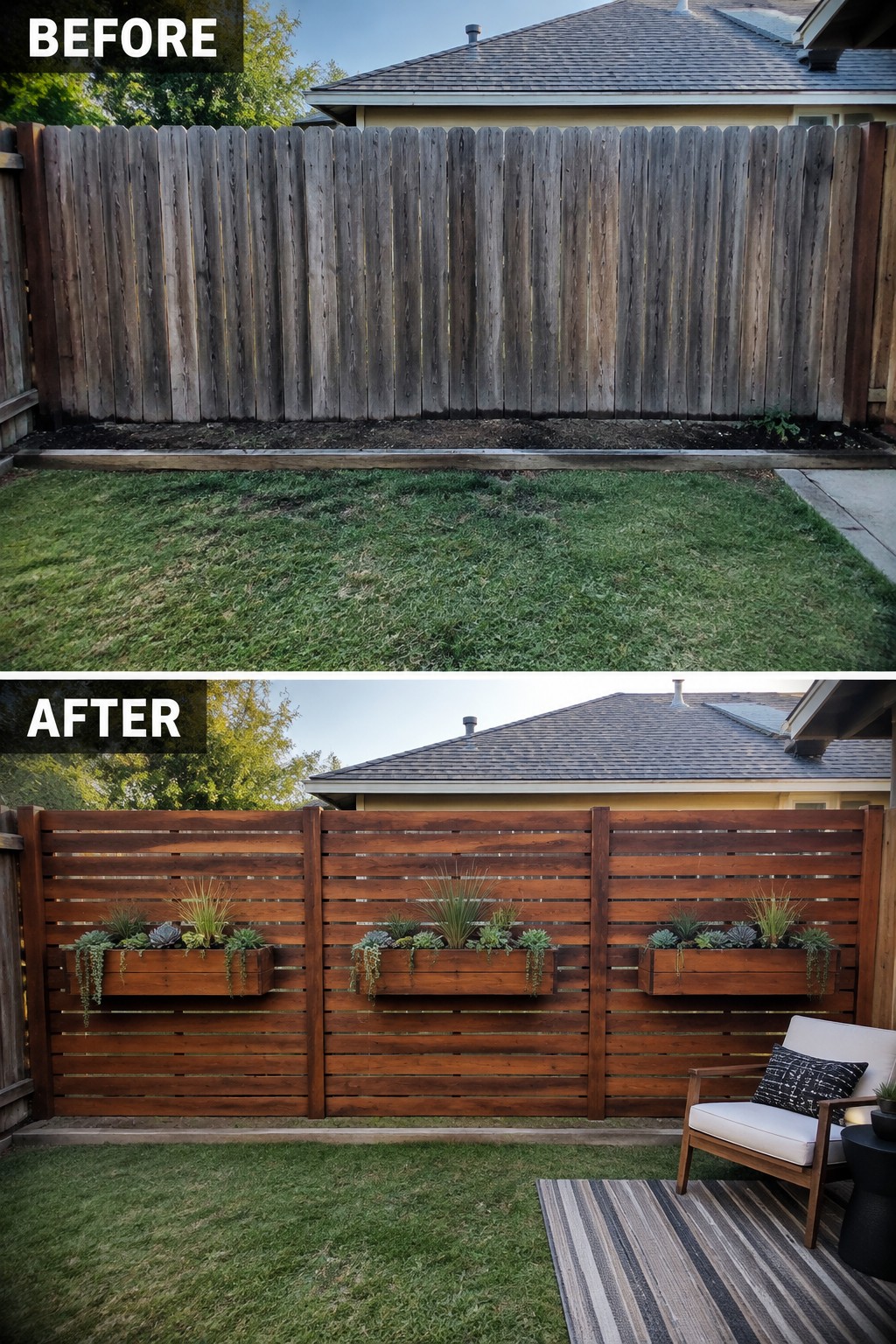
A weathered fence can make a yard feel neglected, while a horizontal slat screen gives it a cleaner backdrop and more privacy. Here, built-in planter boxes help the new fence feel like part of the yard rather than just a boundary.
This idea works well in a small backyard where the fence is always in view. Keep the screen simple, and use a few planters to bring in greenery without crowding the lawn or blocking the space.
Replace An Overgrown Entry Fence With Decorative Screens

The old picket gate and dense shrubs made the front path feel closed off. Decorative screens keep the entry private while letting the planting show through, and the open walkway makes the front door easier to reach.
This idea works well for a narrow front yard where a solid fence might feel too imposing. Keep the path clear and choose a screen pattern that offers the amount of privacy you need.
Create A Private Outdoor Seating Area
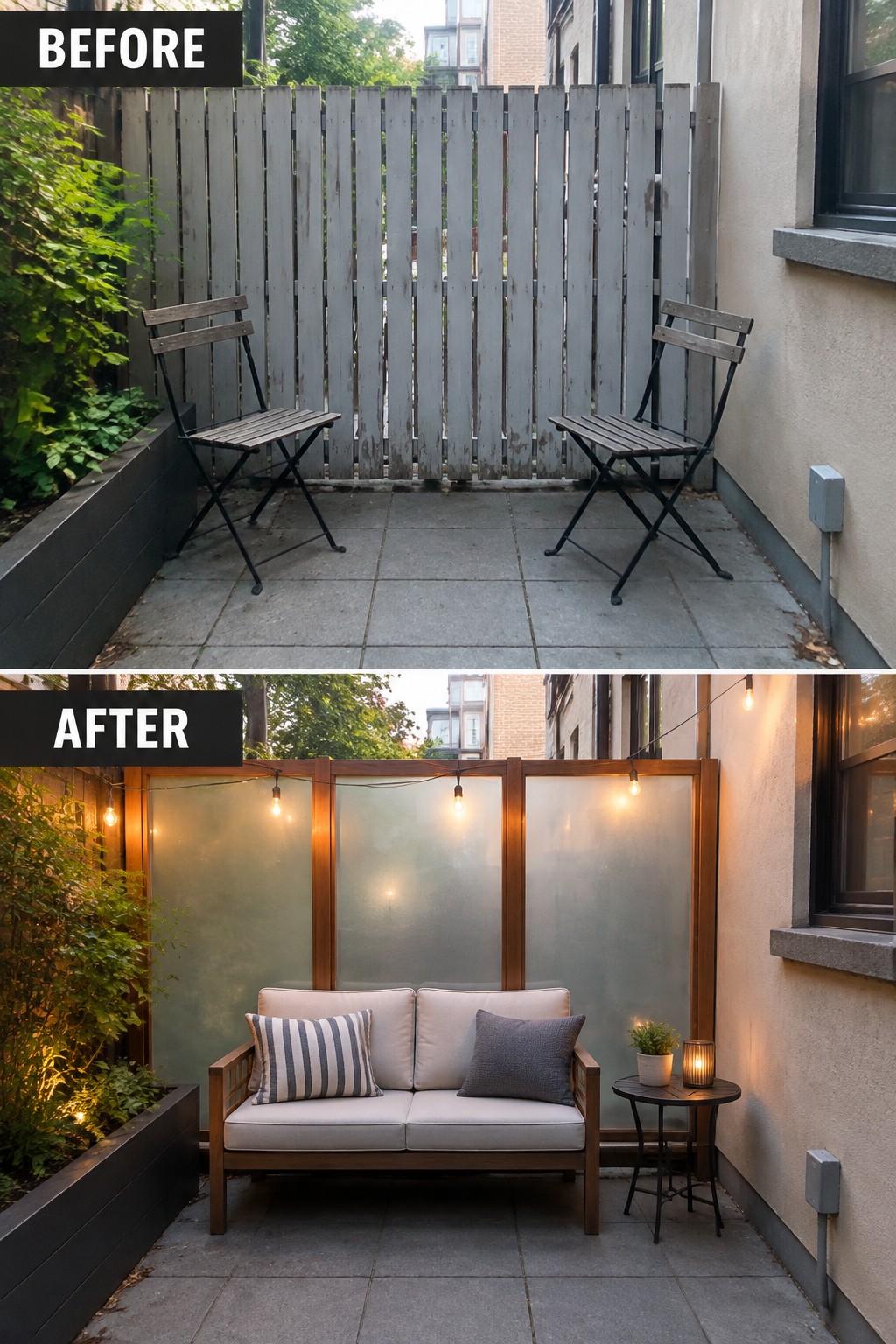
The old fence made this narrow patio feel exposed and left little reason to linger. Replacing it with a decorative screen and adding a compact sofa turns the concrete into a more private place to sit.
This idea works well in small patios between buildings, where there may not be room for a large garden. Choose a screen that lets in some light, and keep the seating scaled to the space so there is still a clear path to move around.
Add A Decorative Screen To A Plain Fence

A solid fence can provide privacy, but a narrow side yard may still feel like a plain passageway. Adding a slatted screen over the existing fence gives it a more finished look, and a few mounted planters make the walkway feel less bare.
This idea works well where space is too tight for garden beds or outdoor seating. Keep the screen securely attached and leave enough room to walk comfortably; choose plants that suit the amount of sun the path gets.
Make A Small Deck More Private
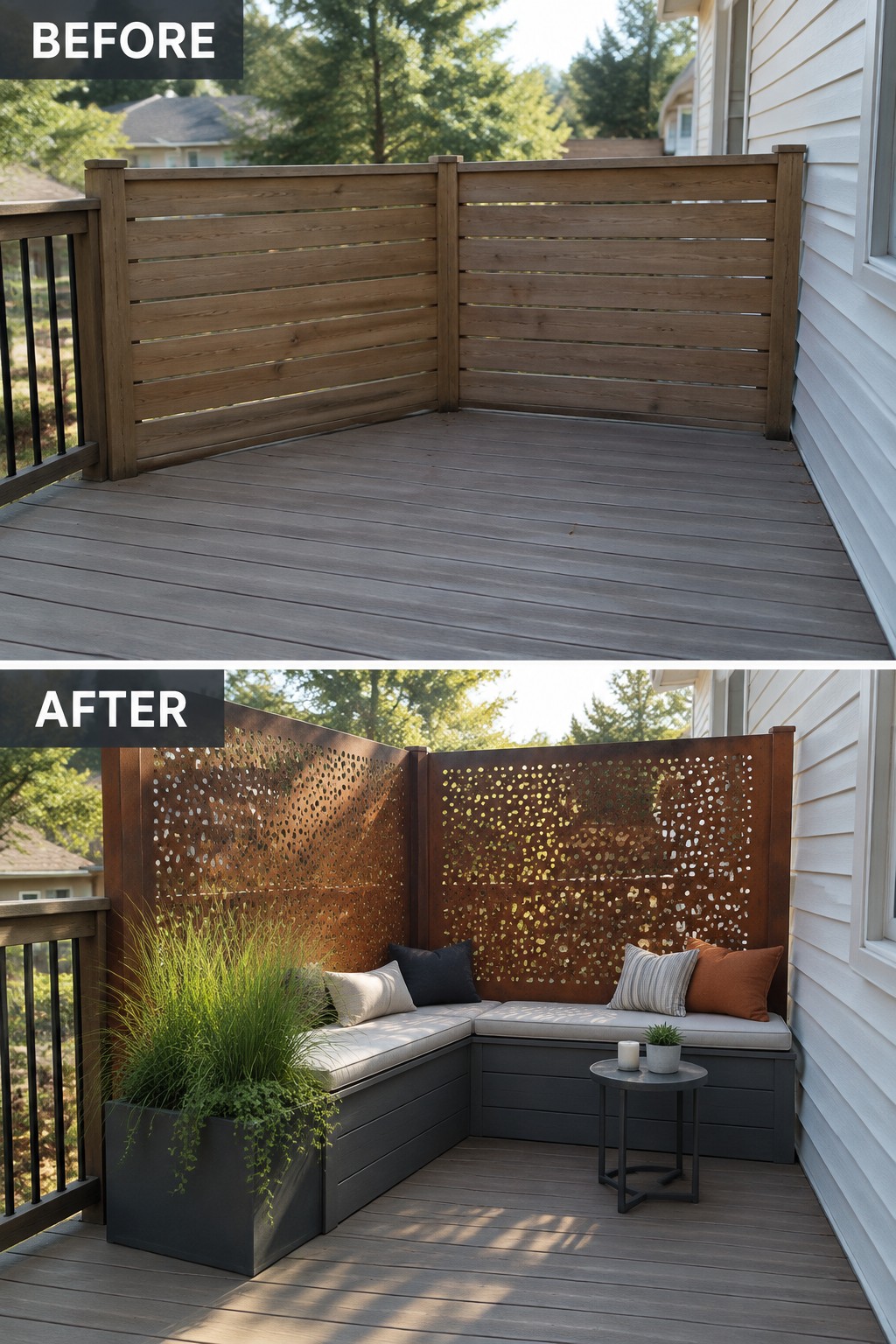
Replacing a plain wooden railing with decorative screens gives this compact deck a more sheltered feel and makes it easier to use as an outdoor seating area. The built-in bench takes advantage of the corner without filling the floor with separate furniture.
This idea works well on balconies and narrow decks where privacy matters but space is limited. Choose a screen that still lets some light and air through, and keep the seating shallow enough to leave a clear path.
Update A Plain Fence For More Privacy
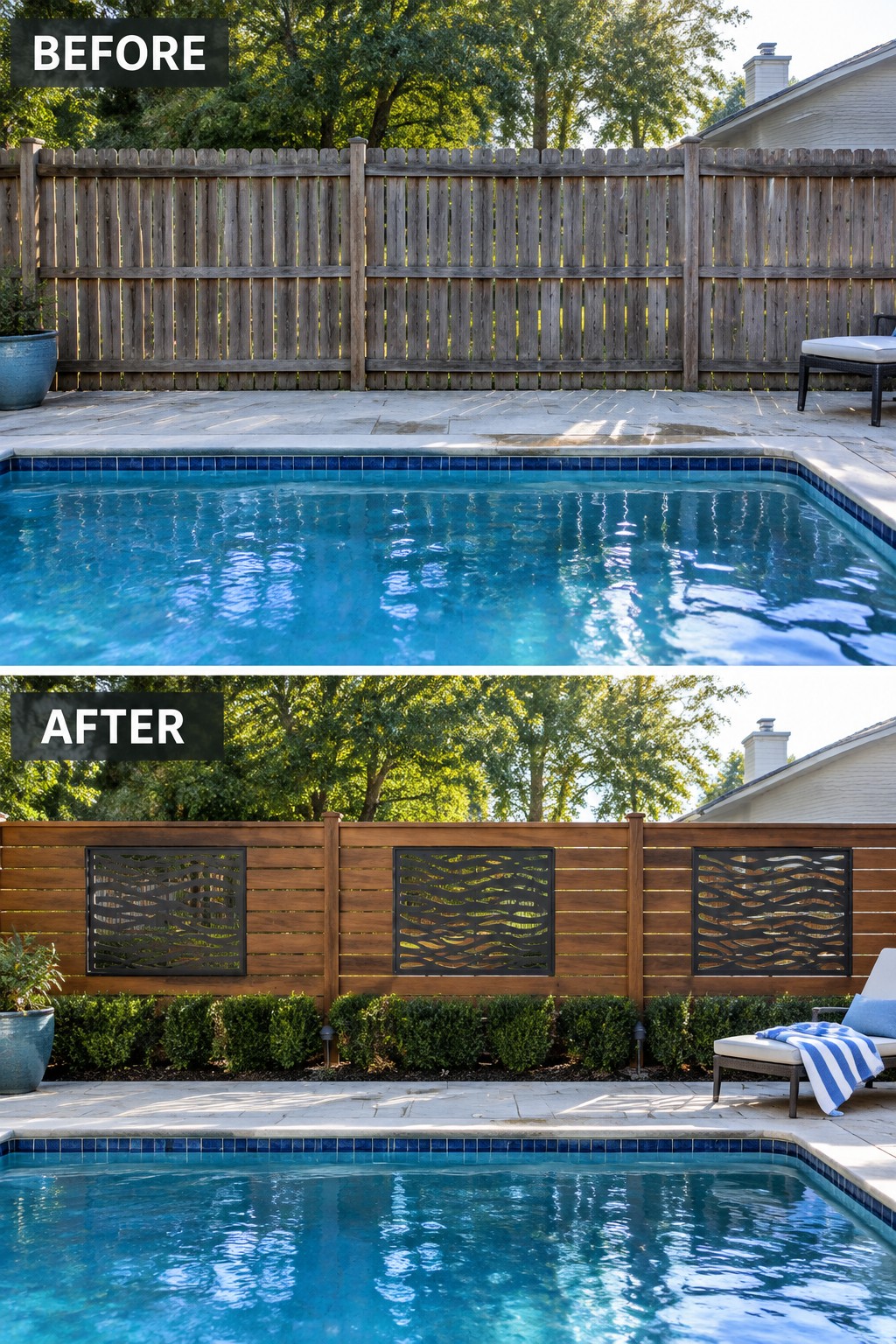
A solid wood fence can make a pool patio feel more sheltered, and decorative cutouts keep it from looking like a blank wall. Here, the old vertical boards give way to horizontal fencing with dark patterned panels.
This approach works well when an existing fence needs a clearer style as well as more privacy. Keep the screens spaced along the fence, and check how much you can see through the cutouts before choosing a design, especially if nearby homes overlook the patio.
Use A Decorative Screen To Make A Patio More Private

A tall decorative screen can give a bare patio a more sheltered feel and make it easier to use as a seating area. Here, terracotta panels cover the worn wall and provide a clear backdrop for a simple bench.
This idea works well in a small courtyard where a full fence would feel too bulky. Choose outdoor-rated panels, secure them properly, and leave enough room for people to move around the seating.
Add Structure To An Overgrown Fence Line

A decorative lattice screen can turn an unruly fence line into a more orderly garden border. Here, the old fence is replaced with a wood screen, giving climbing plants a place to grow and making the area feel more deliberately arranged.
For a similar look, clear the weeds first, then use trellis panels and raised planters to define the edge of the yard. Leave enough space between planters for plants to spread and for you to tend them.
Give A Covered Porch More Privacy
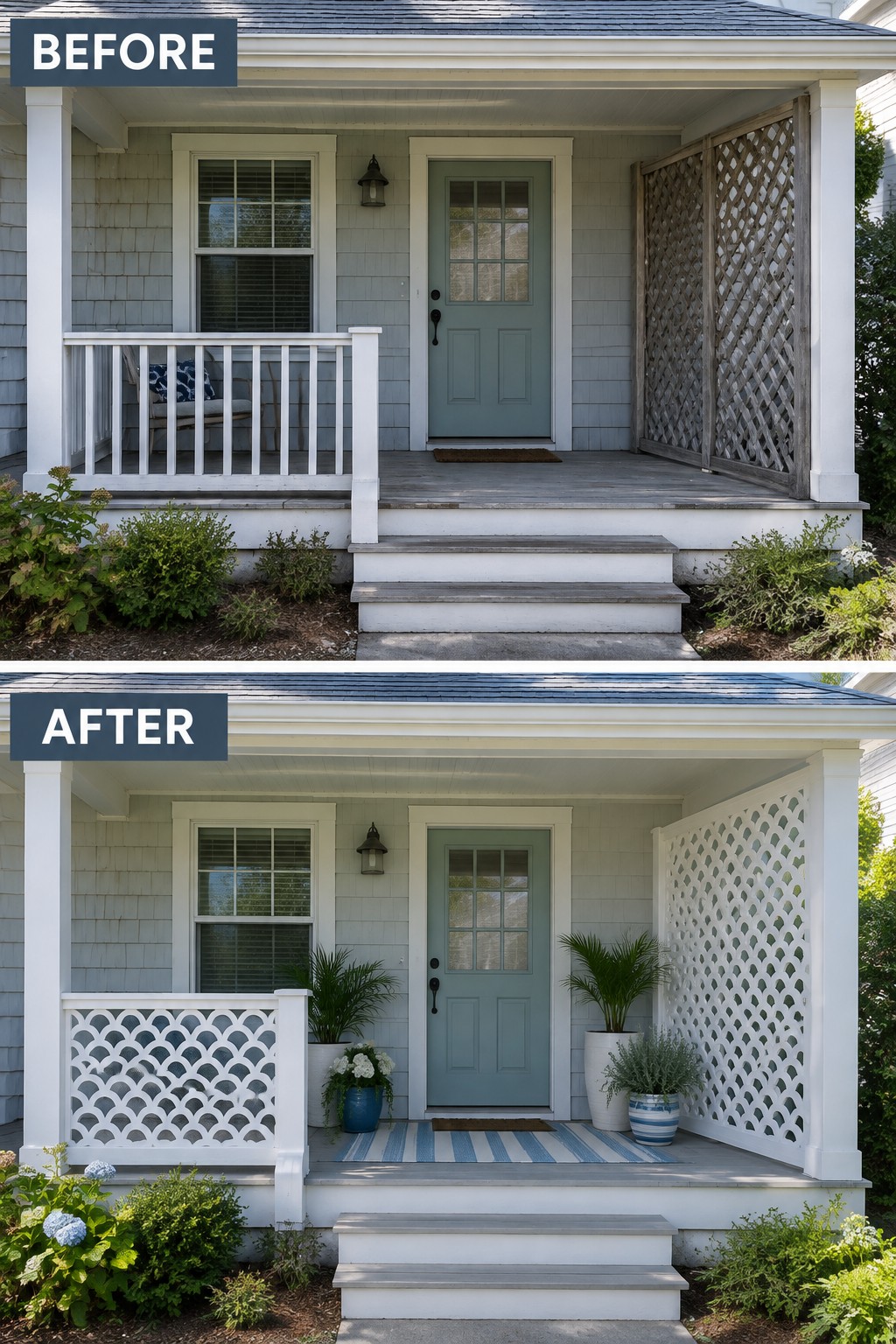
The open railing and lattice left this porch feeling exposed. Replacing them with decorative white screens makes the seating area feel more sheltered while keeping the porch open to light and air.
This idea works well on a covered entry or small porch where a full wall would feel too closed in. Choose a screen pattern that suits the house, and keep the railing height practical so the porch still feels easy to use.
Give A Plain Fence A Decorative Update
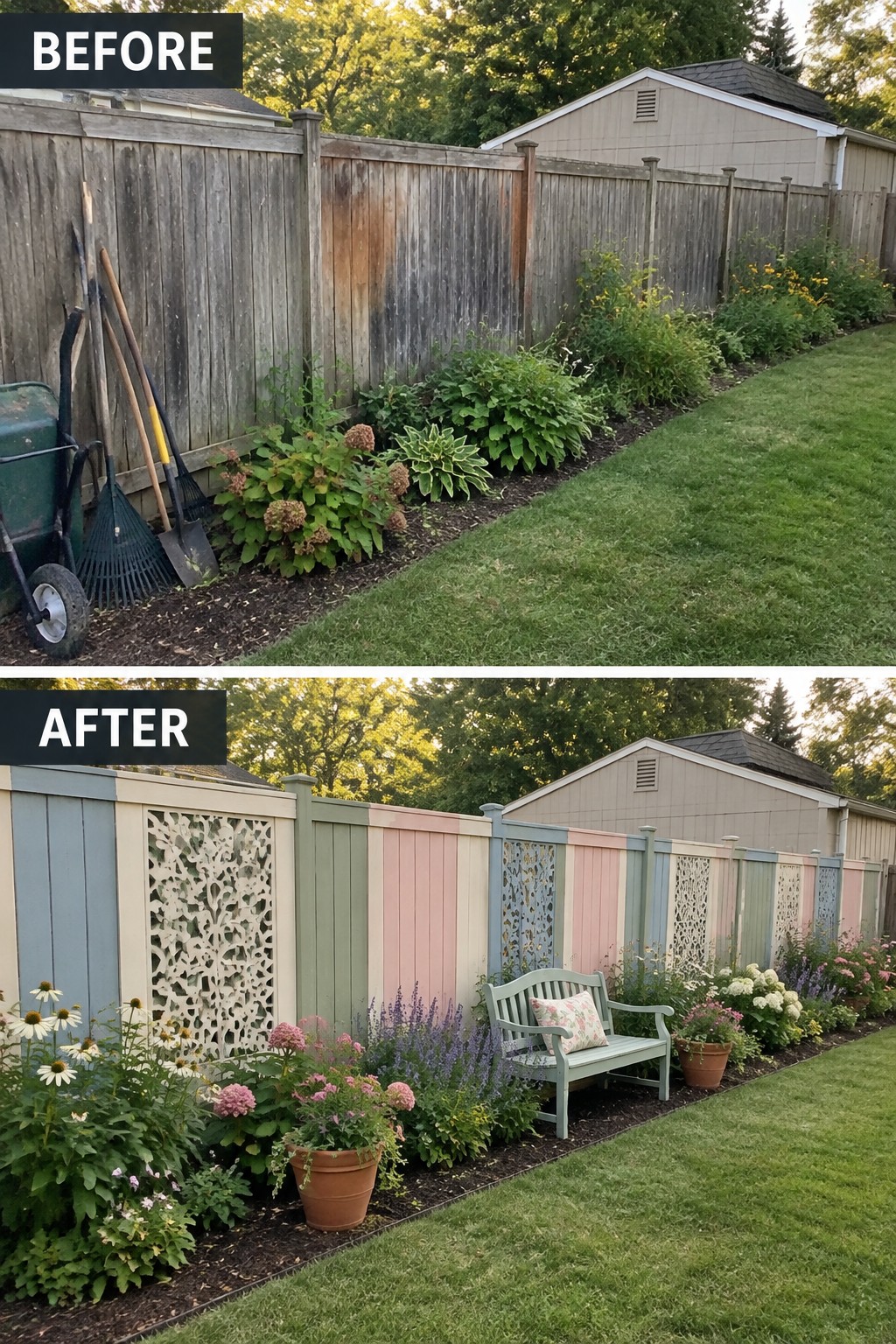
A weathered fence can feel like a tired backdrop, even when the garden is in good shape. Painting it in soft colors and adding decorative screen panels turns the fence into a feature while still keeping the yard private.
This idea works well when replacing a fence isn’t practical. Use a few screens to break up a long run of boards, and keep the colors simple so they don’t compete with the planting. Check that the panels are made for outdoor use and securely attached.
Make A Narrow Balcony Feel More Private

An open balcony can be hard to use when neighboring windows look straight in. Decorative screen panels turn the railing into a more private backdrop, while still leaving room for fresh air and light. Here, the added panels and planters make the small space feel like a usable seating spot.
For a similar balcony, choose a screen that suits the railing and check building rules before attaching anything. Keep the table and chairs compact so there is still room to move around, and use planters where they won’t crowd the seating.
Replace A Worn Fence With A Neater Privacy Screen
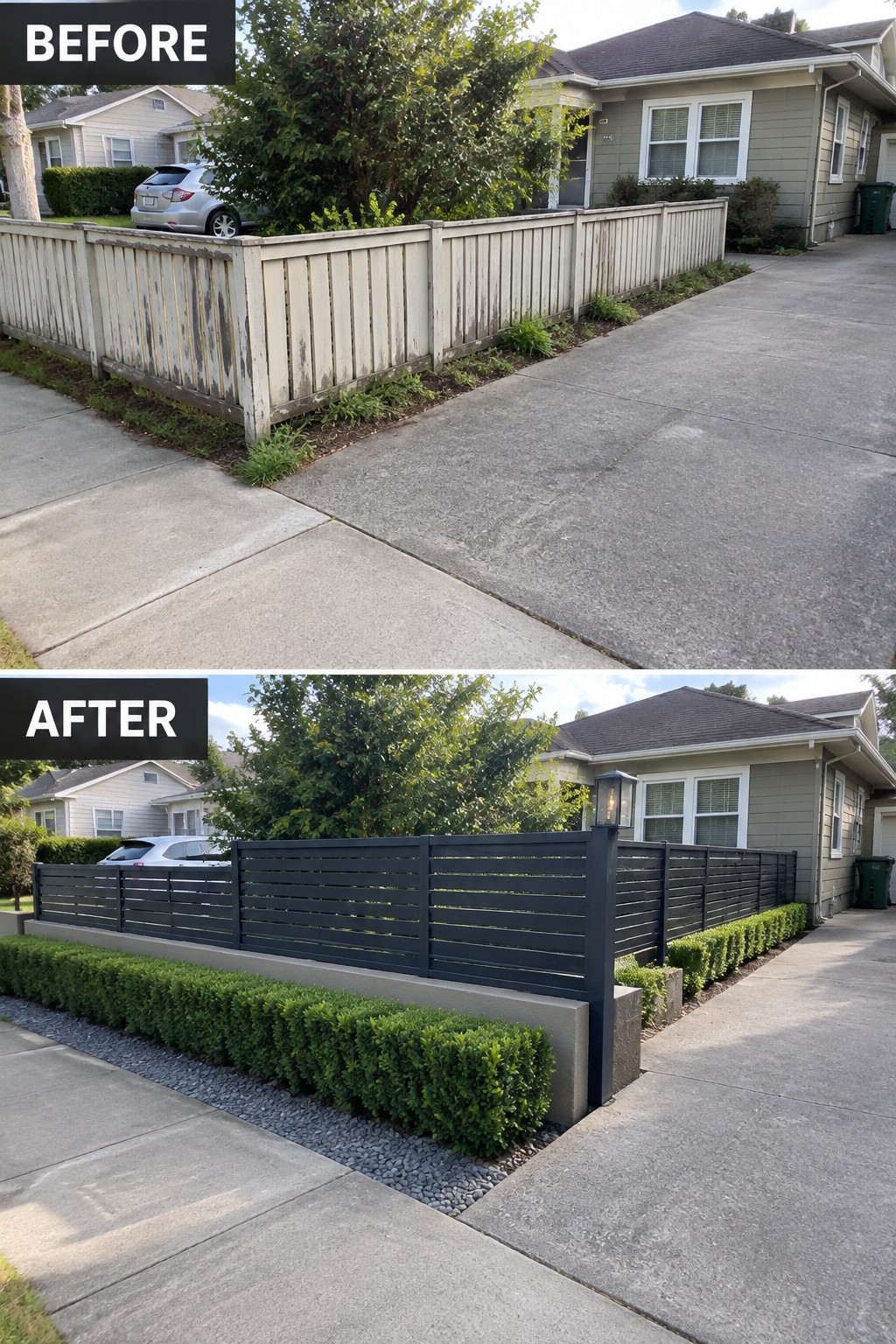
A tired, see-through fence can make a front yard feel untidy and exposed. Replacing it with a dark horizontal screen gives the boundary a cleaner look and blocks more of the view from the sidewalk.
This idea suits a small yard where the fence sits close to a walkway or driveway. Keep the screen in proportion to the space, and leave enough room for a clear path alongside it.
Replace A Worn Fence With A Frosted Privacy Screen
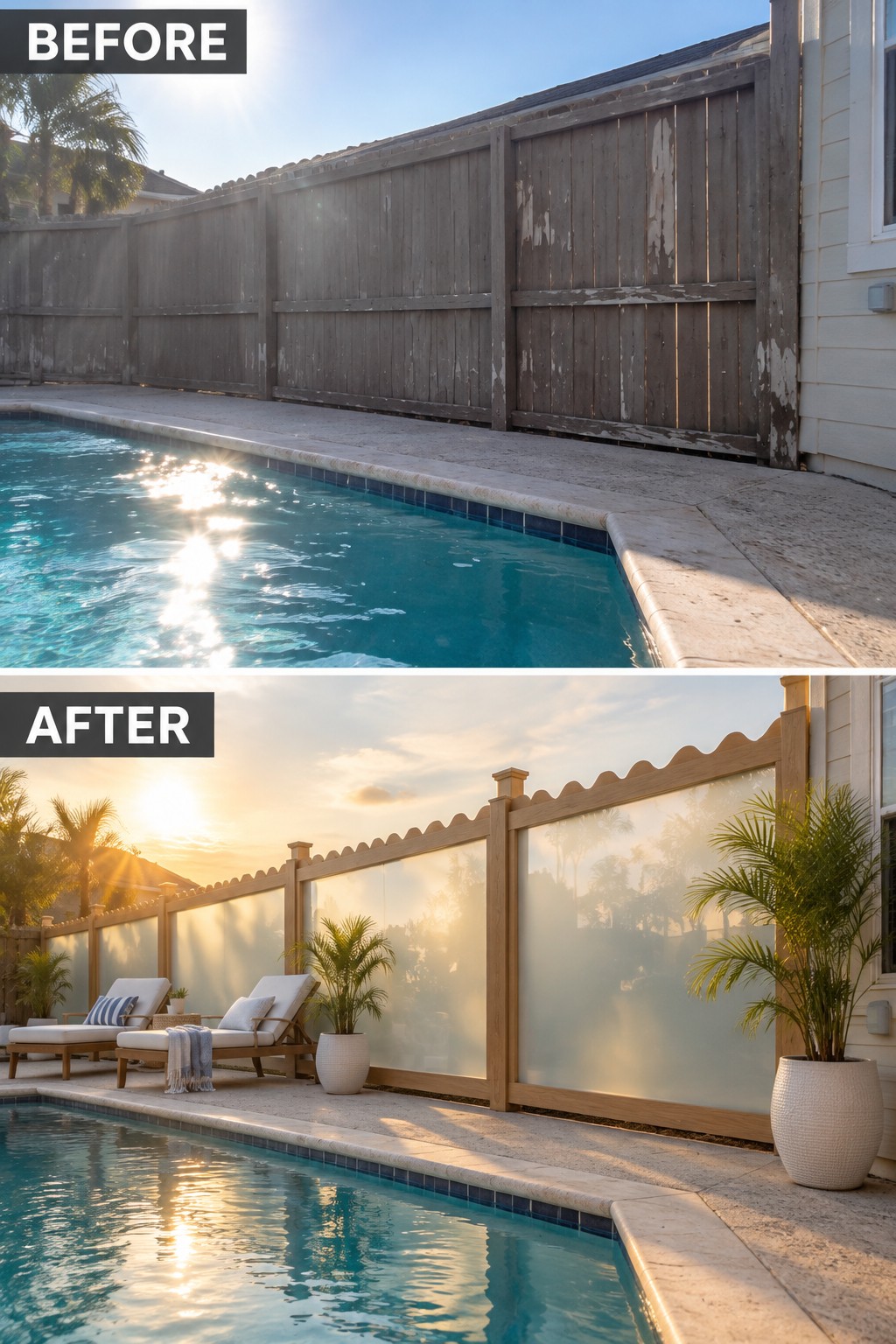
A peeling wood fence can make a pool patio feel neglected and exposed. Replacing the boards with frosted panels in a sturdy wood frame keeps the yard private while letting in light, and it gives the seating area a clearer, more finished boundary.
This idea works well where a fence borders a pool or patio and a solid wall would feel too closed in. Choose outdoor-rated materials and leave enough room for chairs and walking space; the screen should make the area more comfortable, not cramped.
Add Decorative Screens To Create A Private Patio
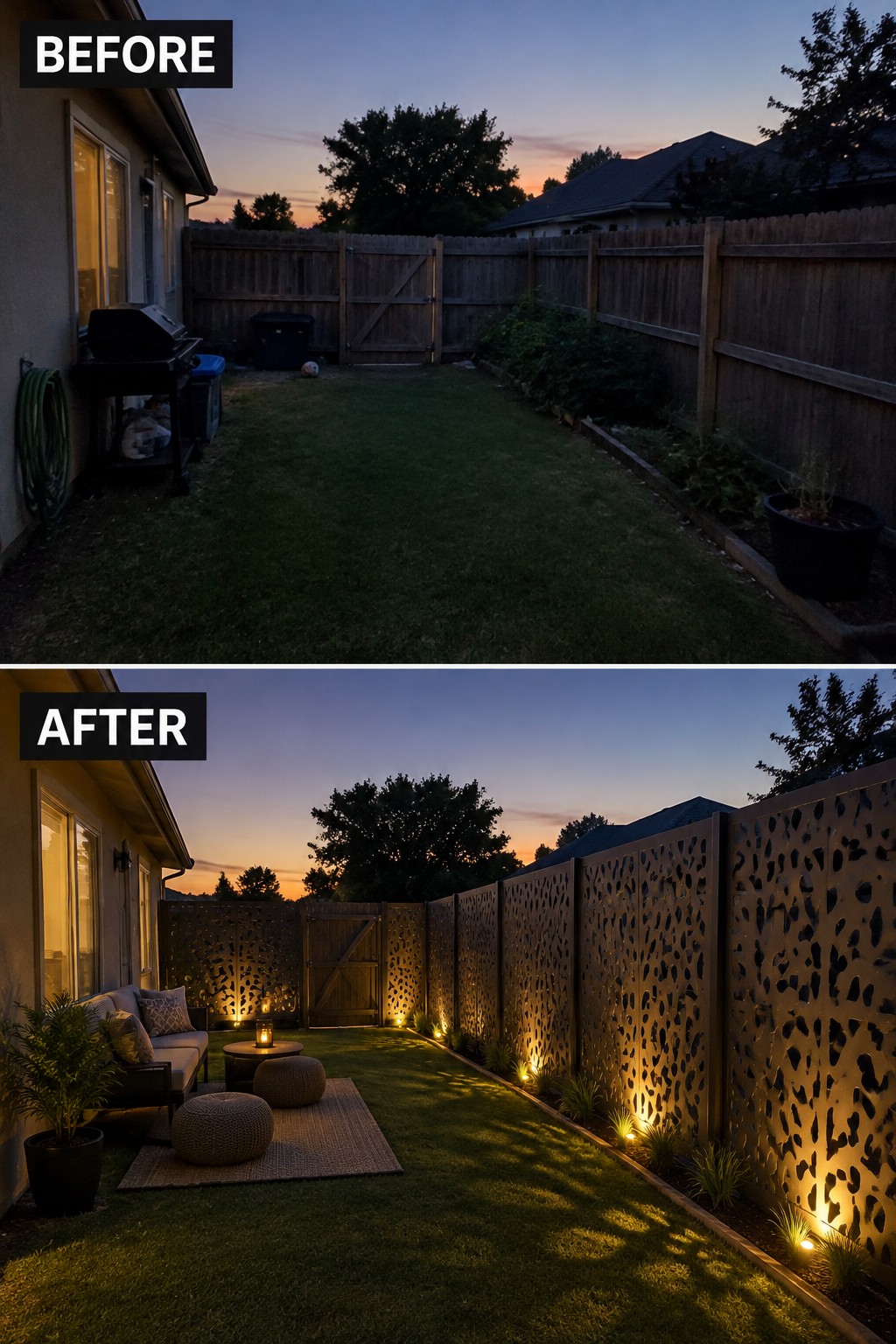
The plain wood fence made this narrow backyard feel exposed and unfinished. Decorative screen panels give the yard more privacy while turning the fence into a feature, so the seating area feels like a defined outdoor room.
This idea works well in a small yard where a full fence replacement is not practical. Use panels along the most exposed side, and keep the seating compact so there is still room to move through the space.
Turn A Plain Fence Into A Private Seating Area

A tired fence can make a garden feel unfinished, but a decorative screen gives it a clear purpose. Here, the plain fence becomes a backdrop for a bench, making the yard feel like a spot to sit rather than just a strip along the boundary.
This idea works well in a small backyard where a full patio may not fit. Add a compact bench and keep the screen design open enough to let some light and greenery show through. Check that the bench leaves a clear path through the garden.
Make A Narrow Side Yard More Private
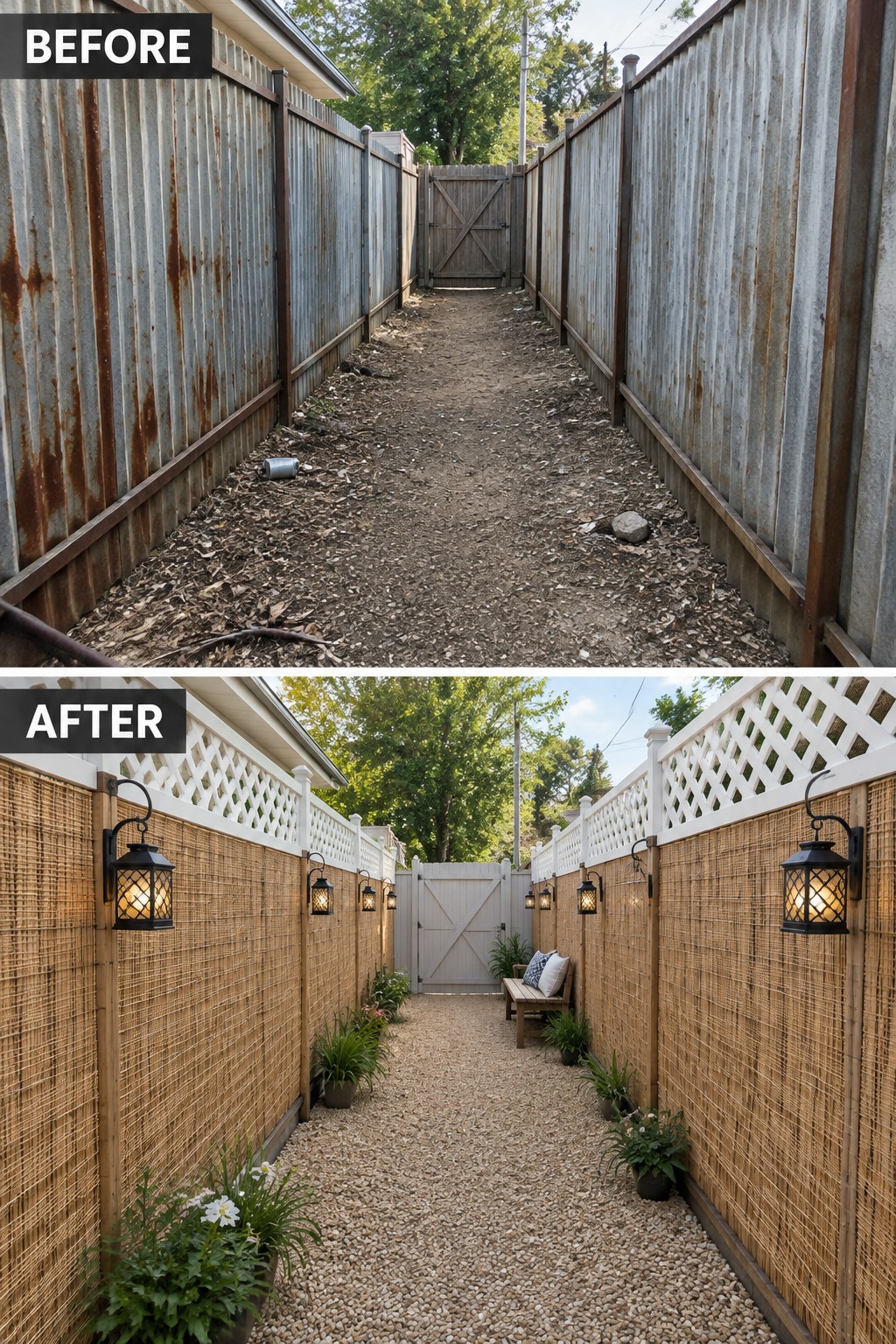
A decorative screen can turn a bare passage beside the house into a more finished, usable space. Here, reed screening covers the weathered fence, while a pale gravel path replaces the rough, cluttered ground. The fence still provides the boundary, but the screen gives the narrow yard a more settled look.
This idea works well in side yards where neighboring views make the space feel exposed. Attach screening securely to a sound fence, and leave enough room for the path to stay clear. A few compact plants or a small bench can make it useful without crowding the walkway.
Frequently Asked Questions
Q: Can I add a decorative screen to an existing privacy fence?
A: Usually, yes. Check that the fence posts are sturdy enough to support the added weight, especially if the screen is tall or solid. A lightweight panel attached to the posts is often the simplest upgrade.
Q: Will a decorative screen still give me privacy?
A: That depends on how open the design is and where people can see in from. If you want to block direct views, choose a tighter pattern or place the screen where it covers a specific sightline, like a neighbor’s window or a patio seating area.
Q: How do I keep a screen from looking out of place?
A: Repeat a color or material already used nearby, such as the fence stain, patio furniture, or planter boxes. You don’t need to match everything exactly, but a small connection helps the screen feel like part of the yard.
Q: Do I need to leave space between a wooden screen and the ground?
A: Yes. A small gap helps keep the bottom from sitting in wet soil or leaves, which can lead to rot. Check the gap now and then to make sure plants and debris haven’t filled it in.
