


When a two-story home looks straight into your yard, a low fence may mark the property line without giving you much privacy.
I find that the best solutions balance height and screening with the way a yard is actually used, so the space still feels comfortable rather than boxed in.
Fencing, layered plants, and other thoughtful barriers can soften the view and make patios or seating areas feel more sheltered.
The change can be satisfying without rebuilding the whole yard.
Some of these approaches may be worth adapting to your lot, budget, and local fence rules.
Add Privacy With A Solid Fence And Planting

Replacing the low chain-link fence with a taller wood fence blocks the view from the neighboring two-story home. A row of shrubs along the fence adds another layer of privacy and makes the narrow yard feel more planned.
This approach works well when you want a clearer boundary without giving up greenery. Check local fence-height rules first, and leave enough space between the fence and shrubs for them to grow and for you to maintain them.
Add Privacy With A Flowering Fence
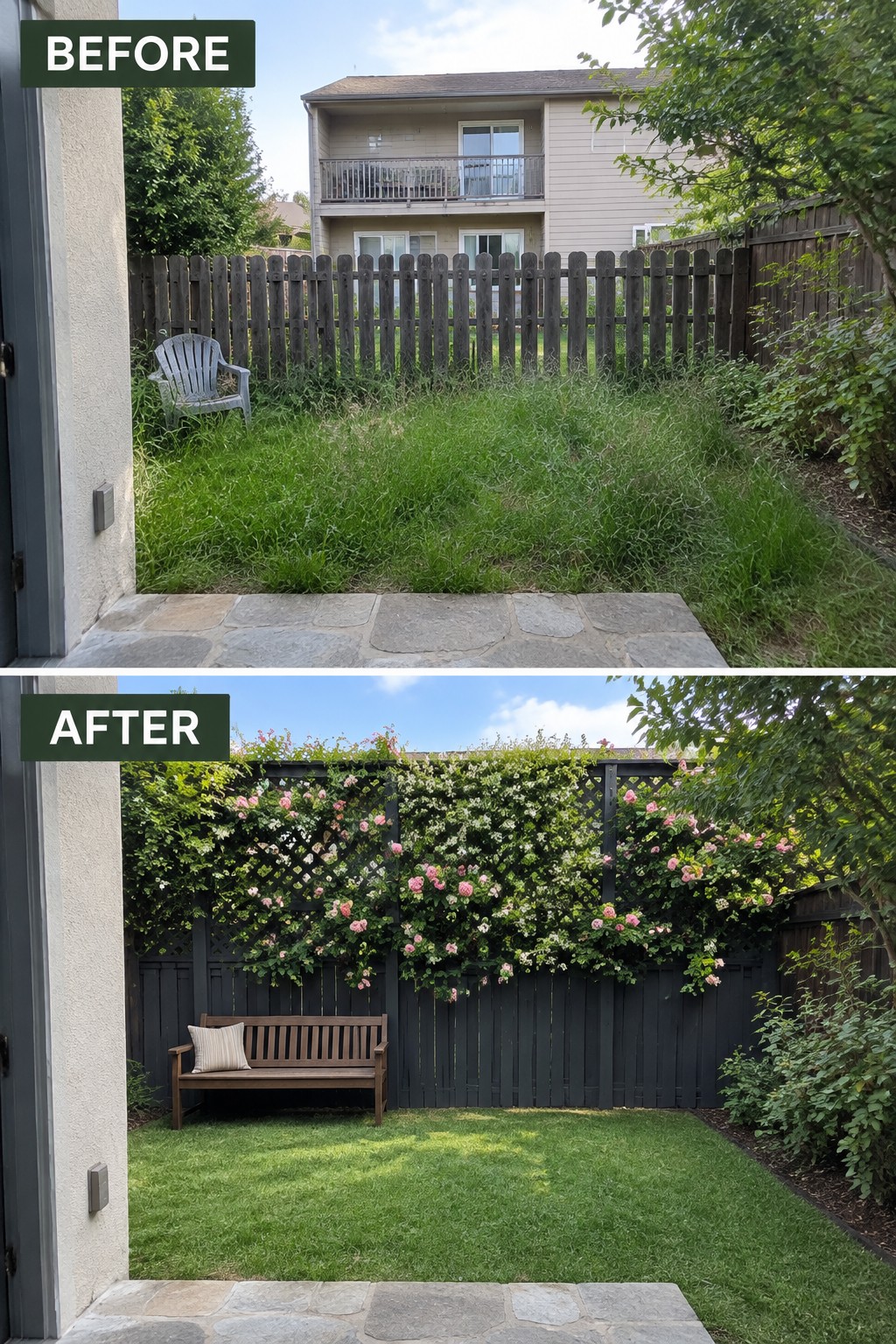
A tall fence covered with climbing flowers can block a neighbor’s view while making a small yard feel more settled. Here, the plain fence is replaced with a dark privacy fence and lattice, with flowering vines growing across the top.
This idea works well when a two-story neighbor looks directly into your yard. Choose sturdy supports and a vine suited to your climate, and leave room for the plants to grow without crowding nearby paths or shrubs.
Add Privacy To A Small Deck

A tall reed screen turns this exposed deck into a more private outdoor space. It blocks much of the view toward the neighboring house, while the deck itself stays open for everyday use.
This idea works well when a solid fence would feel too bulky or be difficult to install. Secure the screen firmly to the existing fence, and keep planters low enough that they do not crowd the walking area.
Add Privacy With A Structured Fence
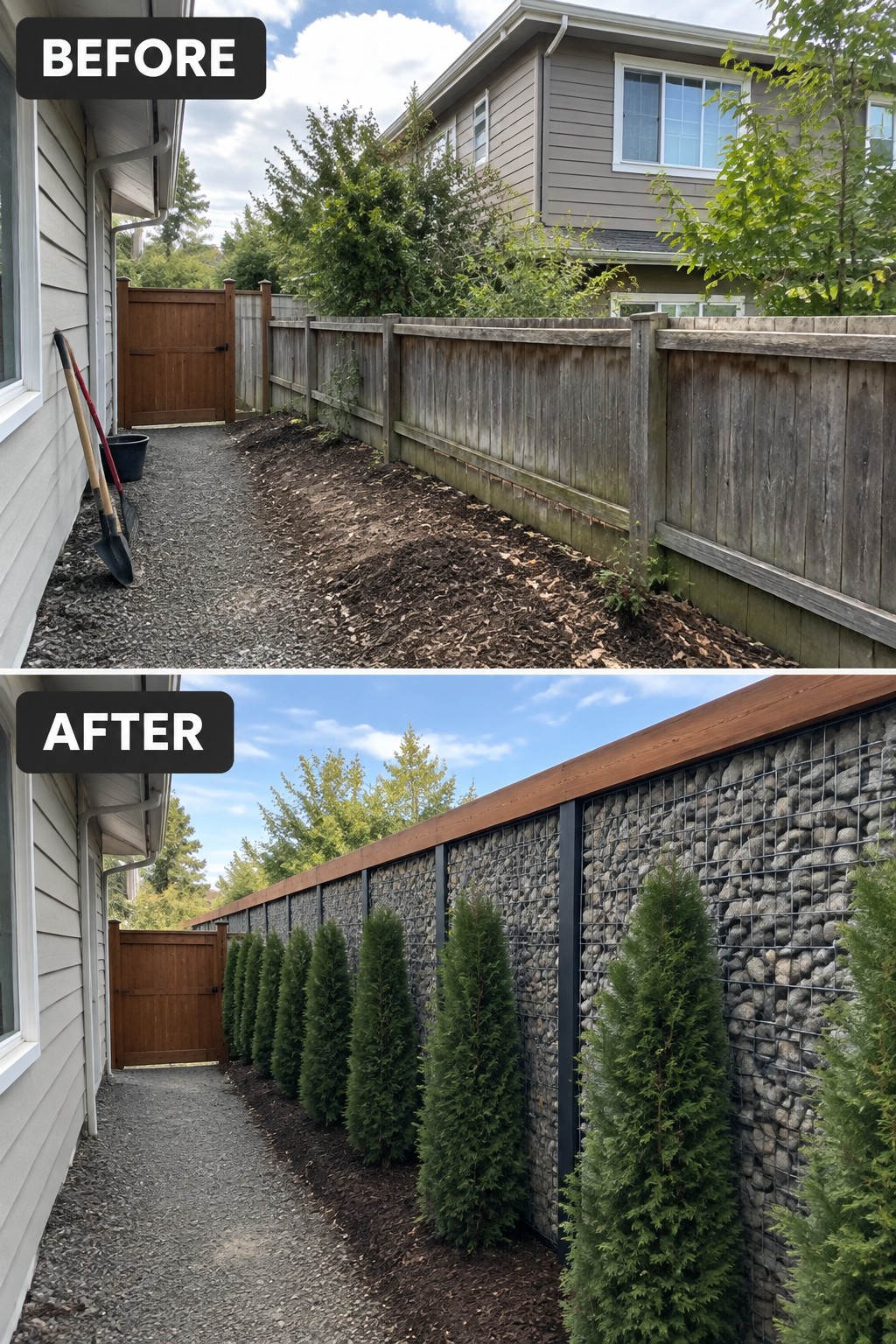
A tall gabion fence replaces the weathered wood barrier with a sturdier screen, giving this narrow side yard more privacy from neighboring homes. The row of evergreens helps break up the stone surface without taking up much walking space.
This approach works well along a side yard where a standard fence feels too low or worn. Check local height rules before building, and leave enough room for plants to grow without narrowing the path.
Create A More Private Patio With A Tall Fence

The original fence left the patio open to the neighboring two-story home. Replacing it with a taller, staggered wood screen makes the space feel more sheltered and gives the patio a clearer sense of privacy.
This idea works well in a small backyard where a full yard overhaul is not practical. Check local fence-height rules first, and leave enough room for a comfortable walkway before adding planters or seating.
Use Vertical Planting To Block Neighboring Windows

A bare fence can leave a two-story neighbor’s windows in full view, while a dense wall of greenery creates a taller privacy screen. Here, planting panels cover the fence and make the boundary feel more enclosed.
This approach works well in a narrow yard where there is little room for a wide hedge. Use a sturdy support system and choose plants suited to your light and climate. Leave enough space to reach the fence for upkeep.
Replace A Worn Fence With A Privacy Wall

A solid wall can block the view of nearby upper-story windows more effectively than an aging fence with gaps. Here, a light-colored privacy wall replaces the old wooden panels, and a few narrow evergreens help break up its plain surface.
This approach works well in a small patio where privacy matters more than an open view. Check local height rules before building, and leave enough room for plants to grow without crowding the walkway.
Block Two-Story Views With A Taller Fence

A taller privacy fence can make a backyard feel more sheltered when a neighboring home looks down into it. Here, corrugated metal panels replace the low wooden fence, blocking the view while keeping the design simple.
For a similar setup, check local rules on fence height before building, especially along property lines. A few raised planters in front can break up the long fence and bring greenery into the yard without taking up much lawn space.
Grow A Living Screen Along The Fence

A wooden trellis covered in climbing plants can make a plain backyard fence feel taller and more private. Here, the open lattice and dense greenery block much of the view toward the neighboring second story without replacing the existing fence.
This idea works well in a narrow yard where there is little room for a hedge. Choose climbers suited to your climate, and leave enough space to reach the fence for pruning and repairs. Plants take time to fill in, so check how much coverage they provide in each season.
Turn A Bare Backyard Into A Private Garden

A solid wood fence can make an exposed backyard feel more sheltered, especially when neighbors’ windows look down into the yard. Here, the fence also includes built-in planters and a bench, so the privacy feature serves a practical purpose too.
This approach works well along a property line where you want a clear barrier without leaving a plain wall of wood. Add a few sturdy shrubs or grasses in the planters, but keep the path to the gate clear.
Add Privacy With A Raised Fence And Planter Beds

A taller, solid fence helps block the neighboring home’s upper windows, making the yard feel more private. In this makeover, dark vertical boards replace the shorter weathered fence, while a raised planter bed adds a simple border along its base.
This approach works well in a narrow backyard where there isn’t room for a wide hedge. Check local fence-height rules before building, and leave enough space for plants to grow without crowding the lawn.
Add A Tall Hedge Along The Yard

Replacing the open view through a chain-link fence with a dense hedge makes the backyard feel more private, especially when nearby homes have upper-story windows. The planting also gives the back edge of the lawn a clear boundary without making the whole yard feel boxed in.
Choose evergreen shrubs that will grow tall and thick enough for your privacy needs, and leave room for their mature width. A mulched planting bed with a simple stone edge helps keep the hedge tidy as it fills in.
Add Shade And Privacy To A Patio

A pergola with outdoor shades can make an exposed patio feel more private without replacing the fence. Here, the shades block much of the view from the neighboring upper windows, while the overhead structure gives the seating area a more sheltered feel.
This works well in a small backyard where a tall solid fence might feel too enclosing. Choose shades that can be raised when you want more light, and secure the pergola properly so it can handle outdoor conditions.
Add Privacy With A Slatted Fence

A tall slatted fence can block views from neighboring windows without making a small patio feel boxed in. Here, replacing the solid fence with vertical boards and planting behind them creates a more private backdrop.
This idea works well in narrow yards where a tall hedge would take up too much room. Check local fence-height rules first, and leave enough space for plants to grow without crowding the patio.
Add Privacy With A Taller Fence
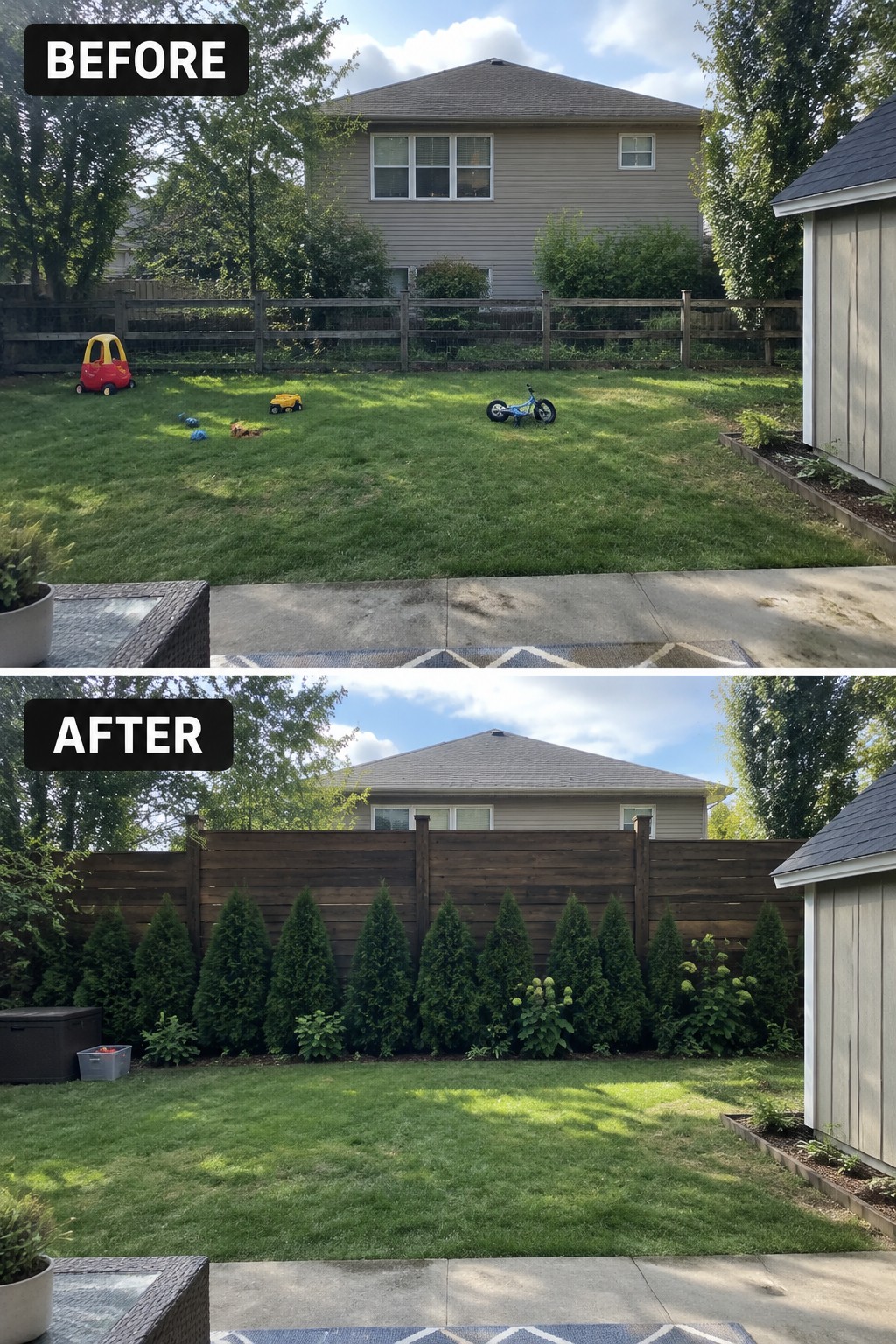
A taller solid fence can make a backyard feel more private when a neighbor’s second story looks directly into it. Here, a dark horizontal fence replaces the low boundary, blocking much of the view while creating a clear backdrop for the yard.
Before choosing a height, check local fence rules and talk with your neighbor if the fence sits on a shared boundary. A row of shrubs along the base can help the fence feel less stark, but leave enough room to maintain both the plants and the lawn.
Add Height To Block Neighboring Views

A taller privacy fence makes a small yard feel more sheltered from nearby homes. Here, the low weathered fence was replaced with a higher wood fence, so the neighbor’s second-story windows are less prominent.
This approach works well when a hedge would take too long to grow or use too much yard space. Check local height rules first, and keep the gate easy to use so the added privacy does not make the yard feel closed off.
Add Evergreen Screening To Block Neighboring Views

A row of tall evergreens along the fence turns an exposed backyard into a more private space. The planting blocks the view of the neighboring two-story house, while the existing fence still marks the yard’s boundary.
Choose evergreen varieties suited to your climate and leave enough room for their mature width, so they can grow into a screen without crowding the yard. A row works best where there’s a clear boundary to plant along and enough space to maintain the trees.
Add A Privacy Screen To A Concrete Patio

A tall screen can make a small patio feel more private without replacing the existing fence. Here, gray panels cover the open view toward neighboring windows, turning a bare concrete area into a more sheltered outdoor space.
For a similar setup, choose a screen tall enough to block the views that bother you, and check local rules before installing it. A narrow planter bed at the base can make the barrier feel less stark, but leave enough room to walk and use the patio comfortably.
Use A Tall Hedge To Screen Neighboring Windows

A dense hedge trained along the fence gives this patio more privacy from the two-story home next door. The greenery forms a taller screen than the bare wooden fence did, while still keeping the yard feeling like a garden.
This approach works well when a fence alone cannot block upper windows. Choose plants suited to your climate and leave enough room for them to grow and be trimmed; a hedge that gets too wide can crowd a narrow patio.
Replace Chain Link With A Privacy Fence

The open chain-link fence leaves the yard exposed to the neighboring two-story home. Replacing it with a taller solid fence makes the boundary feel more private and gives the backyard a clearer edge.
For a similar setup, check local height rules before building, especially along shared property lines. A narrow planting bed at the base can help the fence sit naturally in the yard without taking up much lawn space.
Create A More Private Patio With Layered Screening

A bare deck can feel exposed when a neighboring home looks directly into it. Here, a low retaining wall topped with horizontal slats and tall plants replaces the plain fence, giving the seating area more privacy without closing it in completely.
This approach works well on patios and decks that need a visual screen at the back. Choose plants suited to your climate, and leave enough room for them to grow without crowding the seating area.
Make A Patio Feel More Private

The open fence left this patio feeling exposed to the taller homes nearby. Replacing it with a taller solid wall, finished with horizontal wood sections, gives the seating area a clearer boundary and blocks more of the view.
This approach works well when a fence can be raised without crowding a small yard. Check local height rules first, and keep the wall finish simple so it feels like part of the patio rather than a barrier.
Frequently Asked Questions
Q: Will a taller fence actually block the view from a two-story window?
A: It can block views from lower windows, but a standard fence usually won’t screen an upstairs room. Add height with trees, tall shrubs, or a pergola-style structure where it’s allowed.
Q: Can I make my existing fence more private without replacing it?
A: Often, yes. Attach a privacy screen or add lattice with climbing plants, and check that the fence can handle the extra weight and wind.
Q: How do I block a neighbor’s view without making my yard feel boxed in?
A: Screen only the spots where you sit or relax instead of enclosing the whole yard. A few well-placed trees or a slatted panel can give you privacy while still letting in light.
Q: Do I need permission to build a taller privacy fence?
A: Check your local height rules and any neighborhood restrictions before you start. A quick call to your city or homeowners association can save you from having to alter a finished fence.
