

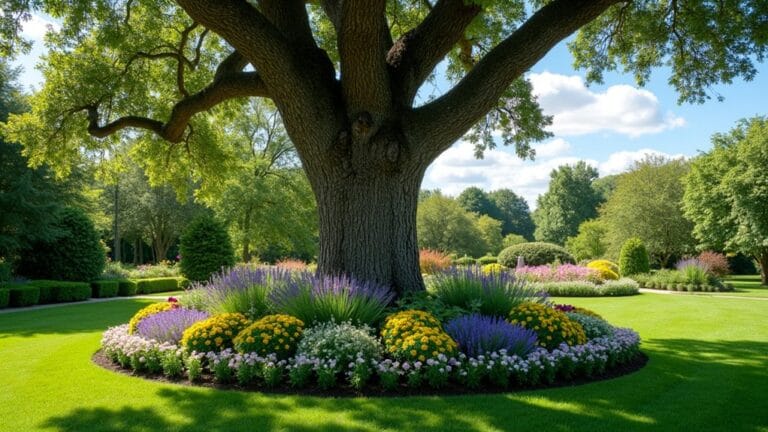
Looking to add a touch of charm to your garden? Flower landscaping around trees might be the perfect solution. The right combination of blooms can elevate your outdoor space, making it a delightful retreat. There’s something magical about pairing perennial flowers with vibrant colors. Let’s explore some ideas that can refresh your landscape with beauty and joy.
Choose Perennial Flowers for Long-Lasting Beauty
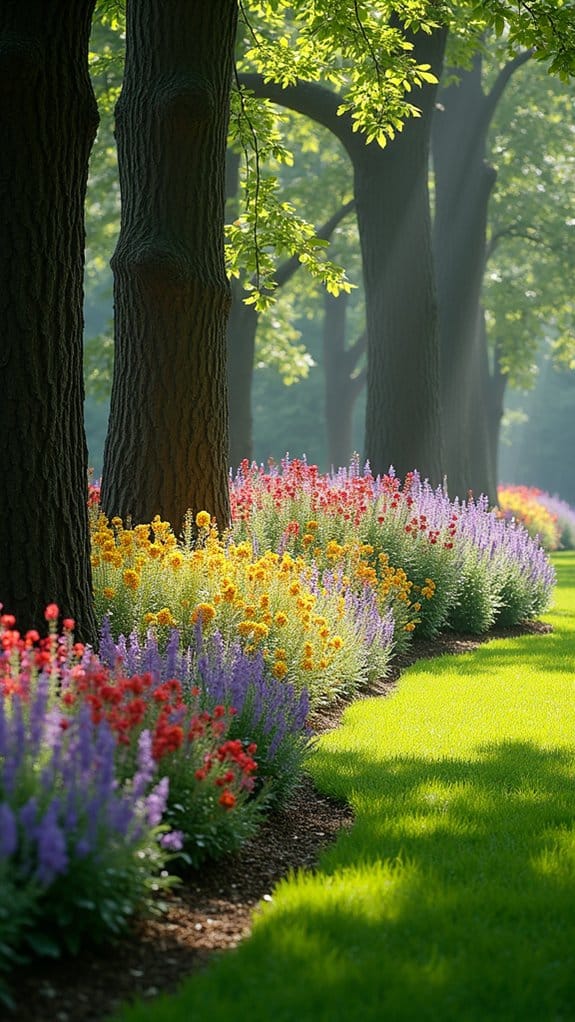
When I think about enhancing the beauty around trees, choosing perennial flowers is always at the top of my list.
They bring a sense of permanence and vibrant life to my garden. With their ability to return year after year, I can create a stunning landscape that requires less maintenance.
Plus, they offer a variety of colors and textures that complement the trees beautifully.
Embrace Color Contrast With Vibrant Blooms
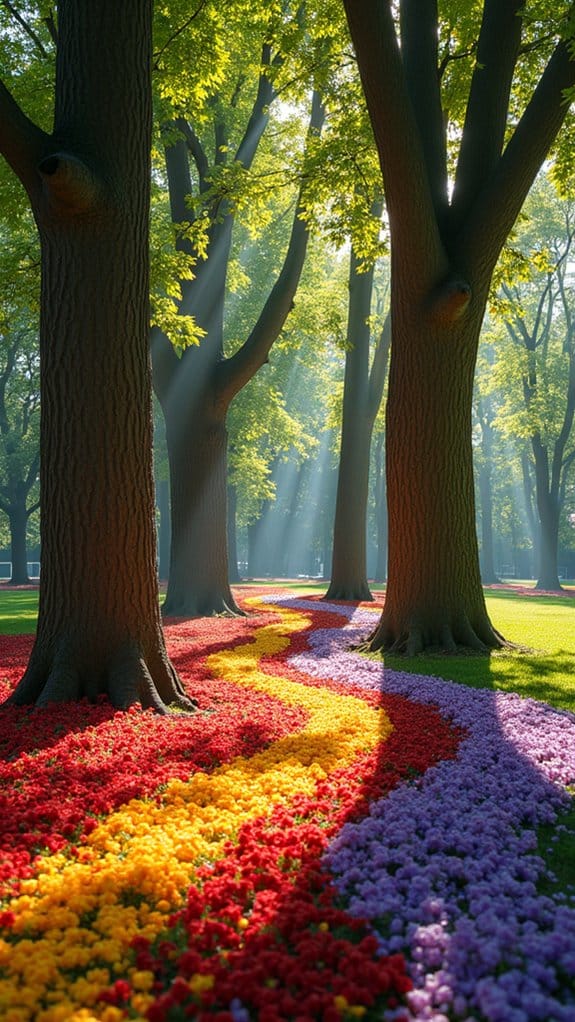
To truly make your garden pop, I love embracing color contrast with vibrant blooms that stand out against the greenery of the trees.
Bright yellows, deep purples, and fiery reds create an eye-catching display.
I often mix these colors with the lush green foliage, enhancing the overall beauty.
It’s amazing how a splash of color can transform the space beneath the trees!
Create a Wildflower Meadow Effect
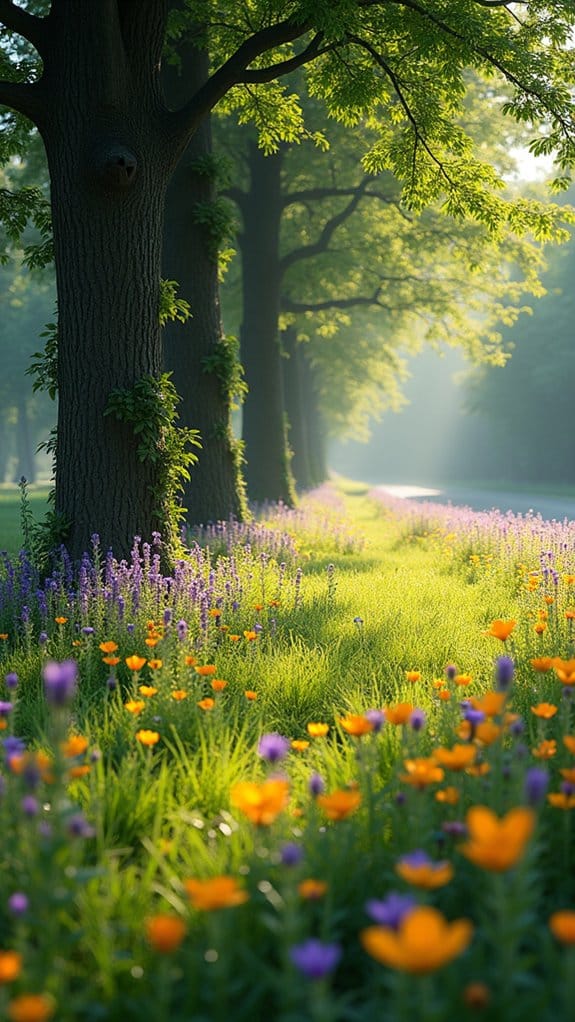
Creating a wildflower meadow effect around trees not only enhances the natural beauty of your garden but also promotes biodiversity.
I love choosing native wildflowers that thrive in my area; they attract pollinators and create a vibrant canvas.
Incorporate Groundcovers for Texture
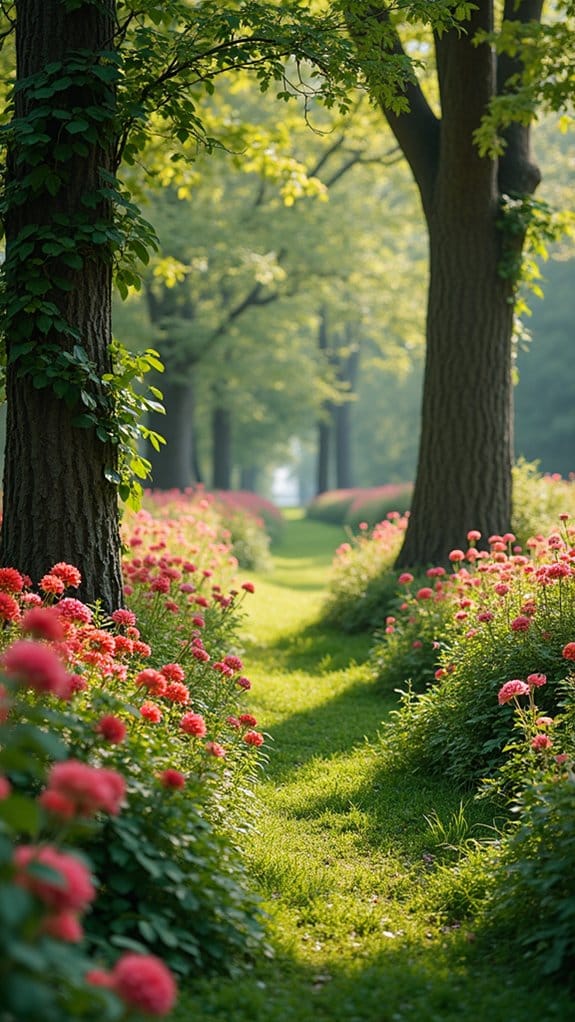
After establishing a vibrant wildflower meadow, I often look to incorporate groundcovers around trees for added texture.
I love using options like creeping thyme or ajuga, which not only soften the ground but also create a lush, layered look.
These groundcovers thrive in various conditions, helping to fill in bare spots and enhance the overall beauty of my landscape.
Utilize Vertical Space With Climbing Plants
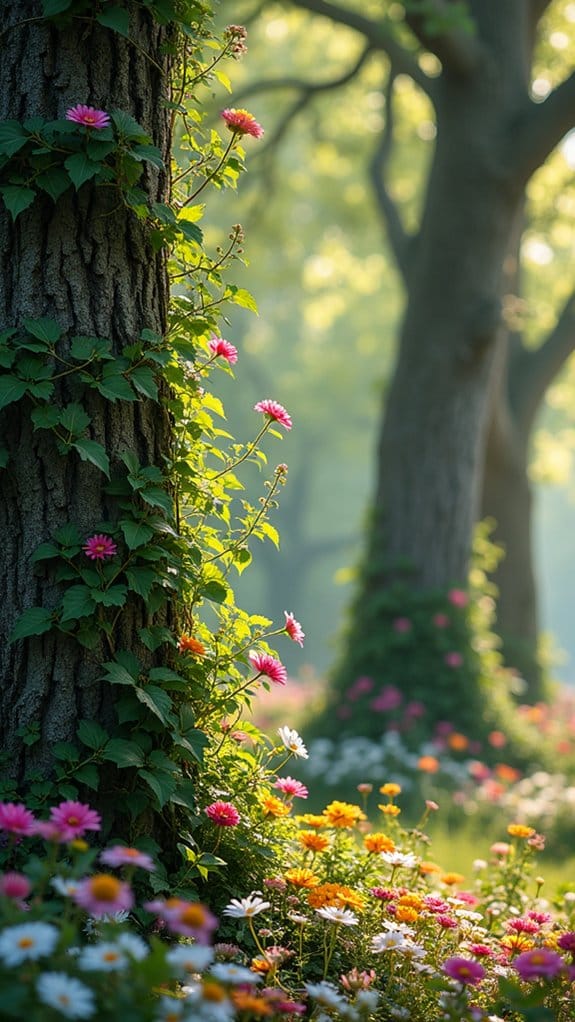
Climbing plants can transform the vertical space around trees into a stunning display of color and texture.
I love using varieties like clematis or climbing roses to add height and vibrancy. By training them up trellises or along tree trunks, you create an enchanting focal point.
It not only enhances the tree’s beauty but also draws the eye upward in your landscape design.
Design a Seasonal Flower Rotation
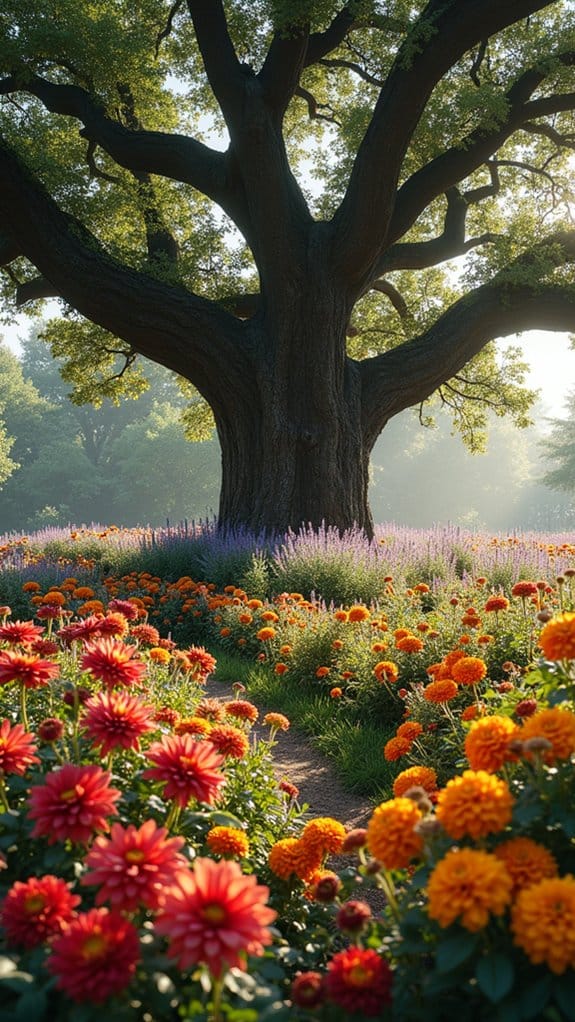
While planning your flower landscaping around trees, designing a seasonal flower rotation can keep your garden vibrant and dynamic throughout the year.
I love choosing flowers that bloom in different seasons, like tulips in spring, sunflowers in summer, and chrysanthemums in fall.
This approach not only enhances visual interest but also guarantees there’s always something beautiful to enjoy, no matter the time of year.
Opt for Edible Flowers Around Trees
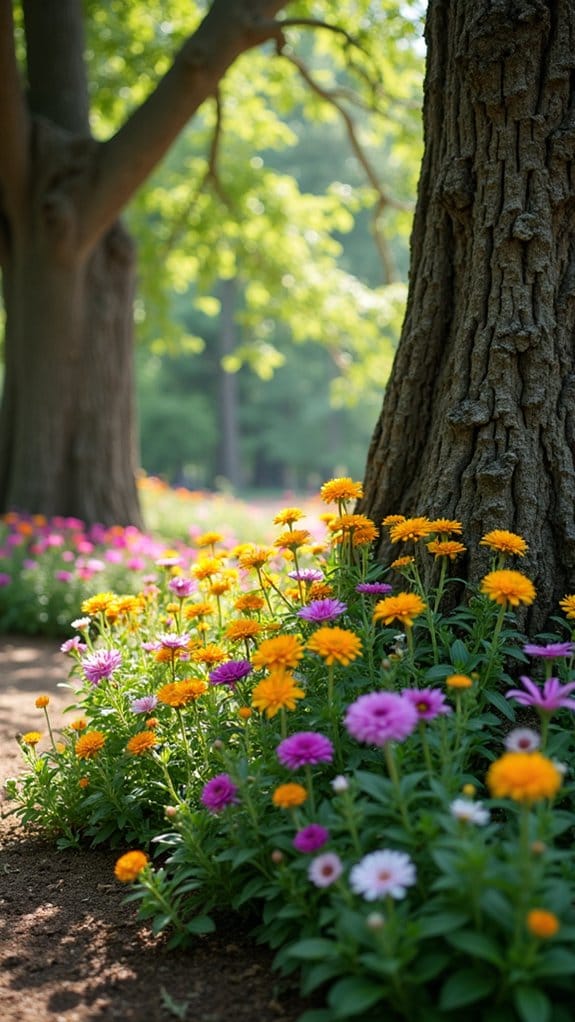
Incorporating edible flowers around trees not only adds beauty to your landscape but also offers a delightful culinary twist.
I’ve found that nasturtiums, pansies, and calendulas not only flourish in the shade but also enhance salads and desserts.
Planting these vibrant blooms invites both pollinators and culinary creativity into my garden, turning an ordinary space into a feast for the eyes and palate.
Combine Different Flower Heights for Depth
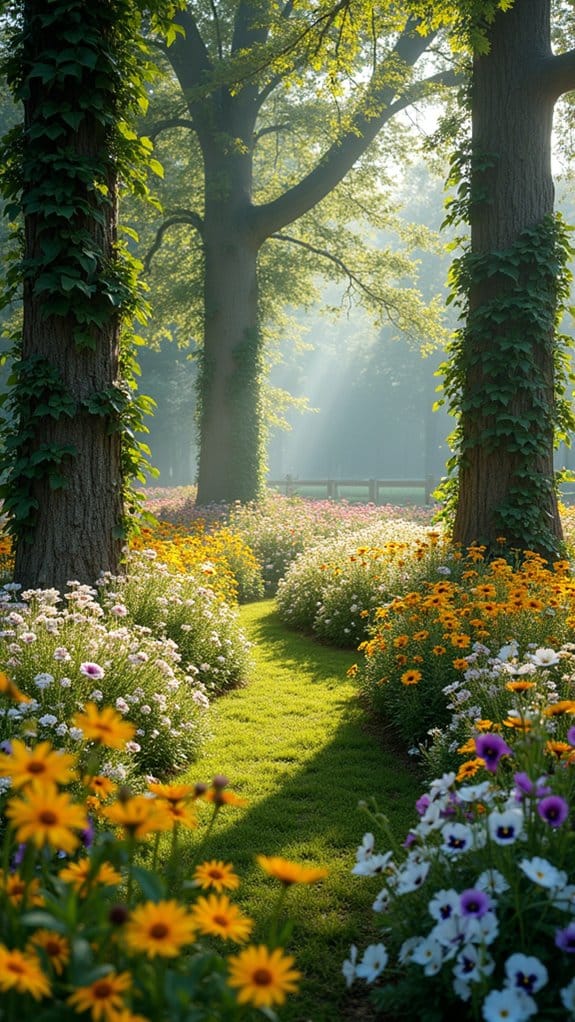
Creating a visually appealing landscape around trees often involves mixing different flower heights to add depth and dimension.
I love using tall blooms like delphiniums at the back, paired with medium-height flowers like coneflowers in the middle, and low-growing varieties like creeping thyme in front.
This layering not only enhances the beauty but also creates a dynamic and inviting space that draws the eye.
Implement a Themed Flower Garden
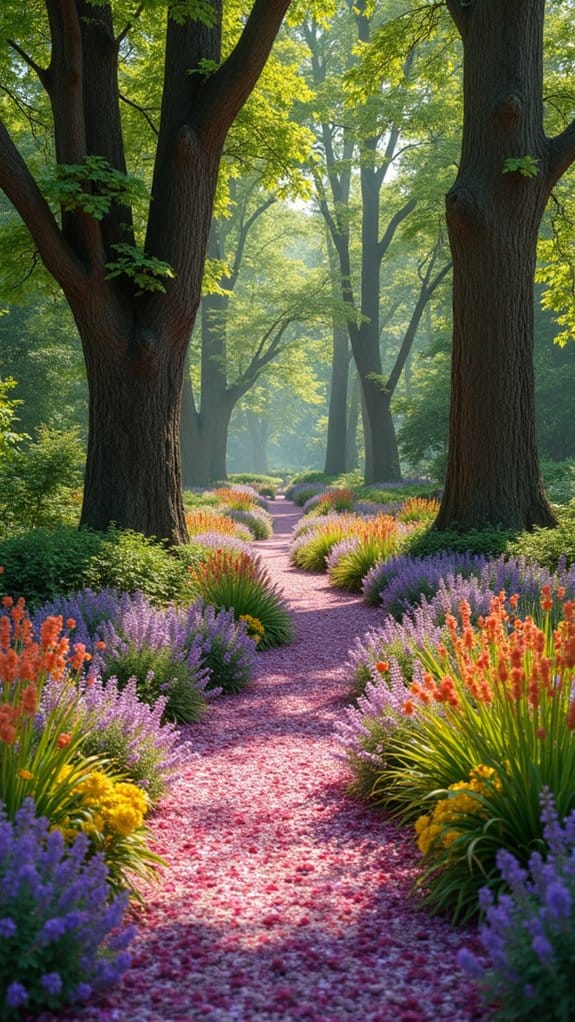
After layering flowers of various heights, I like to take it a step further by implementing a themed flower garden around my trees.
Choosing a color palette or a specific flower type creates a cohesive look.
For instance, I’ve designed a butterfly garden with vibrant blooms that attract these beautiful creatures, enhancing the natural beauty of my landscape while adding a touch of whimsy.
Use Native Flowers to Attract Pollinators
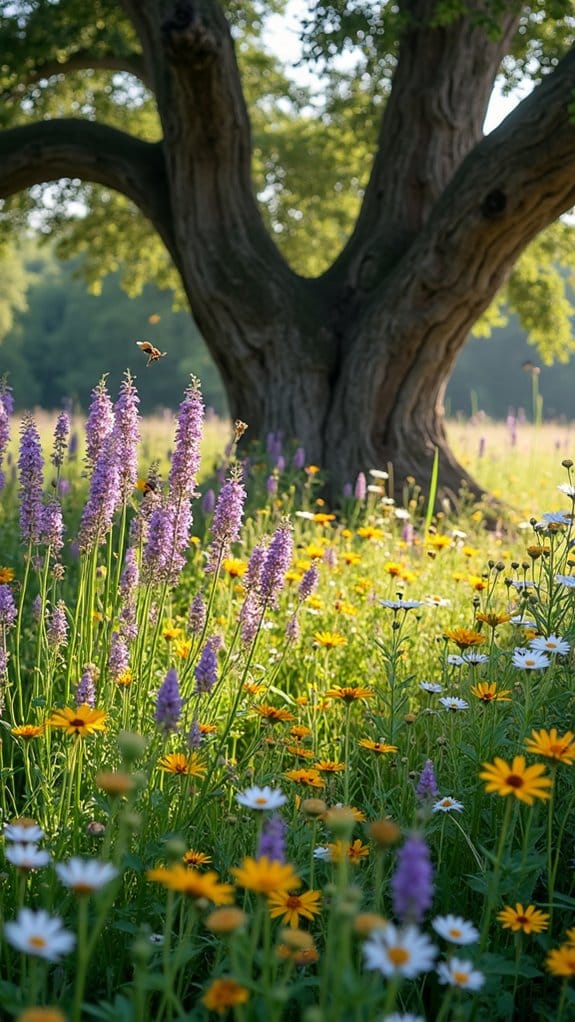
While designing my flower beds, I find that using native flowers not only beautifies the landscape but also plays an essential role in attracting pollinators.
I love incorporating plants like coneflowers and black-eyed Susans, as they draw bees and butterflies.
Create a Cozy Seating Area Surrounded by Blooms
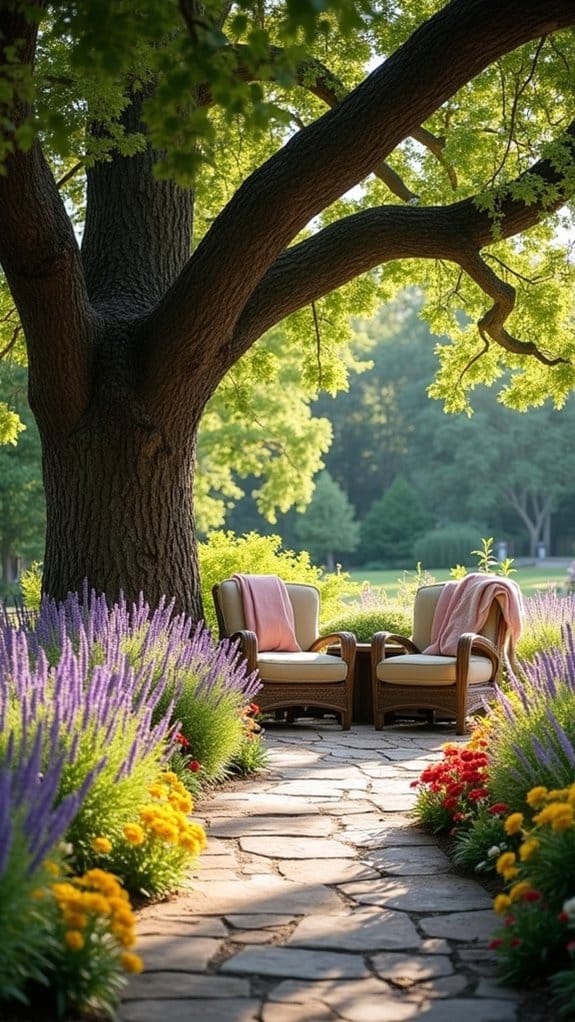
When I think about enhancing my garden, a cozy seating area surrounded by blooms often comes to mind.
I love placing a comfortable bench or chairs beneath the trees, encircled by vibrant flowers. It creates a peaceful retreat where I can enjoy my surroundings.
Adding colorful pots and fragrant plants nearby makes the space inviting, turning it into my favorite spot for relaxation.
Incorporate Flowering Shrubs for Year-Round Interest
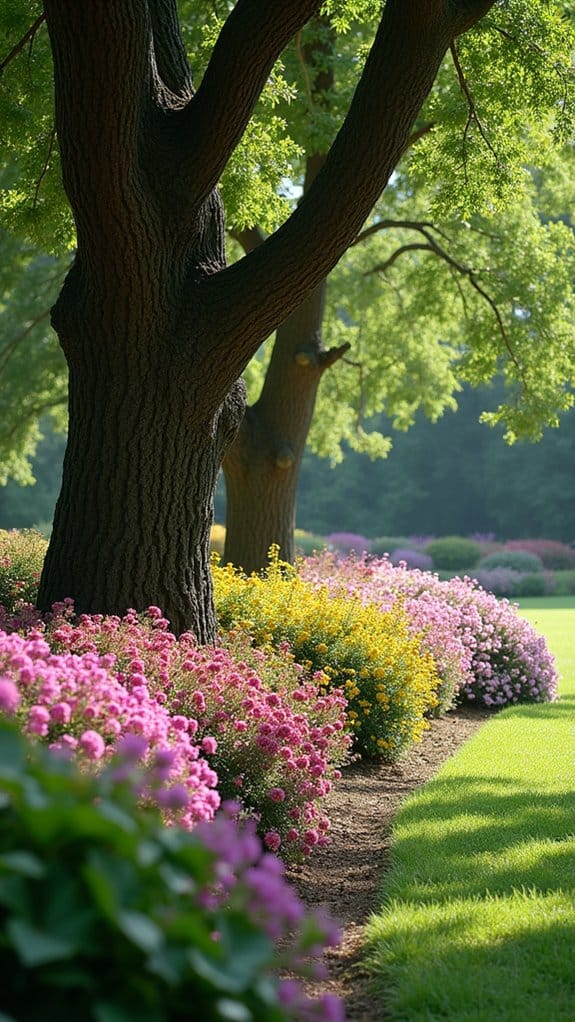
If you want to add year-round interest to your garden, incorporating flowering shrubs is a fantastic way to achieve that.
I love choosing varieties that bloom in different seasons, ensuring there’s always something vibrant to enjoy.
Consider mixing evergreens with deciduous flowering shrubs for texture and color contrast.
Mixing evergreens with deciduous flowering shrubs creates stunning texture and vibrant color contrasts in your garden.
With careful selection, your garden can be a beautiful showcase throughout the year!
Use Decorative Mulch to Enhance Color
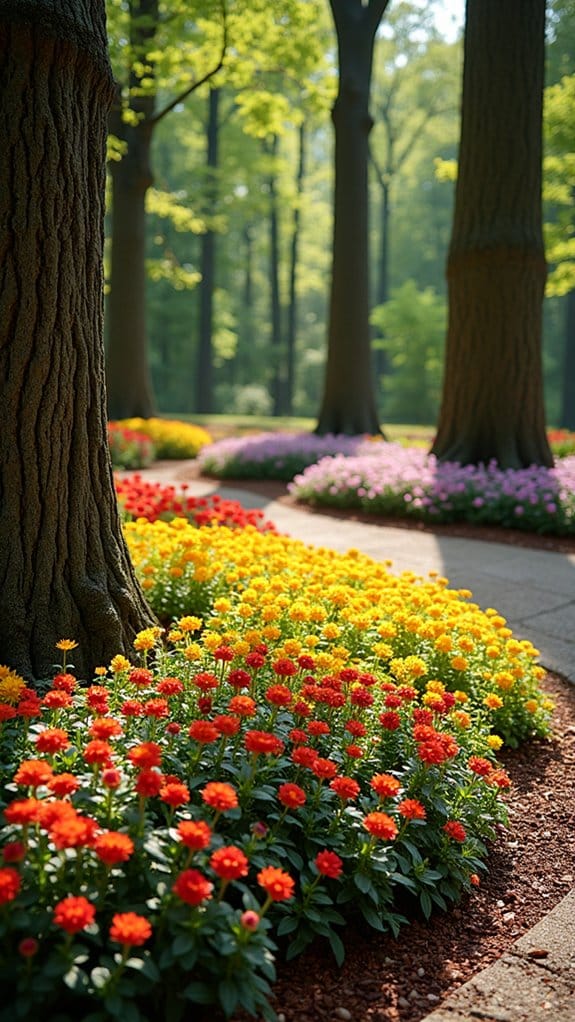
To truly make your flower landscaping pop, using decorative mulch can greatly enhance the overall color palette of your garden.
I love choosing vibrant mulches like red cedar or black mulch, as they contrast beautifully against the bright blooms.
Plus, mulch helps retain moisture and suppress weeds, keeping your flowers healthy while adding that extra touch of visual appeal.
It’s a win-win!
Create Pathways With Flower Borders
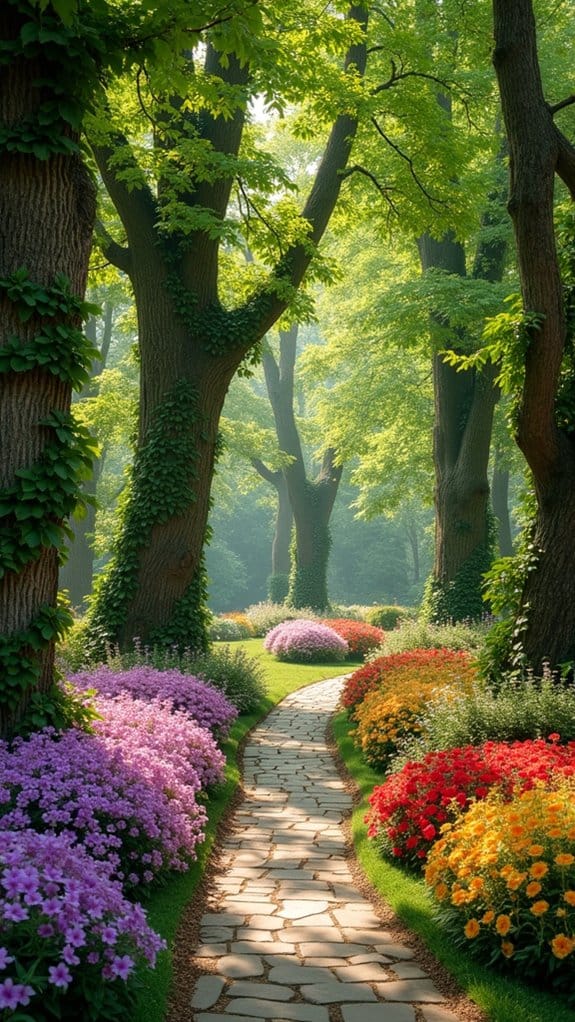
Creating pathways with flower borders not only guides visitors through your garden but also adds a stunning visual element.
I love using vibrant blooms to frame the paths, creating inviting passages between different areas. By selecting flowers that bloom at various times, I guarantee continuous color.
It’s amazing how a simple pathway lined with flowers can transform the entire space into a picturesque haven.
Incorporate Container Gardens for Flexibility
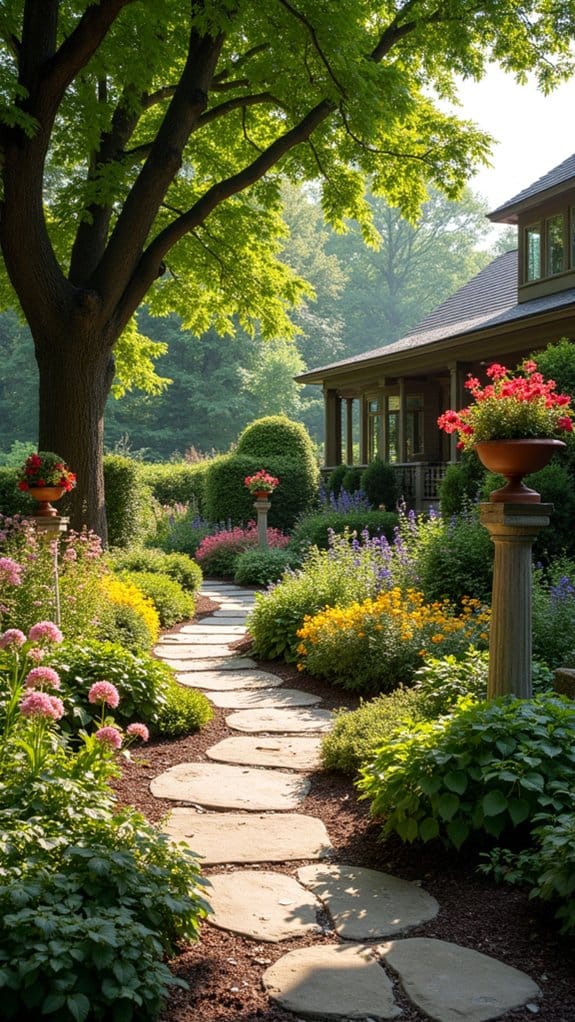
While I love the beauty of traditional flower beds, incorporating container gardens around trees offers incredible flexibility.
I can easily change the plants with the seasons or experiment with different color combinations. Plus, moving containers allows me to adapt to varying sunlight conditions or even rearrange the garden layout.
This approach not only enhances beauty but also keeps my landscaping fresh and dynamic.
Layer Flowers With Ferns and Grasses
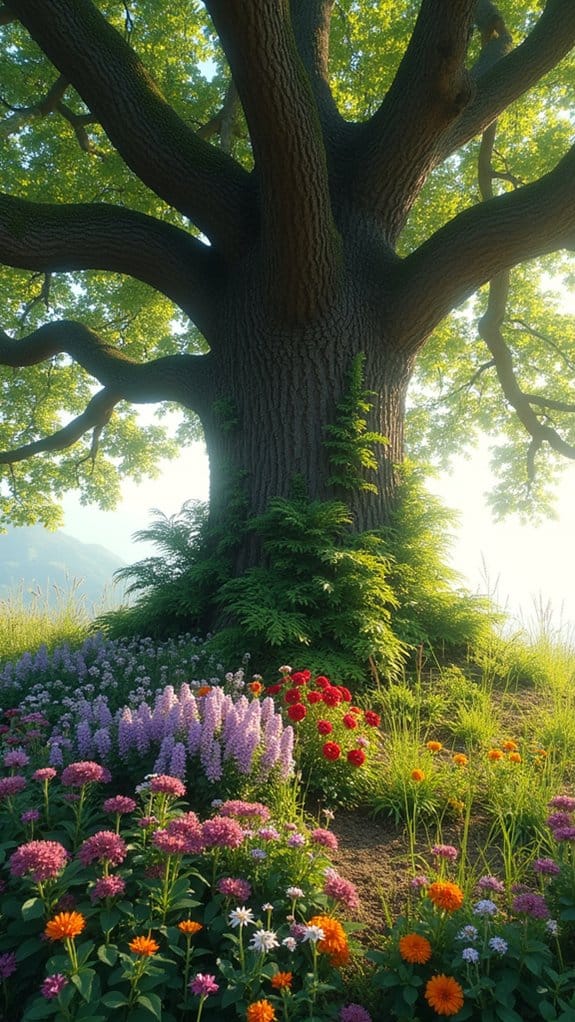
As I layer flowers with ferns and grasses, I find that the contrast between the vibrant blooms and the lush greenery adds depth and texture to my landscape.
The delicate fronds of ferns perfectly frame the colorful petals, while ornamental grasses provide movement and a soft backdrop.
This combination not only enhances visual interest but also creates a serene, inviting atmosphere around my trees.
Create a Fragrant Flower Garden
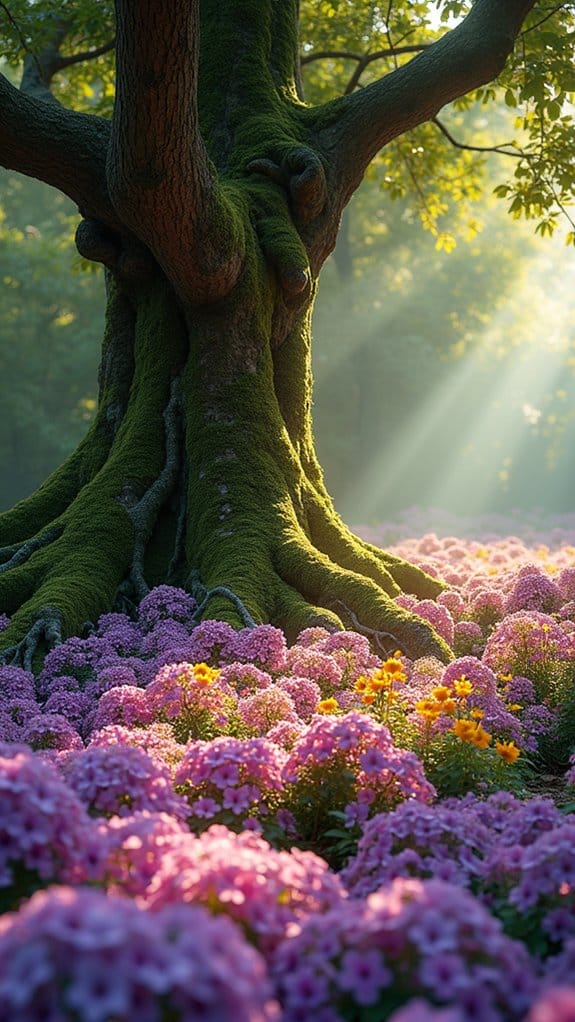
There’s something magical about a fragrant flower garden that draws you in and makes you linger a little longer.
I love planting lavender, roses, and gardenias around my trees. Their scents create an inviting atmosphere, enhancing my outdoor space.
I recommend mixing heights and colors to keep things visually interesting while enjoying that delightful aroma.
Trust me, it’s a sensory experience you won’t forget!
Use Annuals for Instant Color
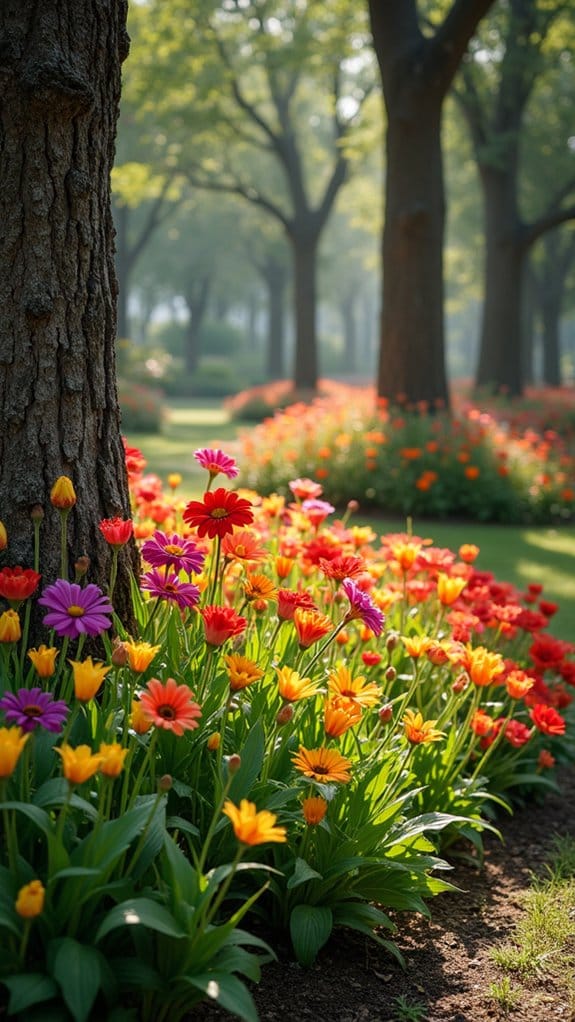
Using annuals is one of the quickest ways to add vibrant color around your trees.
I love choosing a mix of bright blooms like petunias and marigolds, which instantly liven up the space.
Planting them in clusters creates a stunning visual impact.
Planting annuals in clusters offers a breathtaking visual display that enhances any garden space.
Plus, since annuals thrive quickly, you’ll enjoy that burst of color all season long!
It’s an easy and rewarding project.
Design a Butterfly Garden Around Trees
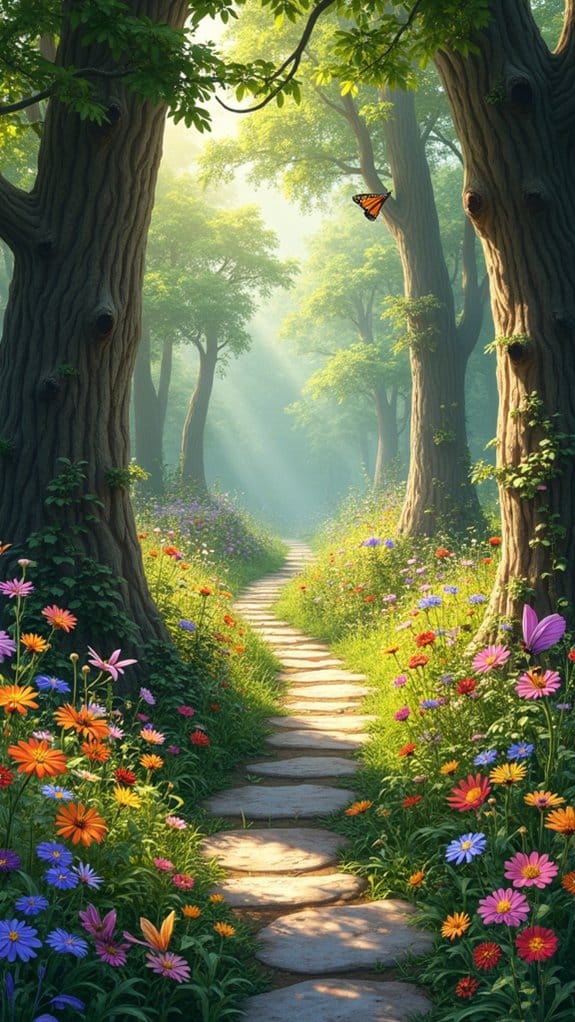
Creating a butterfly garden around trees not only enhances the beauty of your landscape but also supports essential pollinators.
I love choosing nectar-rich flowers like milkweed, coneflowers, and zinnias to attract these delicate creatures. Planting in clusters helps create a vibrant, inviting space.
Plus, providing some shelter with low-growing plants encourages butterflies to linger longer, adding life to my garden.
Create a Rain Garden With Moisture-Loving Flowers
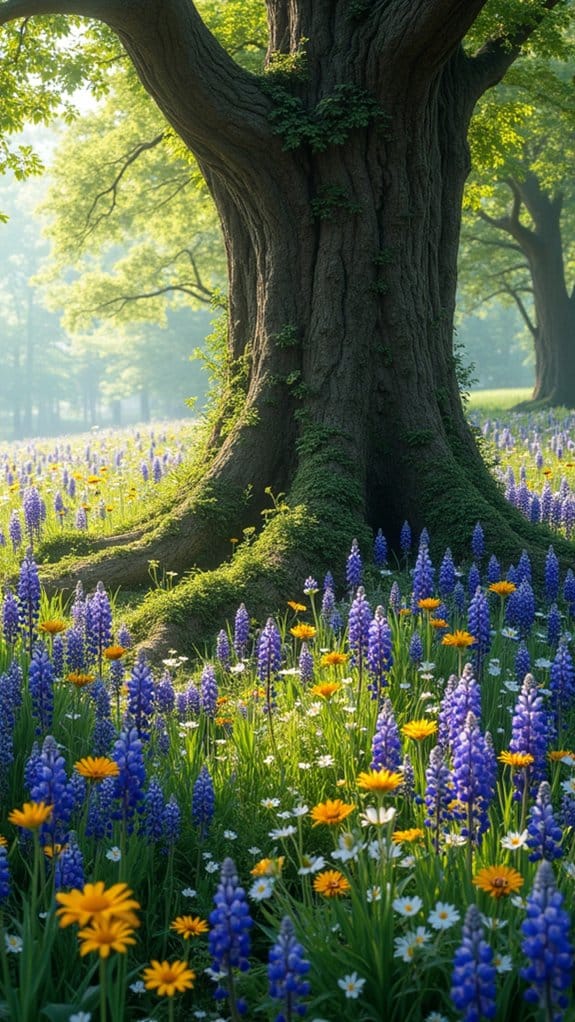
After attracting butterflies, consider adding a rain garden around your trees to manage excess water while showcasing moisture-loving flowers.
I love planting varieties like astilbe, hostas, and ferns, which thrive in the wet conditions. This not only enhances the landscape but also helps with drainage.
Watching the rain garden flourish brings me joy and adds vibrant beauty to my yard.
Incorporate Unique Flowering Plants for a Focal Point
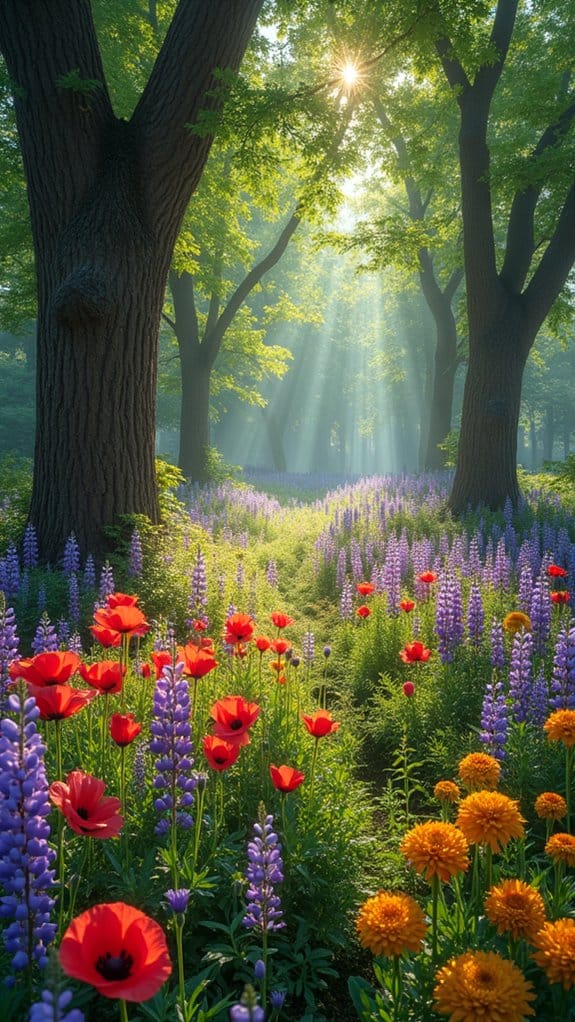
While designing your landscape, incorporating unique flowering plants around your trees can create a stunning focal point that draws the eye.
I love using plants like orchids or unusual varieties of lilies to add character. Their vibrant colors and shapes contrast beautifully with the tree’s natural form.
Trust me, this combination not only enhances beauty but also invites admiration from friends and family.
