

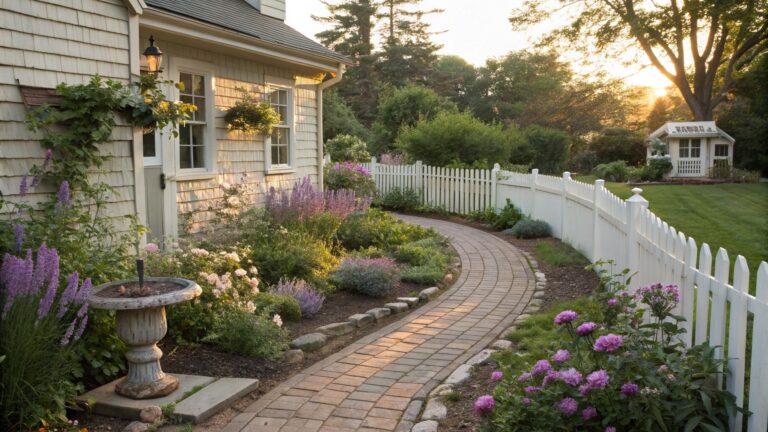
I’ve spent weekends reshaping my yard’s flower beds, noticing how solid pathways and clean edging make the whole layout feel purposeful from the street. People spot those strong planting structures first, the ones that layer low growers against taller blooms to guide your eye naturally through the space. In my case, I started with simple borders around a gravel walk, and it transformed how the yard unfolds season by season without much upkeep. These projects play with that same idea, using everyday materials to create focal points and repeats that build depth over time. A couple stand out for small yards like mine.
Brick Path with Stone Flower Borders
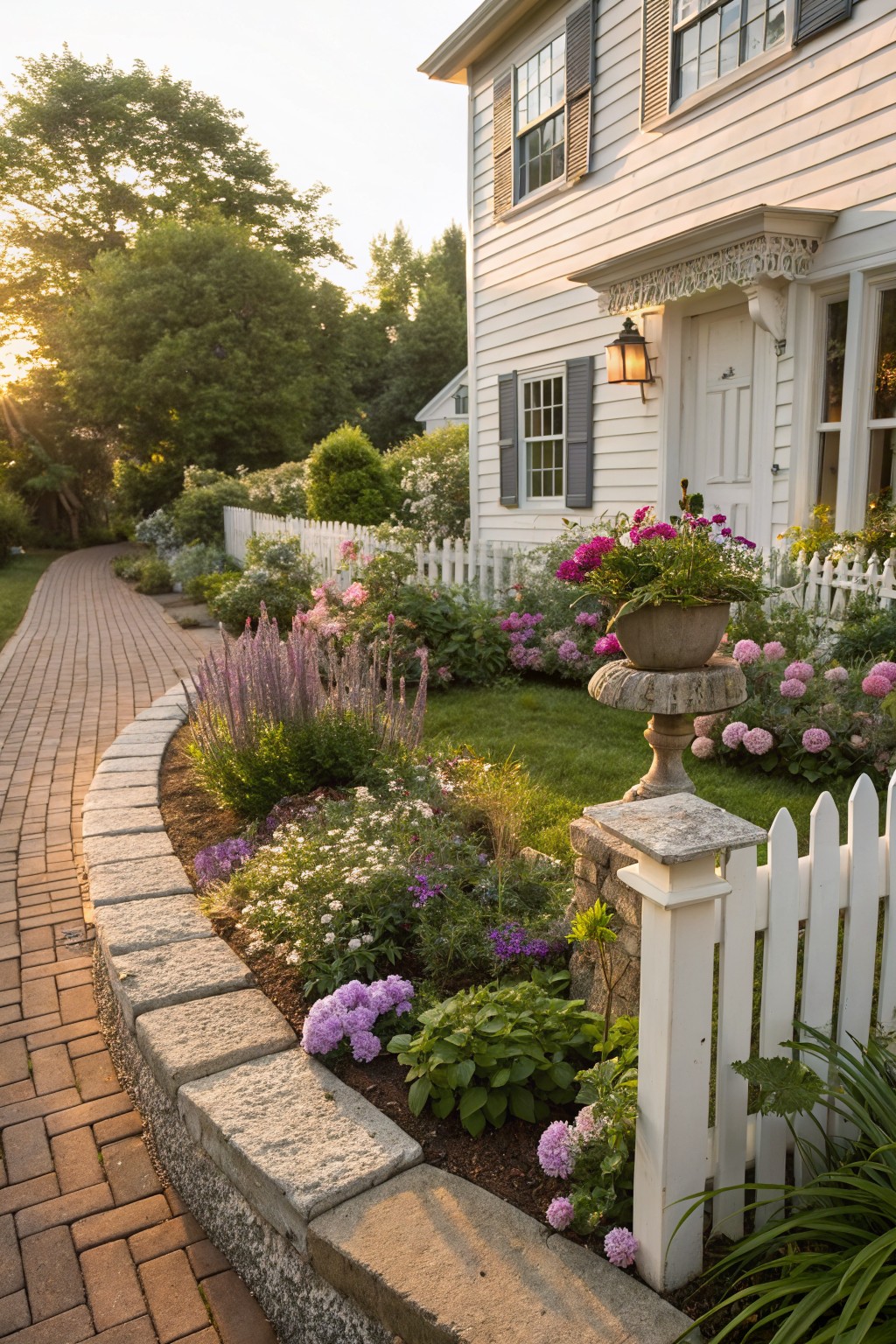
A simple brick path curving gently toward the house works wonders when you edge it with low stone borders and pack them full of flowers. The pink hydrangeas and other blooms spill right over the edge, softening that hard line between path and planting. It draws folks in without trying too hard, and the stone keeps soil in place while giving everything a tidy look.
This idea shines in a front yard entryway, especially on a smaller lot where you want max impact with not much space. Lay the bricks over sand for easy weekend work, stack basic retaining stones two or three high, then plant perennials like salvia or astilbe that come back each year. Skip super tall stuff up front, or it’ll block the path.
Simple Retaining Walls for Flower Beds
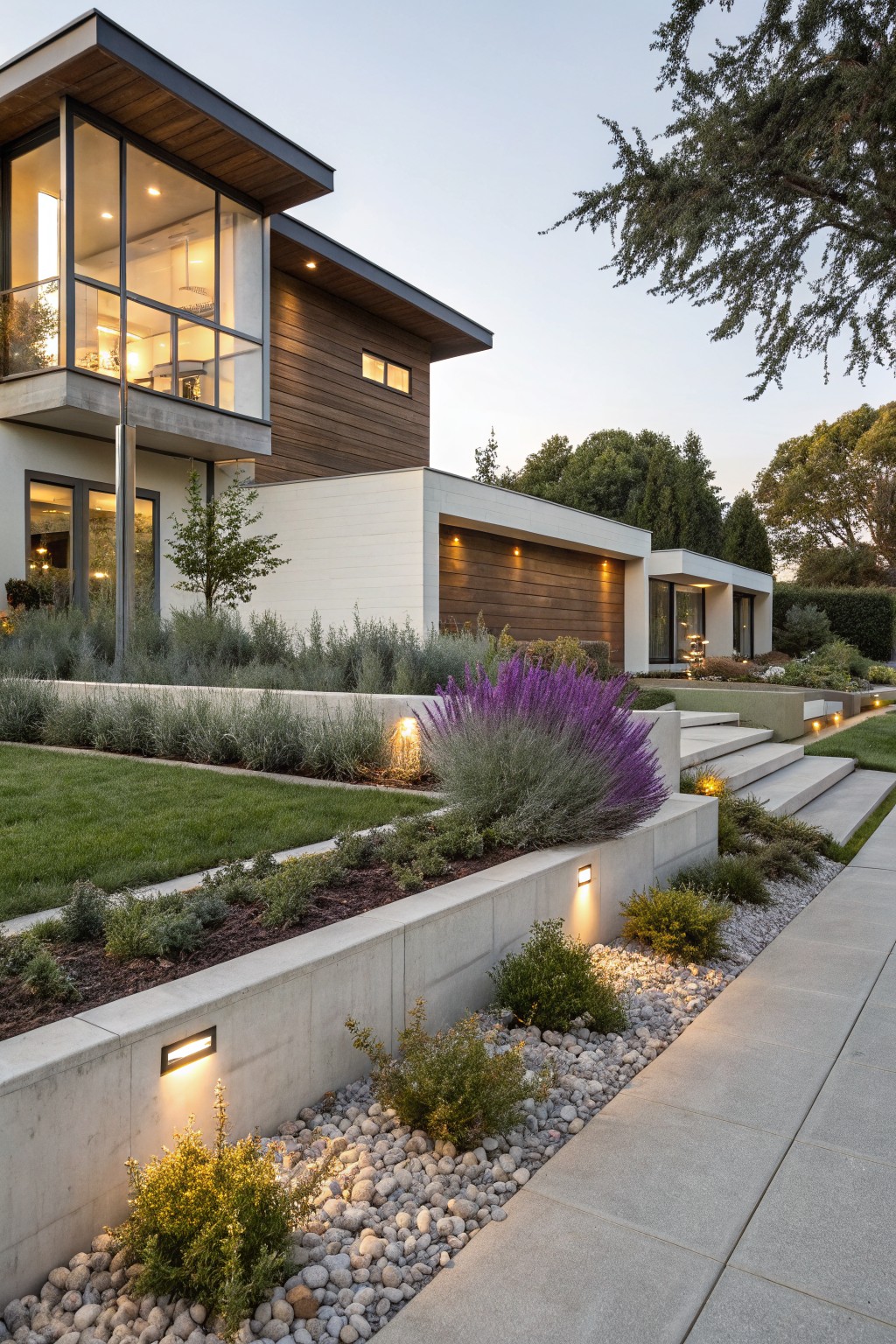
Plain concrete retaining walls make it easy to turn a slope into usable planting space. They hold back soil in neat tiers, letting you fill them with flowers and low shrubs without much fuss. Here, lavender stands out against the white walls, paired with grasses that soften the edges.
These walls suit weekend DIY if you use precast blocks or mix your own concrete. They work best around modern homes or any yard with a drop-off. Run a gravel path next to them for clean access, and add path lights if you want evening use.
Wall-Mounted Vertical Planters for Balconies
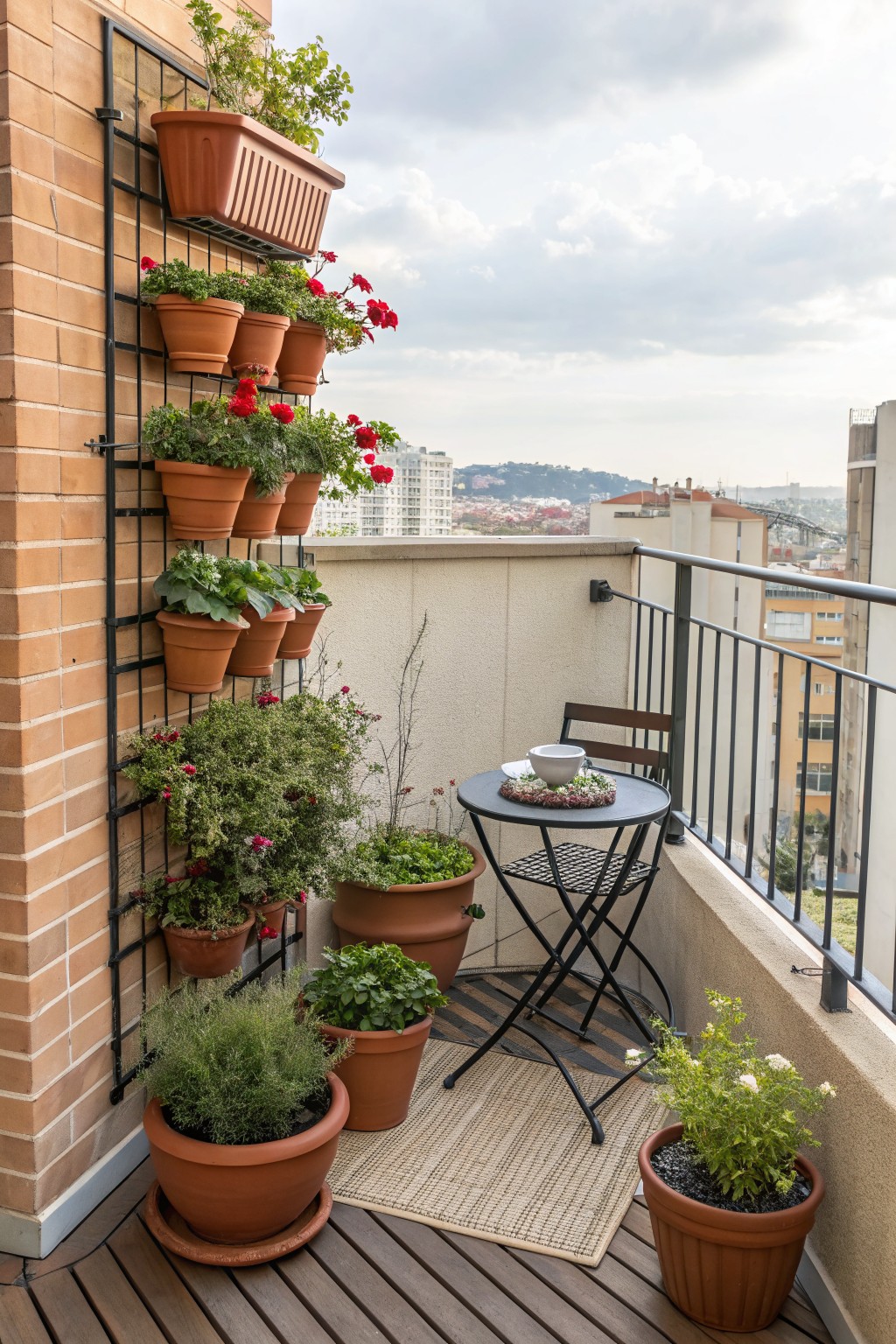
A black metal grid bolted right to the brick wall holds tiers of terracotta pots packed with geraniums, herbs, and trailing plants. This setup makes a plain balcony wall disappear behind greenery. It frames a simple bistro table and chair nicely, giving the spot a cozy garden feel without taking up floor space.
Try this on any small balcony or terrace railing area. It works best in sunny spots for flowers that thrive in pots. Mount the rack securely, mix heights for interest, and use pots with good drainage. Apartment dwellers love how it adds life where ground planting isn’t possible.
Colorful Raised Planter Beds
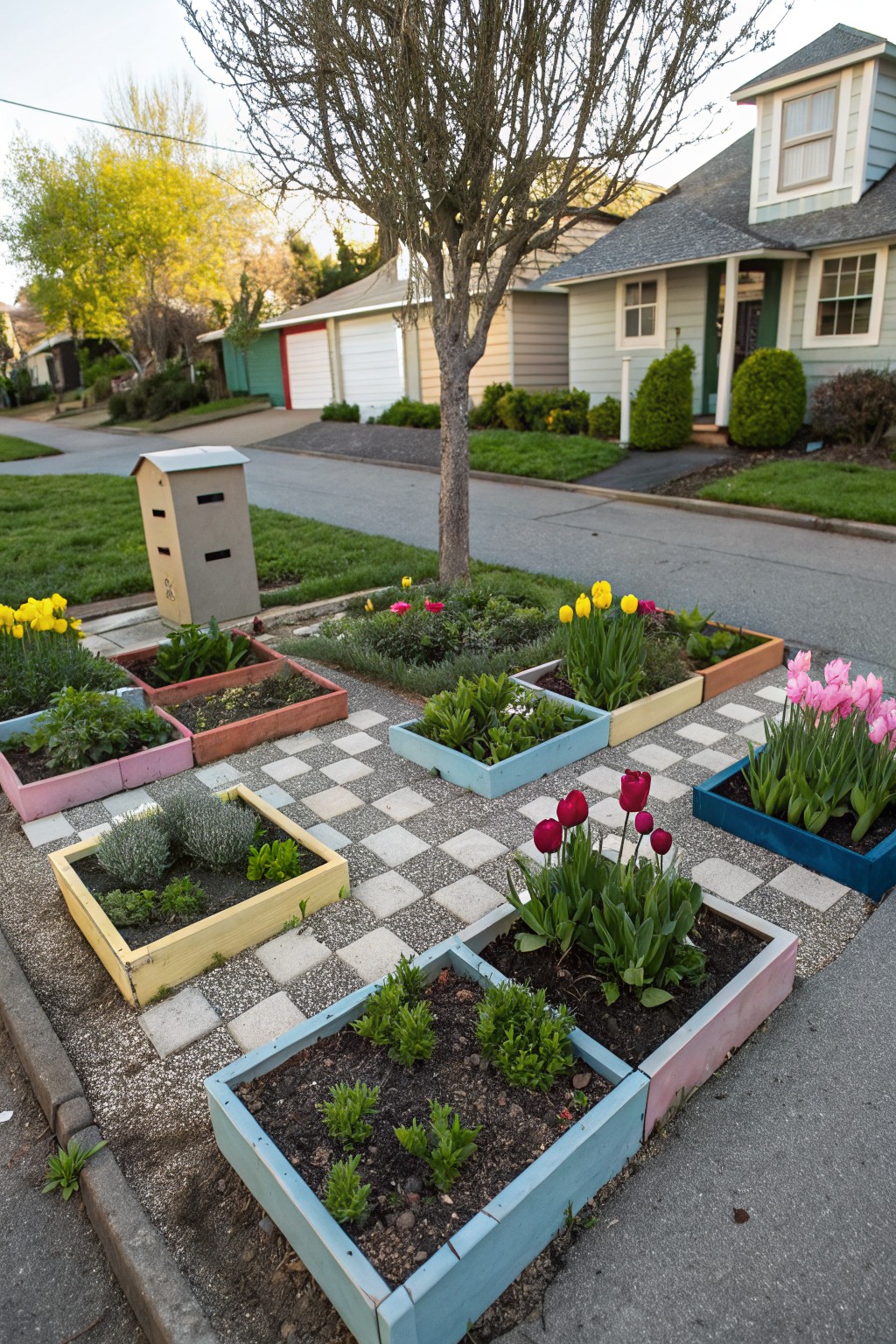
Simple wooden boxes painted in bright shades like pink, teal and yellow make up this garden setup. Filled with tulips, herbs and greens, they sit right on a paved driveway edge. The colors pop against the gray pavement and create a fun patchwork look that brightens the whole street view.
These work best along narrow strips where grass won’t grow well. Grab some scrap wood, cut into low boxes, give them a couple coats of outdoor paint, then plant bulbs in fall for spring color. Suits most homes… just keep them under two feet high so they don’t block the path.
Winding Stone Steps in a Rock Garden
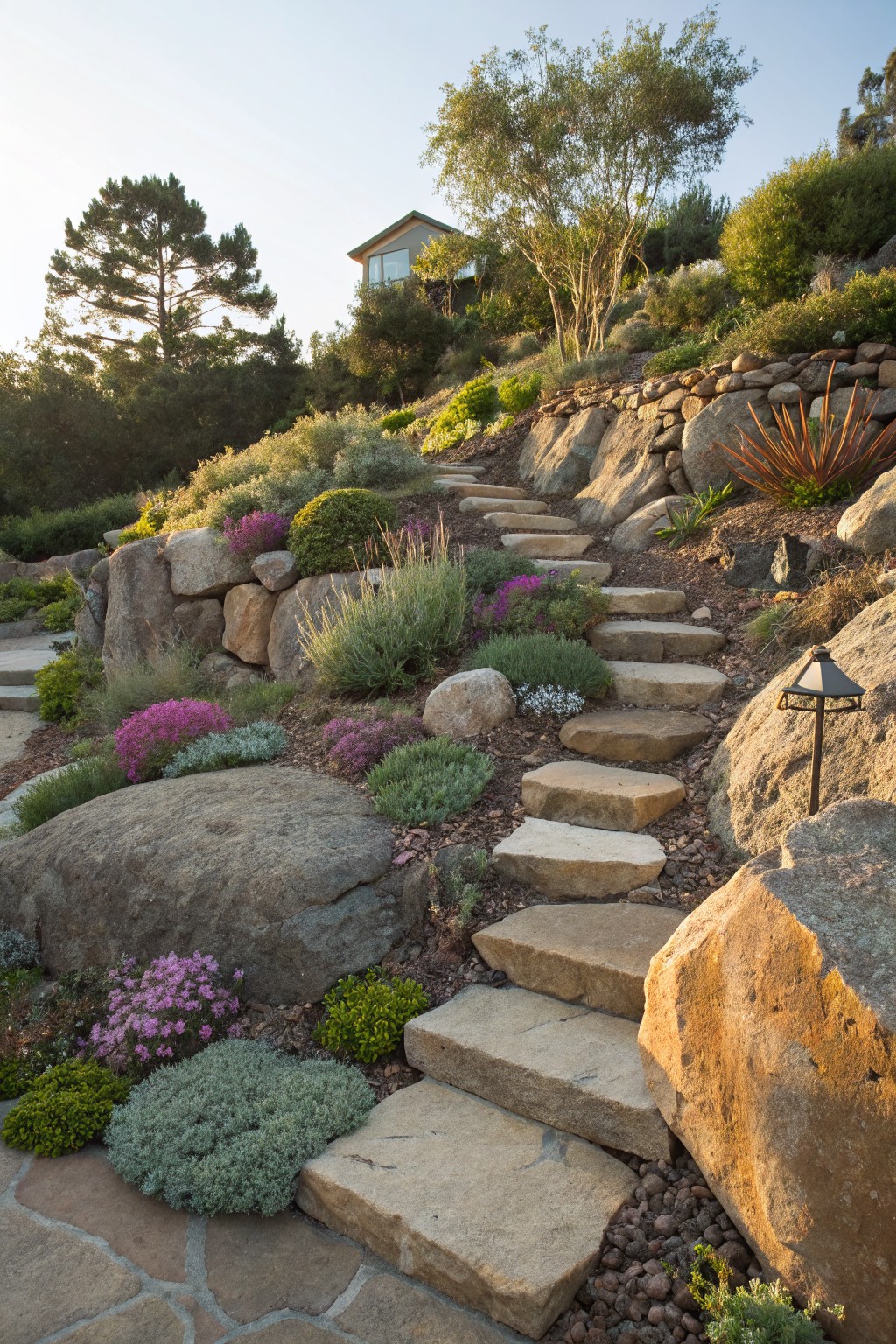
One simple way to handle a sloped yard is with wide stone steps that wind up through big boulders. They look natural, like they grew right out of the hill, and make the climb easy instead of a scramble. Tuck in tough plants like pink flowering sedums and silver-leafed groundcovers around the rocks. It keeps things low-water and colorful without much fuss.
These steps work great for any hillside spot heading to a patio or house entry. Start by placing the largest boulders first for stability, then fit irregular stone slabs between them. Add gravel in the gaps for drainage. Skip it if your slope is super steep, though. Go for local stone to keep costs down and the look right for your area.
Winding Garden Path with Low Lights
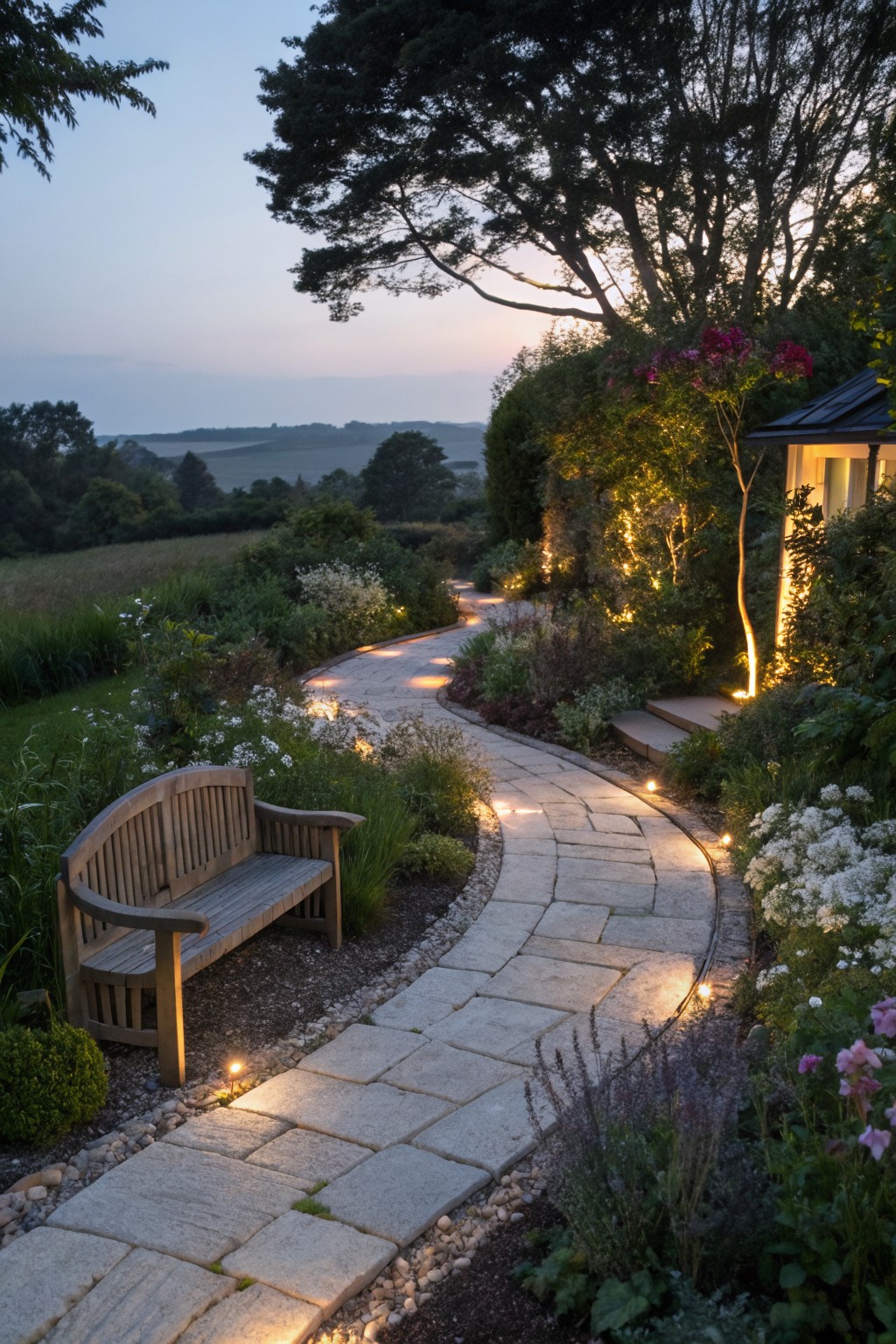
A winding stone path like this one really pulls your eye through the garden. Those low ground lights tucked along the edges glow just enough to light the way at dusk without overpowering the plants. It makes the whole area feel safer and more welcoming for evening walks. Plus the flowers and grasses hugging the sides add that soft touch.
To try this yourself, lay irregular stone pavers in a gentle curve, spacing low-voltage or solar lights every few feet. Border it with easy bloomers like white daisies or tall grasses that won’t flop over the path. It suits sloped yards or back gardens best. Keep the lights simple so they don’t steal the show from your flowers.
Pergola Patio with Hanging Flower Baskets
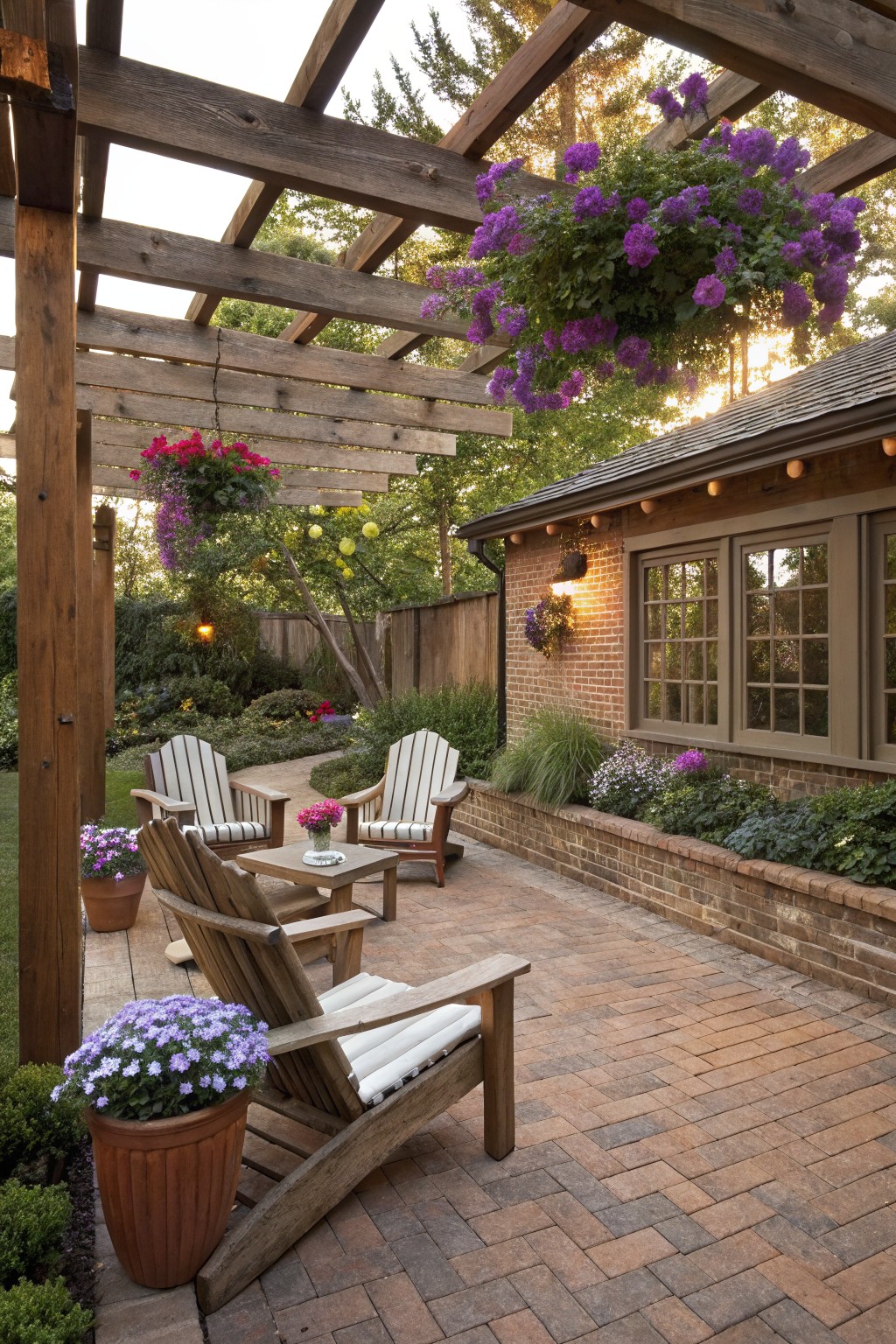
A wooden pergola makes a simple frame over this patio seating area, and the real charm comes from all those hanging baskets full of purple blooms draping down from the beams. They soften the open structure and pull your eye right to the cozy chairs and table setup. It’s a relaxed spot for coffee or reading, right next to the house.
Hang baskets like this on your own pergola using strong hooks screwed into the wood. Pick trailing flowers such as million bells or fuchsias that won’t weigh too much when watered. It suits smaller backyards where you want shade and color without a full roof. Just check the structure can hold the weight, especially after rain.
Tiered Stone Walls for Sloped Flower Beds
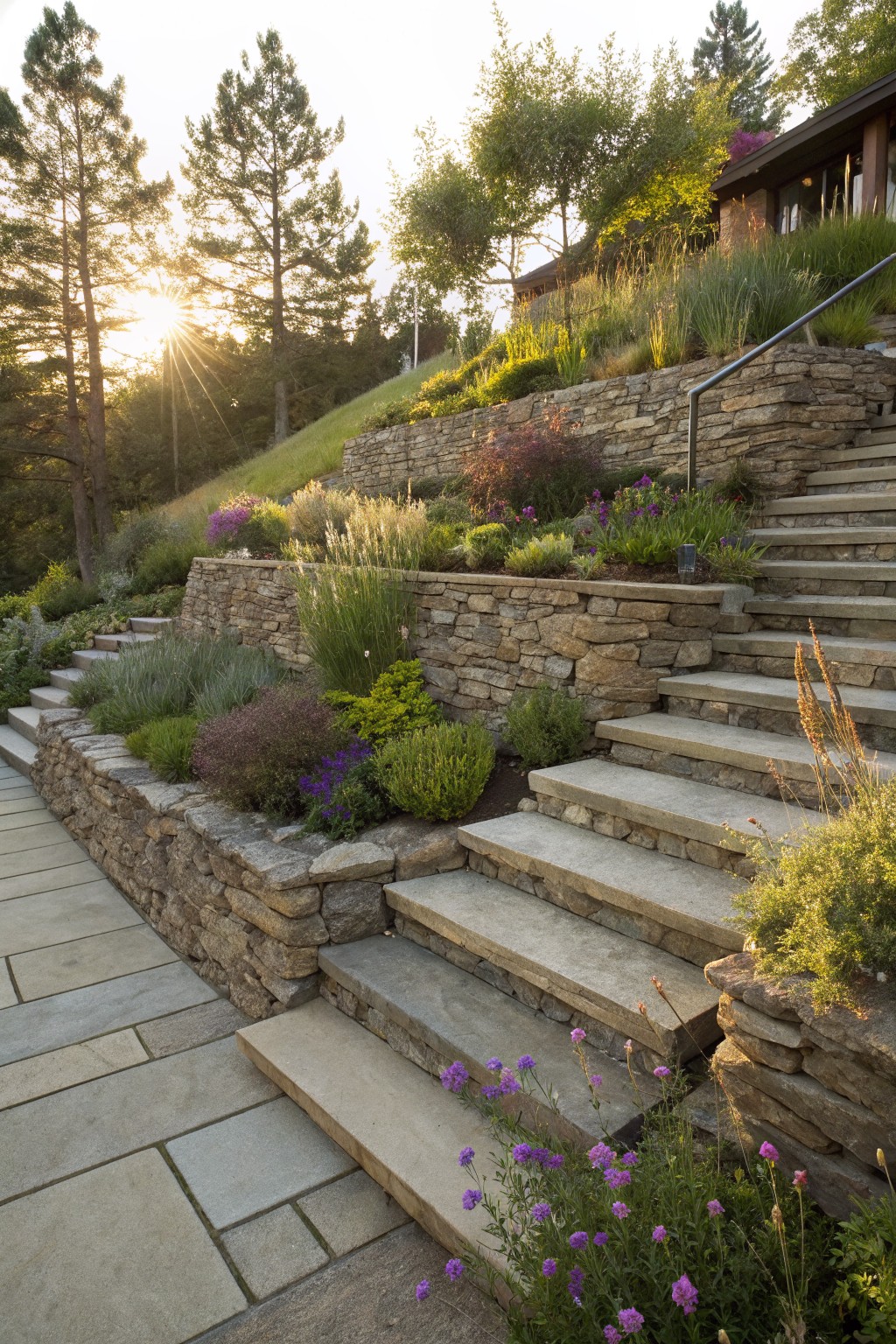
Slopes can be tough for planting. But stacking natural stone into terraced walls solves that. Each level turns into a flower bed, like the lavender and grasses tucked right into the nooks here. It holds soil in place and gives flowers a spot to thrive without sliding downhill. Steps built into the walls make the whole thing walkable too.
Grab local stone for a weekend build. Dry stack it or use a bit of mortar if needed. Fill tiers with tough perennials that don’t mind dry spots. This fits any hillside yard backing a house. Watch drainage though. Poor setup leads to soggy roots.
Create a Natural Stone Garden Path
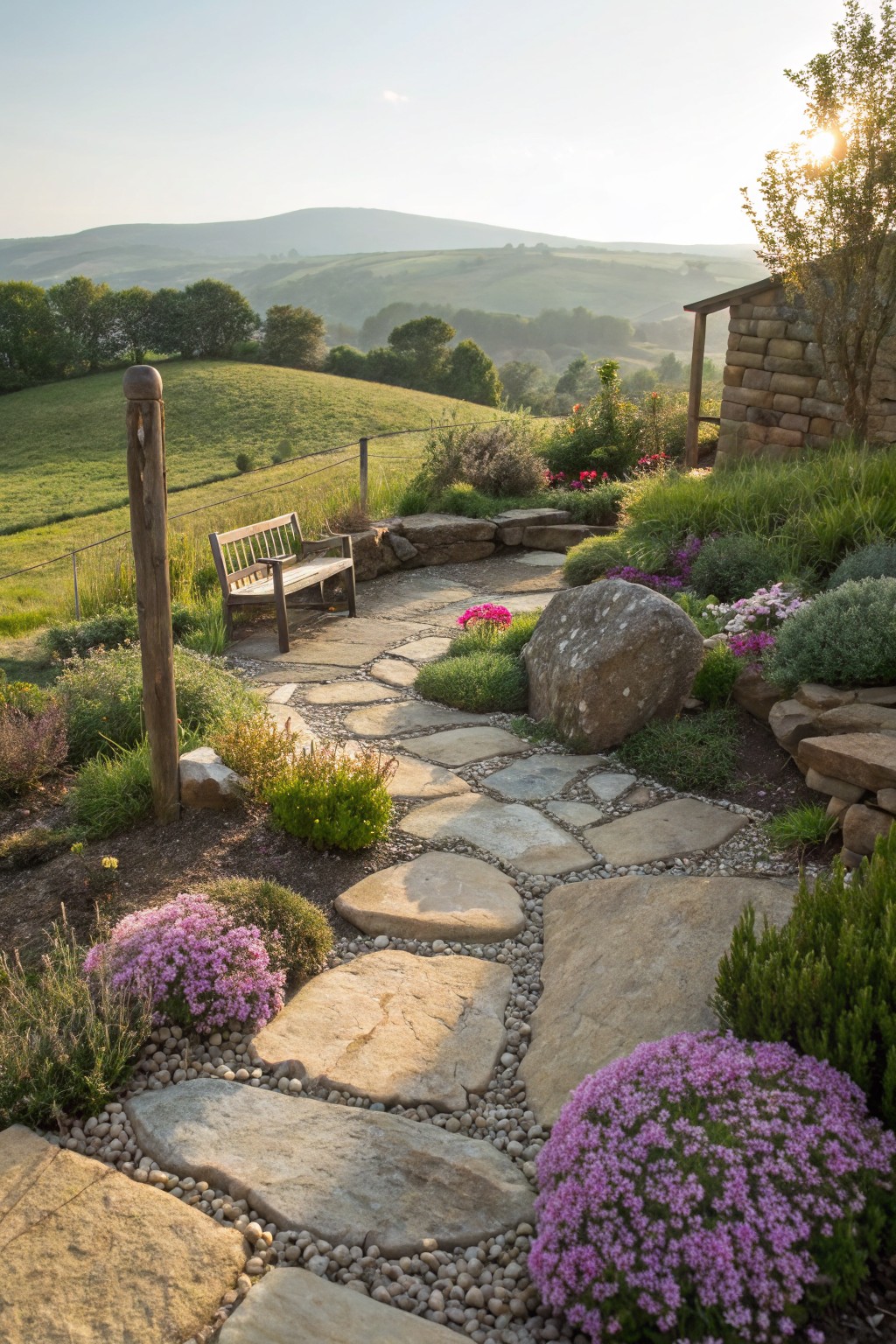
Nothing beats a casual stone path that meanders through flower beds to a favorite spot like a bench. Here the flat slabs are set irregularly with gravel filling the gaps, and pink flowering plants spill right up to the edges. It pulls the garden together without much effort.
Lay this out in your backyard or along a slope using stones from a local quarry. It suits cottage-style yards or hillsides best. Keep steps gentle and the path at least three feet wide so it’s easy to use.
Repurpose an Old Metal Tub as a Flower Planter
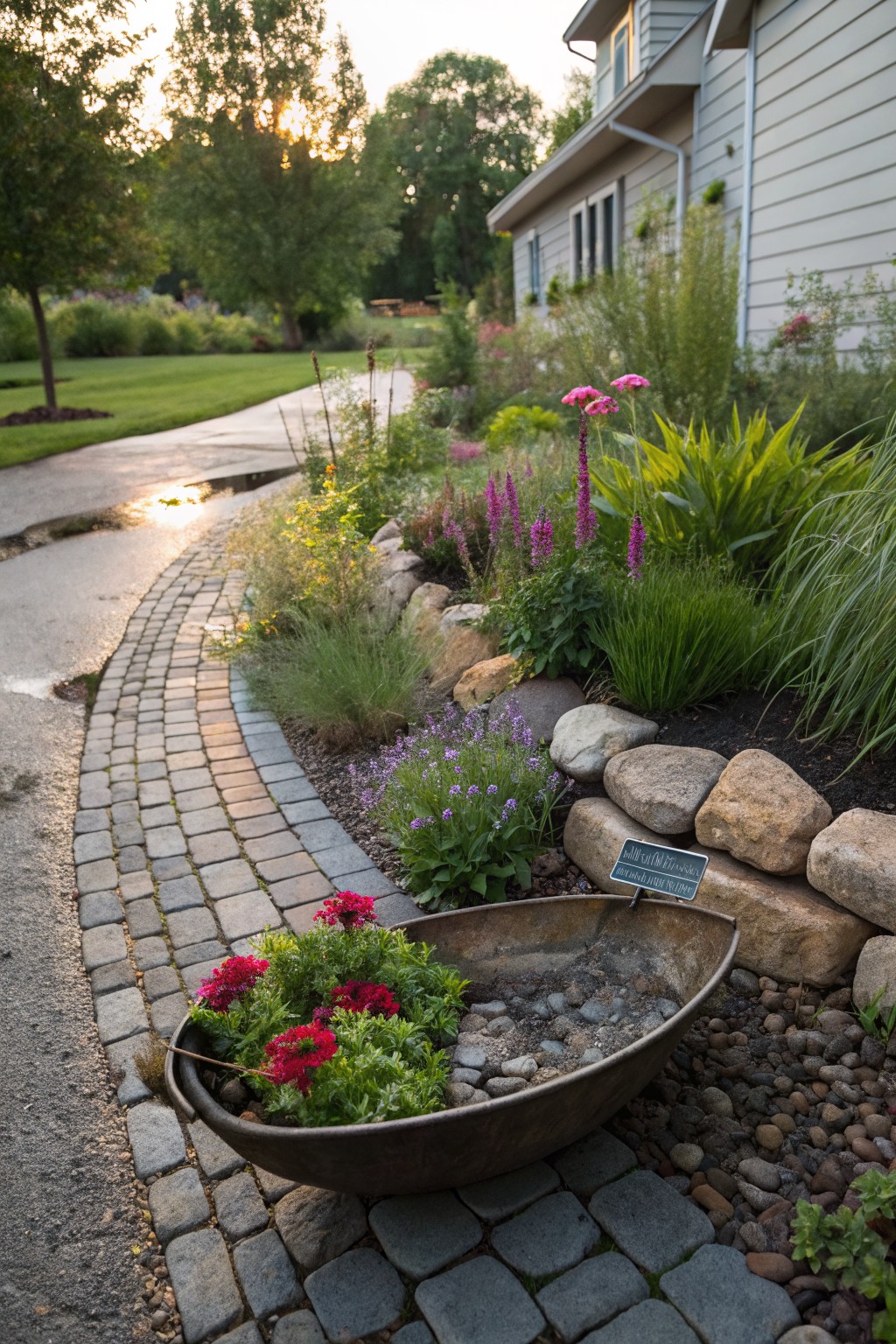
One simple way to add personality to a garden bed is grabbing an old metal tub like this rusted boat-shaped one and turning it into a planter. Filled with bright red flowers and a bit of gravel for drainage, it sits right into the rocks and path edge without looking out of place. Folks like it because it’s got that found-object charm. Makes the whole area feel collected over time, not bought new.
Set it along a walkway or in a low spot near the house where it catches the eye on the way in. Works best in cottage-style yards or spots with mixed perennials and stones. Just make sure to drill holes if there aren’t any. Line the bottom with mesh too, keeps soil from washing out… and pick tough bloomers that handle some shade.
Brick-Edged Flower Beds Along Paths
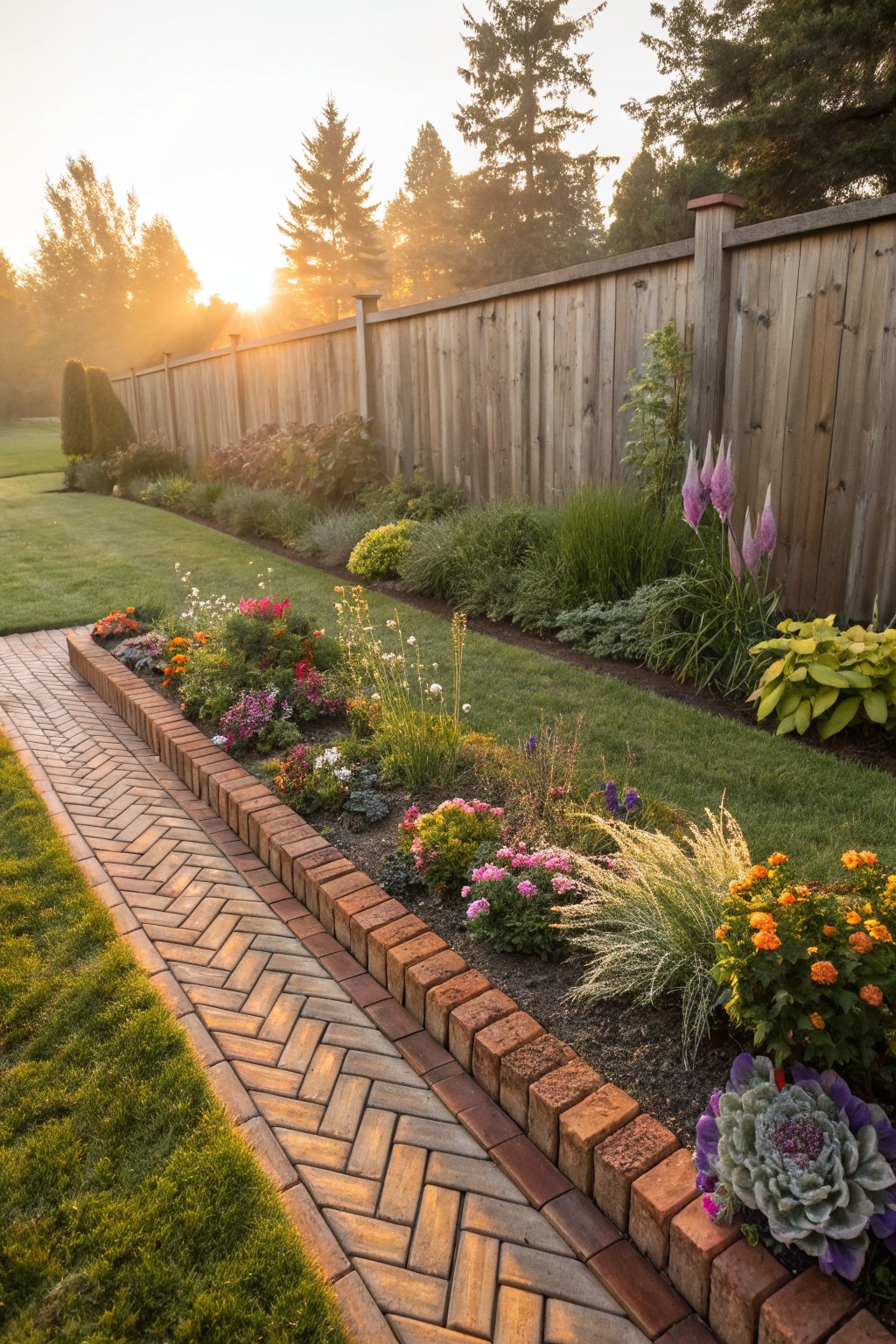
A simple low brick edge runs right along this walkway, holding back a packed strip of flowers, grasses, and leafy plants. It keeps everything neat while letting color spill toward the path for that welcoming feel. The mix of pinks, oranges, purples, and textures like tall grasses and big-leafed kale makes it lively but not overwhelming.
This works best in side yards or back borders where space is tight. Use bricks that match your path or house for a pulled-together look. Start with easy growers like zinnias, salvia, and ornamental grasses… they fill in quick over a weekend. Just edge it firm and mulch to cut down on weeding.
Rustic Log Raised Beds
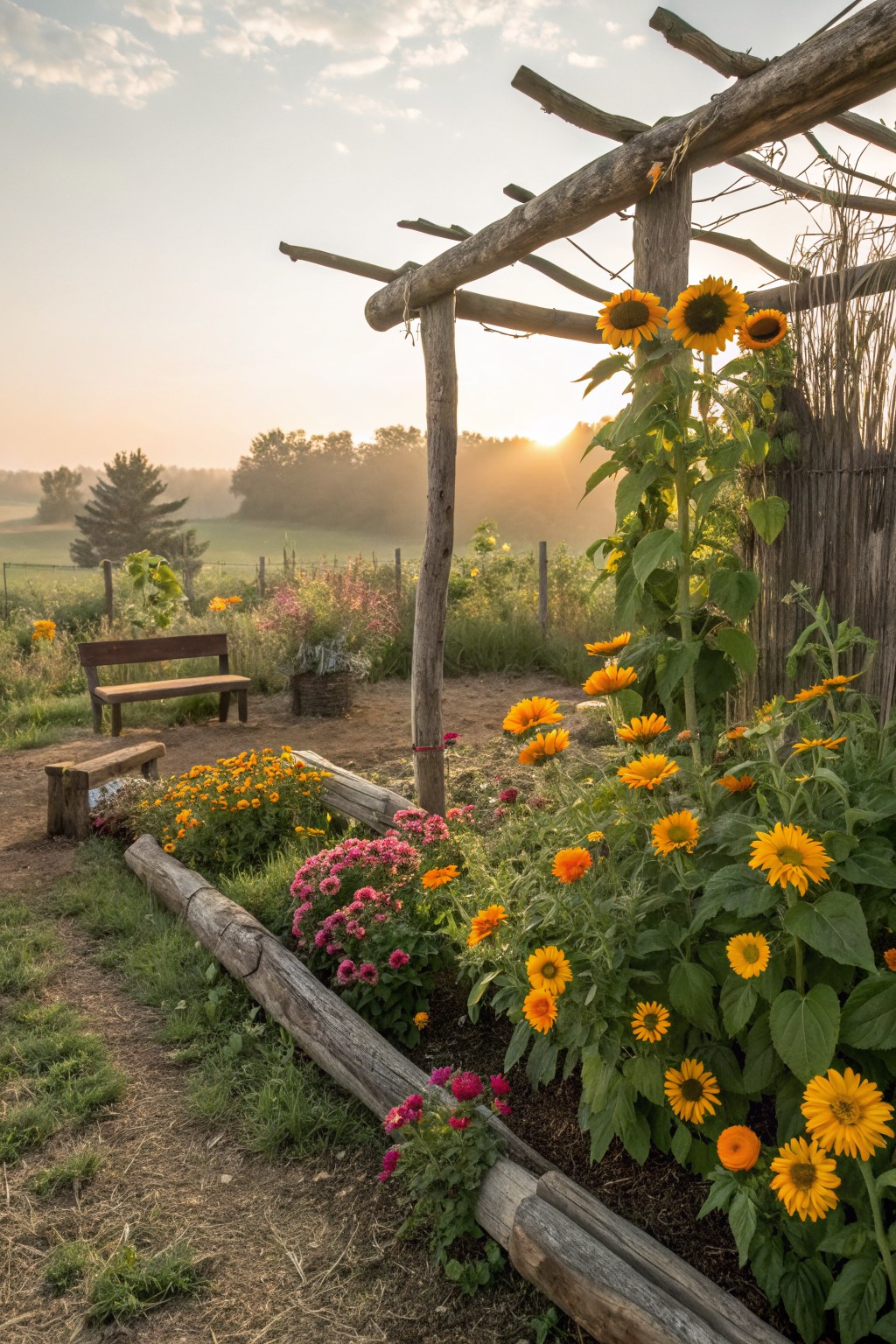
One easy weekend project is building raised flower beds from old logs or reclaimed wood. They fit right into a country garden like this one, with sunflowers climbing the nearby arbor and benches tucked in for sitting. The rough texture blends with the plants and dirt paths. No fancy tools needed. It keeps soil in place and makes weeding simpler.
Stack short logs or split rounds along your garden lines to form the beds. Fill with good dirt and crowd in easy bloomers like marigolds or zinnias. This works best in backyards with some slope… or anywhere you want low upkeep charm. Avoid treated wood if you’re growing edibles.
Layered Terracotta Flower Pots
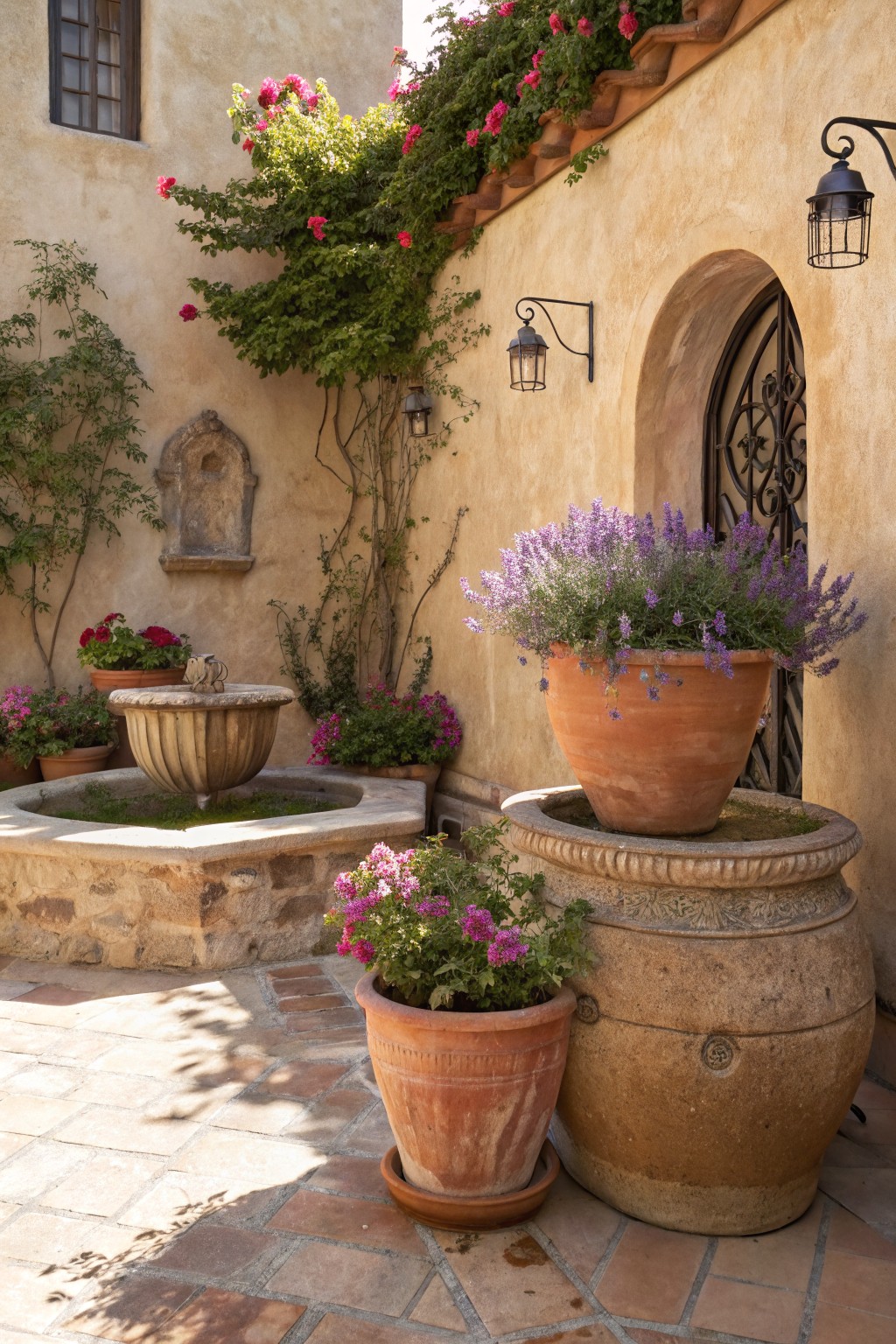
Pots come in all sizes here, stacked and grouped close to build real height and fullness. A tall one overflows with lavender, smaller ones nearby hold pink blooms that trail a bit. It pulls the eye up and makes even a tight patio corner feel abundant, all with portable planters.
Grab mismatched terracotta pots from garage sales or discount spots, then stuff them with tough flowers like lavender, geraniums, or whatever grows easy where you live. Line them up by fountains or walls in sunny courtyards. This fits older homes with stucco or tile, and you can shift things around yearly.
Linear Pathway with Raised Planting Beds
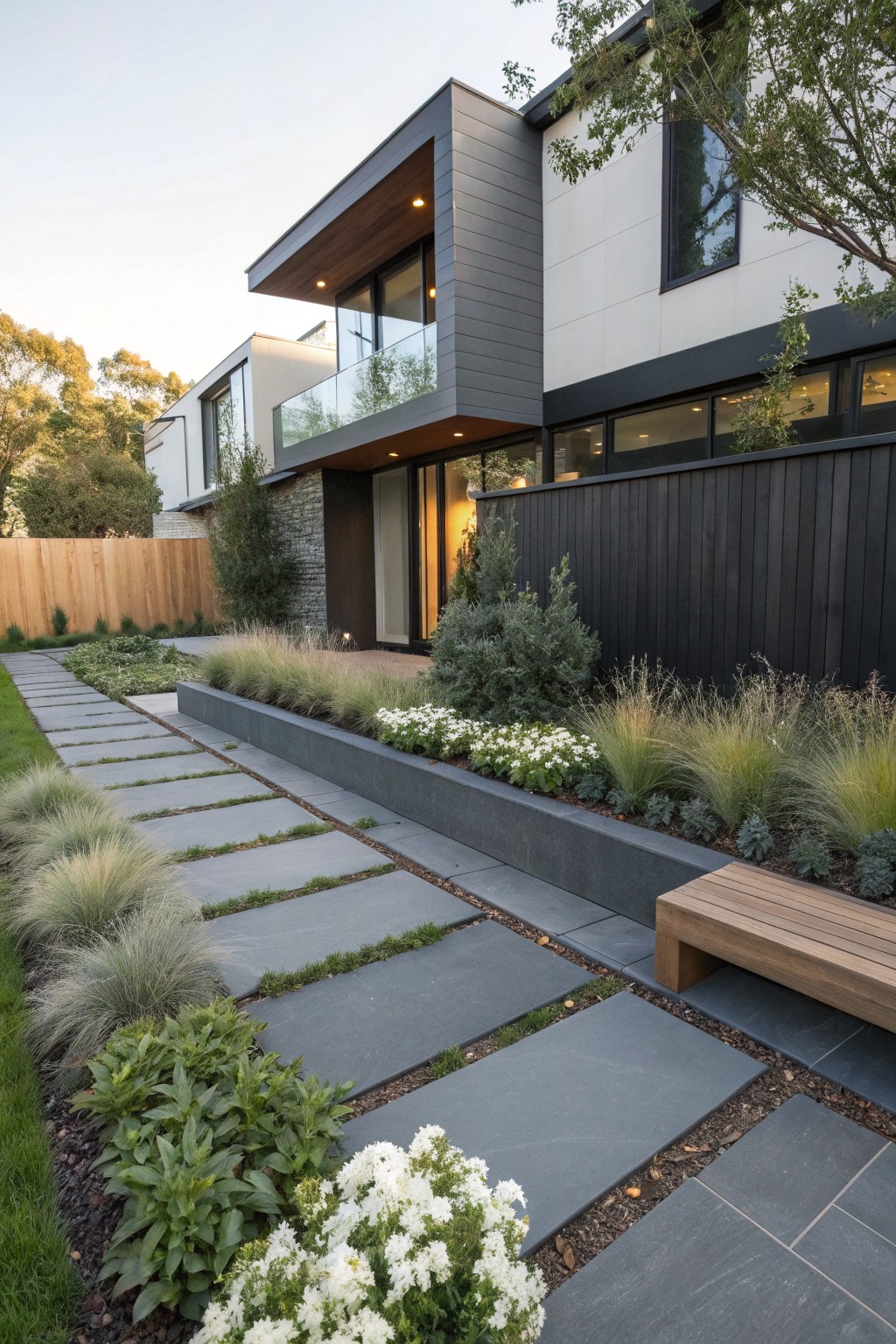
One straightforward way to guide visitors right to your front door is a simple stone pathway edged with raised beds. These beds, built from dark stone, hold tall ornamental grasses and clusters of white flowers. The setup keeps everything neat and contained. It adds some life without overwhelming the walk. Plus, it ties the yard into the house nicely.
You can pull this off in a weekend if you have basic materials like pavers and edging blocks. Line them up straight or with a gentle curve, then fill with drought-tolerant grasses and easy bloomers. It suits modern homes or any spot needing curb appeal. Just keep the beds low, about knee-high, so they don’t block the view. Scale it to your space… no need for perfection.
Hanging Flower Jars on a Fence
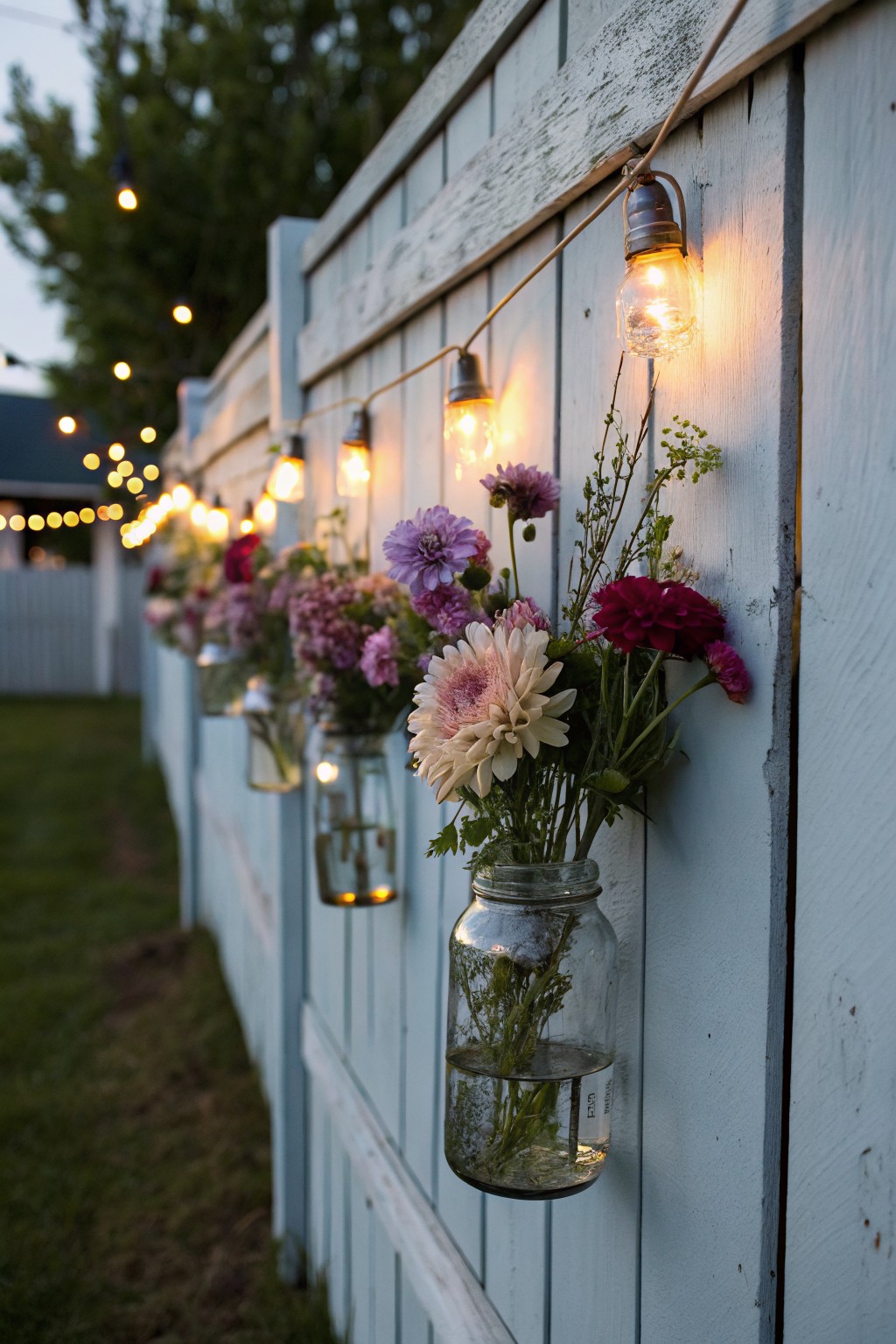
One easy way to dress up a backyard fence is hanging mason jars filled with fresh flowers. You see these clear jars with stems poking out, water inside keeping everything fresh. It adds color right along the fence line without digging or planting beds. Folks like it because it’s simple and changes with the seasons, just swap in new blooms.
To try it, grab some old jars, wire or rope to hang them, and whatever flowers you have around. Space them every couple feet on a wood fence that can take the weight. It works best in side yards or patios where you walk by often. Keep an eye on the water level so they last, and toss in string lights up top for nights.
Winding Stone Paths Through Flower Beds
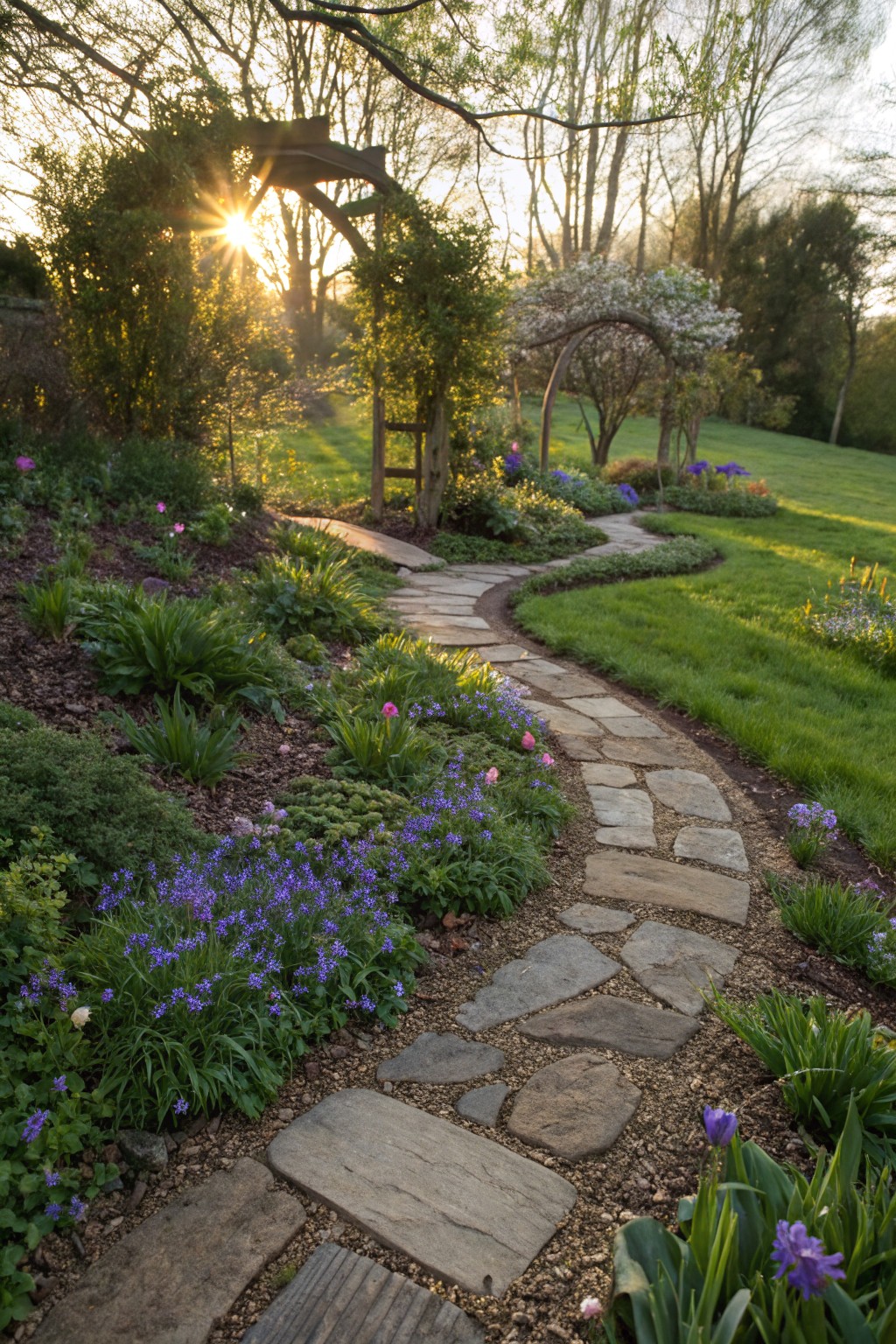
A simple winding path made from irregular stone slabs draws you gently through the garden. It works because the curves slow you down, letting you notice the plants up close, like those clusters of bluebells and irises hugging the edges. No straight lines here. Just a natural flow that fits sloped yards or borders perfectly.
To pull this off yourself, lay the stones over a gravel base for good drainage, then tuck in spring bulbs and perennials along the sides. It suits cottage-style homes or any spot needing more charm without much upkeep. Keep the grass edge crisp… and watch how it turns a plain yard into something you actually want to walk through.
Stone Path with Flanking Planters
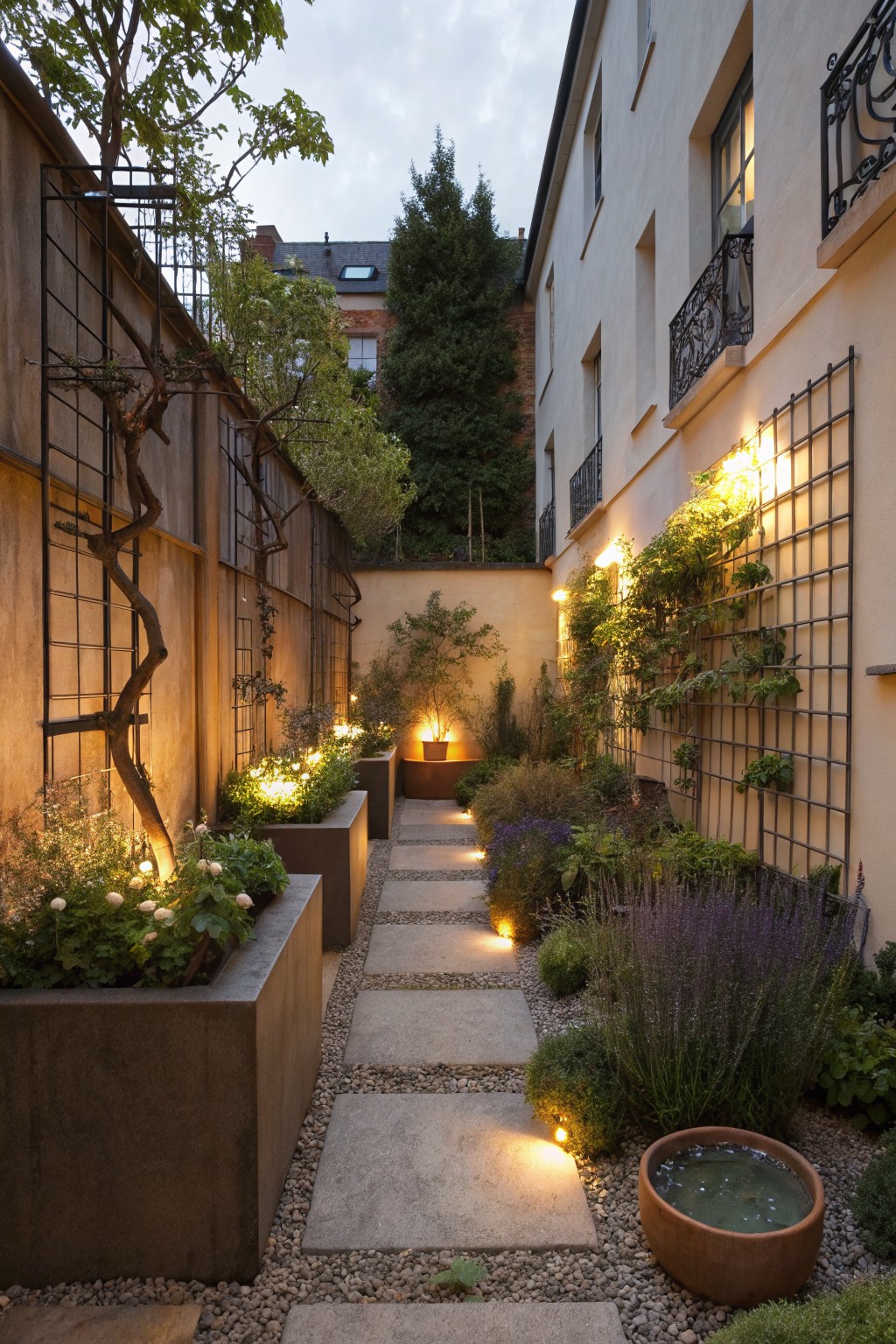
A straight stone path running through a narrow garden spot like this keeps things clear and walkable. Tall rectangular planters line both sides, packed with white flowers and green plants that spill over a bit. Low lights tucked into the gravel edges light it up nicely come evening. It turns a skinny alley into something you actually want to stroll through.
This works best in tight side yards or between buildings where you need to squeeze in some planting. Lay gravel first for drainage, set pavers in a simple line, then build or buy sturdy planters to edge it. Fill with easy bloomers like white petunias or lavender bushes. Skip fussy stuff. Add solar spots if wiring’s a hassle. Keeps it low-key and pretty year-round.
Winding Stone Path with Lush Borders
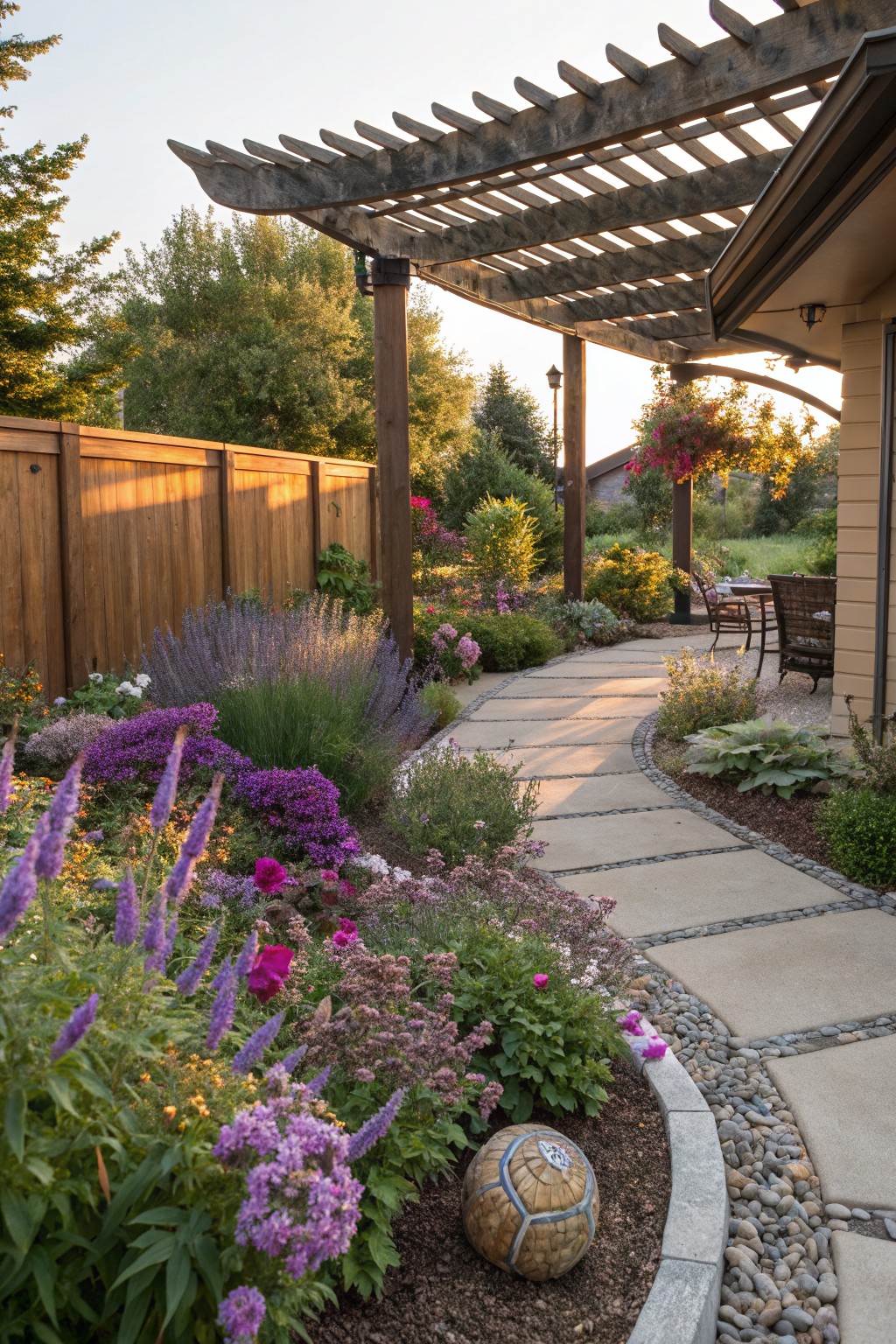
A winding path like this one uses simple concrete pavers to curve gently through the garden. Purple lavender and other perennials spill right up to the edges, with pebbles holding everything neat. It pulls you along without feeling too straight or formal. Folks like how it slows you down a bit, makes the yard feel deeper.
Lay it out in any side yard or backyard corner. Mark the curve with a hose first, dig shallow, set the pavers level, then add river rocks for edging and plant low-water flowers. Skip super fancy stones unless you want to. It suits most homes, even rentals if you go shallow. Just watch for weeds in the pebbles.
Frequently Asked Questions
Q: Do I need fancy tools to pull off these flower landscaping projects?
A: Stick to basics like a shovel, gloves, and a trowel you probably already own. Rent a wheelbarrow if you’re moving lots of soil. Save your cash for pretty plants.
Q: What’s the quickest way to fix poor soil for these ideas?
A: Dig in organic matter like compost or aged manure right into the top six inches. Water it well and let it settle a day before planting. Flowers root faster and thrive longer.
Q: How do I choose flowers that actually survive in my yard’s shade?
A: Hunt for shade-lovers like impatiens or hostas at your local nursery. Test a small patch first to see what takes off. And build up layers for depth without overwhelming the spot.
Q: Can beginners handle these weekend projects without messing up?
A: Start with one simple idea, like a container burst of petunias. Follow the steps one at a time. You’ll gain confidence fast.
