


Gardening pulls me outside more than anything, and a decent fence keeps it all contained without dominating the space.
Ideas that incorporate salvaged wood or basic lattice work best because they invite vines and flowers to soften the lines.
Fancy pickets can look stiff if you do not maintain the paint year after year.
I like how some reuse old pallets for a rugged edge that fits right in.
They make the yard feel finished.
Classic White Picket Fence
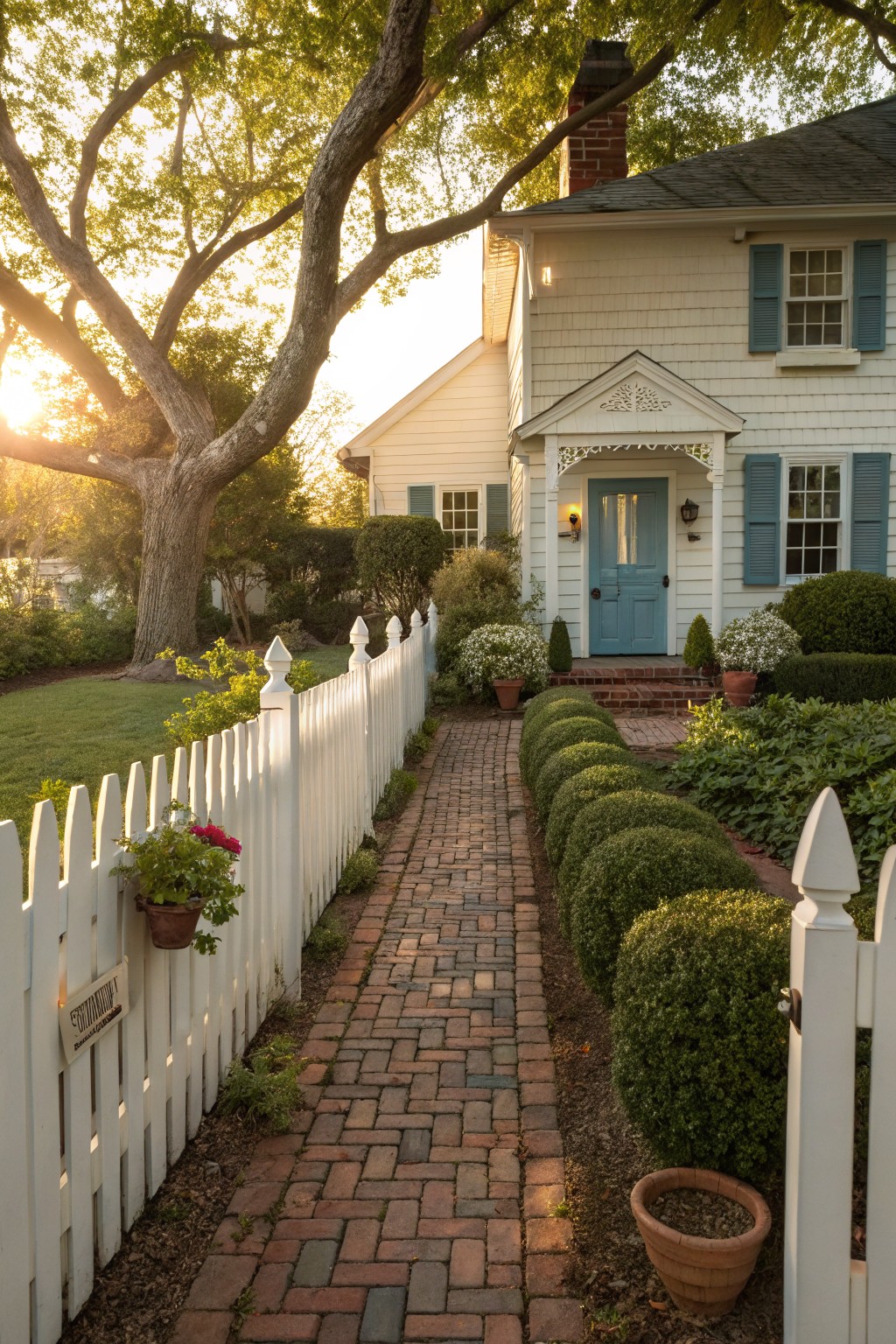
A white picket fence is one of those garden ideas that just works every time. It sets off your yard nicely and guides folks right to the front door. In this setup, it edges a simple brick path with low boxwoods on one side, keeping things neat and pretty without trying too hard.
Put one in a small front yard around a walkway, especially on older homes or cottages. Space the pickets about four inches apart for that open look. Fresh paint every few years keeps it bright. Skip fancy finials unless you want more upkeep.
Slatted Wood Fences for Garden Areas
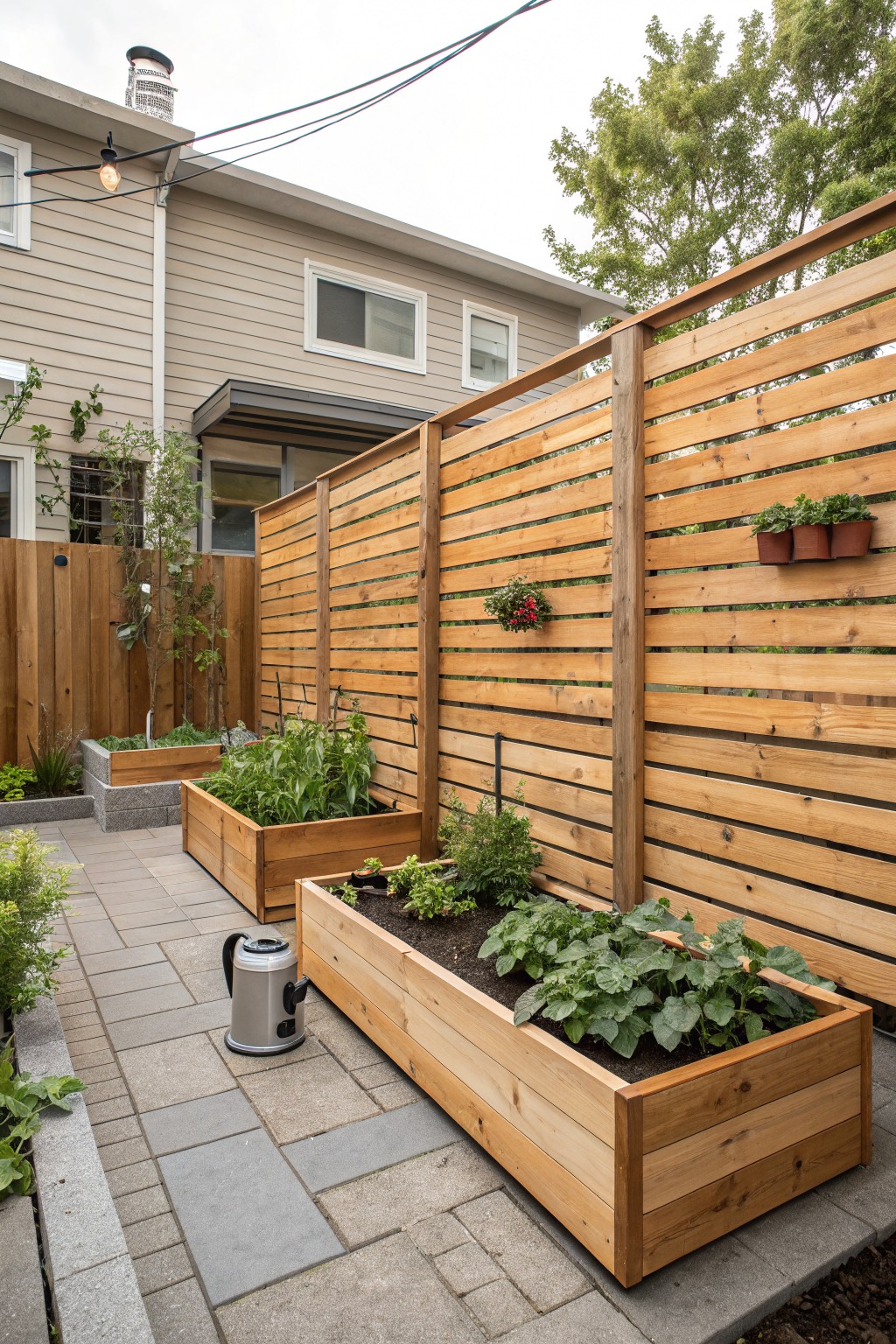
Slatted wood fences like this one give your garden a clean, open feel while still blocking views from neighbors. The horizontal cedar slats let in some light and air, which keeps plants healthy without making the yard feel closed in. It’s a simple look that fits right with raised beds and paths.
These fences work great in small backyards or side yards where you want privacy but not a solid wall. Use cedar or similar treated wood to hold up outdoors, and space the slats about two inches apart for that breezy style. Match the wood to your planters for a pulled-together yard, but skip it if your space gets too windy.
Bamboo Garden Fencing
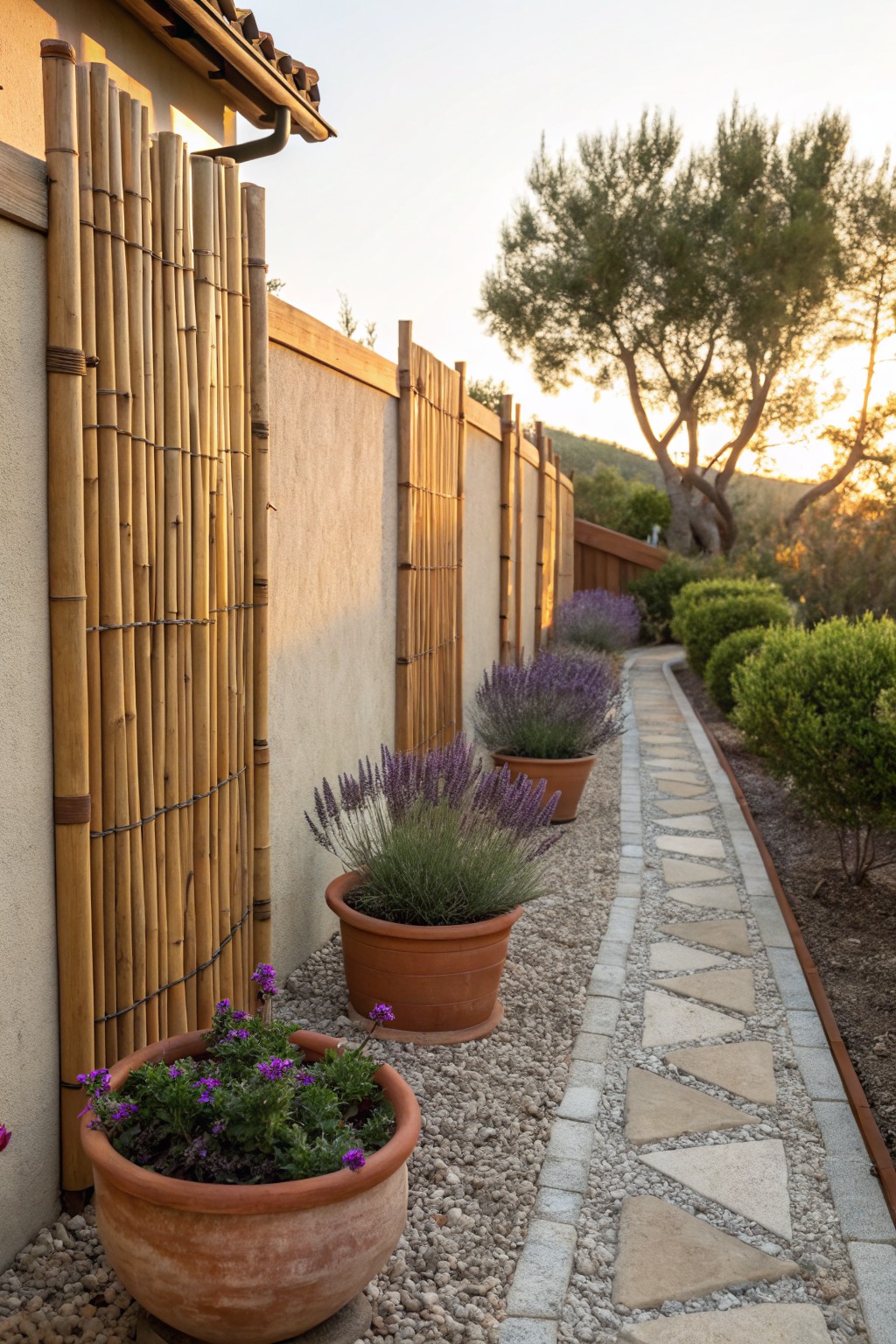
Bamboo fencing offers a simple way to add privacy to garden paths without much weight or upkeep. The poles tied together create an open feel that still hides the yard from neighbors. It stands out here along a sunny walkway, where the warm tones blend right in with the stucco wall.
This works best on side yards or narrow spaces next to the house. Bolt panels onto wood fences or lean them against walls, then line up terracotta pots with lavender or similar plants. Keep it to drier spots… bamboo holds up well there.
Split-Rail Fences Along Garden Paths
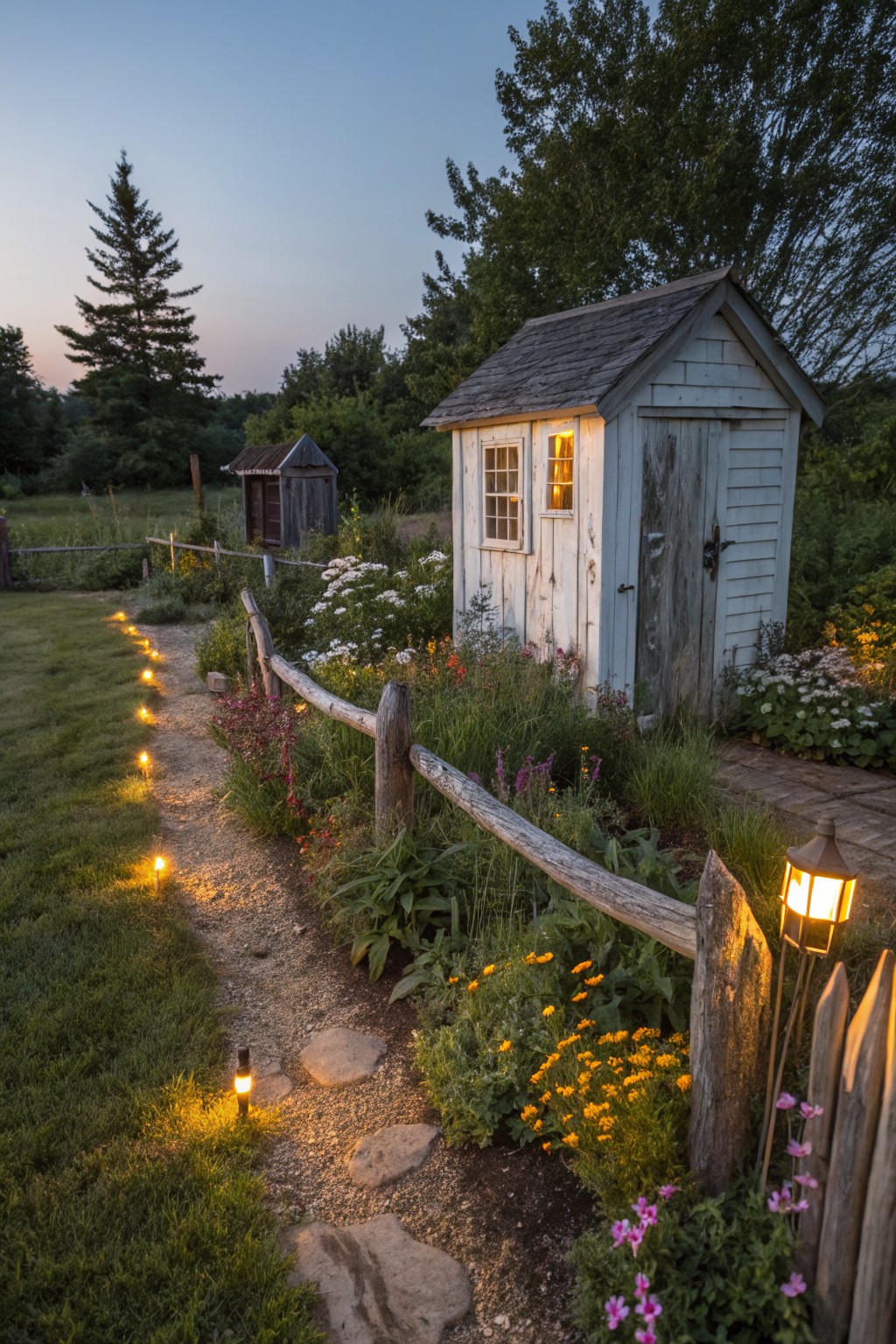
A split-rail fence running alongside a garden path keeps things simple and folksy. It lets flowers and plants spill over naturally without feeling boxed in. Those low rails give just enough separation from the lawn, and at dusk with path lights glowing, it turns a plain walkway into something welcoming.
This works best in cottage-style yards or country spots where you want low upkeep. Use rough-sawn logs or reclaimed wood for that aged look. Pair it with stepping stones and perennials that lean over the rails. Skip it in super formal gardens, though. It suits beginners since you can set the posts in gravel, no fancy digging needed.
Brick Pillars with Iron Gate

One straightforward way to mark your front garden is with brick pillars holding up a simple iron gate. It gives that old-school garden feel without much fuss. The pillars match the house bricks here and pair with neat hedges for a tidy border along the path. Folks like it because it keeps things open yet defined. No big walls. Just enough to guide visitors right to the door.
This setup works best on smaller front yards or traditional homes. Use matching bricks if you can. Keep the gate low so it doesn’t block the view. Add lanterns like these for evening light. Skip it if your yard’s too wide. Might look lost. Plant boxwoods or similar behind for fullness over time.
Glass Pool Fences with Timber Posts
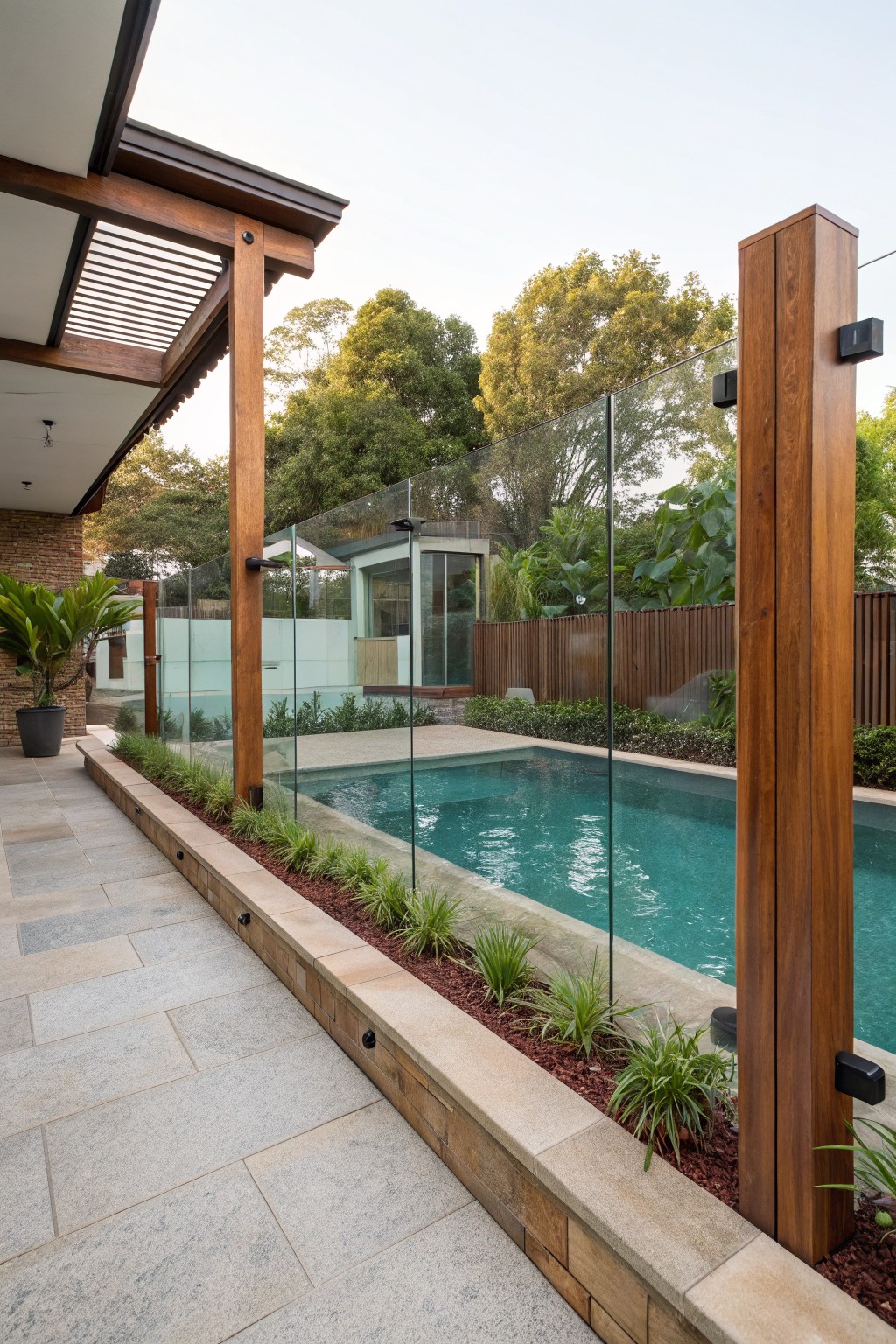
Clear glass panels held by timber posts make a simple fence around pools. They block access without hiding the water or yard views. The wood gives it strength and a natural look that blends with nearby plants.
This works well in backyards where you need safety but want an open feel. It suits homes with some modern lines or trees. Check your local rules on height and spacing. Pair it with low plants along the edge for easy upkeep.
Vertical Pallet Garden
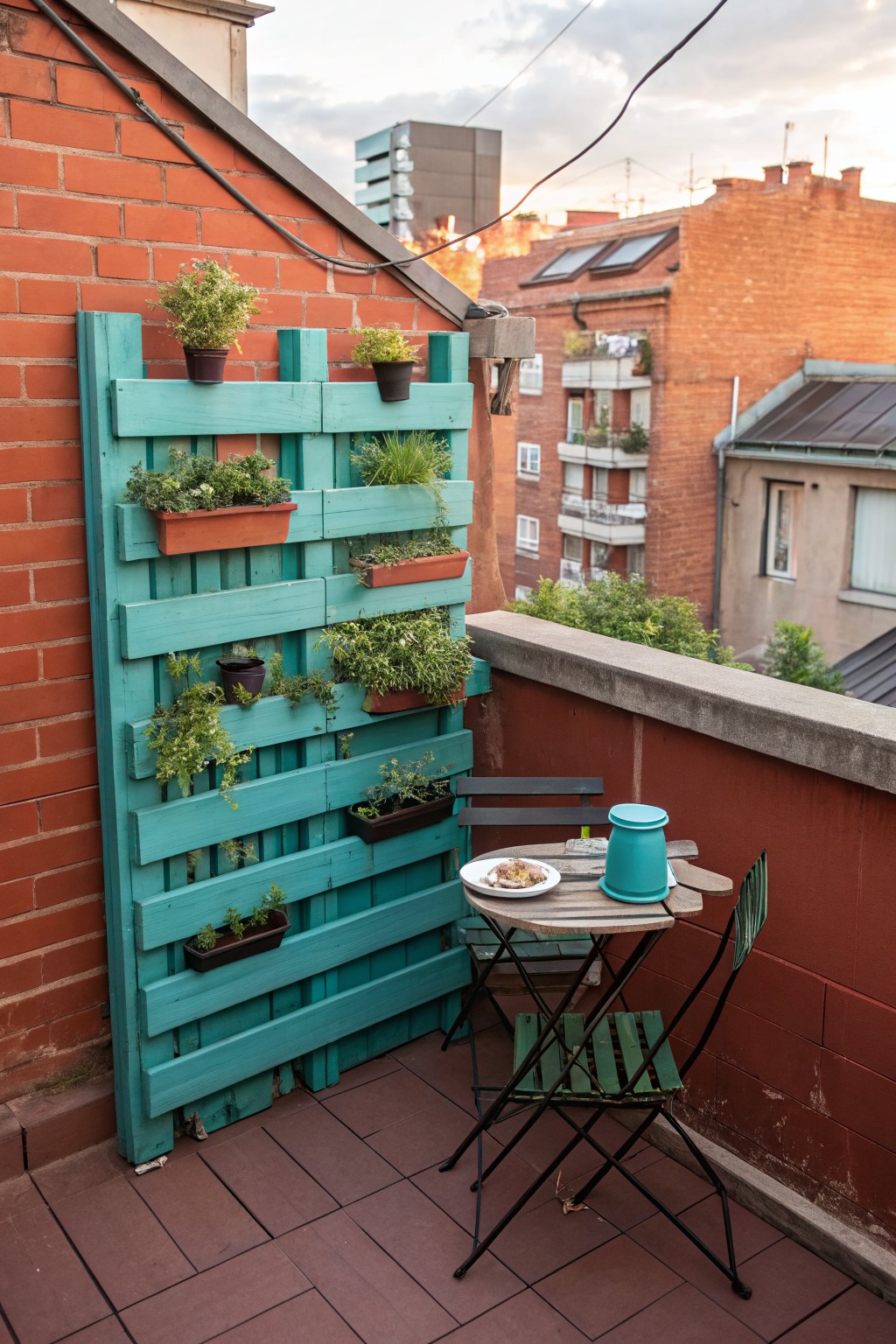
A simple way to grow herbs on a balcony is stacking pallets into a tall planter wall. Here the turquoise paint gives it a fresh look against plain brick, and all those little pots mean plenty of plants in a small area. It turns empty wall space into something useful without much effort.
Painted pallets like this fit right on apartment balconies or patios where ground is limited. Secure it well to the wall, add pots with drainage holes, and plant easy herbs like basil or mint. Keeps things tidy too… just watch for water dripping below.
Corrugated Metal Garden Fences

Corrugated metal makes a tough fence that stands up to weather. You see it here as tall panels fixed to wood posts and frames. It blocks views without needing paint or stain. The rusty finish over time adds character too.
Put this in a backyard or along a side path where you want privacy fast. It suits beach houses or dry yards best. Line the base with grasses and succulents in wood planters. Keep plants low so they don’t hide the fence.
Rustic Woven Garden Fences
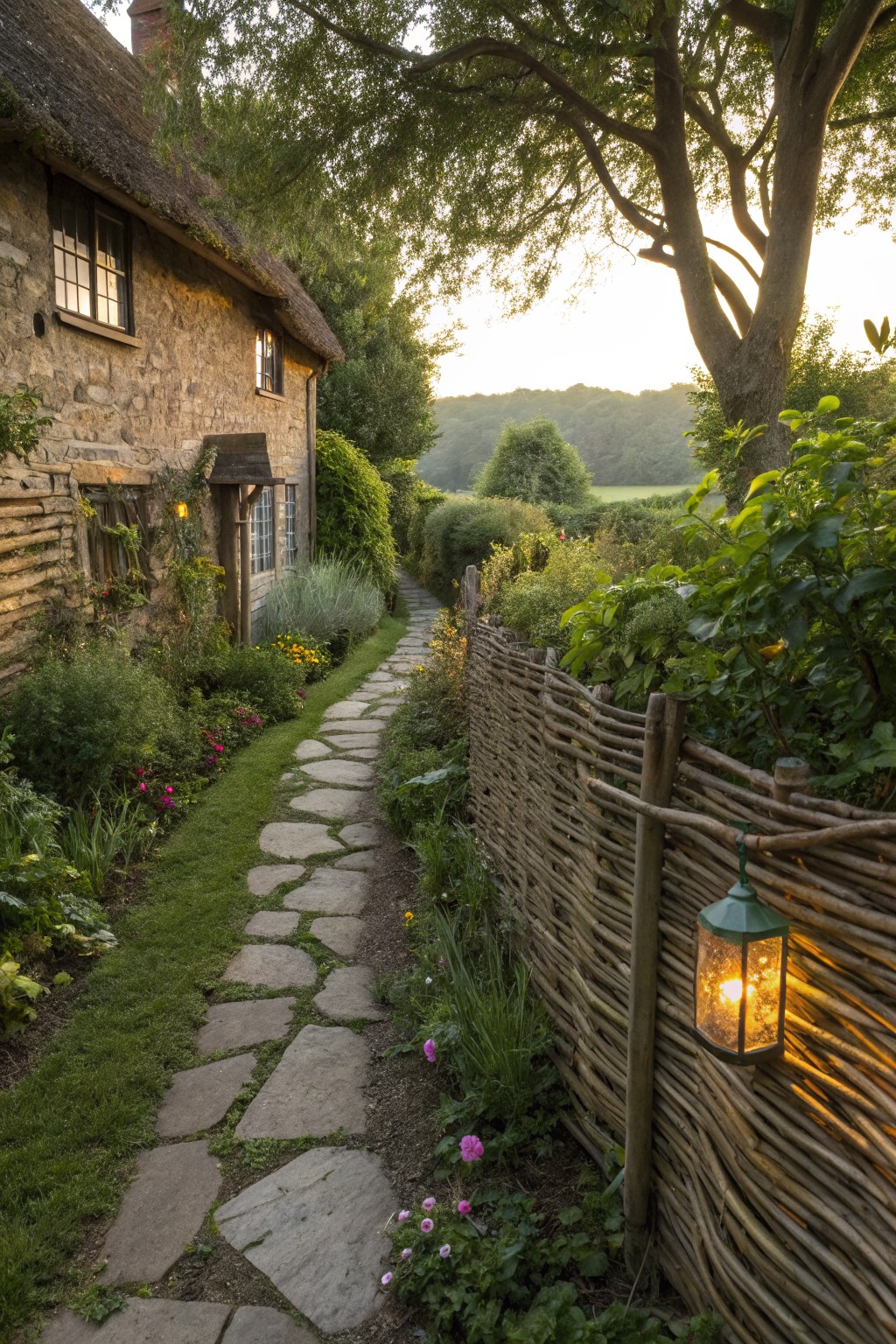
These woven fences made from willow or hazel branches give a garden path a cozy, natural border. They fit right in with plants and flowers growing nearby, like the pink blooms and greenery brushing against them. Folks like how they look old-fashioned but sturdy enough to keep things in place without feeling stiff.
Put them along a walkway leading to your house or through a backyard bed. They work best in cottage-style yards or anywhere with soft landscaping. Easy to find at garden centers or make yourself if you’re handy with branches. Just keep them from getting too wet in soggy spots, or they might sag over time.
Wood Slat Fence with Concrete Posts

A simple way to make a garden fence stronger is to use tall concrete posts with horizontal wood slats. In this setup, the concrete post stands out next to the slatted wood panels. It holds everything steady without much upkeep. The mix gives privacy but still lets some light through.
This works well around sheds or seating areas in small backyards. It suits modern homes or older ones getting a refresh. Set posts in concrete footings first, then attach the slats. Watch the spacing so wind doesn’t catch them. Beginners can handle it over a weekend.
Bamboo Privacy Fencing

Bamboo fencing works great for keeping things private in a backyard without feeling heavy or closed in. You see it here wrapping around a small pool area, letting light filter through while blocking views from neighbors. It’s natural and blends easy with grasses and stone paths, giving that relaxed outdoor feel folks like for everyday yards.
This kind of fencing suits compact spaces or spots next to houses. Bolt panels to posts or frames for stability, especially if wind’s an issue. Beginners can source rolls or pre-made screens from garden stores and cut to fit. Just watch for moisture in wet climates so it lasts.
Simple Chain-Link Garden Fence
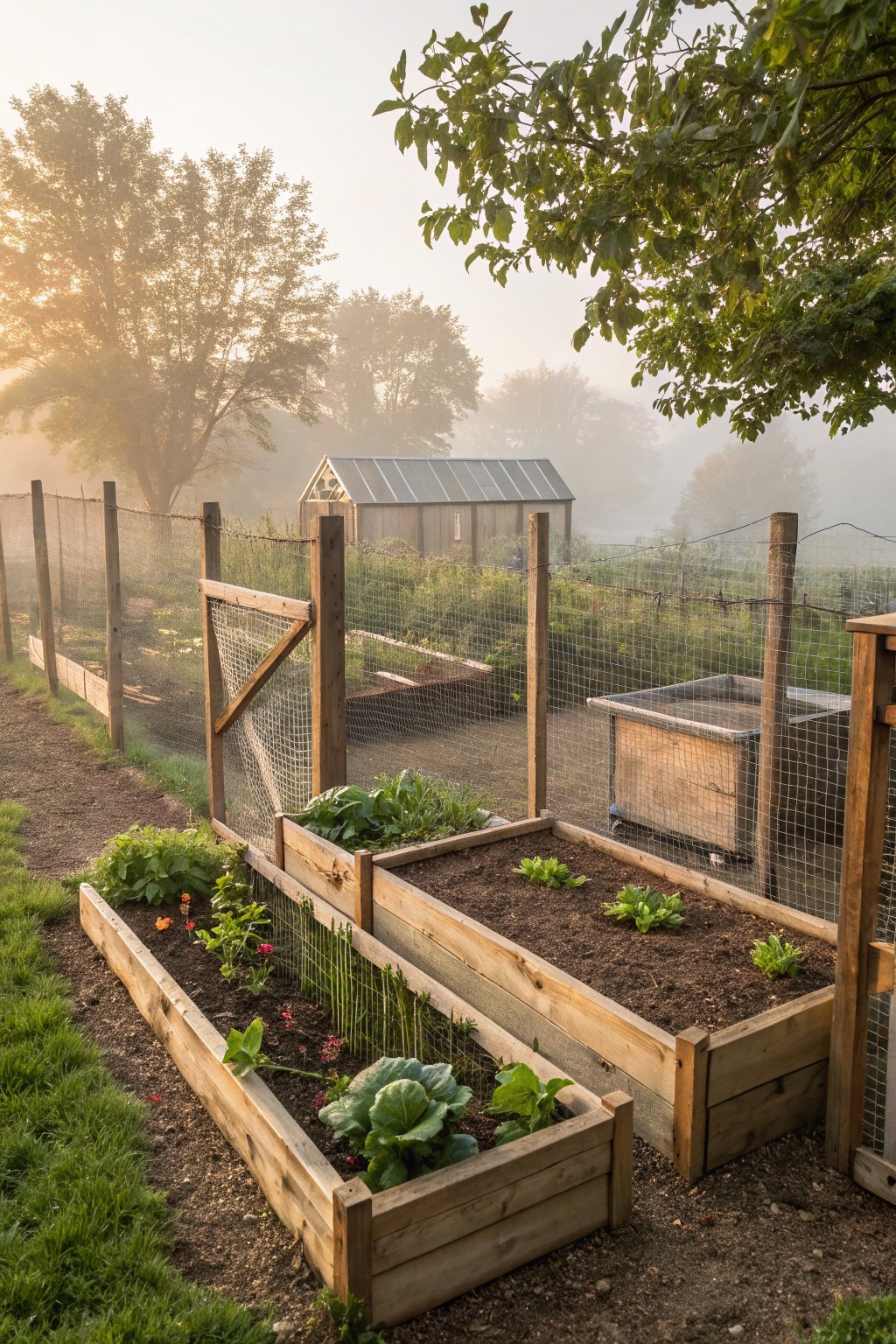
Chain-link fencing like this makes protecting your vegetable garden dead simple. Tall wooden posts give it strength and a bit of rustic style, while the mesh keeps out rabbits, deer, and other critters without blocking the view. It’s especially handy around raised beds full of greens and veggies.
Put this setup in a sunny backyard spot where you want low-cost security. It suits beginners or anyone with a modest plot. Just make sure the posts are set deep for stability, and add some netting on the gate if birds are a problem.
Wooden Fences Along Garden Paths
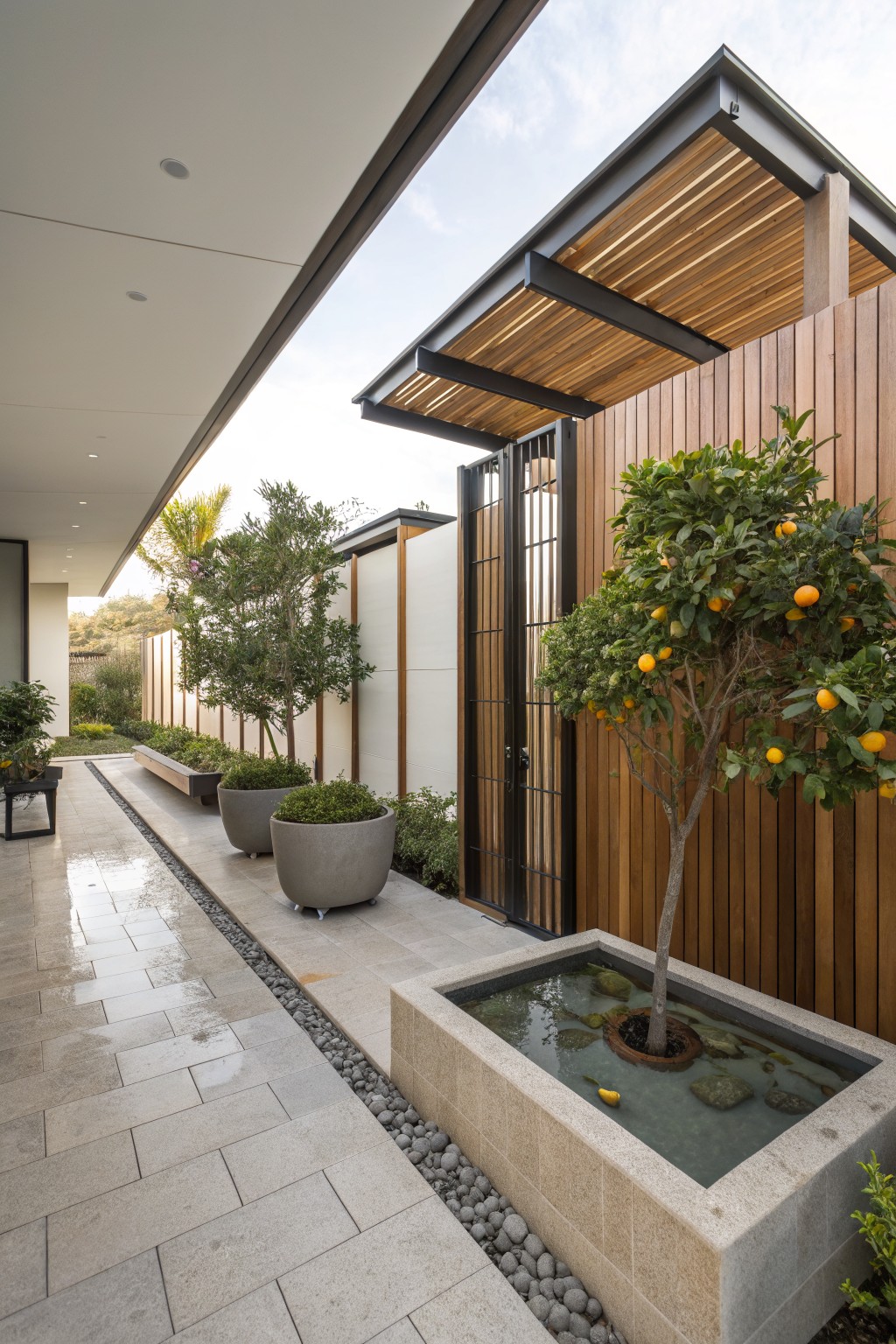
A straightforward wooden fence running alongside a garden path adds real privacy without blocking everything out. Here the tall vertical boards in a warm natural tone sit right next to a citrus tree, making the whole setup feel part of the yard instead of an afterthought. It keeps views from neighbors low while the path stays open to sunlight.
This kind of fencing suits side entries or back garden approaches on most any home style, especially if you want low upkeep. Go with cedar or redwood for rot resistance, and space the boards close for full screening. Plant a few pots or shrubs along the base to tie it into your landscaping. Just check local height rules first.
Horizontal Slat Garden Fences

Horizontal slat fences like this one switch things up from the usual vertical pickets. They let in light and air while still blocking most views, which keeps the yard feeling open. You see it here running along a patio edge, with tall grasses brushing right up against it for a natural tie-in.
These are straightforward for beginners since you just need basic lumber and screws. They suit sloped yards or spots next to seating areas, like around a fire pit. Keep the slats spaced evenly, maybe add low lights along the base, and plant soft grasses nearby to hide any gaps.
Wooden Crate Planters Along Paths

Old wooden crates make simple planters that edge a walkway just right. They’re sturdy enough to hold soil and plants, and that rough wood fits casual gardens without looking forced. Here, a row of them sits by the path, stuffed with flowers, herbs, and trailing greens. It keeps things neat but lets plants tumble over for a lived-in feel.
Line them up single height or stack a couple for more impact. They suit cottage-style yards or spots near a house entry, especially with pavers or gravel. Grab free crates from markets, line the bottoms with plastic, fill with good dirt, and plant easy bloomers. Watch they don’t rot too fast in wet spots.
Mesh Fencing for Balconies
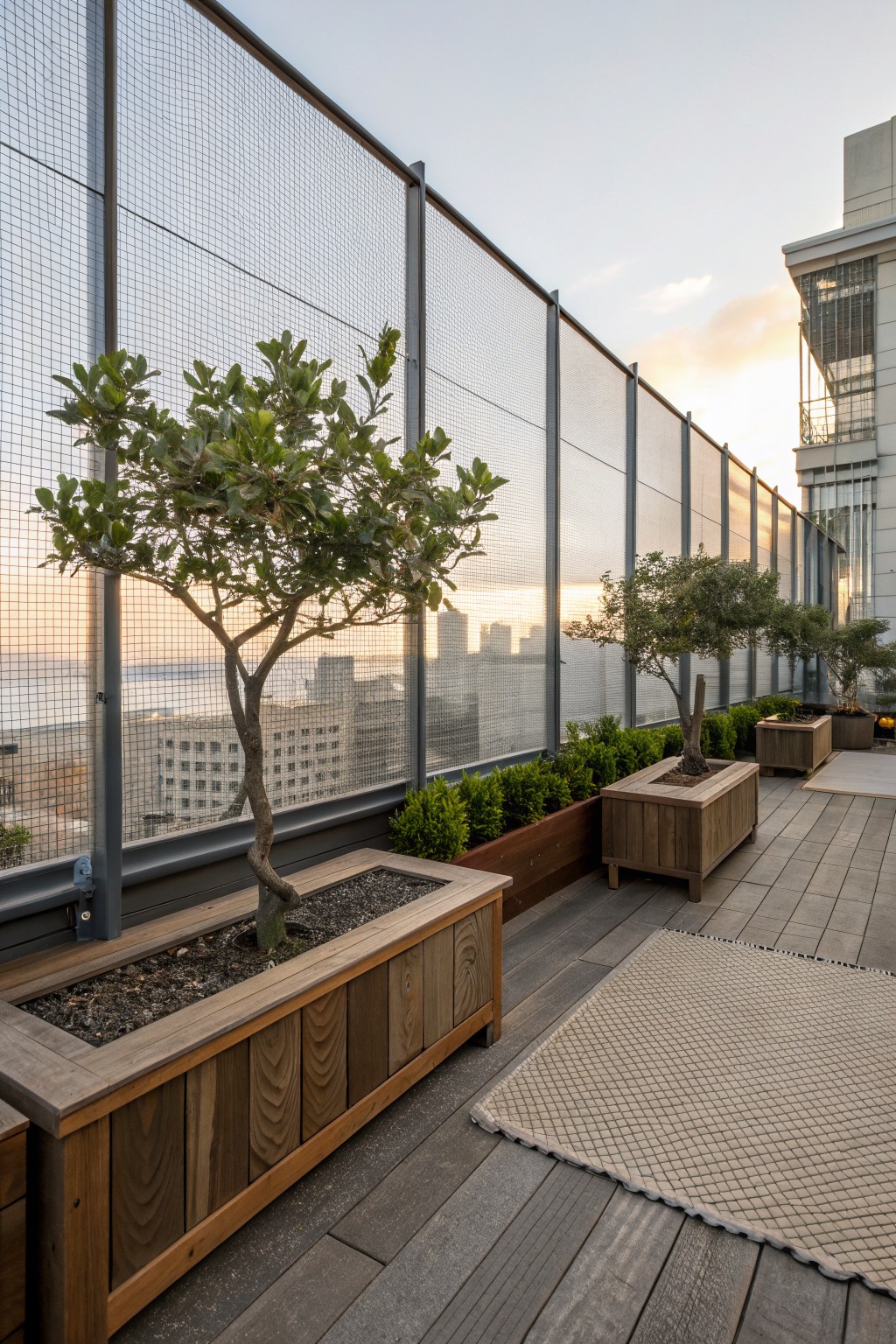
Mesh fencing works great on balconies or rooftops where you need safety but don’t want to lose the view. This kind uses galvanized wire panels stretched between sturdy posts. It keeps things open so light comes through and you can still see the skyline or yard below. A few plants in front, like small trees in wooden boxes, soften the look without much work.
Put this up on apartment balconies or high decks in the city. It suits modern spots or rentals since it’s simple to install and meets building codes. Just make sure the mesh is tight and tall enough, around 4 feet or more. Watch for wind up there. It holds up well and lets you add planters right along the base.
Rope Fences with Wood Posts
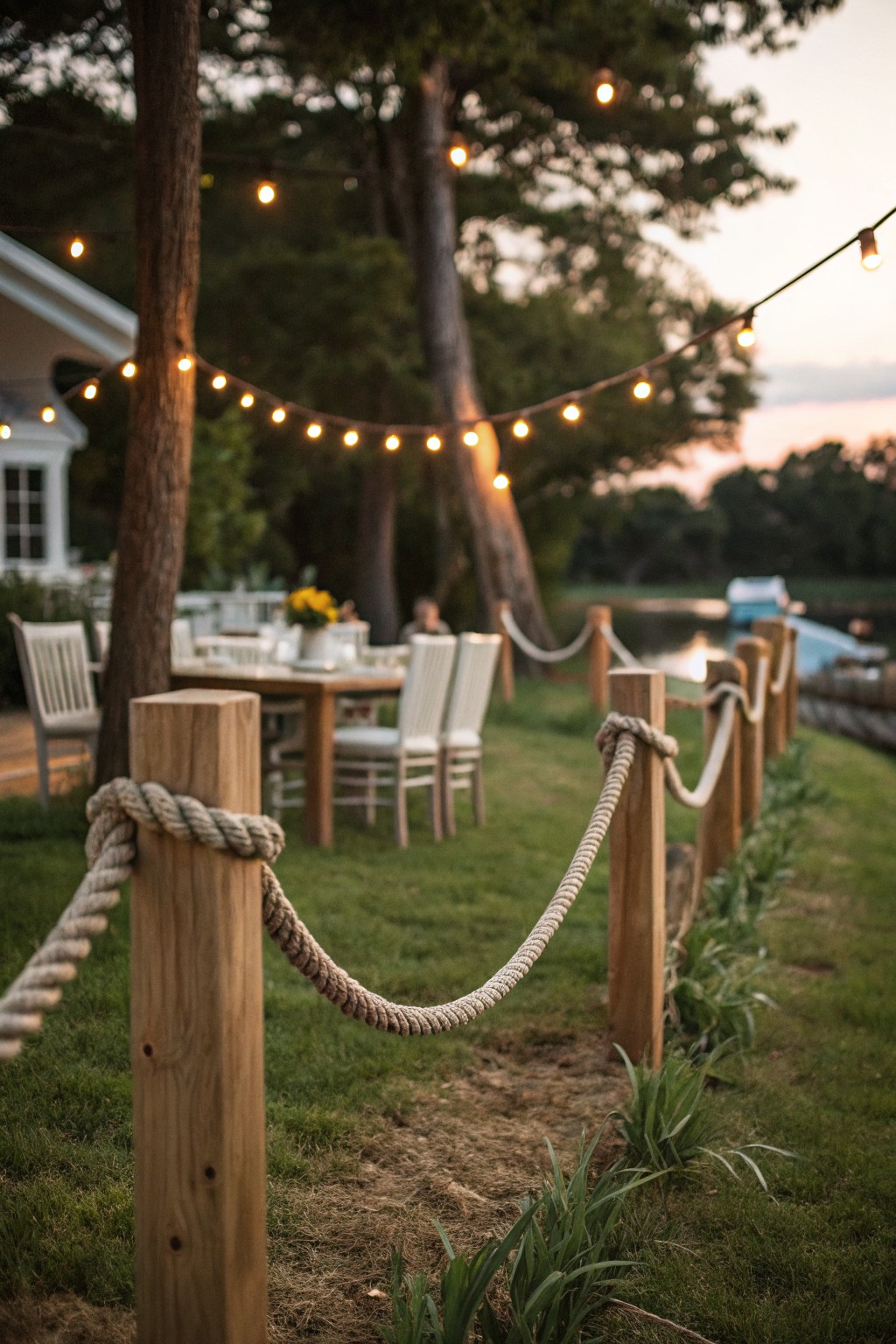
Rope fences made from thick nautical rope tied to sturdy wood posts offer a straightforward way to mark garden edges. They keep an open feel while setting a clear boundary, like along a lakeside yard. No solid panels to block the view or feel heavy.
These work best on casual patios or sloped lawns where you want safety without fuss. Dig posts into the ground every few feet, knot the rope tight, and you’re set. Suits most homes, but check rope for fading in full sun… swap it out every couple years.
Climbing Roses on Metal Fences

One easy way to dress up a plain fence is to grow climbing roses along it. In this setup, pink roses spill over a simple metal trellis fence next to a house path. It adds color and a bit of green without taking up yard space. Folks like it because the plants do most of the work once they’re going. Just a sturdy frame and some ties to get them started.
This works best in side yards or along narrow paths where you want privacy and prettiness. Pick a fence about six feet tall with wide enough bars for vines to weave through. Train the roses early, and prune once a year to keep them tidy. It suits most homes, even older brick ones. Watch for too much shade though. Roses need sun.
Frequently Asked Questions
Q: Do I need fancy tools to build these fences?
A: Grab basics like a hammer, screws, and a saw. Most ideas use stuff you already own or borrow. Skip power tools and still finish in a weekend.
Q: How do I stop wood fences from rotting fast?
A: Paint or stain them right after building. Choose pressure-treated lumber from the start. Lift posts off the ground a bit with gravel bases.
Q: What’s the best fence for keeping rabbits out?
A: Chicken wire works great buried six inches deep. Bend the bottom outward to foil diggers. Add taller slats on top for a finished look.
Q: Can I fence a sloped yard without headaches?
And yes. Step down the posts to follow the hill. Use flexible netting or rails that hug the ground.
