

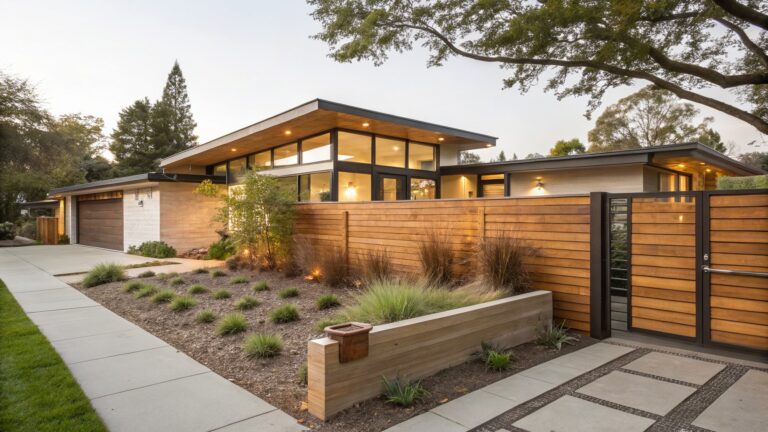
I’ve been rethinking our garden fence lately because the plain wood one we have started blending into the background too much. The strongest designs draw from what’s already there, like repeating stone from the path or vines that climb naturally over slats. I gravitate toward fences with some give in their lines, such as twig weaves, since rigid panels often crowd the beds. Overly polished metal or mismatched heights tend to pull focus away from the plants instead. A couple of these really make me want to grab tools and tweak ours.
Slatted Wood Fences
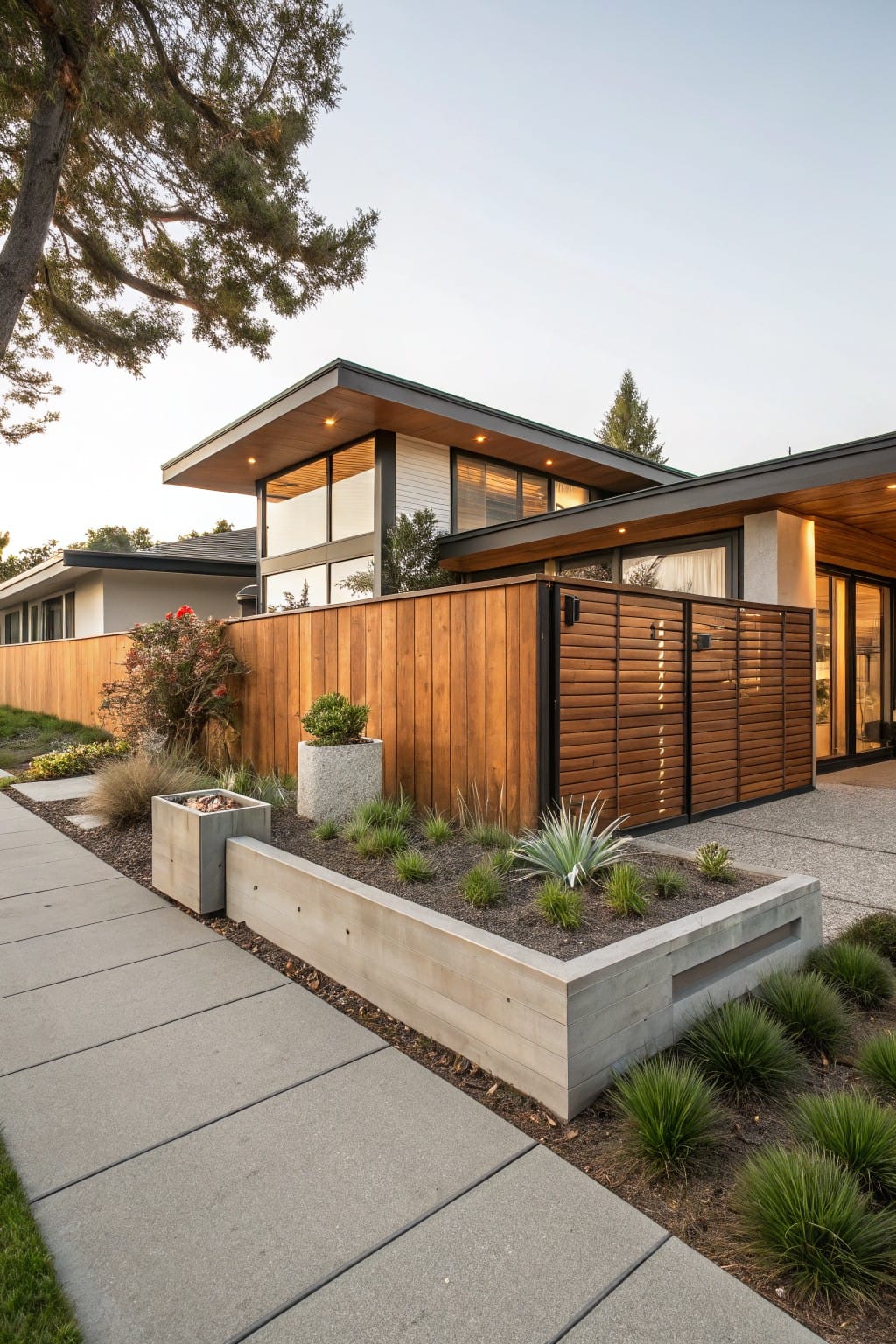
Warm cedar fences like this one use vertical boards for the main run and switch to horizontal slats on the gates. That mix keeps things private from the street but still feels open and modern. Folks like how the wood warms up concrete paths and stark planters without much upkeep.
Put these in front yards or side entries where you want some screening but not a full block. They fit right into yards with grasses and succulents, like agaves here. Just make sure the slats are spaced for your privacy needs, and seal the wood if rain is heavy.
Climbing Roses on a Garden Arch
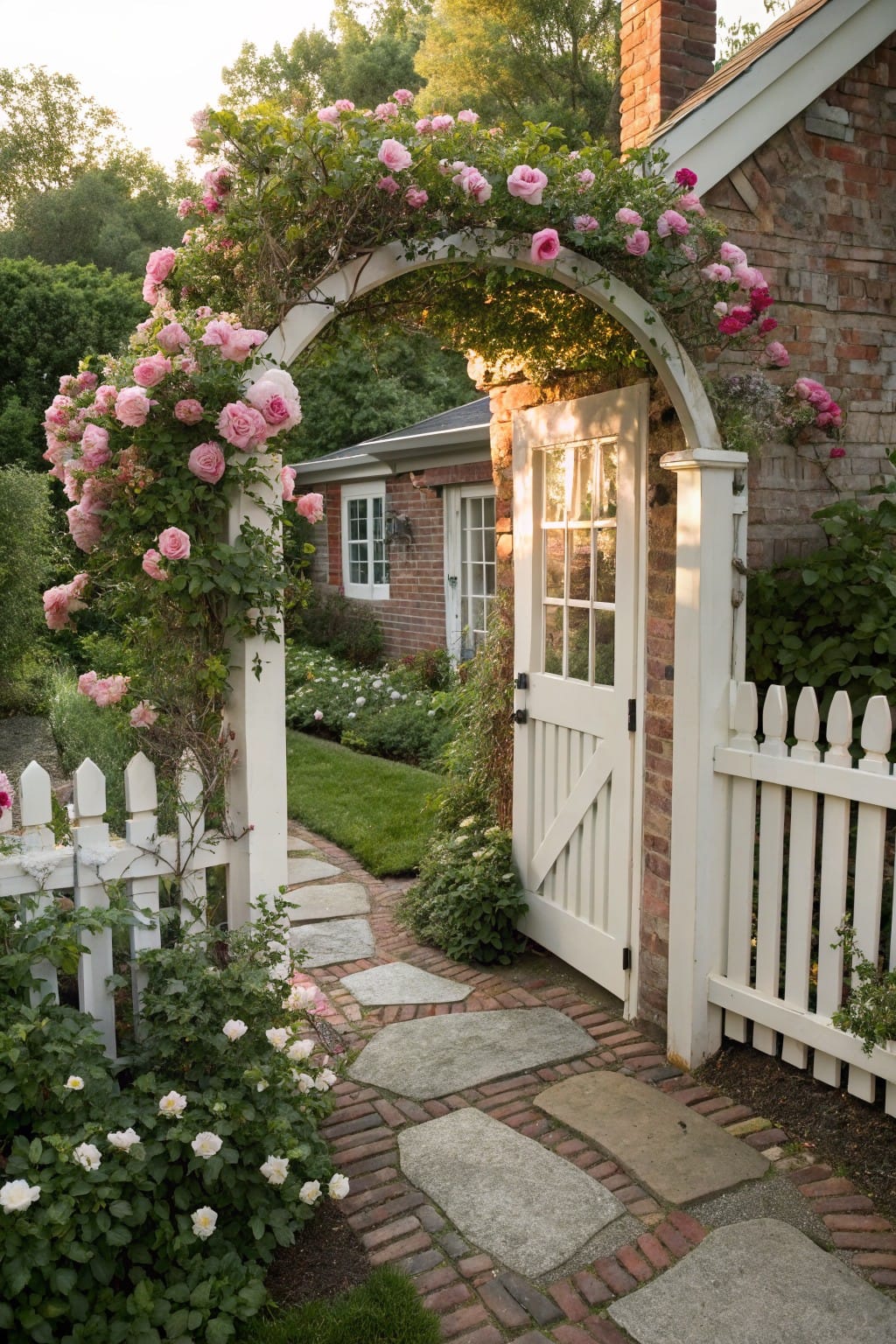
Nothing beats a simple arched trellis loaded with climbing roses for a garden entrance. It adds height without bulk, and the flowers spill over just right. That mix of white wood and pink blooms looks clean yet full of life. People notice it right away coming up the walk.
Try this on smaller side yards or cottage homes where you want some charm without a lot of work. Pick tough climbers like New Dawn that hold up year after year. Just give them a sturdy frame and some sun. Watch the thorns when pruning… they bite. Suits most any fence line if the soil drains well.
Gray Slat Fences with Birch Trees
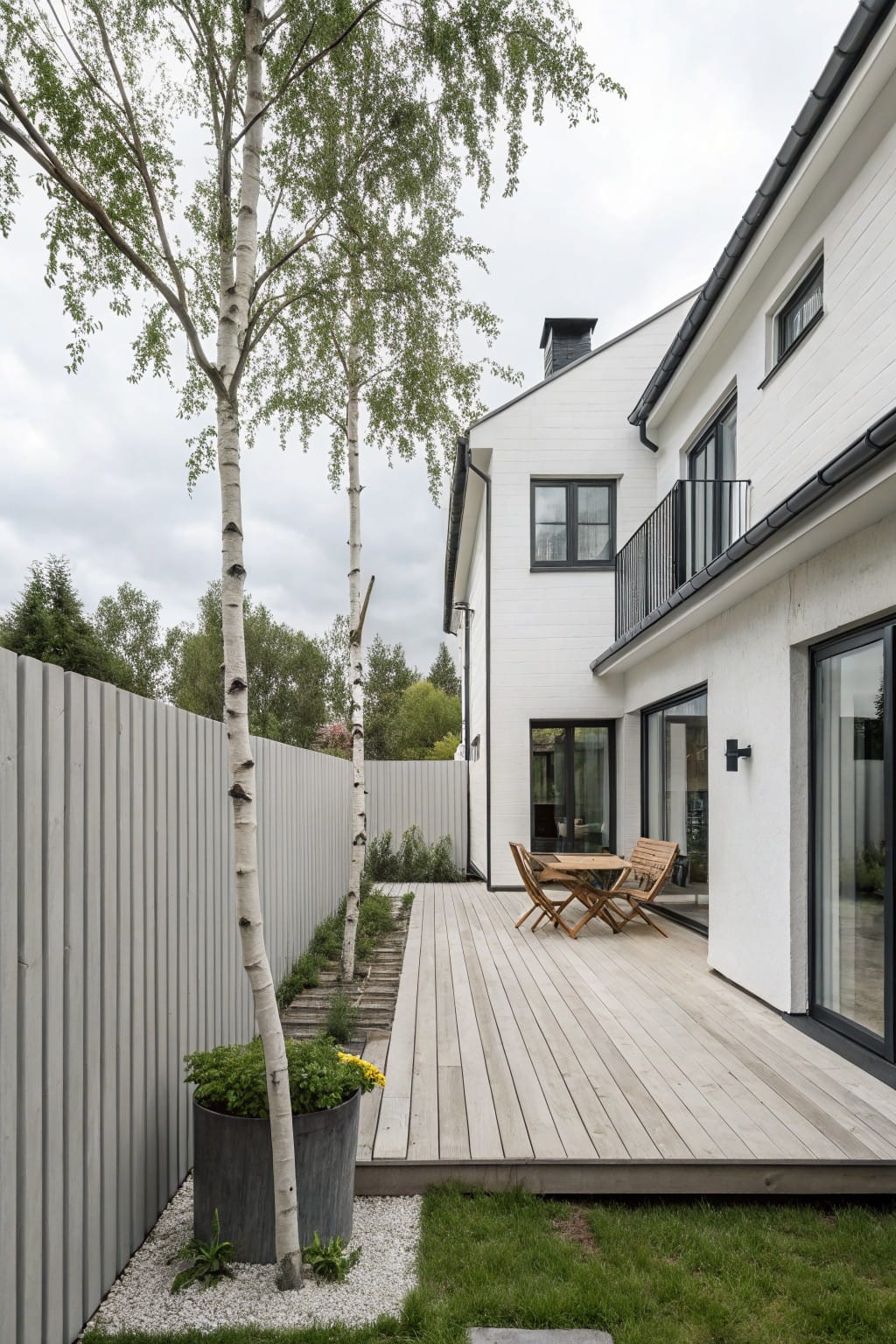
A simple gray vertical slat fence like this one works great when you line it with tall birch trees. The narrow slats let in light and air. But the birches add height and a natural feel without crowding the space. It keeps things open yet private. Folks like how it fits a modern yard without looking too boxy.
Try this in a backyard next to a clean white house or deck area. Plant the birches close to the fence base so they grow up along it. Gray paint on the wood slats holds up well outside. Just space the trees enough for their roots. It suits smaller lots… gives that Scandinavian vibe without much fuss.
Wrought Iron Garden Gates
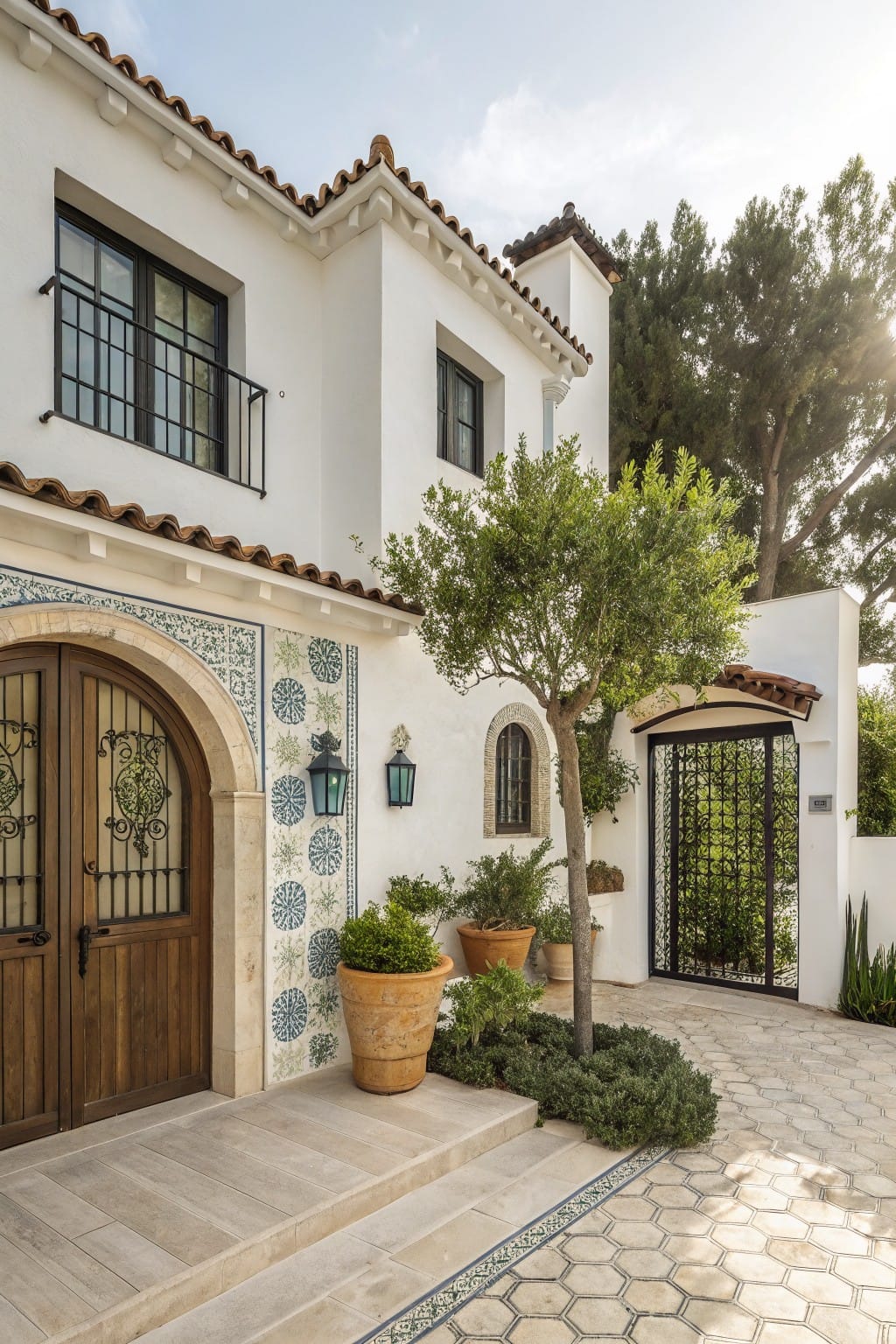
Wrought iron gates like this one make a solid fence option for garden paths. They keep things secure but still let you peek through to the greenery on the other side. The black metal bars against a white stucco wall give a clean contrast that fits older style homes.
You can use these gates for side entries or backyard access. They suit warmer spots with tile work or arched doorways nearby. Pick a simple arched design to match, and plant some low shrubs around the base for a fuller look.
Split-Rail Fences with Meadow Plants
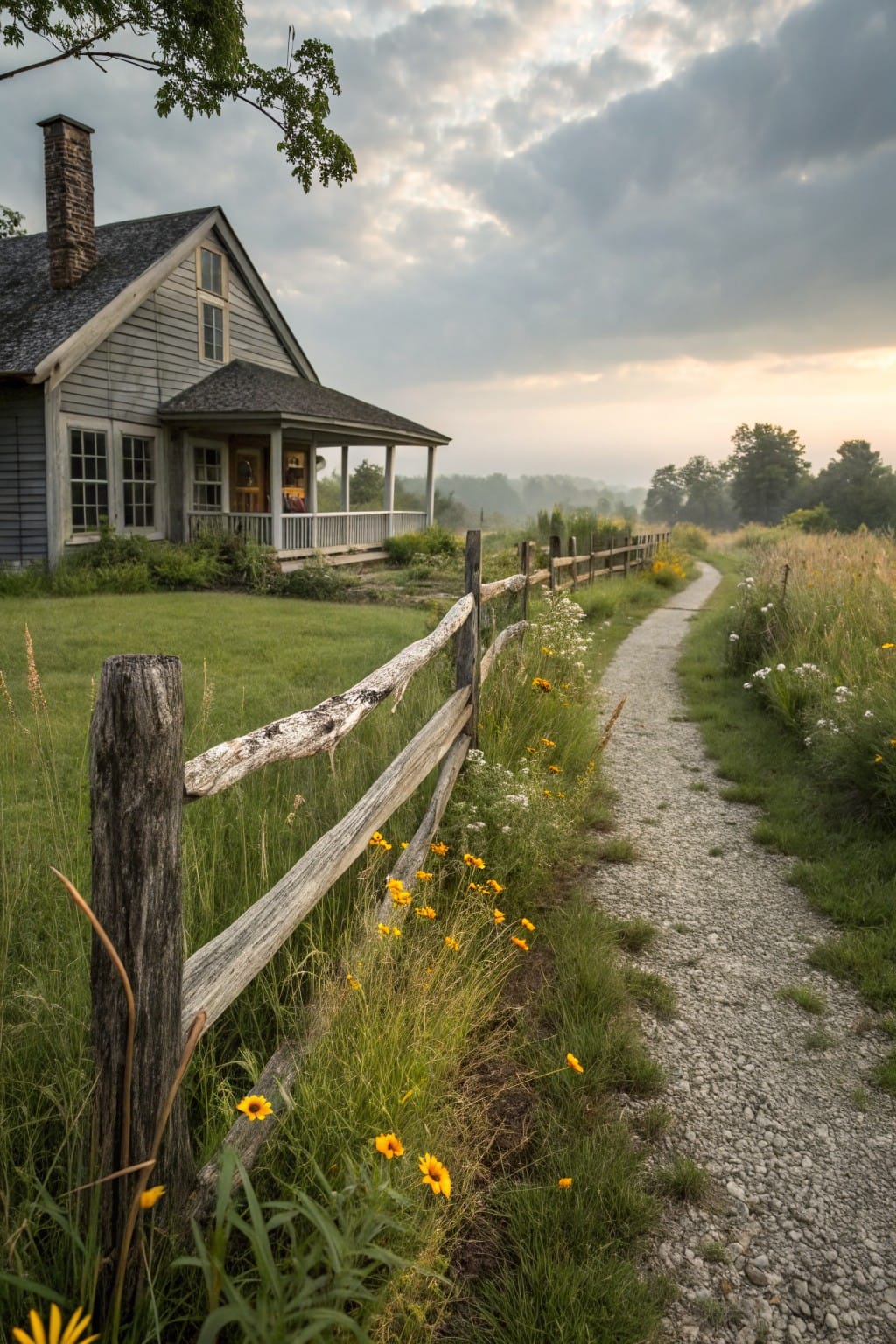
A split-rail fence like this one keeps things simple and lets your yard breathe. Made from rough wood posts and rails, it blends right into the grass and wild patches. Those yellow flowers pushing up along the base show how meadow plants can fill in naturally, no fuss needed. Folks like it because it looks lived-in, not stiff.
Put one around a country home or along a back path where you want low upkeep. It suits bigger lots with some slope or open fields best. Pick rails that weather gray over time, and let local flowers take over the edges. Skip paint or trim, that kills the point.
Natural Woven Fences for Garden Paths
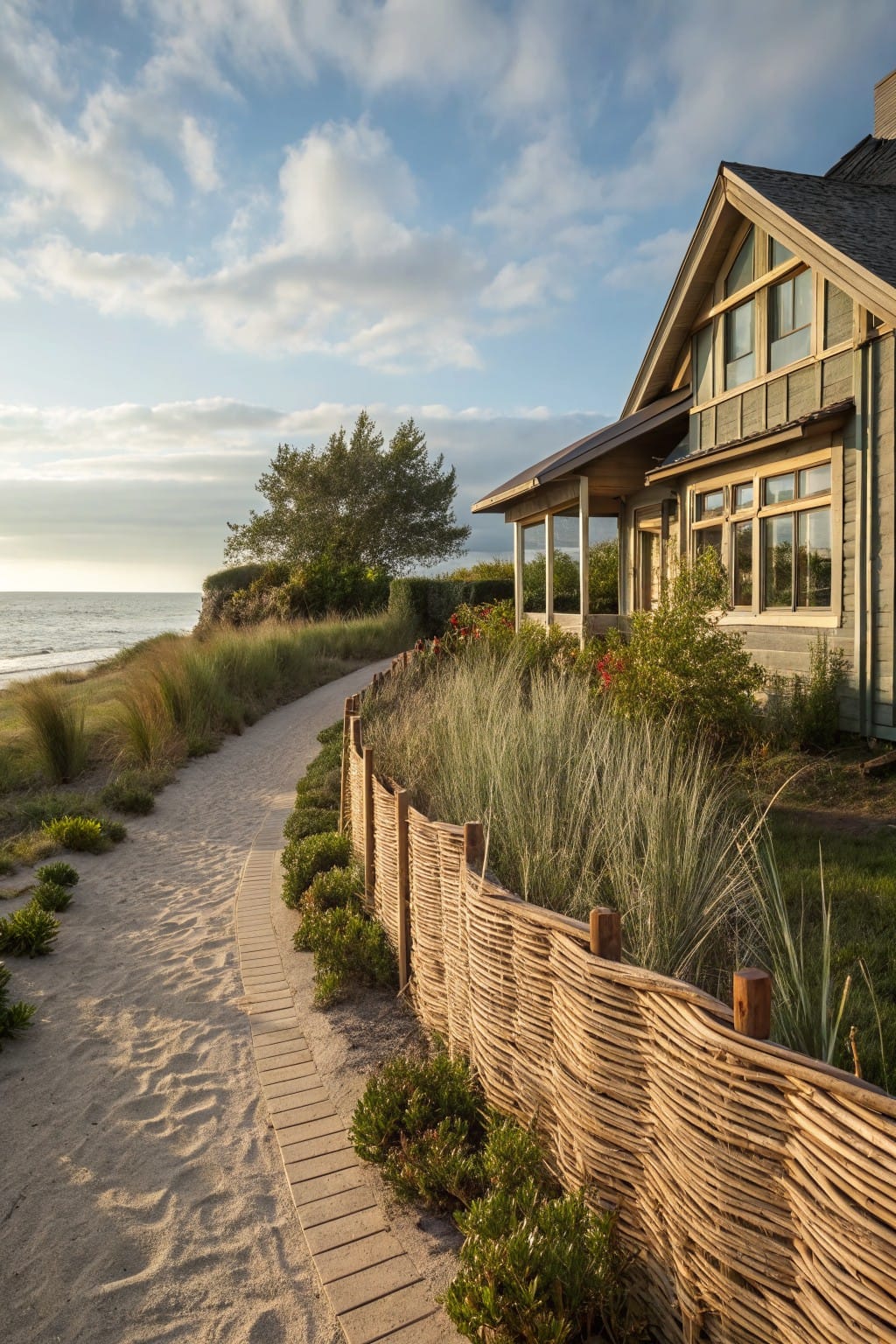
Woven fences like this one stand out because they use simple natural materials that match the plants around them. You see tall dune grasses and low shrubs right along the sandy path, and the fence weaves in without looking out of place. It keeps things contained but still lets you feel the open yard.
These work best around beach houses or cottage gardens where you want low upkeep. Put them along paths to guide foot traffic, or use them to edge planting beds. They hold up in wind and salt air, but check that the wood posts are treated if your area gets a lot of rain.
Black Fencing for Narrow Garden Paths
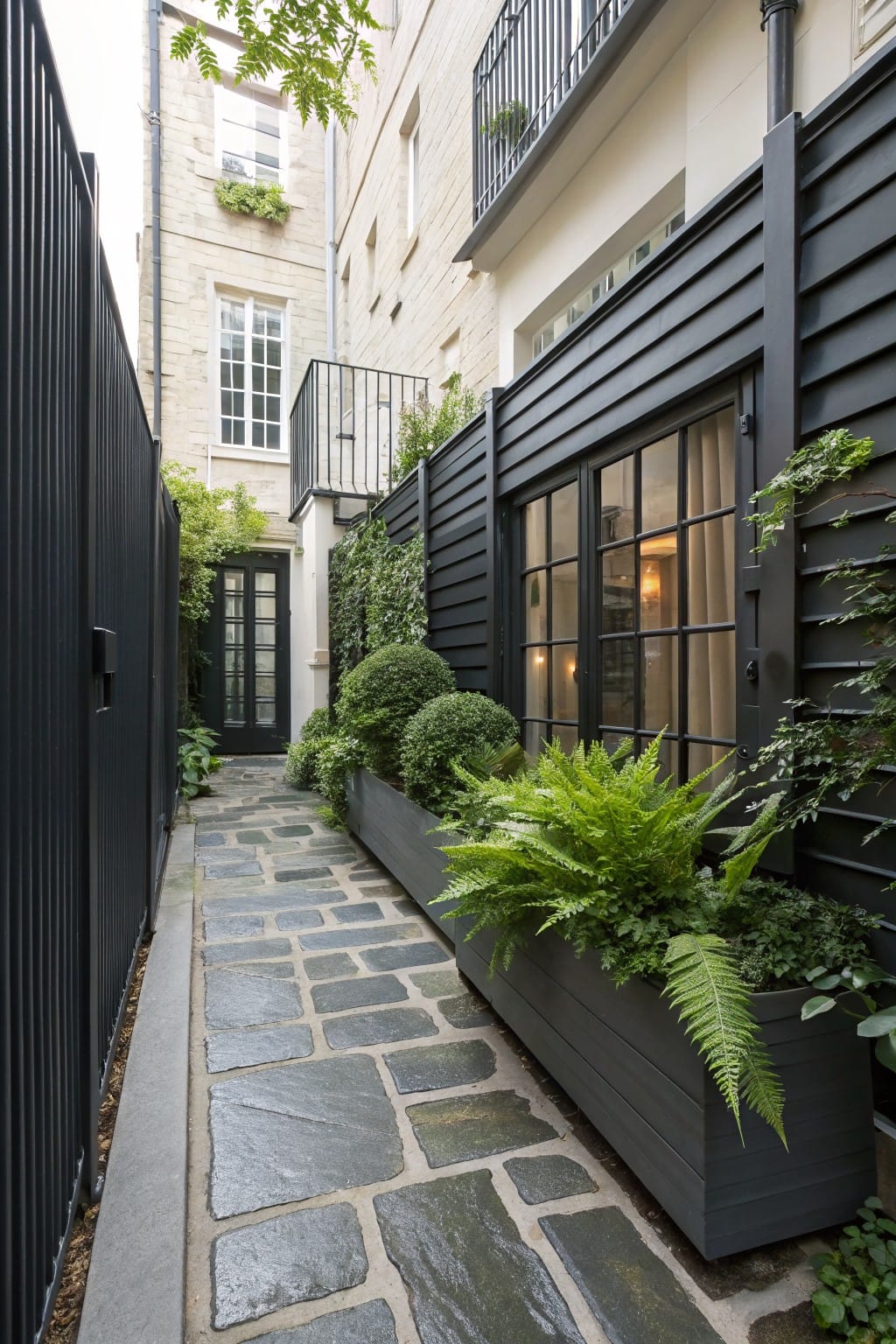
Tall black metal fencing like this turns a skinny side space into a real garden path. It keeps the area private but lets in light through the slim vertical bars. Plants tucked along the base make it feel green and alive instead of stark.
This works best in tight urban spots, like between houses or along a property line. Lay down stone pavers for the walk and add long planters with ferns or low shrubs. It fits older homes too, since the greenery bridges any style gap. Just make sure the fence height matches your neighbor’s view.
Rustic Wood Fences for Garden Privacy
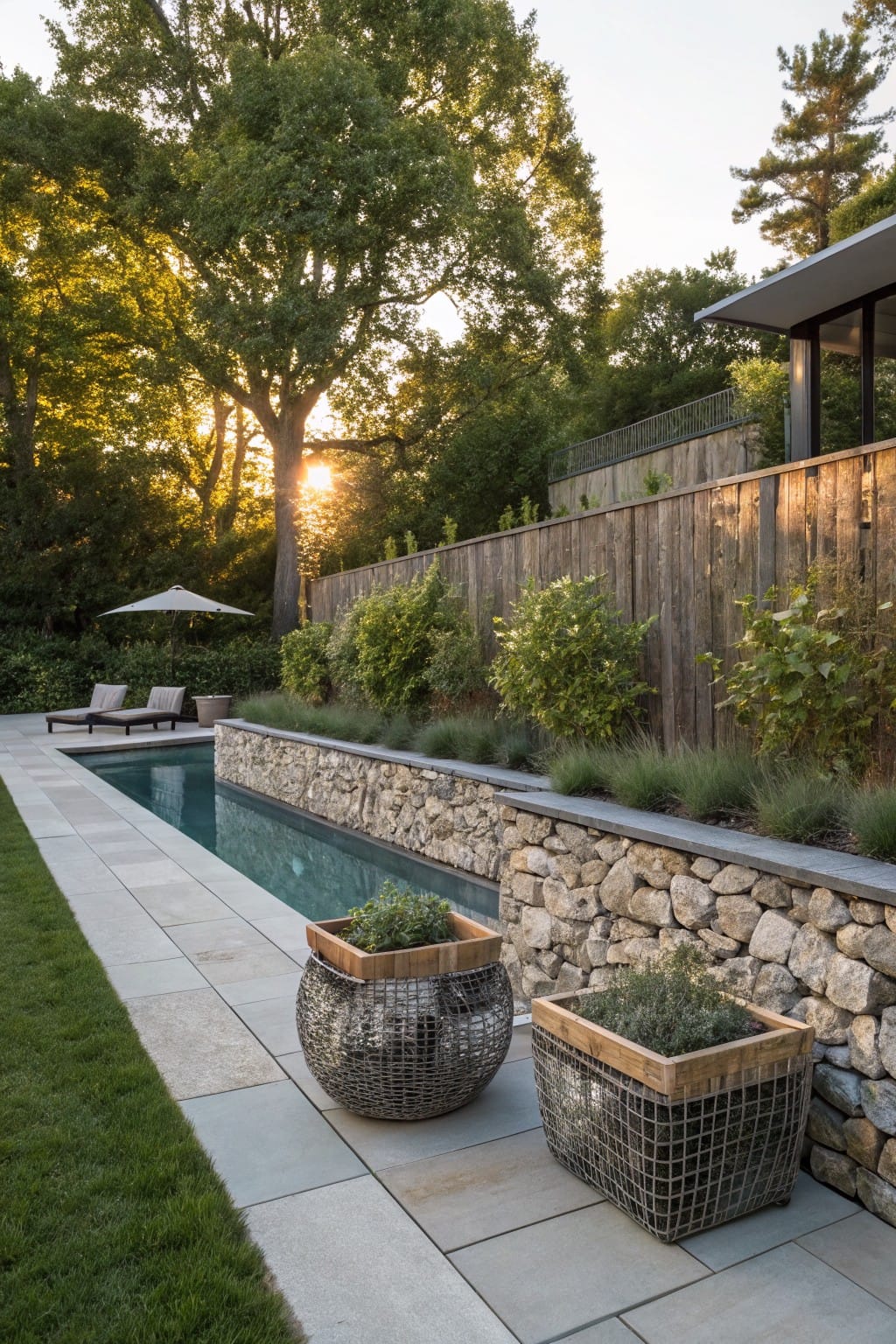
One straightforward way to screen a backyard is with a tall rustic wood fence like this one. It runs along the edge of the pool area, keeping things private without feeling too closed off. The weathered boards give it a natural look that fits right into a garden setting, especially with shrubs tucked in front to soften the base.
This kind of fence works best in sloped yards where you need height for screening neighbors or streets. Pair it with stone walls below for support, and add potted herbs nearby on the deck. It suits casual family homes with pools or patios. Just make sure the wood is treated to hold up against moisture.
Stone Walls with Iron Fencing
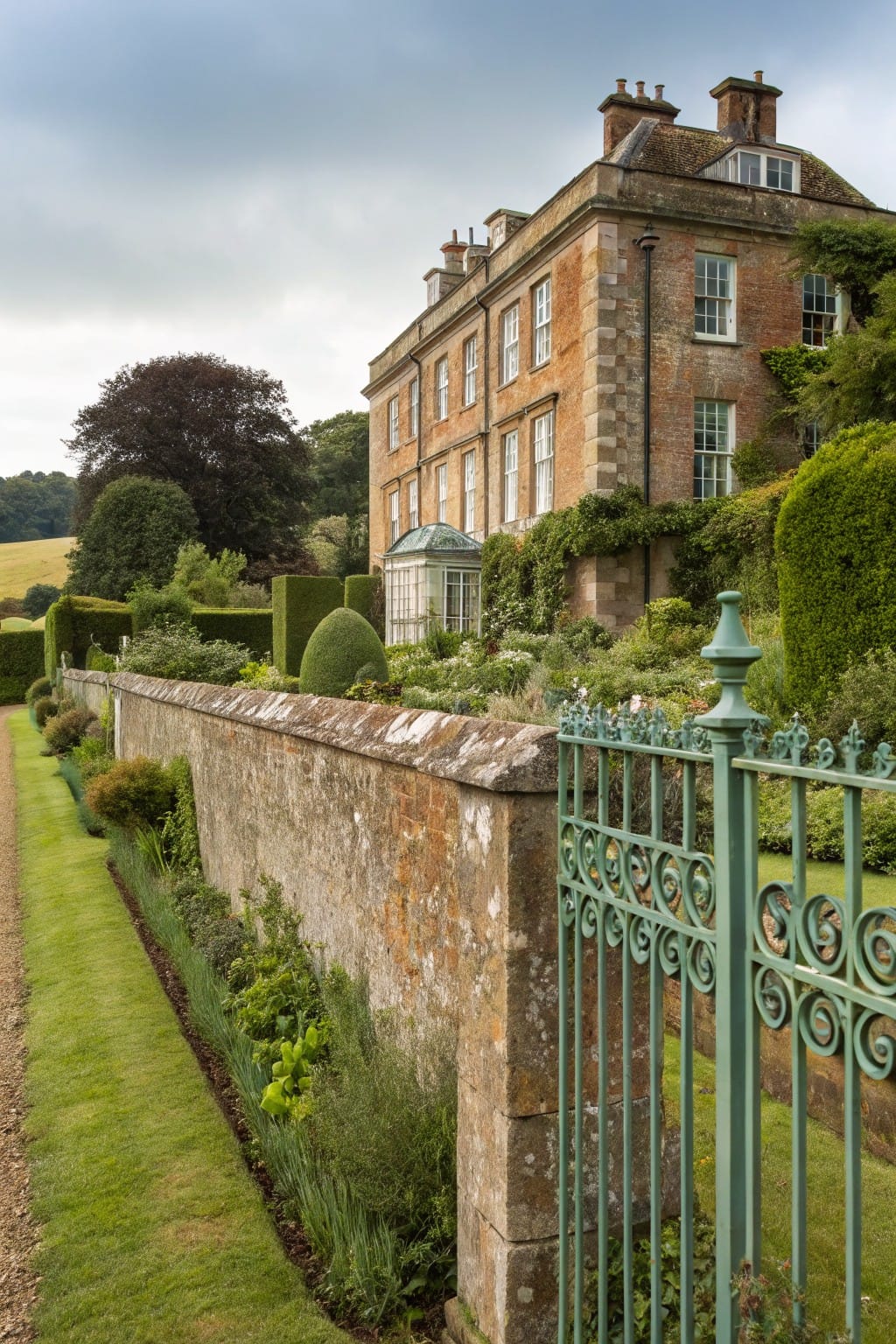
One straightforward way to define a garden path is with a low stone wall topped by simple iron fencing. This setup keeps things neat without blocking the view. The aged stone gives a solid base, and the iron adds a touch of pattern that fits older homes. Plants tuck in along the bottom edge, softening it just enough.
It works best around traditional houses or cottages where you want some structure in the yard. Use reclaimed stone if you can find it, and paint the iron a color like green to blend with the garden. Skip it on modern lots, though. It can feel too fussy there.
Wooden Slat Fence with a Bench
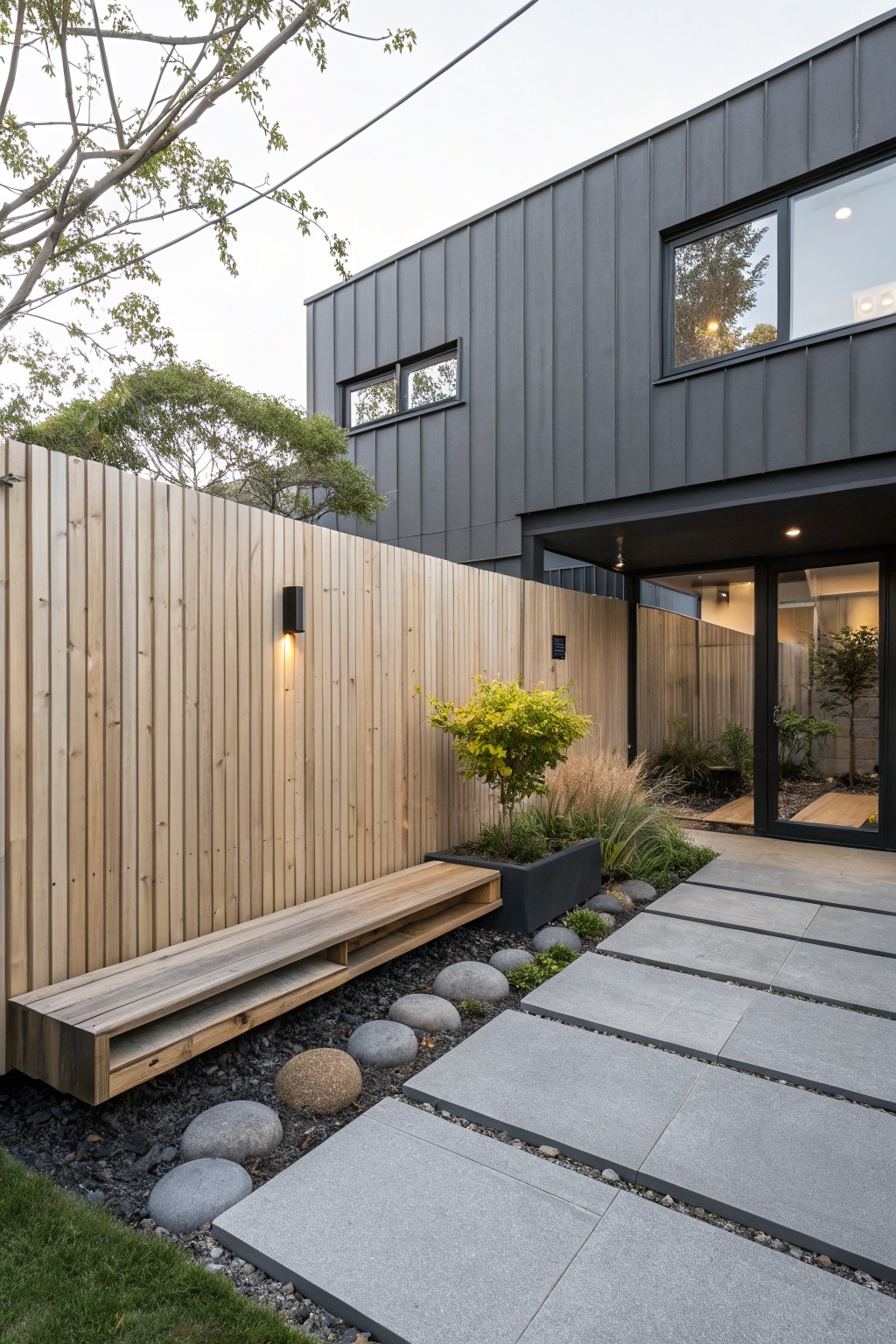
One nice touch here is the simple wooden slat fence paired with a bench right along it. The light timber slats give good privacy without blocking light or air. And that bench makes the spot useful from the start. Folks walk by and see a place to sit, which feels welcoming.
You could add this to a side yard or along a path to the back gate. It works well in smaller gardens where space is tight. Use cedar or similar wood that weathers nicely. Just make sure the bench is sturdy enough for regular use, and maybe add a light like the one on the fence for evenings.
Trellis Fence with Climbing Vines
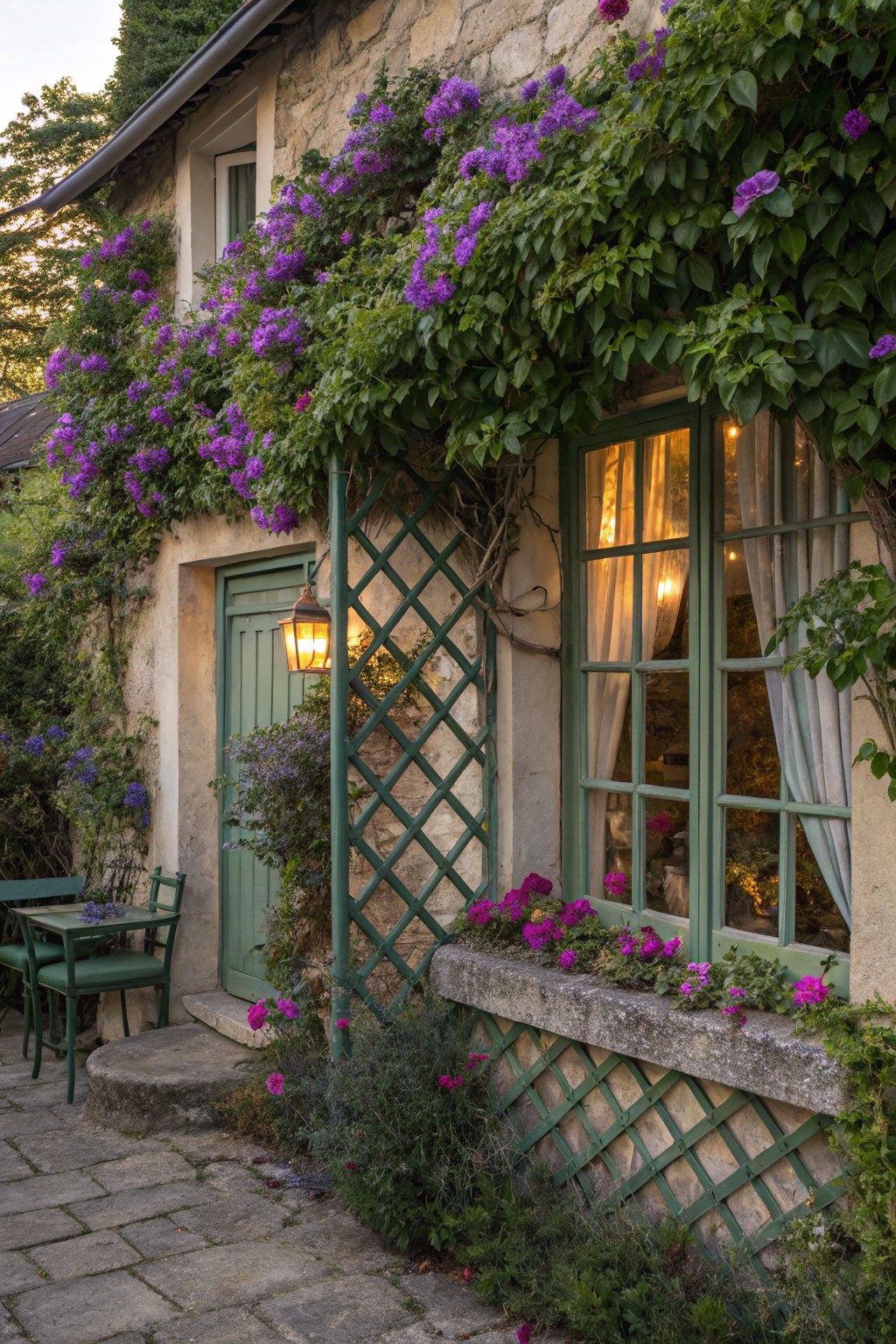
A green lattice trellis makes a great garden fence when you let climbing vines take over it. In this setup, purple flowers cover the whole thing and spill onto the stone wall nearby. It gives your yard that old cottage feel without much work.
Put one of these by your back door or along a path in a side yard. It suits stone or brick houses best. Pick sturdy vines like clematis, and train them up early so they fill in quick. Just check the posts stay solid each year.
Stone and Wood Garden Fence
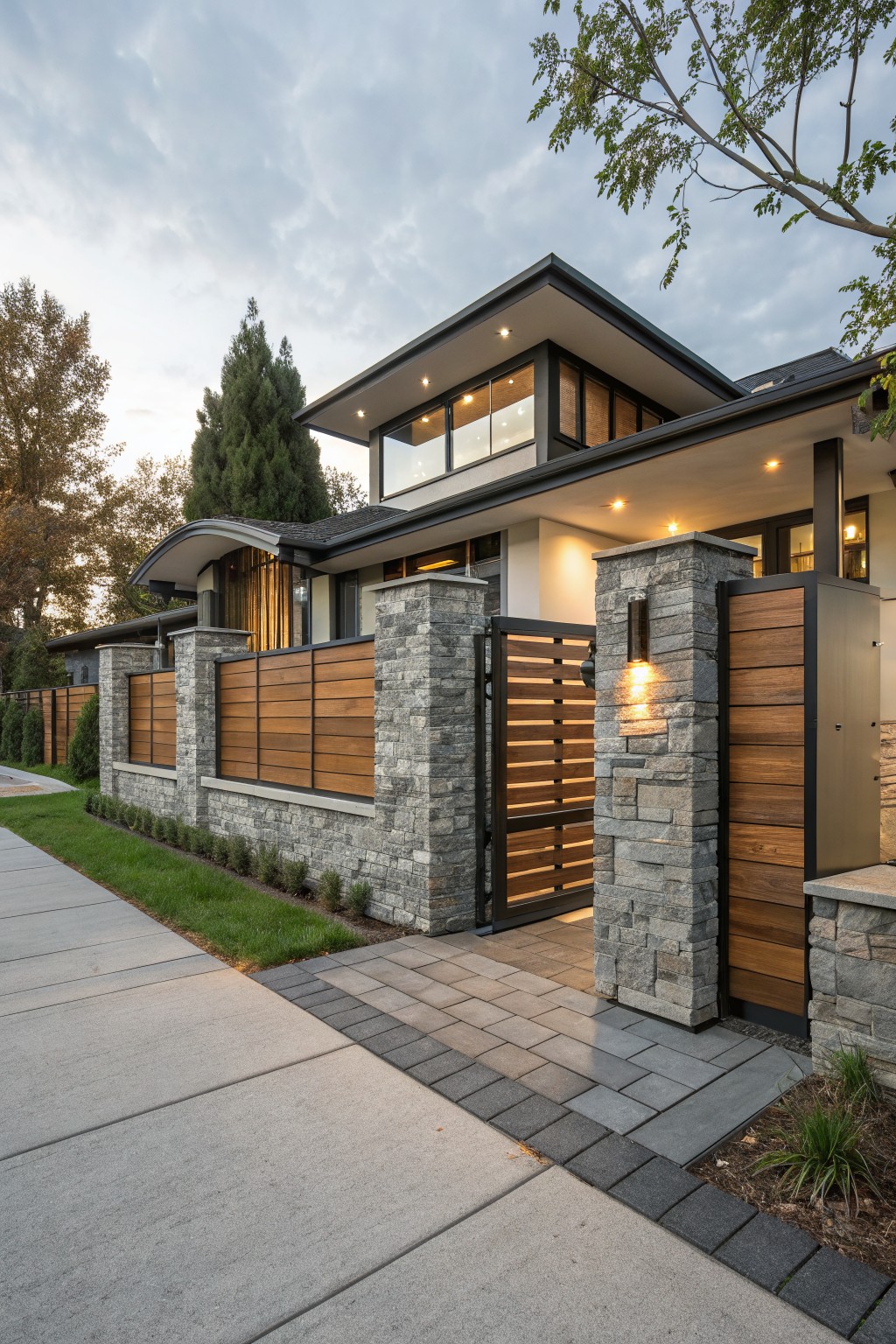
This garden fence stands out with its mix of rugged stone pillars and clean horizontal wood slats. The stone gives it a solid base that feels permanent. Wood slats add a warmer touch without hiding the yard completely. A simple metal gate fits right in. It’s a practical way to define your space while keeping some openness.
You can pull this off on a front yard along the street or side property line. It suits modern homes or even traditional ones with a fresh update. Use local stone for less cost and wood like cedar that holds up outside. Just make sure the posts are set deep for stability. Skip it if your yard is super small. The look grows on you over time.
Bamboo Fences for Backyard Privacy
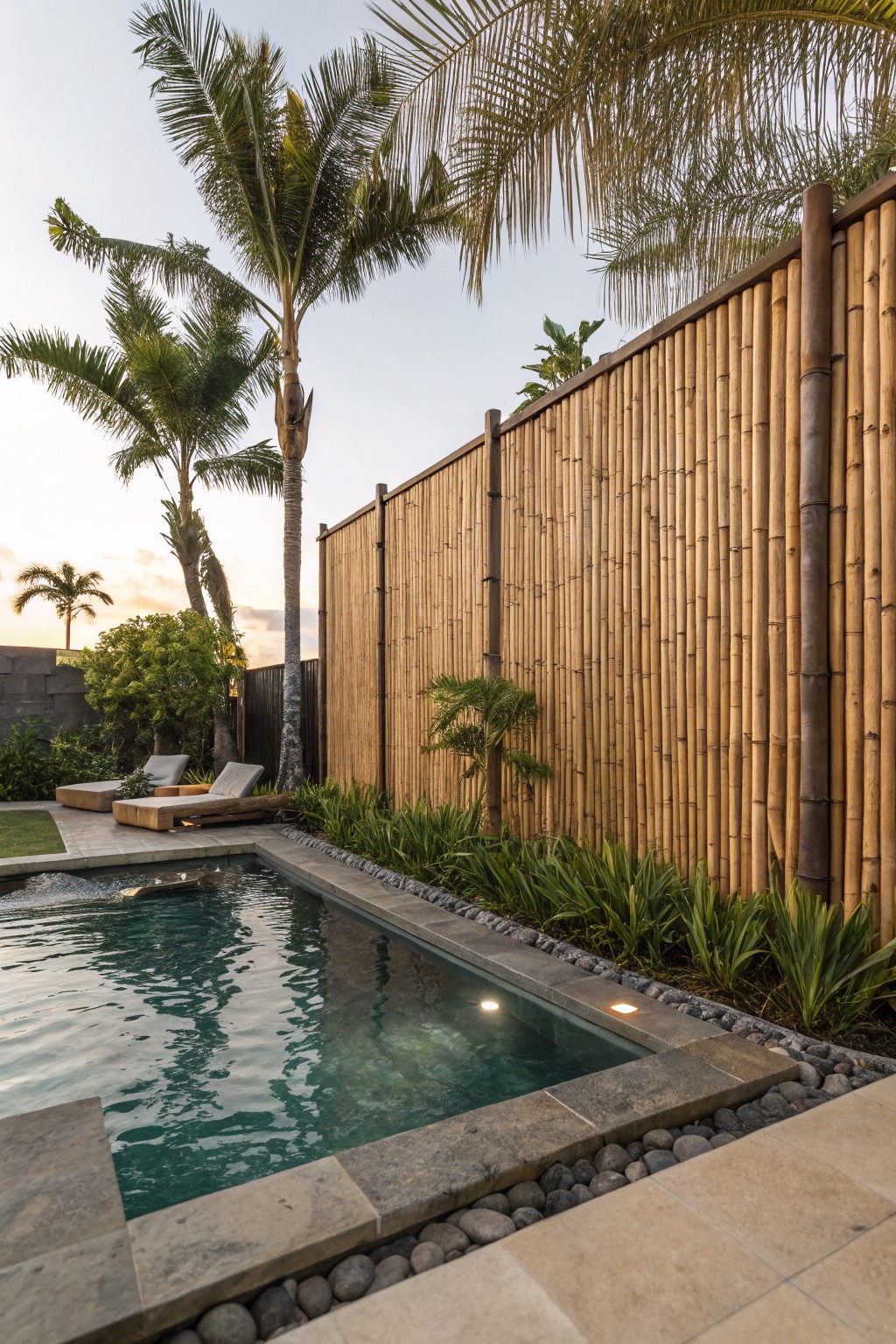
Bamboo fences make a great choice for backyard privacy. They stand tall and block views without shutting out the light or breeze. Here, the fence lines the pool area nicely. It blends right in with the palm trees and plants along the base.
You can use these fences around patios or pools where you want some seclusion. They suit warm yards with tropical touches best. Panels are simple to put up, and they weather well outdoors. Seal them now and then to keep them looking good.
Garden Fence from Painted Mini Doors
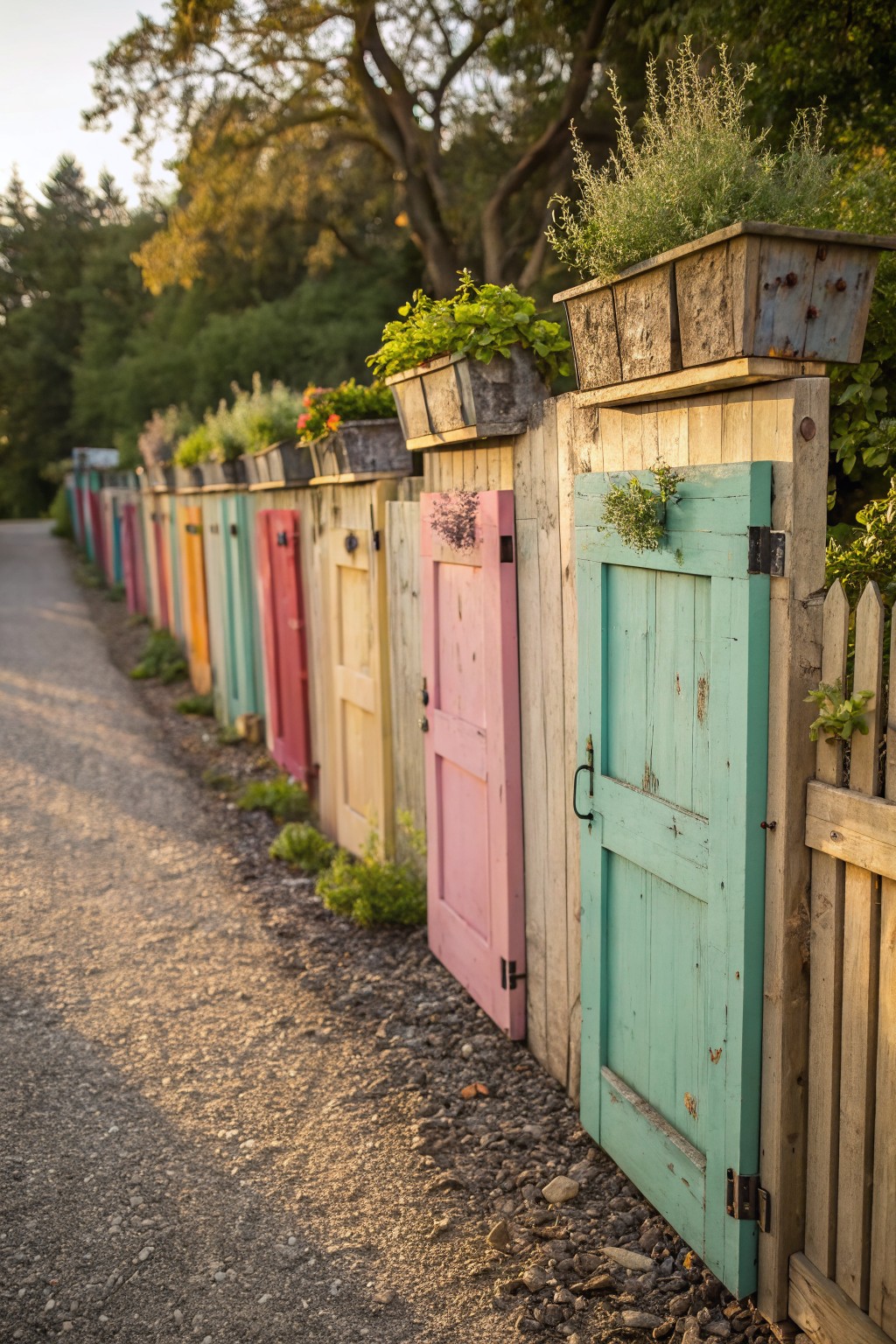
This fence idea uses small wooden doors painted in cheerful colors. Set side by side along a path, they turn a plain boundary into something playful. The mix of pinks, blues, and greens stands out without trying too hard. Herbs spilling from planters on top make it feel lived-in and green.
Try it in a backyard walkway or around a veggie patch. It fits cottage gardens or casual yards best. Source old doors from salvage yards, paint them up, and add simple boxes for plants. Seal everything against weather, though. Keeps the charm going year after year.
Laser-Cut Wooden Garden Screens
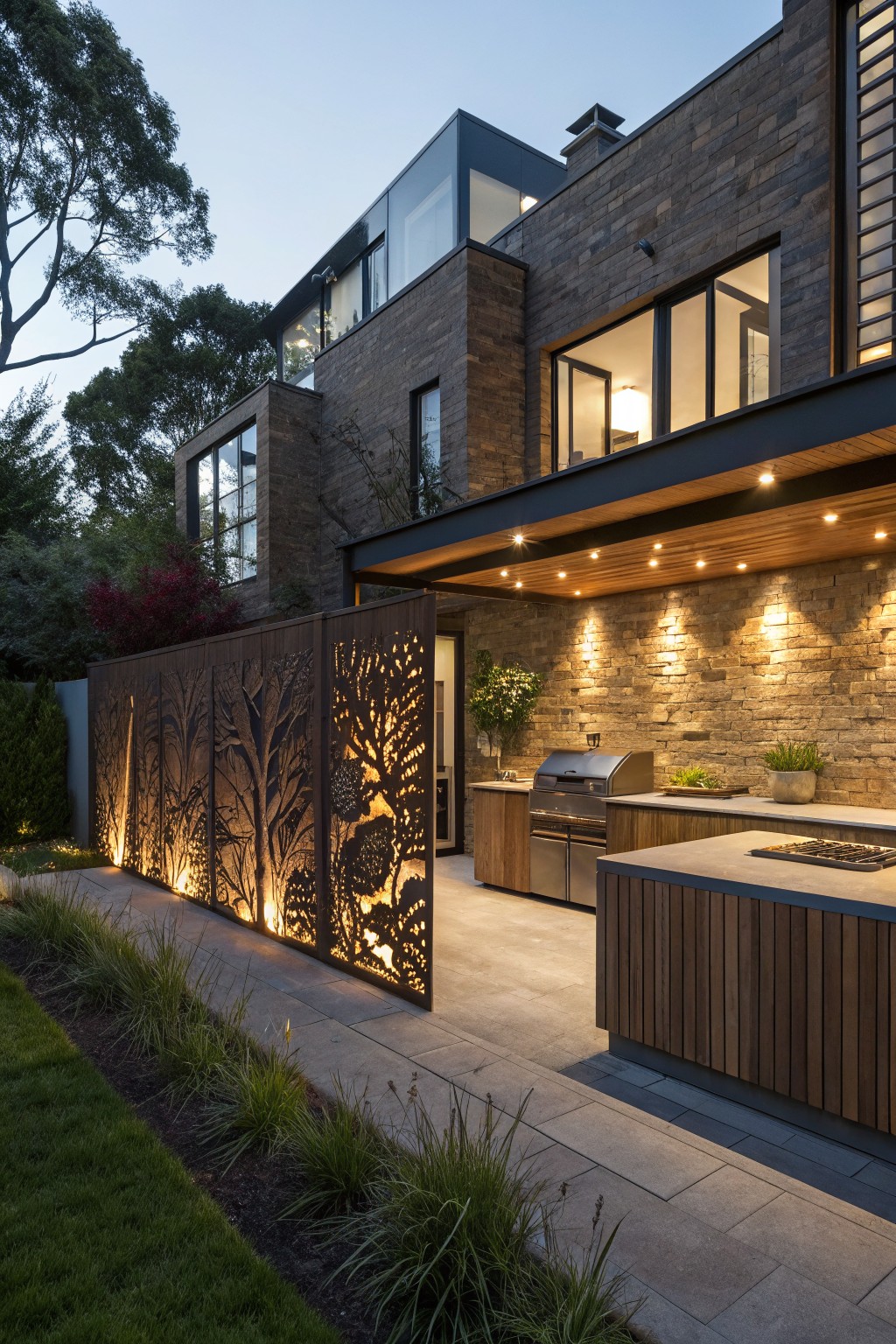
These wooden screens cut with tree and plant patterns make a plain fence into something special. The real trick is the lighting behind them. At dusk it lights up the cutouts and casts shadows that look like a forest. It turns a simple boundary into backyard art without much work.
Put these along a patio or yard edge where you want some privacy but not a solid wall. They work well next to a grill area or path, like here with brick and wood tones. Plant low shrubs behind for extra shape in the light. Just make sure the lights are low voltage and weatherproof.
Vertical Succulent Planters on Walls
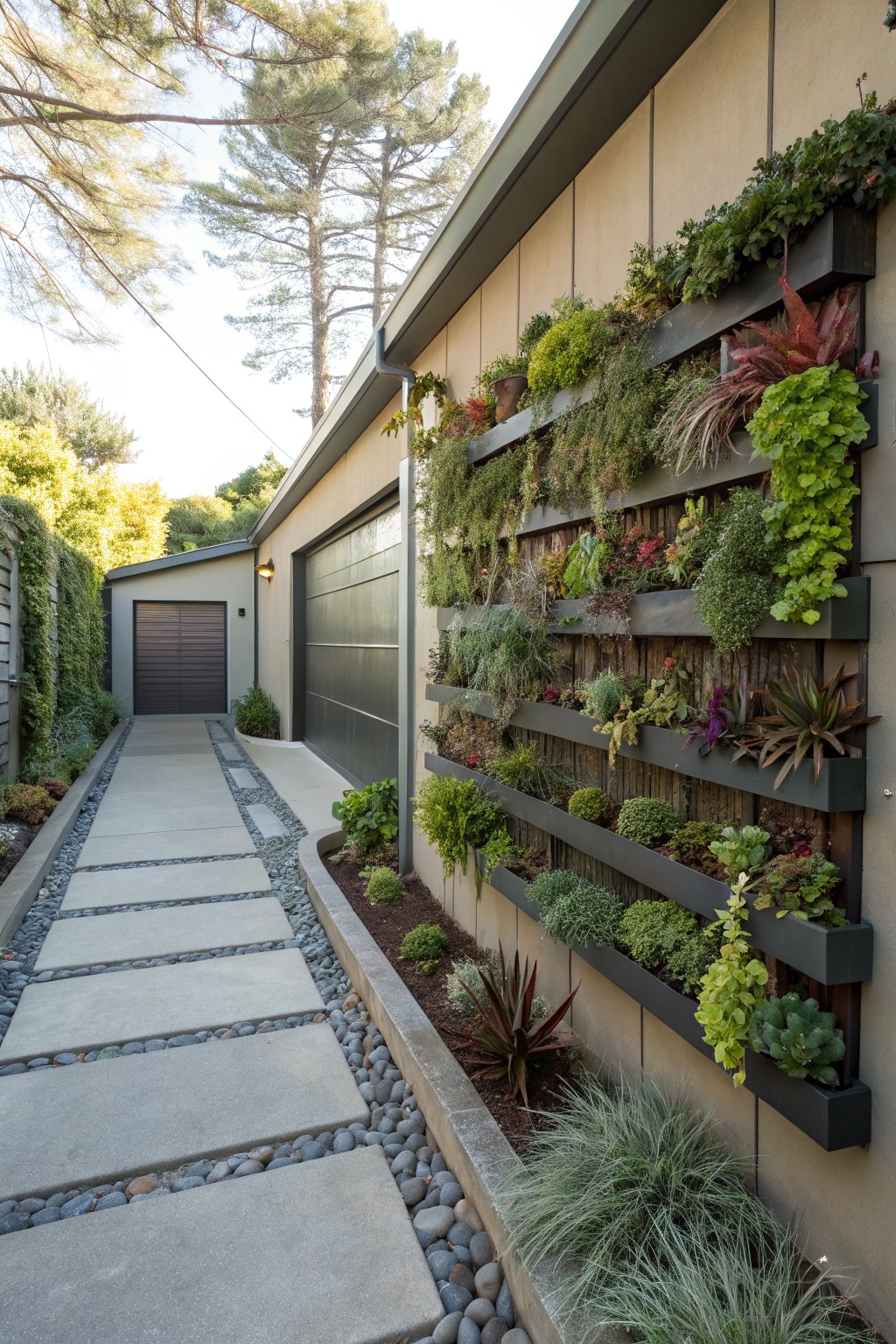
A good way to green up a blank exterior wall is with modular planters like these black metal ones loaded with succulents. They fit right along a side path to the garage and make the walk feel more like a garden stroll. No need for much ground space. Just plants spilling out at eye level.
Try this on a modern house or anywhere with a narrow walkway. Succulents hold up in sun and stay low fuss. Mount them sturdy, add drip irrigation if you want, and pick a wall that gets some afternoon shade. Works in small yards too.
Stone Pillars at the Gate
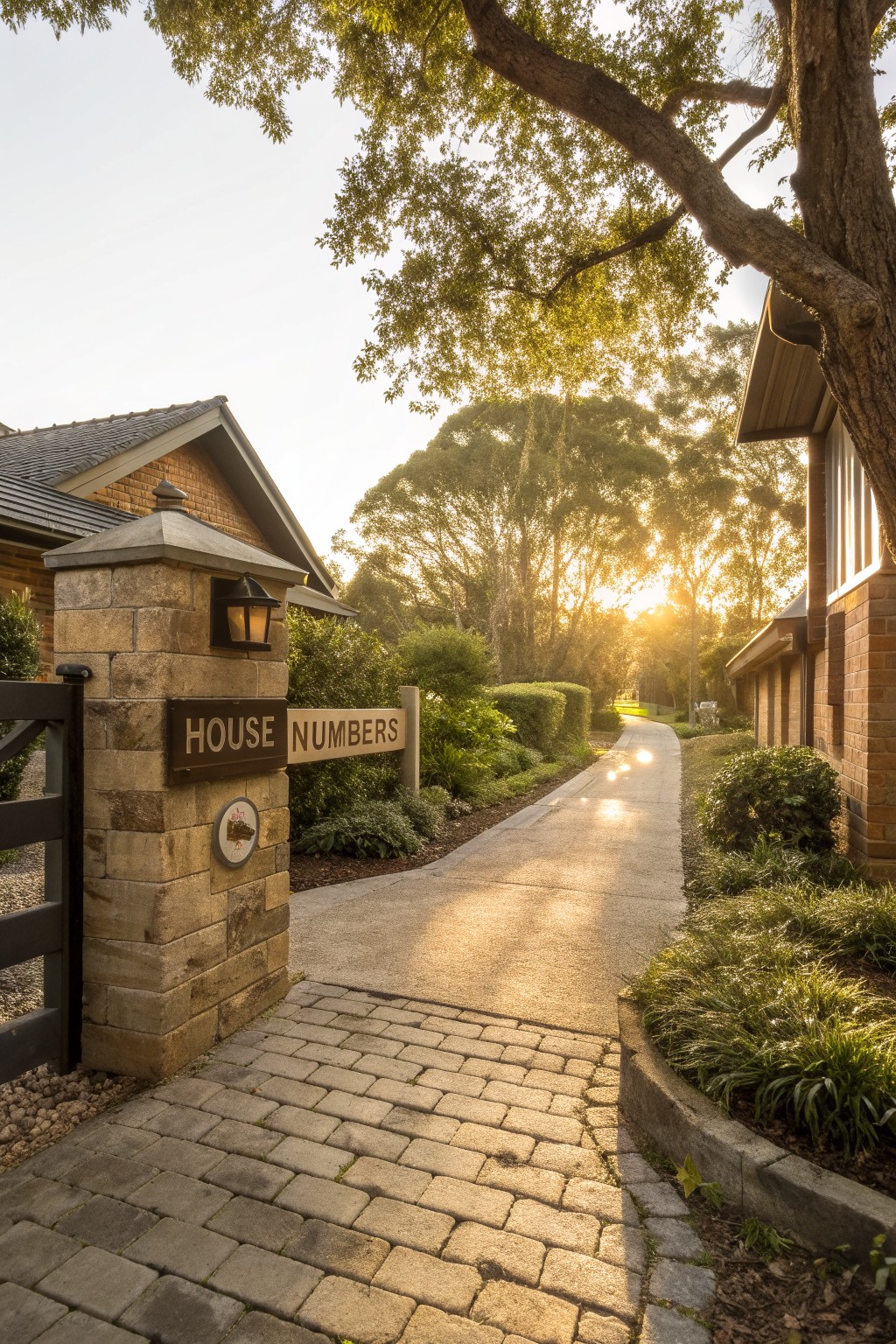
Stone pillars like this one make a driveway entrance feel solid and established right away. They stand tall with a simple black gate between them, and that built-in lantern adds a practical touch for evenings. The house sign fits right on the pillar too, keeping everything neat without extra posts.
These work best on bigger lots where you want to define the property line without blocking the view. Pair them with native trees and low hedges along the path for a natural flow. They suit brick or shingled homes in suburban spots. Just keep the stone rough textured so it blends with plantings.
Lattice Screens Around Outdoor Patios
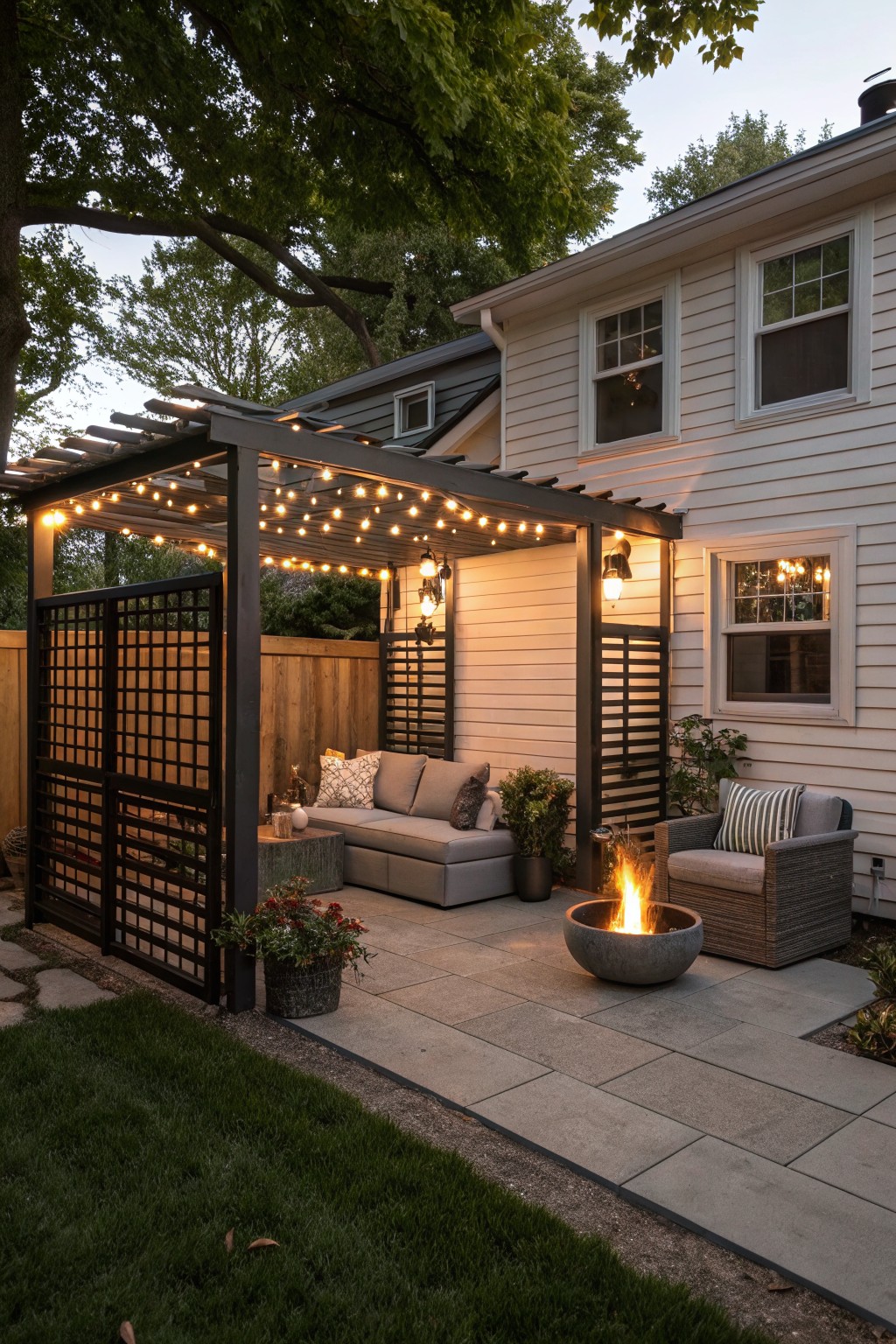
One simple way to add privacy to a backyard patio is with tall lattice screens. These black metal panels fit right into a pergola frame, blocking views from neighbors while letting in some light and air. They turn an open patio into a cozy spot without feeling closed off. In this setup, the screens run along the sides and back, pairing nicely with a low wood fence behind.
You can use them on any size yard, especially if you want to screen a seating area or fire pit. They work best against a plain house wall or fence. Go for powder-coated metal to hold up in weather, and keep the color dark to match modern or simple gardens. Just make sure the panels attach securely so they don’t wobble in wind.
Wrought Iron Fences for Formal Gardens
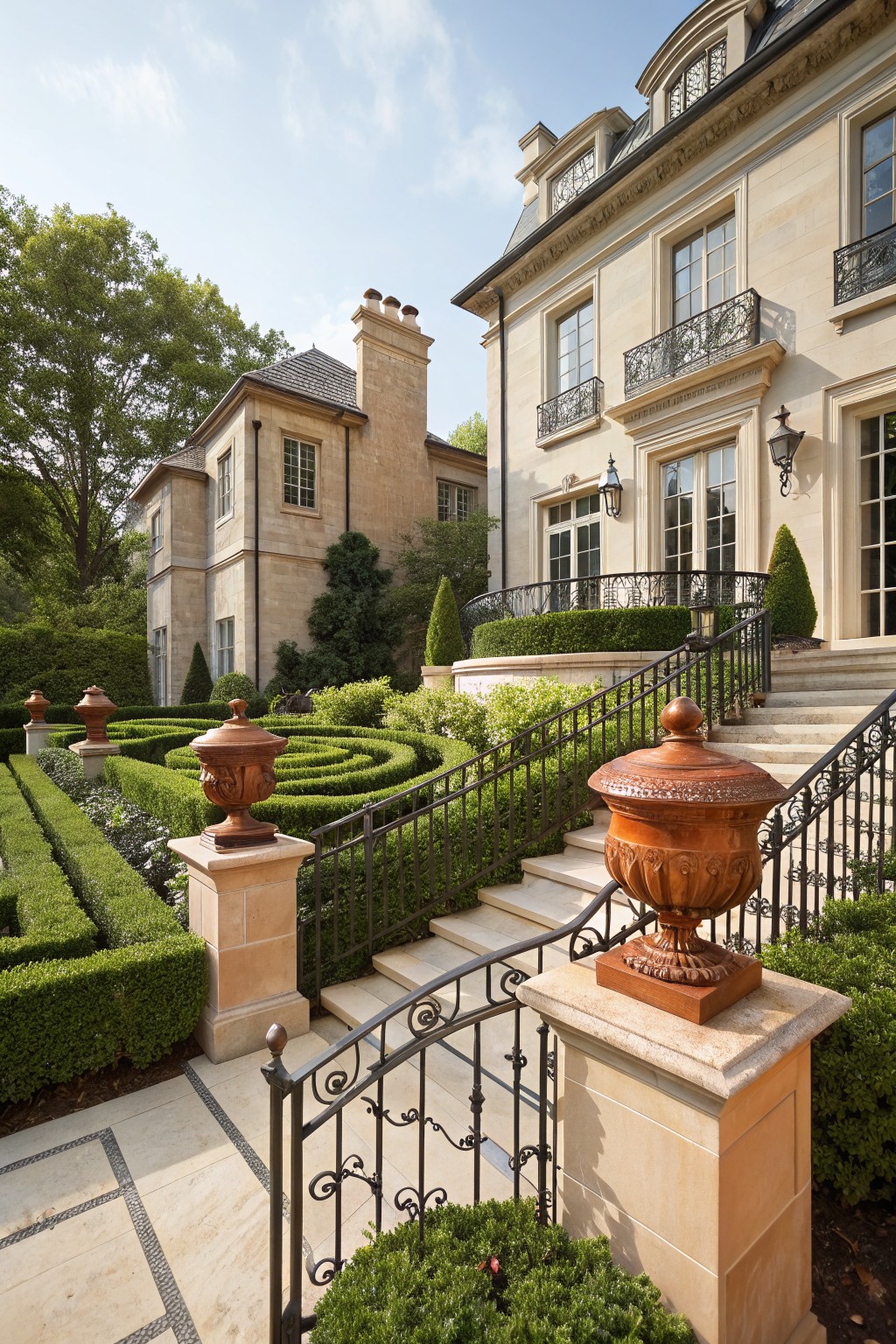
Wrought iron fences make a simple border for structured gardens like this one with its boxwood hedges. The scrolled black iron follows the curves of paths and stairs without hiding the plants. It adds a touch of old-world style that fits right in with stone steps and pedestals.
Put these fences around entry gardens or along walkways where you want definition but not bulk. They suit traditional homes with limestone or brick. Top the posts with large urns like the terracotta ones here for more presence. Just keep the height low so it stays open.
Concrete Block Walls with Built-in Planters
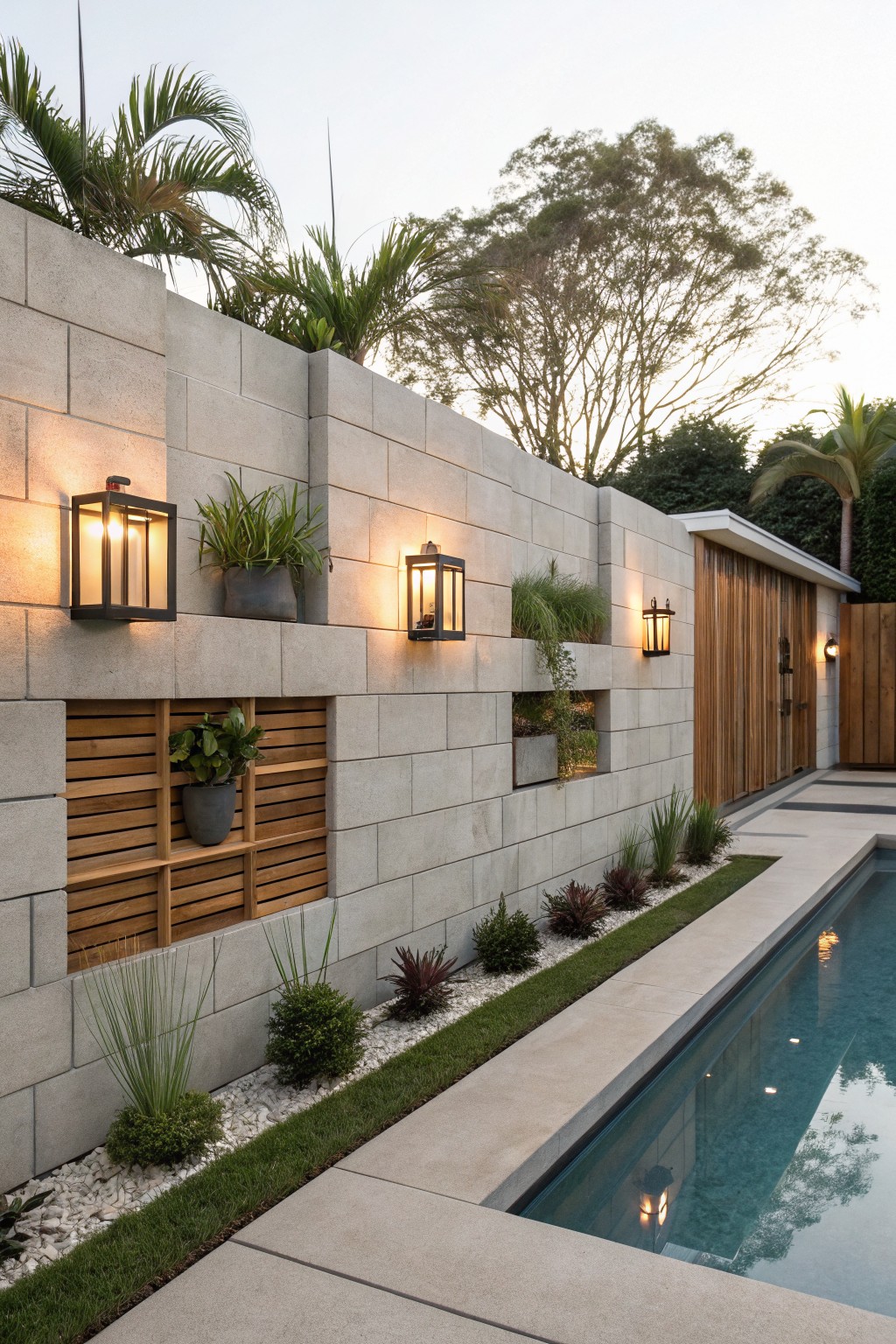
A solid concrete block wall makes for good backyard privacy, especially when you build in spots for plants. The gray blocks here have recesses that hold pots of greenery, breaking up the plain surface in a natural way. Wall lanterns tucked into the design light it up nicely come evening.
This setup fits yards with pools or patios that need screening from neighbors. Go for blocks in a light color to keep things from feeling too heavy. Choose tough plants like grasses or trailing types that won’t mind the exposure. Skip it if your space is super small… it needs room to breathe.
Vine Covered Garden Arbor
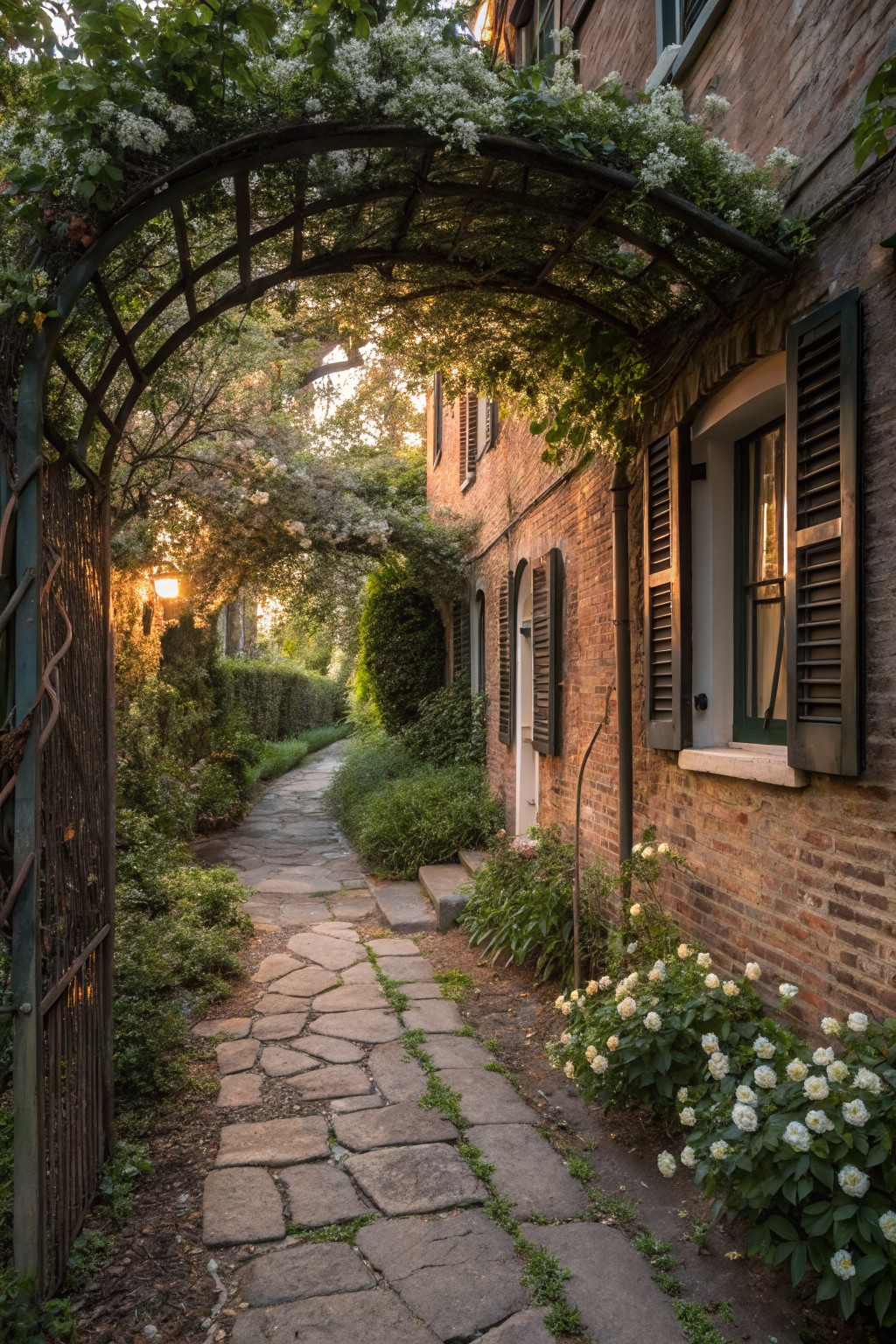
A simple wrought iron arbor like this one, draped in white flowering vines, makes a plain garden path feel special right away. It pulls your eye down the walkway and softens the brick wall behind it. Folks notice how the vines weave through the metal, turning what could be just a gate into part of the garden.
This works best along a side path or backyard entry, say on a cottage style home with some age to it. Pick climbers that bloom a long time, like clematis, and train them up each spring. Pair it with a stone or gravel path… keeps things neat without much upkeep. Just trim back the vines now and then so they don’t take over.
Frequently Asked Questions
Q: Can beginners tackle these fence ideas without messing up?
A: Start with the pallet or bottle fence options. They use recycled stuff you scrounge up easily. Grab a friend for a weekend and follow simple online sketches.
Q: How do I make a fence match my garden’s vibe?
A: Look at your plants and colors first. Pick woven willow for a natural cottage feel or metal panels for modern edges. Test a small section before going all in.
Q: What’s the best way to keep critters out with these pretty fences?
A: Add chicken wire or mesh behind slats on ideas like the vertical garden fence. Bury it a foot underground to stop diggers. Pets stay in too.
Q: Do these hold up in rainy areas?
A: Go for cedar or treated lumber on wood designs. Seal metal ones yearly with rust-proof paint. And skip fabric panels if you get heavy storms.
