

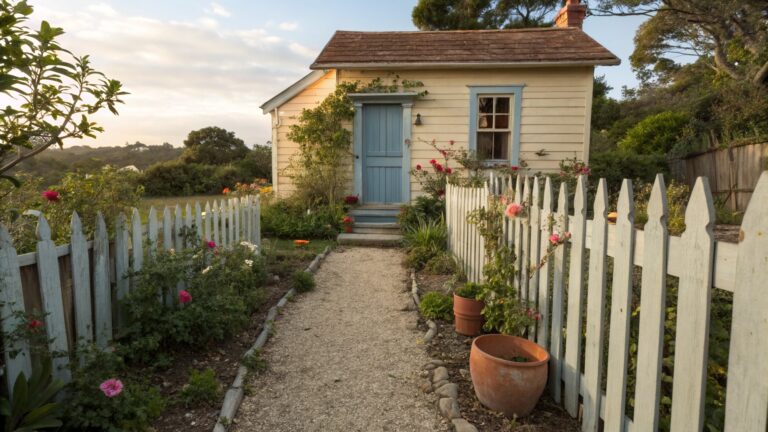
I’ve spent enough time tending my own yard to know a fence makes or breaks the garden’s vibe. Plain ones that match every neighbor’s lot rarely spark much interest, while those that nod to local stone or salvaged wood feel right at home. I judge a good fence by how it weathers alongside the plants, gaining character instead of looking out of place after a season. Overly fussy designs with too many curlicues tend to fight the natural flow and fade fast. One with unexpected glass accents stopped me cold; I’d steal that for my back path.
Weathered Blue Picket Fence
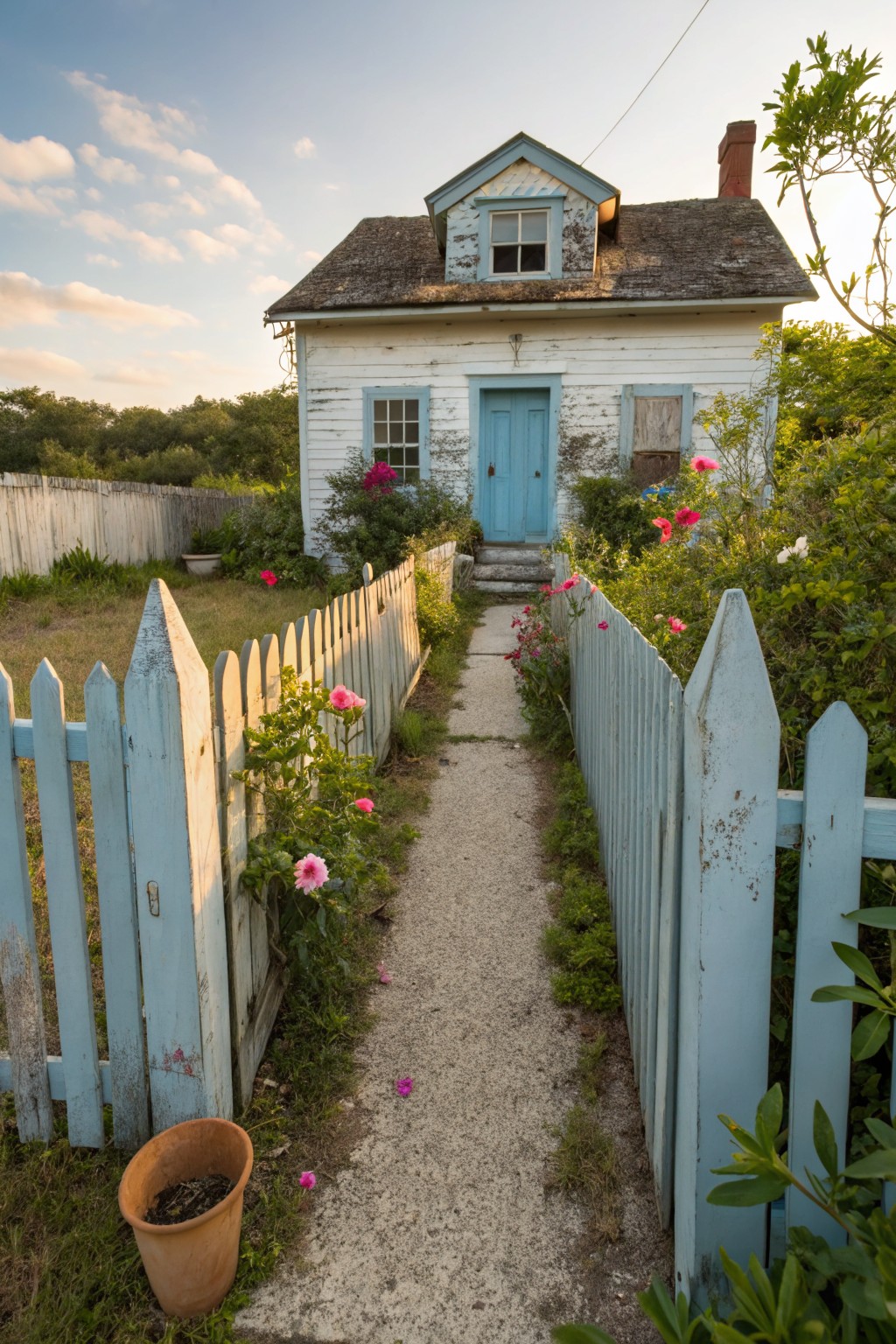
A picket fence like this one, painted in a faded blue, gives any garden path that lived-in charm. The pointed tops and spaced slats let flowers peek through, and the weathering keeps it from looking too new or stiff. It’s simple but pulls the eye right to the entry.
Put it around a cottage or older home with a gravel walkway. Use climbing roses or similar plants to trail over the fence for more color. Skip it on big modern lots, it suits cozy yards better. Just let the paint wear over time for the best look.
Vertical Pallet Gardens
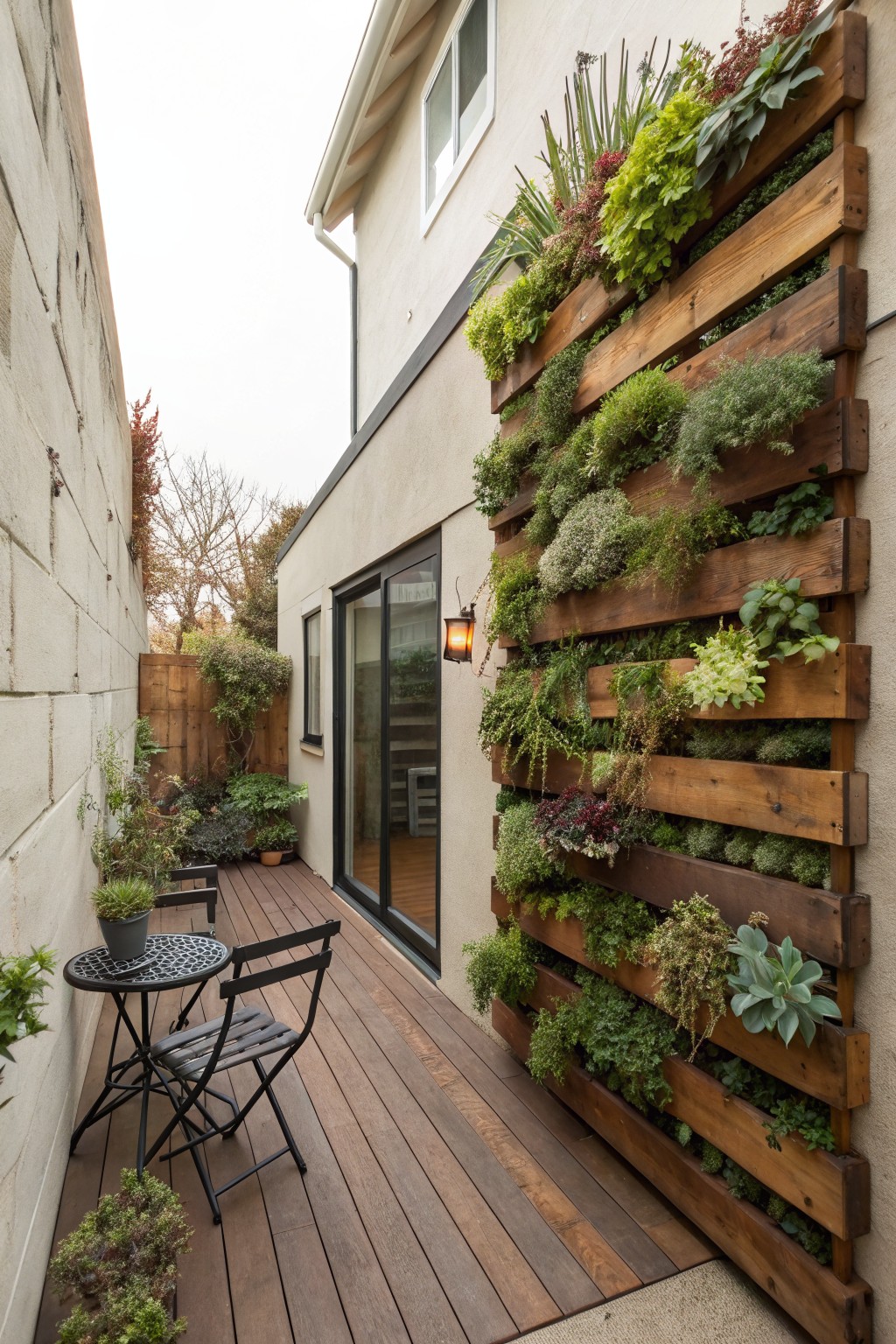
A vertical garden built from wooden pallets turns a plain fence or wall into something full of life. You just stack the pallets, line them with landscape fabric, fill the openings with soil, and tuck in succulents or herbs. It covers a lot of space fast, like on this tall side wall, and keeps the ground clear for walking or a deck.
This idea shines in narrow yards or spots with no room for beds. It suits any home style, from modern to fixer-upper. Pick sturdy pallets, secure them well, and choose drought-tolerant plants to cut down on watering.
Wrought Iron Railings on Stone Walls
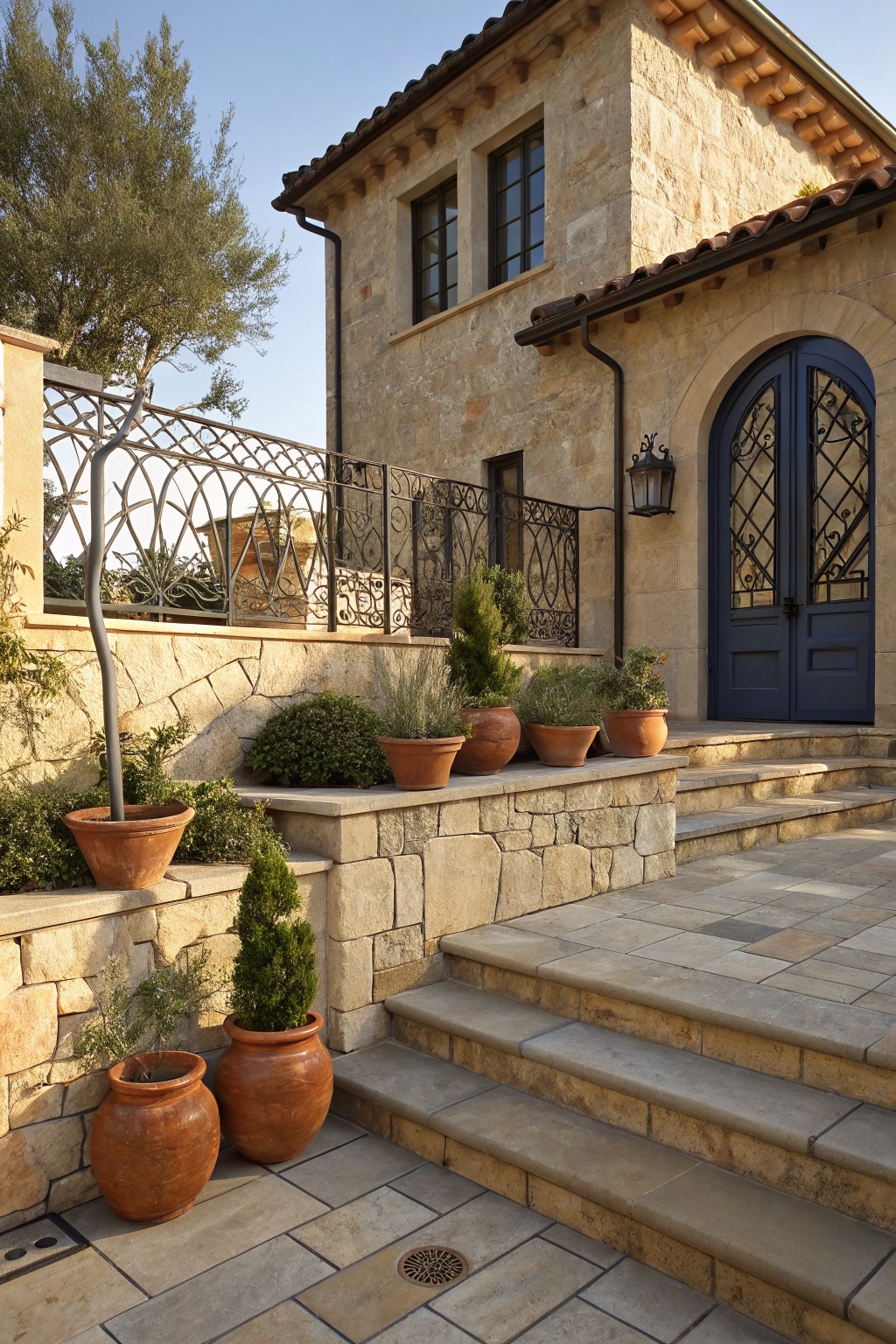
Wrought iron railings like these work great along stone retaining walls. The scrollwork pattern adds some fancy detail to a plain stone edge. It keeps things safe on slopes or steps but still looks right at home with rough stone and plants tucked in below.
Put this kind of railing where you have a drop-off in the yard or along entry steps. It fits older stone houses or places with a bit of Mediterranean style. Just match the finish to your door hardware so it all ties together. Watch the scale though. Too tall and it overpowers the plants.
Rustic Split-Rail Fences
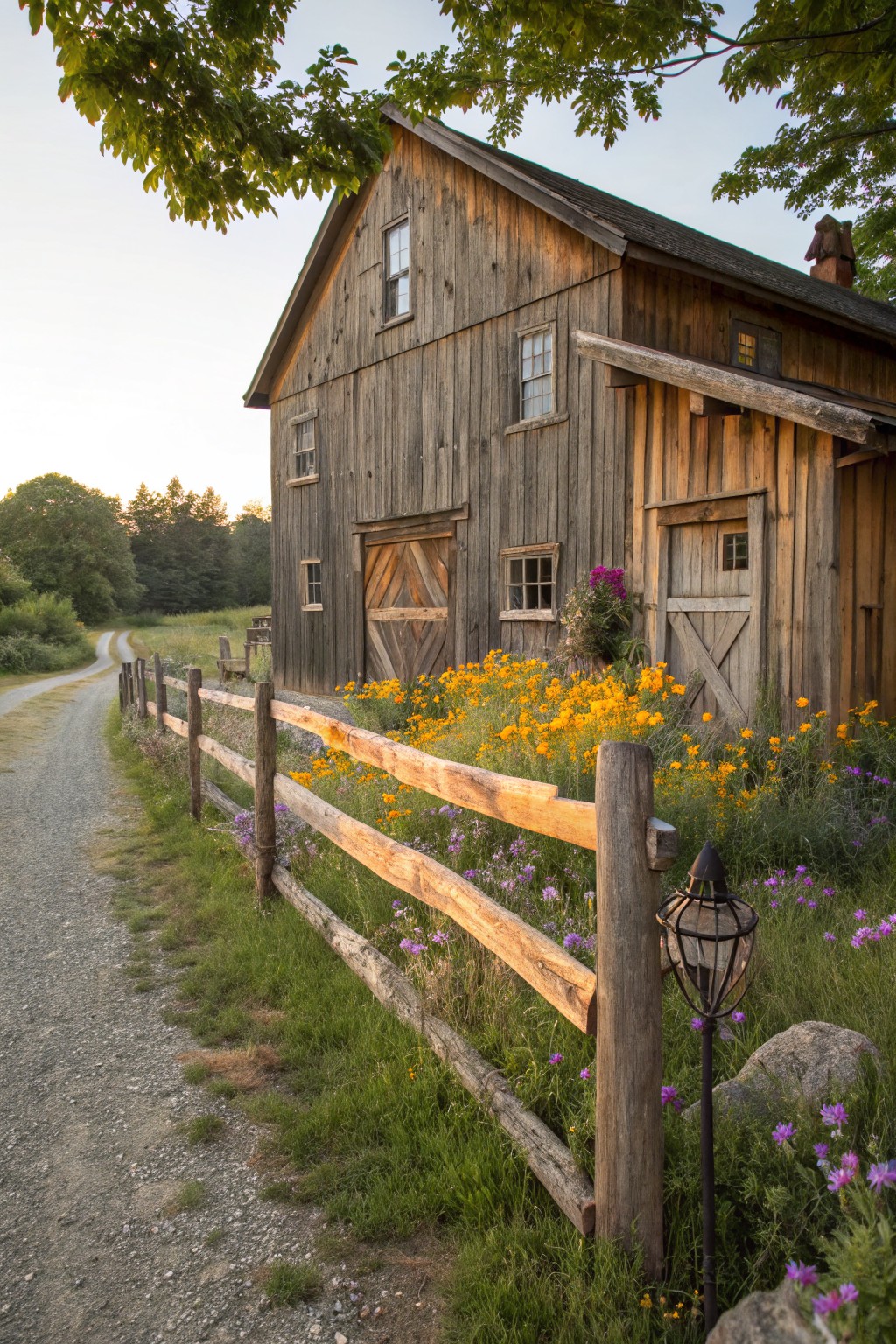
Nothing says country charm like a simple split-rail fence. These wooden fences have that easy, weathered look that fits right into a rural yard or even a suburban garden trying for a relaxed feel. In this setup, the rough rails let wildflowers push through and spill over the top, making the fence feel alive instead of stiff.
You can put one along a driveway or path to guide folks to your door without blocking the view. They work best around older homes or farmhouses, or anywhere with meadow plants like cosmos and phlox nearby. Just keep the rails spaced enough for flowers to grow, and skip paint to let the wood age naturally.
Slatted Metal Fences

Slatted metal fences like this one make a garden entry feel secure yet open. The vertical slats let light filter through and offer glimpses inside, which keeps the space from feeling too boxed in. Paired with concrete walls, it gives off a clean, modern vibe that suits simple yards.
You can use these fences around driveways or side yards on homes with straight lines and neutral colors. They hold up well in sun and hold paint if you want a fresh look now and then. Just match the slat spacing to your plants so nothing pokes through awkward. Works fine in dry areas too.
Slatted Wood Fences for Beach Paths

Slatted wood fences like this one add a simple touch to coastal gardens. They line the sandy path without blocking the view, letting sea grass sway right up to the slats. It’s a natural way to define a walkway that feels part of the dunes.
Put these fences along paths to the beach or side yards where you want to control drifting sand. They fit relaxed seaside homes best. Go for rough-cut cedar or pine. It weathers to gray over time.
White Picket Fence Garden Gate
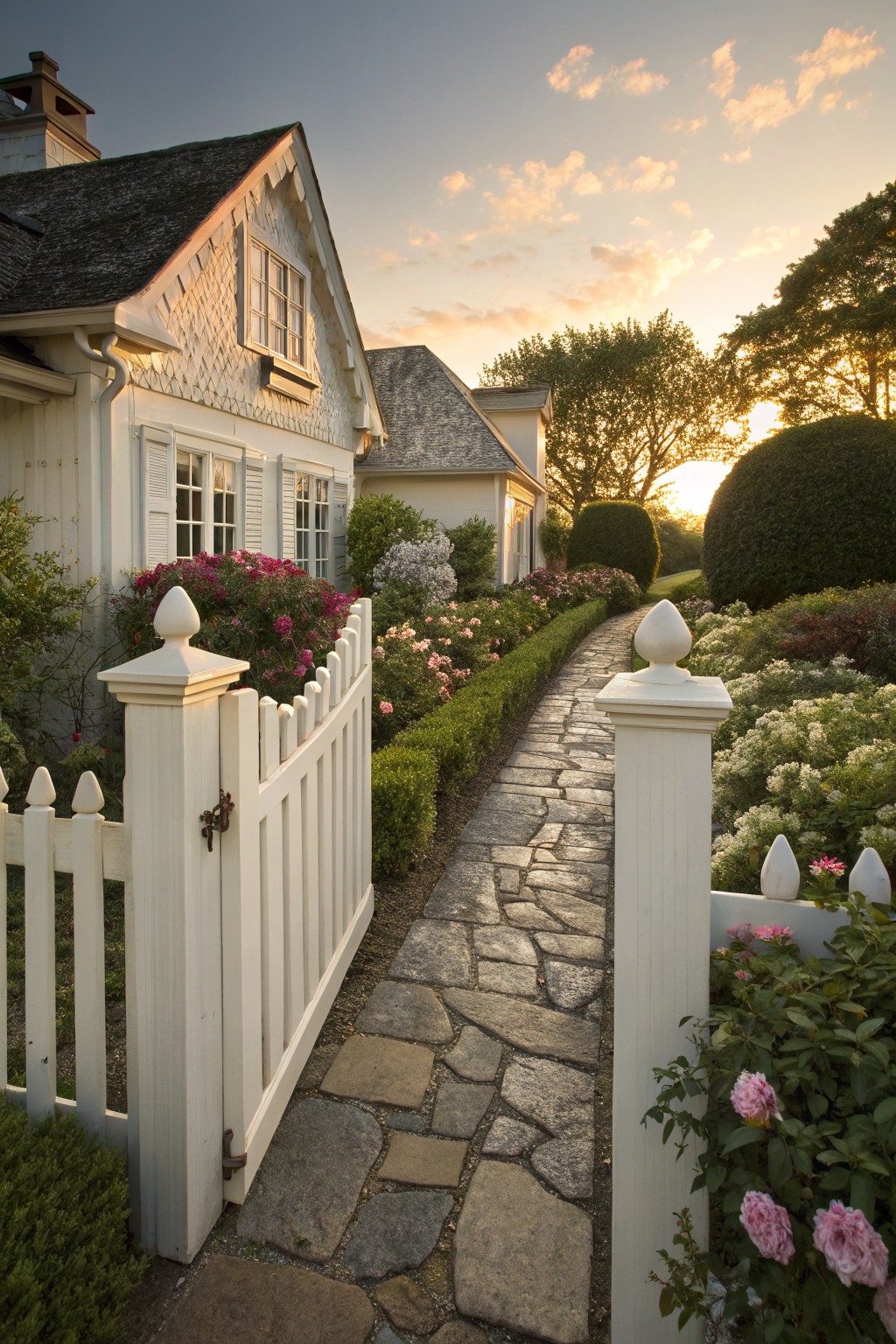
A white picket fence gate like this one makes a garden feel friendly right away. The simple pickets and those rounded finials on the posts give it a touch of old-fashioned charm. It stands out because it quietly marks the edge of the yard while letting flowers spill over naturally.
Put one at the start of a stone path in a side or front garden. It suits cottage homes or neat suburban lots with room for roses and low hedges along the base. Pick durable wood, paint it fresh every couple years, and keep the latch easy to reach.
Iron Arch with Climbing Roses
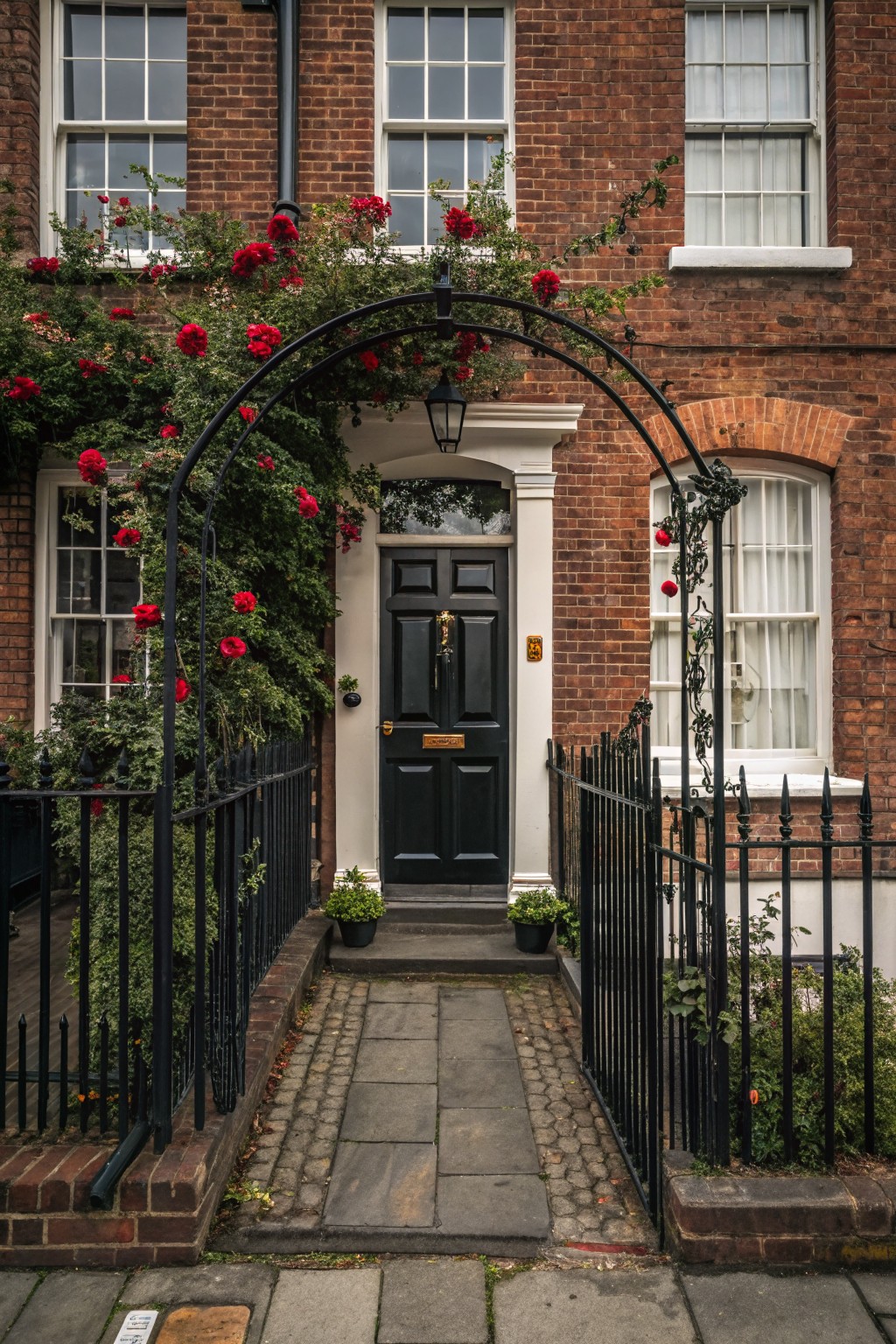
An iron arch trellis draped in climbing roses gives your front entrance real character. The black metal holds up those heavy red blooms without trouble, and it fits right over a simple gate like this one. On a brick house, it adds color that lasts through the season.
This setup suits older townhouses or semis with tight front yards. Pick a sturdy arch about eight feet tall, paint it black to match fences, and plant repeat-flowering roses at the base. Train the canes up young, then let them go wild. Just trim back in winter to keep it neat.
Glass Fencing Around Pools

Clear glass fencing makes a pool area feel open and part of the yard. It provides safety without cutting off the view to the grass or plants nearby. Folks like how it keeps the space looking bigger and more connected to the garden.
You can use this in backyards with a modern house or clean lines. It fits well next to a deck or patio, maybe with some low plants like agaves along the base. Check local codes for height and installation to keep it solid.
Colorful Painted Garden Fence

A wooden fence painted in bold vertical stripes of color turns a plain backyard boundary into something fun and lively. Those reds, blues, greens, and yellows stand out against the green plants and make the whole yard feel more welcoming. Folks notice it right away.
Paint your own fence this way if you have a simple wood one facing the yard. It suits casual homes with a bit of sun. Hang a few pots on it too. Use good exterior paint so it holds up through the seasons.
Low Stone Walls Planted with Grasses

One simple way to edge a front yard is with low stone walls filled with ornamental grasses. These walls follow the sidewalk and yard line here, holding back soil while letting grasses spill over the top. The rough stone gives a sturdy base, and the tall, wispy grasses add movement on windy days. It keeps things natural without needing a tall fence.
You can build these in any yard with a slope or just to define the edge. Use local stone for a good fit, and pick grasses that grow to about three feet tall. They suit modern homes or older ones with a fresh look. Just make sure the wall drains well so the plants stay healthy.
Wrought Iron Garden Gates

Wrought iron gates like this one give a plain white wall real character. The scrolls and arches catch your eye right away. Folks have used them for years around old Mediterranean homes. They fit right in without trying too hard.
Put one at a side entry or courtyard spot. It works best where you want some privacy but not a full solid fence. Pair it with climbers like bougainvillea that grow over the top. Keep the paint fresh, especially if it’s humid where you live.
Woven Fencing for Garden Borders
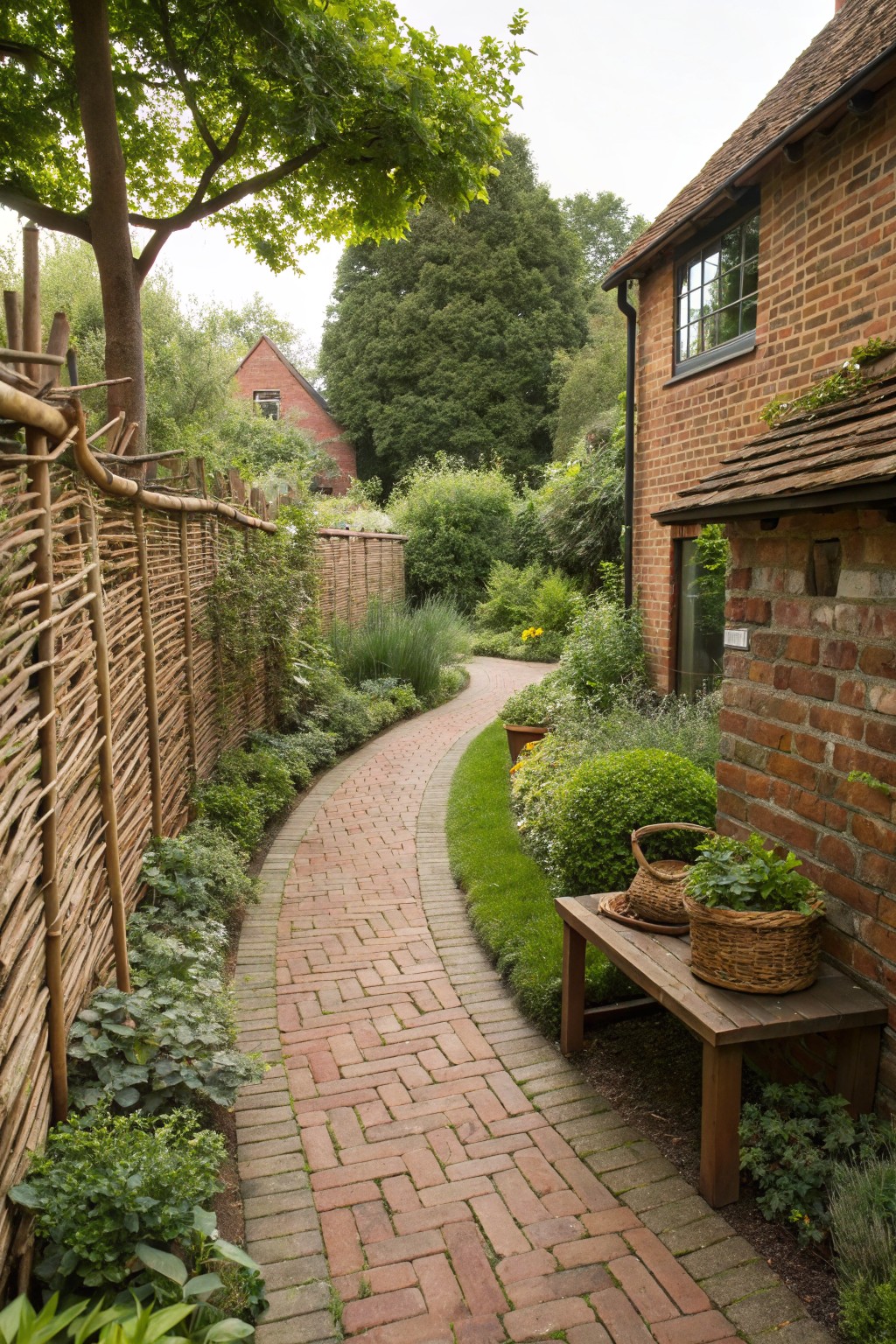
Woven fencing like this, usually from willow or hazel branches, brings a simple rustic touch to any garden edge. It fits right in with the greenery because it looks natural, not stiff like wood panels or metal. That texture softens hard lines from paths or walls, and it lets a bit of light through for a cozy feel.
Line it along winding paths or low borders where you want some privacy without blocking the view completely. It suits cottage gardens or older homes with brickwork best. Plant climbers or low shrubs at the base to help it blend even more, but check it now and then. Natural materials weather over time.
Classic White Picket Fence with Flower Borders
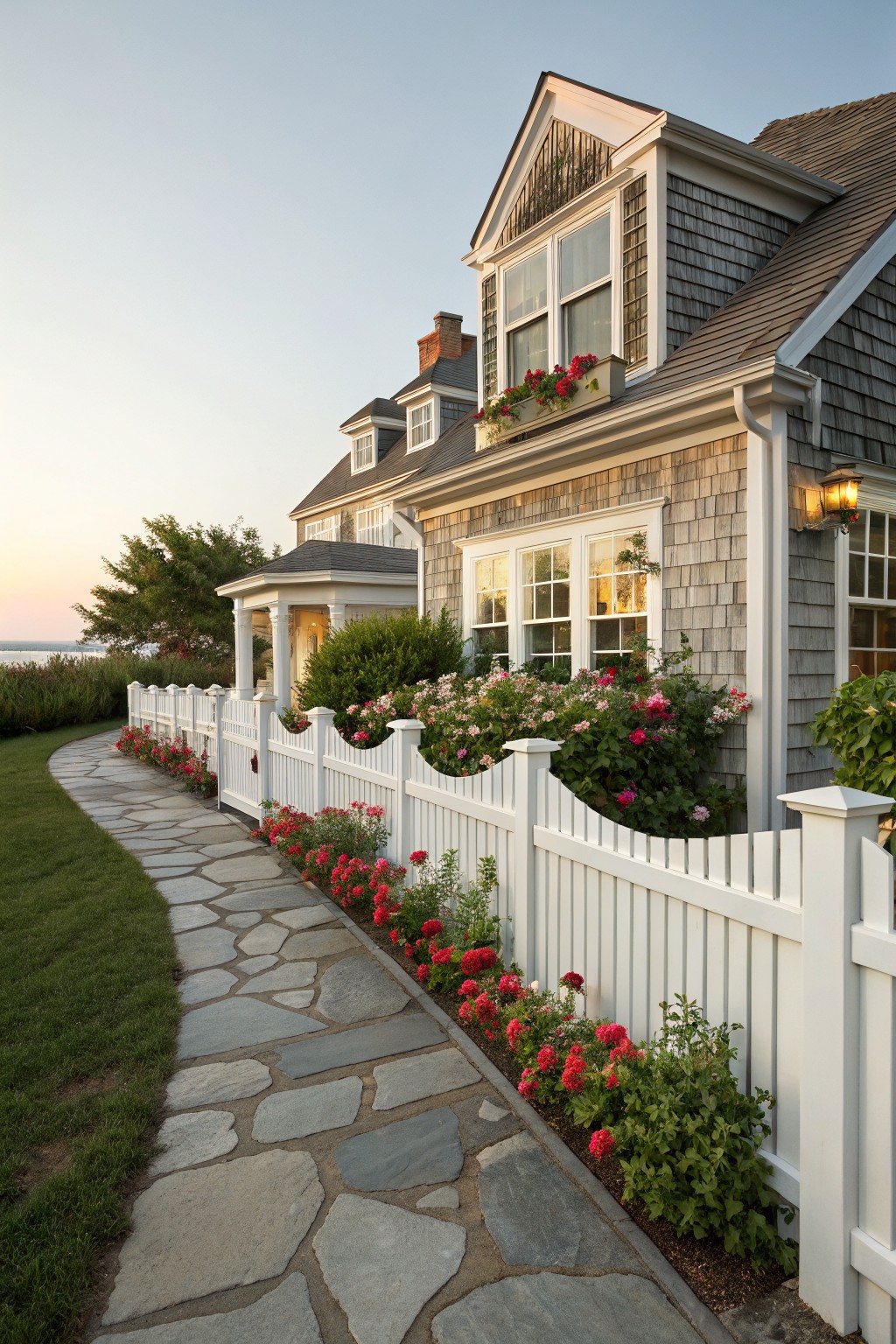
A white picket fence like this one, with its gentle scalloped top, runs right along a winding stone path. What makes it stand out is the dense band of roses and geraniums planted tight against the base. That planting softens the fence line and adds color that pops against the white wood. It’s a simple way to get that old-fashioned garden feel.
This works best in front yards or side gardens where you want to guide people toward the house entrance. Suits cottage homes or seaside spots pretty well. Pick low-growing flowers that won’t flop over the fence, and space the pickets wide enough for air to flow through. Keep paint jobs crisp to make the blooms show up even more.
Slatted Wood Fences for Backyard Privacy

A slatted wood fence like this one works great around pools or patios. The vertical slats let in some light and air but keep things private from neighbors. Here it matches the timber deck and pavilion perfectly. That natural wood tone blends right into the tropical plants too.
Try this in warmer yards where you want an enclosed feel without it looking too closed off. It suits modern or resort-style homes best. Just seal the wood now and then to hold up against weather. Skip it in super cold spots since it might warp.
White Picket Fence with Boxwood Pots
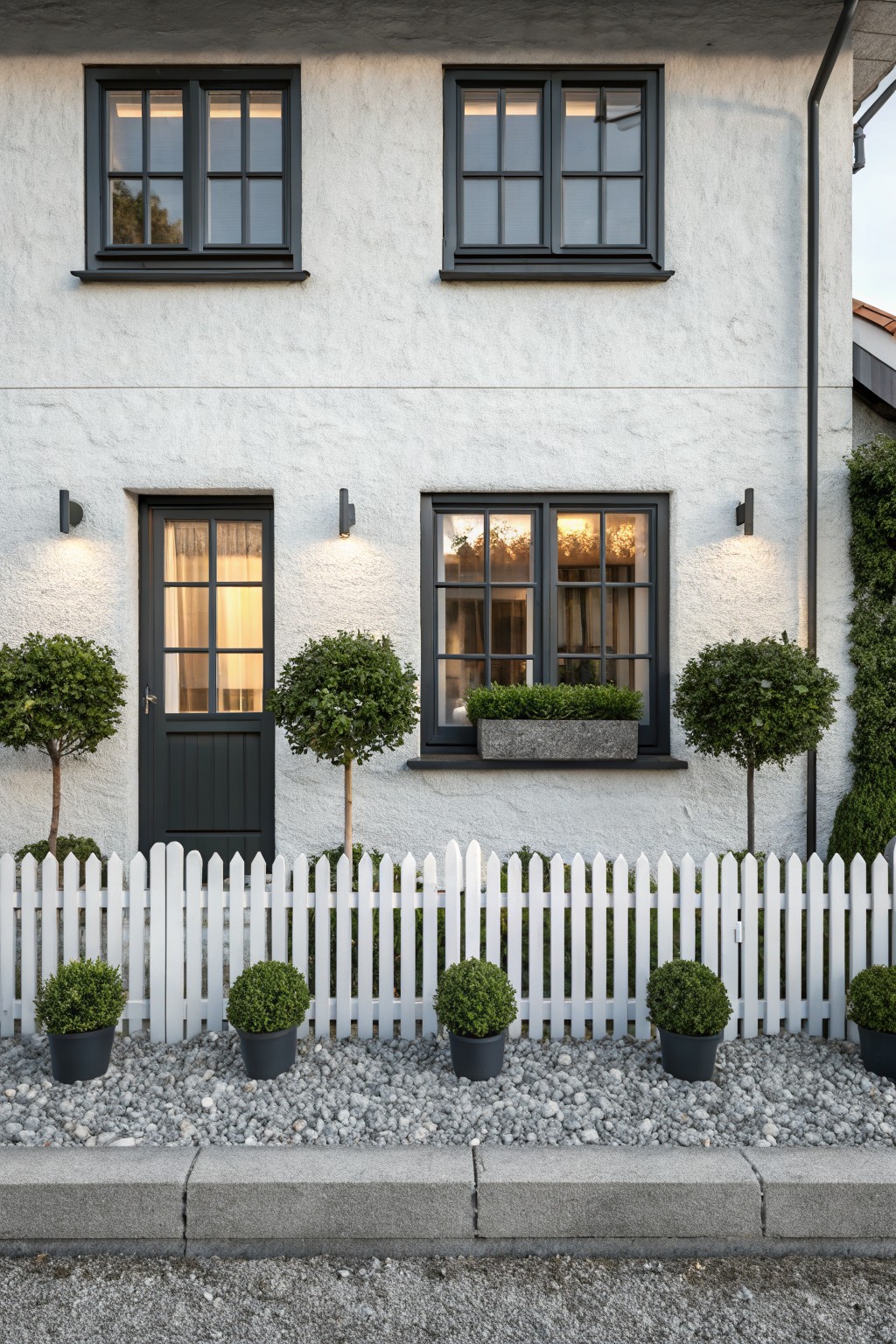
A white picket fence looks sharp when you line it with round boxwood shrubs in pots. The neat spheres echo the fence posts, and they add some green without taking over the yard. Gravel mulch between them keeps weeds down and gives a clean edge folks appreciate from the street.
Try this in front of a cottage or traditional house where you want classic curb appeal. Space the black pots evenly along the fence, maybe three or four for a short run. It suits small lots best. Just trim the boxwoods a couple times a year to hold that tidy shape.
Patterned Metal Screens for Garden Paths
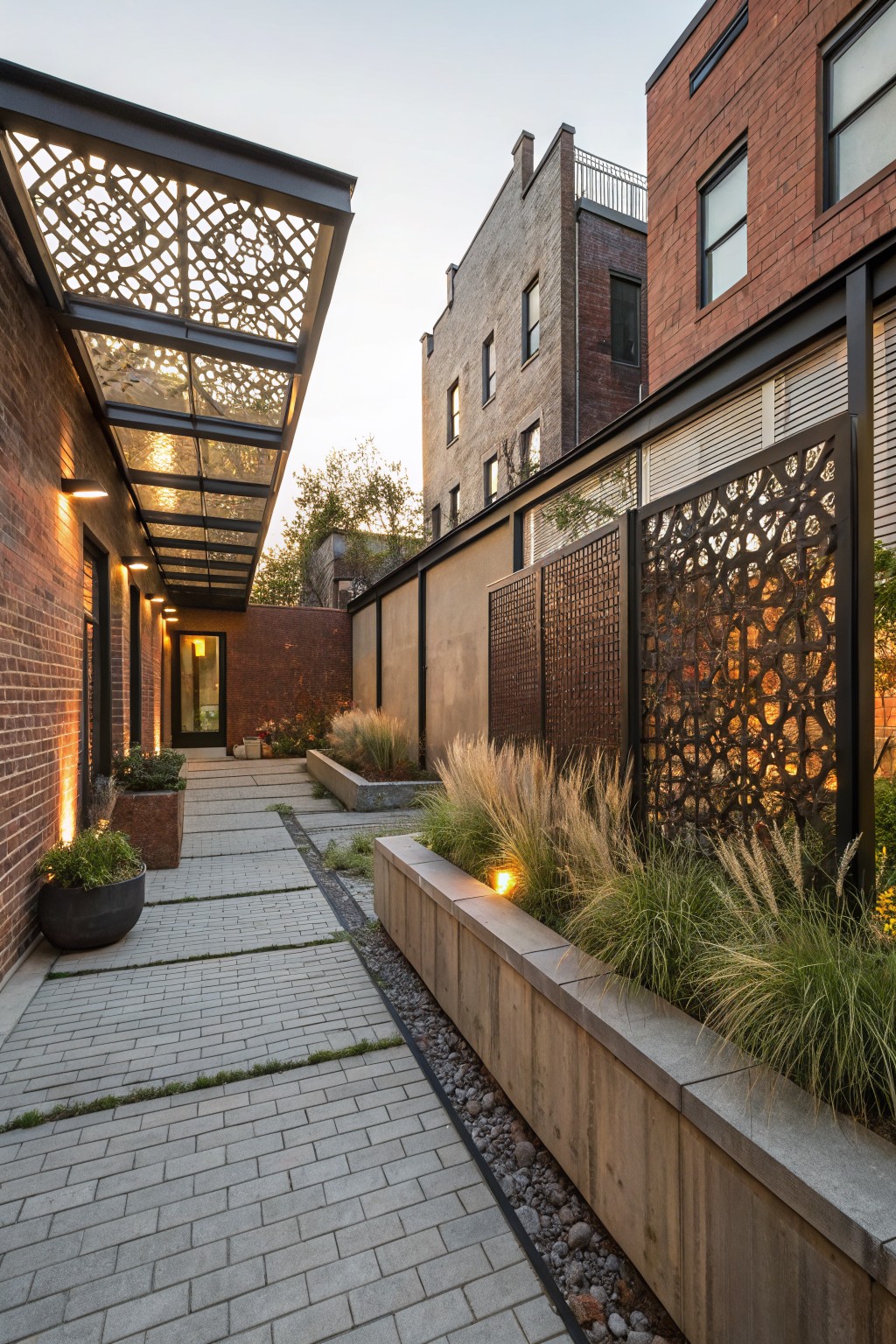
Metal screens with cutout patterns make a simple fence idea that works great in tight spaces like side yards. They block views without shutting out light. You get privacy plus a bit of pattern play from sunlight filtering through. In this setup, the dark metal fits right with brick walls and picks up the glow from path lights at dusk.
Pair these screens with a gravel edge or low grasses for easy upkeep. They suit urban homes or row houses where yards run narrow. Just make sure the pattern isn’t too busy if your style leans plain. Skip solid wood fences here. Let plants grow up close to soften things.
Rustic Wooden Picket Gate

A rustic wooden picket gate like this one makes a garden path feel special right away. It has that simple arched top and spaced slats that let you peek through to the house door. Folks like it because it fits old stone cottages without overpowering them. The gate keeps things open yet defined, especially with flowers brushing up against the wood.
Put one at the end of a winding stone path where it leads to your back door or side entry. It works best in small yards or cottage-style setups with perennials along the borders. Go for weathered wood to match stone walls. Just make sure the latch is sturdy so it doesn’t swing in the wind.
Wooden Fences Around Zen Gardens

A tall wooden fence like this one works great for enclosing a zen garden. The natural wood tone blends right in with gravel paths, stone lanterns, and low shrubs. It gives you full privacy but keeps things feeling open and calm inside the yard. Folks like how it sets off the simple lines of rocks and plants without overpowering them.
Put this fence around smaller backyards where you want a quiet spot to relax. It suits homes with a touch of Japanese style, or even plain ones needing some character. Just mount a lantern or two on the posts for soft evening light. Watch the scale though. Too short and it loses that enclosed feel.
Cedar Privacy Fences
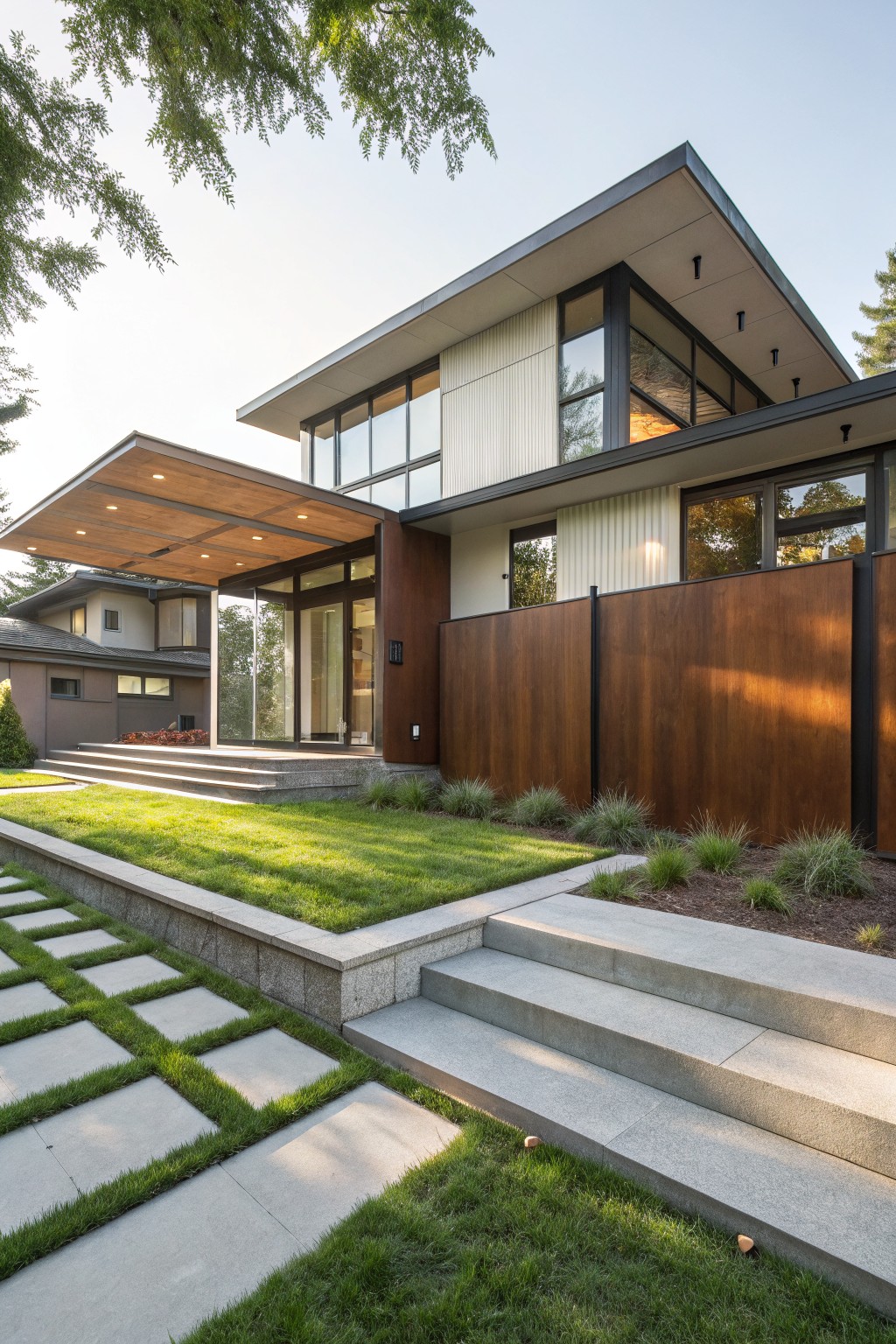
Cedar fences like this one give your garden real screening without feeling cold or boxy. The warm wood tone picks up on the house siding and entry overhang. Horizontal boards keep it simple yet sturdy. It stands out because it blends right into the landscape instead of sticking out.
Put one along a side yard where you want to hide the neighbors’ view. This setup suits modern homes with flat roofs and clean lines. Concrete steps and grass nearby make it feel open still. Seal the cedar every couple years so it stays that rich color.
Vines Climbing Over Garden Fences
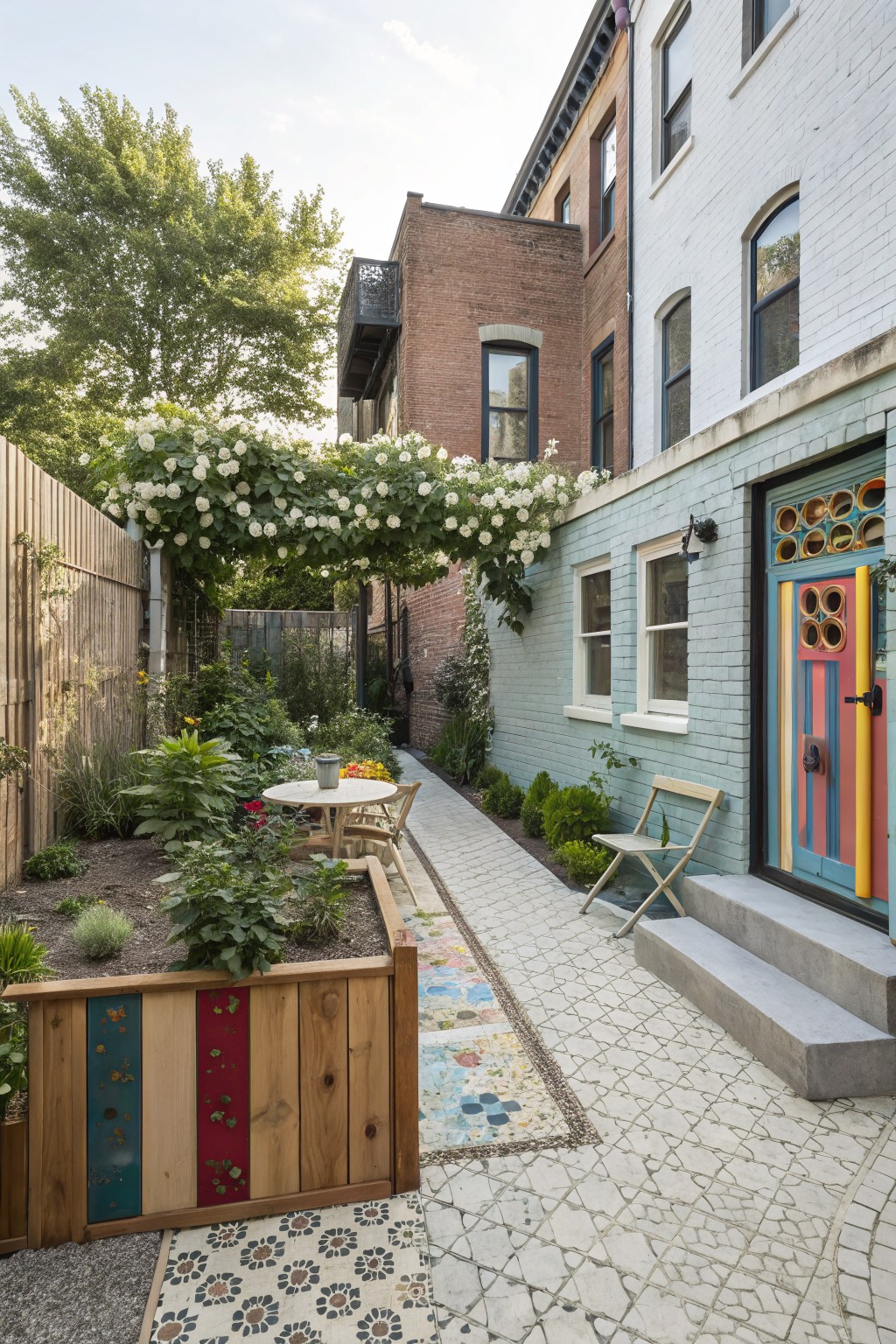
A plain wood fence gets a big lift when sturdy vines climb up and spill over the top. Here, white hydrangeas form a full archway that softens the fence line and pulls the eye along the path. It’s a low-effort way to add shade and flowers without building anything extra.
These work best on fences around three to six feet tall in tight urban yards. Train hydrangeas or roses up with ties at first, then let them go. Keep an eye on weight in wet weather, and trim back yearly to stay neat.
Black Wrought Iron Garden Gates

These gates catch your eye right away with their tall black iron design and those twisted spear tops. They give a proper English garden feel without being fussy. Set them off with simple stone piers and you’ve got real curb appeal that lasts.
Put them at the end of a gravel path leading to your front door. They work best on older homes or formal yards where you want some height and pattern. Keep the paint fresh every few years or they’ll rust. Skip them if your place is super modern. They suit places with hedges nearby.
Wood Panel Garden Fence
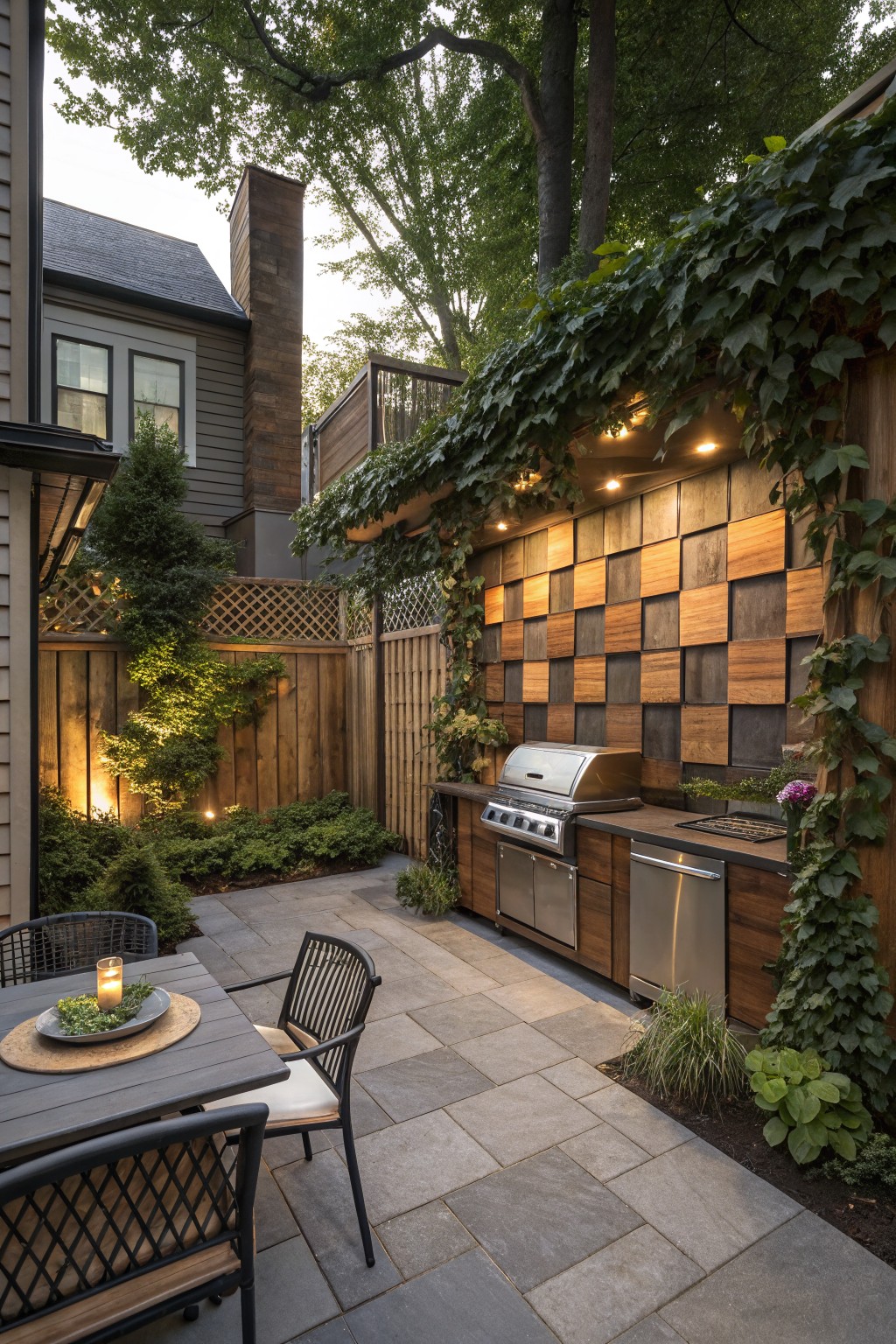
One simple way to give your garden fence some real character is to cover it with panels of mixed wood tones. Like the checkered arrangement of light and dark reclaimed planks here behind the grill area. It breaks up a plain fence wall into something interesting that catches the eye. The pattern adds texture without much fuss, and letting ivy climb over parts keeps it from feeling too stark.
This works best in smaller backyards where you want a focal point near seating or cooking spots. Try it on a side fence or as a backdrop for an outdoor kitchen in a modern or craftsman-style home. Just make sure the wood is treated for weather, and space the tiles loosely so plants can weave in naturally.
White Picket Fence Garden Borders
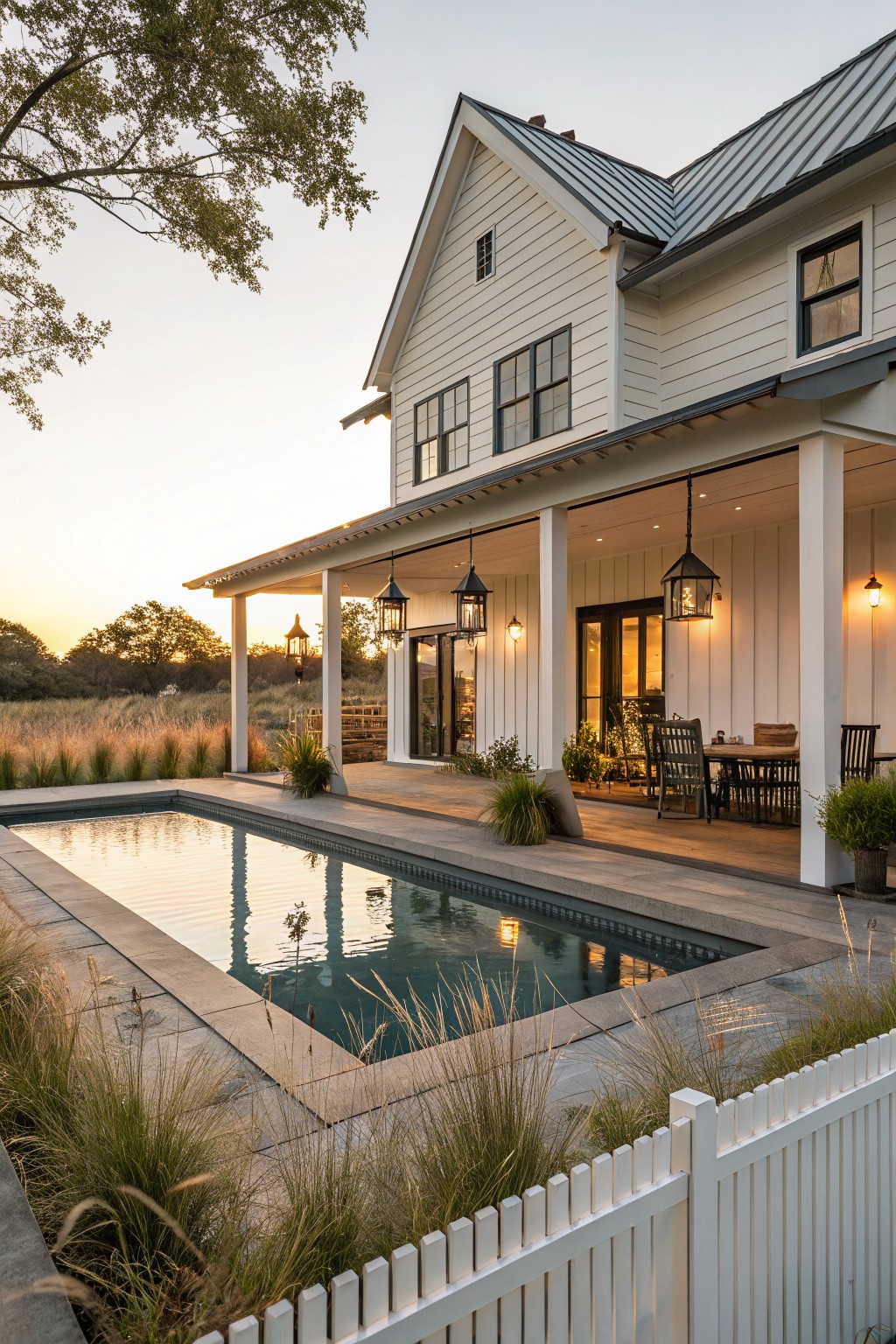
White picket fences bring back that old-time garden charm without much fuss. In this setup, the simple white fence lines the pool edge, tucked right up against tall grasses. It keeps things neat around the water while letting the plants spill over a bit. That mix gives the yard a cozy, lived-in feel that fits right with a farmhouse porch nearby.
You can pull this off in backyards with pools or play spaces. Plant grasses or low shrubs along the fence base to hide the footing and add movement. It suits bigger lots where you need gentle boundaries. Watch the height though, especially near water. Keeps kids safer too.
Frequently Asked Questions
Q: Can I tackle one of these fence ideas as a weekend DIY project?
A: Yes, most come together with everyday tools like a saw, hammer, and drill. Sketch your design first, measure twice, and secure posts firmly in the soil. You’ll wrap it up feeling pretty accomplished.
Q: What if my yard is super small—will these fences make it feel cramped?
A: Stick to tall, narrow pickets or living willow weaves that rise without spreading wide. They draw the eye up and create an airy vibe. Add climbing vines to blend it all softly.
Q: How do these hold up with rowdy dogs or little kids running around?
A: Choose thick cedar slats or welded wire panels that laugh off impacts. Dig posts at least two feet deep and backfill with gravel for rock-solid stability. Give it a good shake test once built.
Q: And quick tips to keep them looking fresh year after year? A: Wipe down metal with soapy water and touch up paint scratches right away. Trim back plants before they overrun wooden ones. That’s it—easy upkeep for big payoff.
